EXPLORING THE Cities
A trip that had been on our bucket list for years was Switzerland. Luckily we had friends here so what better excuse to pack the bags and head to the other side of the world.
While our primary purpose was to do some summer hiking, we managed to explore some of the cities while we were here.
Zurich
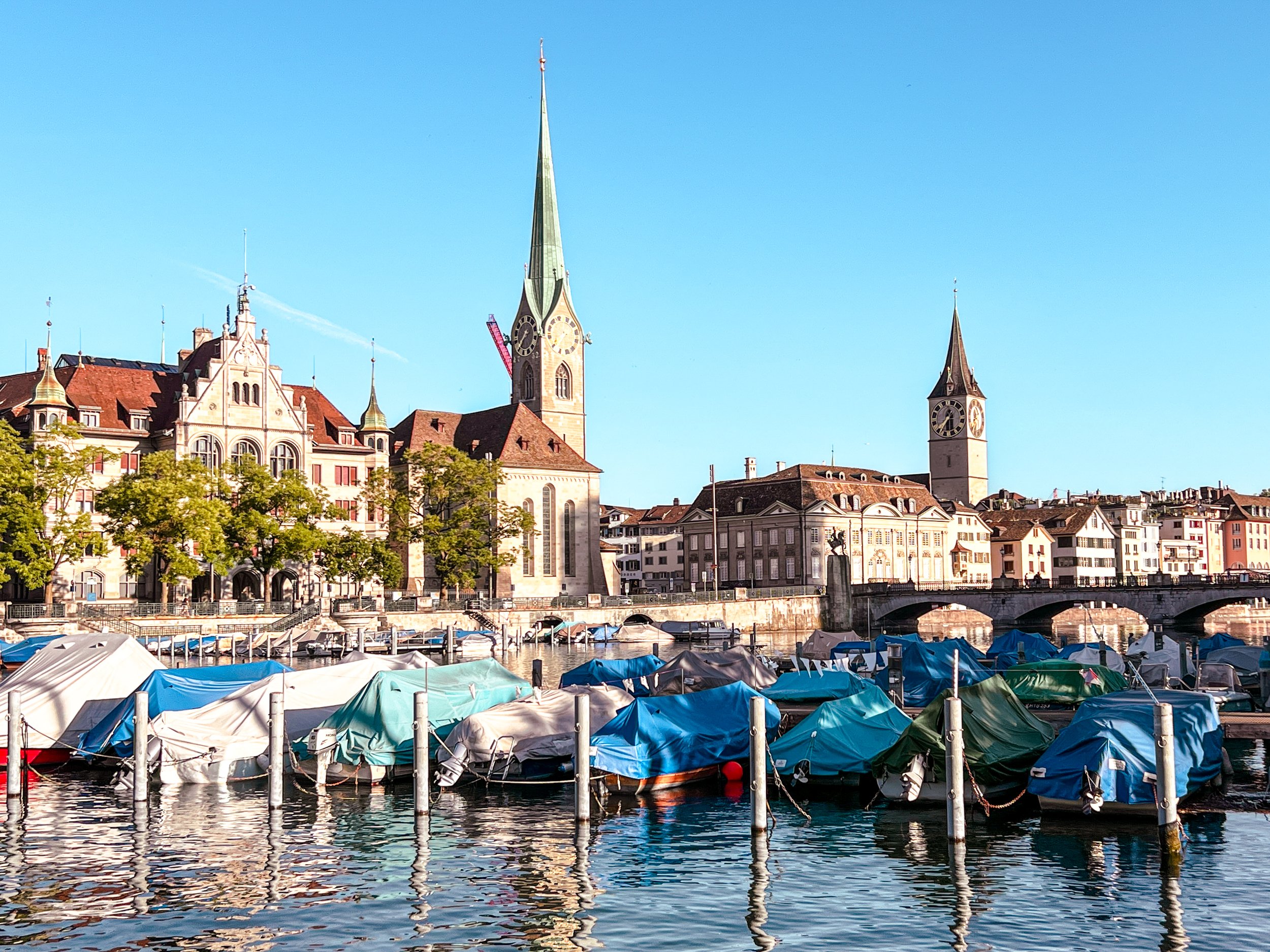
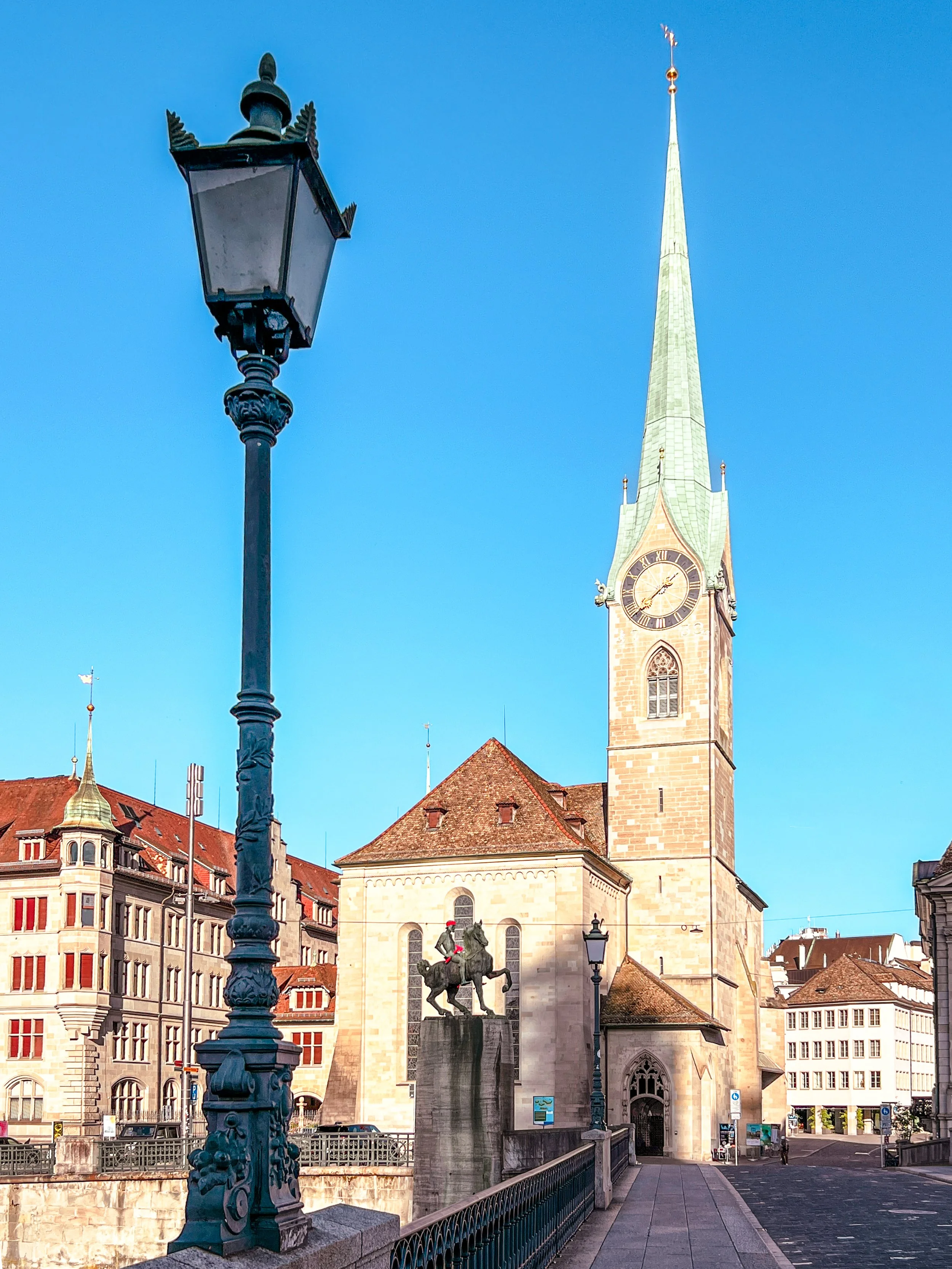
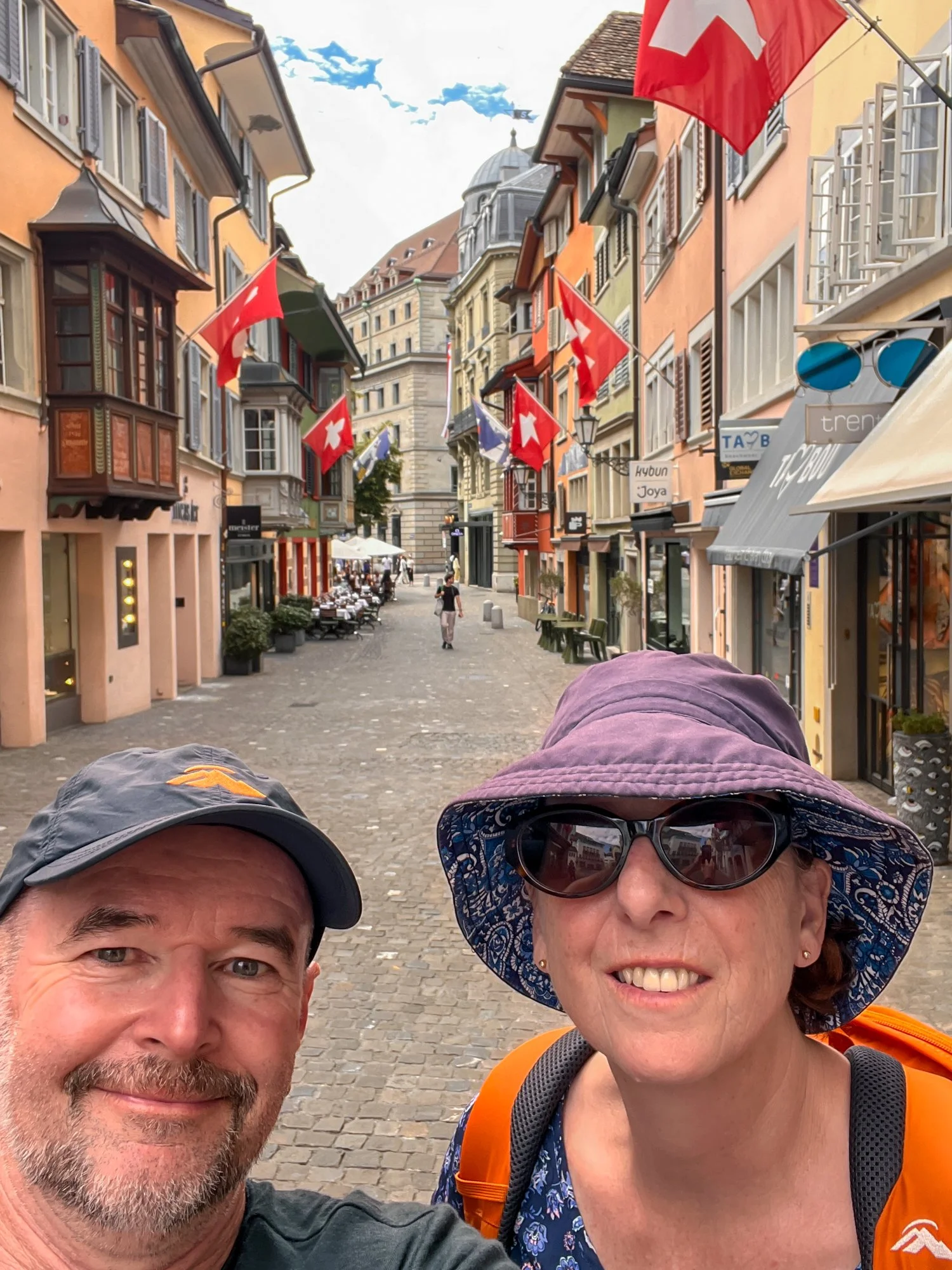
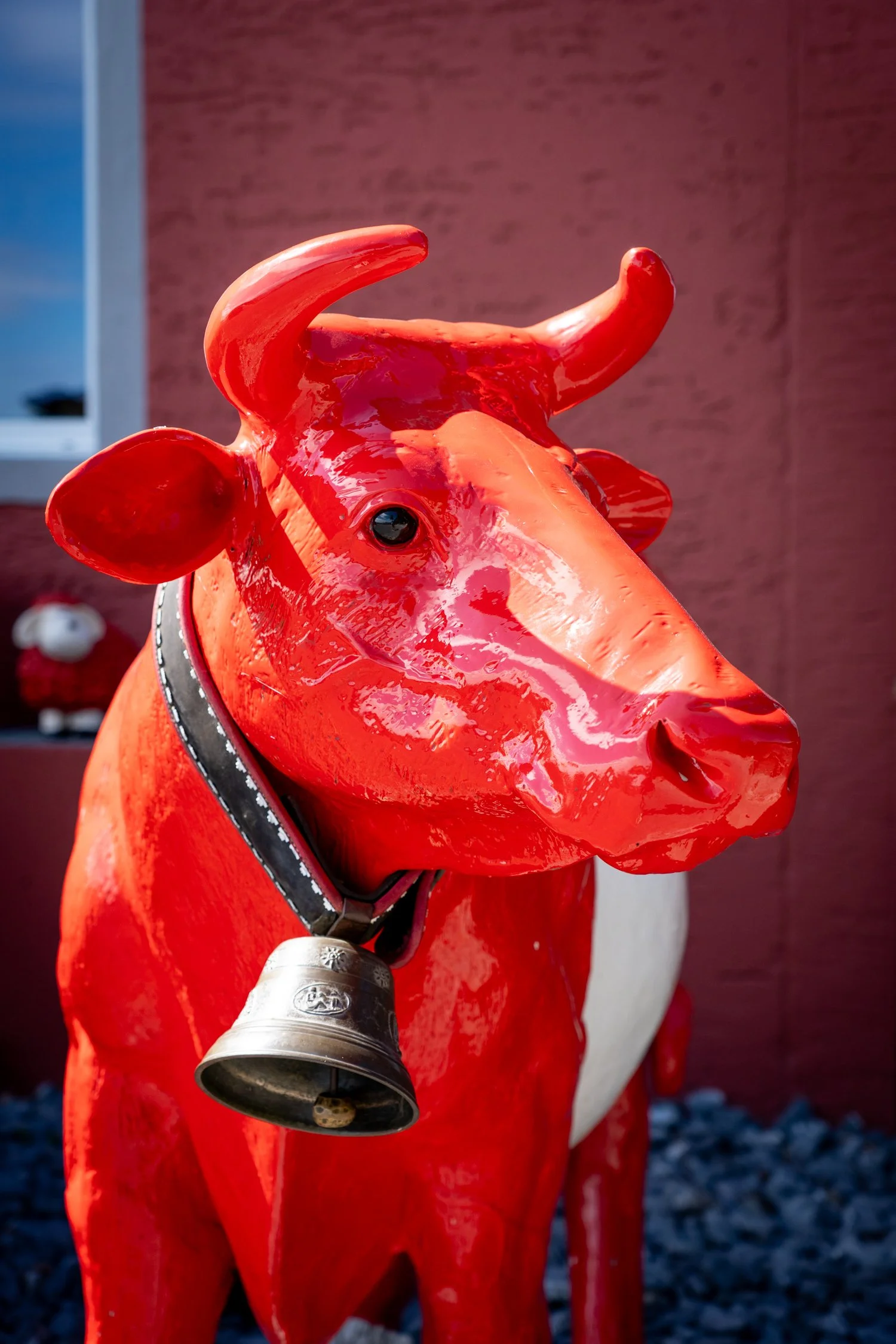
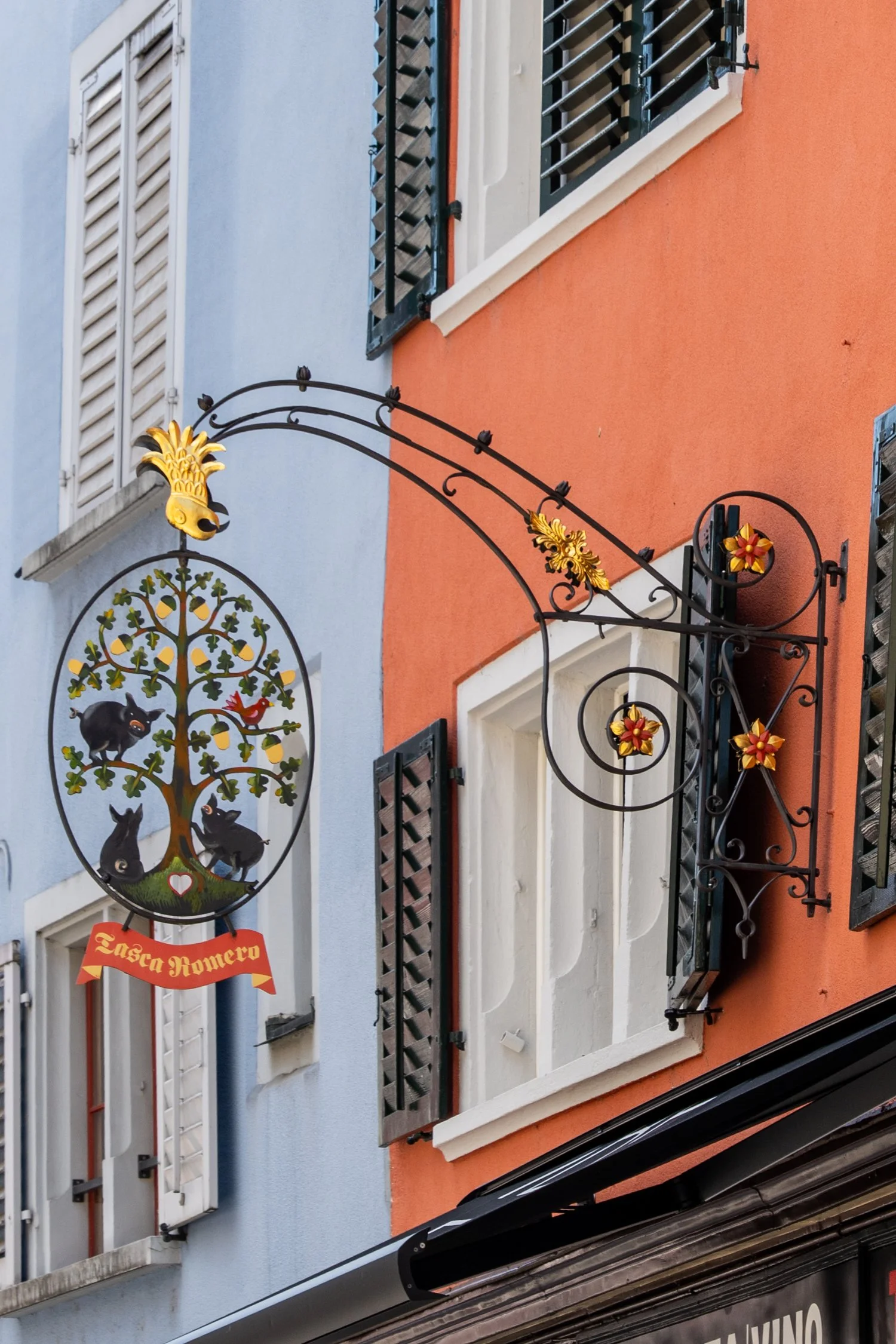
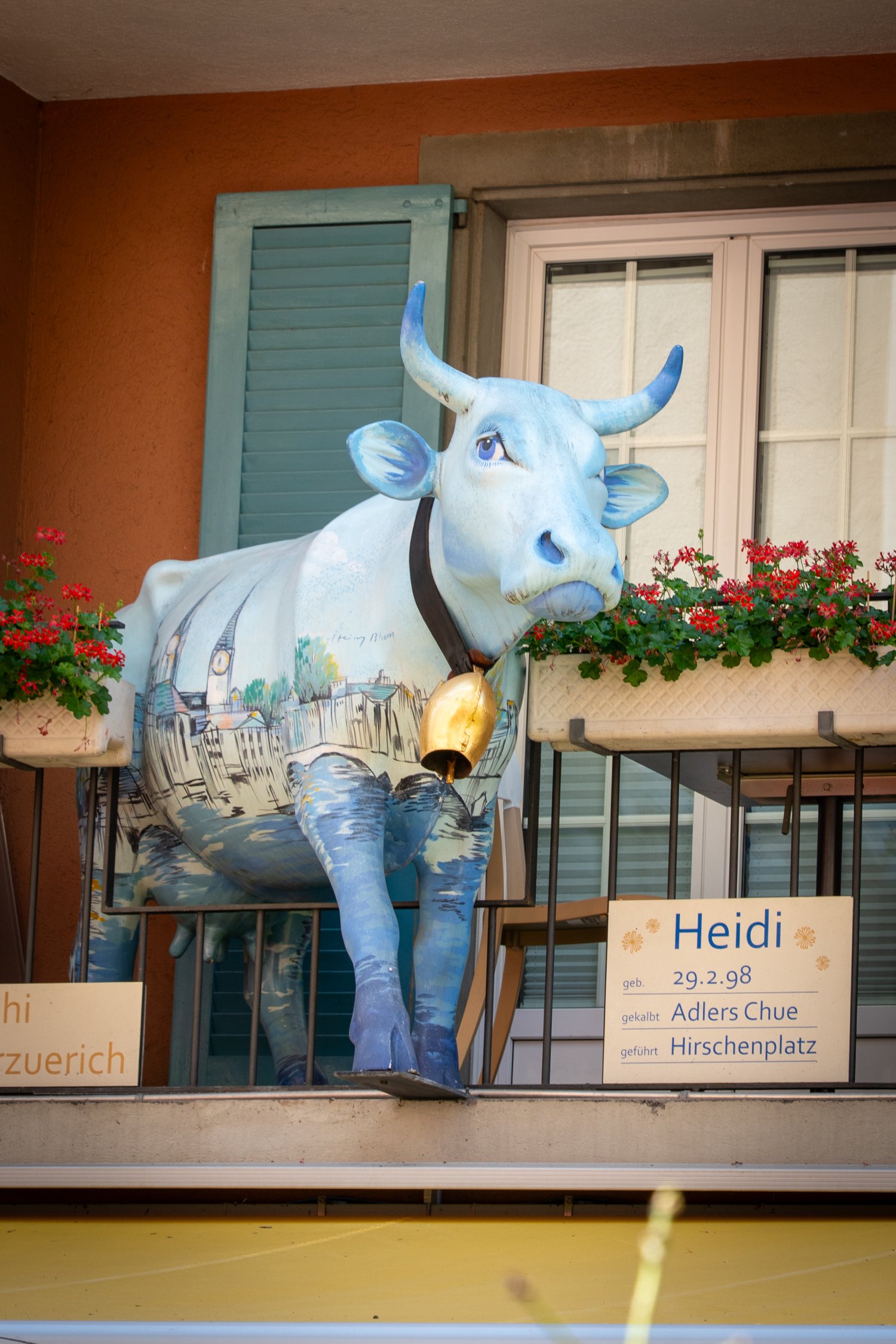
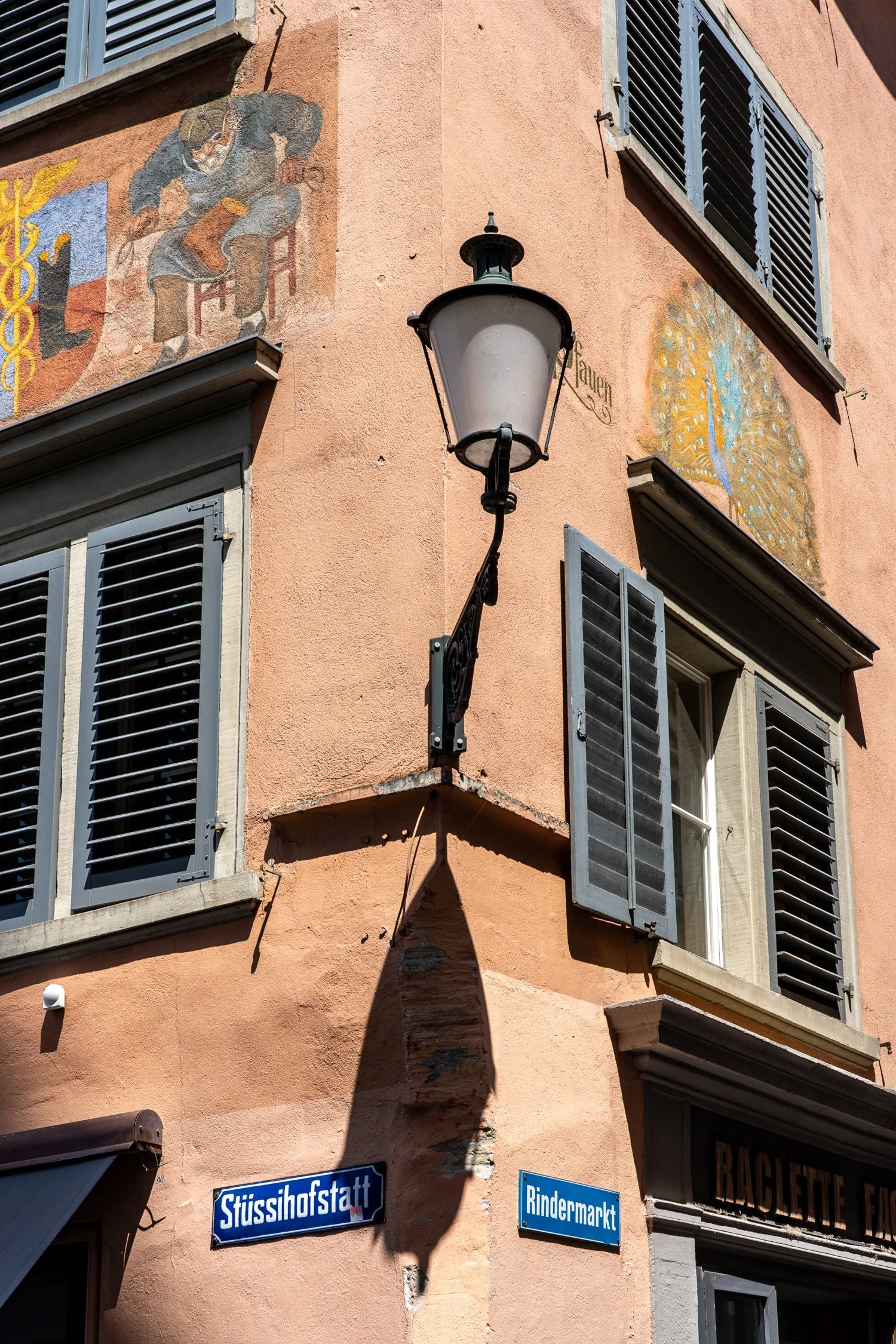
Zurich is one of those cities that seems to have decided that it wanted to be ridiculously pretty.
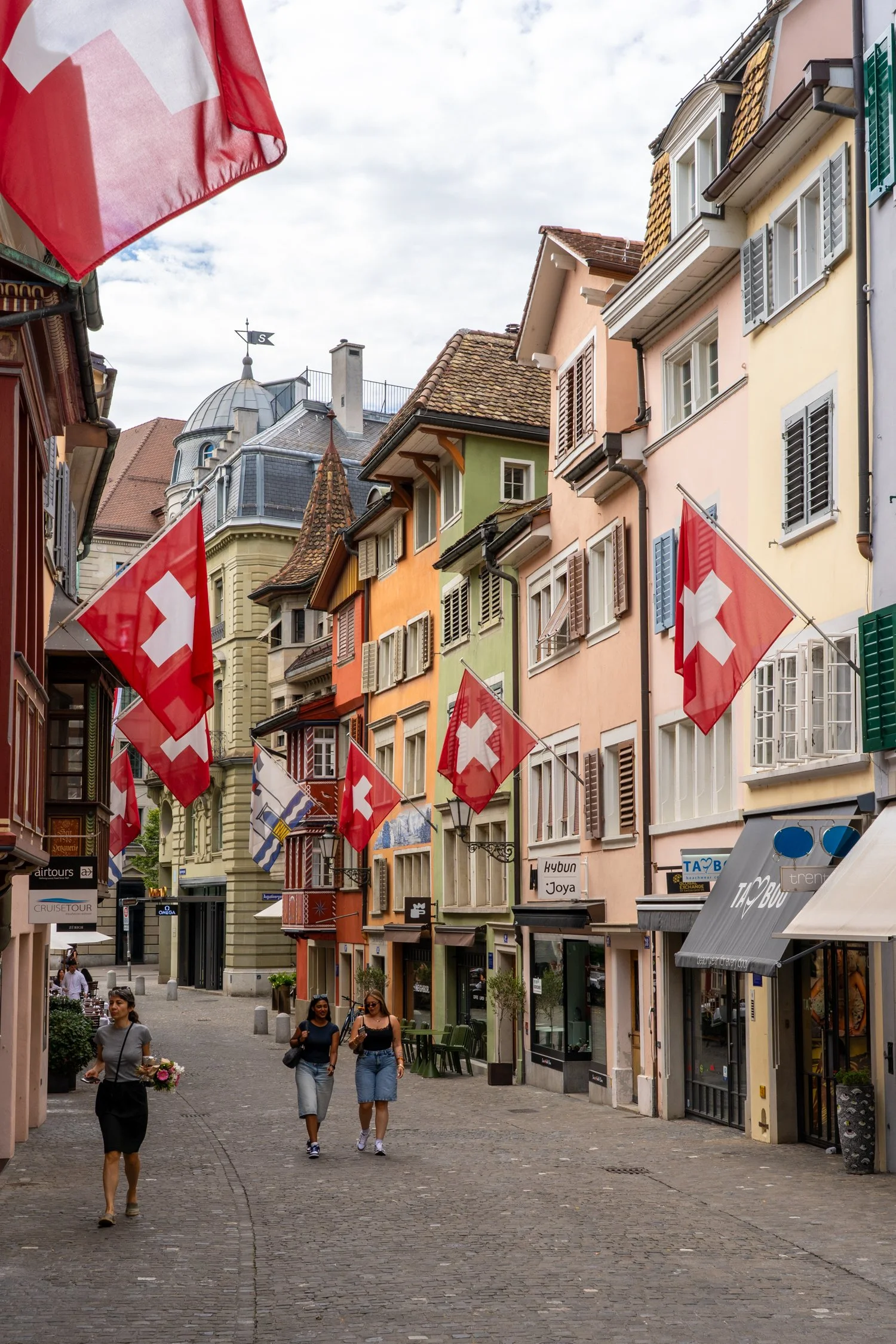
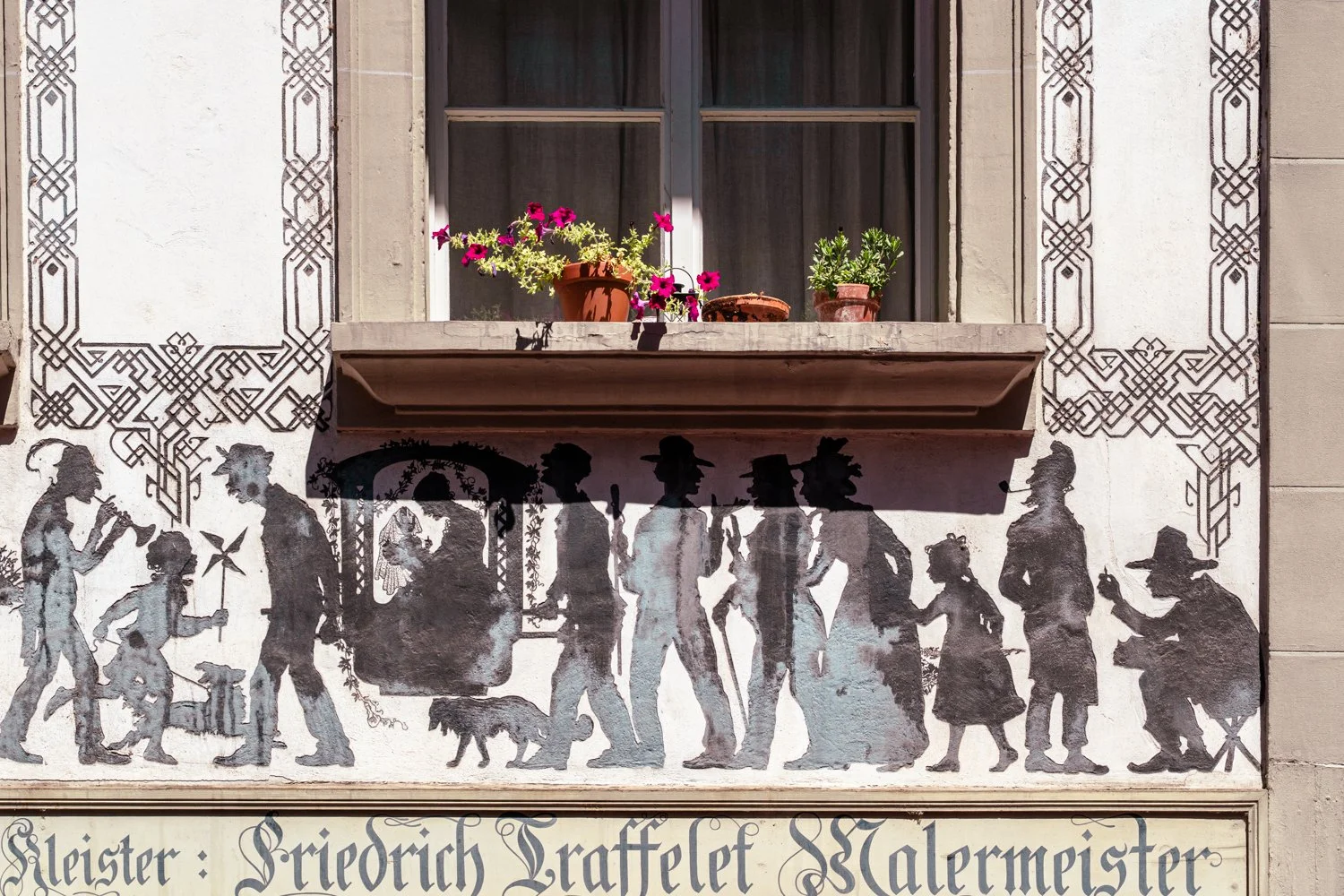
With just a day to explore, we headed straight into the Old Town, where the streets are made for wandering with no particular destination in mind — which is fortunate, because we had absolutely no idea where we were going.
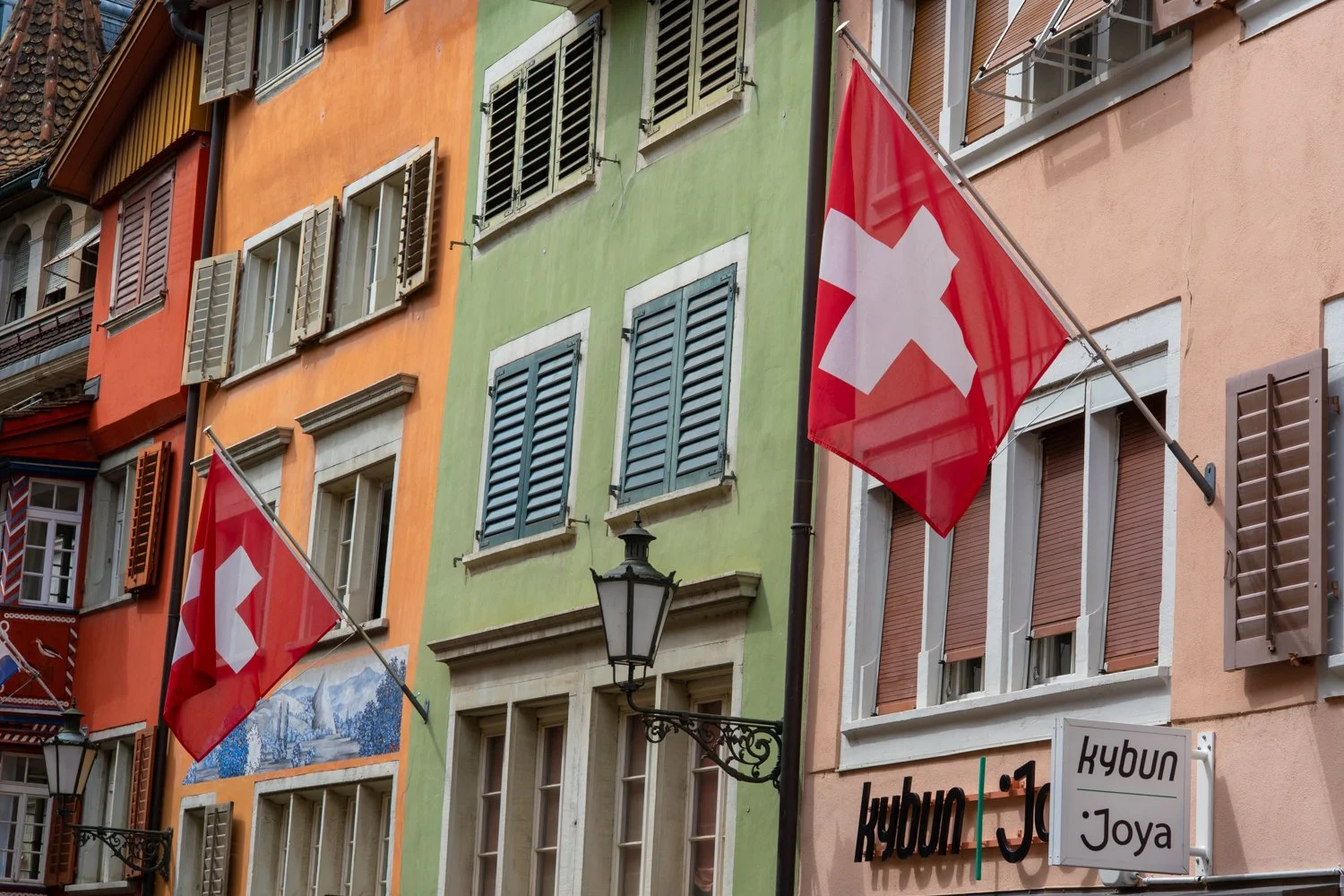
The buildings, all lined up like some enormous European version of a candy shop in colours of Orange, Pink and Green. These are made even more colourful by the little red Swiss flags hanging everywhere.
The Limmat River cuts through the city, with little boats bobbing along the water and people generally looking far more relaxed than anyone has a right to look in a European city.
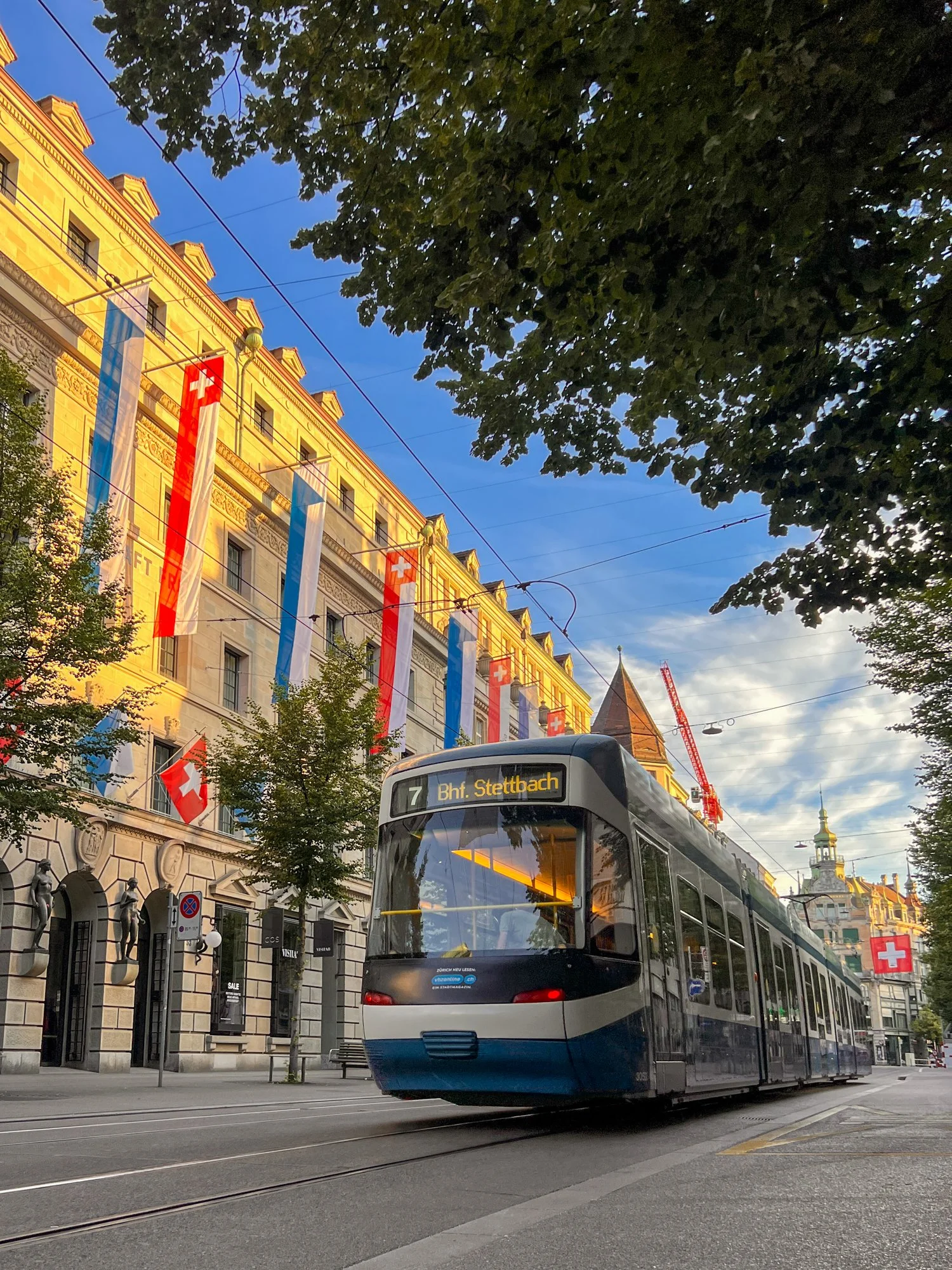
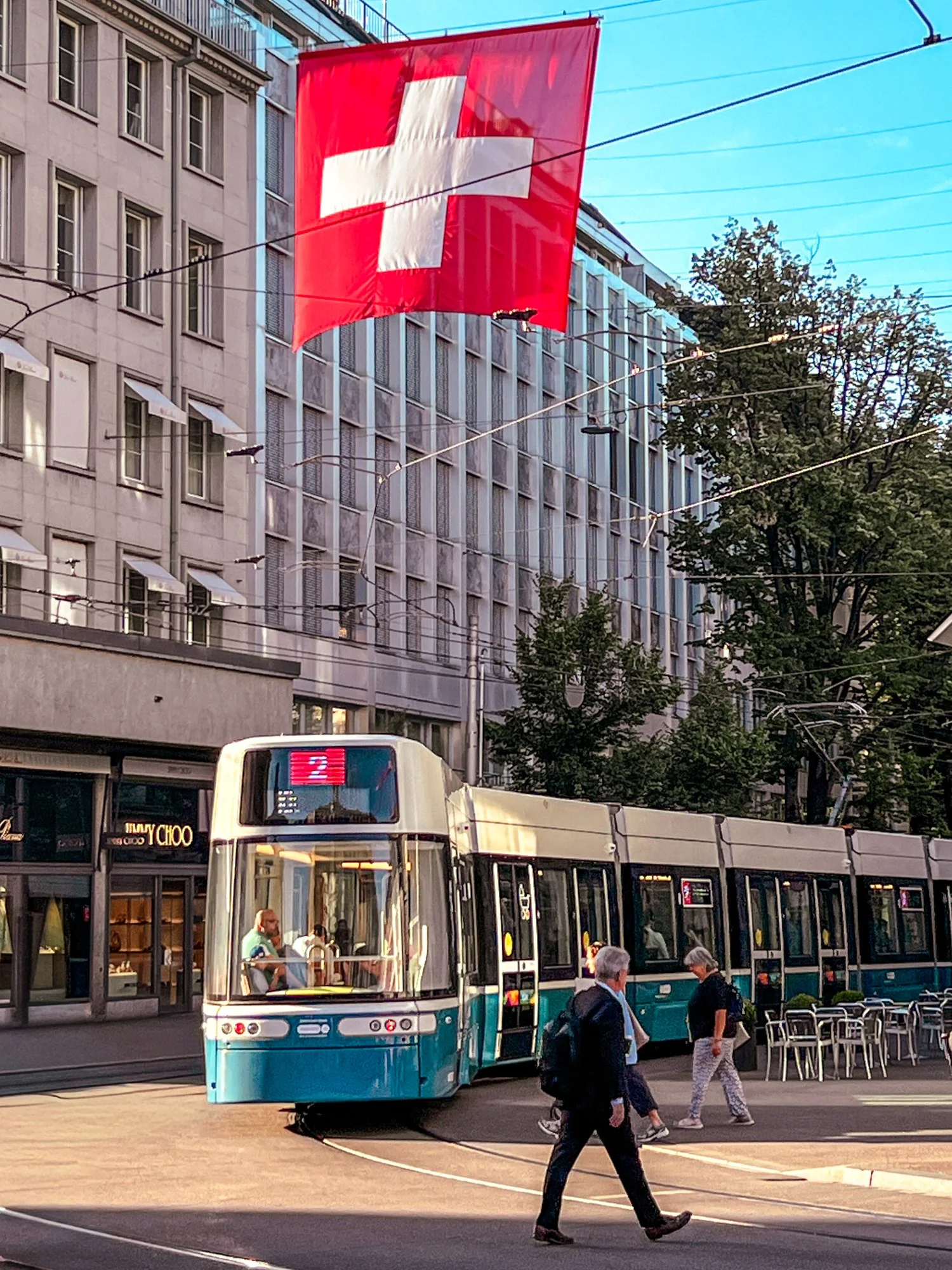
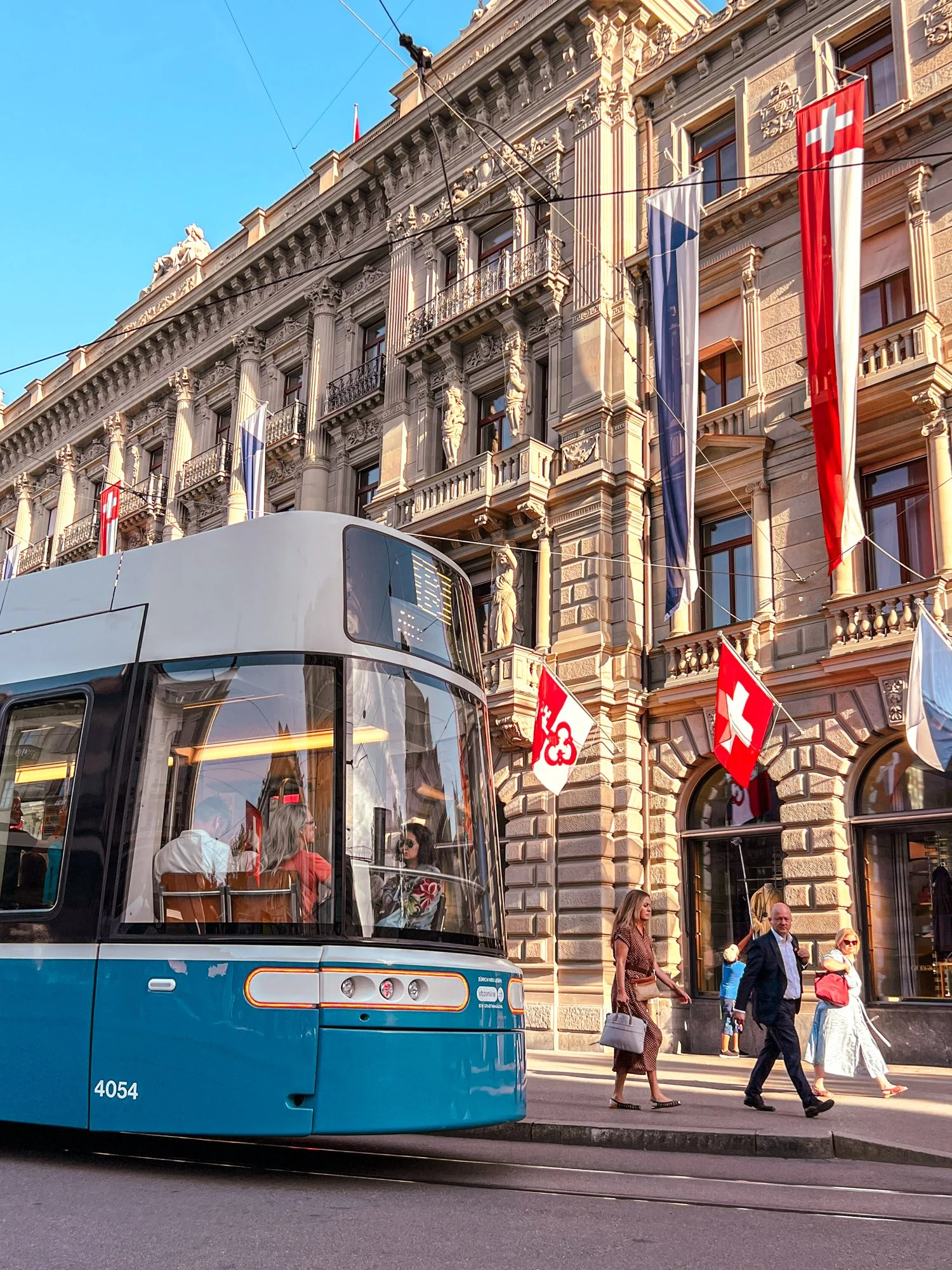
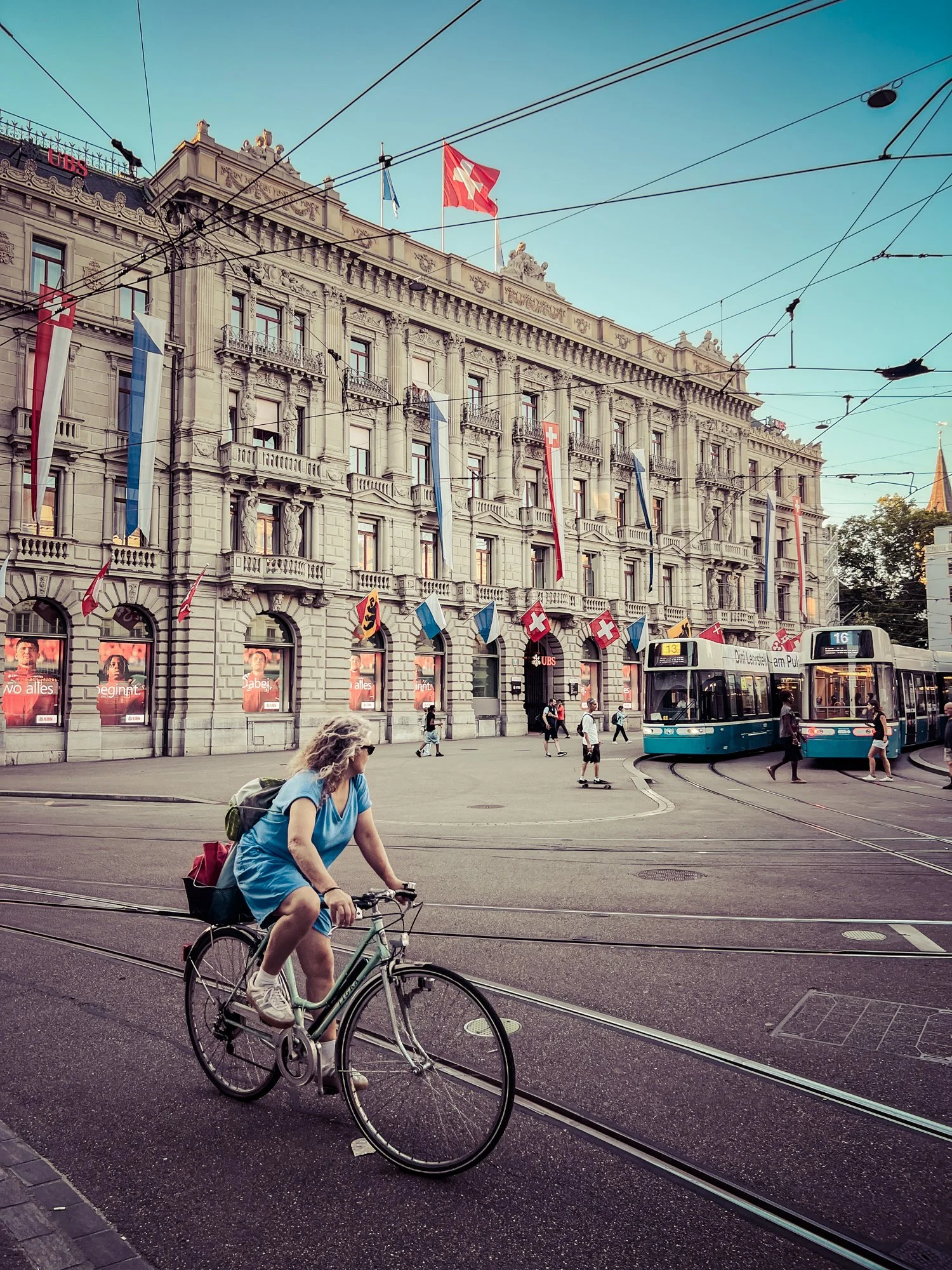
Zurich's blue trams crisscross the city with the sort of efficiency that makes you wonder whether the Swiss have somehow cracked the secret to time travel.
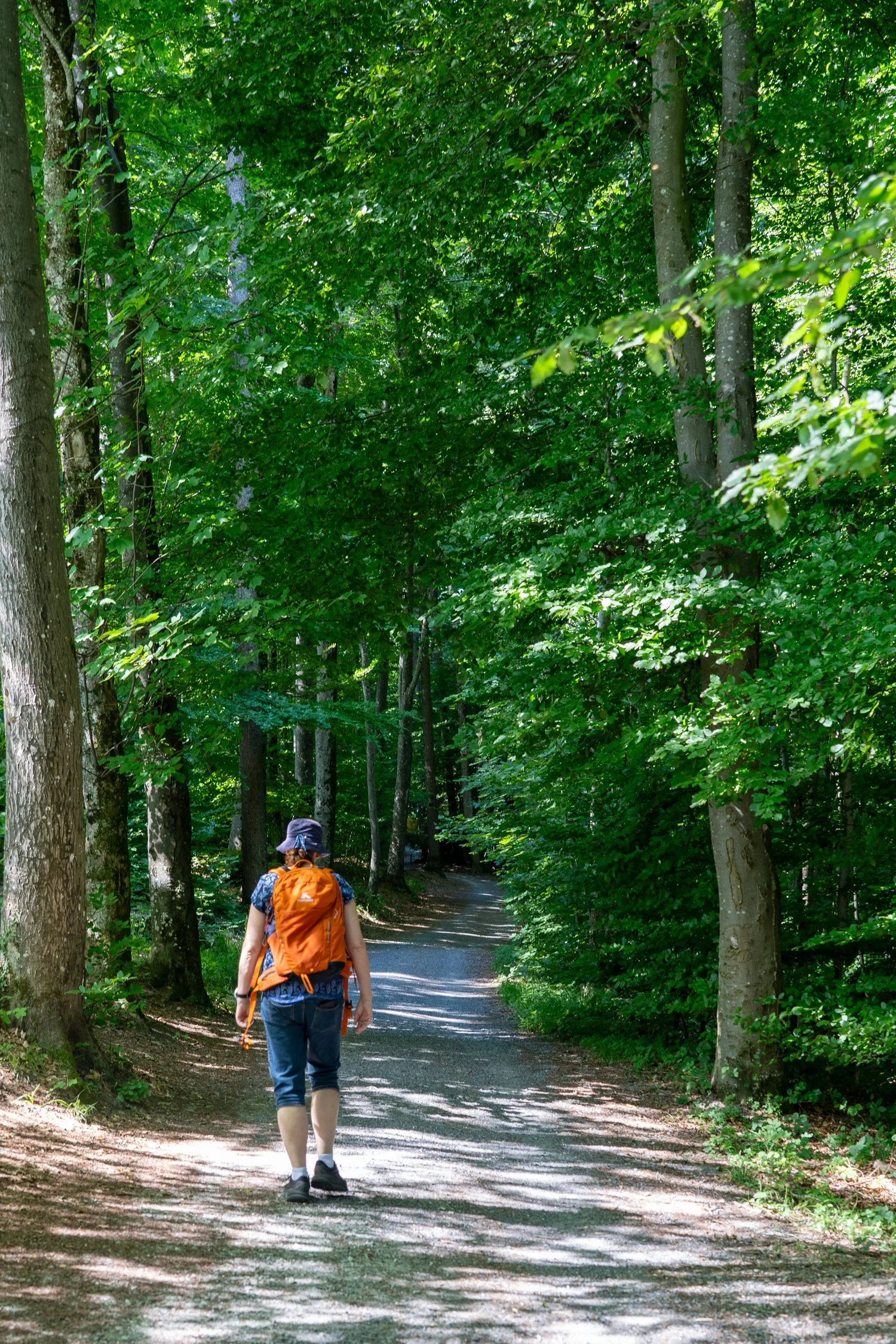
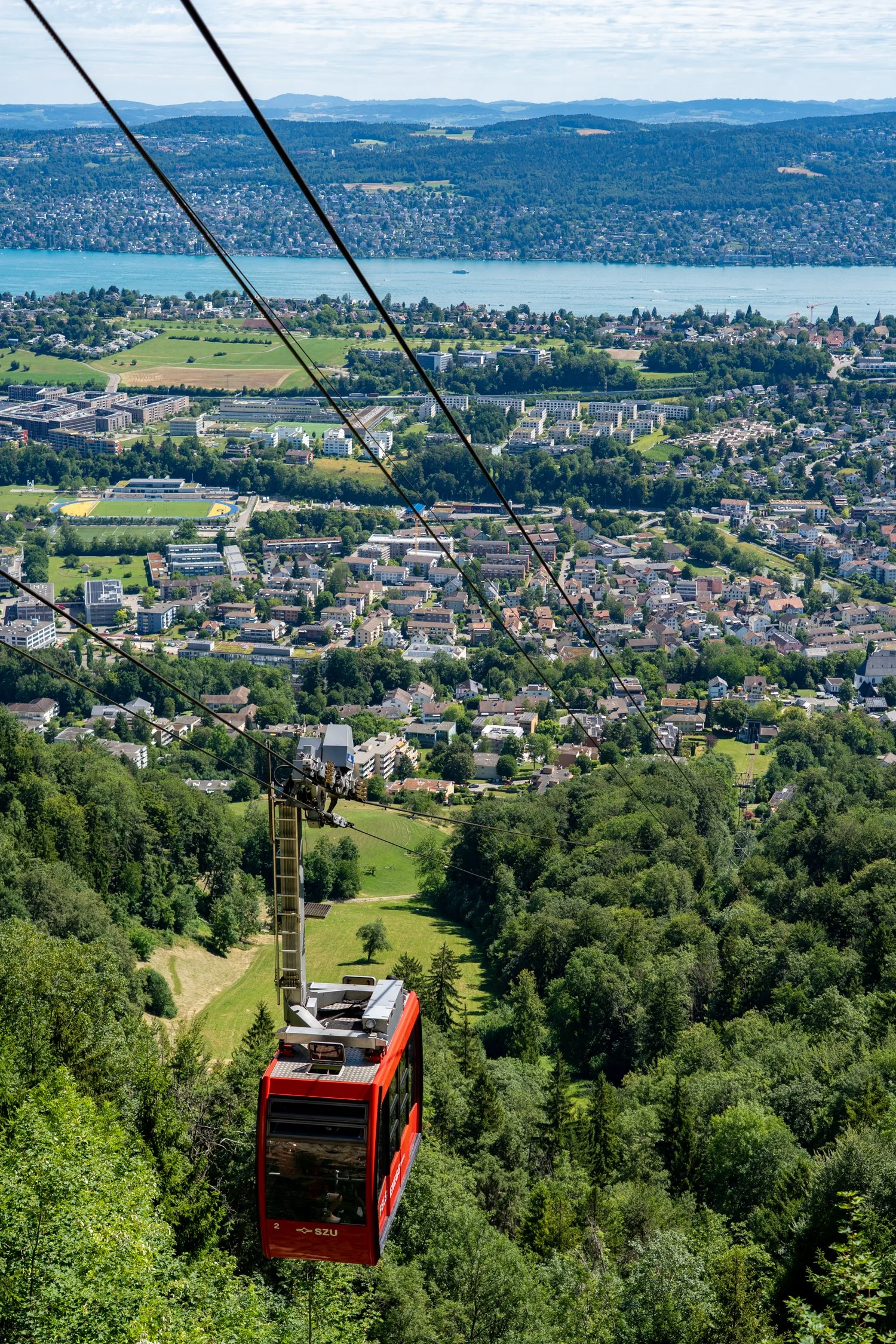
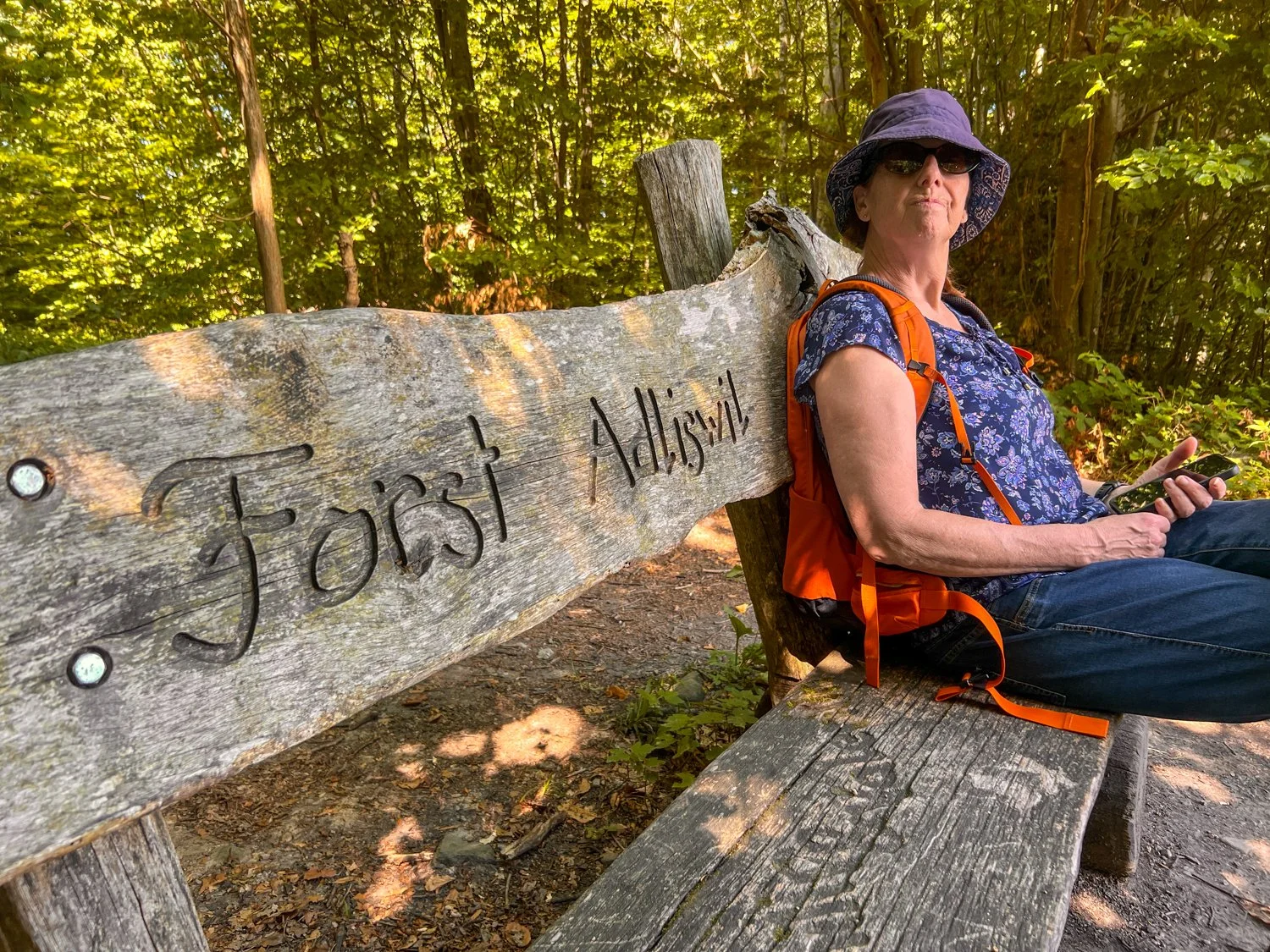
With only a day, we couldn't resist getting a little higher above the city as well. So we headed up into the adjacent hills around Forest Adliswil — just enough to stretch the legs and escape the cobblestones for a while.
It was the perfect way to begin our holiday: a bit of walking, a bit of fresh air and some great architecture. Not a bad introduction to Switzerland.
Lucerne
After Zurich, it was time to head to Lucerne. One of the advantages of being a runner on holiday is that you can occasionally convince yourself that getting up early is actually sightseeing.
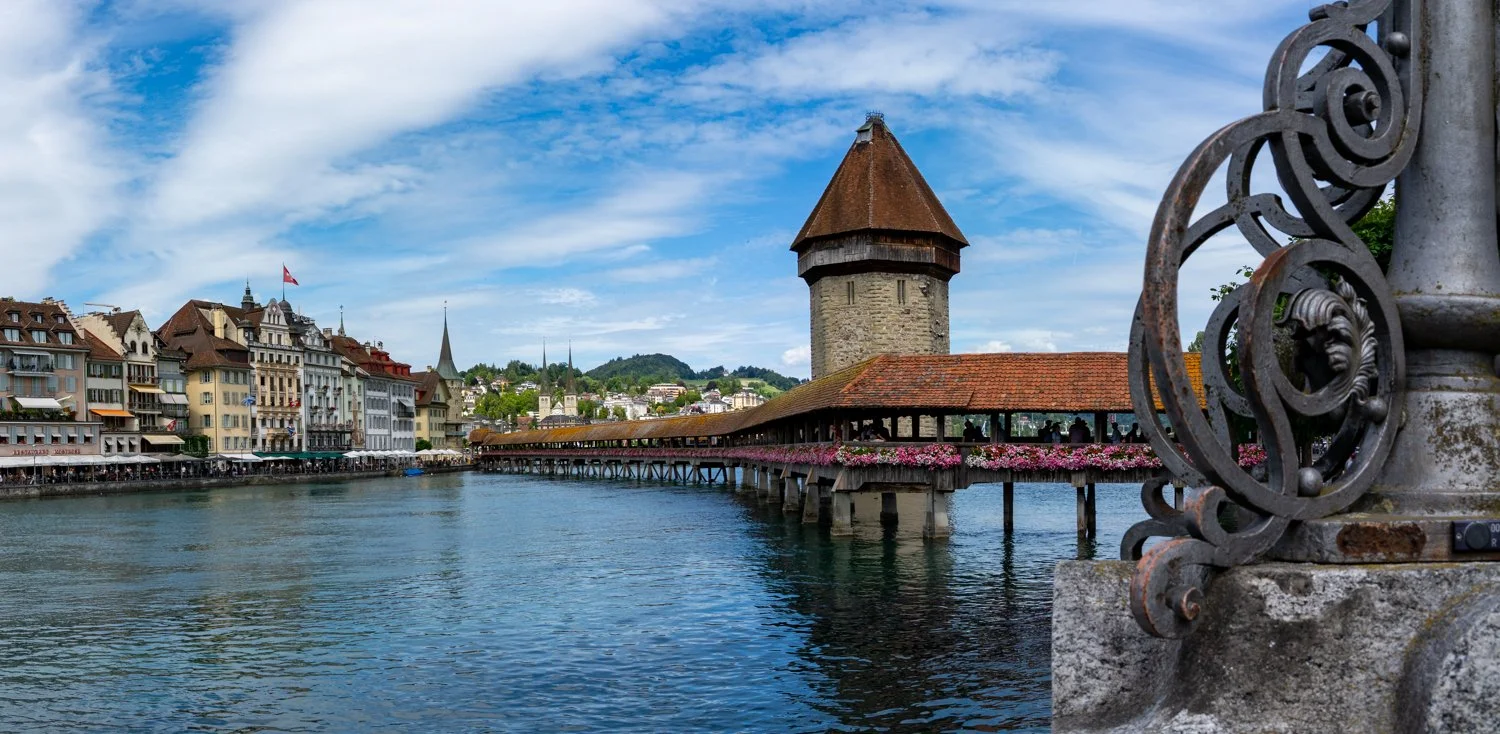
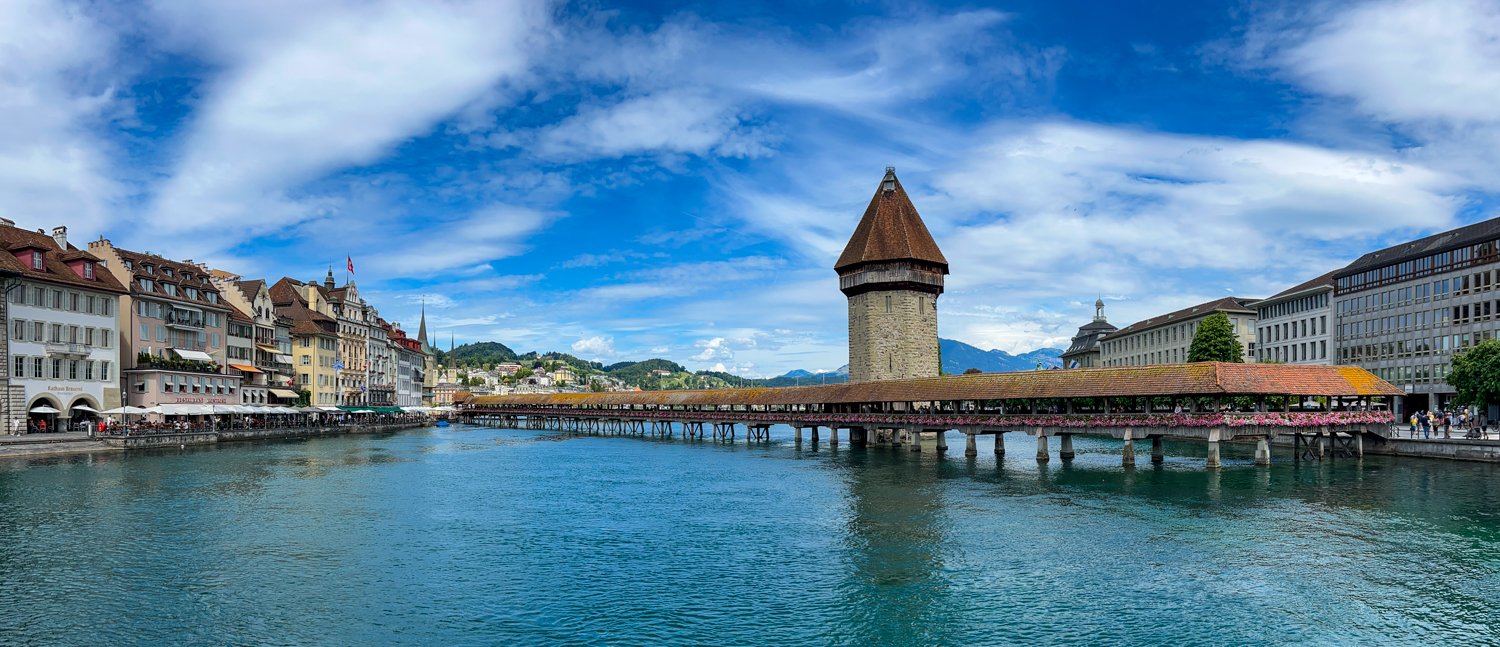
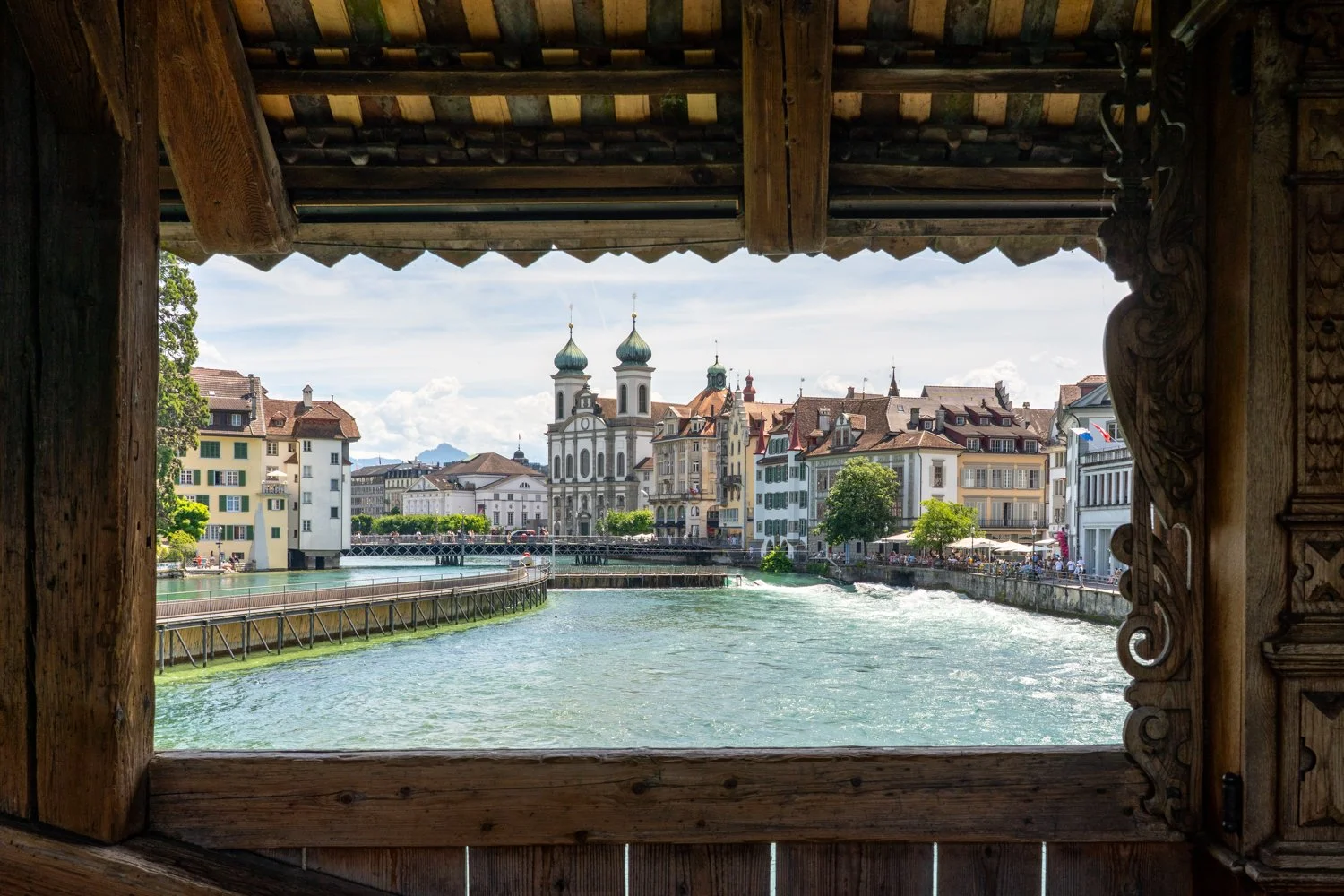
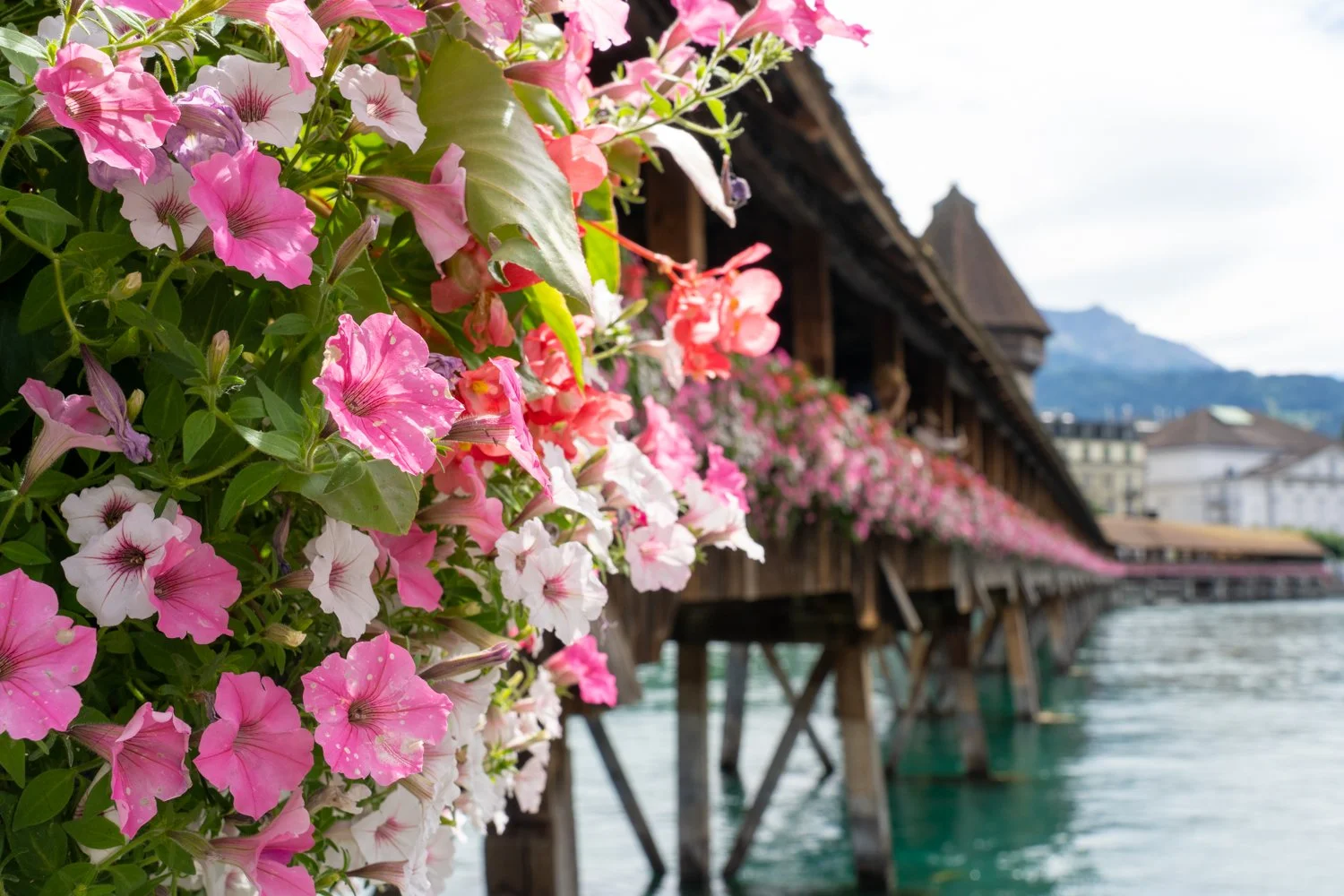
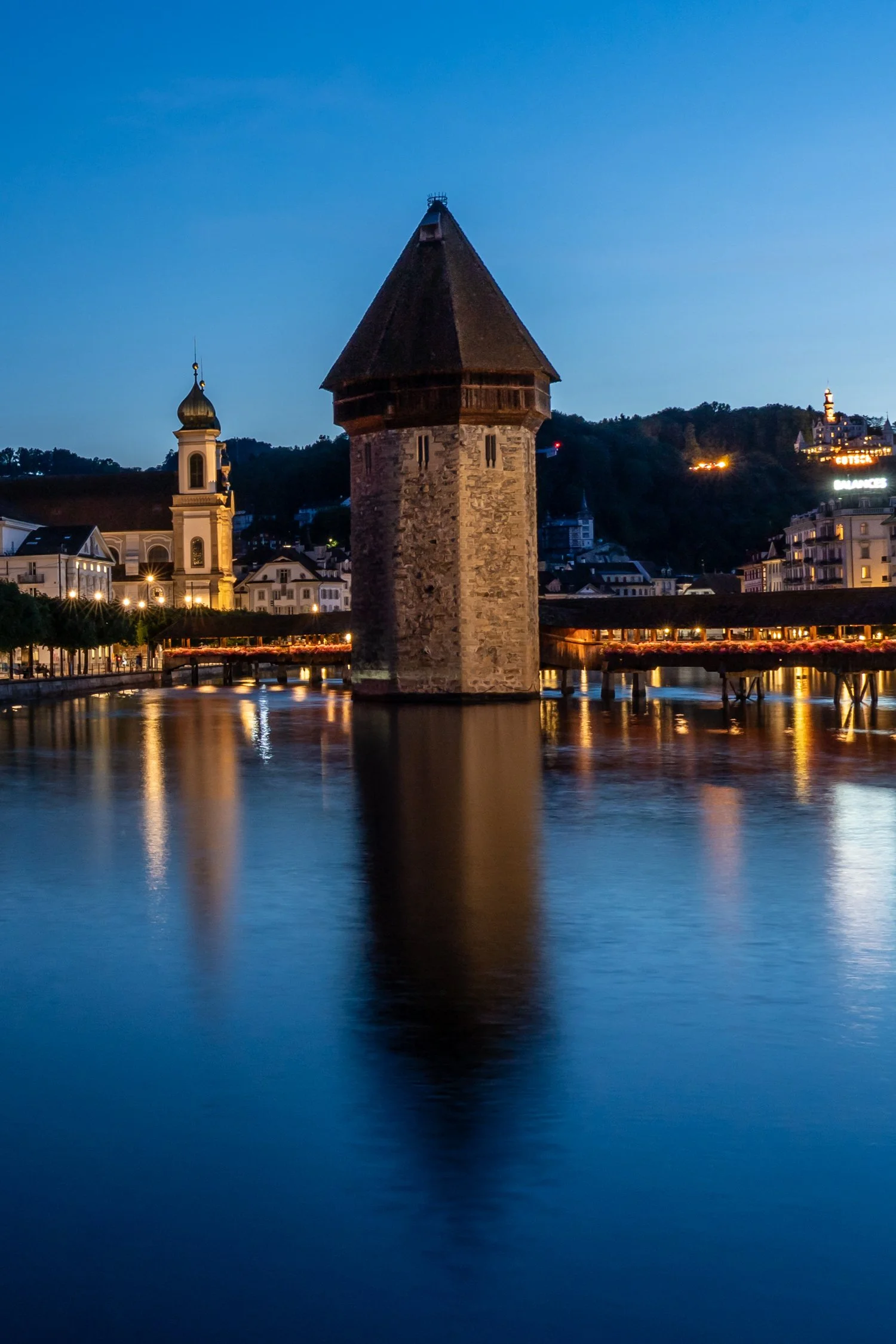
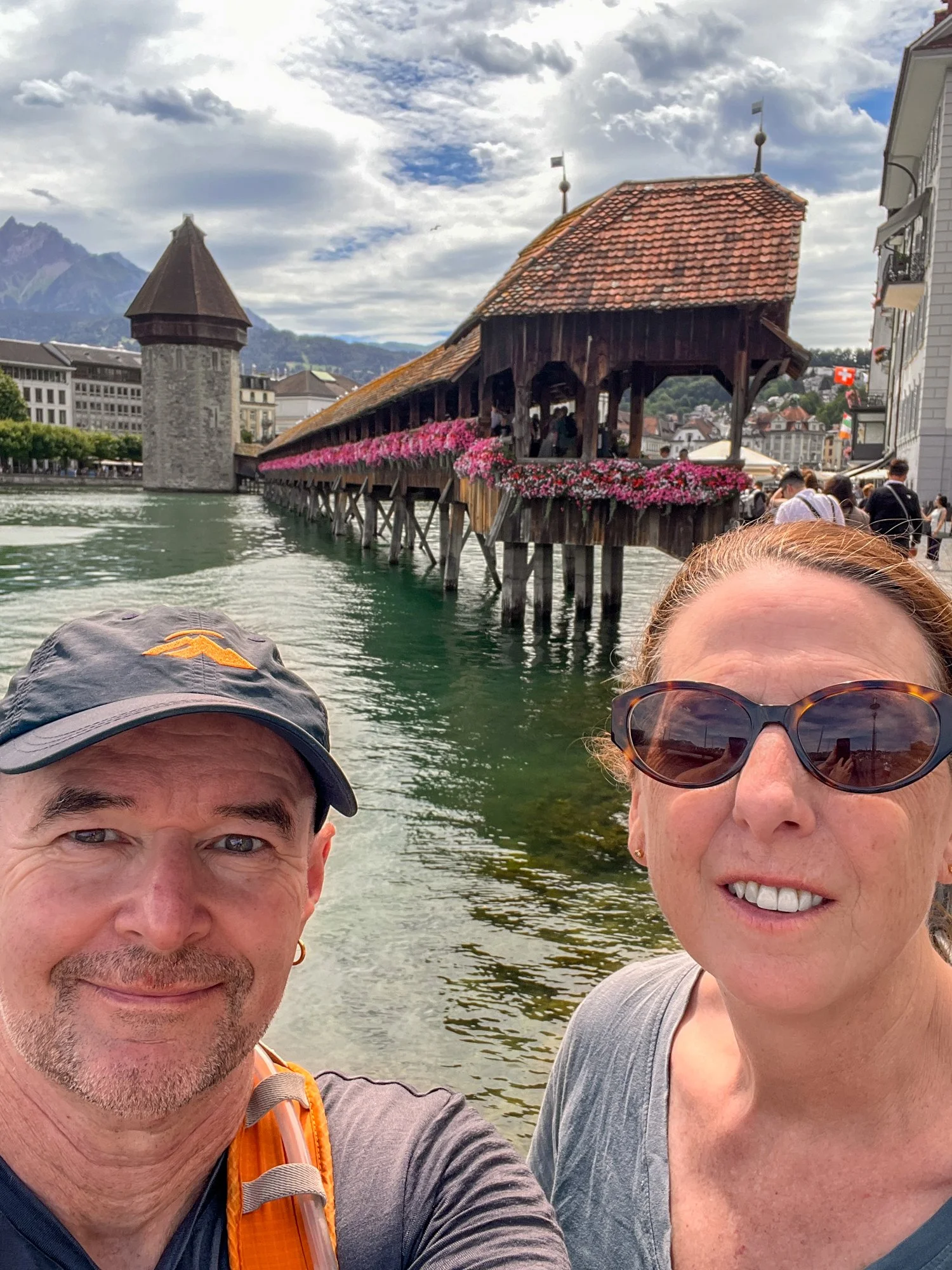
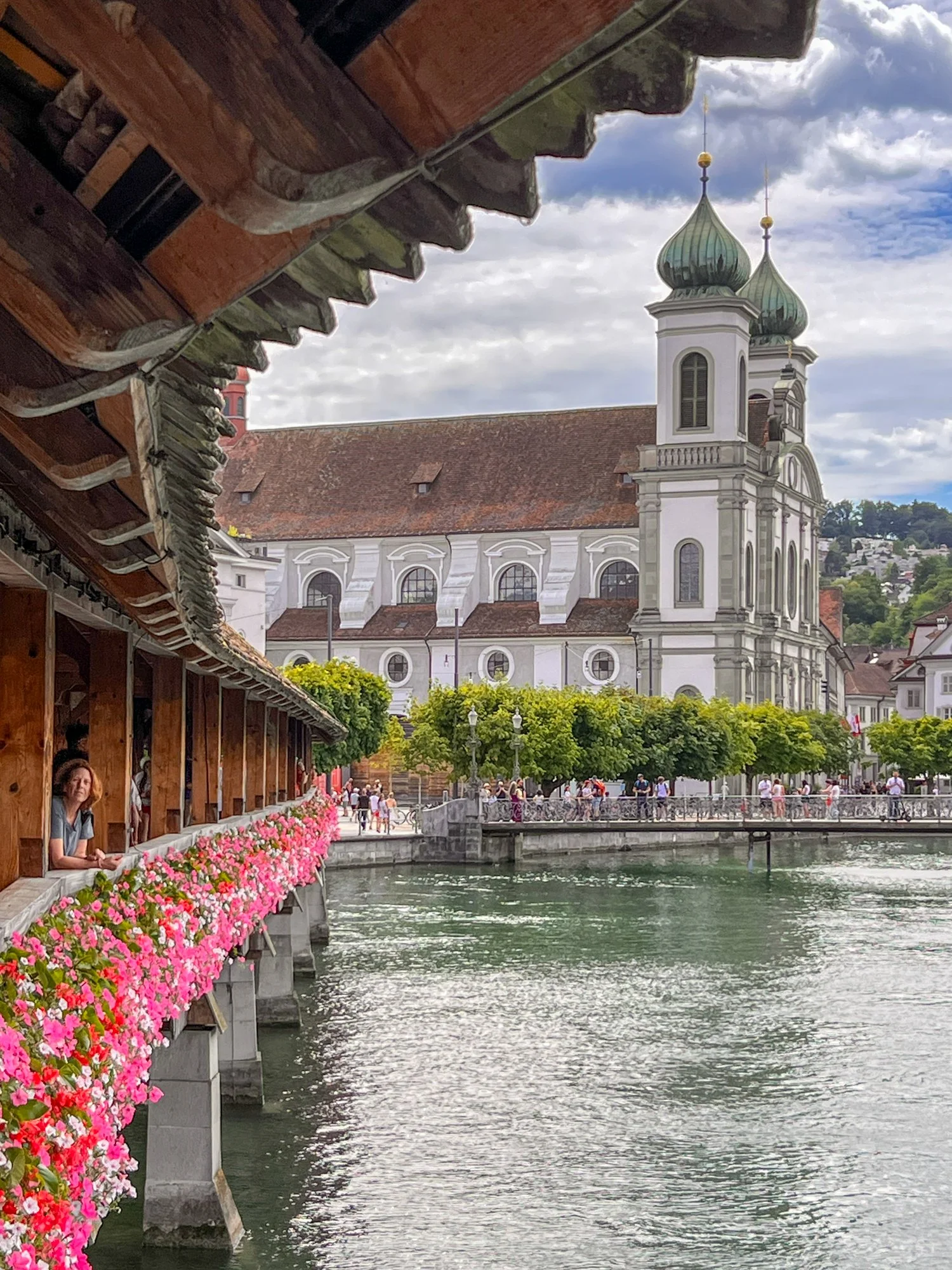
So, early one morning, I headed out for a run through the old town while most of Lucerne was still asleep and before the crush of the tourists descended on the famous Chapel Bridge, or Kapellbrücke — the city's postcard celebrity. Built in 1333, it's one of Lucerne's most recognisable landmarks, stretching across the Reuss River with the distinctive octagonal Water Tower sitting alongside it.
It is not long before the bridge is transformed from peaceful medieval landmark into something resembling a human conveyor belt.
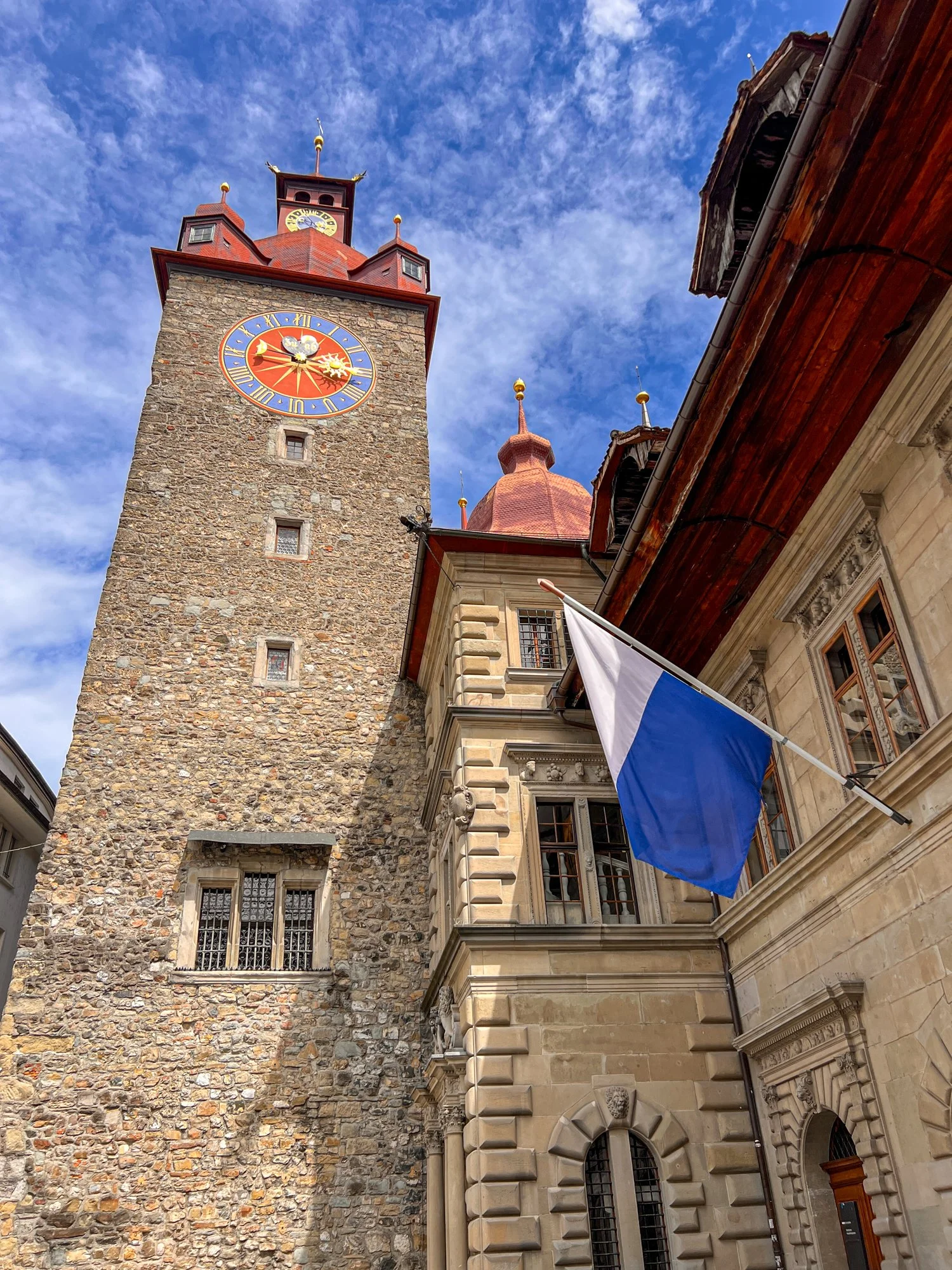
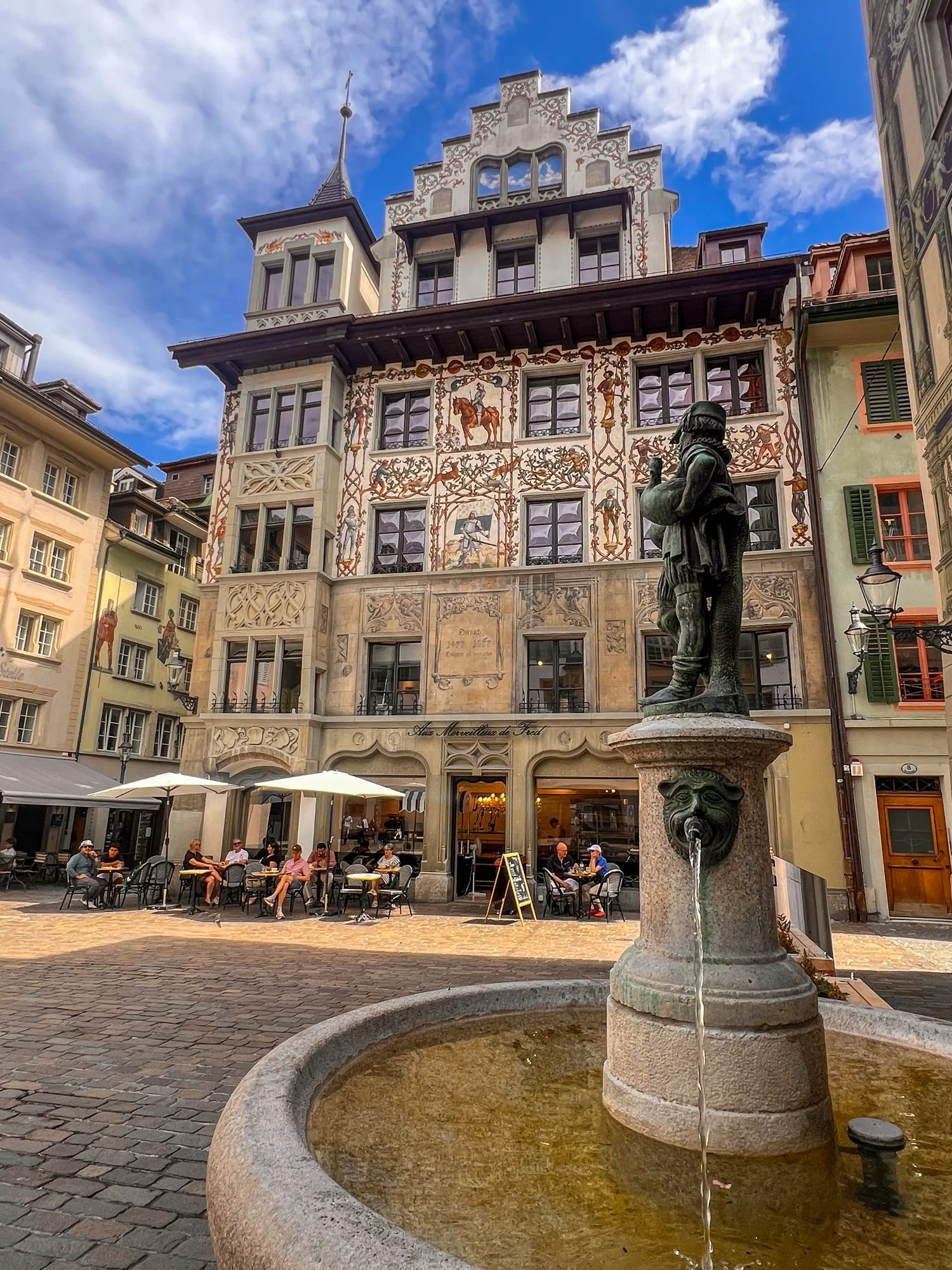
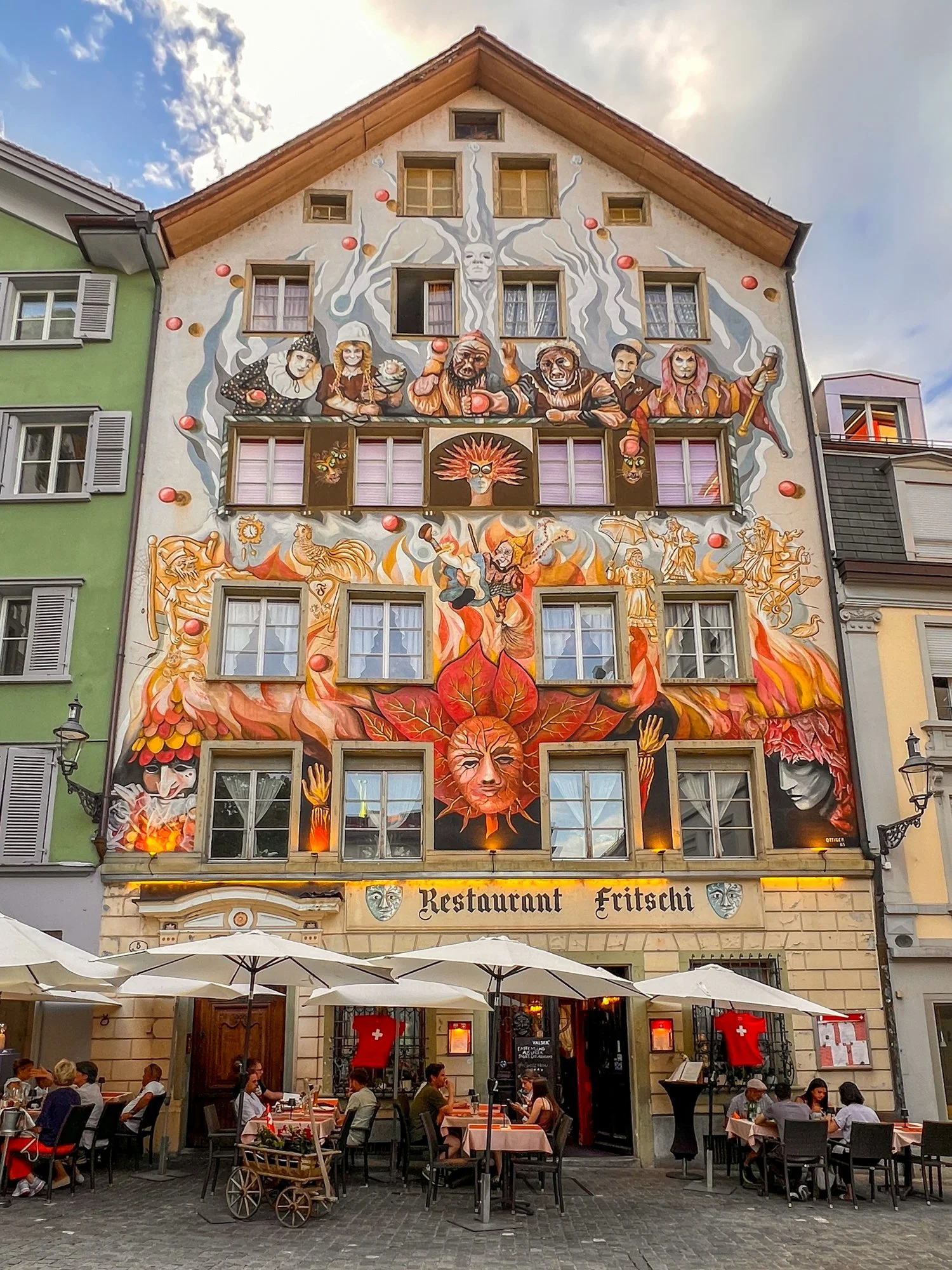
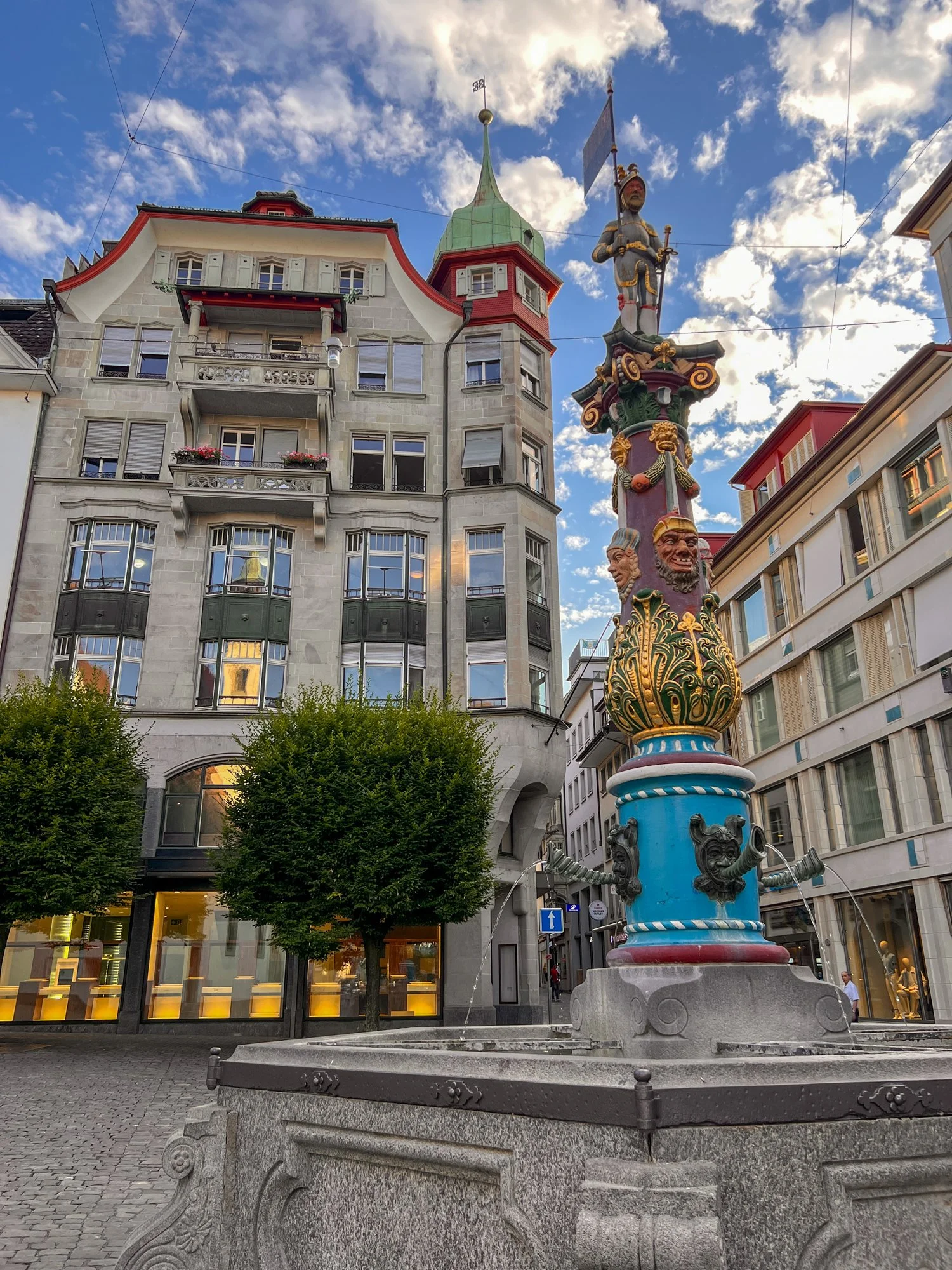
Zurich had its candy-stripe buildings, but Lucerne has taken things to another level. Buildings around the old town are covered in elaborate paintings and colourful façades, particularly around places such as Sternenplatz. Rather than simply painting a building one colour and calling it a day, the Lucerners appear to have decided that every wall deserves its own artwork.
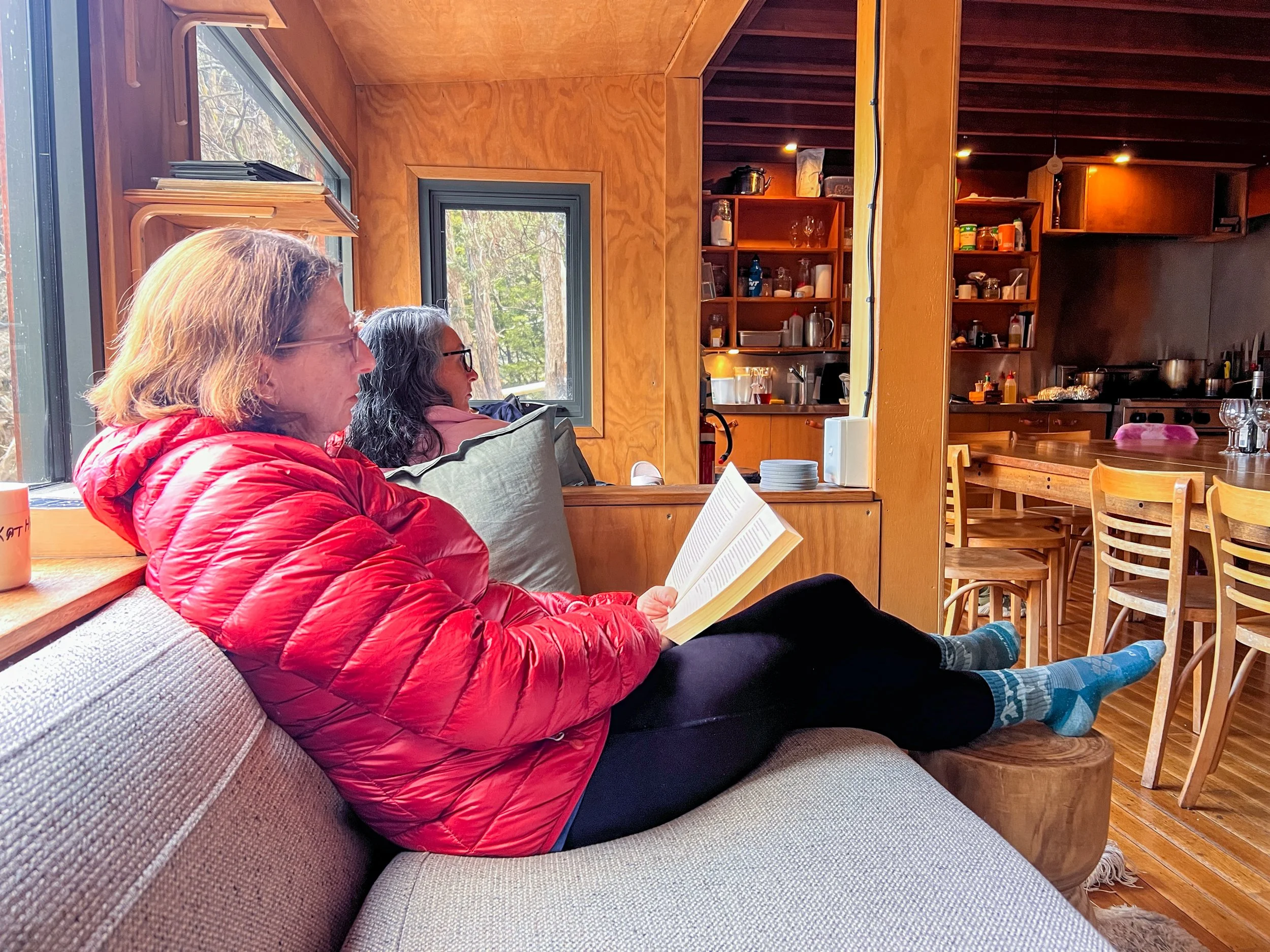
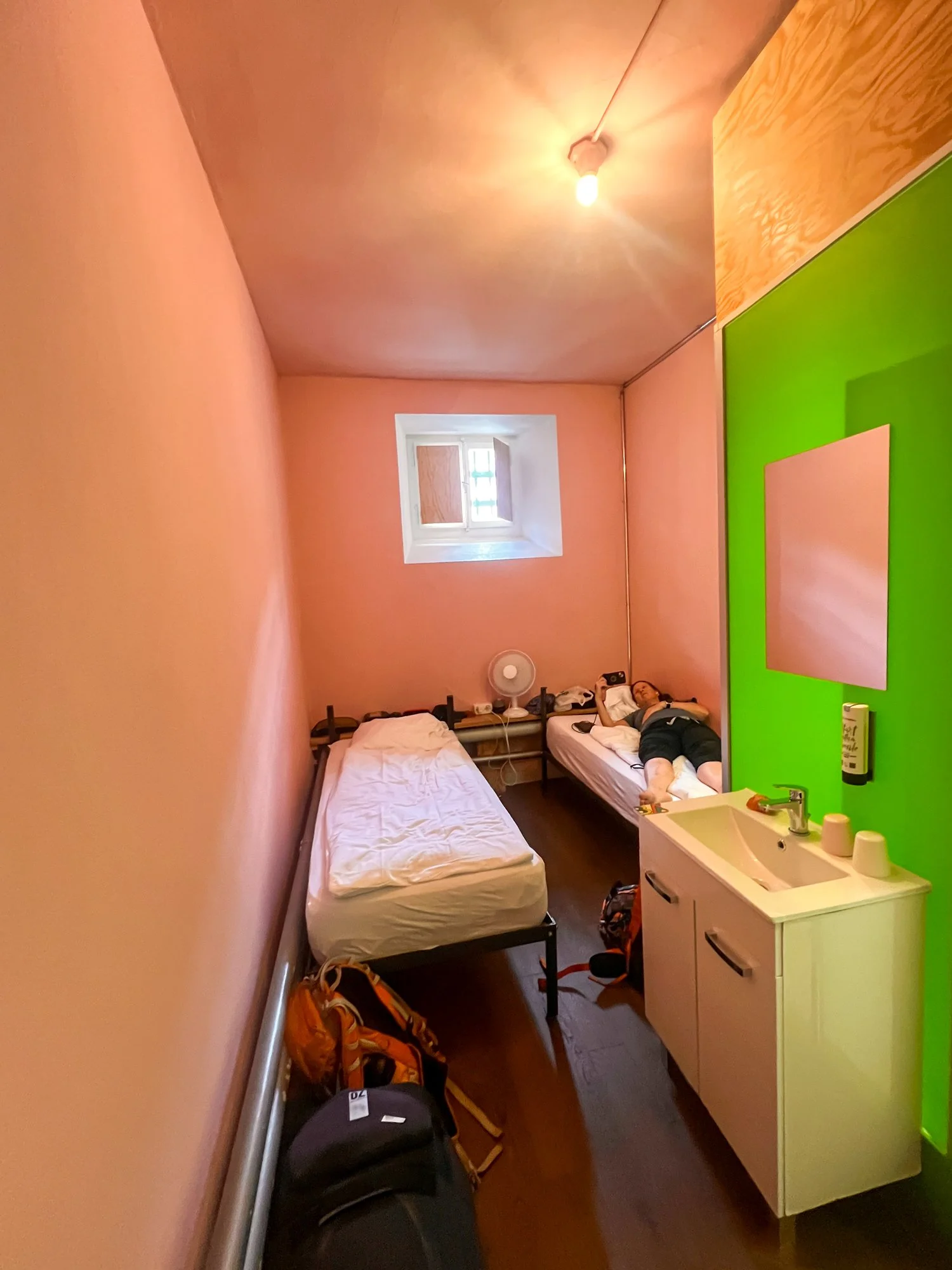
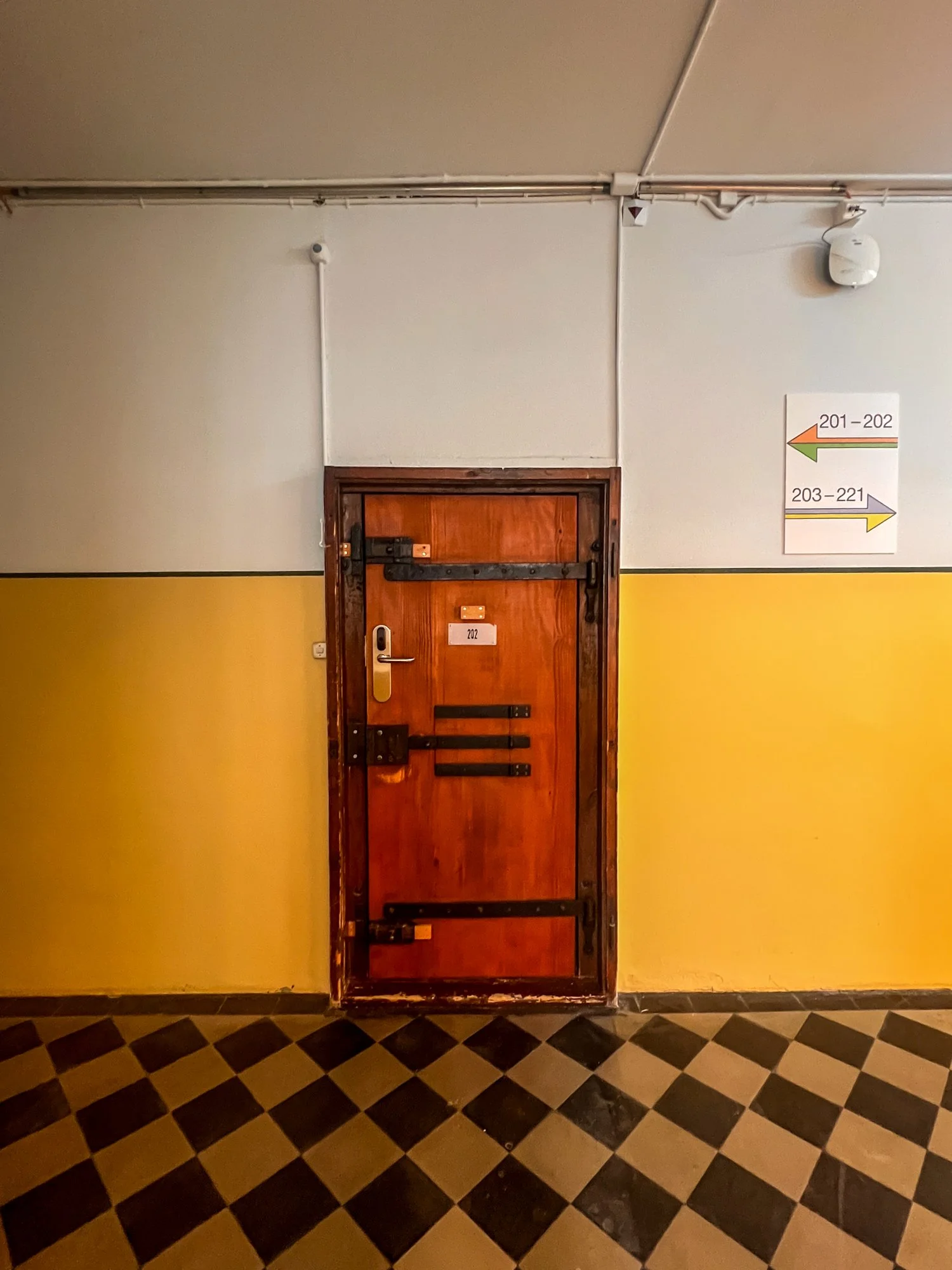
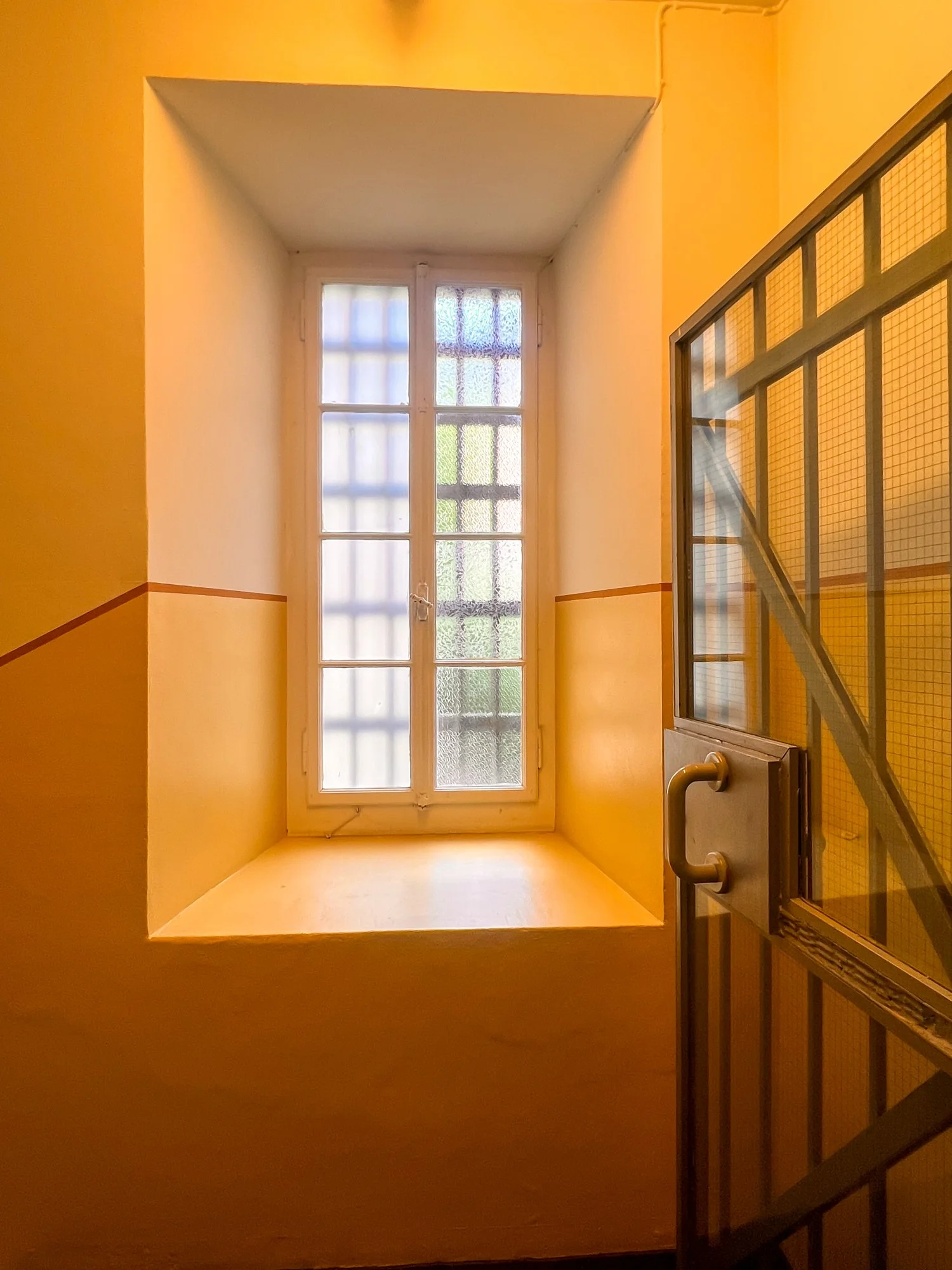
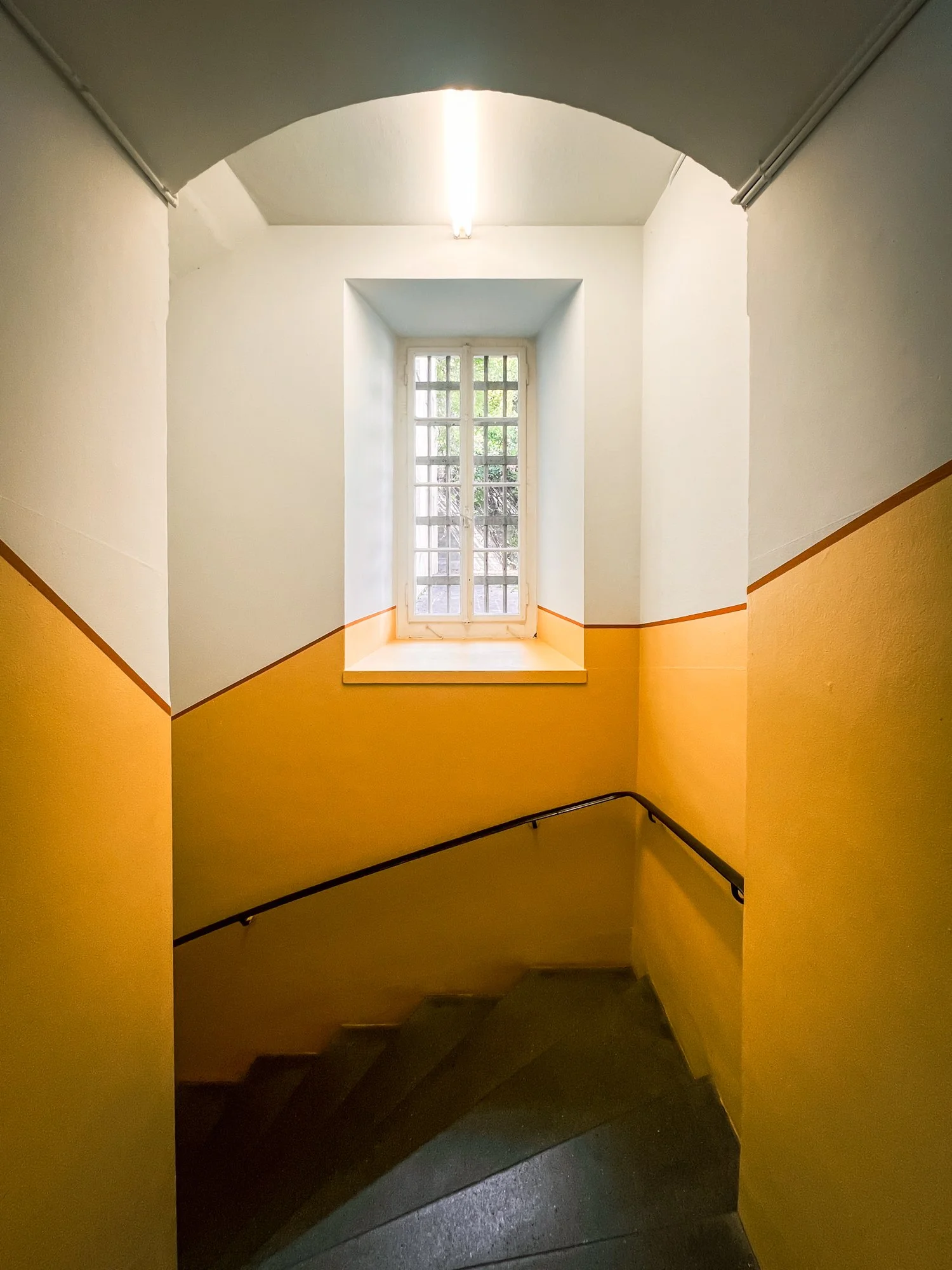
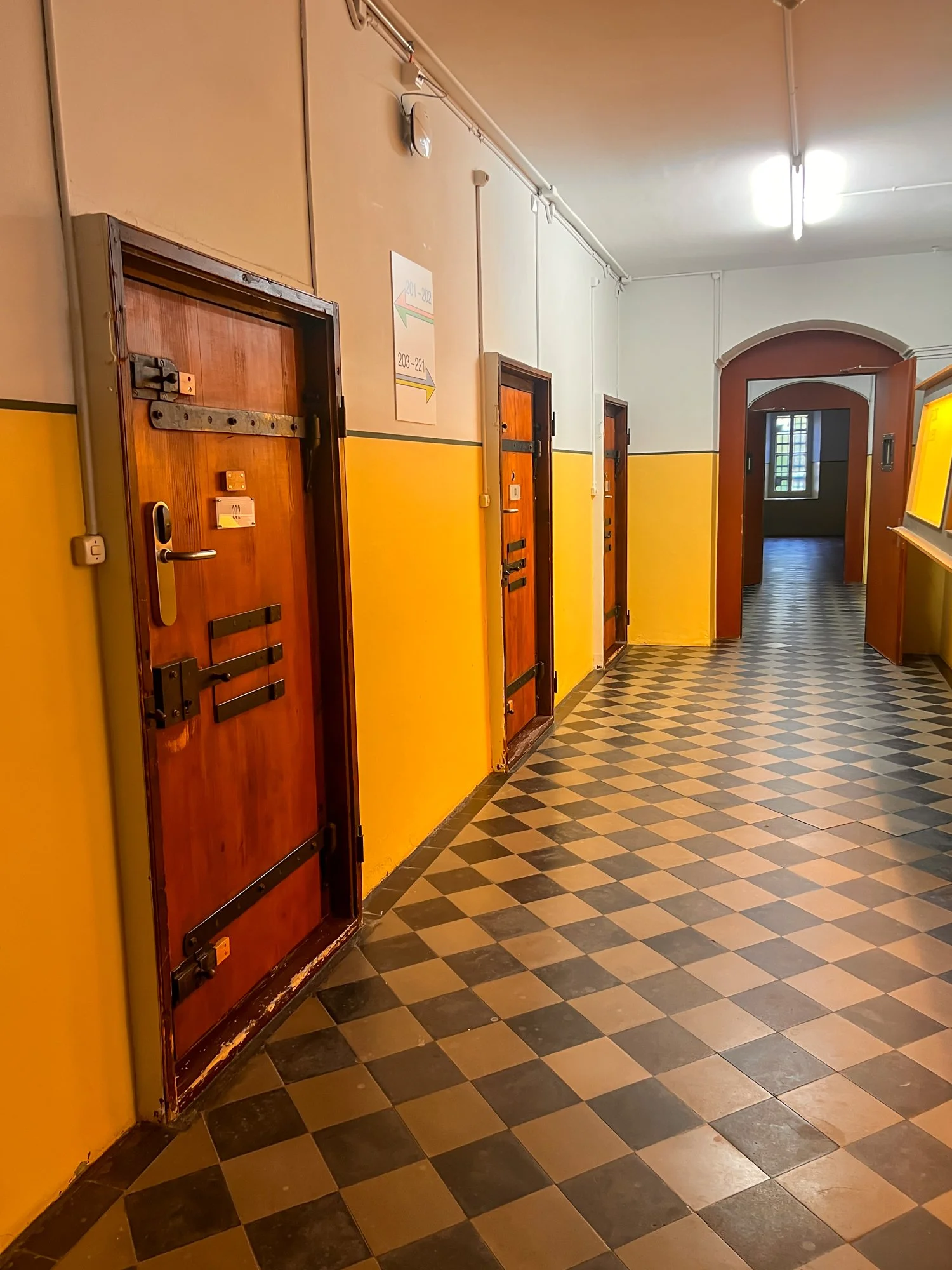
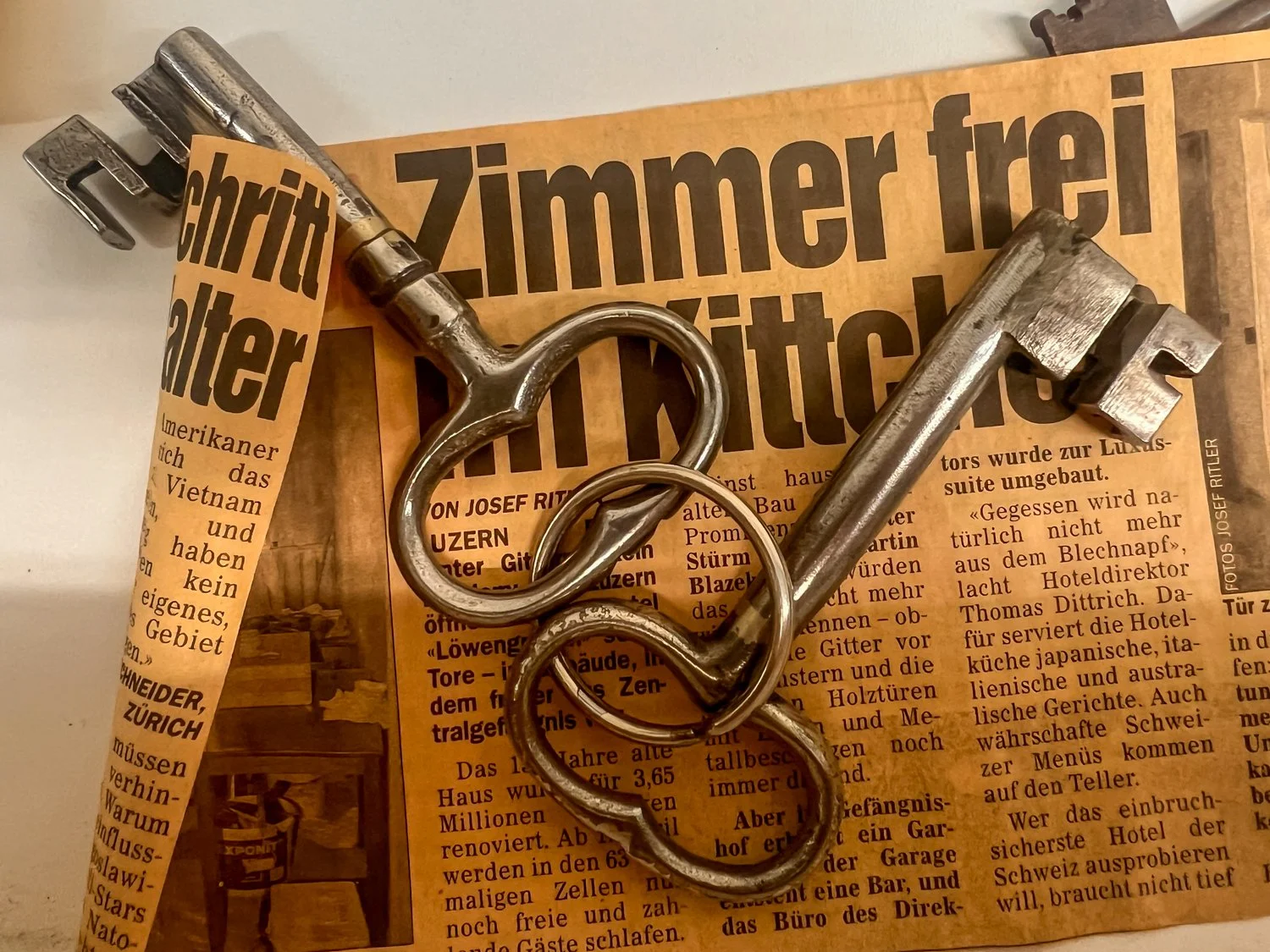
I'm not entirely sure this was on Kathy's original holiday wish list, but we decided to stay one night in the old jail. It was certainly different — and probably one of those travel experiences we'll remember long after we've forgotten the name of the hotel.
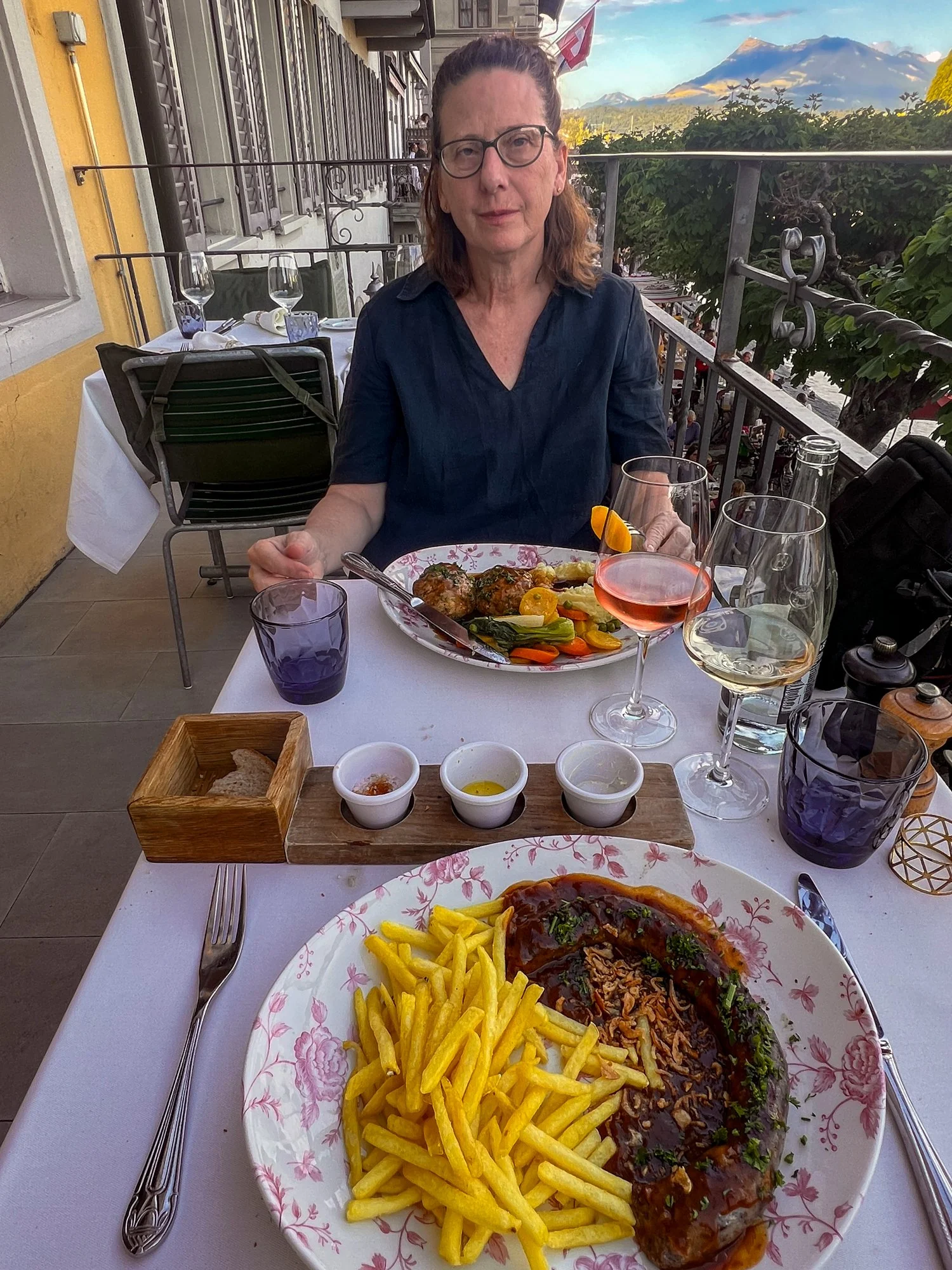
Food-wise, Switzerland hasn't exactly been threatening to steal the Michelin Guide from France. Swiss food is hearty, filling and very committed to cheese, but "gourmet" might be stretching the definition somewhat.
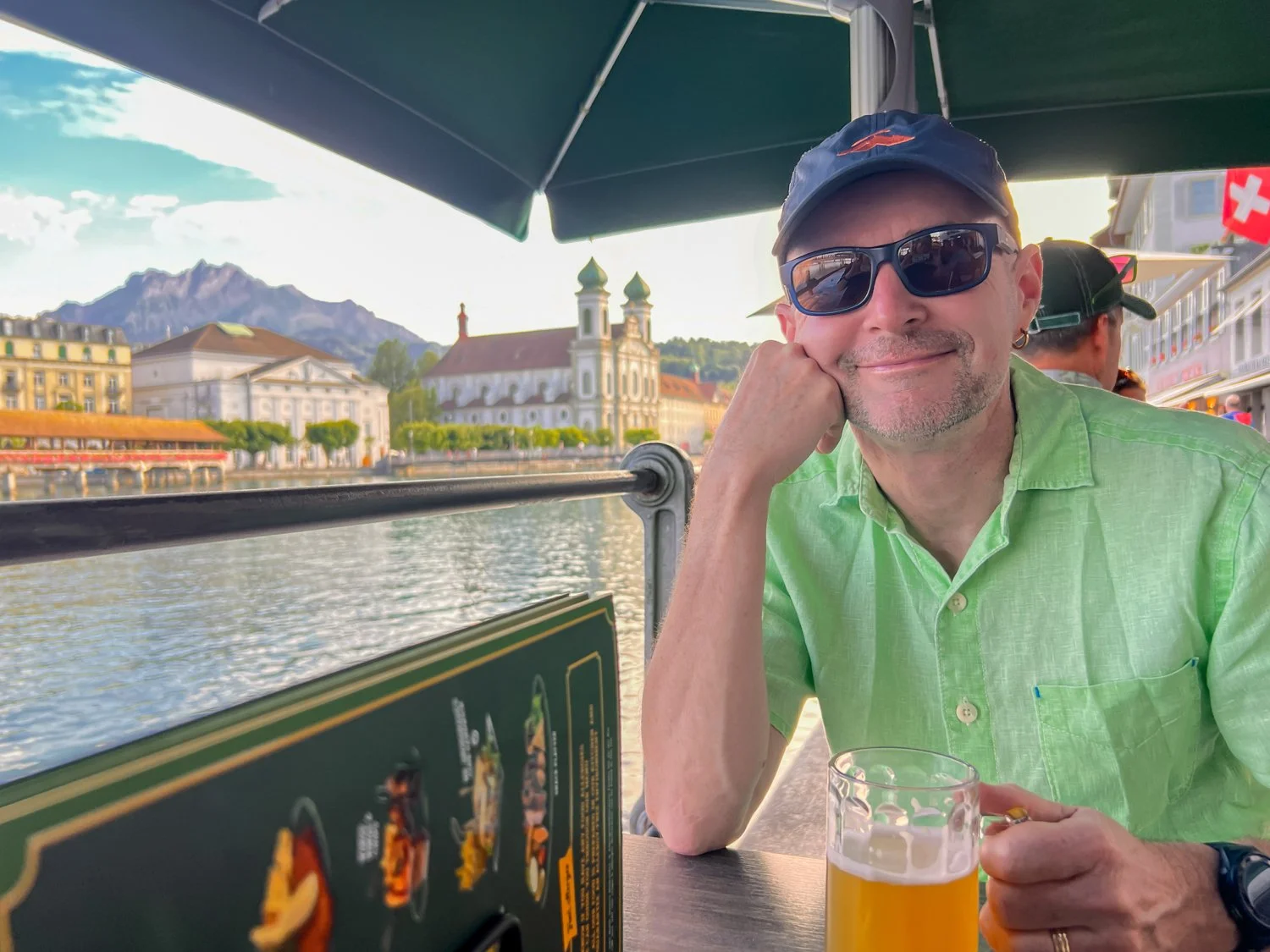
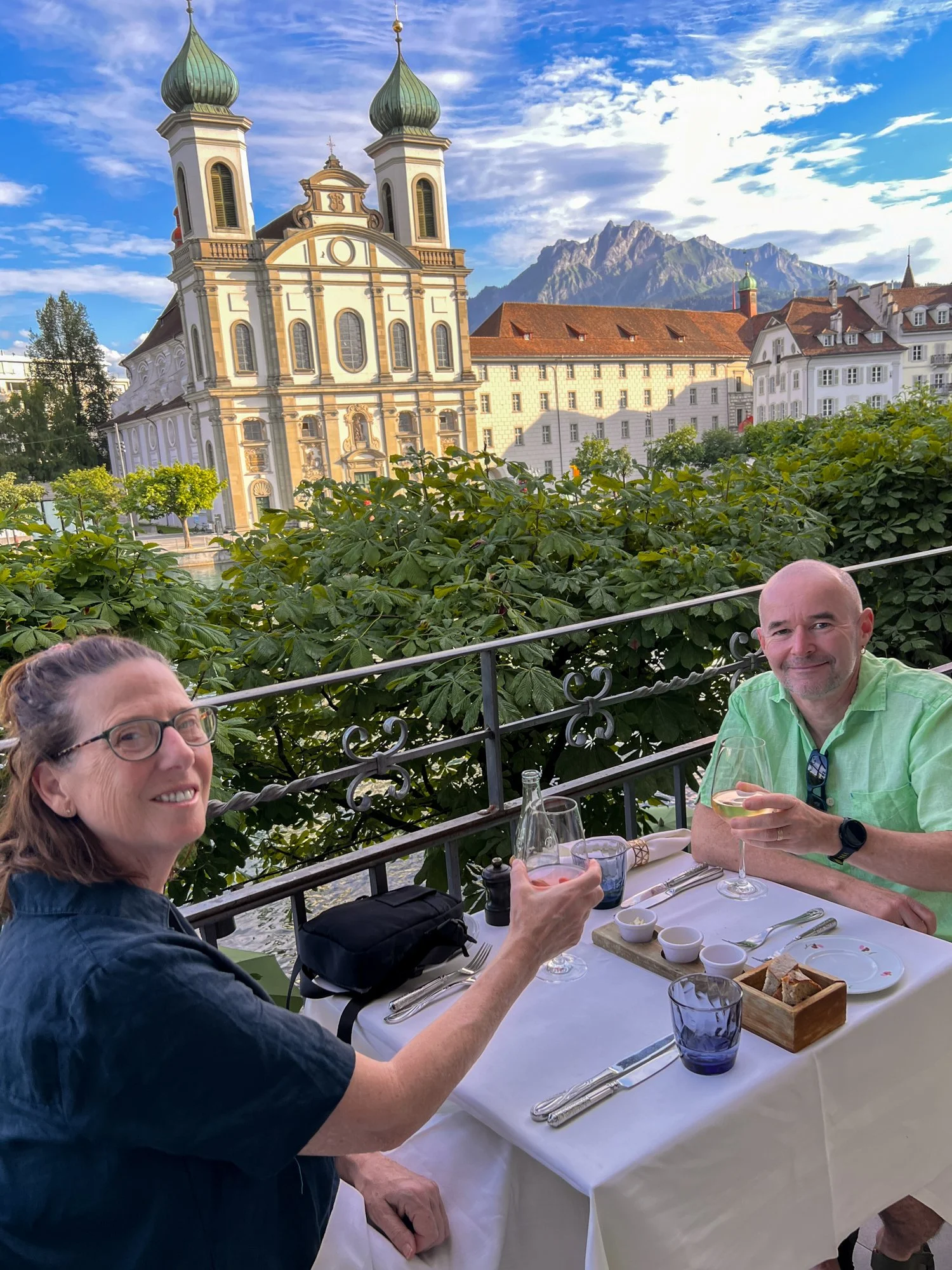
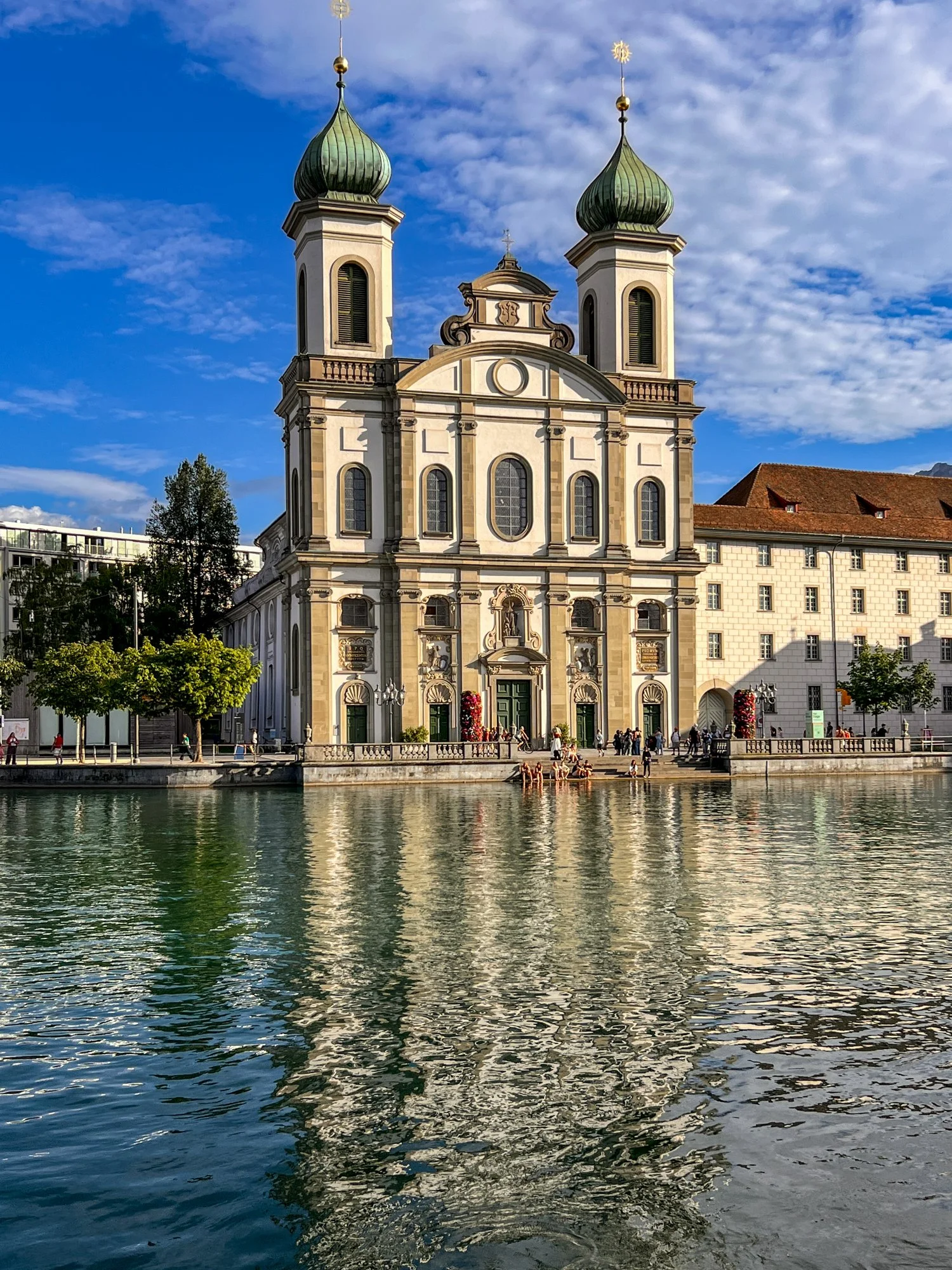
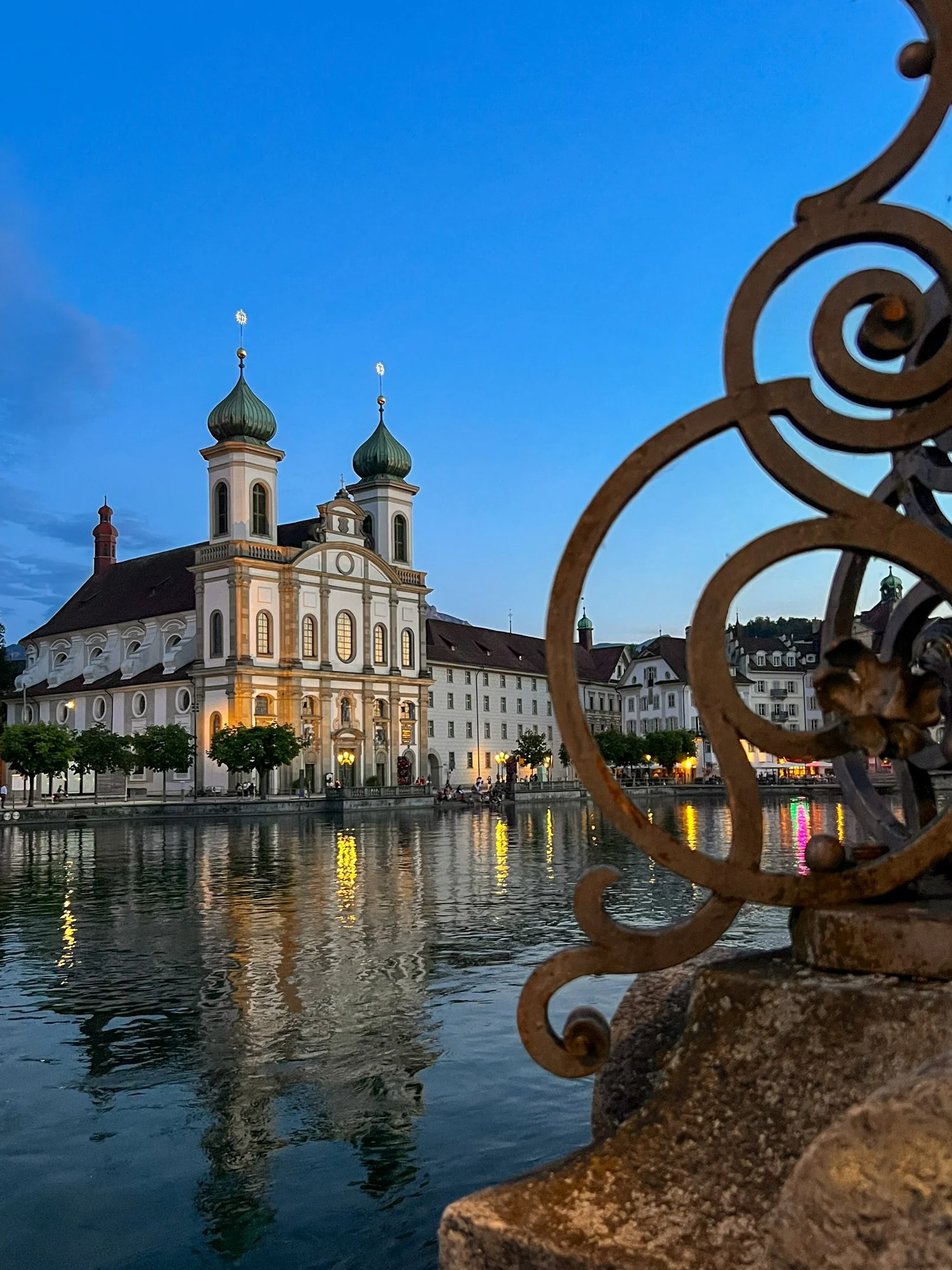
Fortunately, the setting overlooking the beautiful Jesuit Church and having dinner as Lucerne carries on around us more than made up for it.
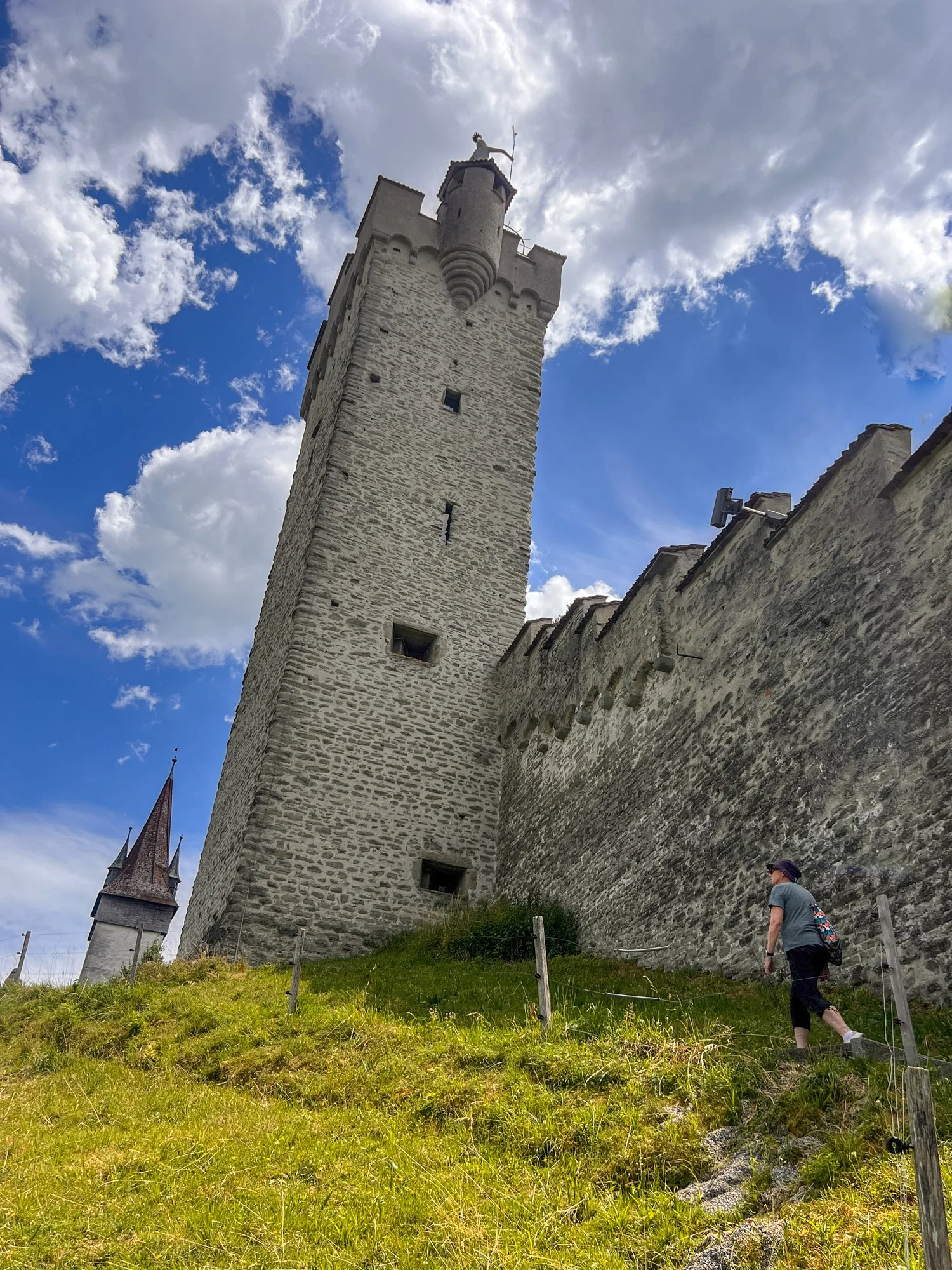
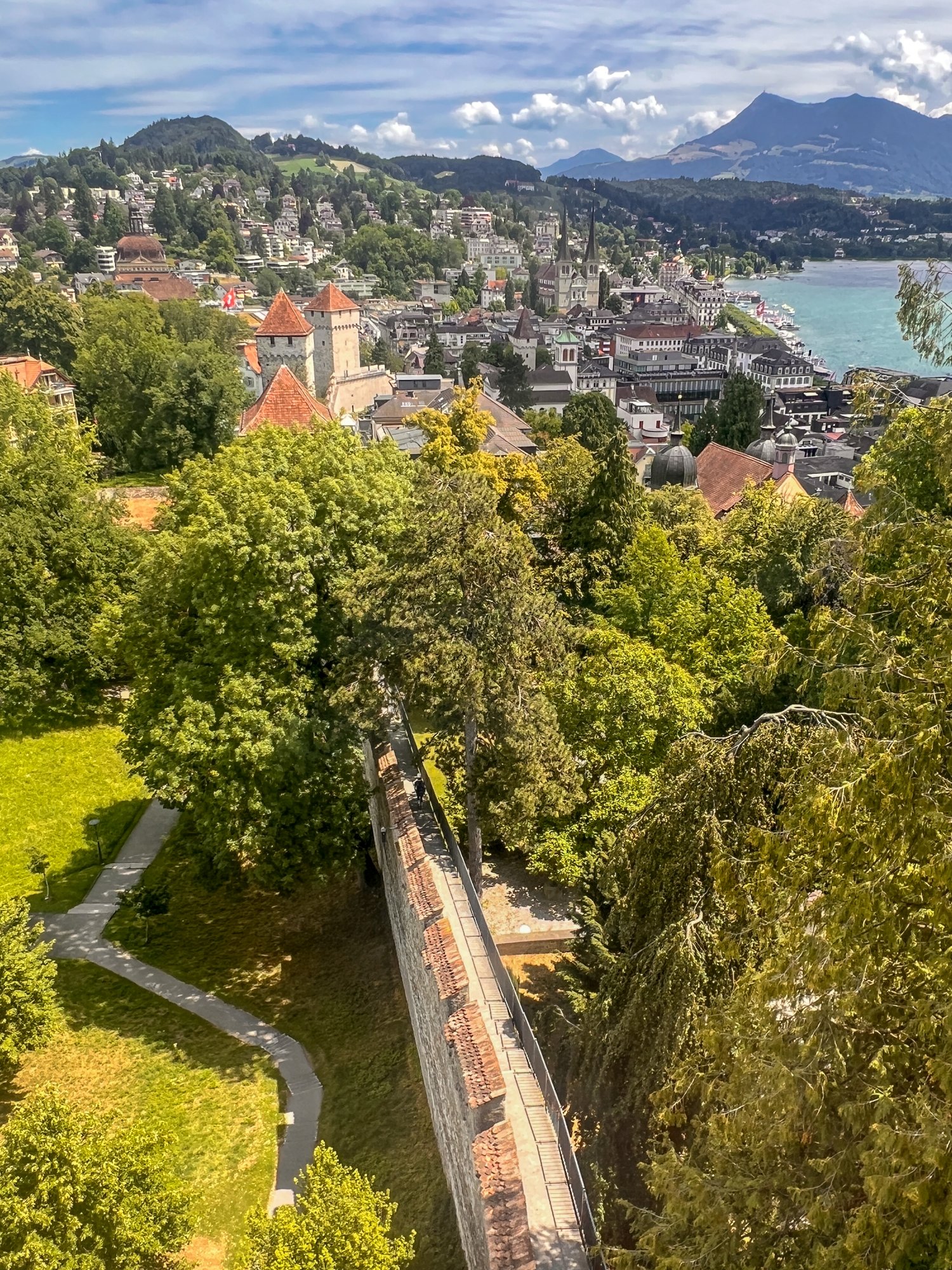
We also tackled the Musegg Wall, the medieval fortification that still runs along the northern edge of the old town. We climbed one of the towers for the views over Lucerne, the lake and the surrounding mountains.
Throw in an early morning run, a medieval bridge, colourful painted buildings, a night in jail, a few drinks overlooking the city - it made for a pretty memorable couple of days.
Although I'm still not convinced Kathy has forgiven me for the accommodation.
Bern
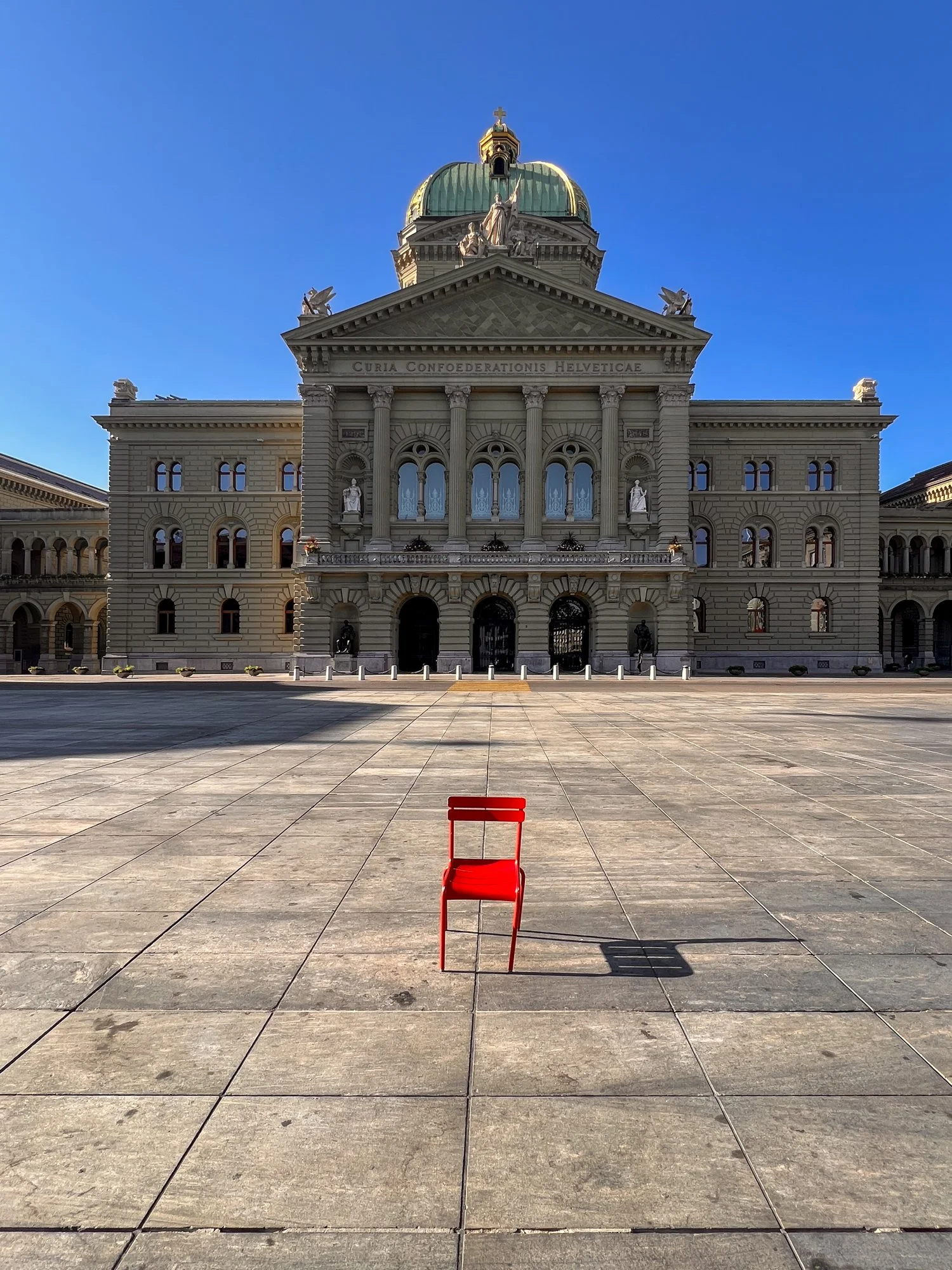
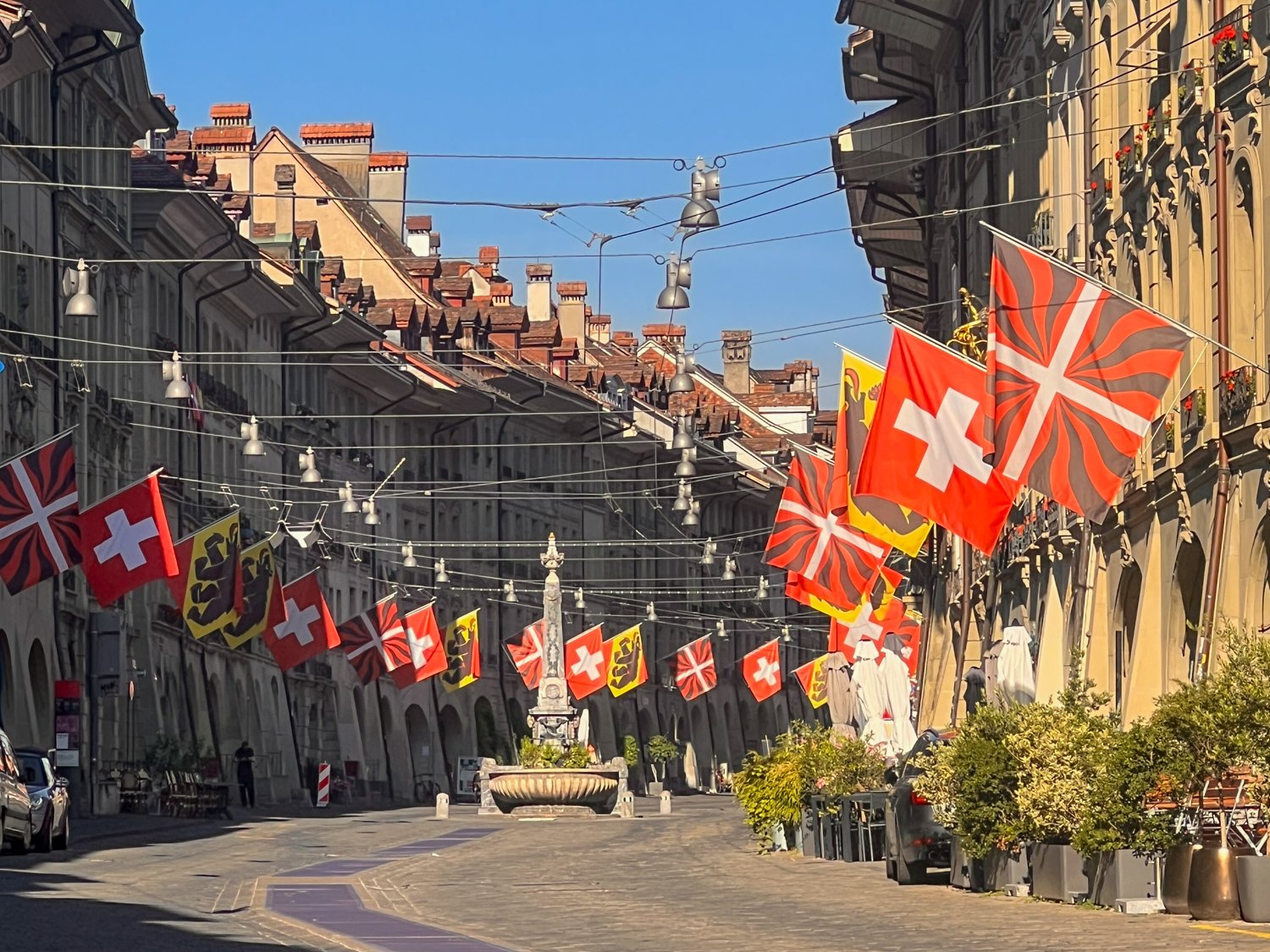
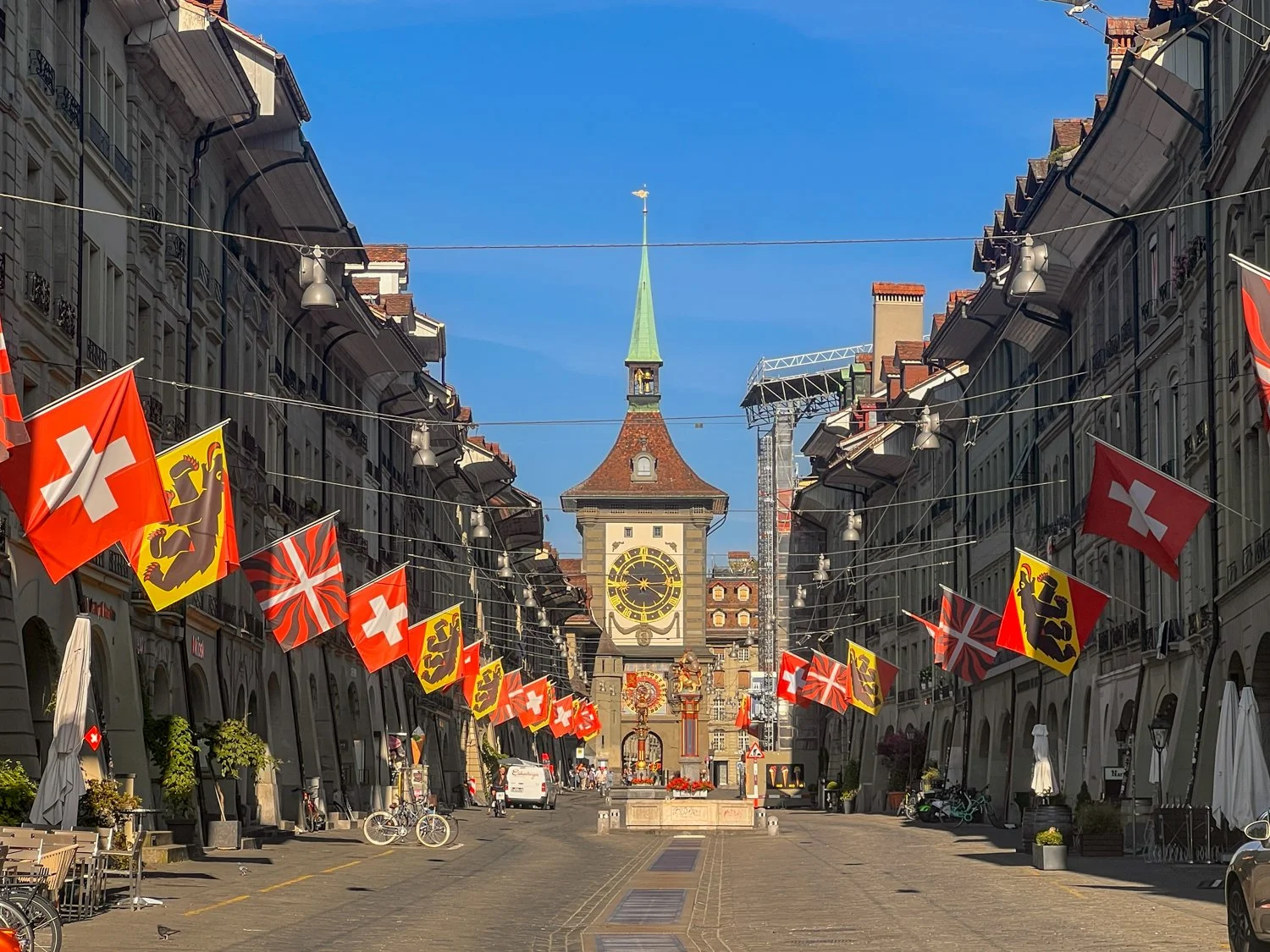
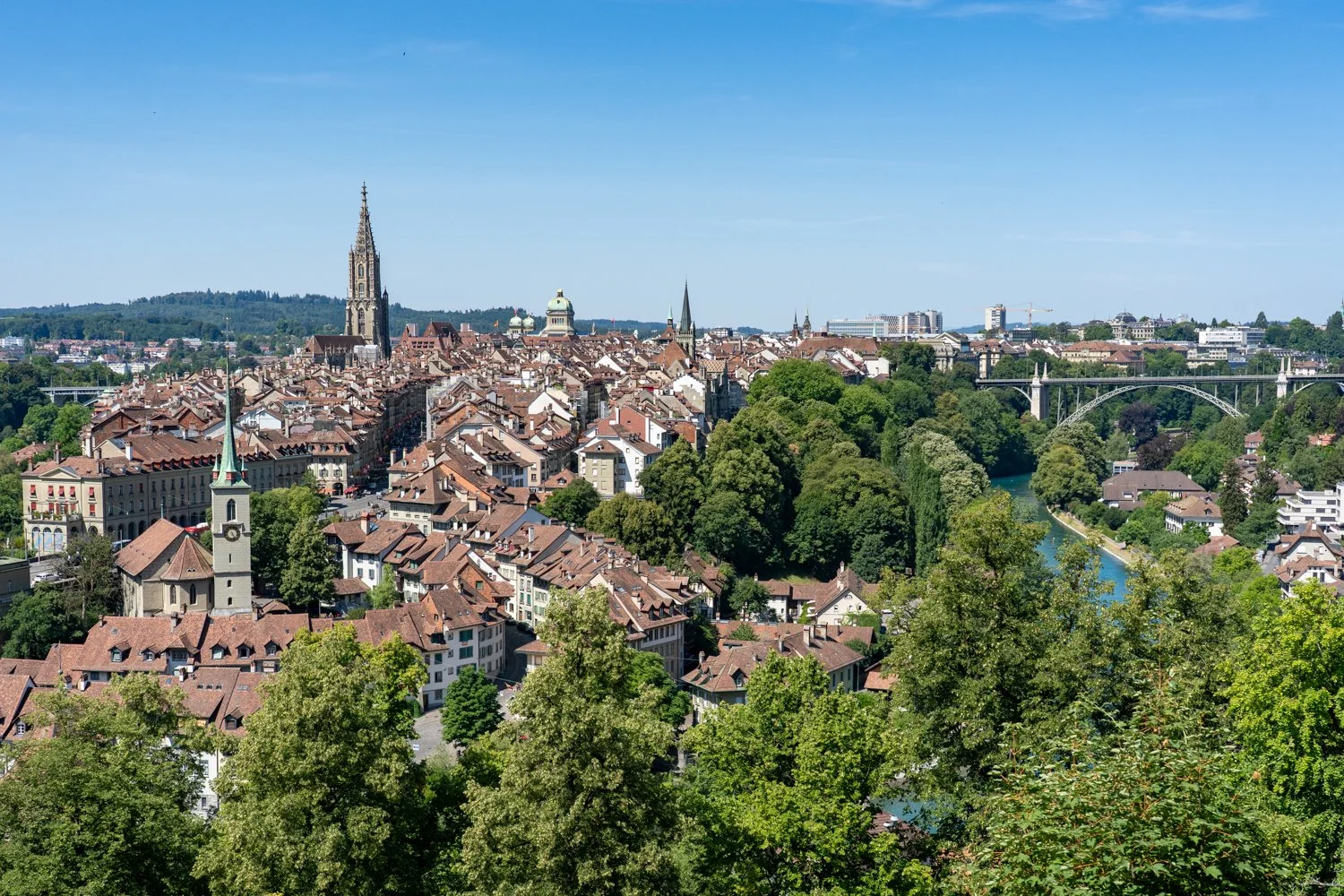
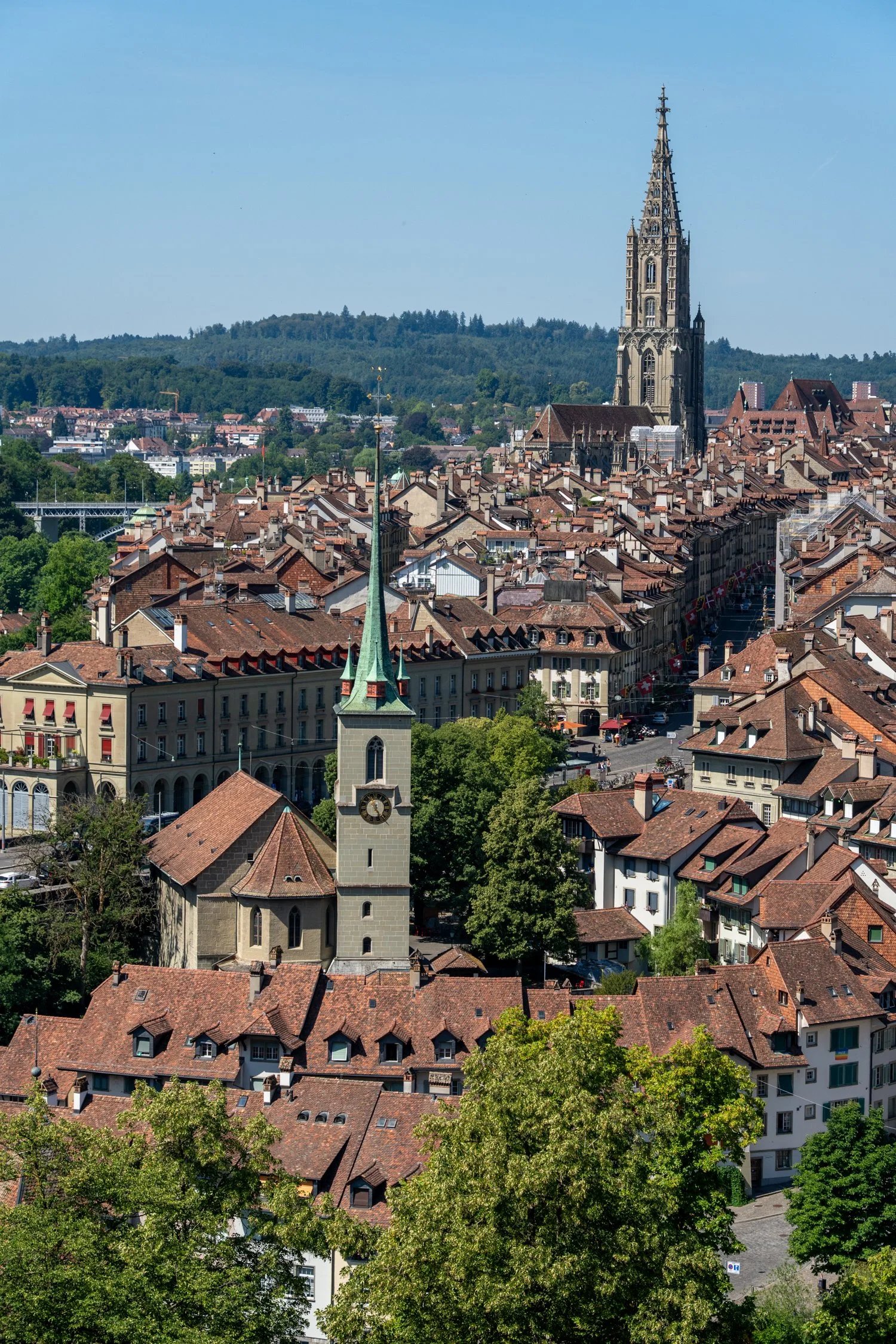
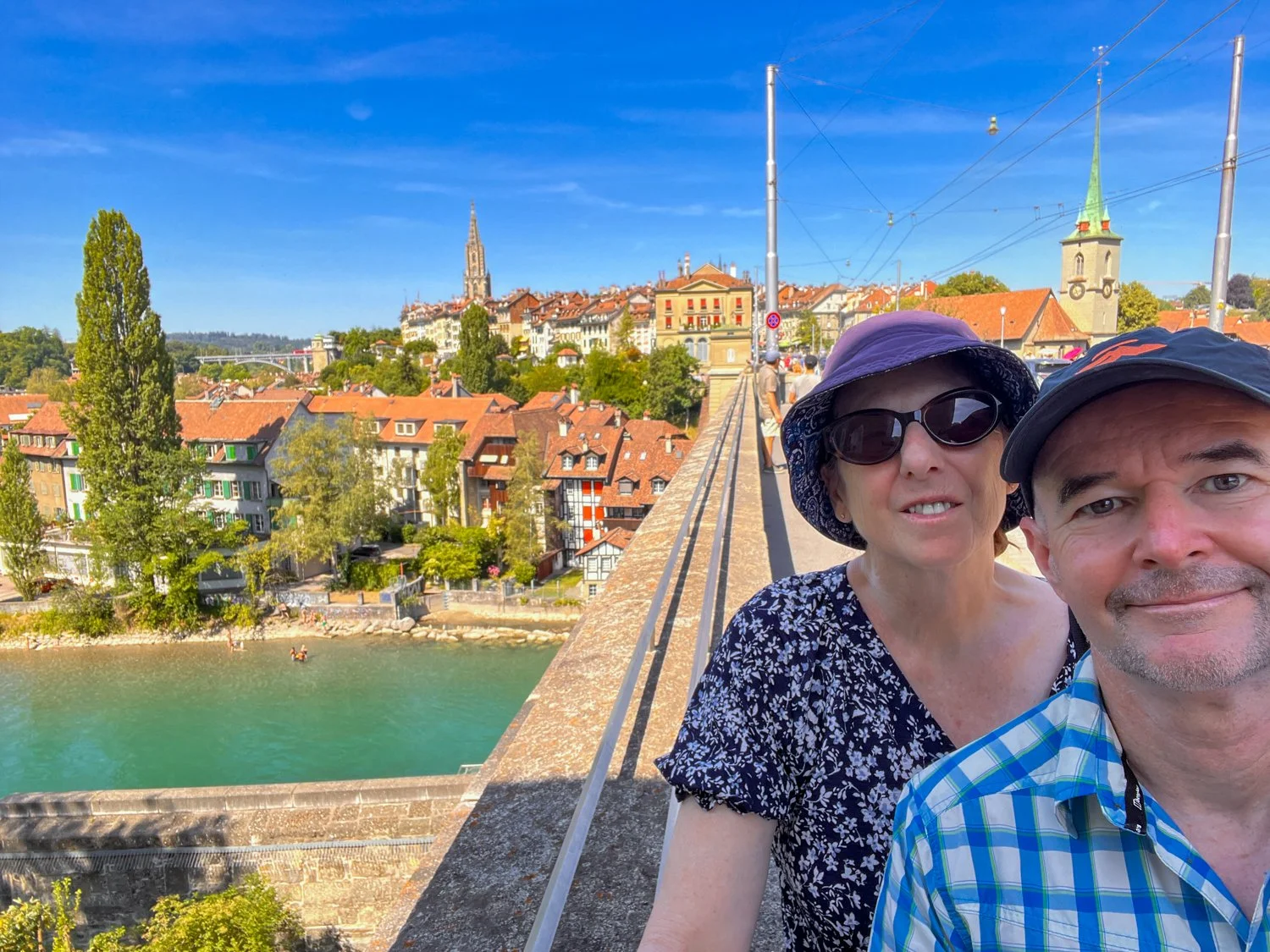
Bern was never meant to be on our list but due to a travel mishap (yes i forgot to book the right number of nights) we decided to stop over here. If we thought Zurich was enthusiastic about Swiss flags, Bern clearly hadn't received the memo about moderation. Bern doesn't just display Swiss flags. It commits to them. Flags seem to be everywhere you look, hanging from buildings, stretching across streets and generally reminding you that, yes, you are definitely in Switzerland.
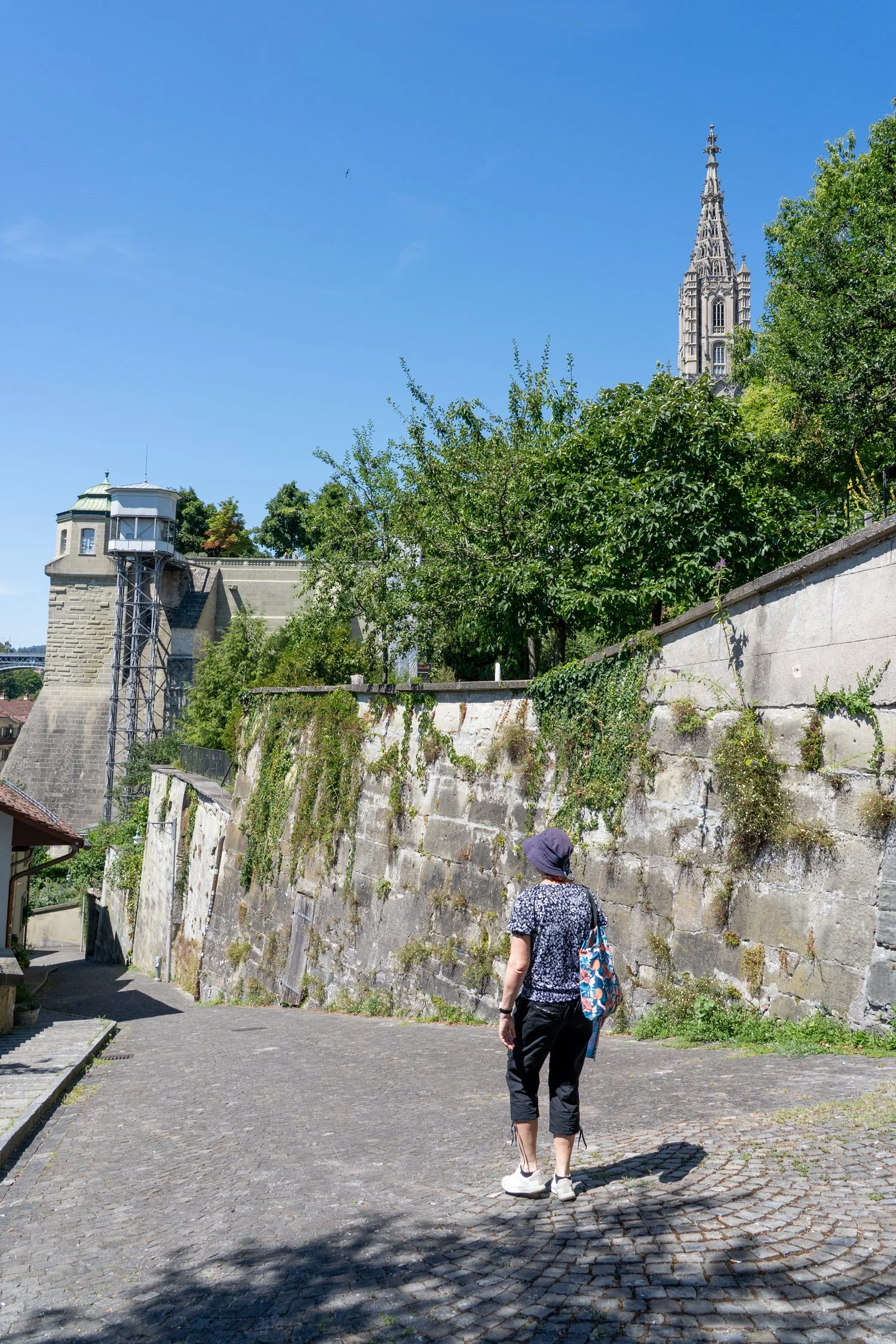
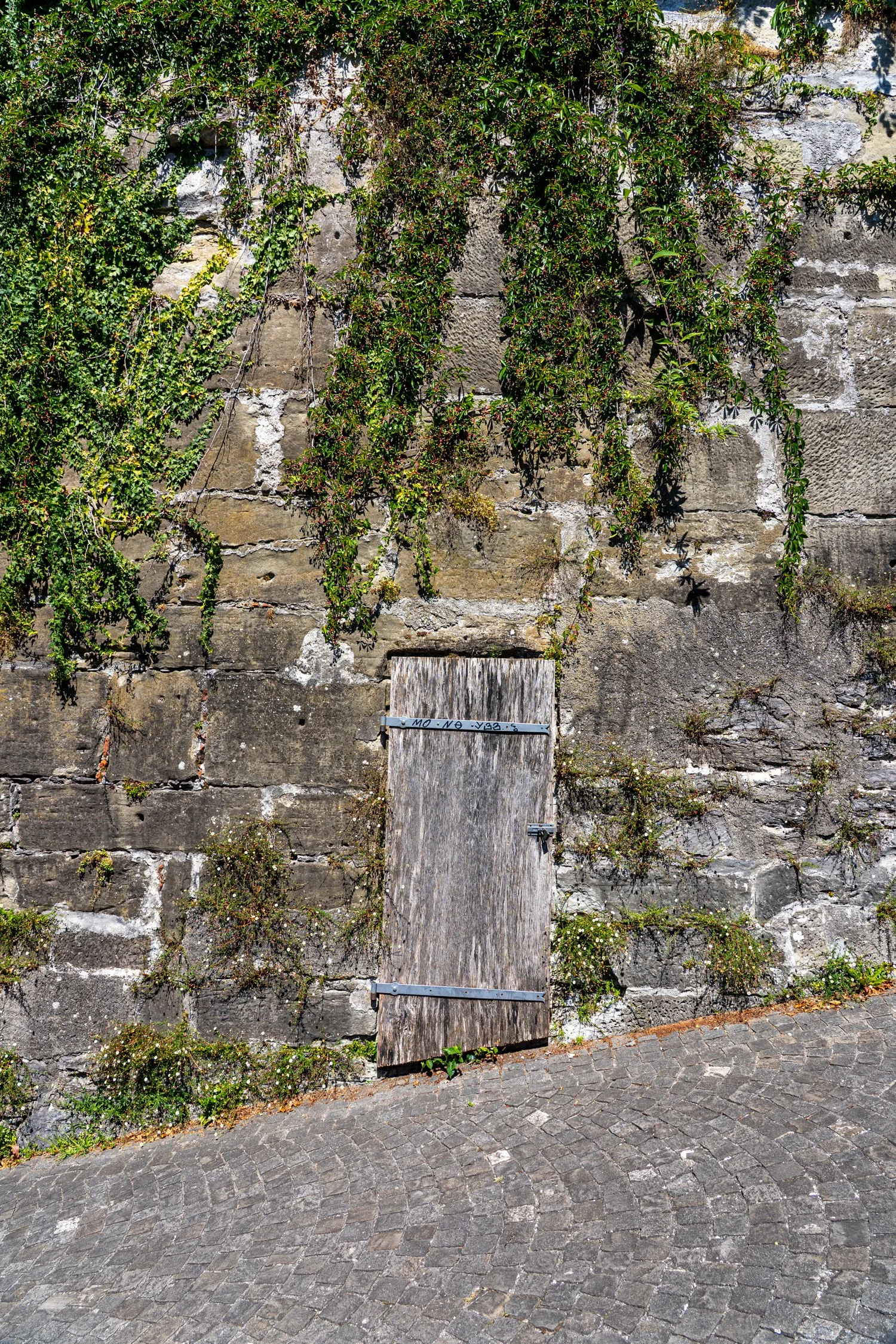
The Old Town is surrounded by remnants of its medieval fortifications, a reminder that this wasn't always the rather pleasant, postcard-perfect city we were wandering around. The old walls and gates once provided protection for the city, while today they provide another layer of history to explore.
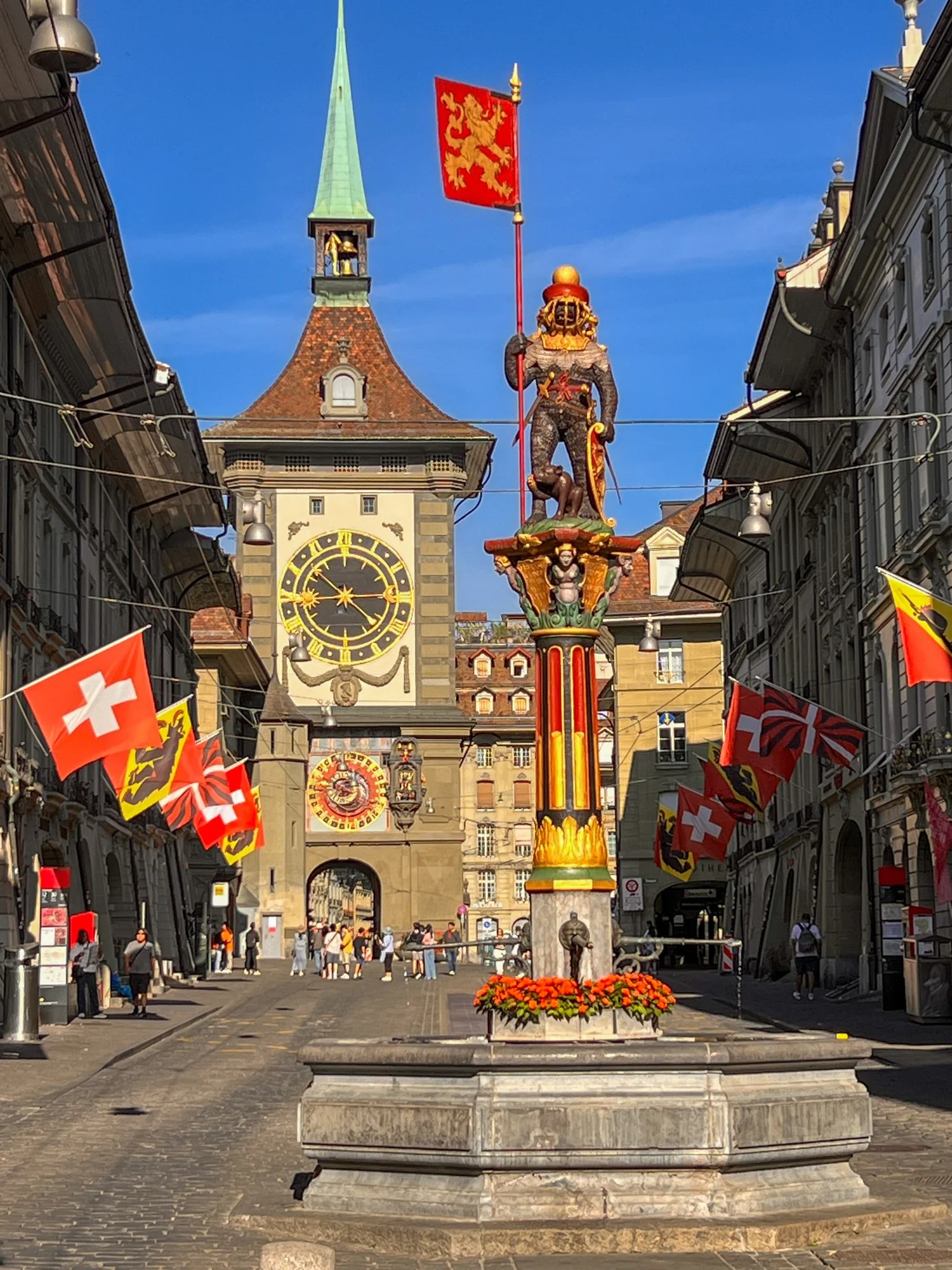
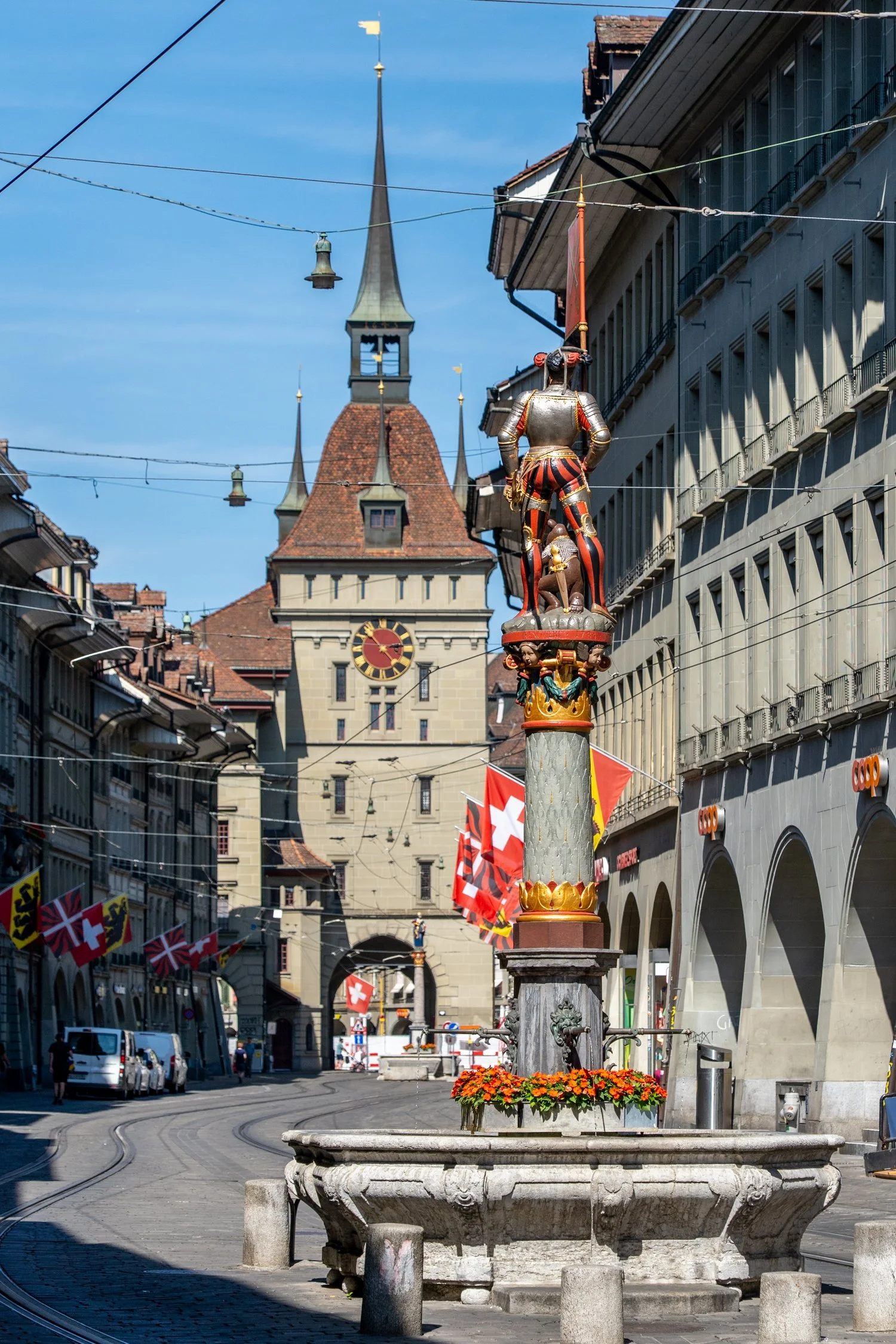
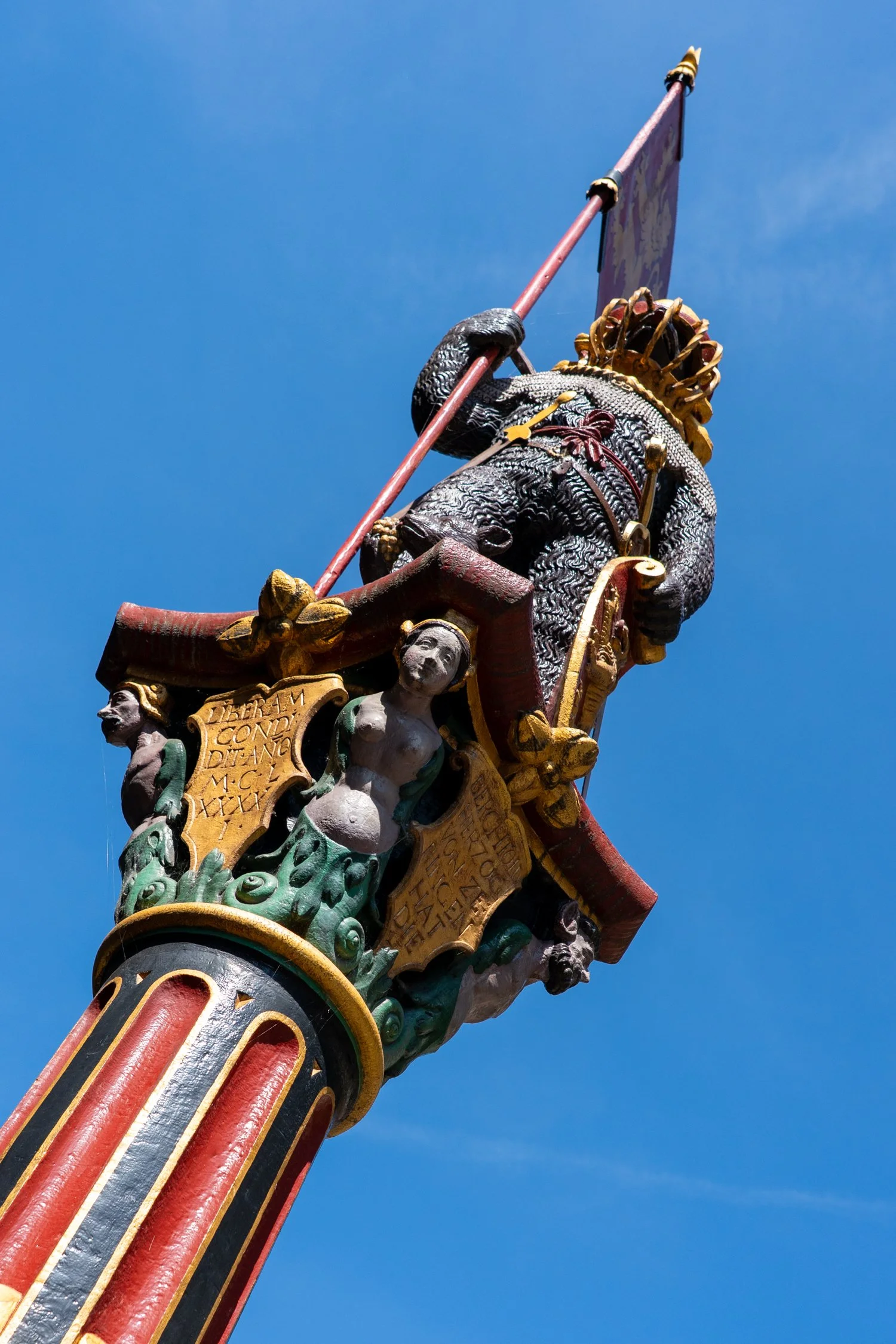
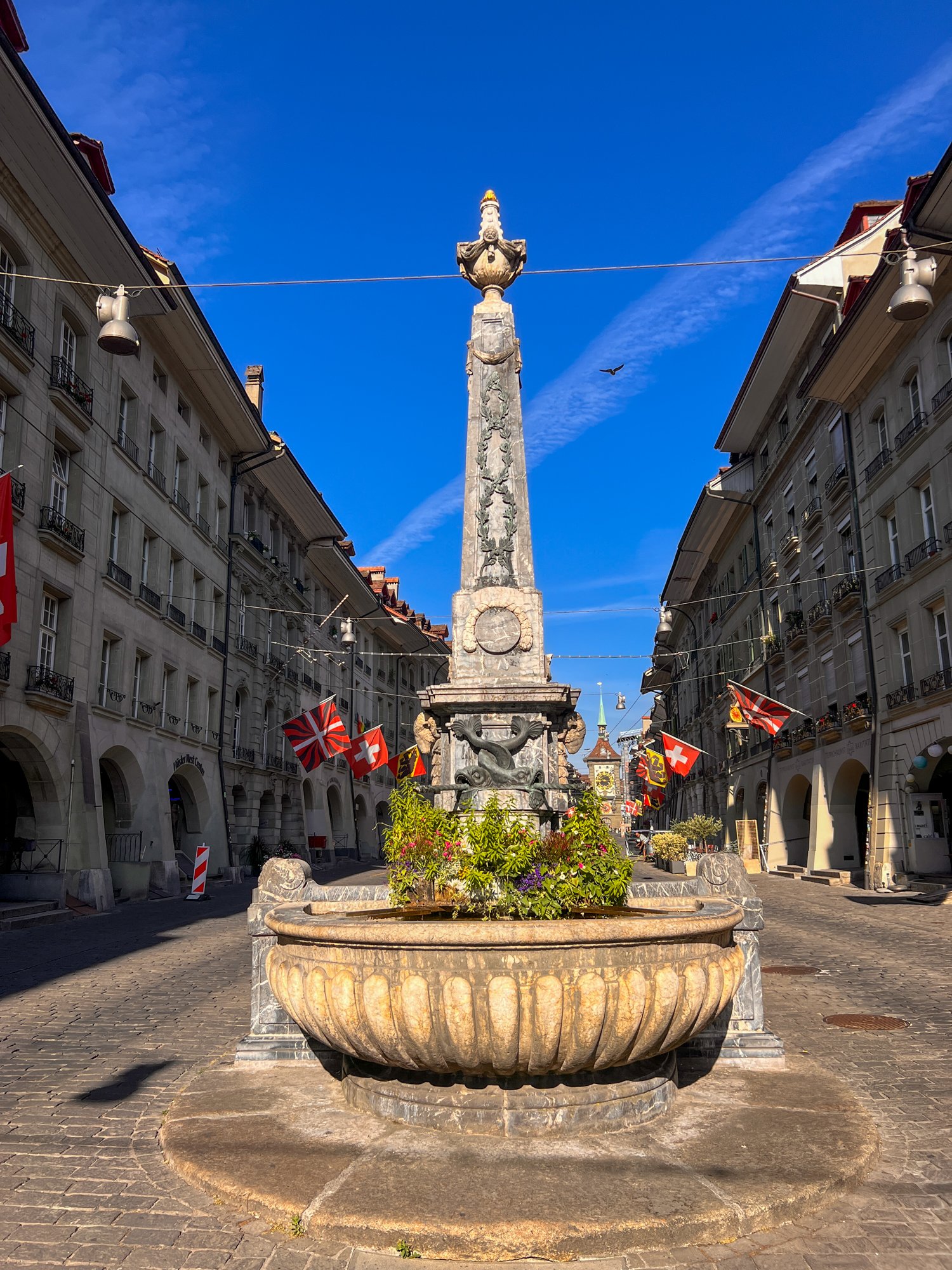
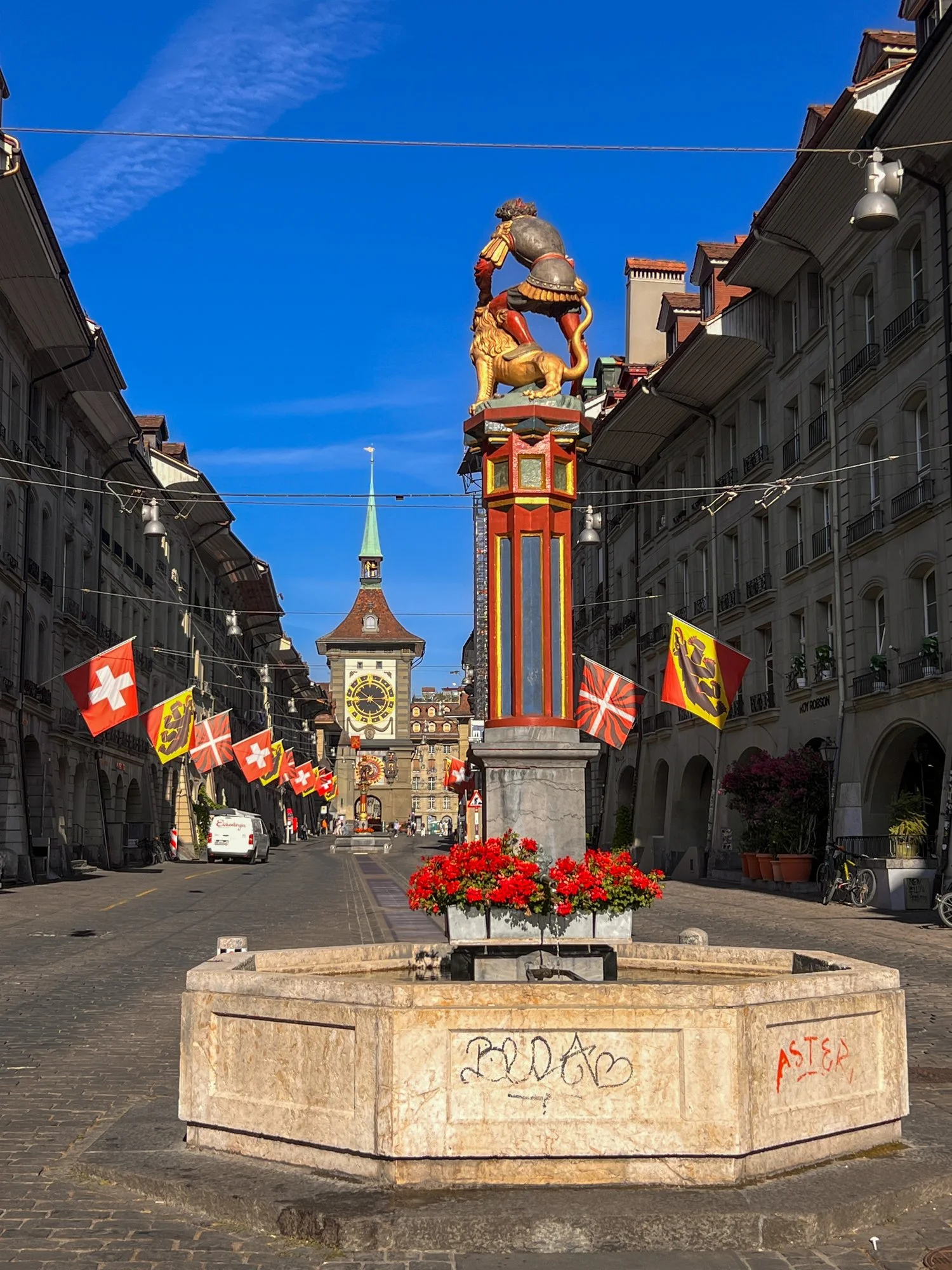
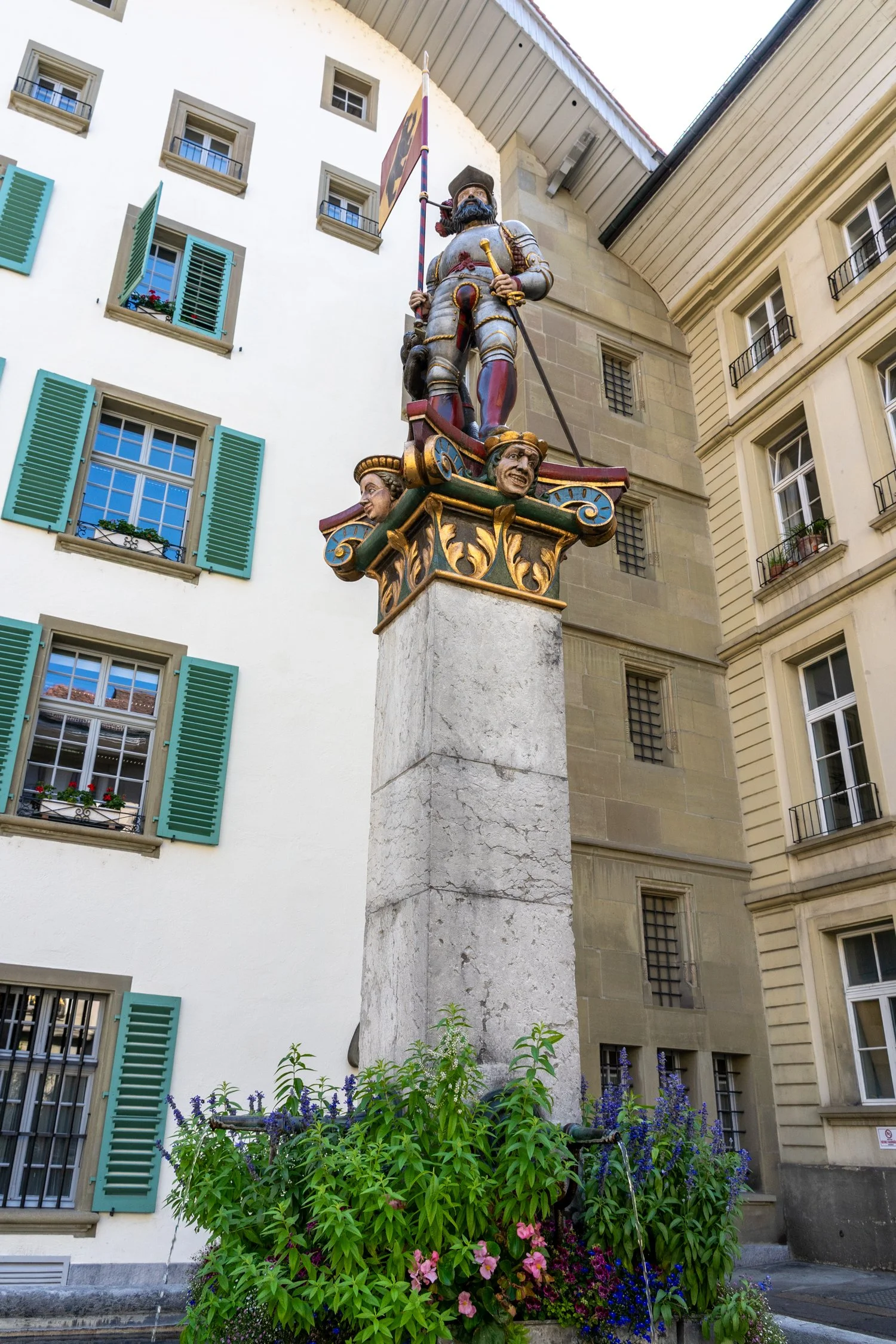
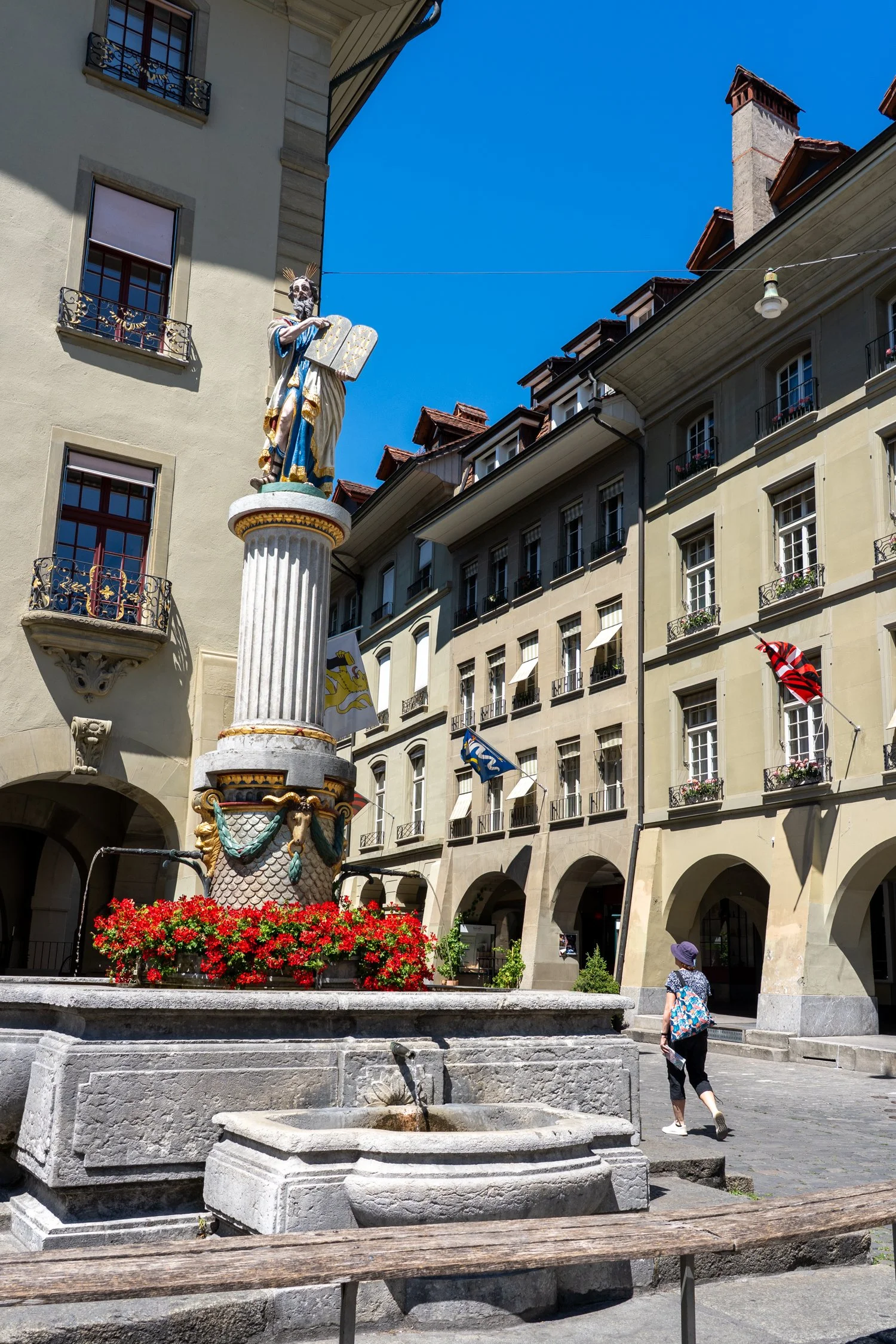
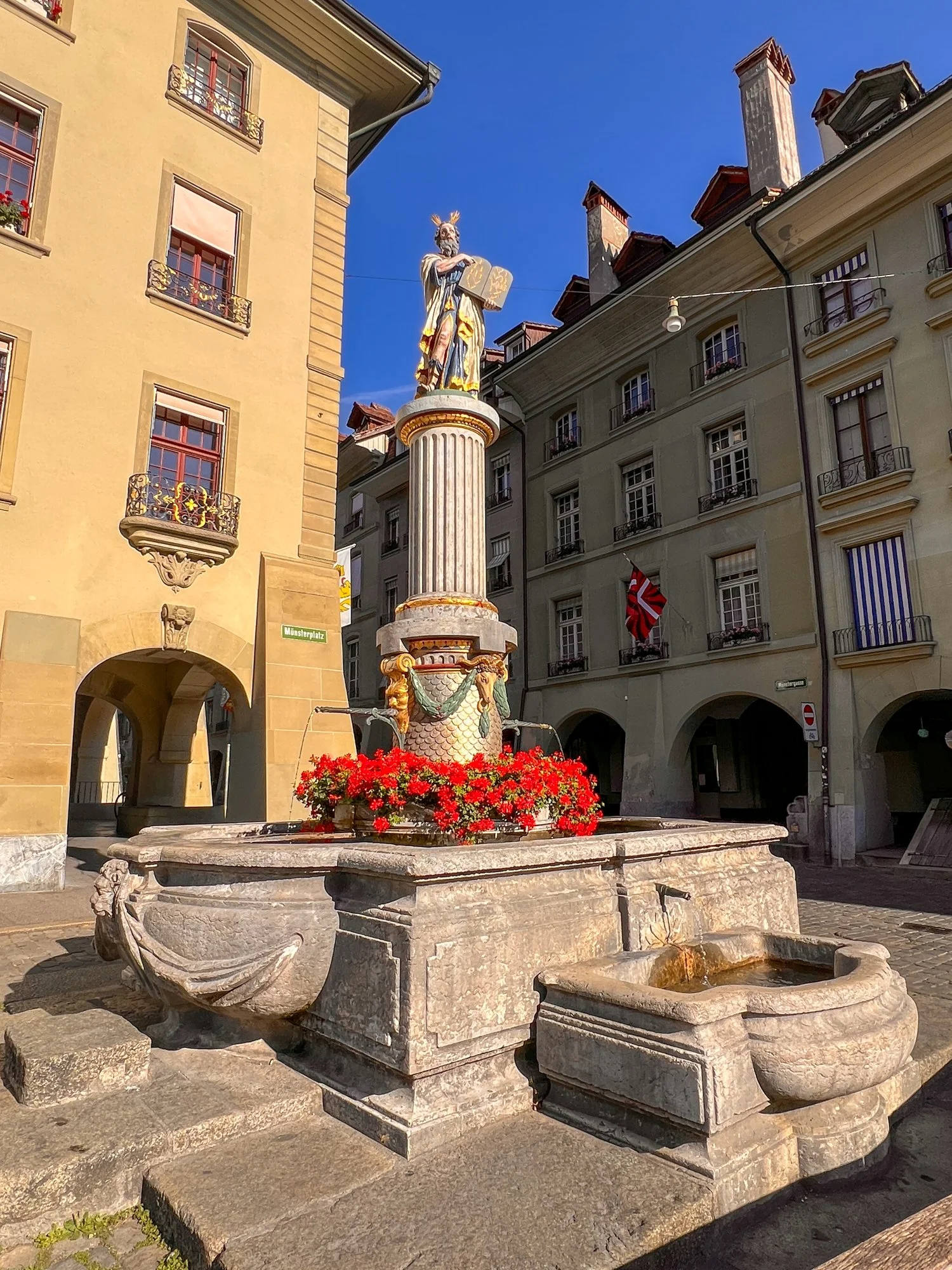
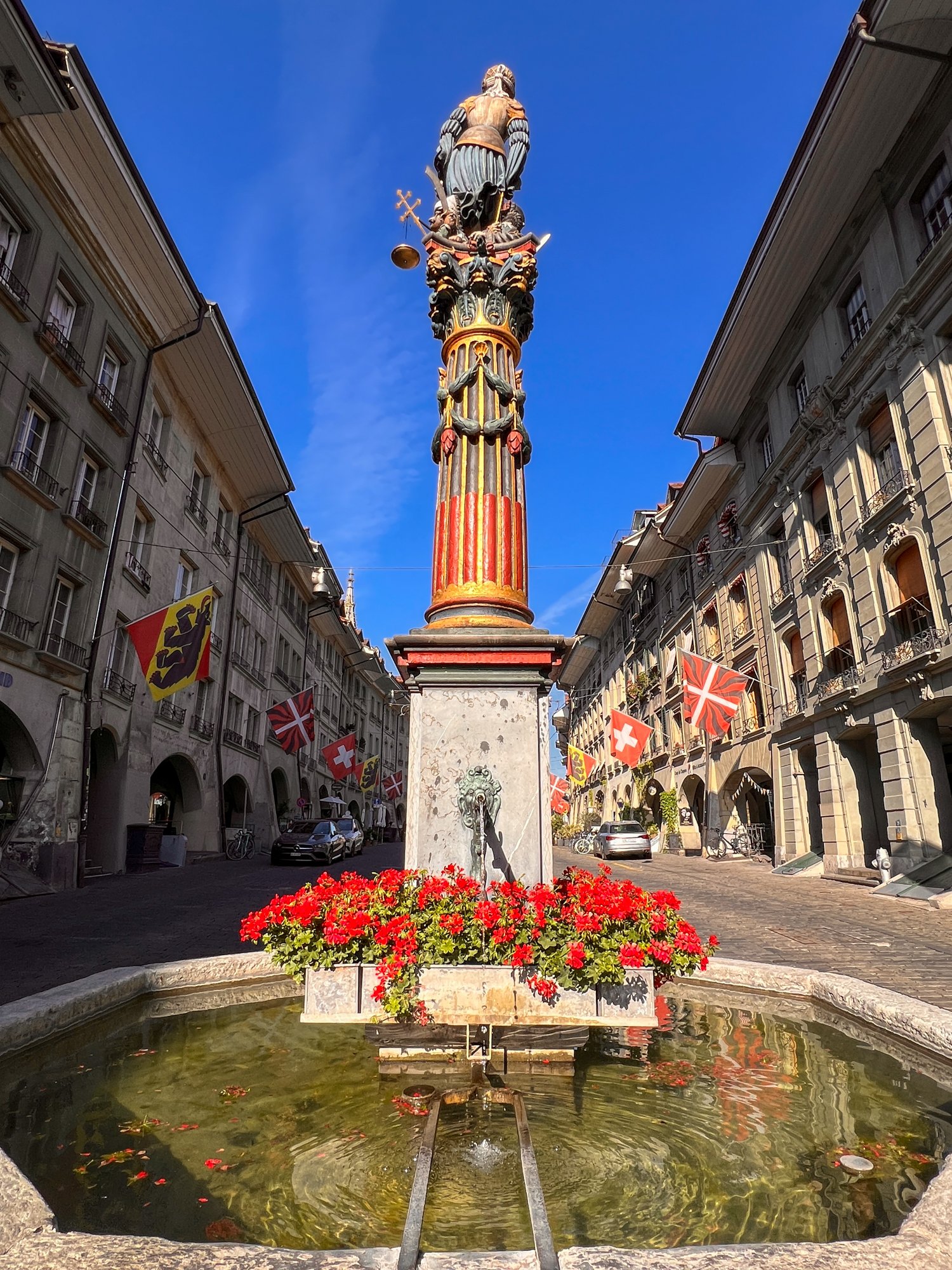
Inside the old city, the main streets are a wonderful mix of medieval buildings and arcades, with a series of elaborate fountain sculptures lining the street. And these aren't your standard "nice little fountain" variety.
Many date back to the 16th century and are topped with colourful, sometimes slightly bizarre sculptures. There are warriors, bears, animals and allegorical figures — basically the Renaissance equivalent of deciding that every street needs a collection of public art.
At the end of the street sits the Zytglogge, Bern's famous medieval clock tower. Originally built as a city gate, it eventually became the clock tower we see today, complete with its elaborate astronomical clock.
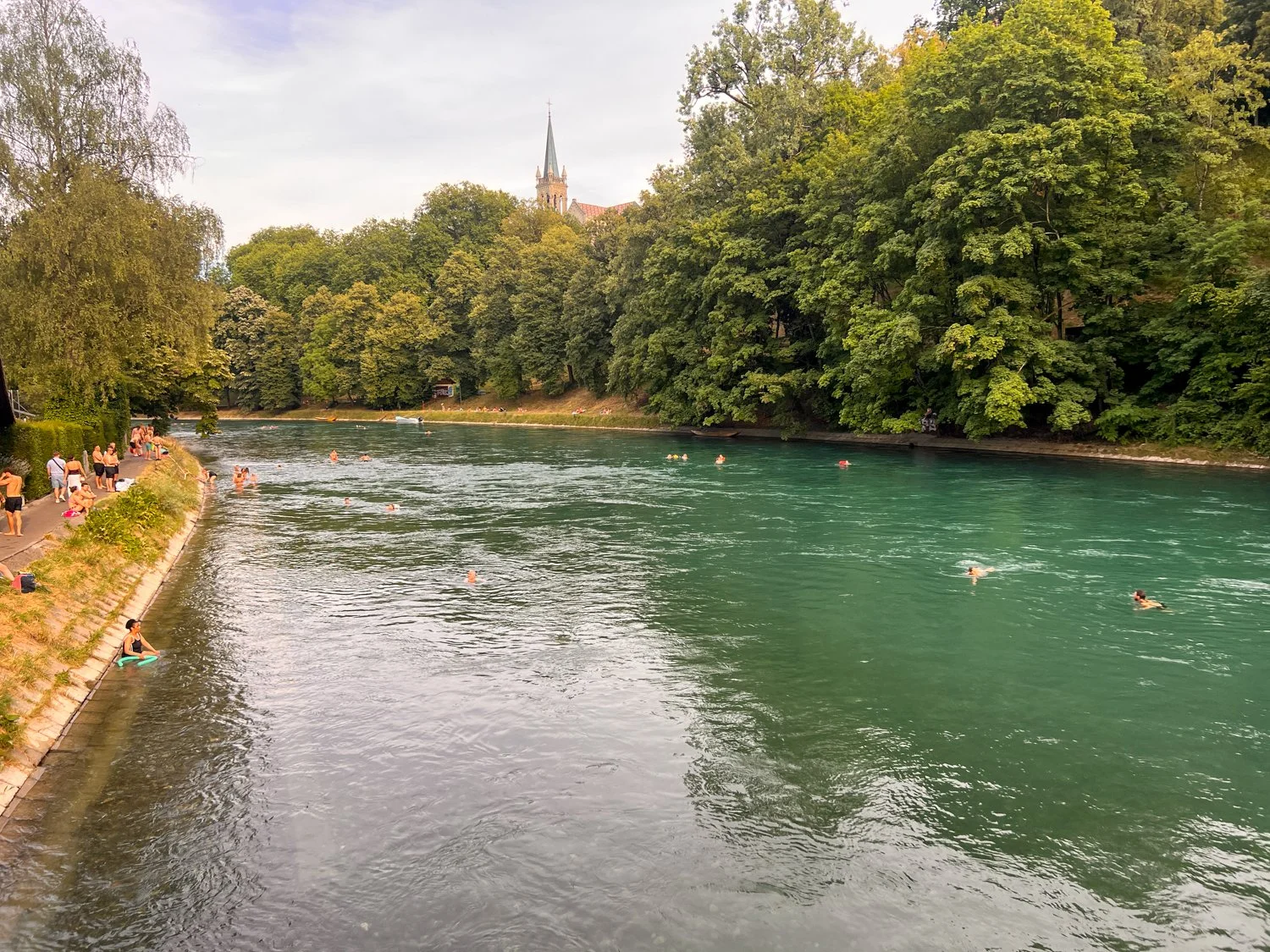
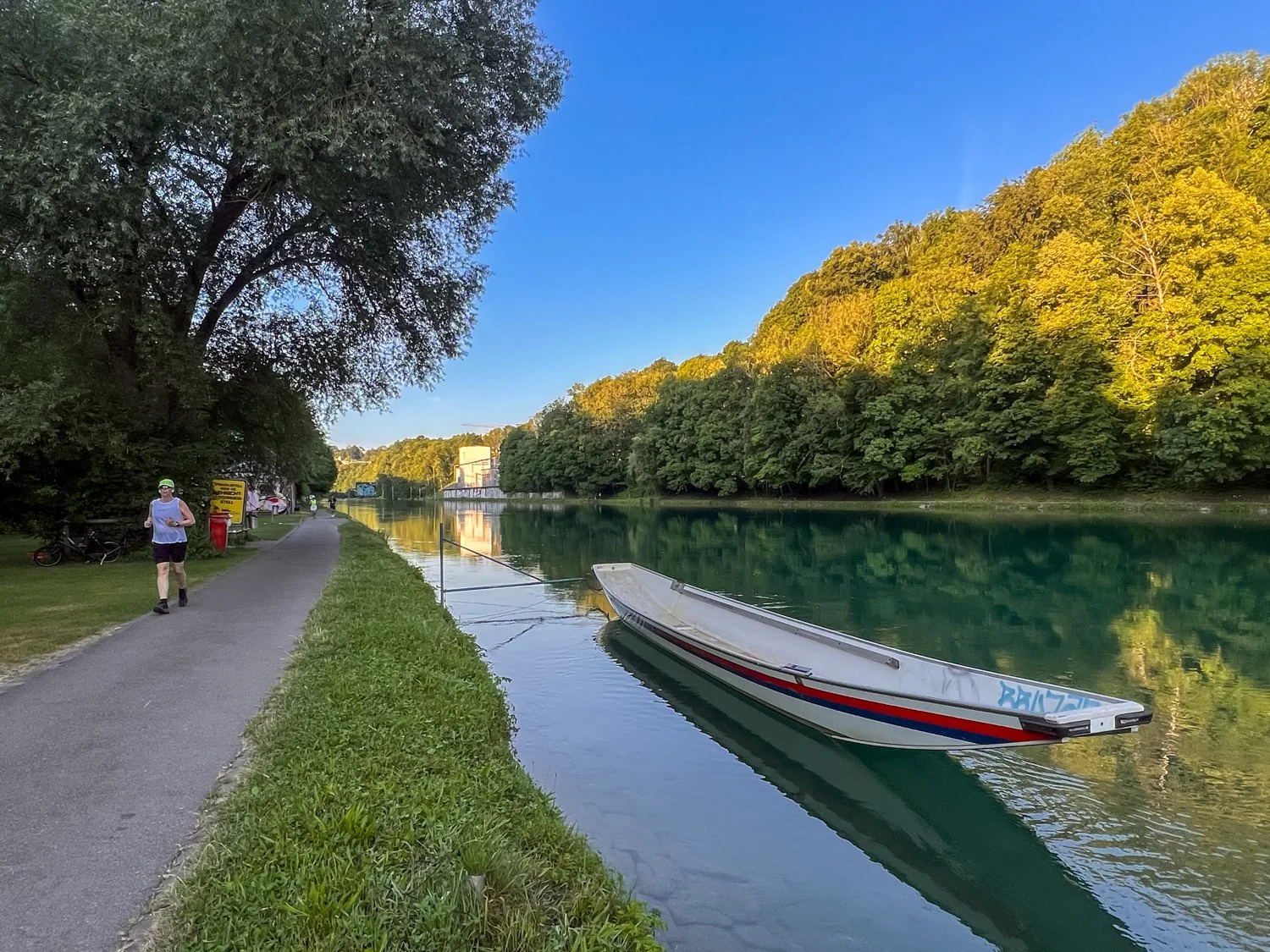
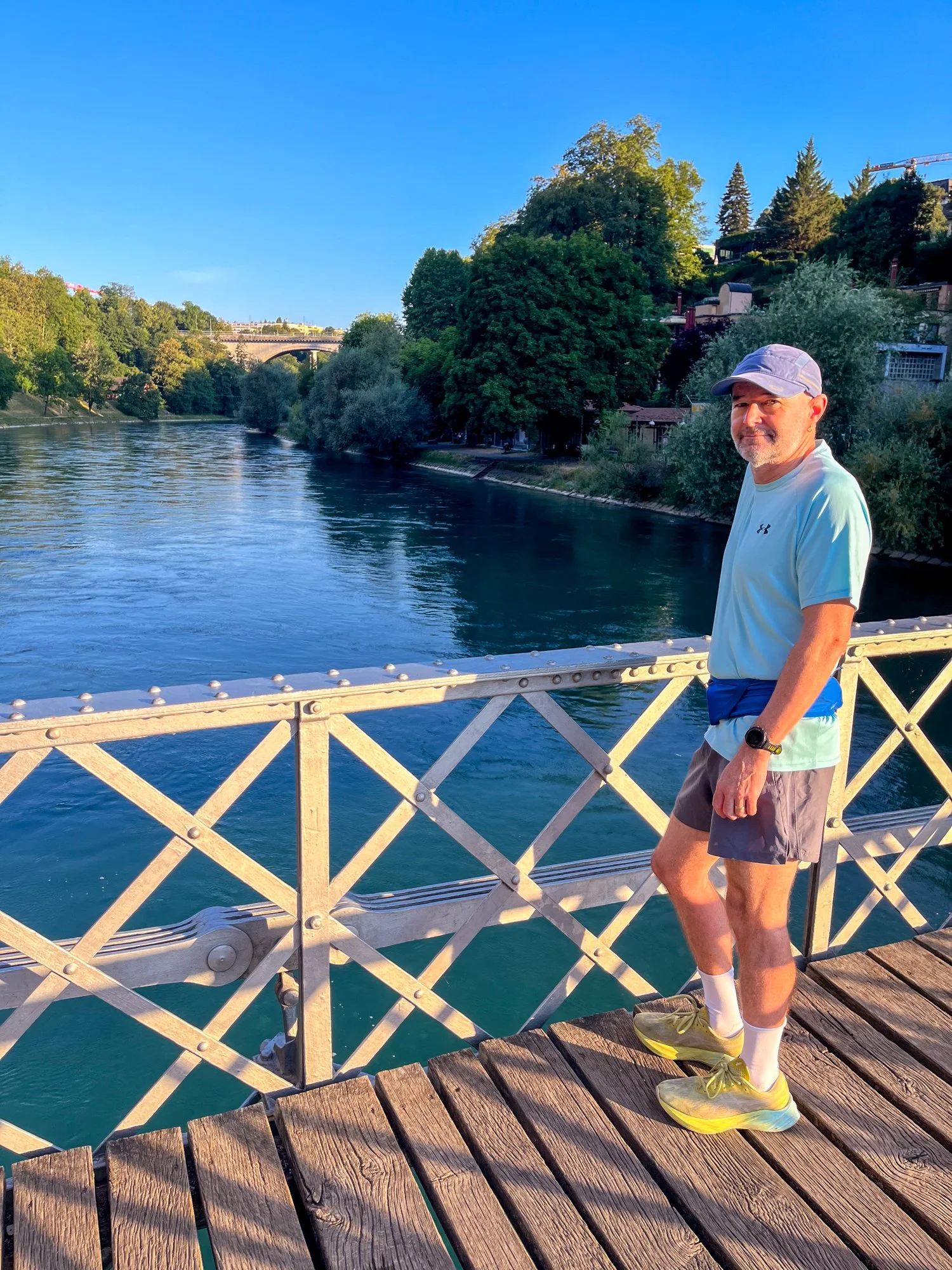
Of course, the best way to see a city is apparently before breakfast. So, naturally, another early morning run was called for. This time we headed down towards the Aare River, which winds around Bern and provides a spectacular natural boundary to the Old Town.
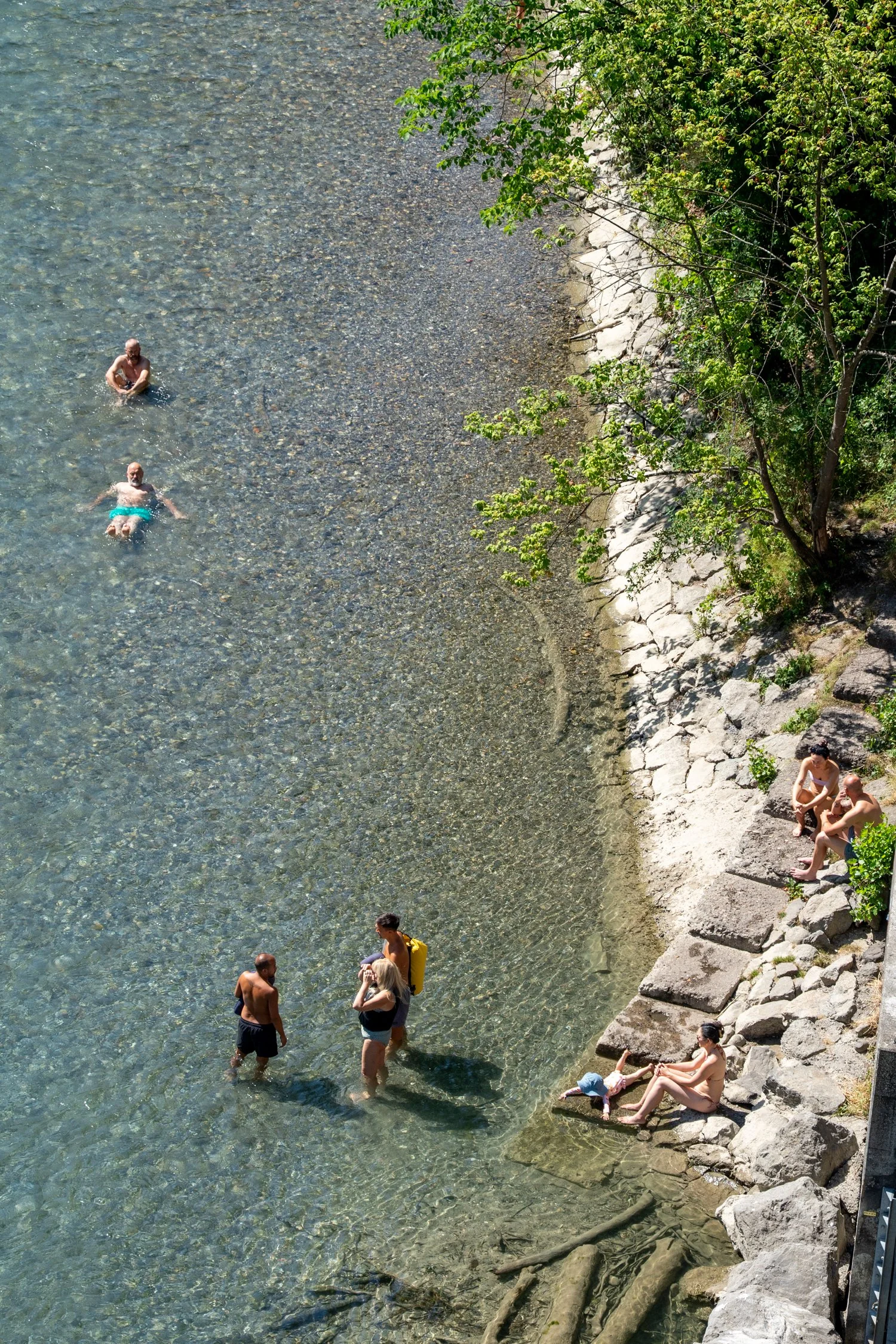
Here, the locals cool off from the unusually warm weather (for Switzerland) by jumping into the fast-flowing Aare and floating along with the current as though this was the most normal way in the world to commute to work.
Bern itself has a wonderfully relaxed feel. The Old Town is compact enough to explore on foot, the river is never far away, and everywhere you turn there's another fountain, flag, tower, old wall or beautifully preserved building demanding your attention.
Lausanne
After a few days of travelling around Switzerland, we were starting to think we'd finally mastered the names of the places we were visiting.
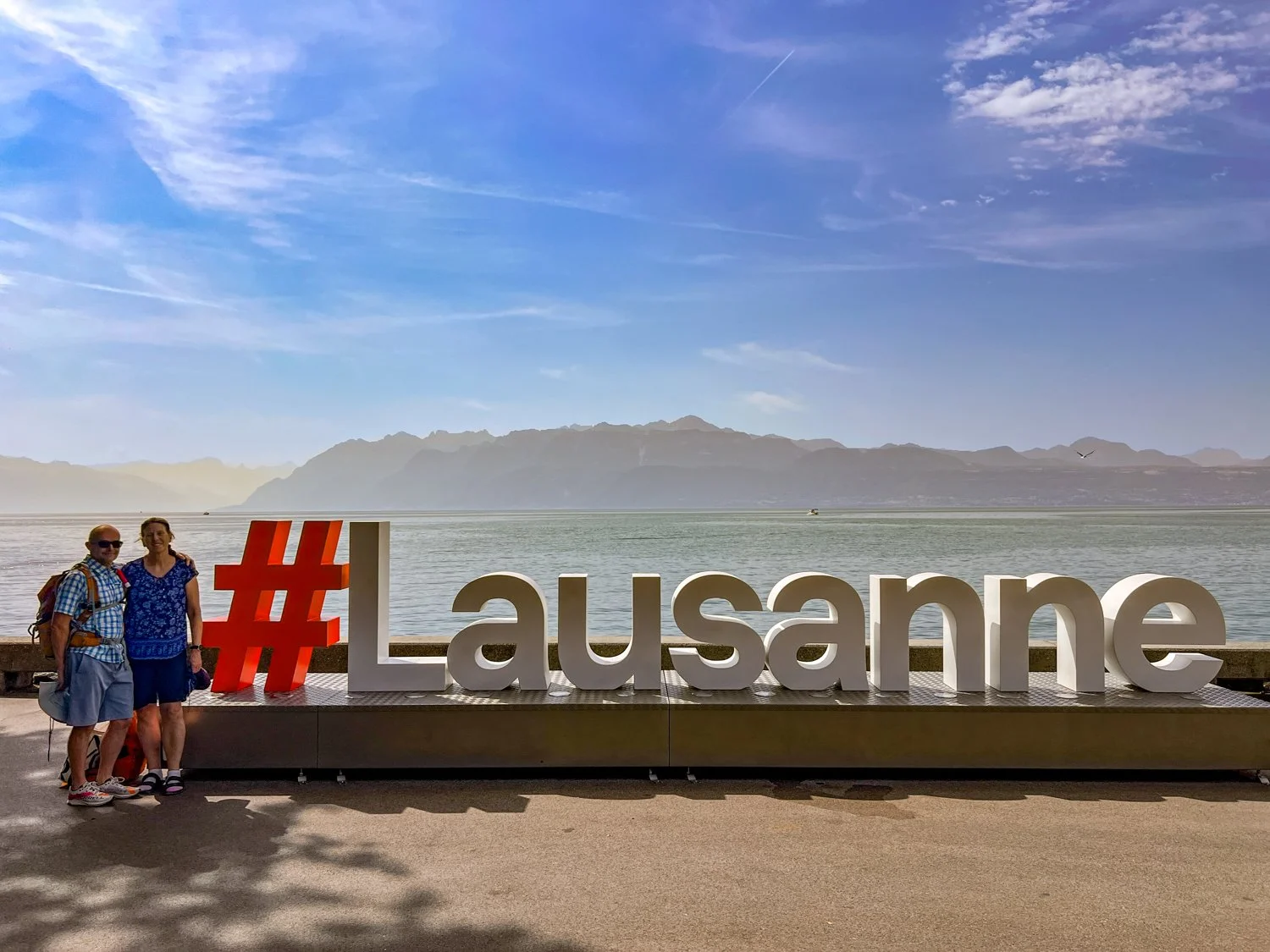
Then came Lausanne. Somewhere between Lucerne and Lausanne, the names had started to blur a little. They both have lakes, mountains, beautiful old buildings and names that sound suspiciously similar.
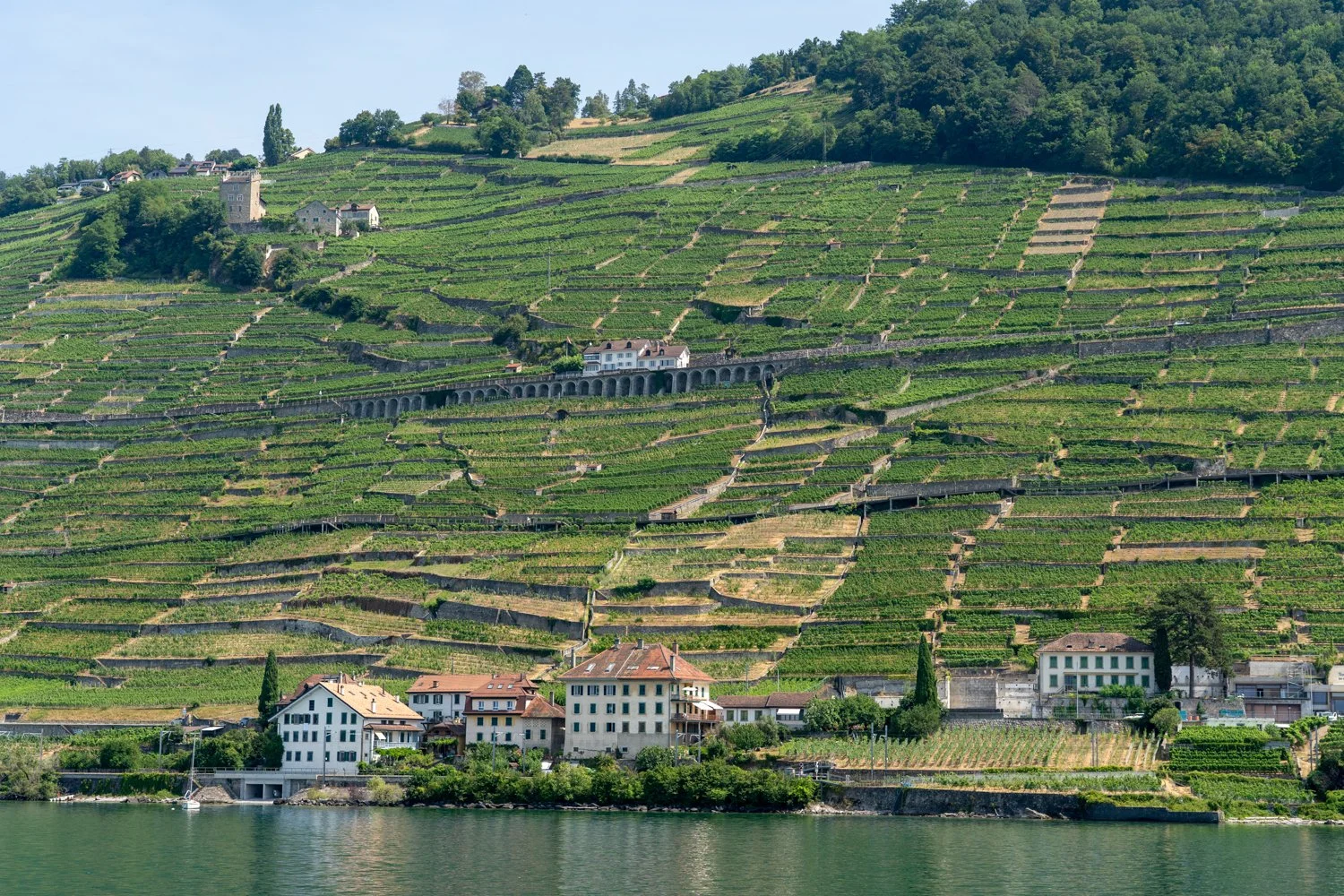
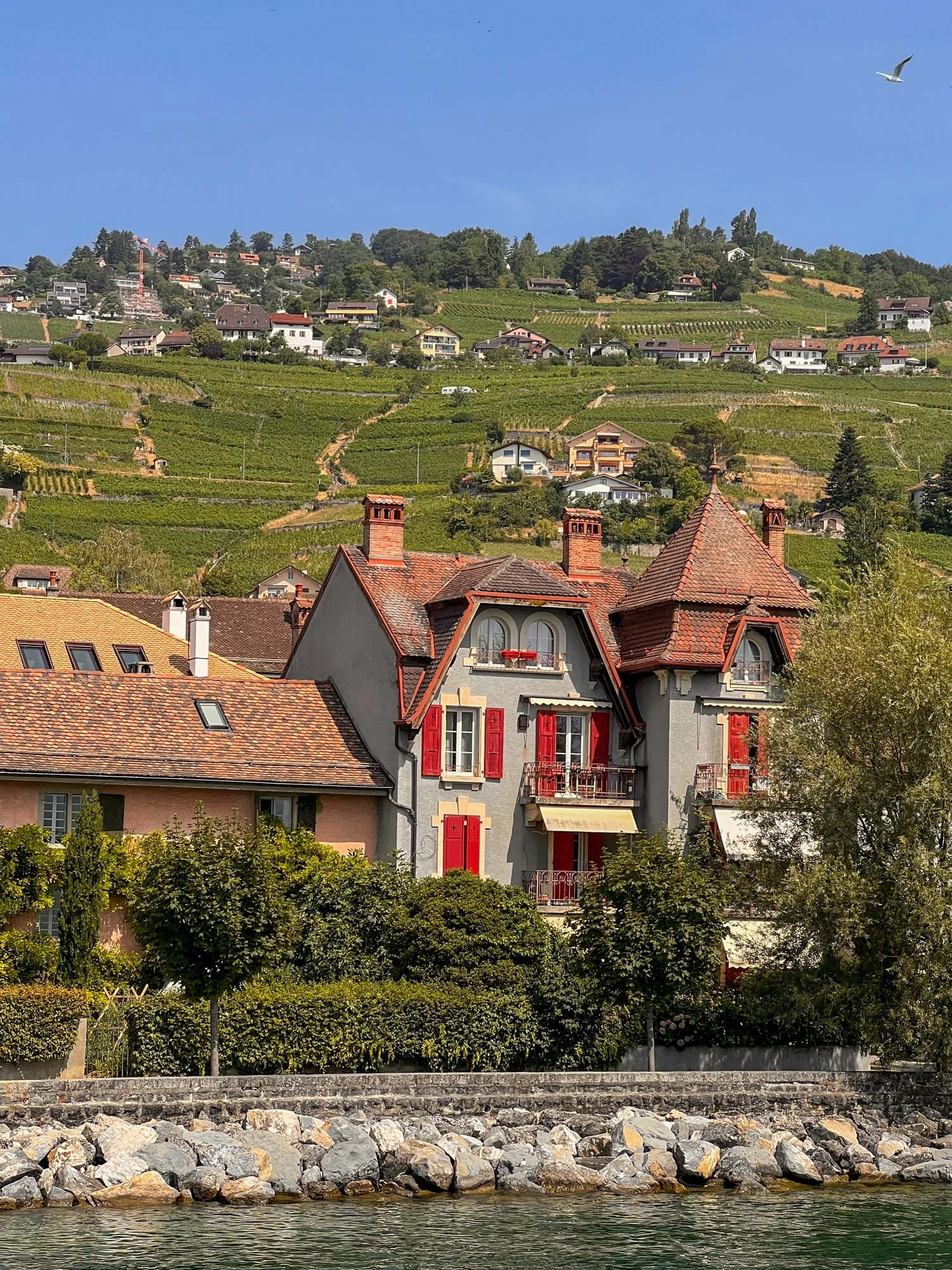
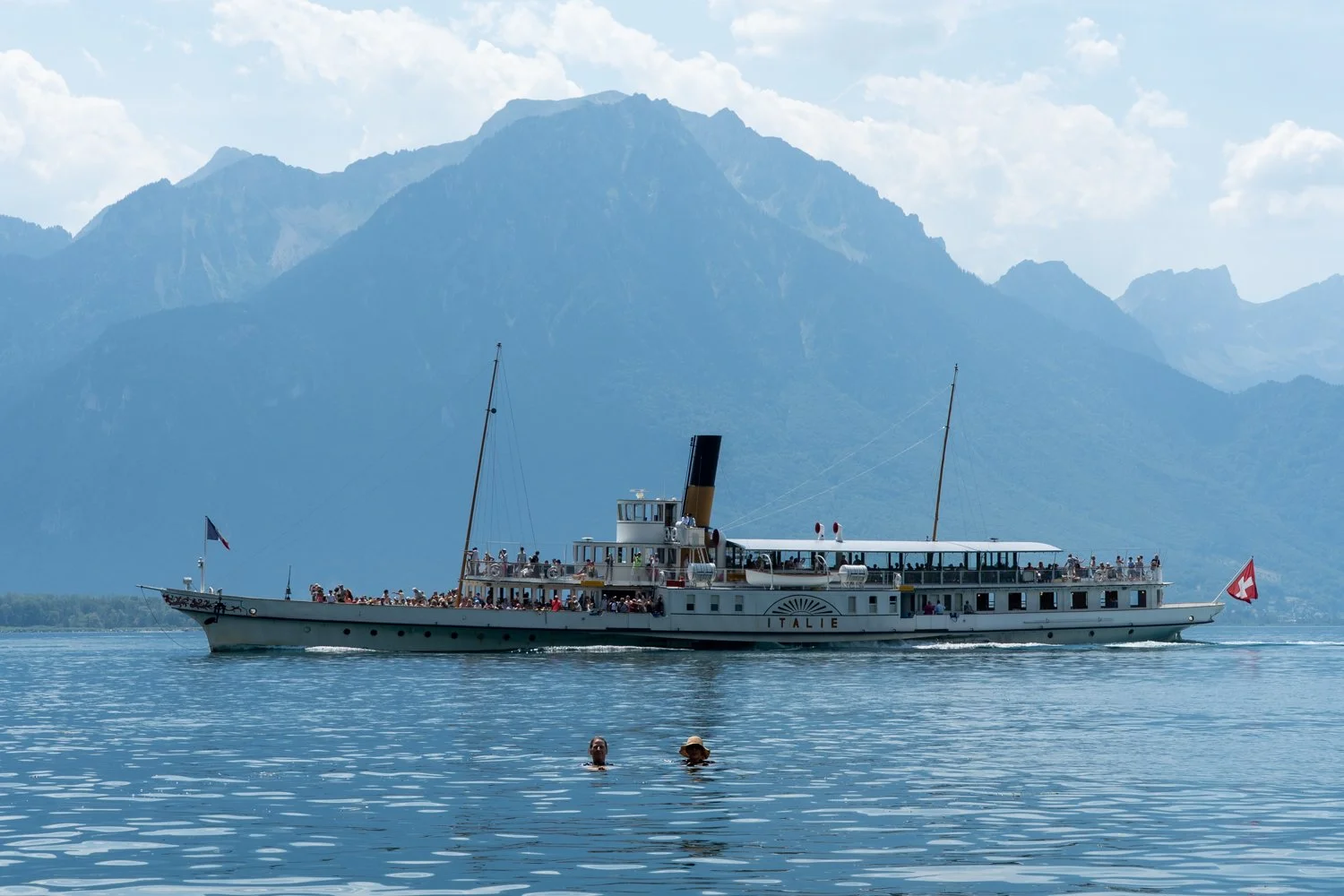
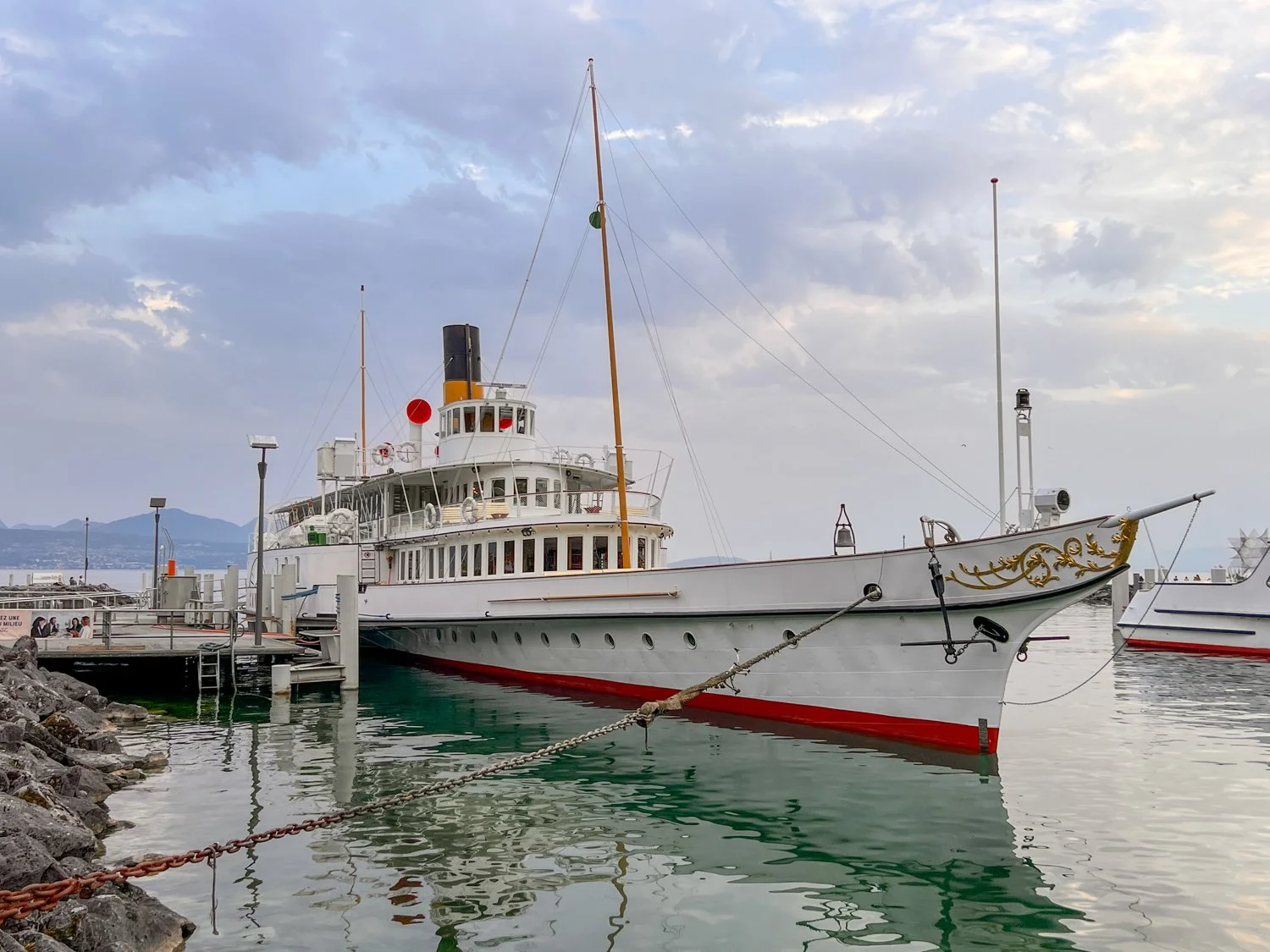
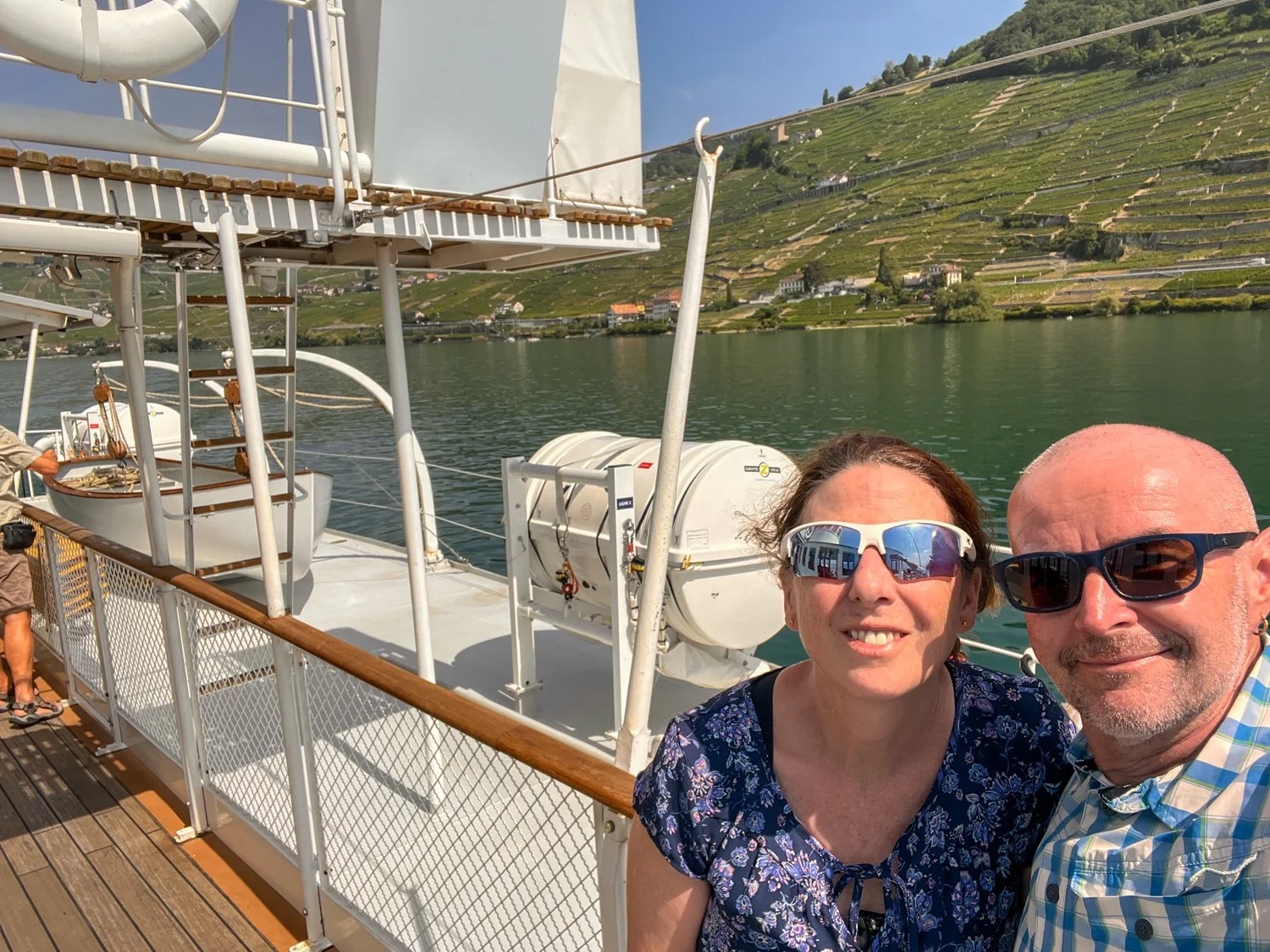
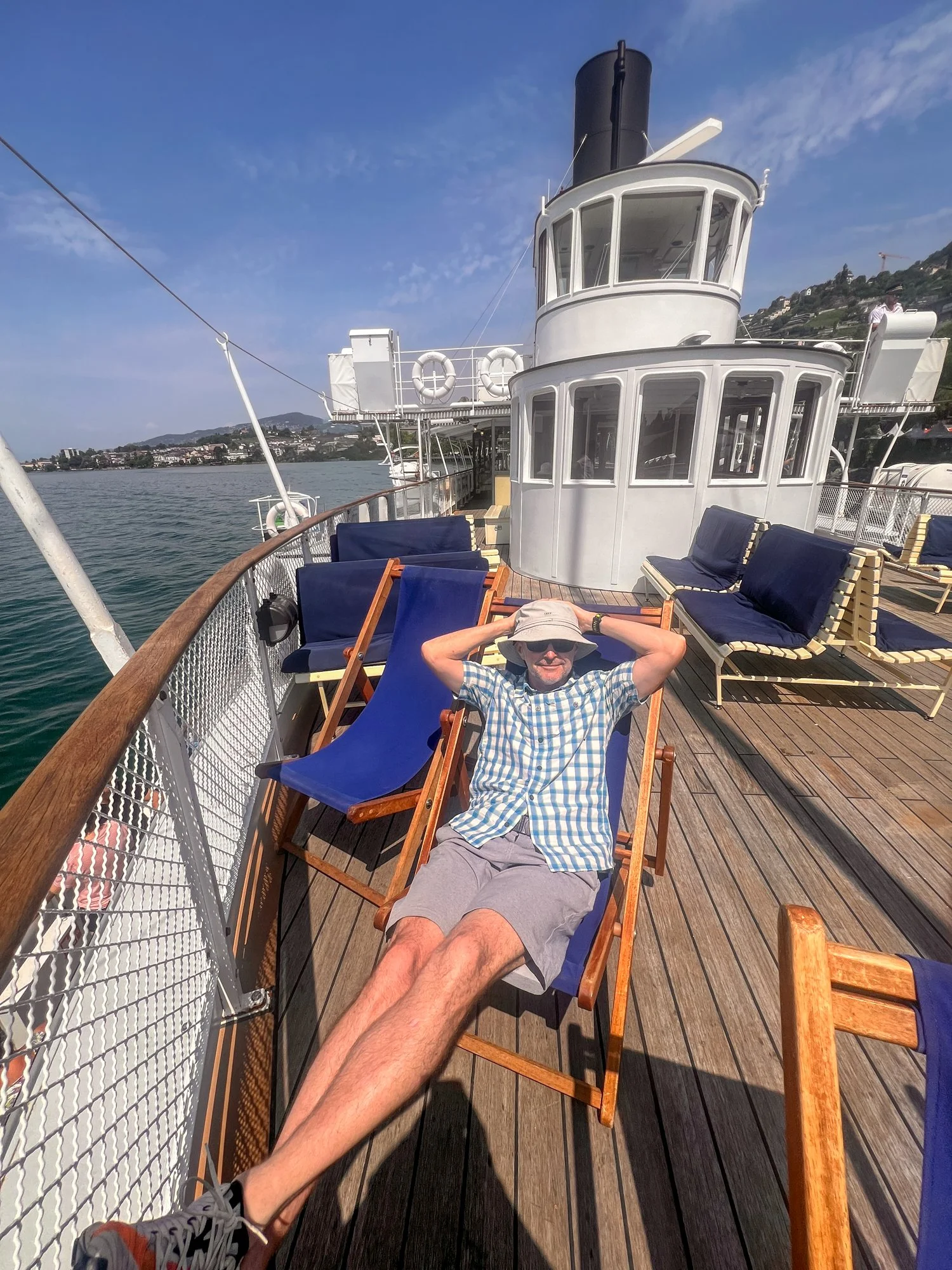
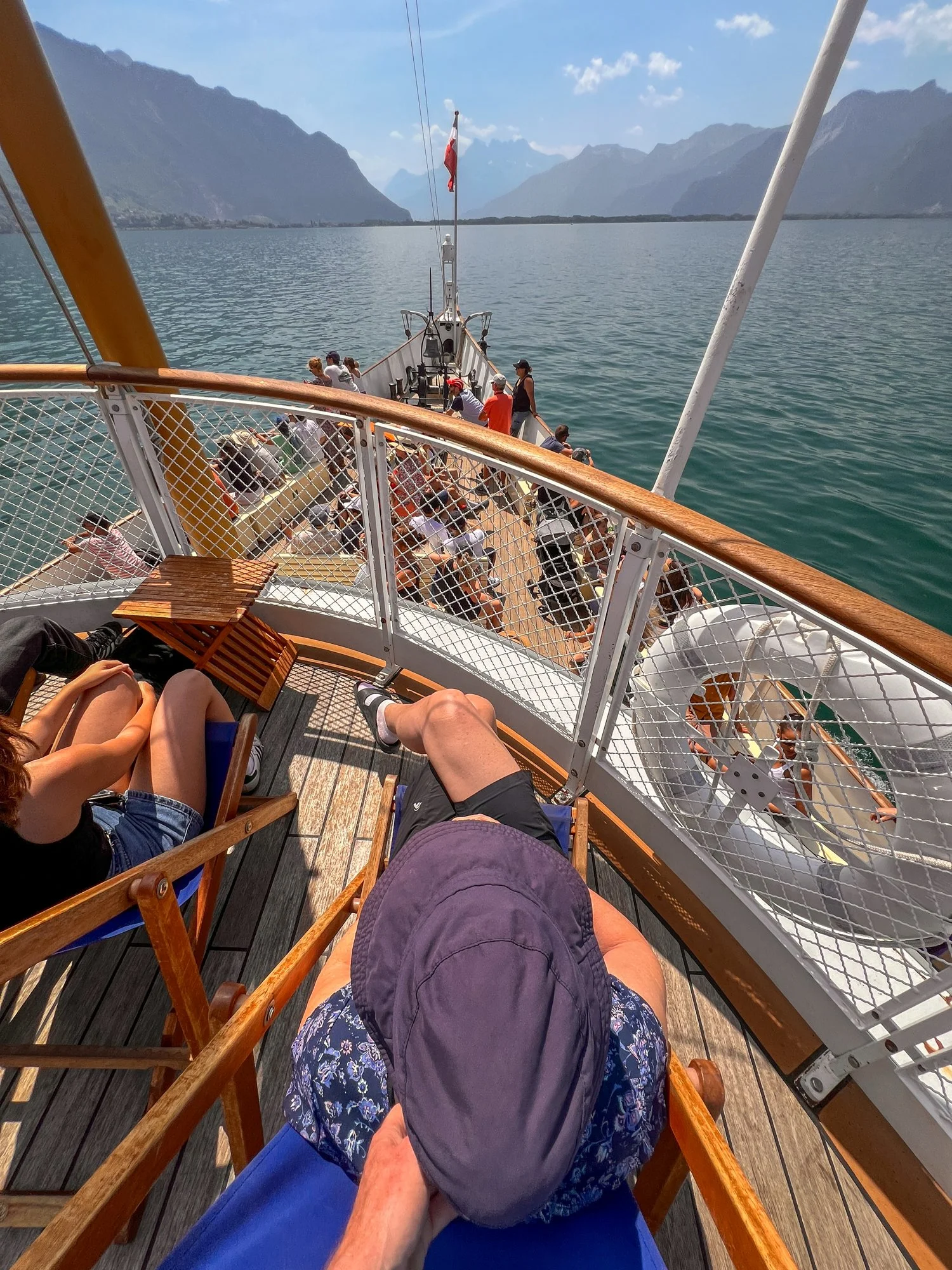
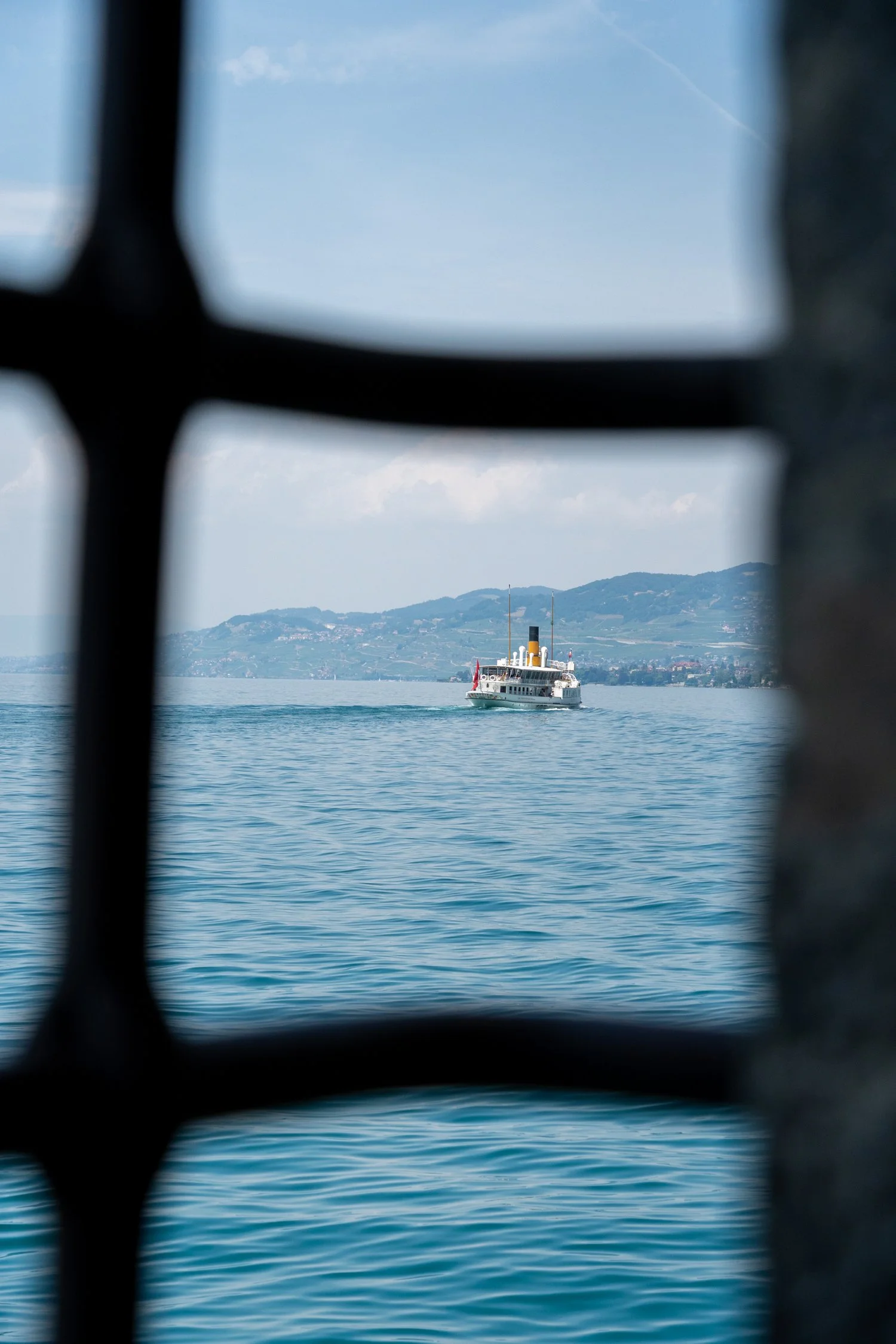
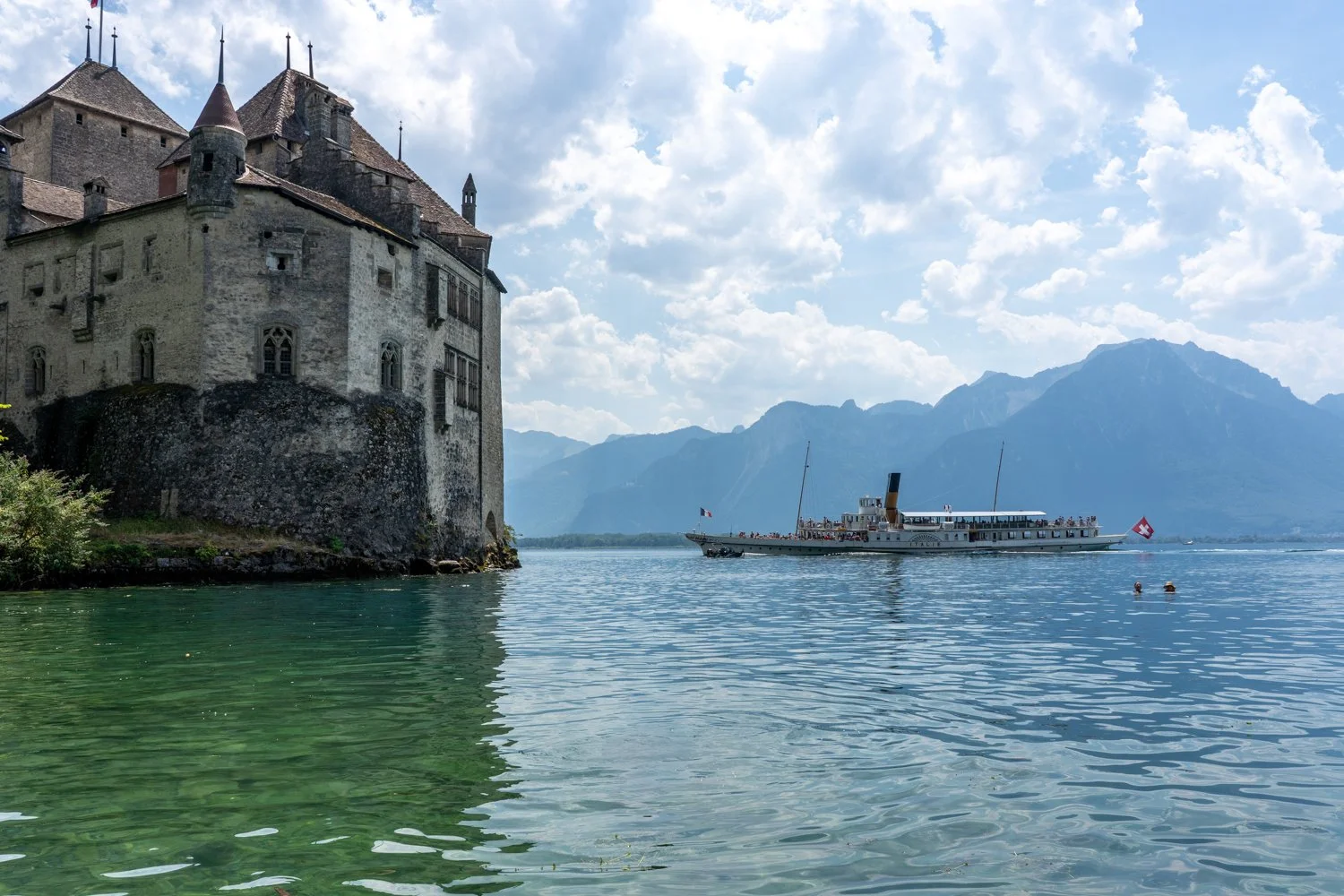
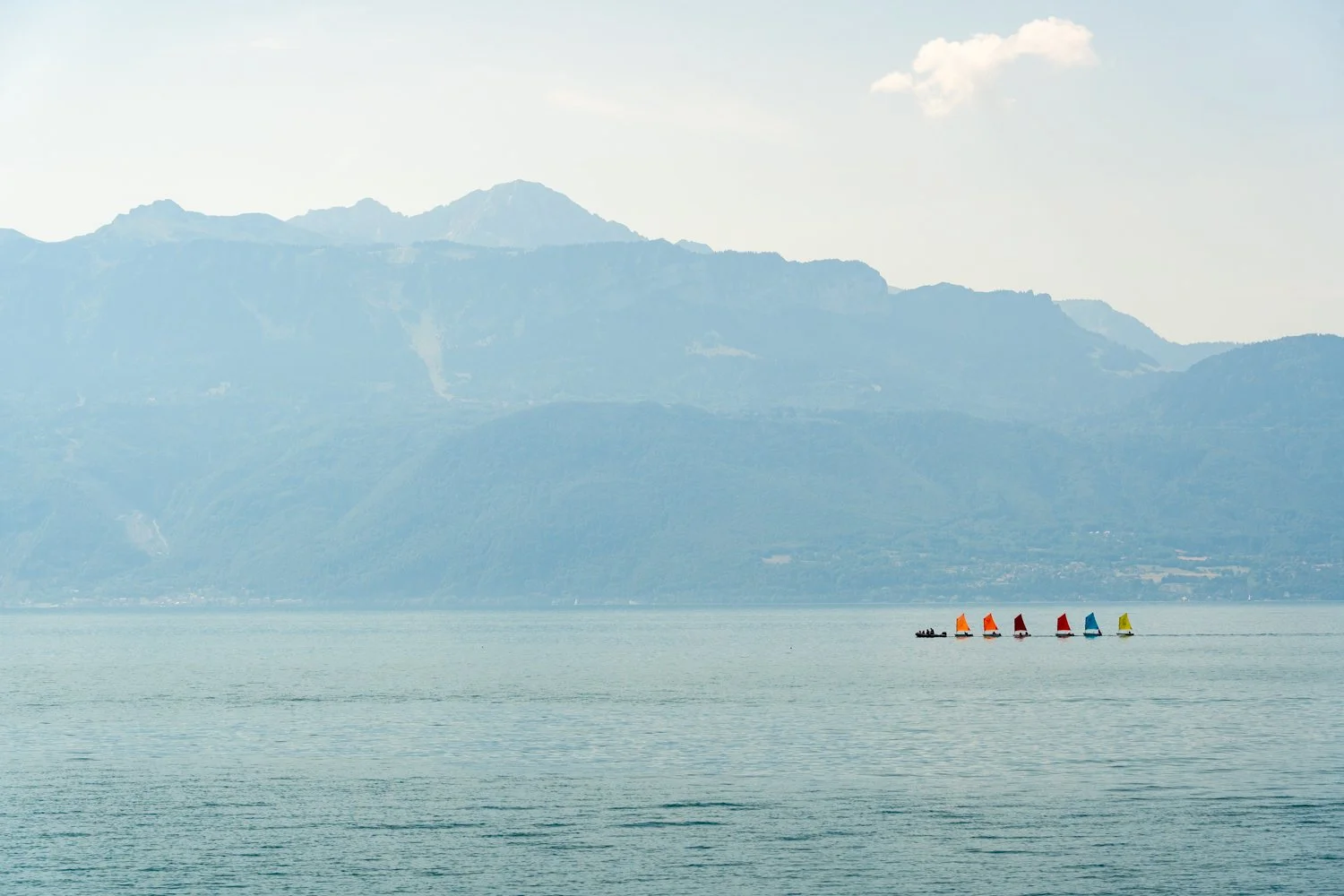
Fortunately, we made it to the right Lausanne, on the shores of Lake Geneva. and waht better way to explore the lake than a cruise on the beautiful old paddle steamer that cruise Lake Geneva. There is something wonderfully old-fashioned about travelling across a lake on a proper paddle steamer. No rush, no traffic, just the gentle rhythm of the boat and the Alps providing the backdrop.
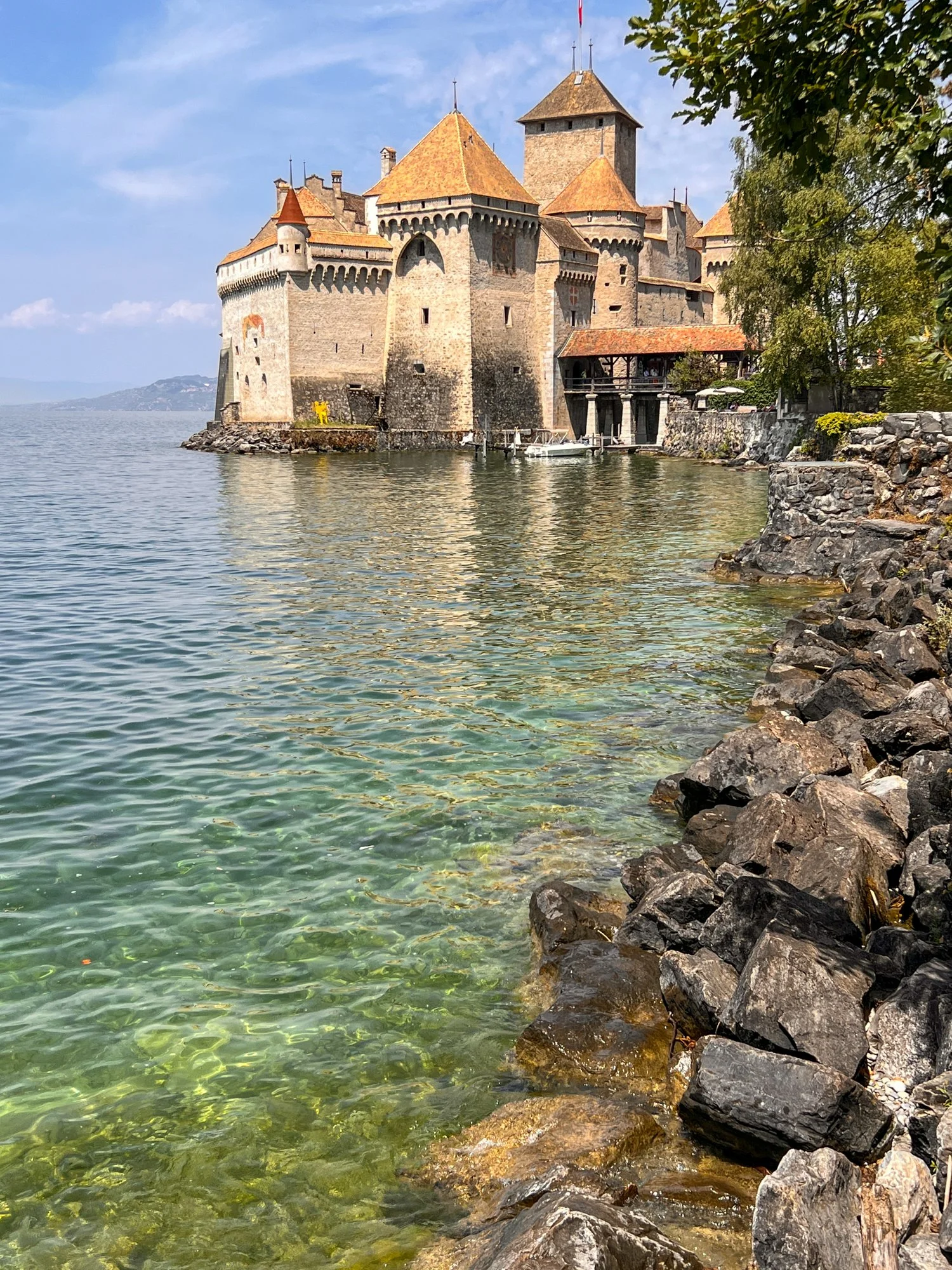
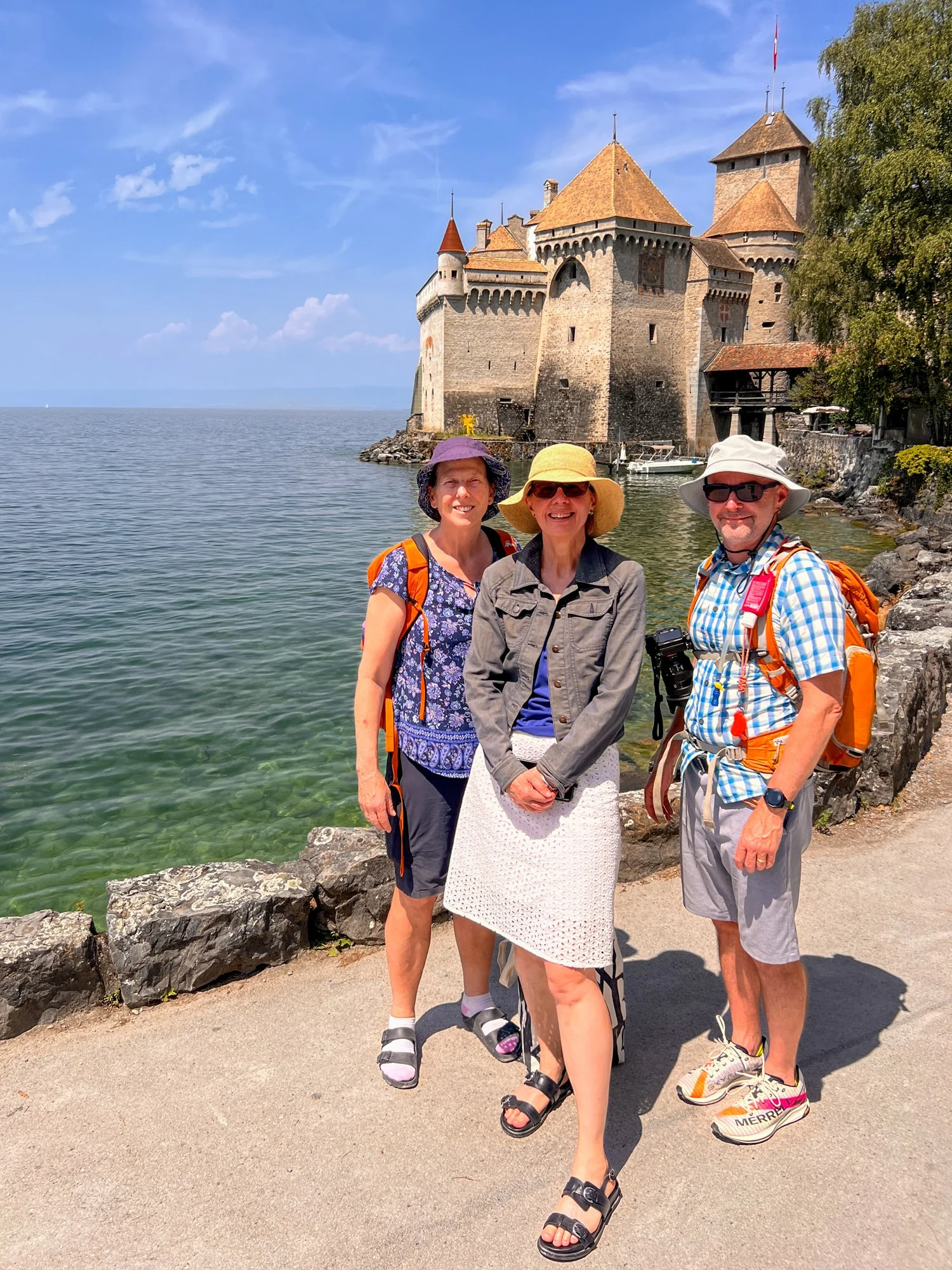
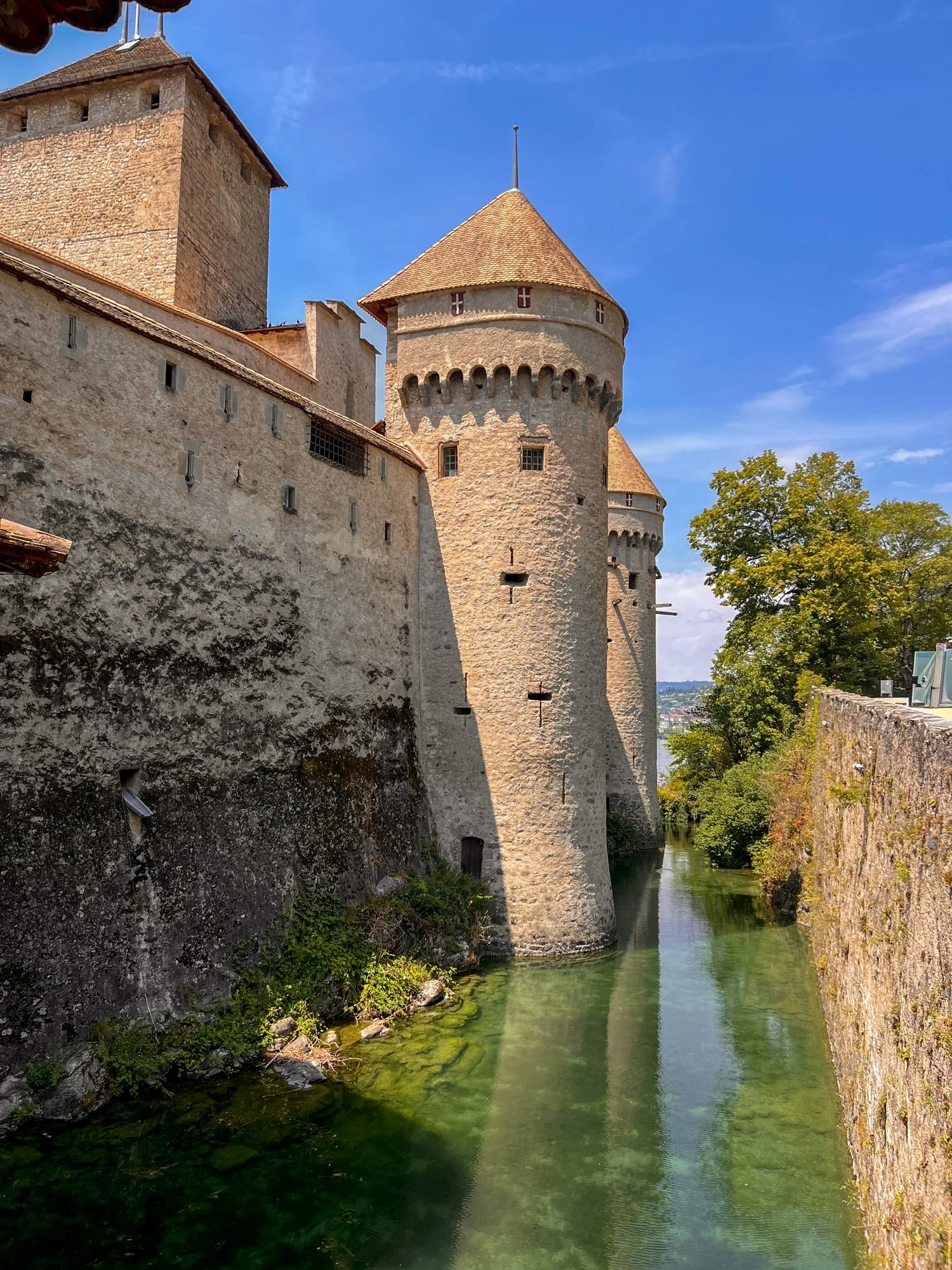
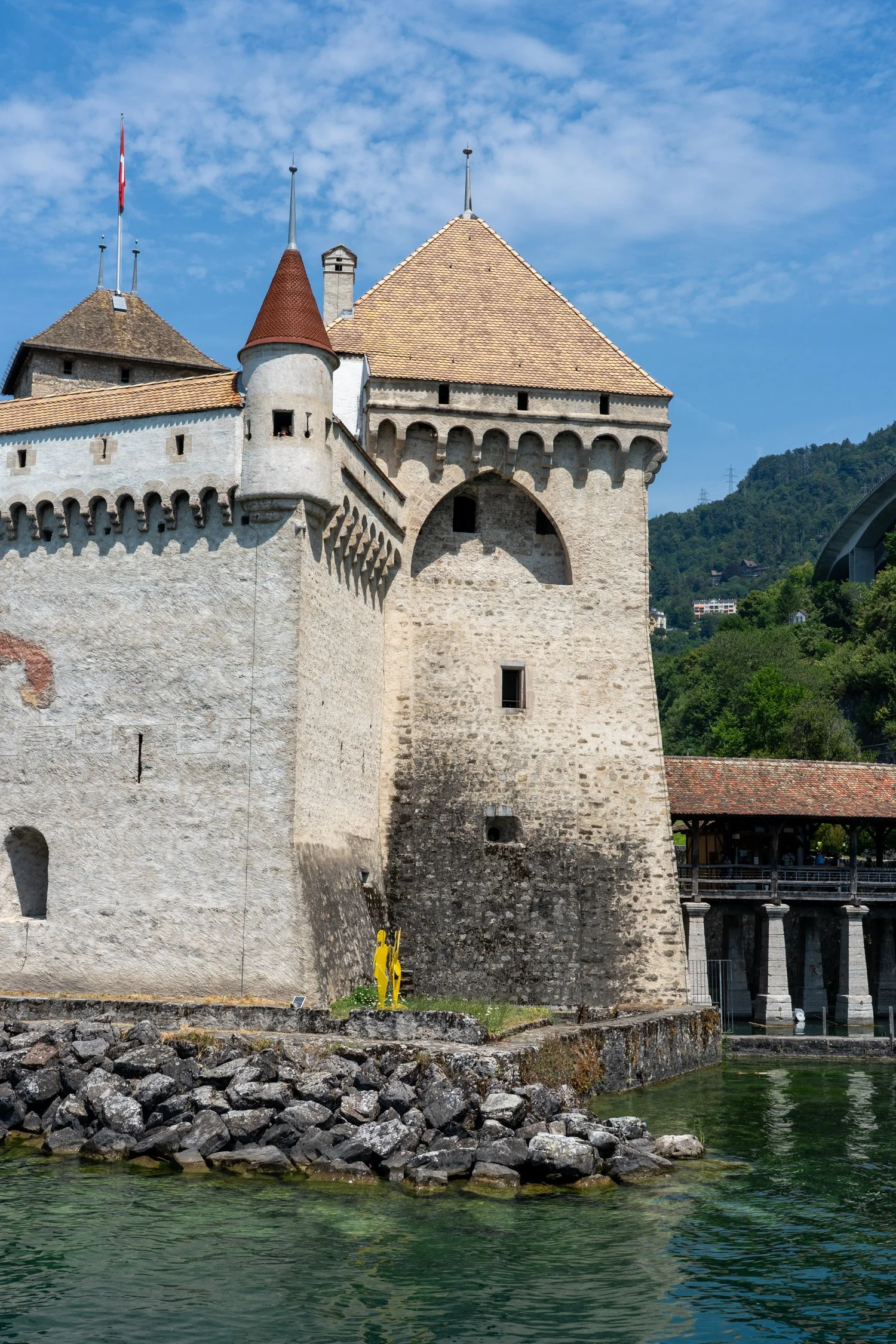
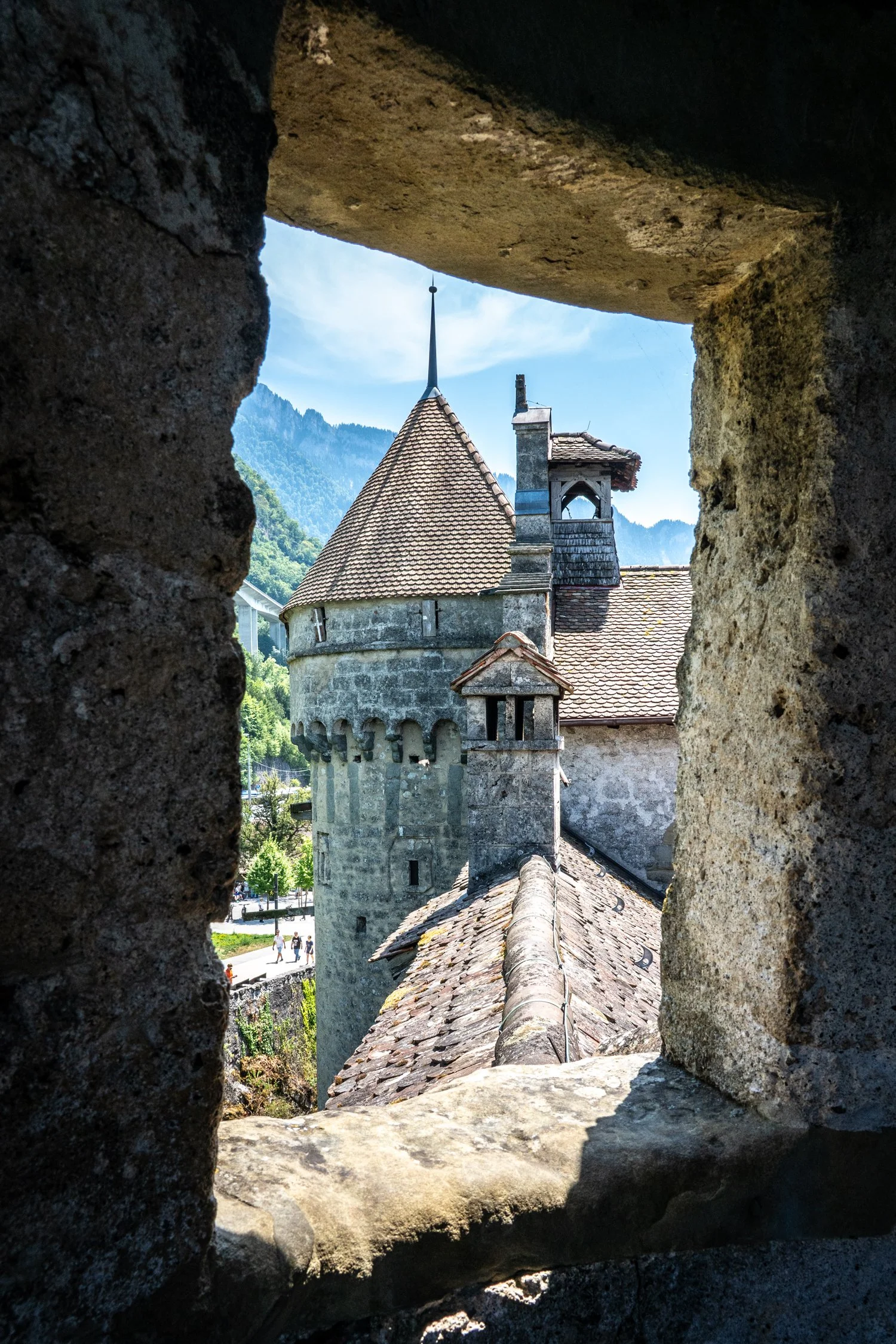
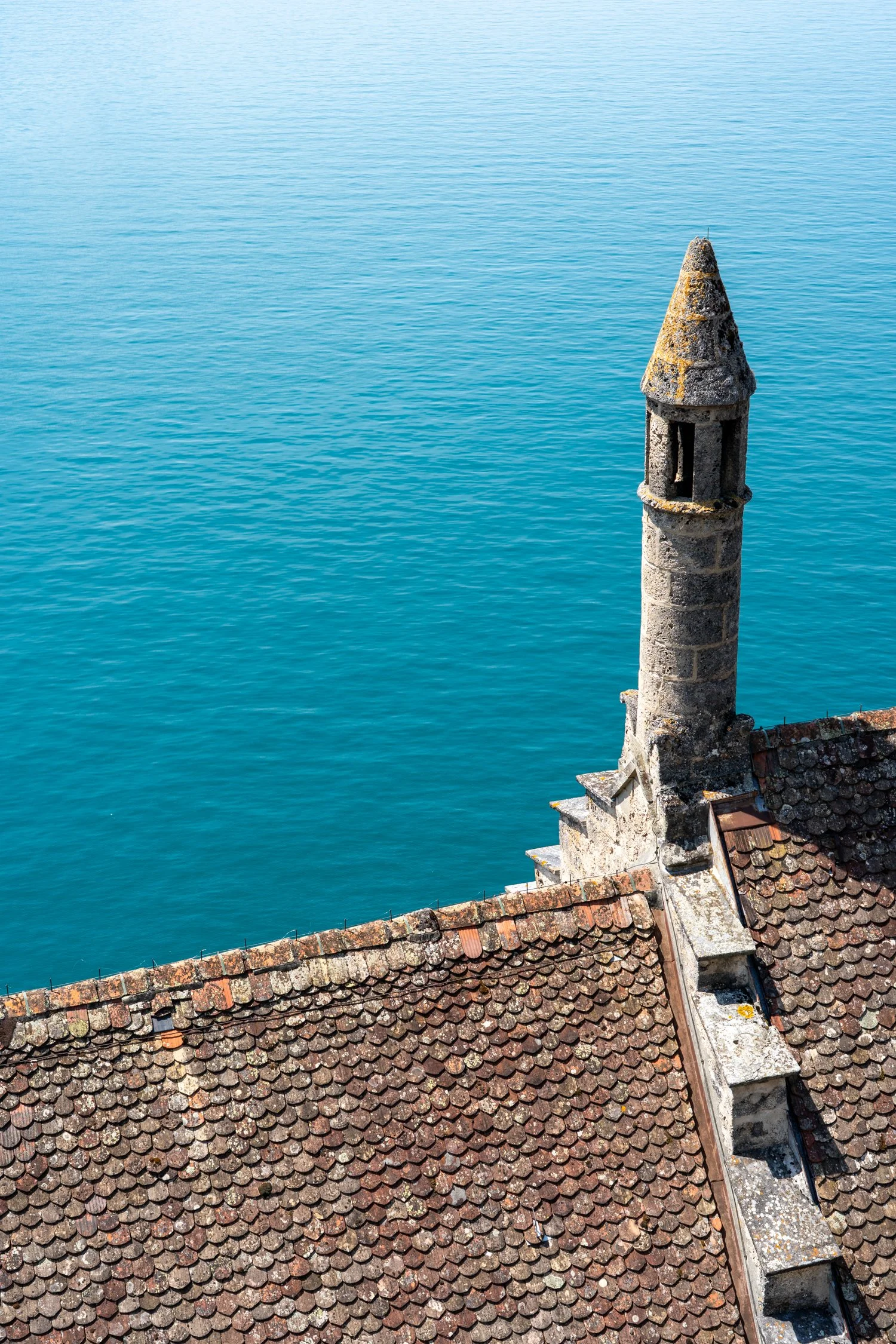
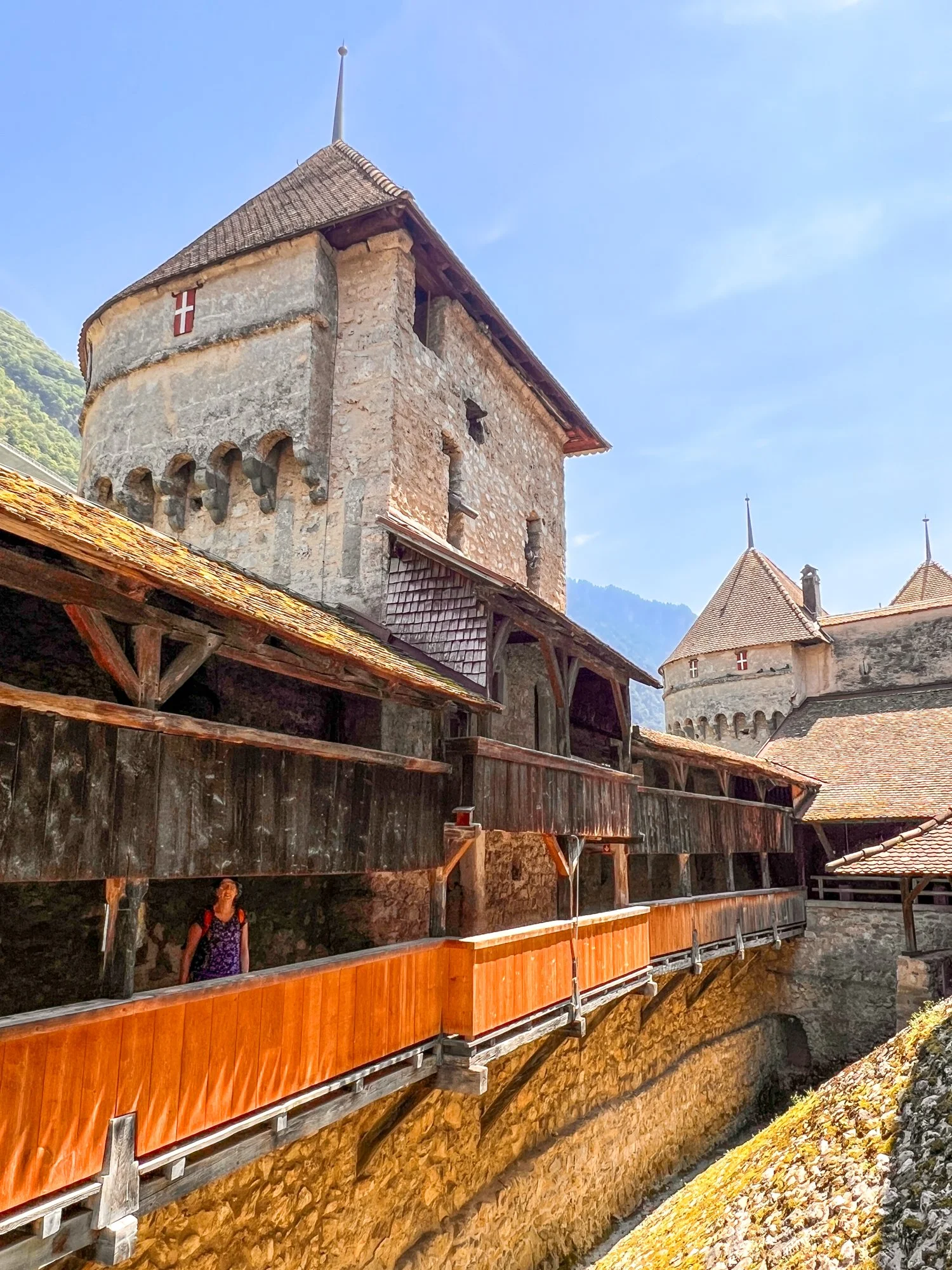
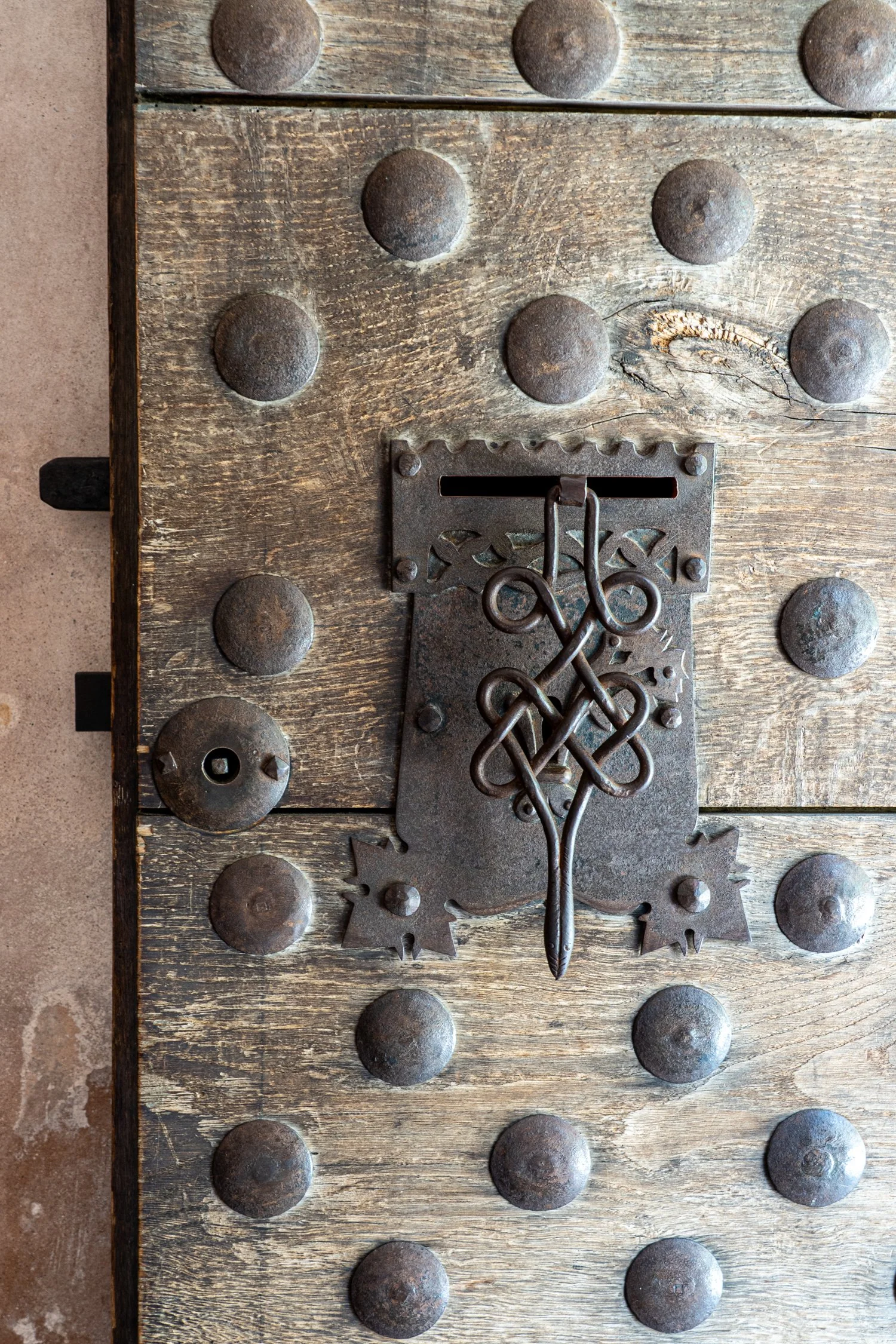
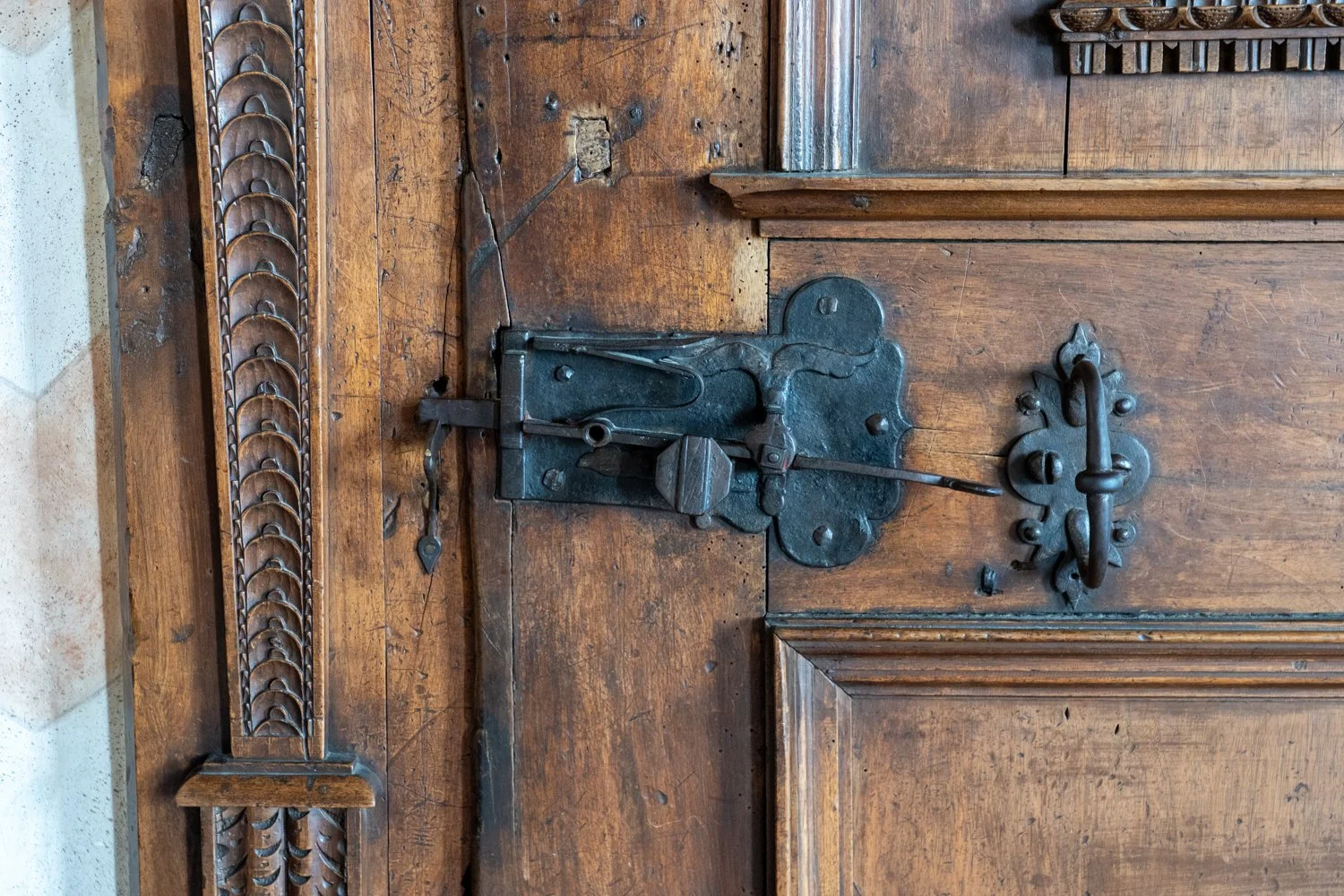
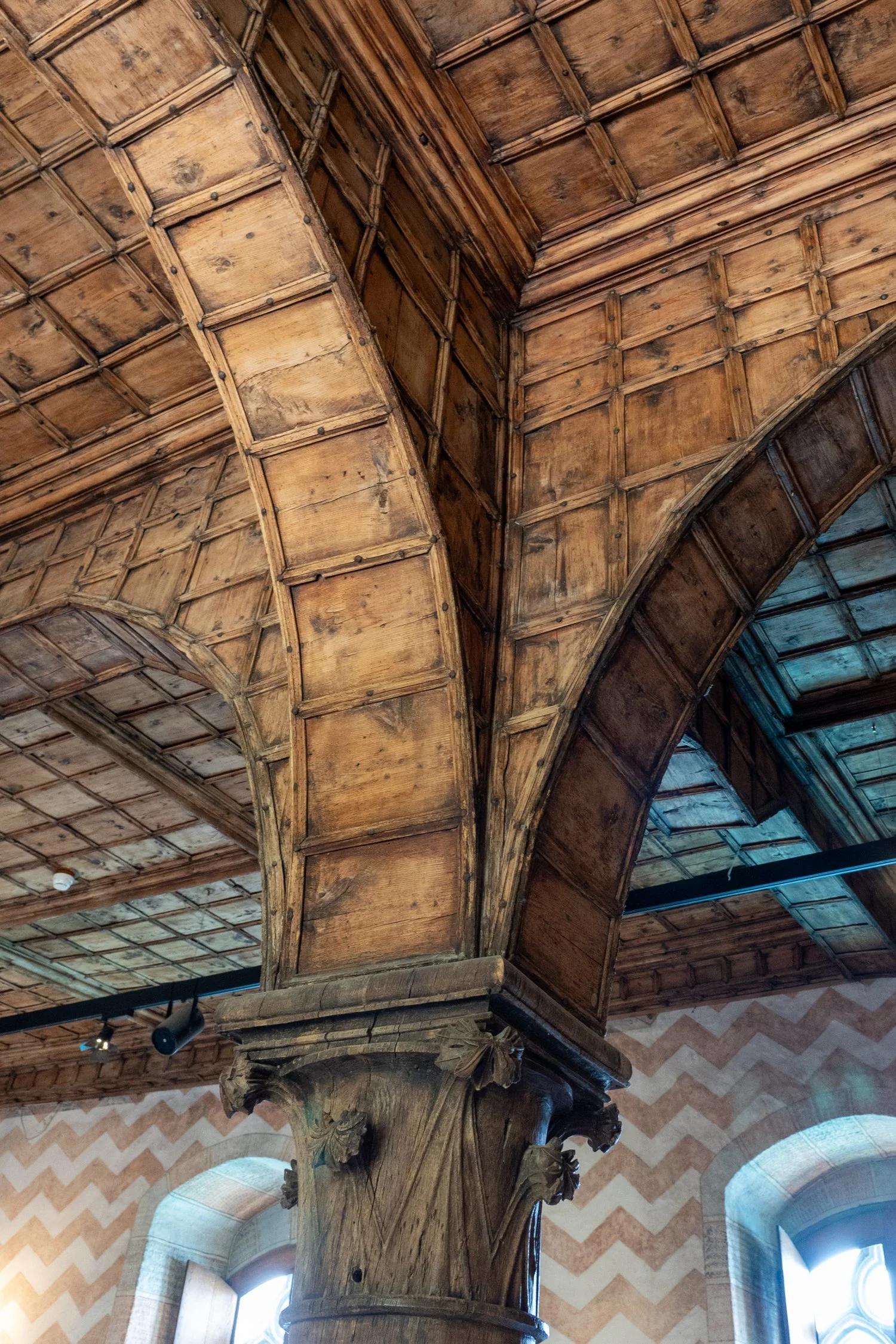
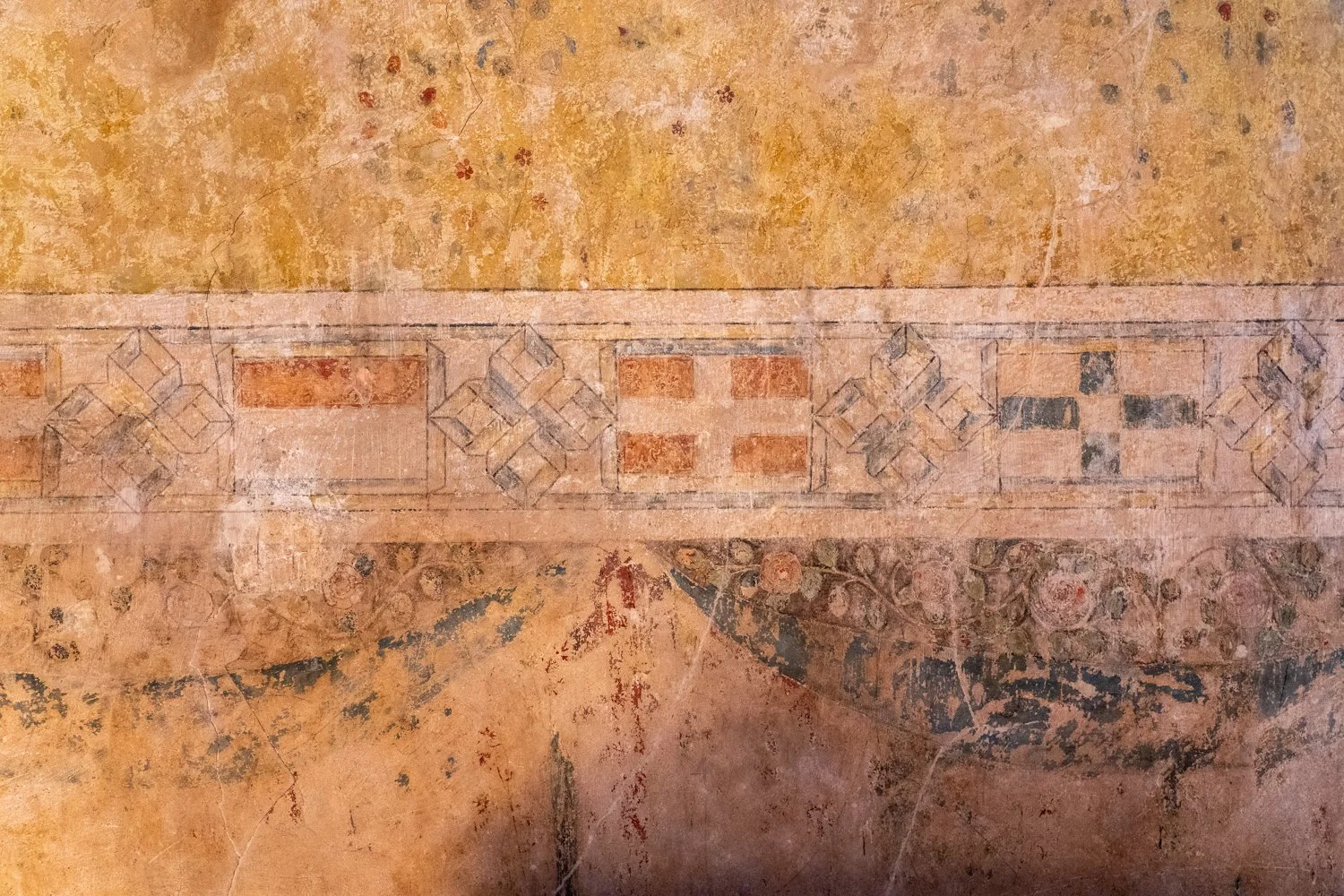
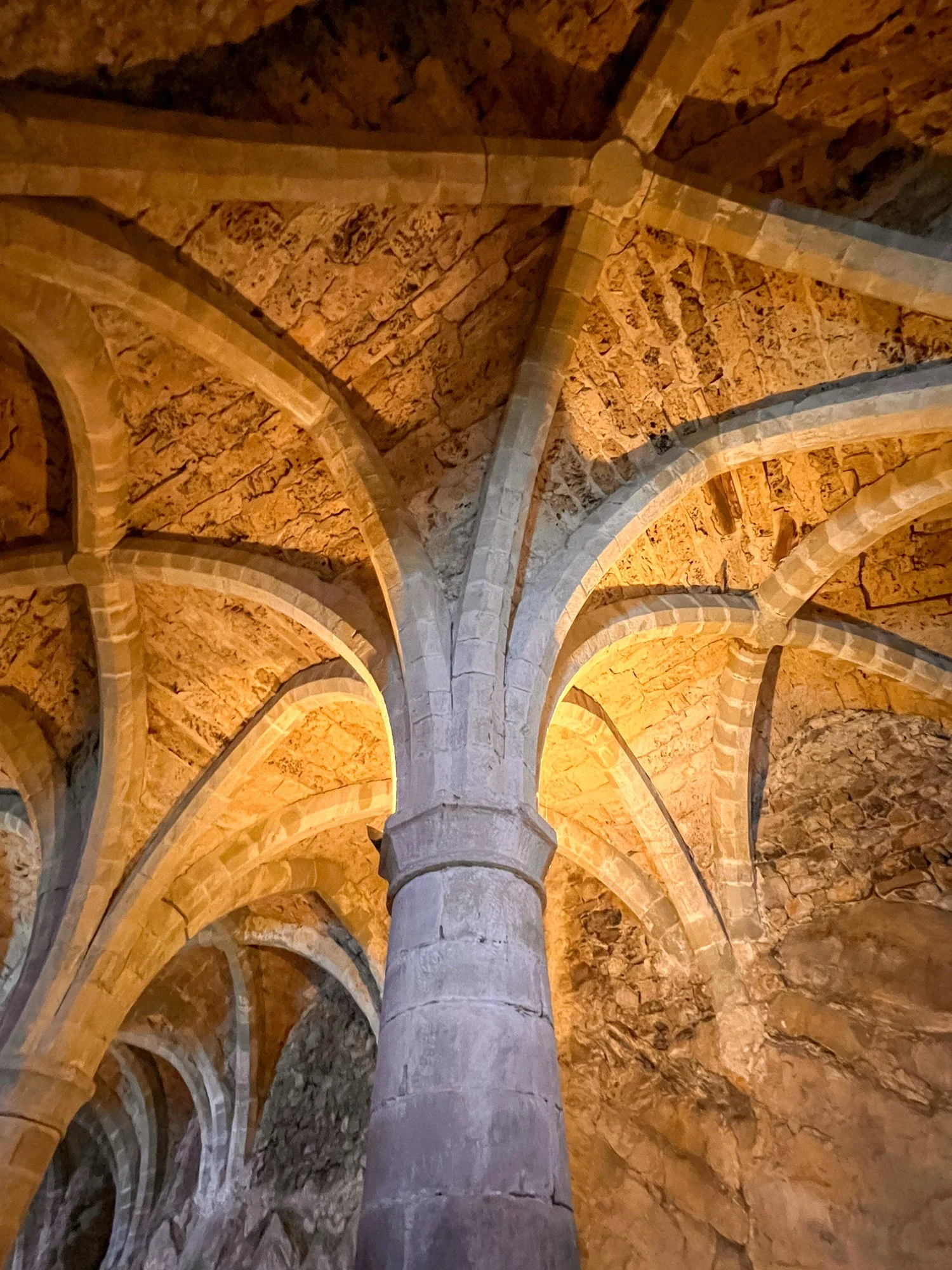
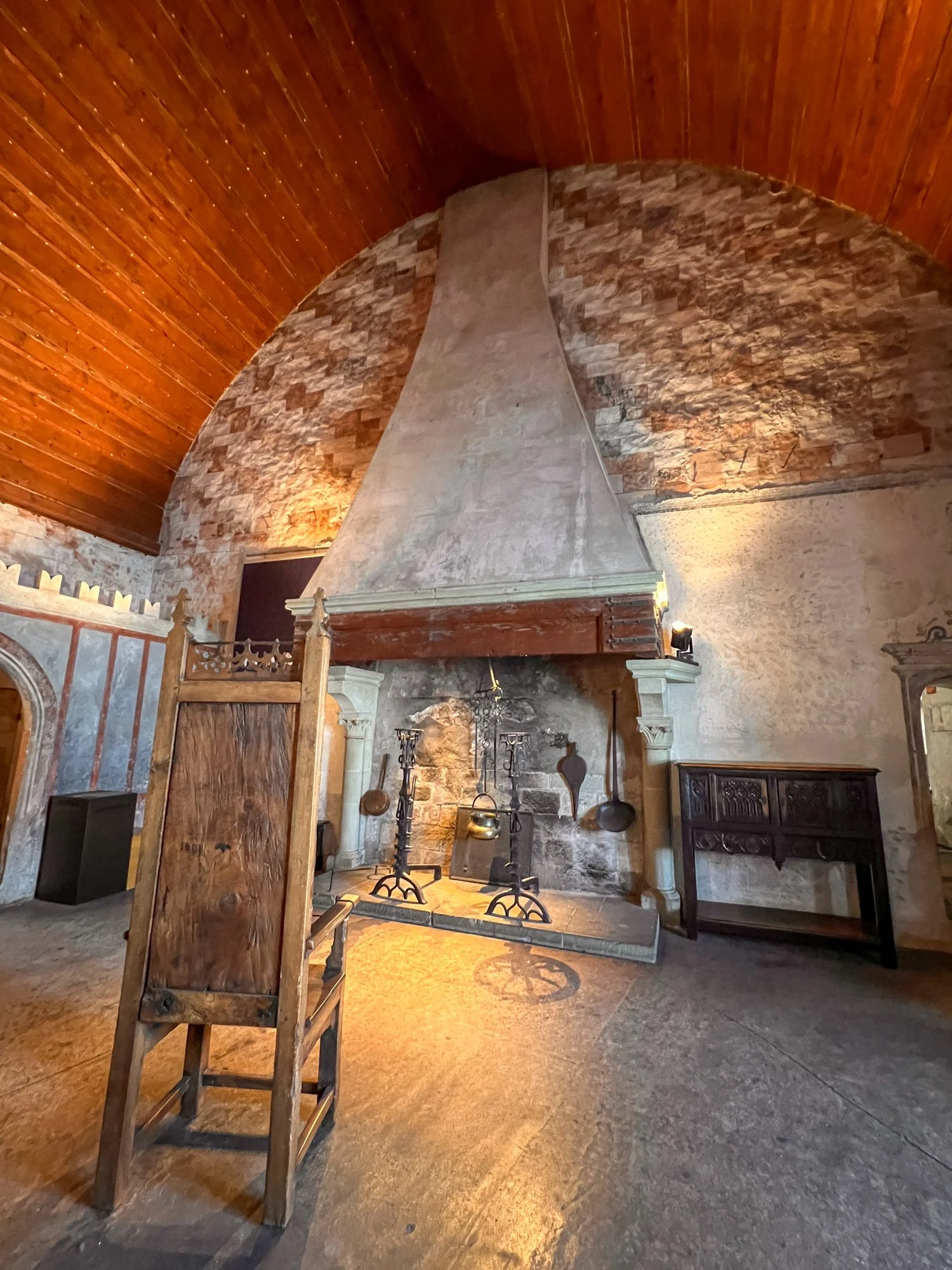
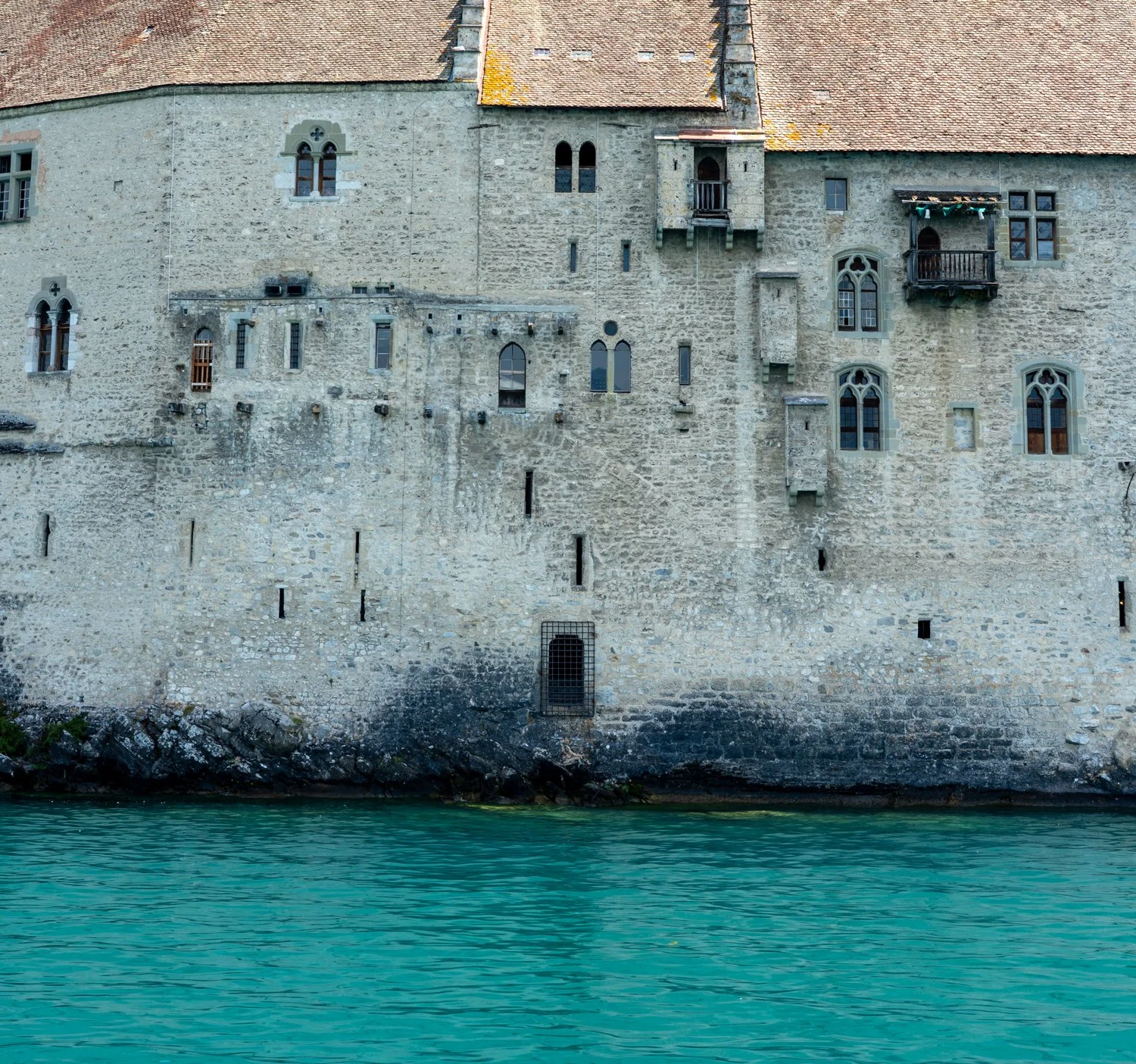
Our destination was Château de Chillon, sitting dramatically on a rocky outcrop beside the lake. If someone had asked us to design the perfect medieval castle, it would be difficult to improve on this one.
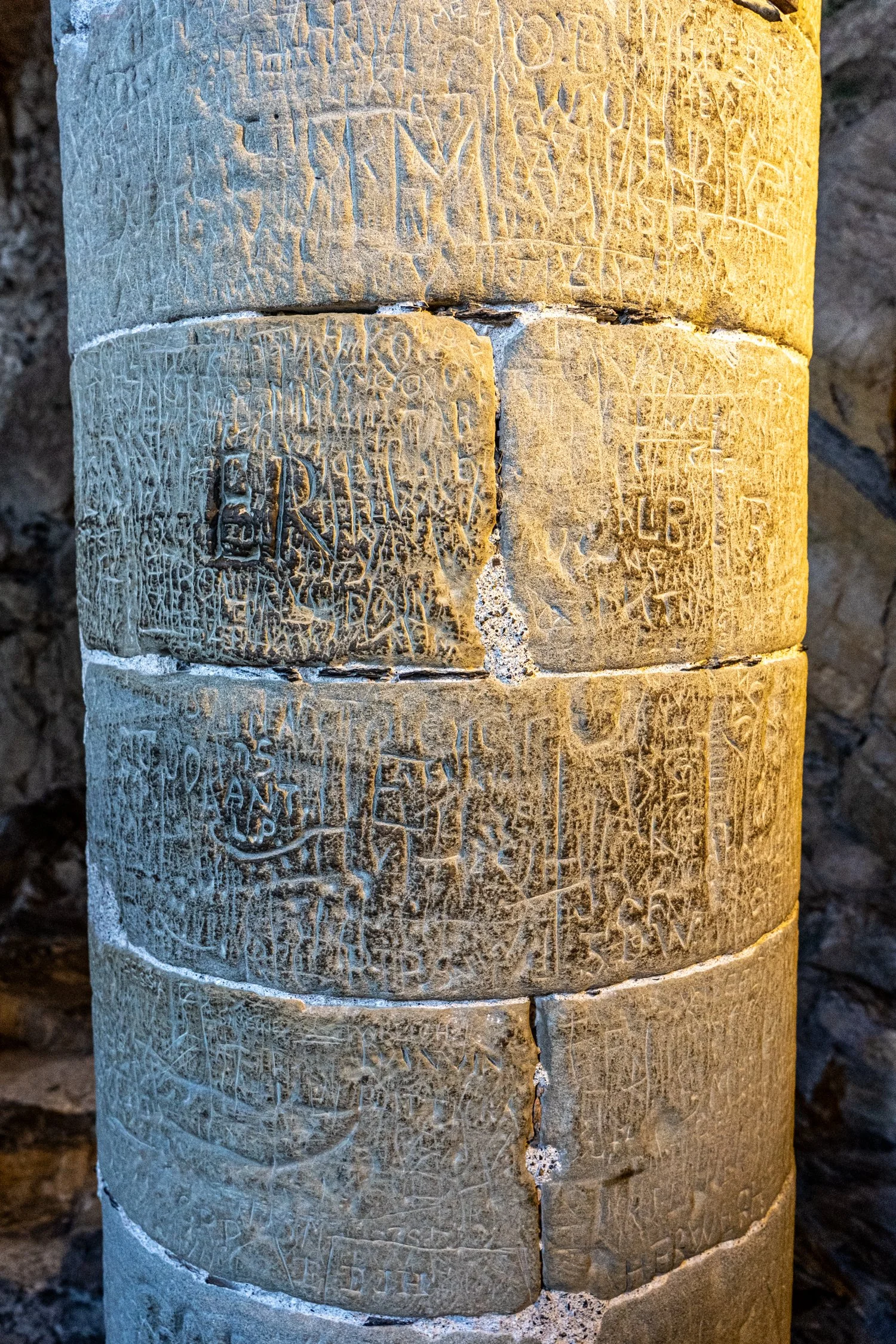
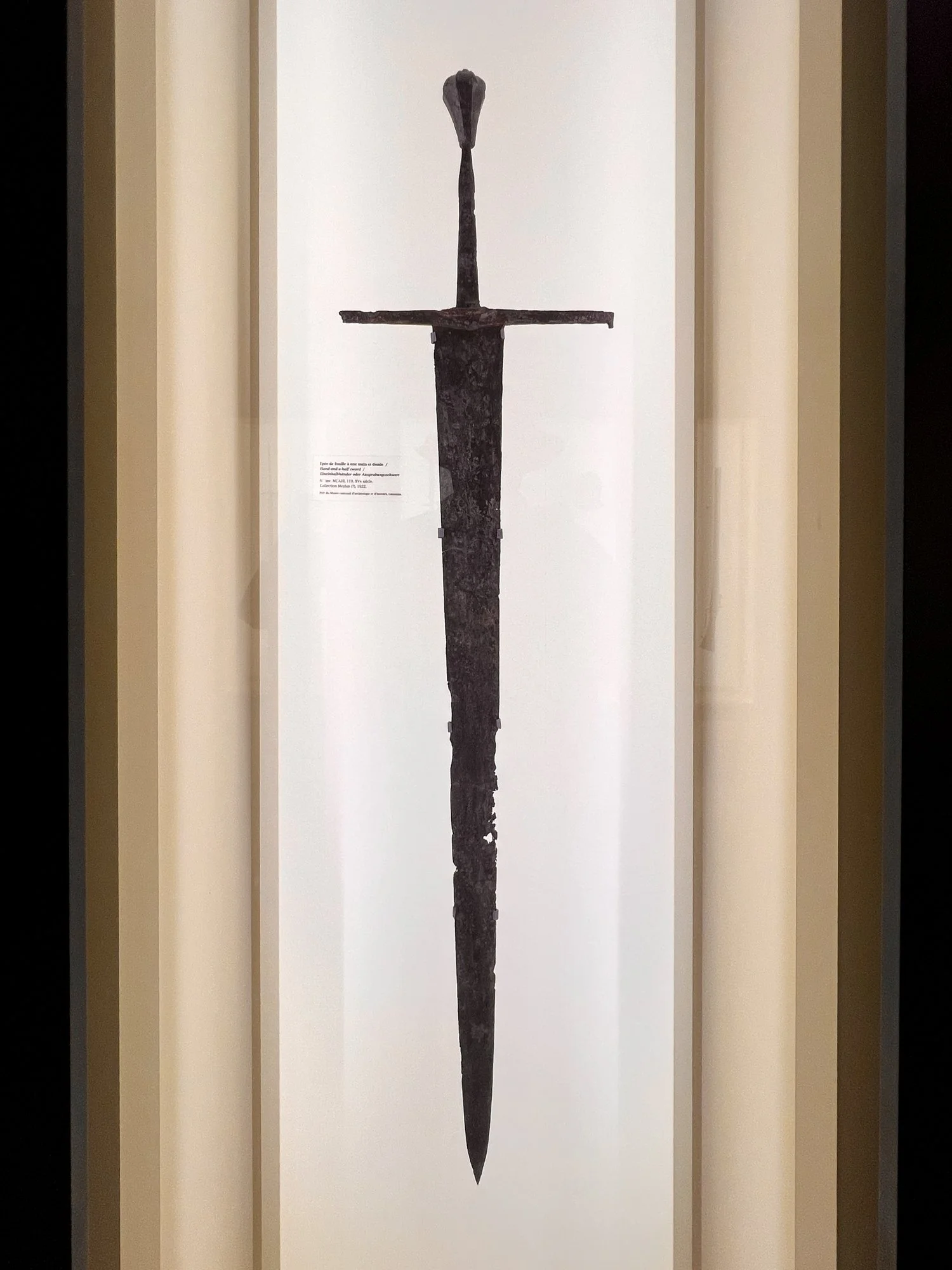
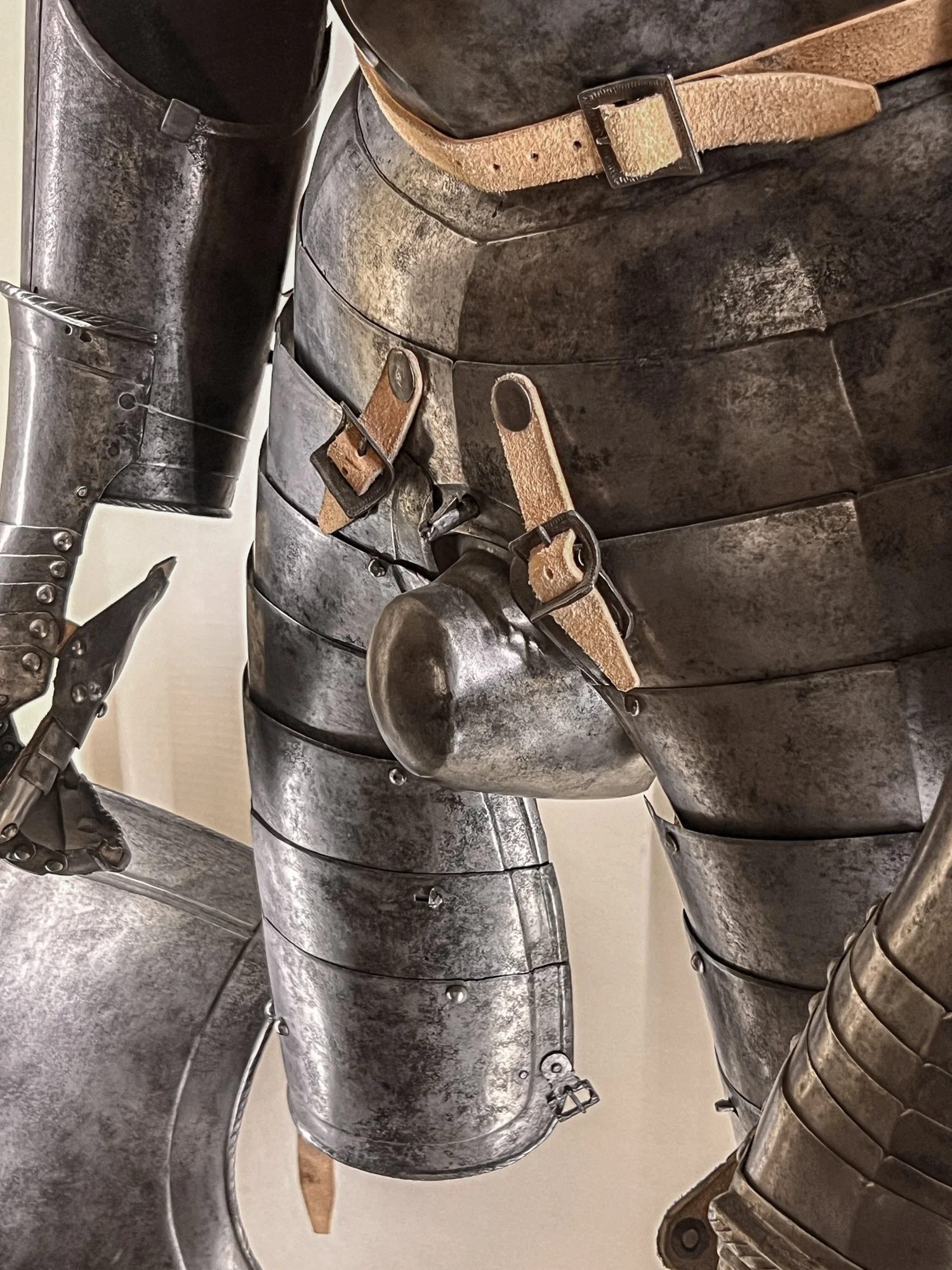
The castle has been sitting beside Lake Geneva for centuries, strategically positioned on the water and looking every bit the medieval fortress. We spent time exploring its courtyards, rooms and towers, imagining what life must have been like when this was a serious piece of military real estate rather than one of Switzerland's biggest tourist attractions.
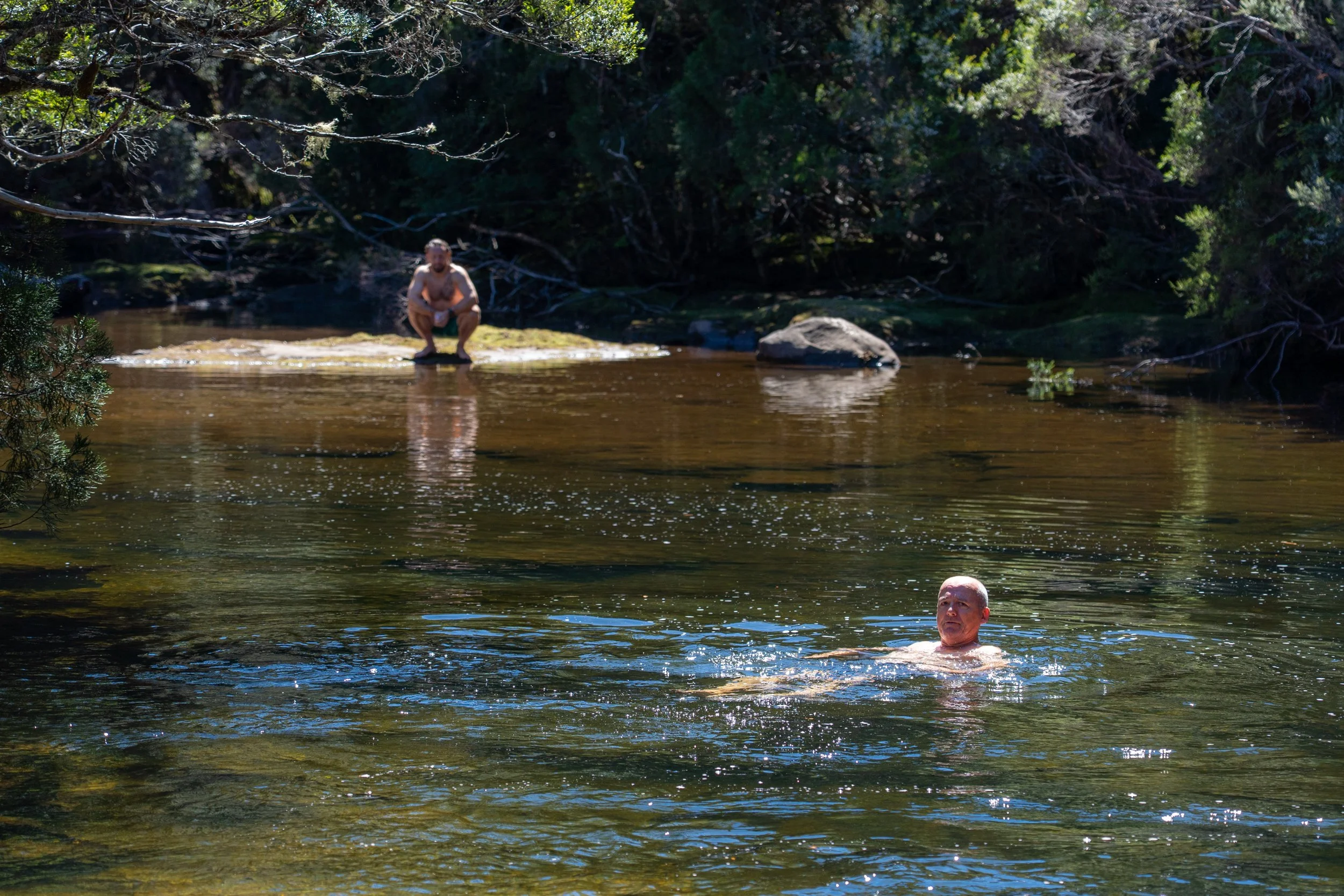
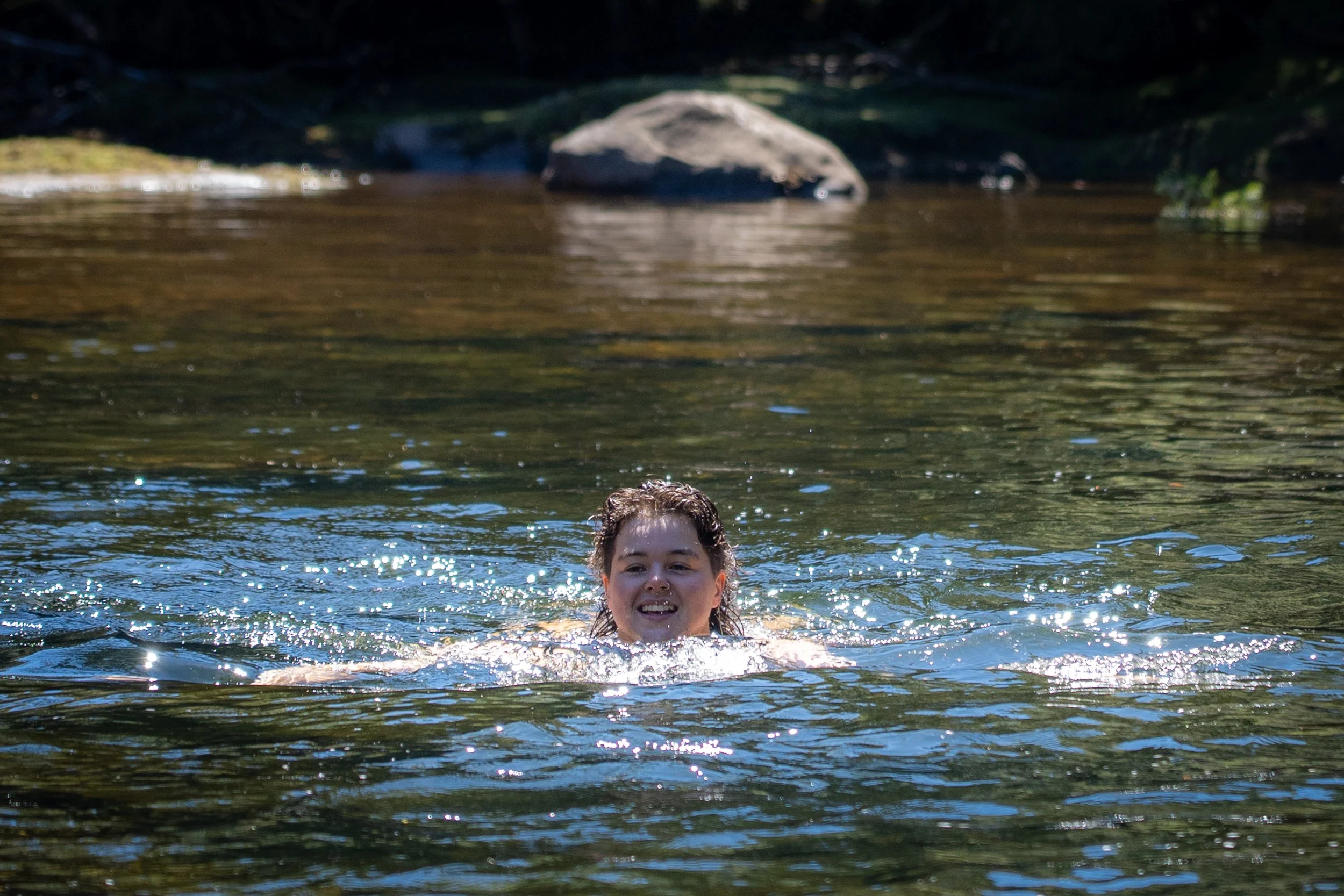
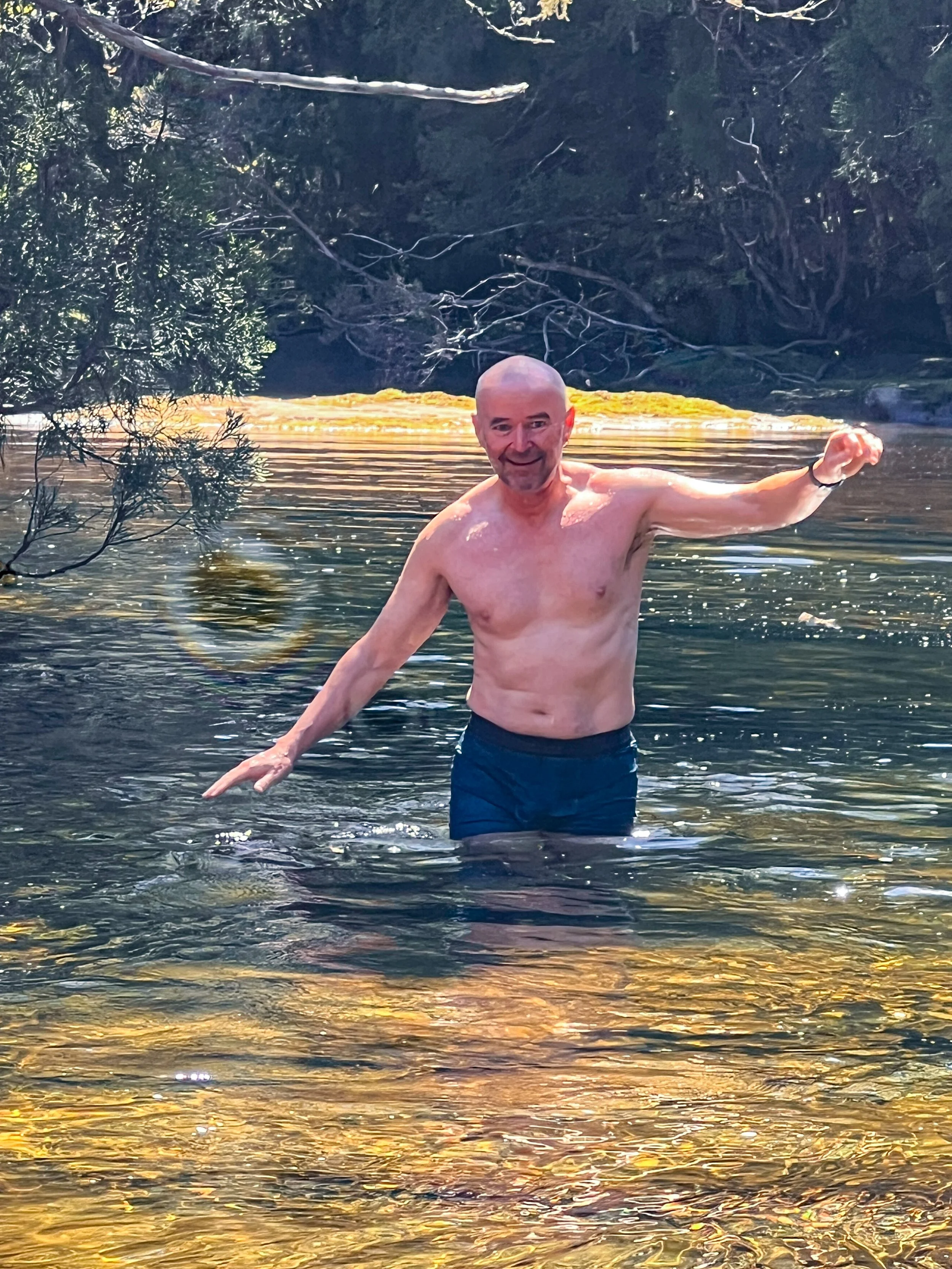
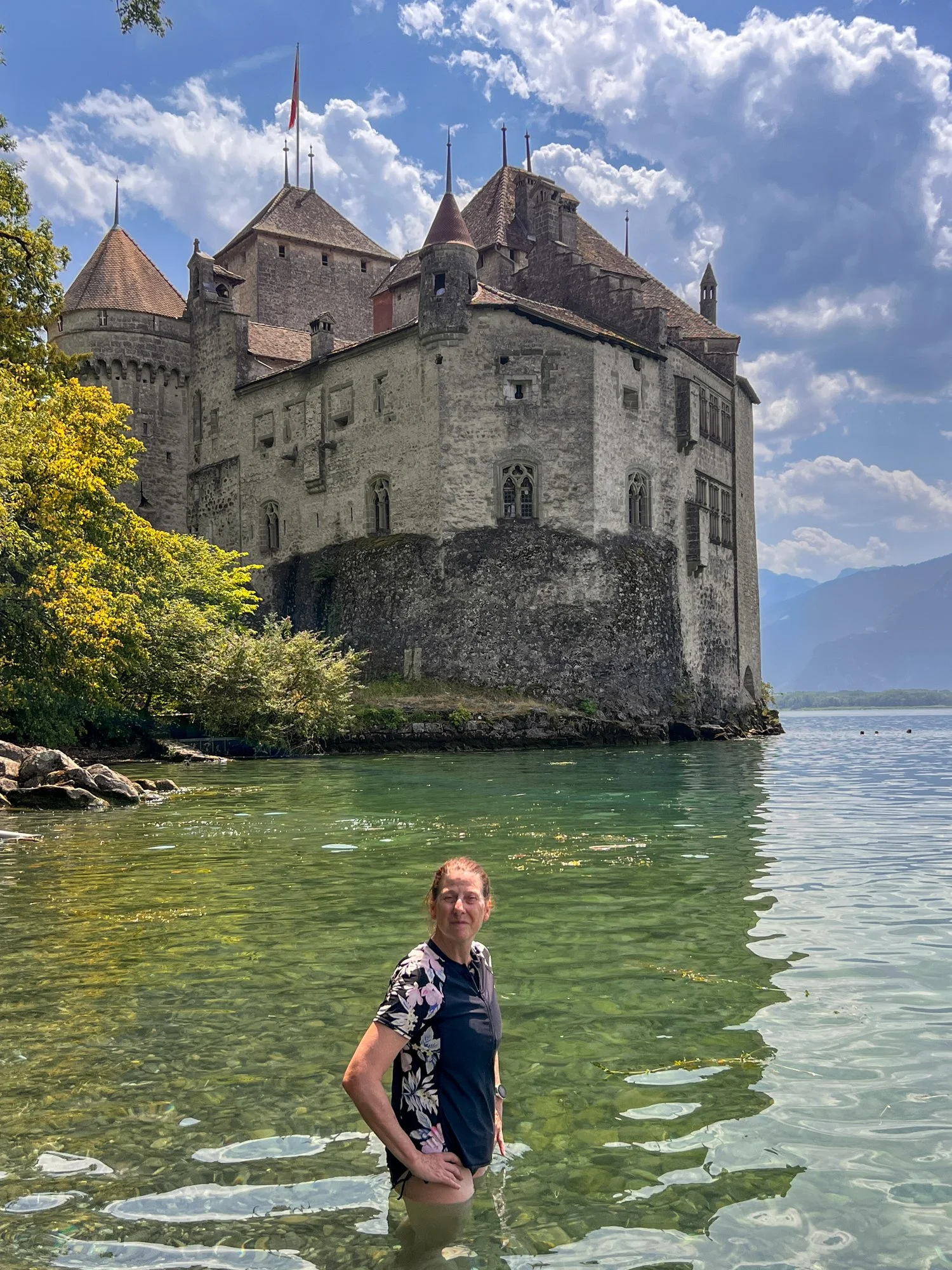
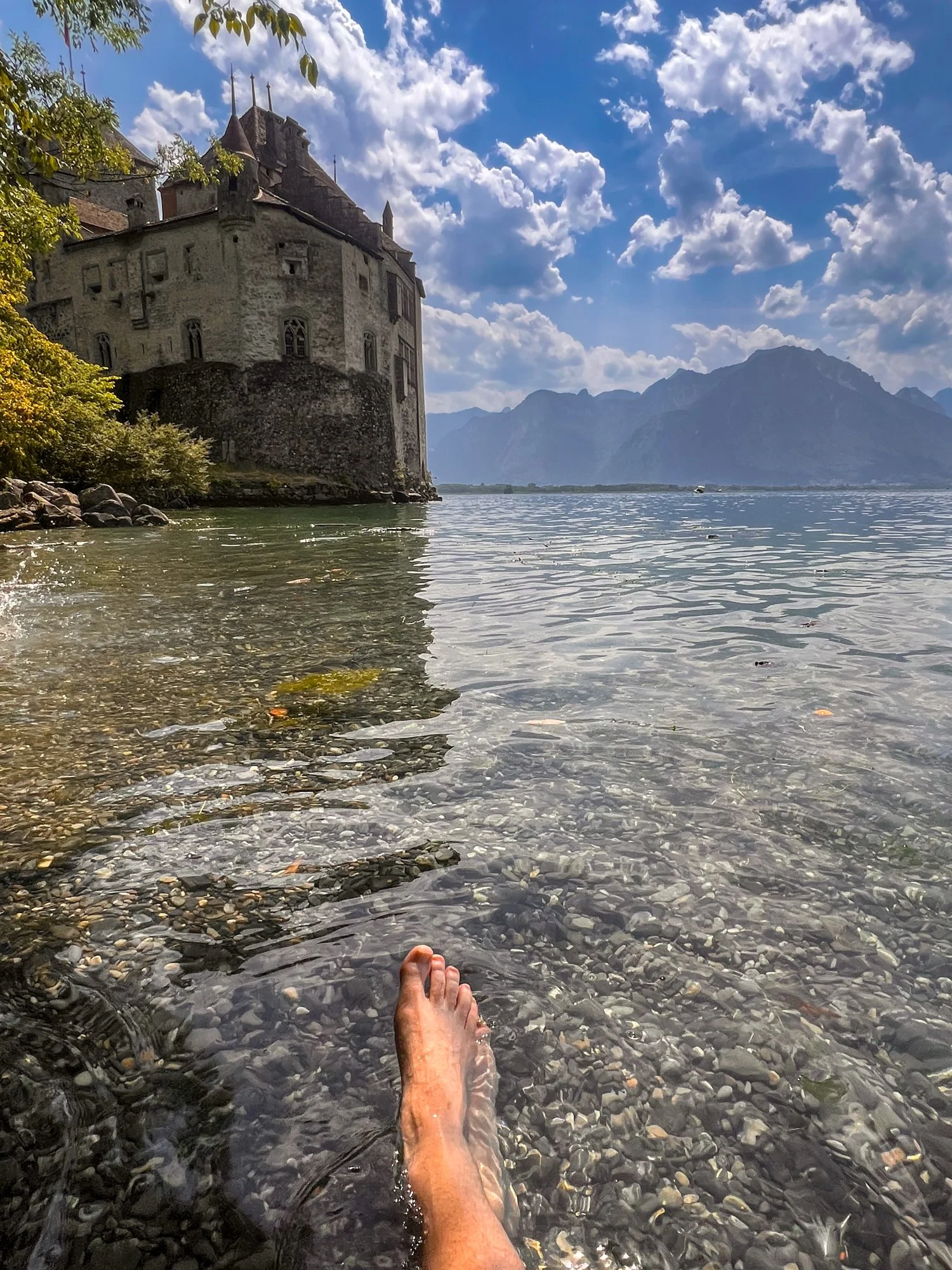
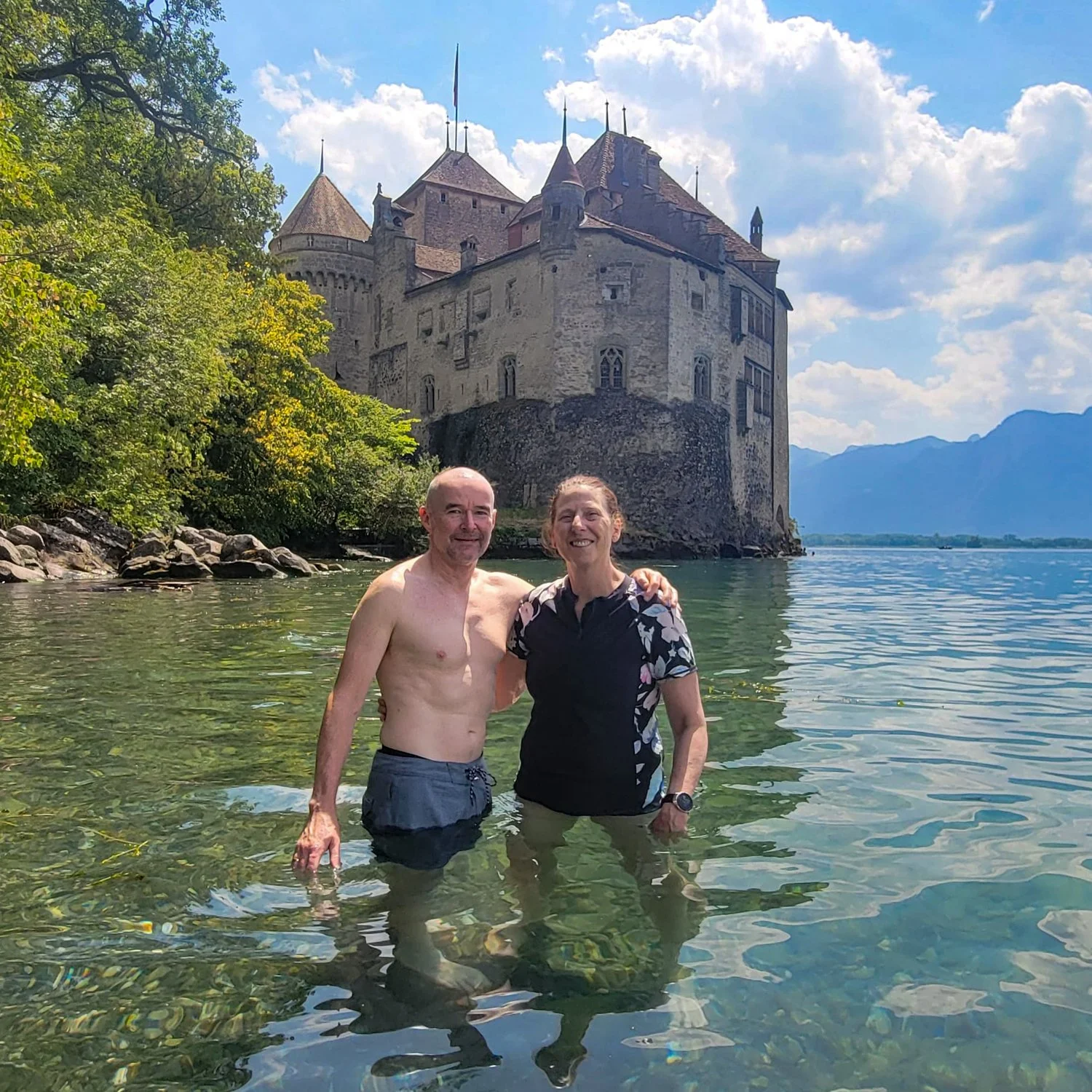
It was another warm day, and with that beautiful blue lake sitting directly beneath the castle, the decision seemed obvious. It was one of those completely unexpected travel moments that you couldn't really have planned.
One minute you're wandering around a medieval castle, looking at stone walls and trying to imagine life hundreds of years ago. The next, you're swimming in the lake looking back at the castle from the water.
A day in the Life
It's easy to travel around Switzerland and come home with a camera roll full of the usual suspects. Castles. Mountains. Lakes. Medieval bridges. Colourful buildings. Swiss flags. More mountains.
Those are the images you expect to take.
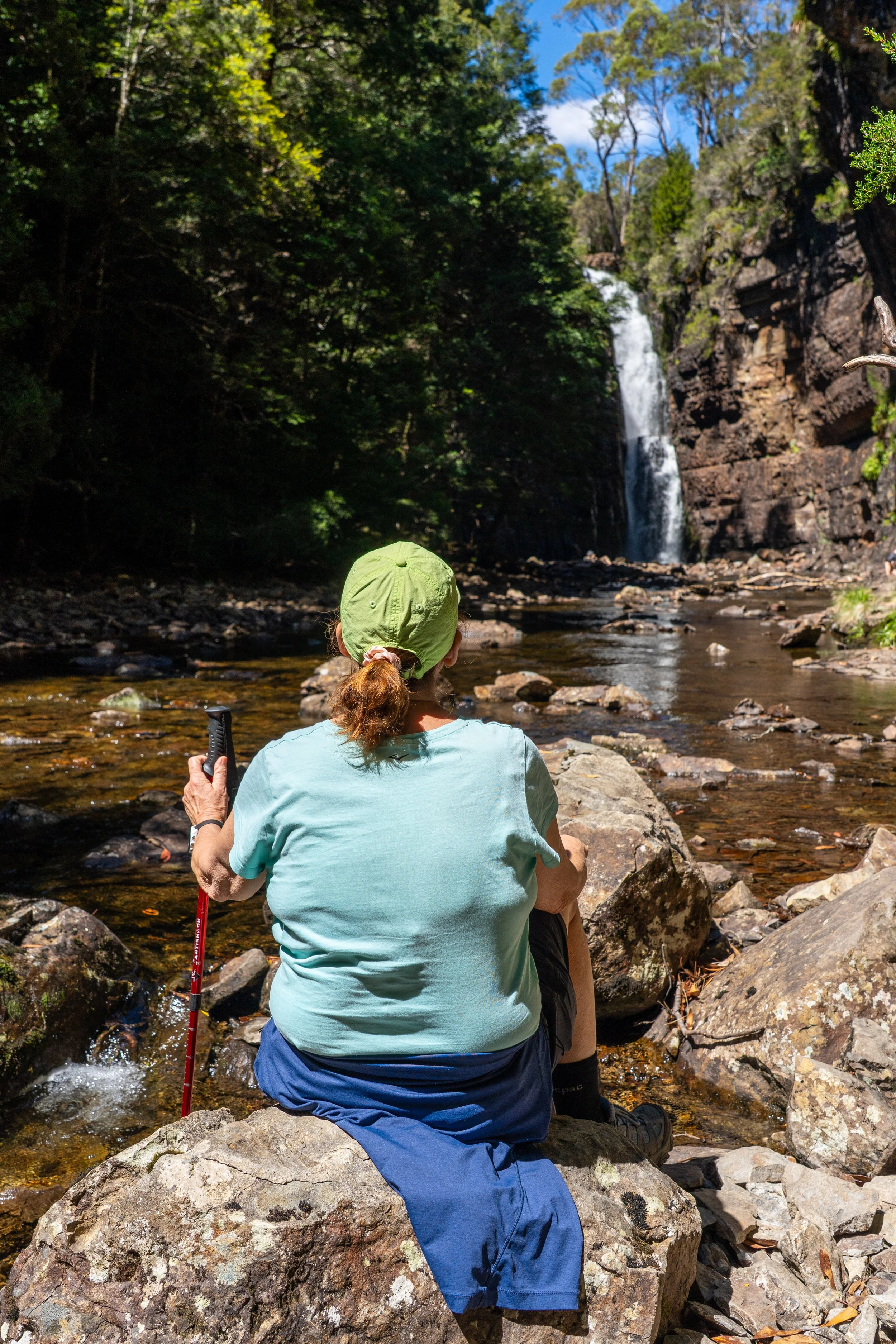
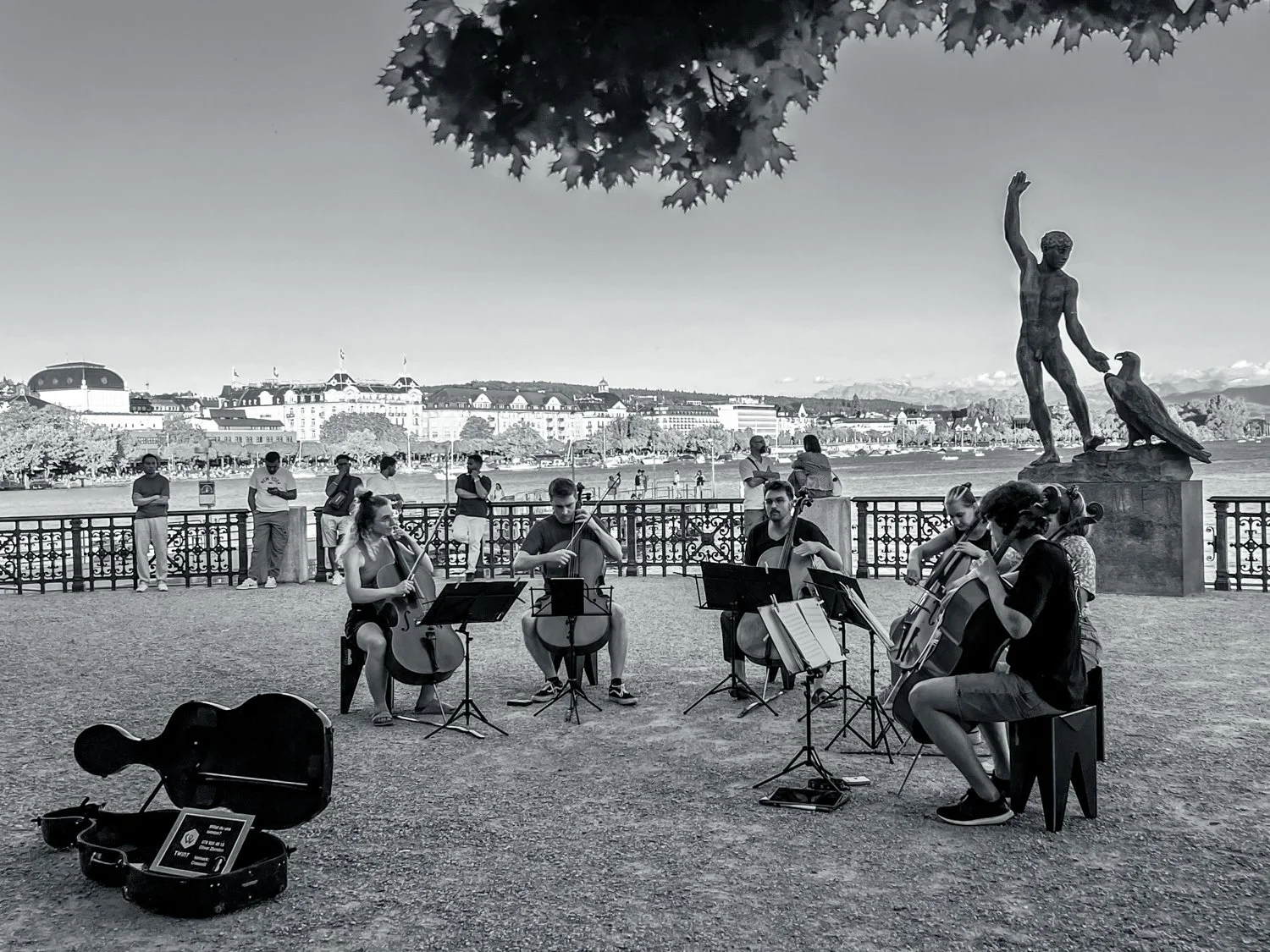
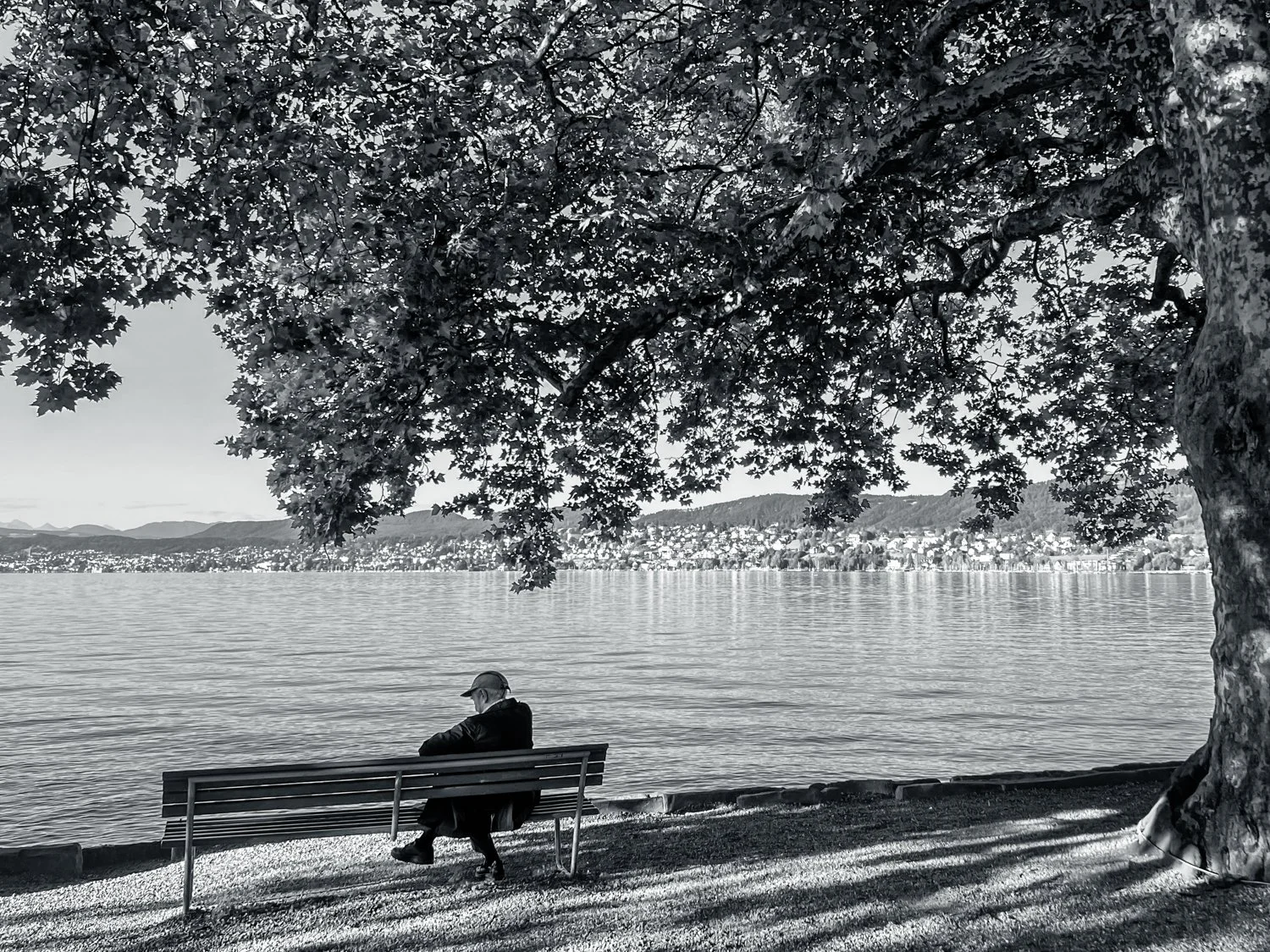
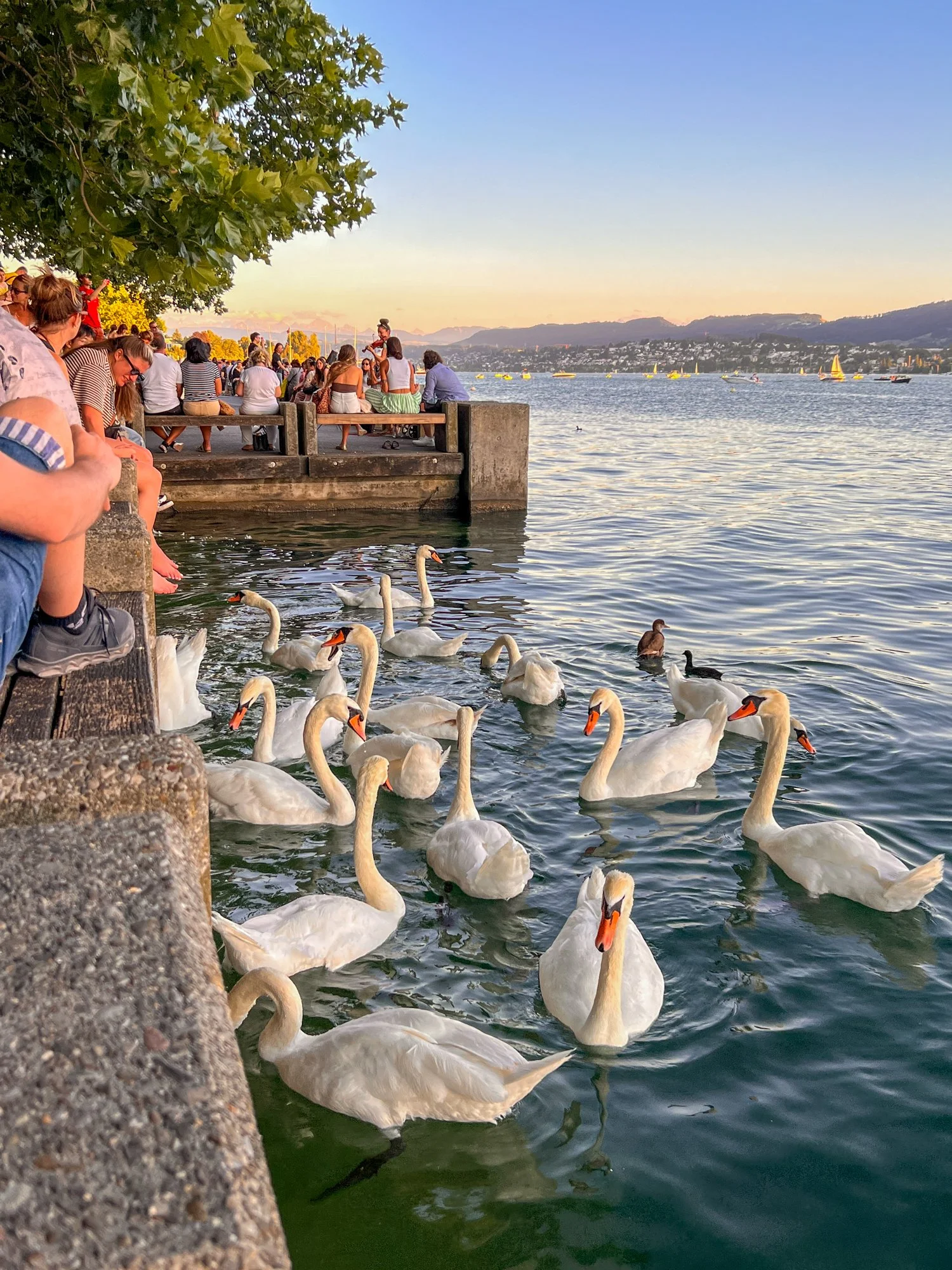
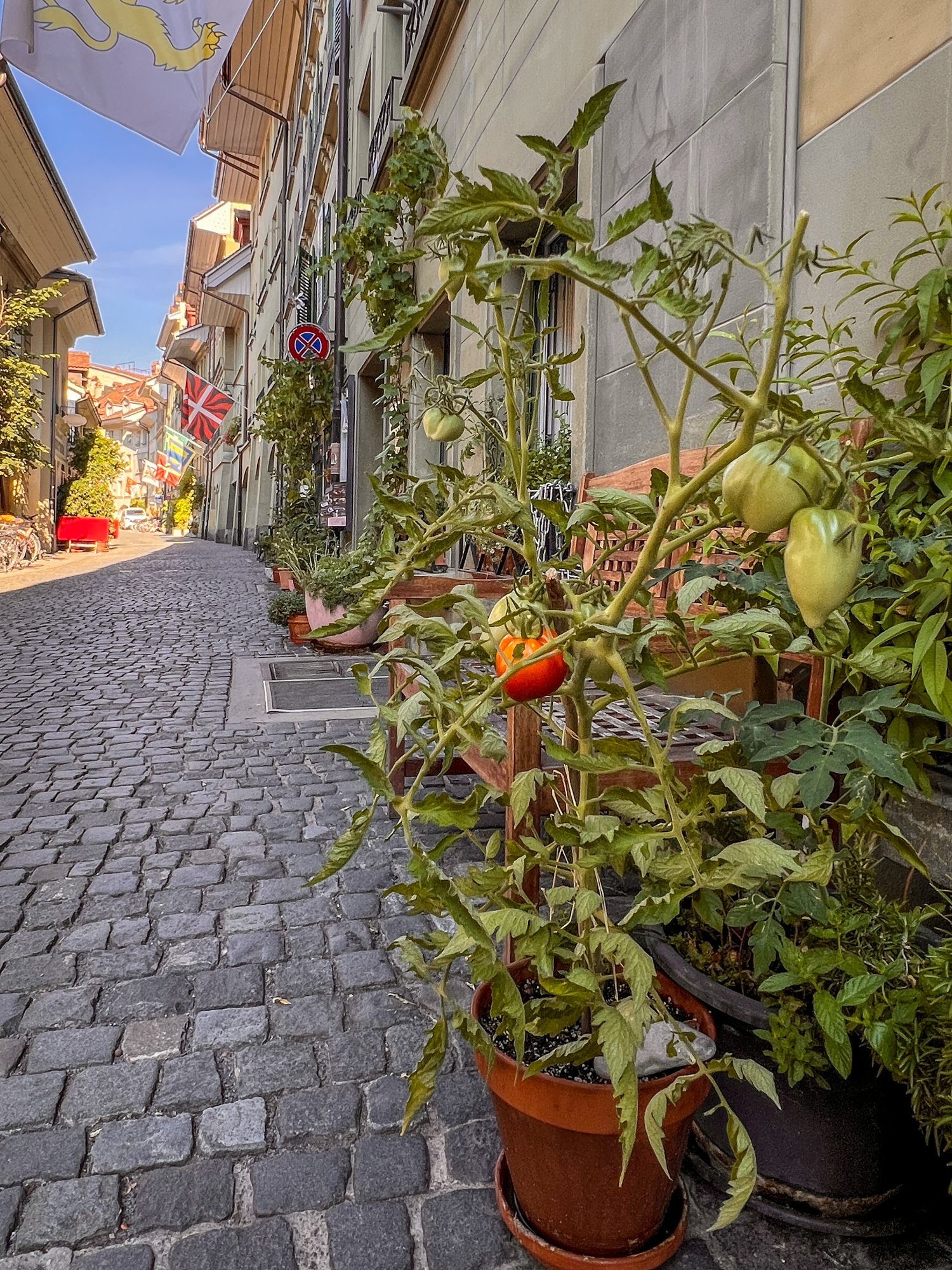
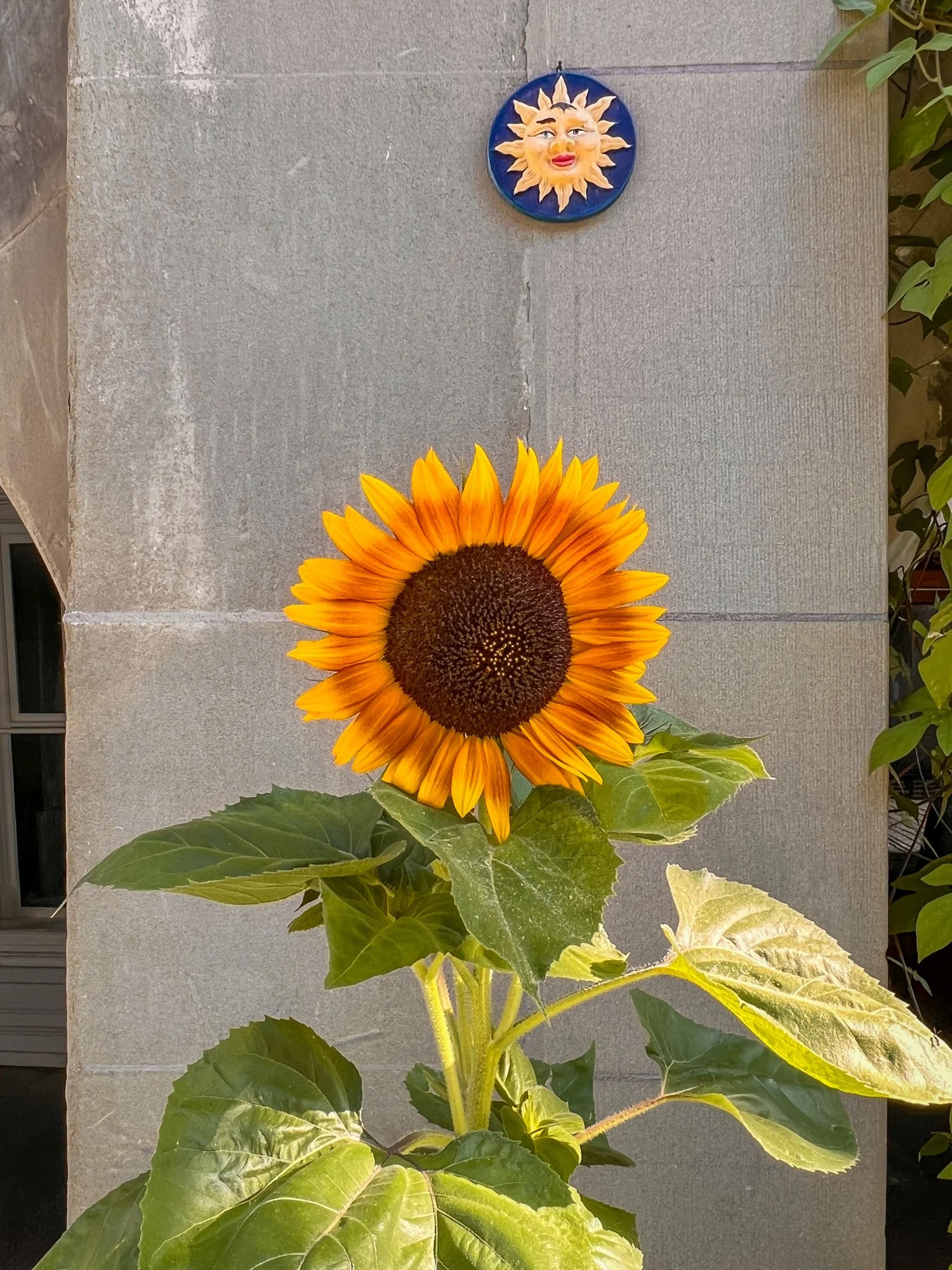
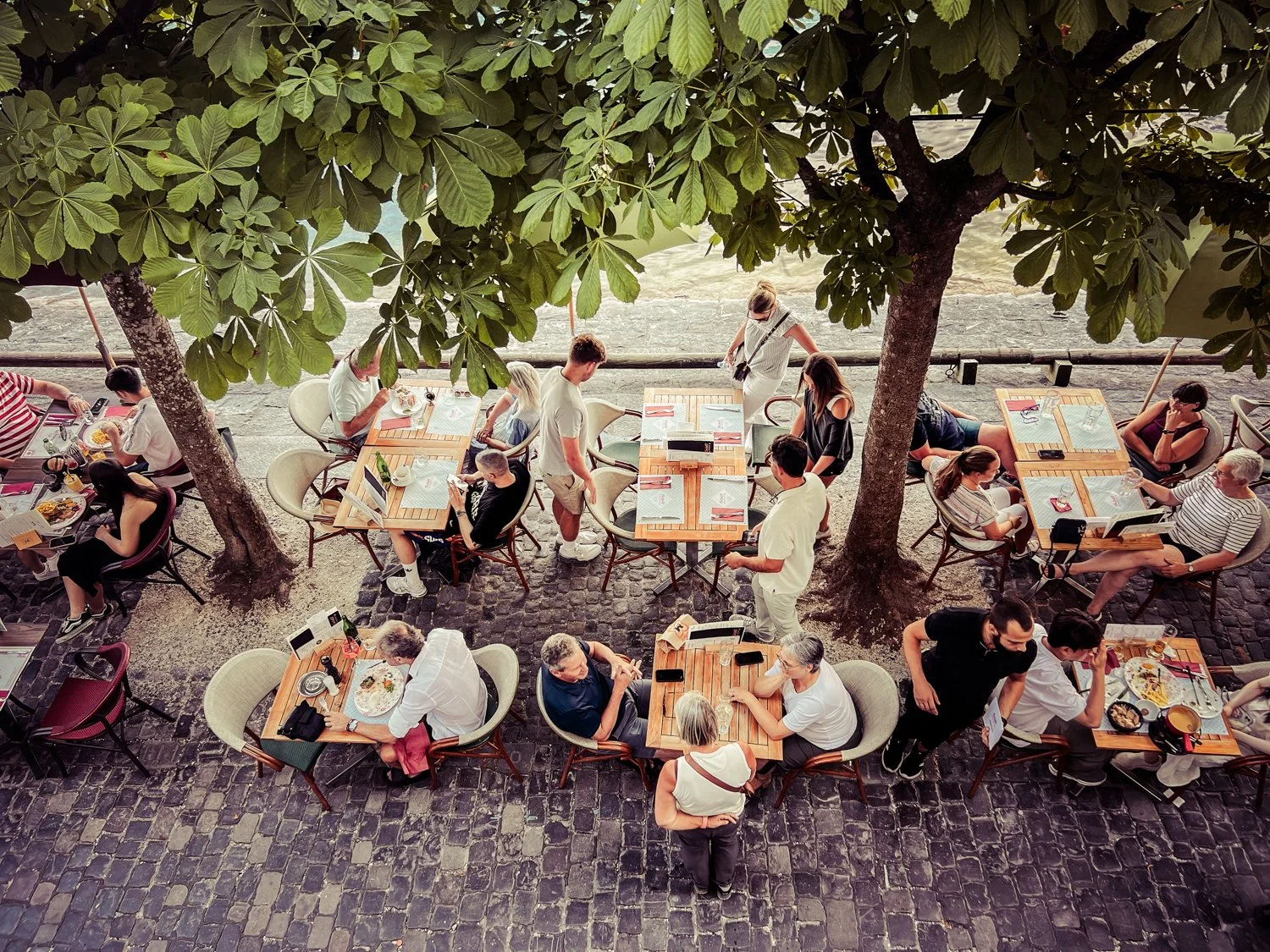
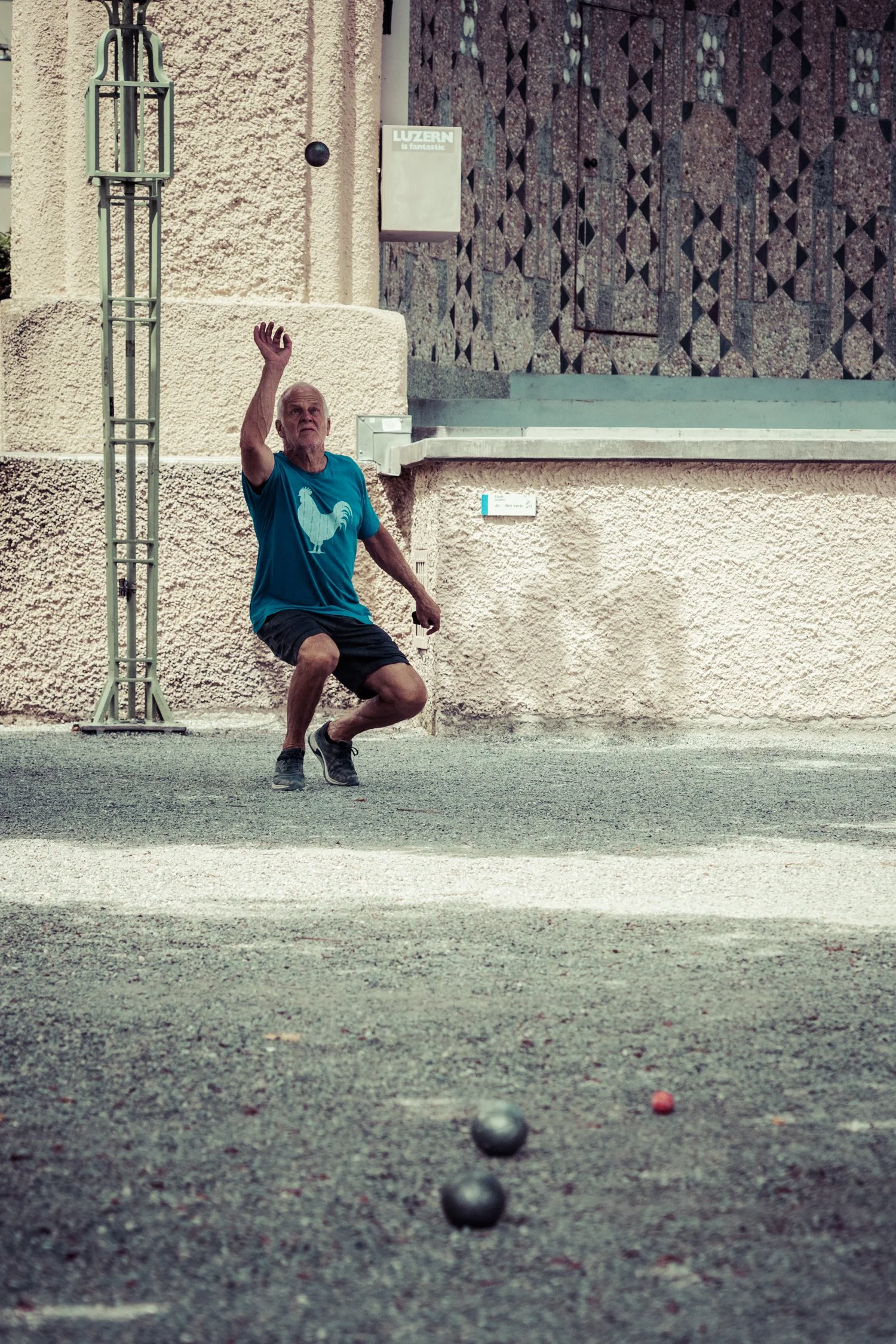
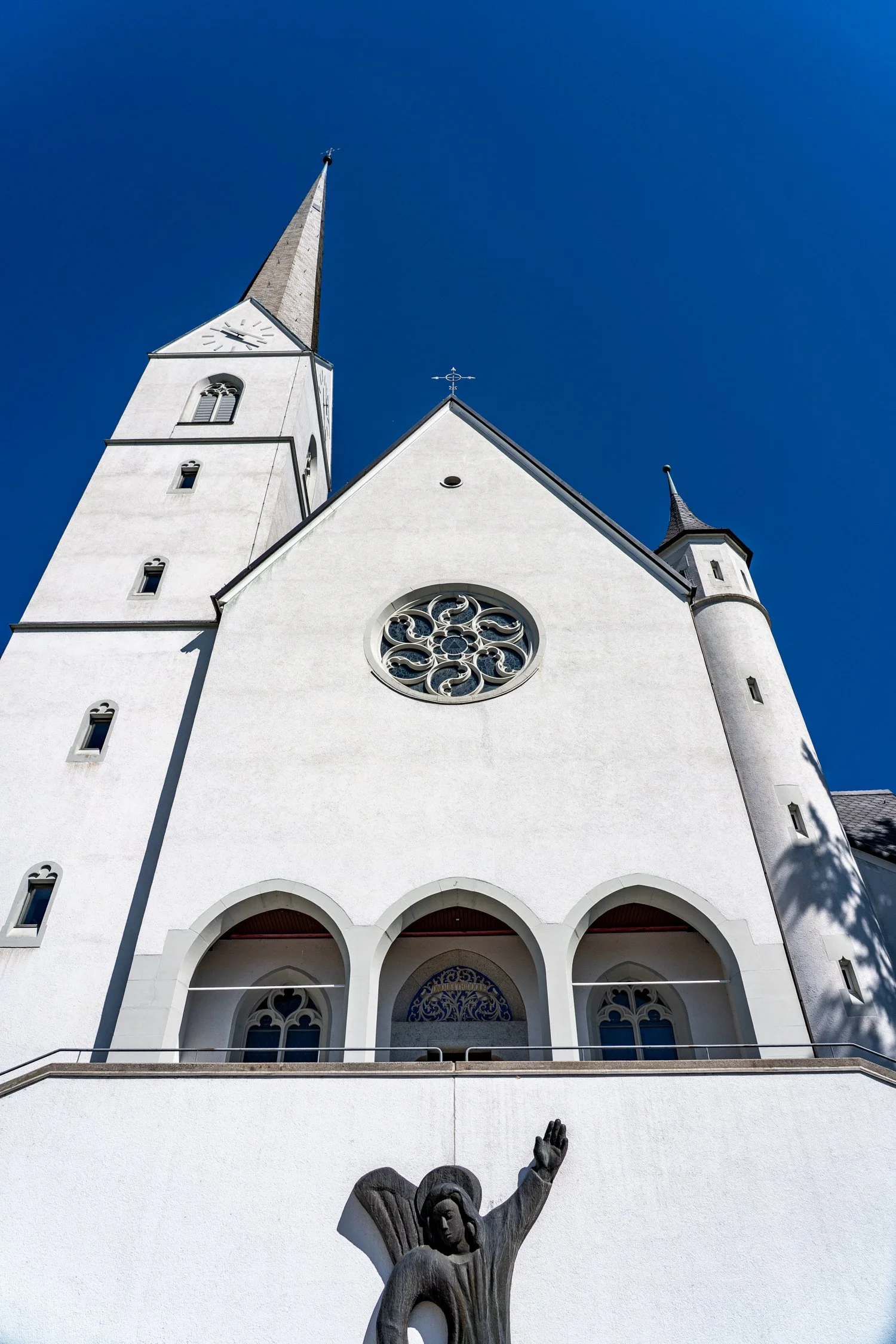
But some of my favourite moments are the ones that don't make the tourist brochure. The ordinary stuff. The little glimpses of daily life that remind you that, despite the castles and mountains and ridiculously beautiful scenery, people here are just getting on with their day.
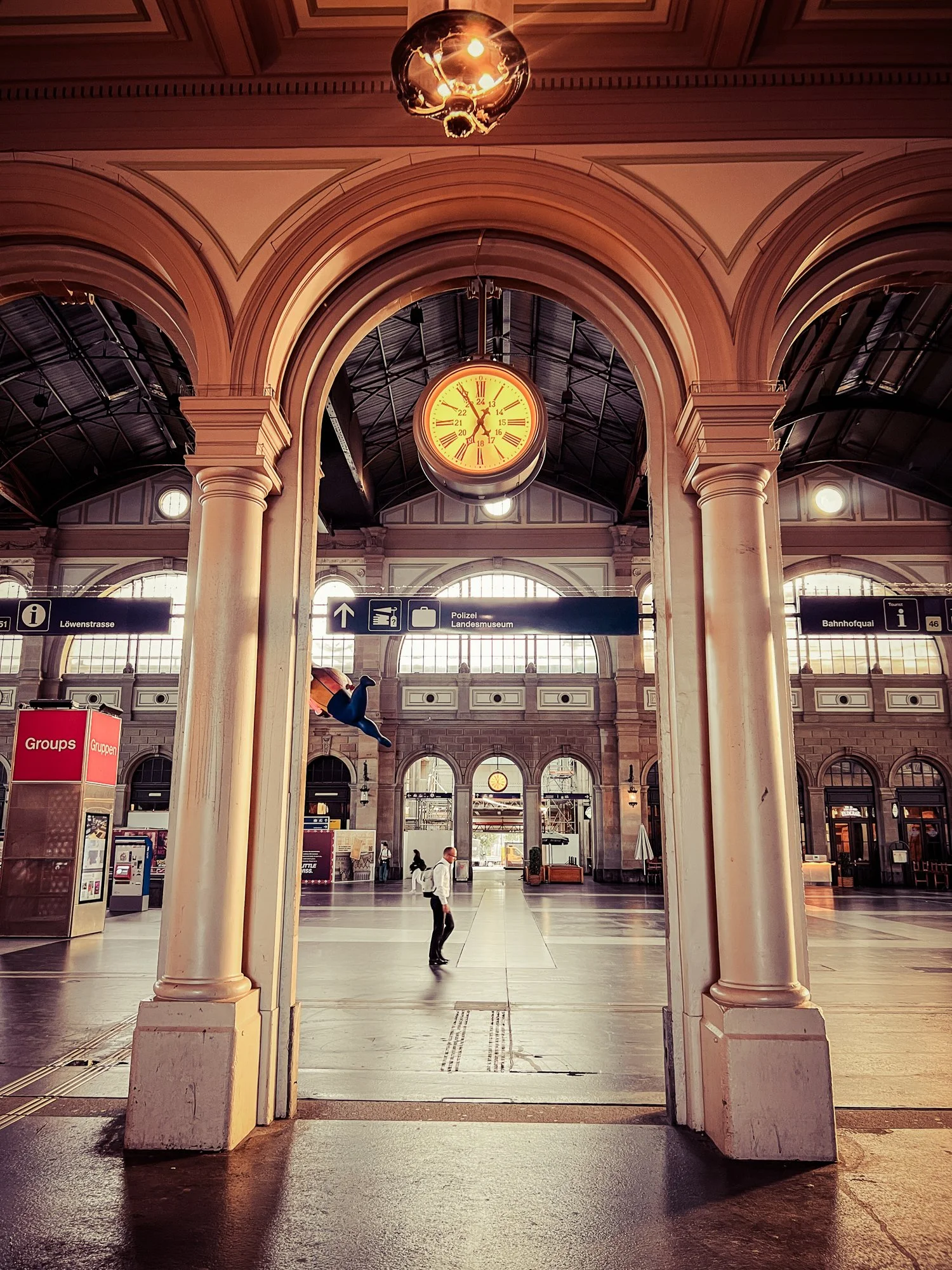
A person rushing to catch a tram.
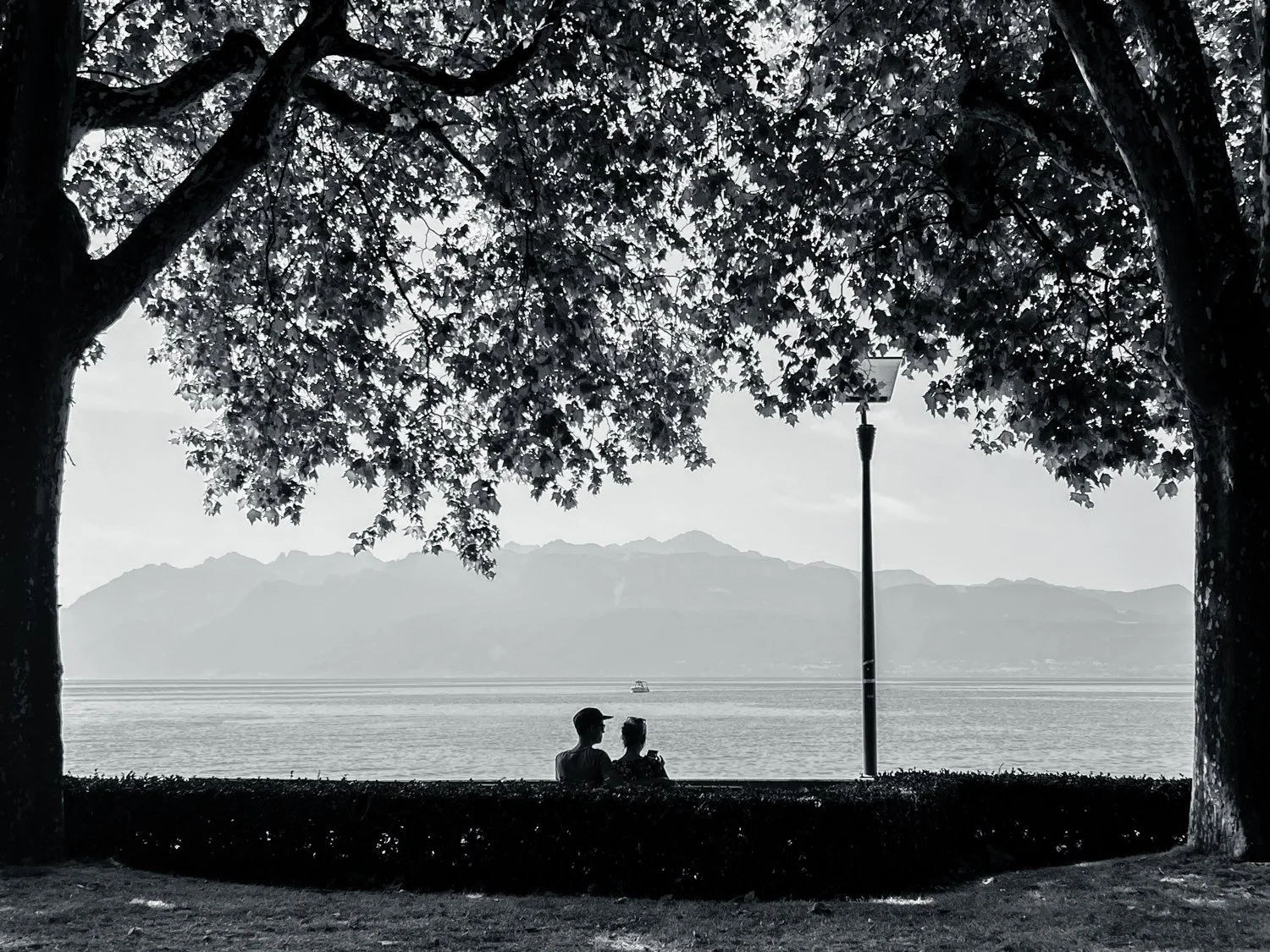
Someone sitting watching the world go by.
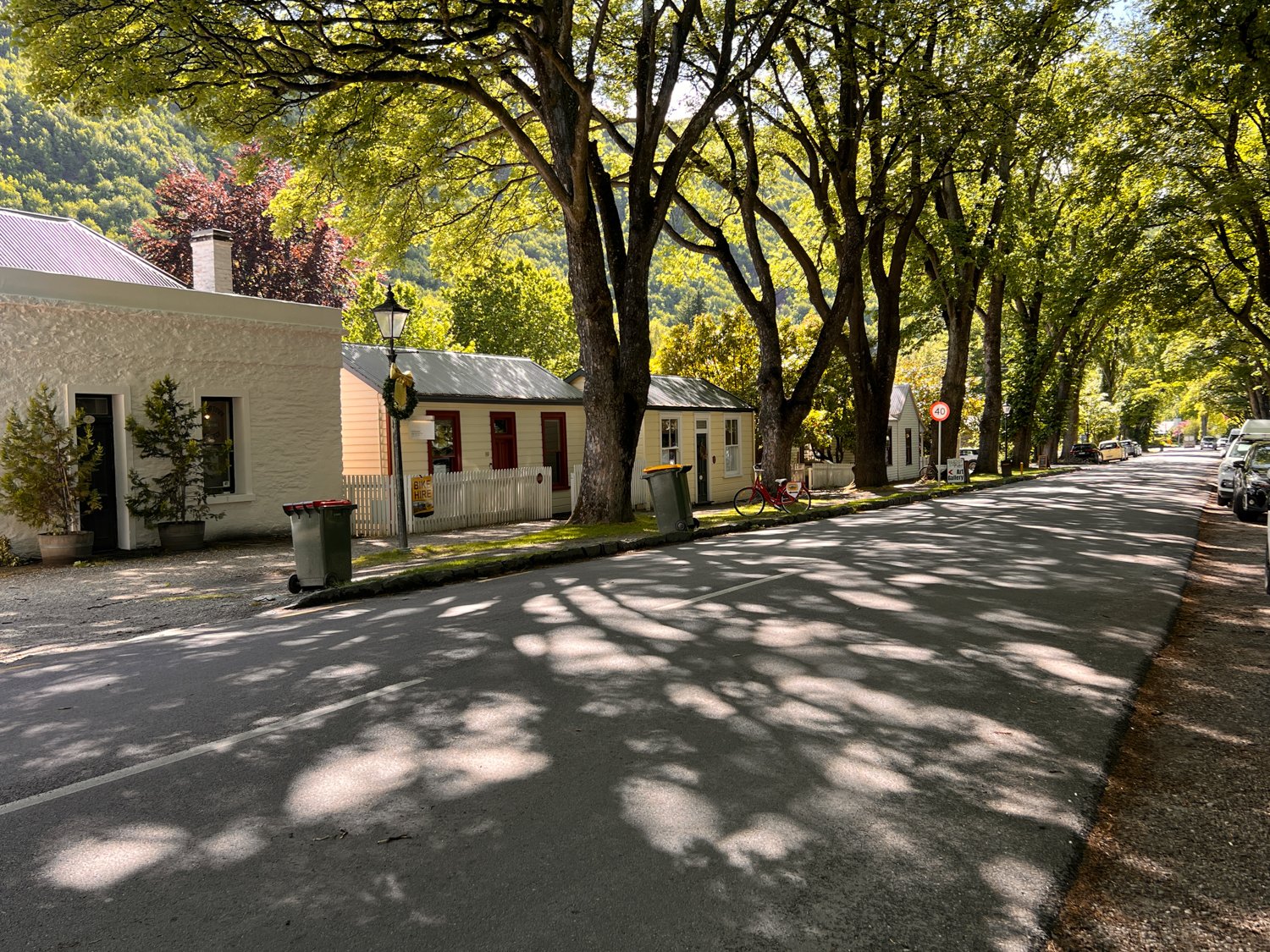
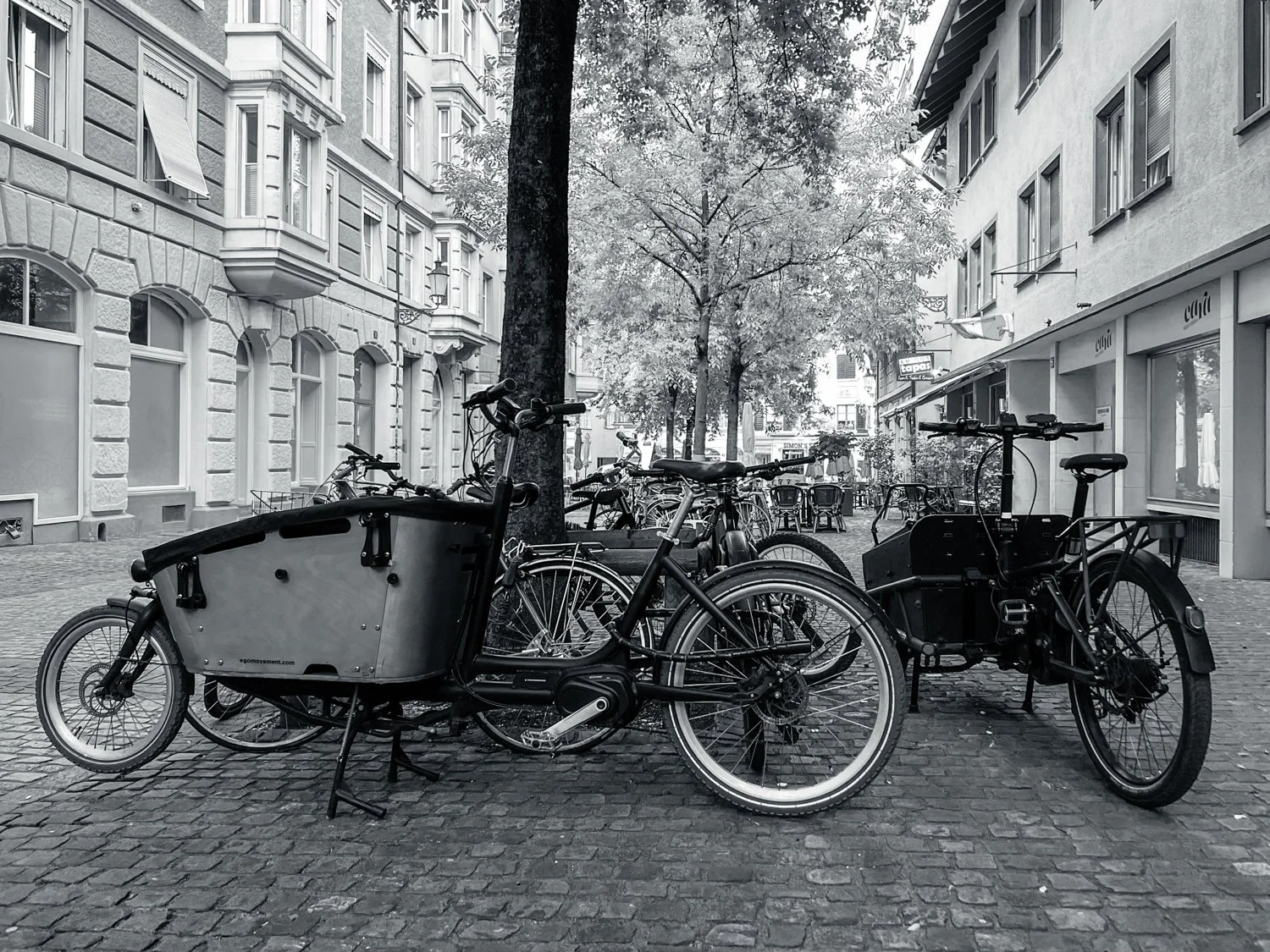
A bicycle leaning against the tree.
It's these moments that I find myself photographing almost without thinking. None of these things are particularly remarkable. And that's exactly why they are.
The big sights make great photographs. The little things make great memories.
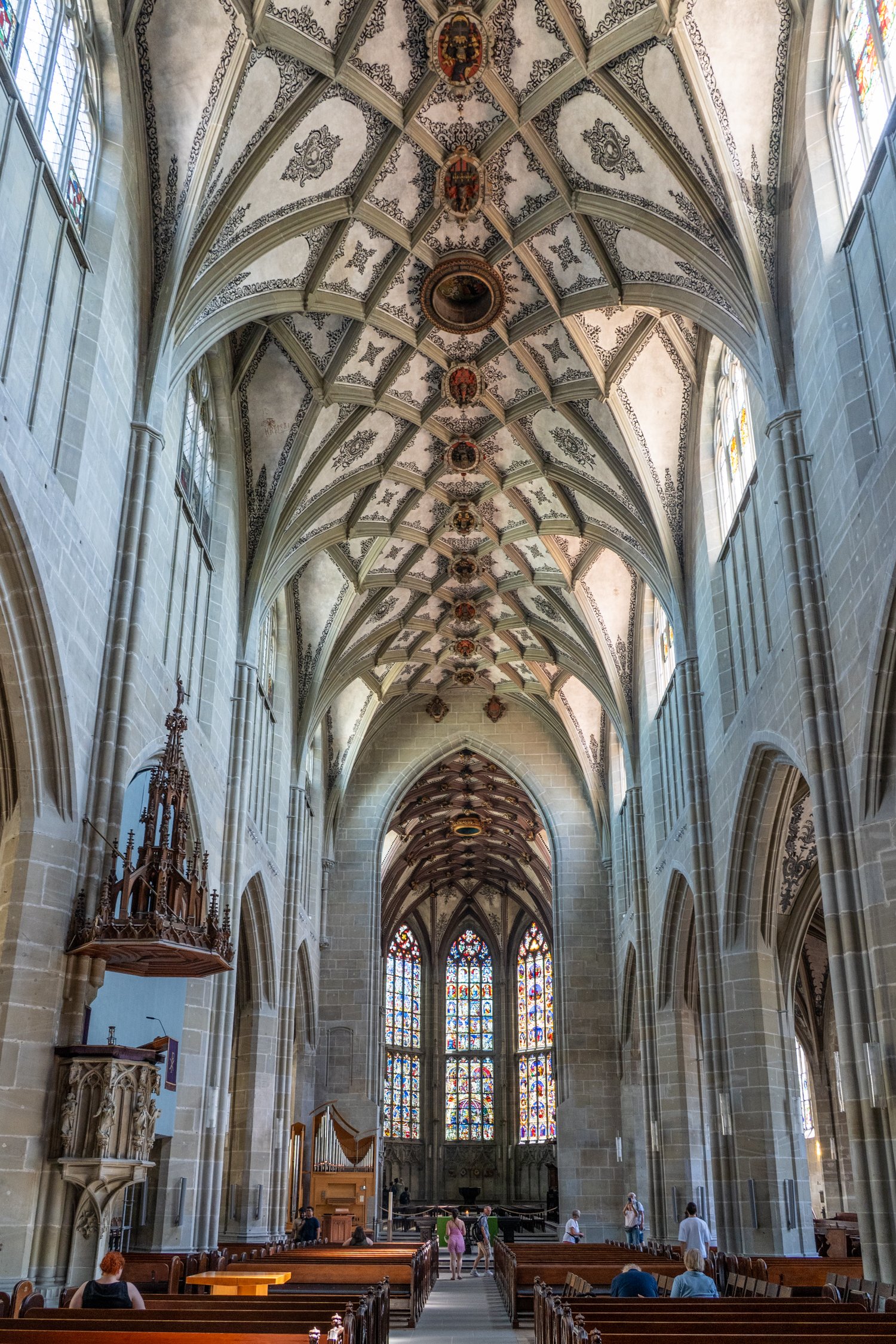
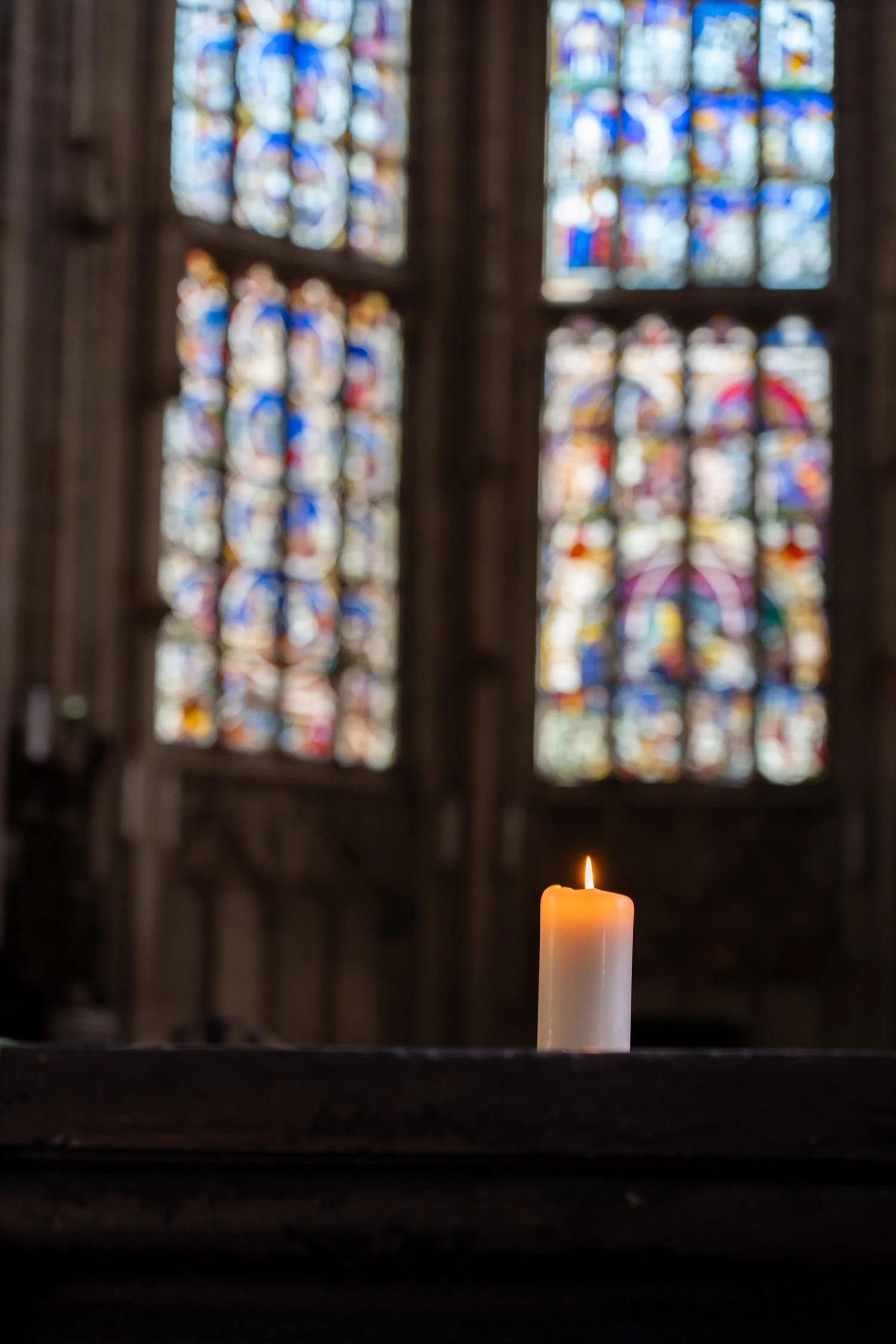
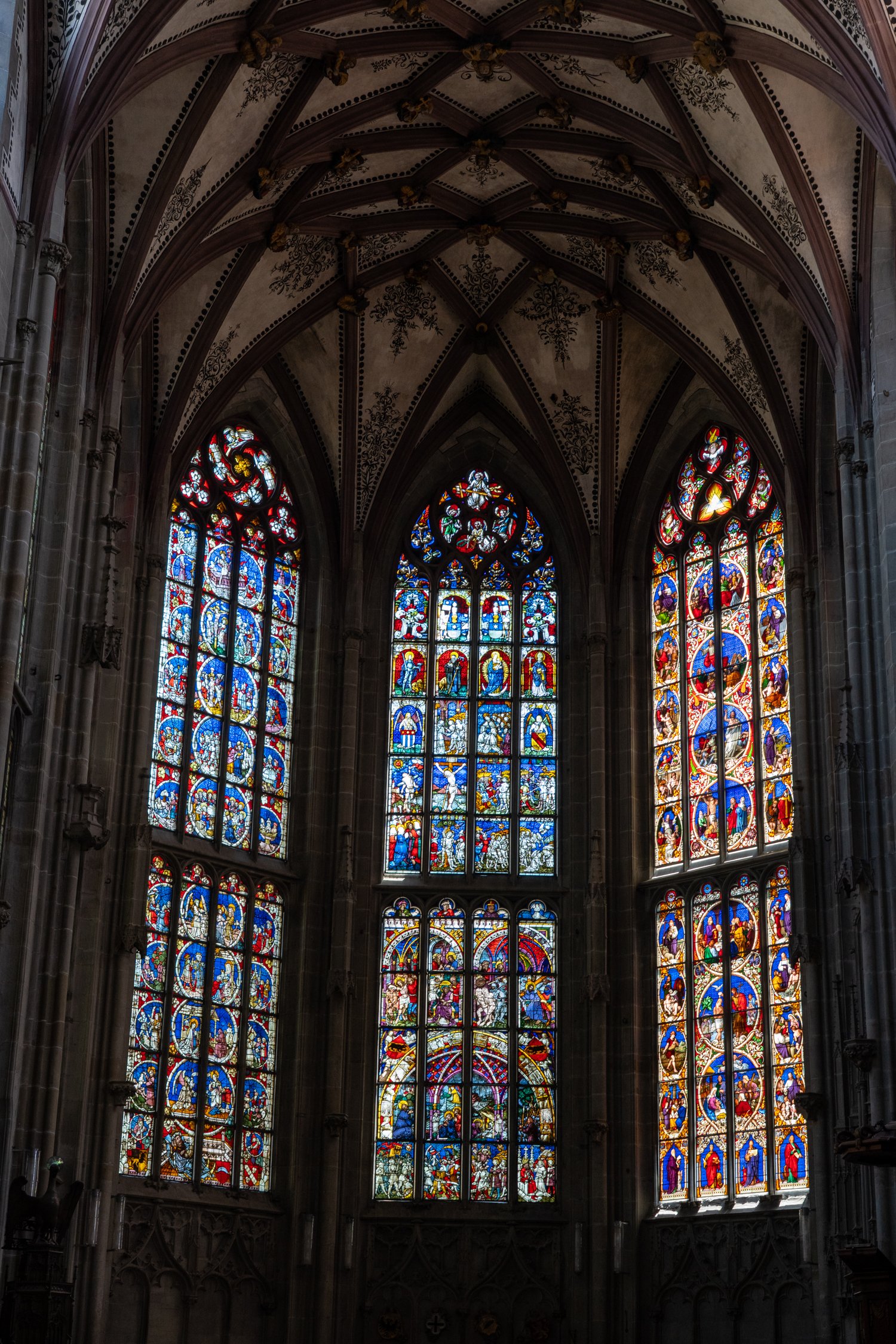
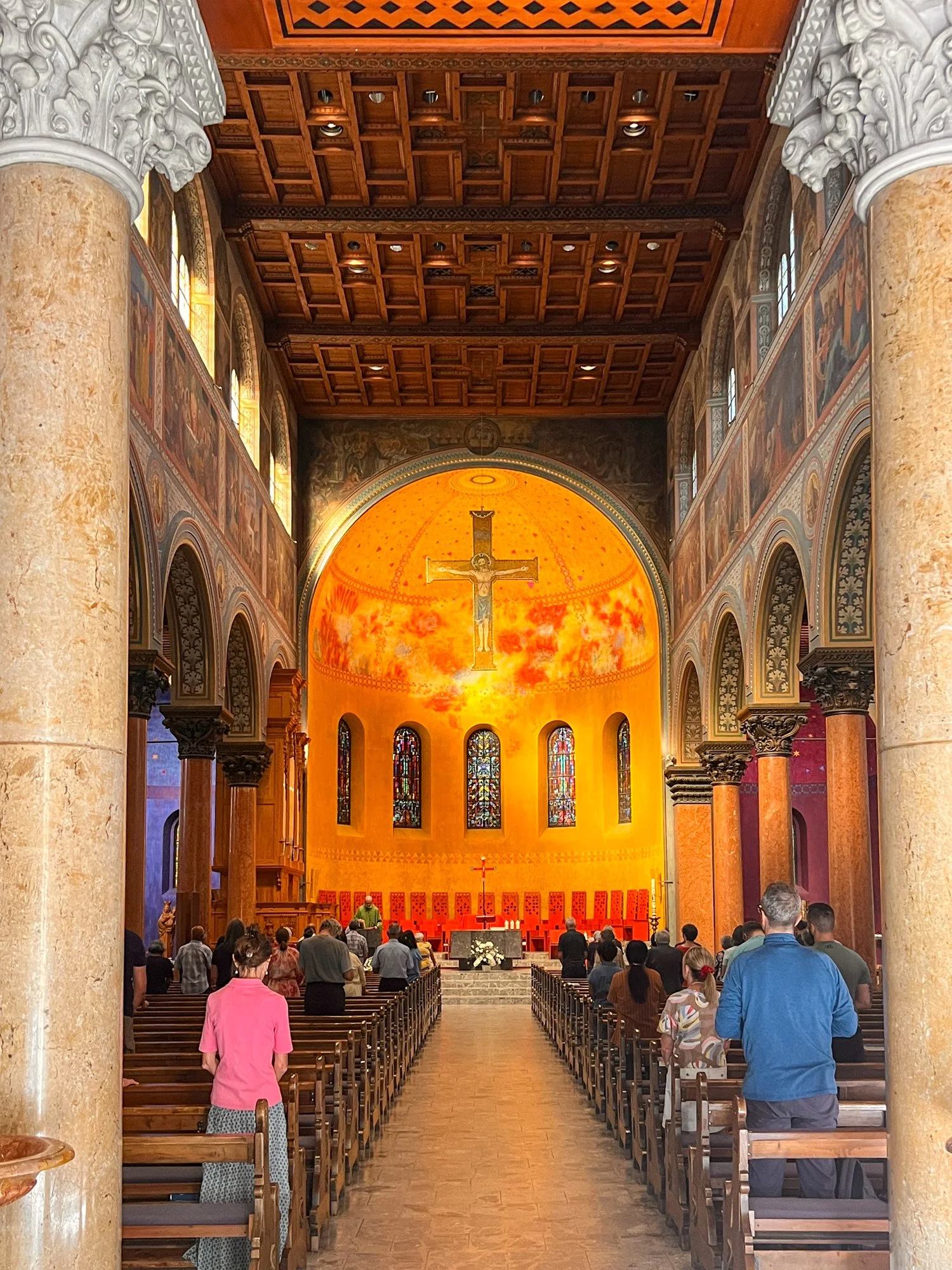
Fountain OBSESSION
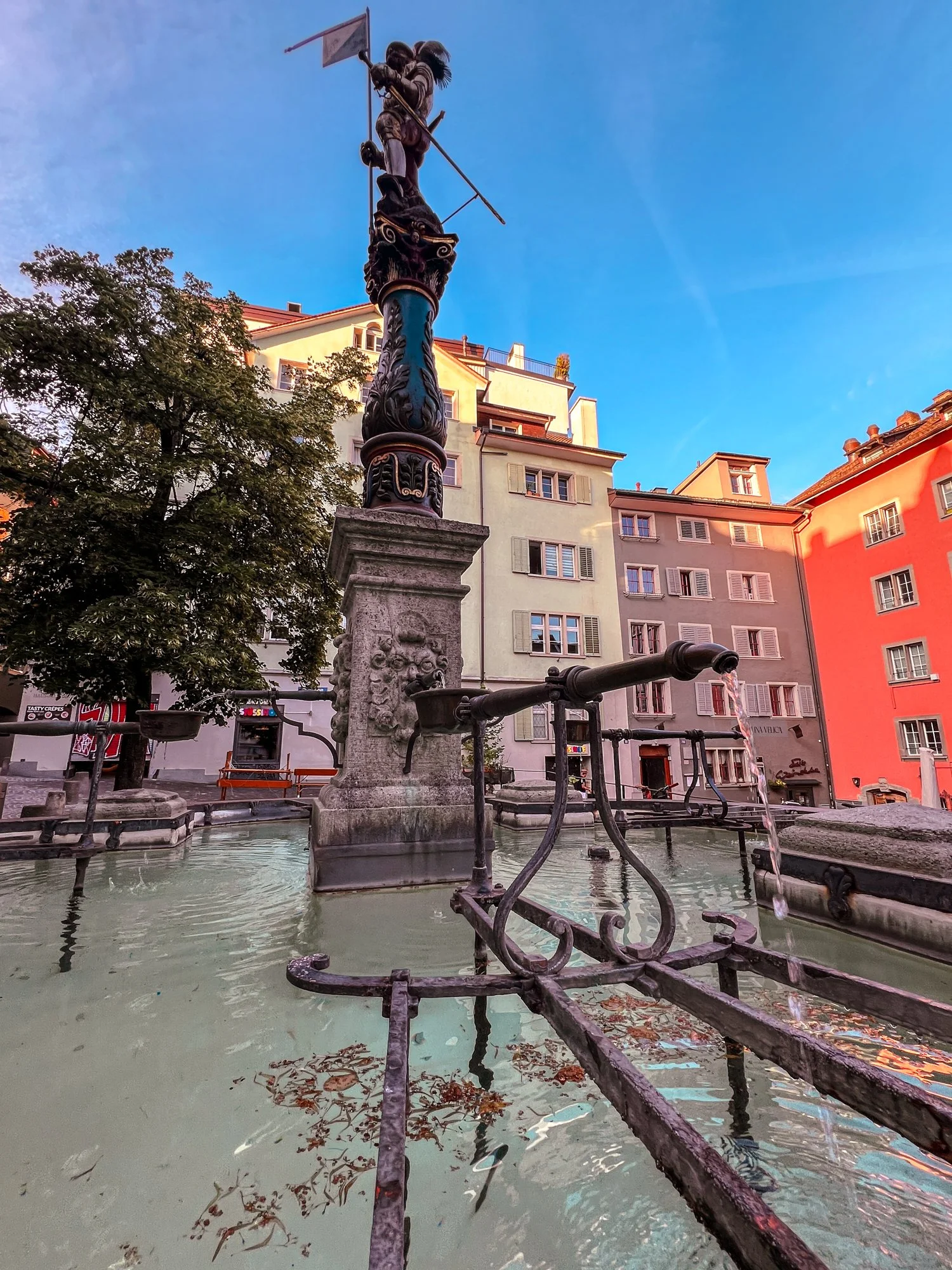
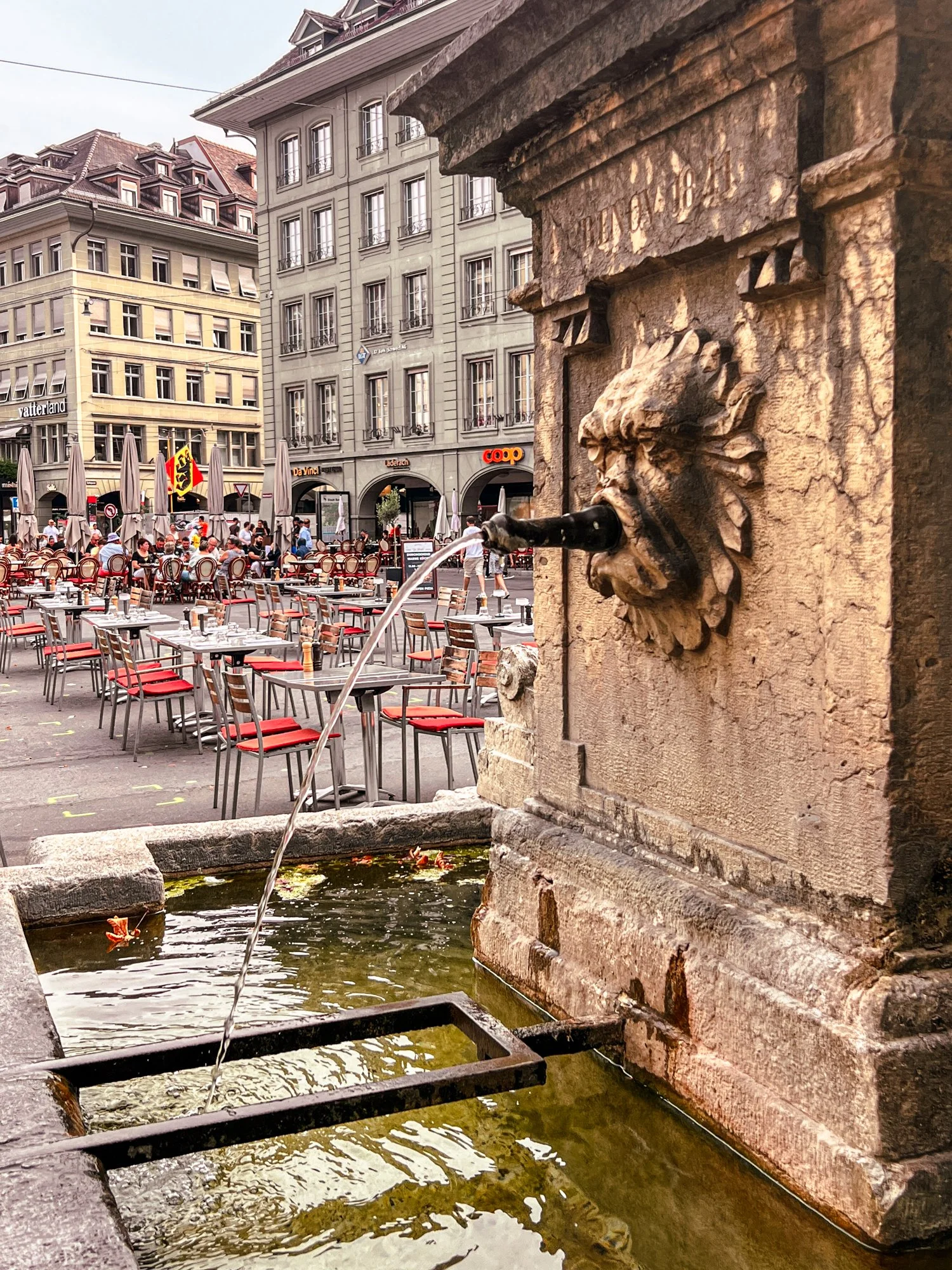
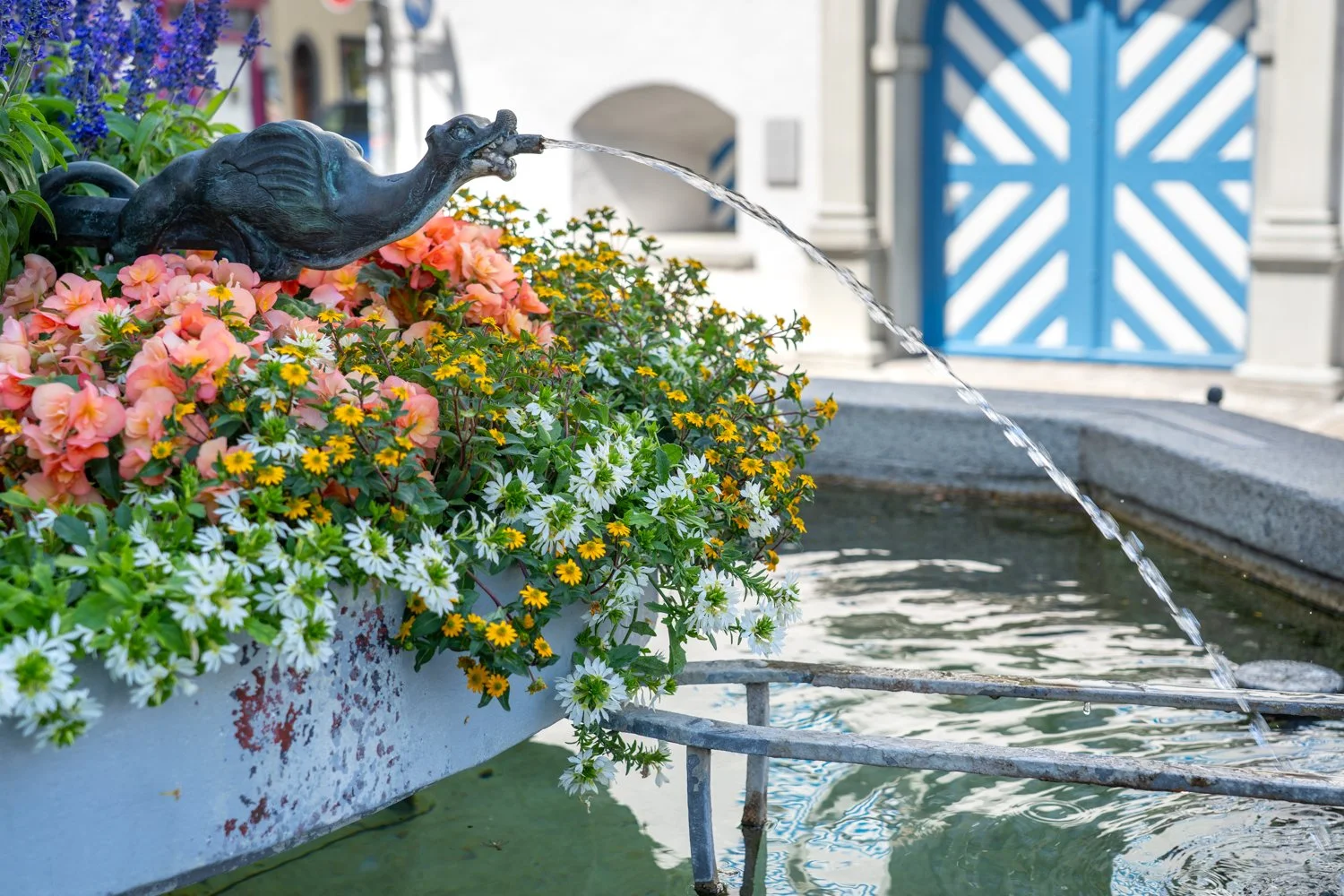
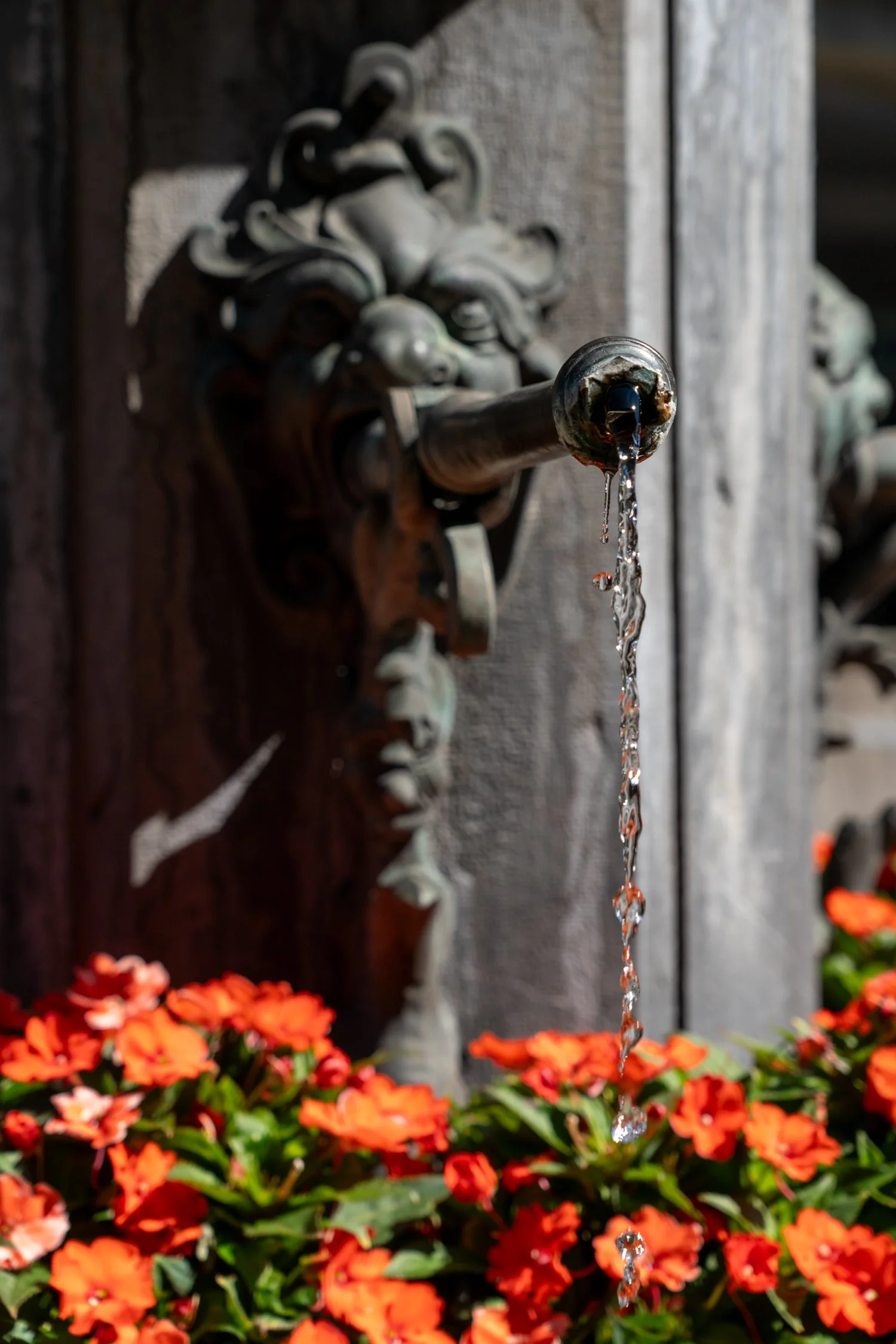
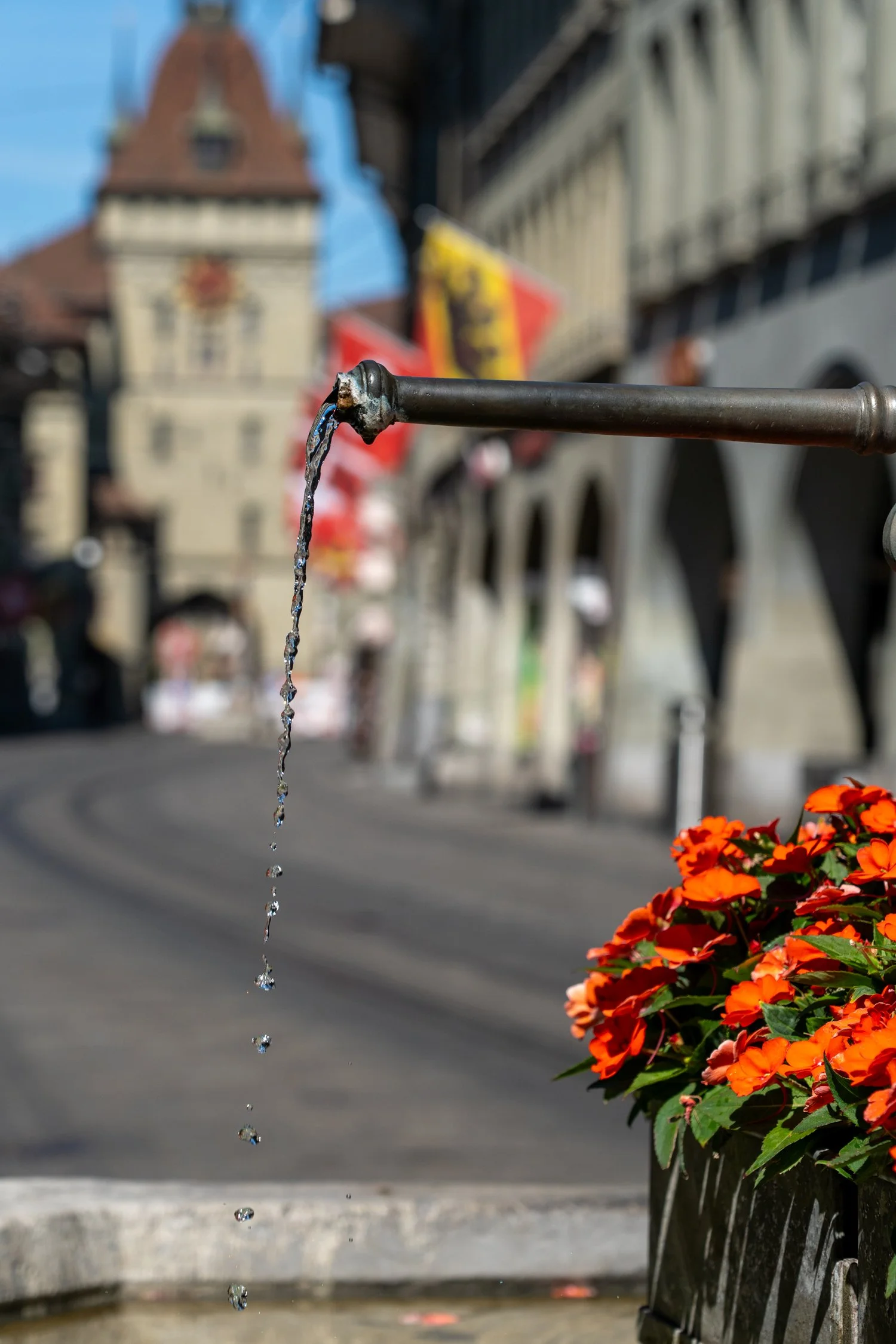
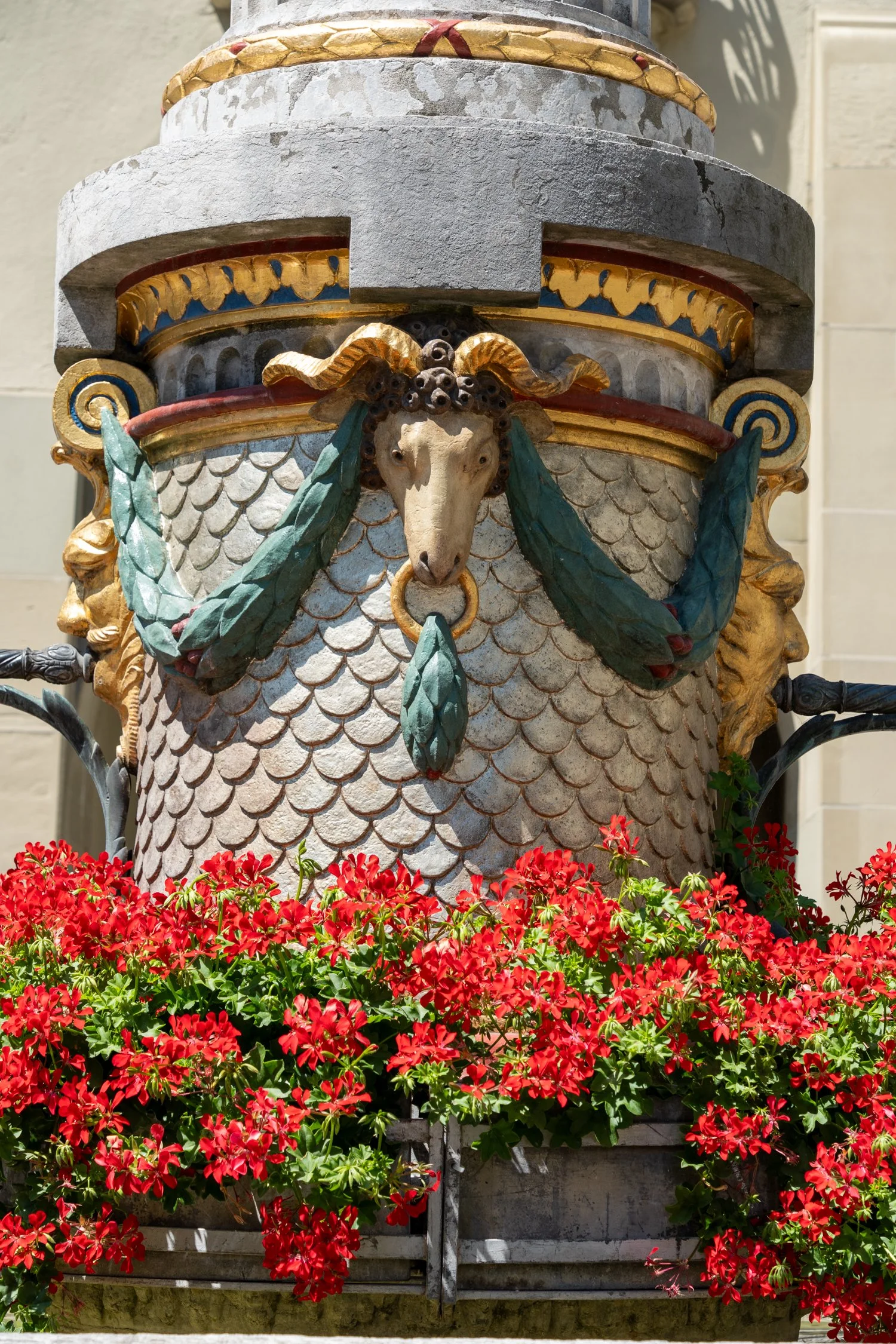
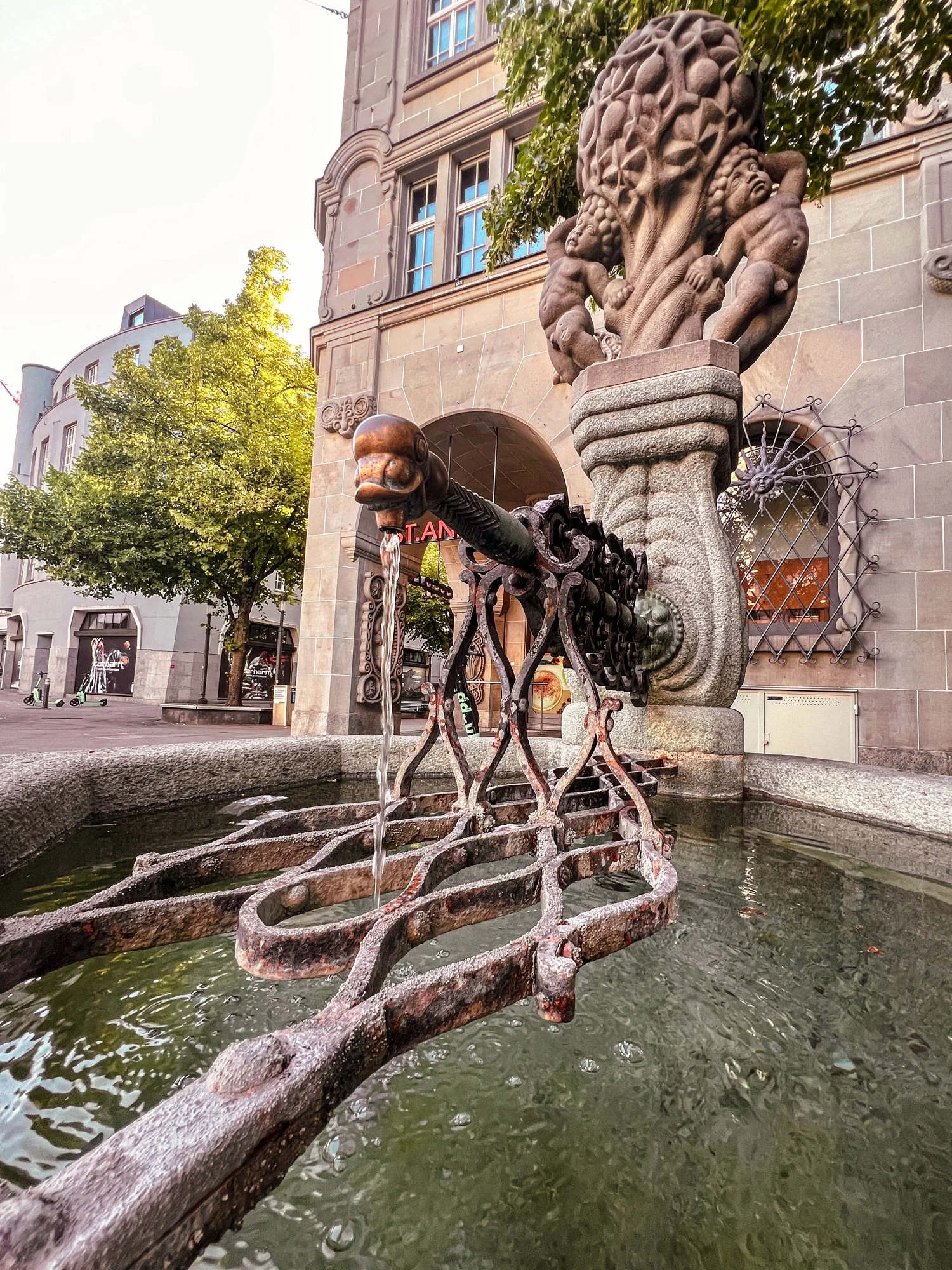
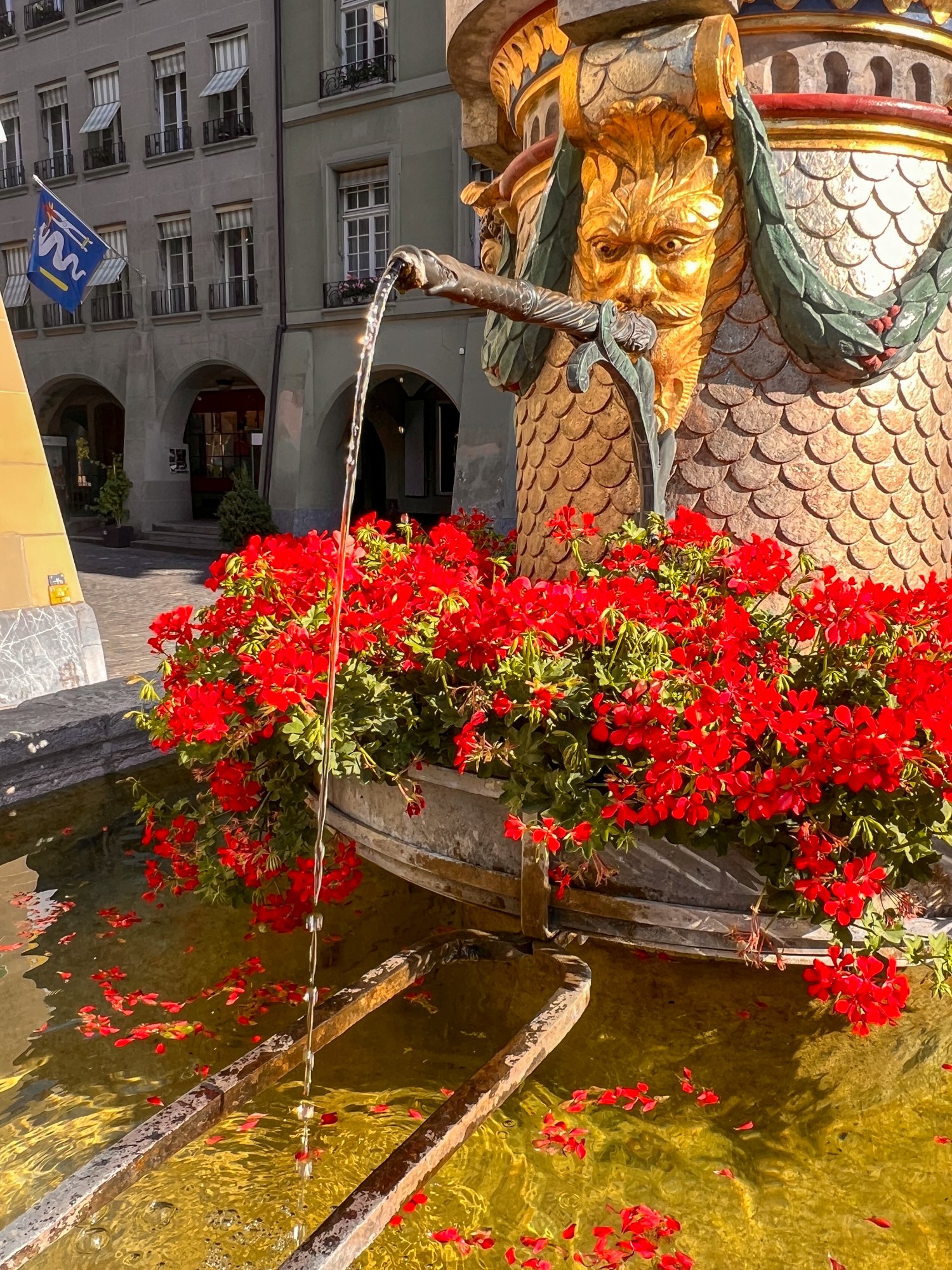
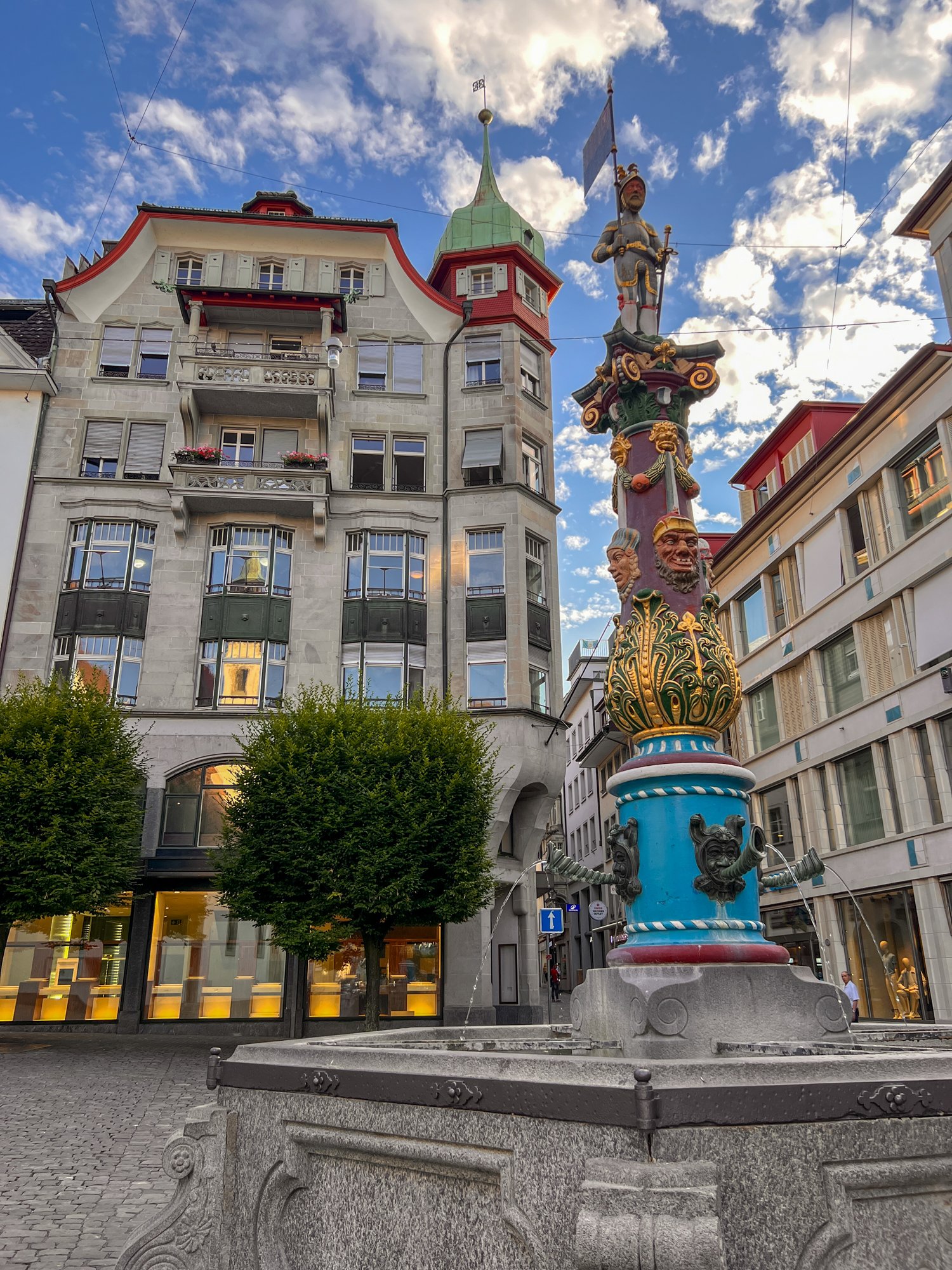
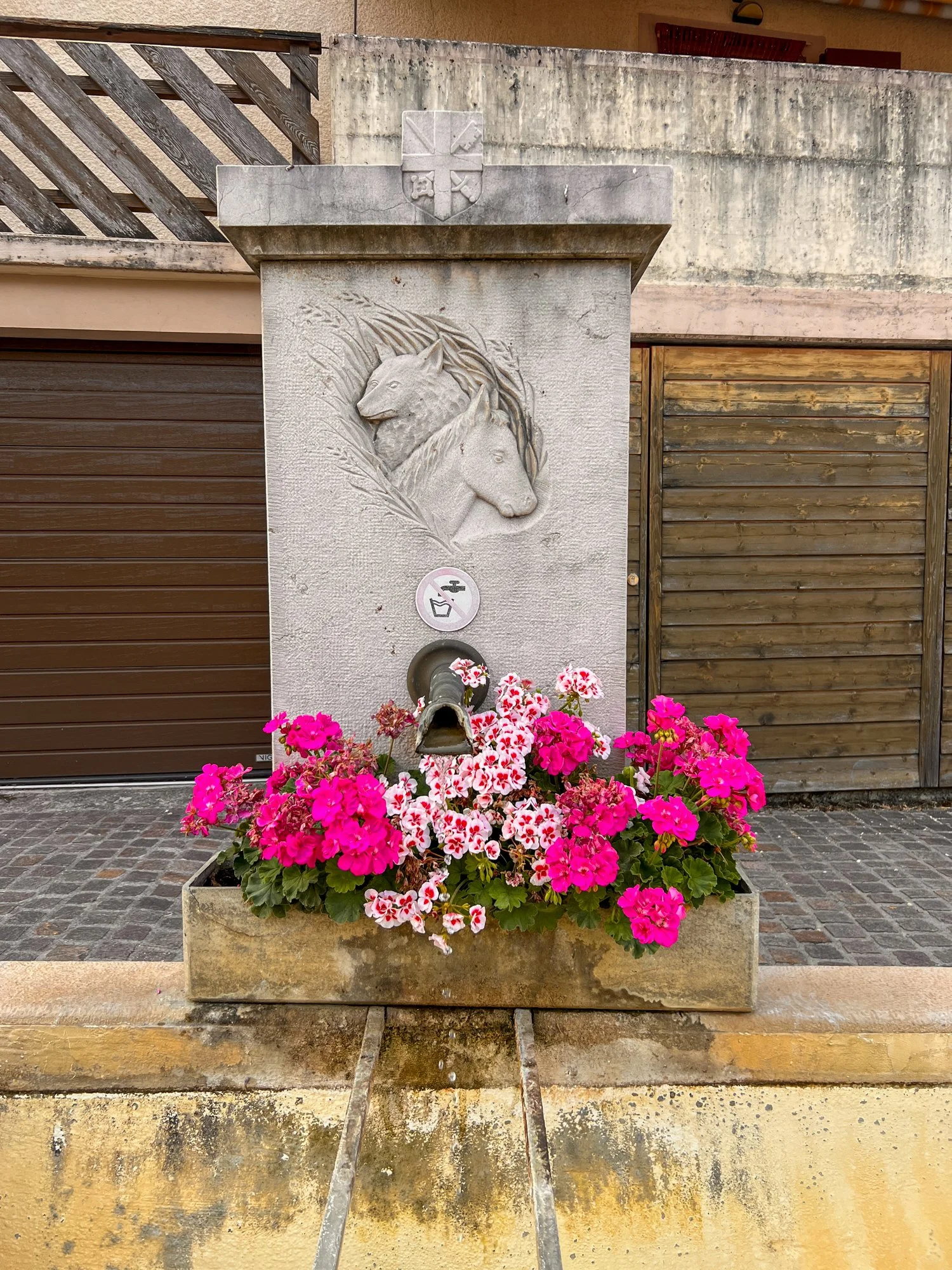
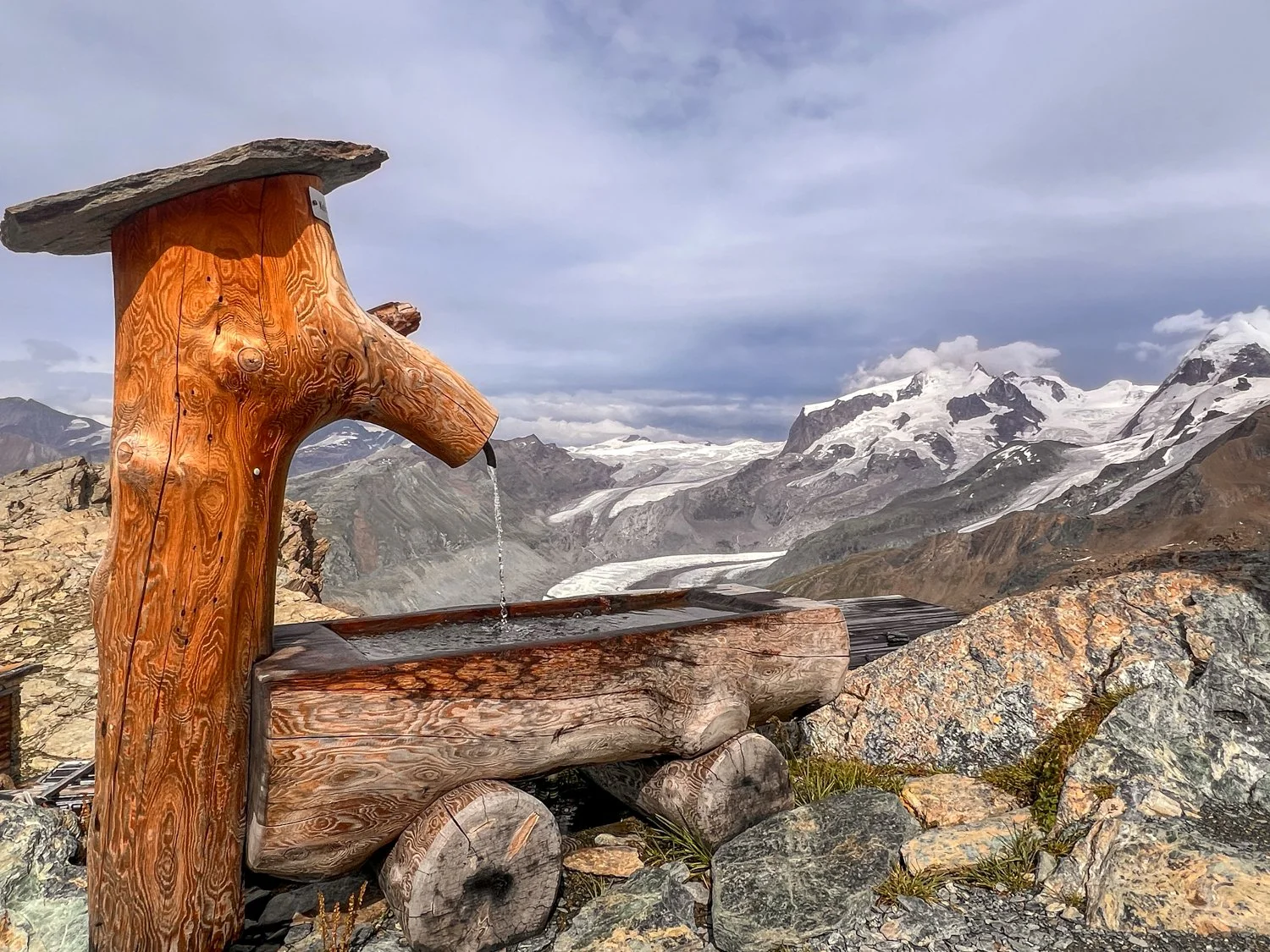
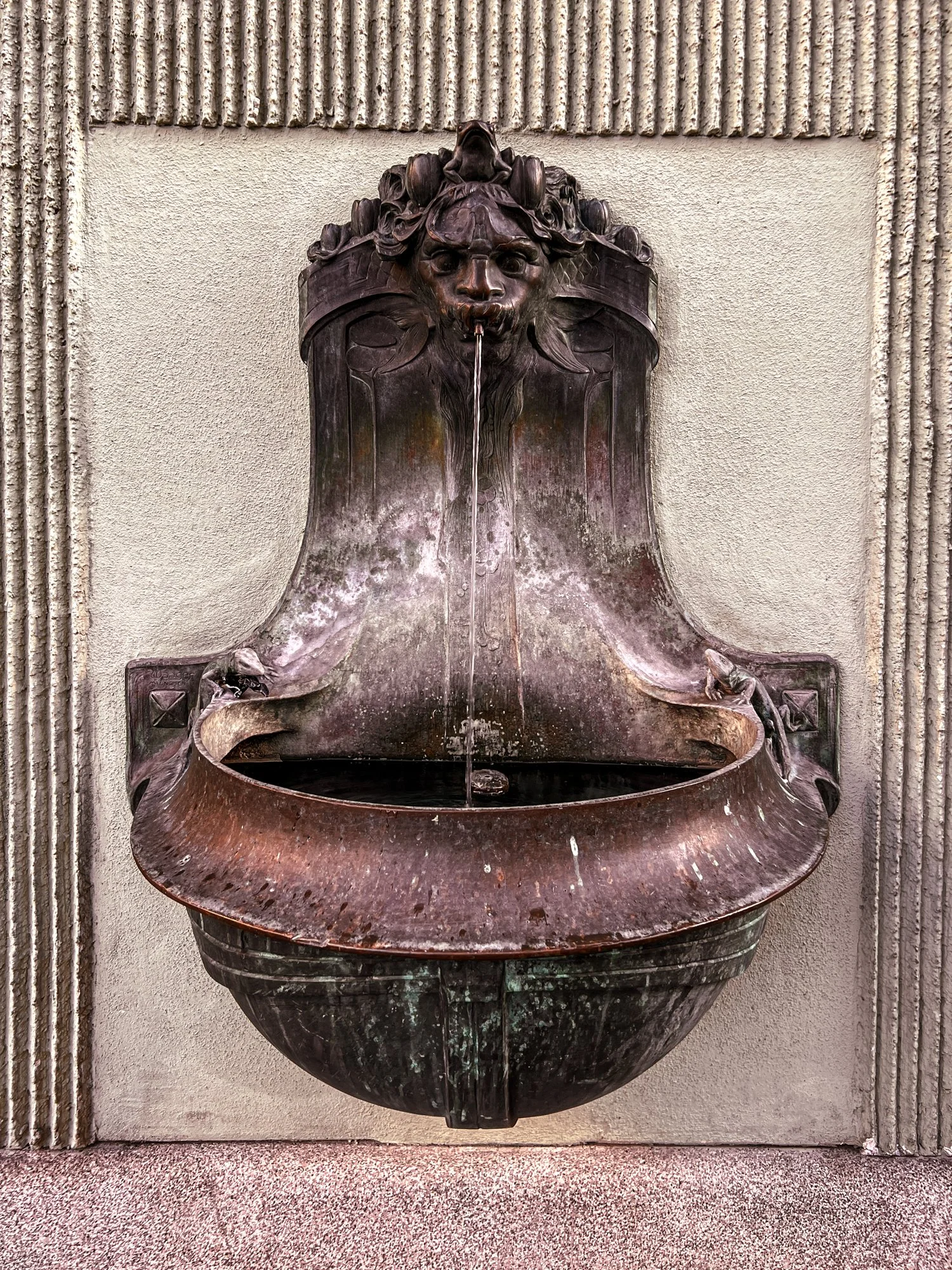
One thing we quickly discovered travelling around Switzerland is that the Swiss have a serious thing for fountains. Not just the occasional decorative fountain in a town square. Fountains are everywhere. In the middle of cities. In tiny villages. Outside churches. Along quiet streets. Beside railway stations. And, rather surprisingly, halfway up a mountain trail.
In the cities, many of them are works of art in their own right. Bern was particularly impressive, with its collection of elaborate 16th-century fountains topped with colourful sculptures.
But as we travelled further into Switzerland, we realised the fountains weren't just about decoration. They were part of everyday life. A simple stone trough in a village square. A fountain beside an old farmhouse. Water running continuously beside a walking path. A little drinking fountain tucked into a street corner.
At first, I took photos of them. Then I started looking for them. Eventually, I'm pretty sure I developed a mild fountain obsession.
Train Travel
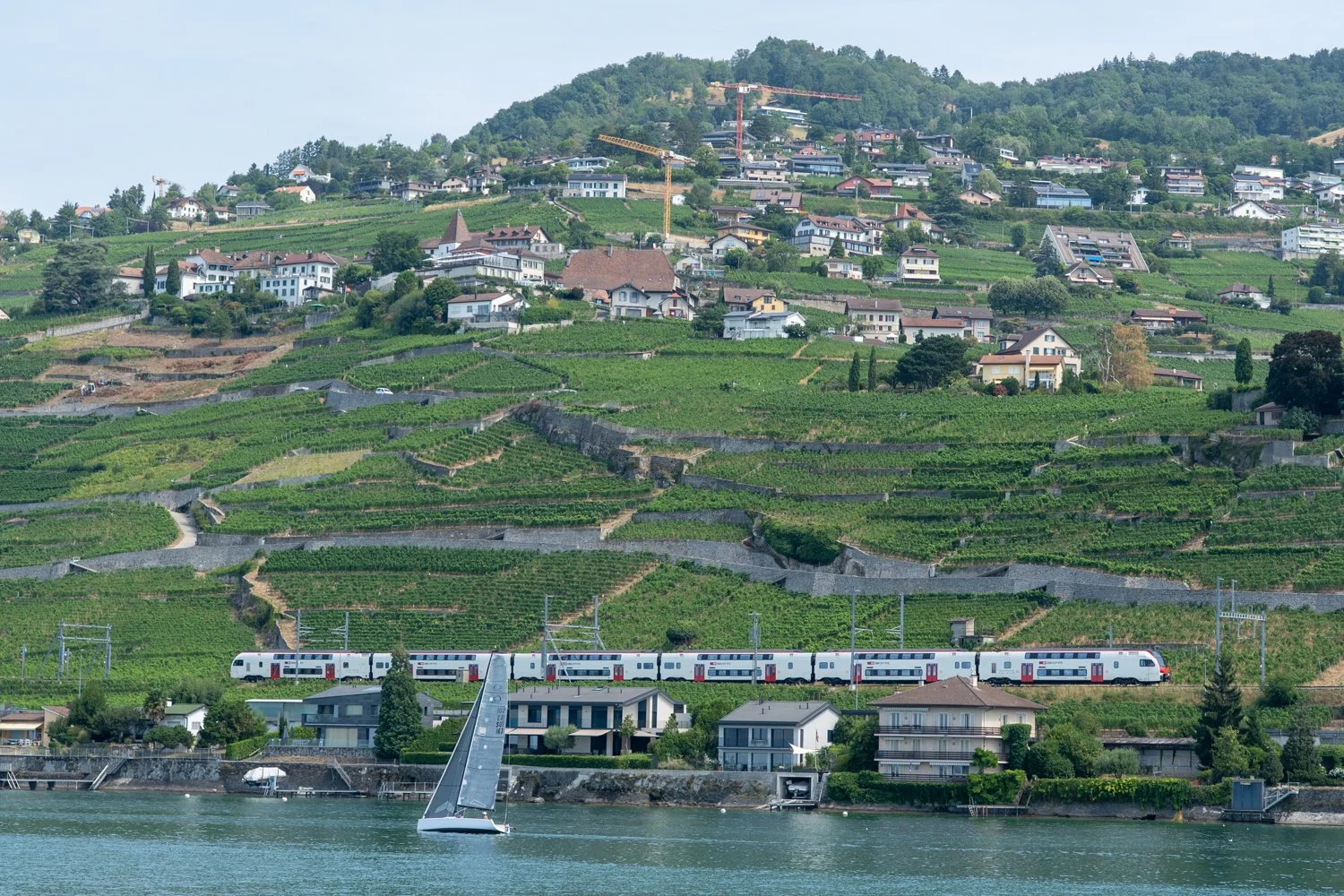
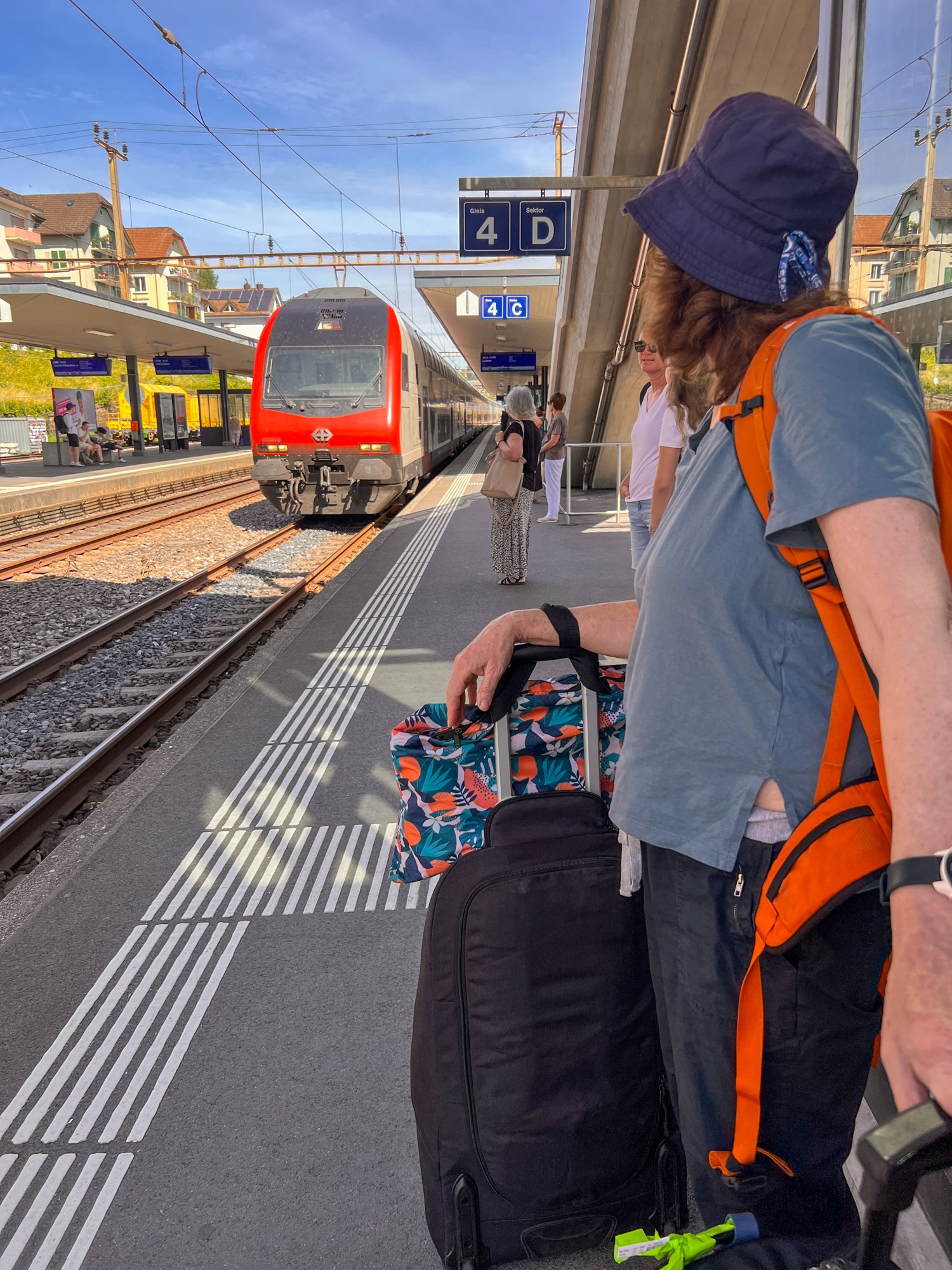
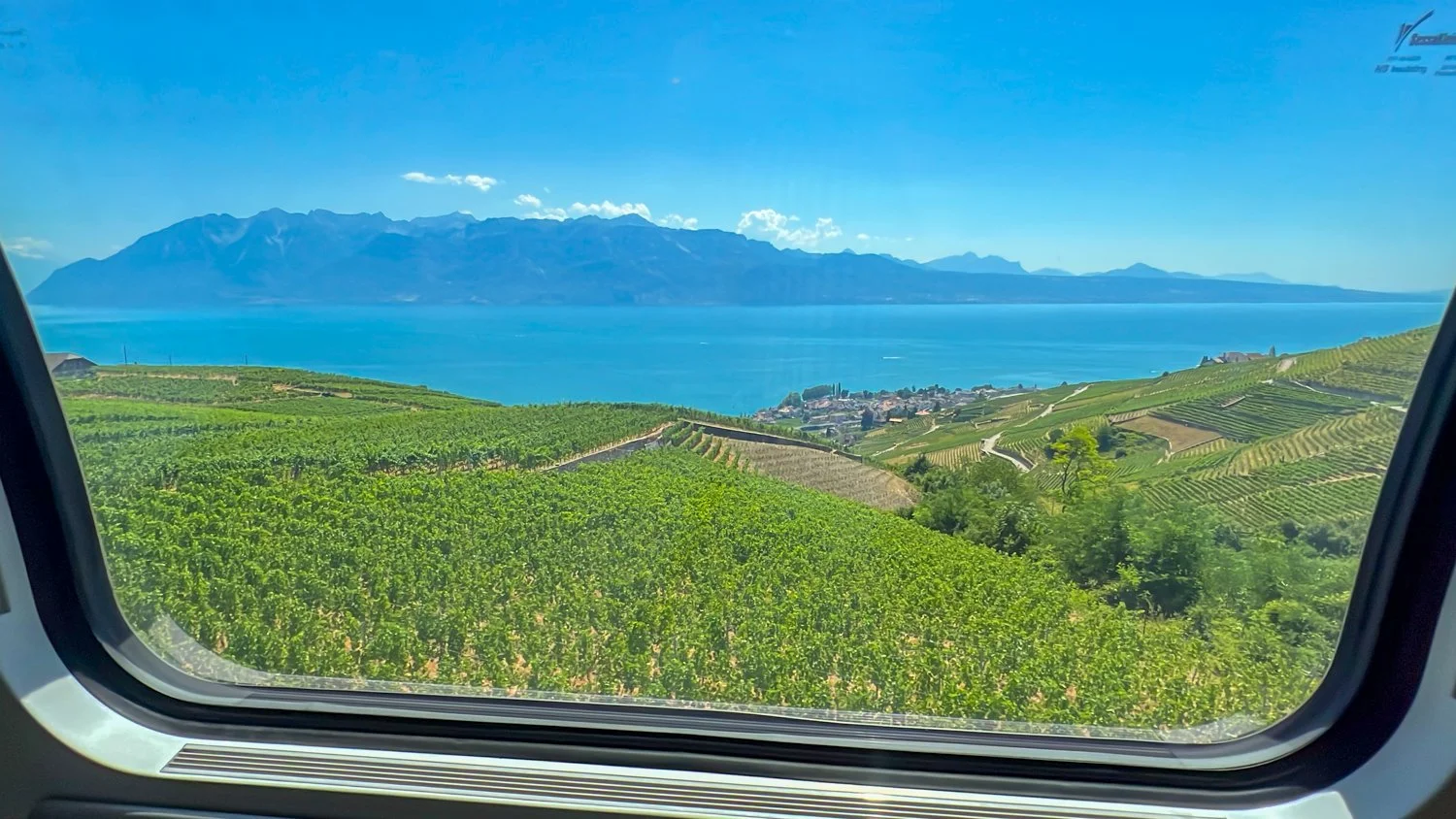
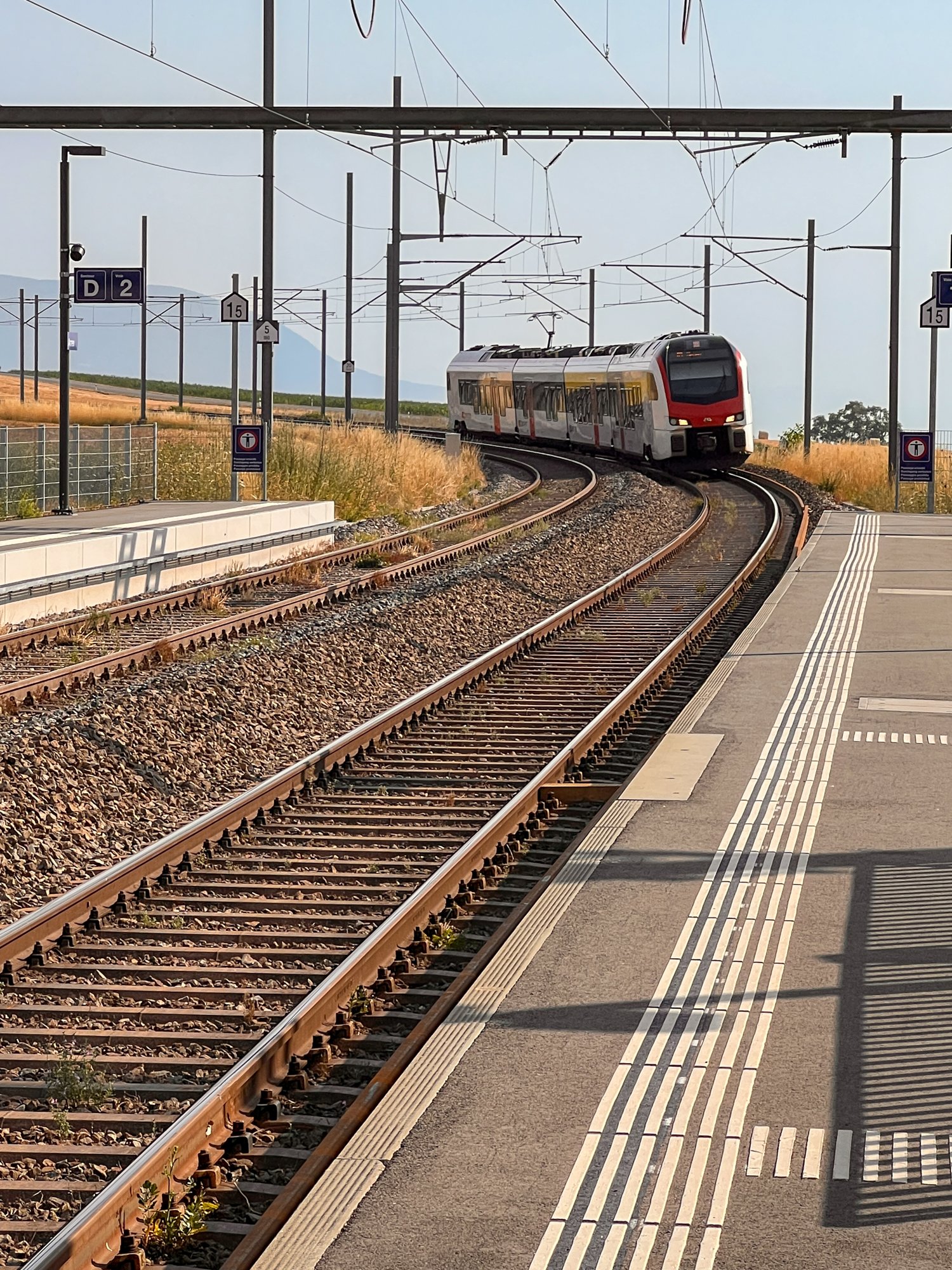
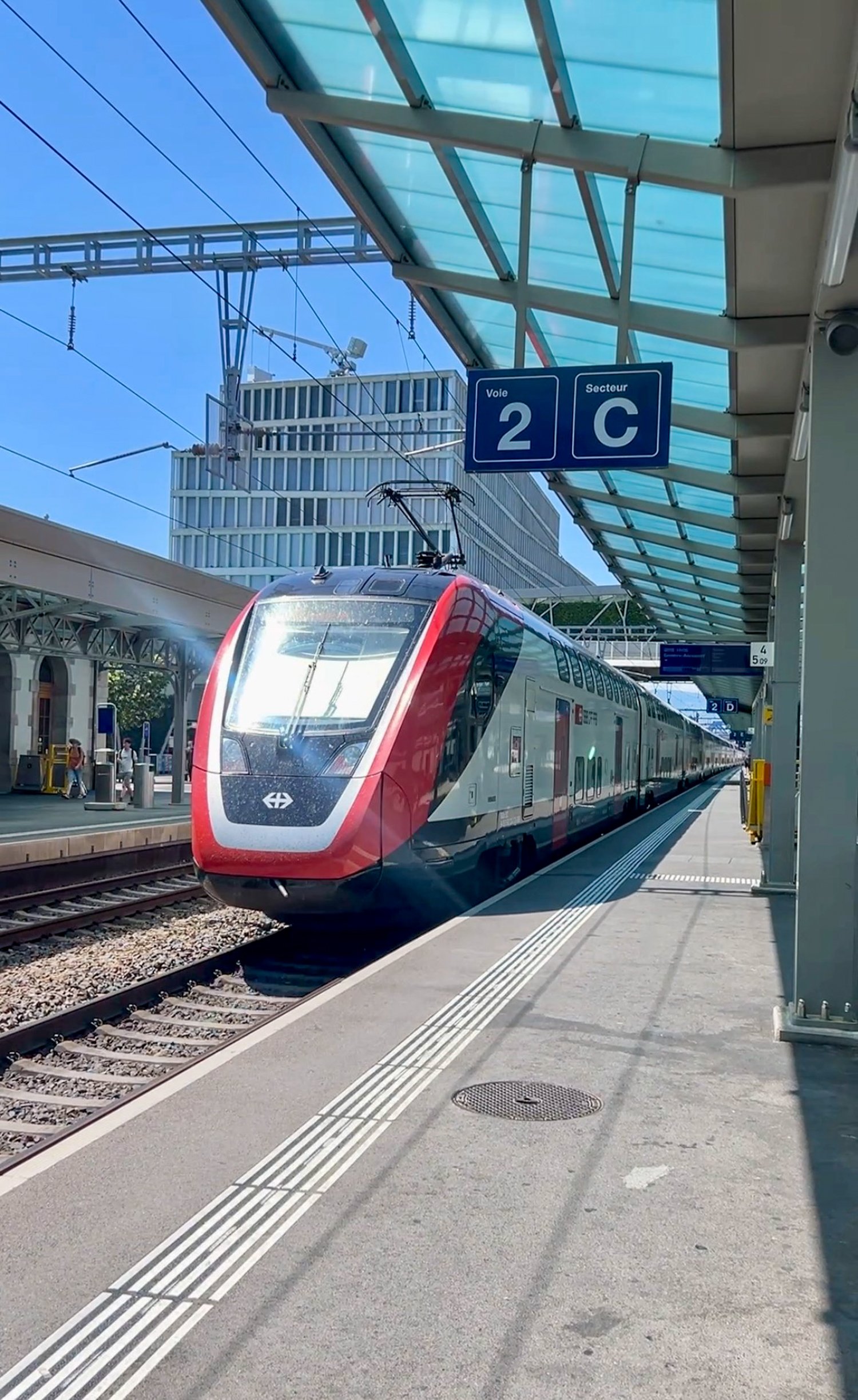
Our travels around Switzerland gave us plenty of opportunities to experience the famous Swiss trains, and they quickly became one of the highlights of the trip.
The first thing you notice is how easy it is. The Swiss seem to have decided that if a timetable says a train leaves at 10:32, then 10:32 is when it will leave. A radical concept.
Although there is one thing you quickly learn about Swiss trains. Connections are serious business. A train might arrive, you have four minutes to change platforms, and somehow you're expected to calmly walk off one train and onto the next. Suddenly you're running through a Swiss railway station dragging luggage behind you, until Kathy disapears into the lift and leave you behind.
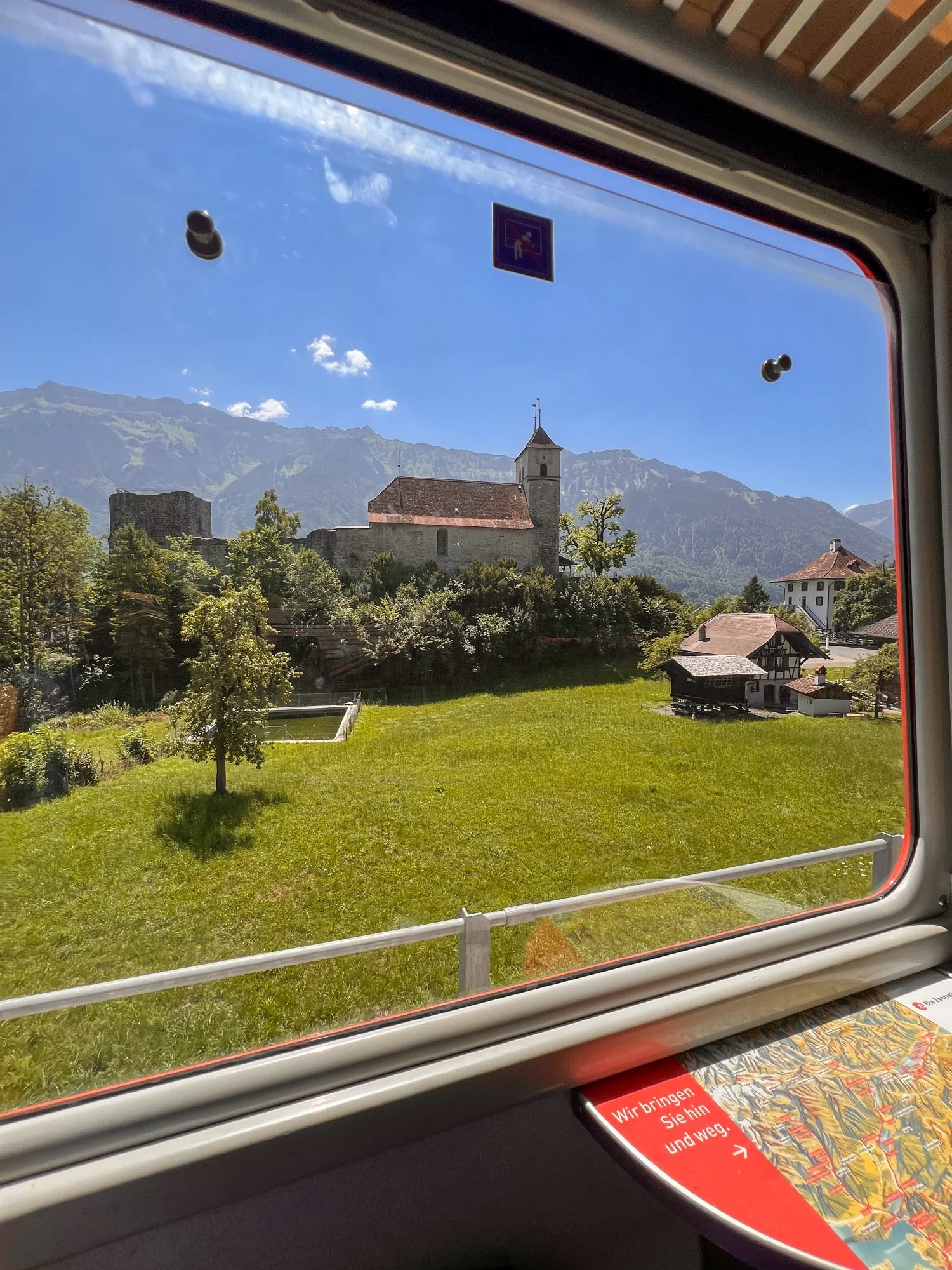
Zurich to Lucerne.,Lucerne to Bern. Bern to Lausanne. The journeys themselves became part of the holiday. Instead of staring at a motorway, we were looking out the window at lakes, mountains, forests, villages and the occasional cow that seemed to have secured a better piece of real estate than most of us ever will.
A LITTLE PIECE OF COUNTRYSIDE
While we got to exploring the big cities of Switzerland — Zurich, Lucerne, Bern and Lausanne - we also got to experience the quiter life where there isn't a tourist attraction around every corner.
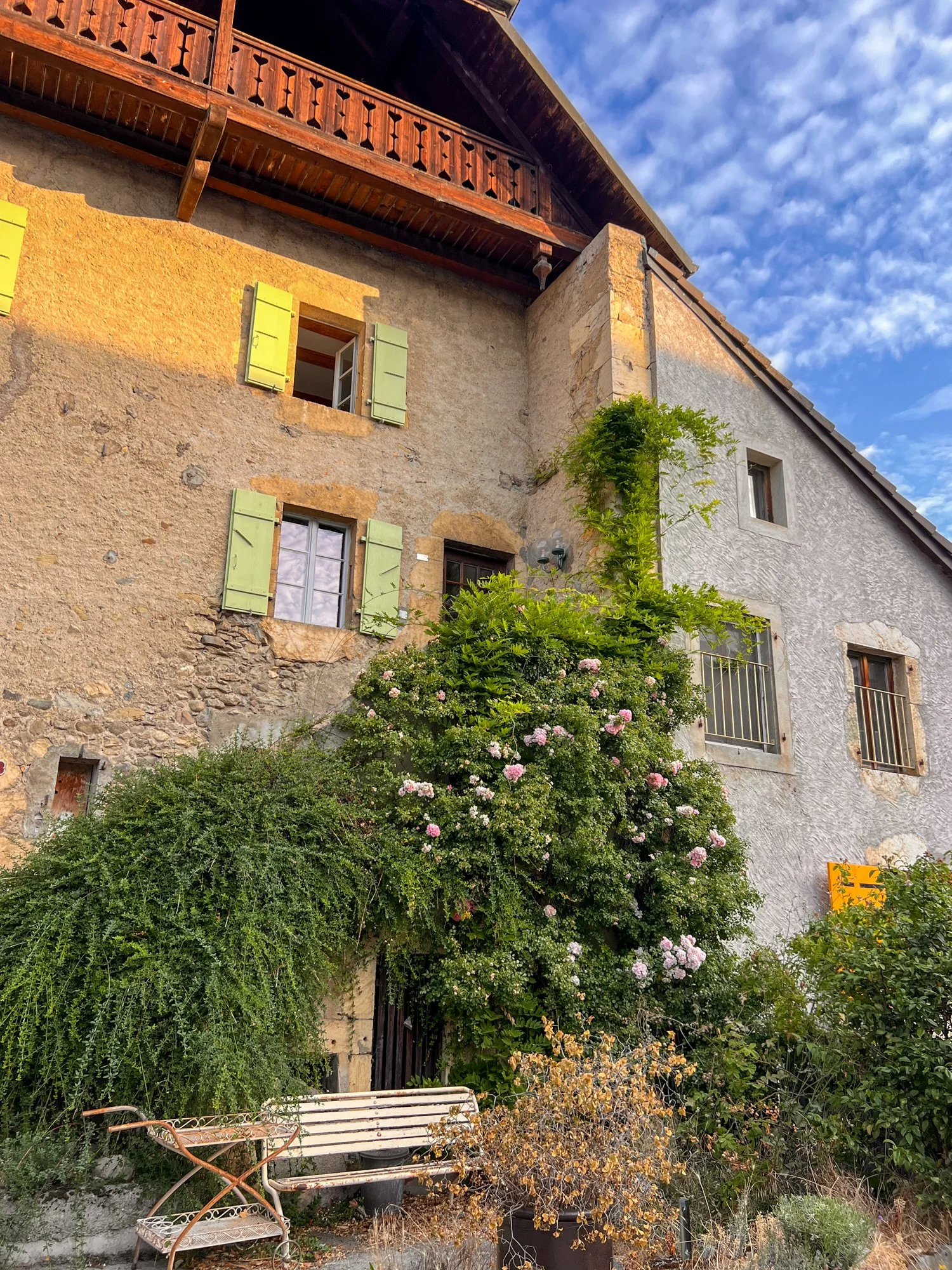
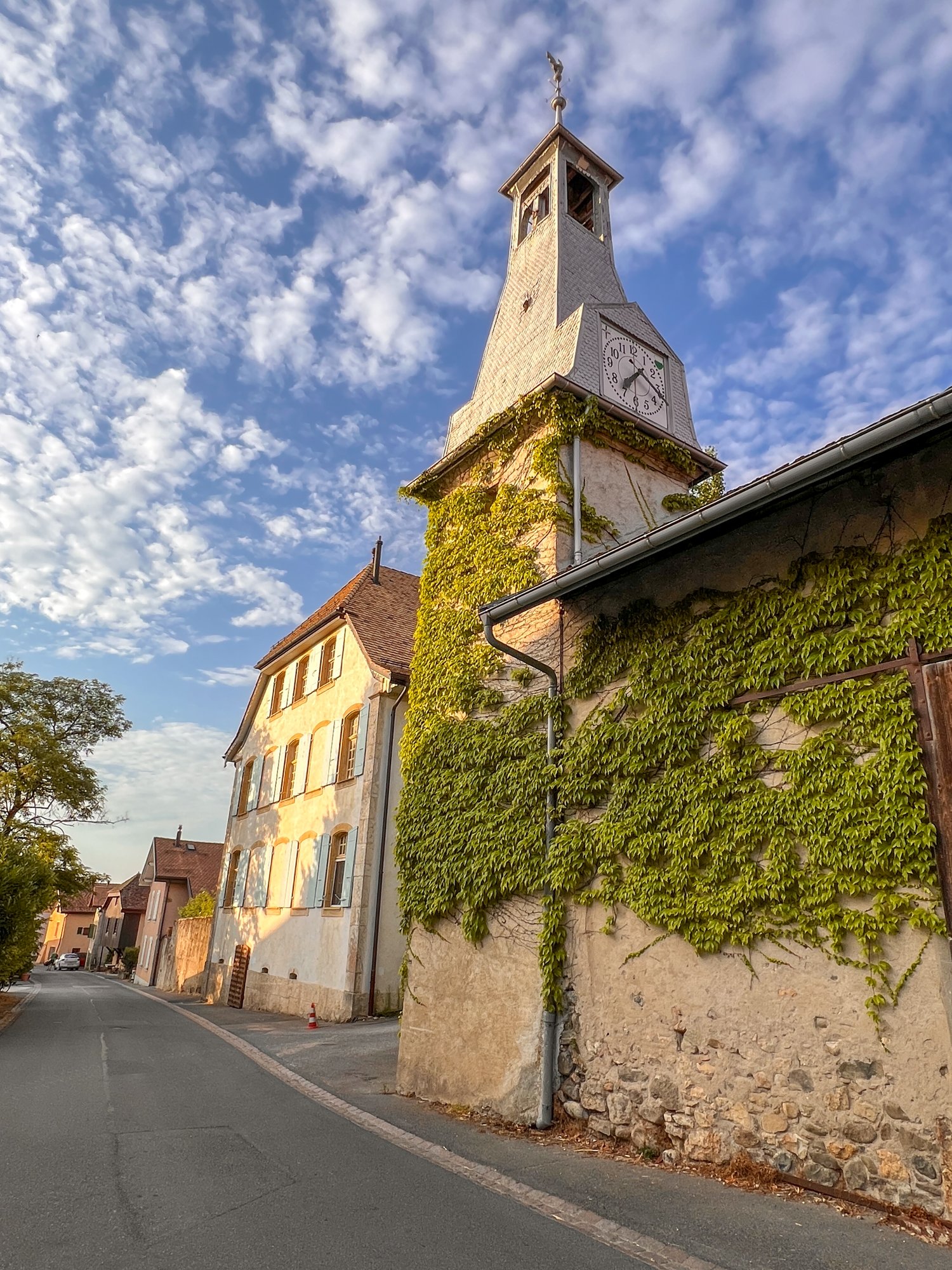
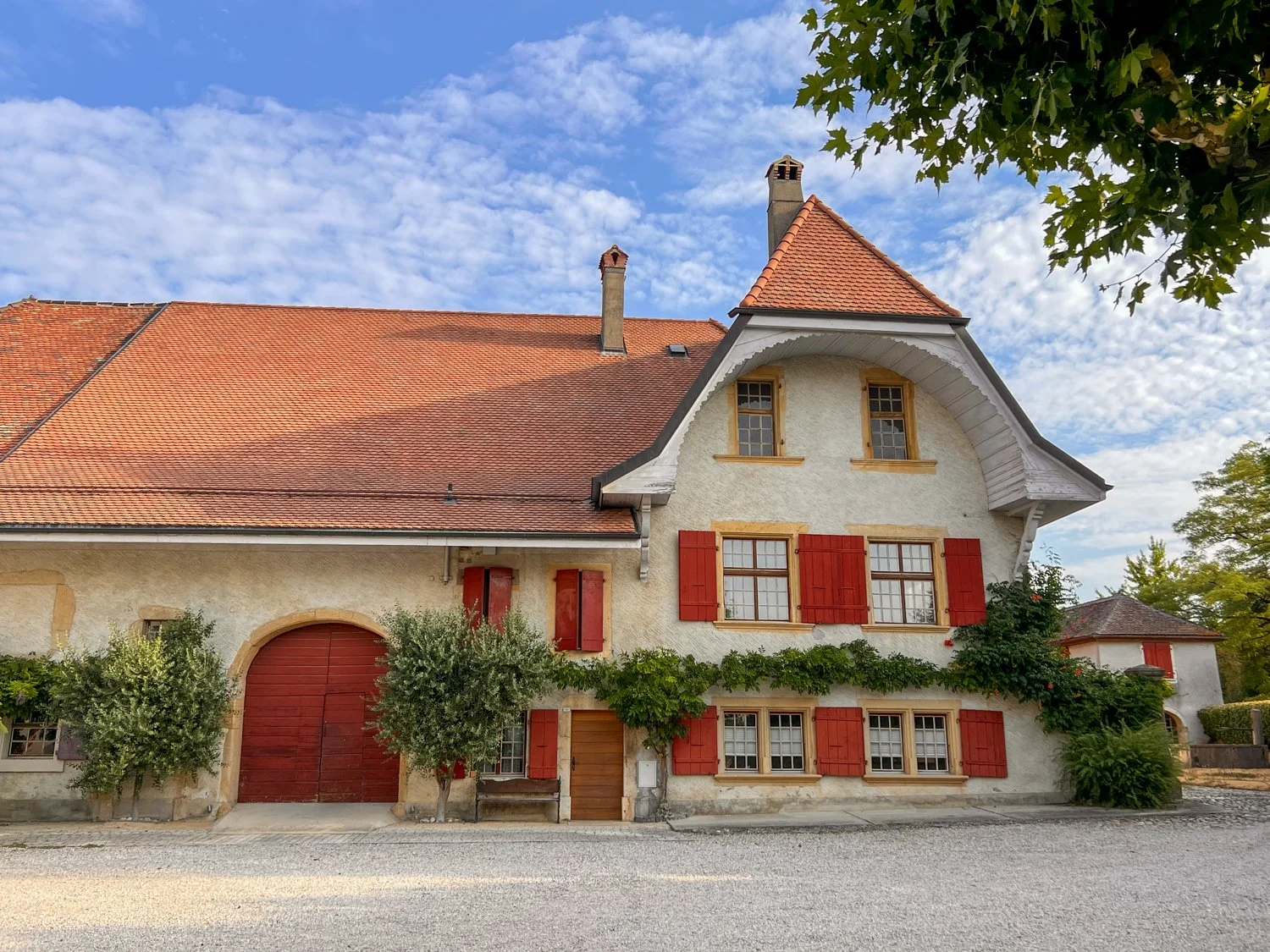
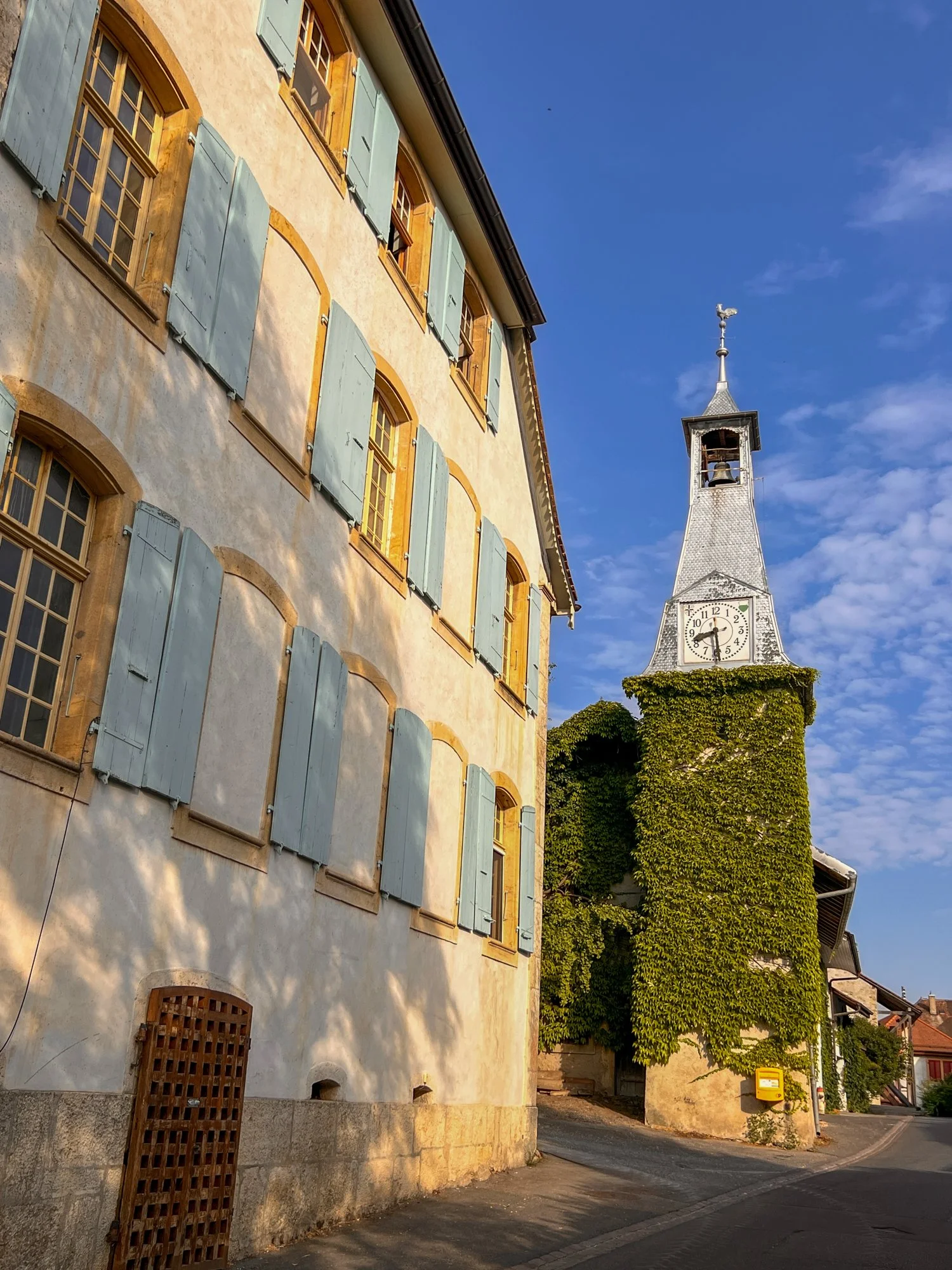
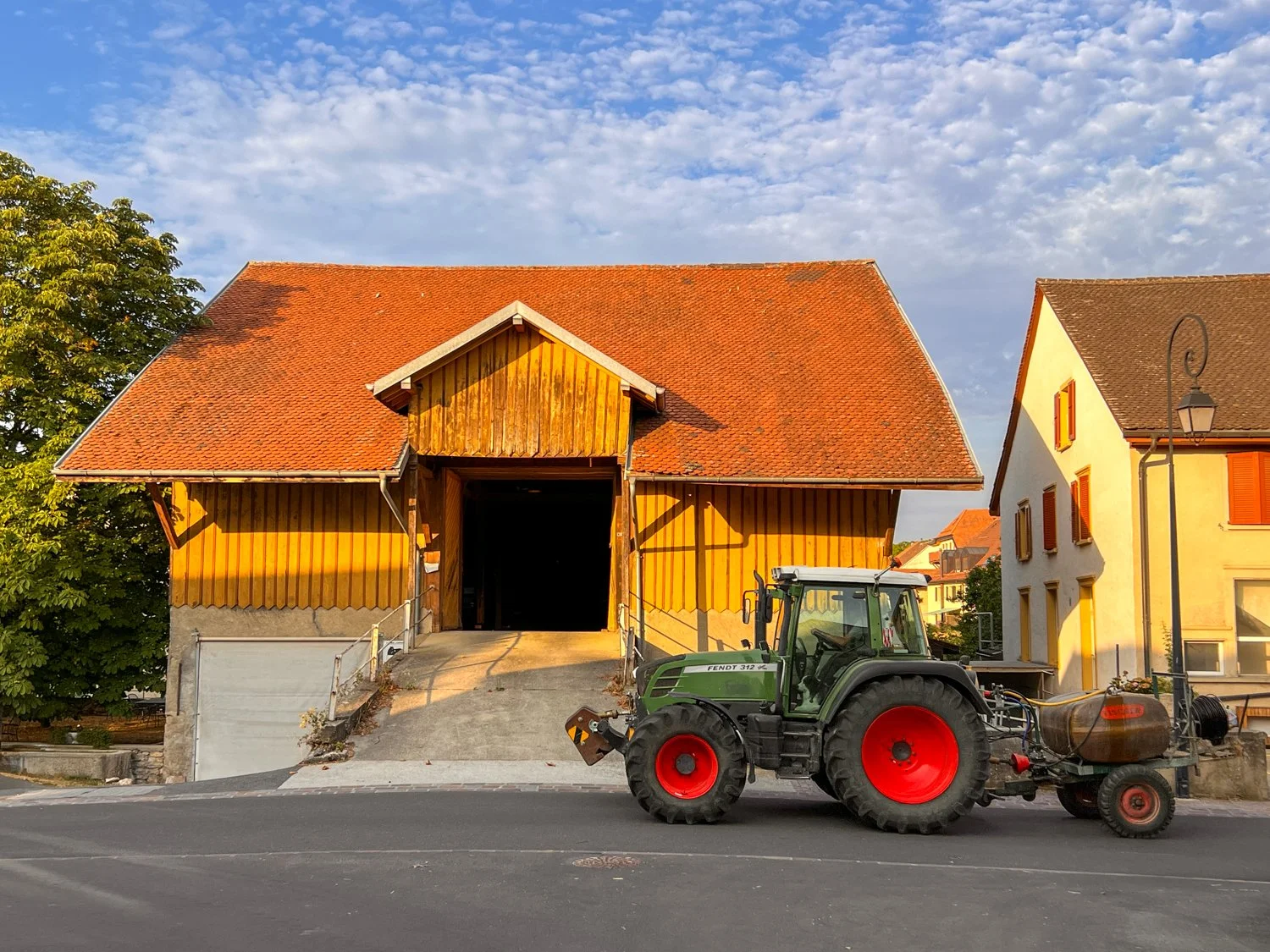
For us, that meant heading to the little village of Arnex-sur-Orbe, where our friends live.
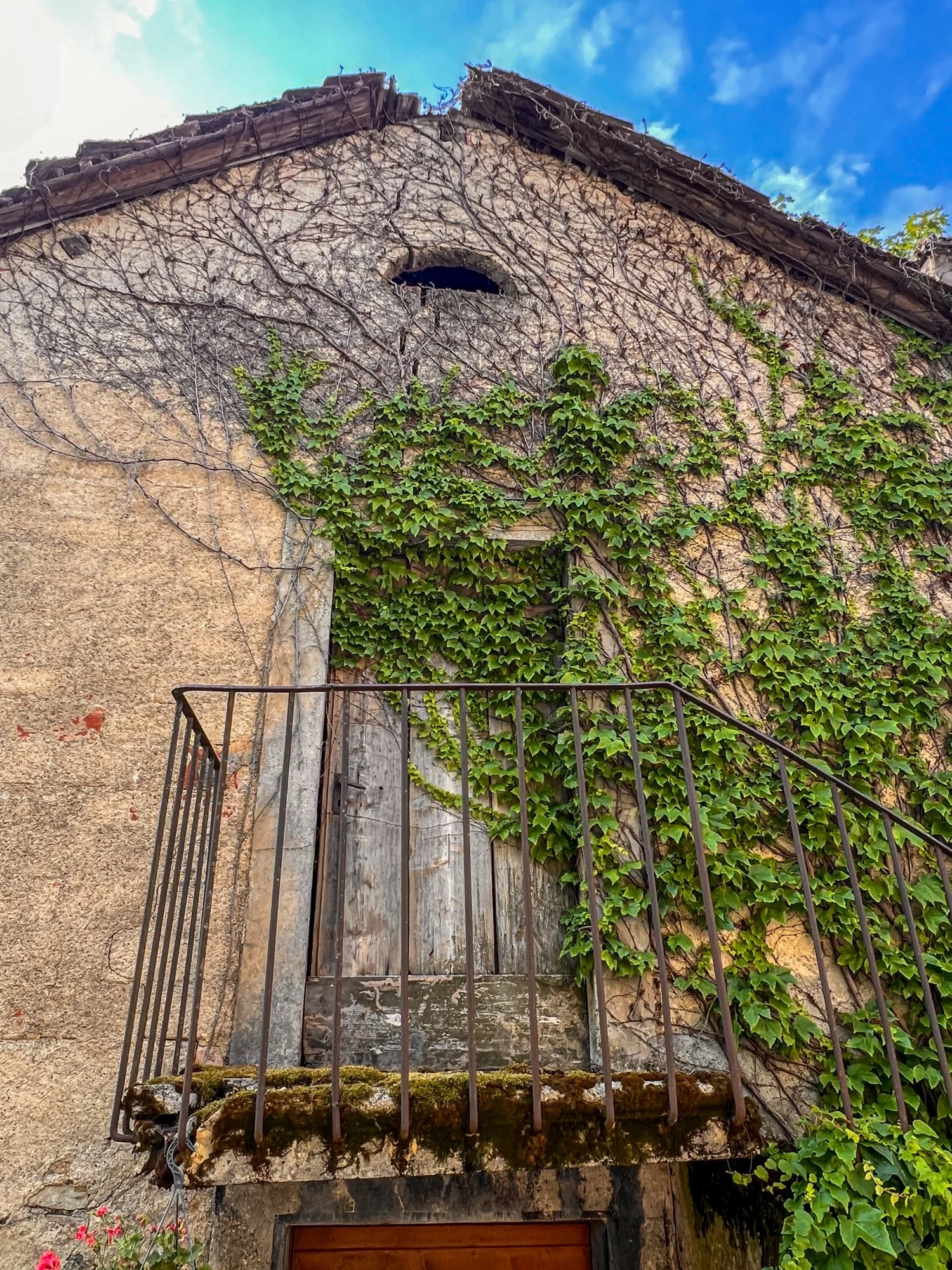
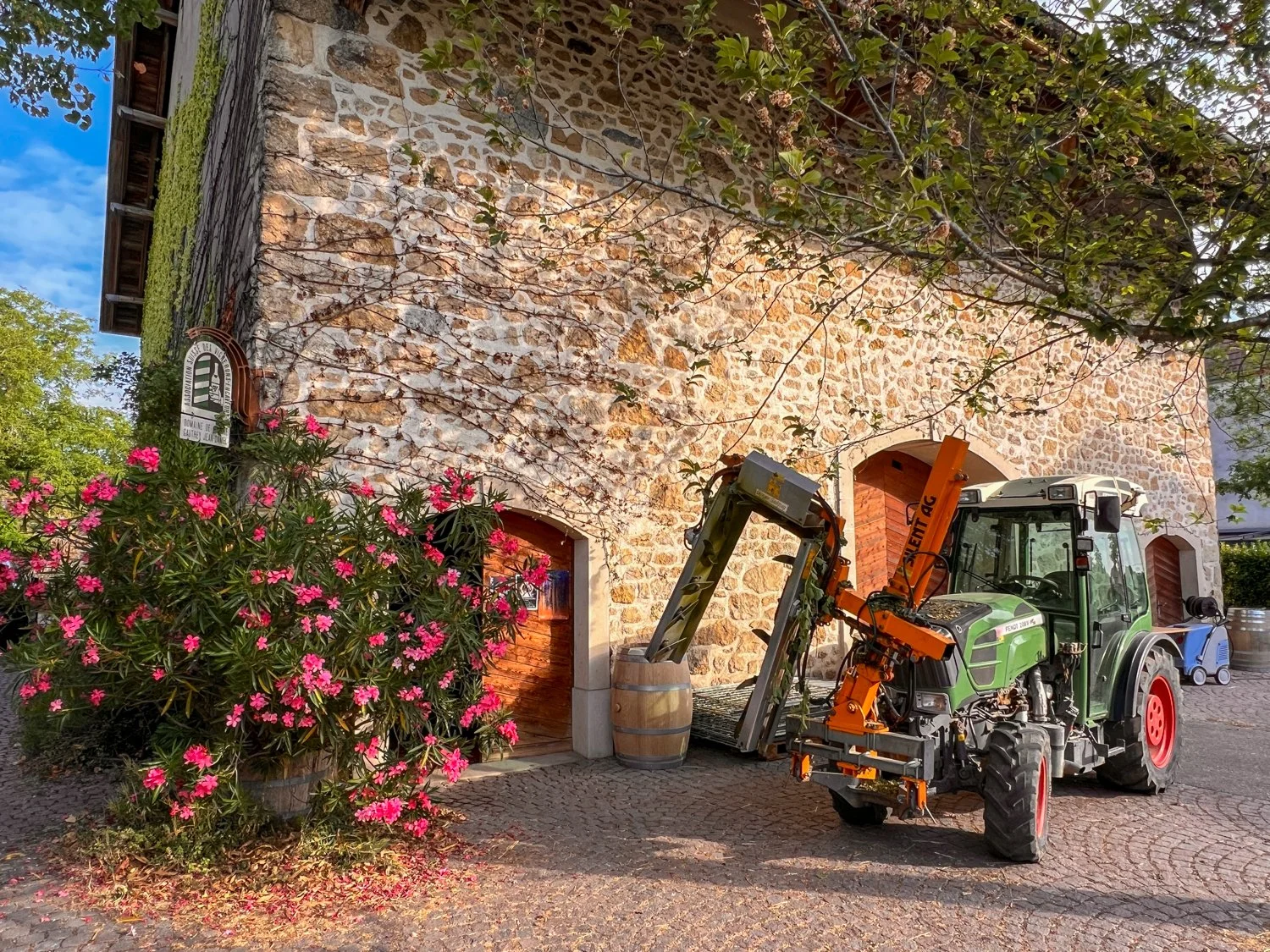
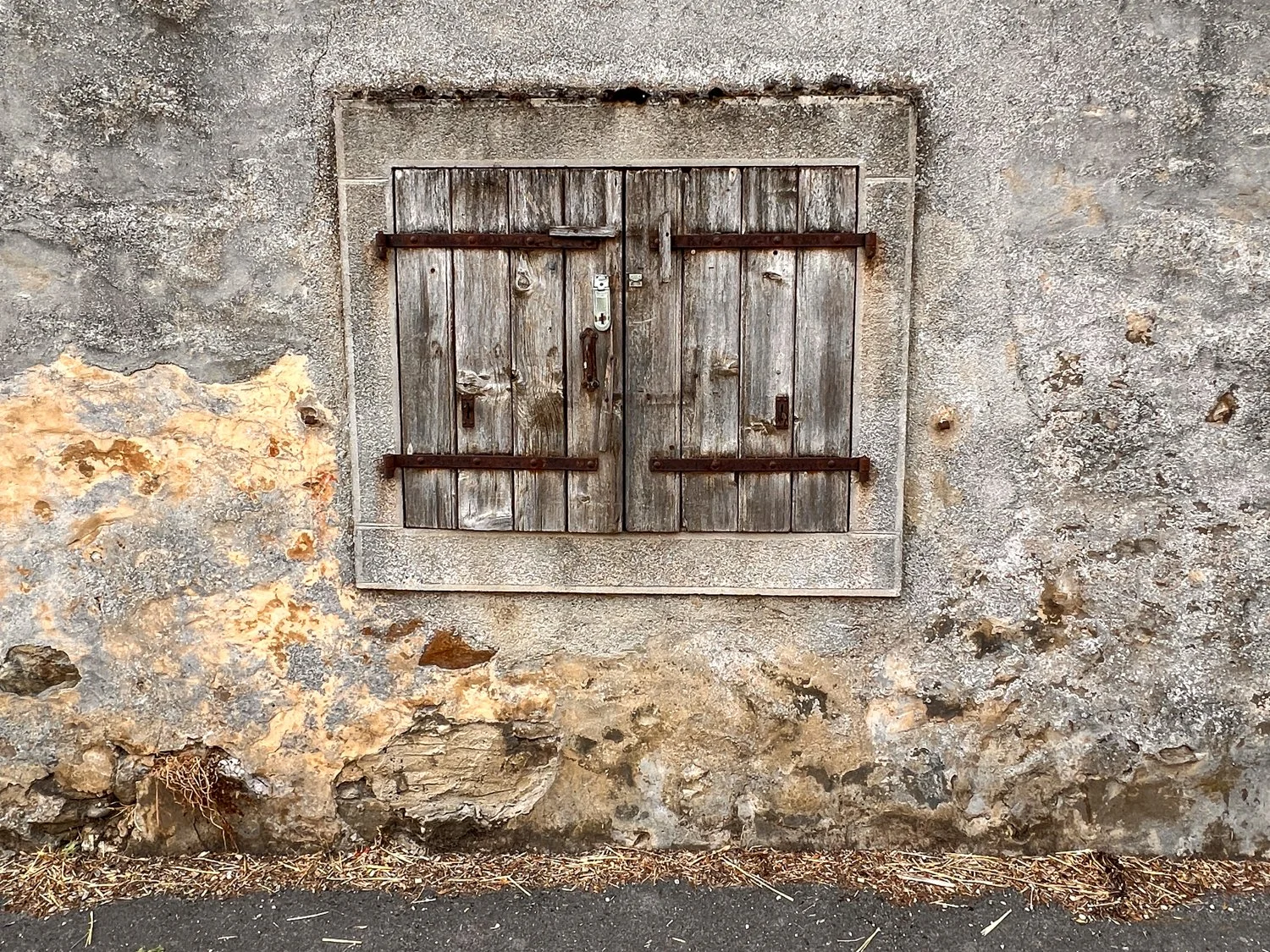
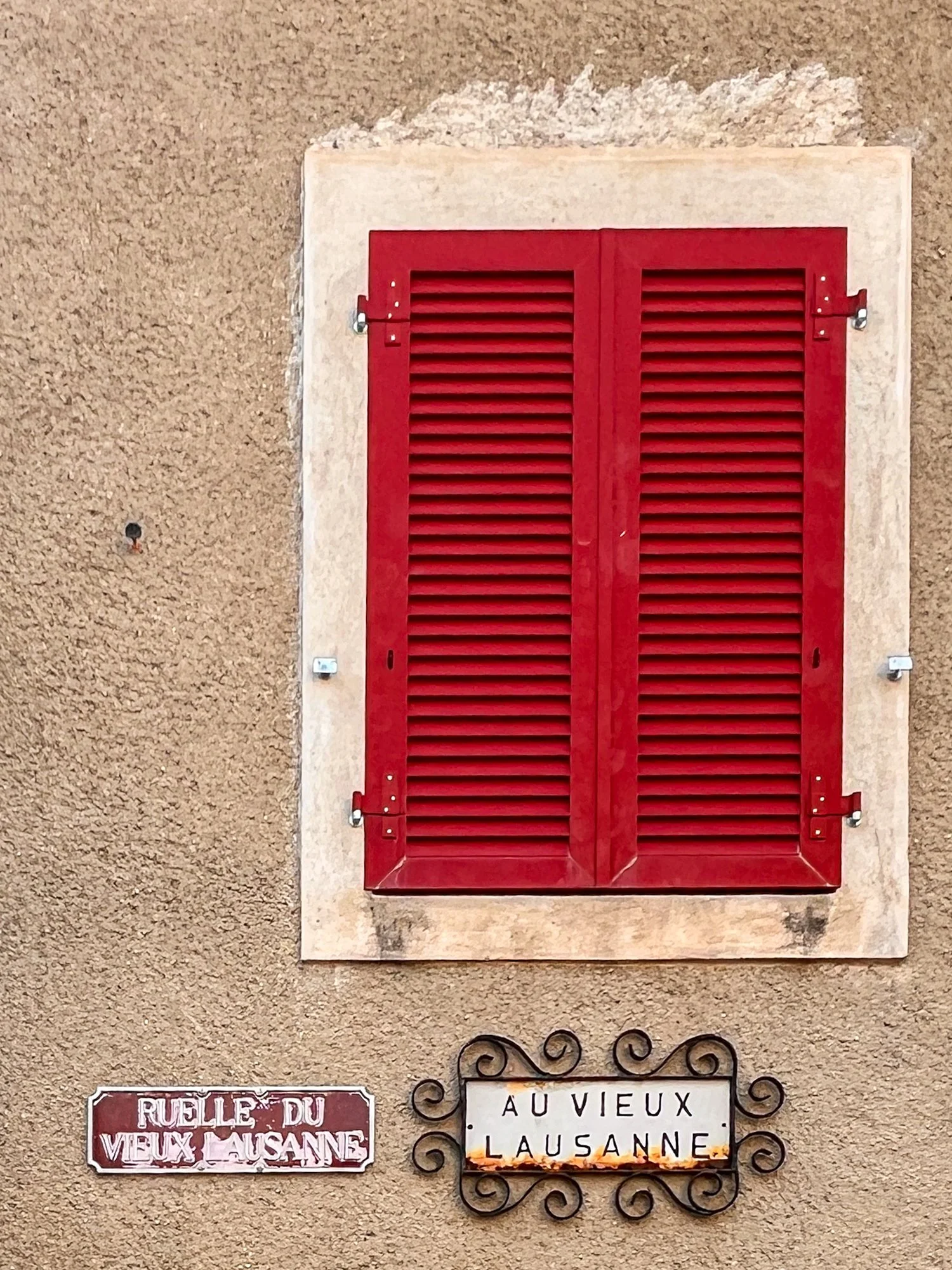
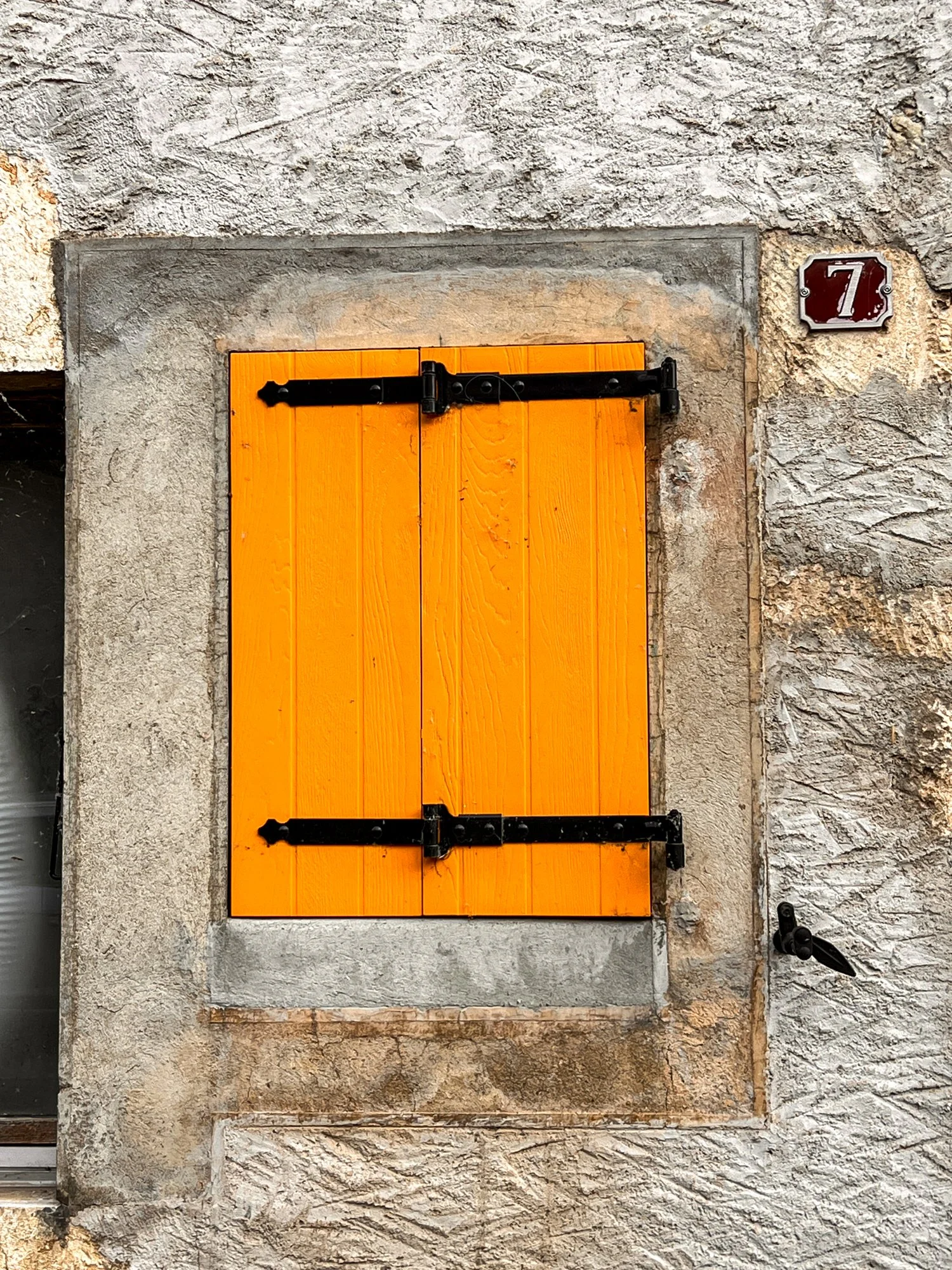
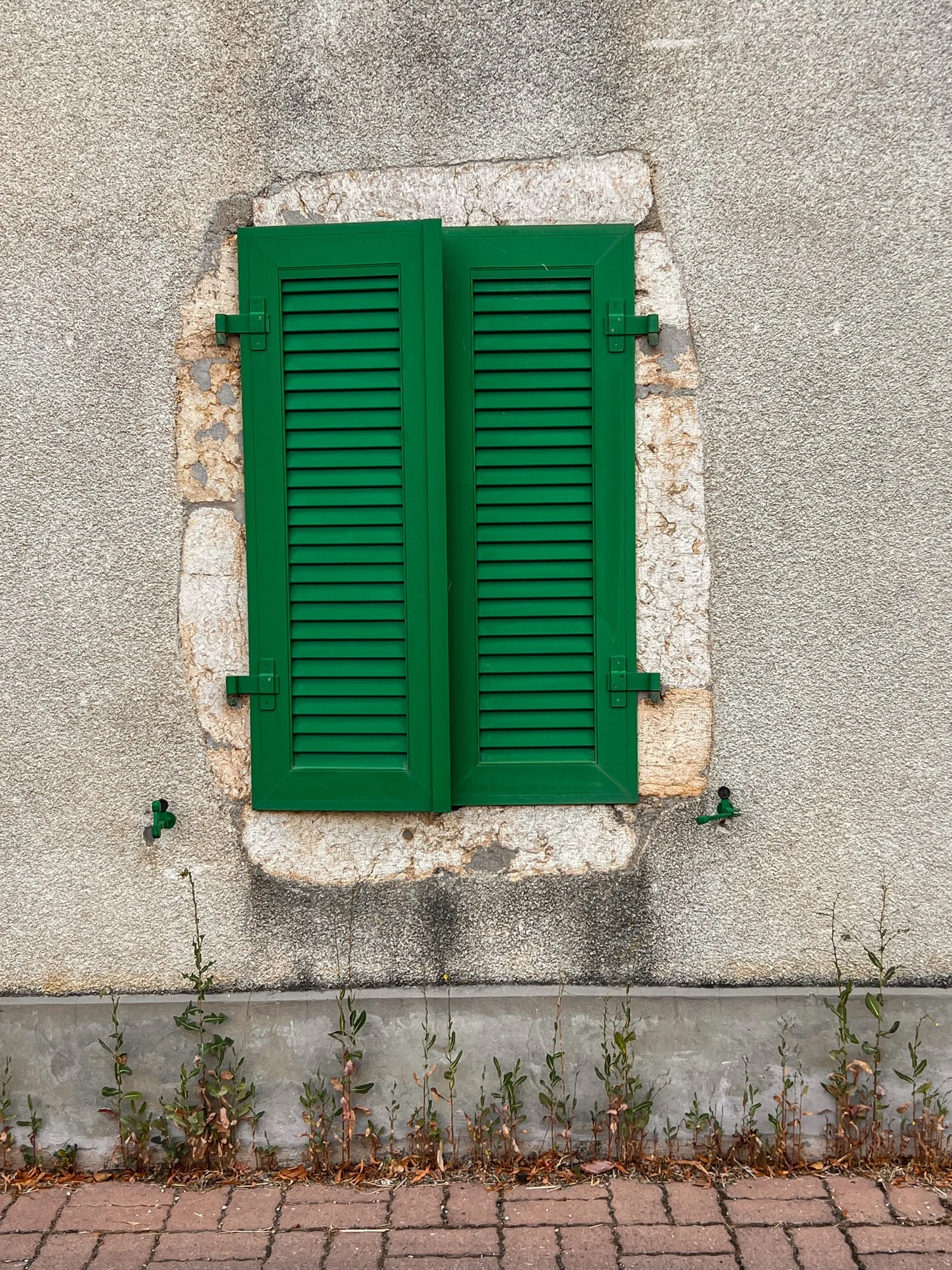
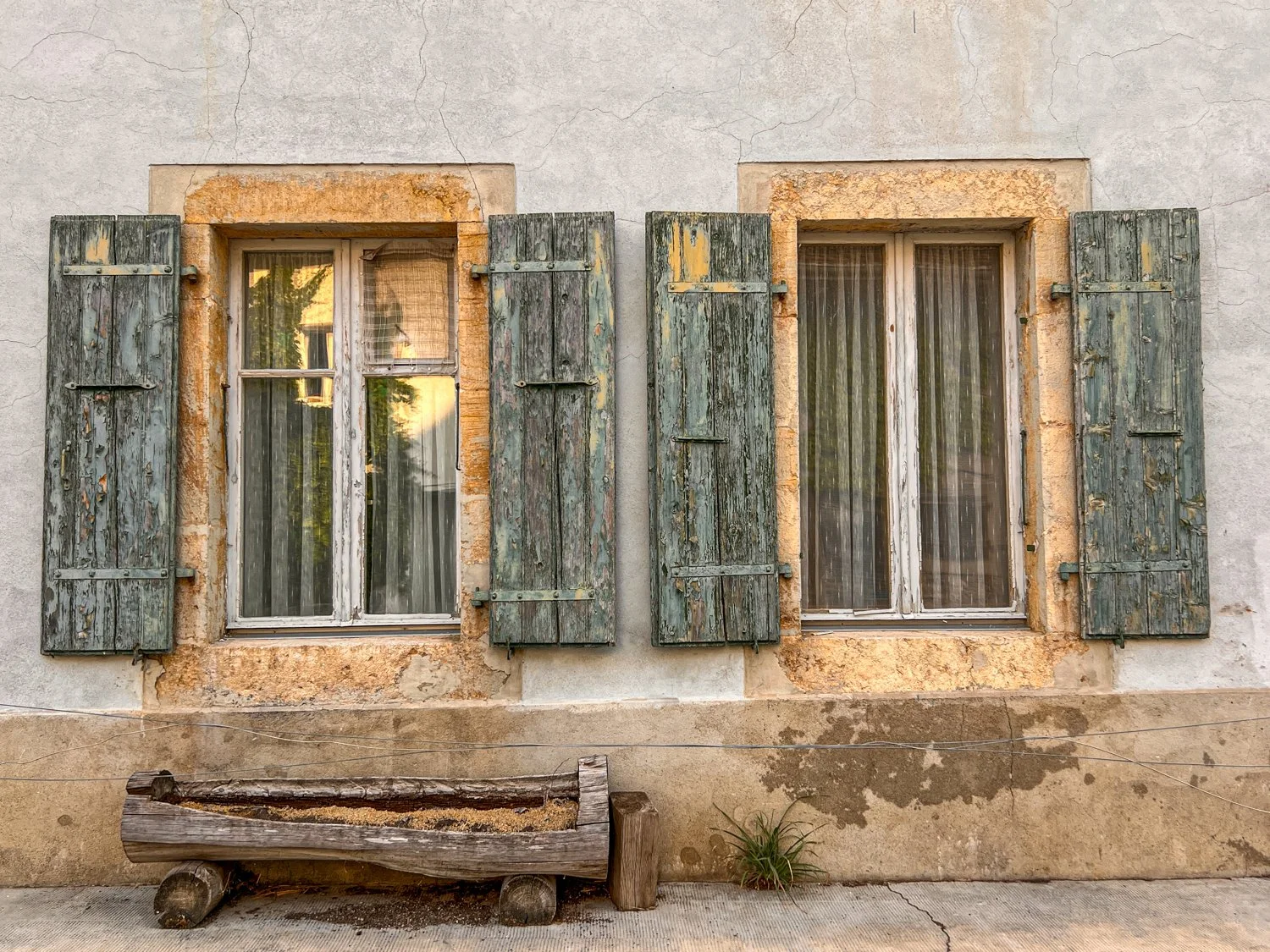
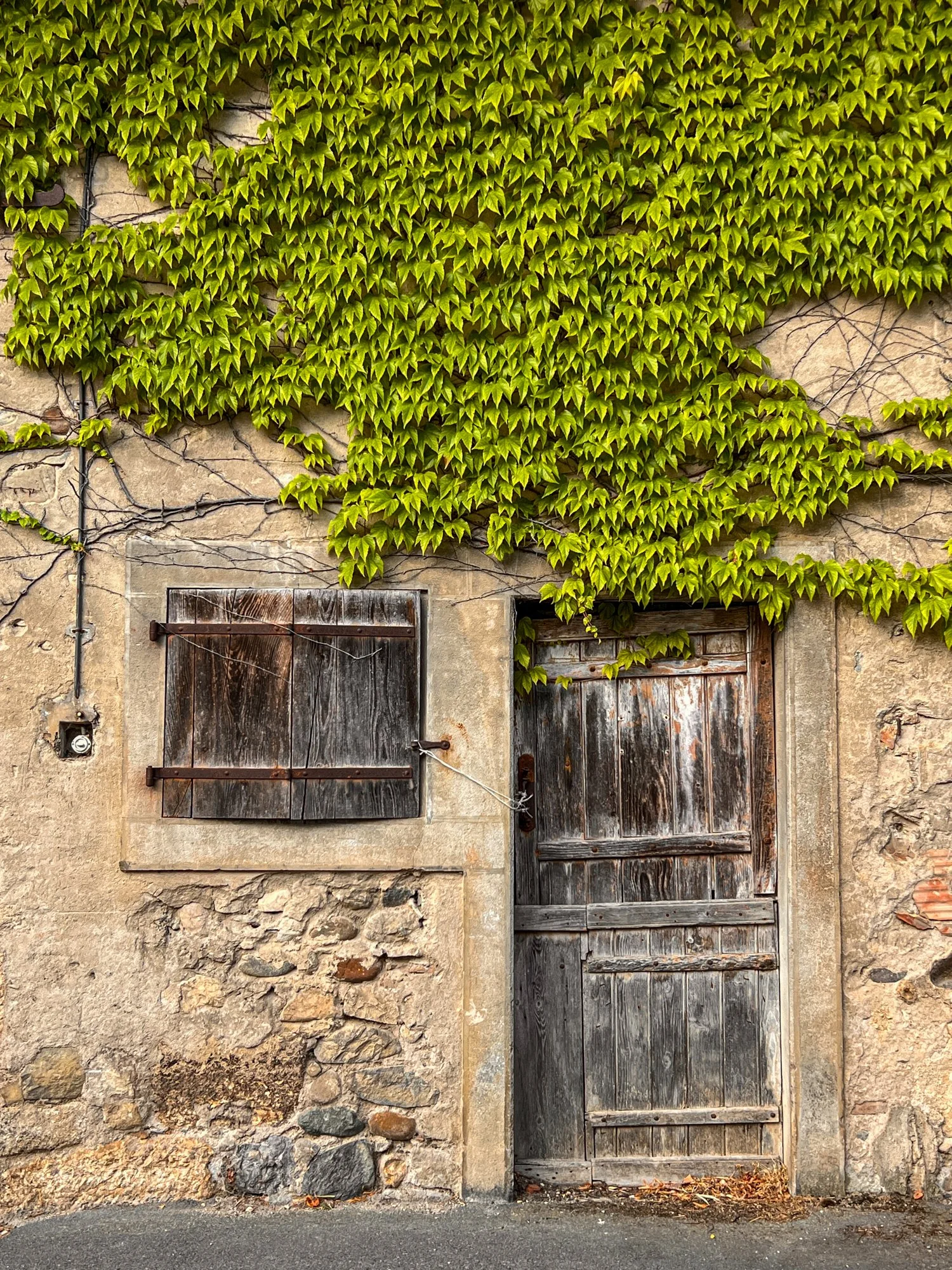
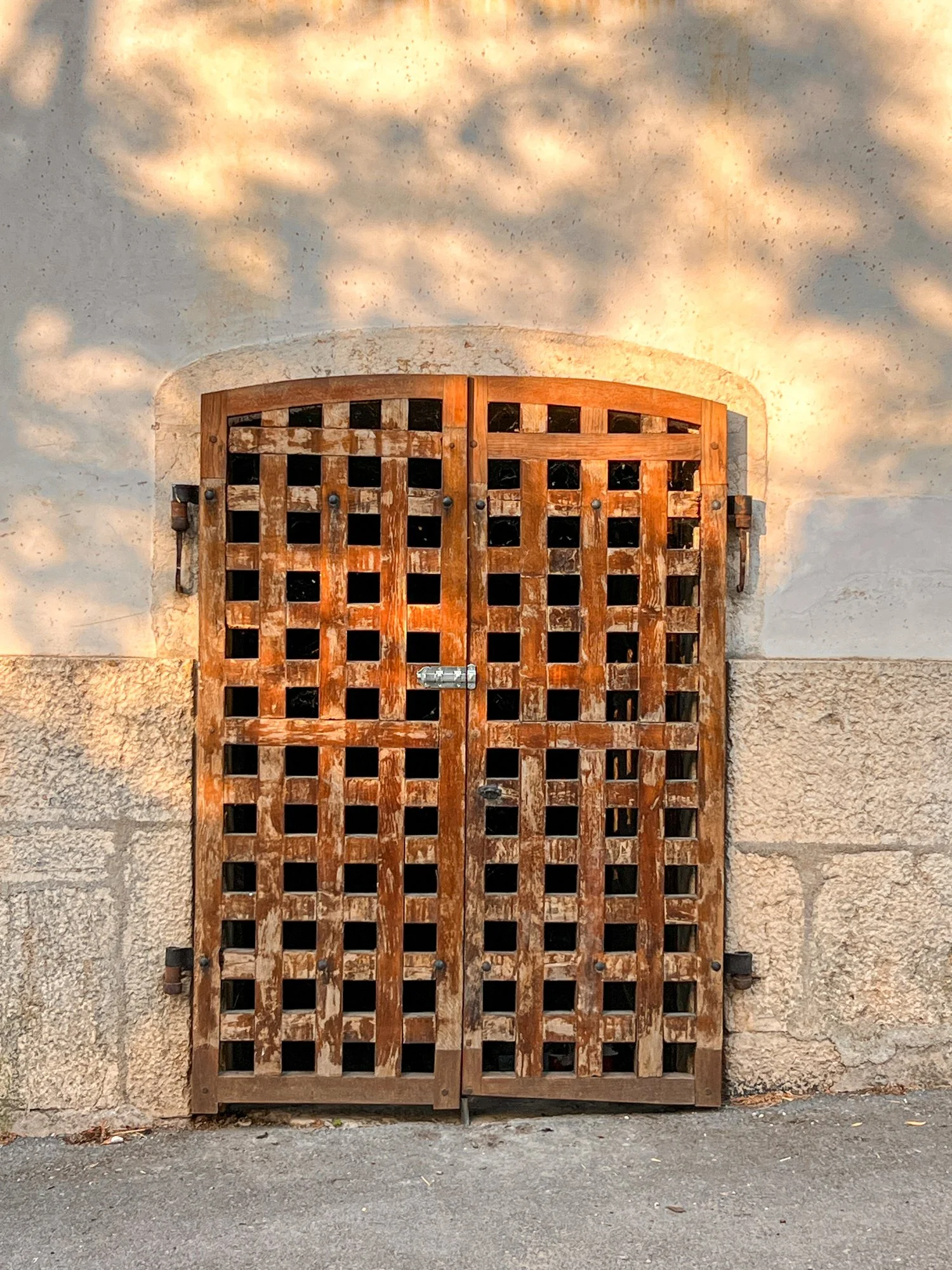
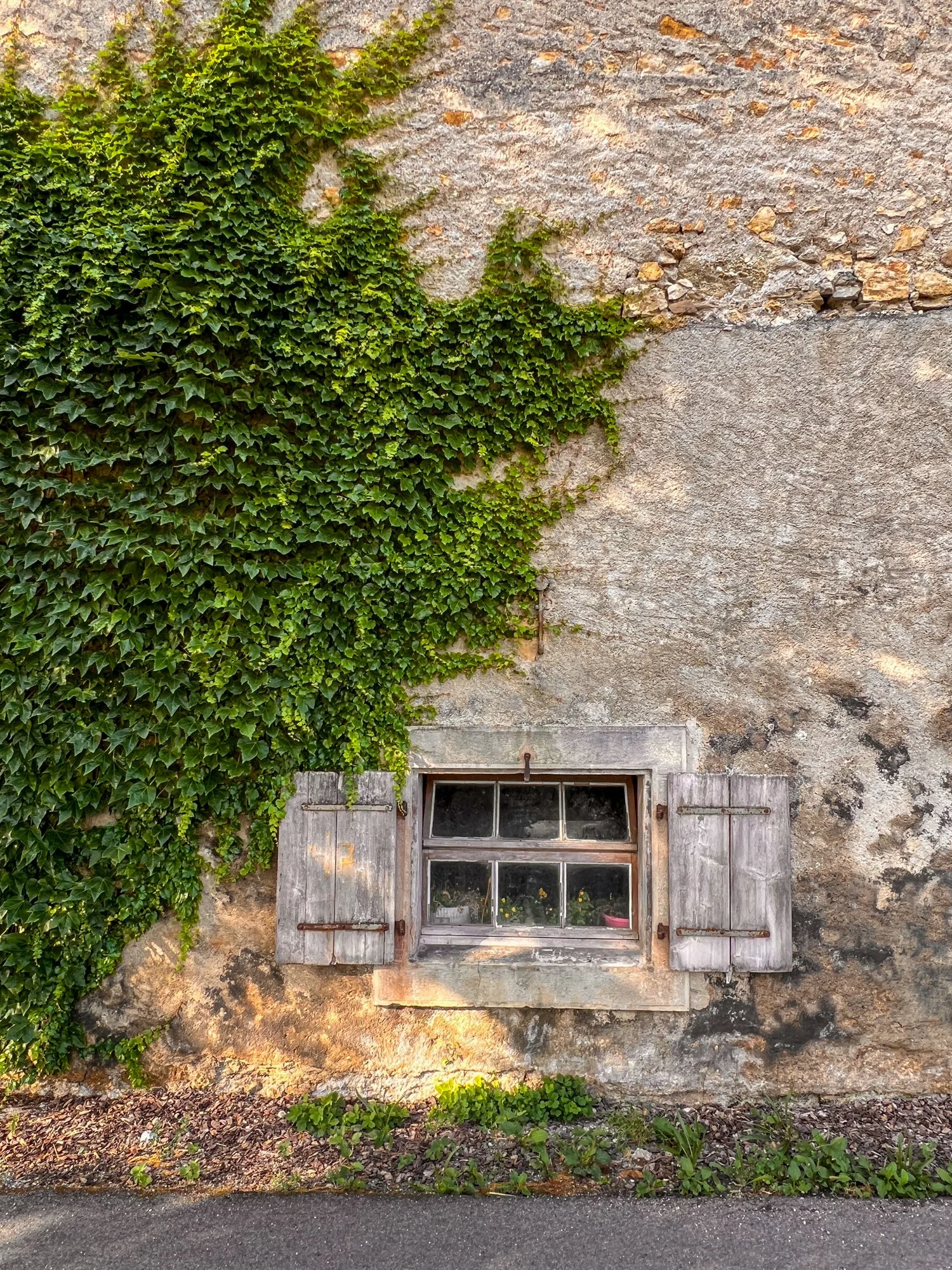
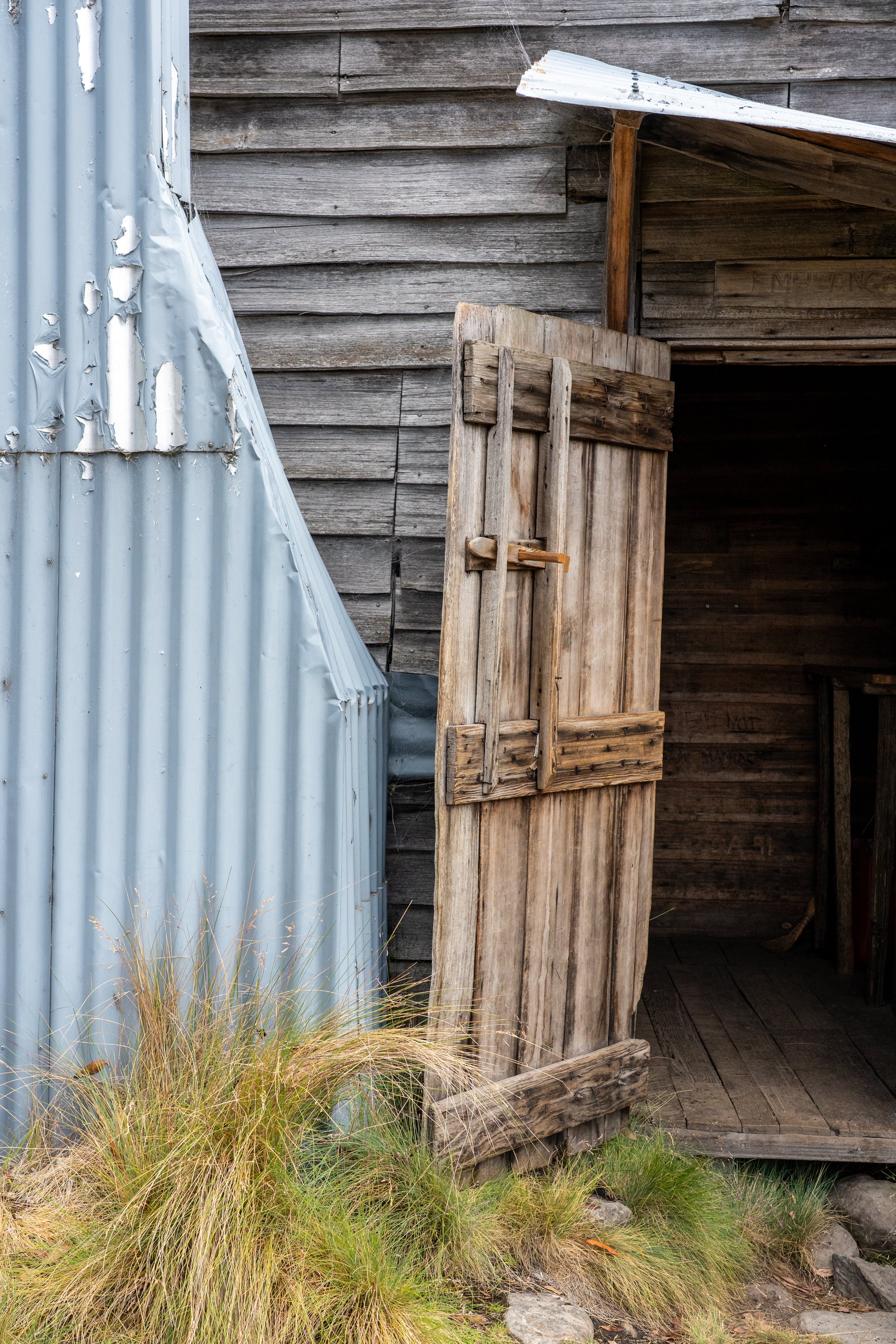
The old barns are particularly beautiful. Many have been converted into small homes, but they've retained their original character — thick stone walls and the unmistakable look of buildings that have been standing there for generations. Each one has its own unique timber doors and windows, some painted broght colours, others keeping their hundred year old patina.
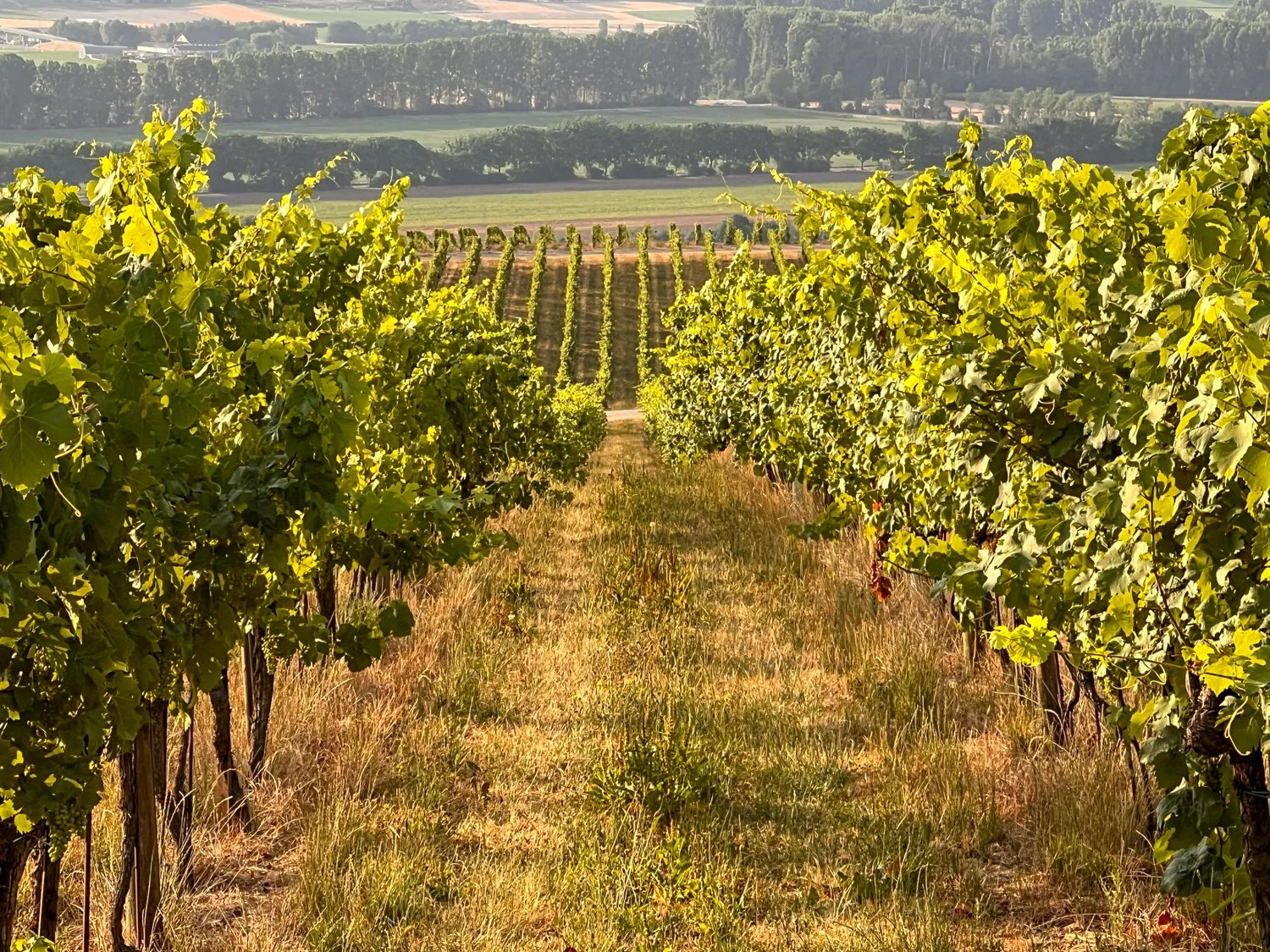
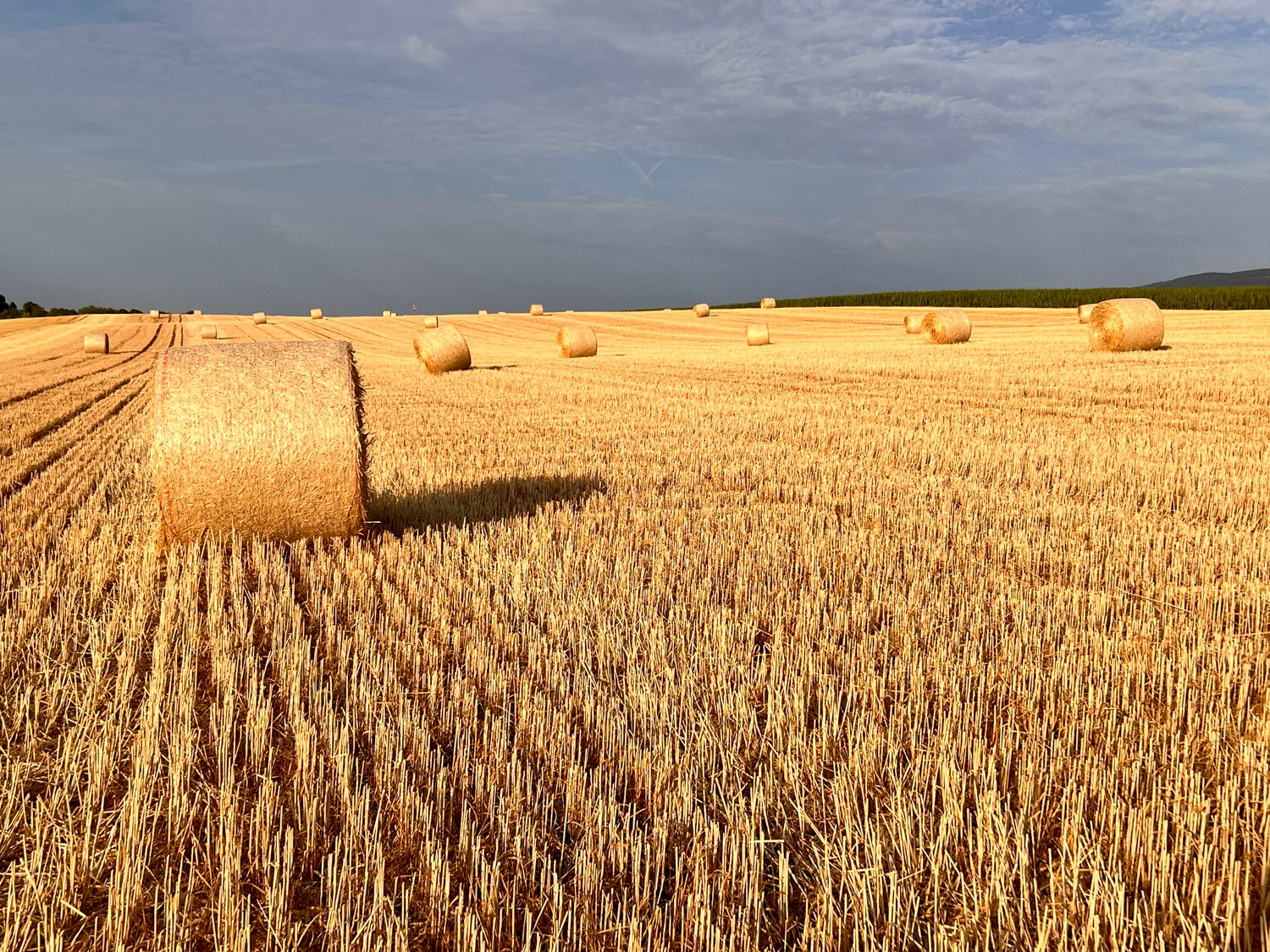
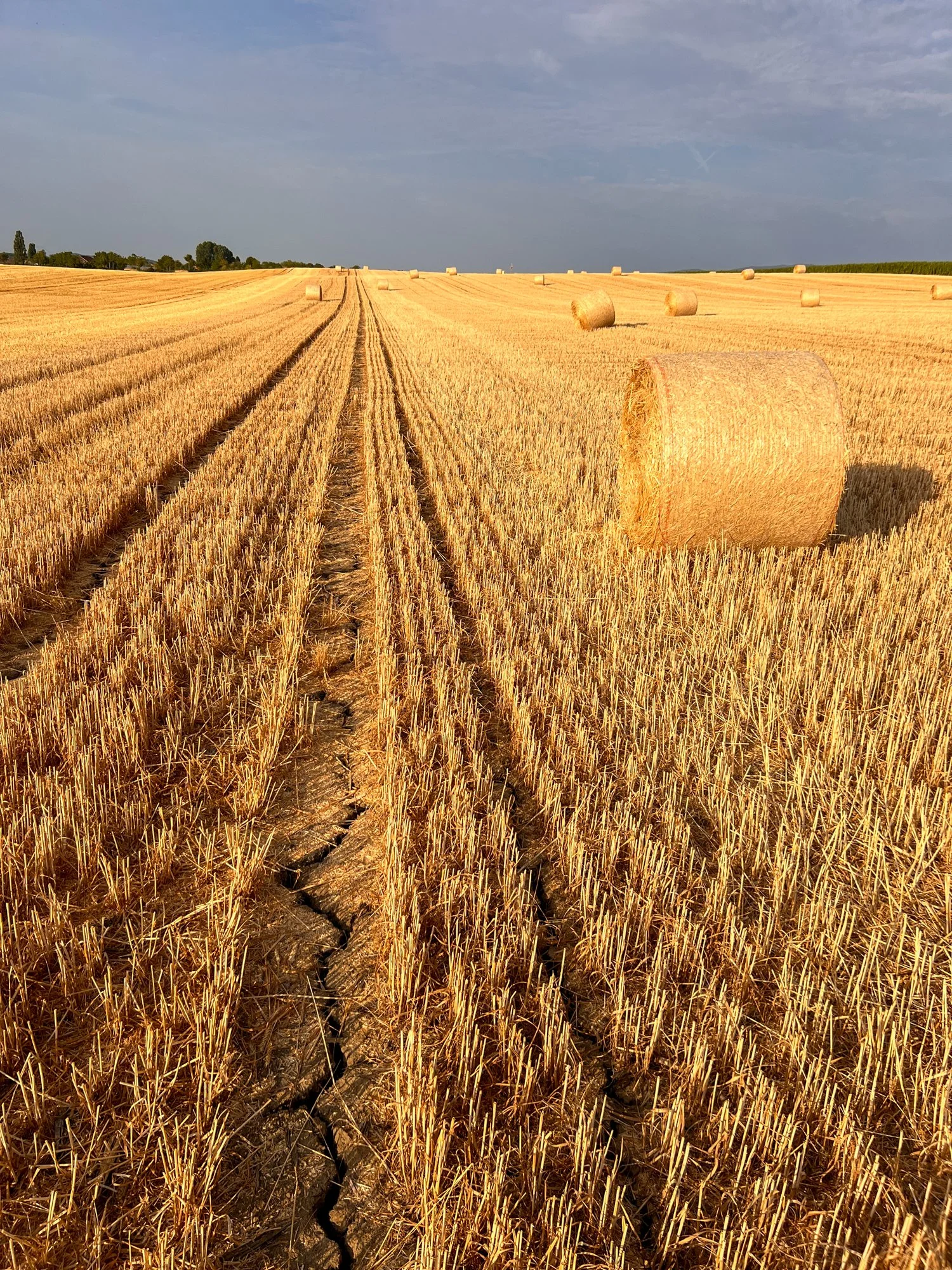
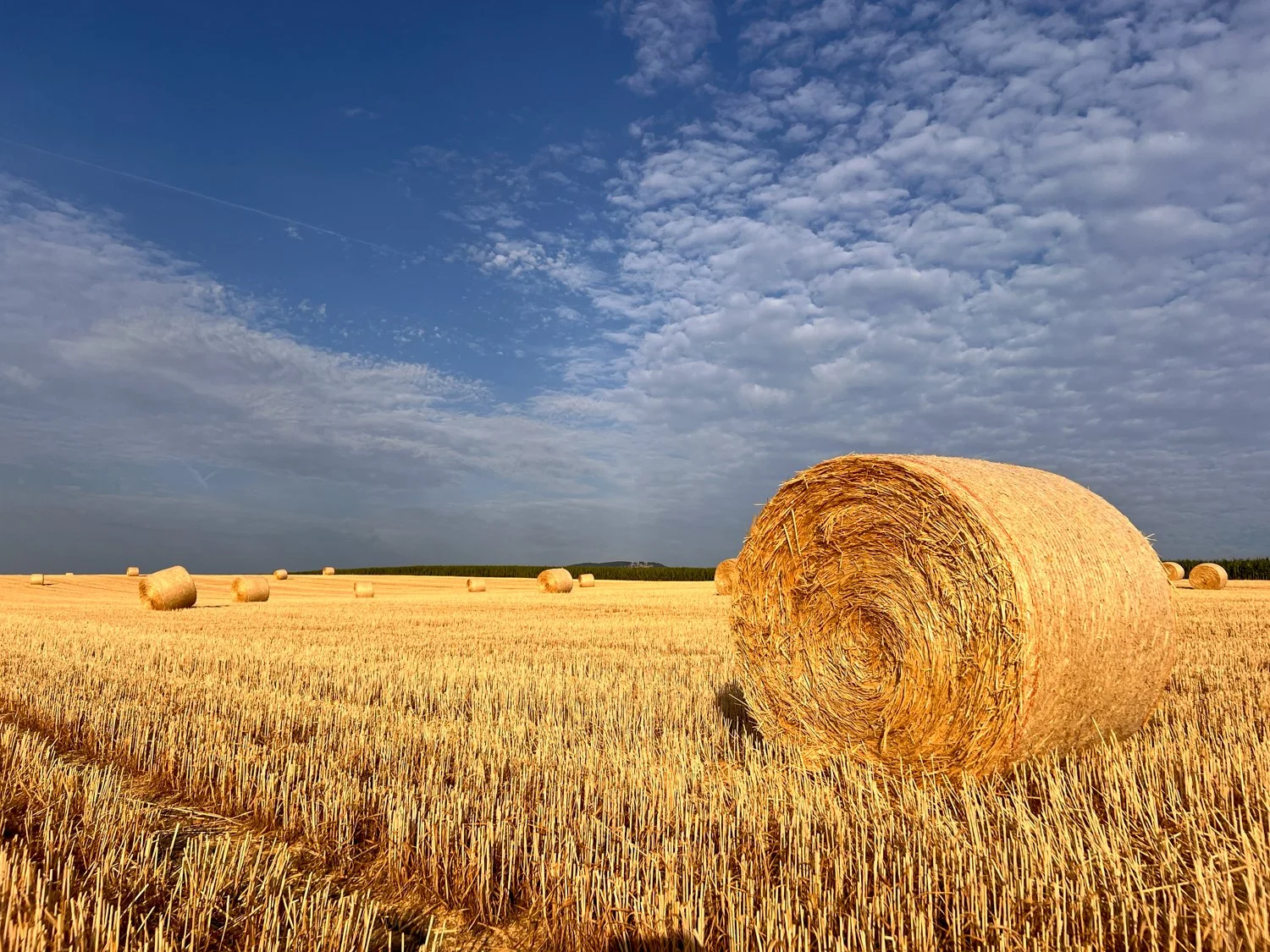
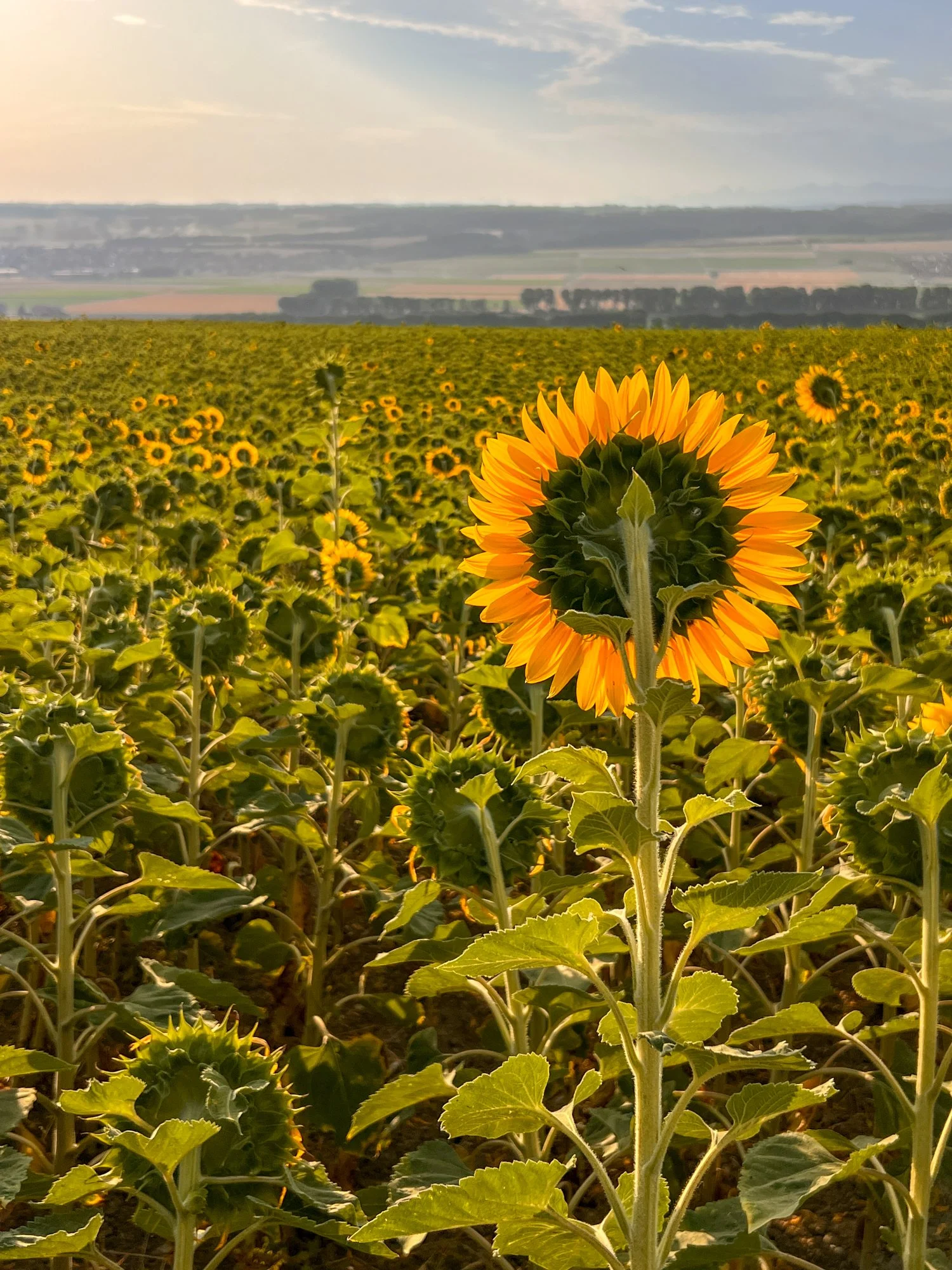
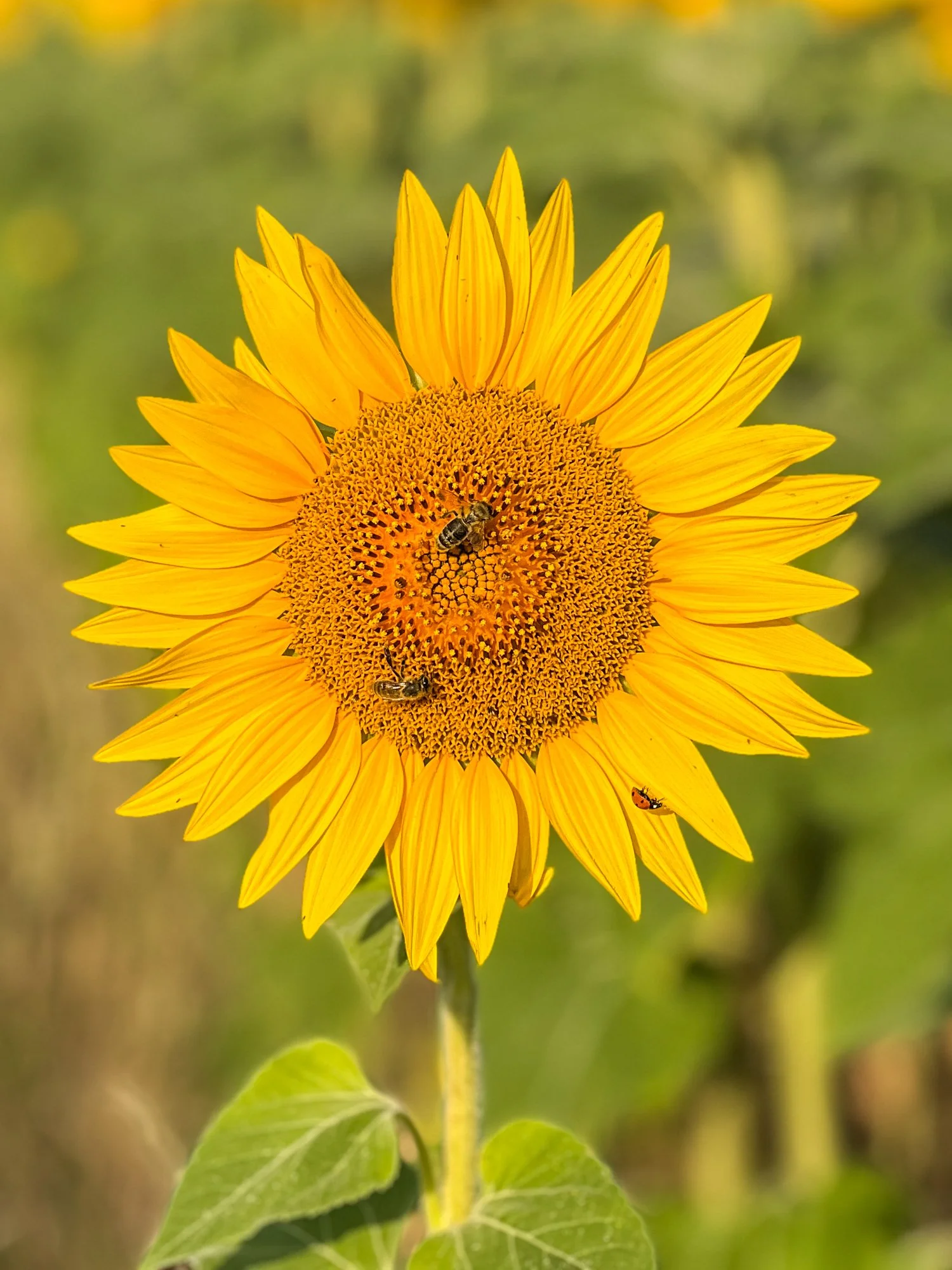
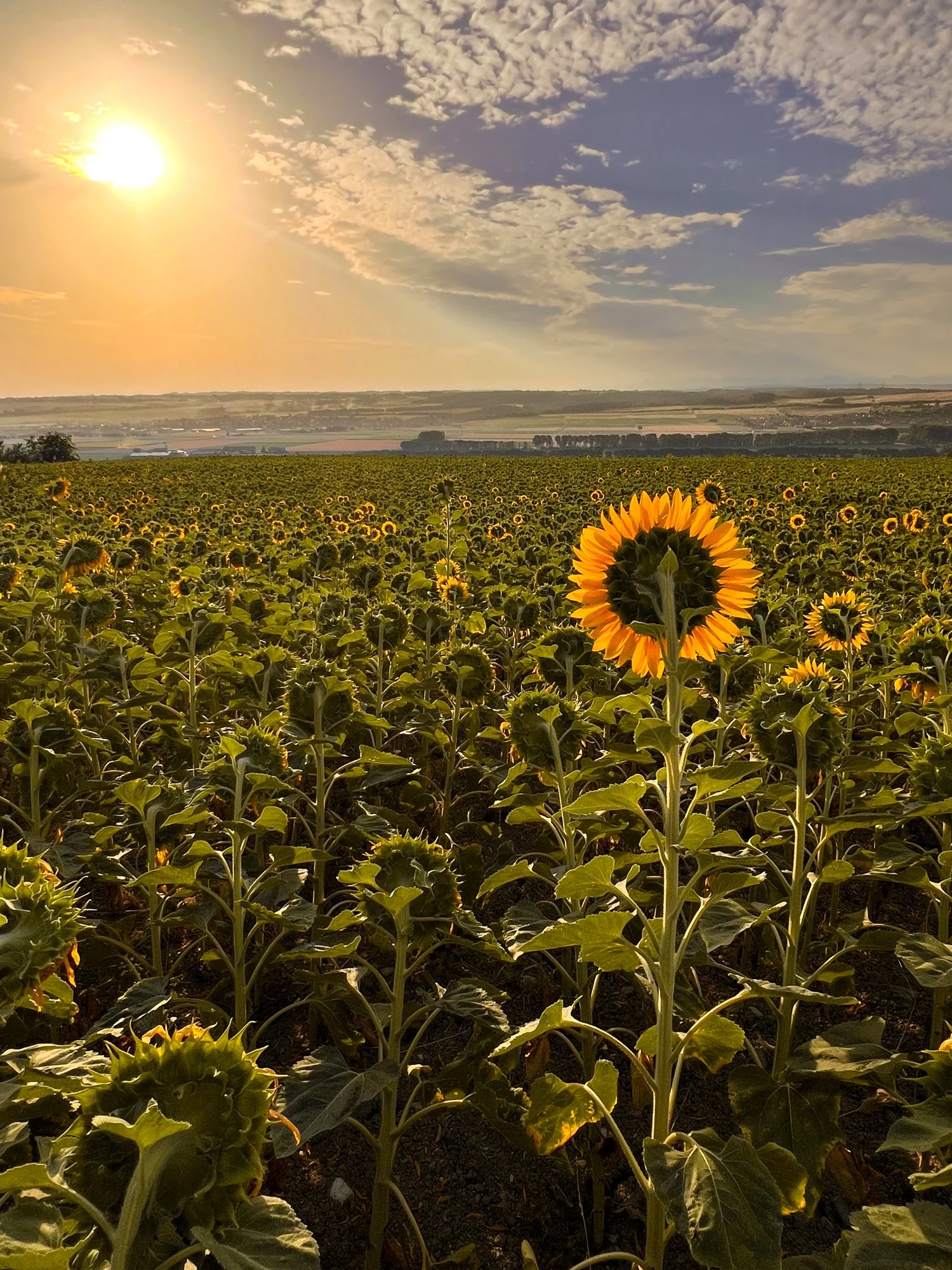
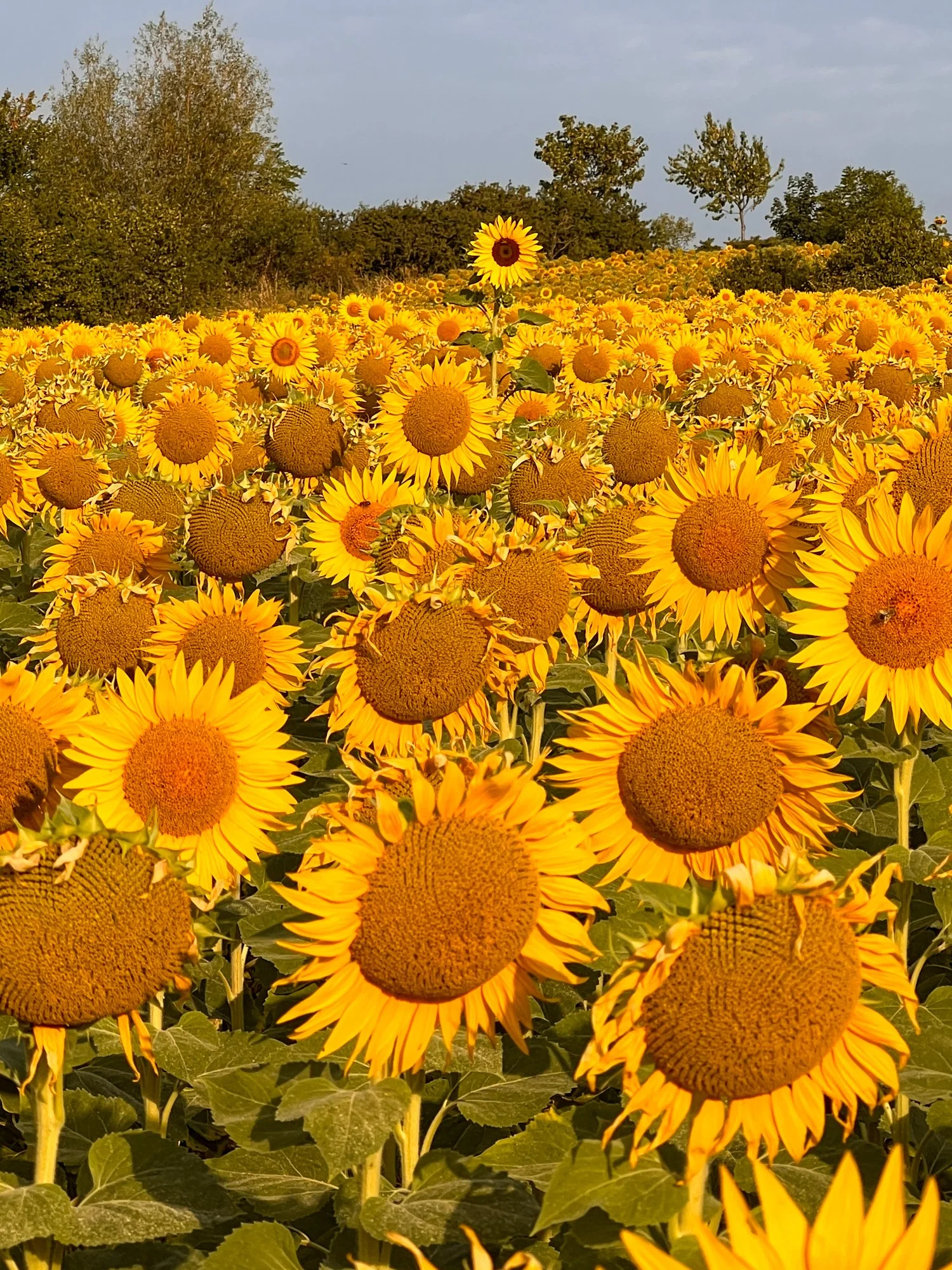
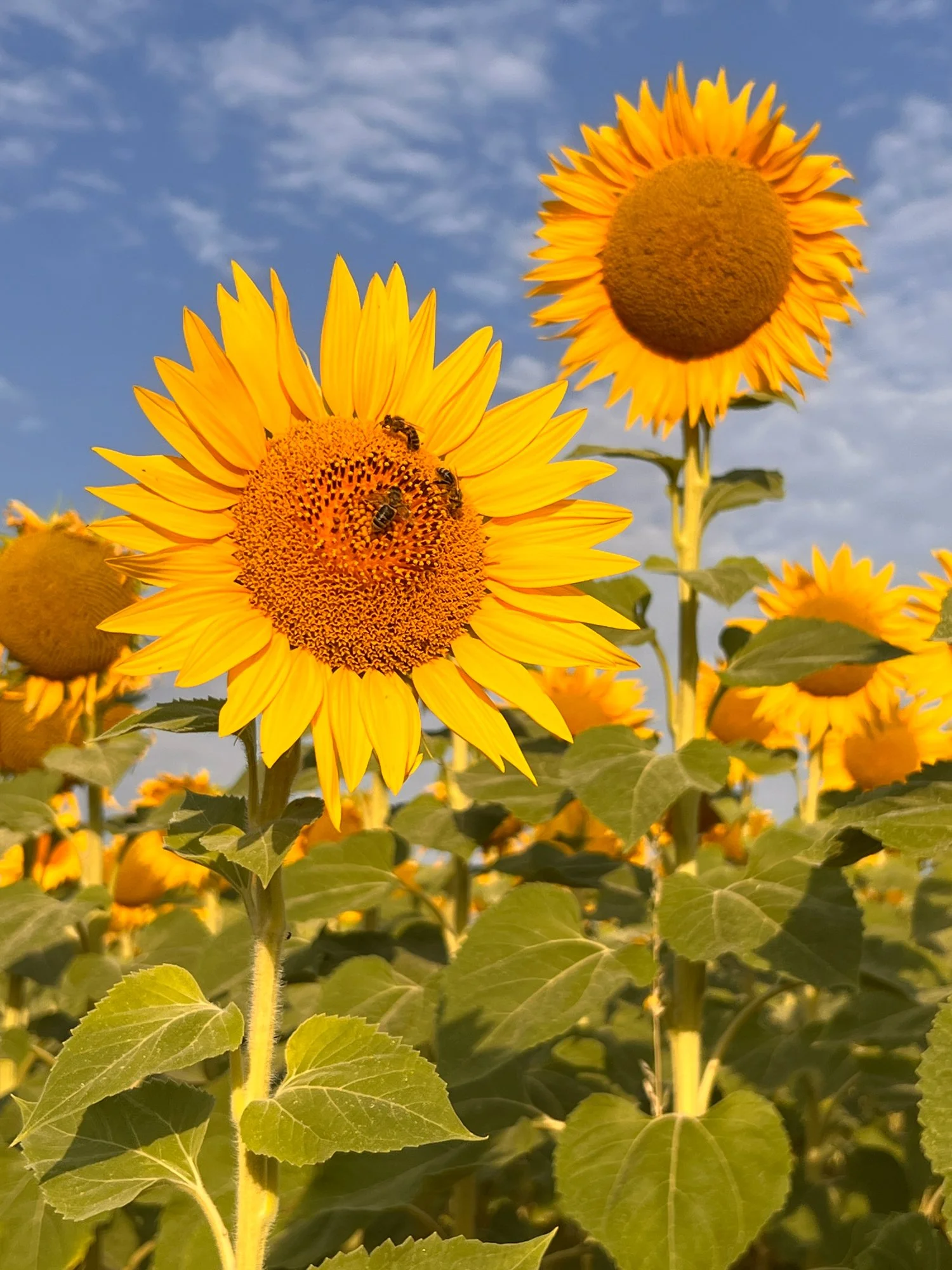
The vineyards surround the village stretching across the landscape interspersed with golden fields stretching towards the horizon. And then, suddenly, thousands upon thousands of sunflowers burst from the ground, each one facing the sun like dutiful soldiers.
But now it was time to leave all that behind. The next chapter was going to be very different. The cities were behind us. The mountains were calling.