A Wilderness Worth Walking
The Overland Track is not just Australia’s premier alpine trek, it’s one of the world’s great wilderness journeys. Winding for roughly 65 km (or more than 80km with side trips) from the glacial ribs of Cradle Mountain to the glassy silence of Lake St Clare, it traverses landscapes carved by ice, sculpted by wind, and covered with endemic life found nowhere else on Earth.
But that’s the tourist brochure sales pitch.
What follows is the real story of seven lunatics and two French nationals who enjoy one heck of a week in Tasmania’s high country.
PROLOGUE
It usually begins, as most questionable adventures do - with Gabe coming up with an idea and then others doing the homework. But not this time. Instead, she goes one step further and books a hike through the Tasmanian wilderness then puts out the call - who wants to join in?
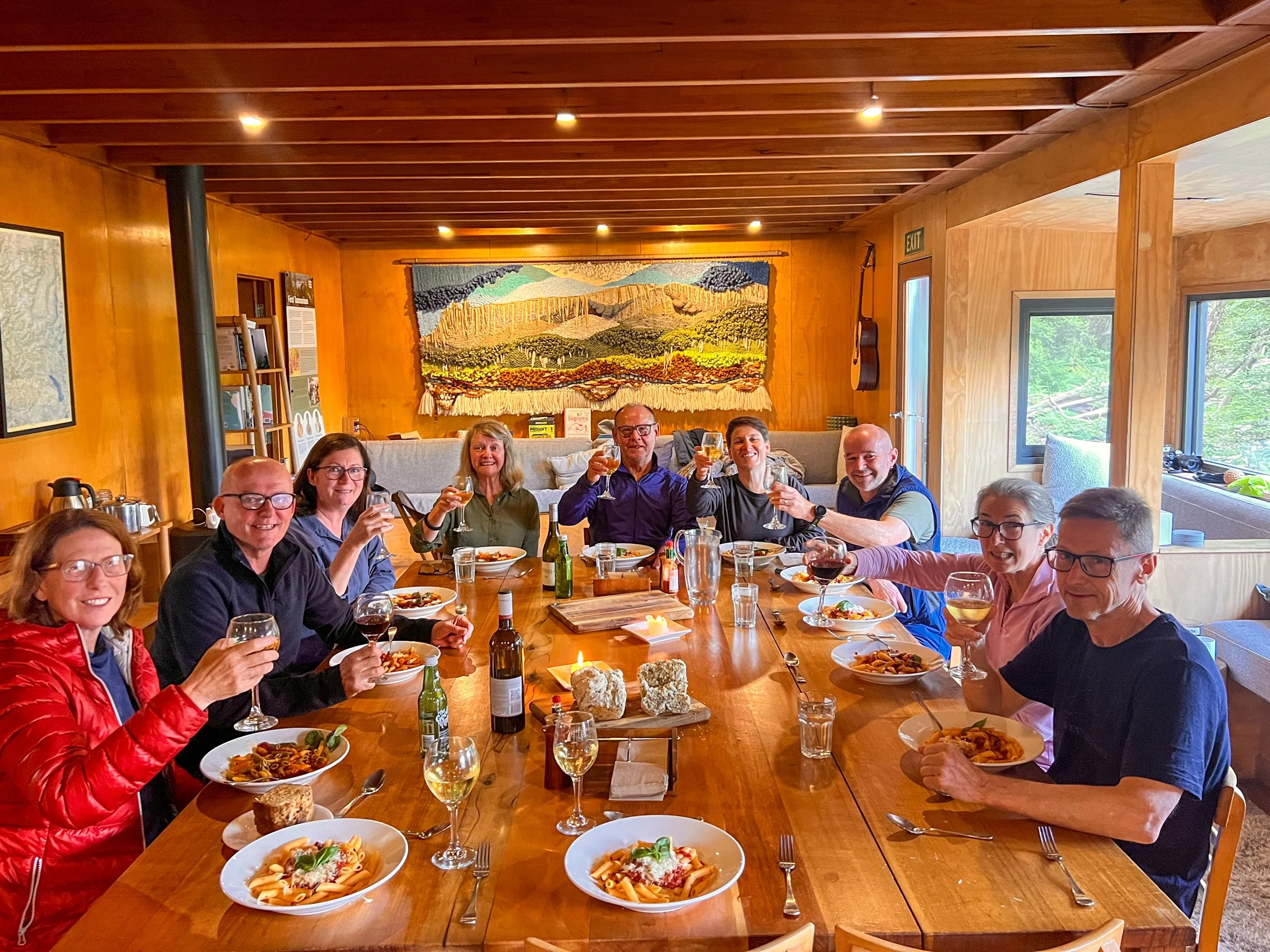
It is for this reason 8 of us decide that the idea of escaping work and getting out in nature is worth putting up with each other for the trip. However, because most of us are now in the age bracket politely described as “old people”, we chose to do it in style - staying in private huts run by the Tasmanian Walking Company. This meant rehydrated noodles are to be replaced with proper food, creek washing replaced with four-minute showers, and filtered stream water to be replaced - heroically - with Tasmanian wine.
THE NIGHT BEFORE: Launceston to Red Feather Inn
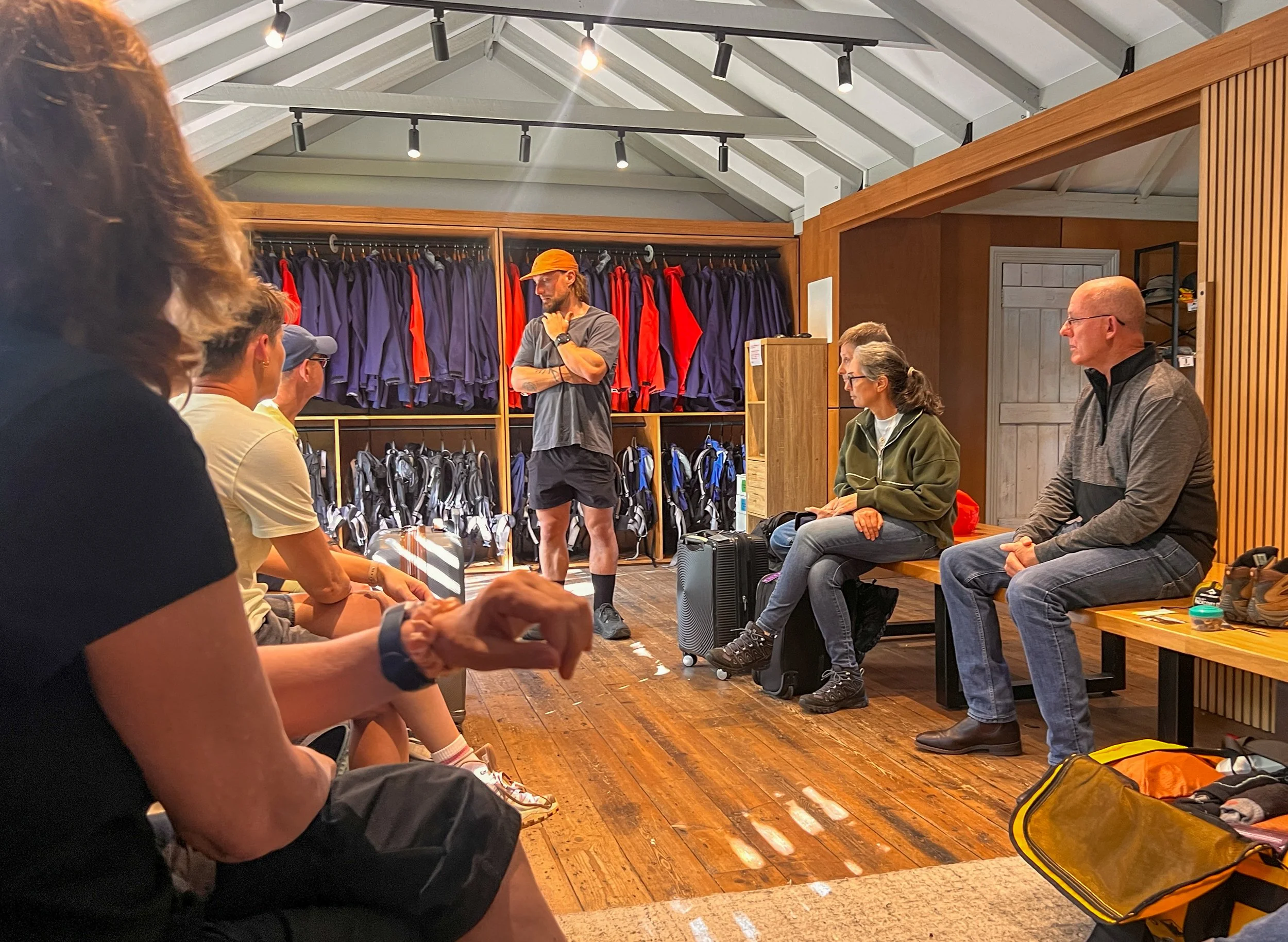
We all converge in Launceston, at the sandstone embrace of Red Feather Inn, a place with the right kind of charm to calm the nerves of even the most anxious walker. It is here we first meet our guides, Blake and Braydon. I got a sense they regarded us sympathetically, in the way one looks at people who have clearly no idea what the hell they are doing as one of our party nodded bravely and secretly Googled “what is hypothermia”.
With hiking gear laid out, we go through a roll call of essential equipment with the precision of astronauts preparing for launch. We were required to be well-prepared: sturdy boots, waterproof gear, warm layers - because wild weather here wasn’t a threat, it was tradition capable of snow, rain, sun and wind on the same summer afternoon.
With most gear present, and last-minute decisions to ditch non-essential items to reduce pack weight that extra few grams decided, we re-load our packs – our worldly possessions for the week - ready for adventure.
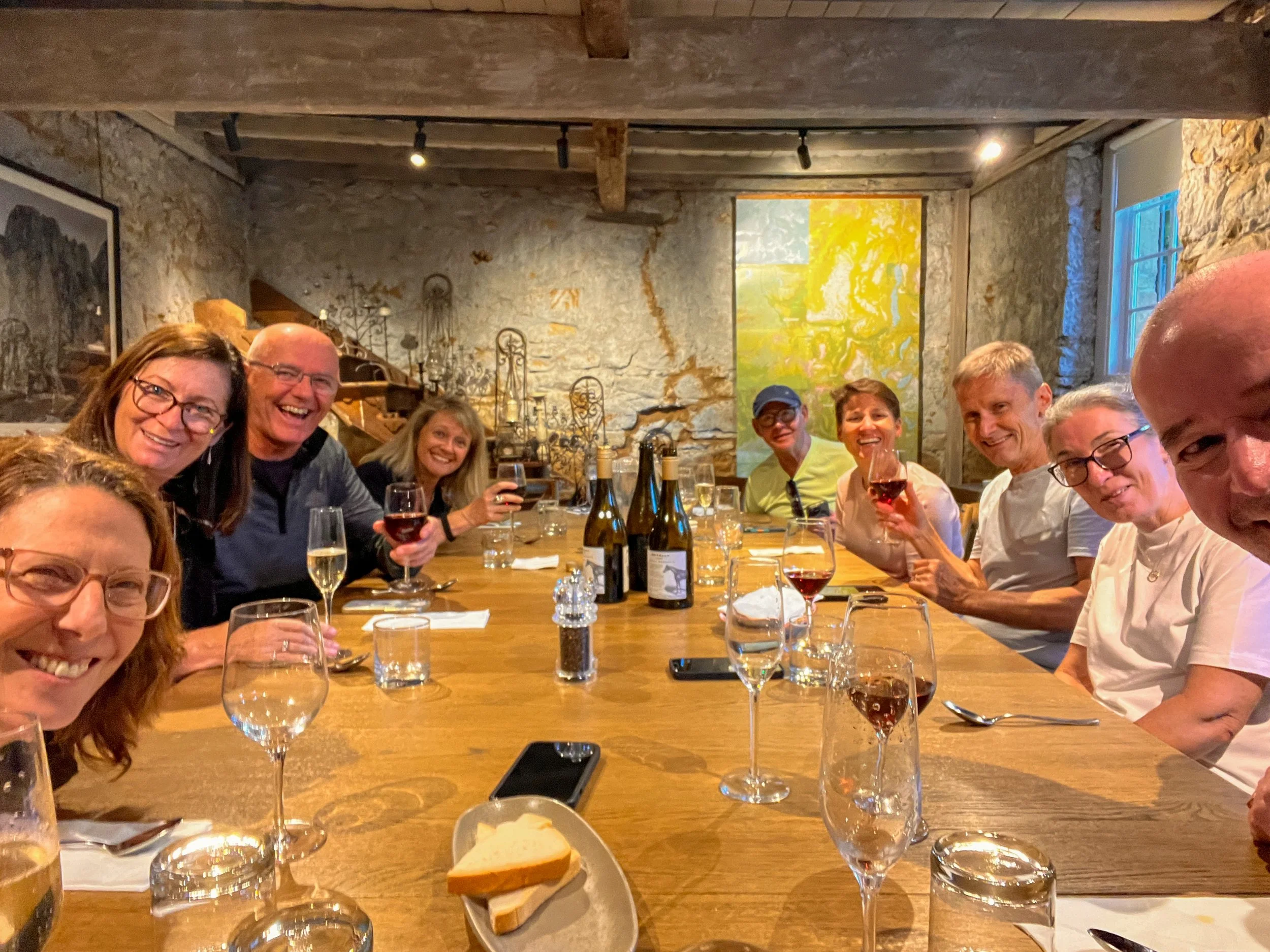
The rest of the evening is spent over a spread of local produce, wine and laughter giddy with excitement and anticipation for what lay ahead. Conversation alternated between competitive lying about fitness levels and the amount of training beforehand (no Megs- it is not just about the ‘quality’) and wondering who would be first to fall over.
DAY ONE — FORCES OF NATURE:
Waldheim to Barn Bluff Hut
We wake early for a scrumptious breakfast before one last re-pack (ie; what else could I do without in order to fit in the essential scroggin - a tramper's home-made high-calorie sweetmeat comprising dried fruit and nuts). Boarding the small minibus, we make our way to Cradle Mountain–Lake St Clair National Park under a sky that looked undecided about our fate ahead. Piling out of the bus, packs on back, water bottles filled and poles in hand, our boots hit the trail leaving the last bars of mobile phone reception behind.
Switching off from the world outside, the track wasted no time introducing us to Tasmania’s geological and ecological story. Walking through ancient temperate rainforest of myrtle beech, sassafras, and moss thick enough to cushion any fall. This soon gives way to Crater Lake, a perfect glacial bowl carved during the last Ice Age.
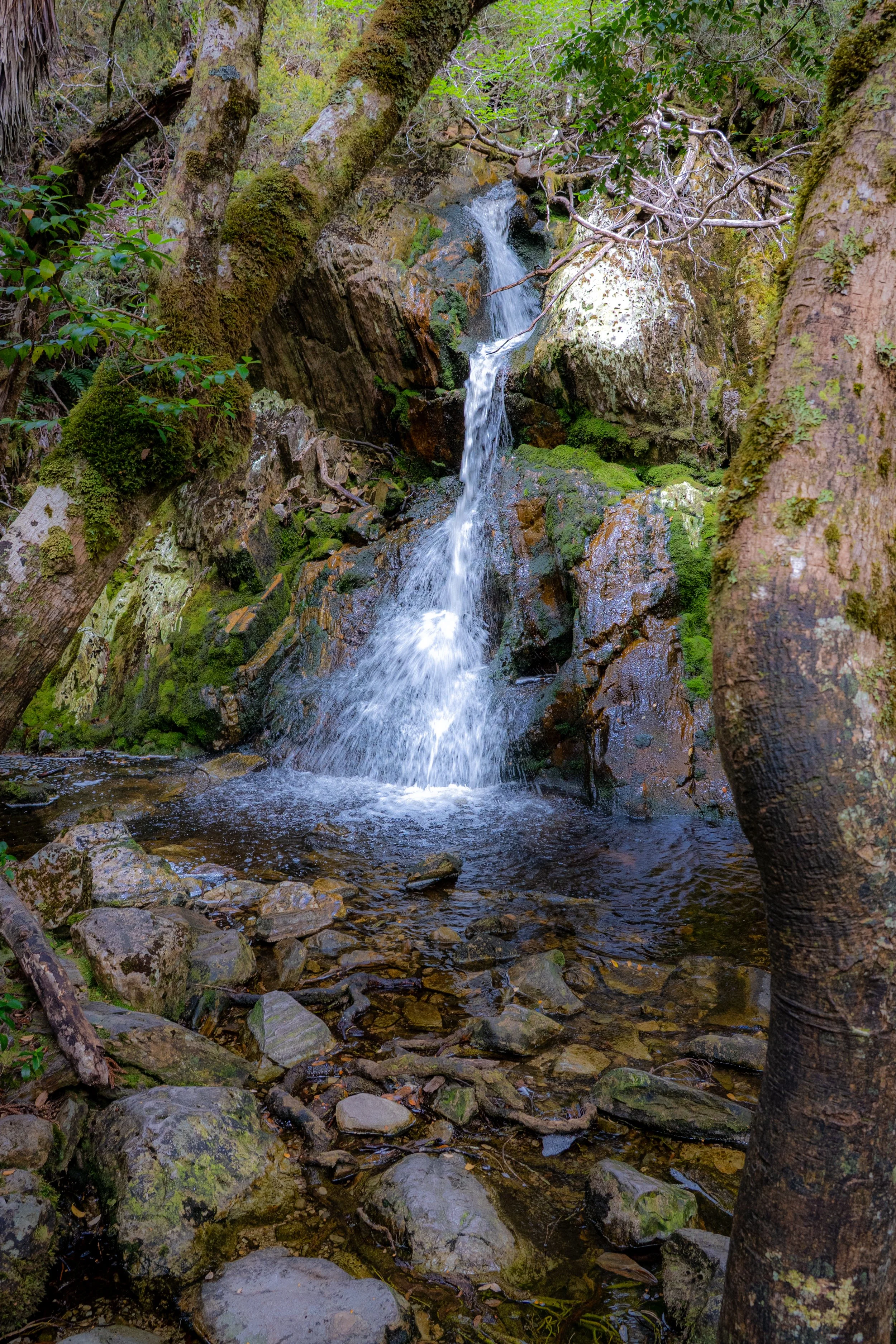
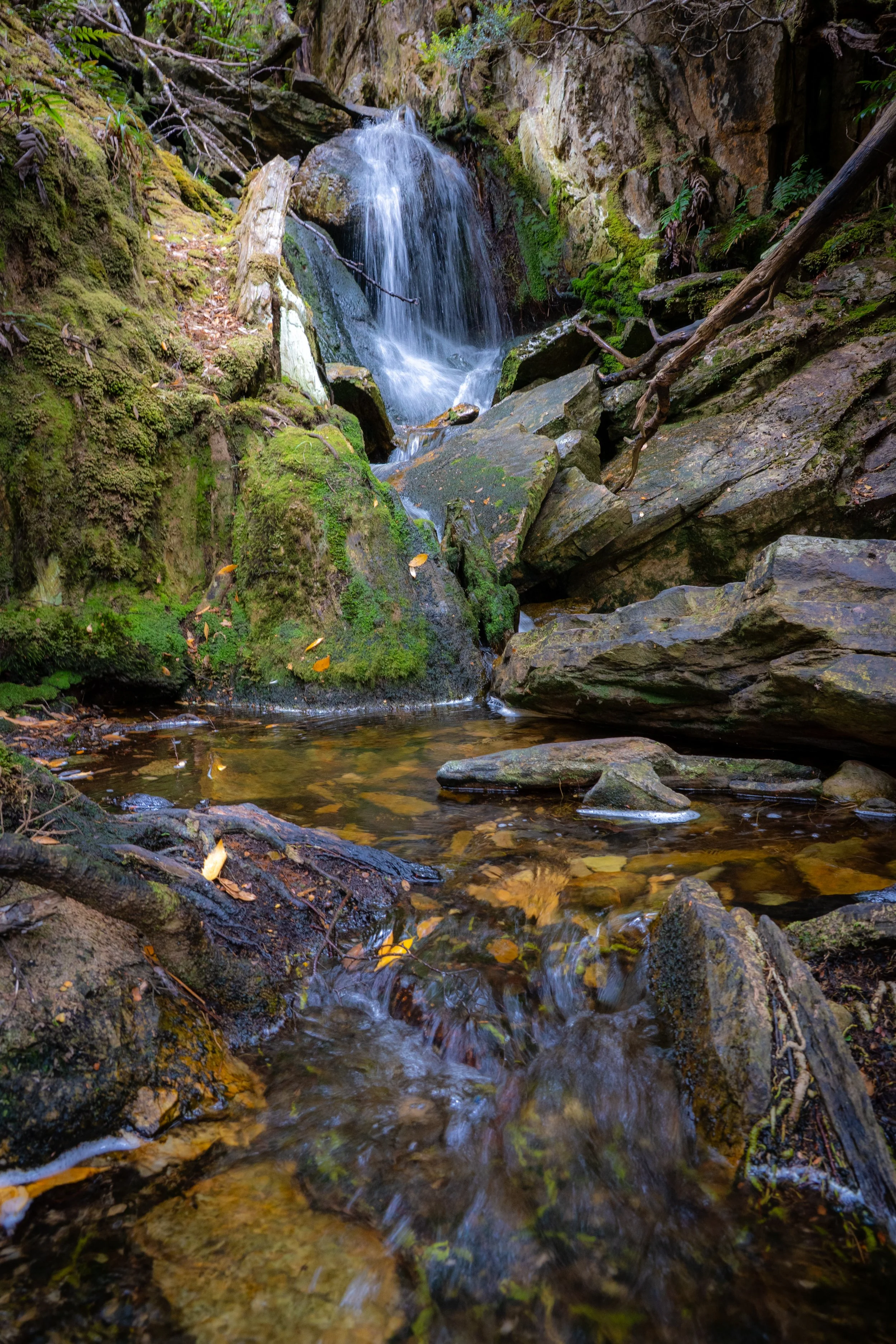
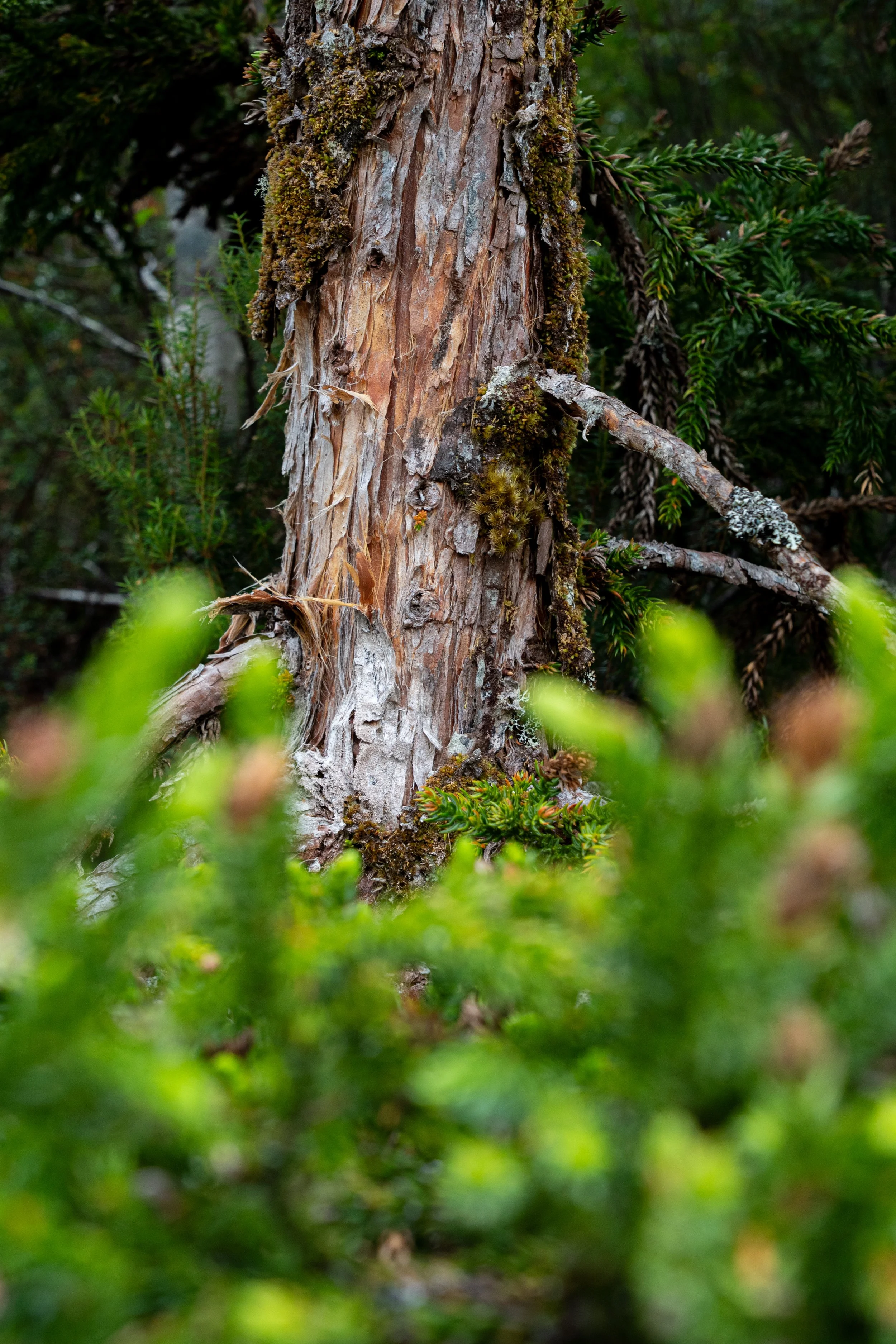
Natures water fountain
Within a few bends we were reminded the Overland Track was both spectacular and serious. This is no stroll or walk in the park. The first ascent to Marion’s Lookout (approx 1,250 m) is not for the faint-hearted especially with more than 10kg strapped to your back trying to topple you head over the cliff edge. We slowly haul ourselves up the steep section using chains bolted to the cliff - the near vertical climb filling lungs and testing the leg muscles (see John – those three weeks doing leg presses at the gym finally paid off). At Marions Lookout we enjoy a view over Crater Lake, Dove Lake and the surrounding valleys.
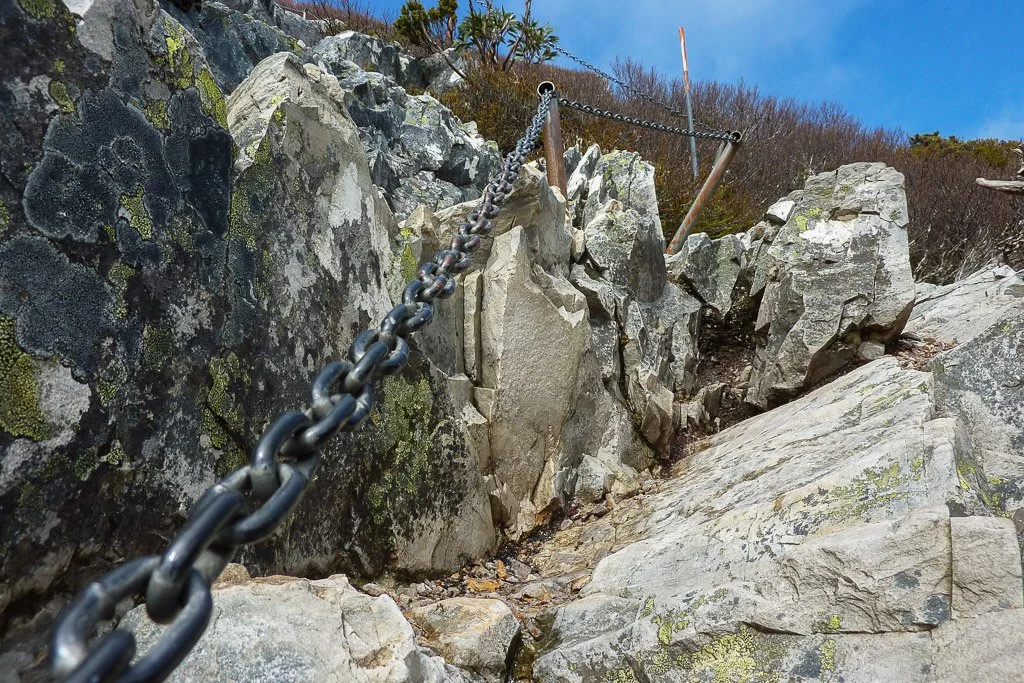
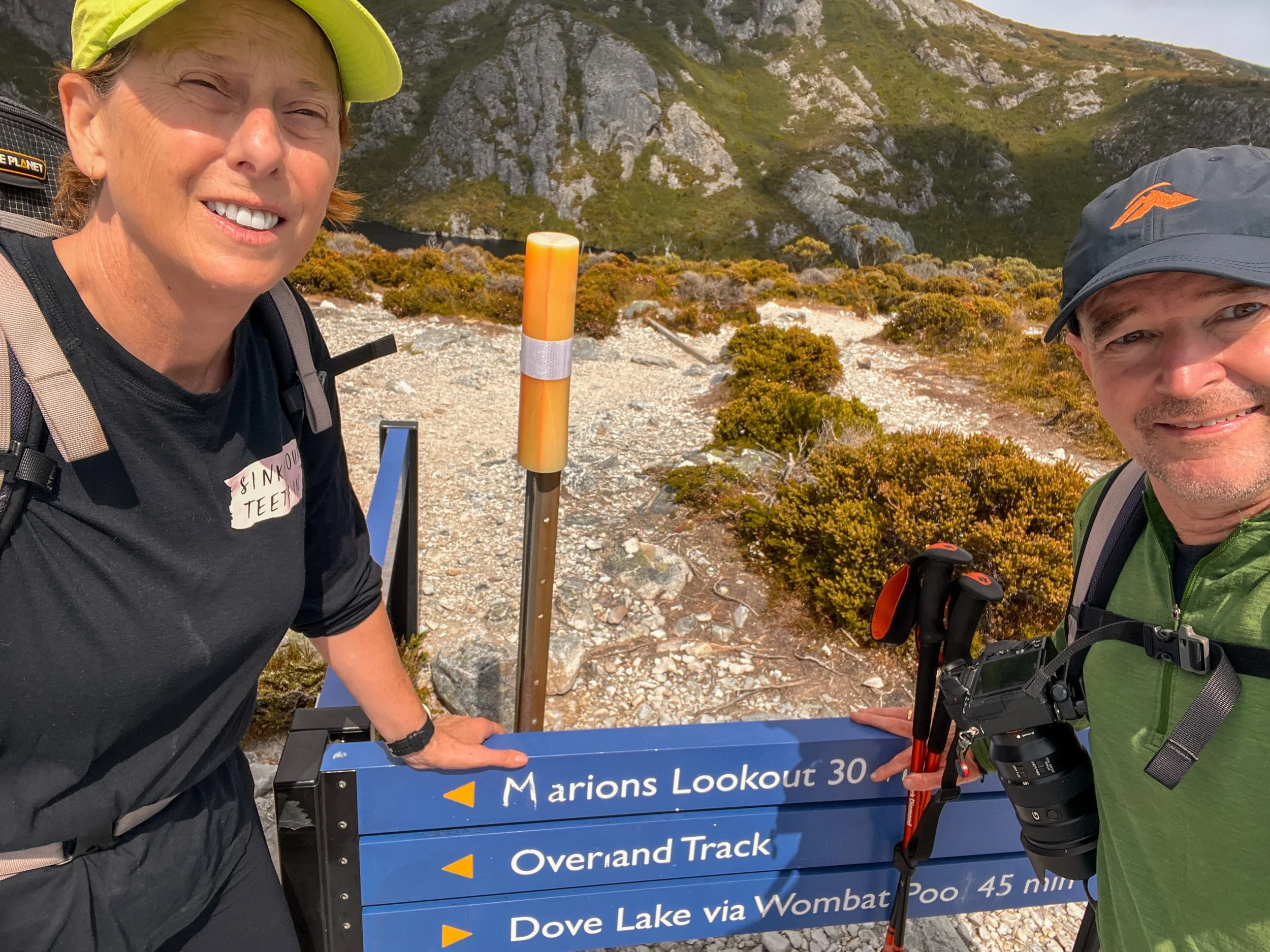
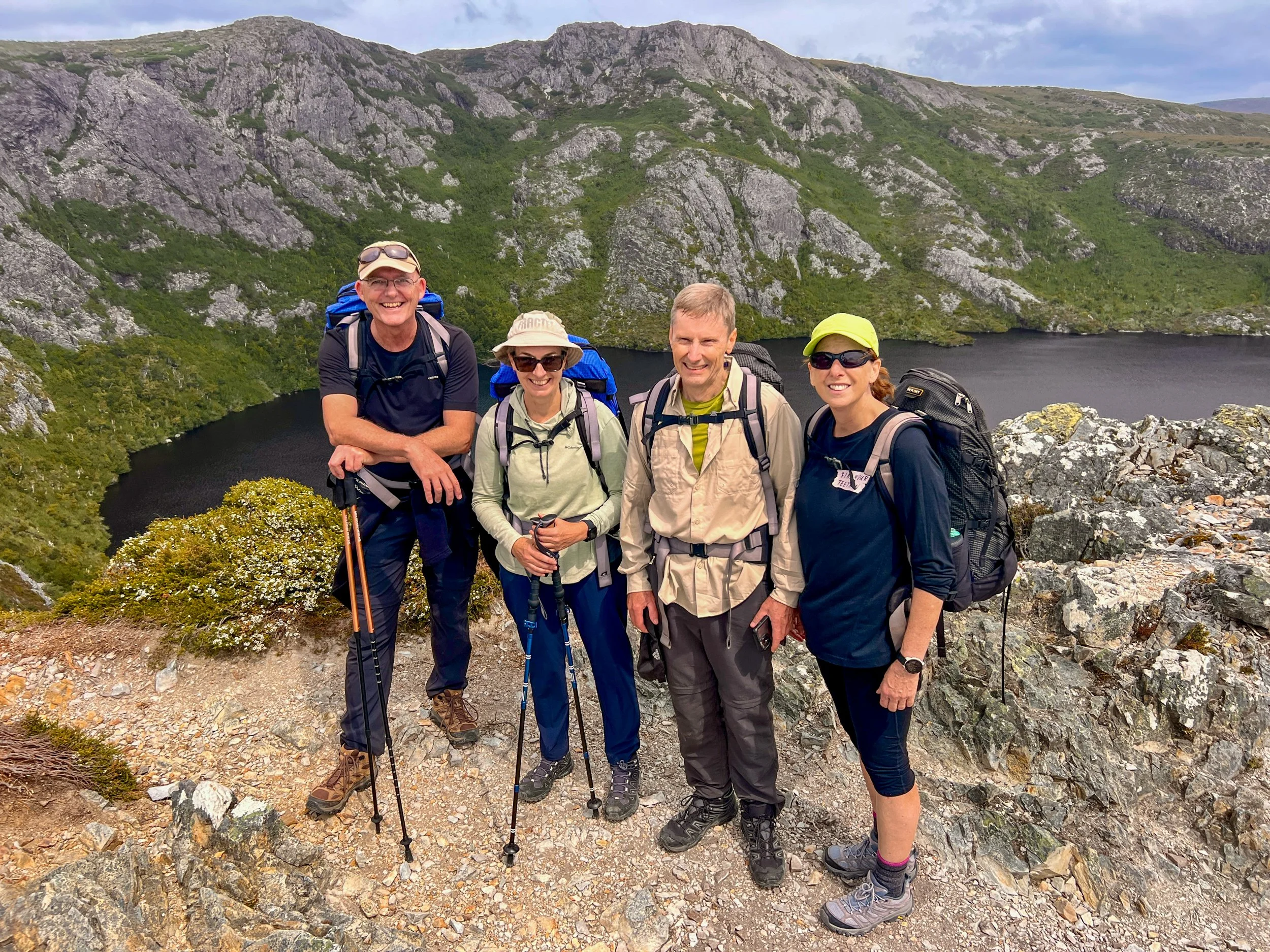
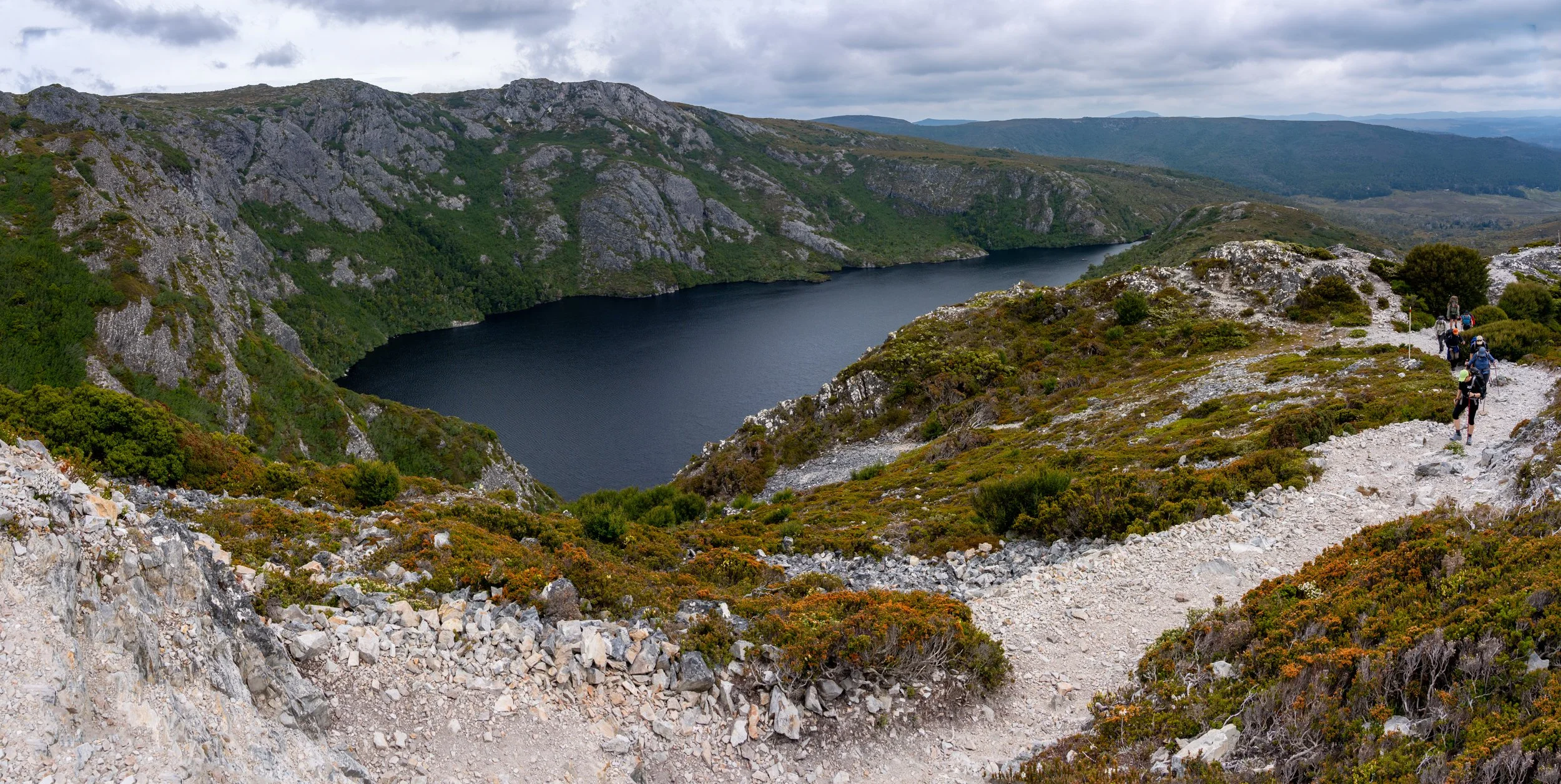
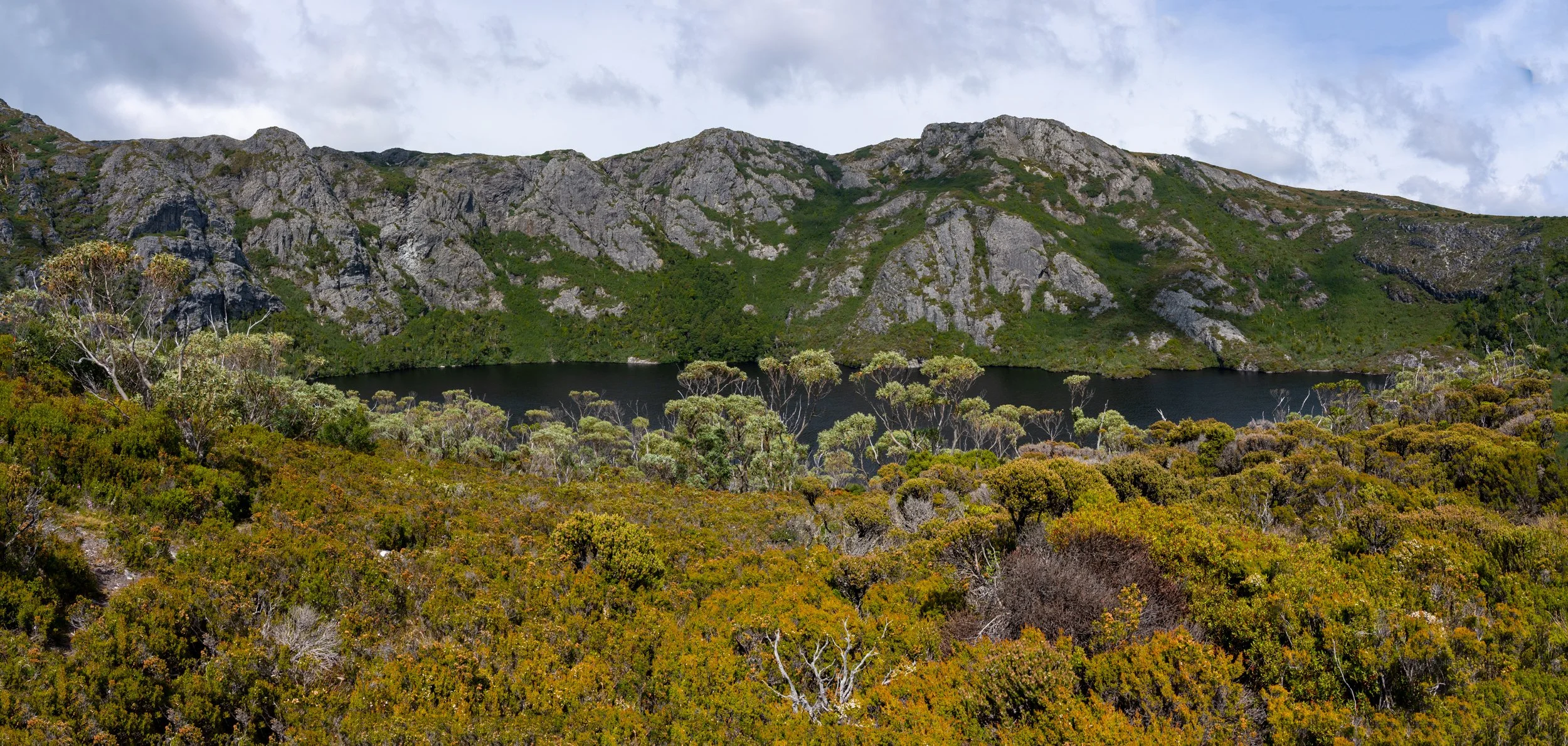
The Climb to Marions Lookout
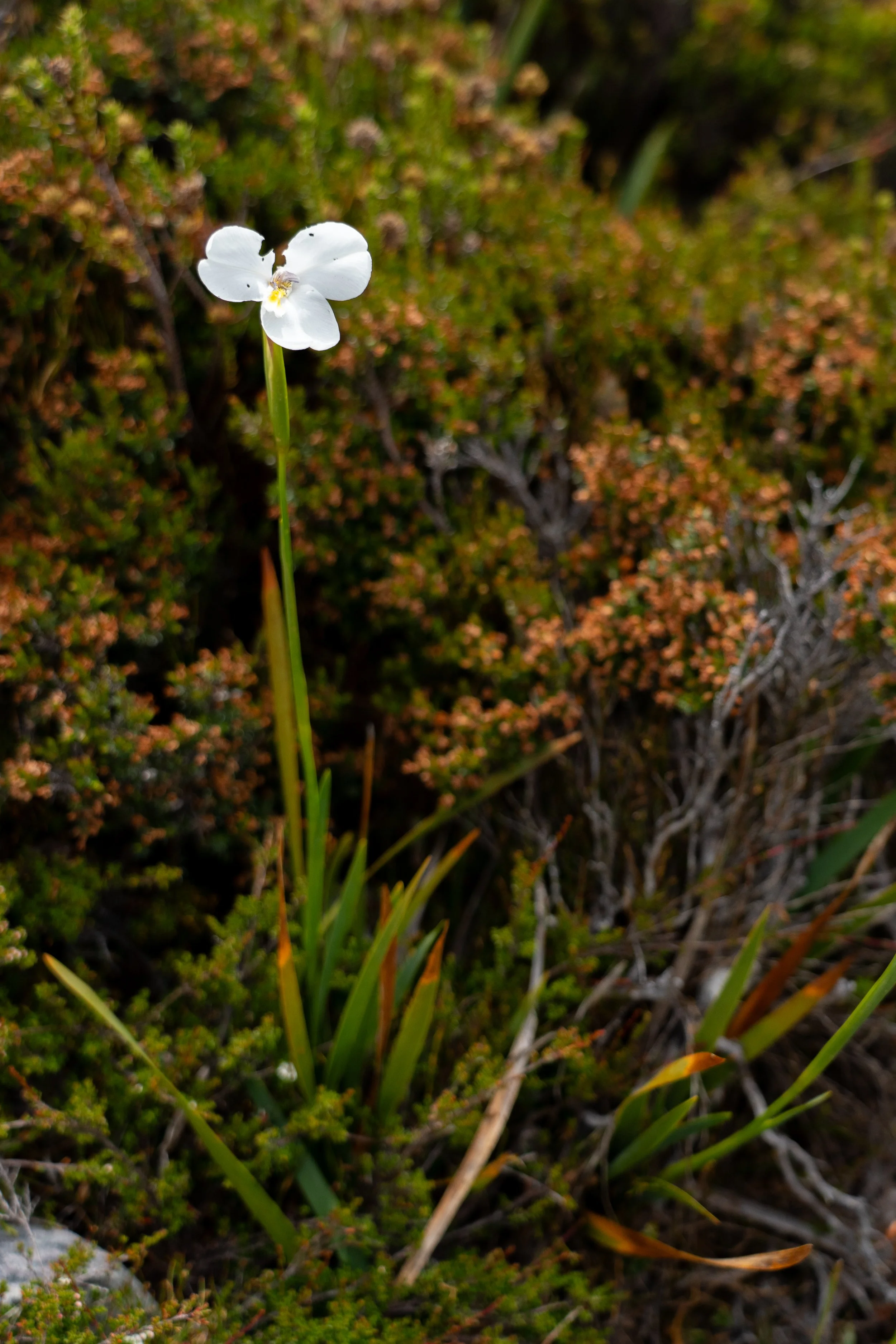
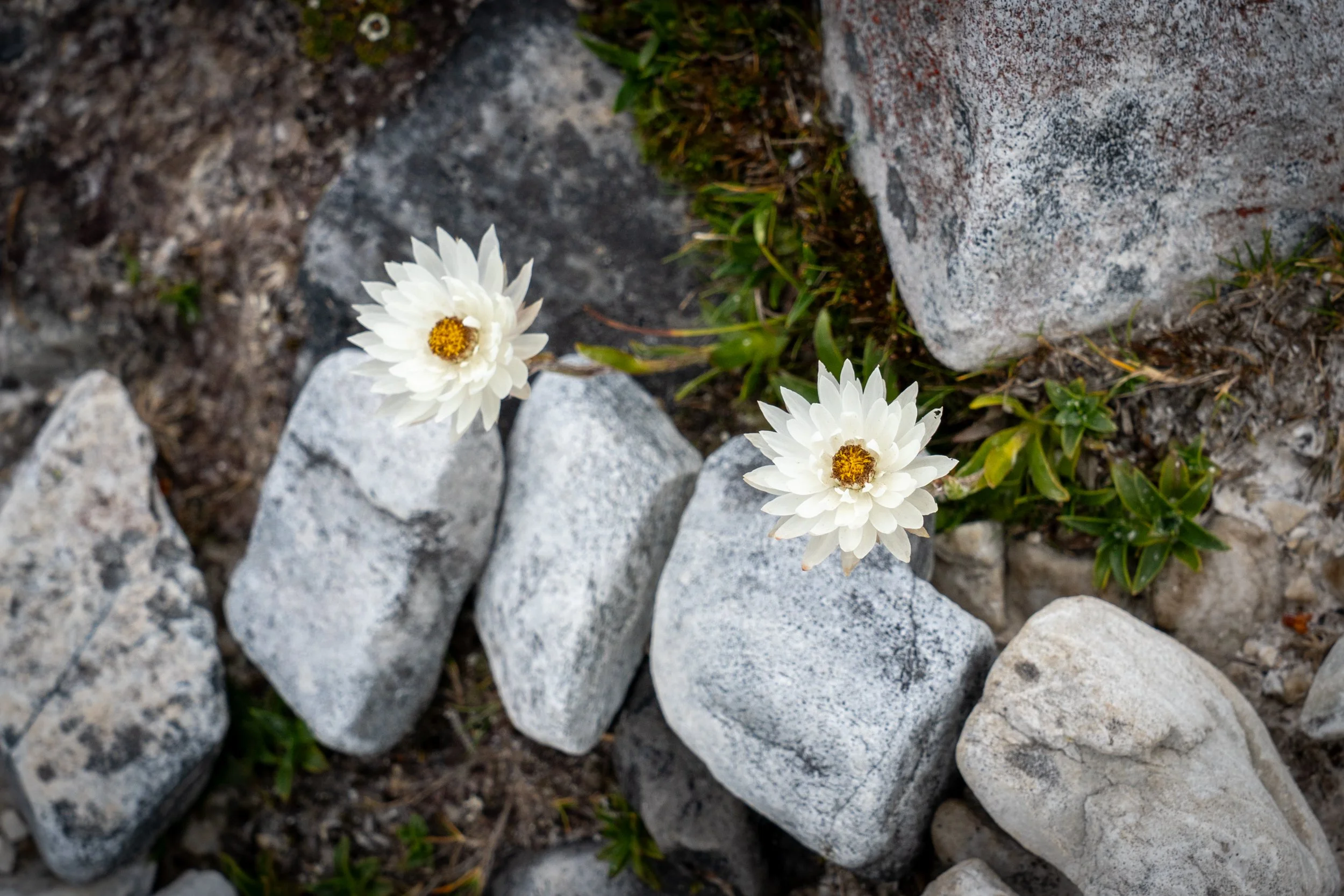
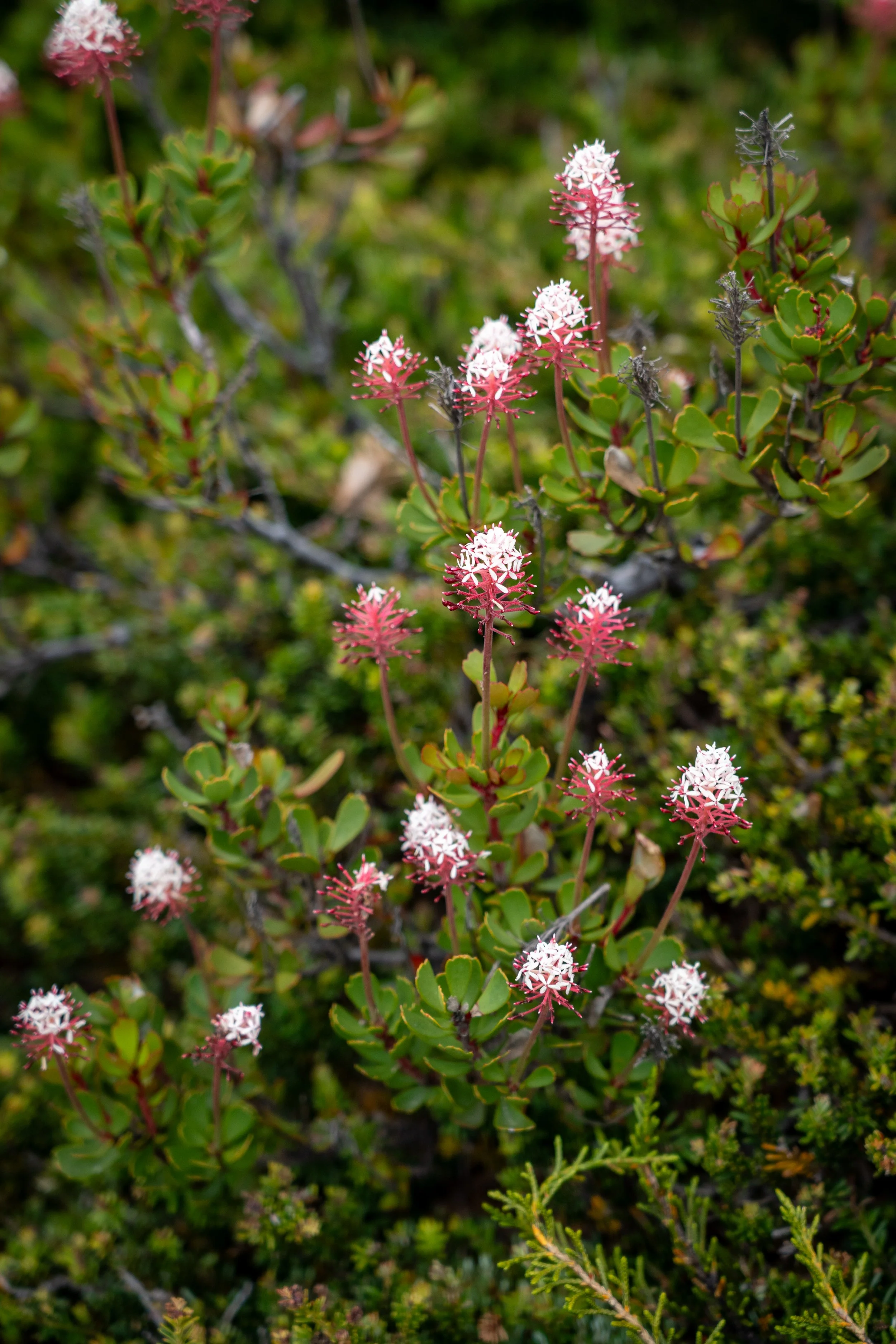
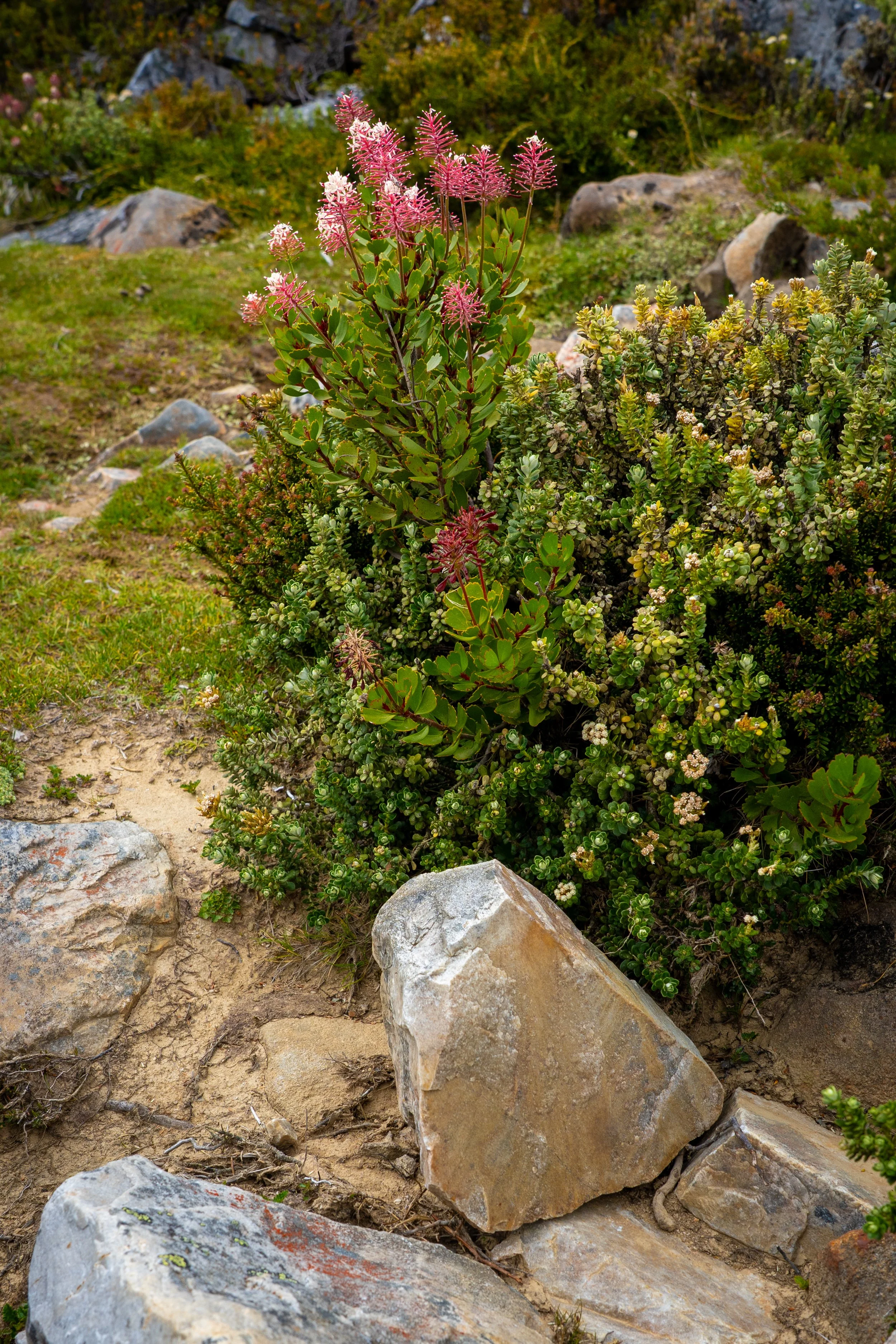
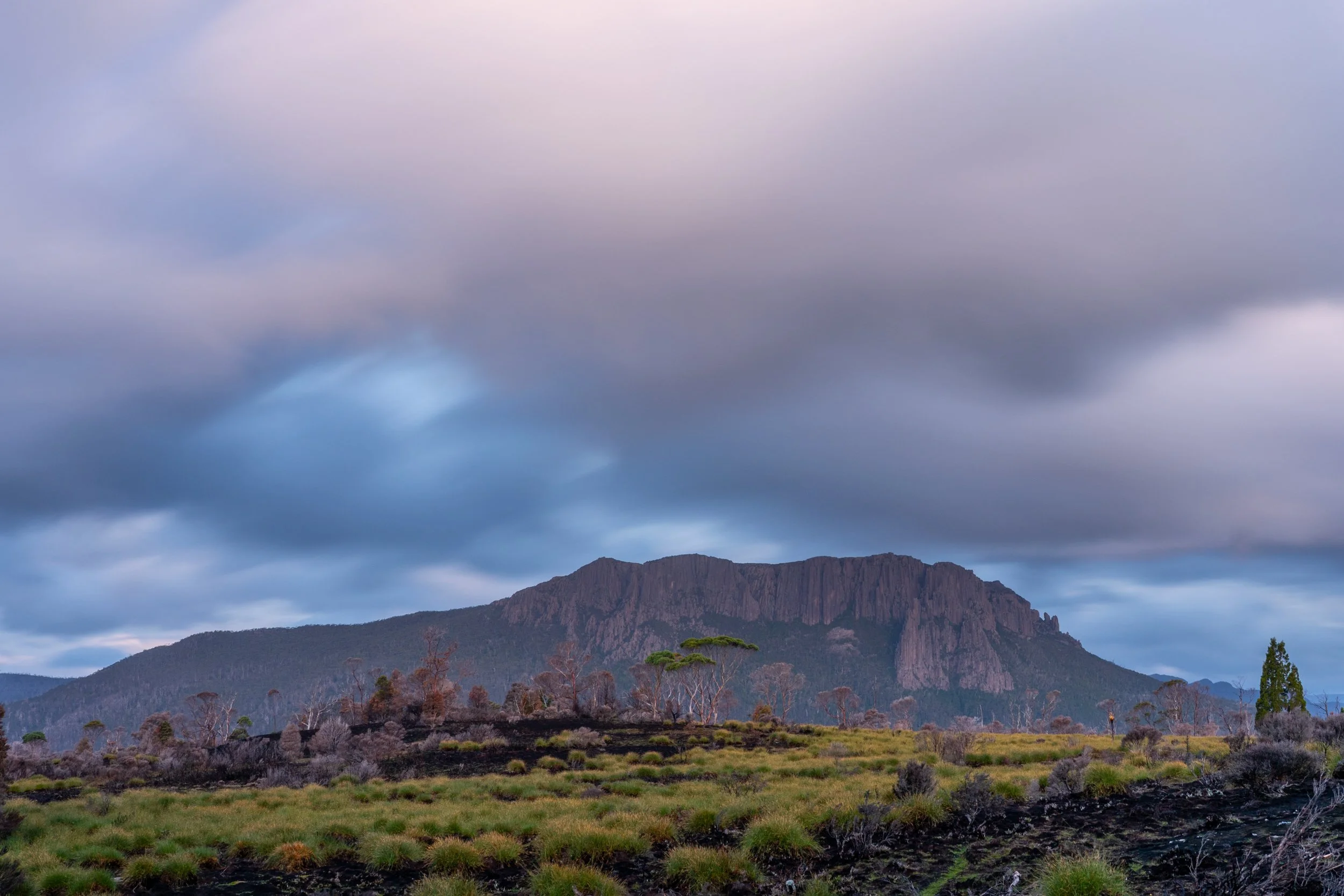
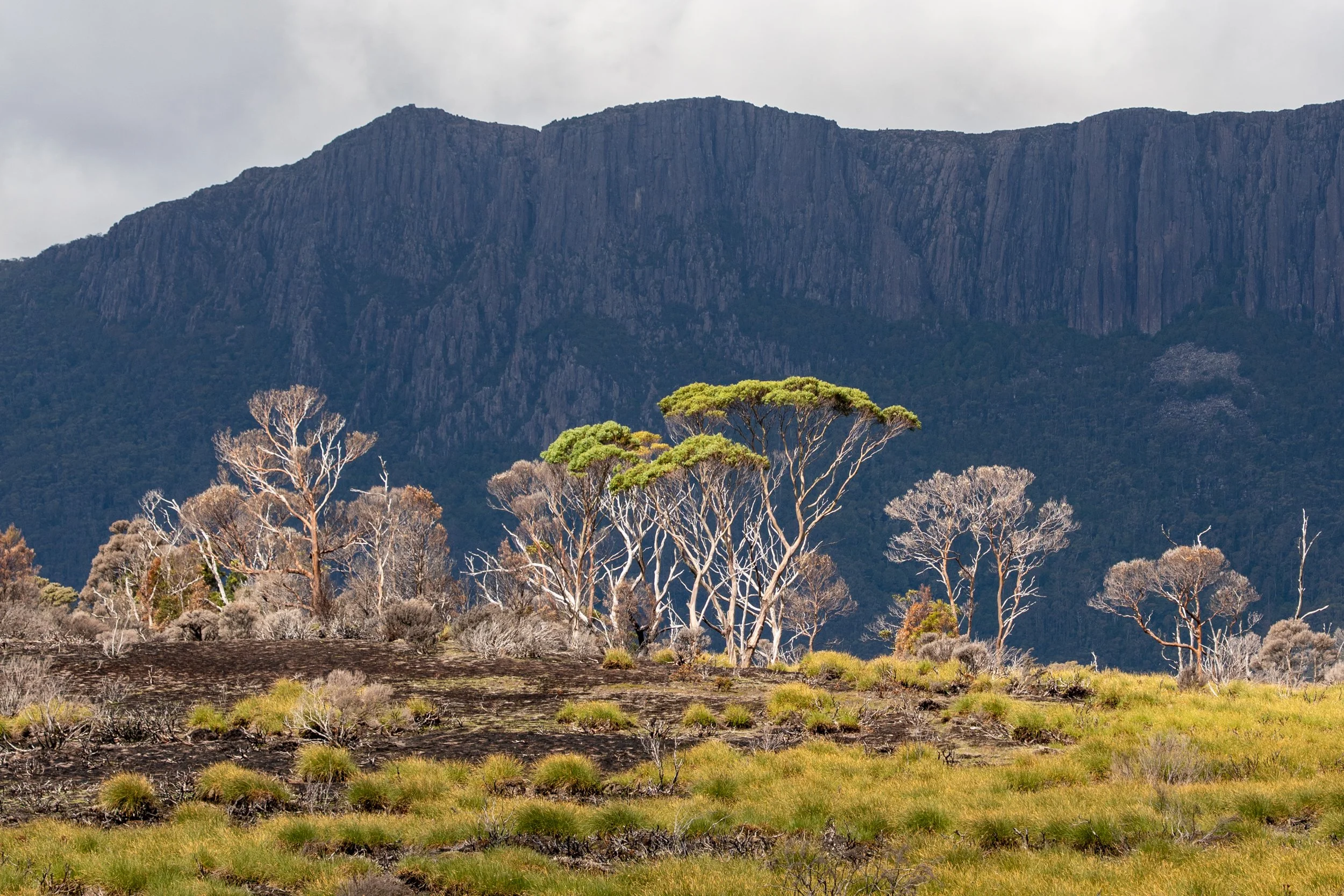
From here the track undulates (what we later are informed are called “fundulations”) across the plataue. As we climb higher, the trees become increasingly stunted, pressed down by the relentless power of mother nature. Soon, they give way to tough, resilient shrubs, grasses and wildflowers, uniquely adapted to withstand the brutal weather conditions that are commonplace up here. In the distance, dark dolerite columns begin to rise out of the horizon, the volcanic bones of mountains shaped by fire, ice and an unforgiving amount of time.
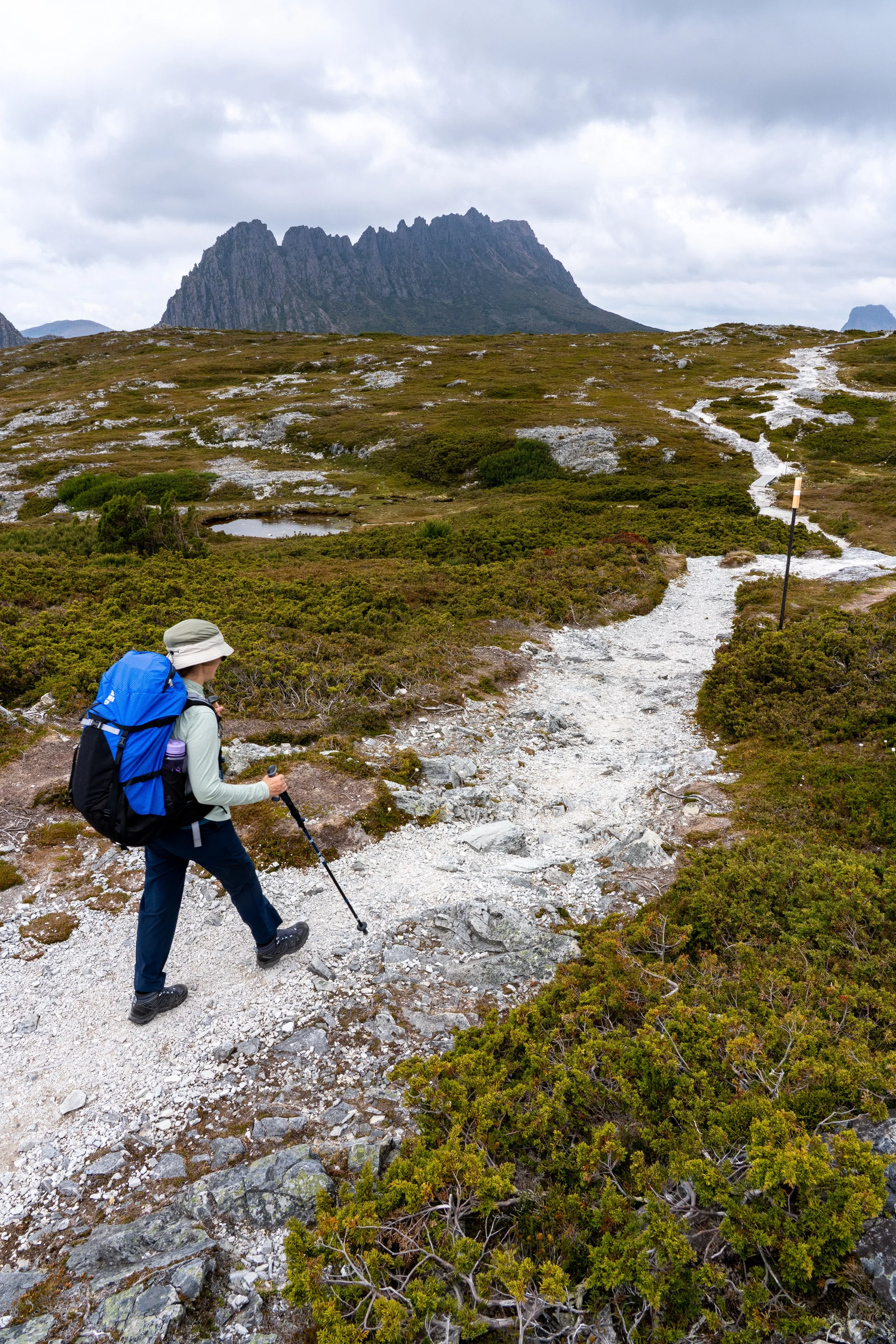
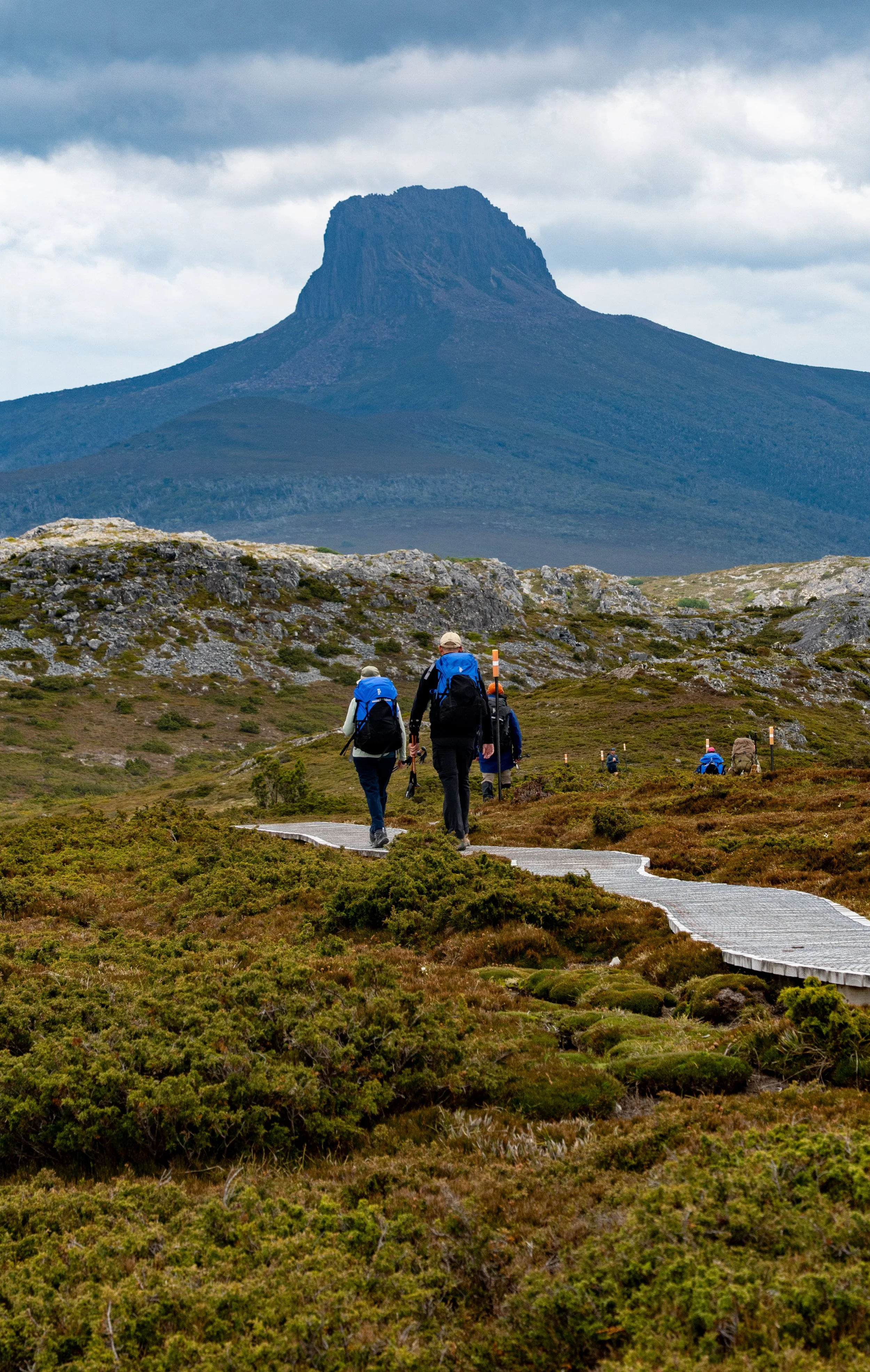
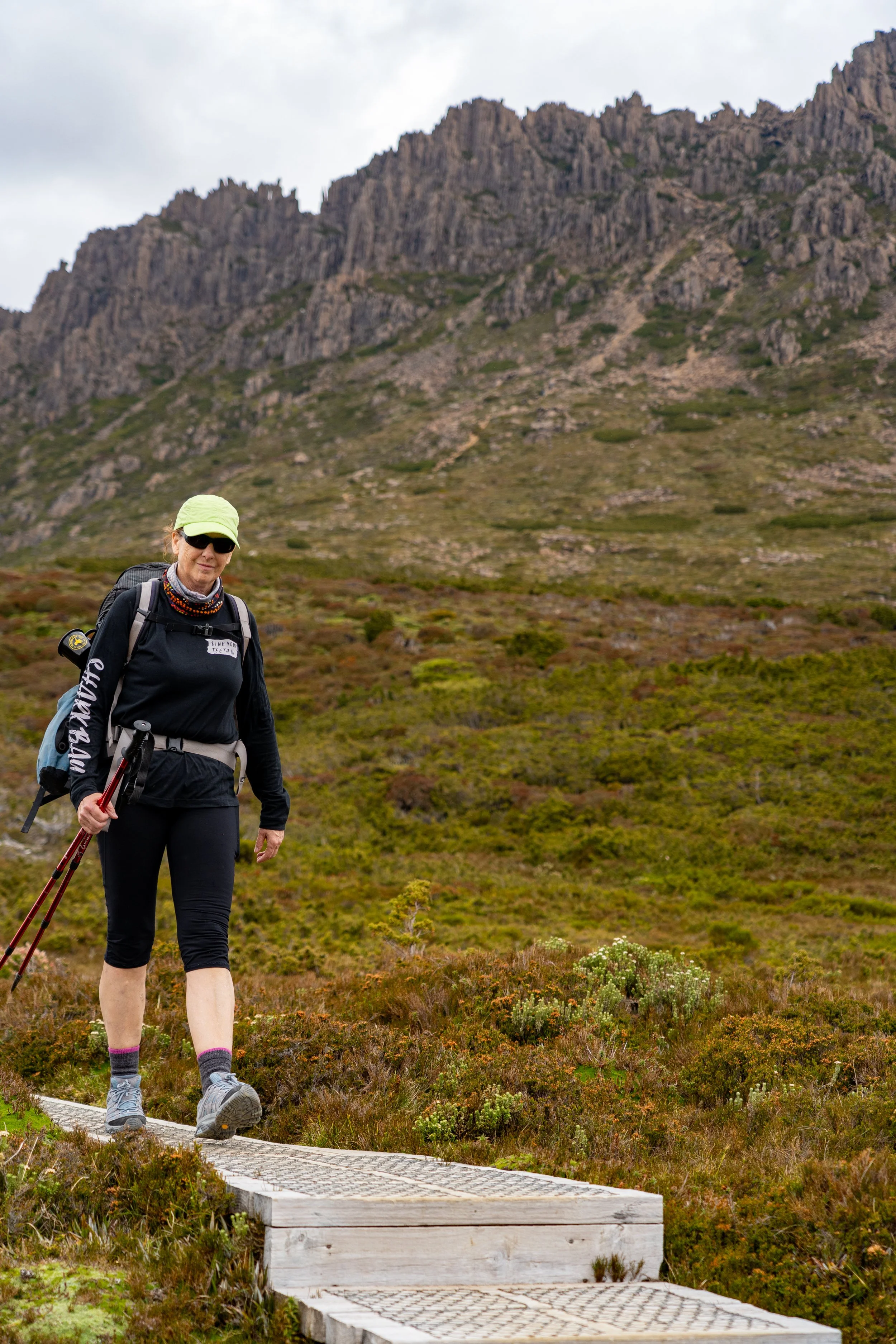
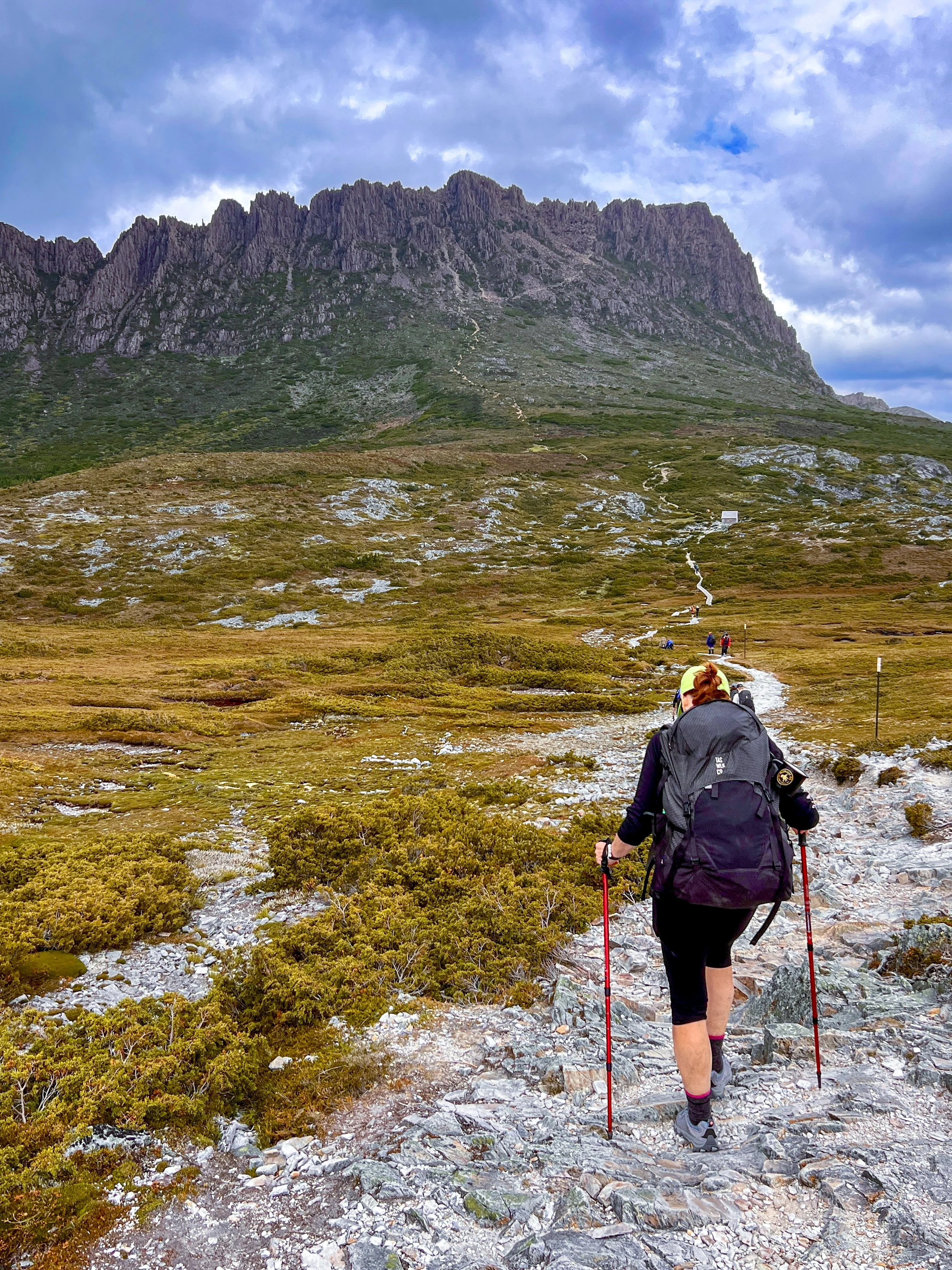
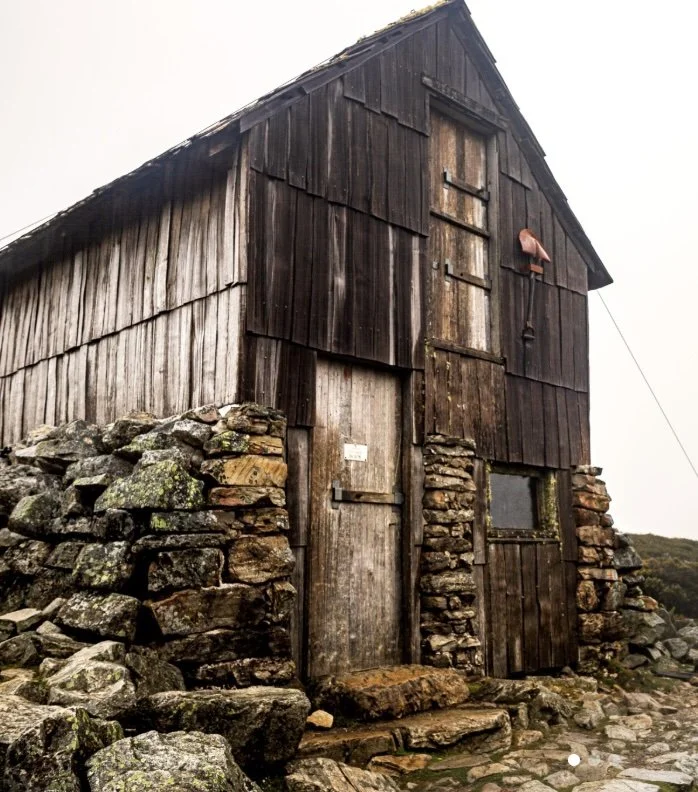
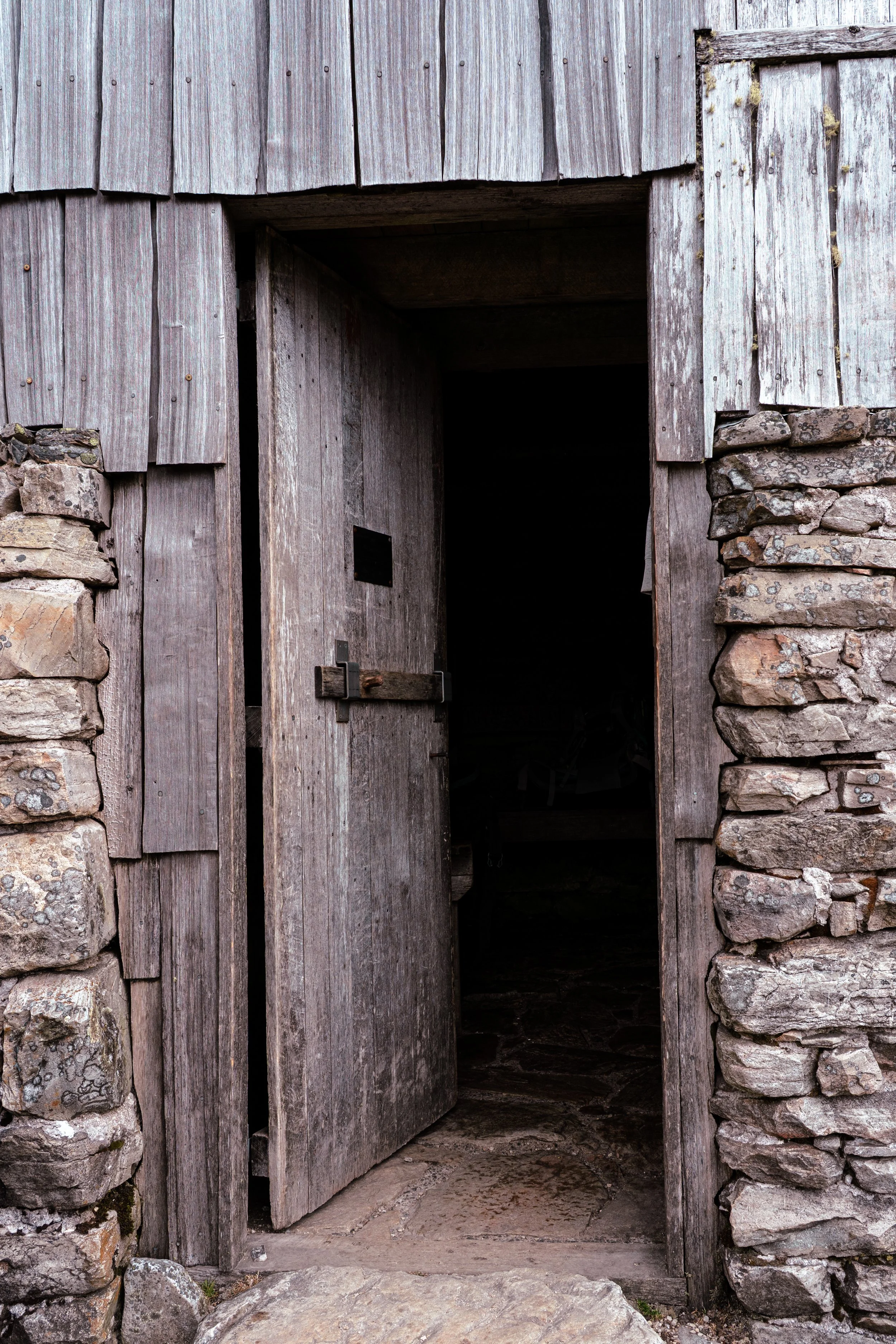
Eventually we reach Kitchen Hut sitting at the base of Cradle Mountain which looms ovehead like a natural church cathedral spire. The geology here is older than most countries, quartzite bedrock tilted eons ago.
Almost 10 years ago we arrived here at Kitchen Hut as a day hiker and made our way to the summit of Cradle Mountain. We were fortunate enough to experience a brilliant blue-sky day. But standing at the top looking down over the Overland Track disappearing into the horizon, I became jealous of those hikers leaving us day trippers behind. 10 years later we are now one of those hikers.
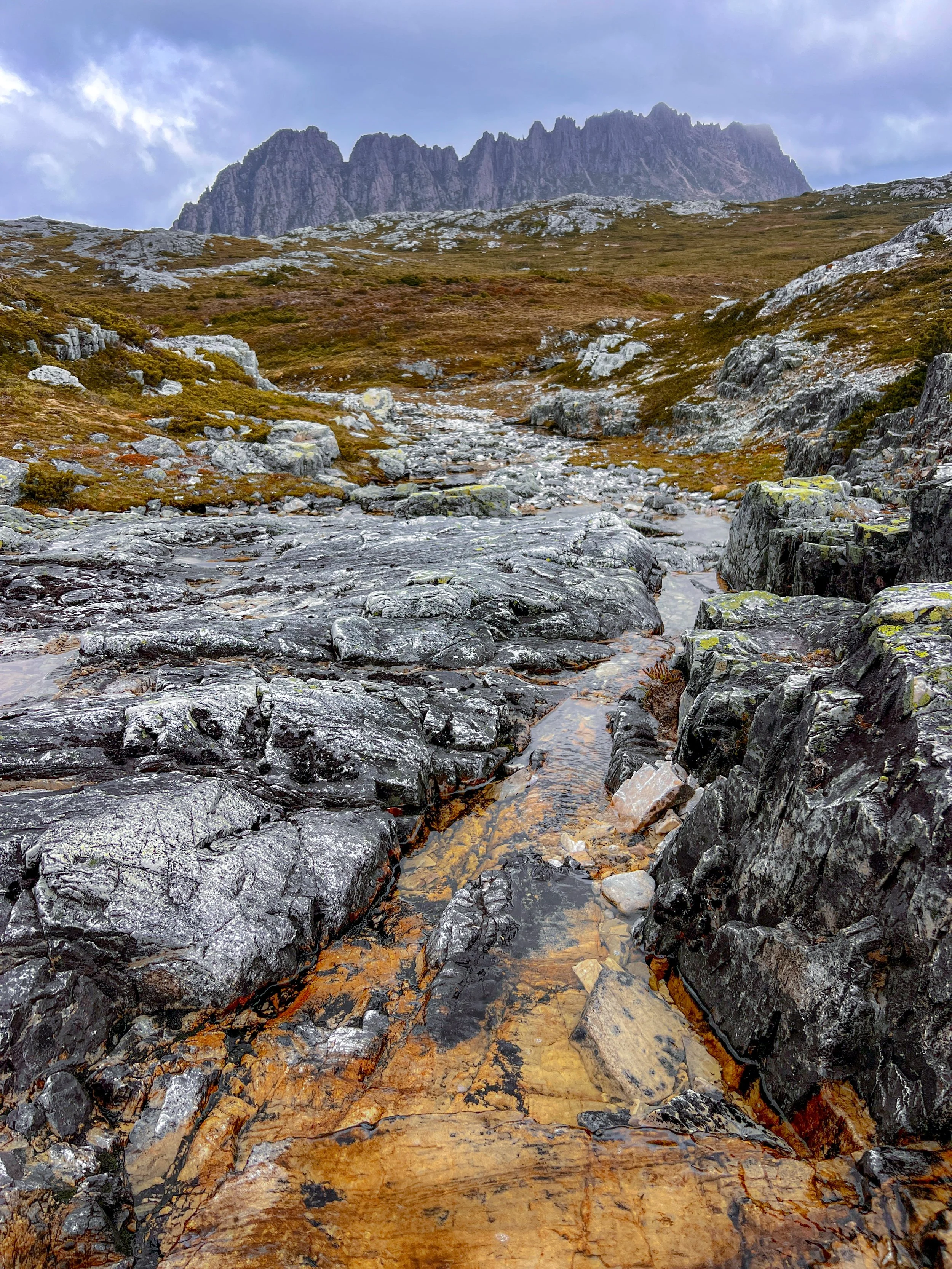
Cradle Mountain
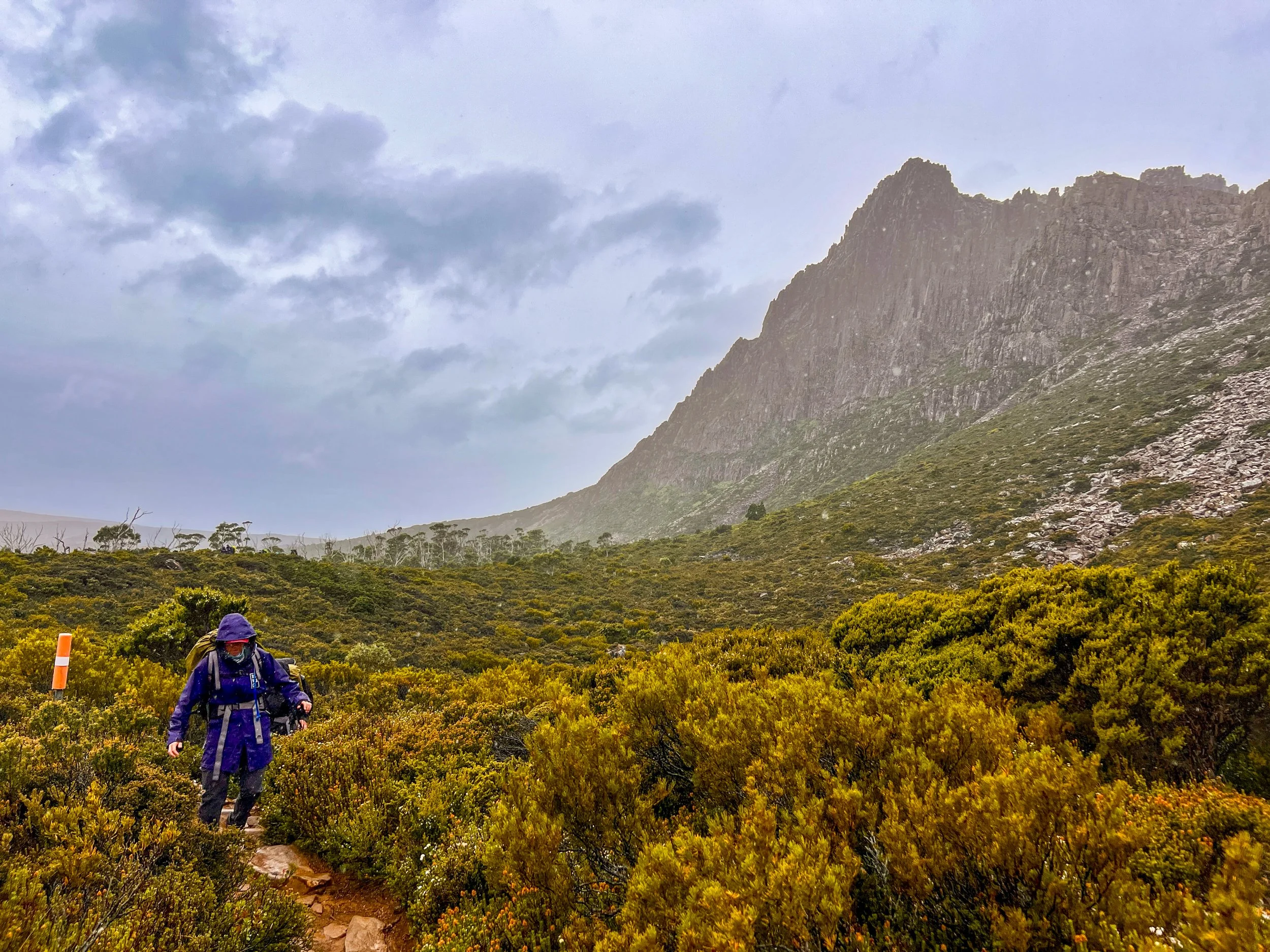
While the weather was nothing short of perfect years ago when we first summited Cradle Mountain, today we faced the true temperament of these wild ranges. What started as a gentle shower quickly escalated: wind whipped the rain sideways, pelting our gear and forcing us to stoop, braced against the threat of being swept off the mountain. At last, we stumbled into the emergency igloo-like shelter, finding relief and a moment to laugh at the absurdity of the situation. It was a welcome refuge, but also a stark reminder that the fierce weather here is never to be underestimated.
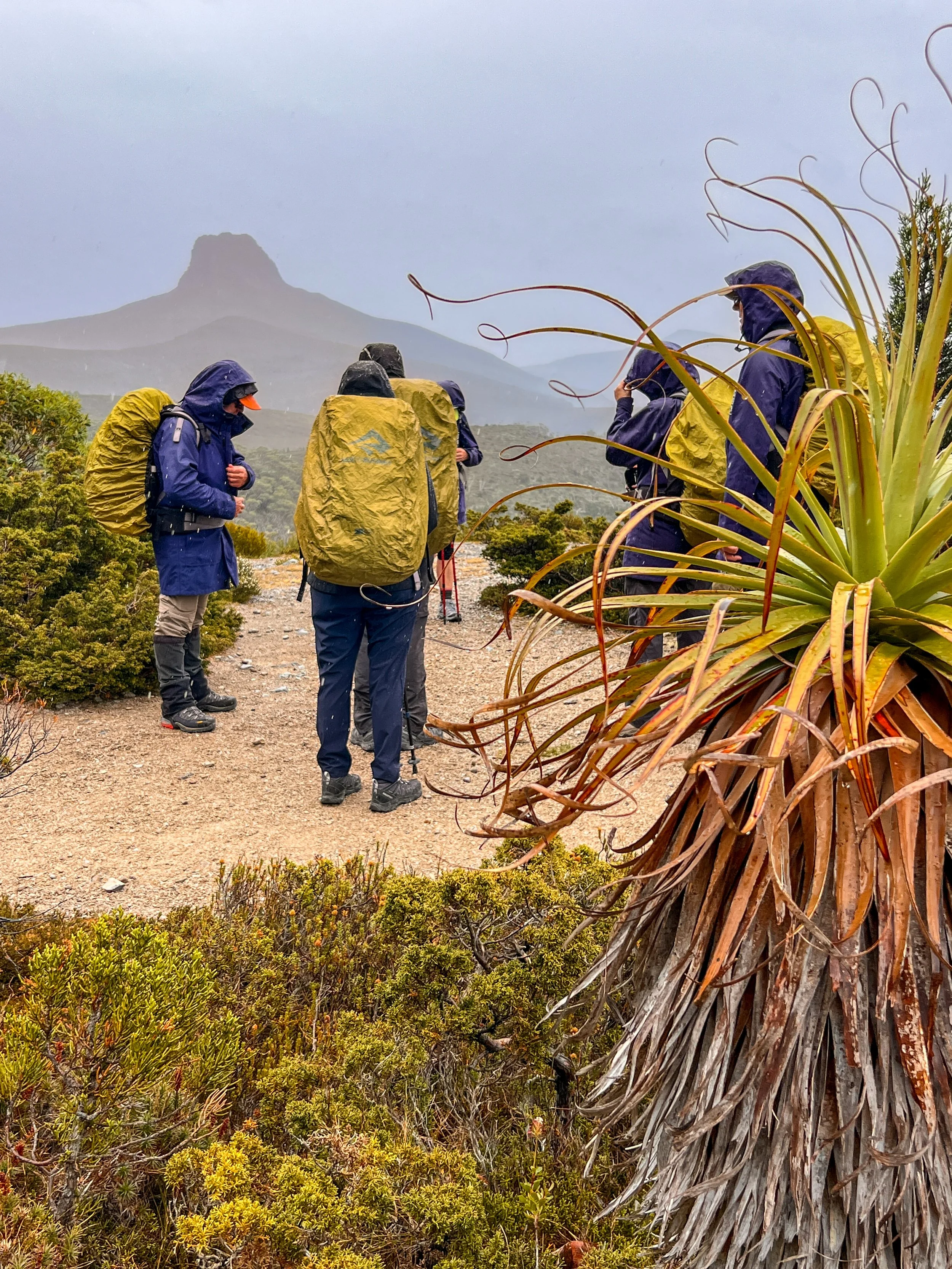
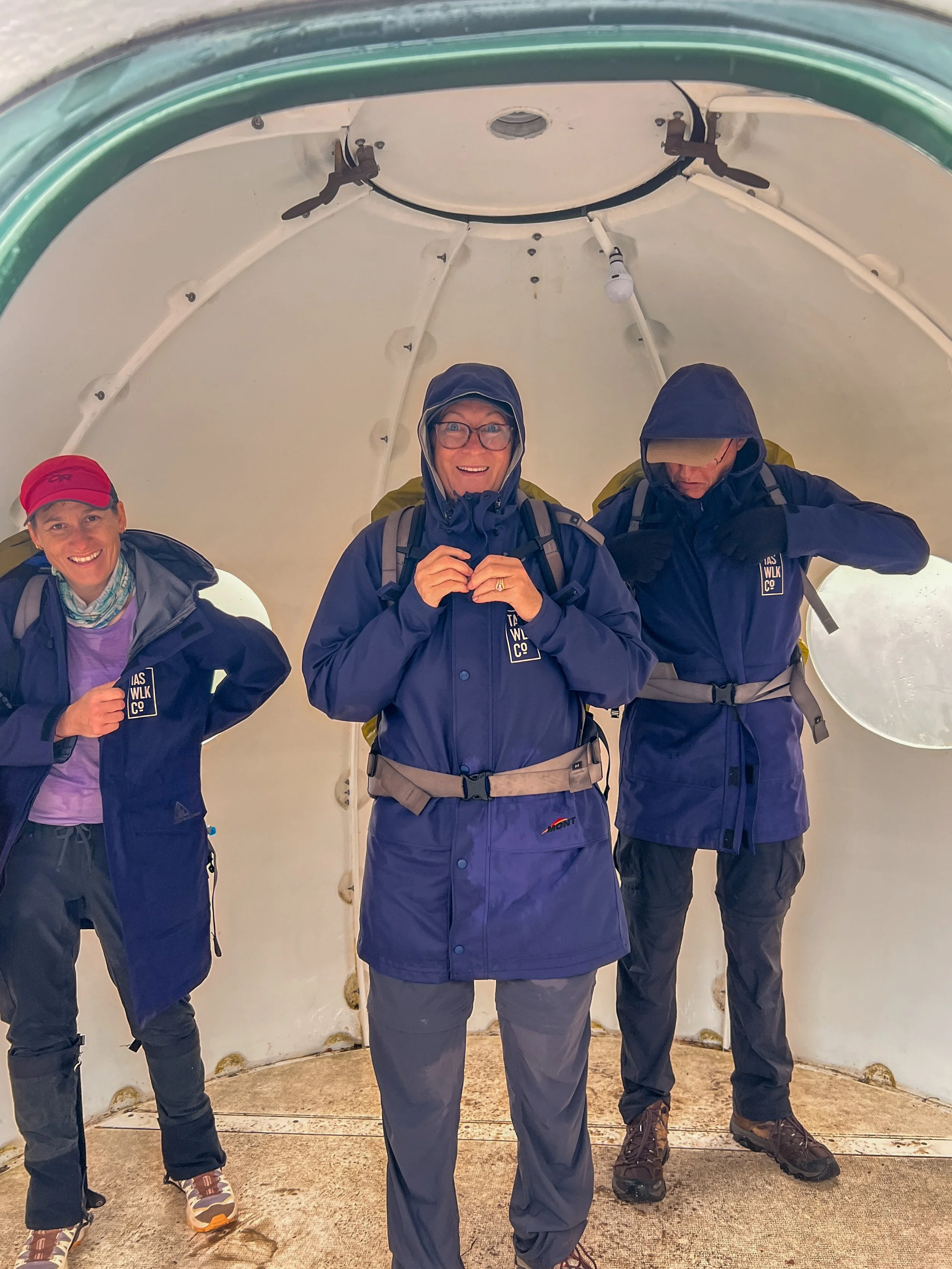
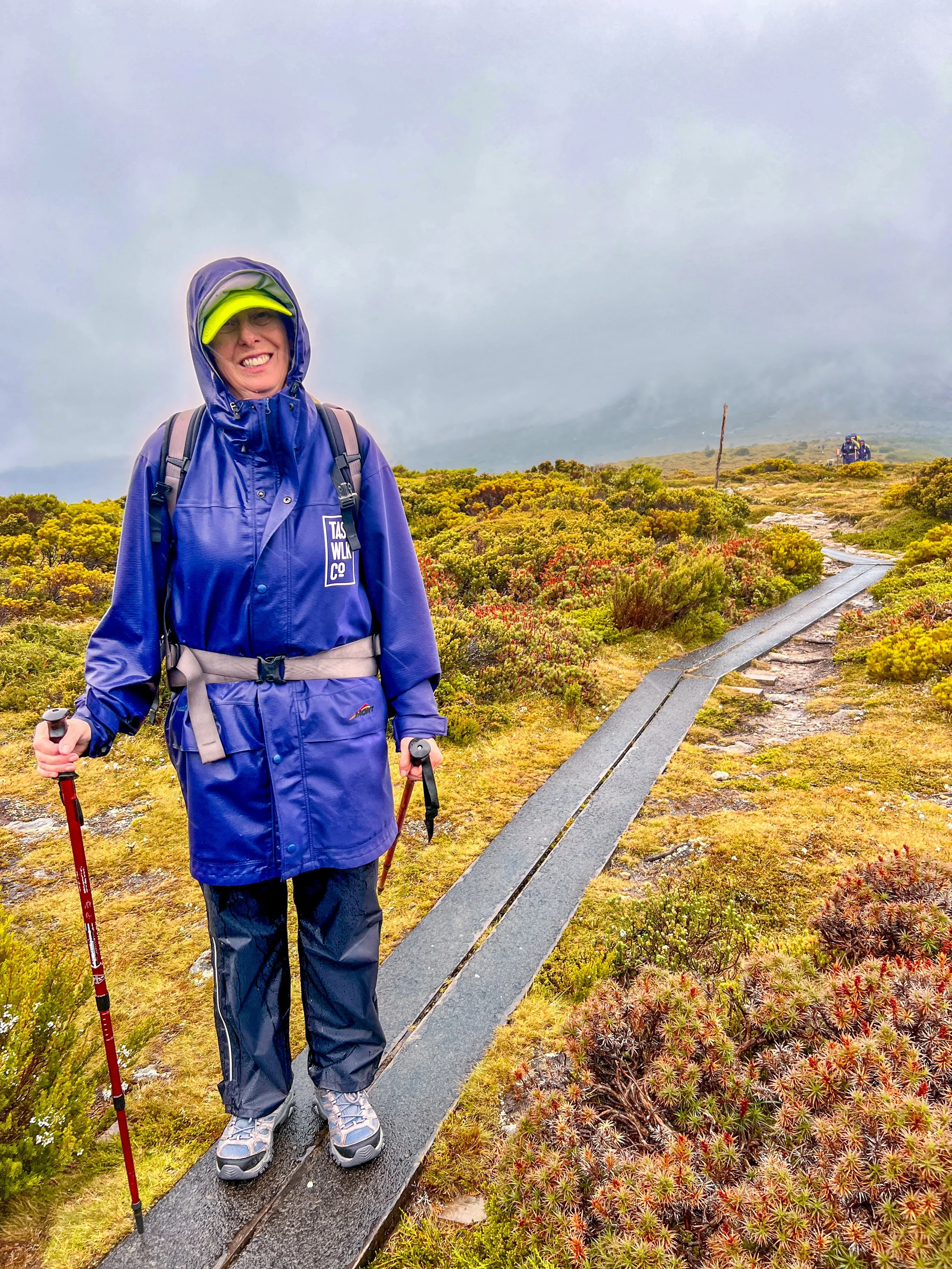
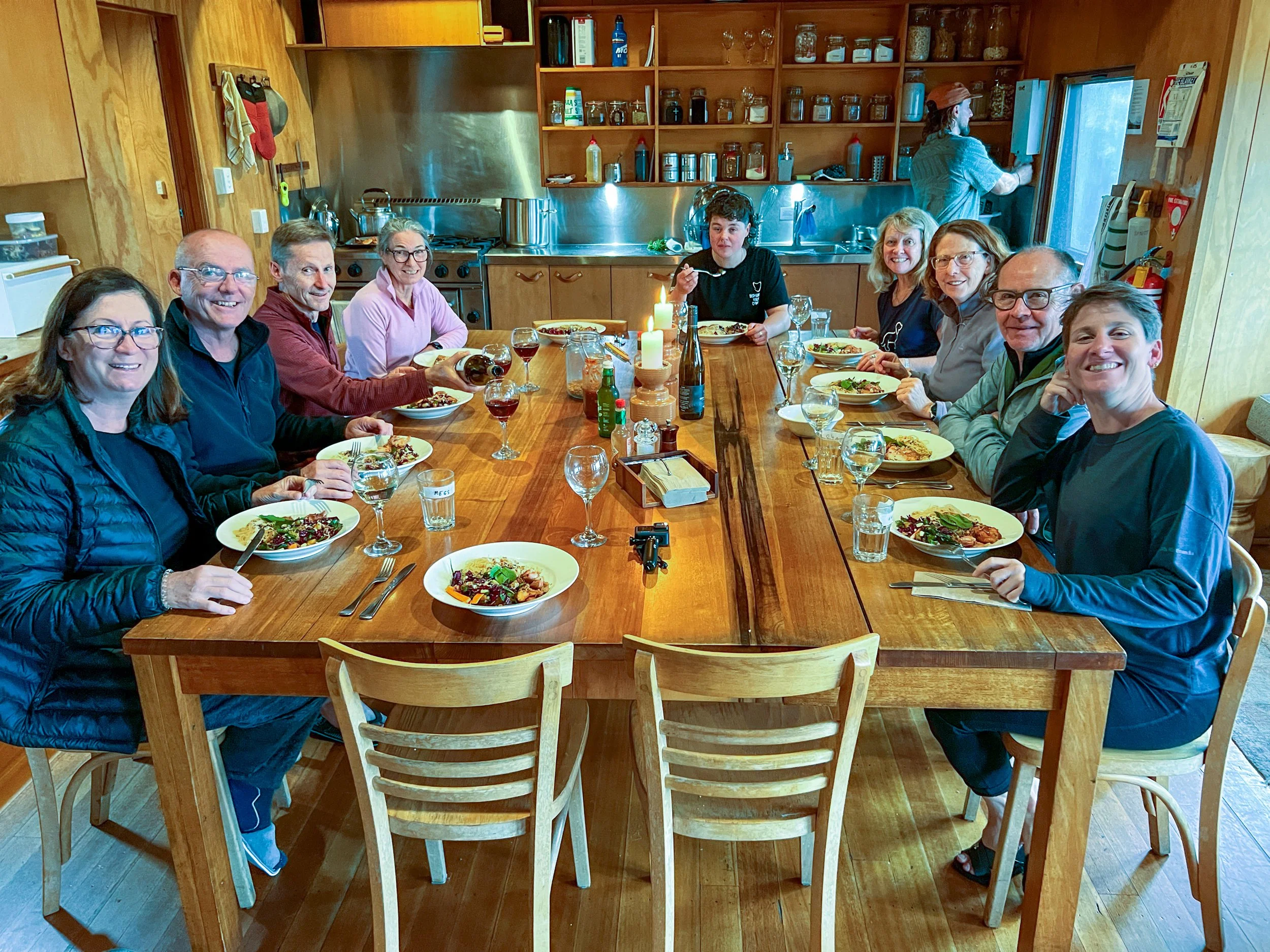
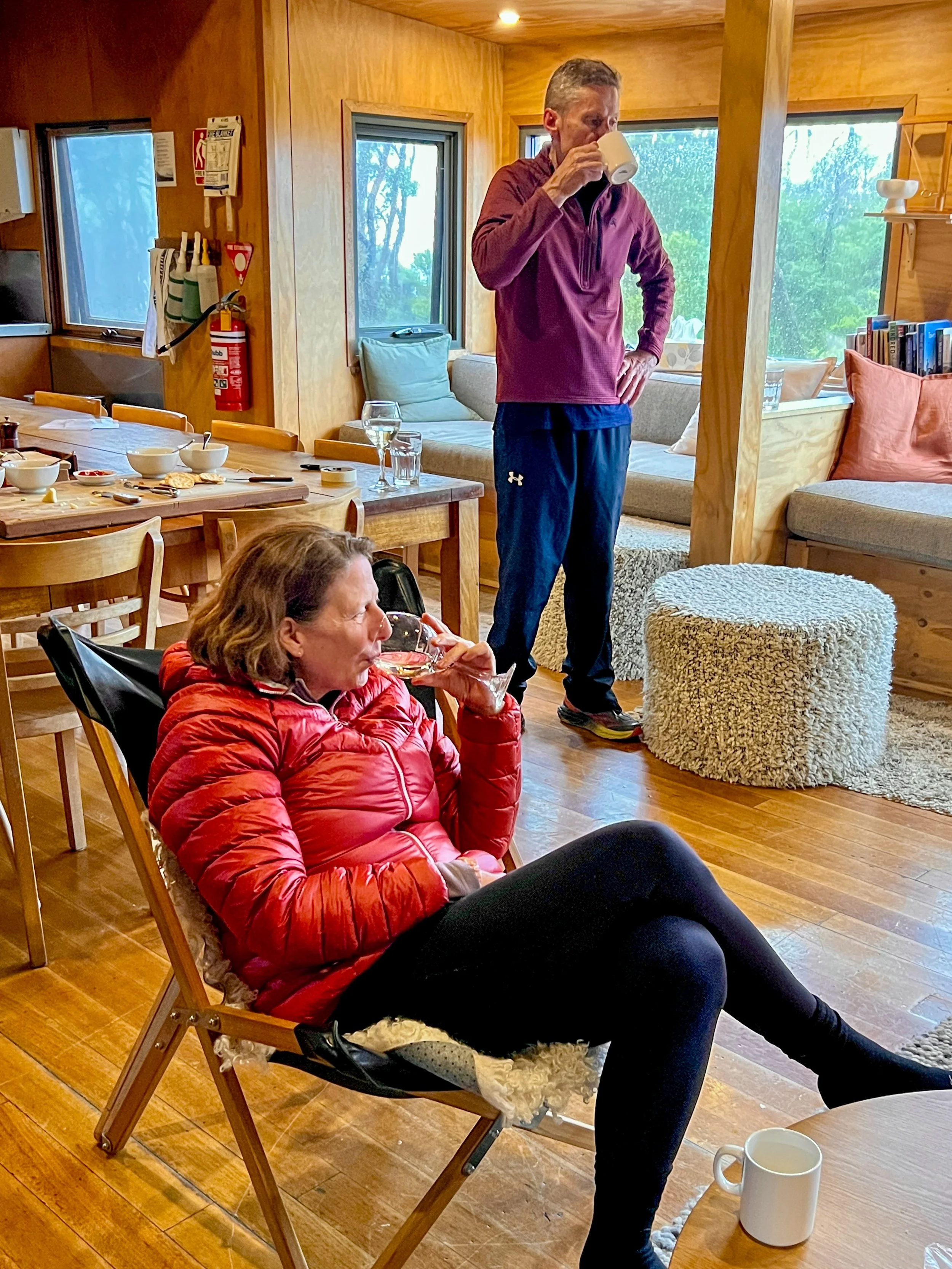
While the temporary shelter was a relief, clearly the entire walking party could not all stay here overnight so we pushed on through the wind and rain in the knowledge that there was a warm shower and heaters waiting at the end. By the time Barn Bluff Hut’s honey timber walls appeared, we were soaked but strangely exhilarated. A younger me would have enjoyed staying in the public huts or tents, however standing here soaked to the bone I am glad we chose to live in a bit more luxury.
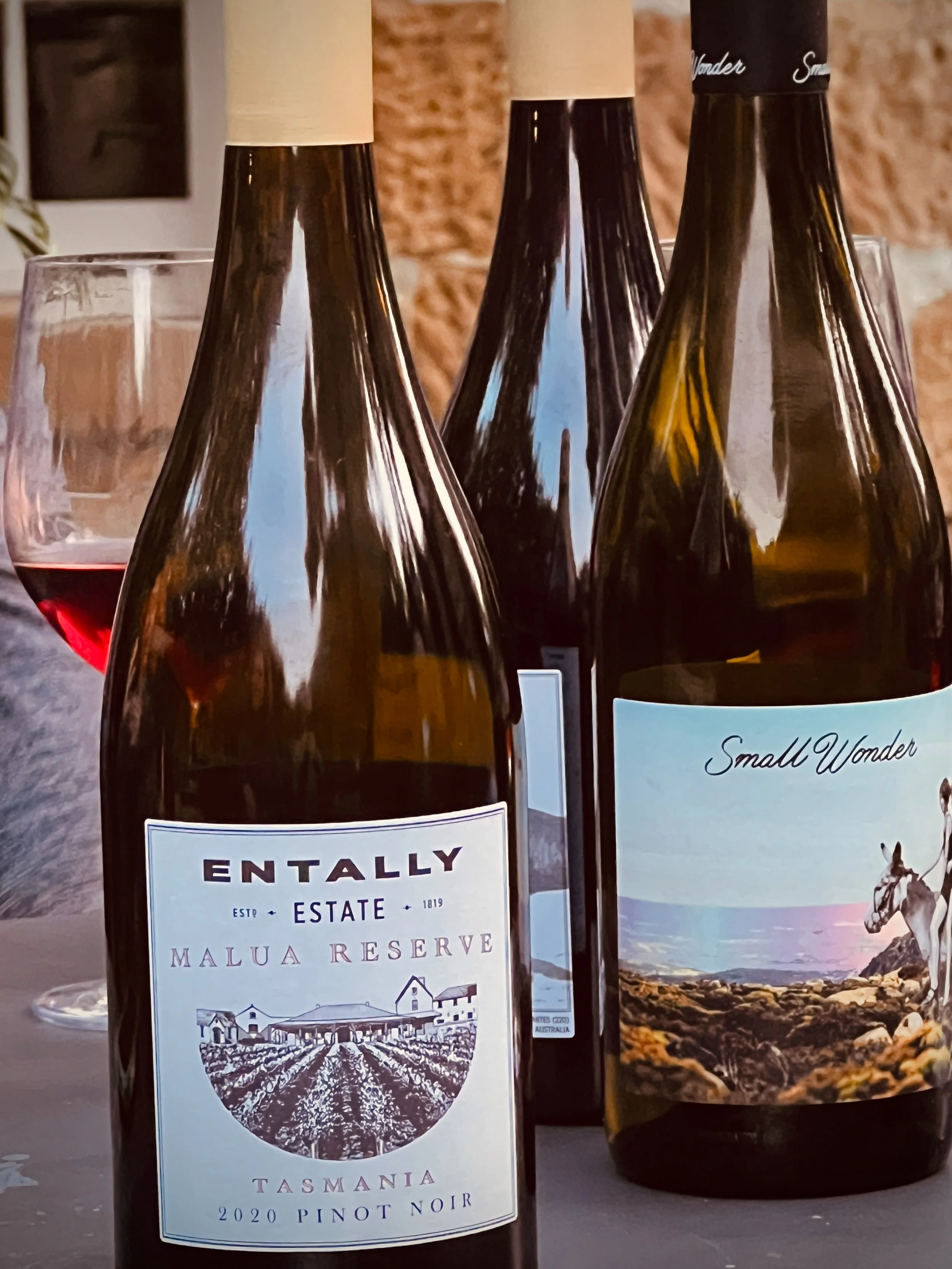
While the huts may have more luxuries than the public hut, that does not make them any less sustainable. Solar power, rainwater collection and strict waste protocols ensure that even luxury is done with respect to the wilderness. This, we reasoned, was entirely in keeping with the spirit of the track’s founder, Gustav Weindorfer - an Austrian-born hotelier who arrived in Tasmania in the early 1900s, fell in love with Cradle Mountain, and promptly campaigned for it to be protected “for the people forever”. He believed wilderness should be experienced, not conquered. He did not, however, specify whether it should be experienced with gourmet meals and pinot noir.
DAY TWO — Icing on the Mountains
Barn Bluff Hut to Pine Forest Moor Standing Camp
Waking inside our warm sleeping bags, cocooned in a snug, dry hut, it was easy to believe the world outside was behaving itself. The long-range forecast we’d obsessively checked before leaving home had warned us the temperature would plunge into single digits overnight, but forecasts are abstract things when you’re in the mountains. We shuffled into the dining room — which also functioned as kitchen, lounge room and physio room — and peered through the window into the pale early-morning light.
At first, something odd was drifting past the glass. Little white flecks. Soft, floaty things that looked suspiciously like cotton wool escaping from a torn pillow. We stared in silence for a moment, still waking up, until someone finally shouted the word none of us had prepared for: “SNOW!” Faces were instantly pressed to the window like children in a toy shop. It was undeniably magical — and also a little bit daunting. Snow, in the middle of summer, was not part of the tourist brochure. As the excitement settled, a new thought arrived: we were about to hike through it.
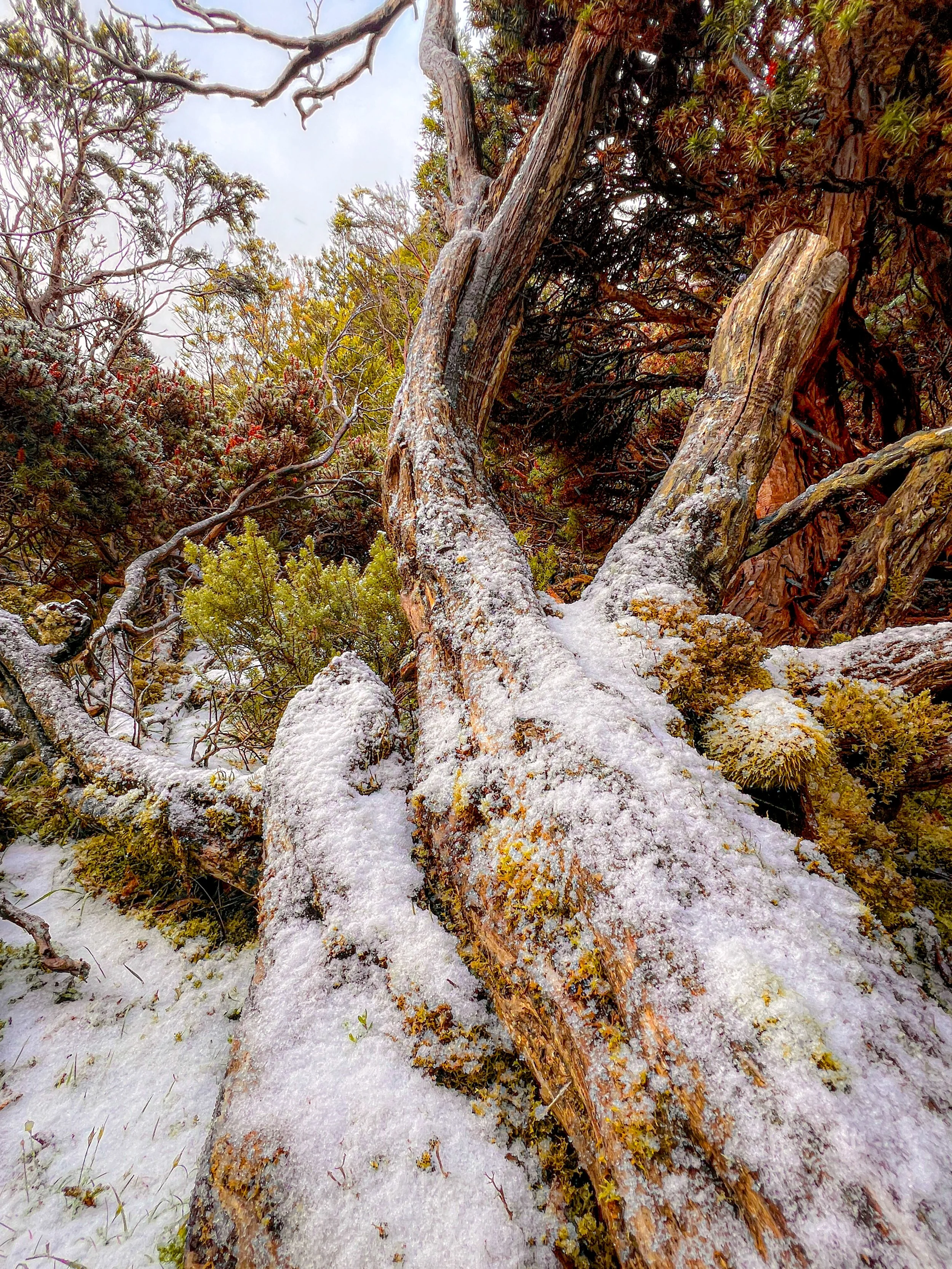
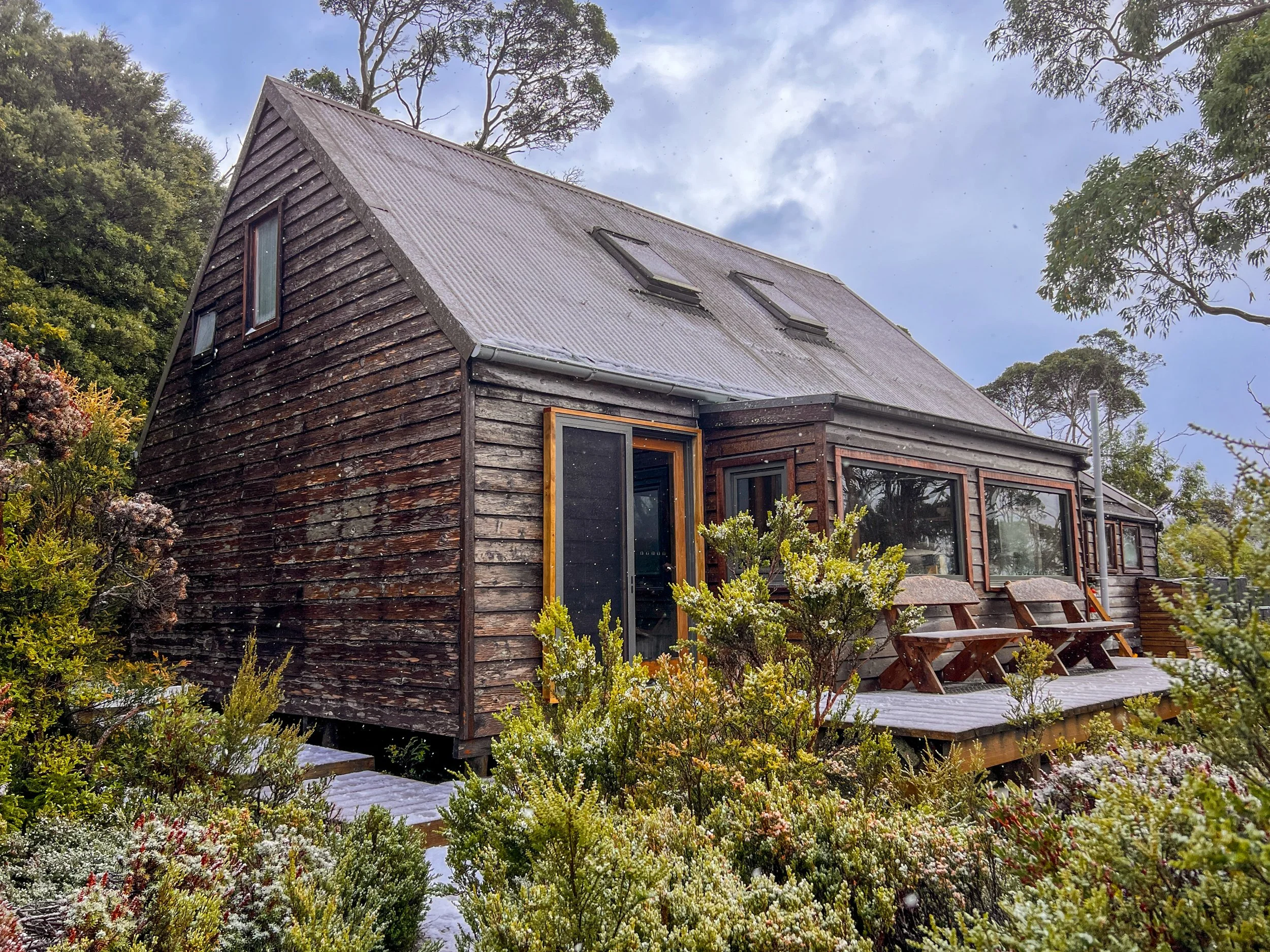
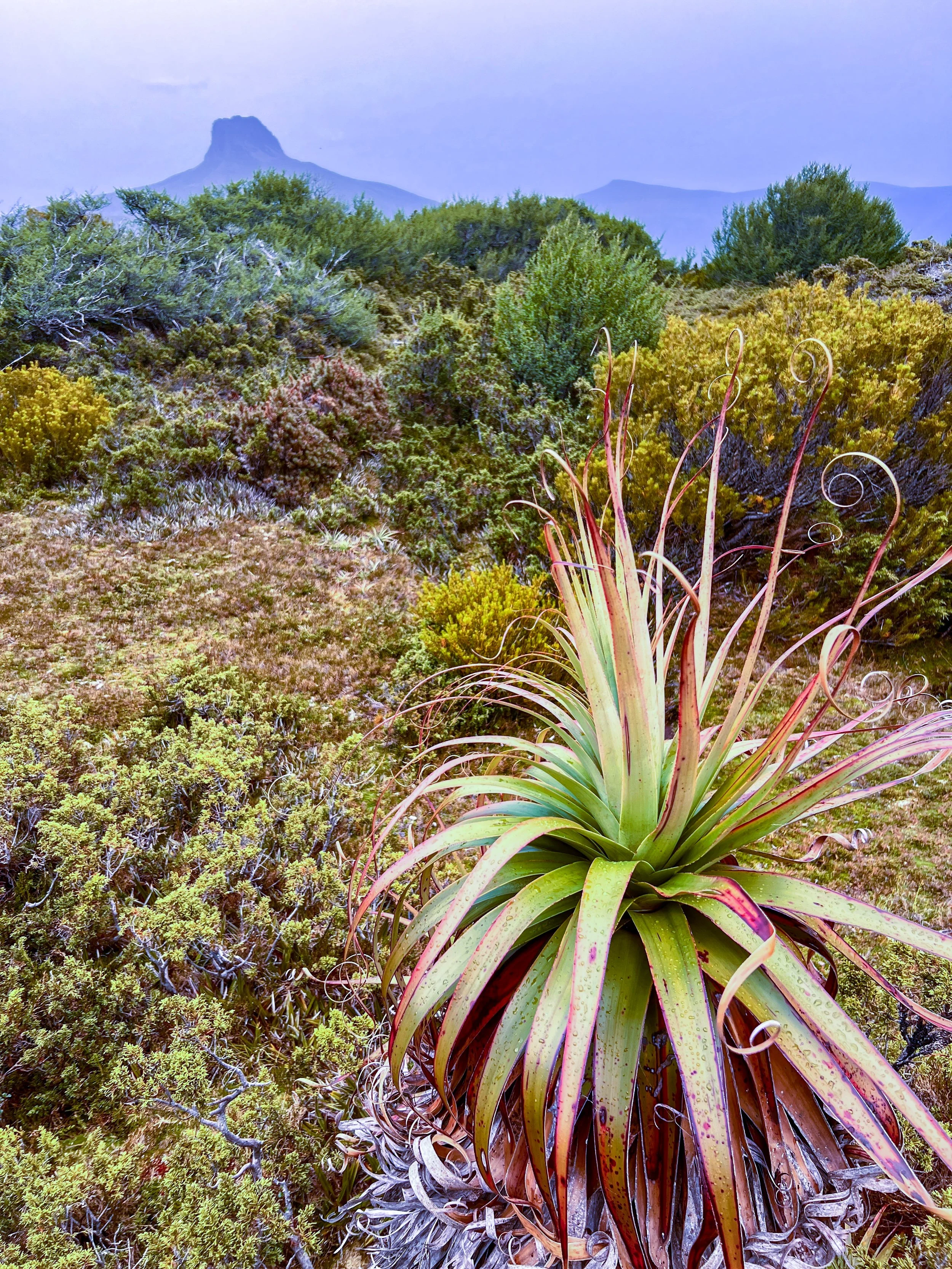
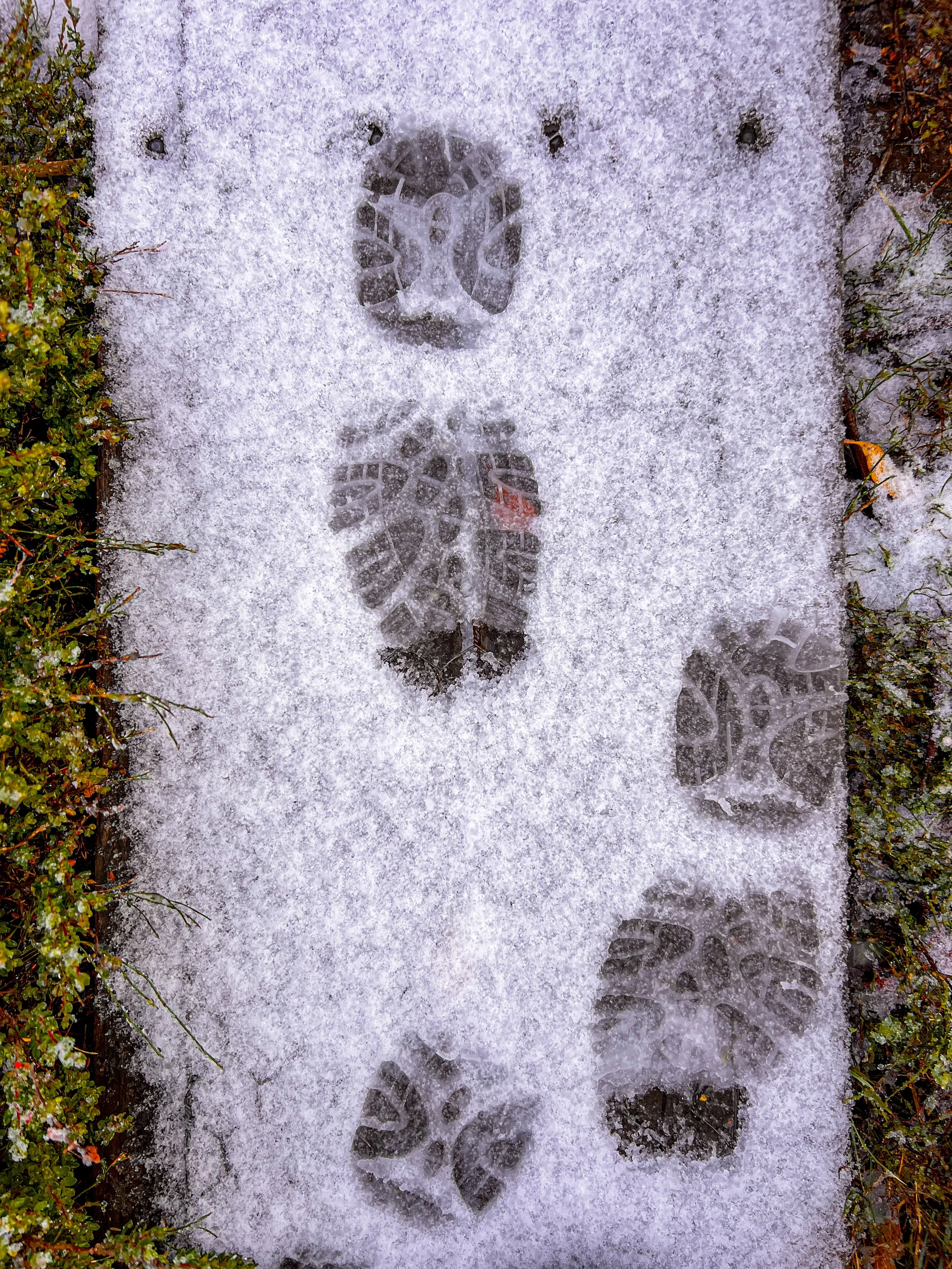
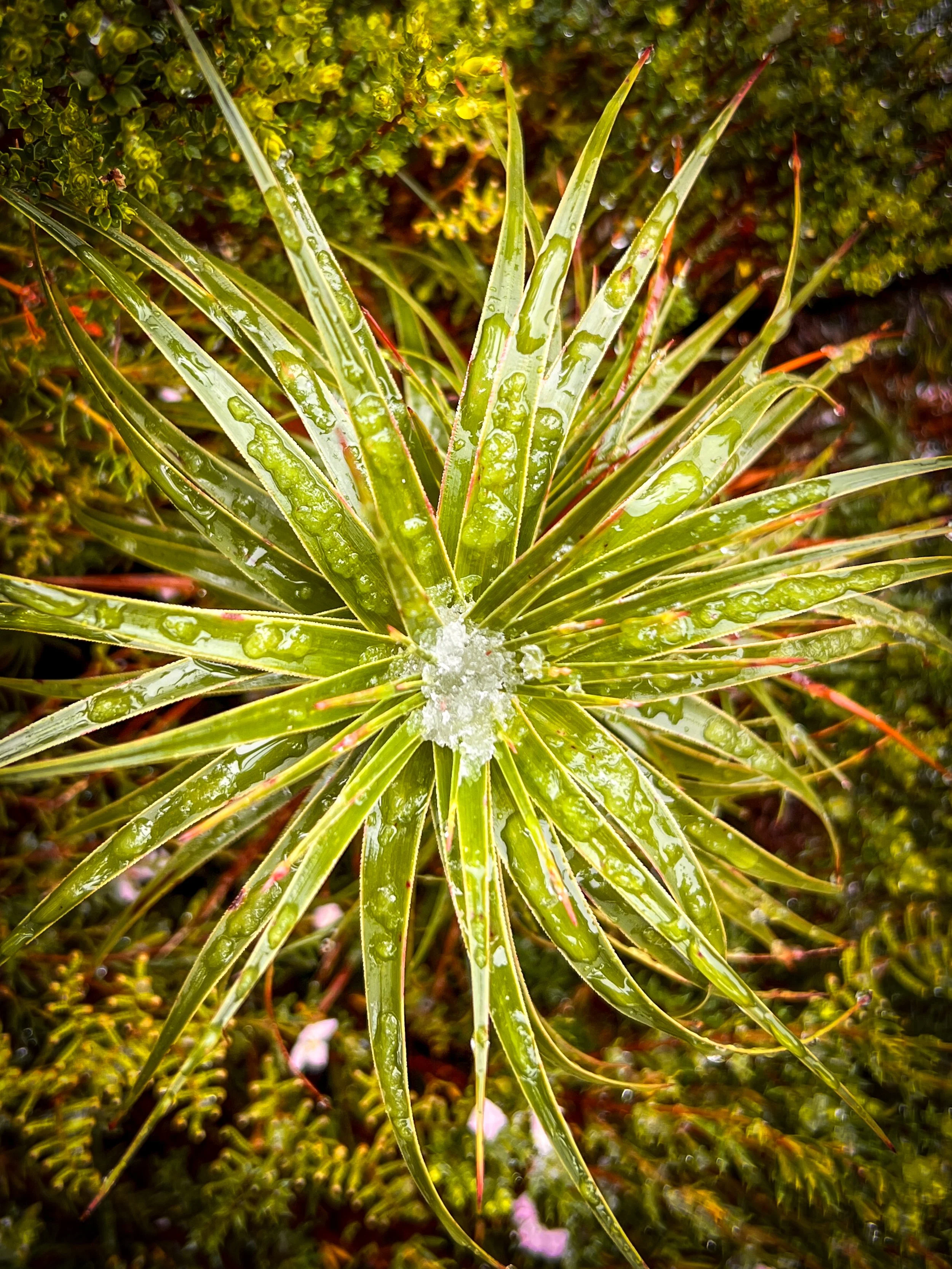
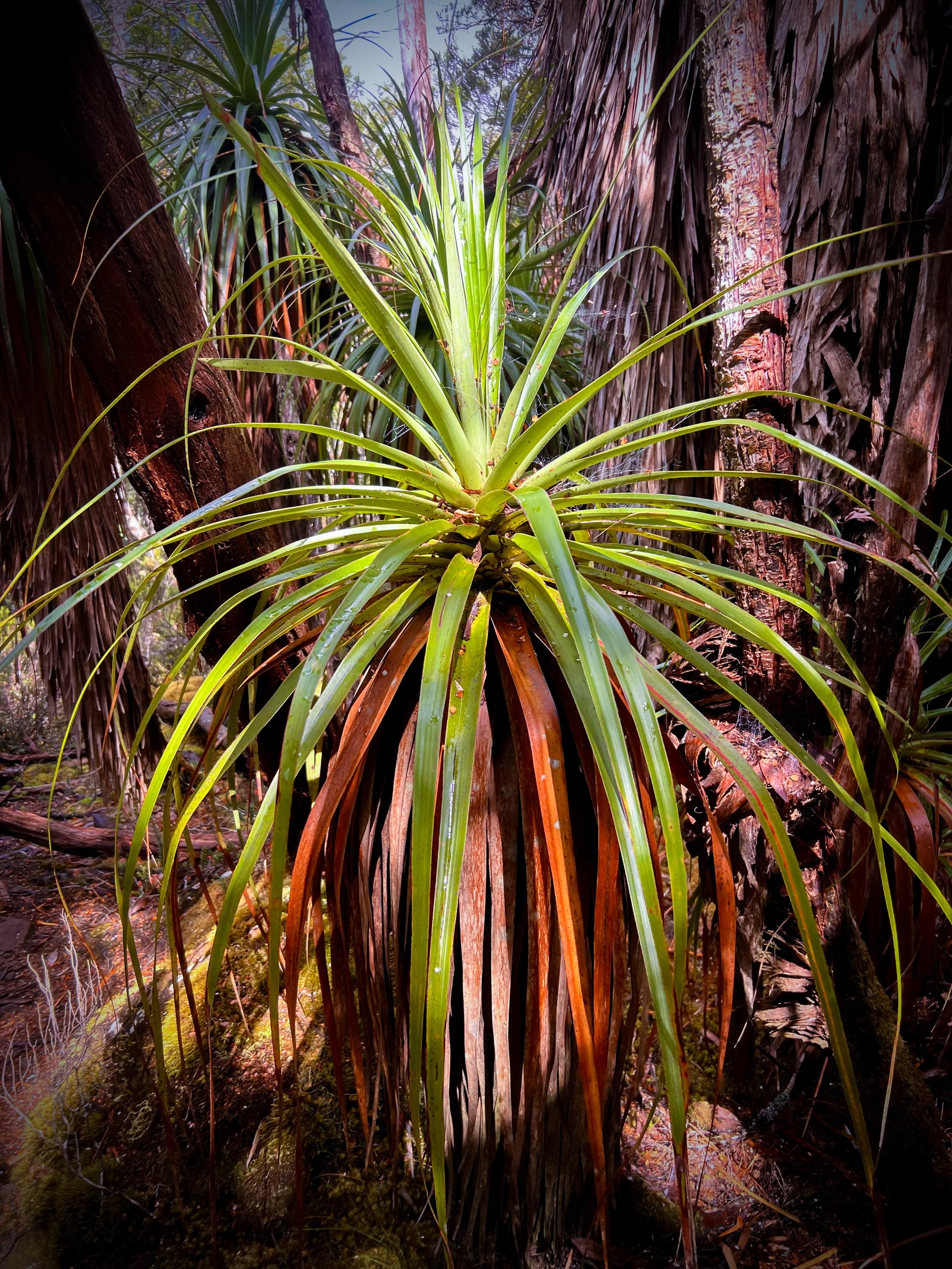
Not being detered, we set off across undulating heathland, our boots leaving a trail of fresh footprints in the thin white dusting. It wasn’t deep — just enough to give the mountains a light frosting, as though Tasmania had been lightly dusted with icing sugar. Ice crystals cling to the edges of the pandanifolia (grass tree), and every step feels slightly more adventurous than strictly necessary for a holiday. The cold air makes everything sharper: the silence, the crunch underfoot, and the very clear realisation that this place did not care what month it was.
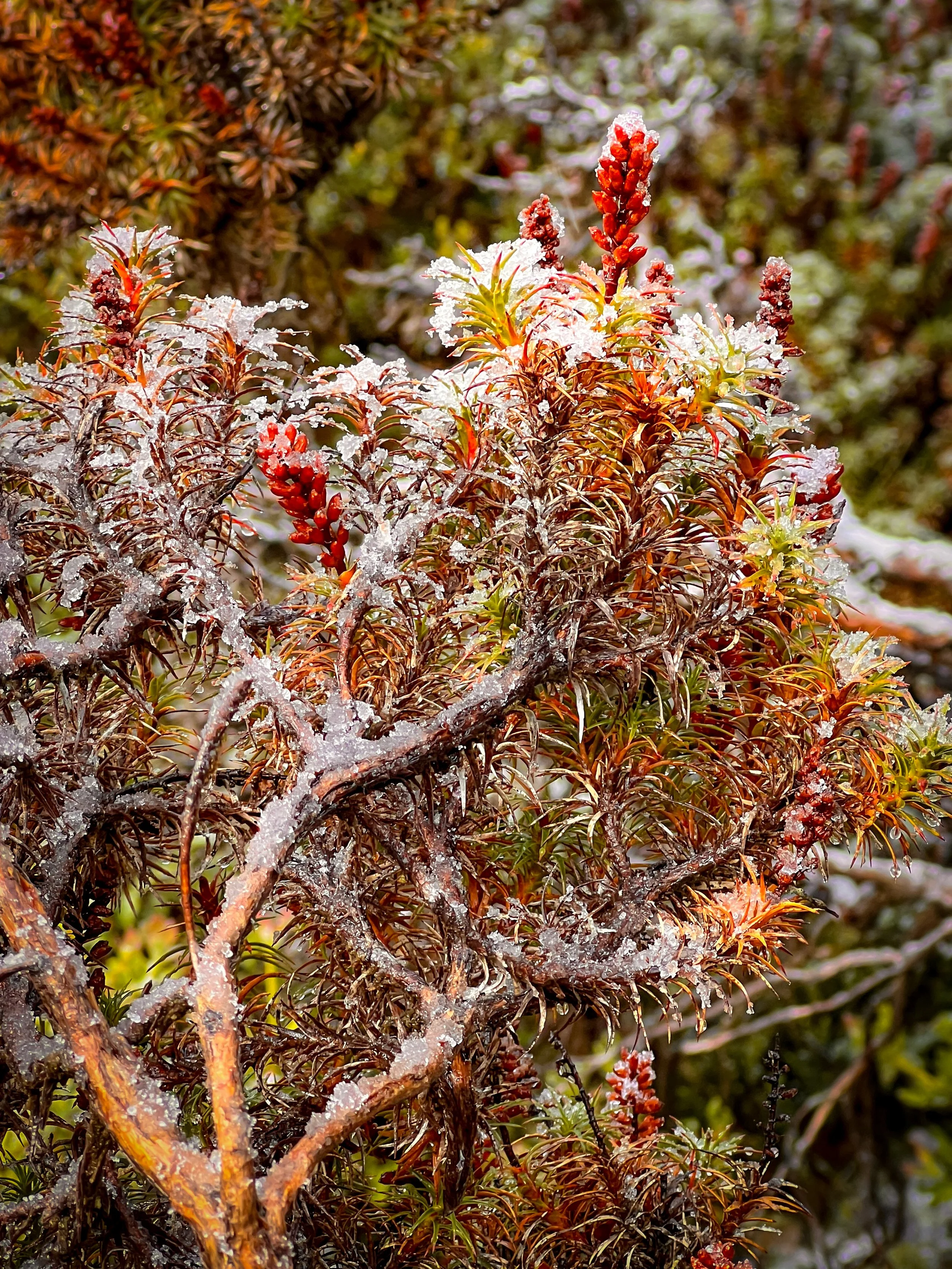
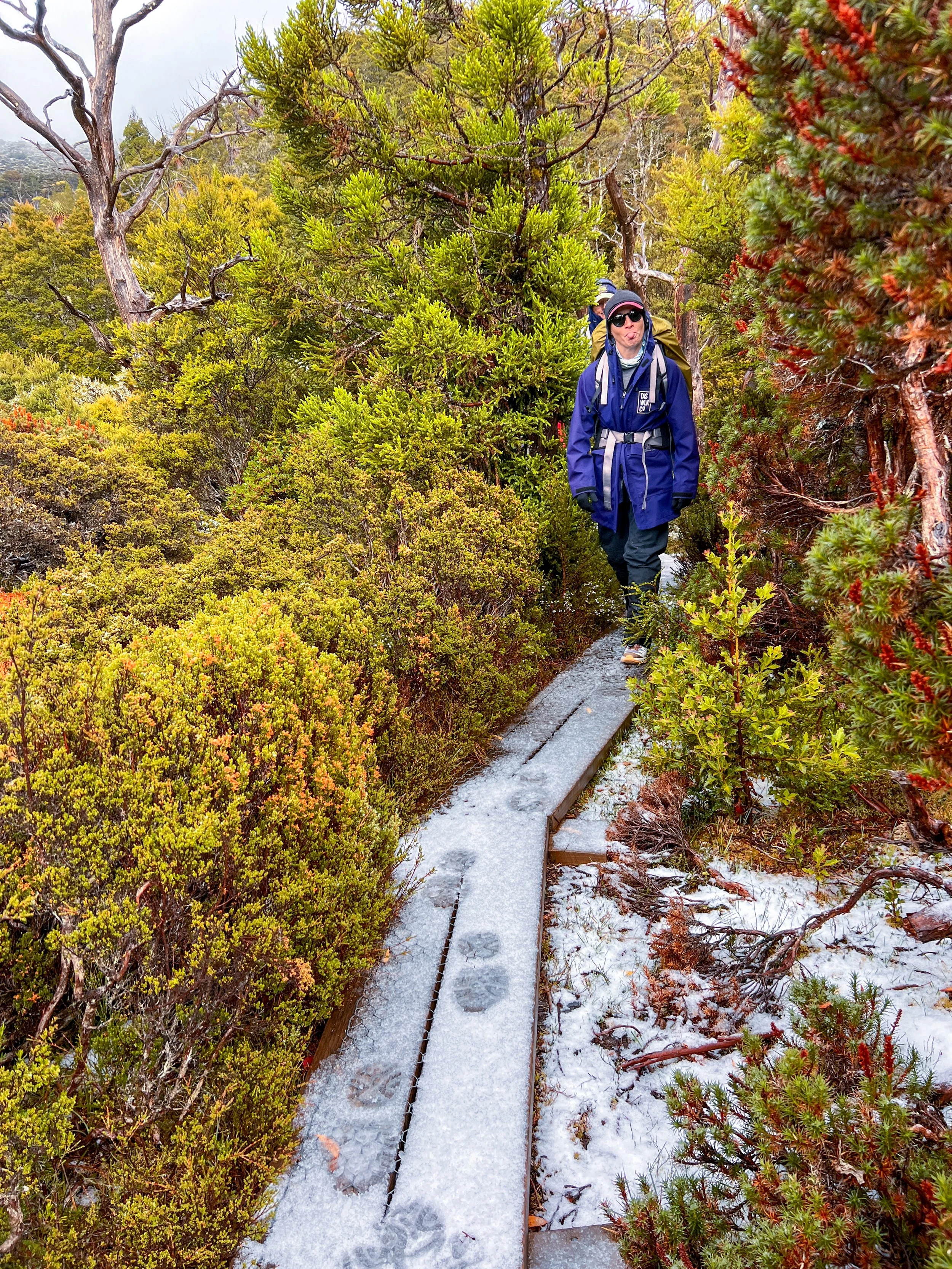
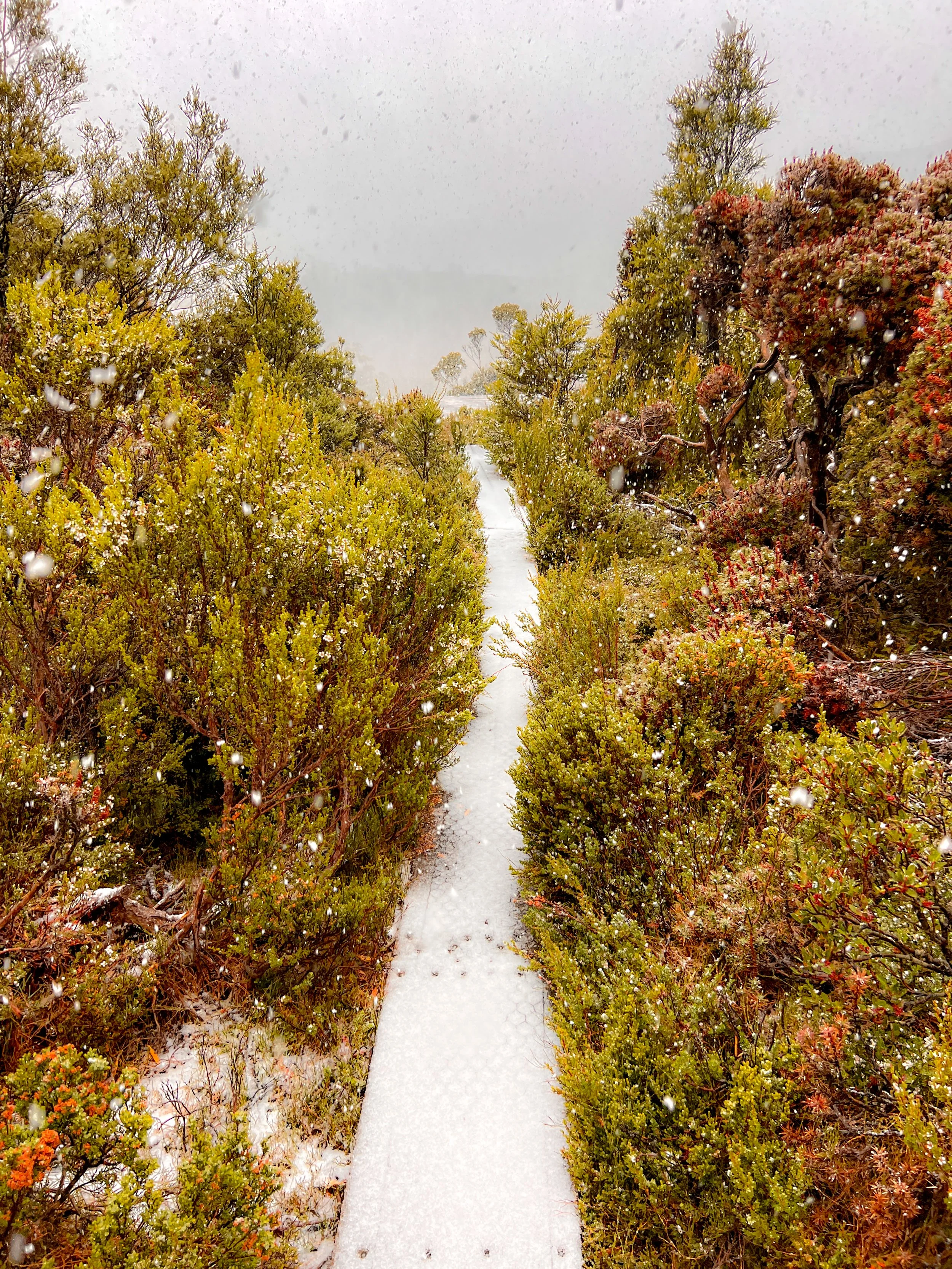
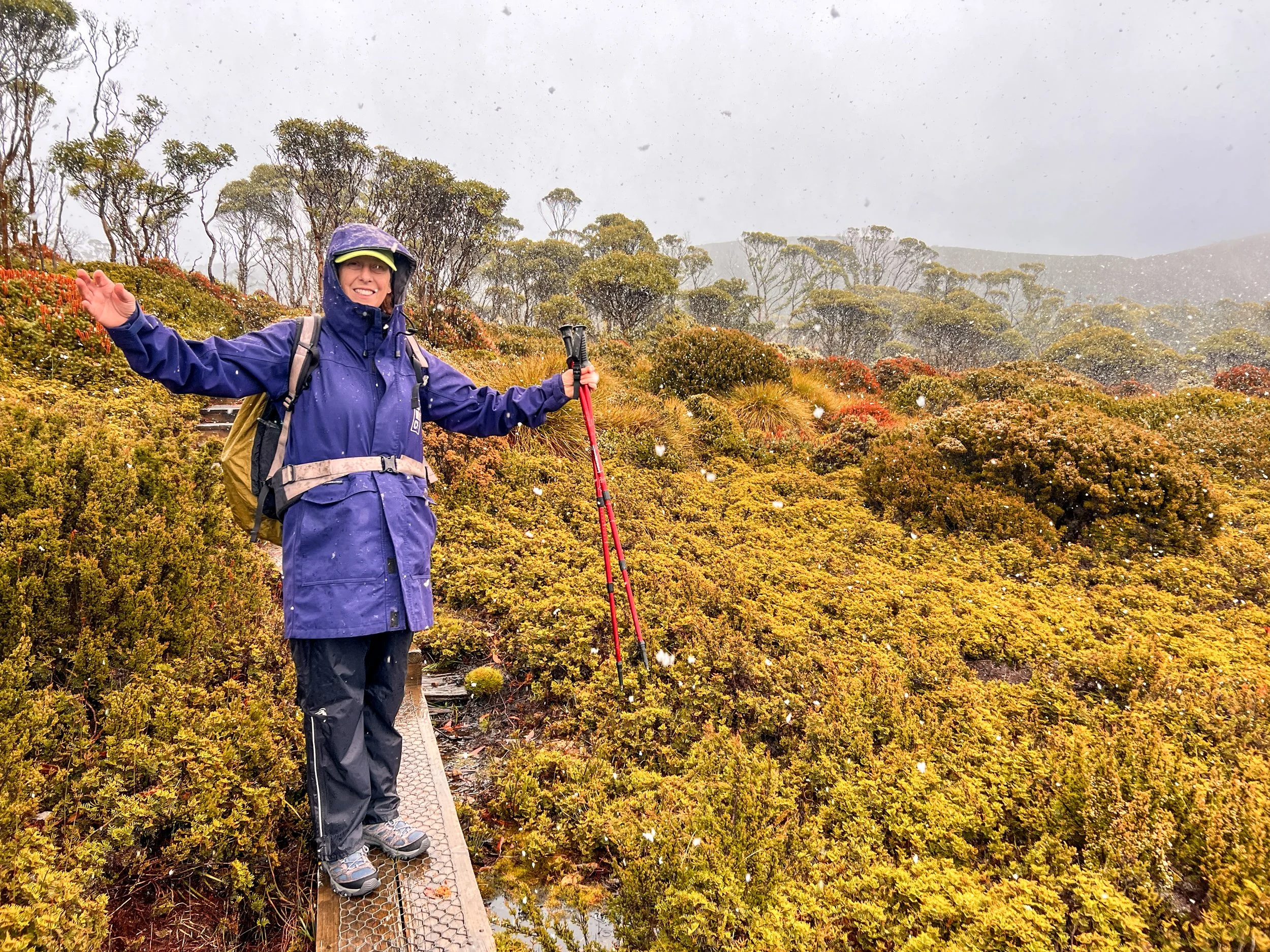
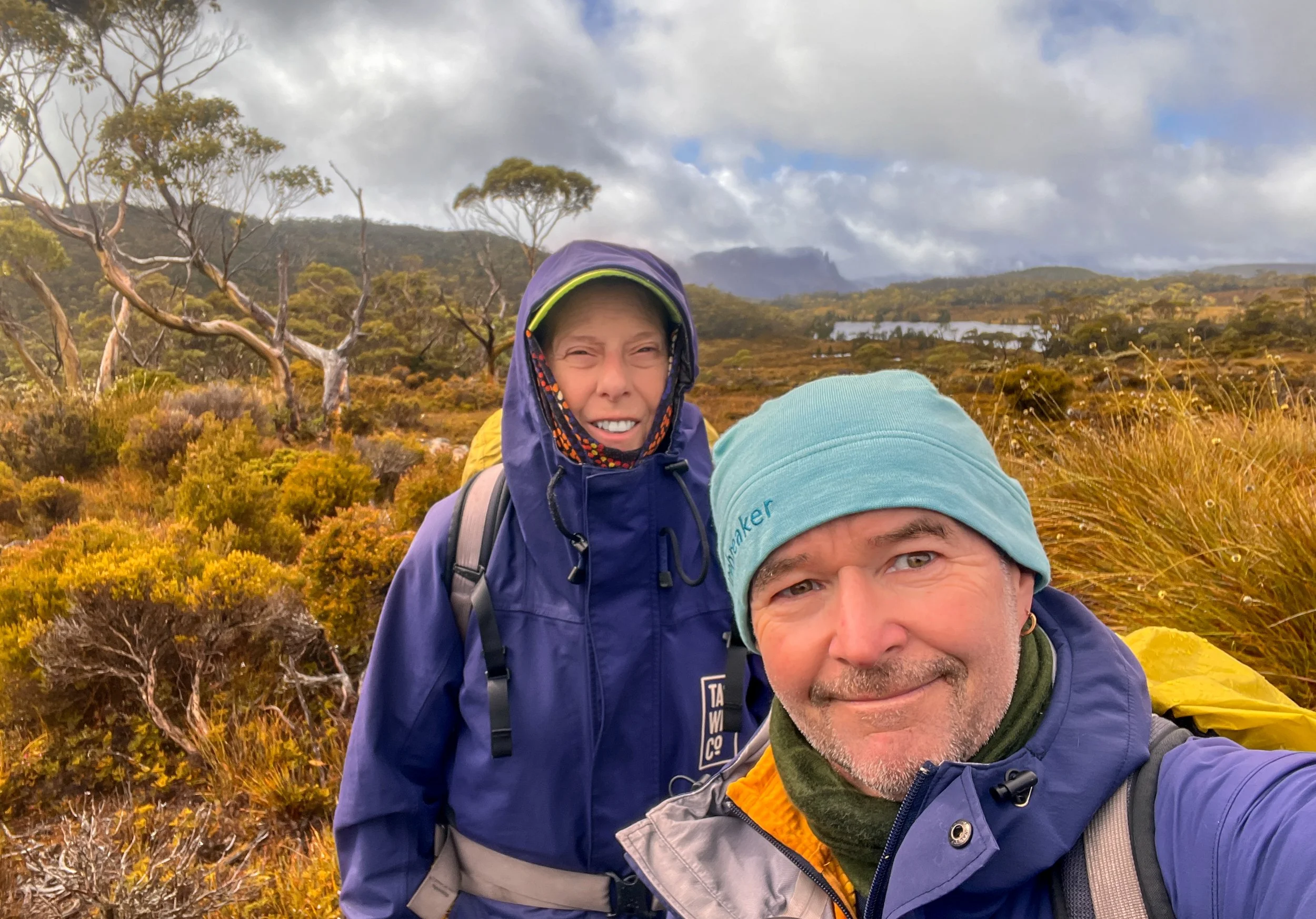
A few hours later the snow retreated as quickly as it had arrived, melting into the soil and transforming the track into a network of miniature rivers and lakes. With the extra moisture, the scoparia shrubs burst into colour, its flowers flaring in reds, yellows and whites like bunting strung across the plain. Nearby, Eucalypts stand like solemn green sentinels guarding the trail, looking as though they had seen far stranger things than a group of damp hikers complaining about their socks.
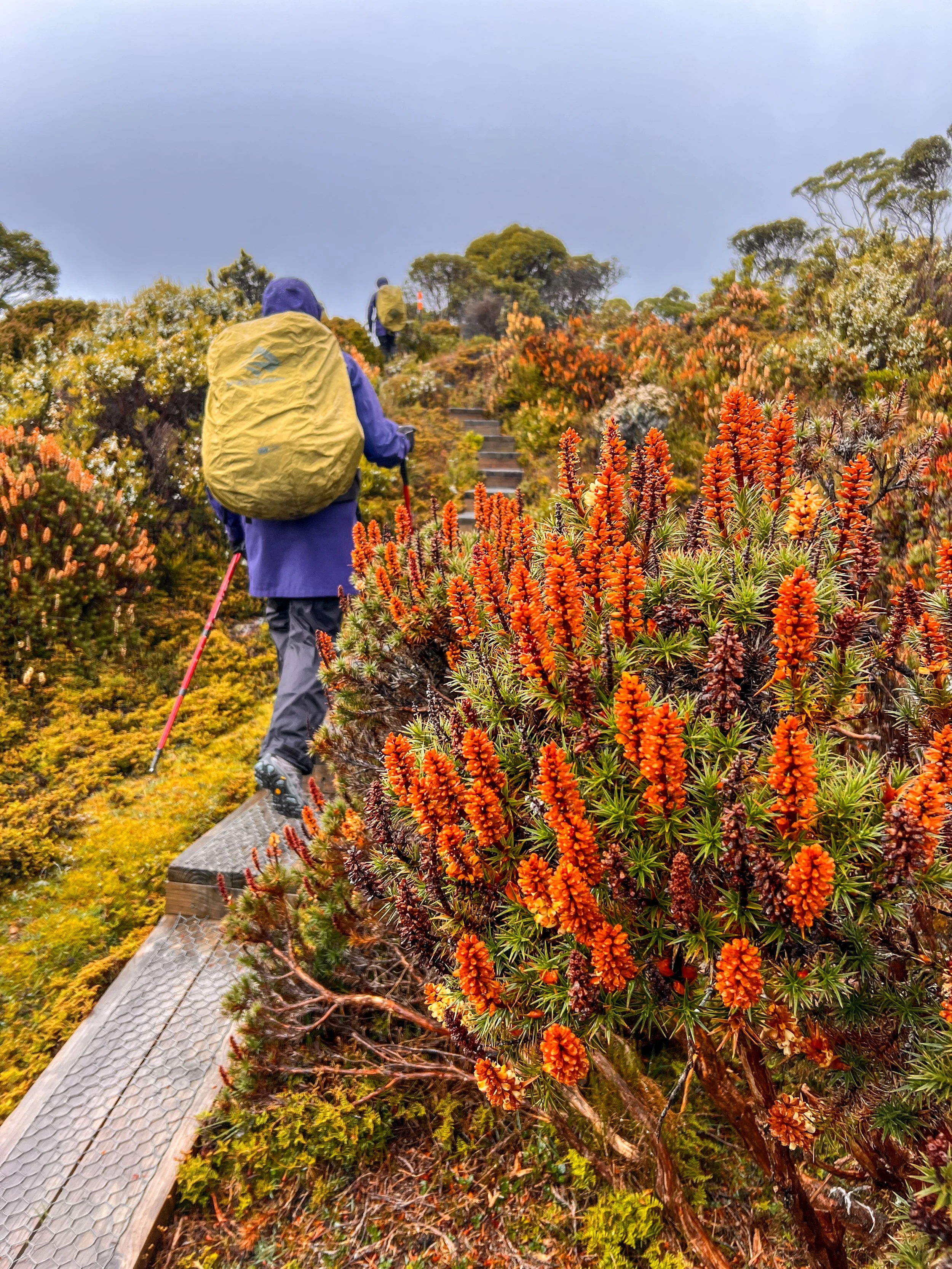
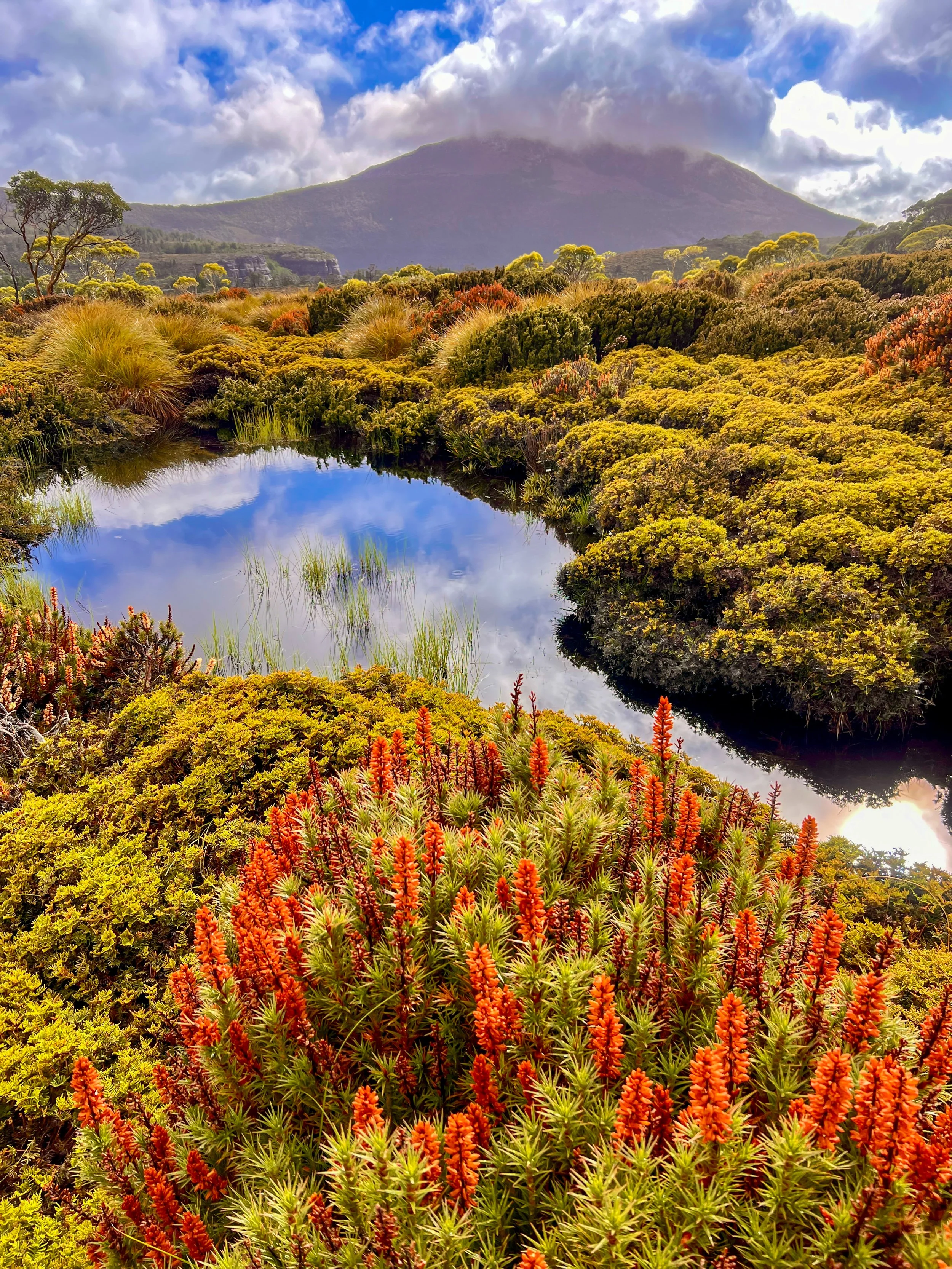
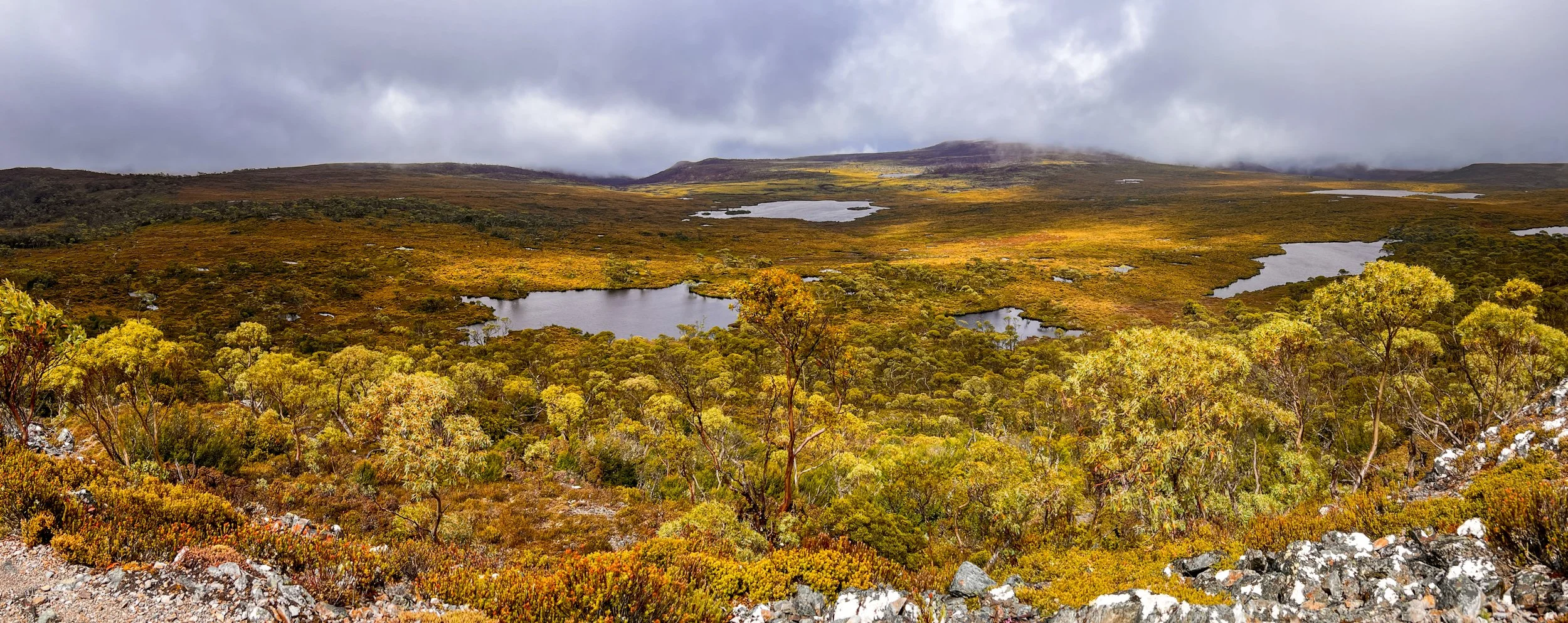
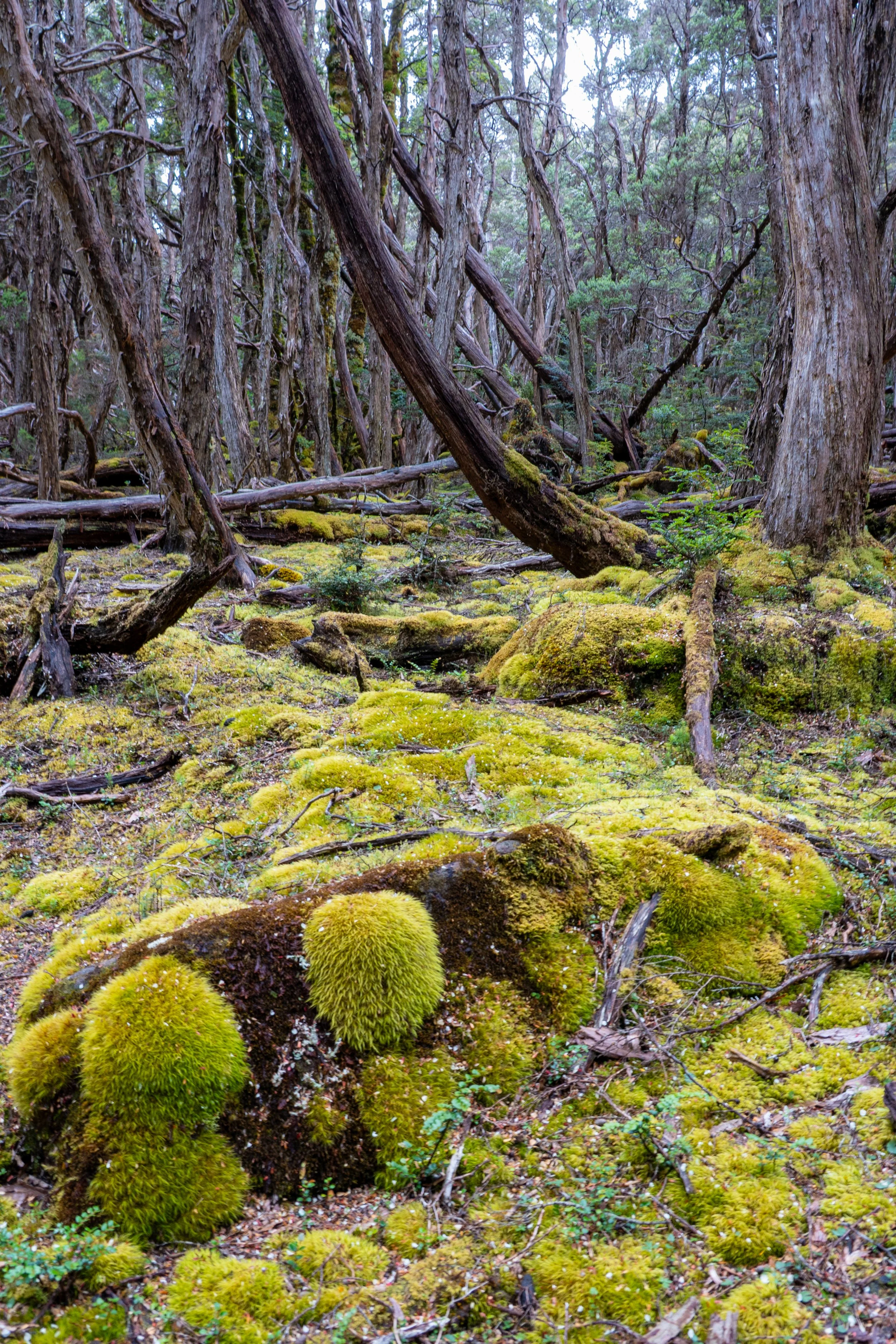
Continuing along the gentle “fundulations” of the track, we began our descent into rainforest, where low alpine shrubs slowly surrender to dense, tangled forest that filter the daylight into a soft green glow. The world closed in around us, cool and damp, as trunks thicken and branches knit together overhead. Fallen logs lay strewn across the forest floor like a giant’s forgotten pick-up-sticks, each one thickly coated in luminous lime-green moss.
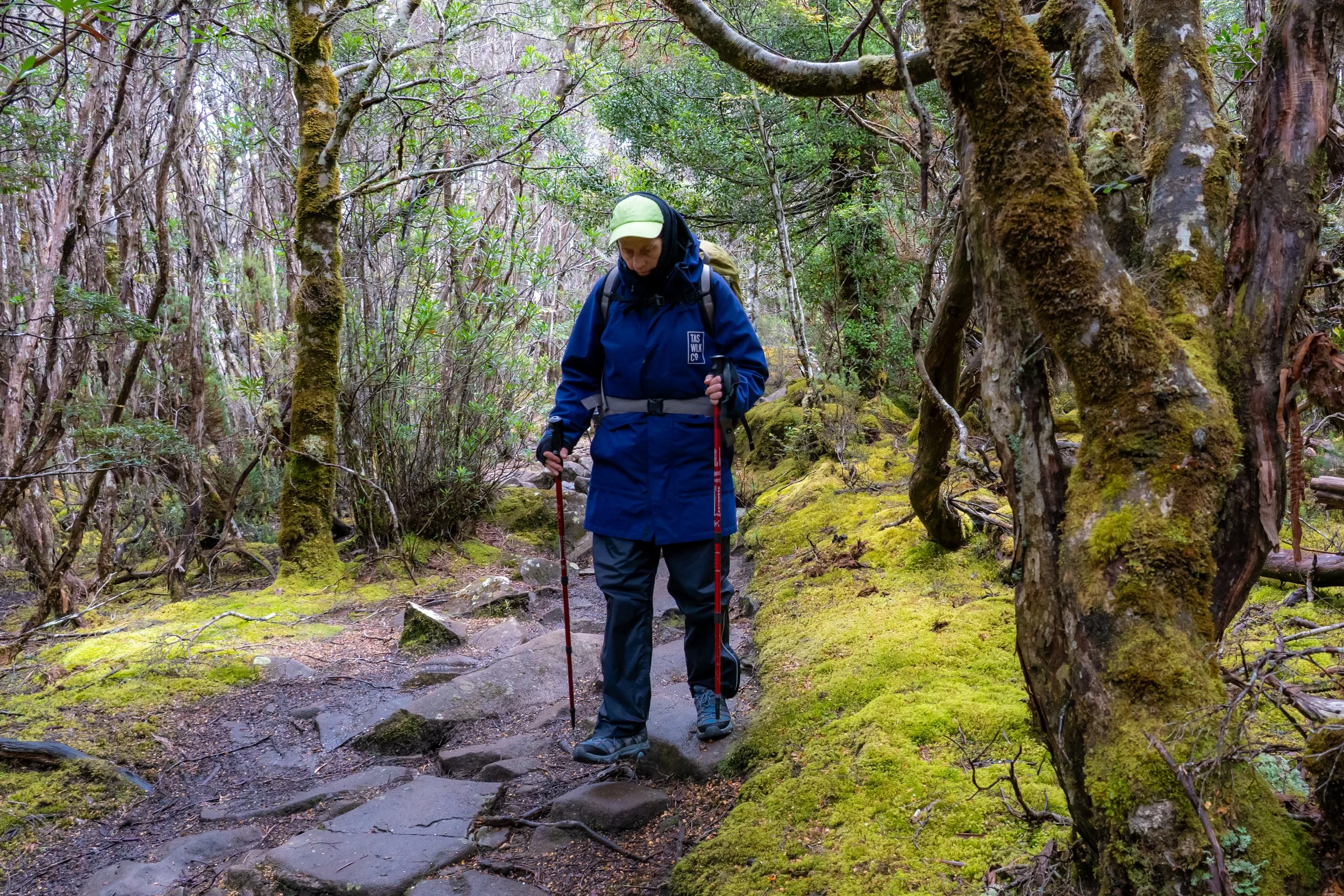
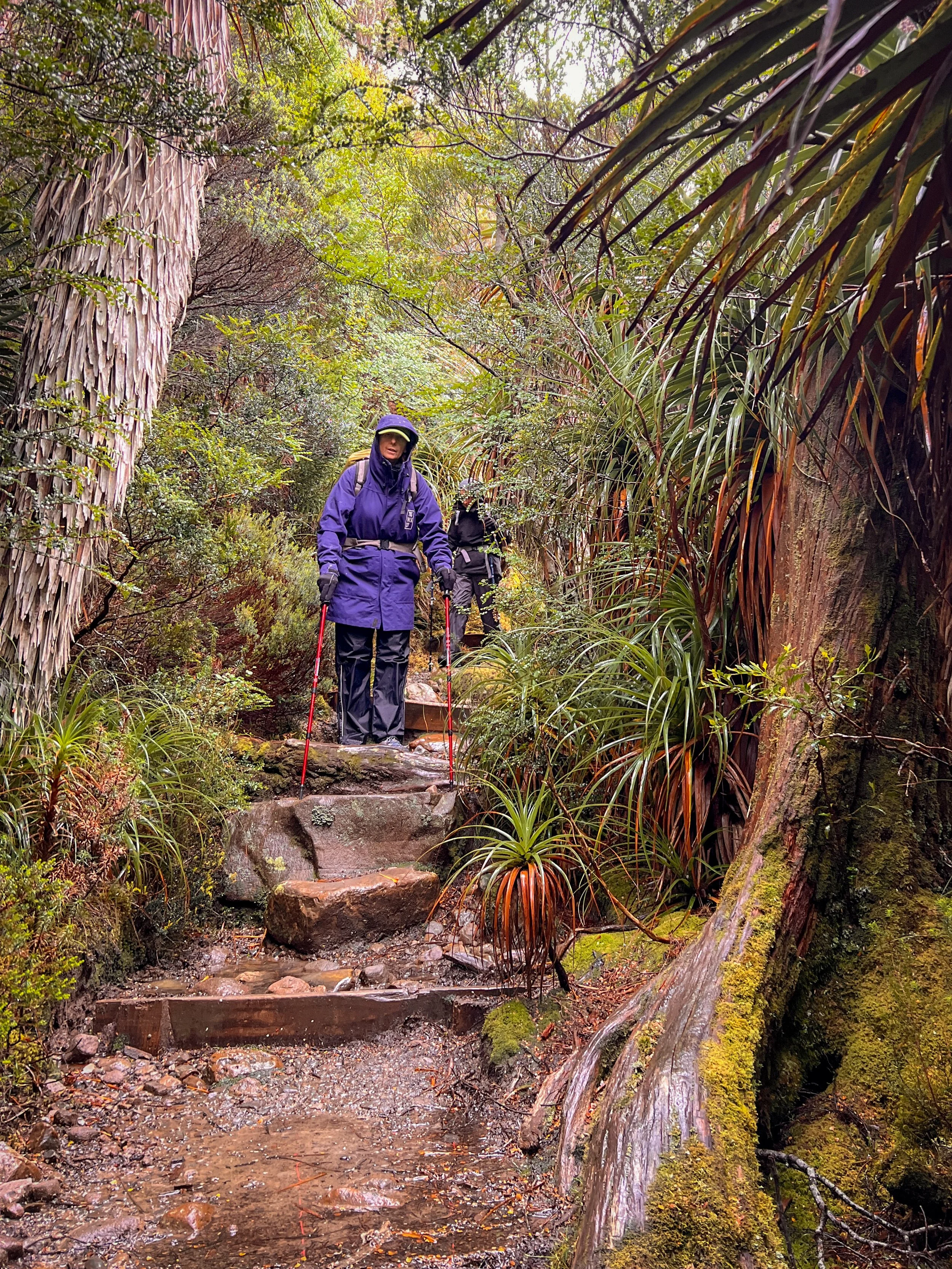
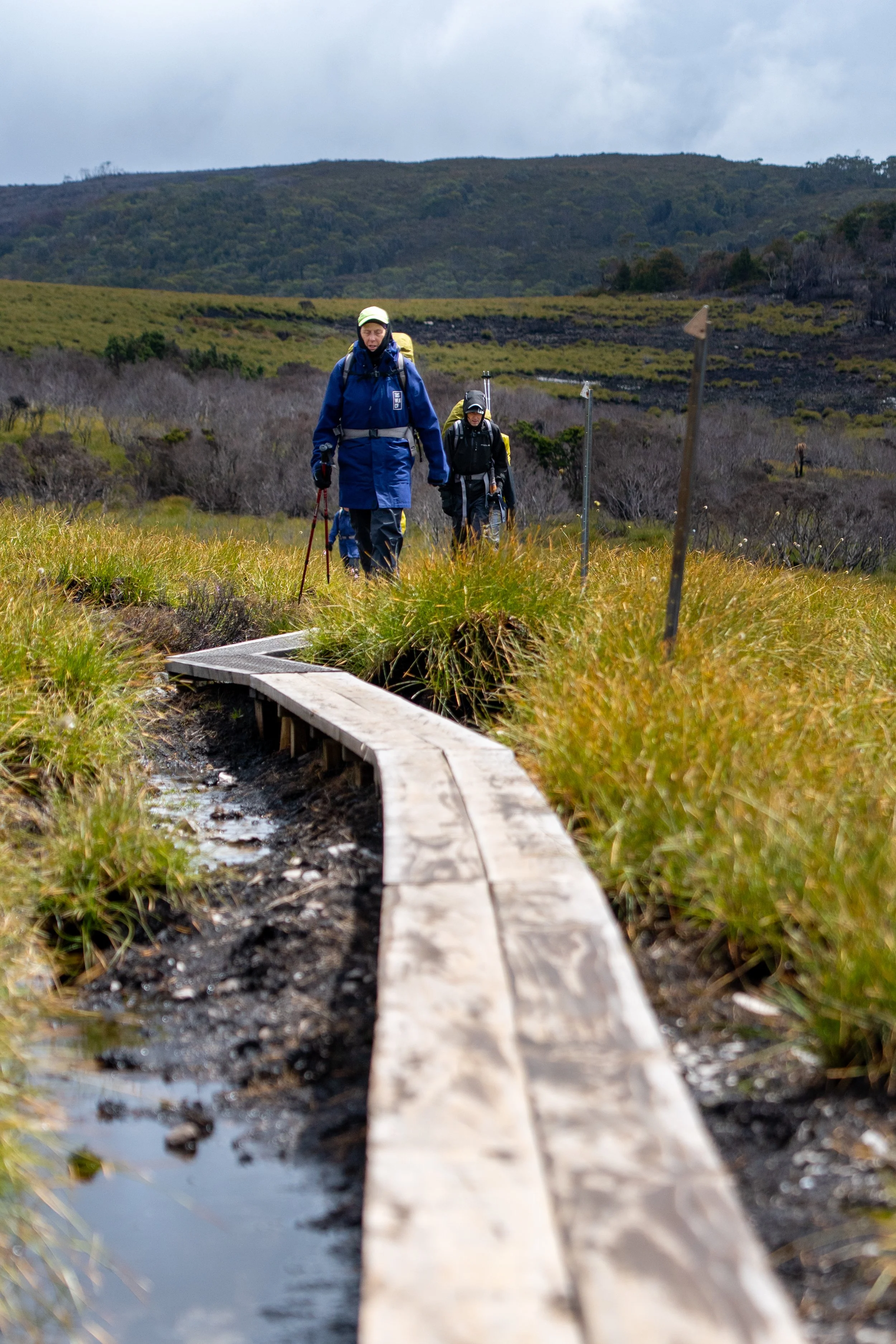
The melting snow also introduces us to one of the great philosophical lessons of the Overland Track: ‘mud is your friend’. The rule is simple - walk through it, not around it. Trying to dodge puddles risks twisted ankles, heroic slips, and the slow widening of the track through erosion. The soils here are so fragile they take thousands of years to rebuild, which is why boardwalks snake across the wettest sections, protecting vegetation that grows at the speed of continental drift. Of course, this noble principle does not stop the track itself from becoming a cunning obstacle course of tree roots designed specifically to trip you, combined with thigh-deep, energy-sapping mud that steals your boots and occasionally your dignity.
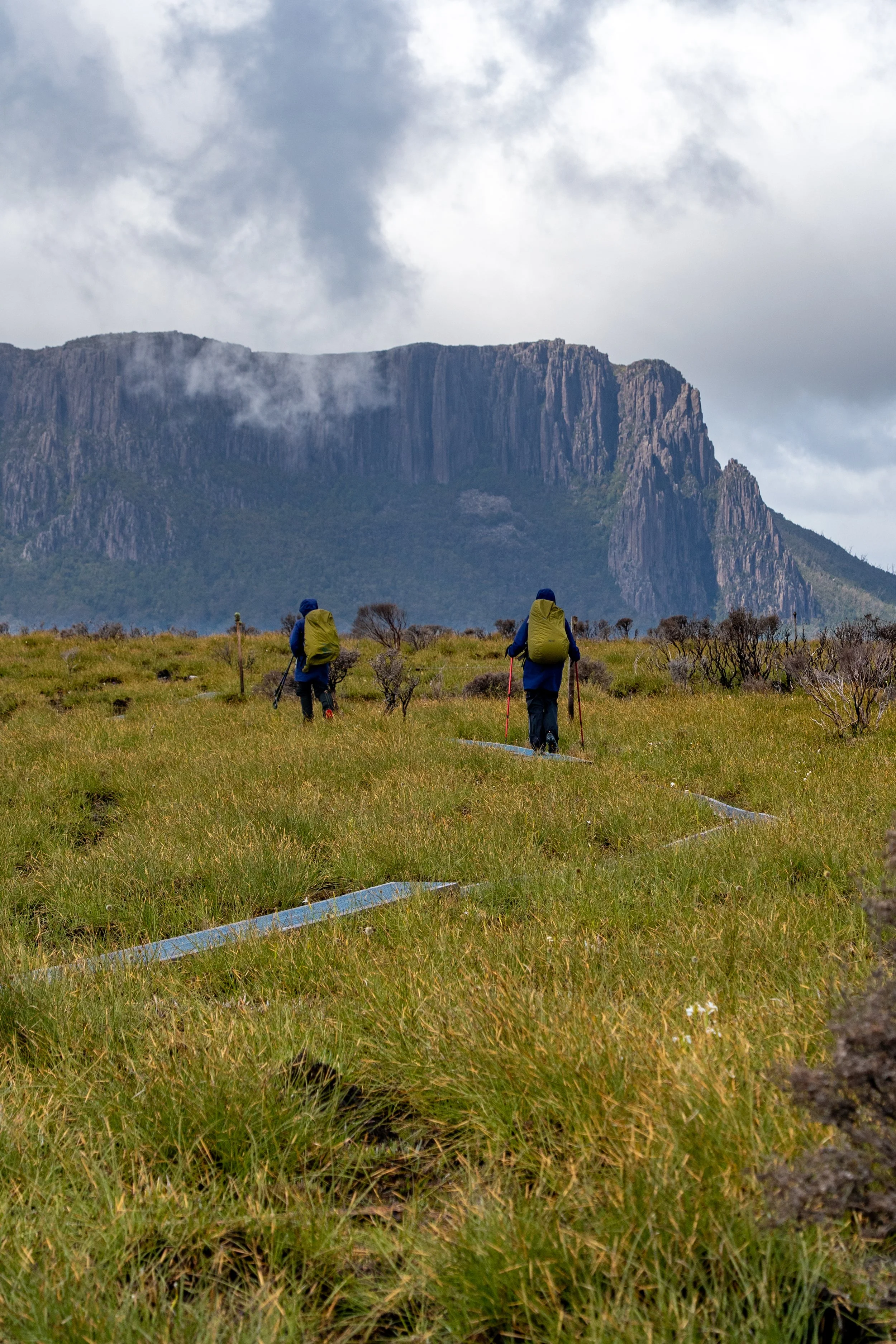
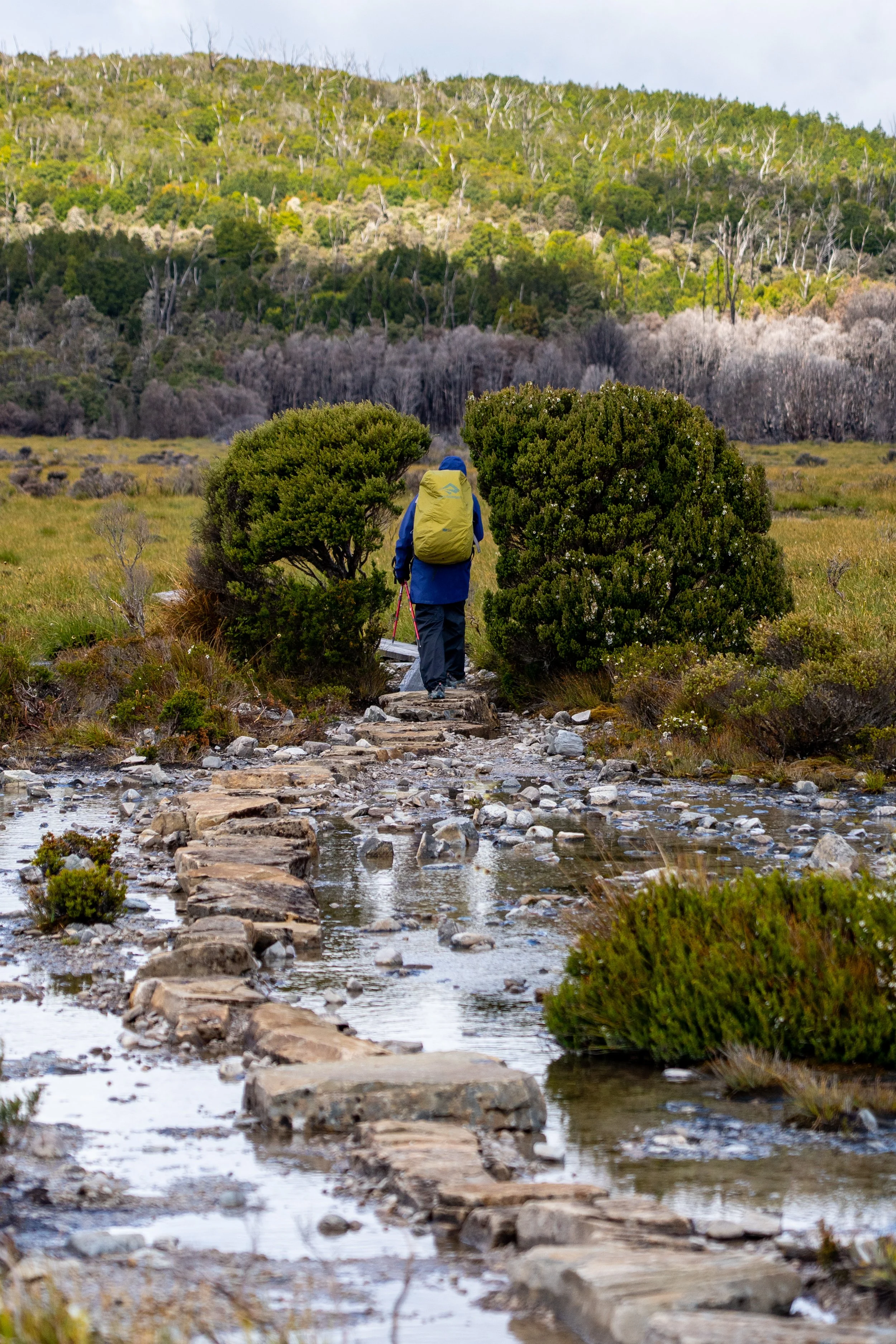
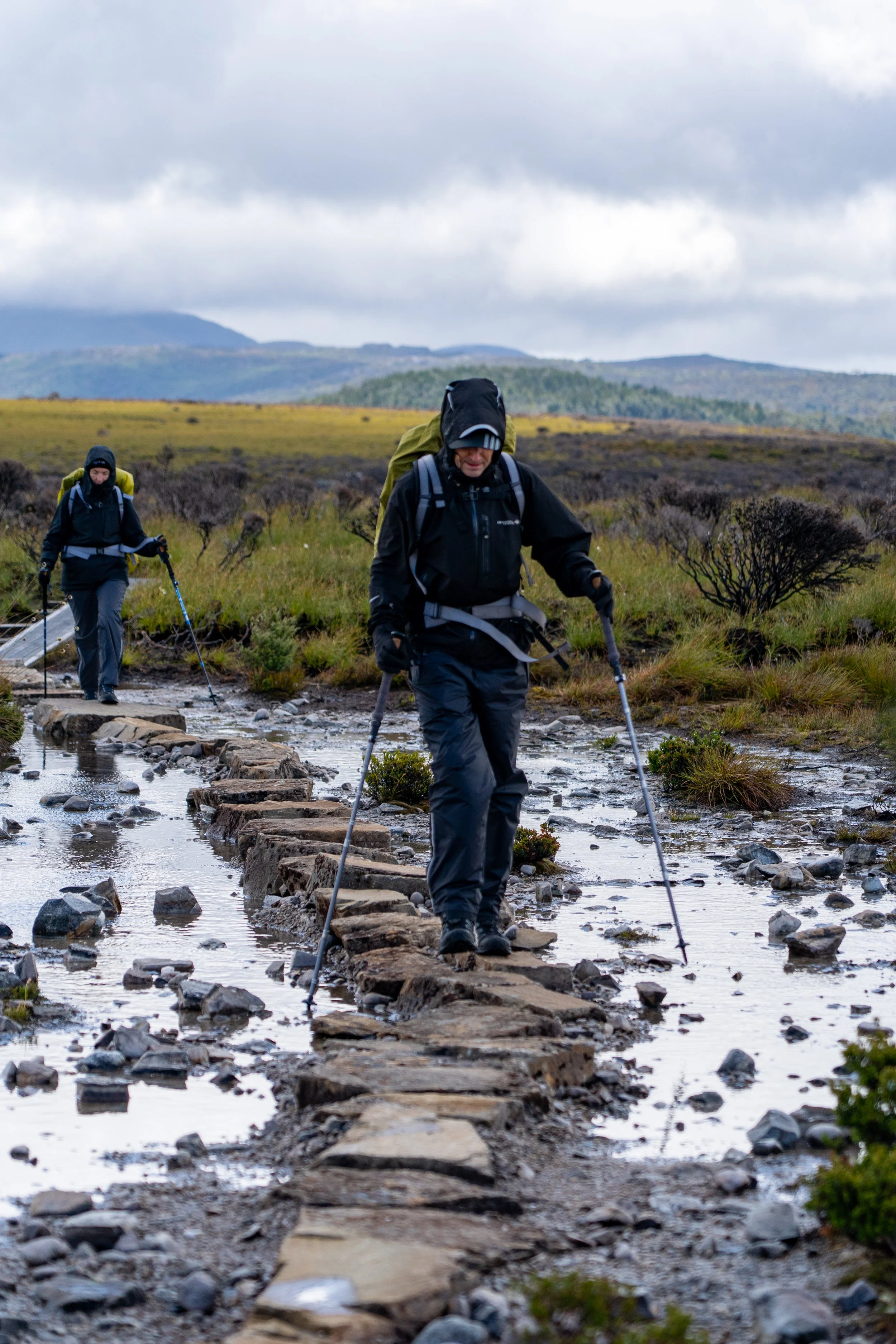
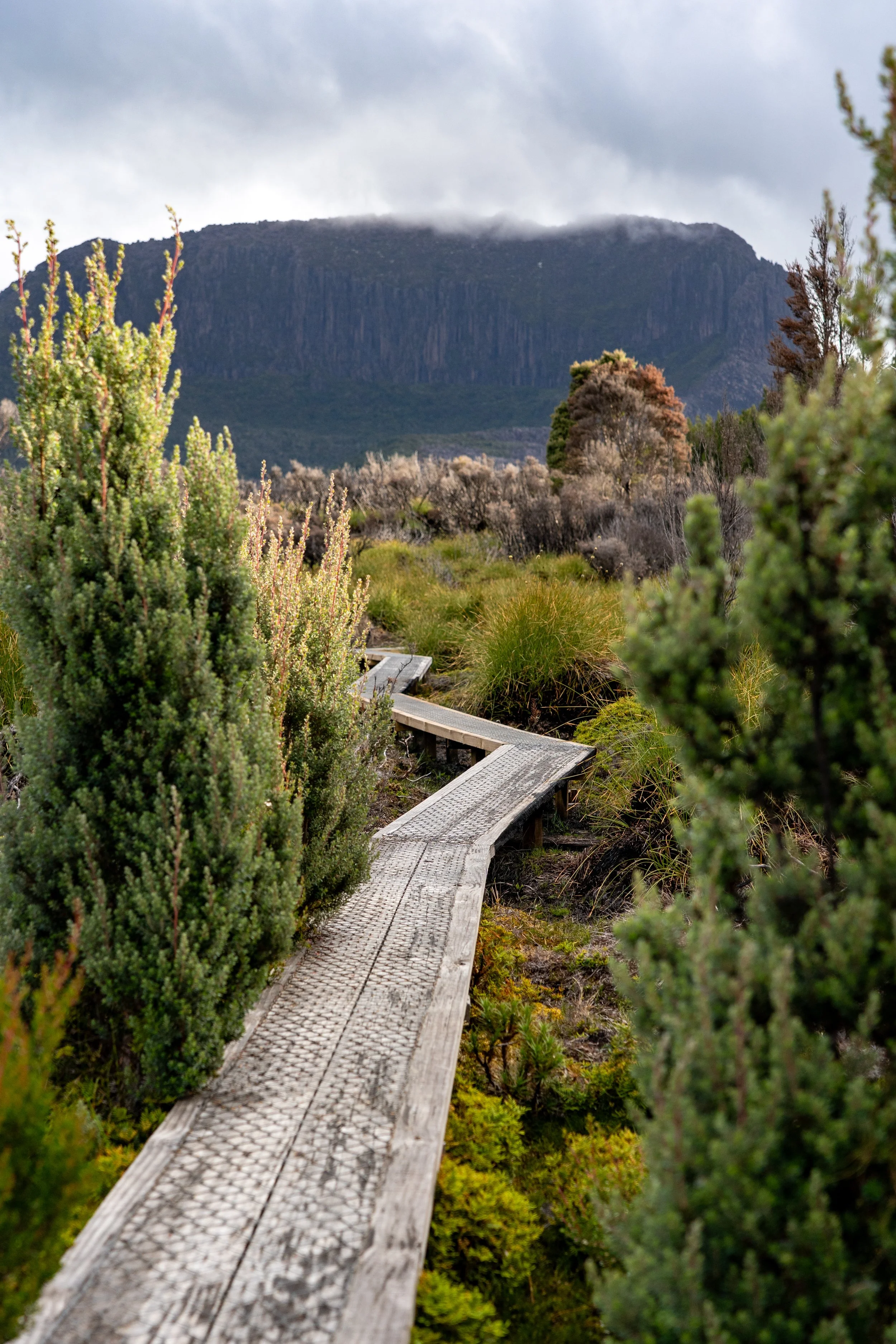
As quick as you descend, its not long before you rise back up again out of the forrest. Eventually the weather softens and gray skies are replaced with flashes of blue. Gums and myrtle trees thin and give way to open plains with Mount Pelion West appearing ahead of us. Further on, Lake Windermere provides the perfect spot for a short break and would have been an ideal spot for a swim had the temperature not been colder than my beer fridge.
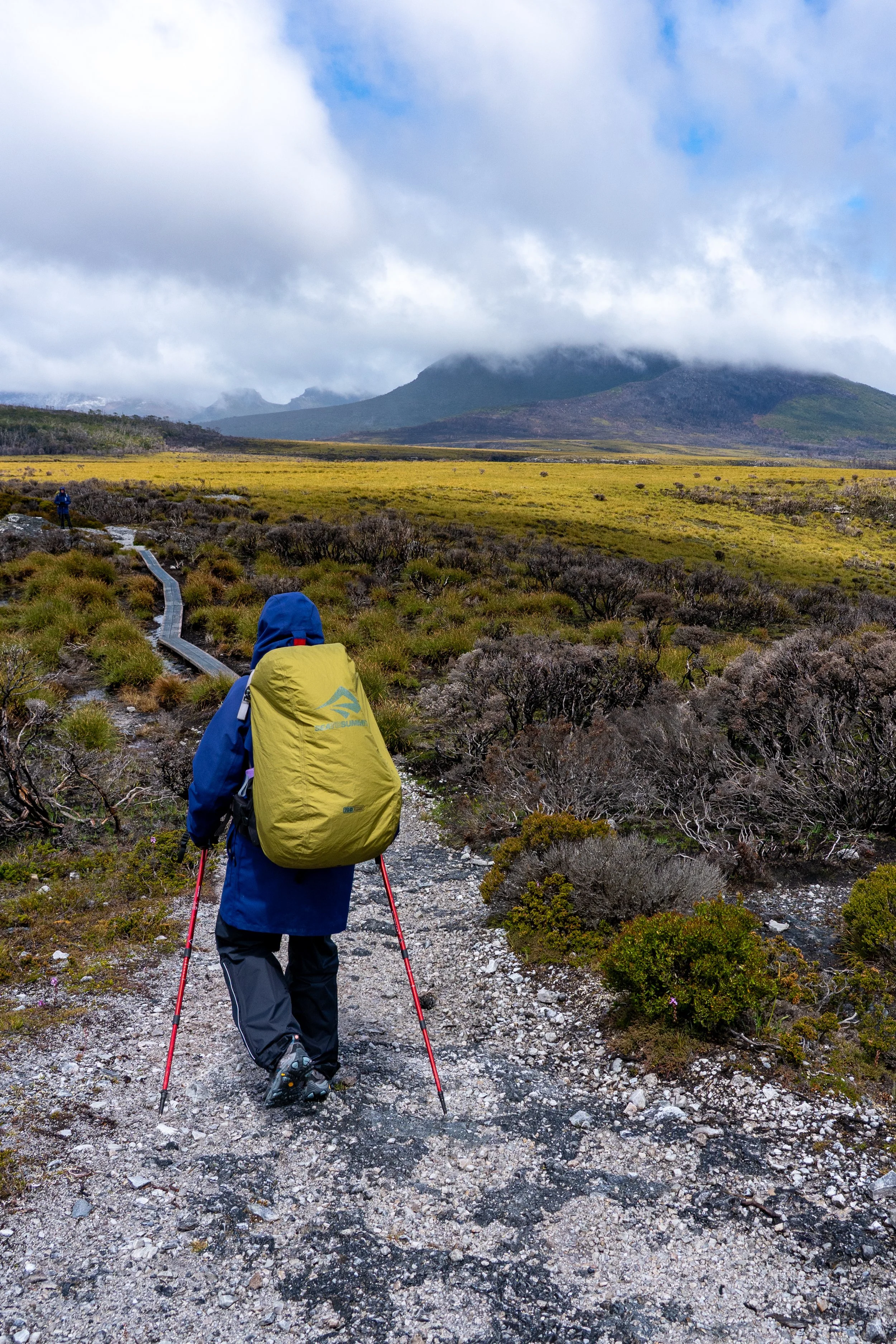
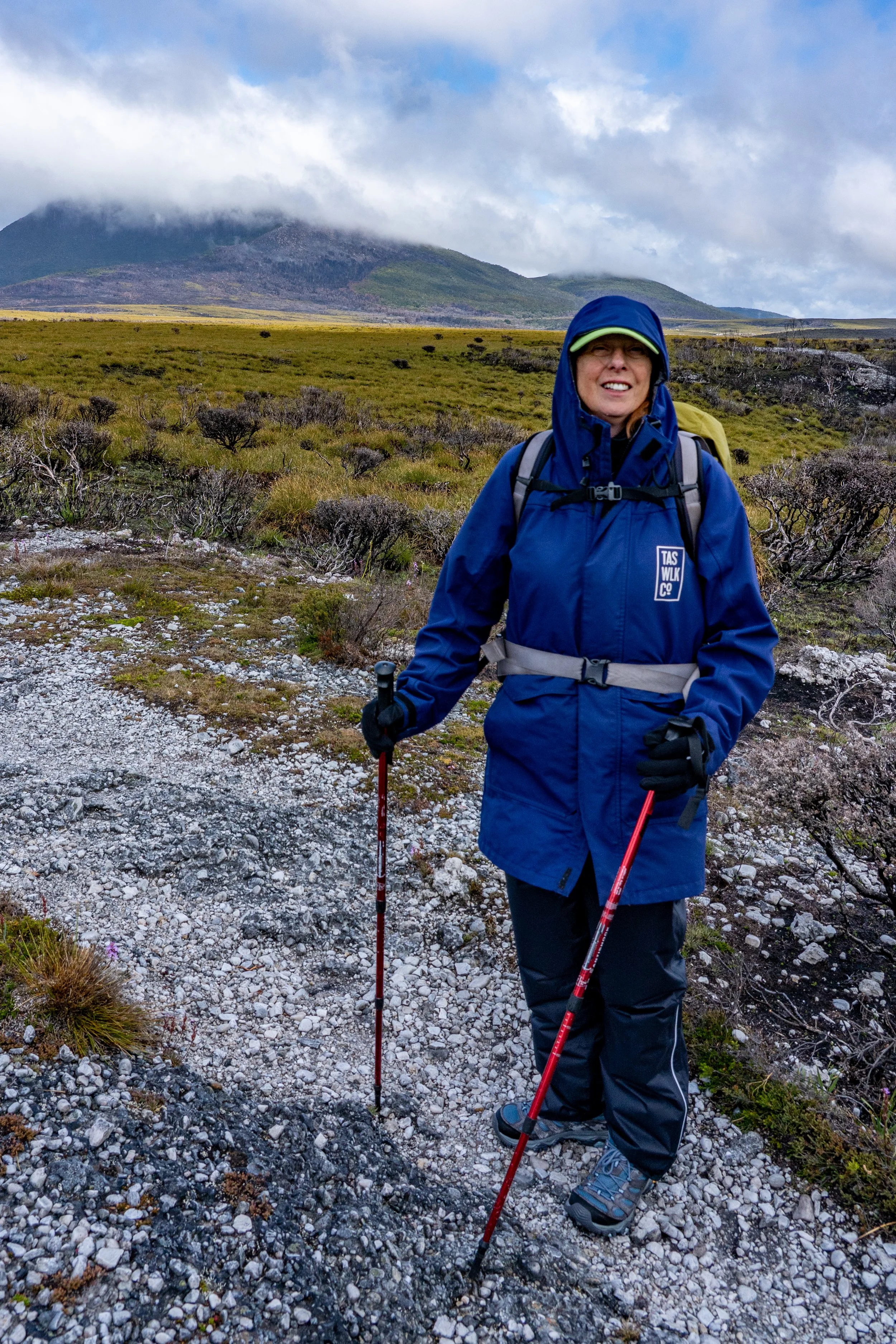
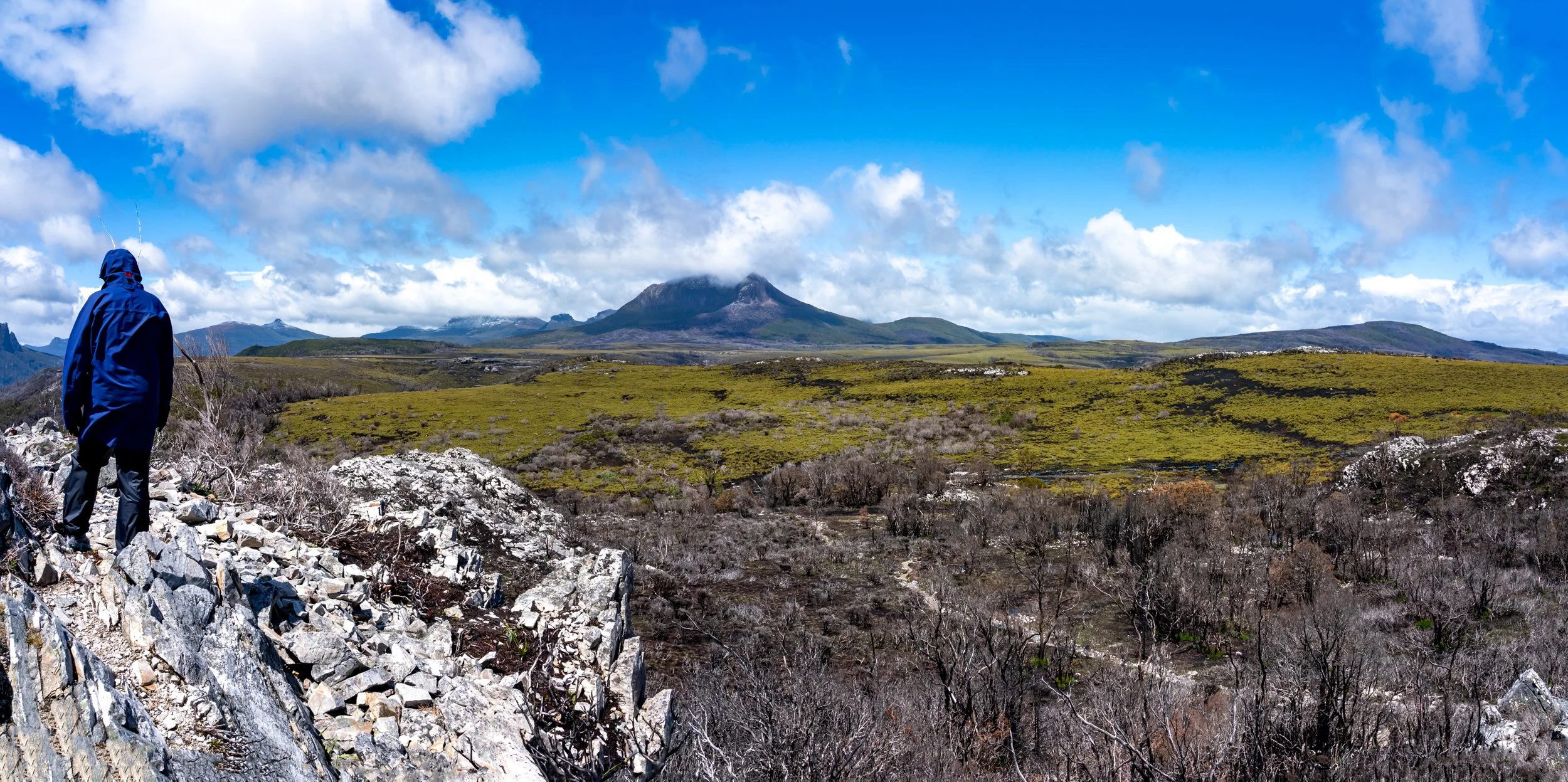
Looking out over Mount Pelion West
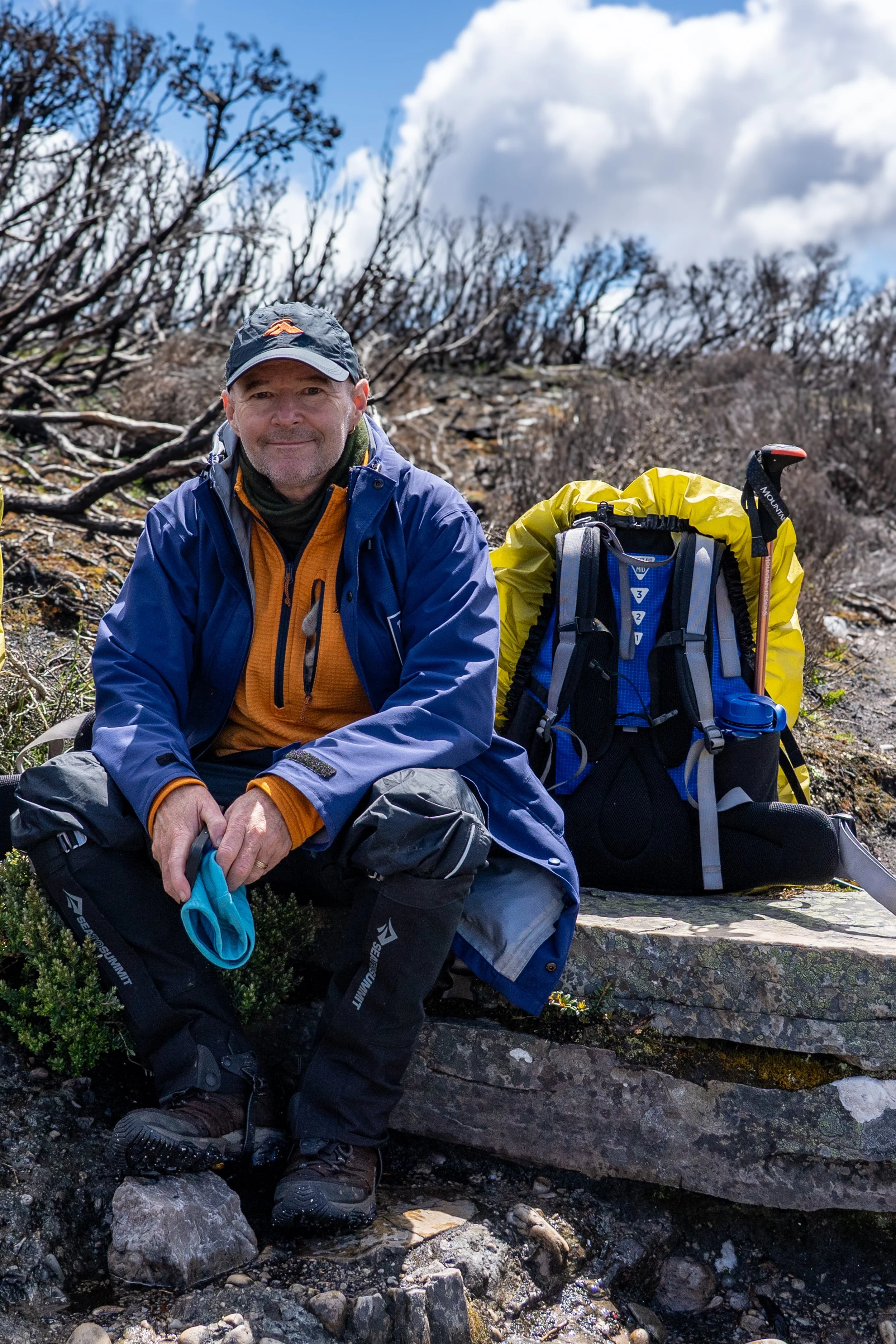
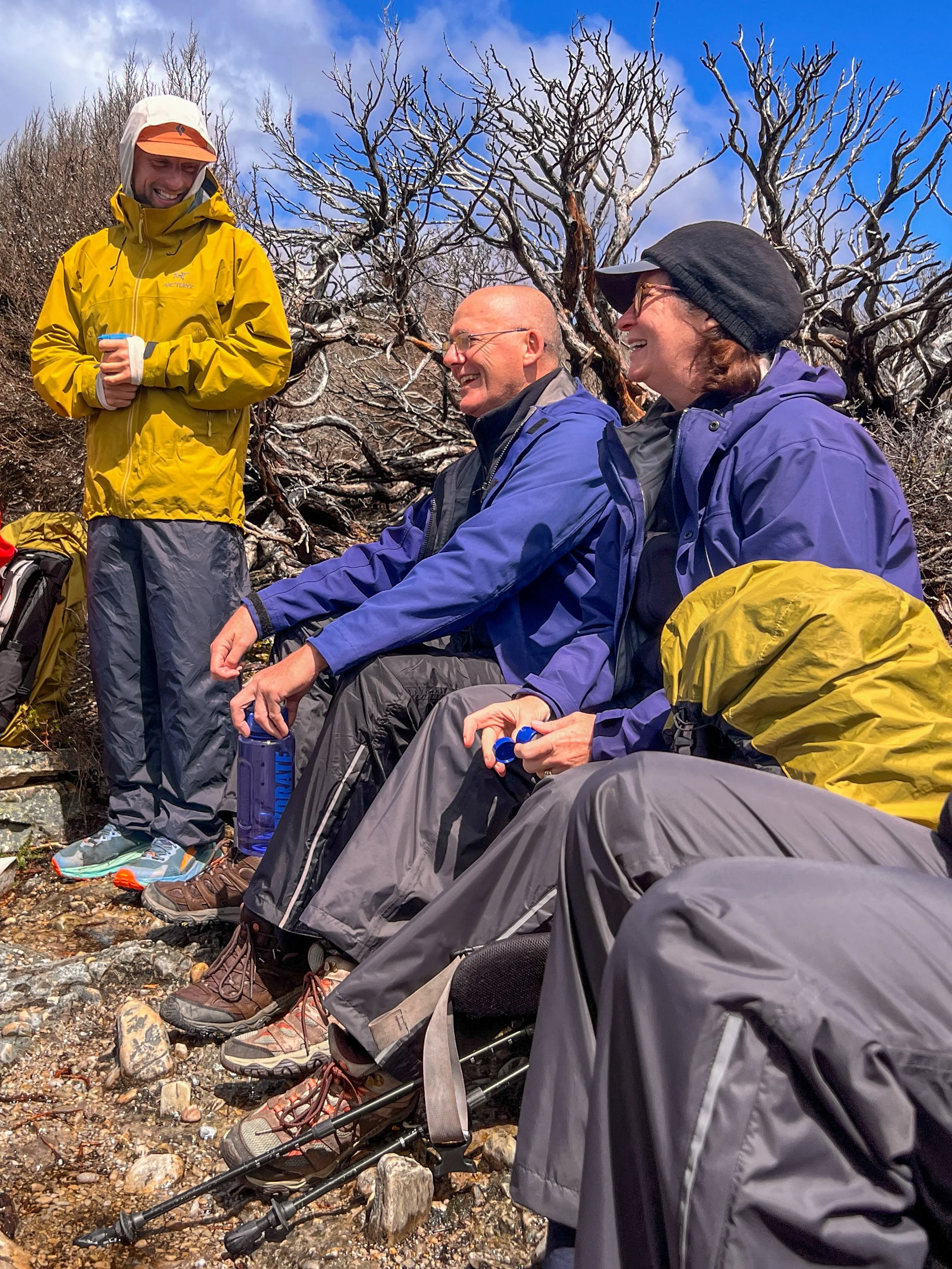
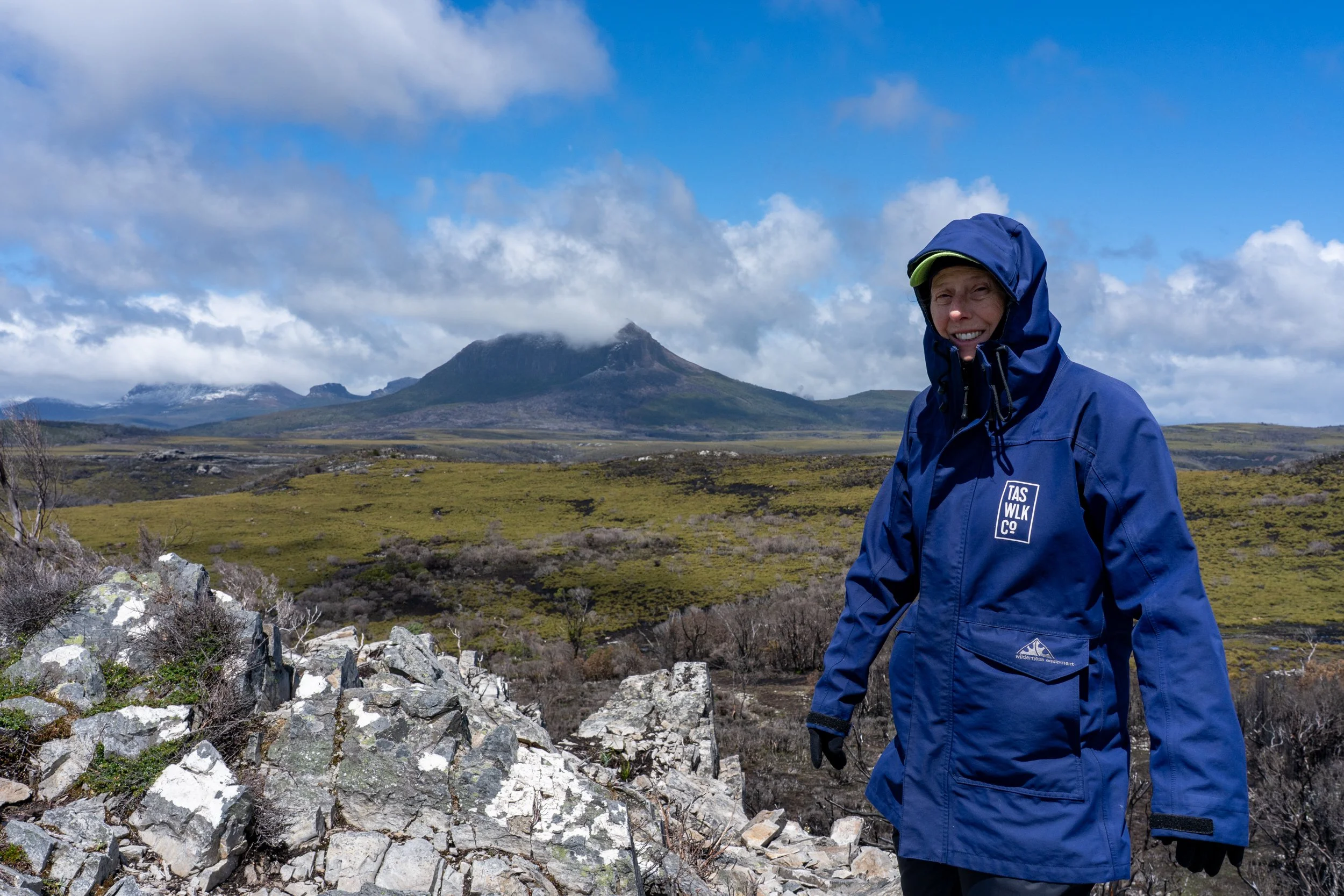
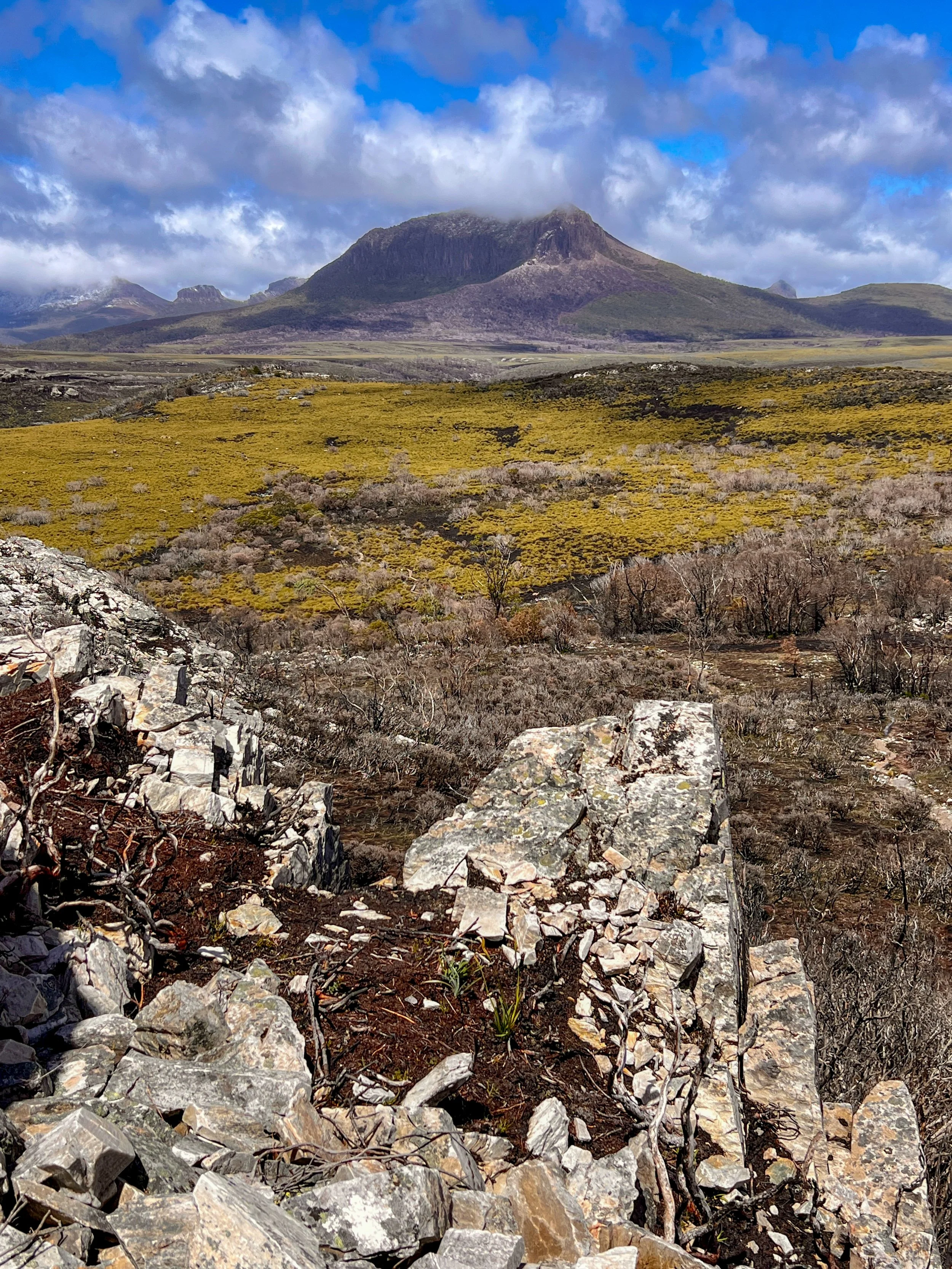
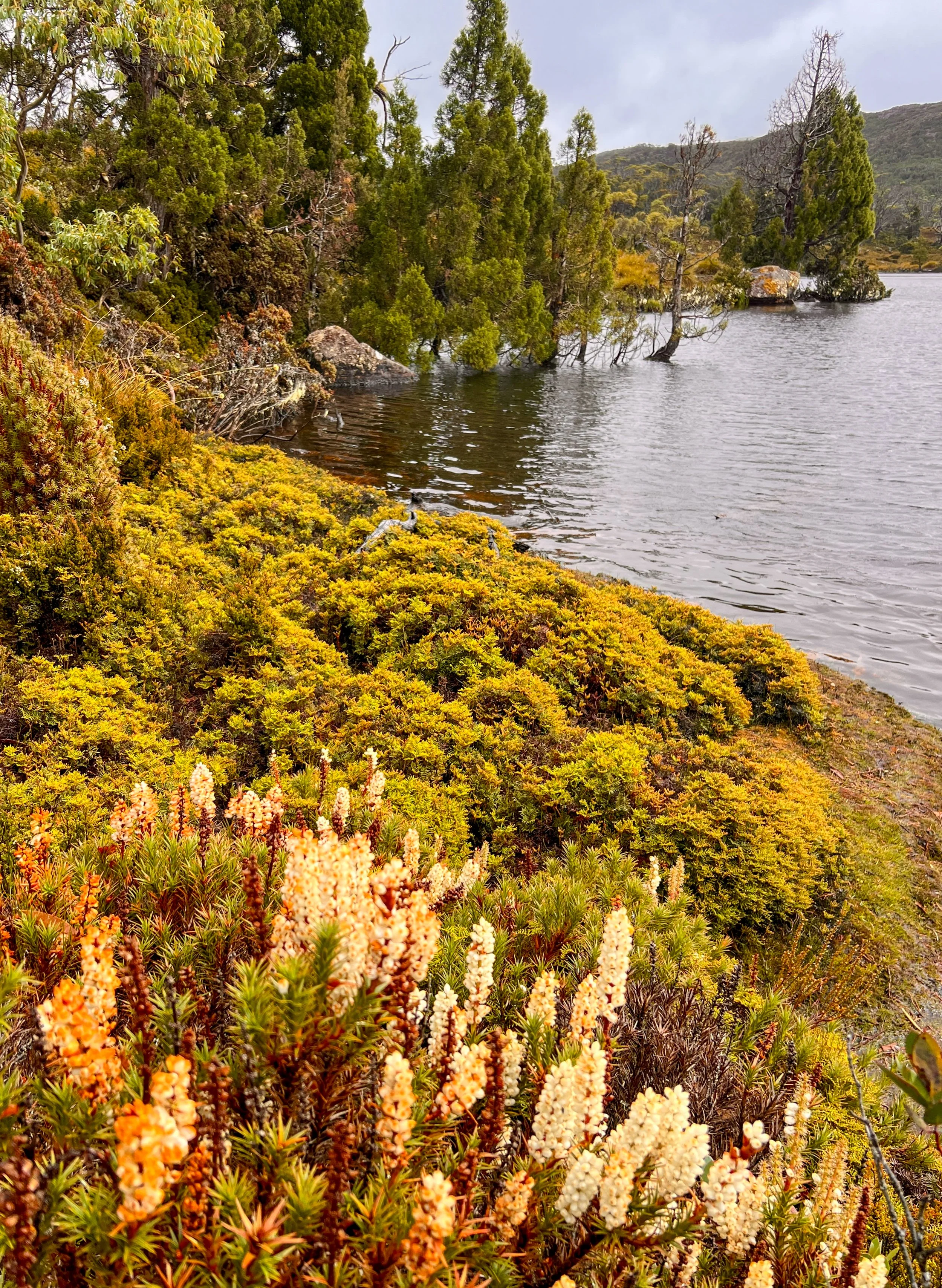
After a day of extremes on the Overland Track we arrive at Pine Forest Moor Standing Camp, where the original hut had recently been lost to fire. While our small rooms are replaced with simple tents, we still get the comfort of a temporary mess building that is very civilised, especially once wine appears.
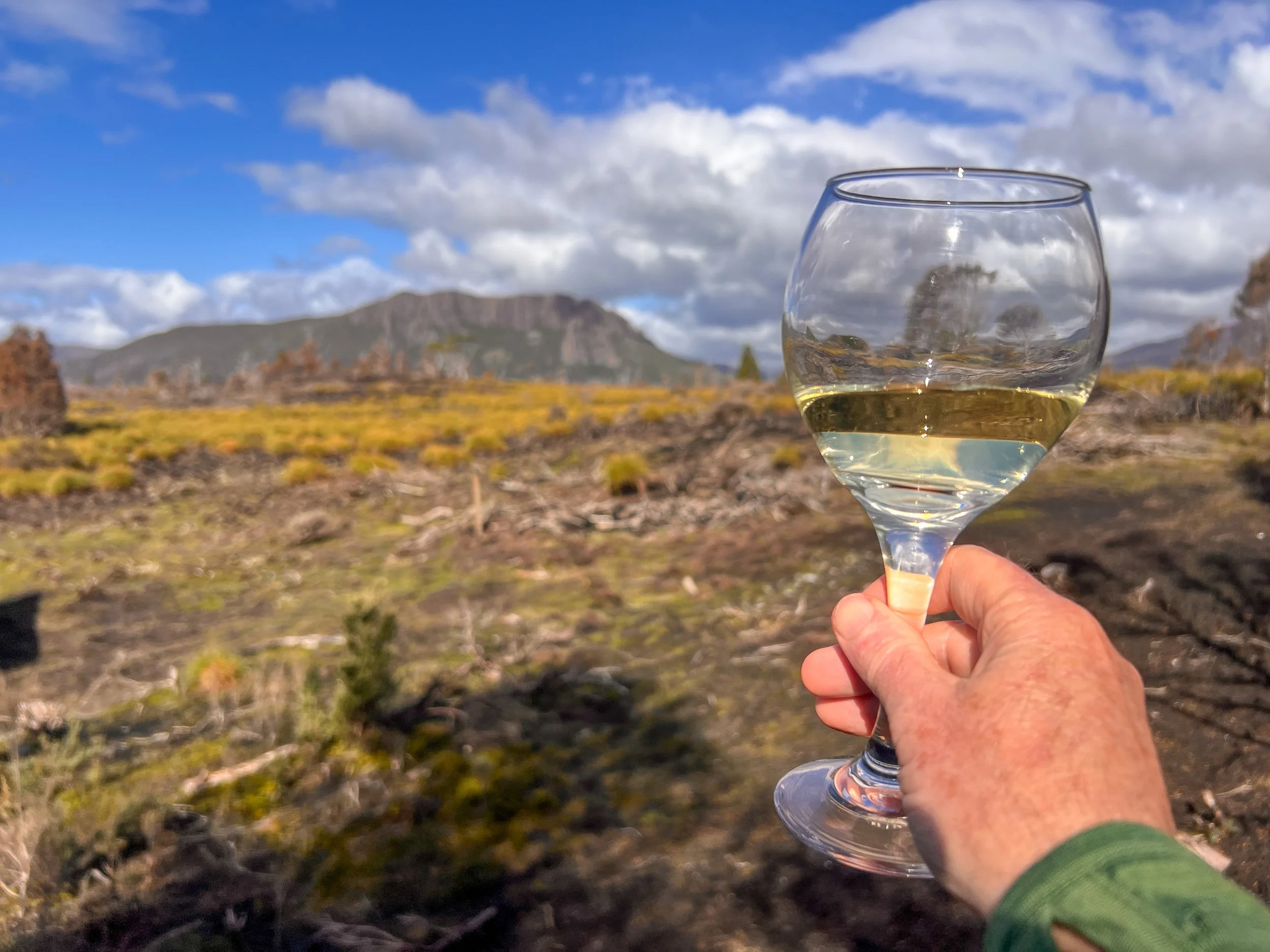
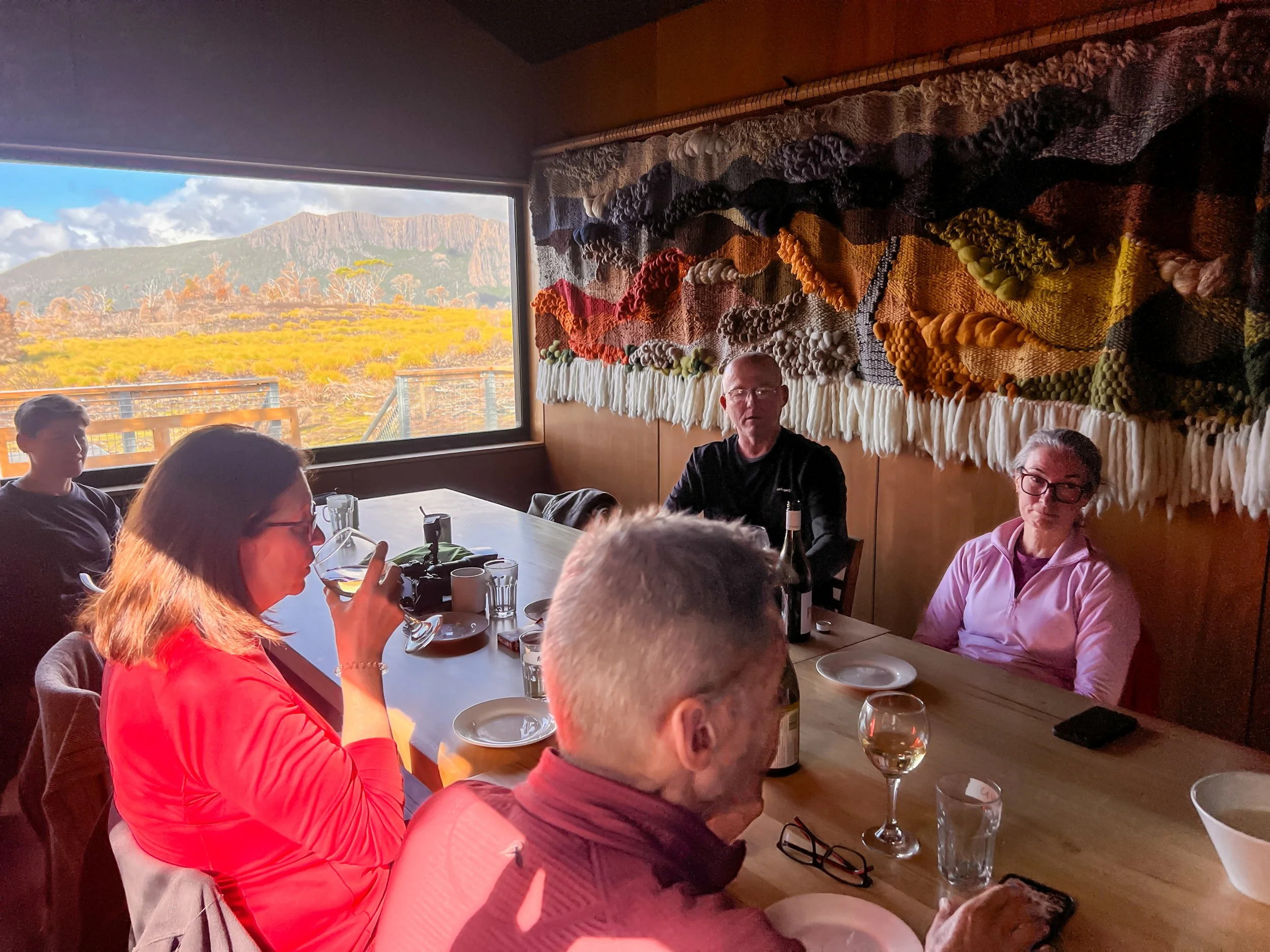
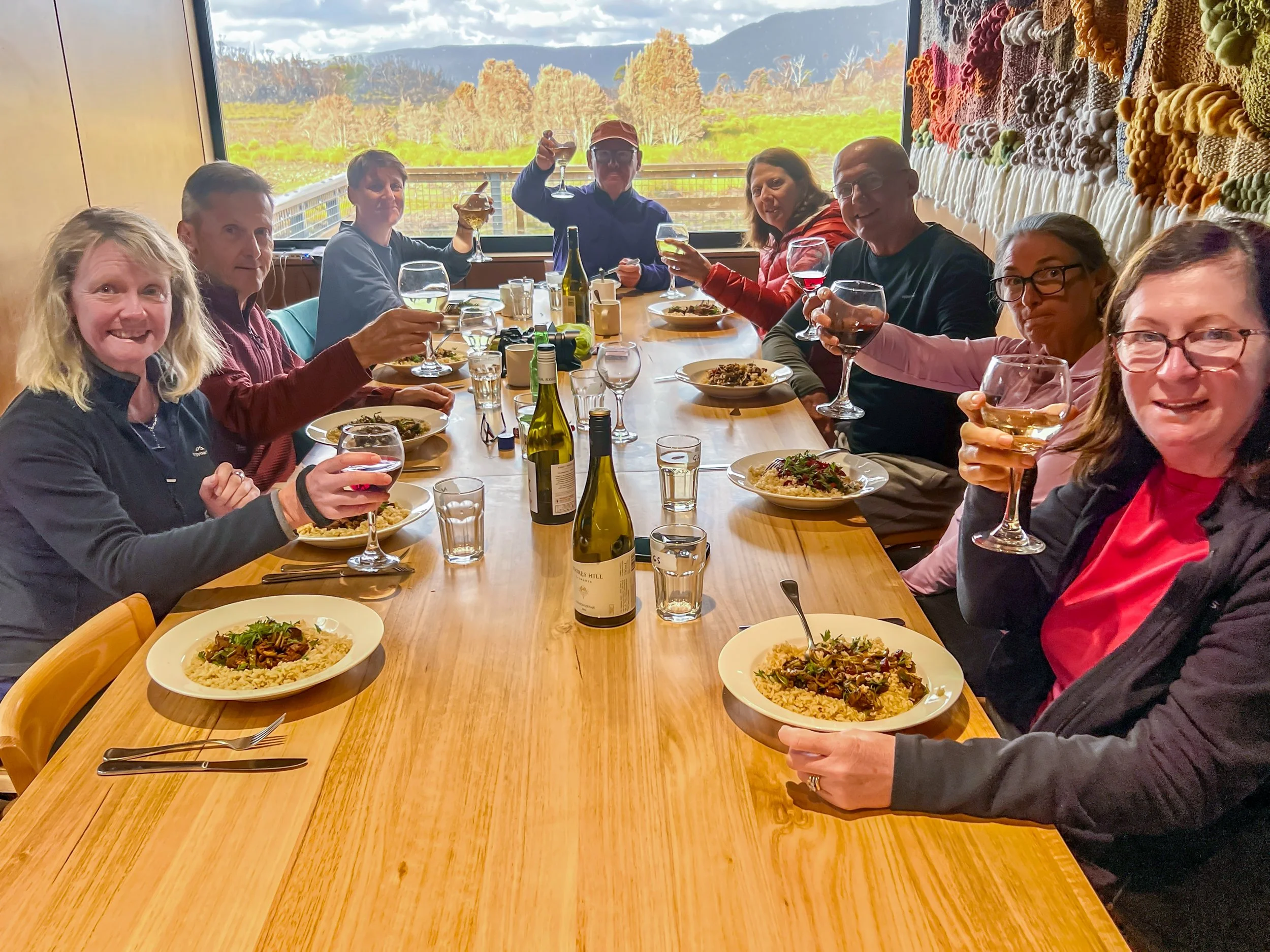
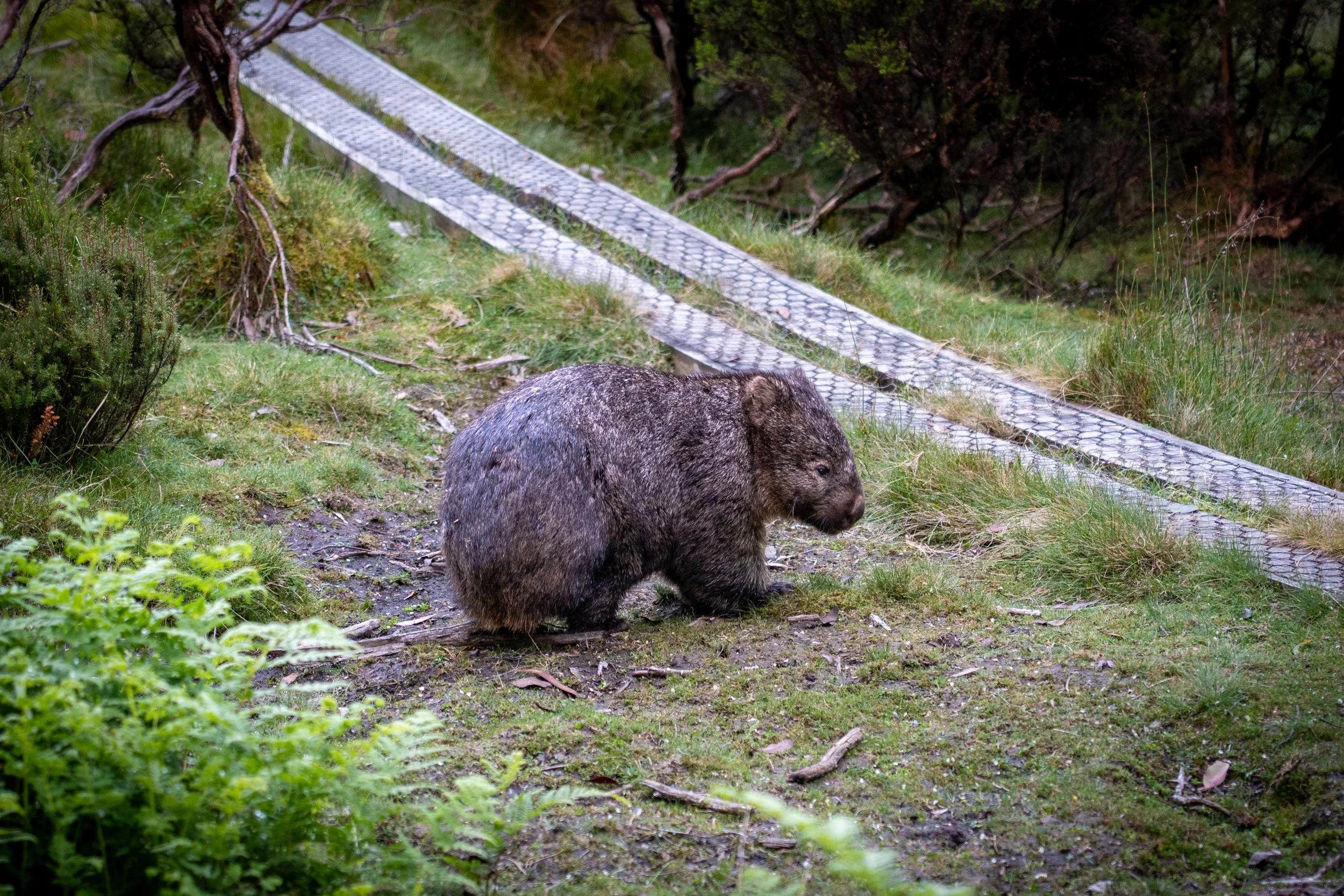
As dusk settles, our first wombat wanders casually through the grass outside our window, unconcerned by the earlier snow or curious hikers taking photos as it grazes.
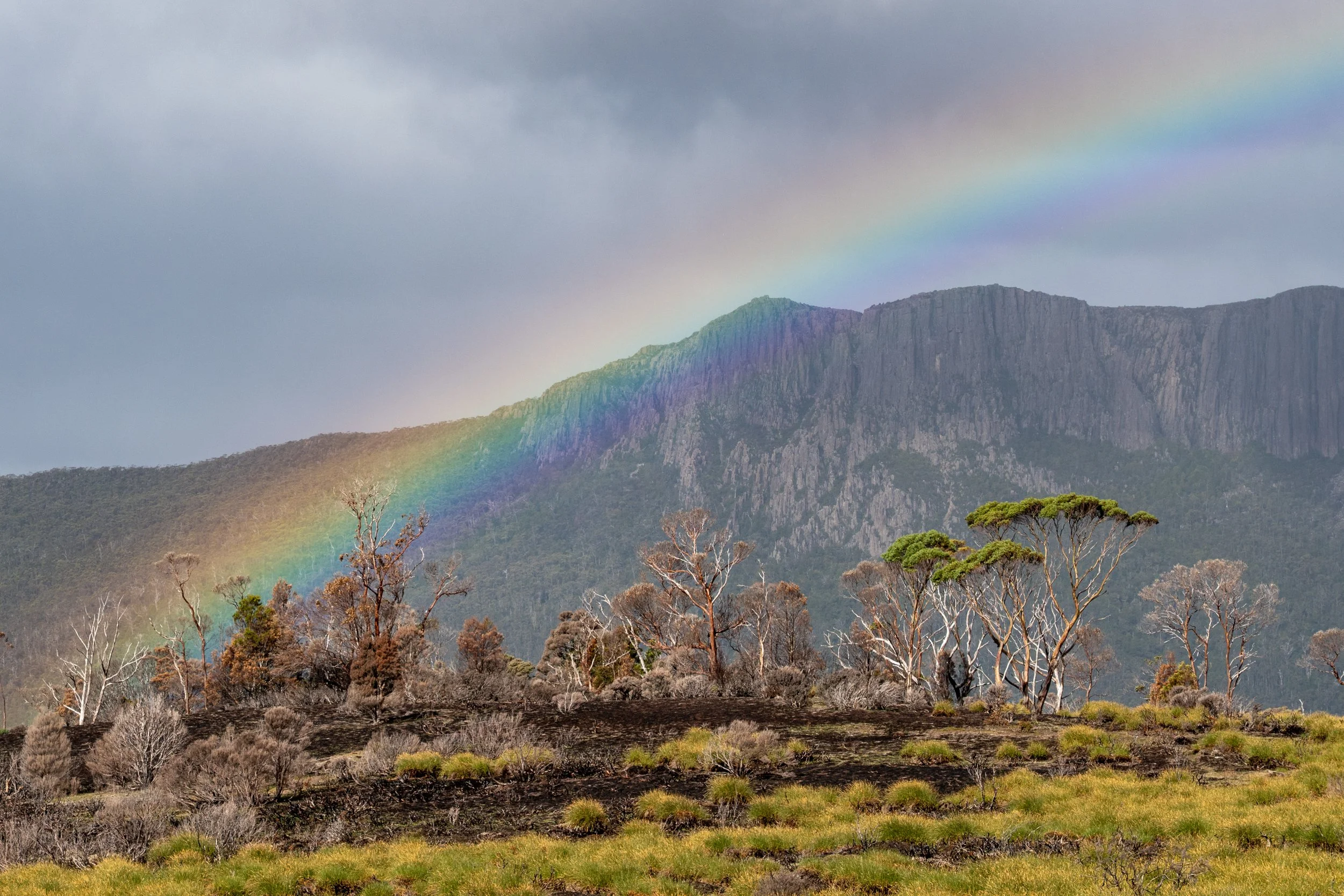
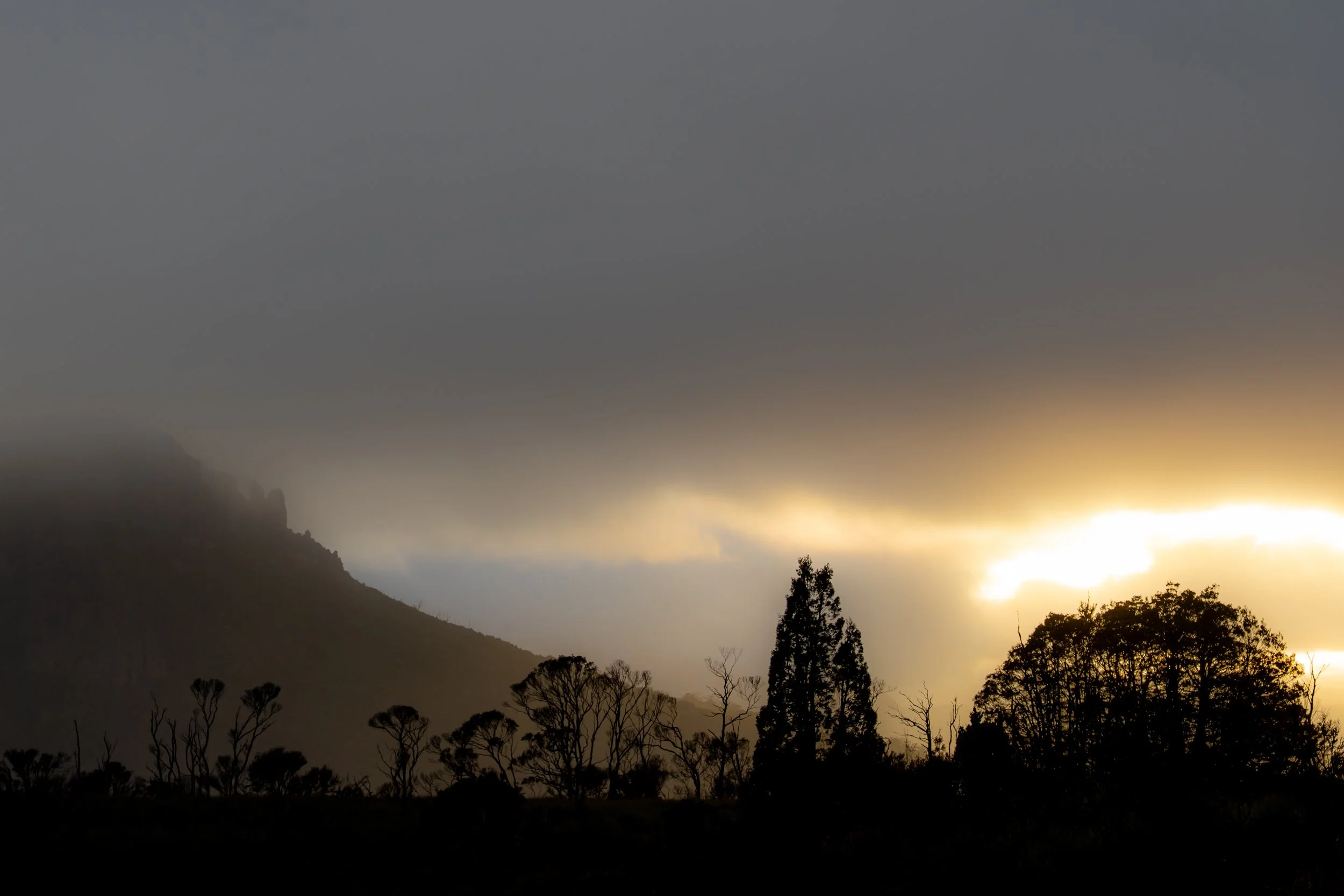
If the evening couldn’t get any better, as we watch the last showers fade over Mount Oakleigh, a rainbow arches over the escarpment, nature’s way of ending the chapter to another amazing day on the Overland Track.
DAY THREE — Ancient Rainforests
Pine Forest Moor to Pelion Plains Hut
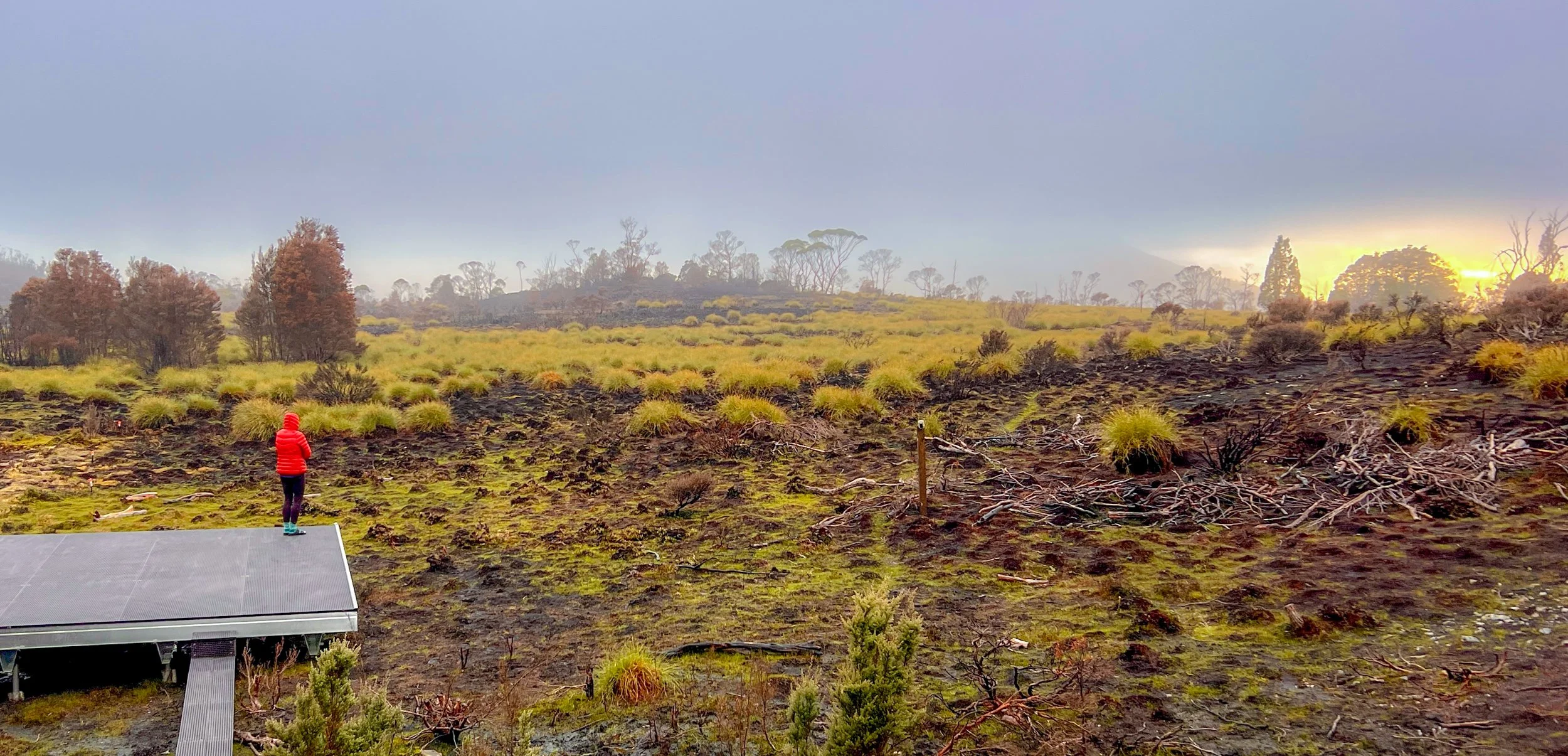
This morning greeted us with a light mist draped over the mountains and what would prove to be the final curtain call for rain for the rest of the hike.
While the past few days had been dominated by big, brag-worthy alpine views, today belonged entirely to ancient forests. It is not long after setting off that we descend into towering myrtle-beech rainforest, thick with moss and fern and looking suspiciously like a rejected set from Lord of the Rings.
Ferns unfurl. Logs decay slowly. Water whispers constantly, as if the forest itself is gossiping about us. Ahead, the trail narrows into a green tunnel, the vegetation closing in and pulling your gaze forward into the distance. It is hypnotic walking, the kind that makes you forget how long you’ve been moving until you trip over.
Below your feet lies a twisting spiderweb of roots. It becomes a difficult choice whether to stare downwards to avoid tripping over, or to look ahead for the next orange marker to reassure yourself you haven’t wandered off and gotten lost like the girls in the movie Picnic at Hanging Rock.
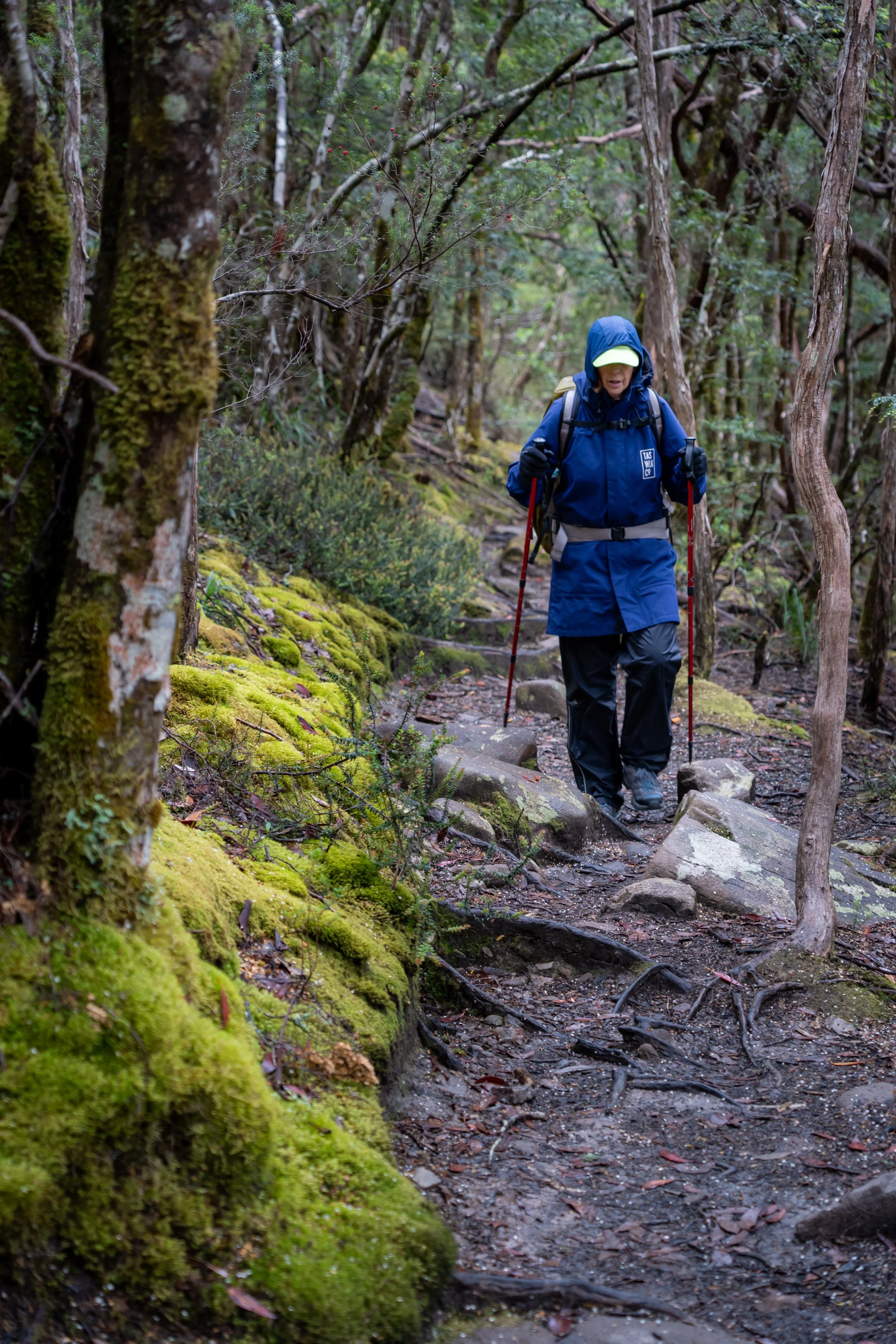
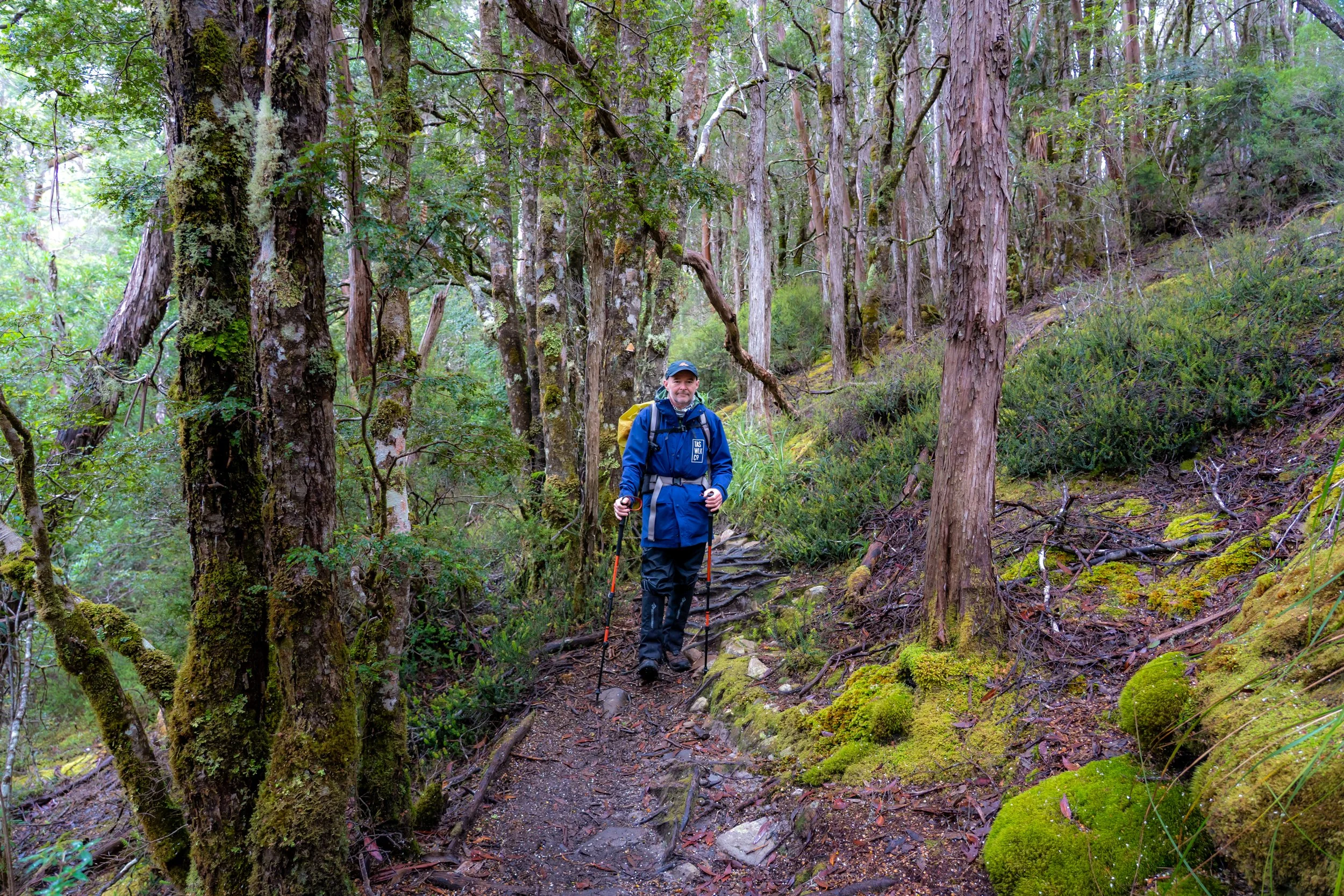
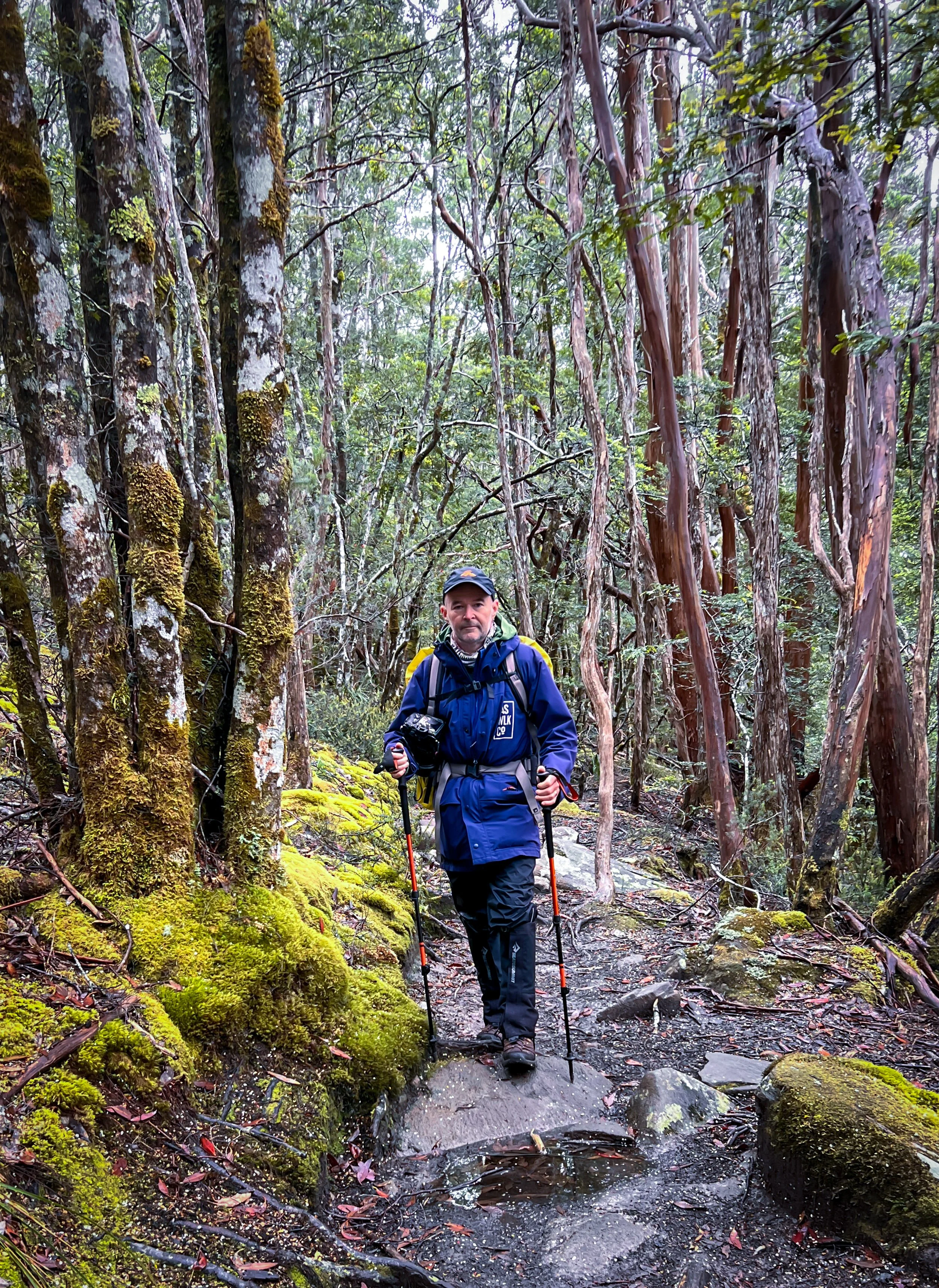
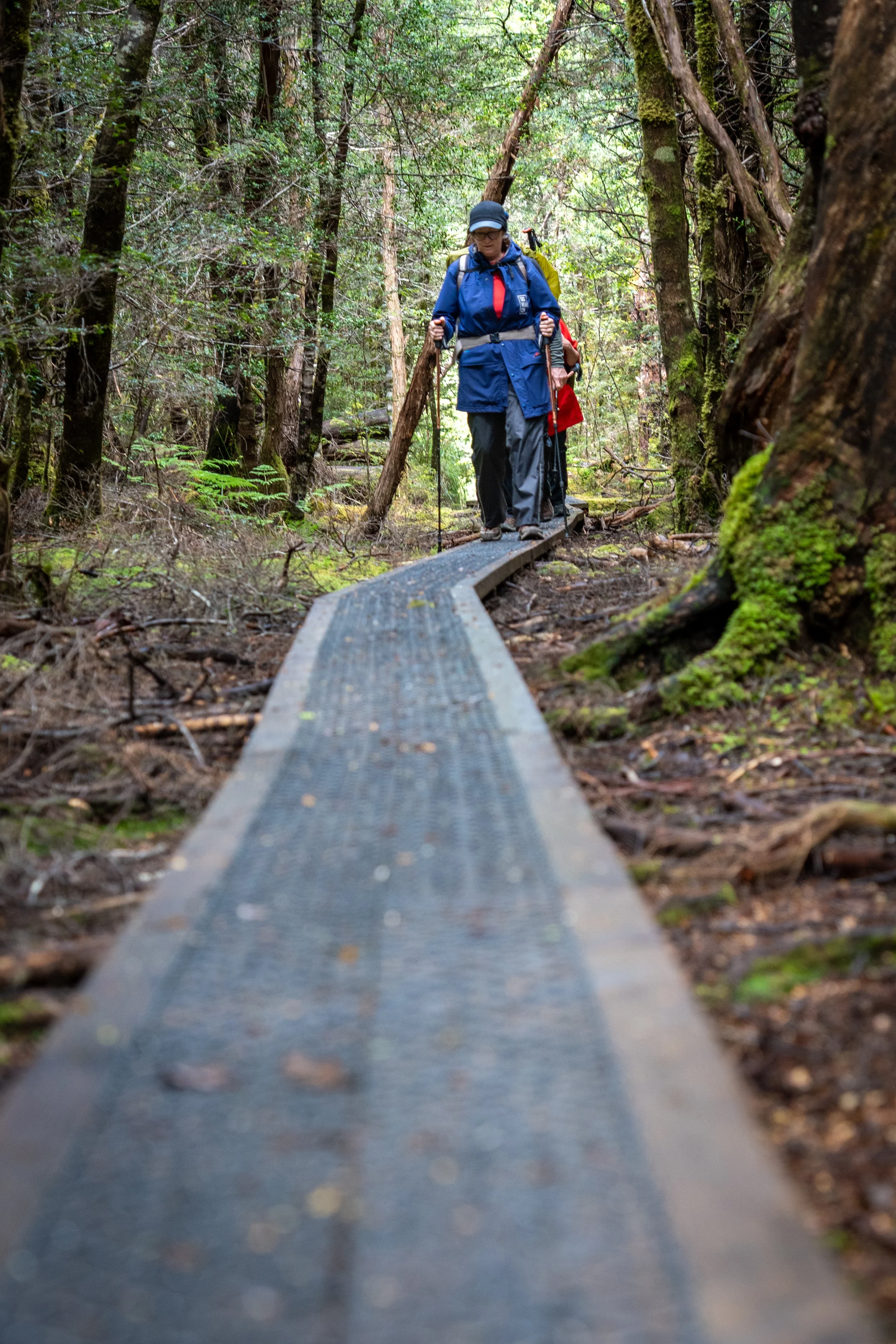
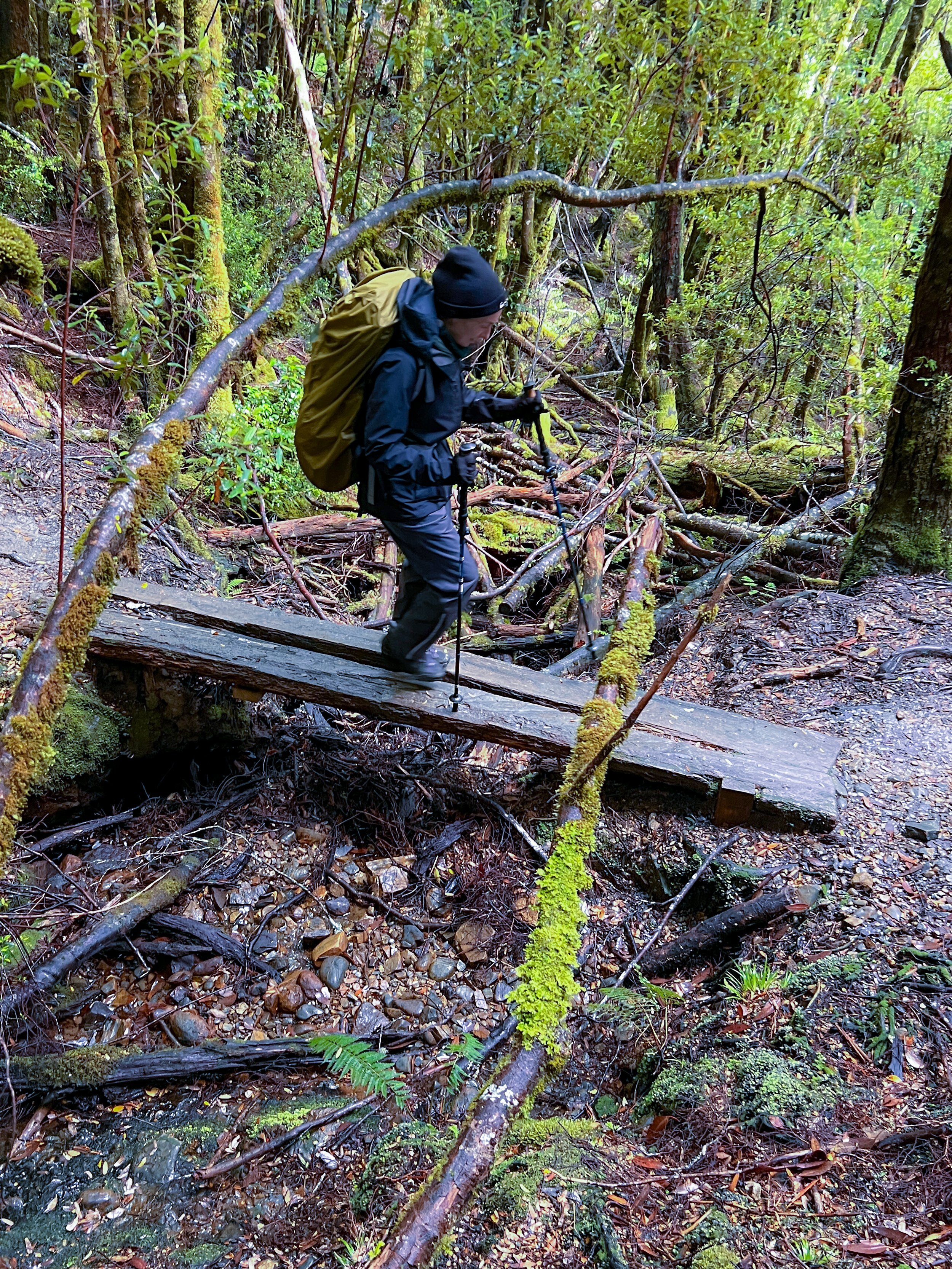
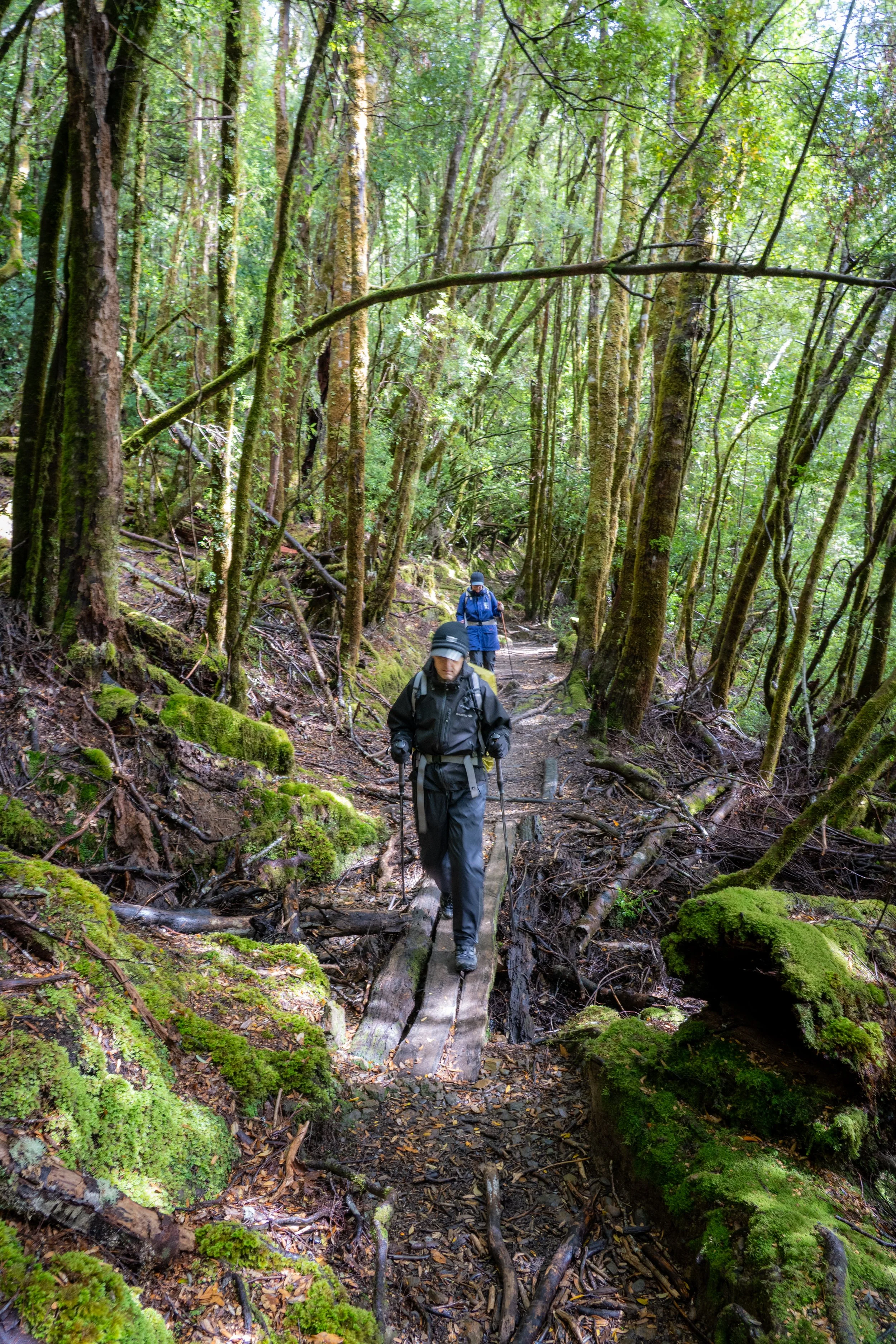
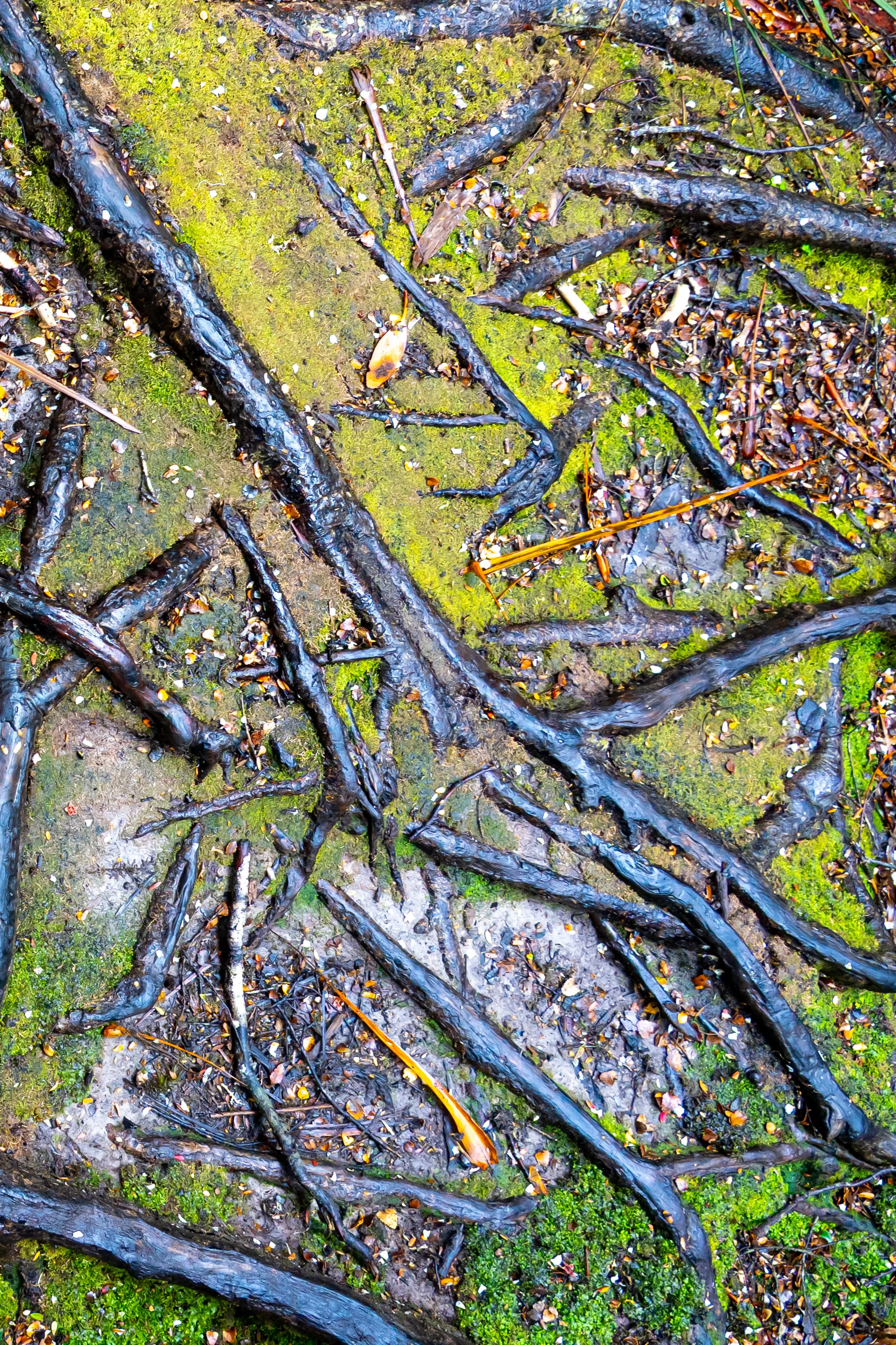

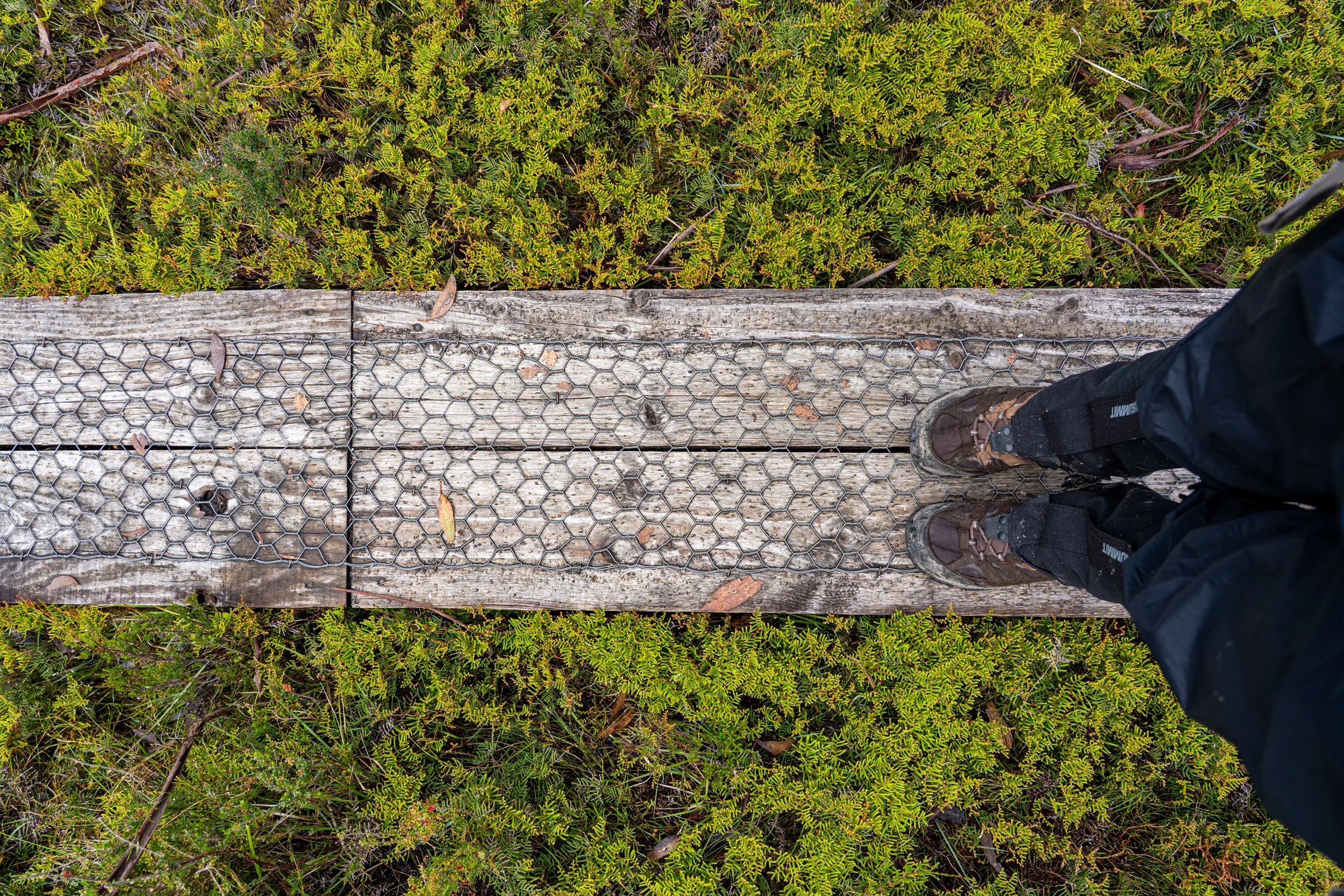
Equally twisted are the surrounding trunks. Much of the gnarly forest is coated in fluorescent green moss, as though a painter arrived with only one colour and committed fully to using the entire tin.
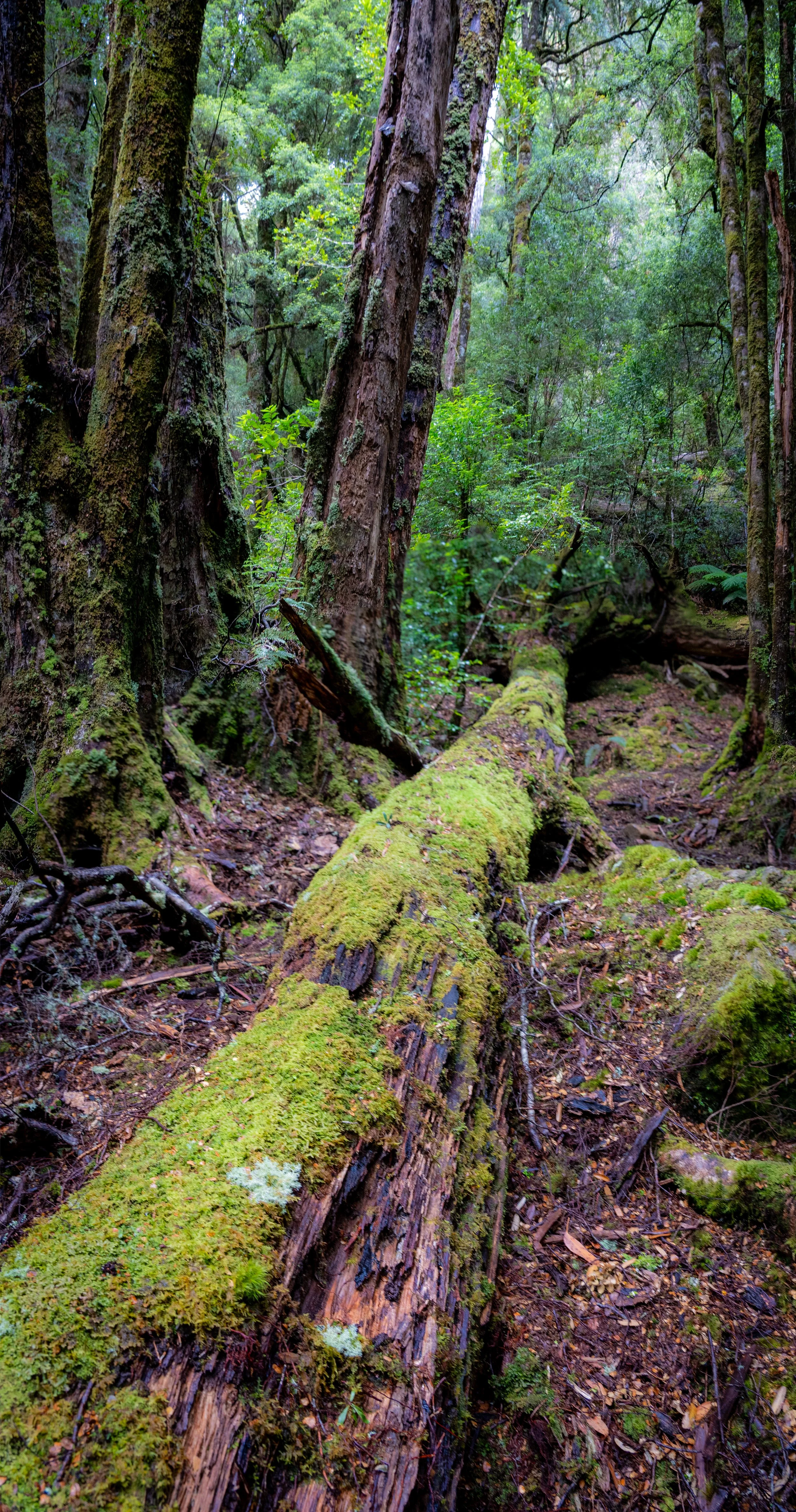
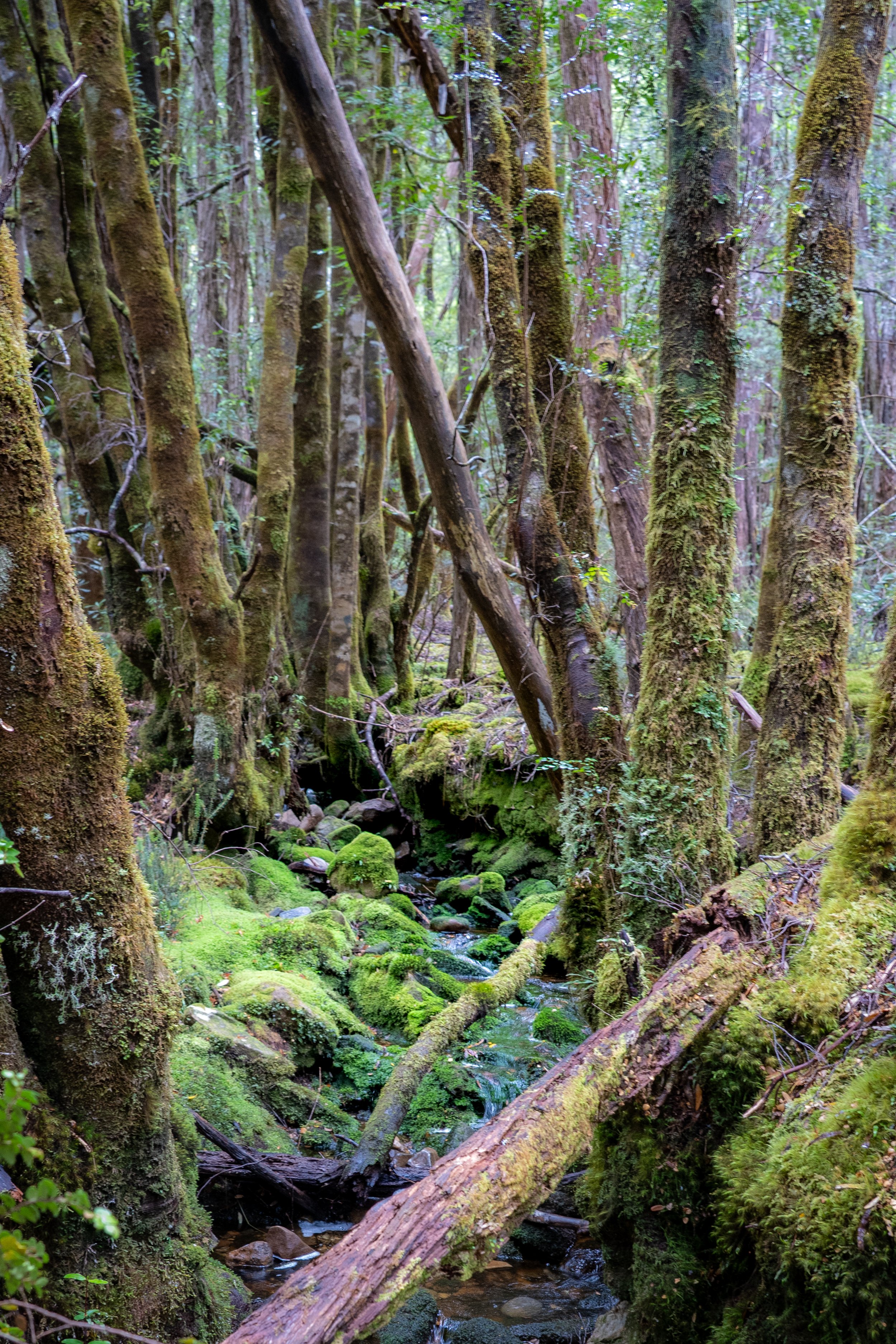
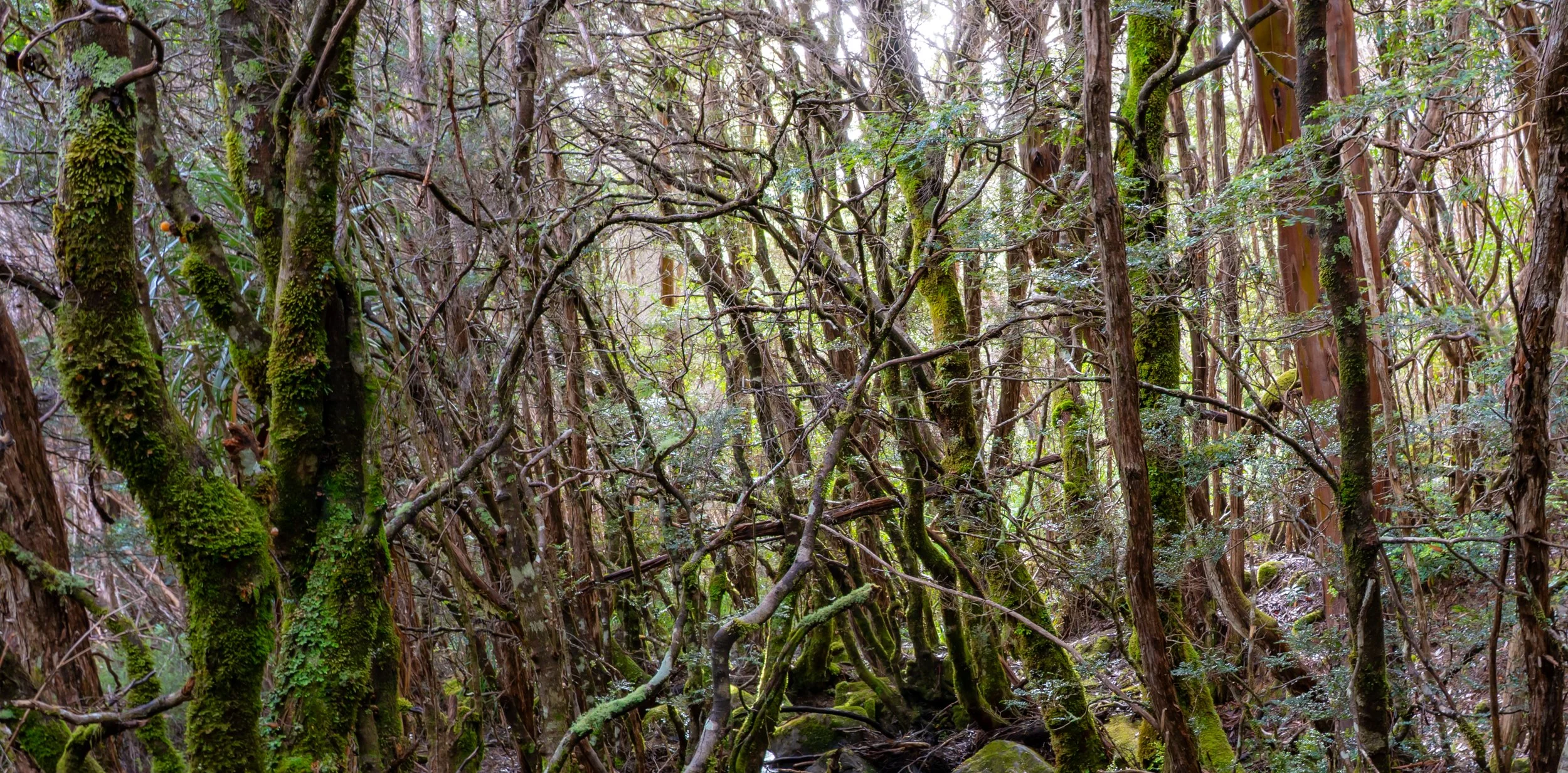
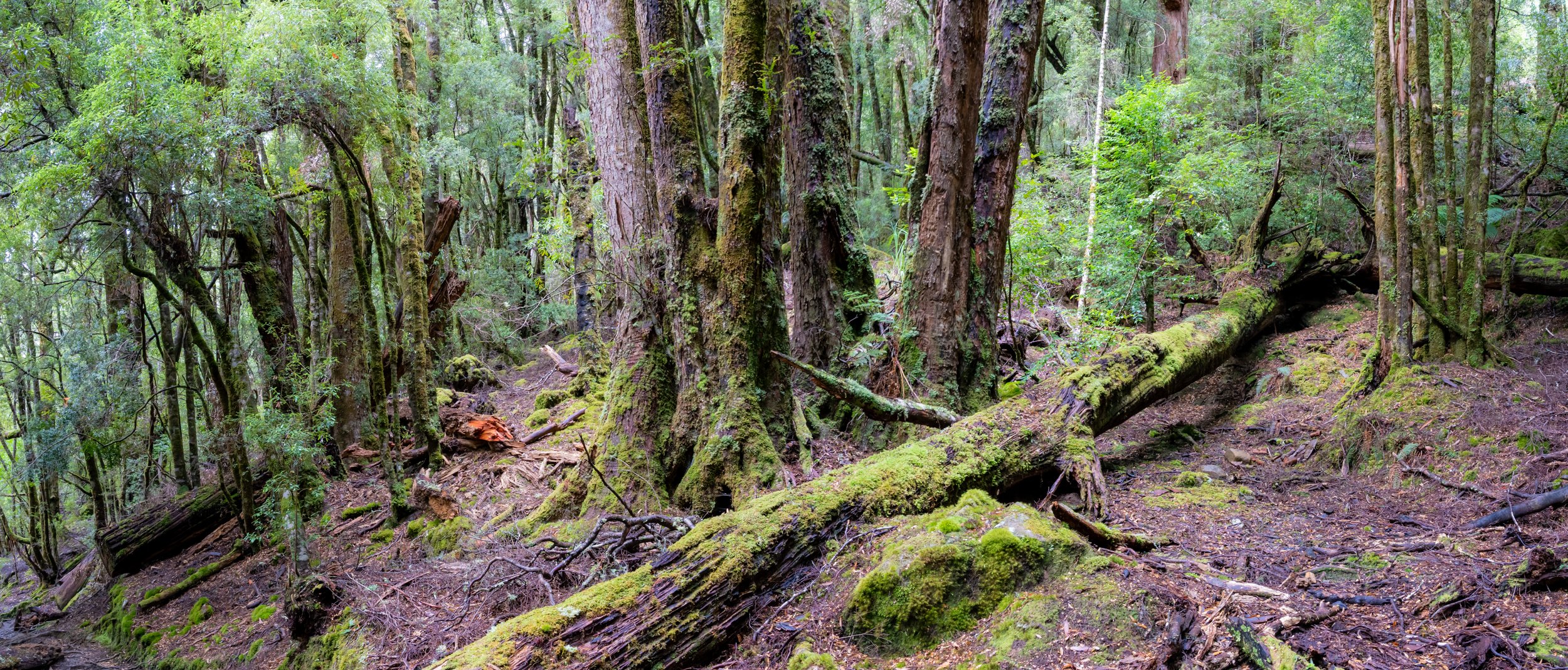
This effect becomes even more dramatic when crossing the small streams, where the boulders look less like rocks and more like strange, overgrown furry apples.
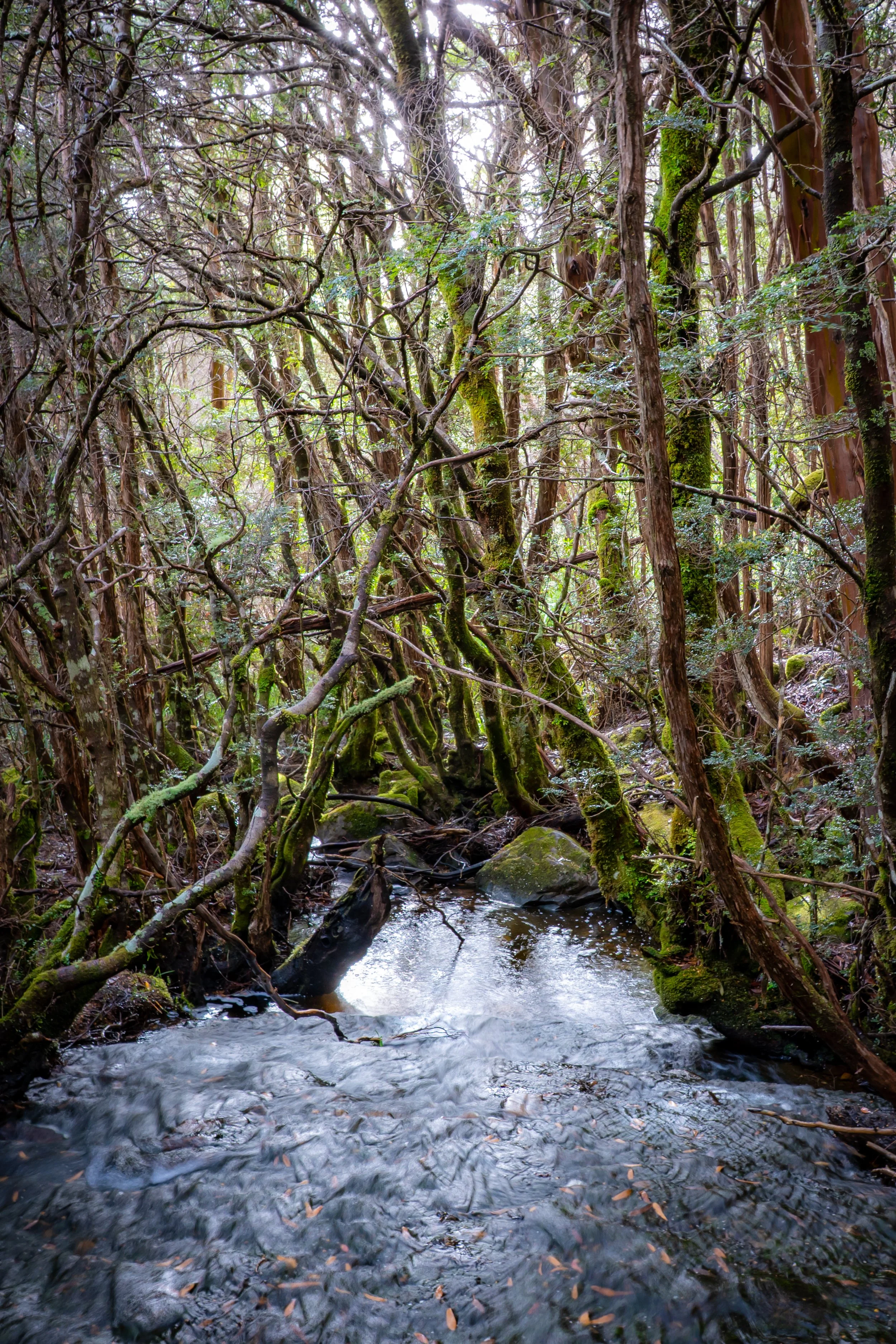
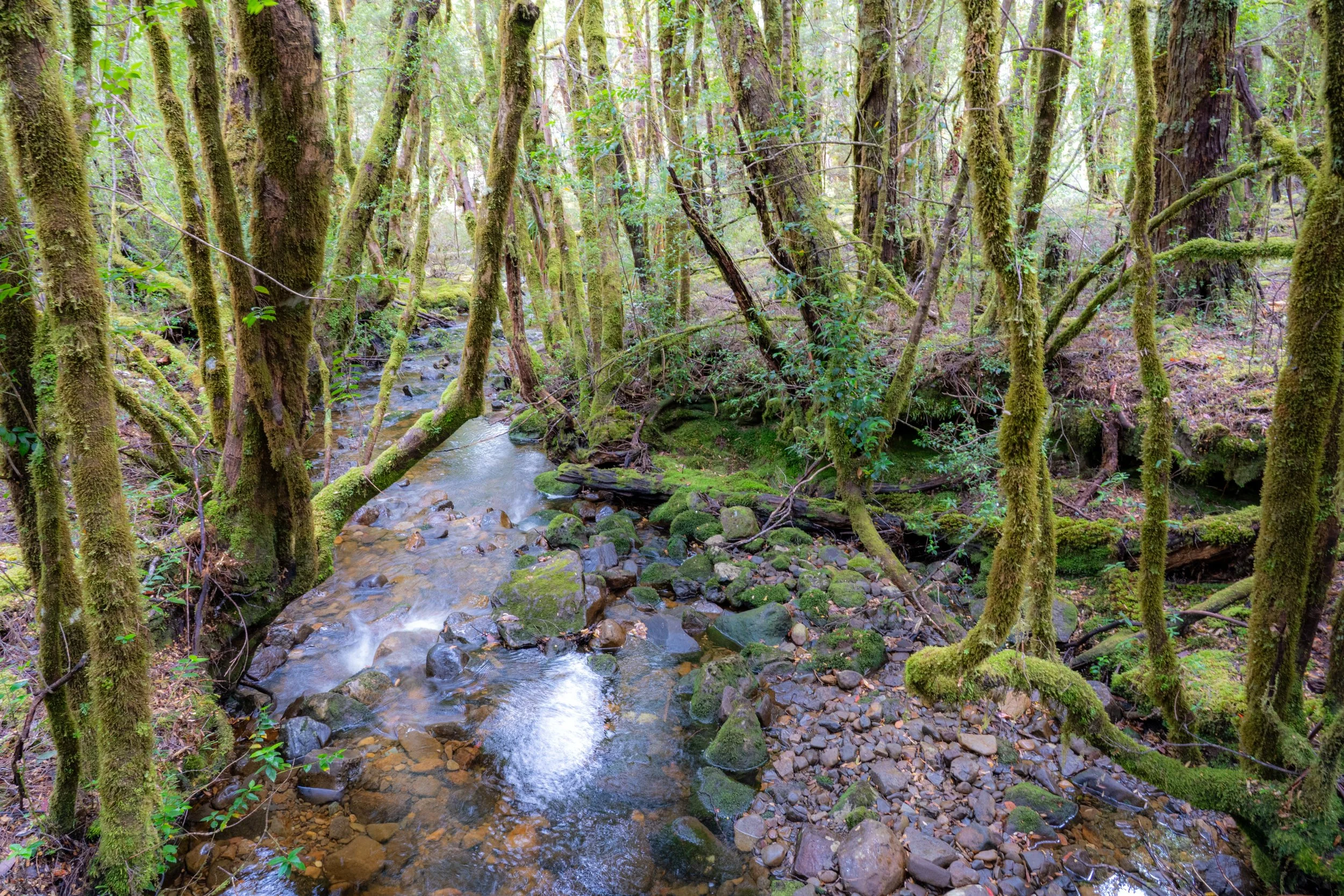
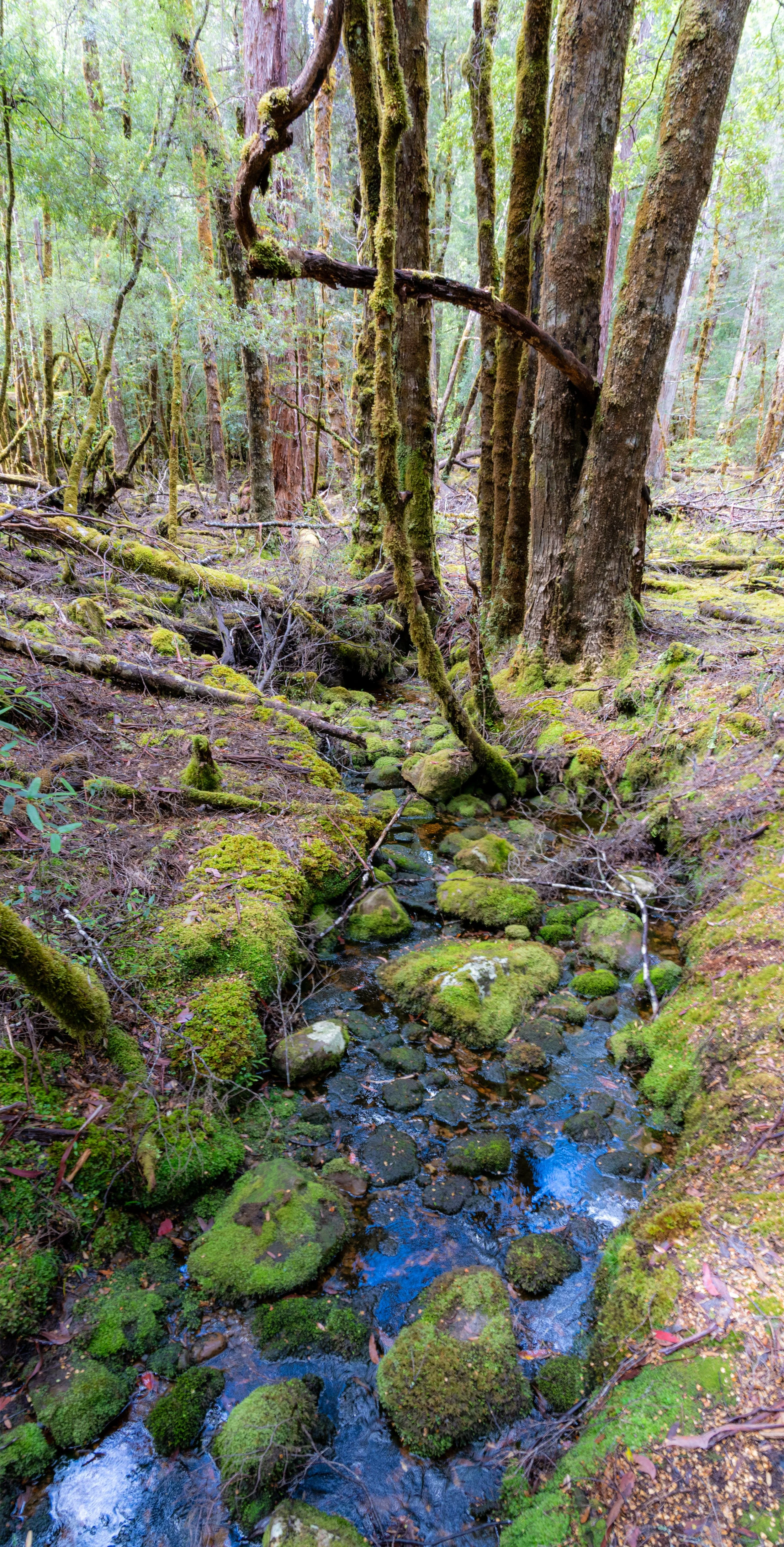
After several transitions in and out of forest, we reach the Forth River which curves quietly beside us. Not long after, we arrive at Frog Flats, the lowest point of the entire track, where the forest feels ancient beyond time.
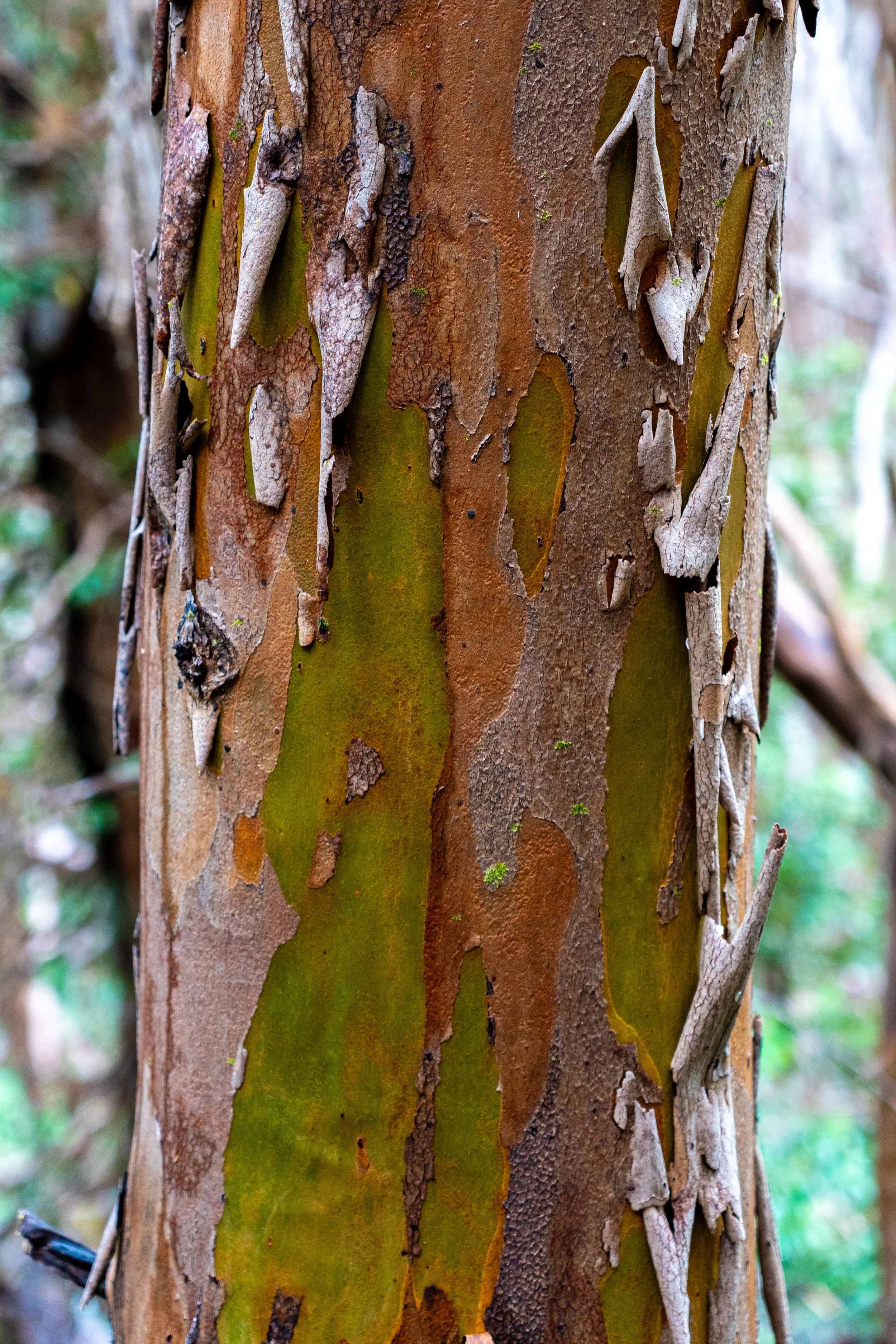
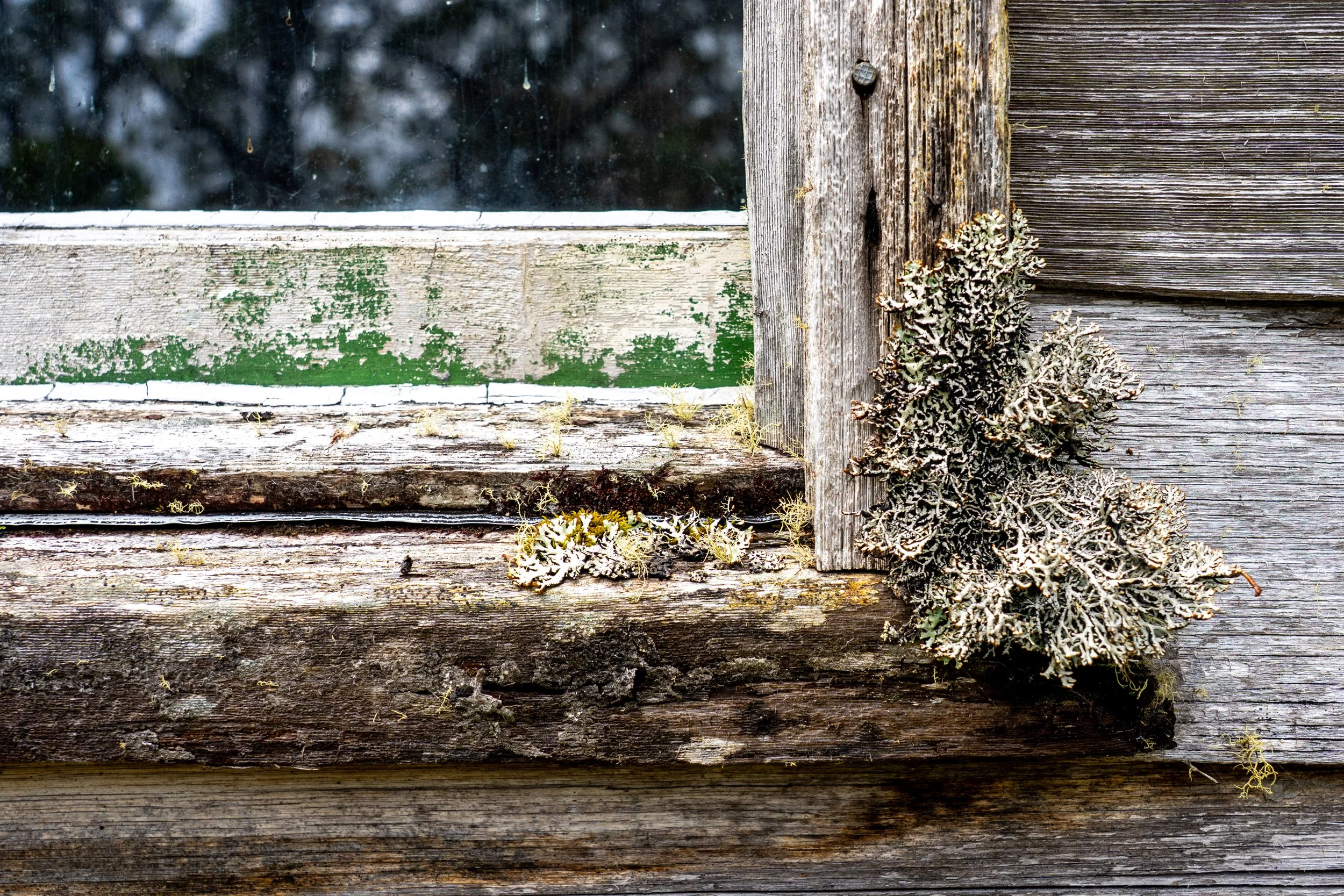
Stopping to rest, I notice the smaller details: the bright red berries of the Mountain Pinkberry; the textured bark of the trees; the intricate patterns in the moss; the curly dry leaves of the Pandani (giant grass tree); the broccoli like Lichen (Blue Tier); and the strange, vivid orange Ruby Beech fungus. This fungus grows only on Myrtle Beech trees, forming a smooth globe before splitting open to resemble an orange golf ball. Amazingly, it is edible, although I prefer the hut chefs over my foraging effort.
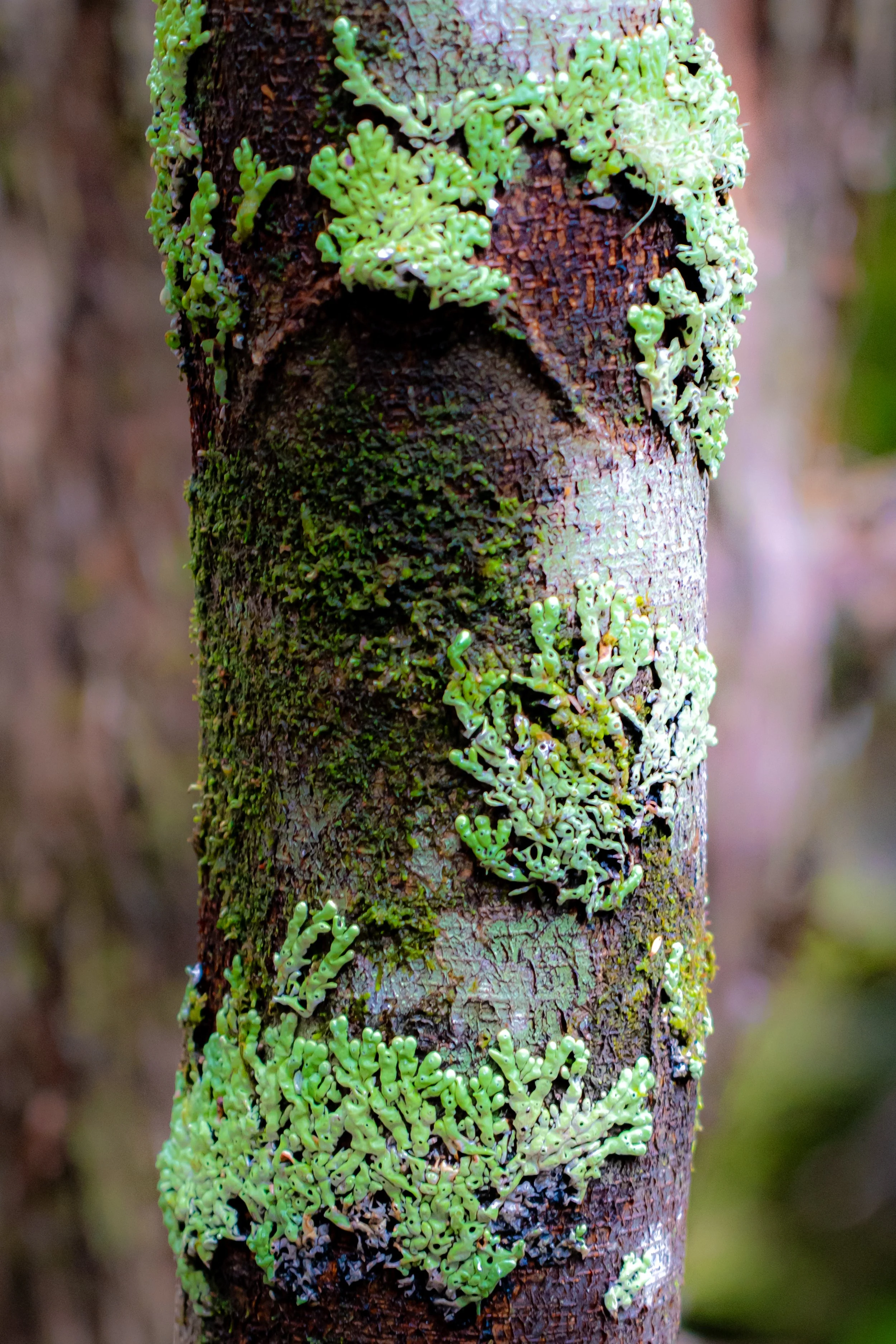
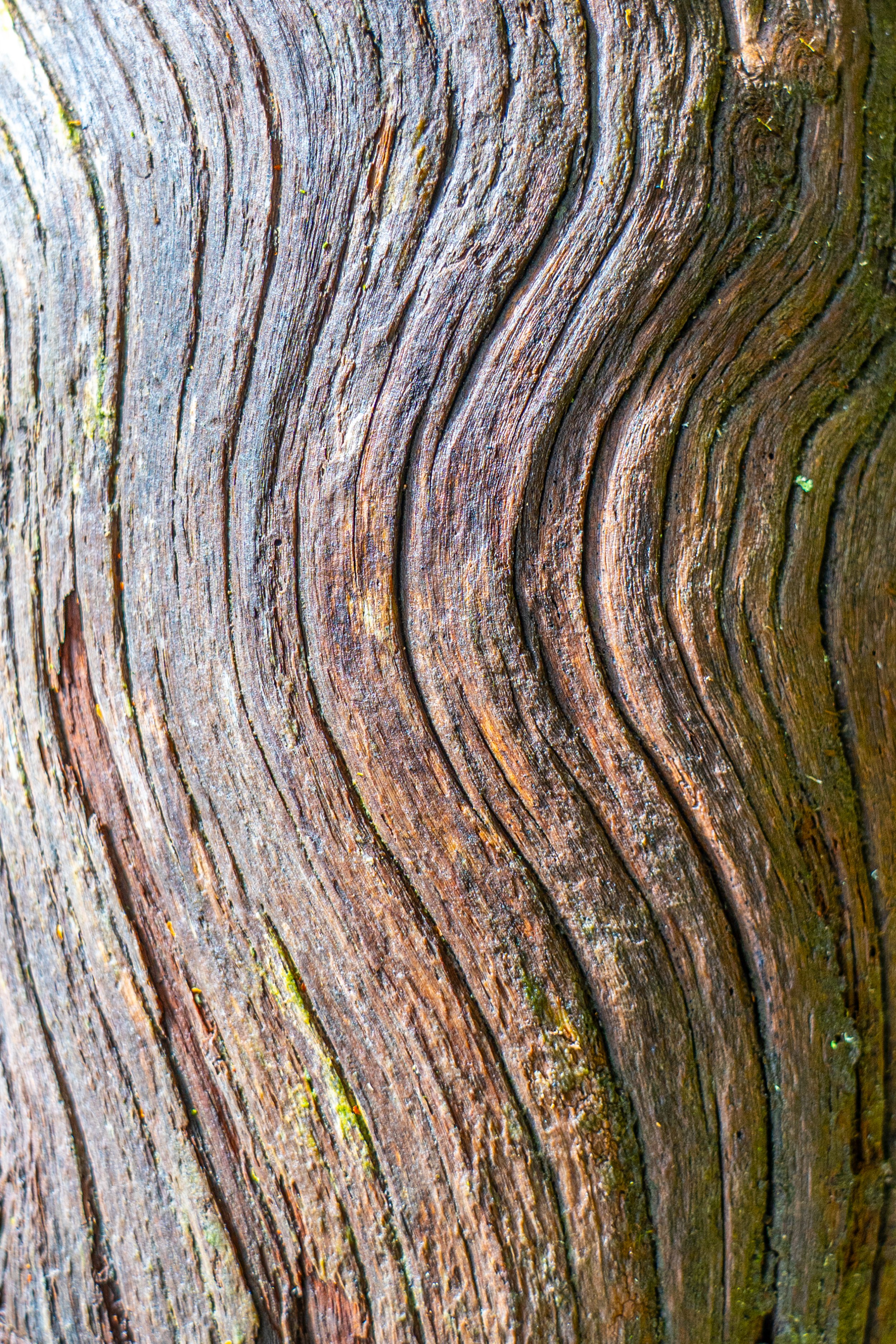
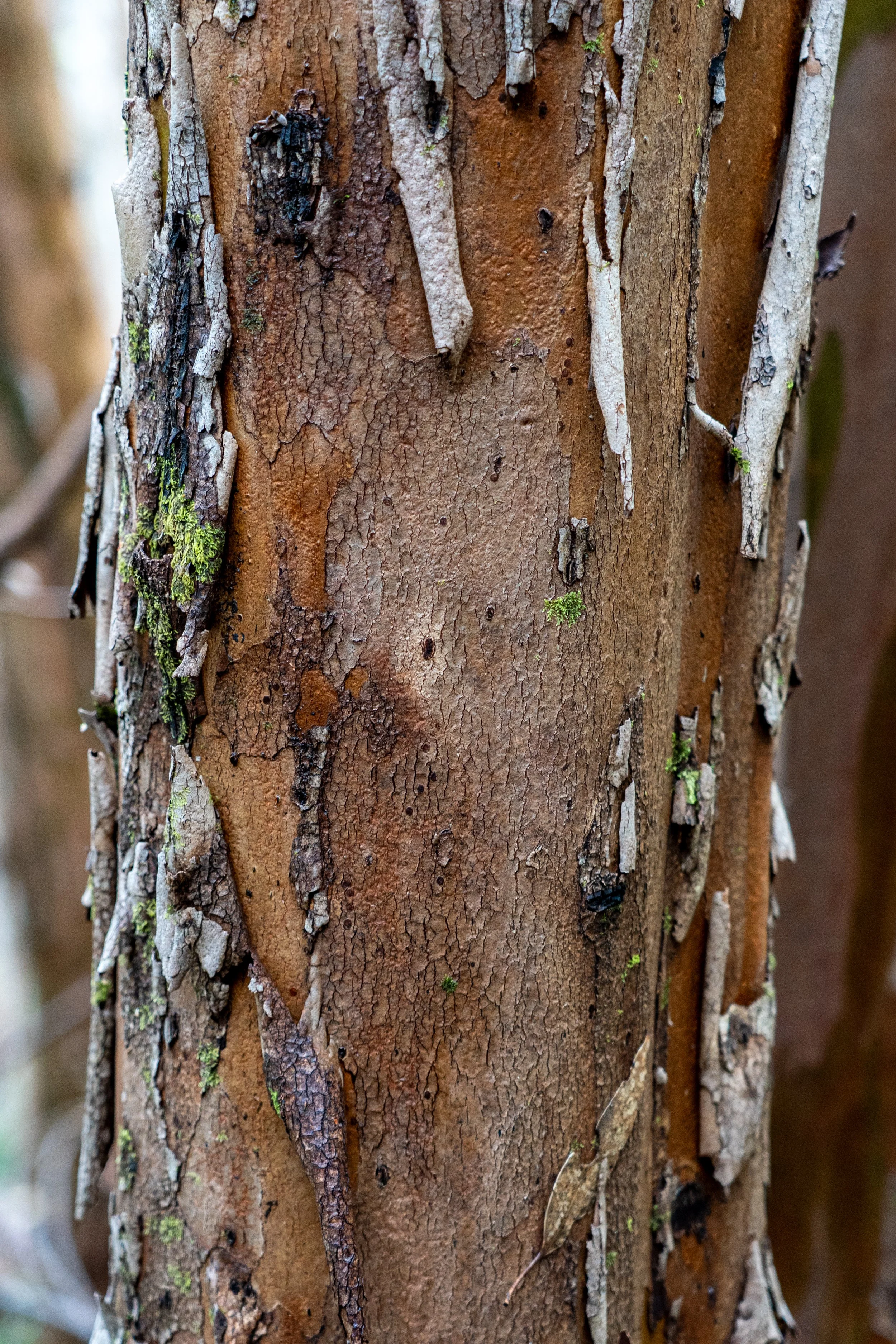
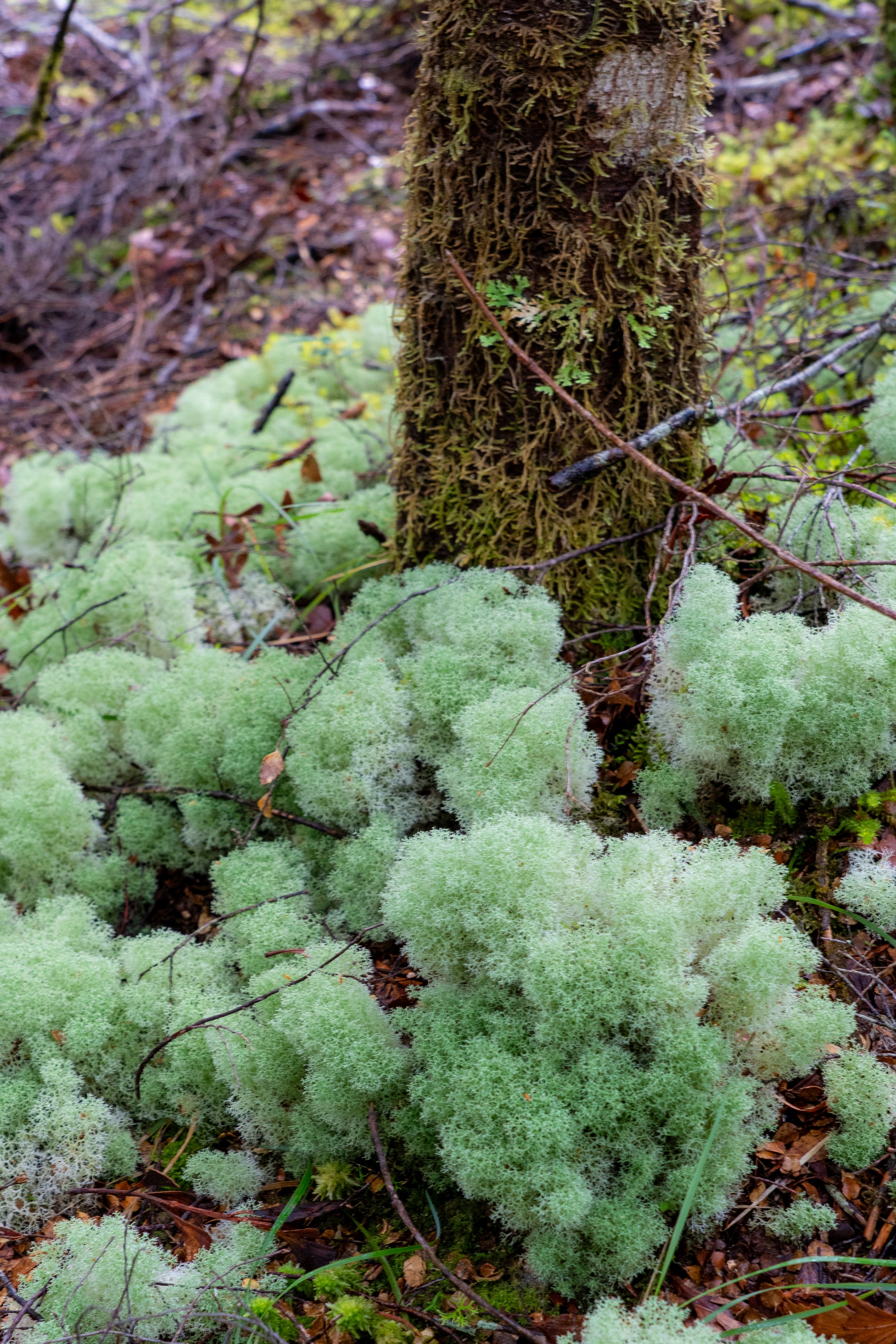
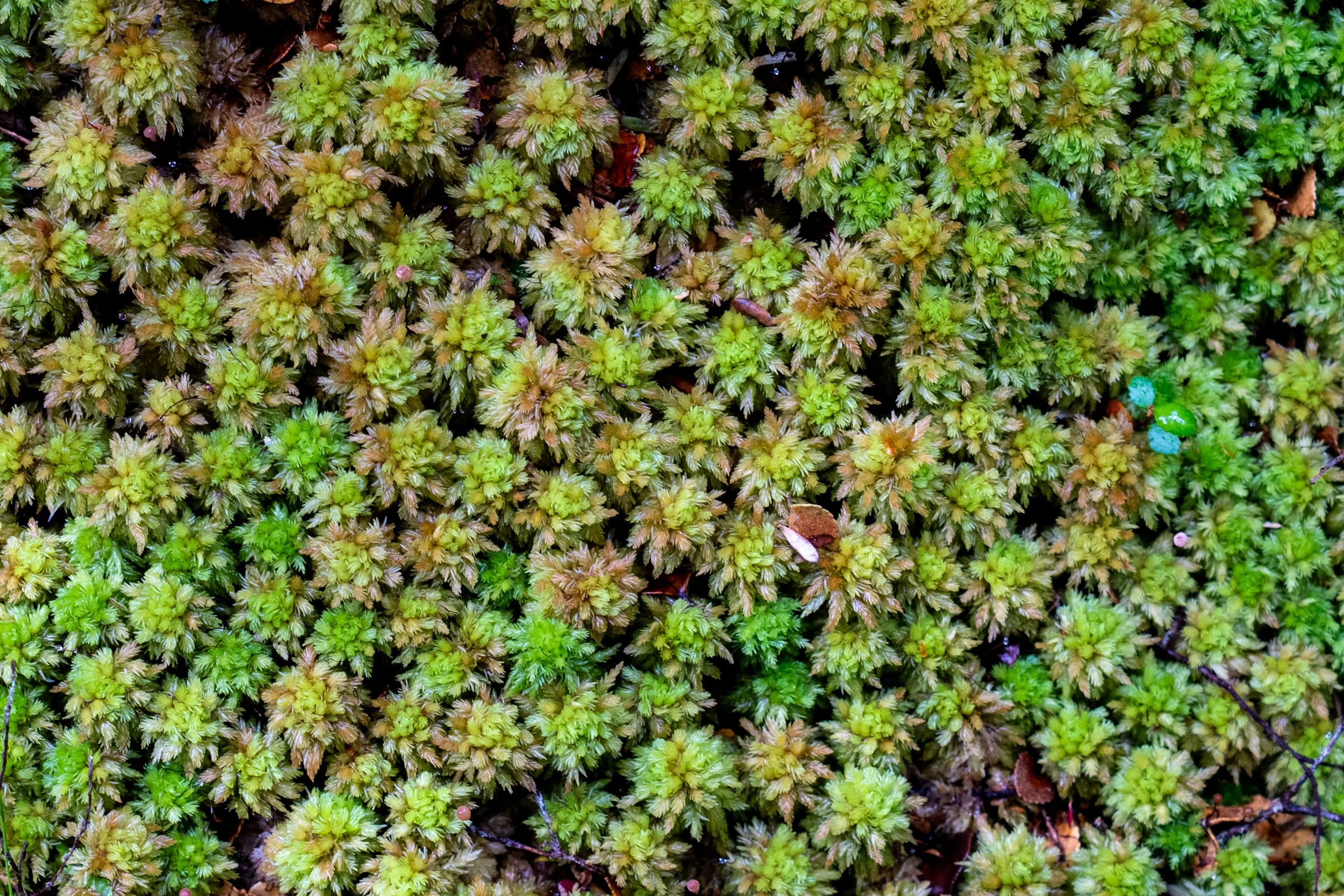
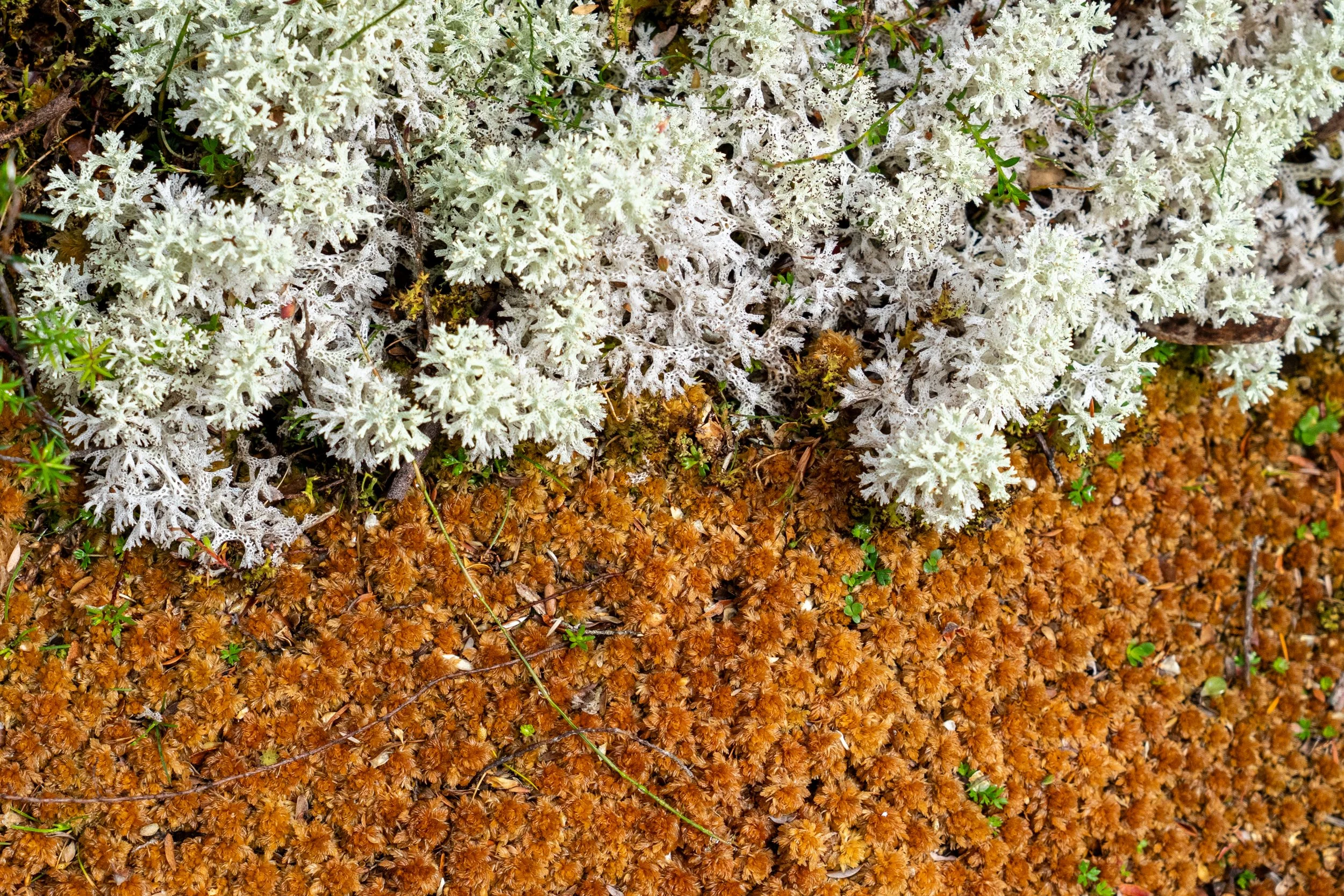
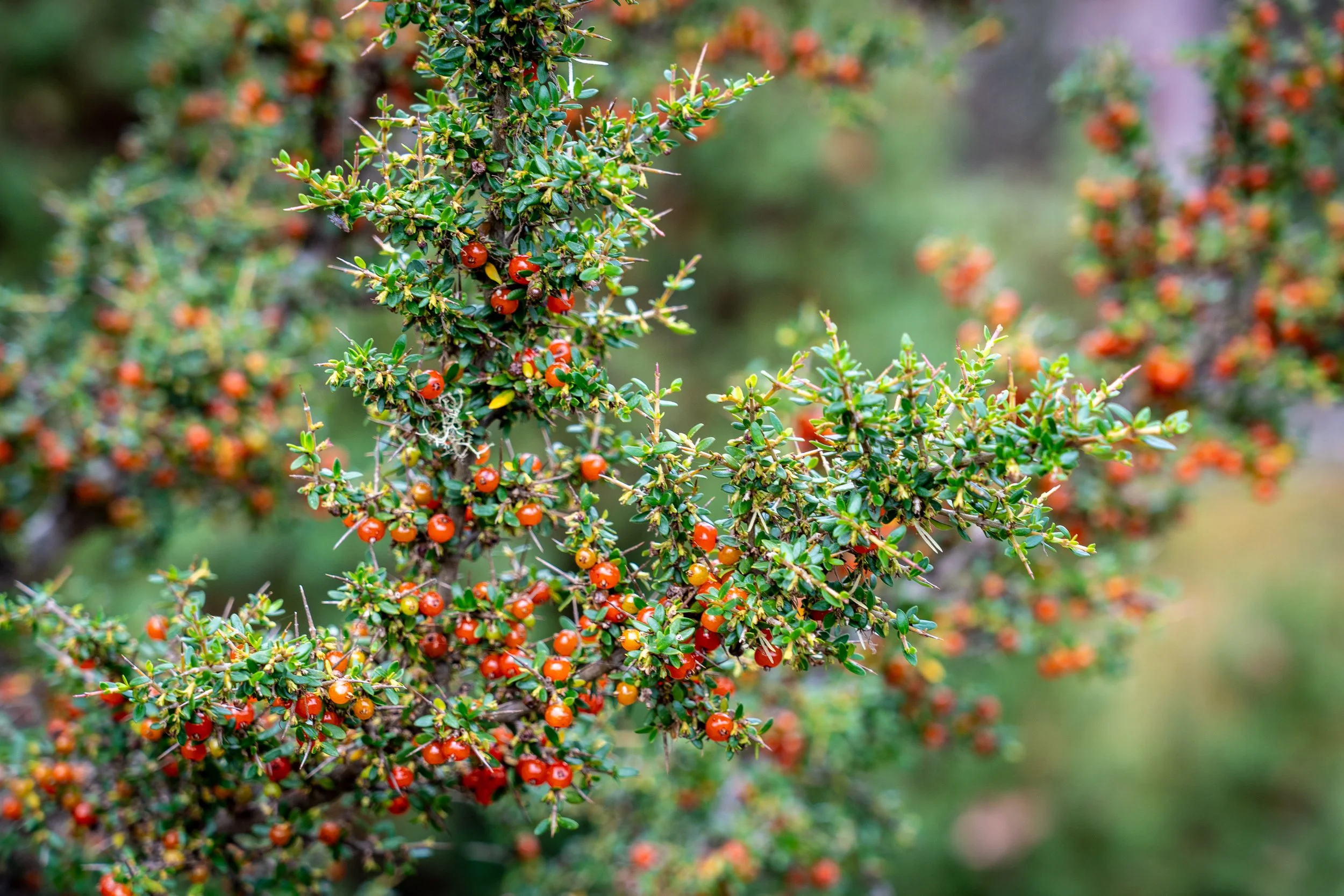
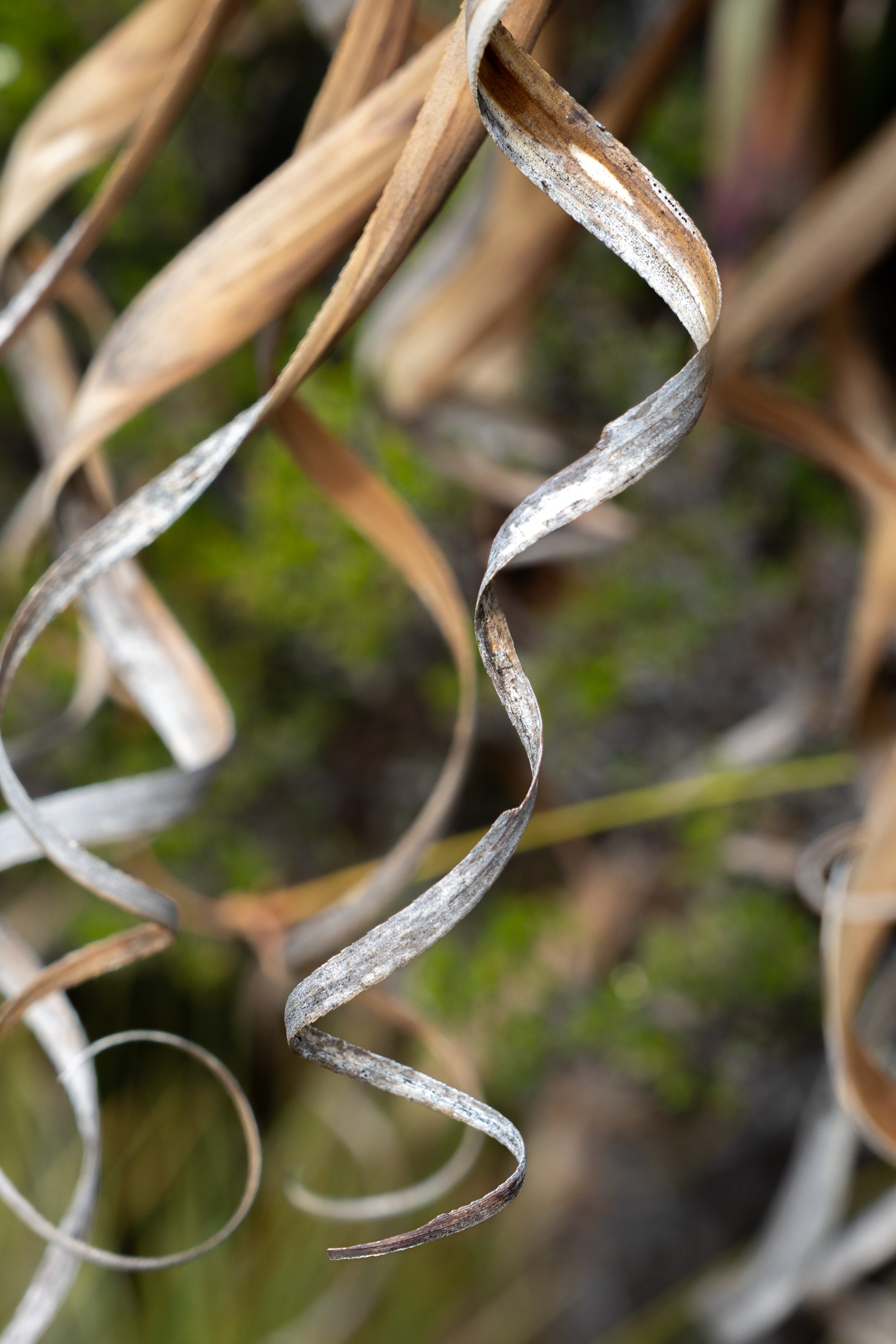
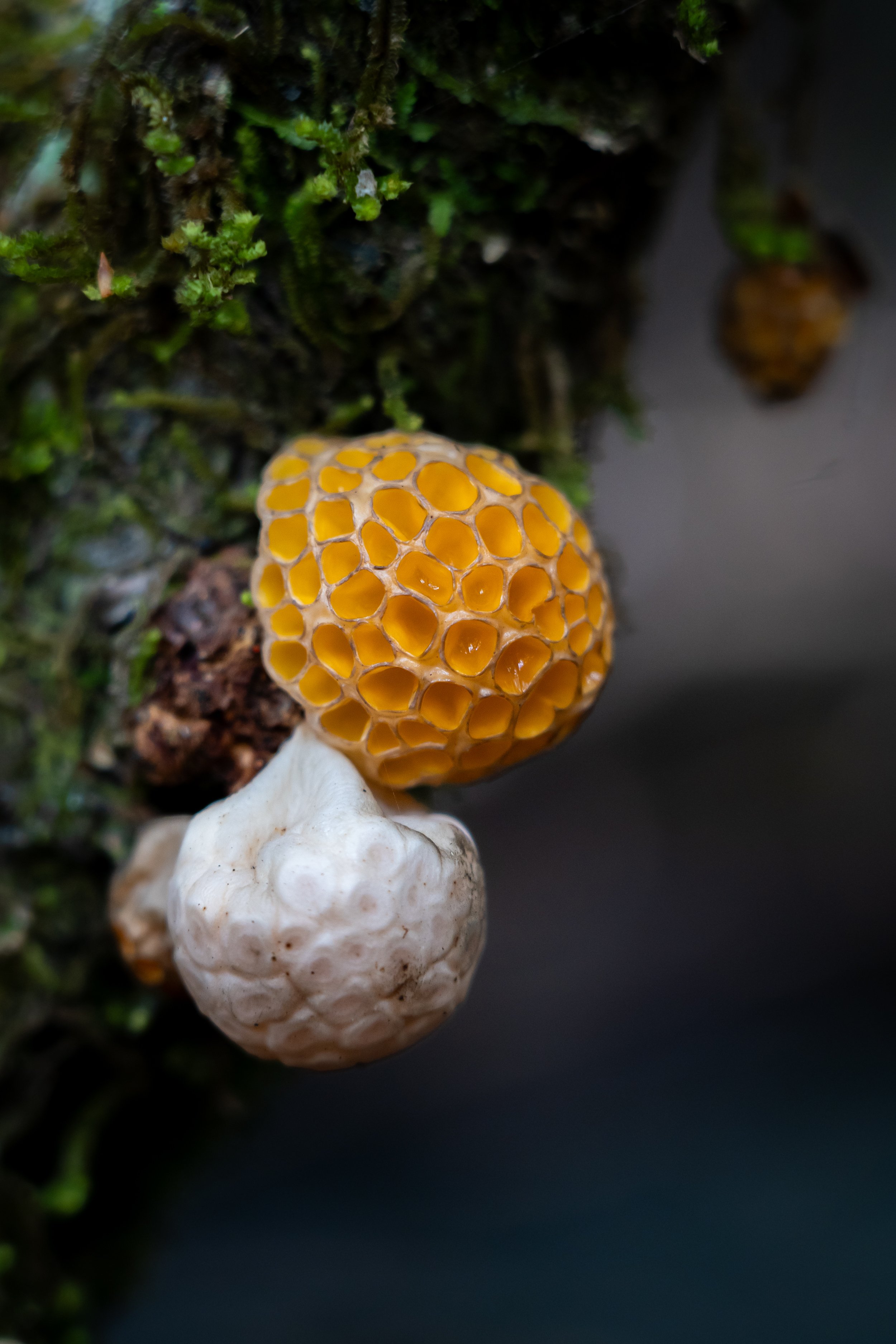
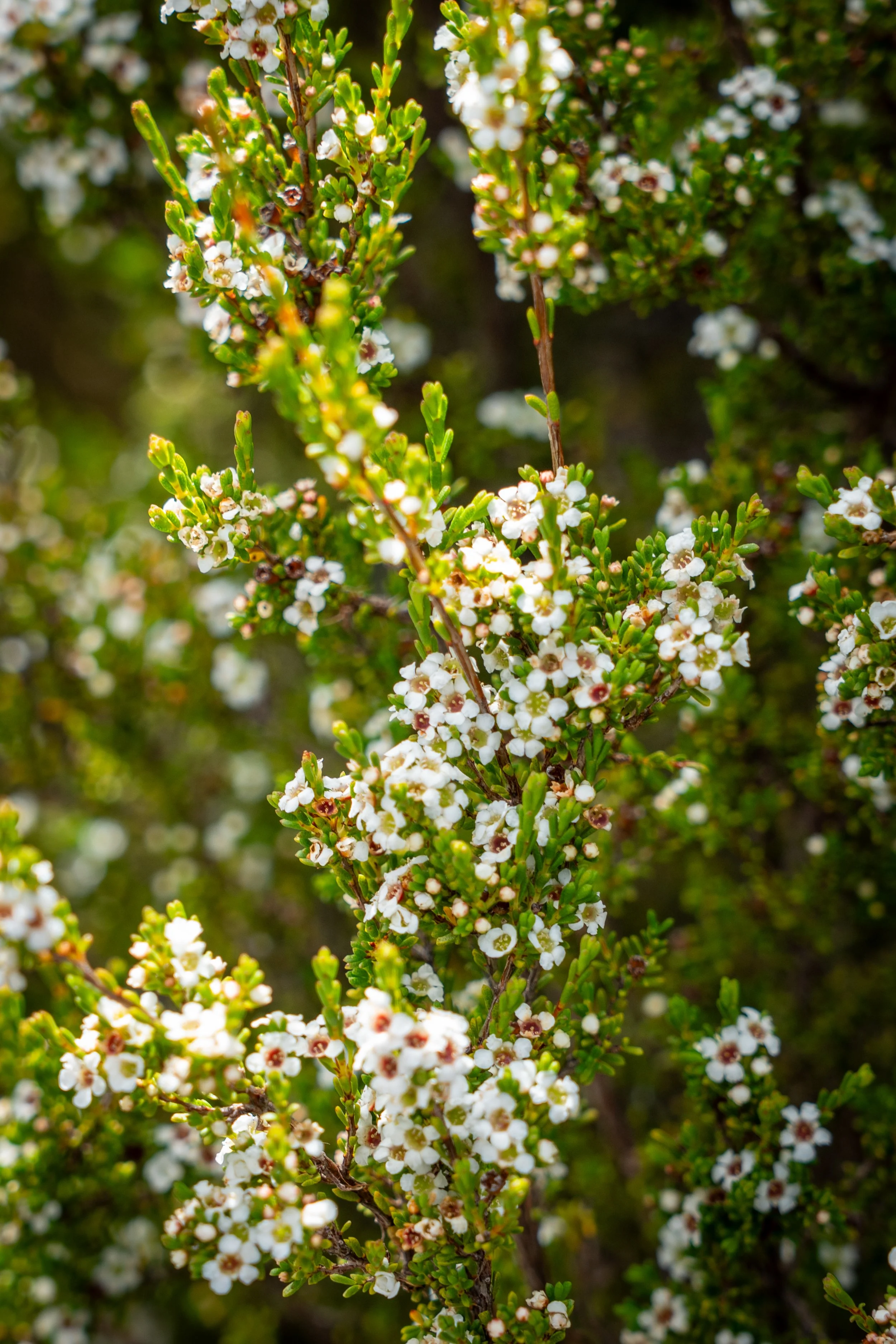
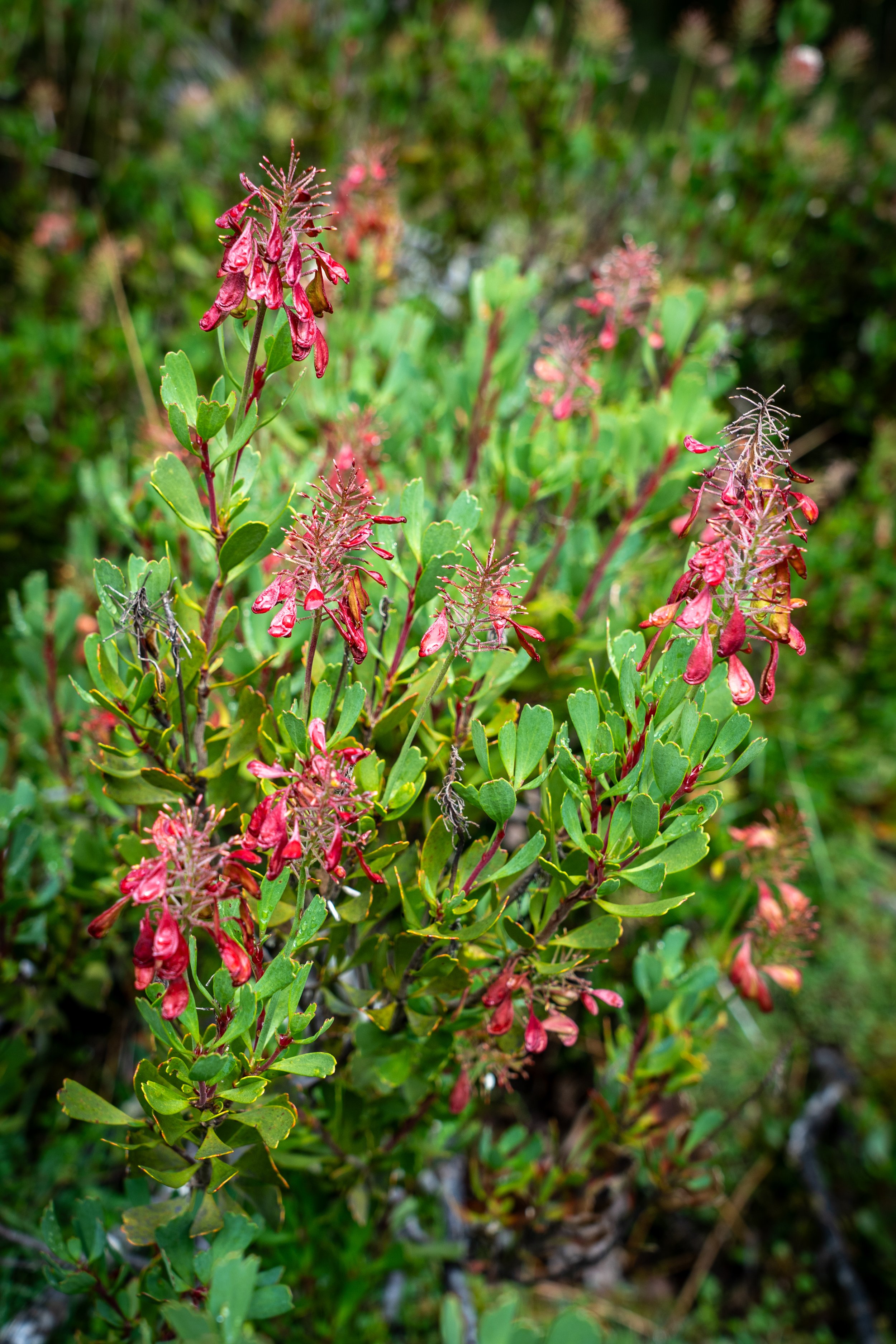
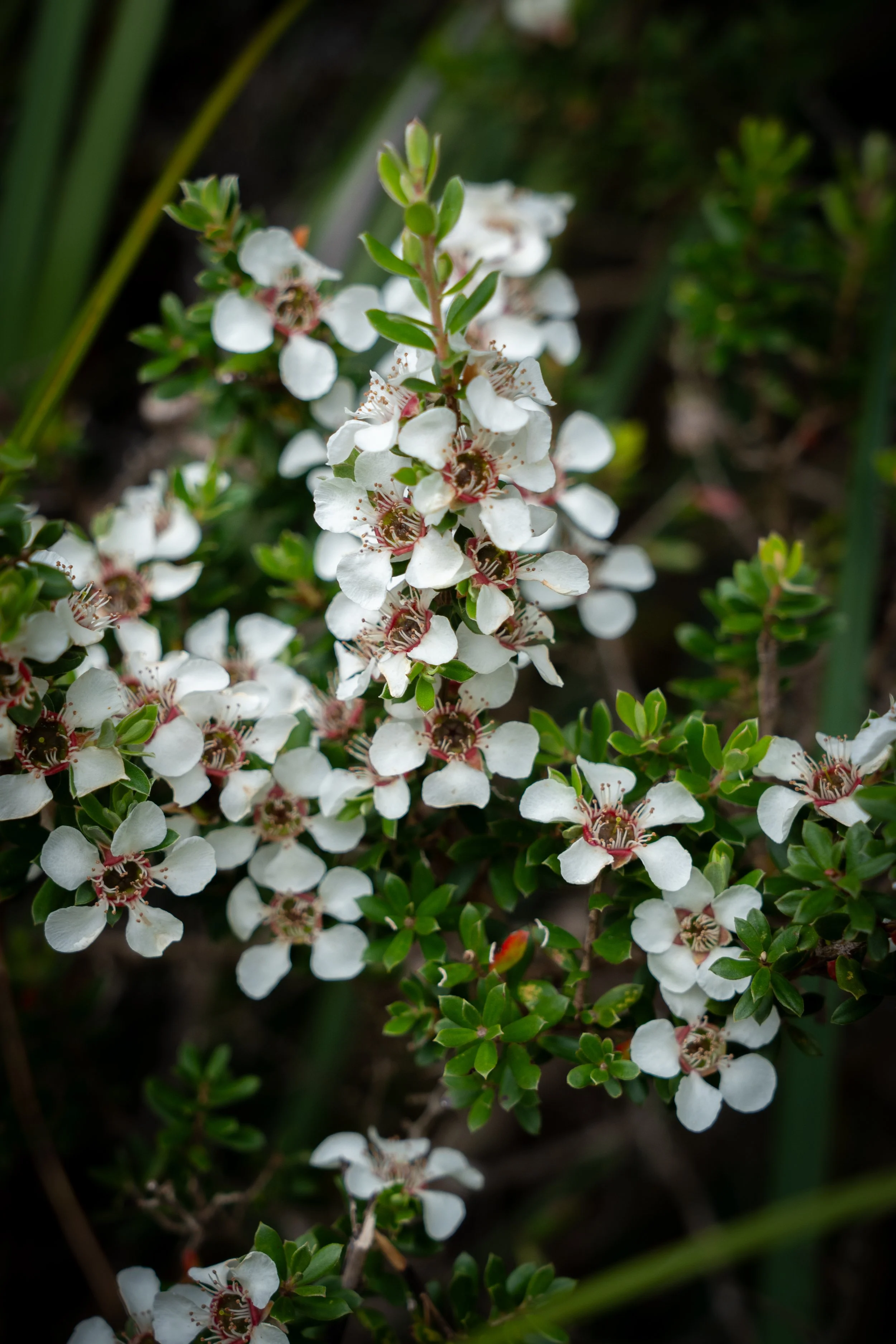
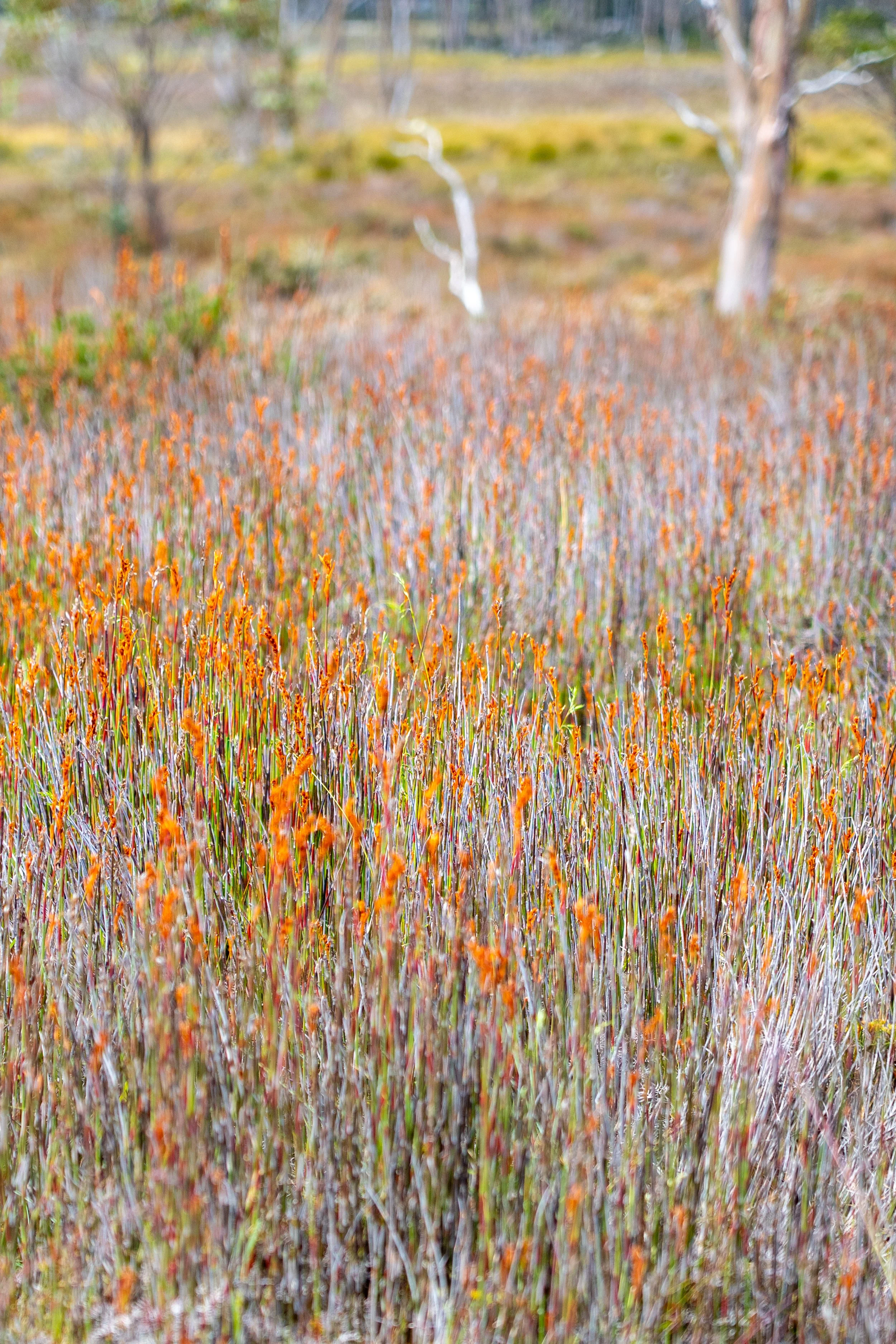
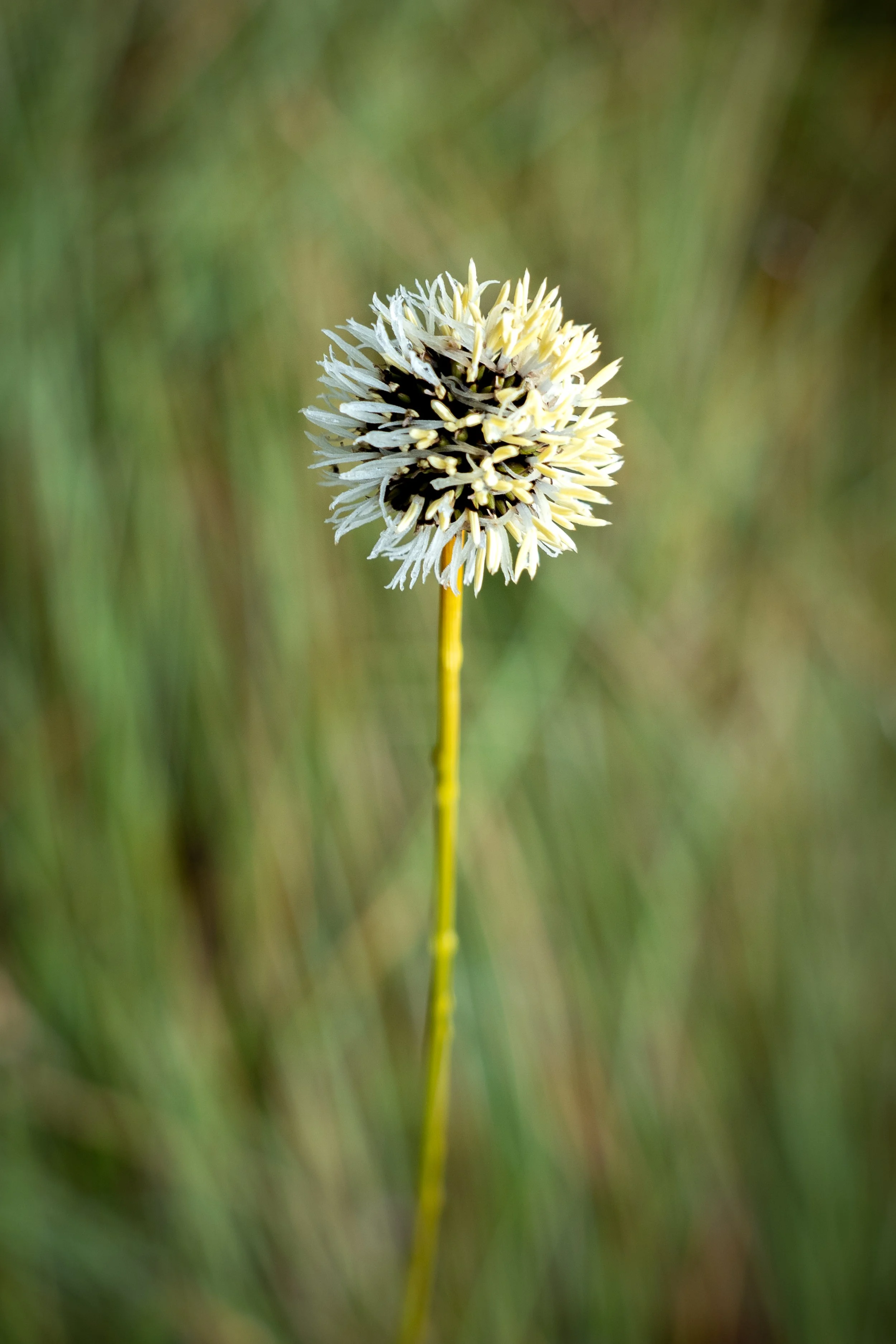
As we ascend again, the wetter forest begins to fade and dry sclerophyll forest makes its return. This eventually opens onto Pelion Plains, delivering distant views and the iconic spires of Mount Oakleigh, where dolerite columns frame the horizon like the broken tooth of an alligator. Below this button grass spills outward from the tree line. Other flowers appear. In fact, between 40 and 55 per cent of the documented alpine plant species here are found nowhere else in the world.
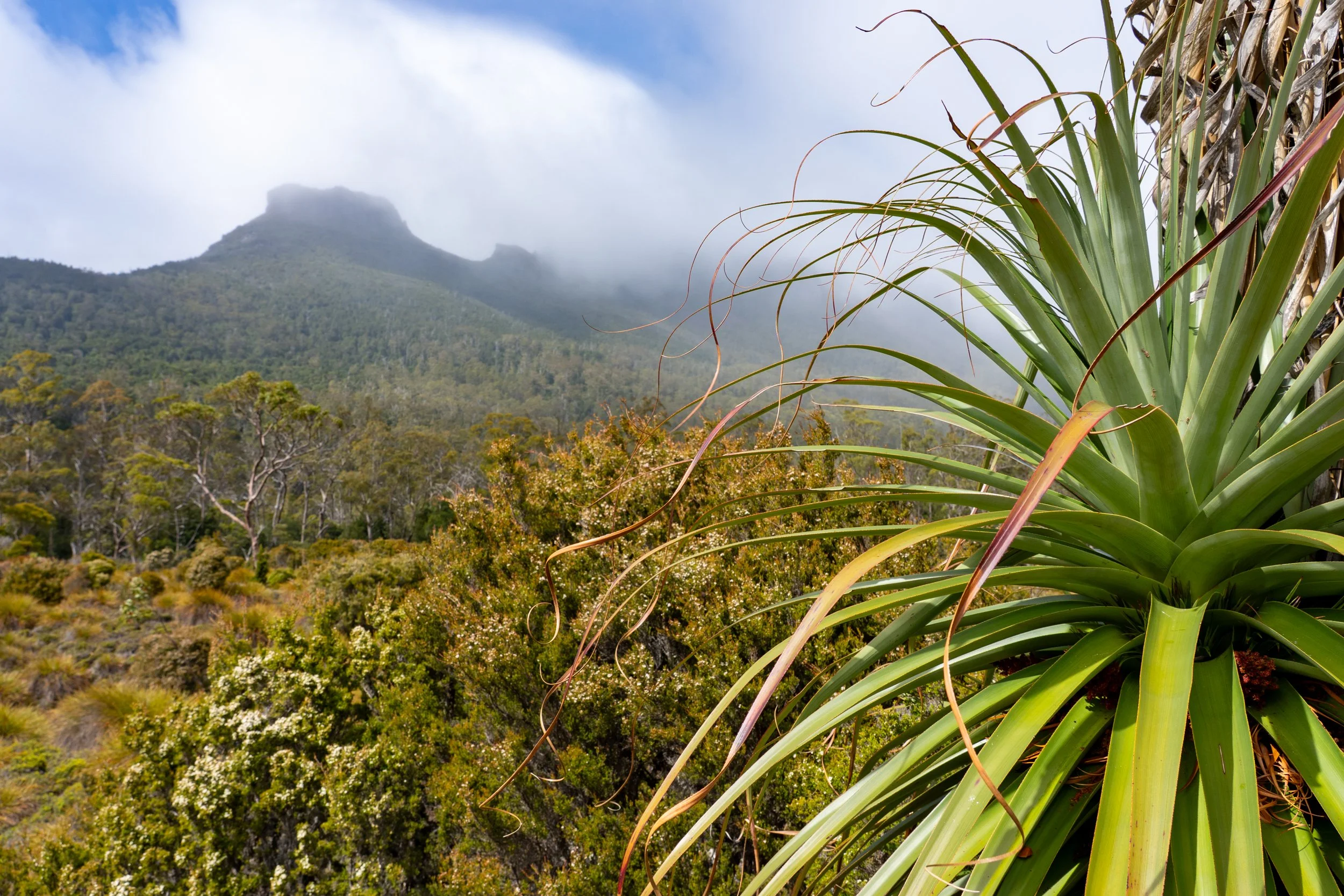
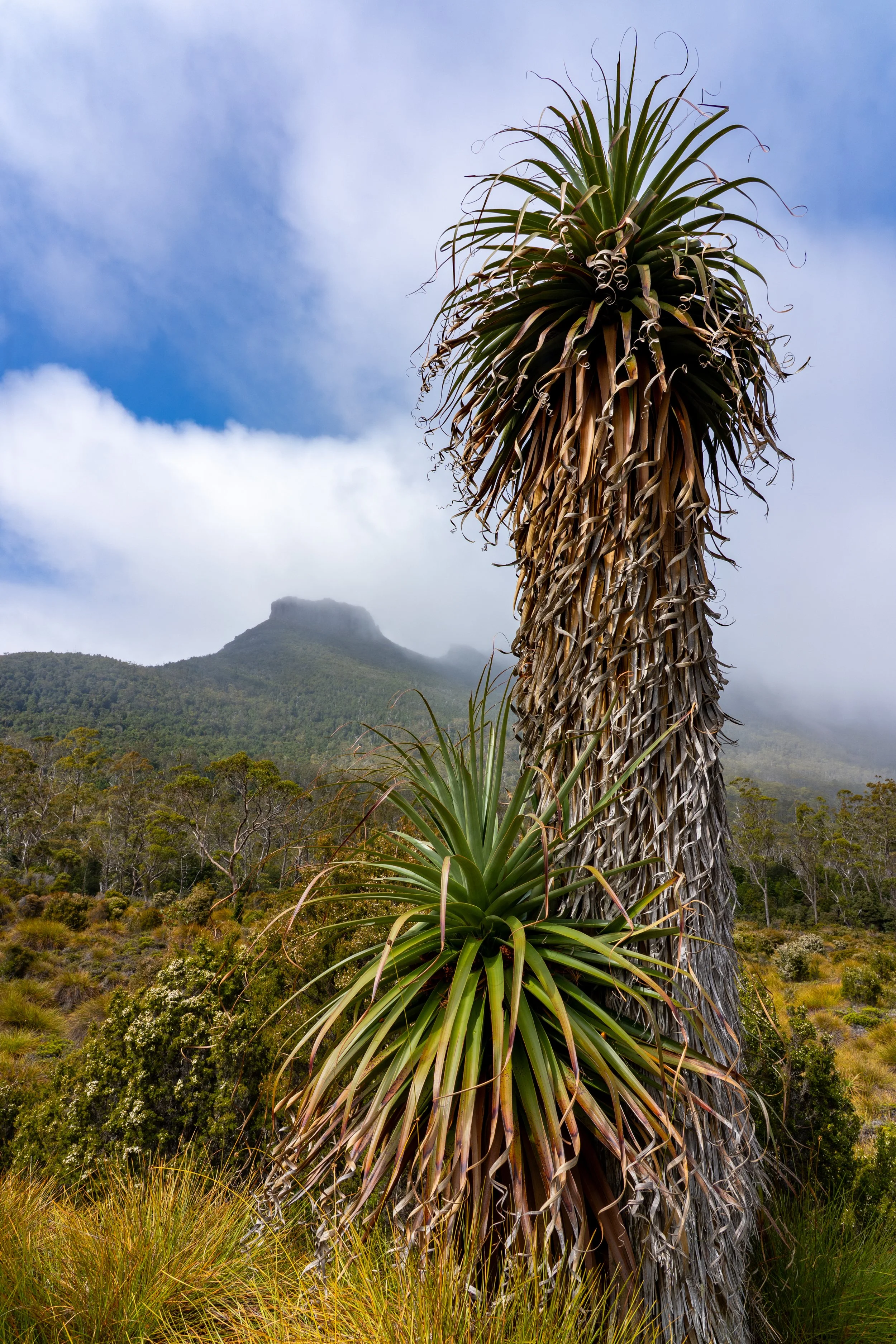
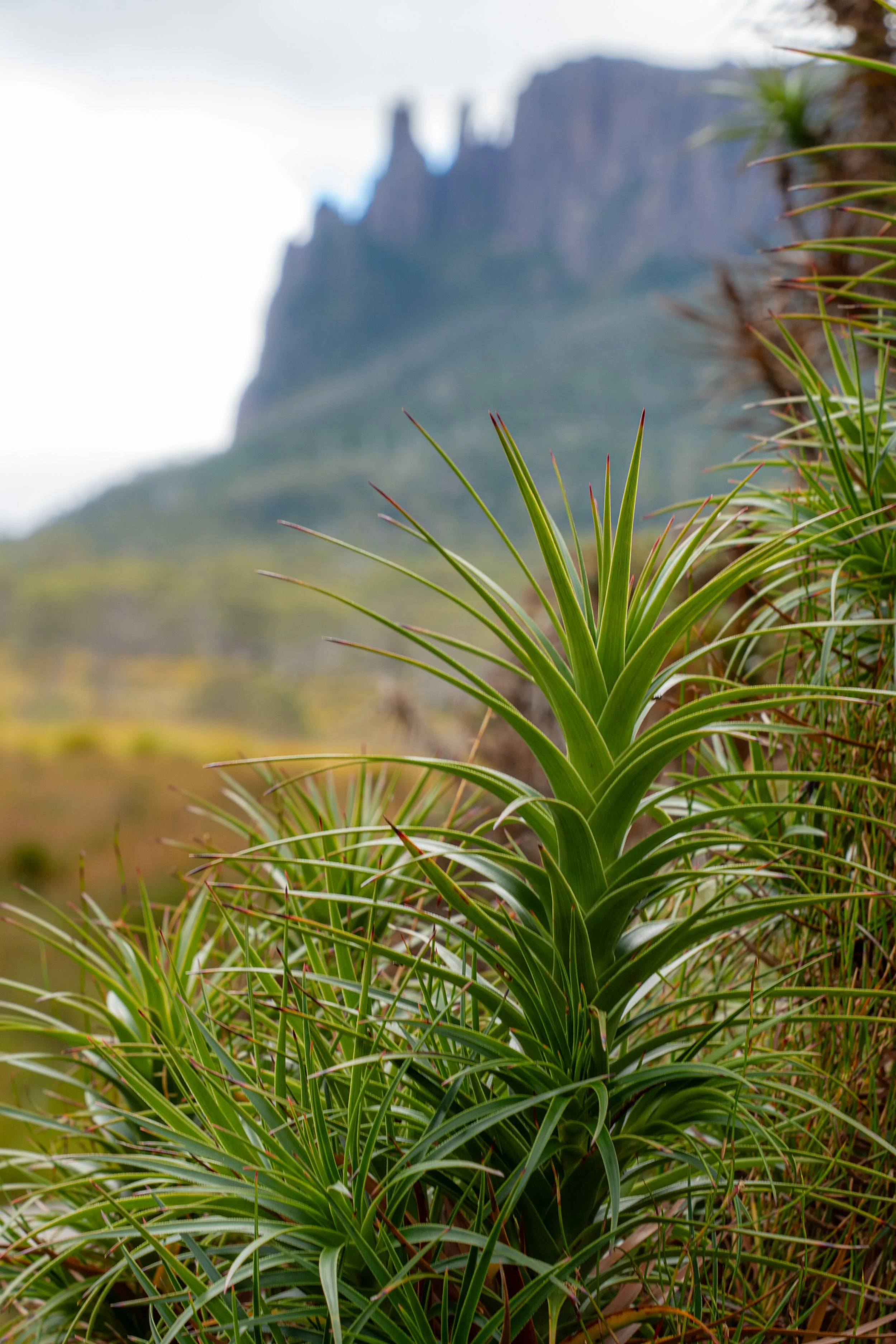
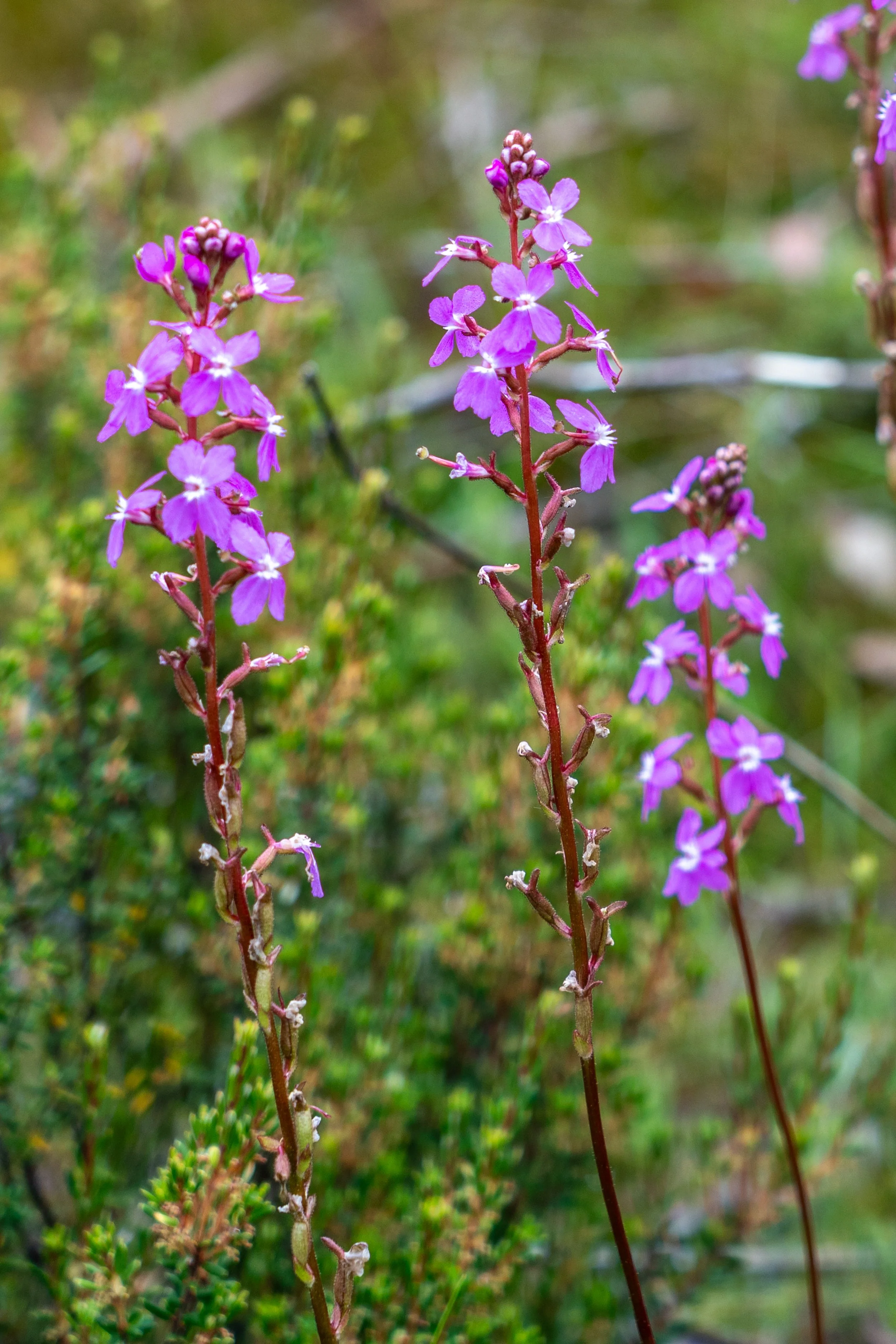
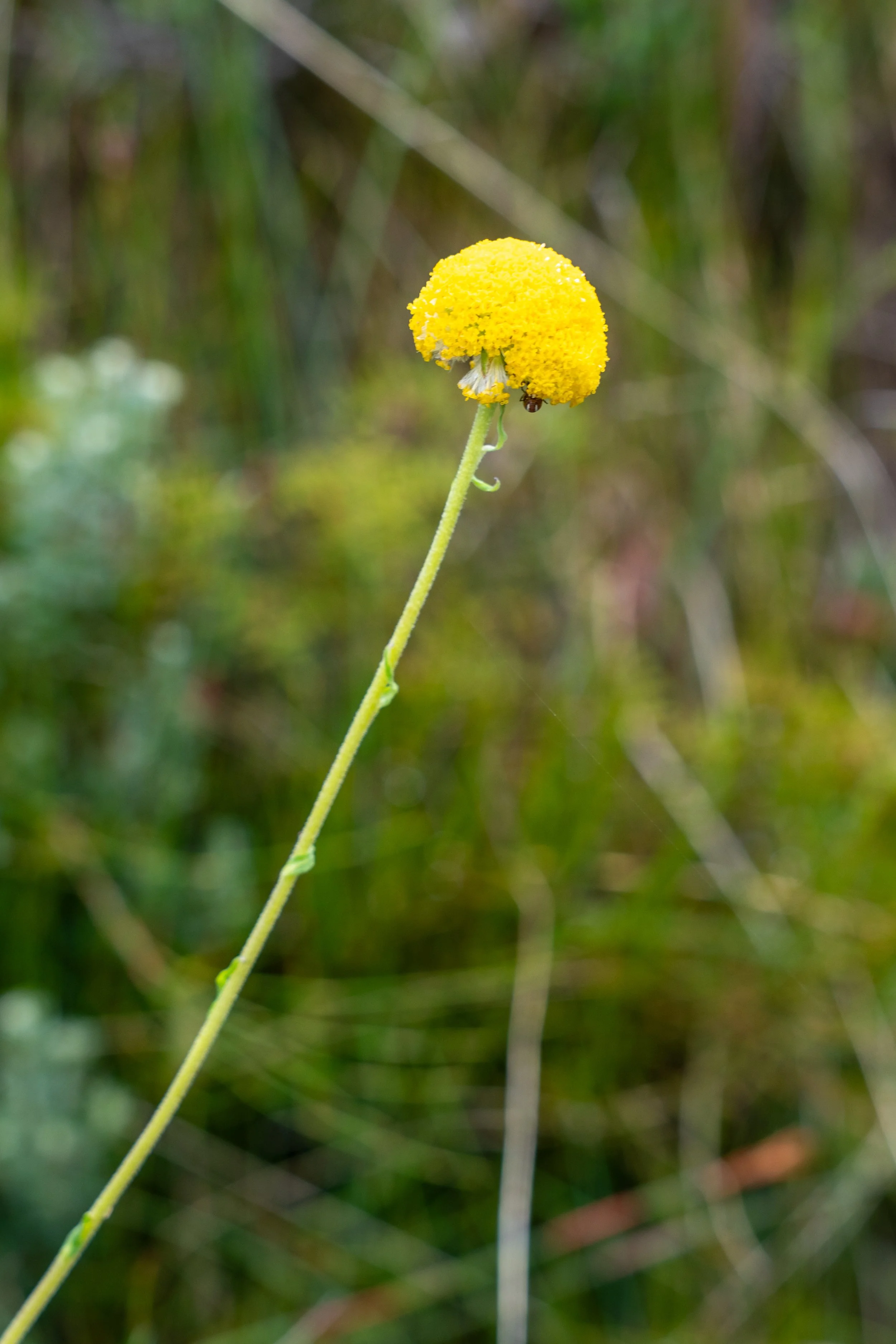
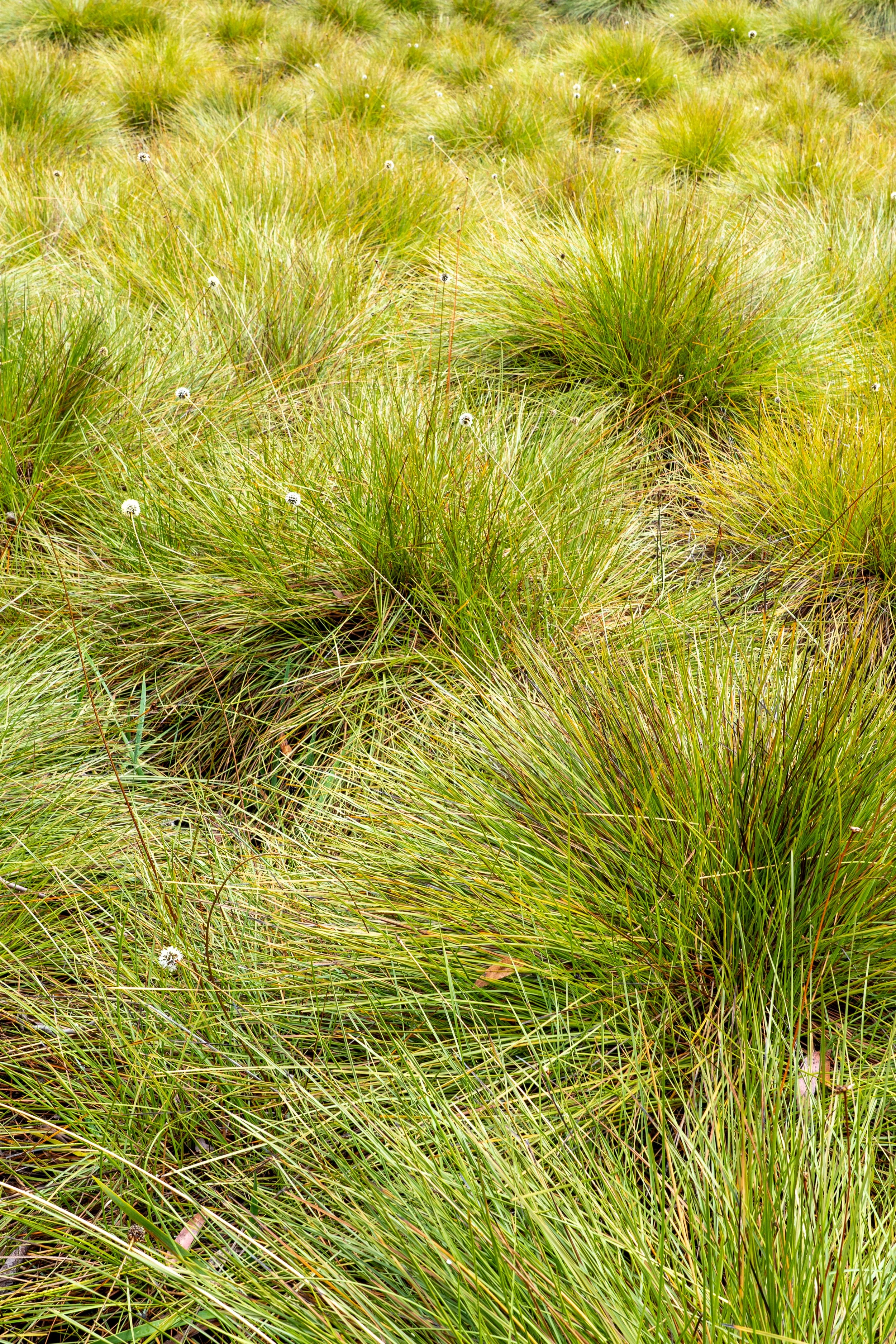
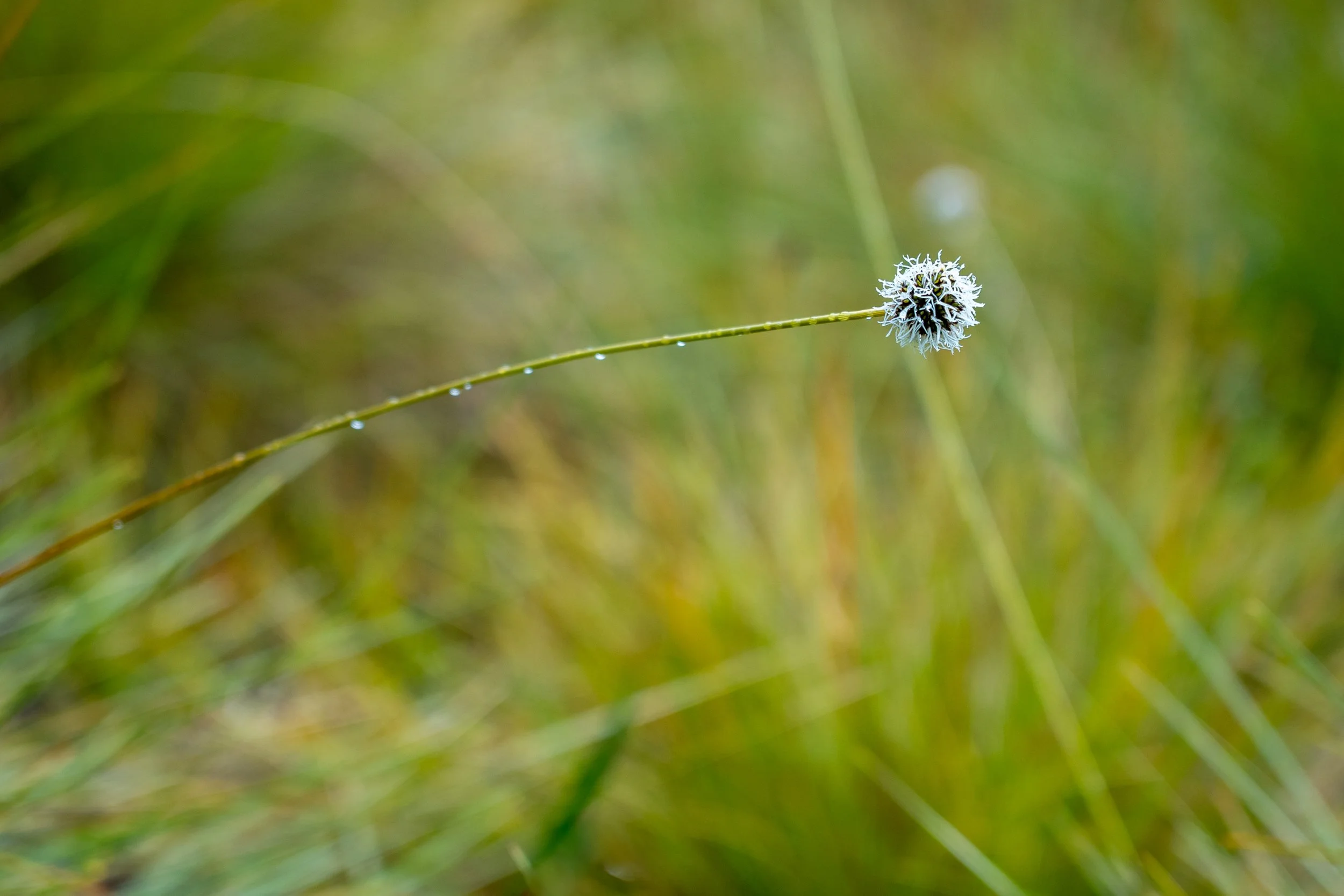
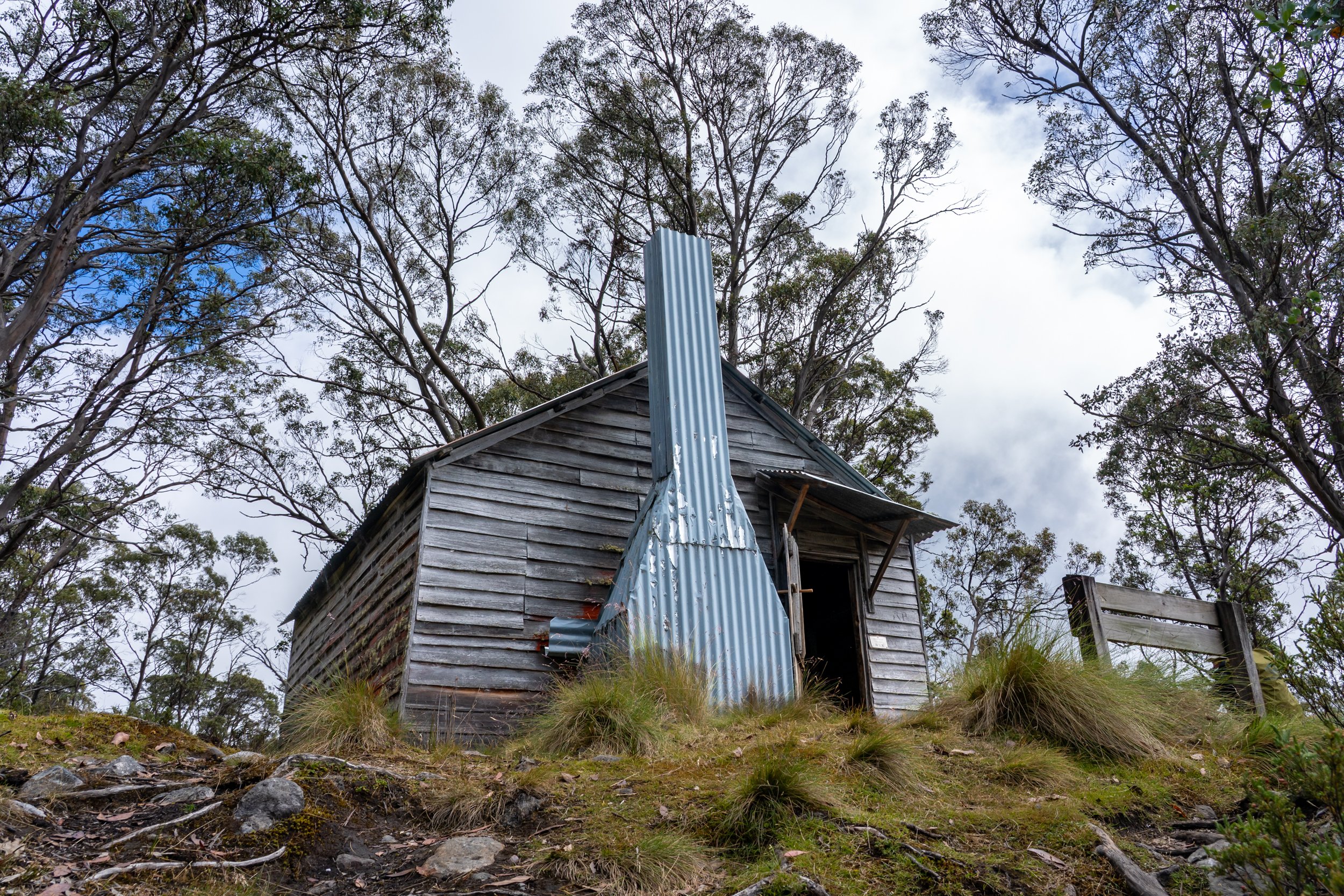
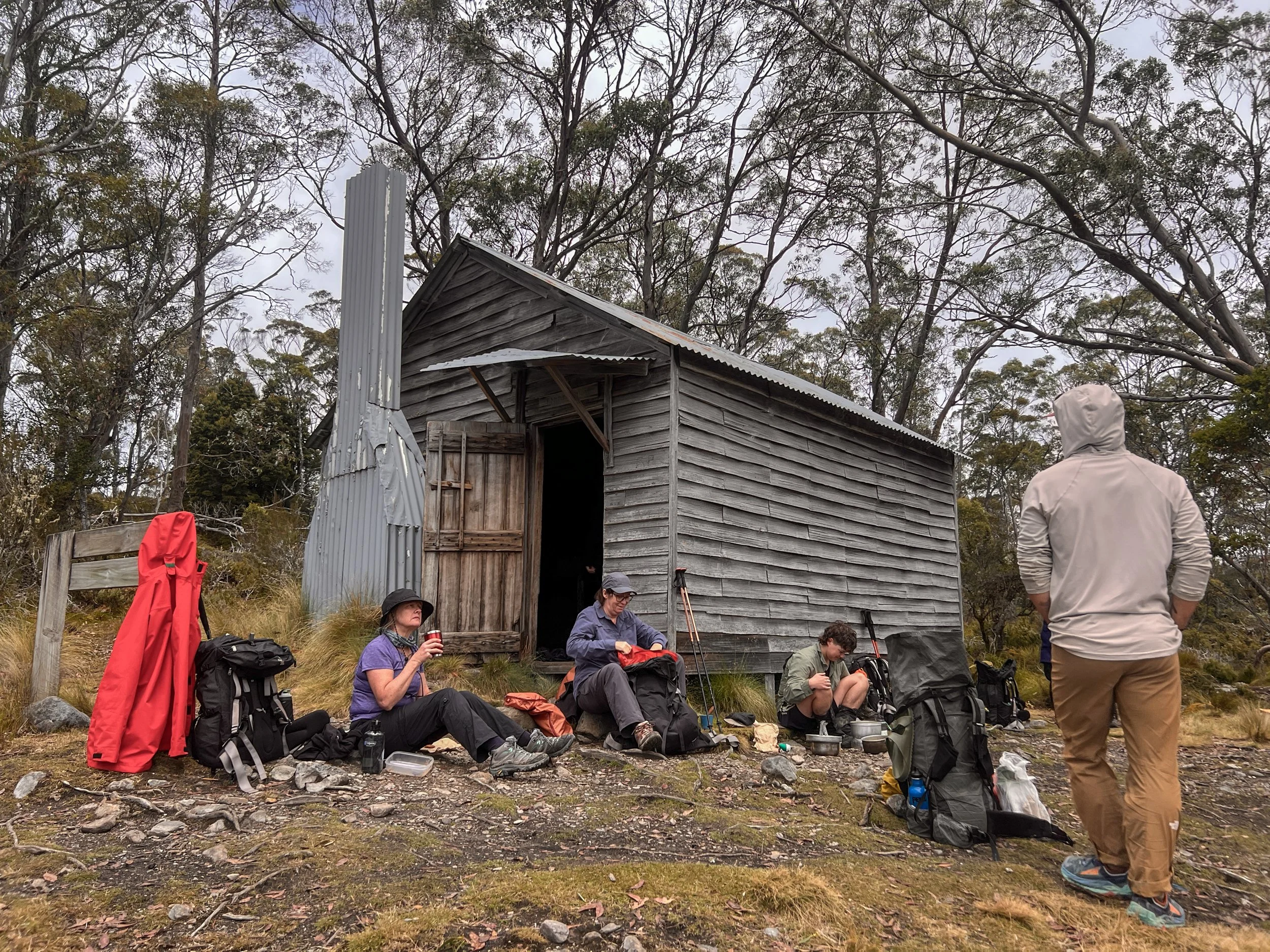
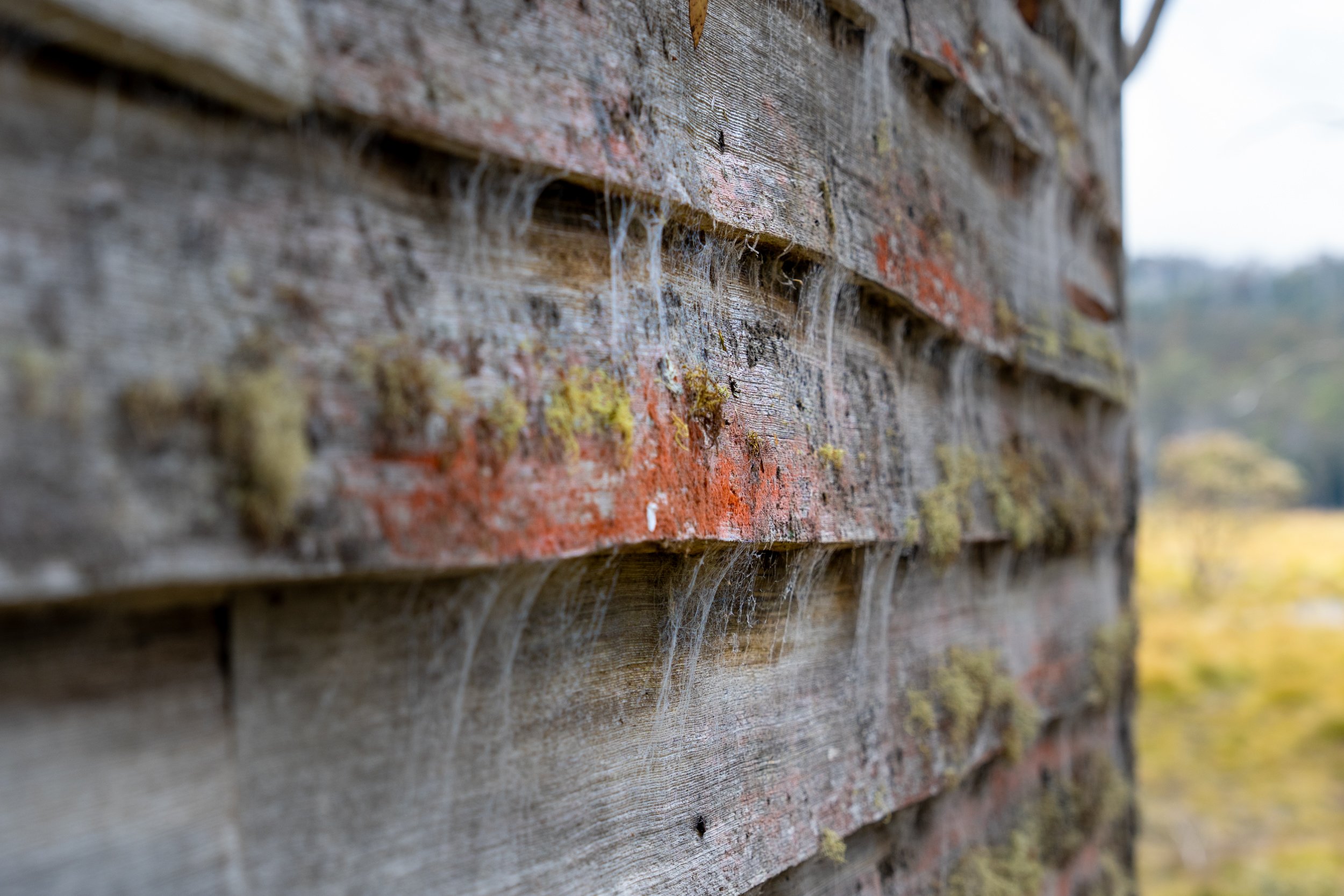
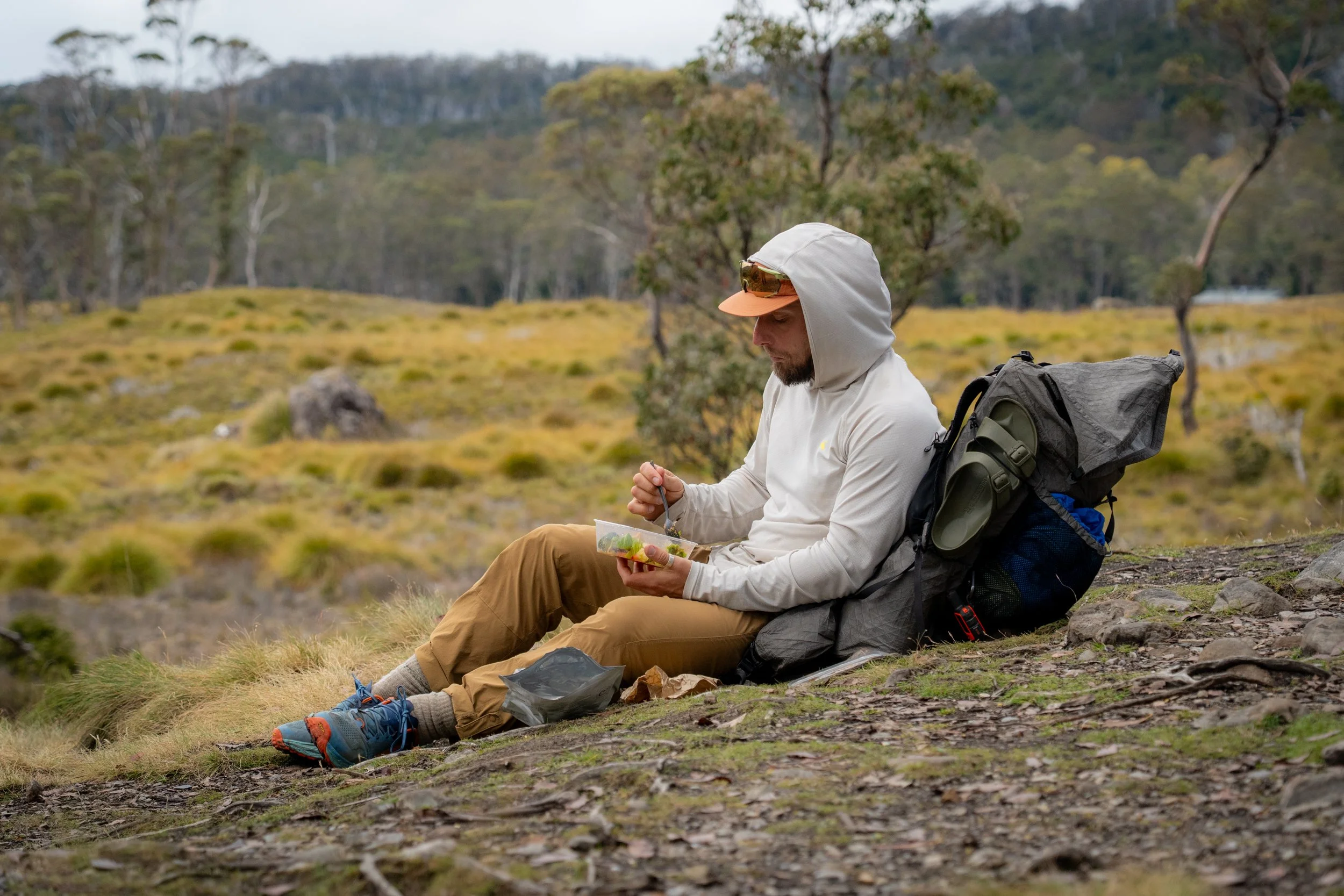
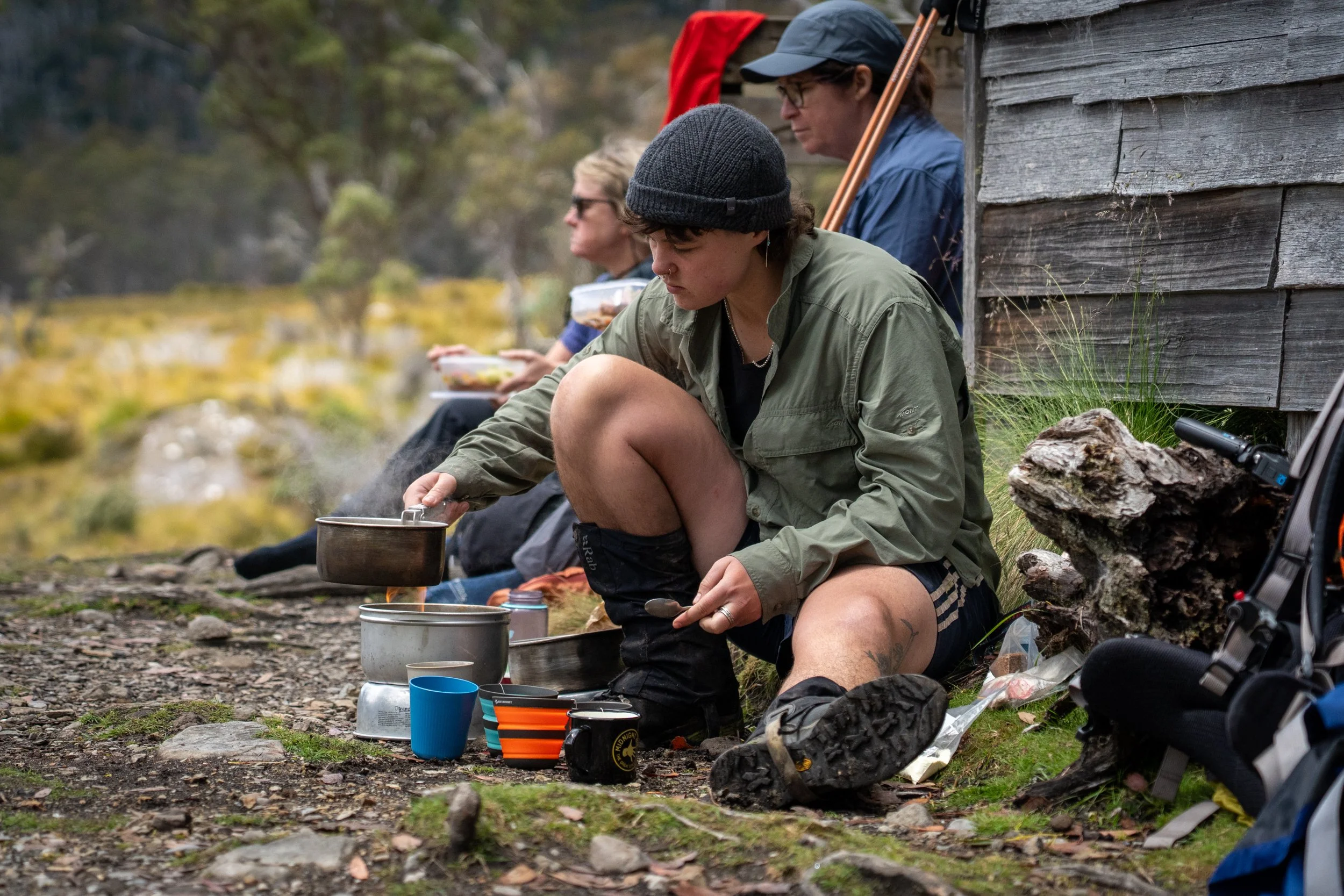
Lunch is taken beside the historic Old Pelion Hut, a century-old building once used by miners and early trappers. Built in1917 (although there were other huts built prior) as accommodation for the manager of the nearby copper mine, it served hunters and trappers before walkers began to be its primary residence. Here, the wilderness shifted from something to be endured for survival and work, to something you entered voluntarily - a decision that still seems questionable to me when it’s raining and blowing a gale.
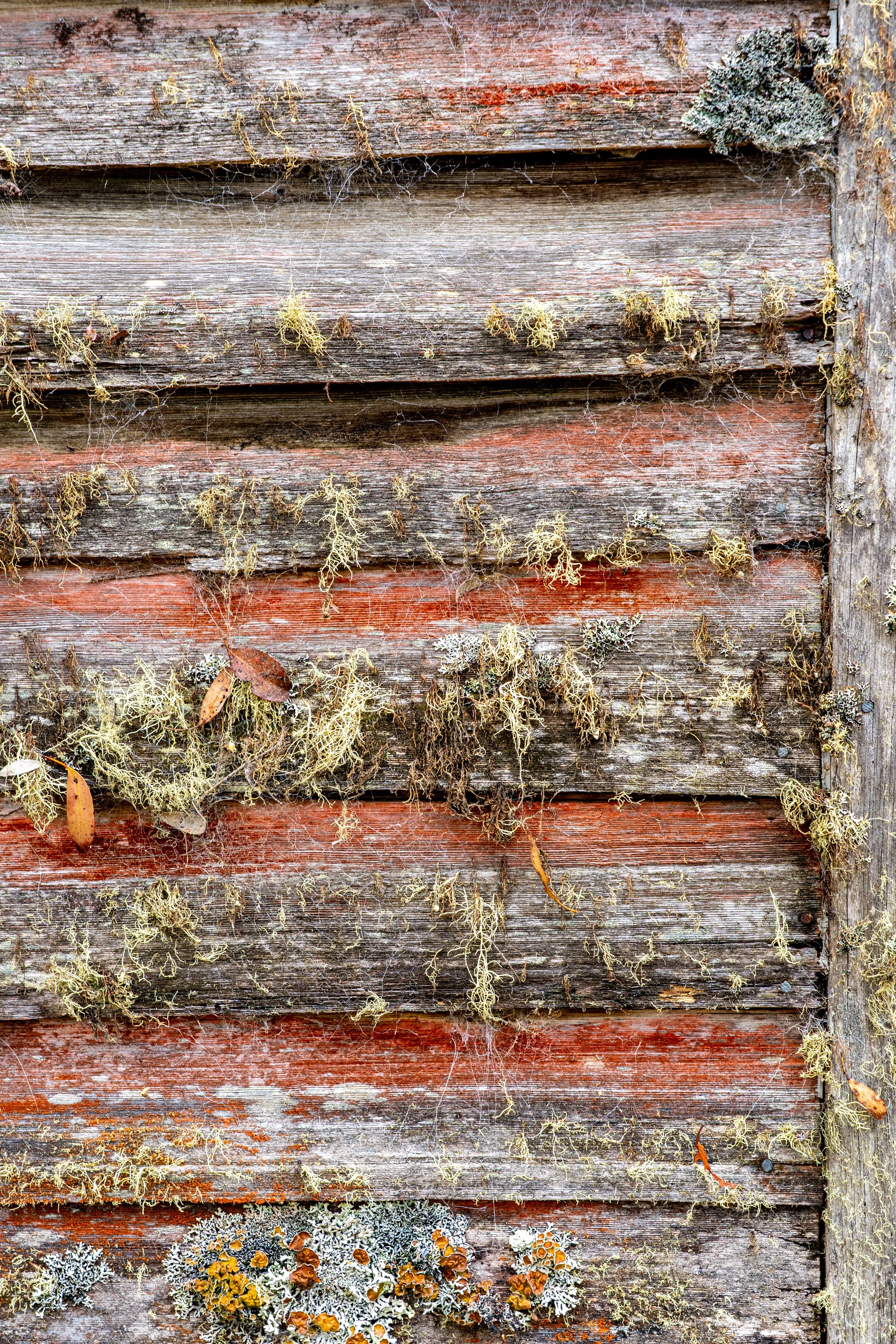
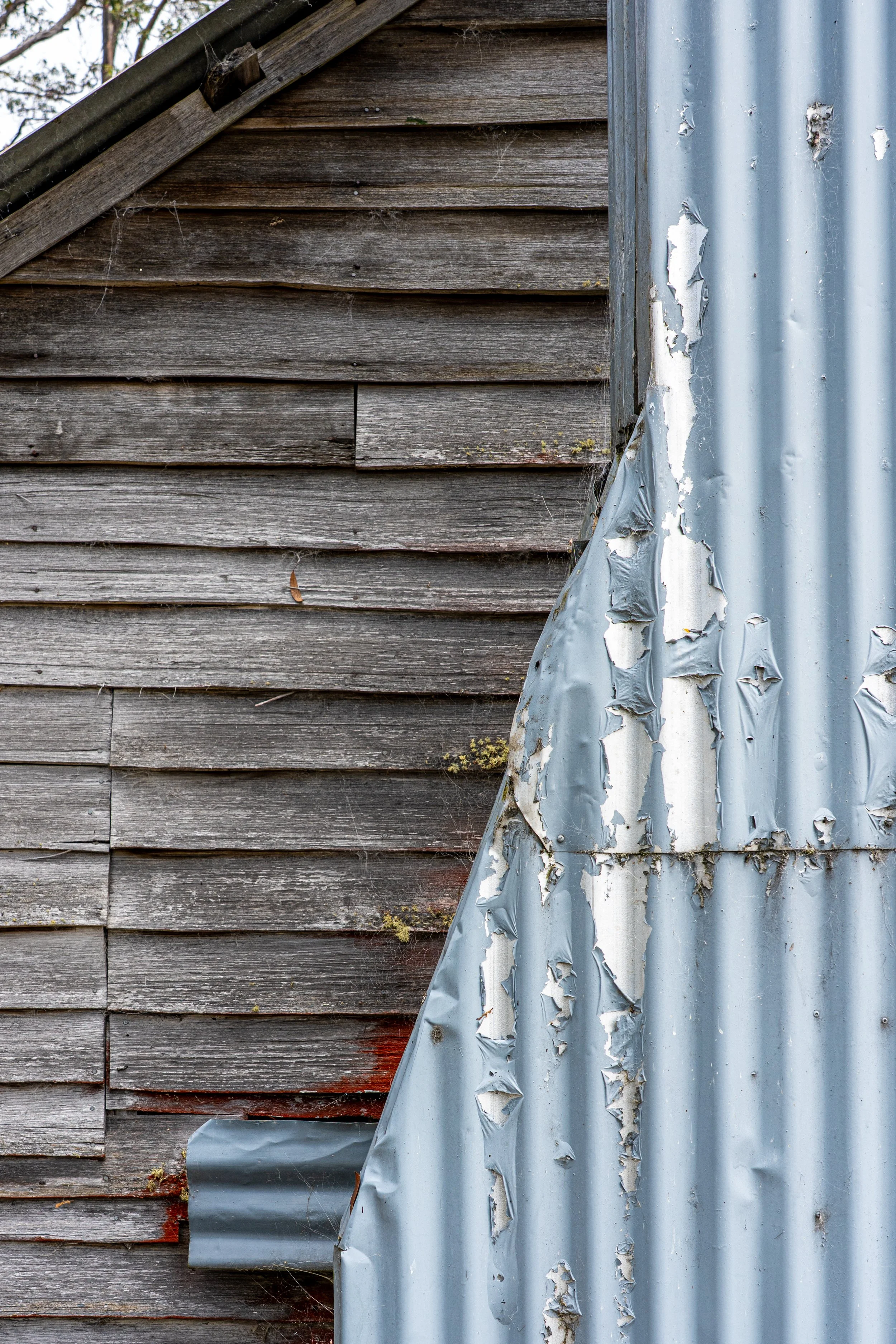
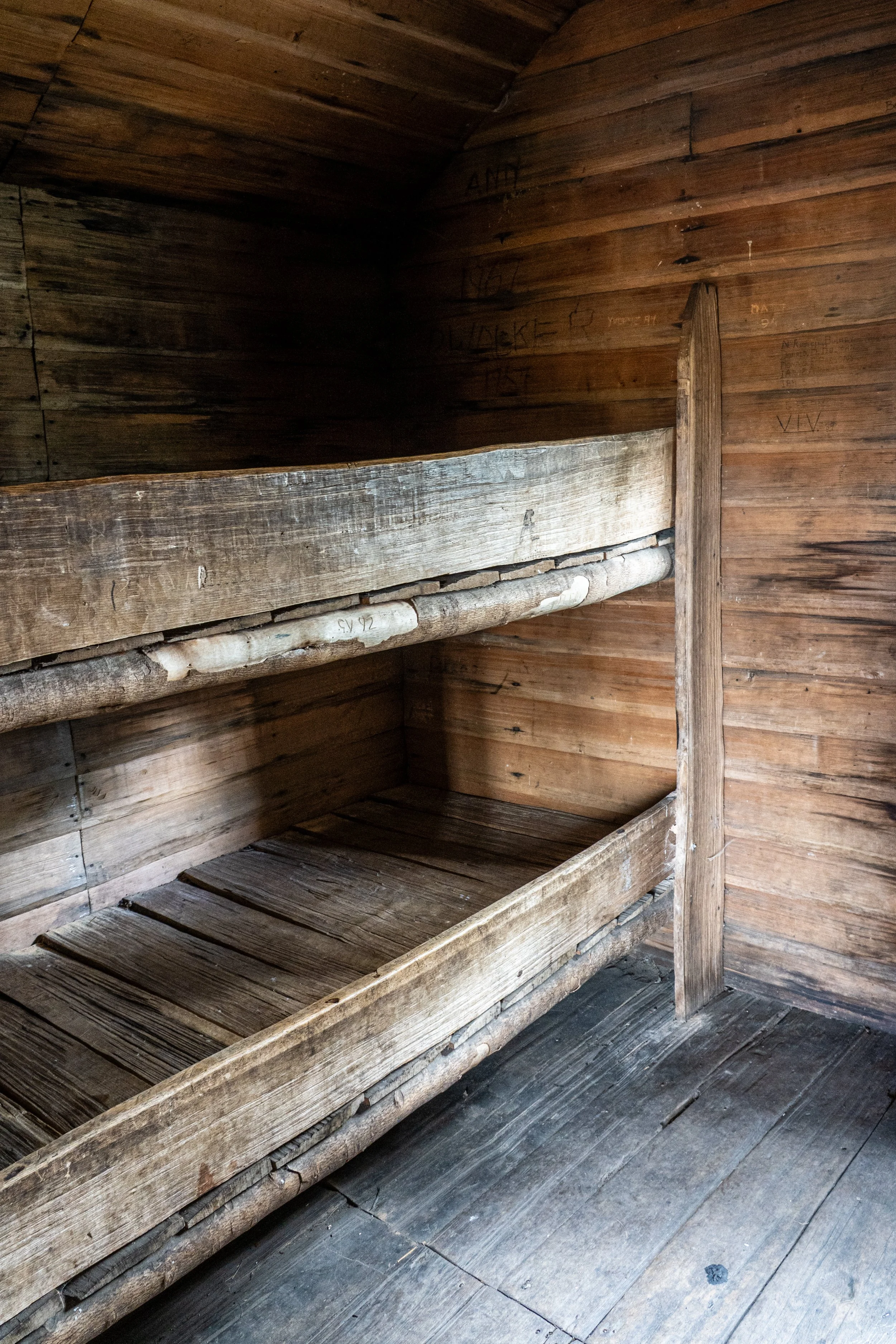
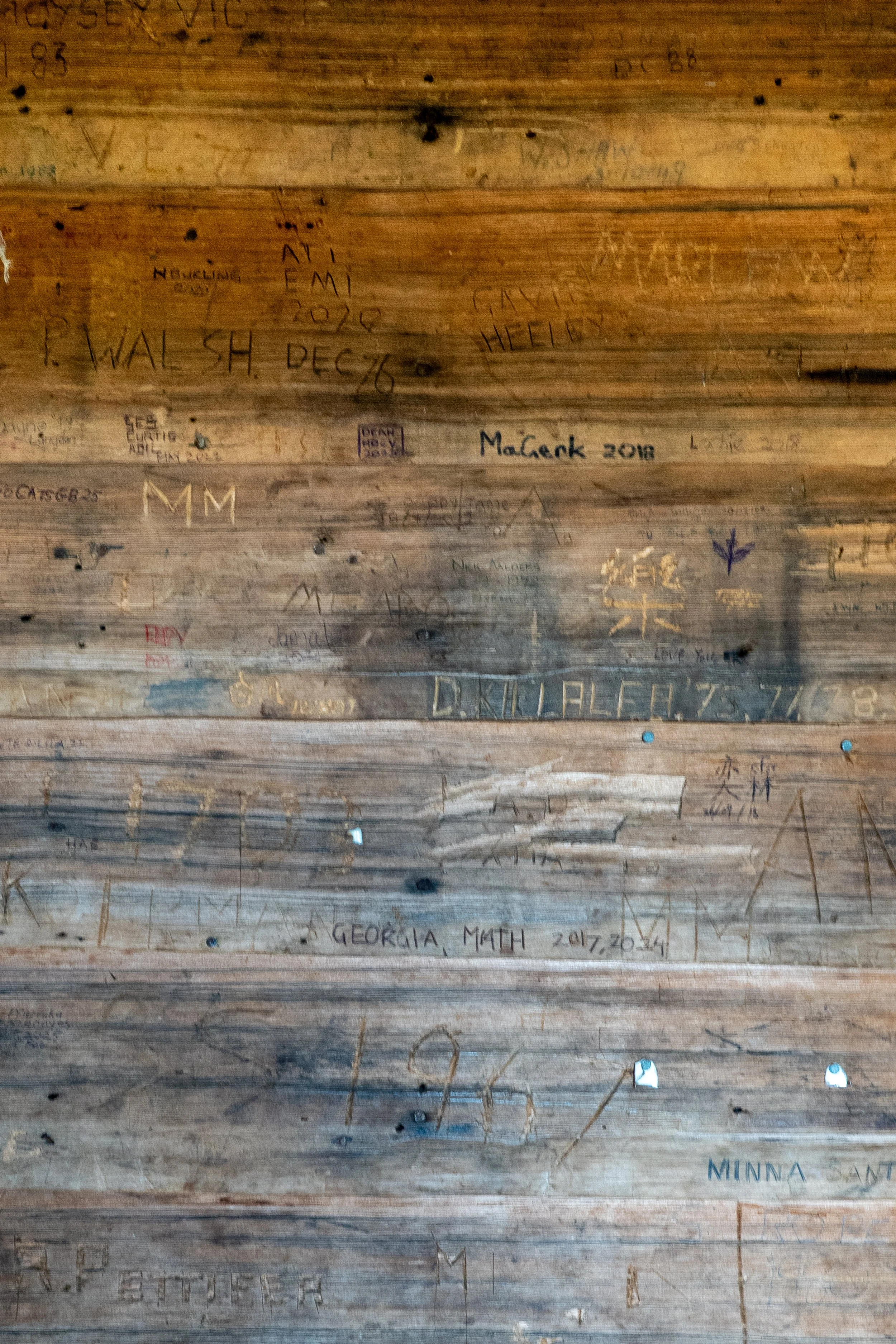
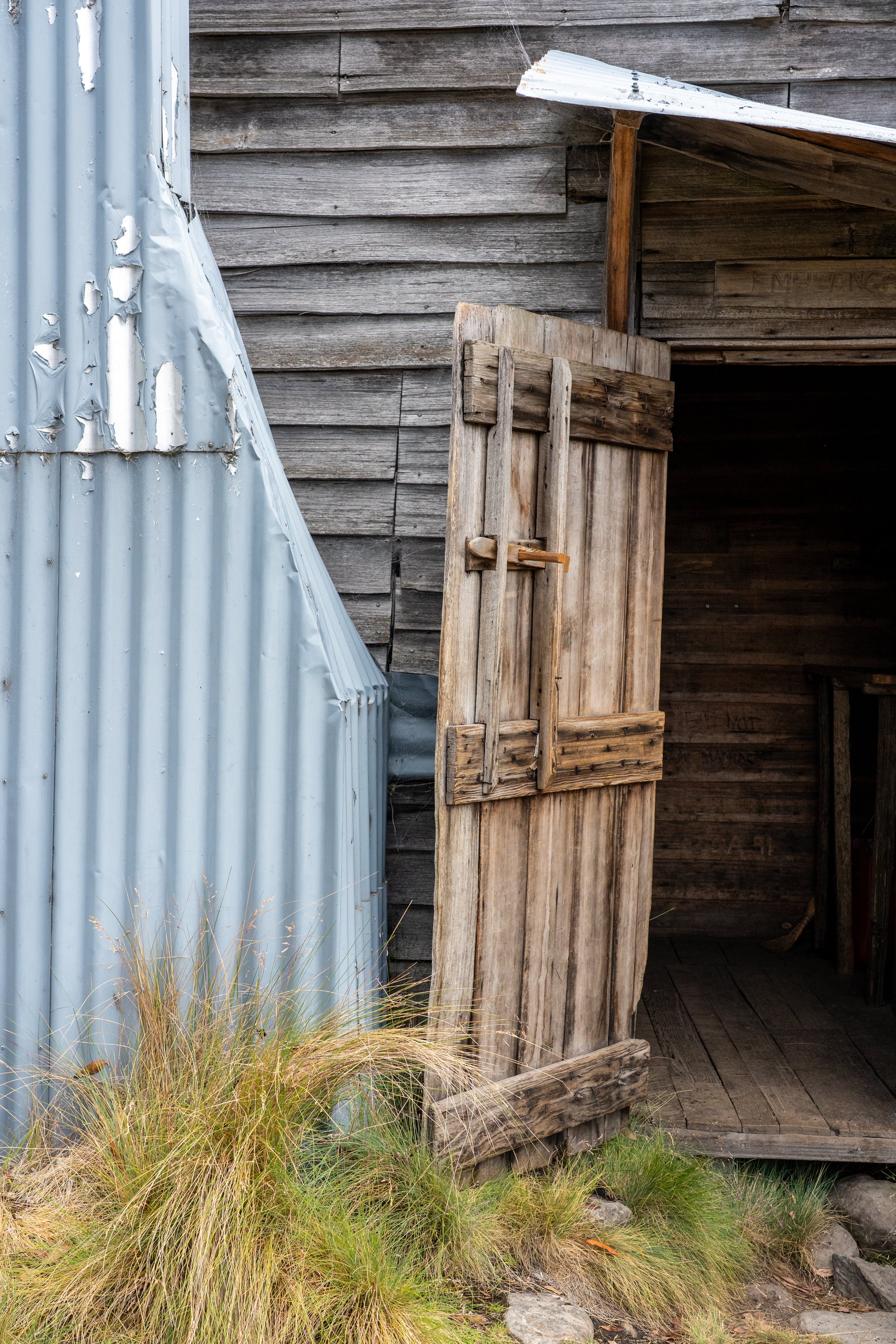
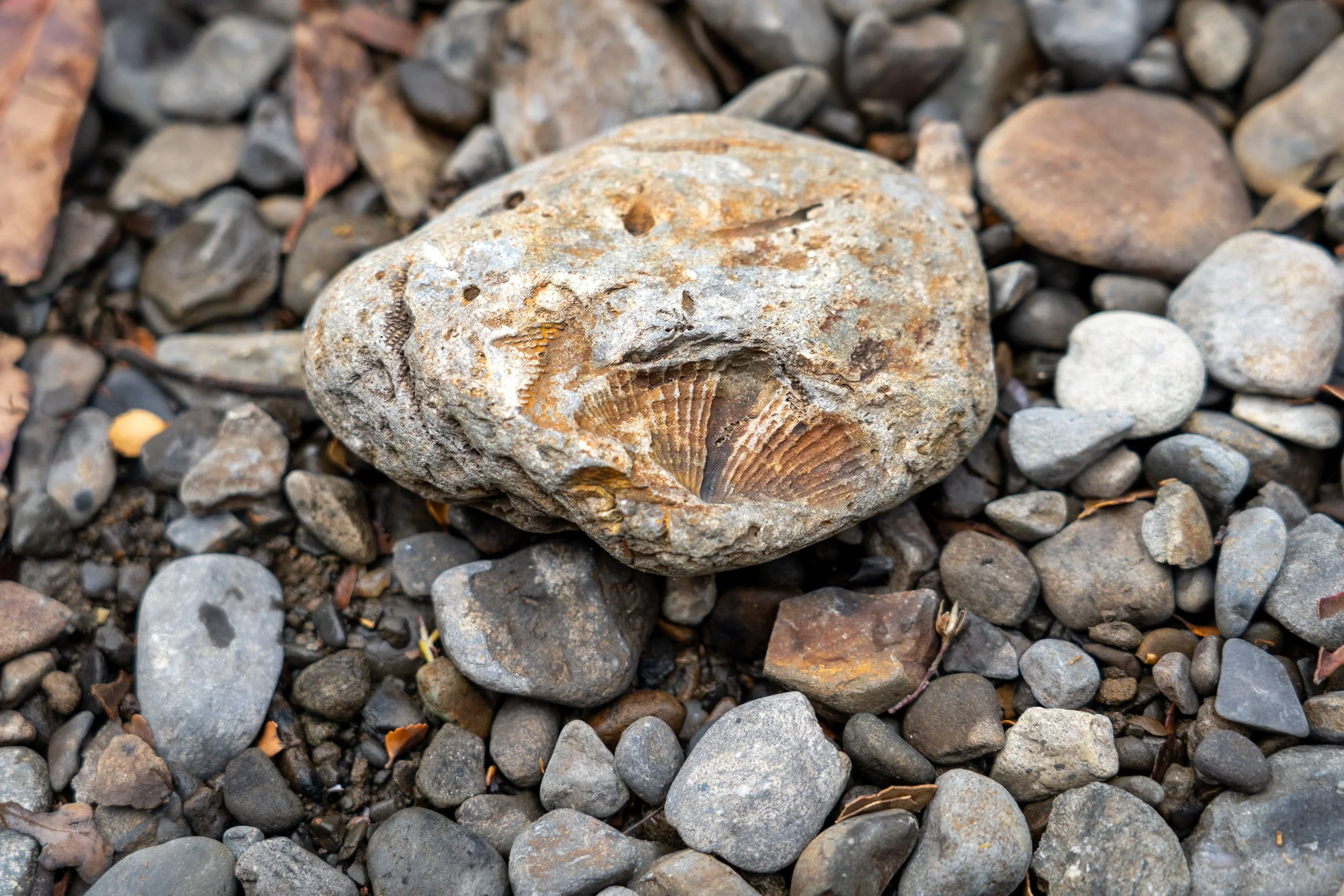
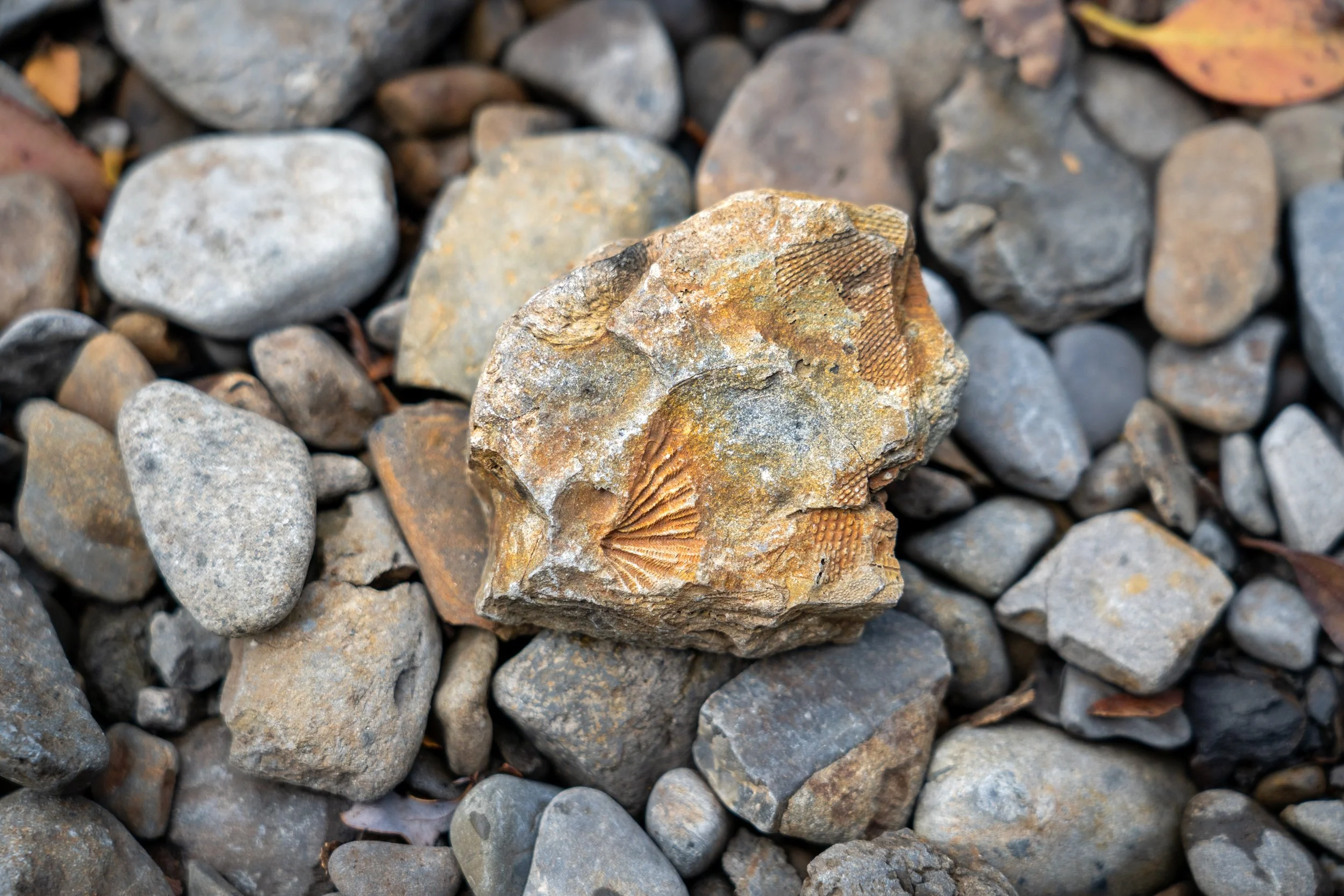
Further on, we pass the New Pelion public hut, where I am certain the walkers glare at us, knowing we are among those ‘special’ people staying in luxury. To avoid inflaming tensions, we detour to Fossil Creek, which leaves little to the imagination. The creek bed is scattered with fossilised rocks bearing ancient markings etched into stone.
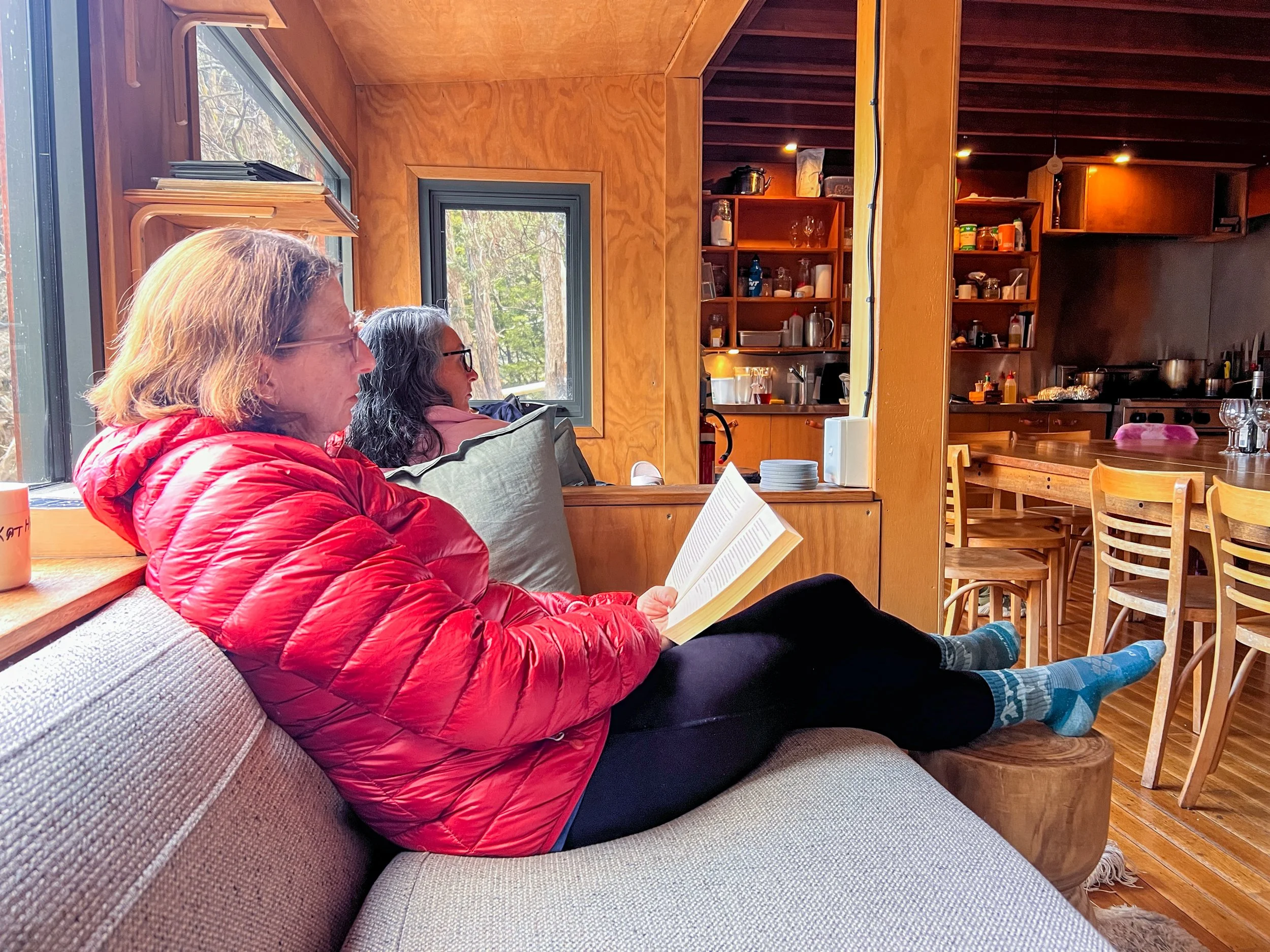
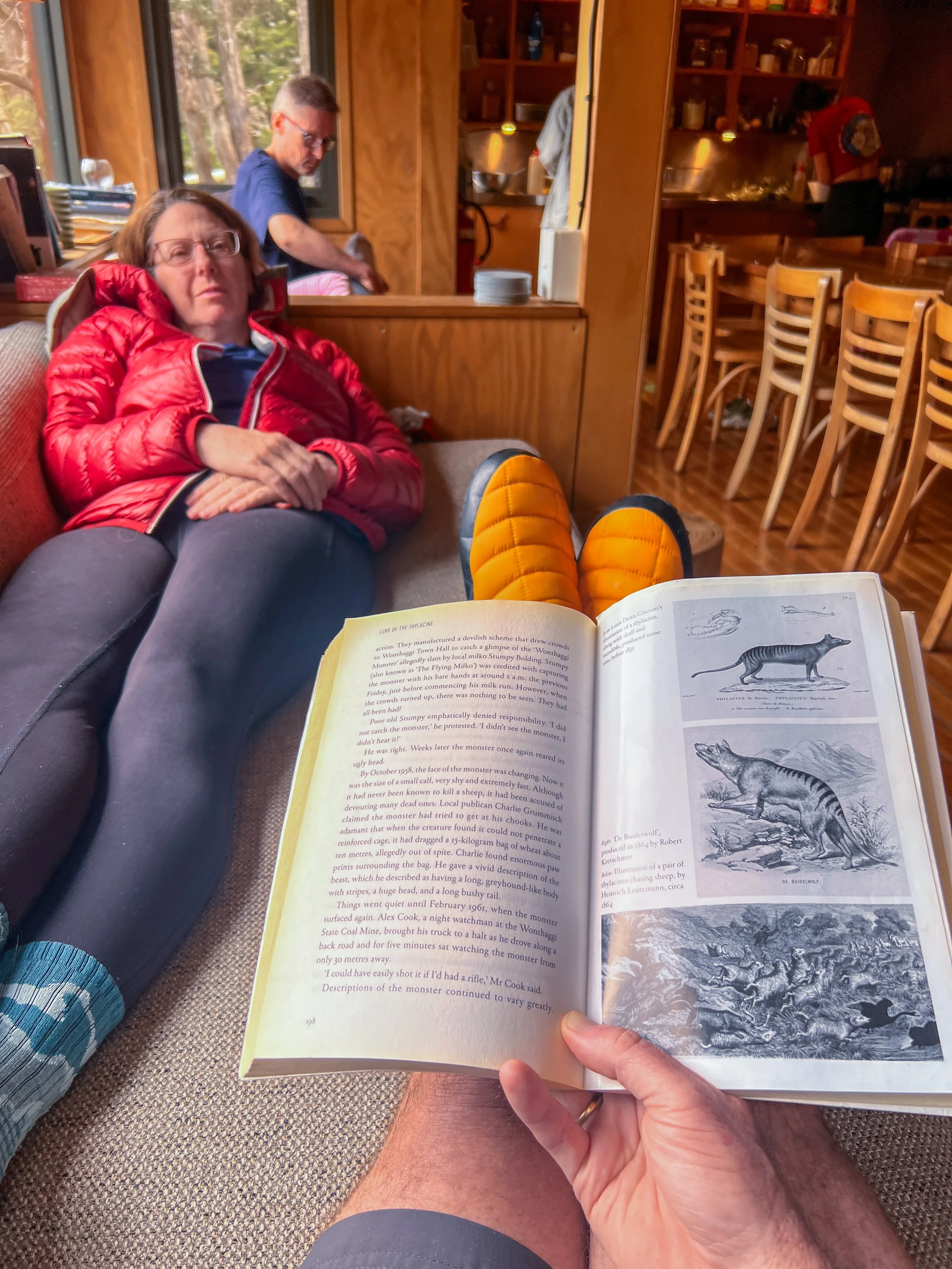
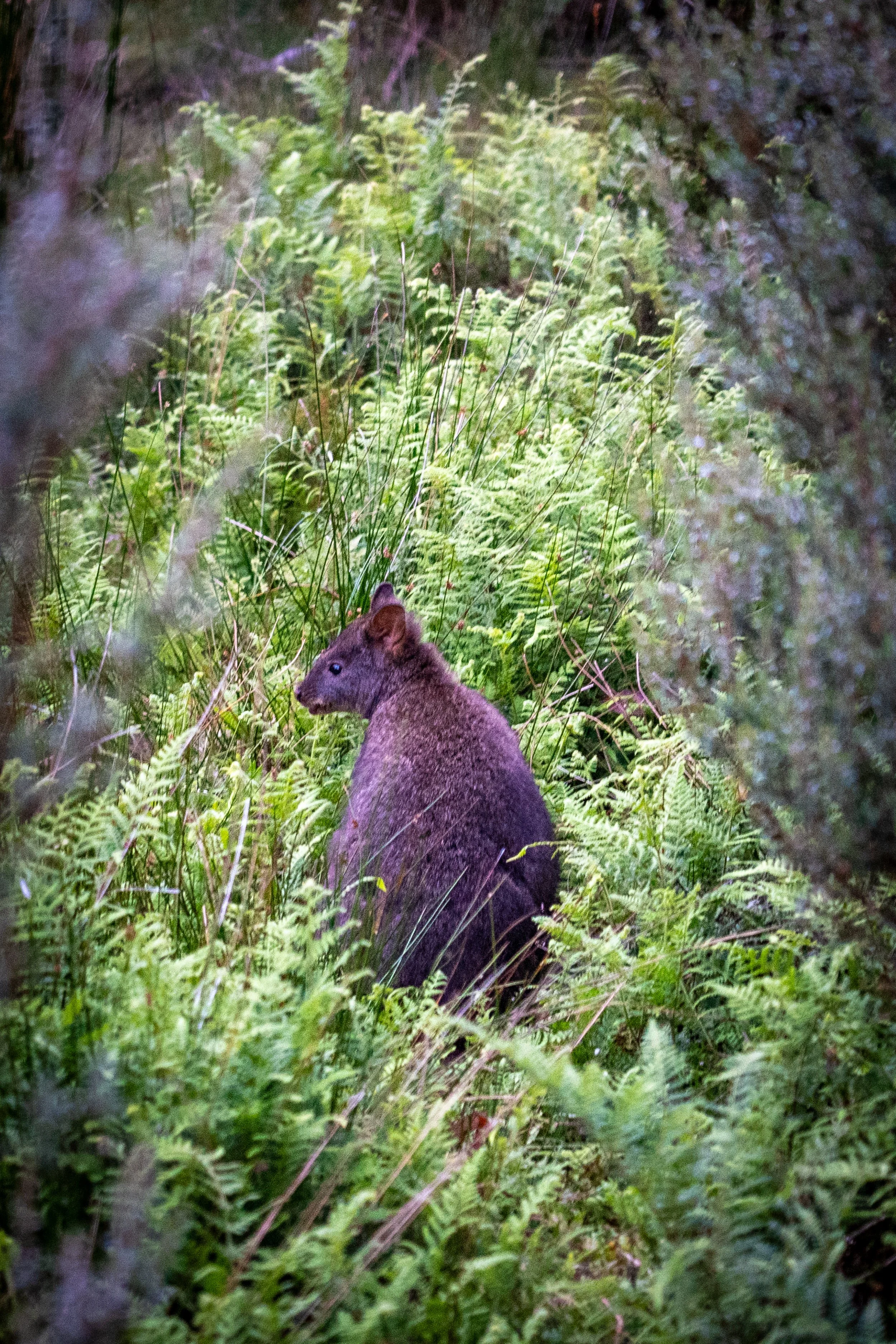
After another remarkable day on the track, we arrive at our hut for the night. Sitting in comfortable lounges in front of a warm heater, Riesling in hand (again, apologies to those in the public hut), I read about the thylacine - better known as the Tasmanian tiger - hunted relentlessly for bounties and blamed for livestock losses until extinction ended the argument. The last known thylacine died in 1936 at Hobart Zoo, but that has not stopped thousands of reported sightings ever since. It felt sad to reflect on the loss while sitting in what is now a World Heritage Area with wombats and pademelon grazing outside our window in the last of the evening light.