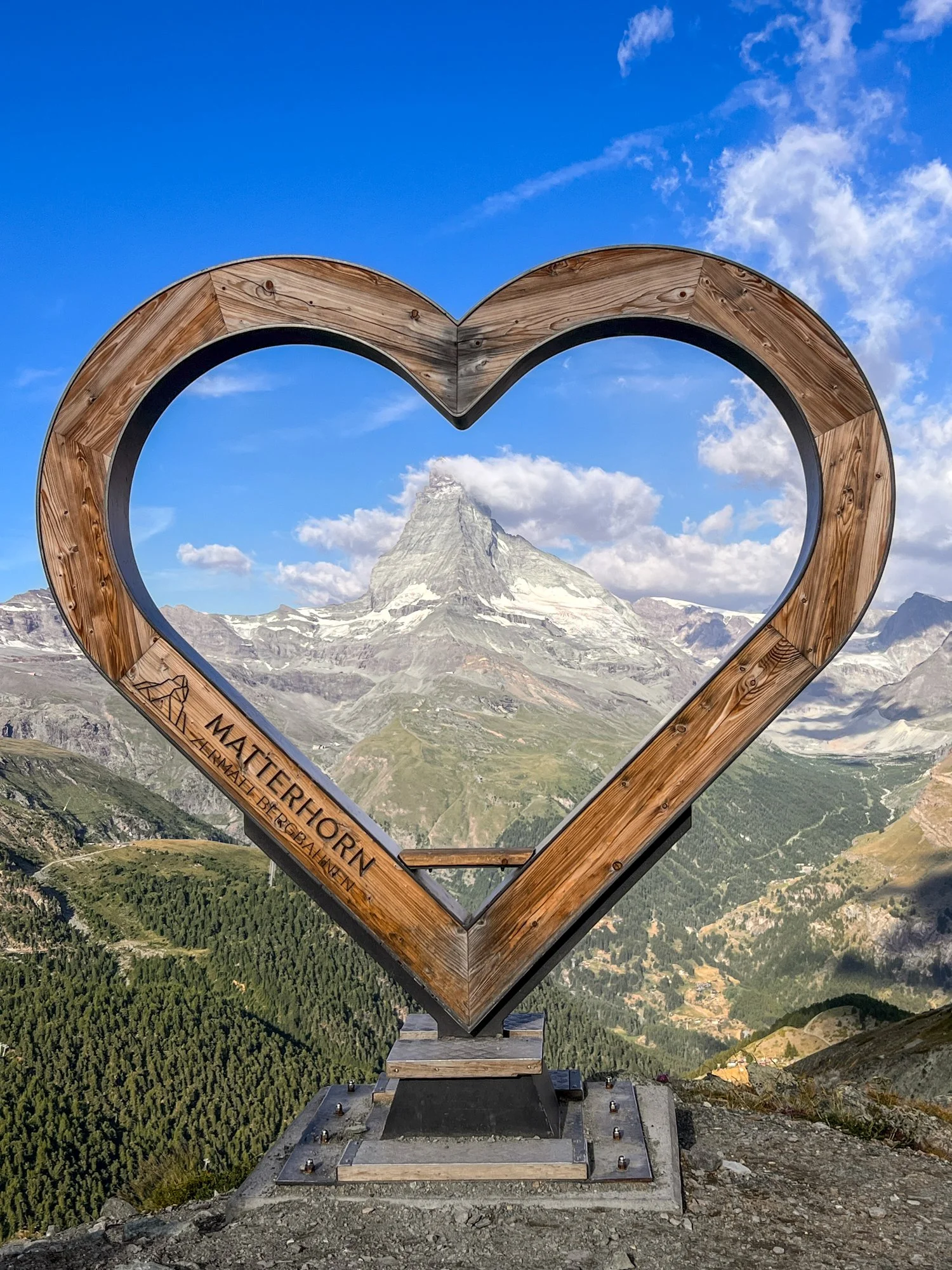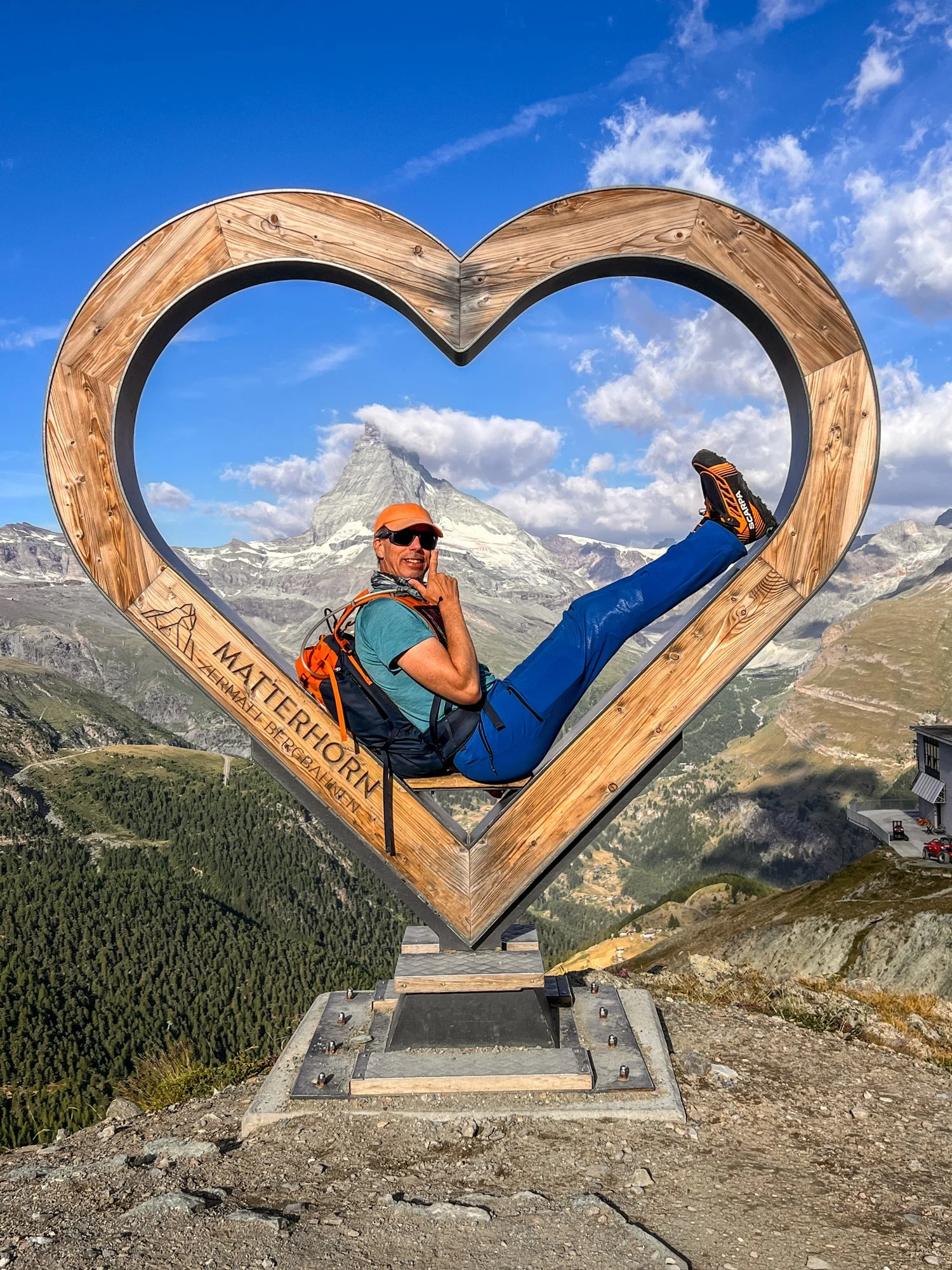
Hiking in Switzerland can be daunting. Not just choosing where to hike, but deciding just how hard a hike to tackle. Luckily, we had some amazing friends living in Switzerland. Even luckier, one of them happens to be an exceptional — some might say obsessive — mountain climber.
While they wisely decided not to make us climb the Matterhorn (one of the most challenging and dangerous mountains in the Alps), they did have a three-day adventure in mind. One that would leave us with lasting memories and take us well outside our comfort zone. Looking back, perhaps we should have asked a few more questions!
DAY 1: Rotenbotem to Monte Rosa Hut
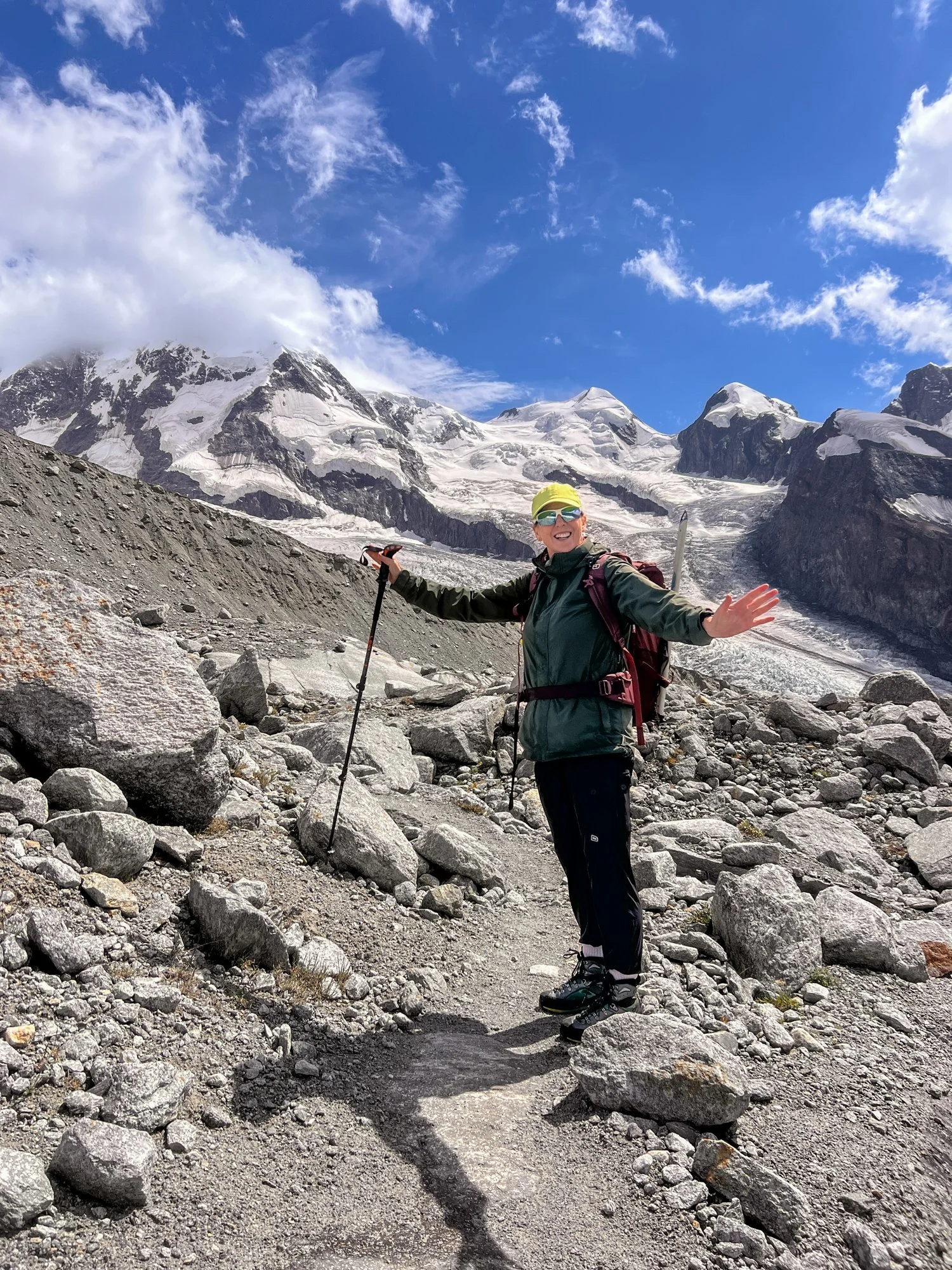
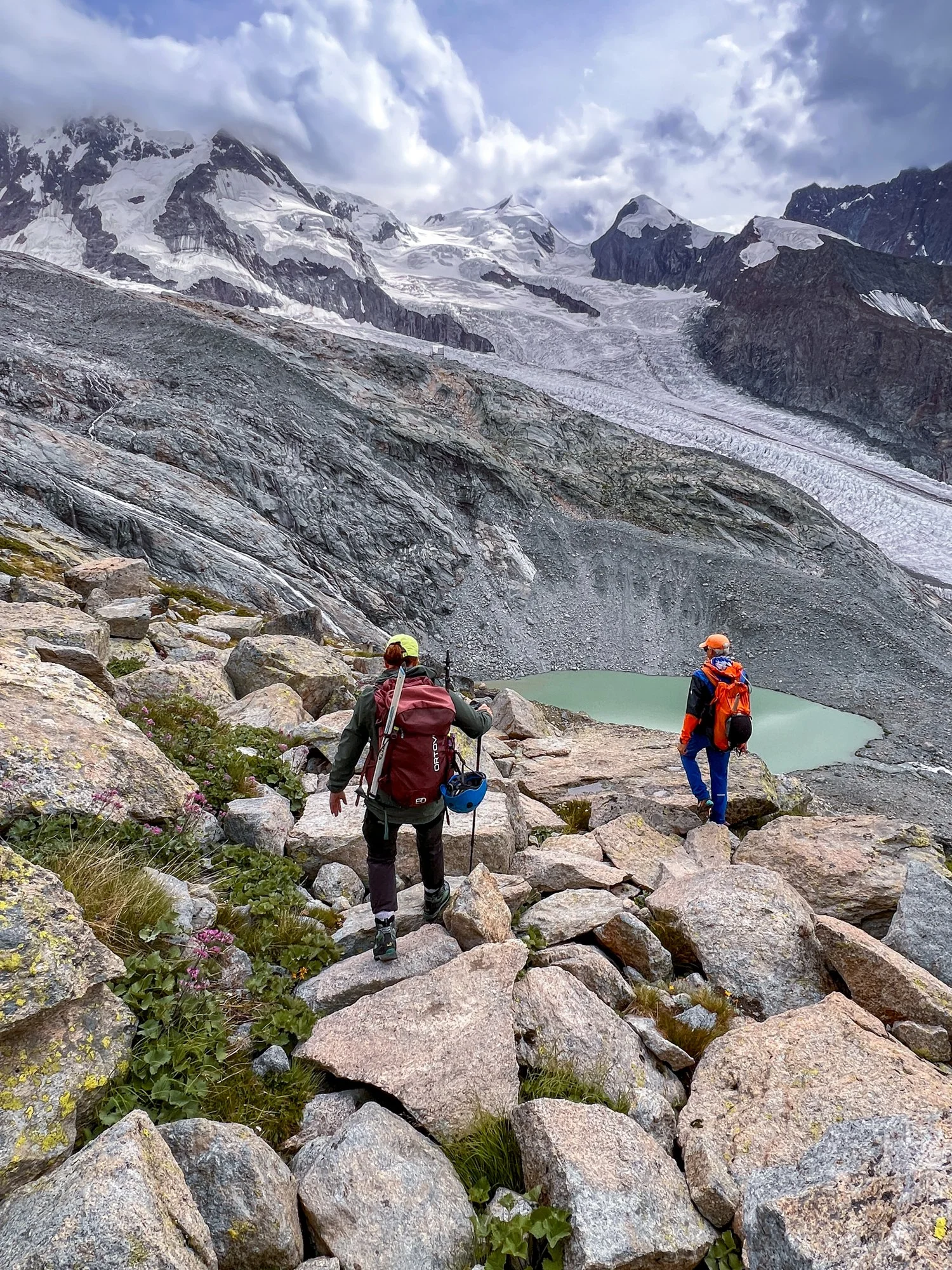
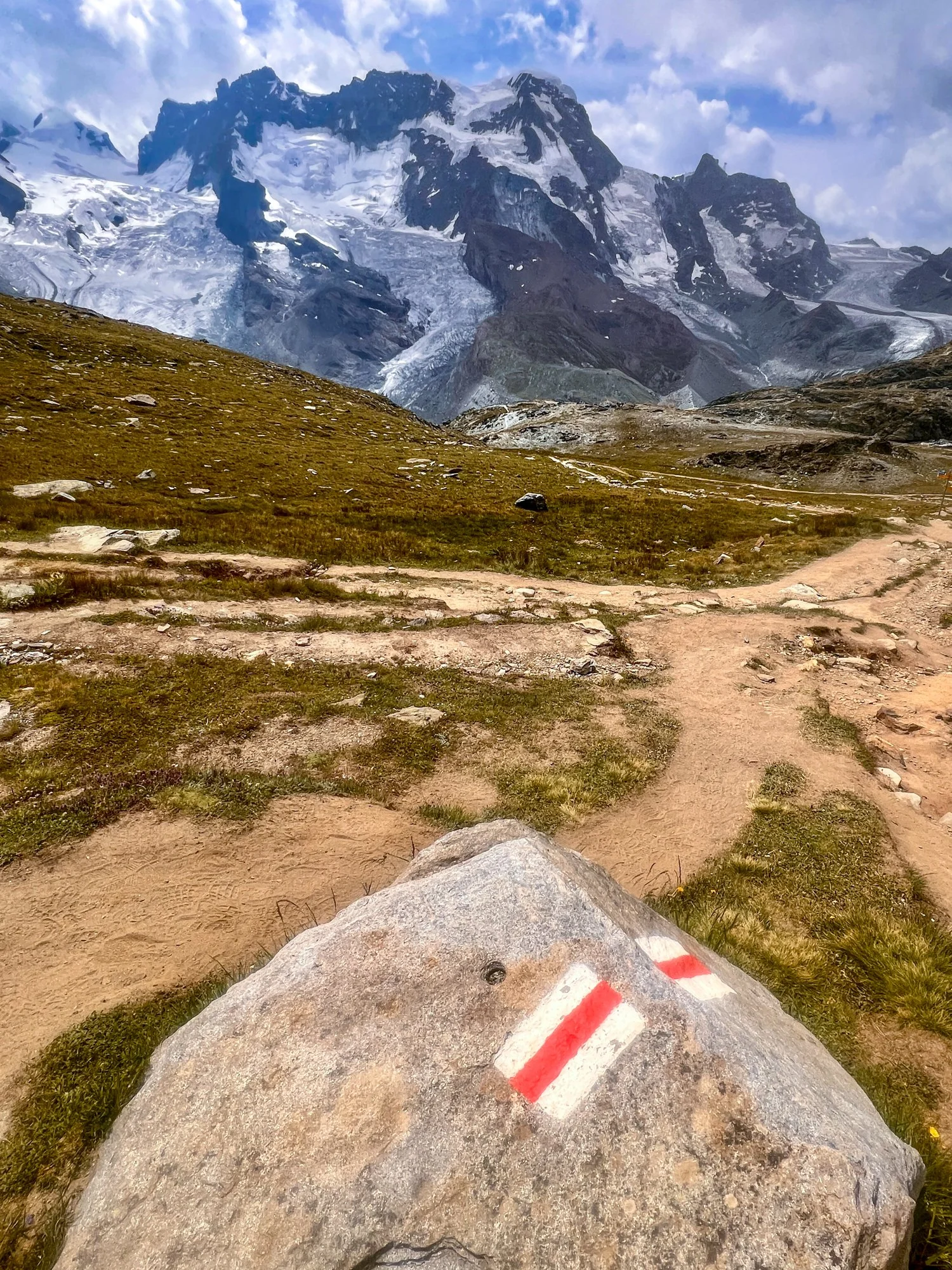
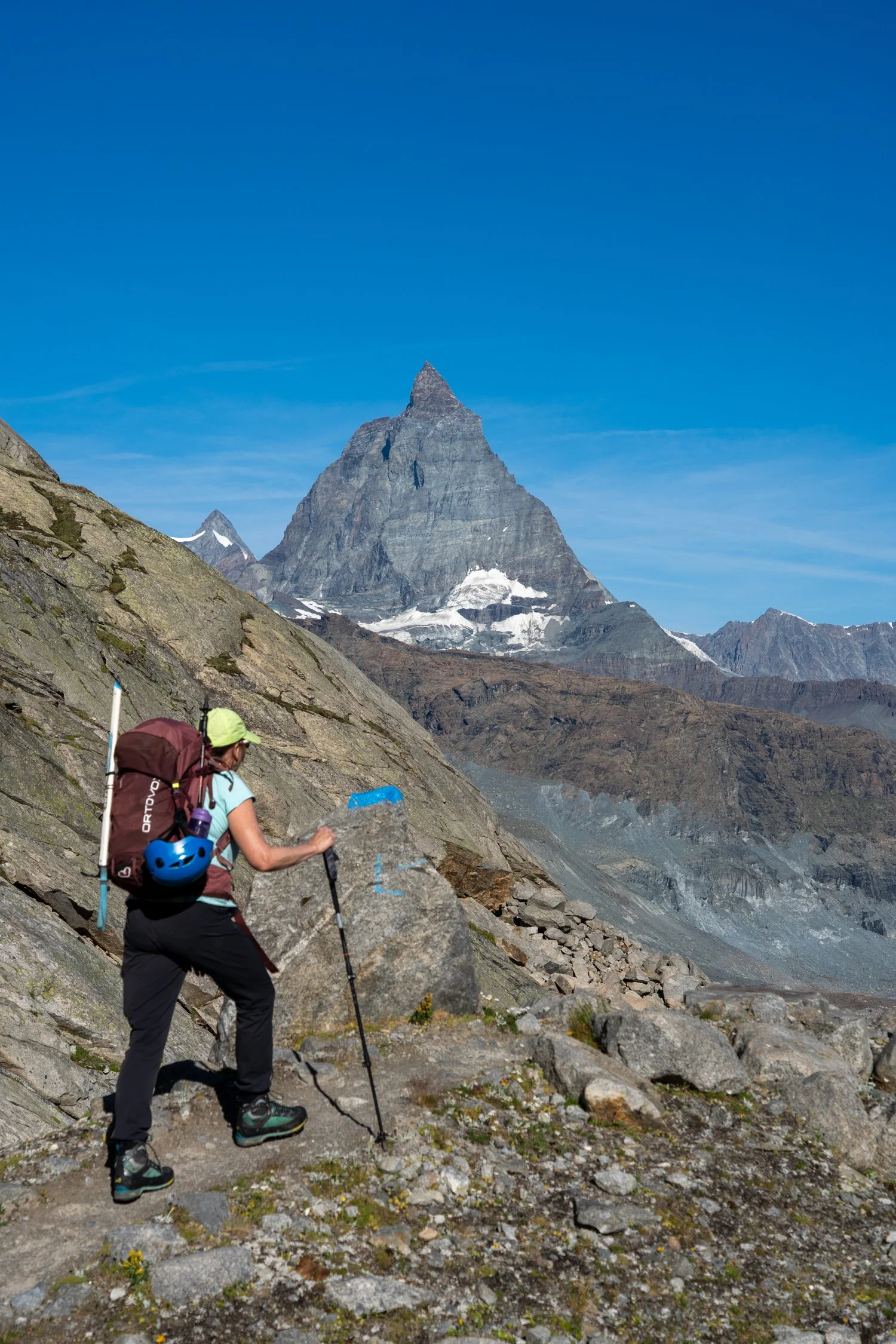
Our adventure begins with a mountain train ride to Rotenboden, where we step off and are immediately surrounded by an extraordinary wall of snow-covered peaks. Under a beautiful blue morning sky, we set off following a well-maintained hiking trail through an incredible alpine landscape. Little did we know what was waiting for us later in the day.
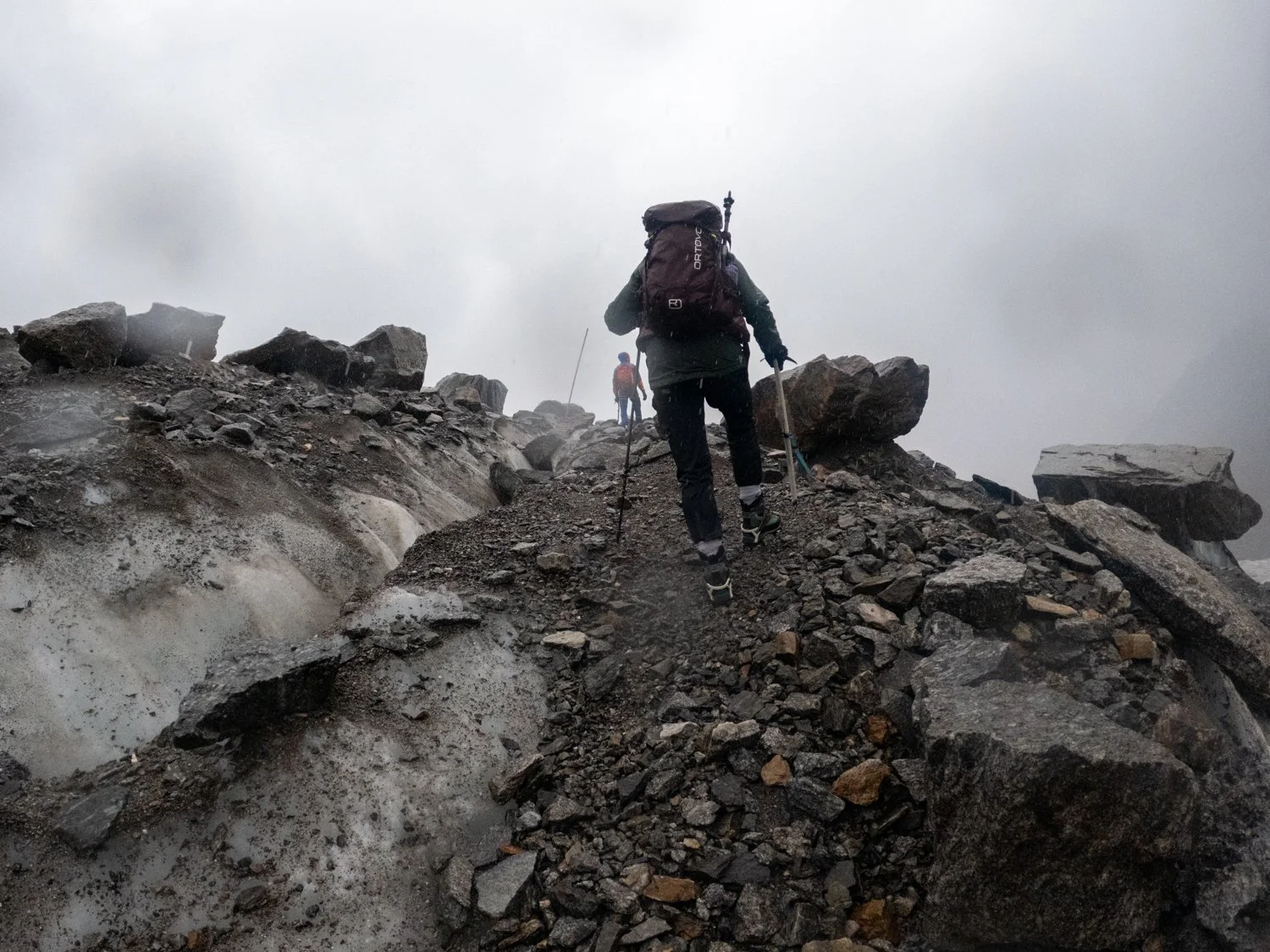
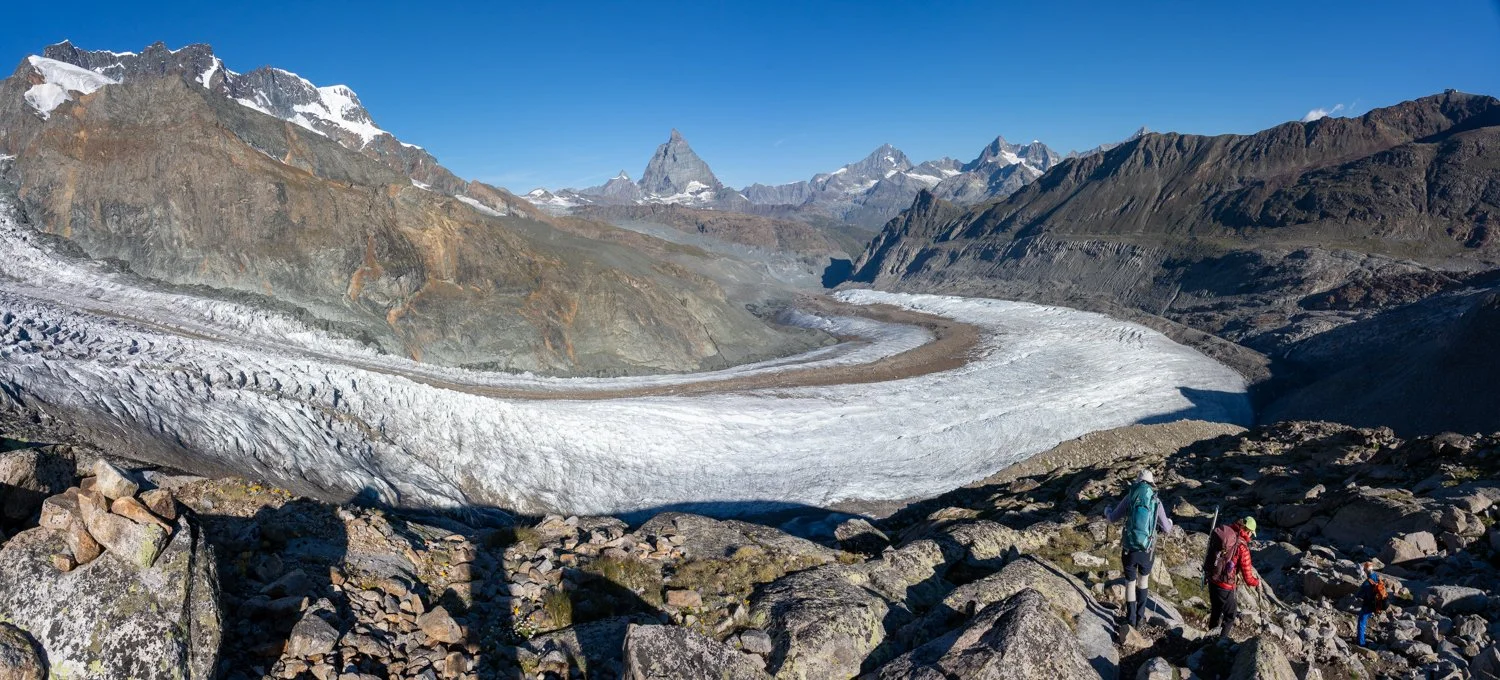
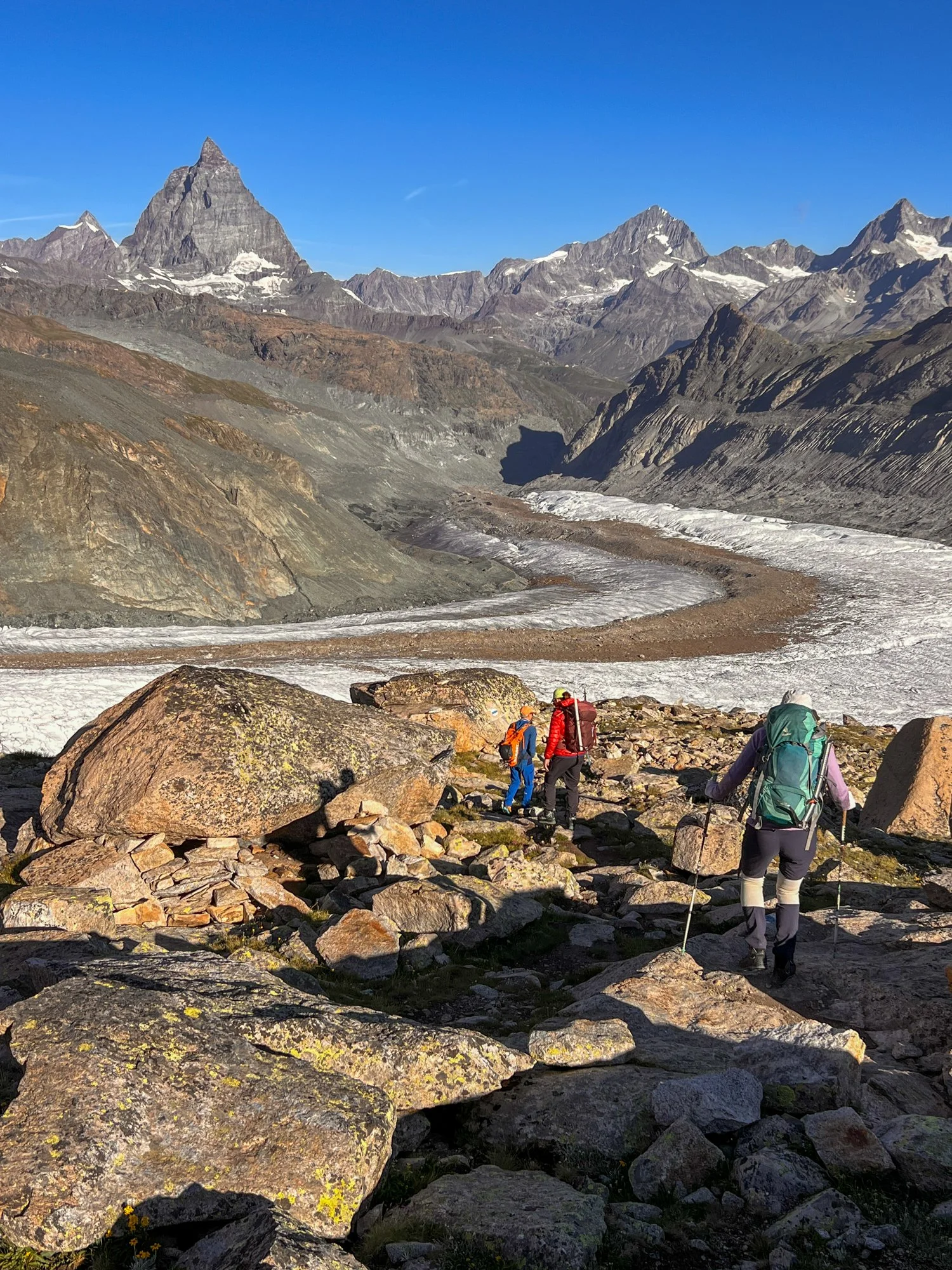
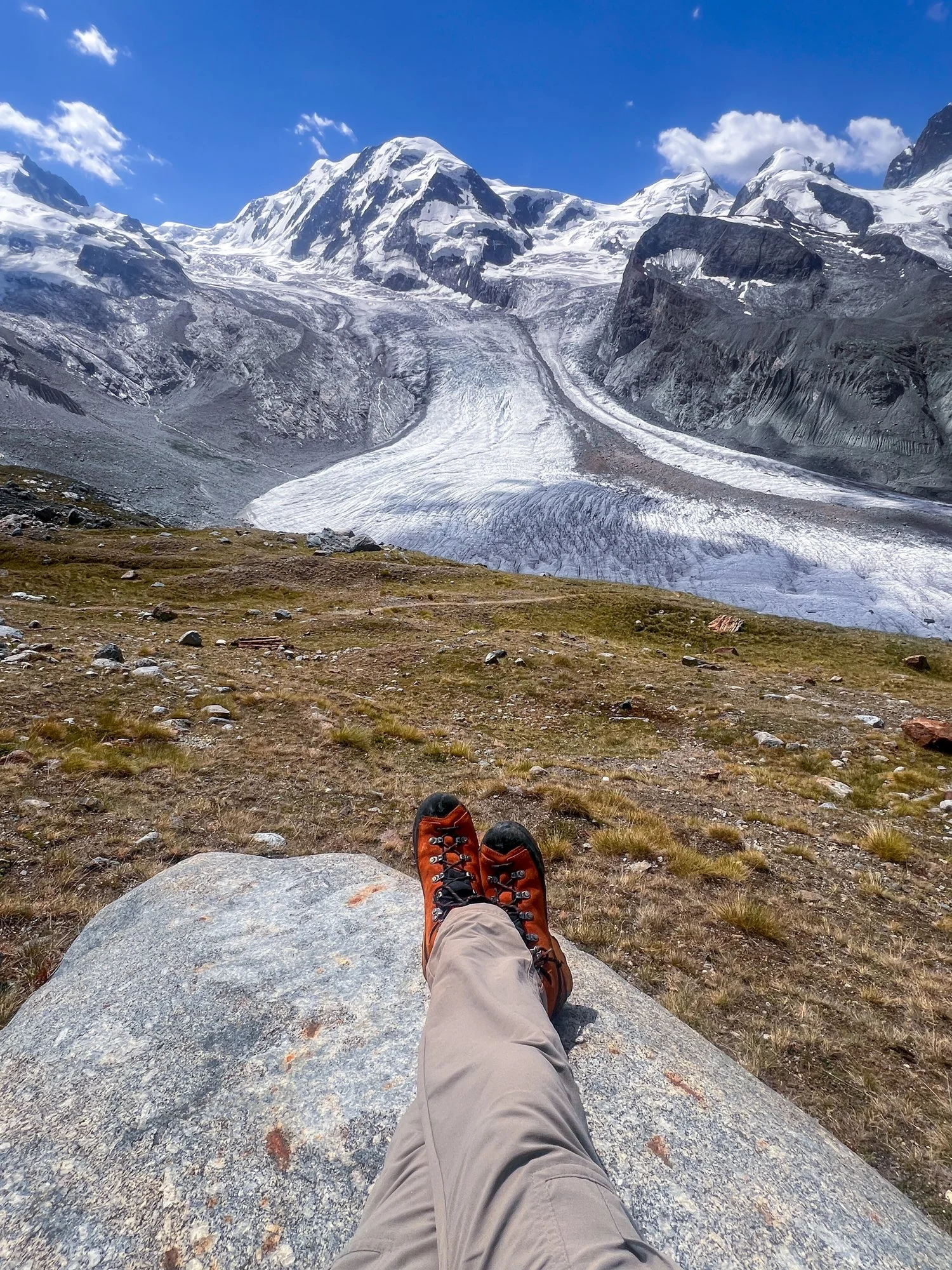
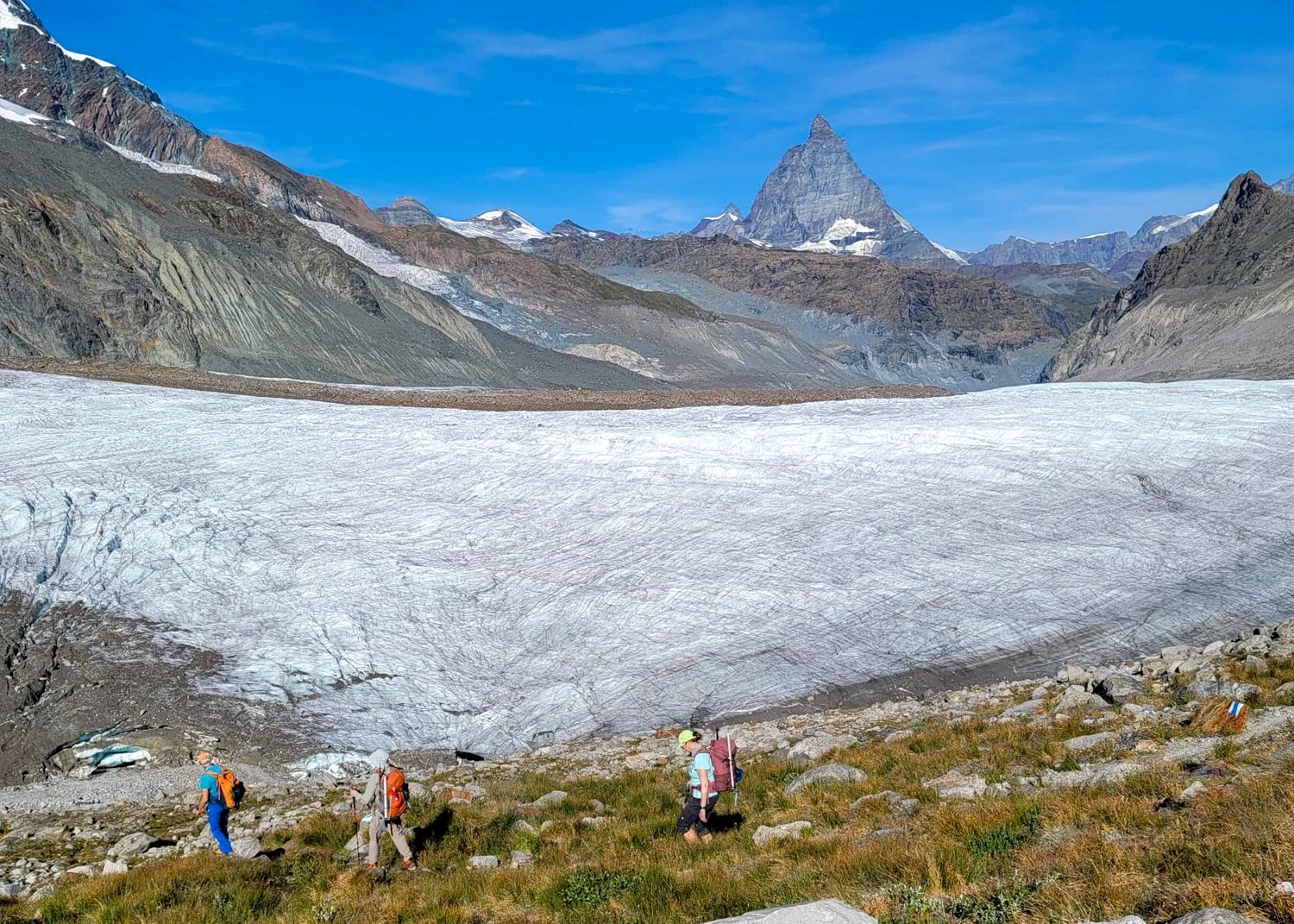
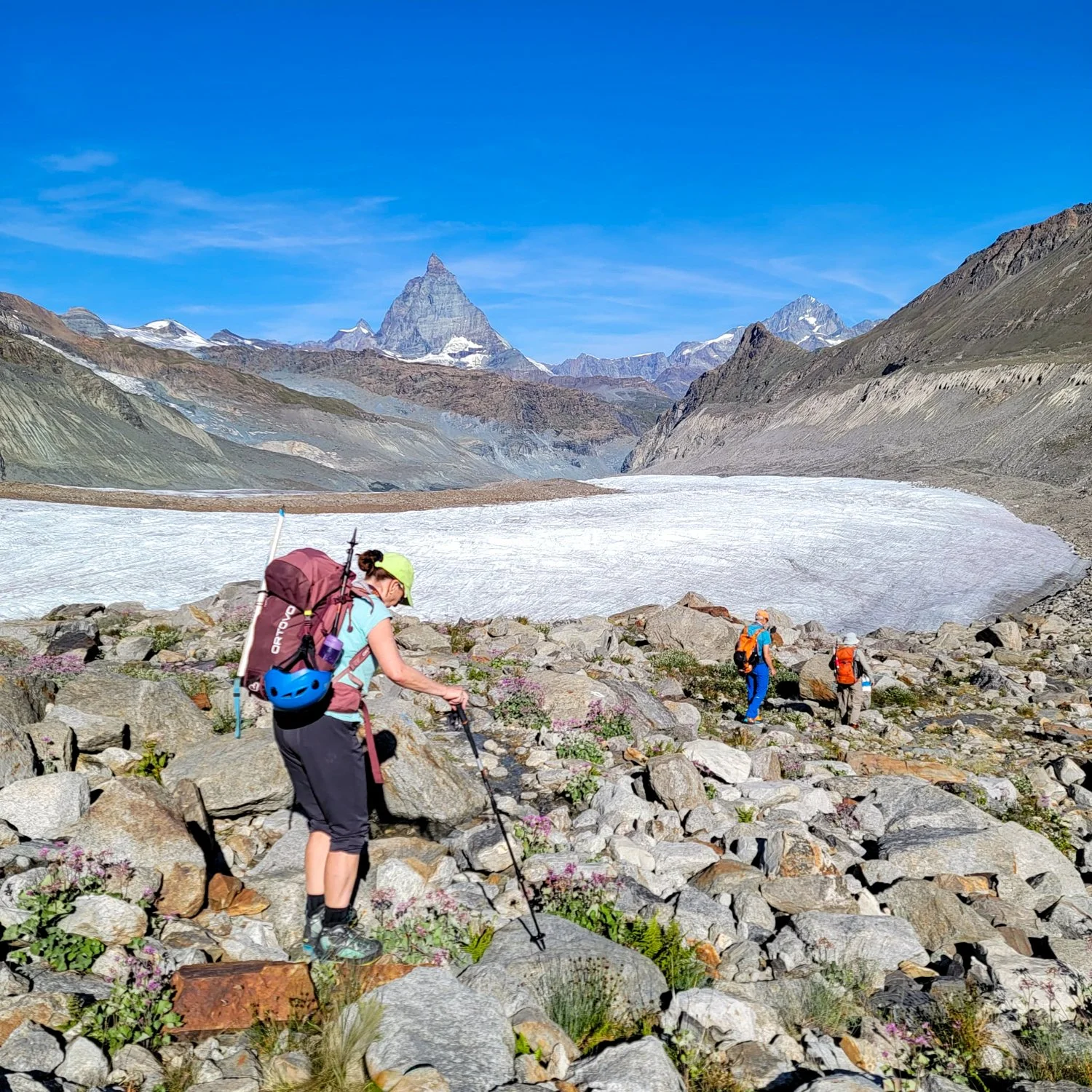
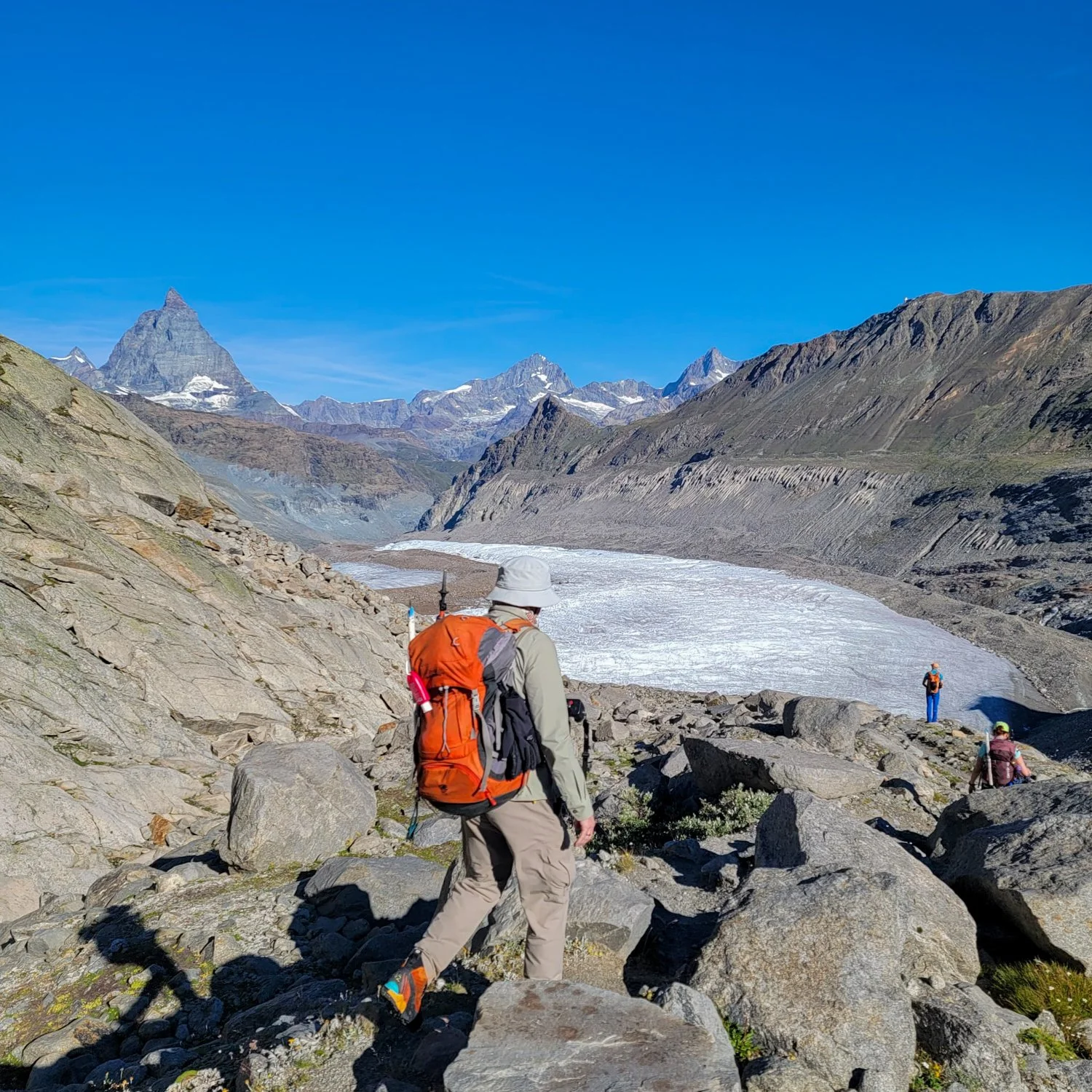
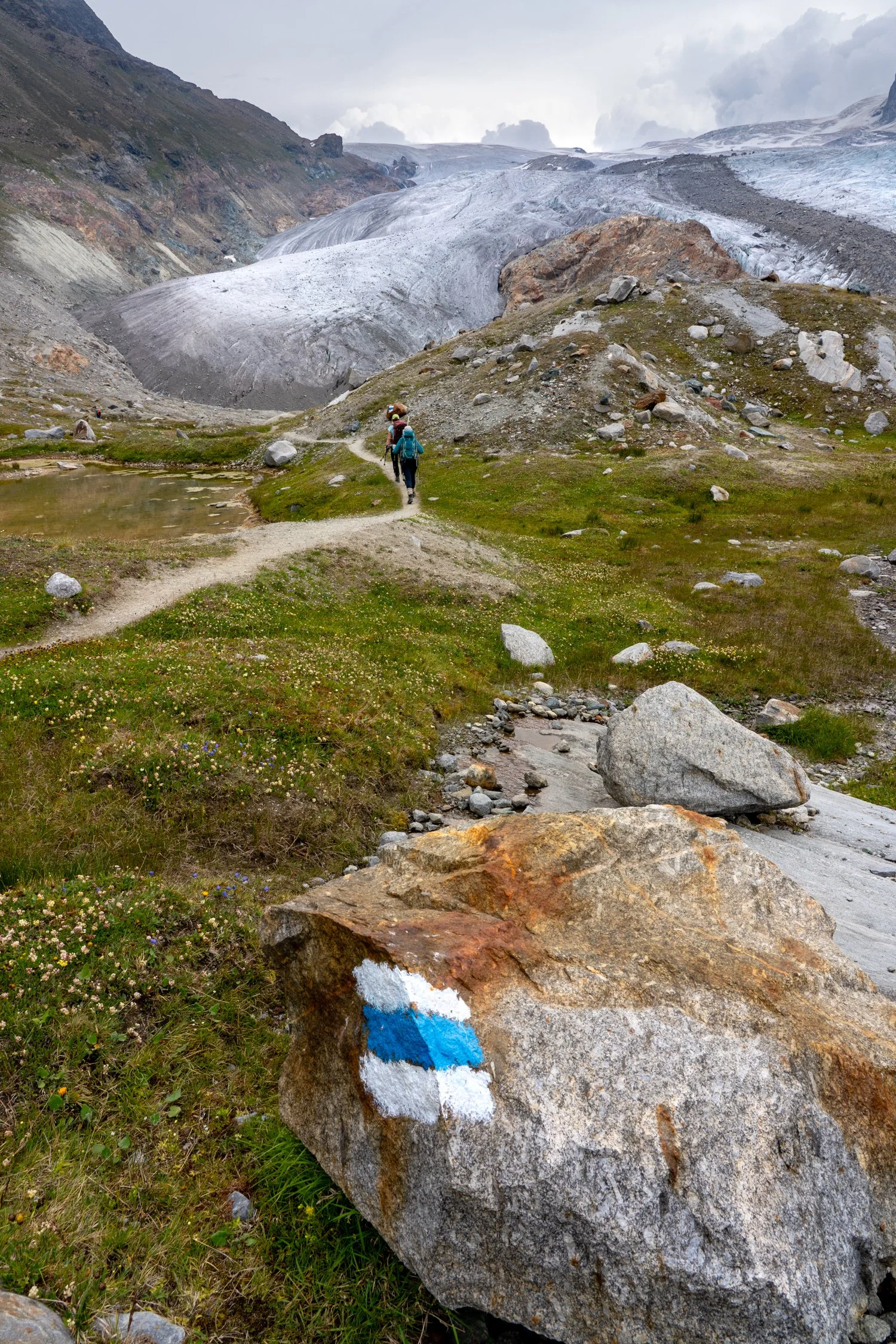
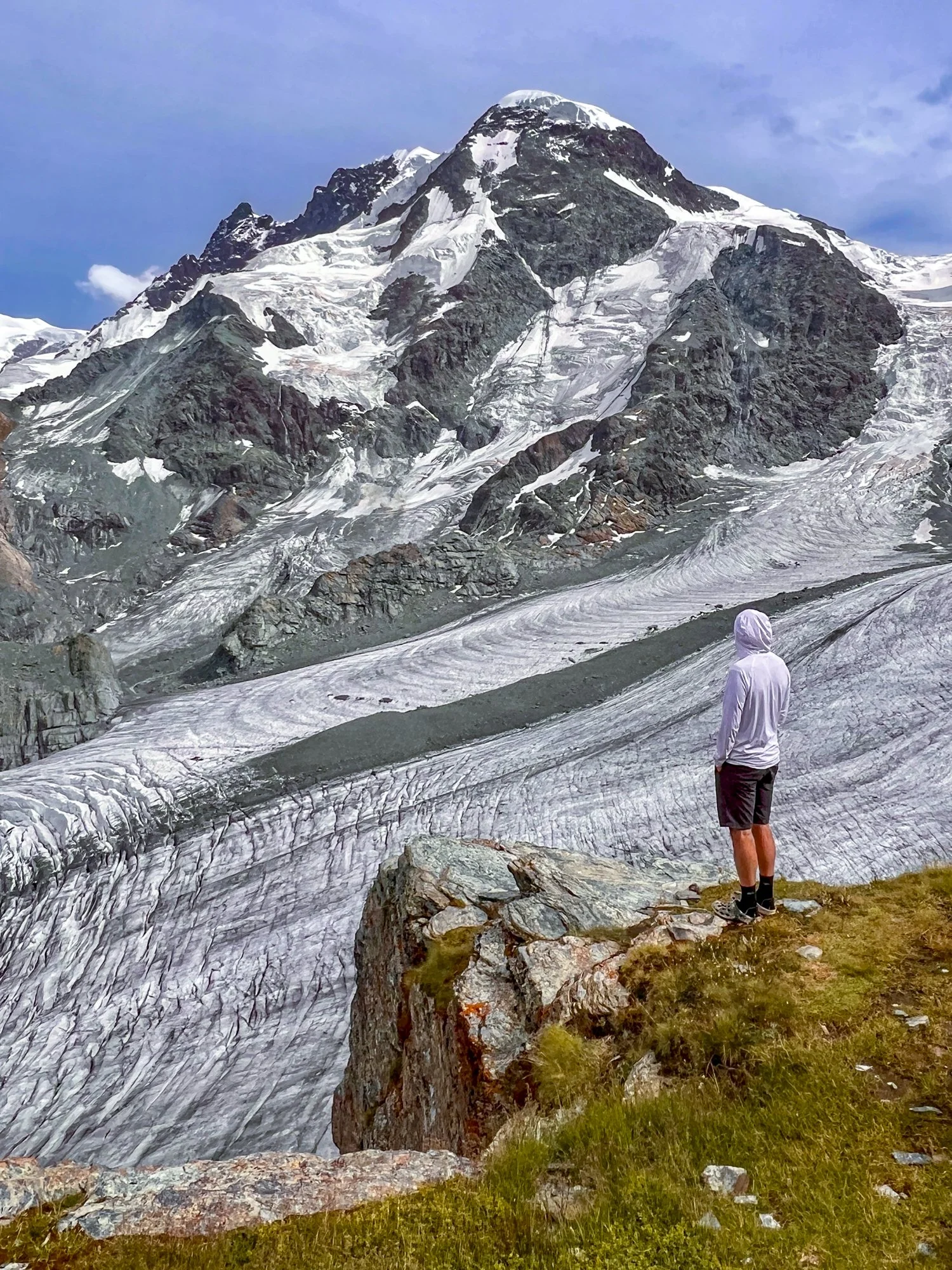
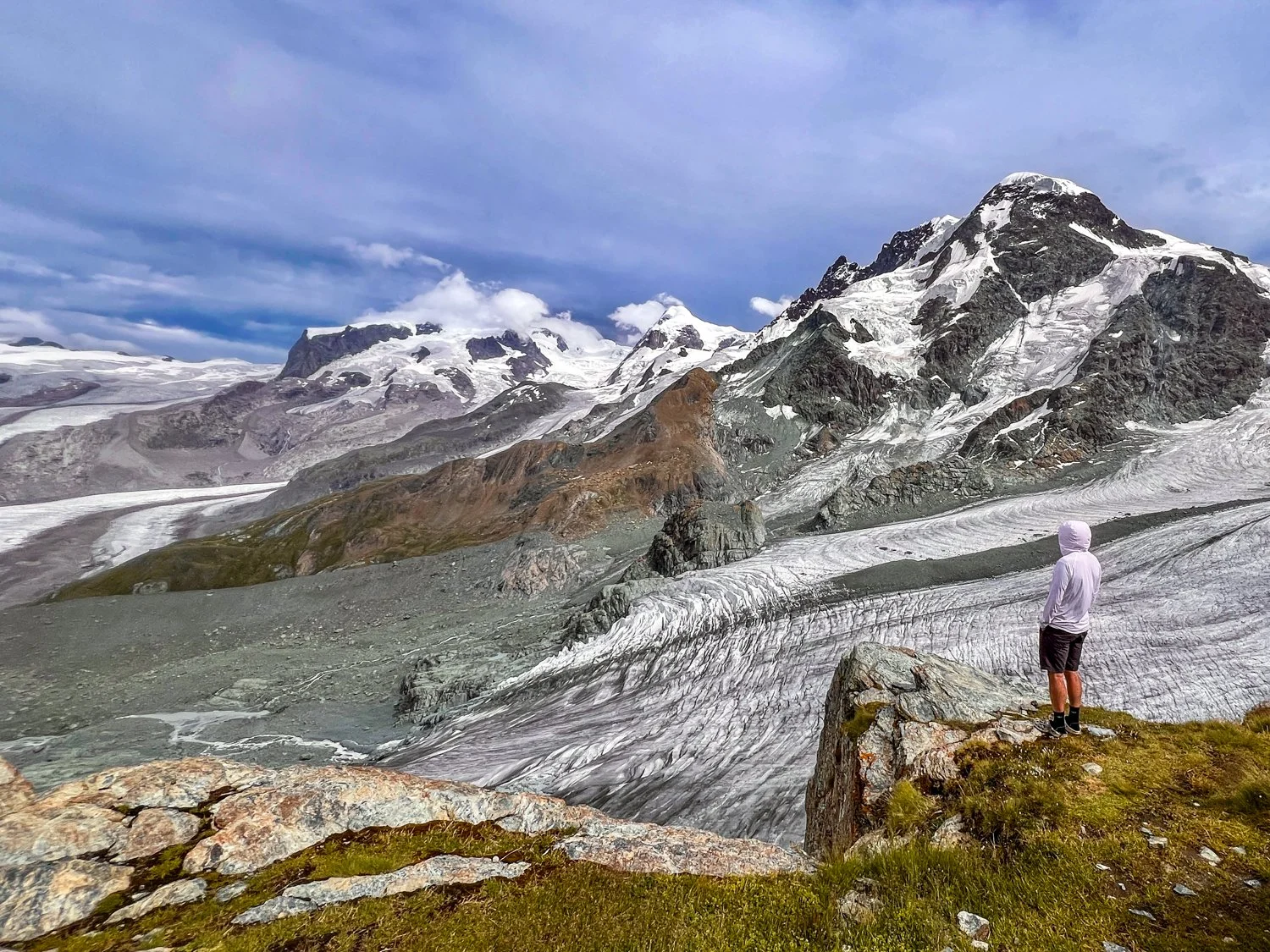
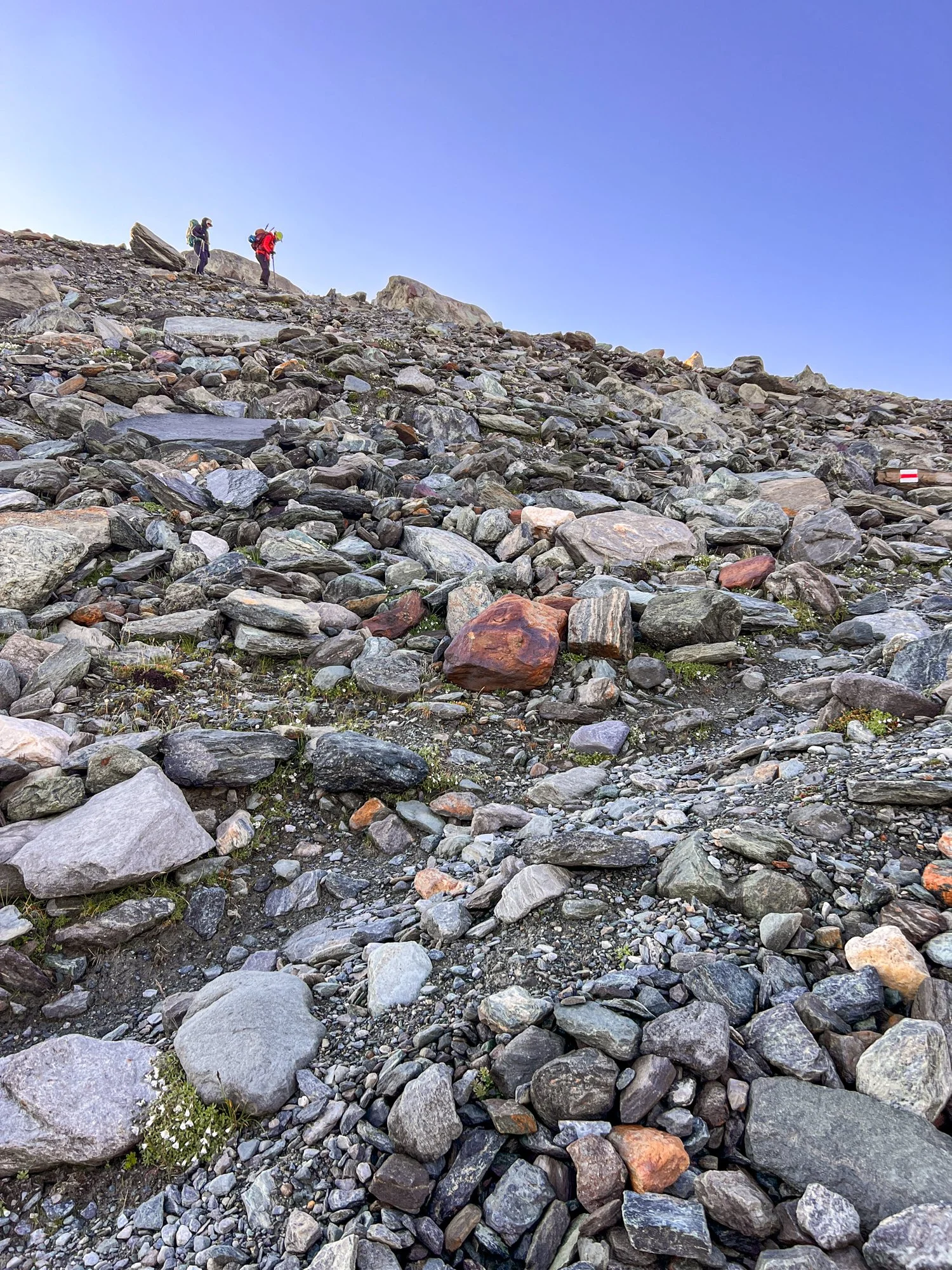
The views are spectacular in every direction as we pick our way along the long lateral moraine, over boulders that have been shaped and reshaped by the everchanging glacier. Amongst the rocks splashes of colour brighten the landscape as wildflowers bloom in the cool summer air.
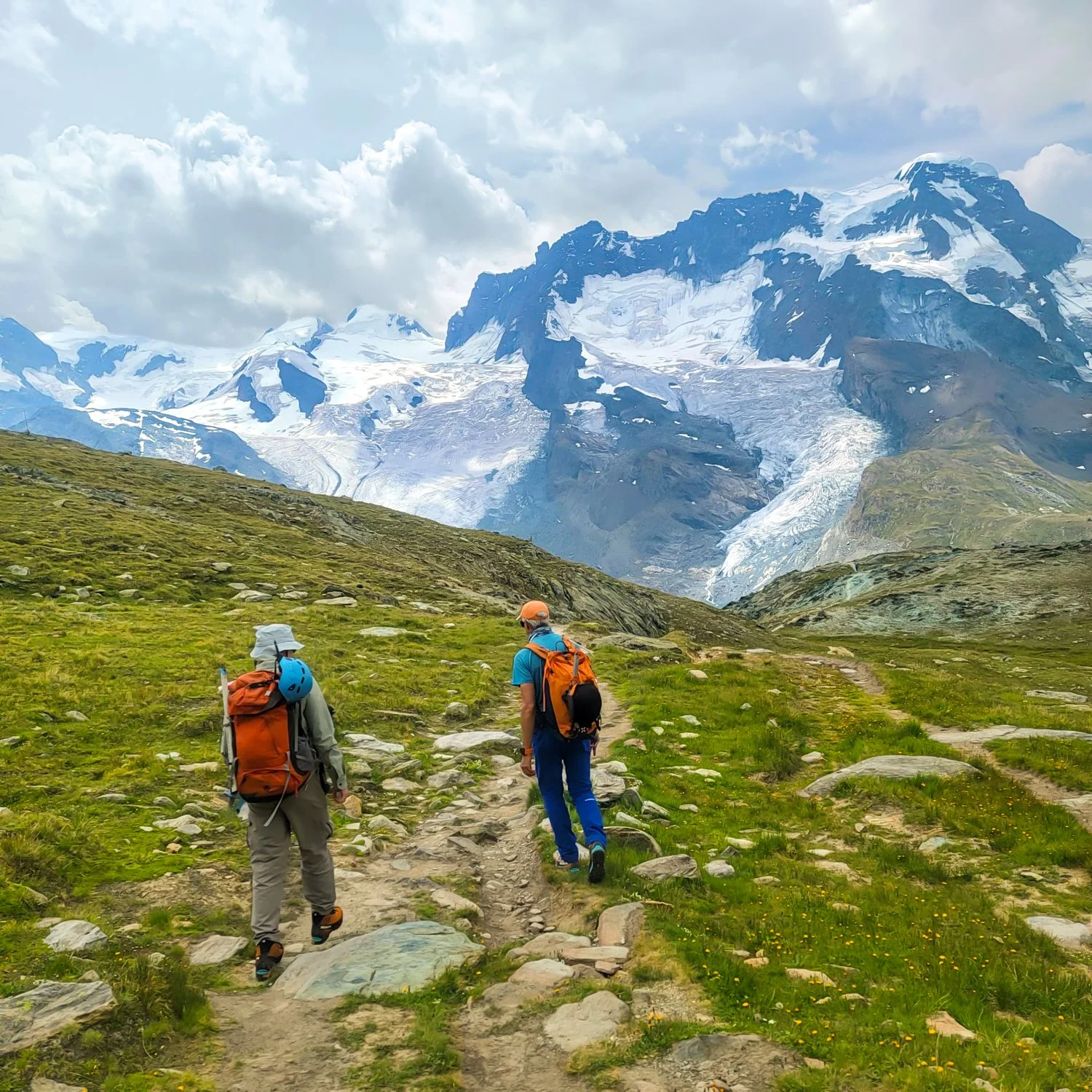
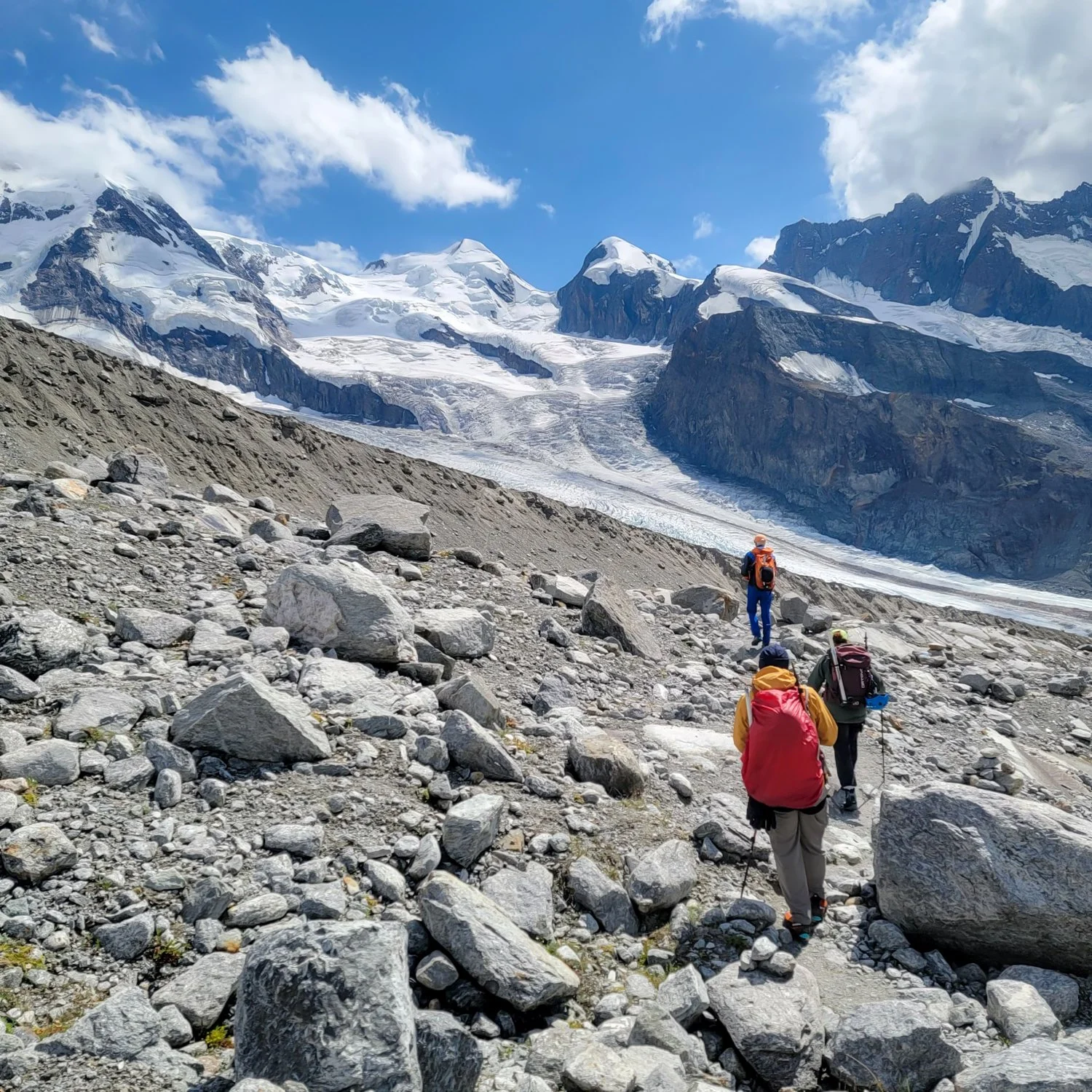
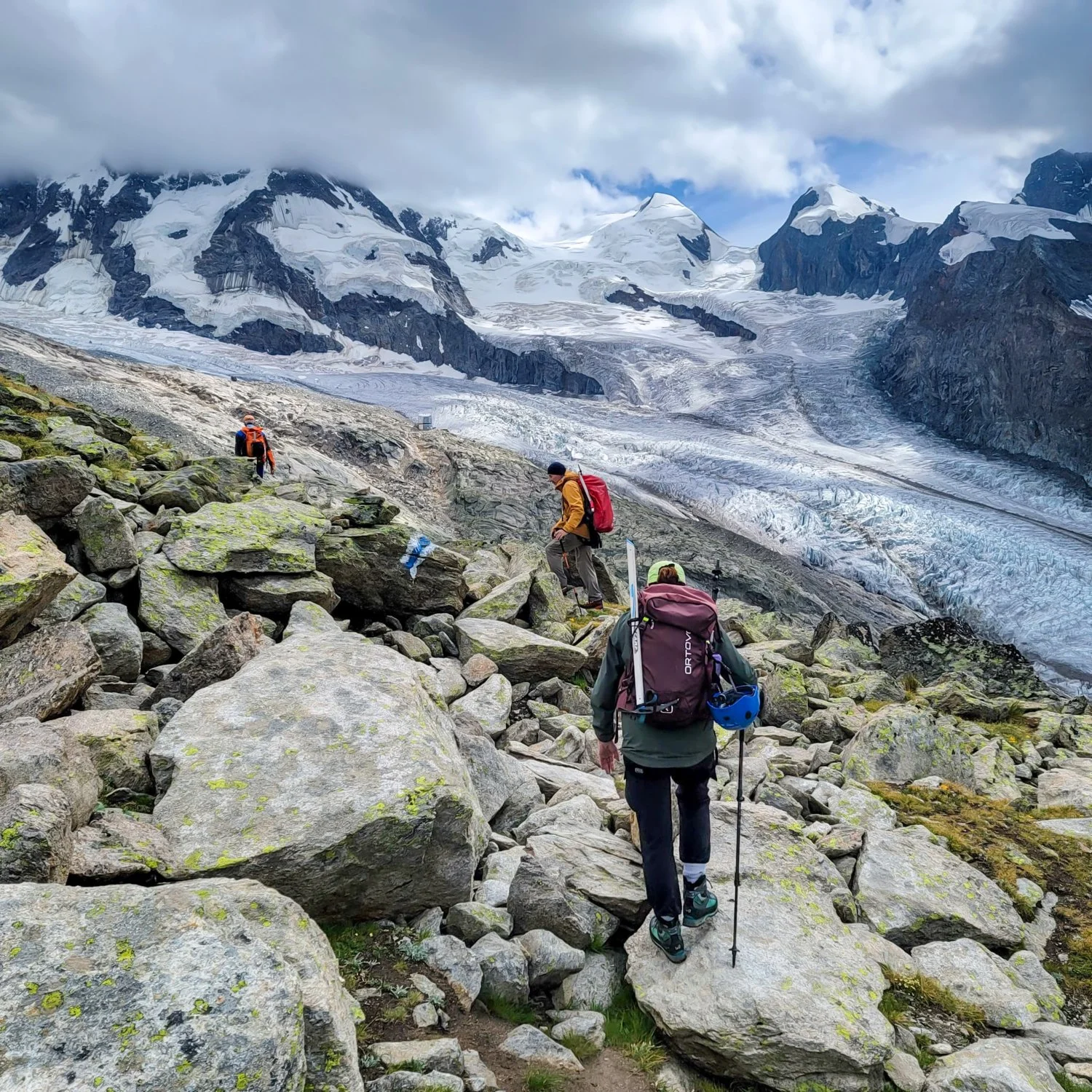
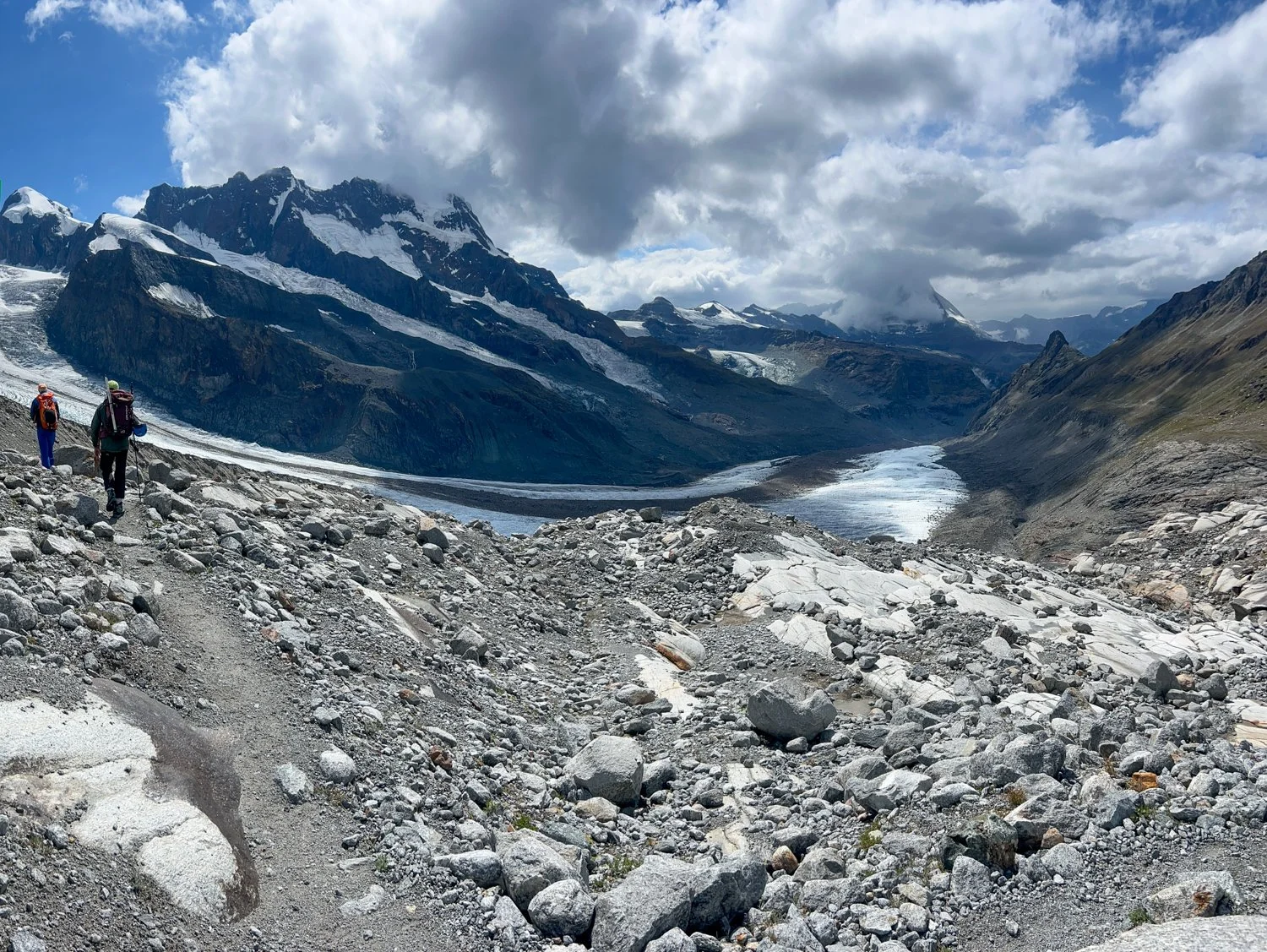
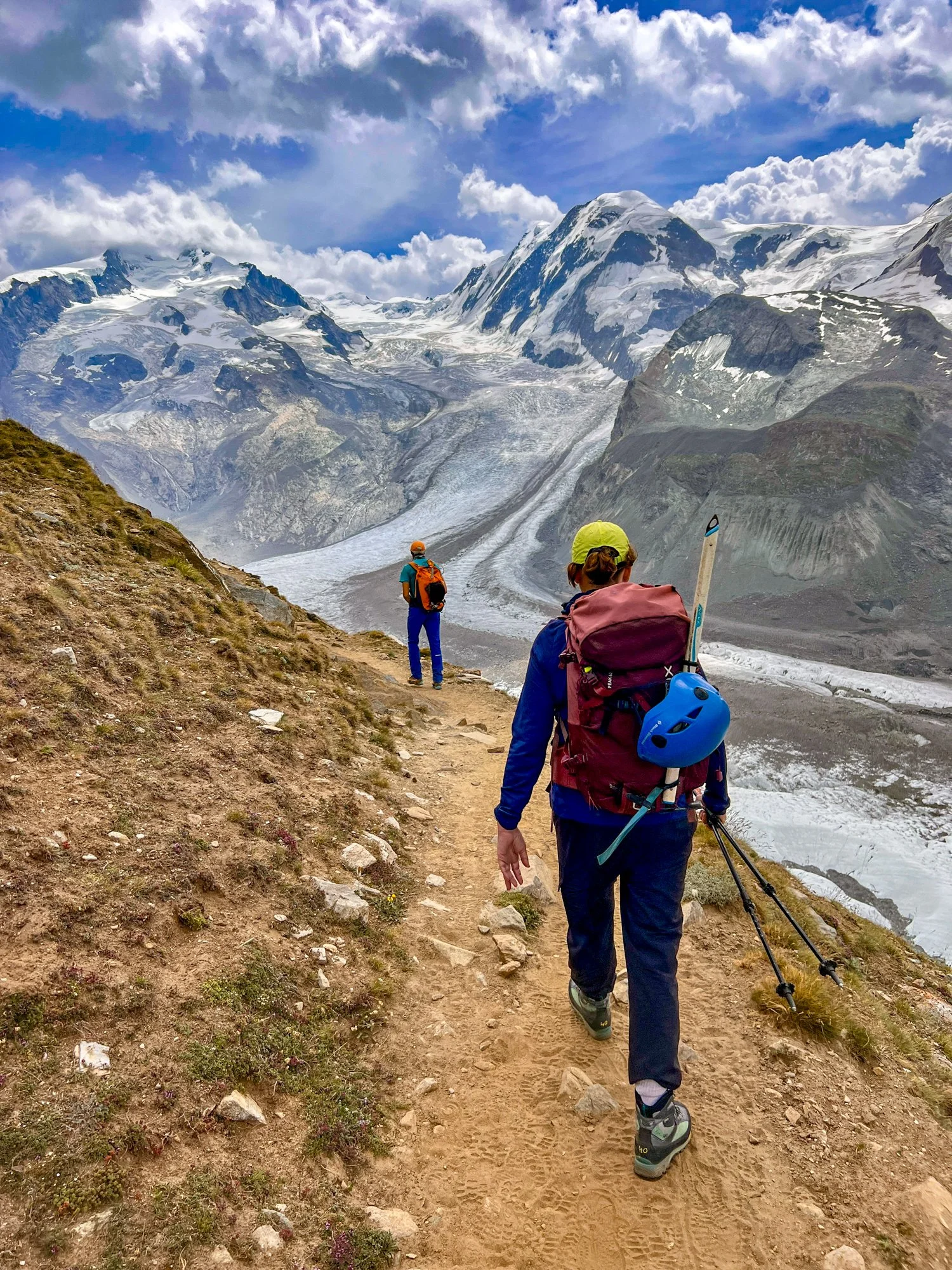
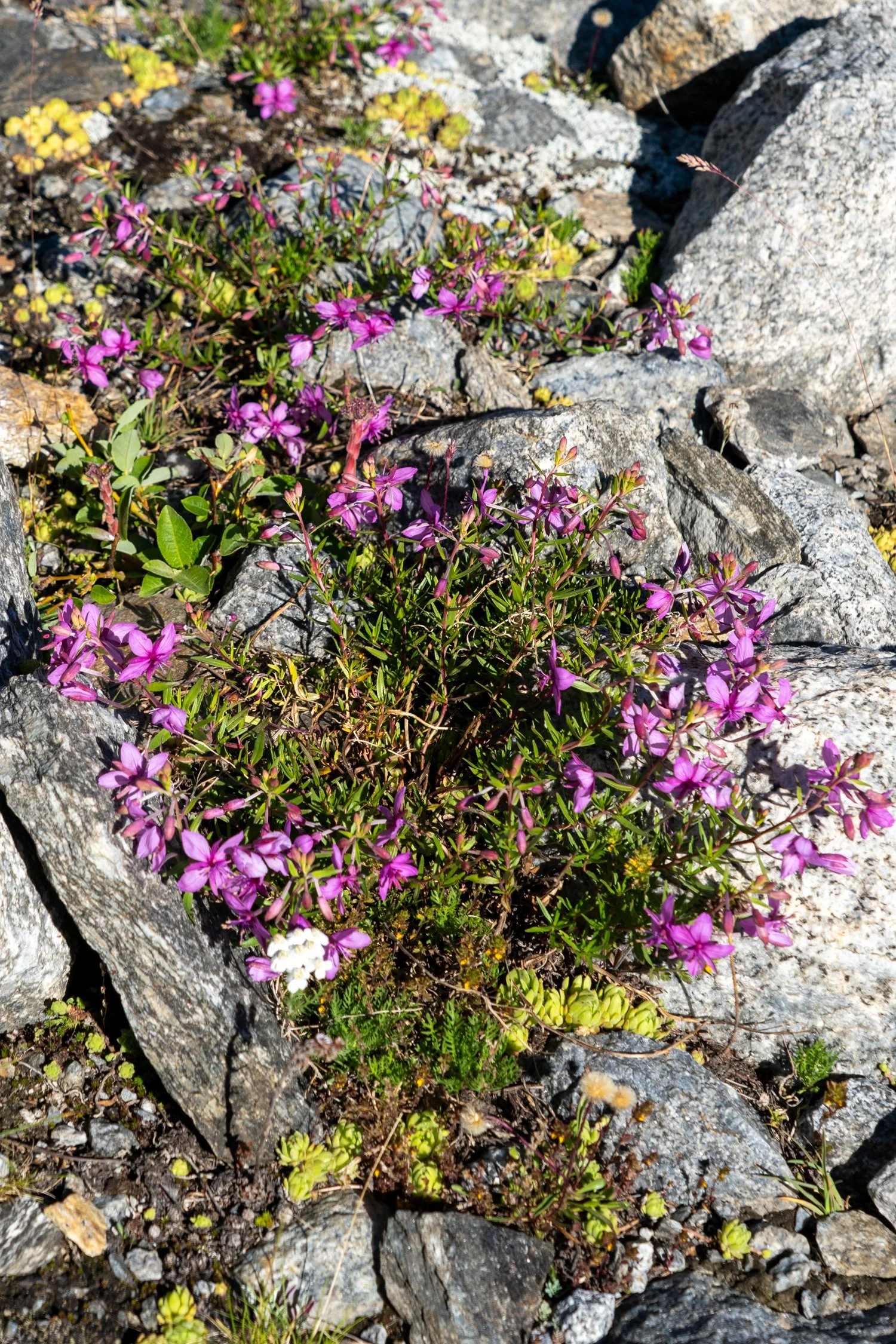
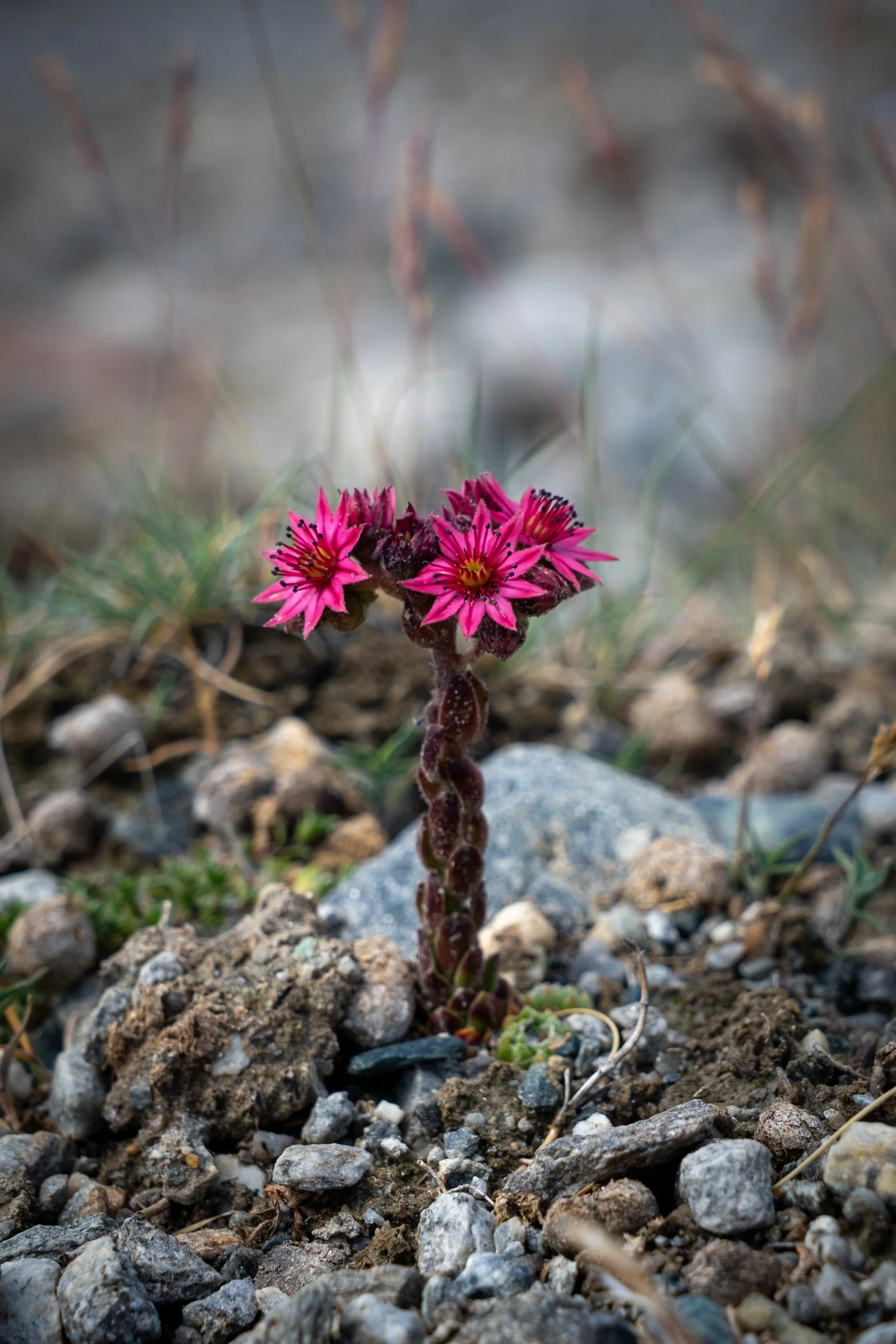
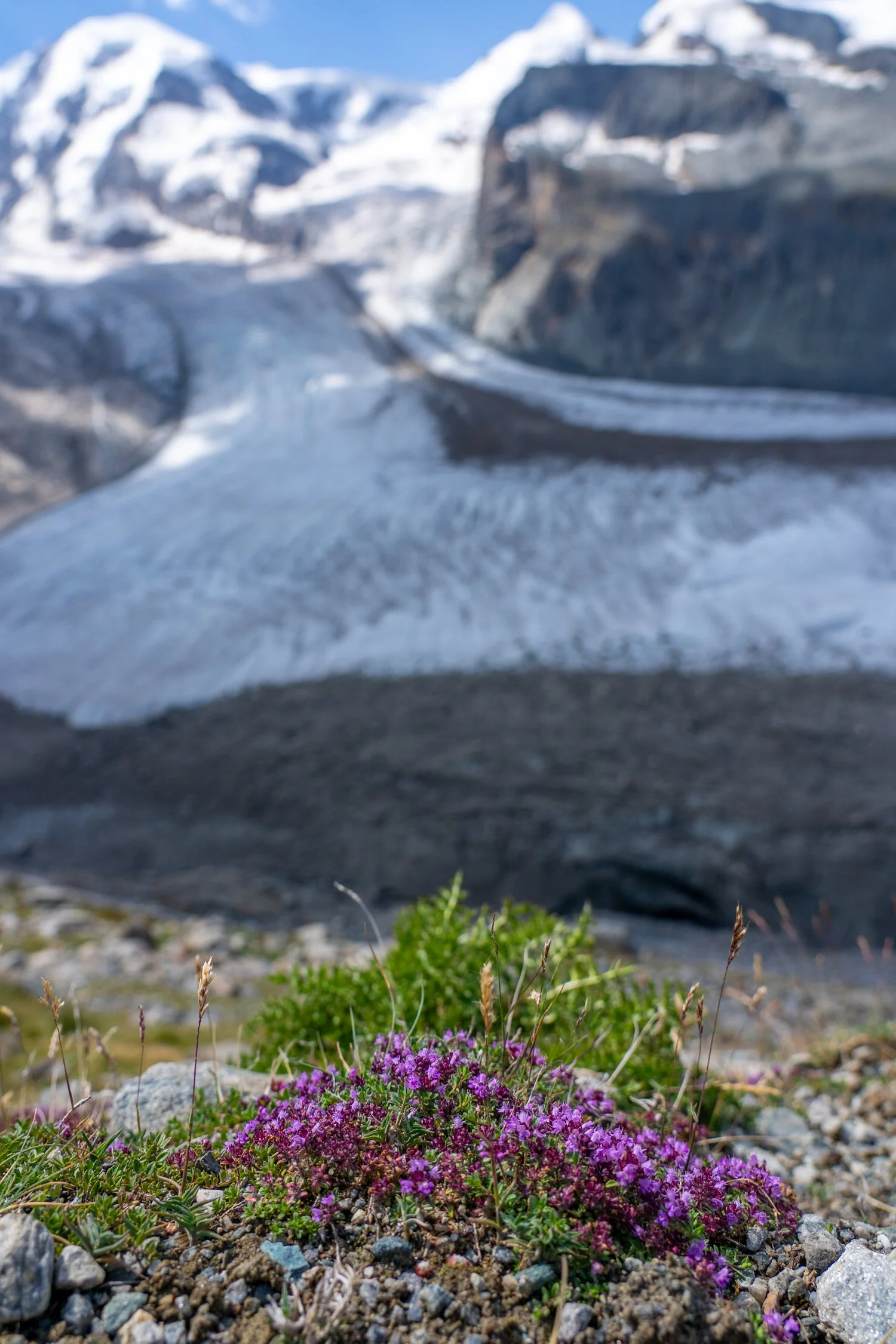
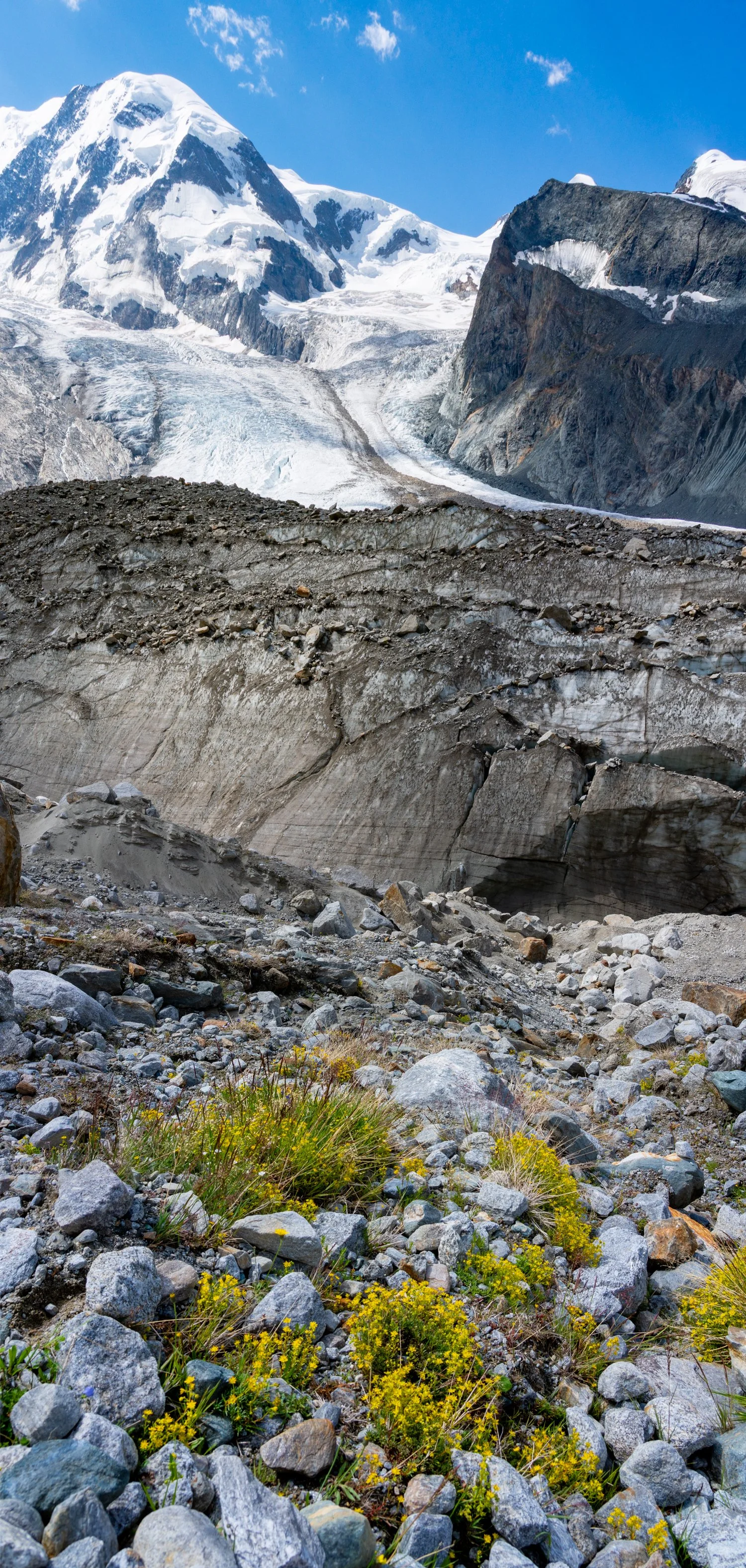
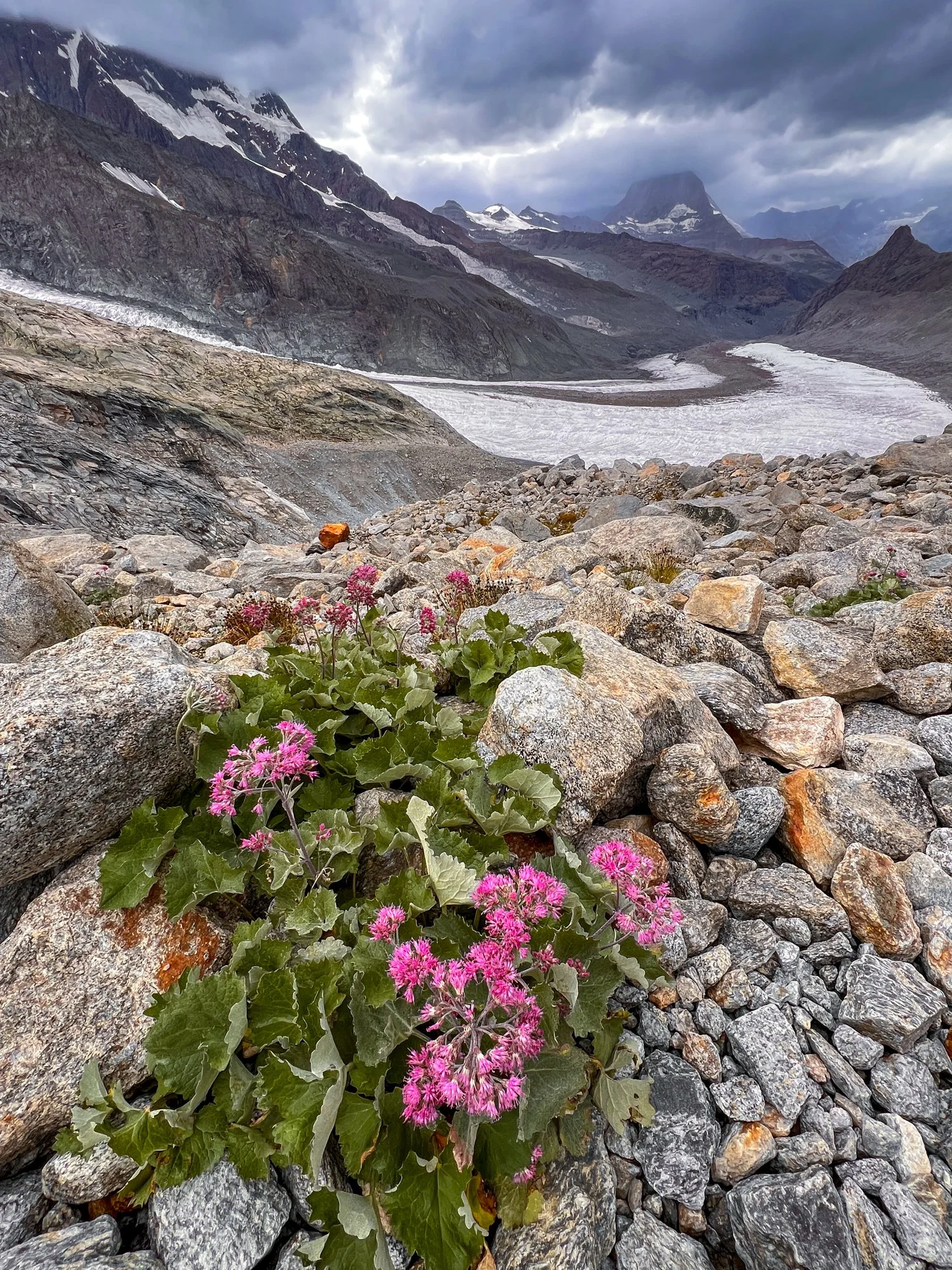
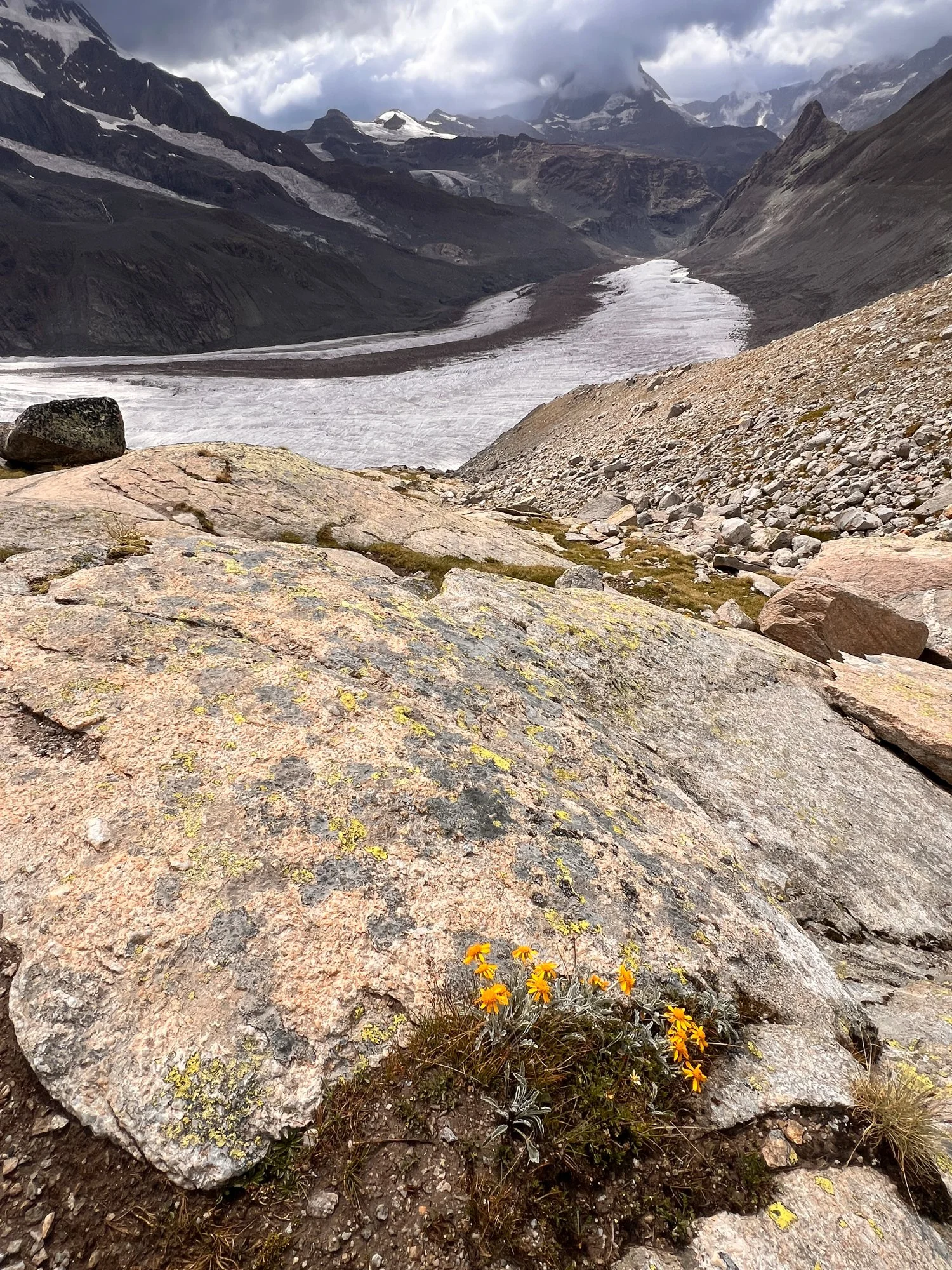
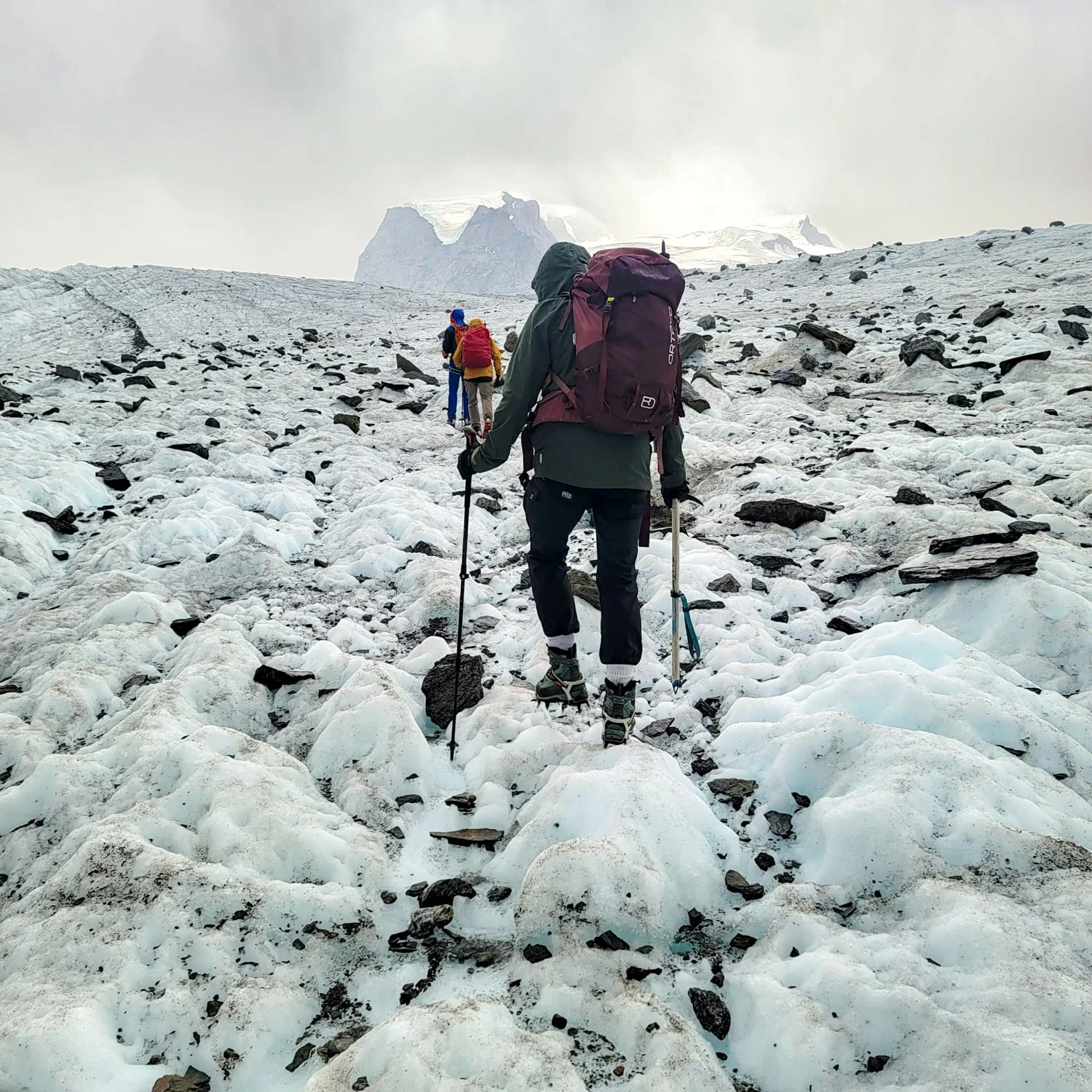
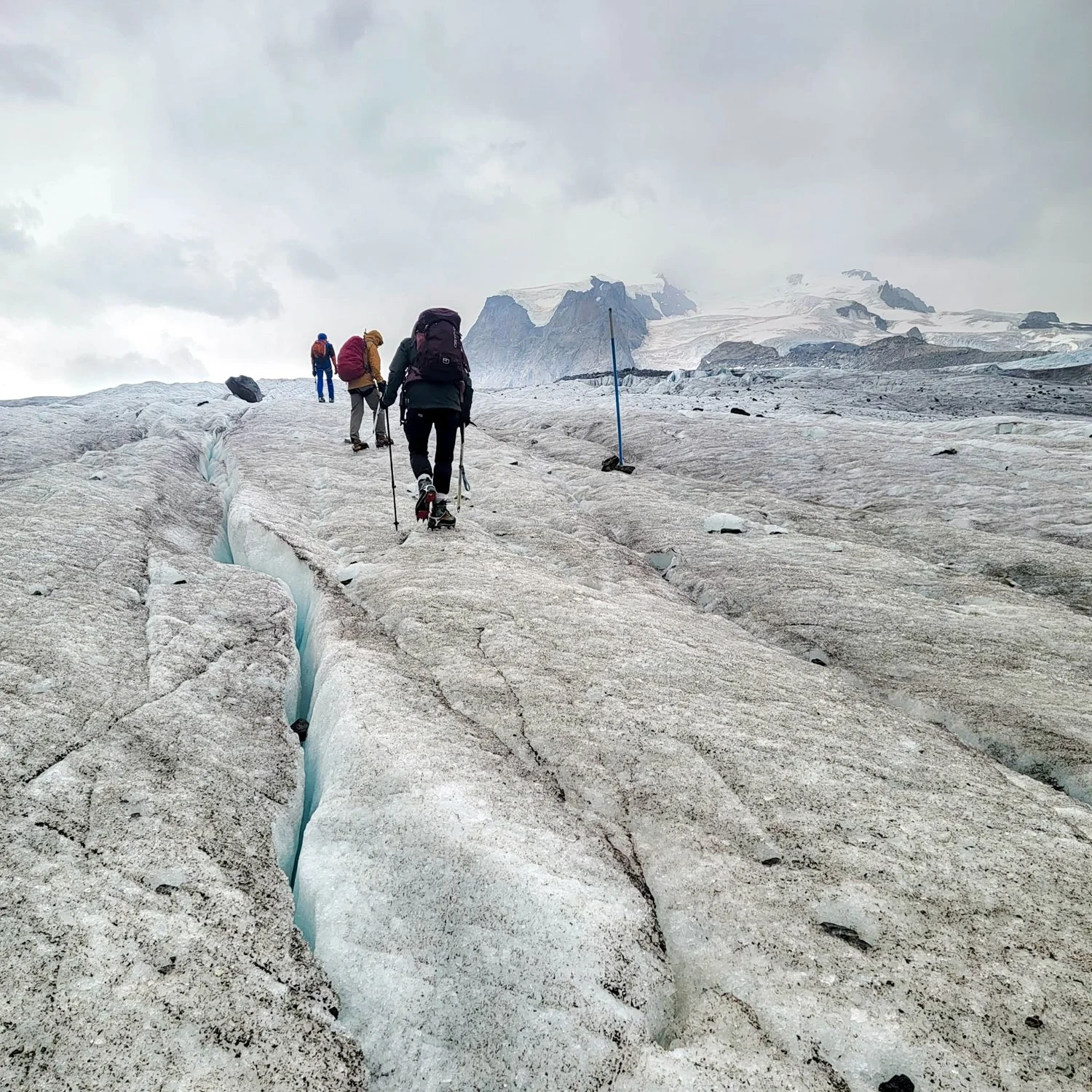
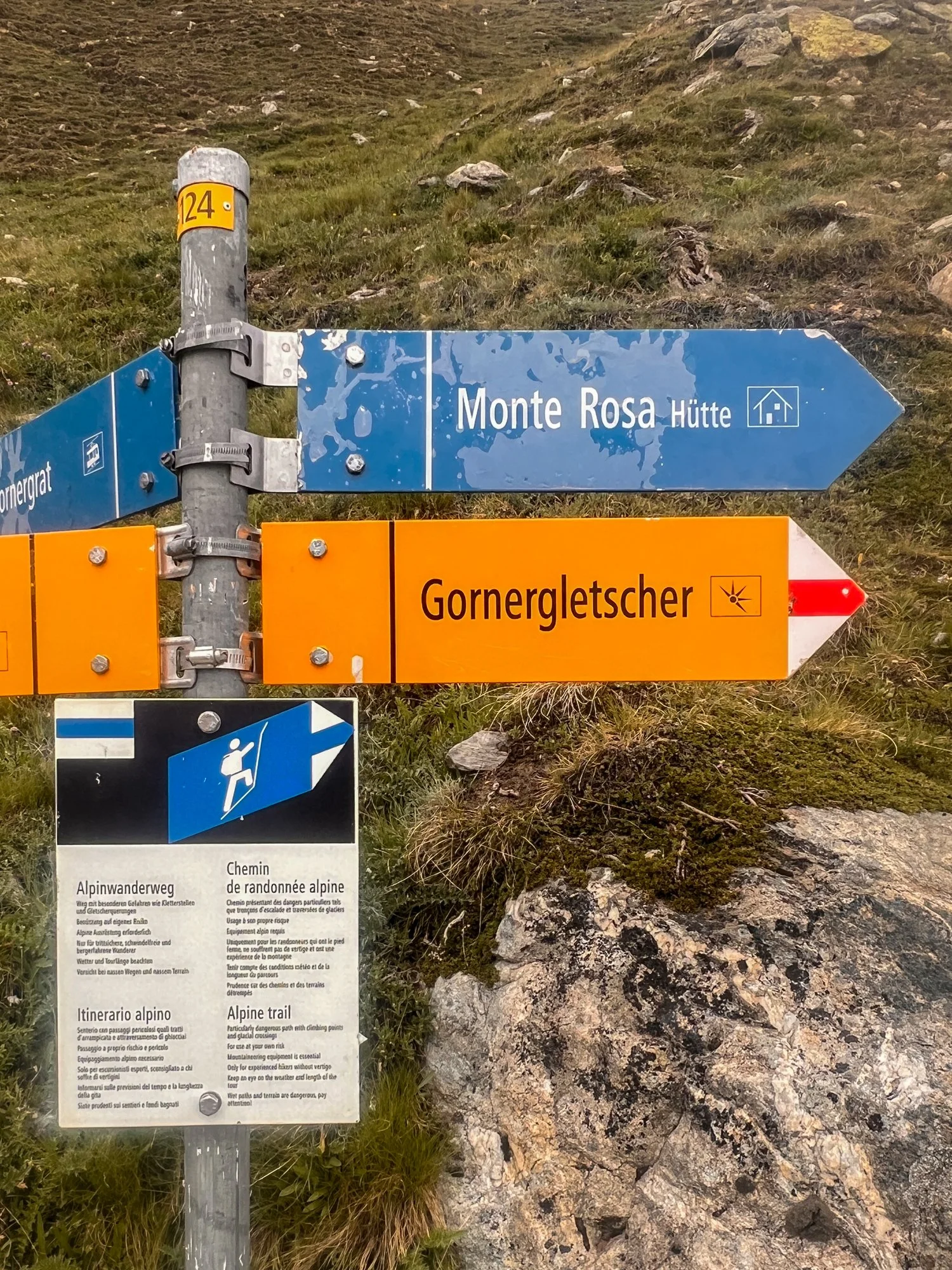
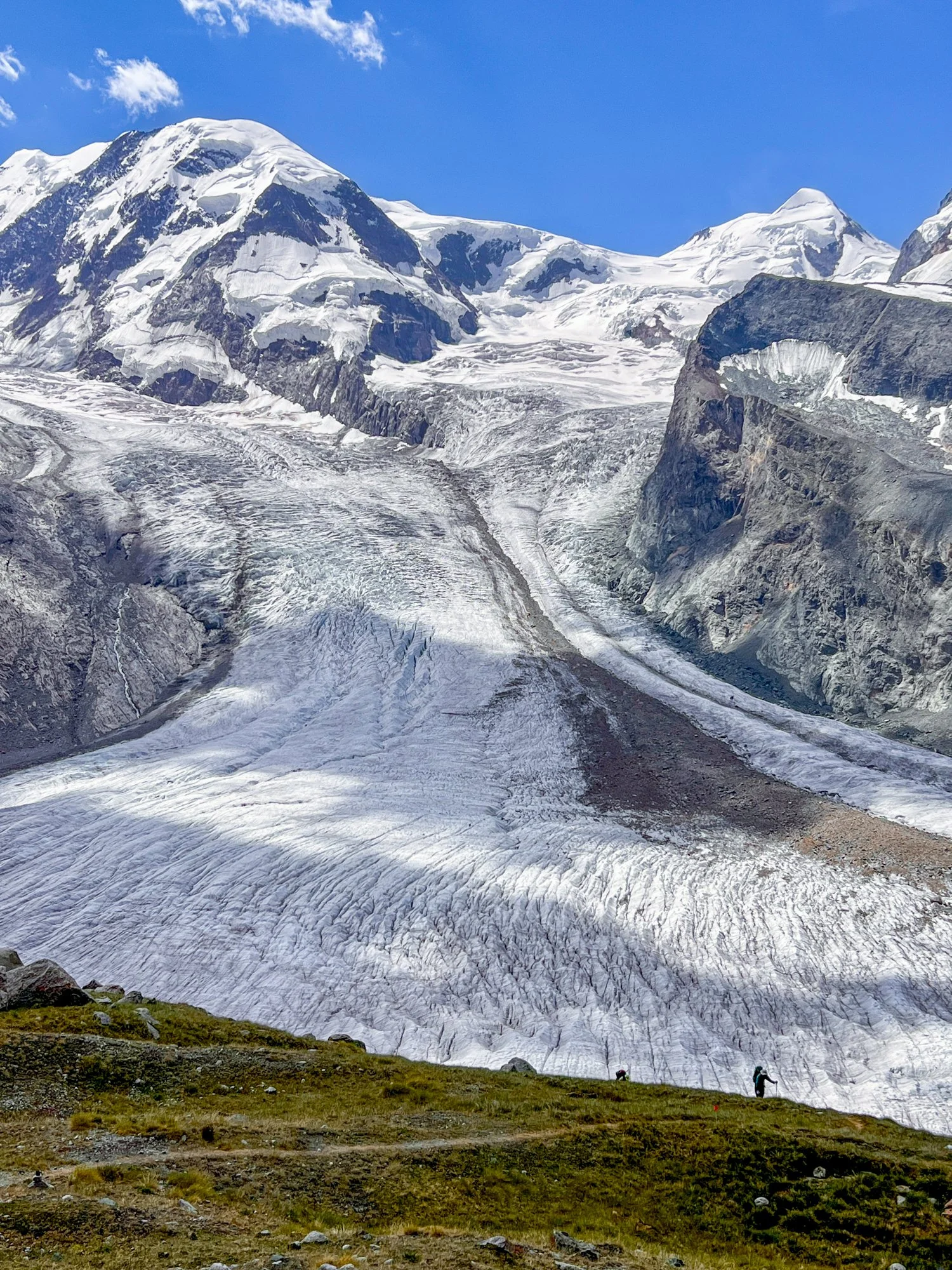
It isn't long before the path leads us onto the Gorner Glacier.
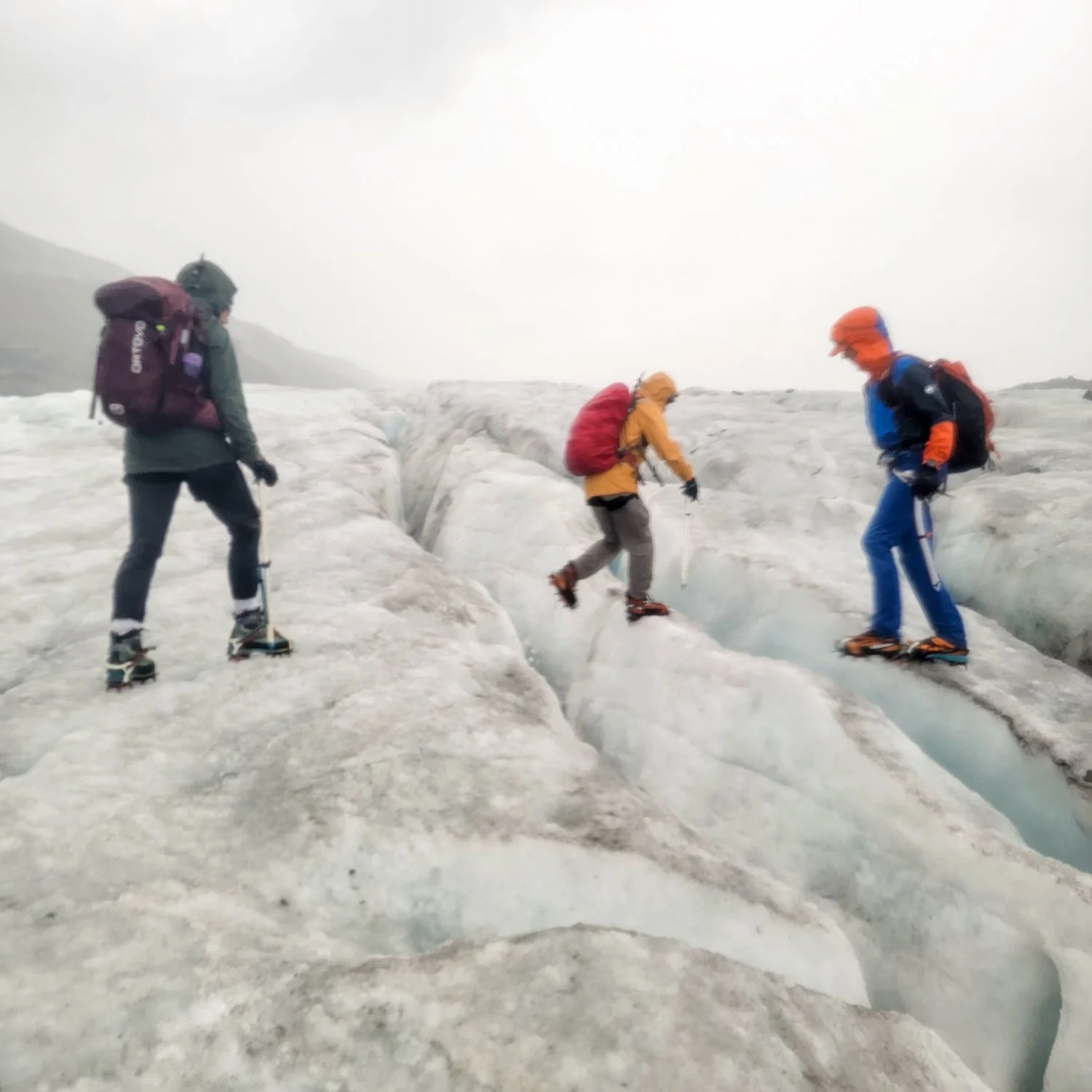
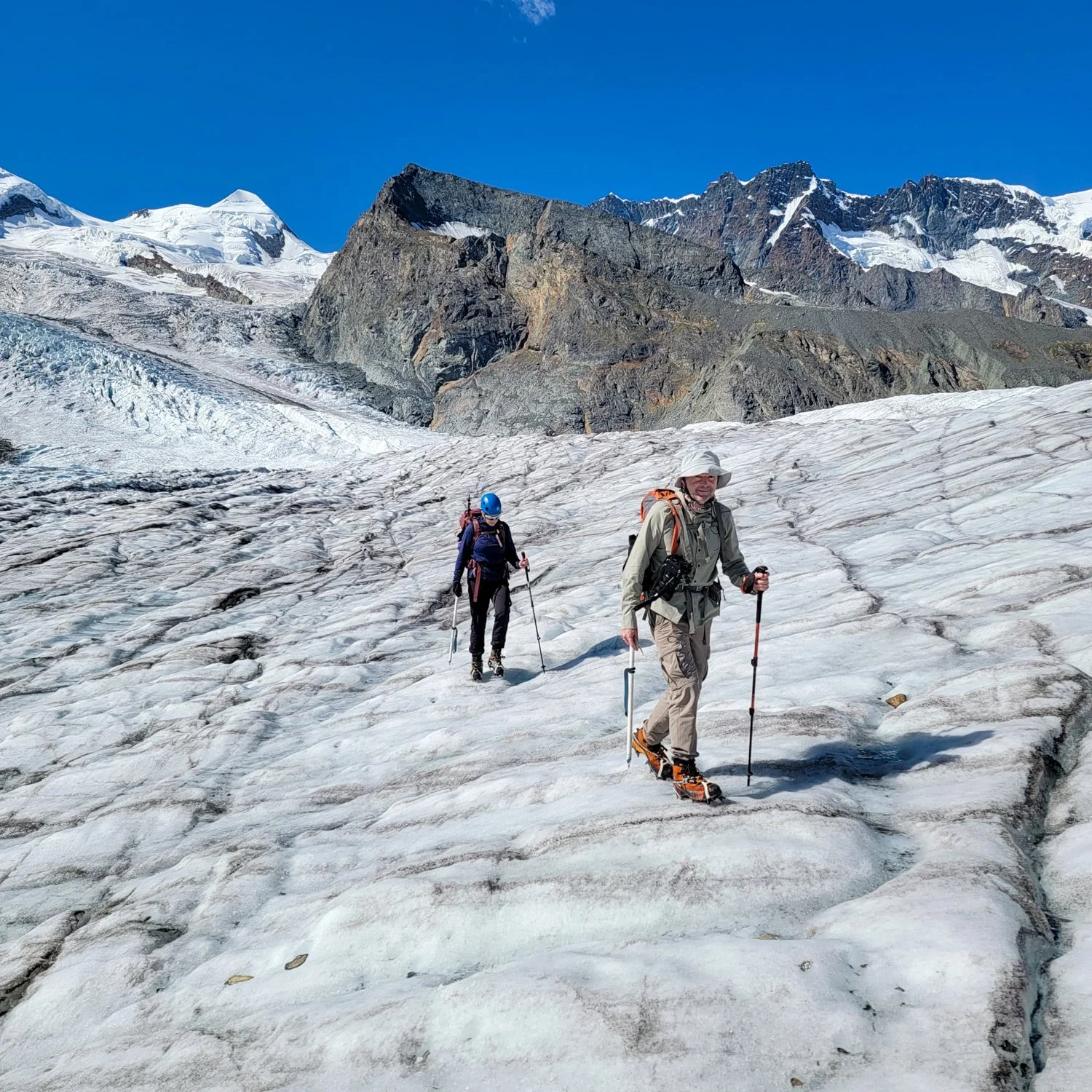
This is where things become a little more serious. For the first time, we strap on crampons -those rather intimidating metal spikes that attach to your boots and allow you to walk across ice. There is something quite unnatural about deliberately putting spikes on your feet and then trying to walk normally. It takes a little getting used to, but suddenly you have grip on ice that would otherwise be like walking on a surface covered with butter.
Finally being able to spend more time looking up than at my crampons, I soon noticed something else that was different. The blue sky had disappeared and grey clouds were rolling over the peaks. In the mountains, conditions can change remarkably quickly, and what had started as a picture-perfect morning was becoming a very different experience.
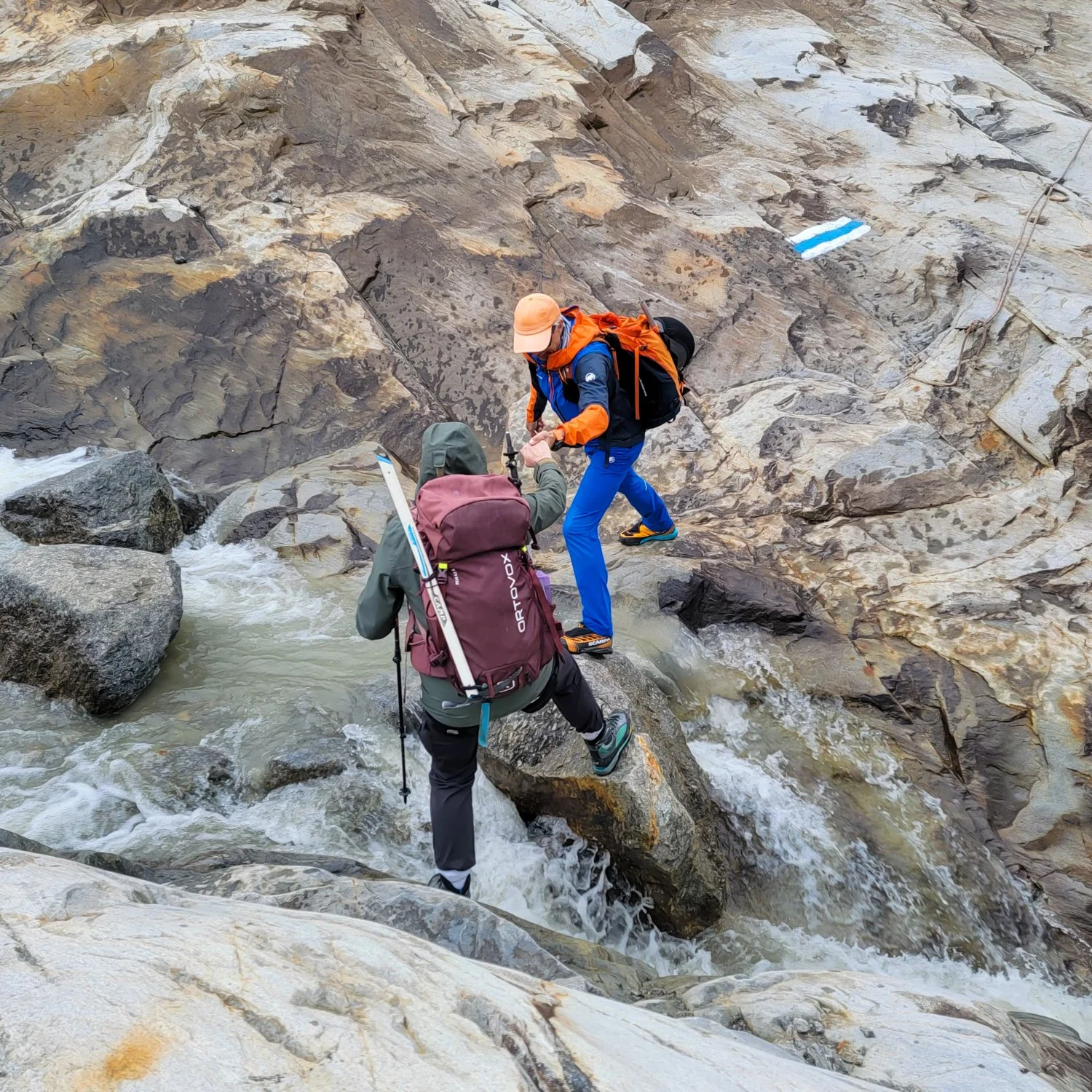
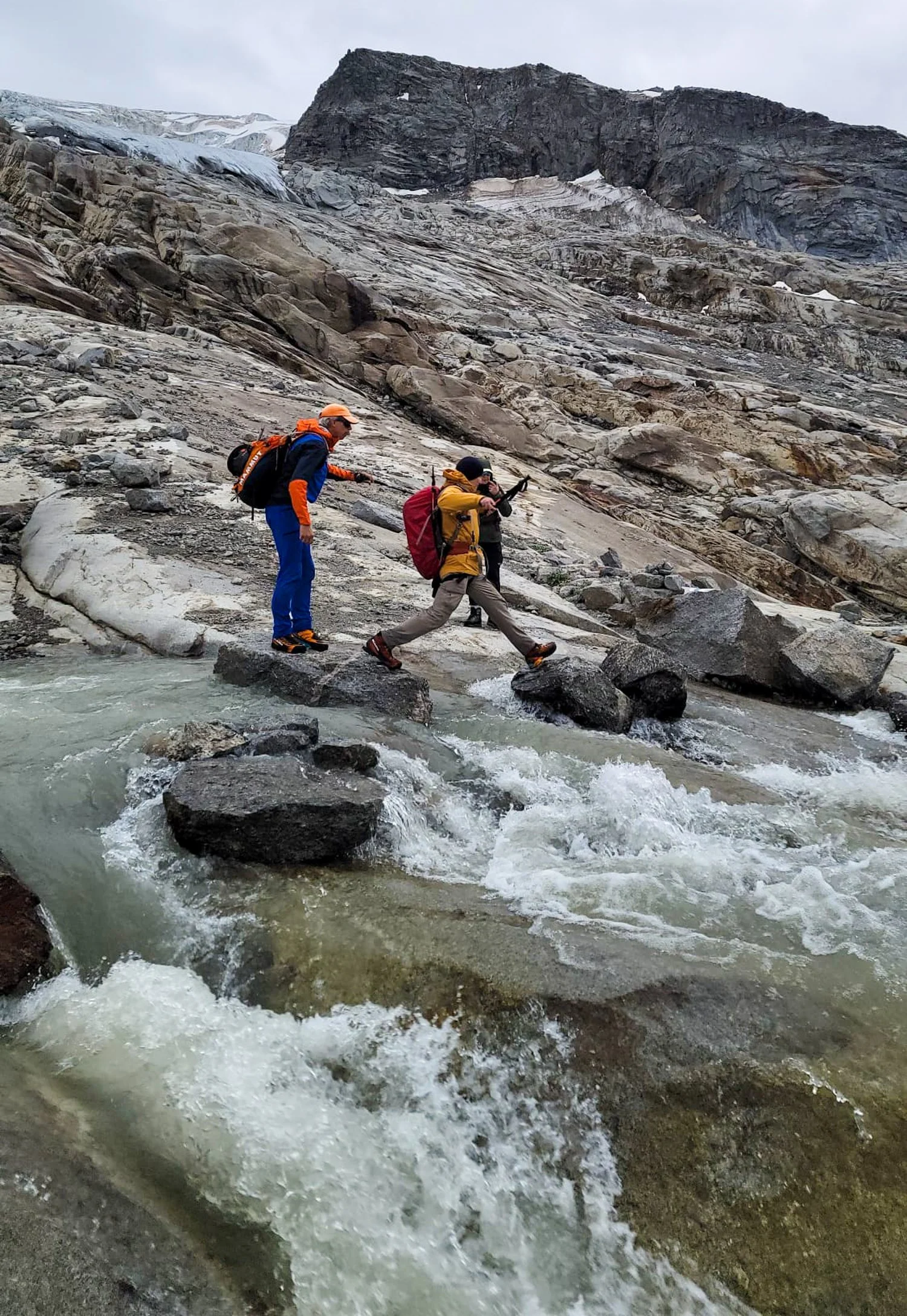
Rain begins to fall, and we soon reach a rushing waterfall cutting across our route. There is no easy way around it. We have to cross. The water is moving quickly, tumbling over rocks and disappearing down the mountainside. One slip in the wrong direction and you could be swept away towards the valley below. Kathy is understandably having a moment. In fact, I suspect the idea of turning around was becoming increasingly attractive.
Fortunately, our friend is there to offer a reassuring hand and guide us across safely. One careful step at a time, we make it to the other side. A huge relief and surely the worst is behind us?
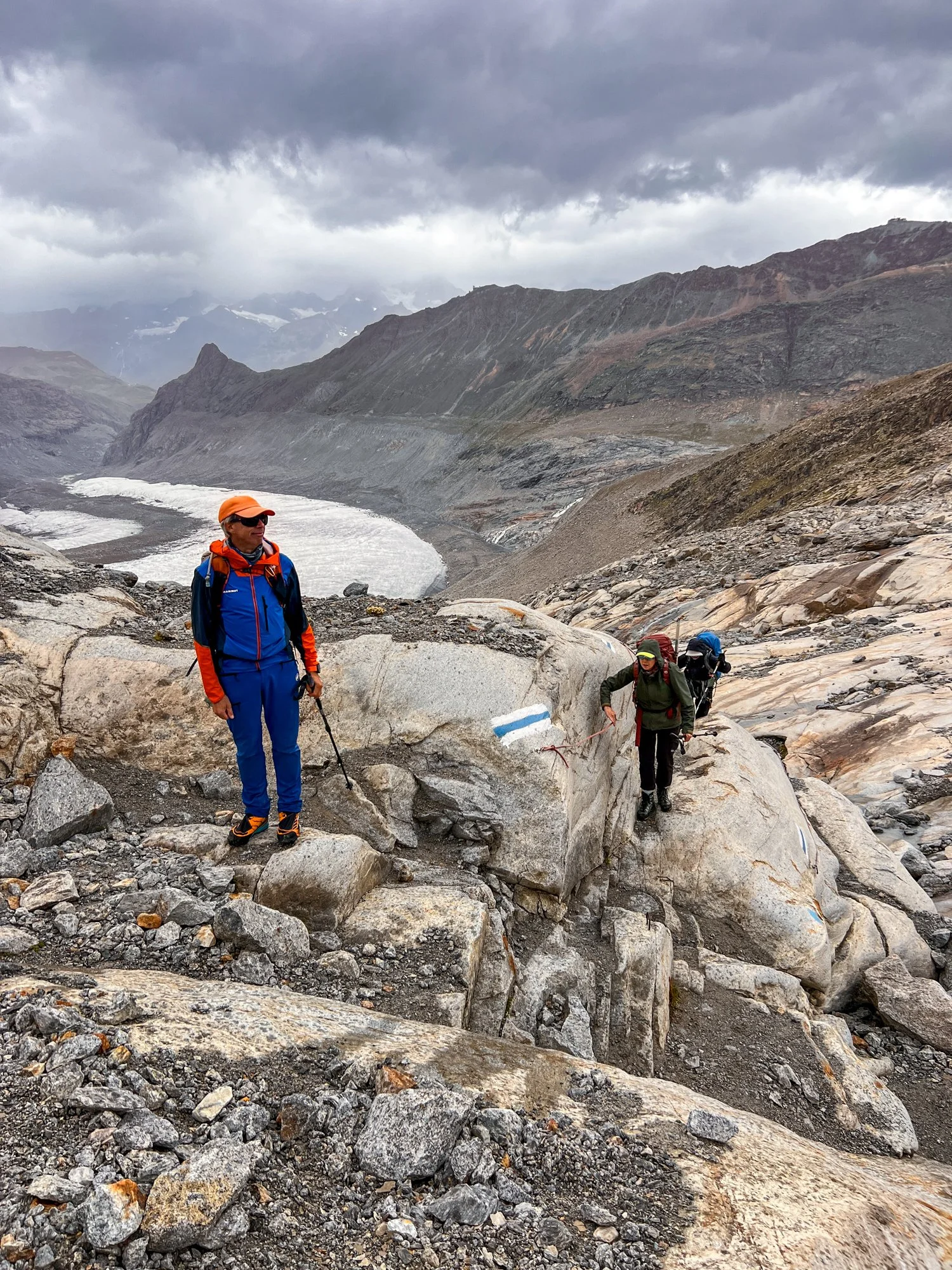
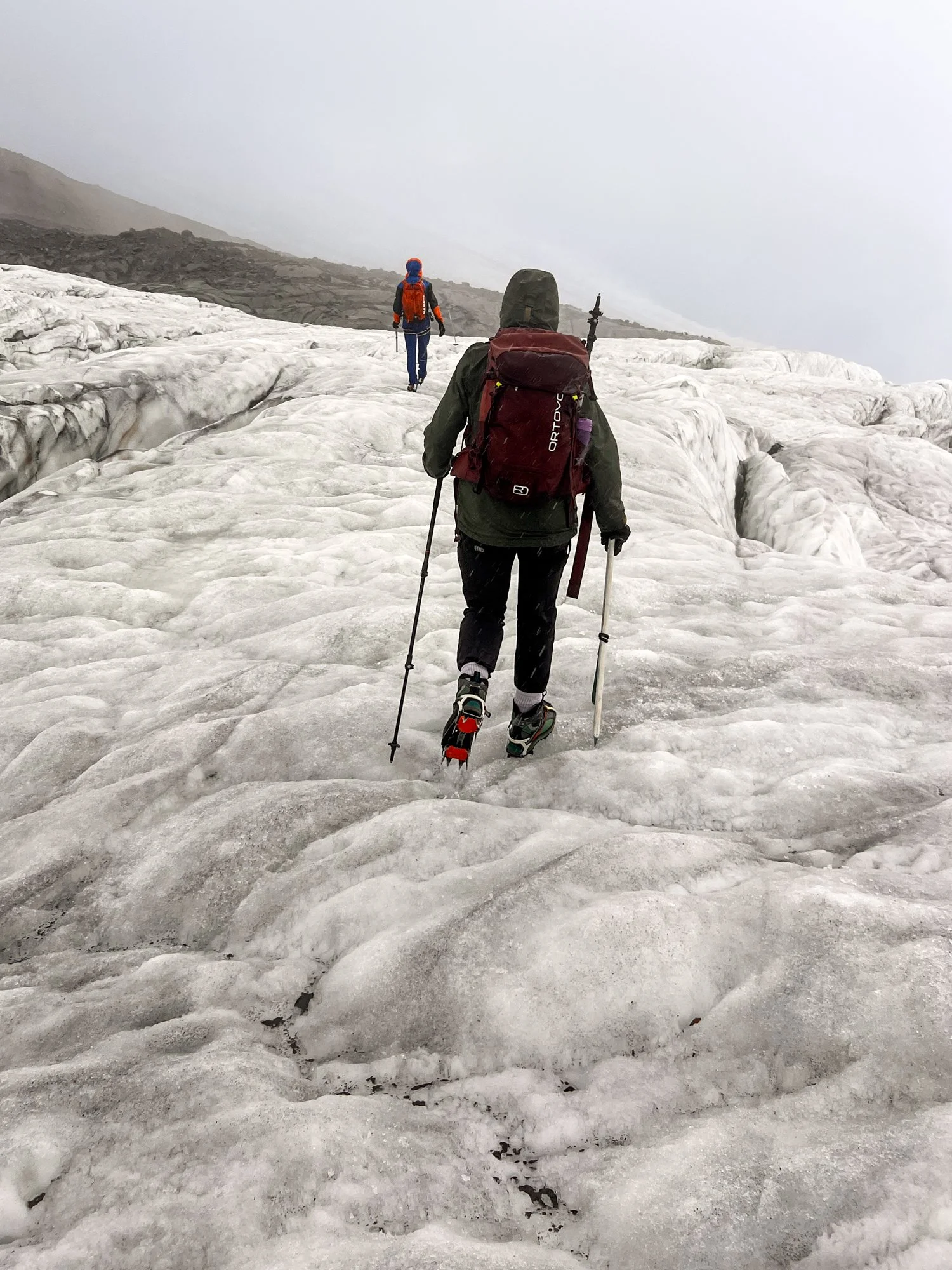
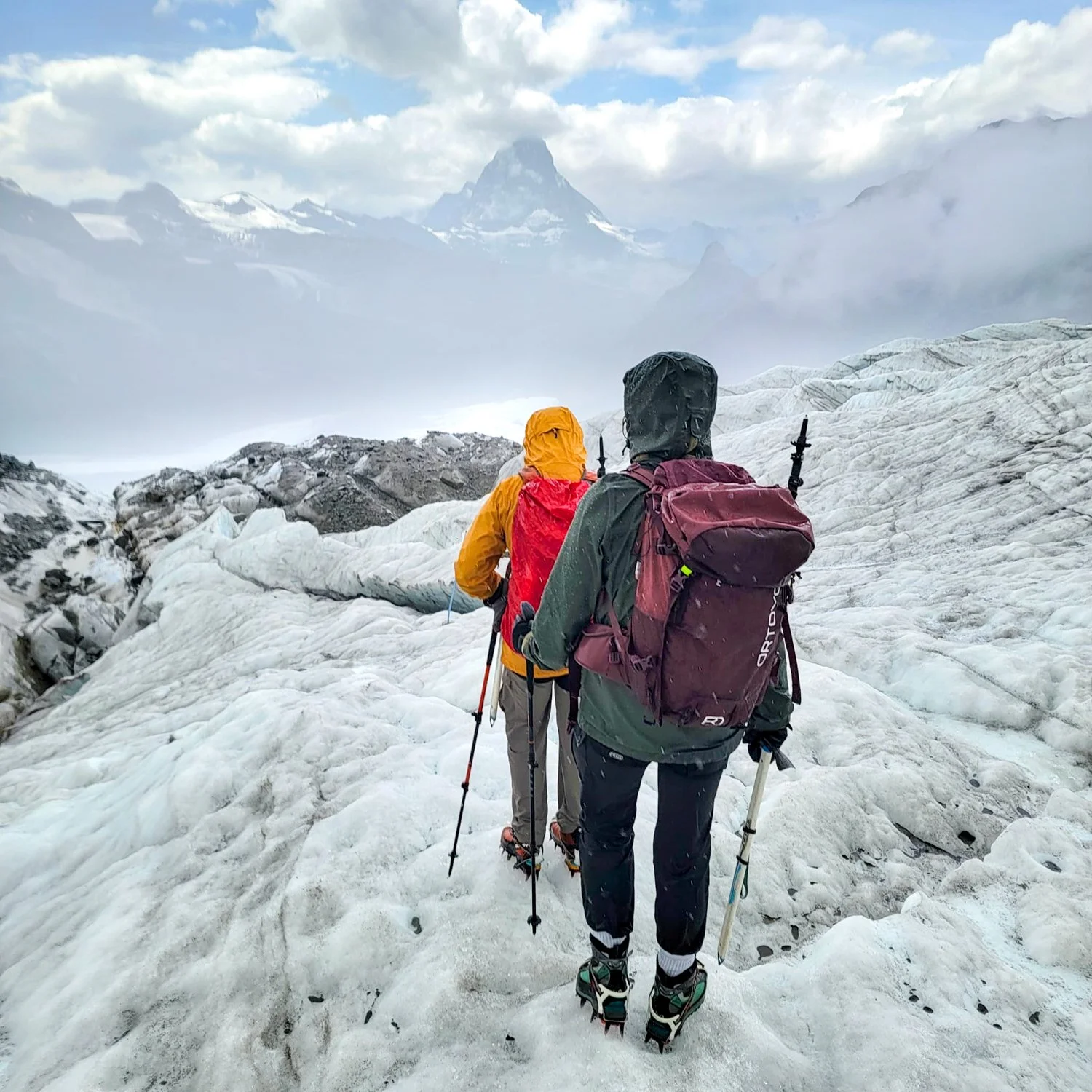
Not quite. Just as we start to relax, an unmistakable rumble rolls across the mountains. Thunder. Then comes the flashes of lightning, illuminating the grey sky and surrounding peaks.
Standing on an exposed mountain during a thunderstorm is not where you want to be. Especially when you're carrying metal ice axes and crampons - all rather effective conductors of electricity.
Our mountain guide remains remarkably calm, explaining that if we feel static electricity or see blue sparks around us, we should throw anything metal as far away as possible.
Right. No problem. Just casually throw away the expensive mountain equipment while standing on a glacier in a thunderstorm!
It was at this point that the adventure becomes very real. We keep moving, watching the flashes and counting the seconds between the lightning and thunder to gauge how close the storm is. Every rumble seems to remind us that we really don’t want to hang around here.
And then, through the grey clouds, we spot it.
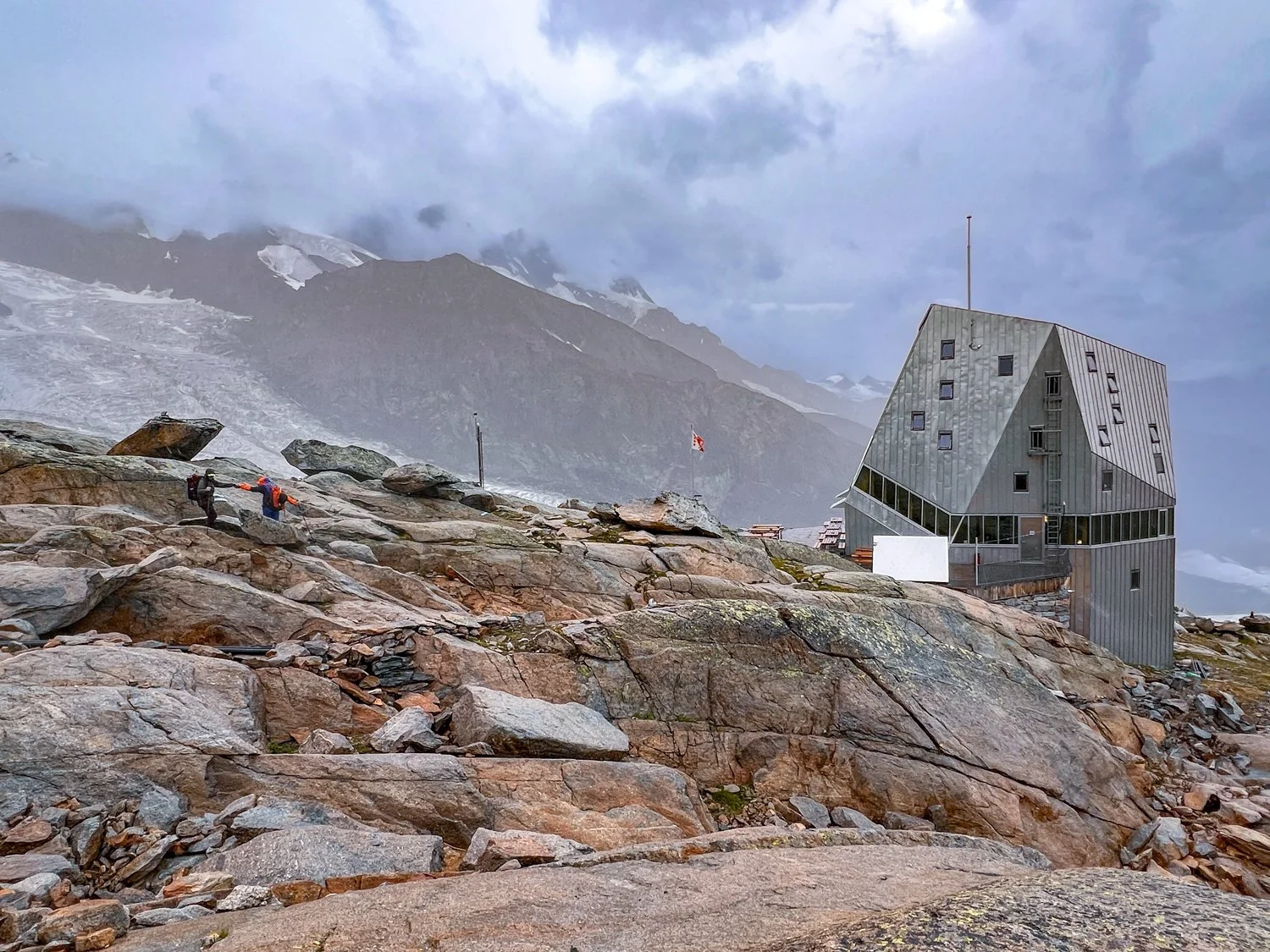
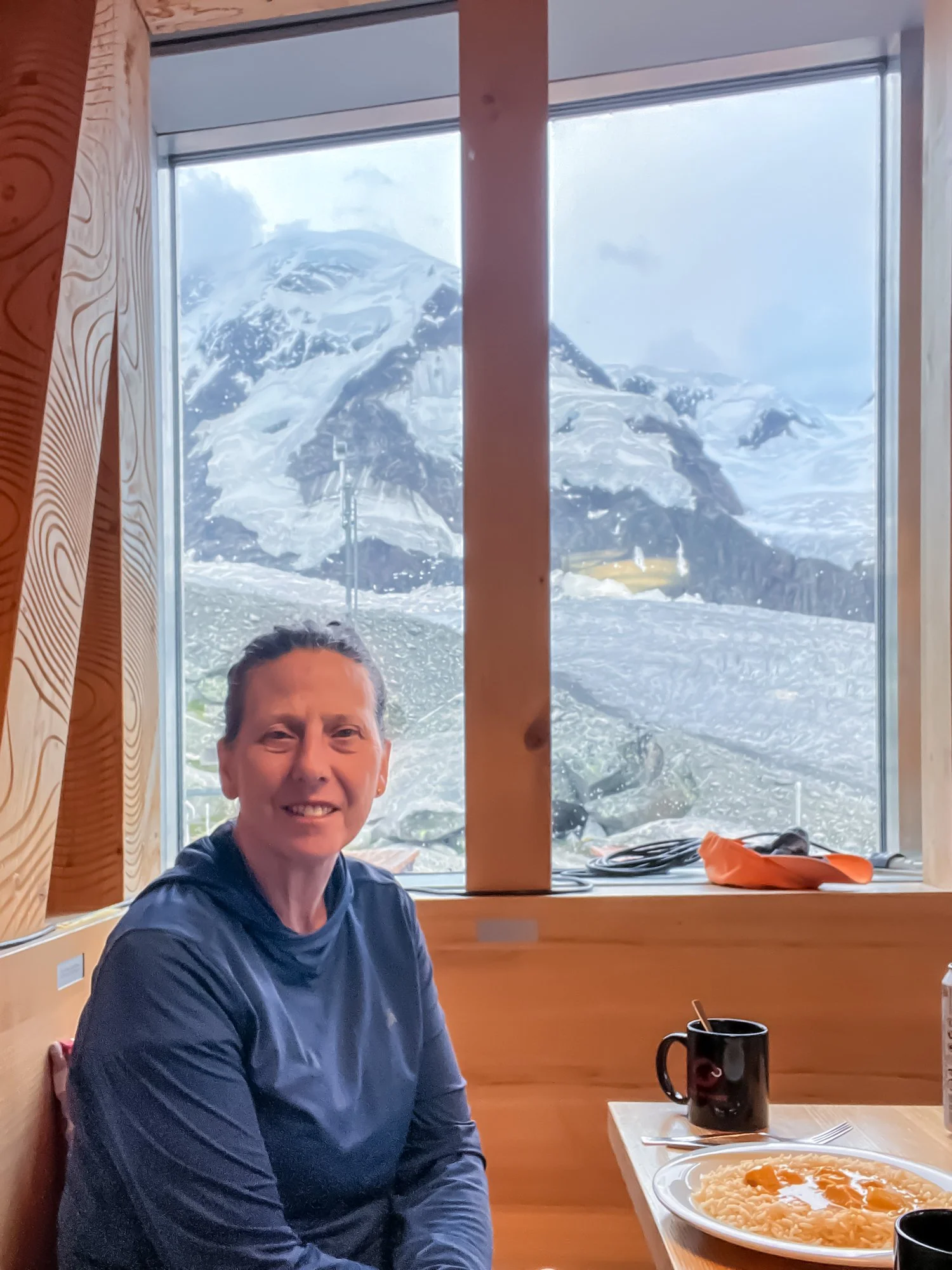
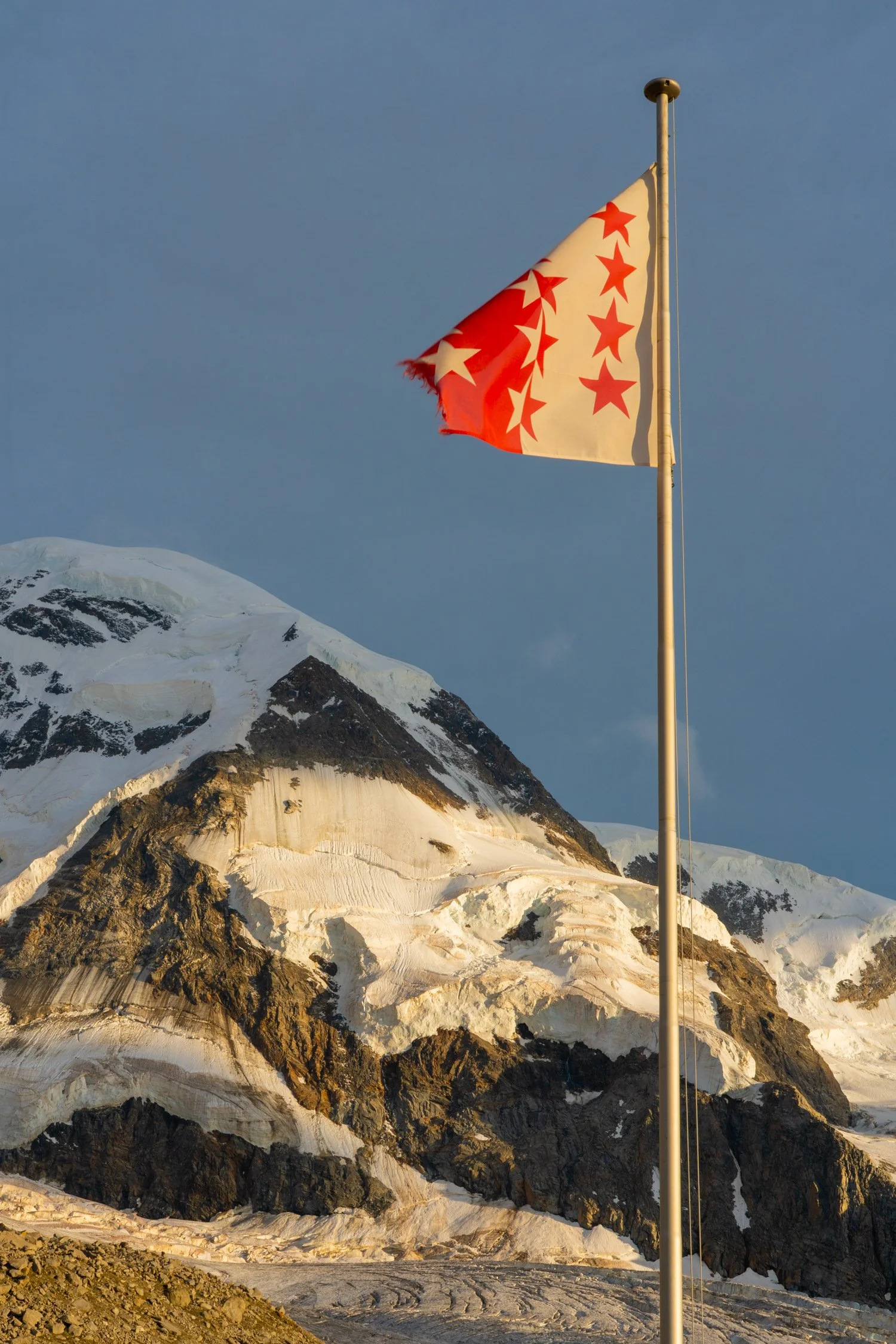
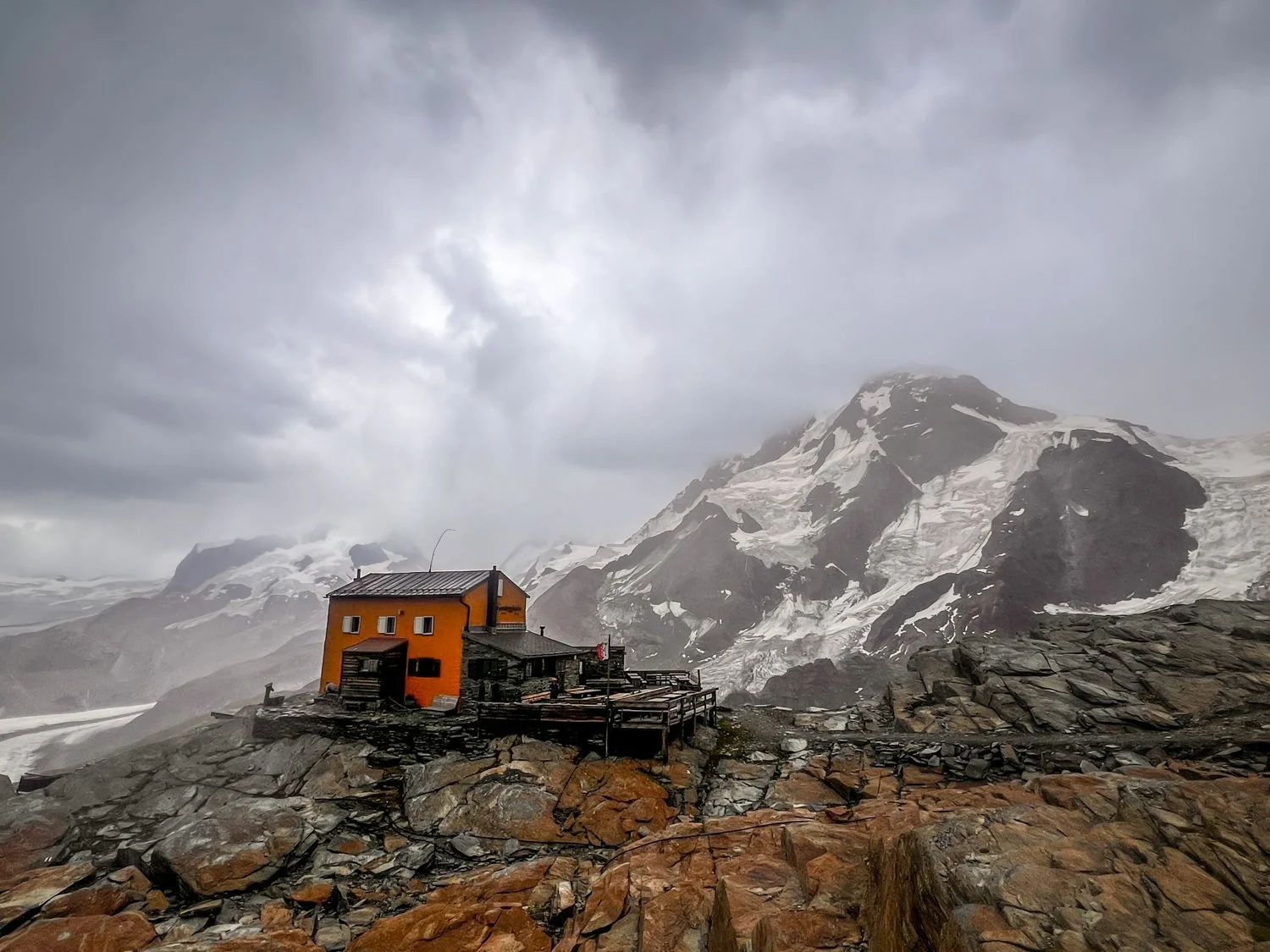
In the distance, sitting high above the glacier, is the Monte Rosa Hut. It looks like a spaceship that has somehow landed on another planet. A futuristic structure perched among the ice and rock, completely out of place and yet perfectly at home in this extraordinary landscape.
Never has a building looked so welcoming.
With the hut finally in sight, we push on, eventually reaching the safety of its doors. What a feeling! Before long, we are inside, out of the rain, warming up and settling into the mountain refuge. A simple but hearty dinner is served, and we can finally relax and reflect on what we'd just experienced.
From a perfect blue-sky morning to walking across a glacier, crossing a raging waterfall and being caught in a thunderstorm, it had certainly been a day of contrasts.
And this was only day one of our four-day adventure.
If this was the introduction, we were beginning to wonder what our friends had planned for the rest of the trip!
DAY 2: Mount Rosa to Gandegghütte
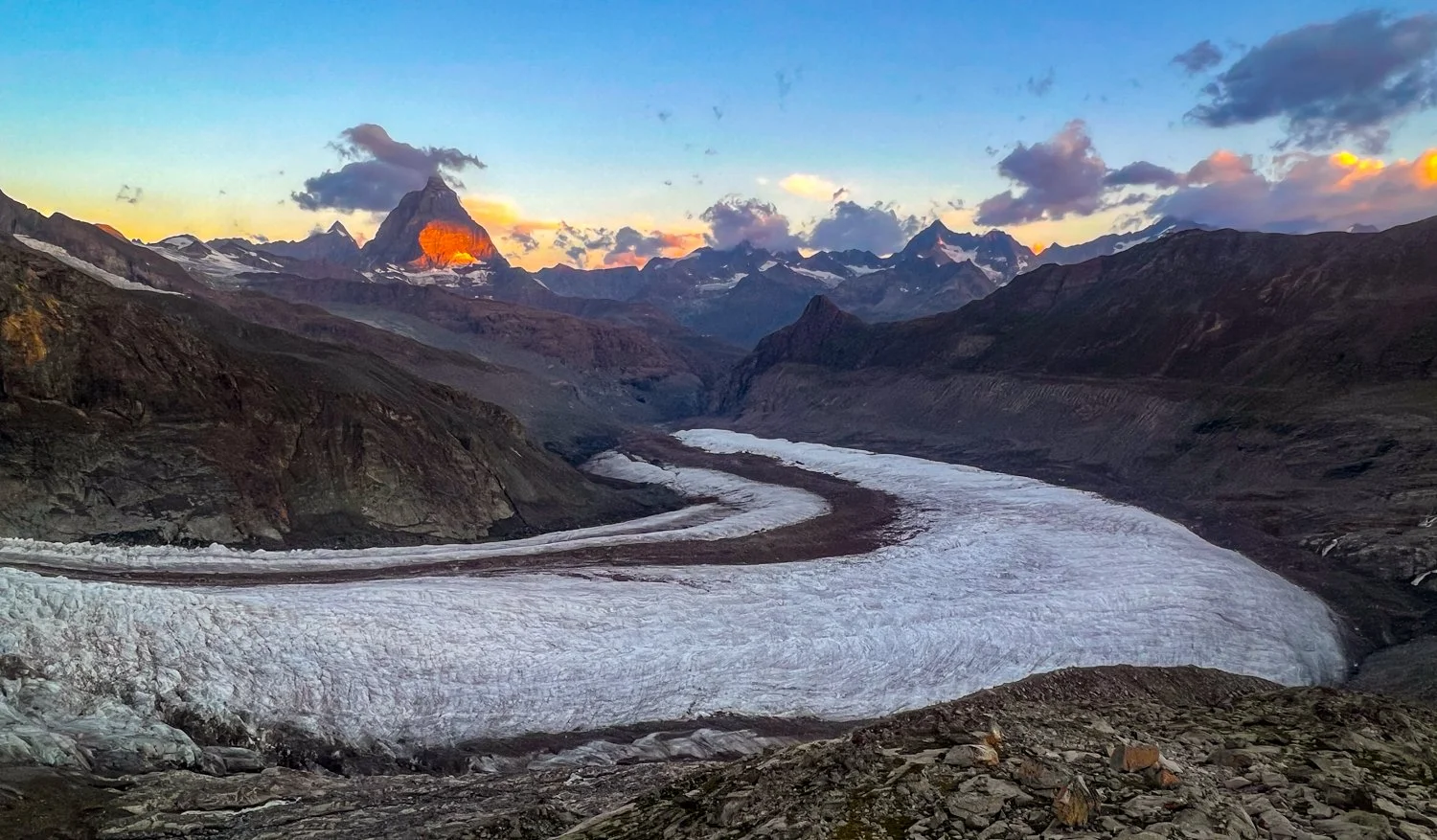
I’m up early, and for once there is no need for an alarm clock. The view outside is reason enough to get moving. I want to catch the sunrise over the Gorner Glacier.
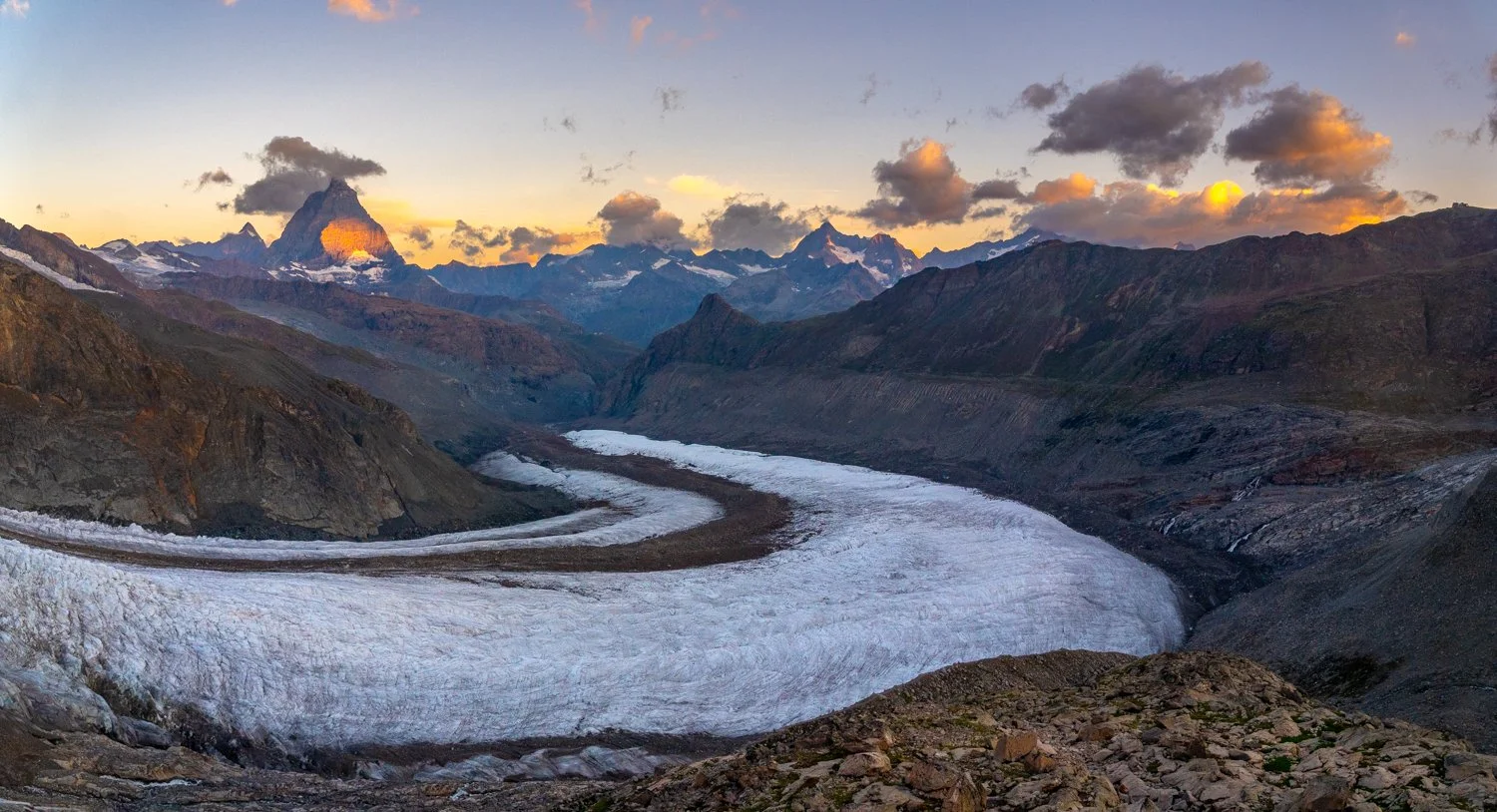
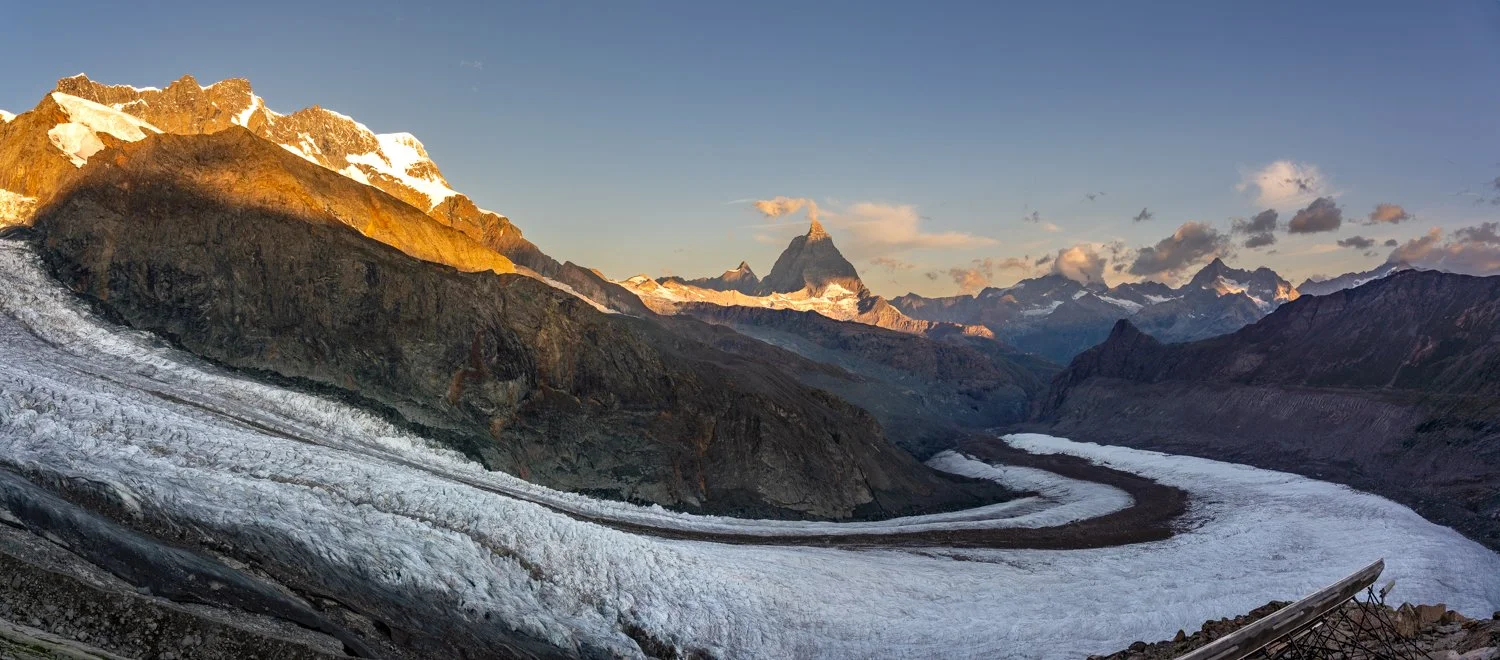
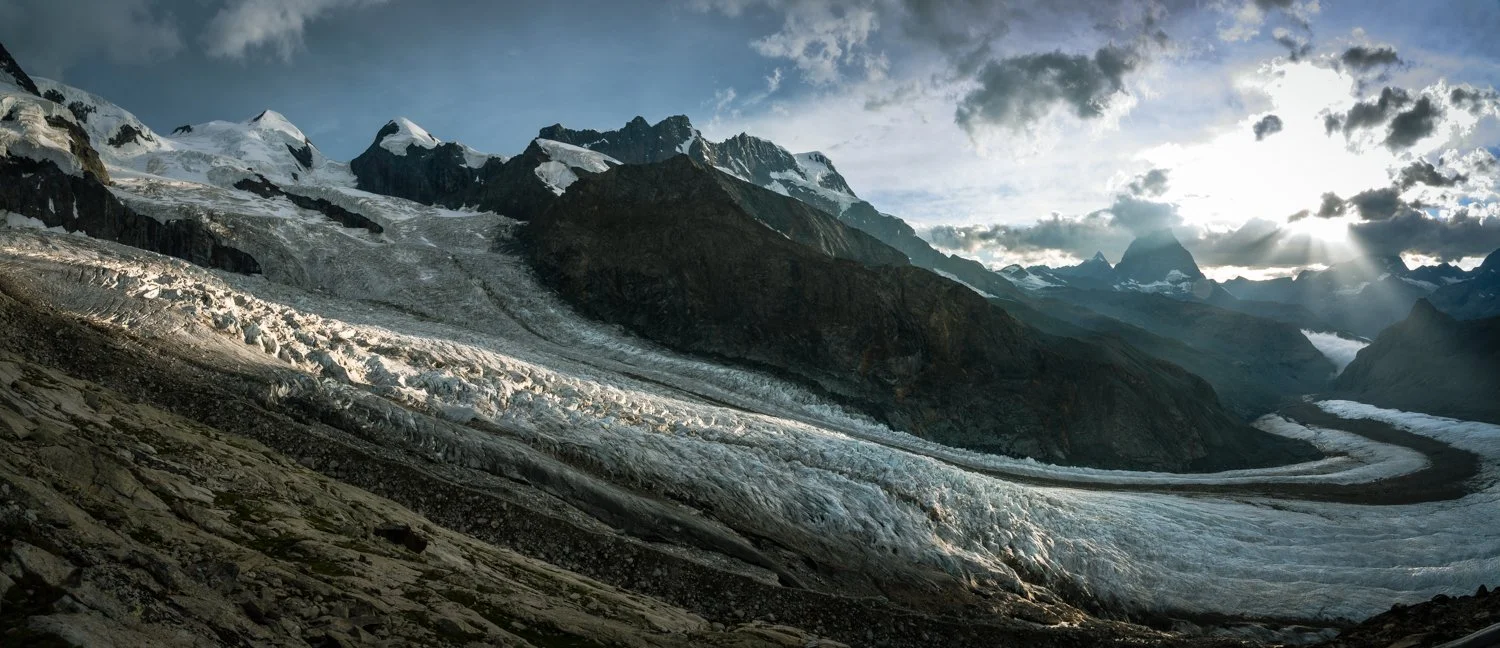
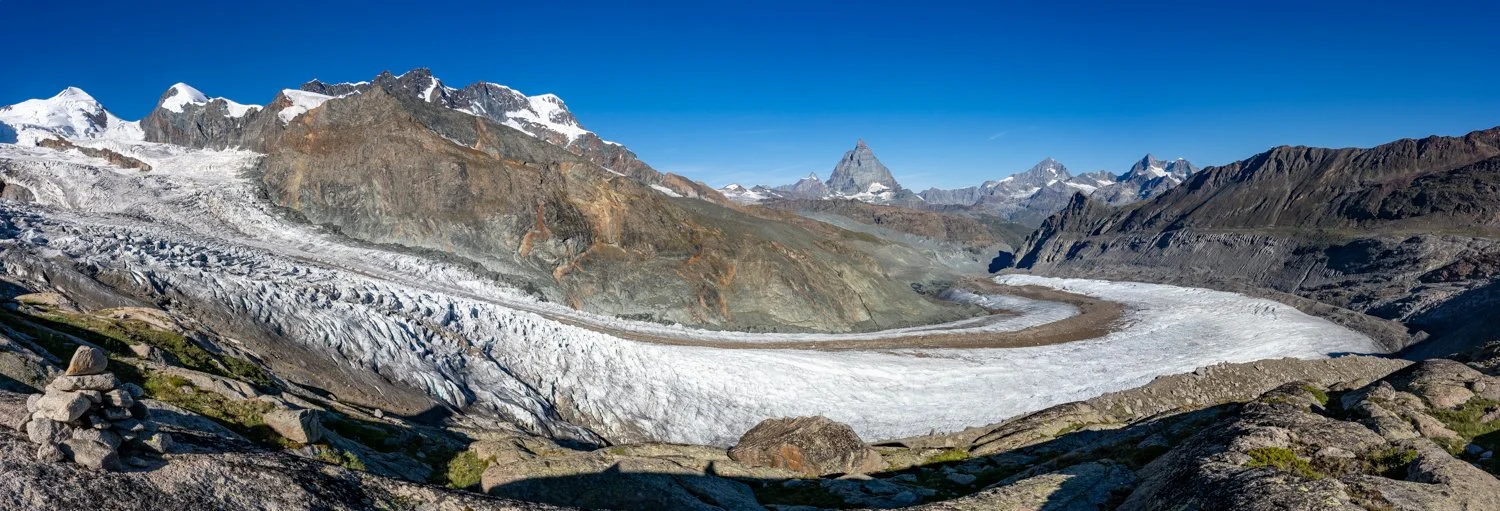
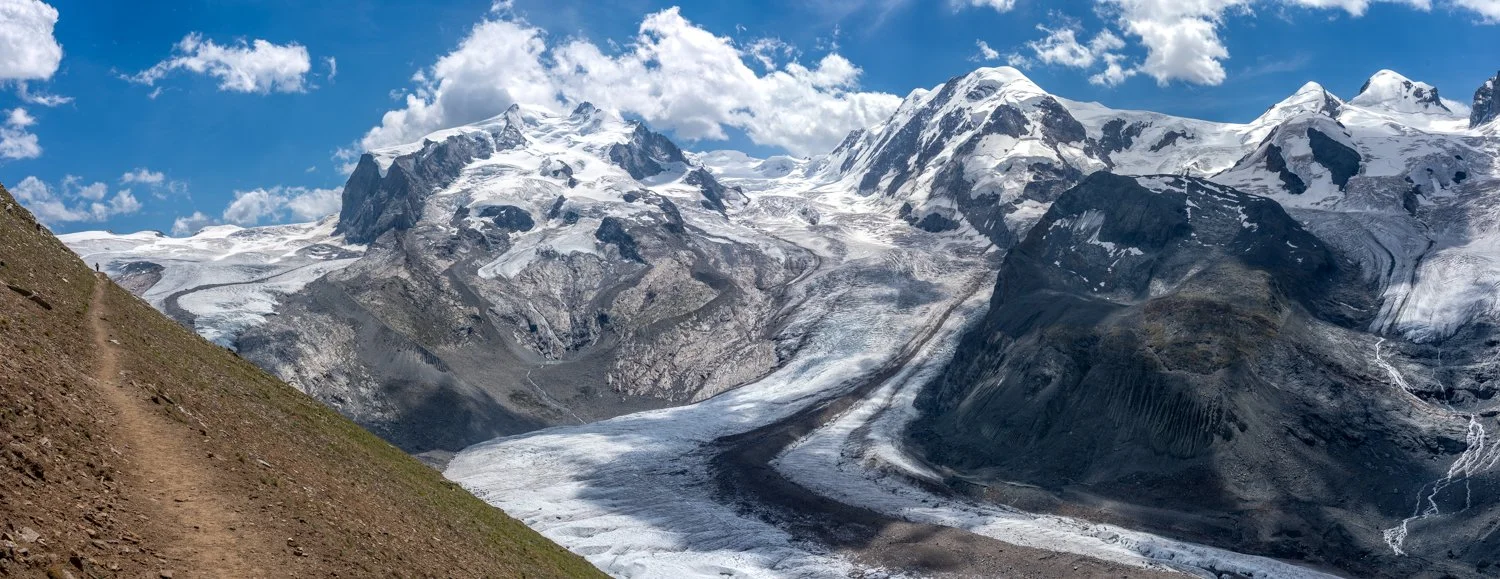
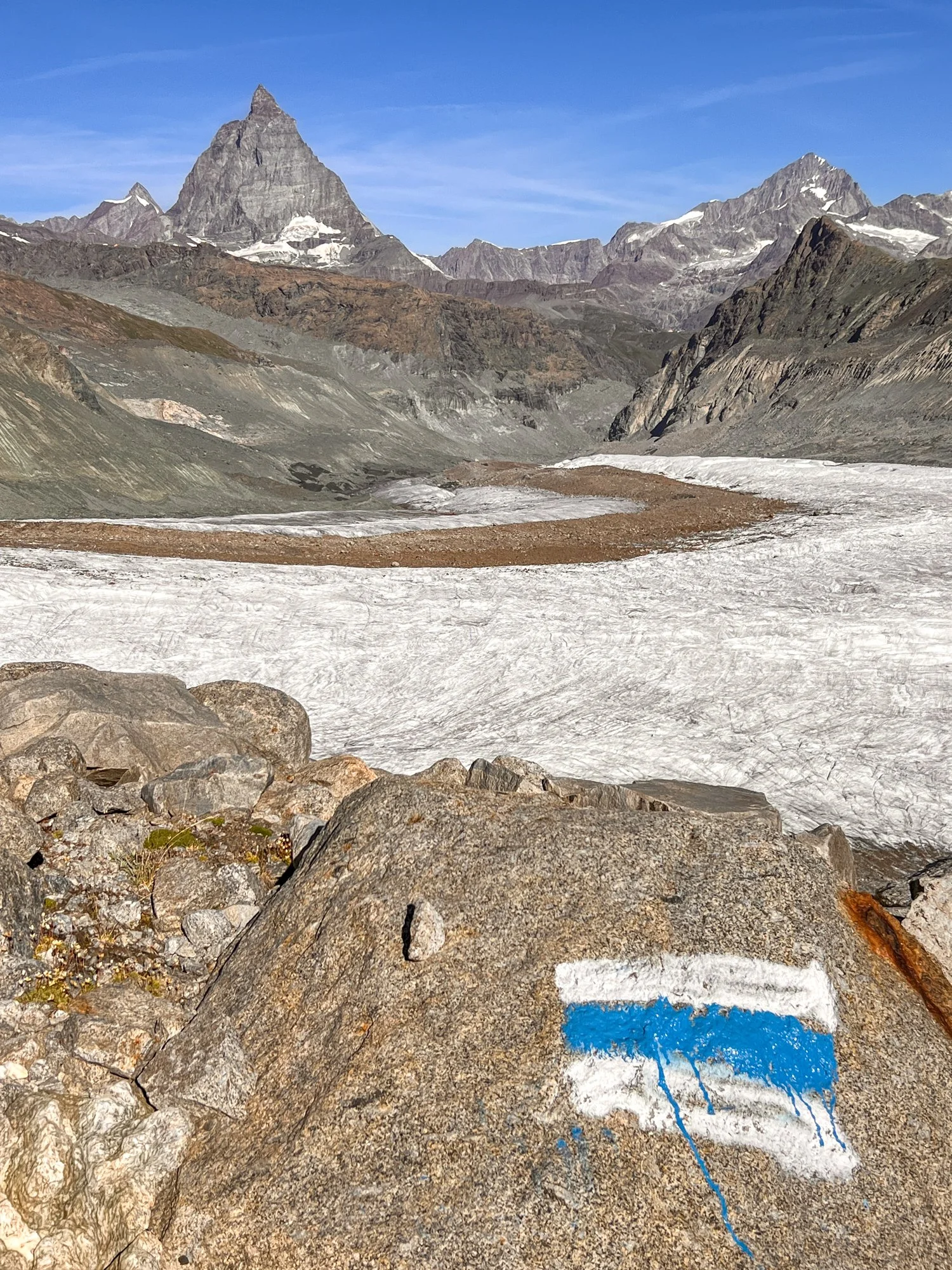
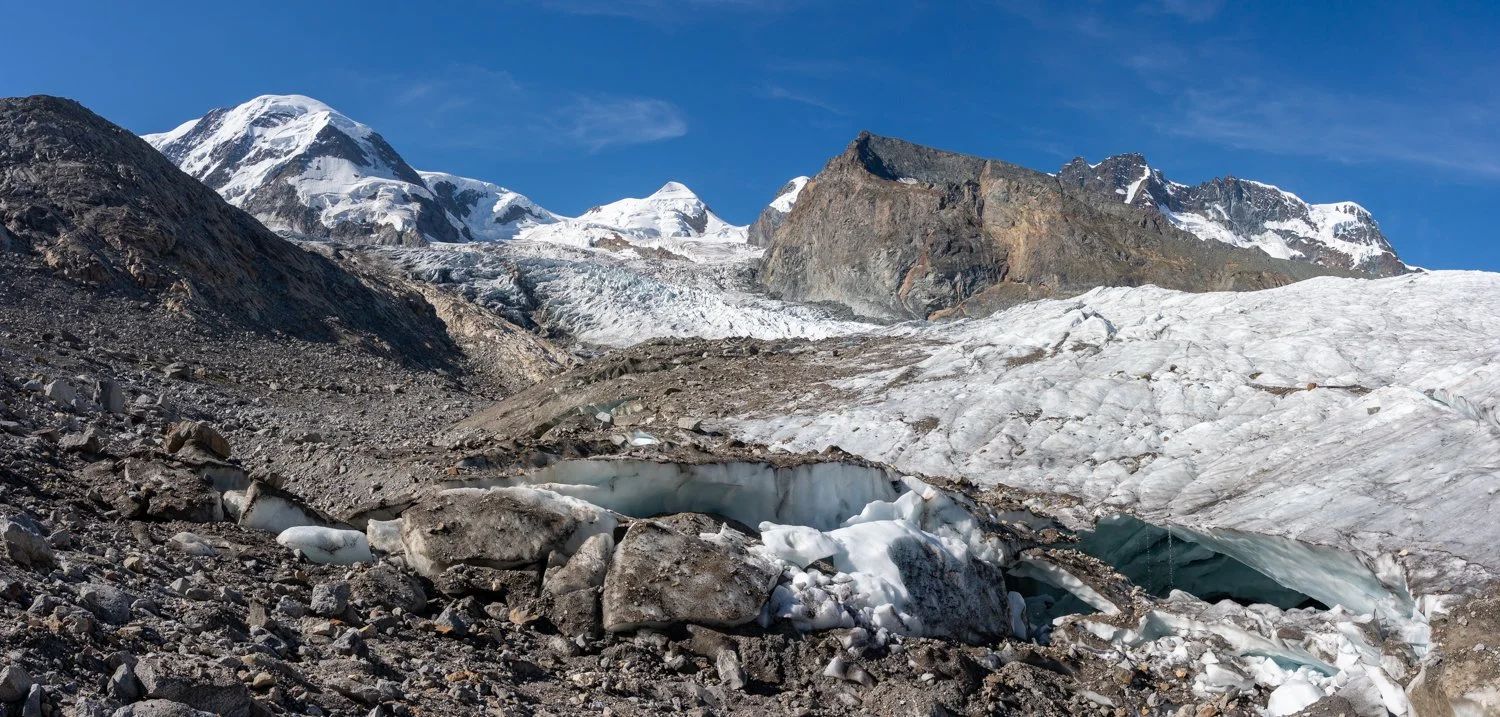
Stepping outside, I am greeted by an extraordinary sight. Below me, the Gorner Glacier stretches away through the valley, a vast frozen river winding between the mountains. Its surface is anything but smooth. Ridges, deep crevasses and great folds of ice create a constantly changing landscape of brilliant white, pale blue and deep shadow. In places, the ice looks almost translucent, while elsewhere it is broken into jagged peaks and towering blocks, as though a giant has taken a chisel to it.
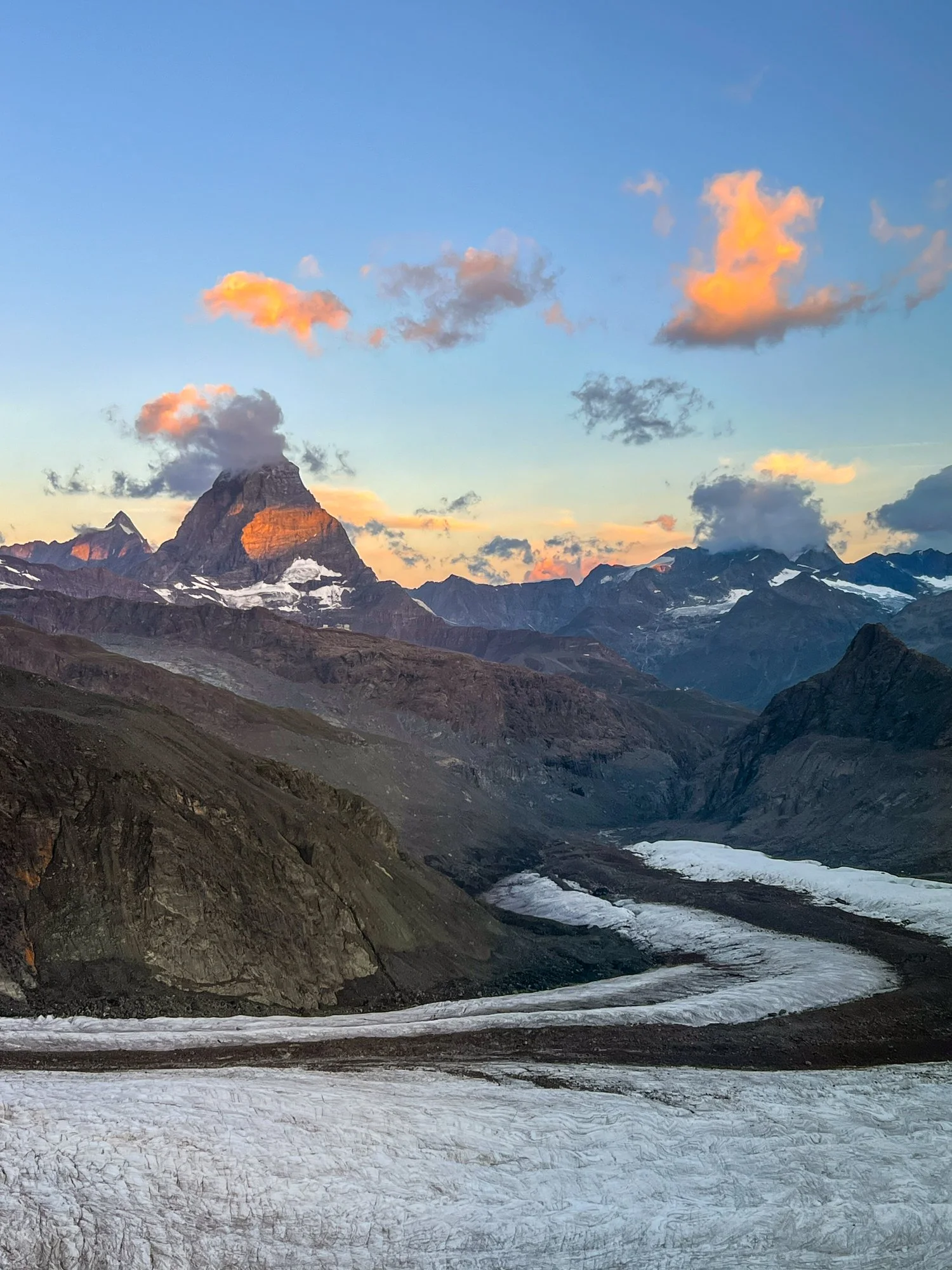
The glacier snakes into the distance, drawing the eye towards a dramatic wall of mountains. At the far end, one enormous rocky peak rises sharply into the sky. This is the Matterhorn - unmistakable, even from here.
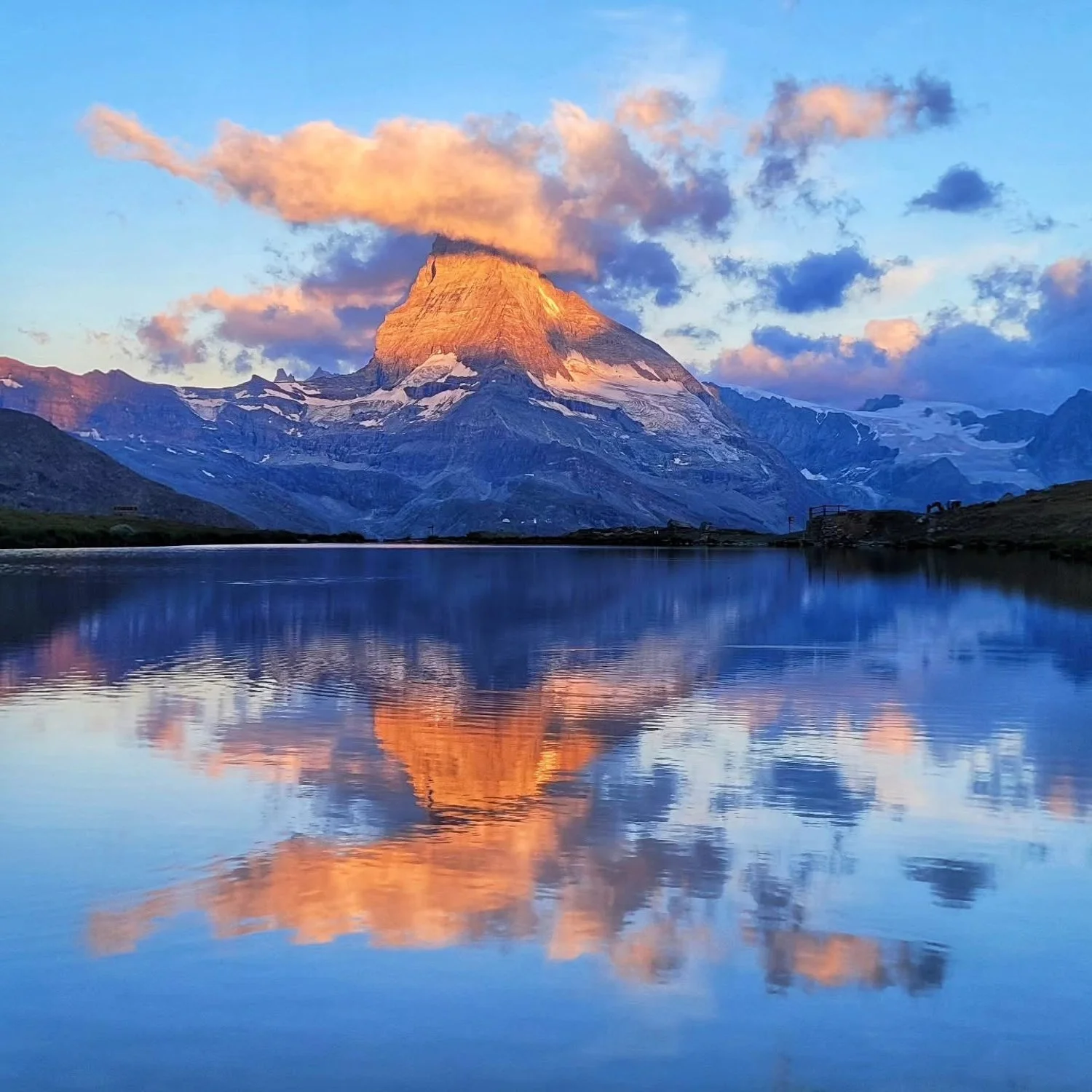
As the first light appears, a narrow shaft of golden sunshine catches the side of the mountain. Against the dark rock and surrounding shadows, it looks almost as if the Matterhorn is on fire. Slowly, the sun climbs above the horizon and the light spills across the valley, revealing more and more of the immense glacier below. Before long, the entire landscape is flooded with sunlight. It's one of those moments when you put the camera down for a few seconds and simply take it all in.
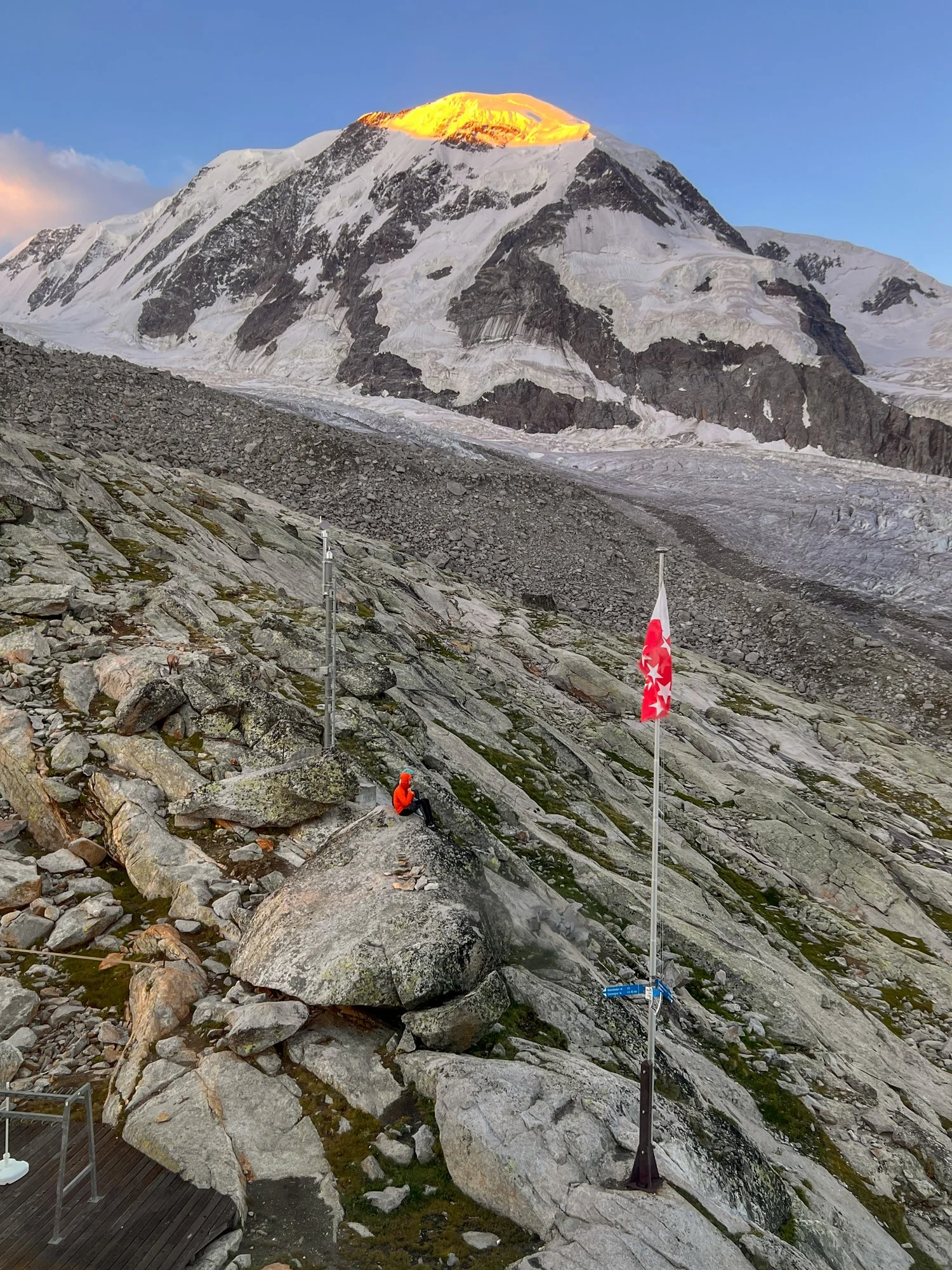
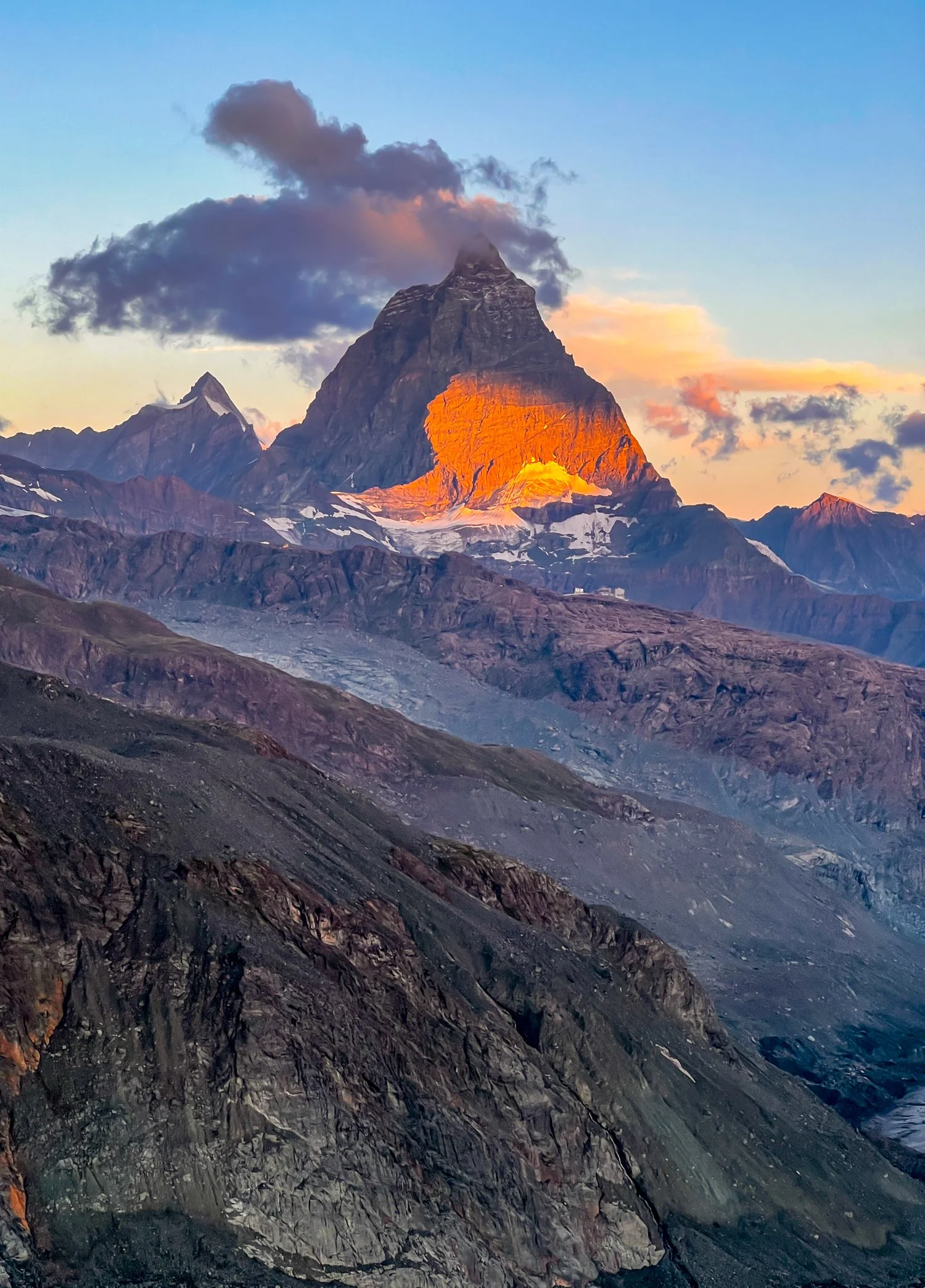
Back inside, another hearty breakfast is waiting for us. These mountain huts certainly know how to feed hungry hikers. We fuel up, pack our gear and prepare for the journey back towards Riffelberg.
Soon enough, the crampons are back on. Thankfully, today's conditions are considerably more welcoming. No driving rain, no thunder rolling across the mountains and, best of all, no fear of being zapped by lightning while carrying metal ice axes. Walking across a glacier suddenly feels like a much more enjoyable proposition.
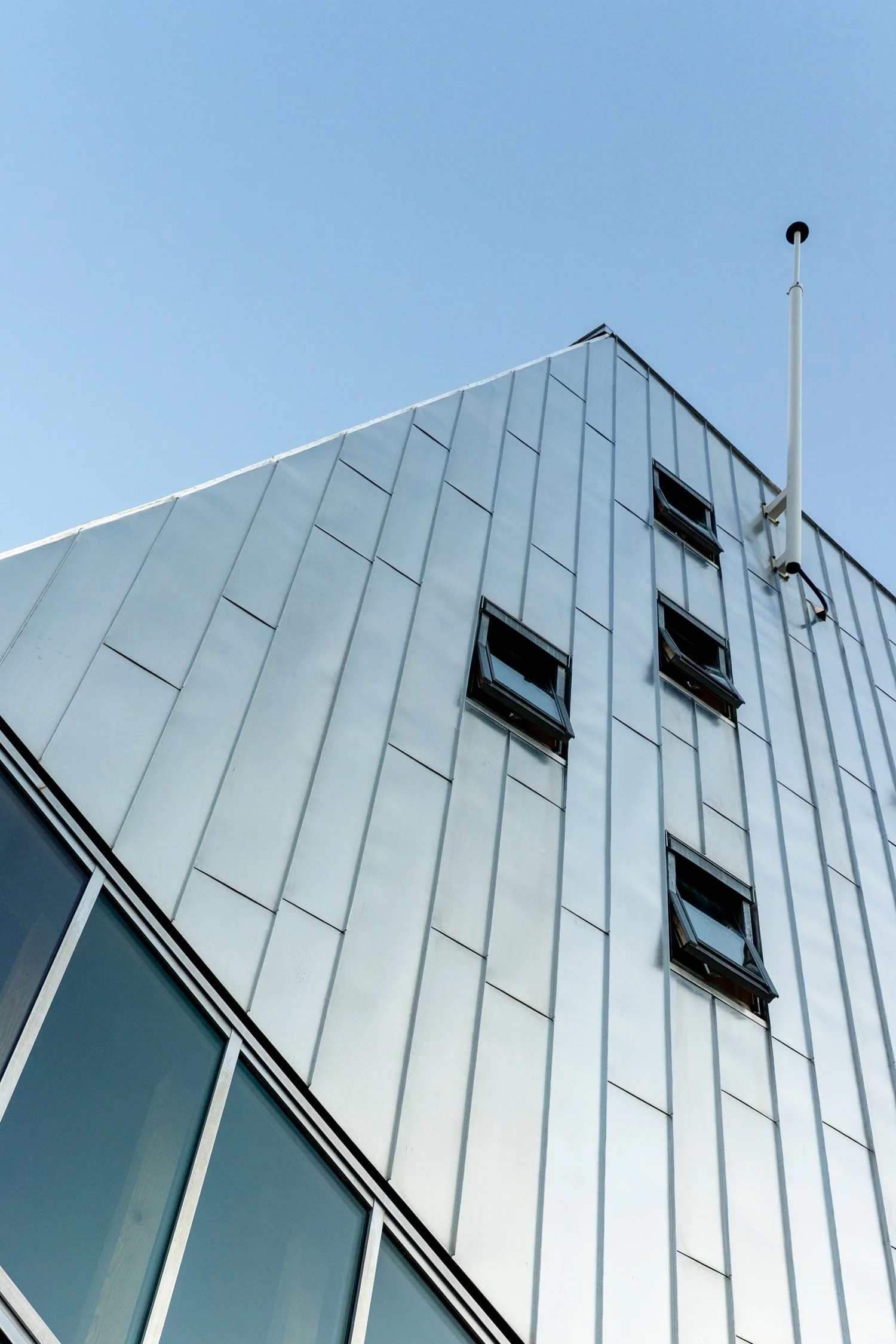
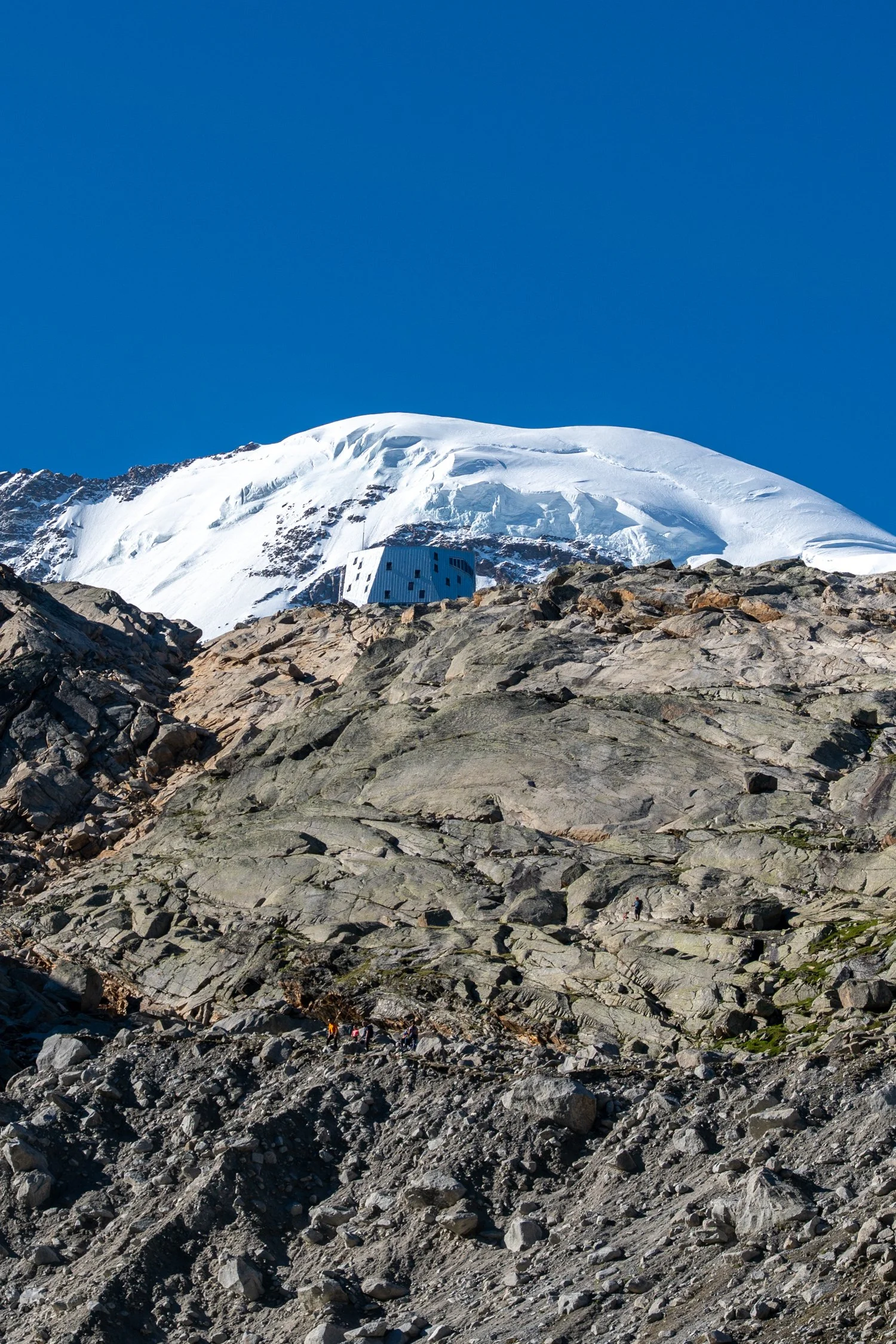
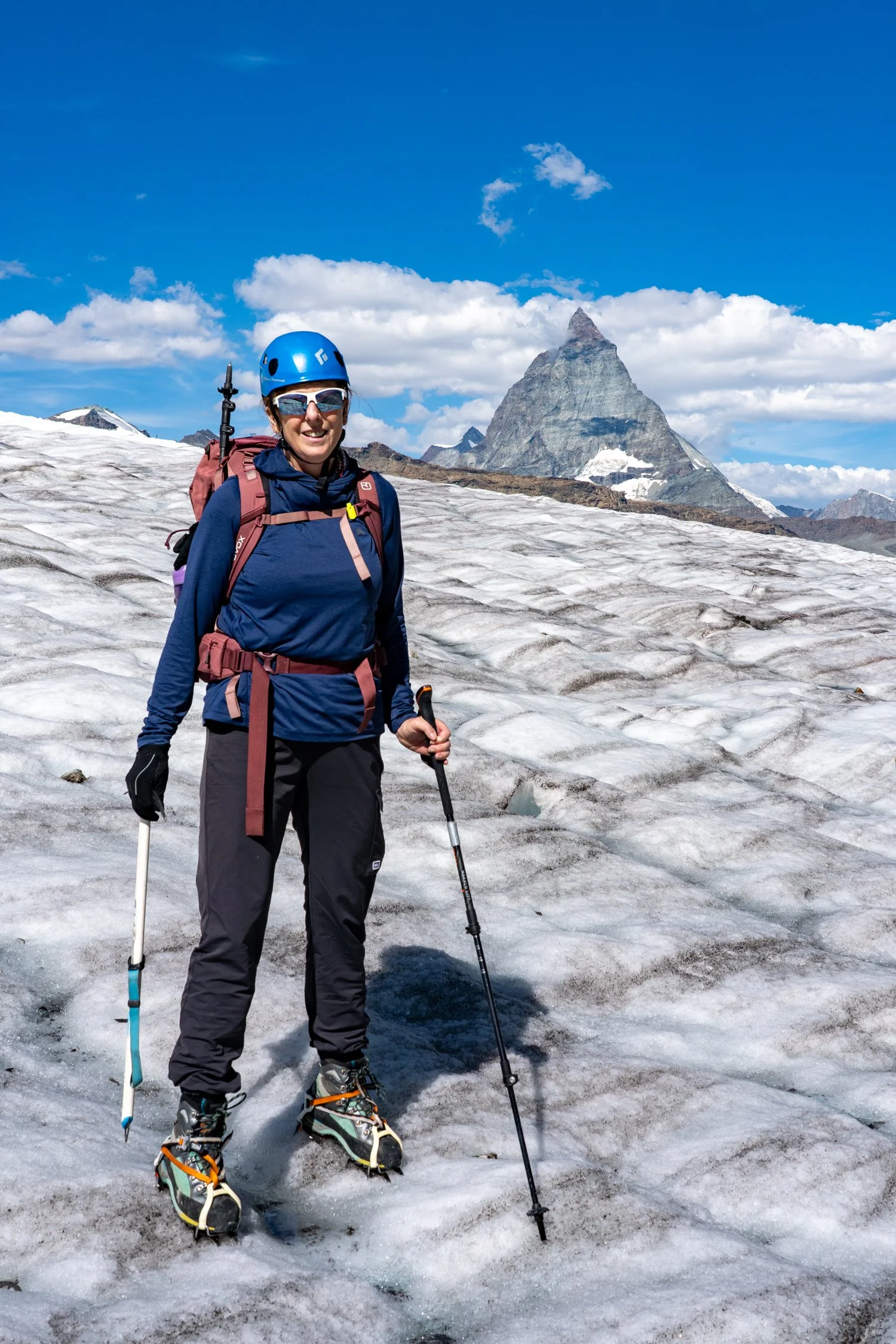
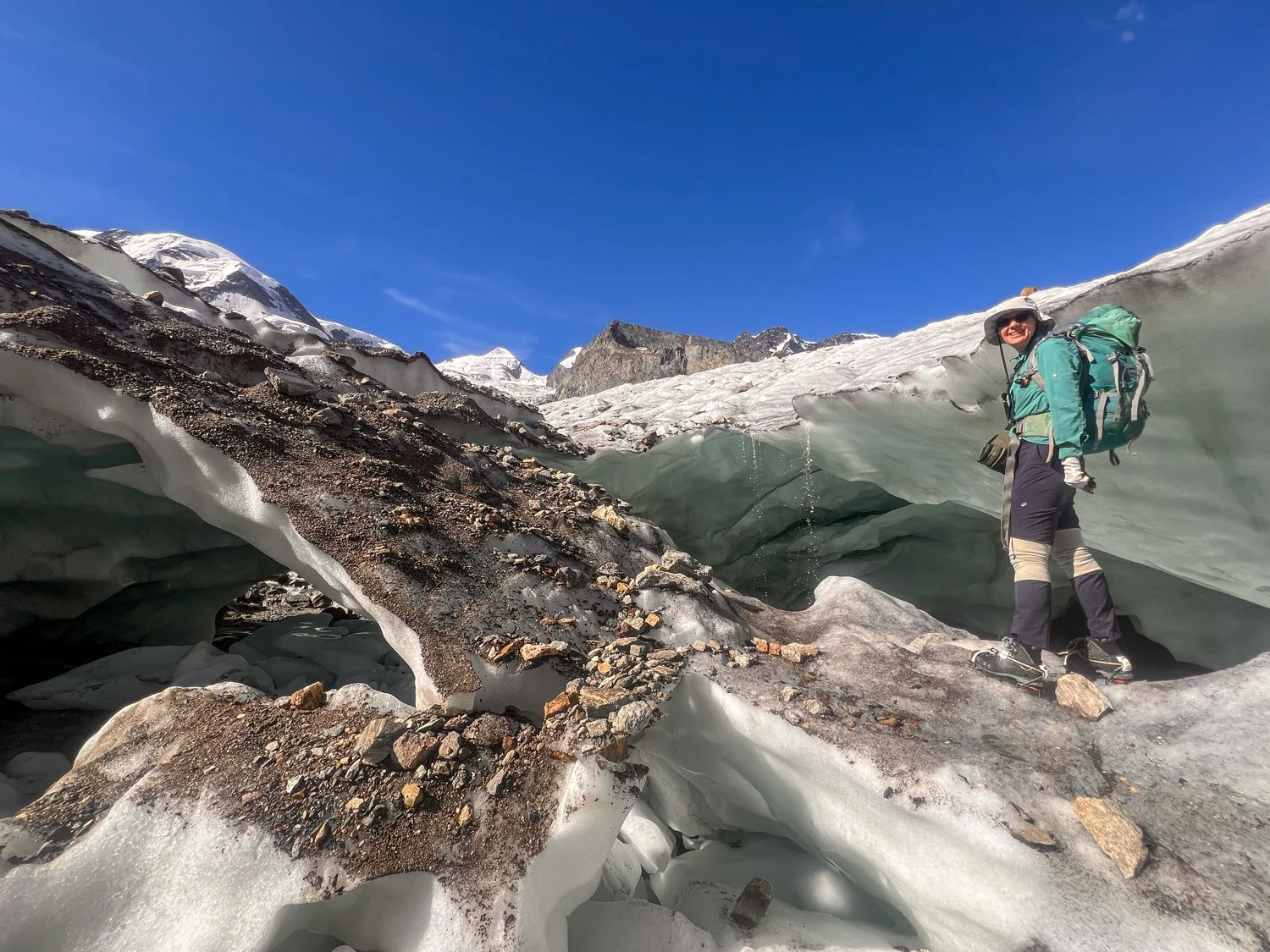
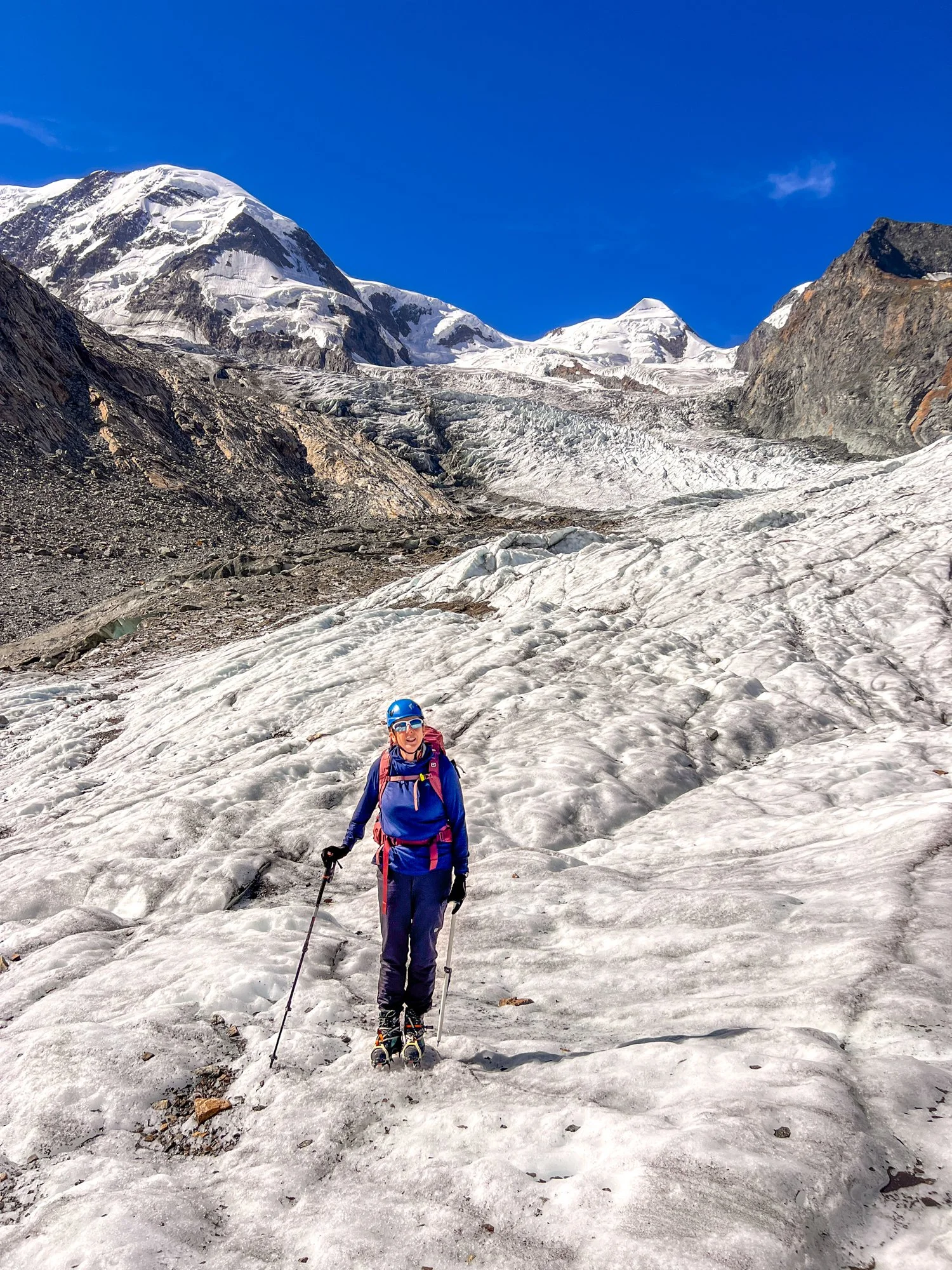
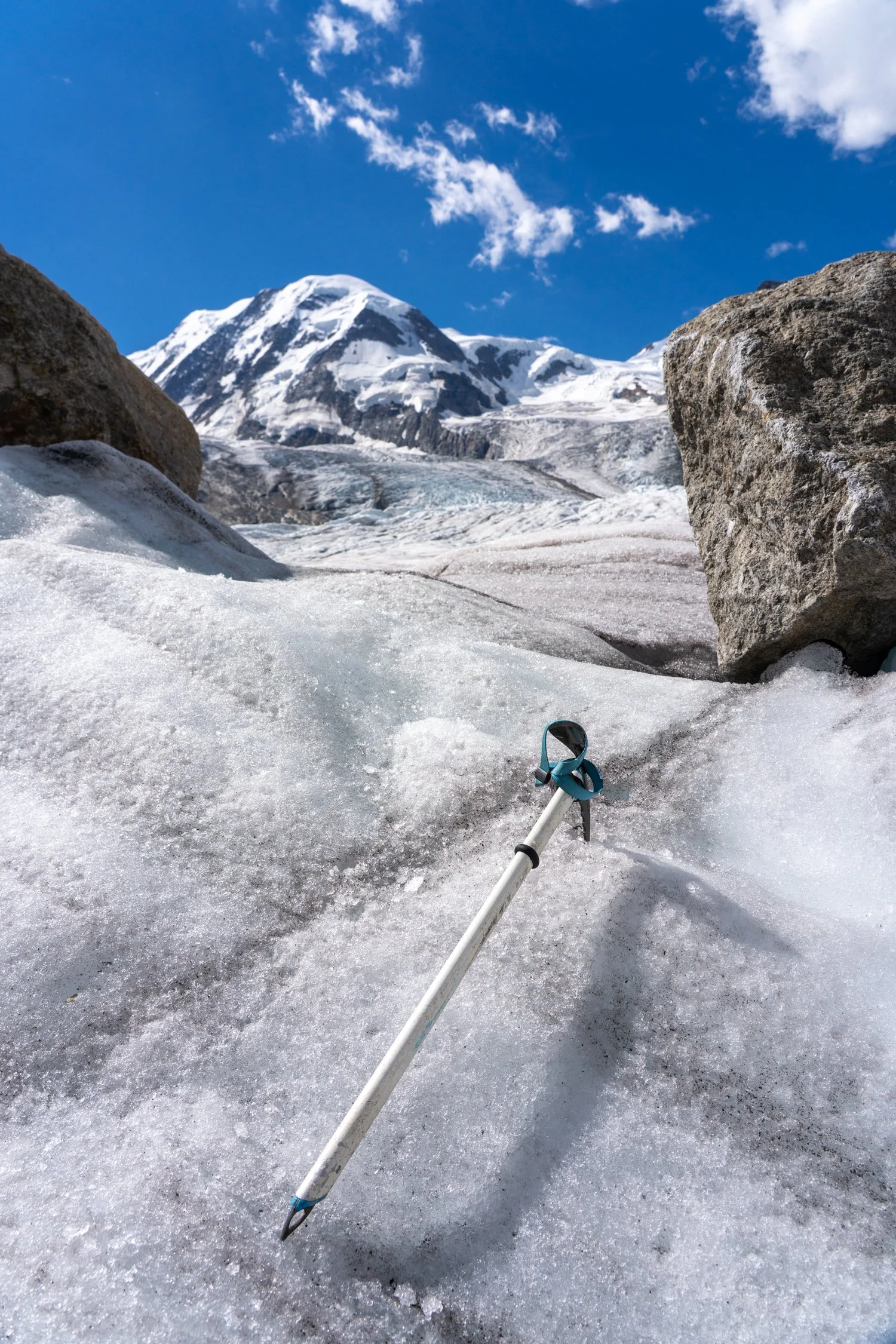
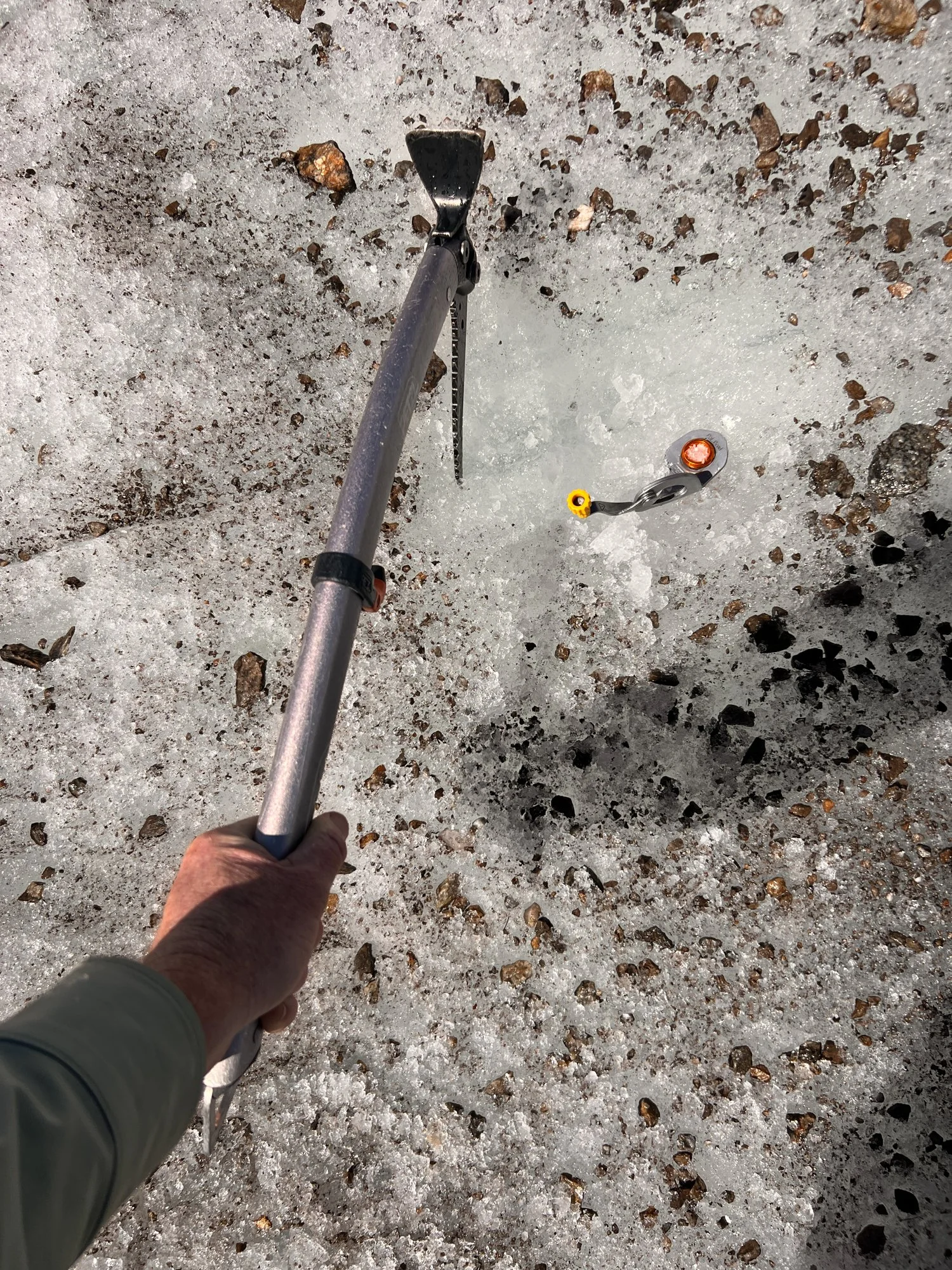
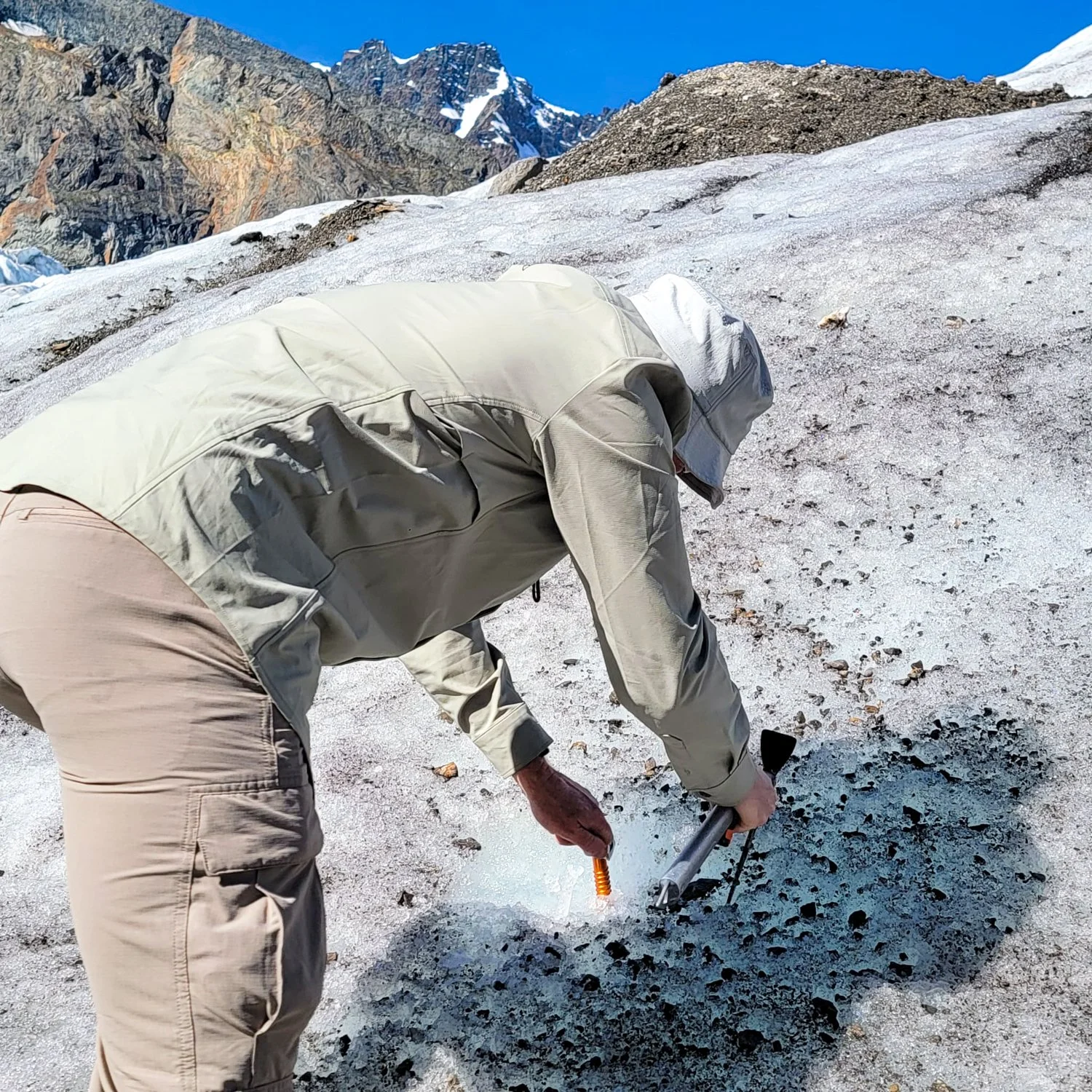
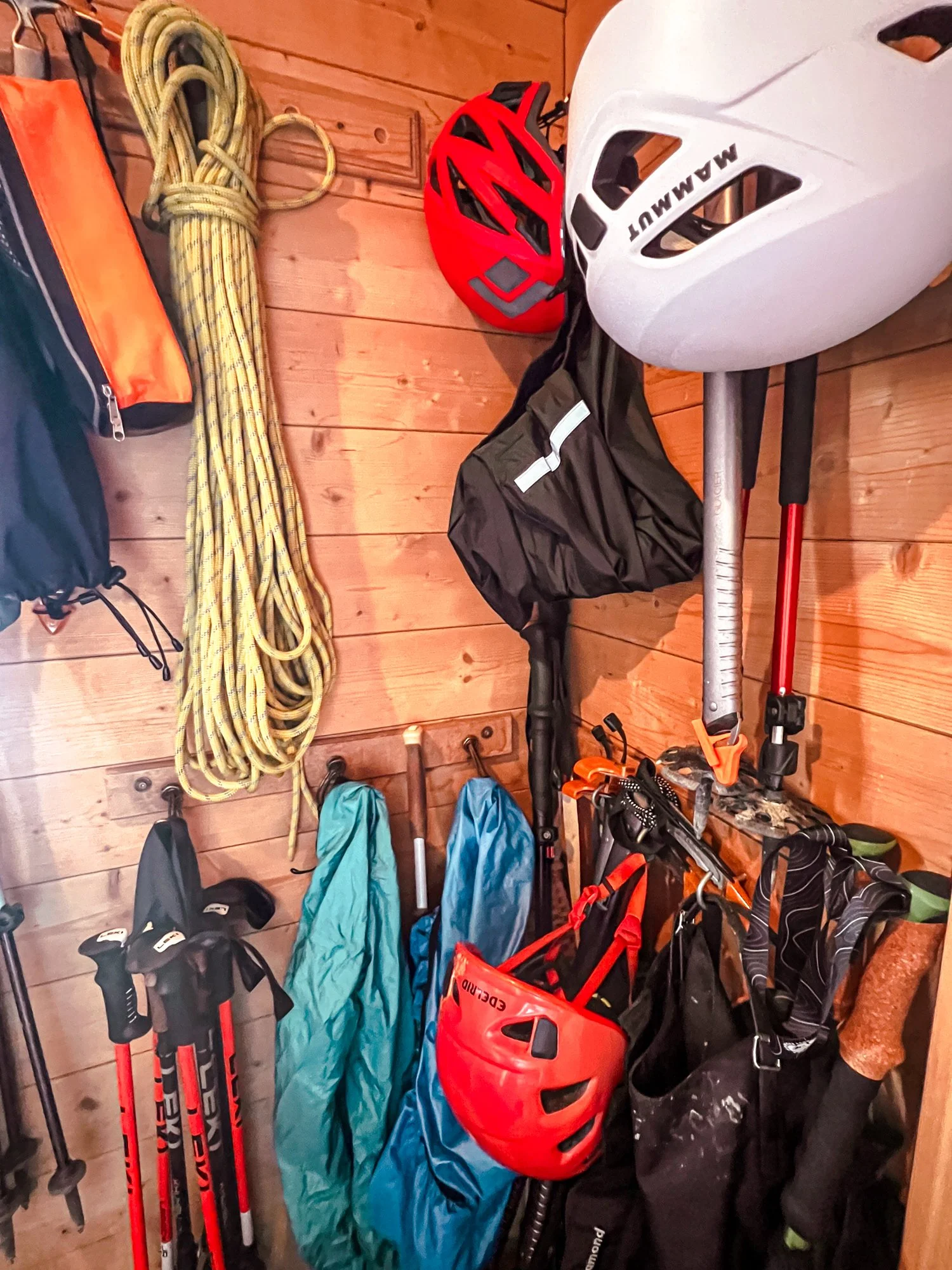
Our friends decide this is a good opportunity to humour the tourists with a little practical demonstration. Out come the ice screws, and we learn how they are used to secure ropes into the glacier before having a go at some ice climbing. It's fascinating to see how the equipment works, although I'm not entirely convinced I'm a natural.
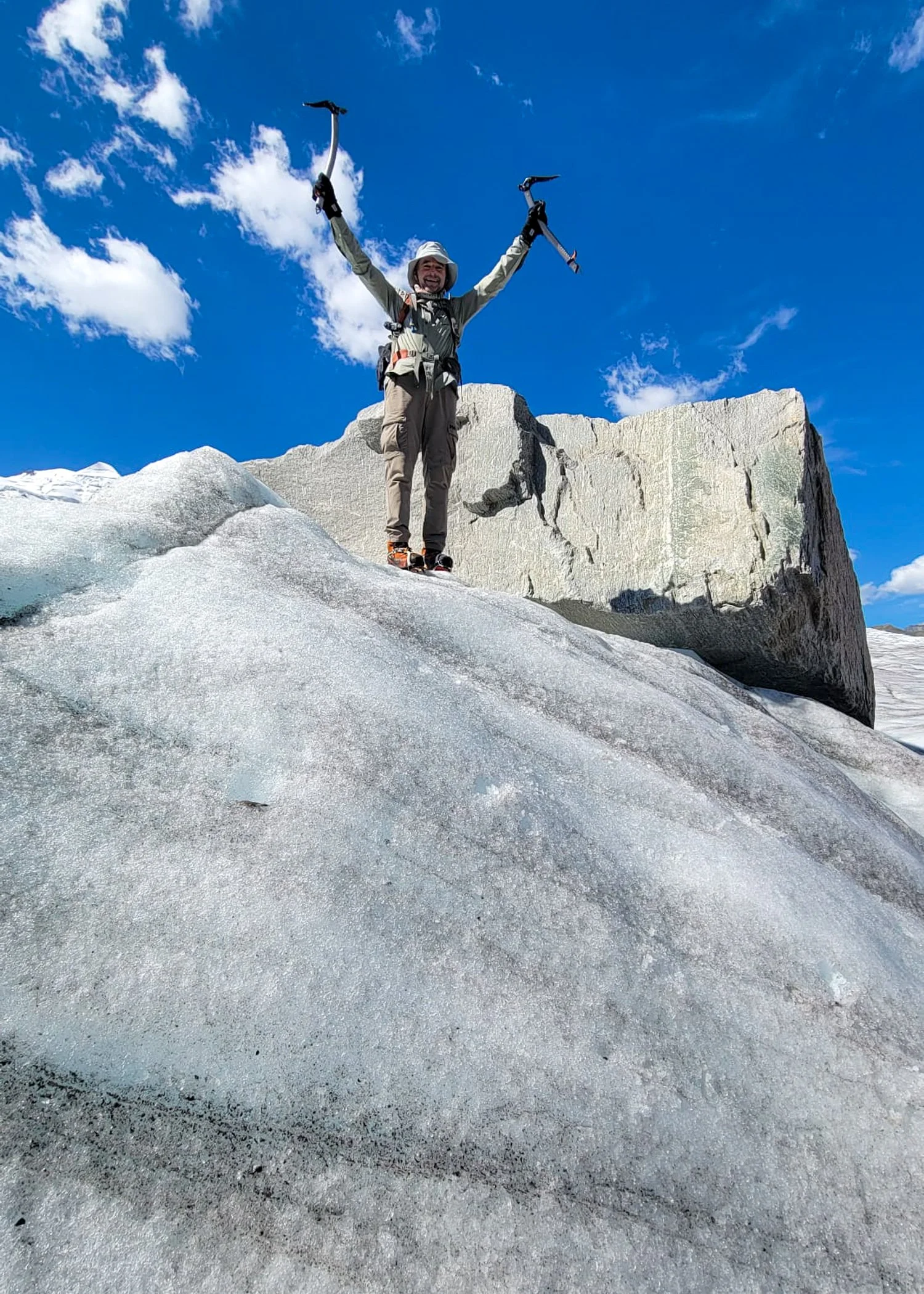
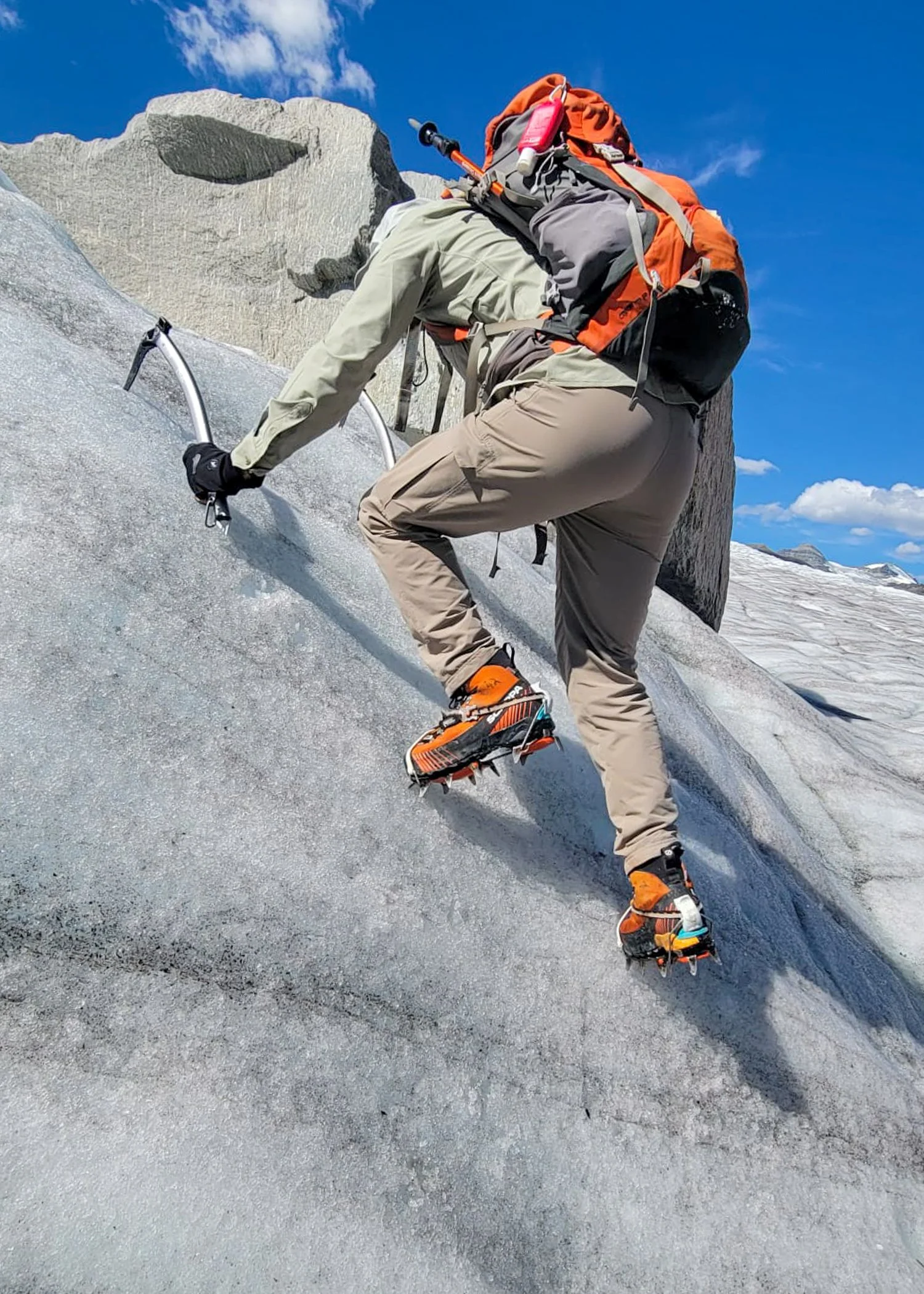
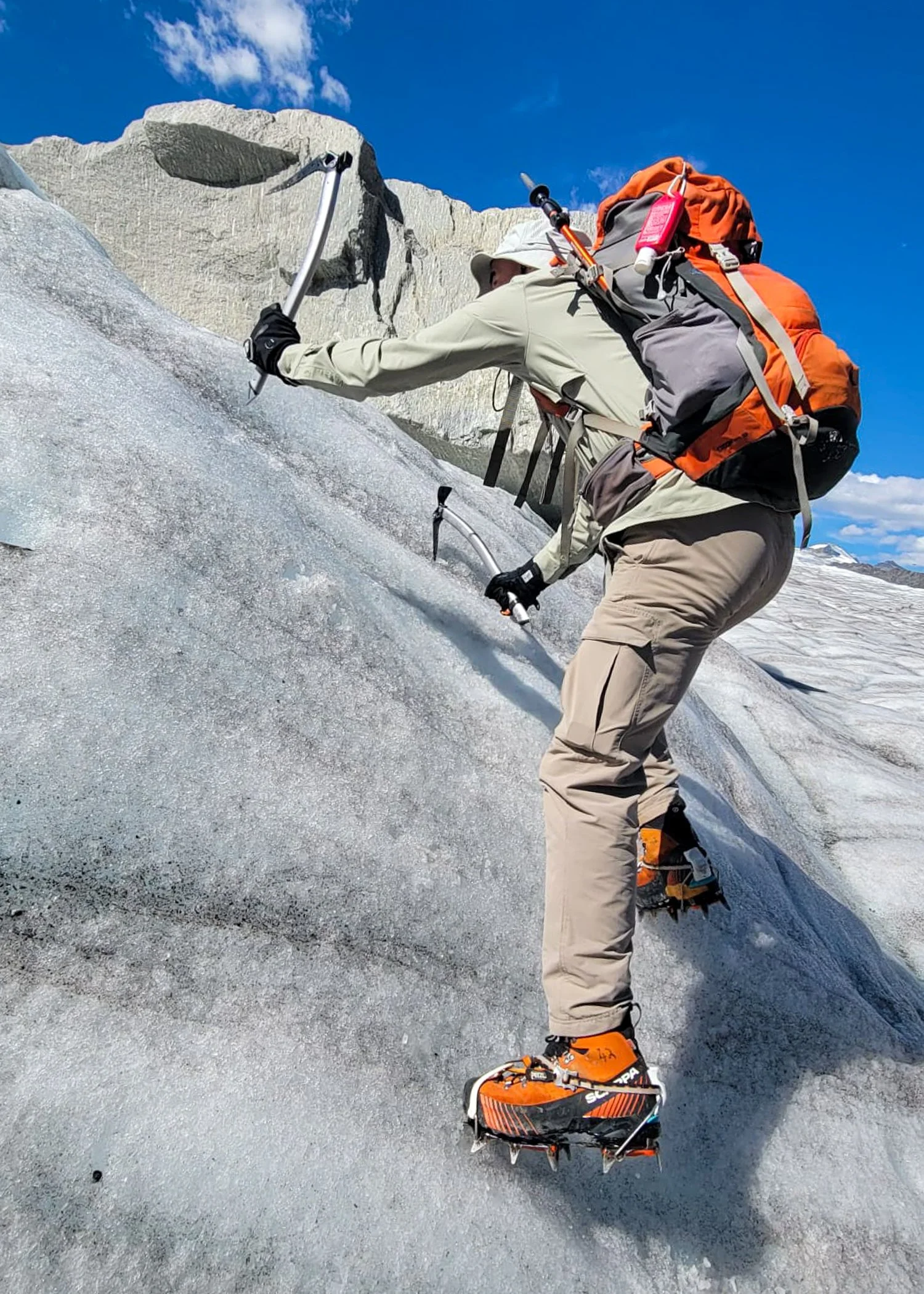
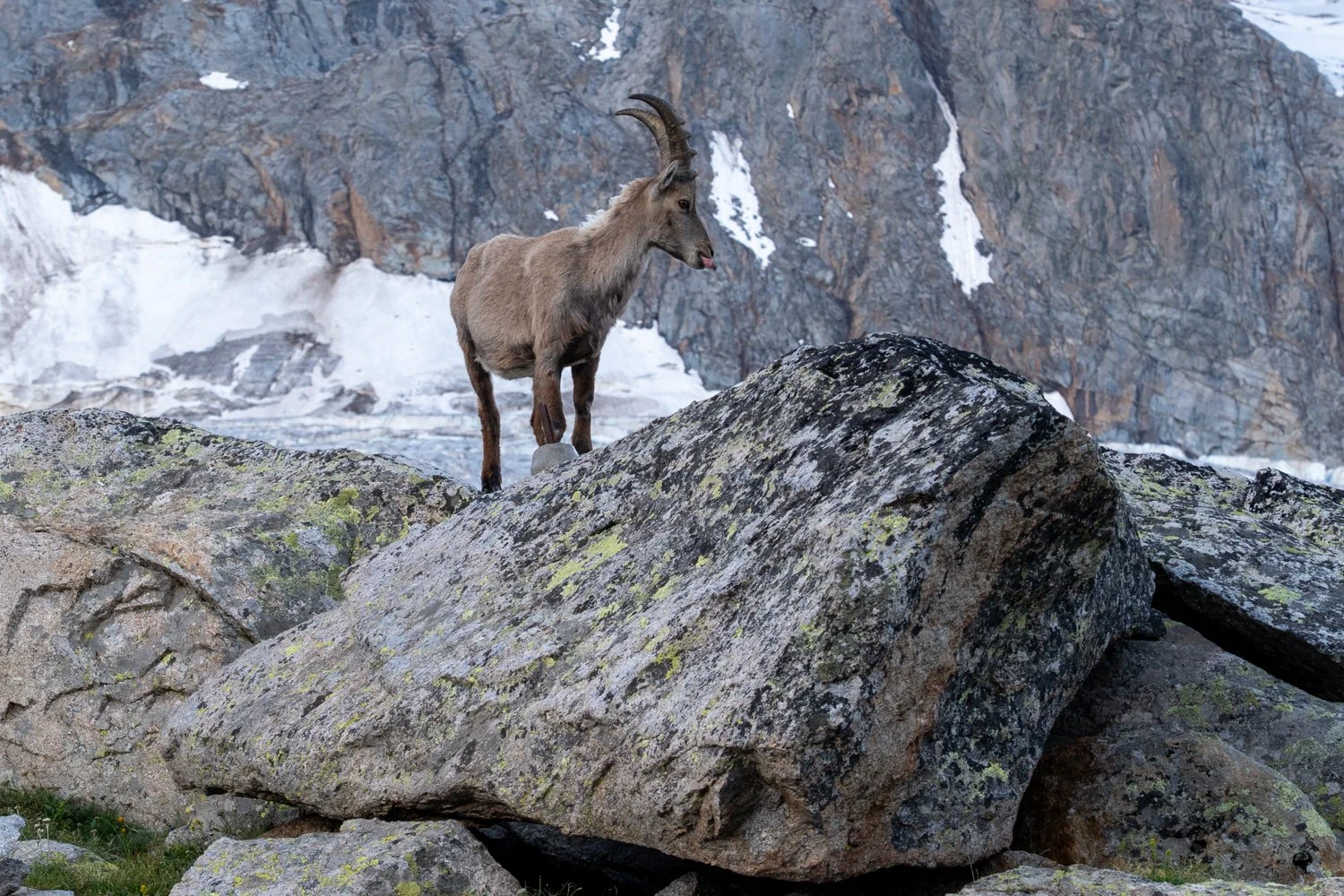
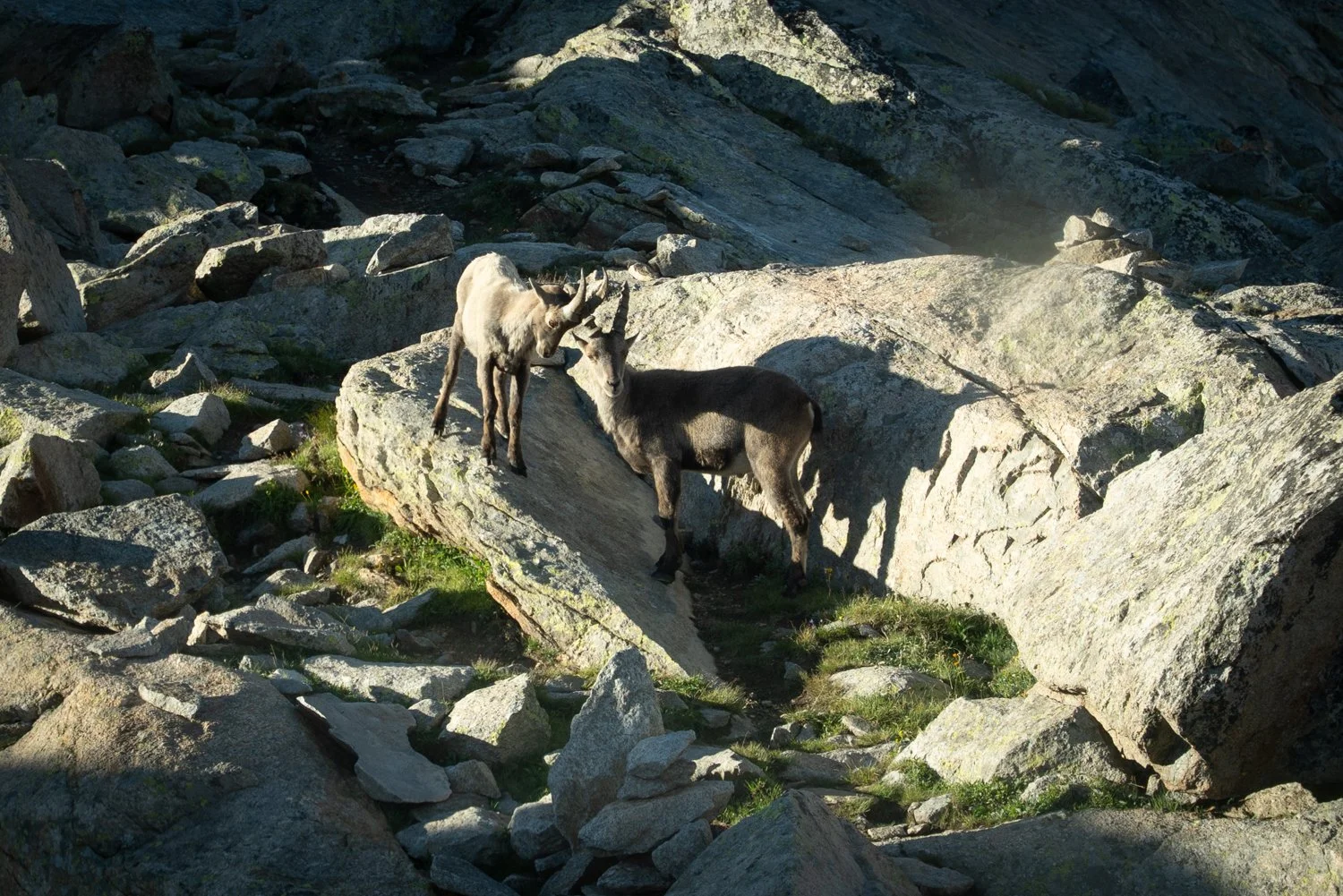
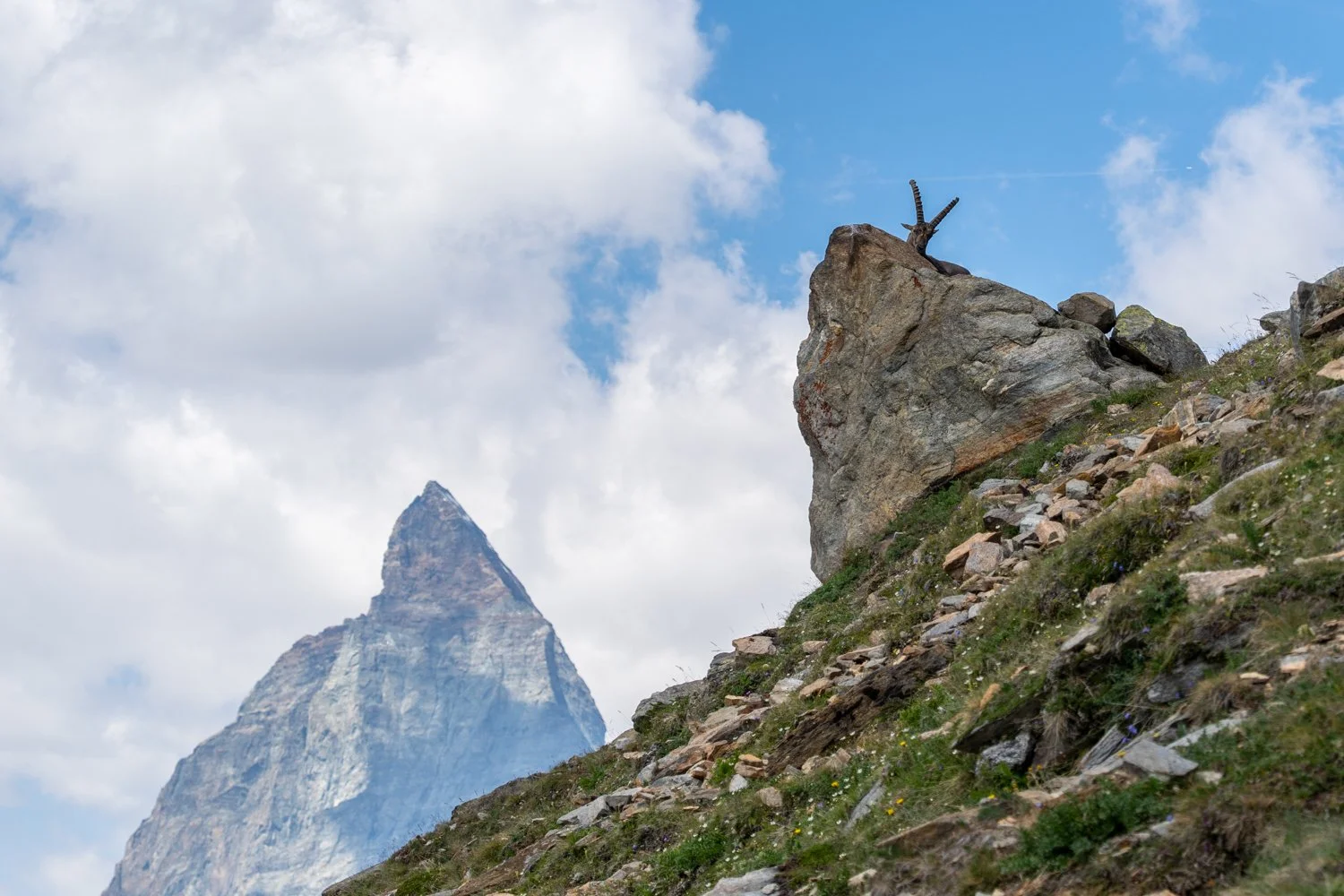
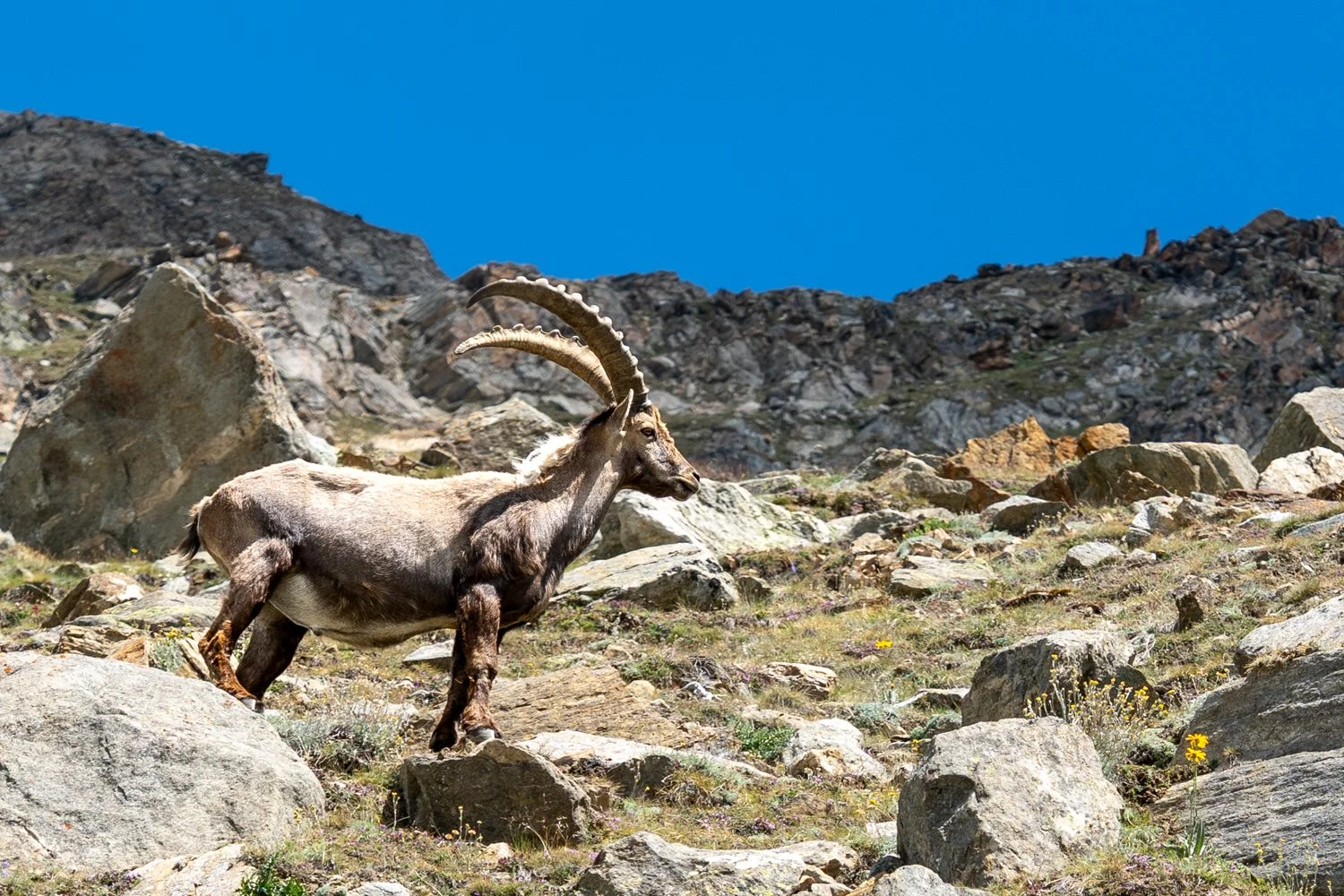
Clearly, I'm nowhere near as skilled as the local mountain goats — the Alpine ibex. These remarkable animals manage to negotiate seemingly vertical rock faces with incredible ease, without crampons, ropes or any of the technical equipment we are relying on. Just four legs, a bit of balance and apparently no fear of heights. There's a lesson in there somewhere.
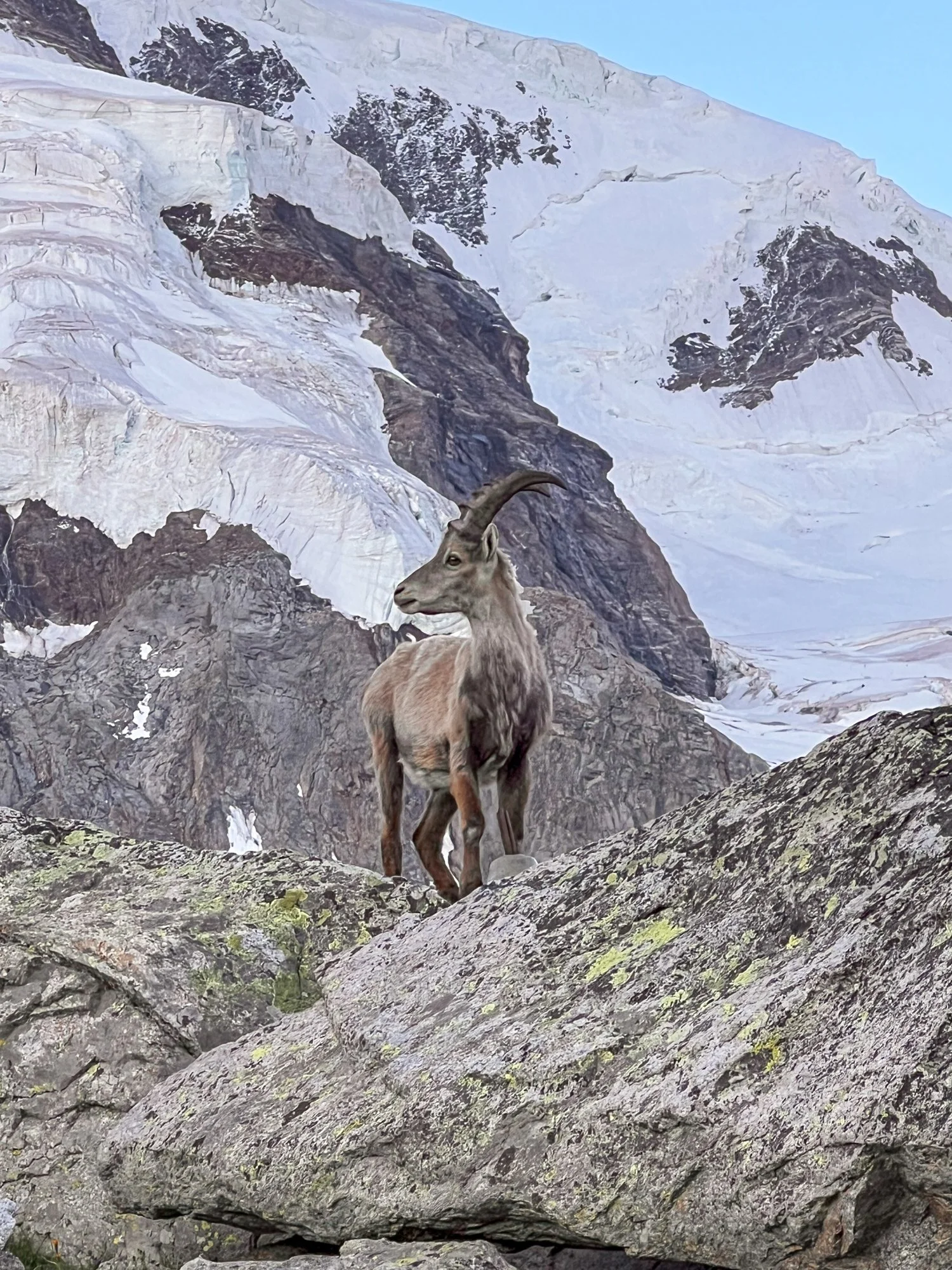
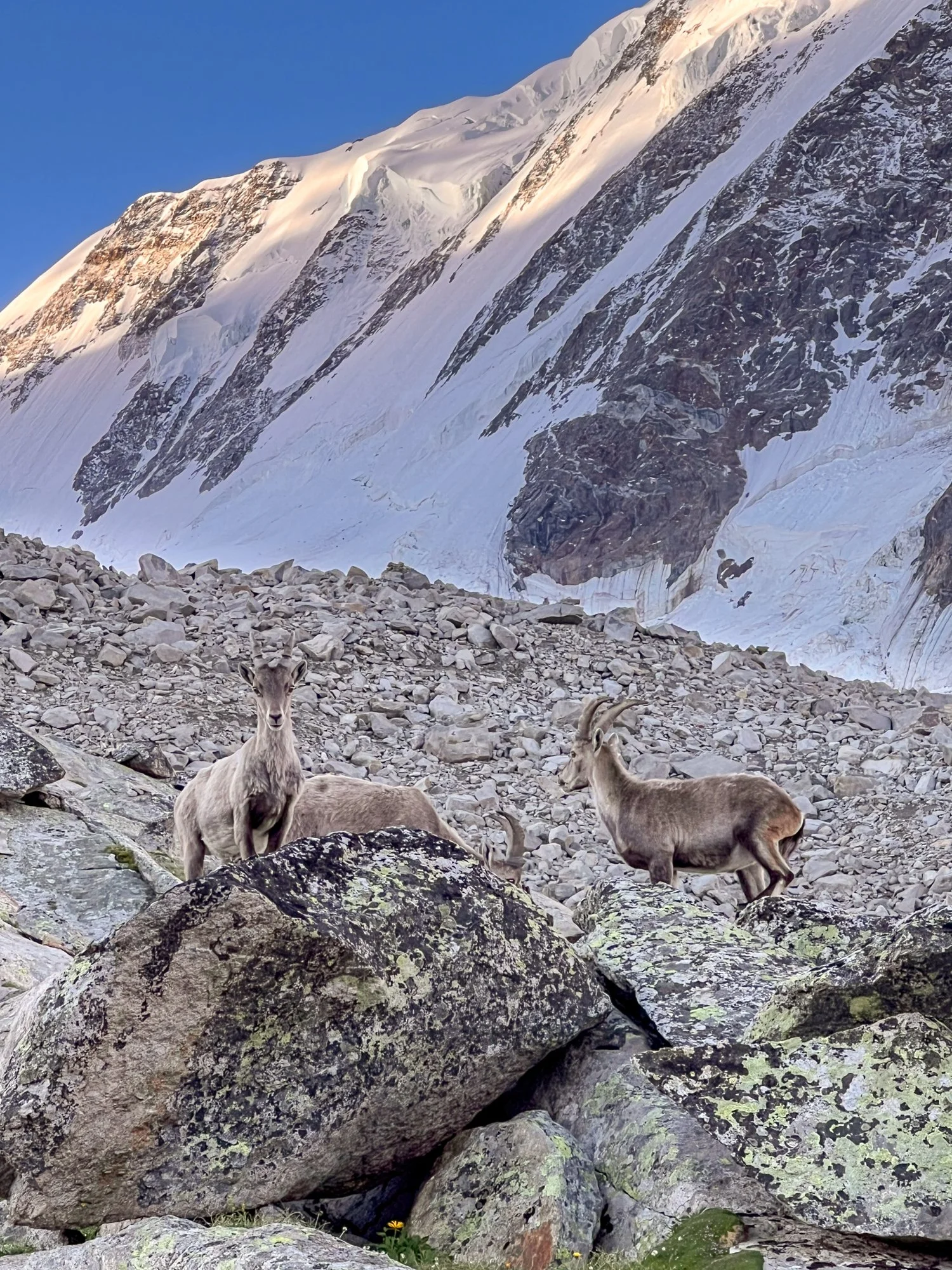
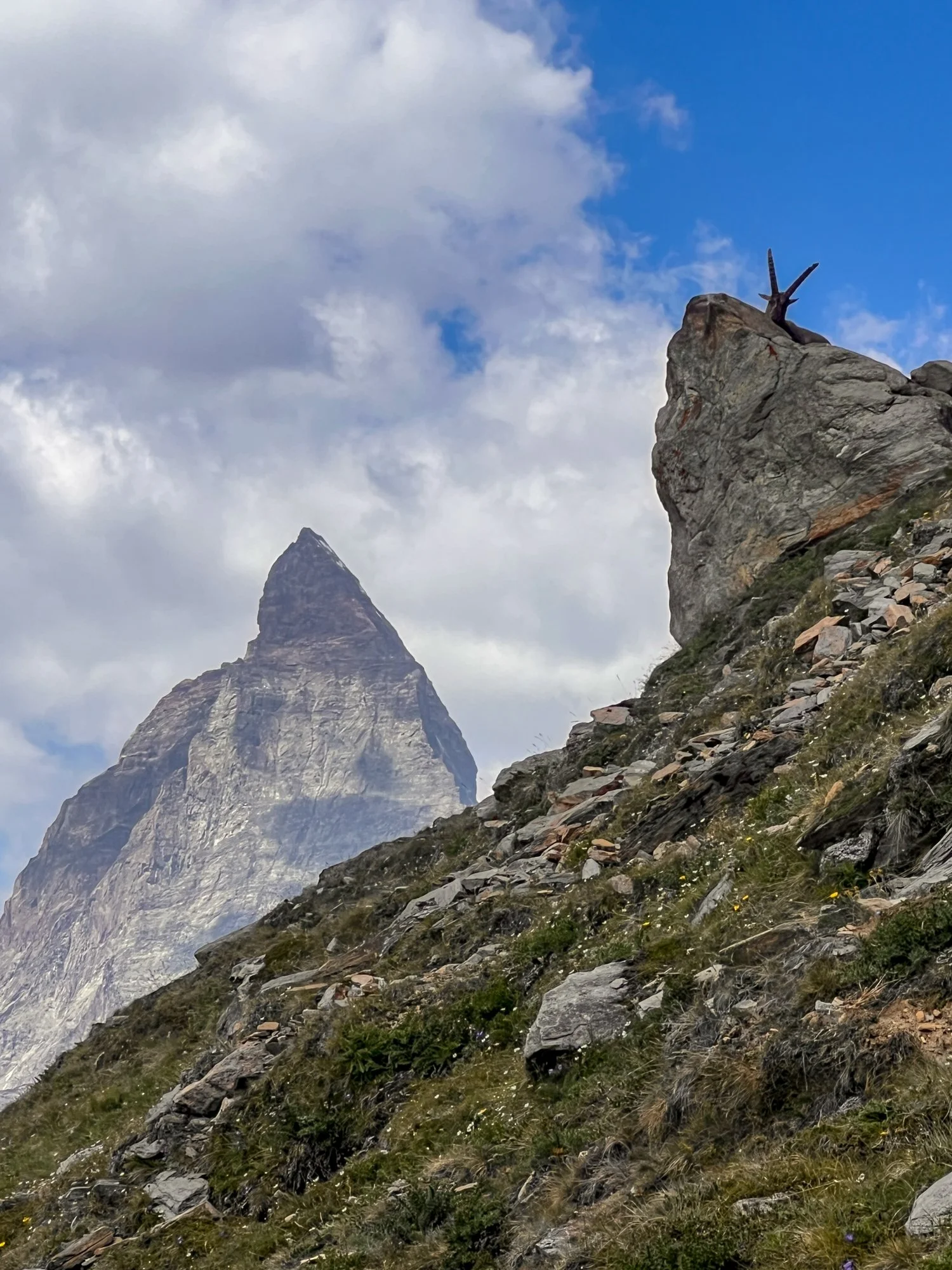
We spend the morning slowly making our way through this extraordinary wonderland of ice, taking in the shapes, textures and colours of the glacier. Eventually, we reach the chairlift at Riffelberg. Time to give the legs a break and enjoy a ride down to Furi, before heading back up by cable car to Trockener Steg.
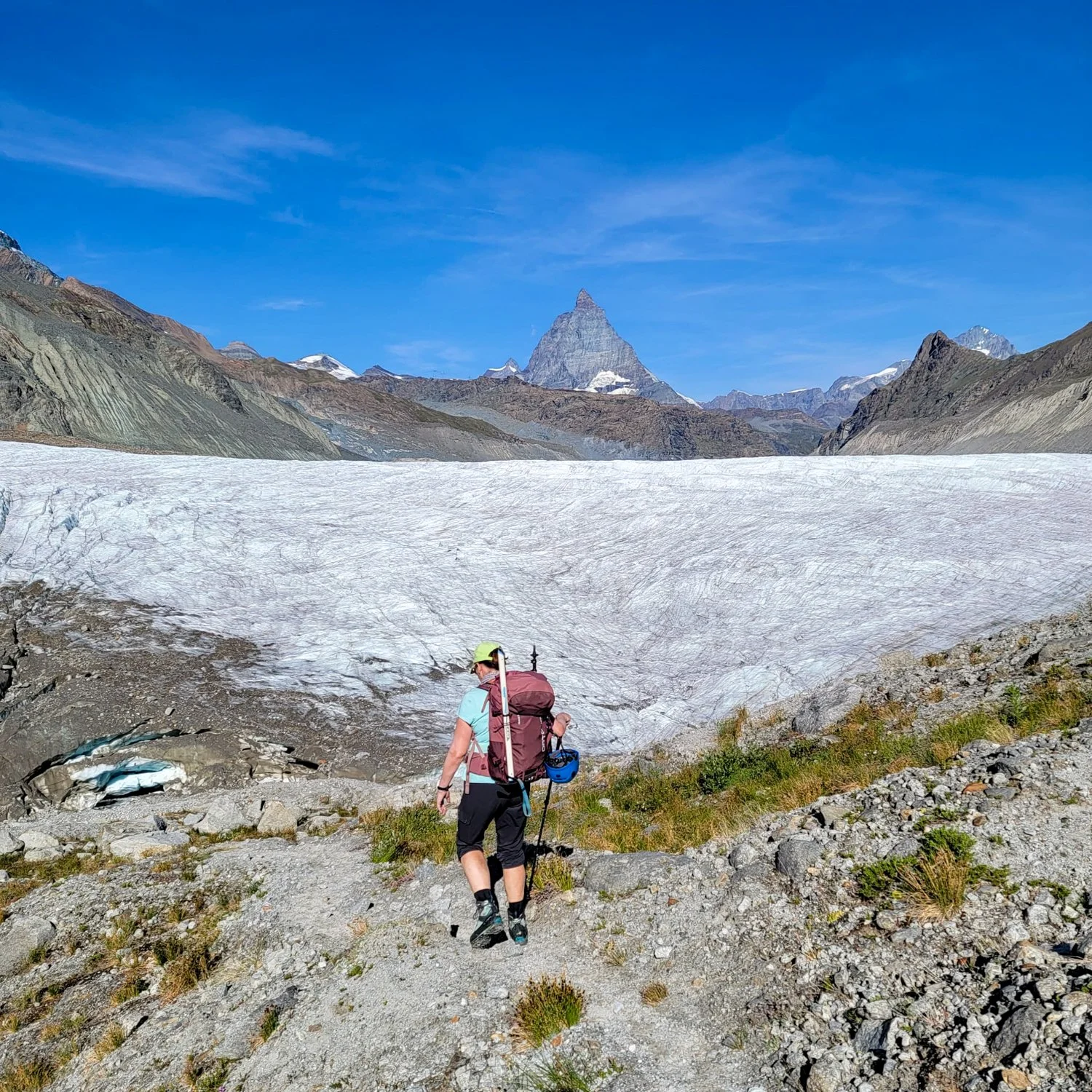
From here, it's a relatively easy 30-minute hike to our next overnight stop, Gandegghütte.
And what a contrast to the Monte Rosa Hut.
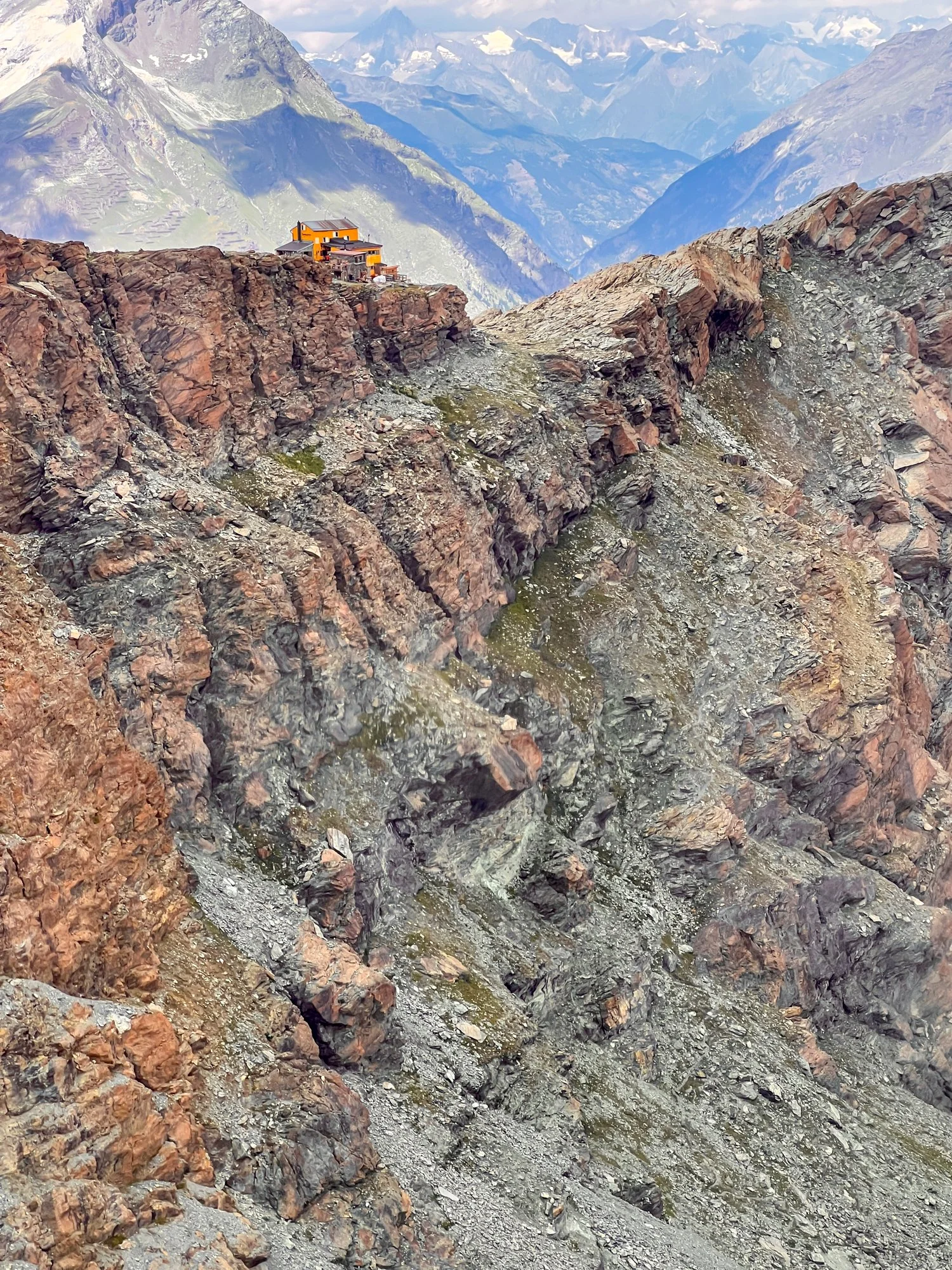
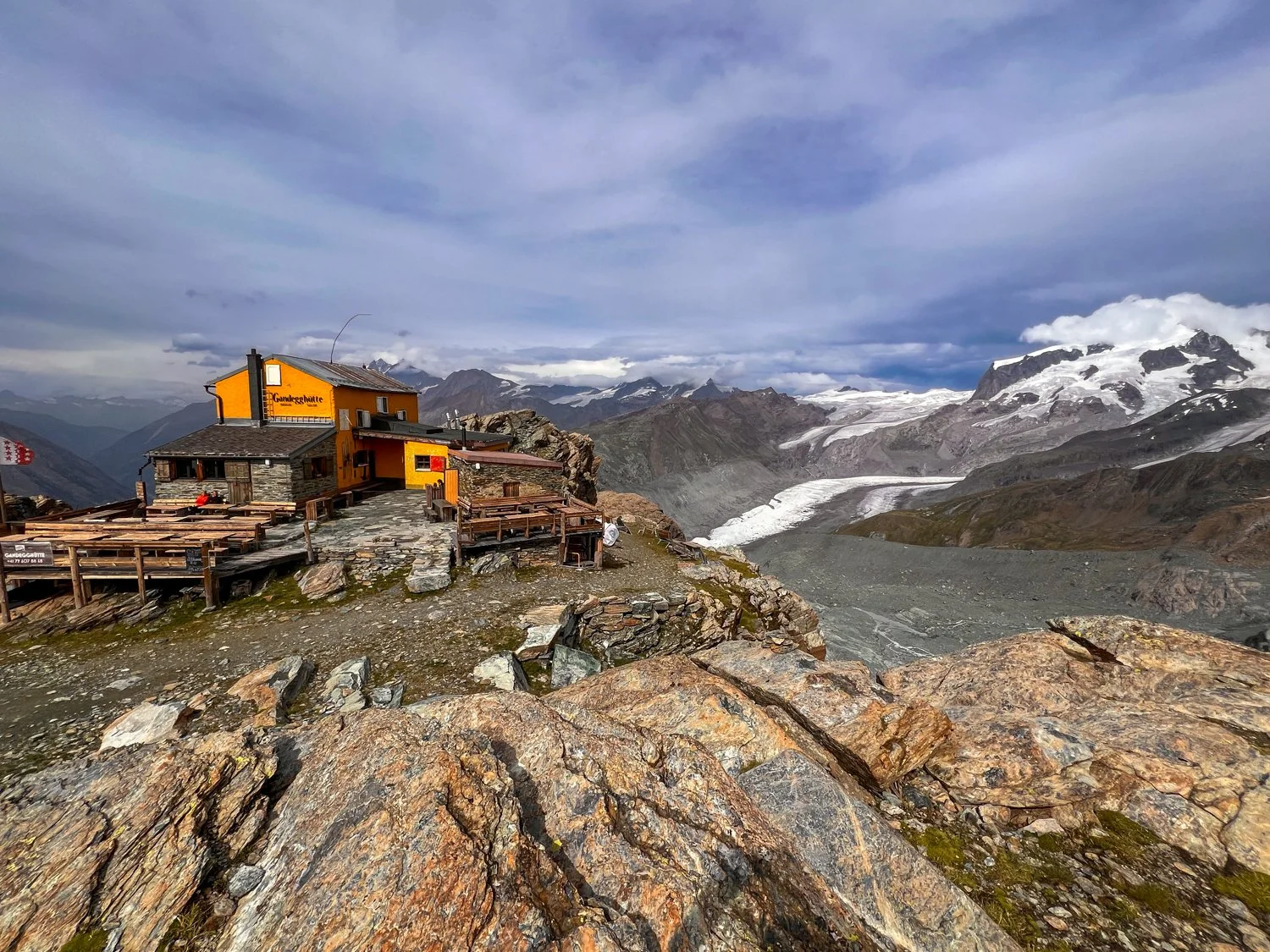
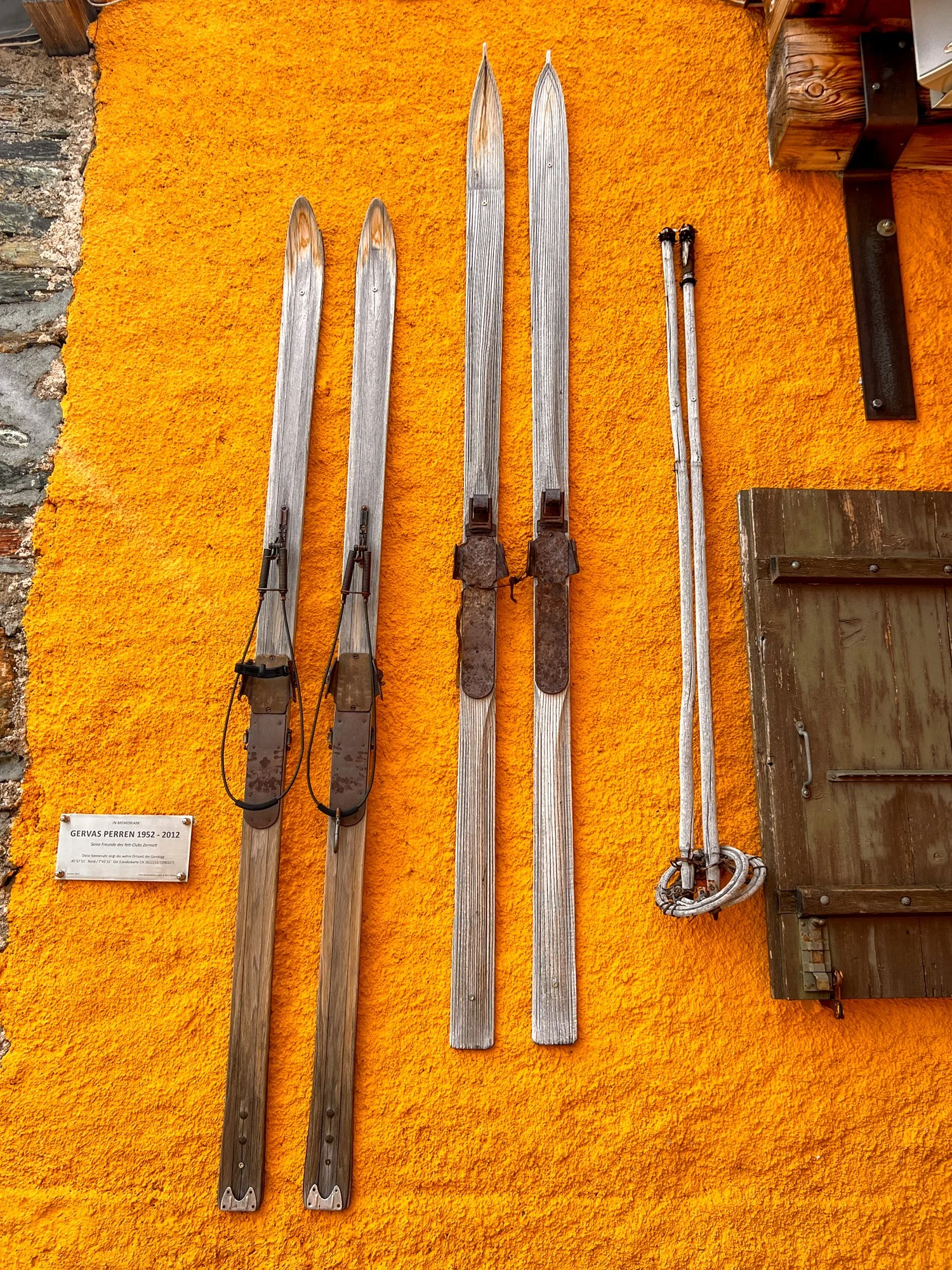
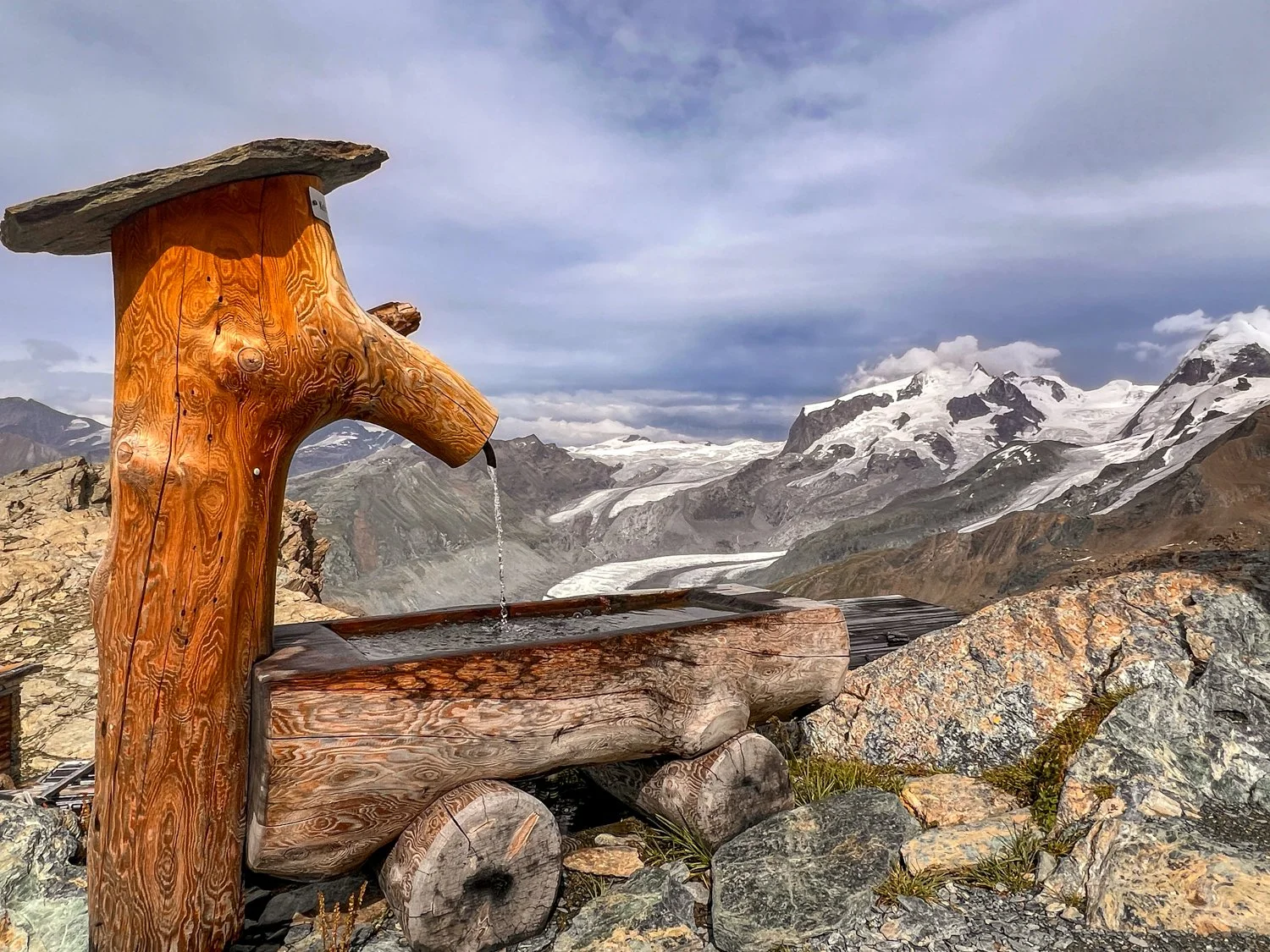
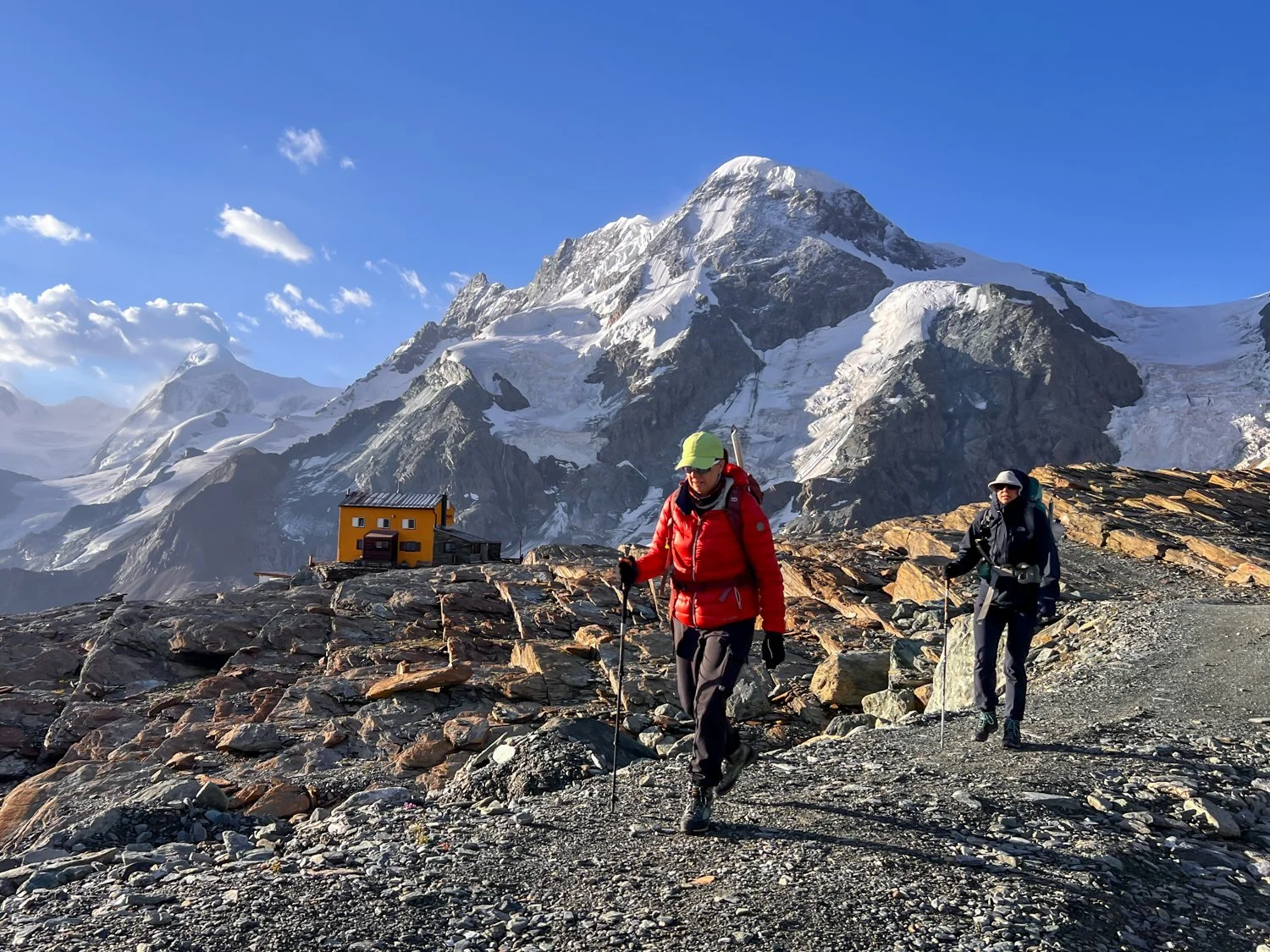
While Monte Rosa looks like a 21st-century spacecraft, Gandegghütte has a much more traditional mountain-refuge feel. Built in 1885 and perched dramatically on a rocky ledge at 3,029 metres, this bright yellow hut is hard to miss. Its weathered timber exterior, old skis displayed on the walls and a wooden water trough sitting out front give it the character of a proper alpine refuge. It looks as though it has been welcoming weary mountaineers for well over a century.
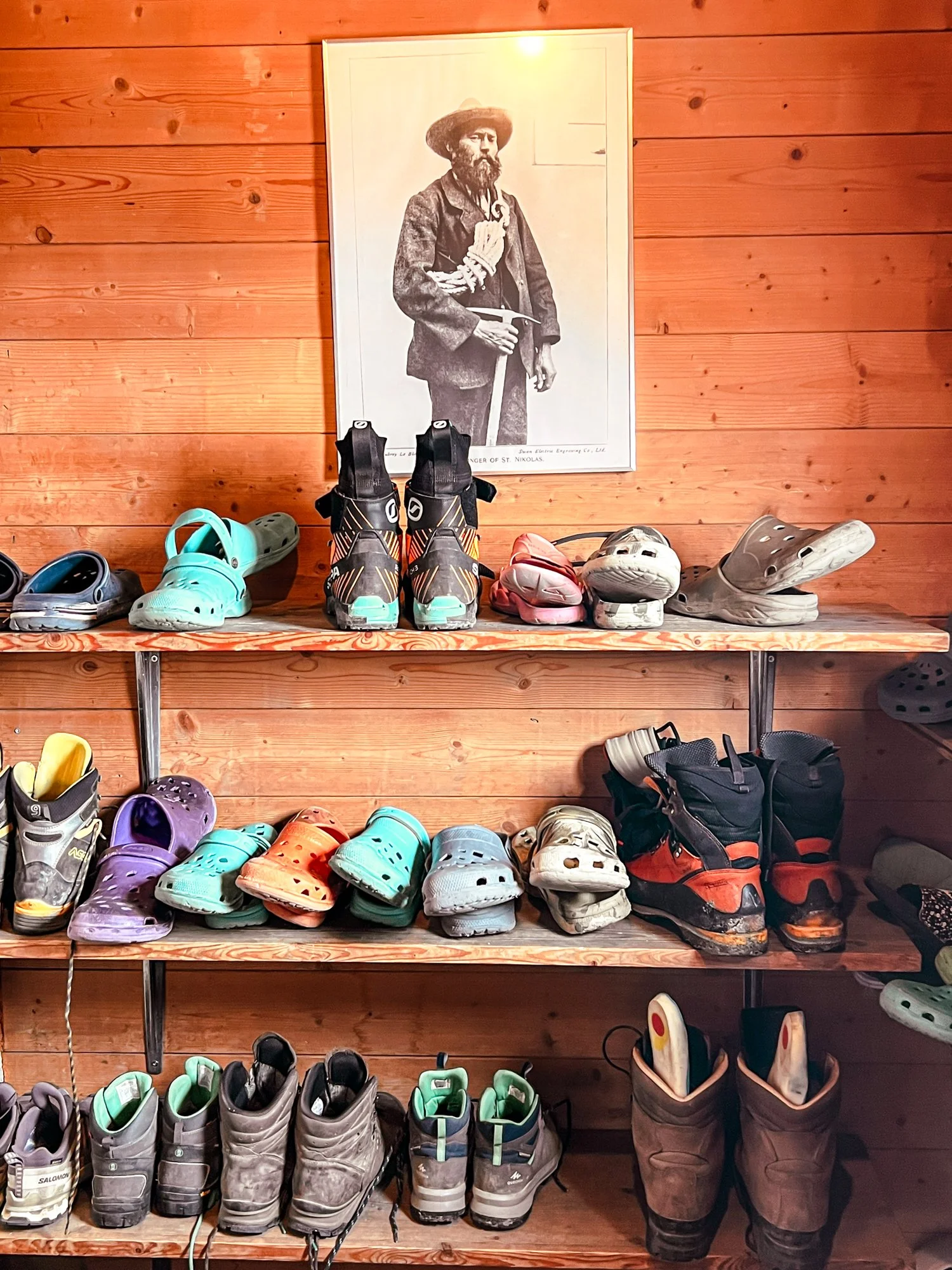
Inside, the mountain-hut routine is becoming familiar. Hiking boots are left at the entrance, and the essential Crocs come out as our camp shoes. Not exactly high fashion, but when you're staying at 3,000 metres, comfort wins every time.
With another warm, hearty meal served up, we settle in for the evening. Another day of glaciers, climbing, mountain goats and spectacular scenery comes to an end.
Two days into our four-day adventure, and Switzerland is continuing to deliver. Although I'm starting to think our friends have a slightly different definition of an easy hike to ours!
Day 3 – Gandegghütte, Breithorn and Fluhalp
After two days of adventure, you might think we'd be ready for a rest day. Not quite. Day three starts easily enough, although the scenery makes getting out of bed worthwhile all on its own.
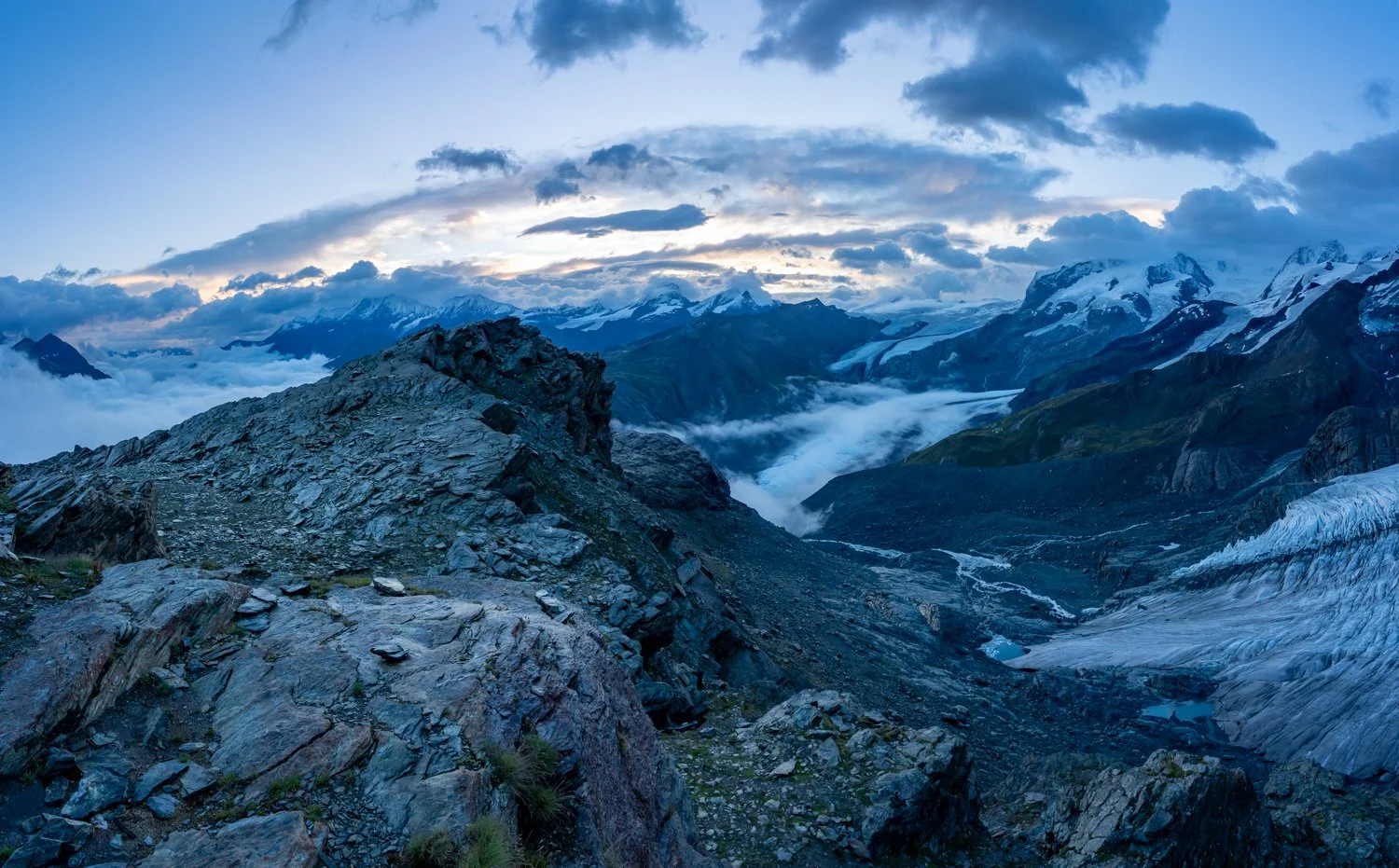
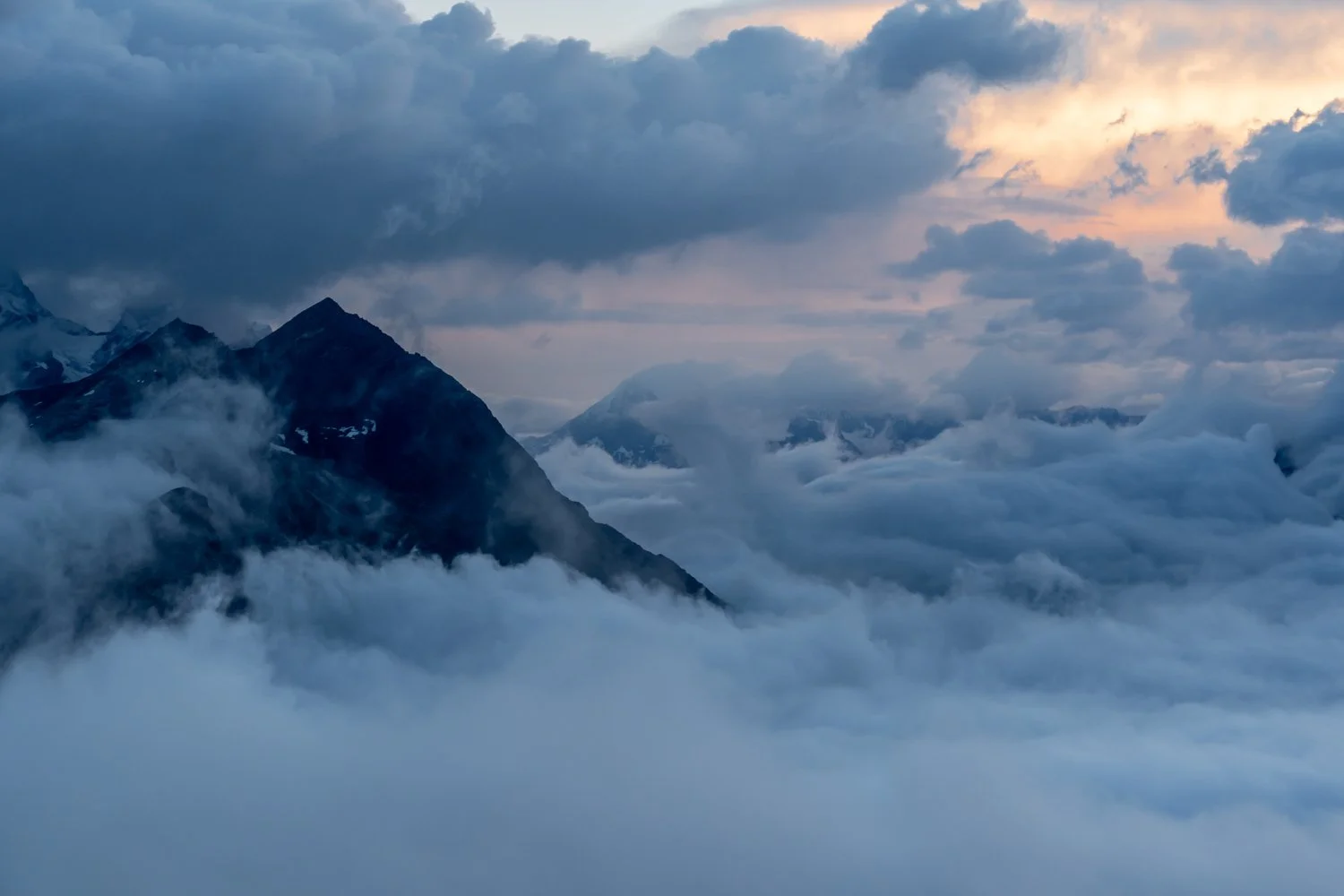
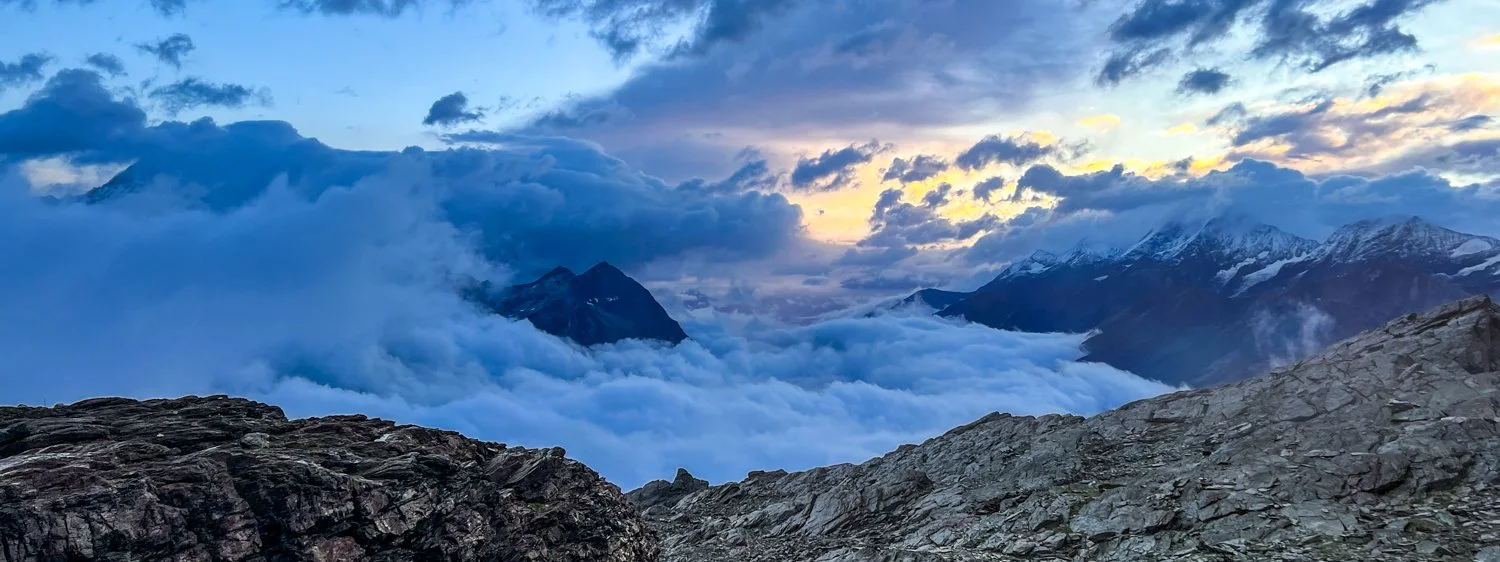
I am up early again, this time to witness a sunrise that feels almost otherworldly. Low clouds gather along the horizon, with the jagged peaks of the surrounding mountains poking through like islands in a sea of white. Below me, the valley is blanketed in cloud, the soft layers swirling and drifting in the gentle breeze.
The steel-grey rocks and sky take on a cool, icy blue glow, broken by splashes of yellow where the rising sun hides behind the clouds. The whole landscape seems suspended between night and day. It's mesmerising. I could stand here all morning, watching the clouds move and the mountains slowly emerge.
But another adventure awaits, and this one would leave lasting memories.
We've stayed at Gandegghütte partly to give our bodies time to acclimatise to the altitude. It's hardly Mount Everest, but today's objective is to take us higher than we've ever hiked before - above 4,000 metres. That's a pretty big step up from our usual weekend walks.
After a short walk back to Trockener Steg, we catch the high-altitude cable car towards Klein Matterhorn, better known as Glacier Paradise. At around 3,883 metres, even getting to the starting point is an experience in itself. The air is thin, the landscape is almost entirely ice and snow, and the scale of the mountains is difficult to comprehend.
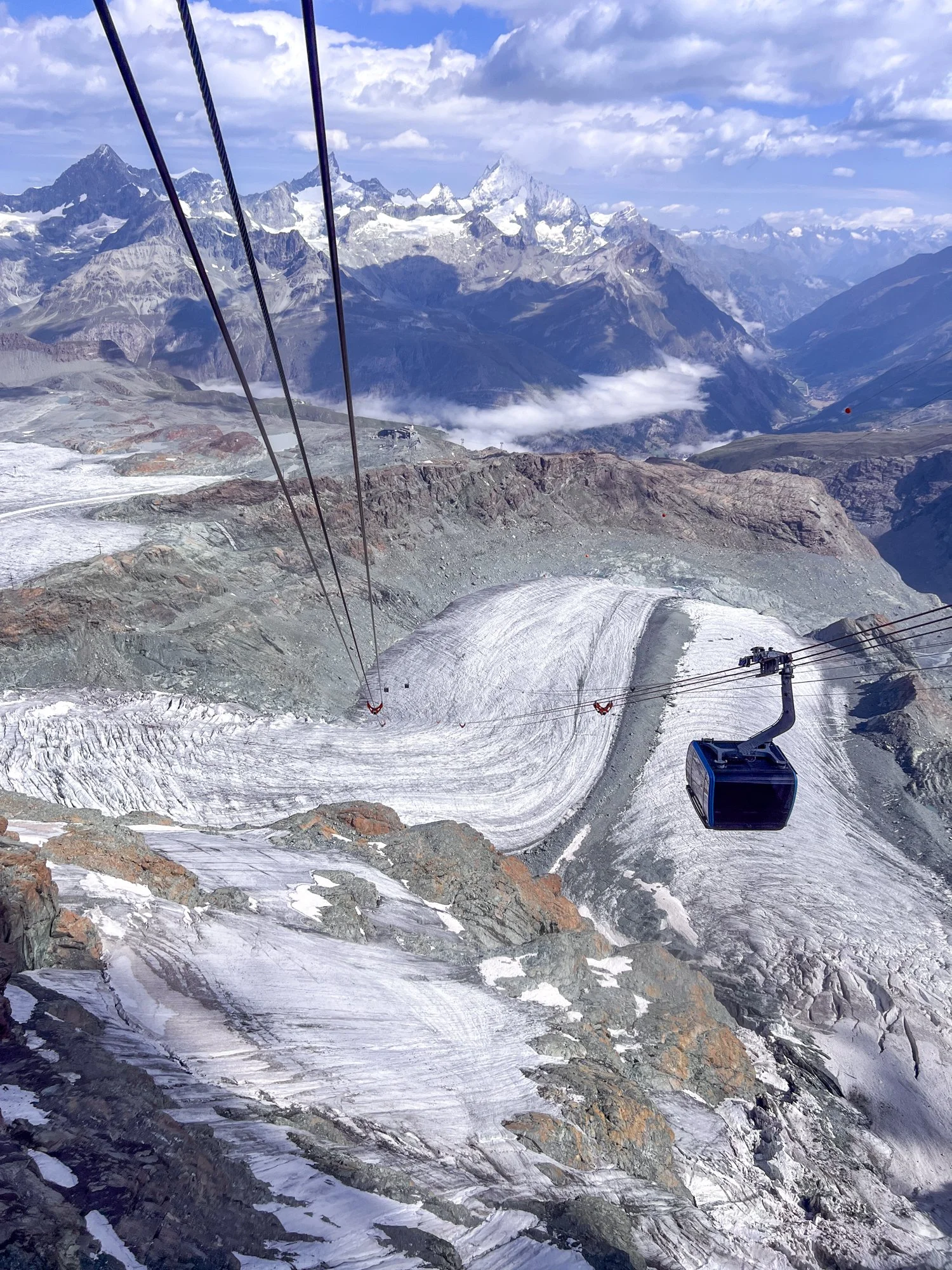
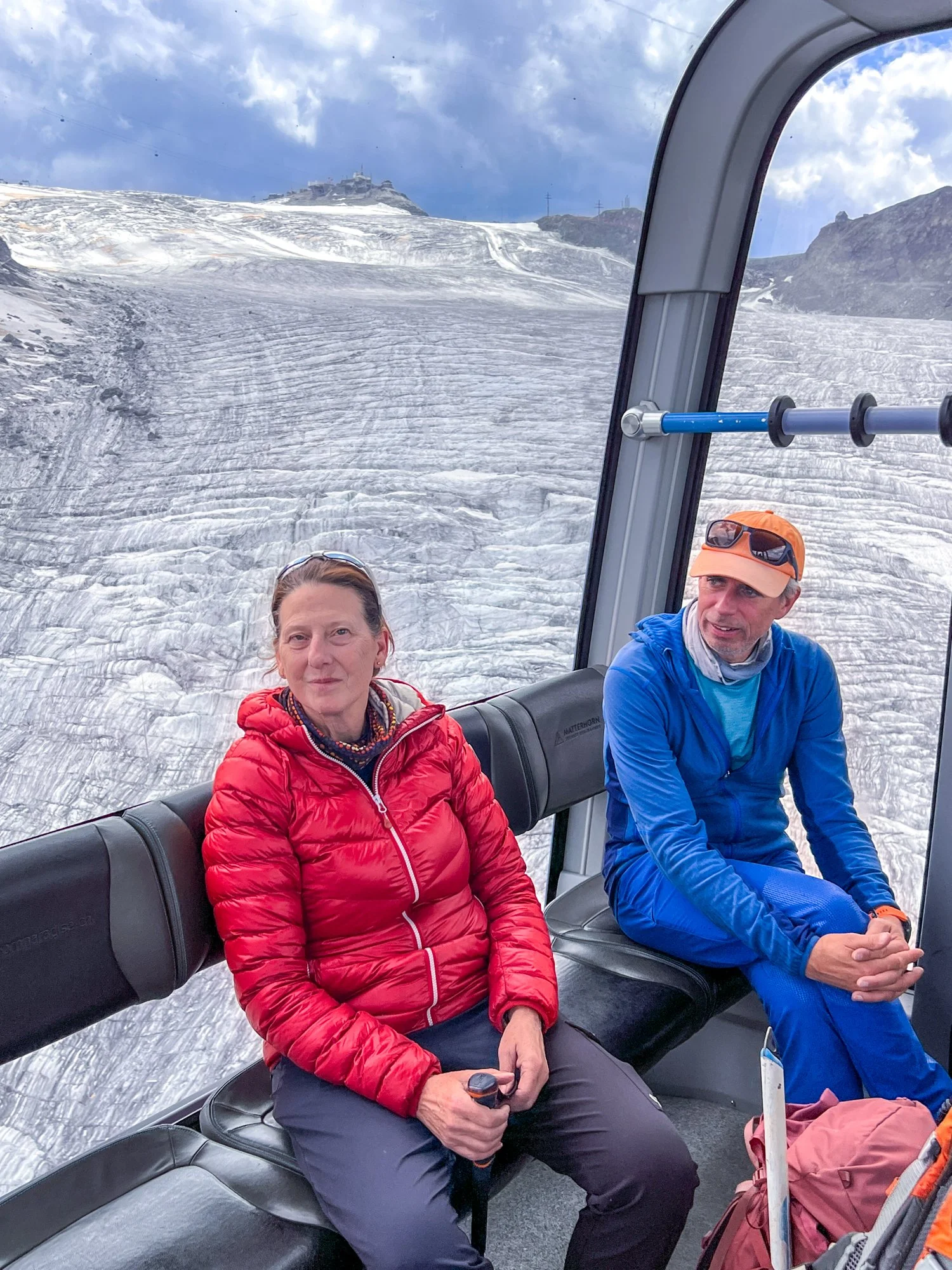
Our objective is the Breithorn, one of the more accessible 4,000-metre peaks in the Alps. It is often described as a relatively straightforward alpine climb, but that doesn't mean it's without risk. Beneath the snow lie hidden crevasses, and one misplaced step can have serious consequences.
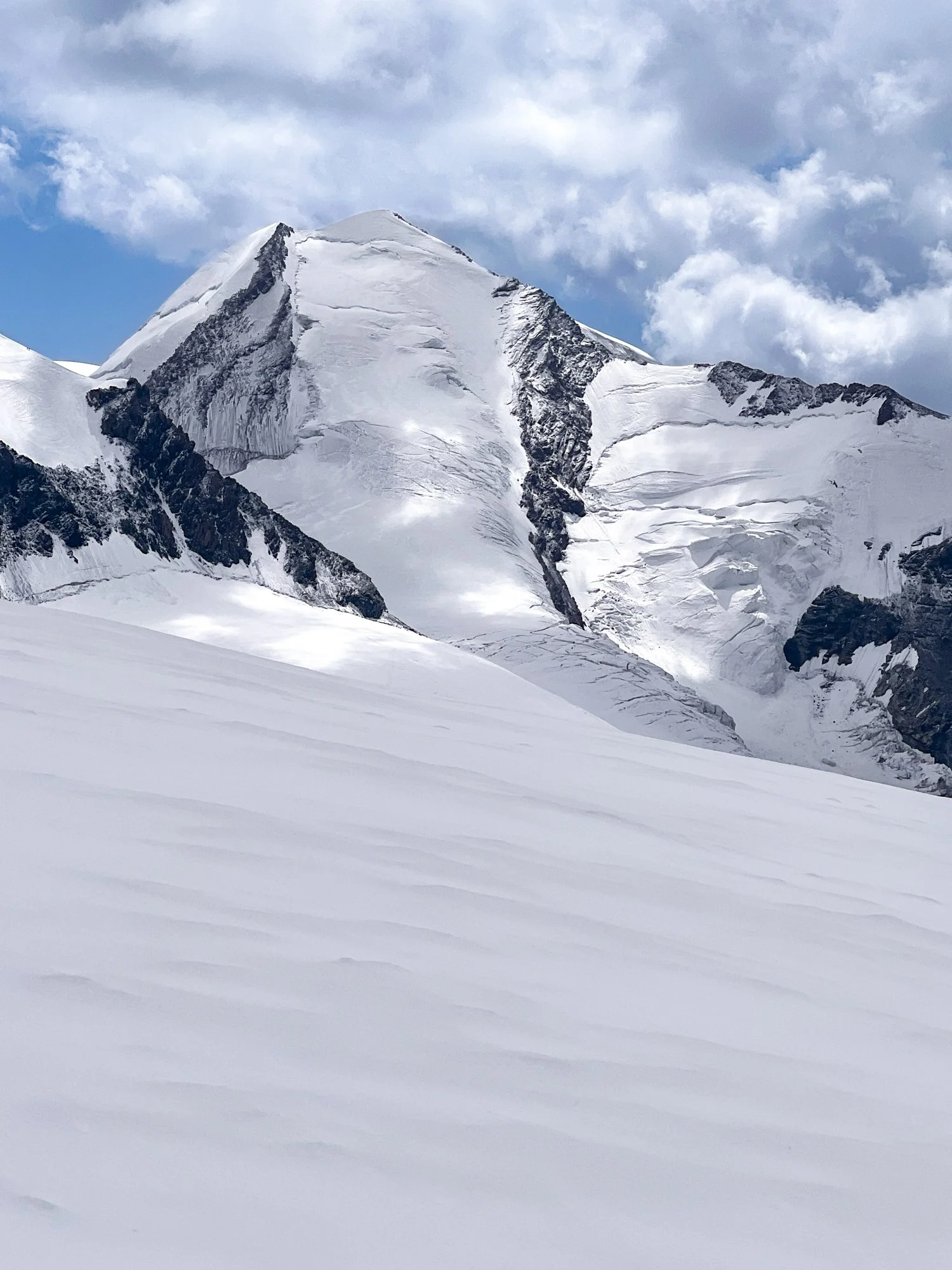
Fortunately, we're in very capable hands. Our friends know these mountains well, and we have complete confidence in their experience. We don our crampons (by now we're practically experts, or at least getting better at walking without tripping over our own feet) and attach ourselves to the climbing rope.
Stepping out onto the vast Plateau Rosa Glacier, we are surrounded by an enormous expanse of snow and ice. There are no obvious paths, no trail markers and certainly no safety barriers. Just a seemingly endless white landscape, with the mountains rising around us.
Before we set off, our guide gives us a briefing on what to do if one of us accidentally disappears into a crevasse. It's serious business, and we listen carefully. Then he explains what happens if he falls into one, and what I need to do.
Hang on. This doesn't sound quite so reassuring.
I quickly decide that the best course of action is to make sure none of us falls into a crevasse in the first place.
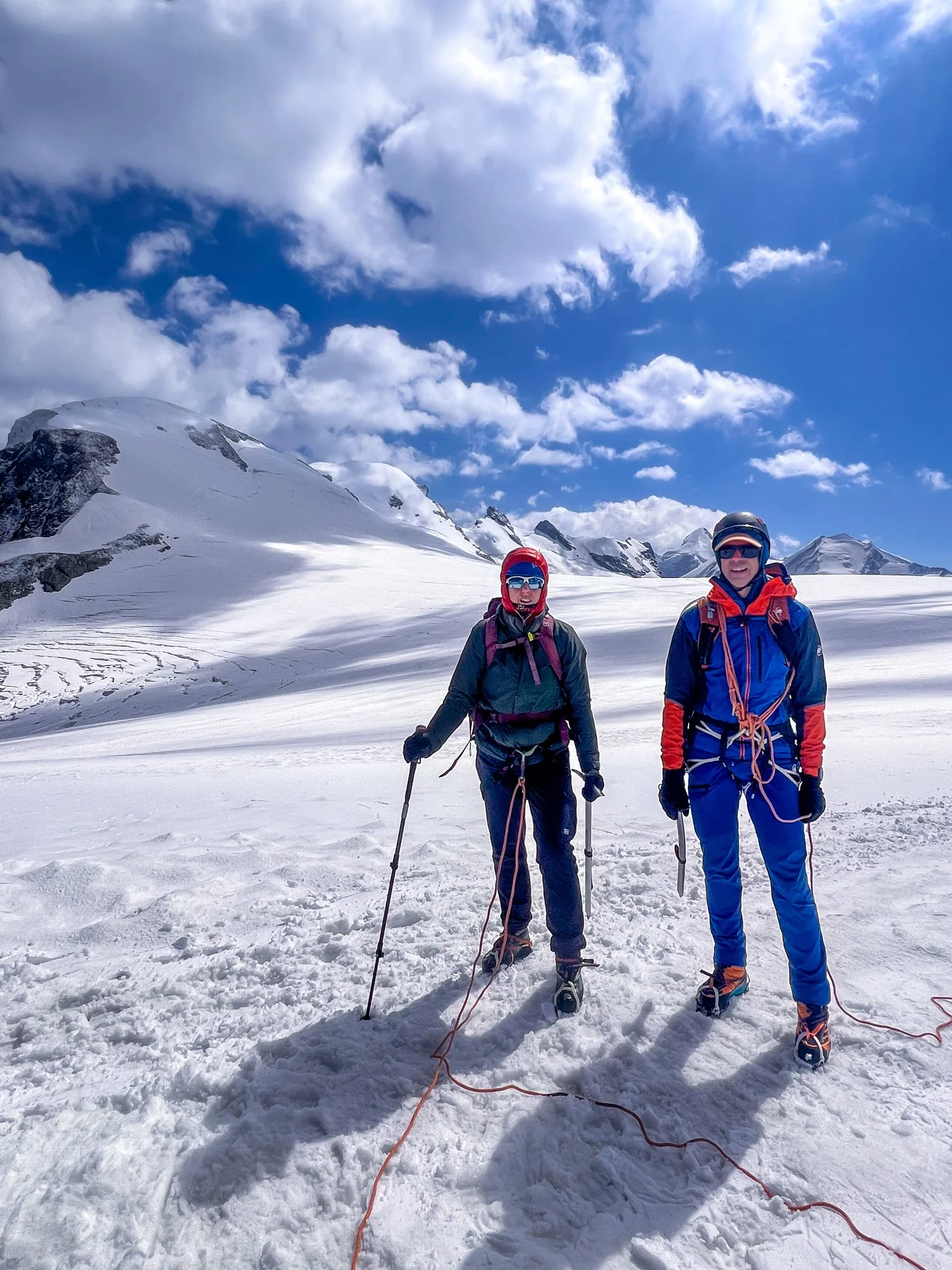
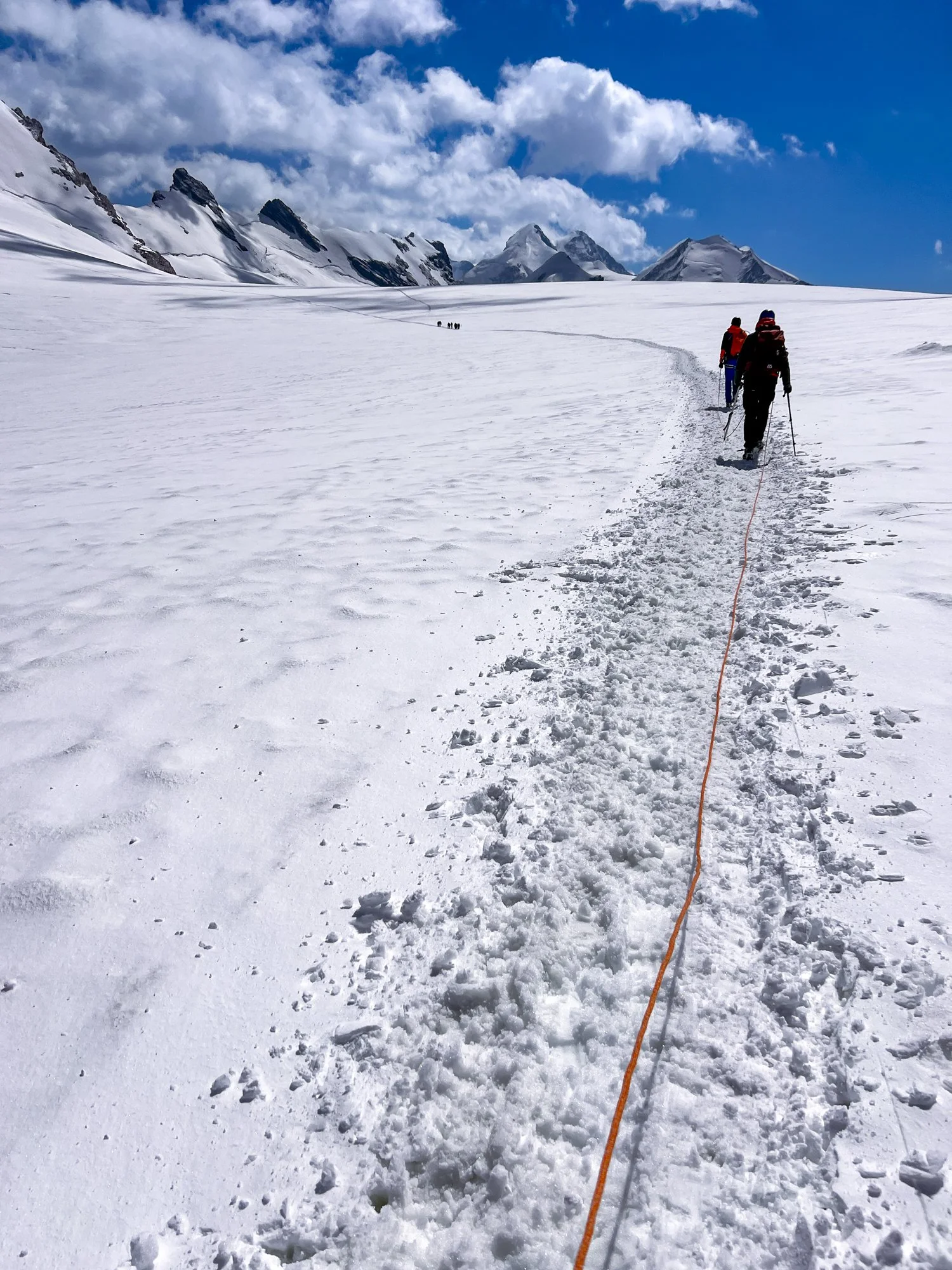
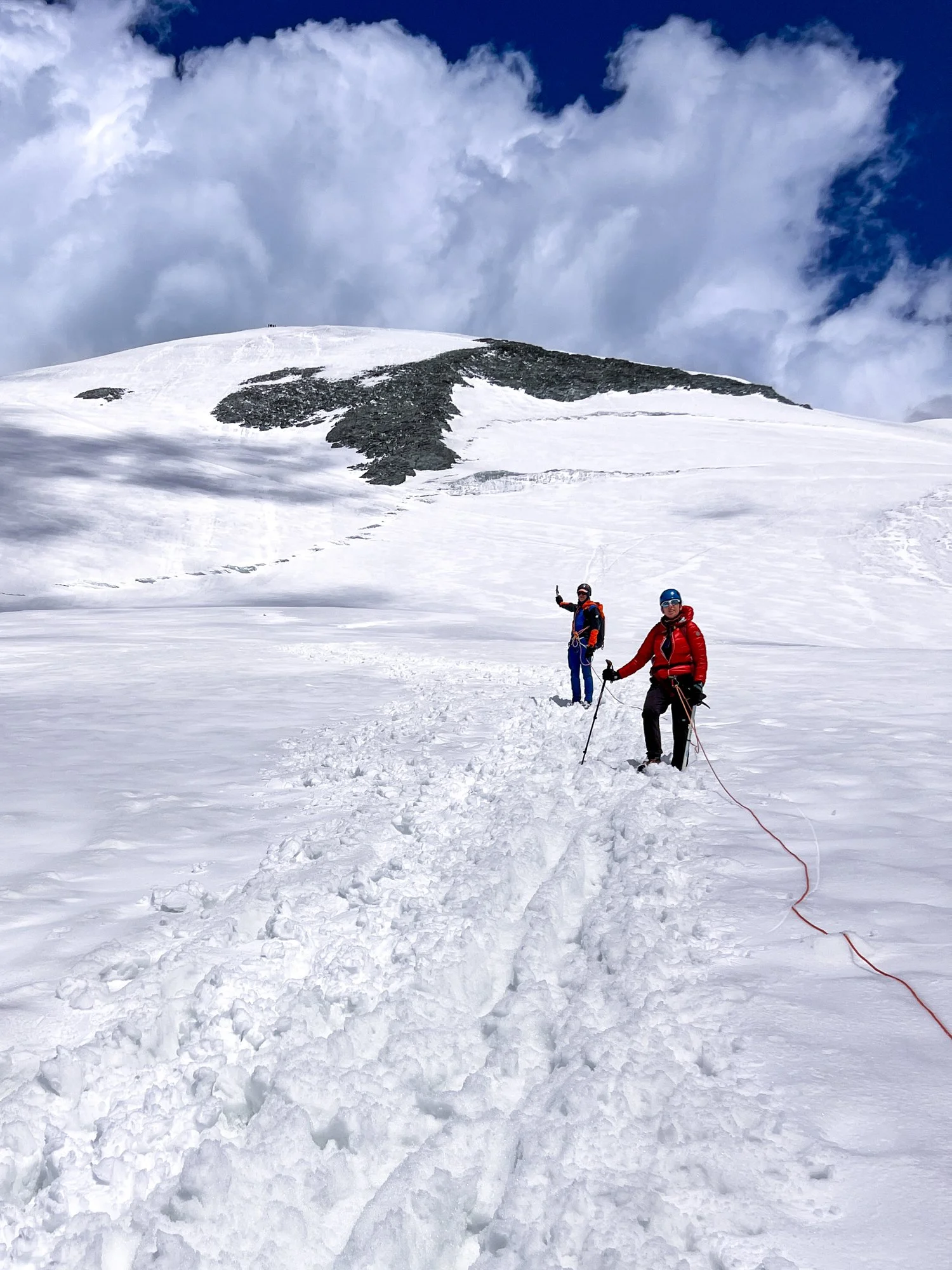
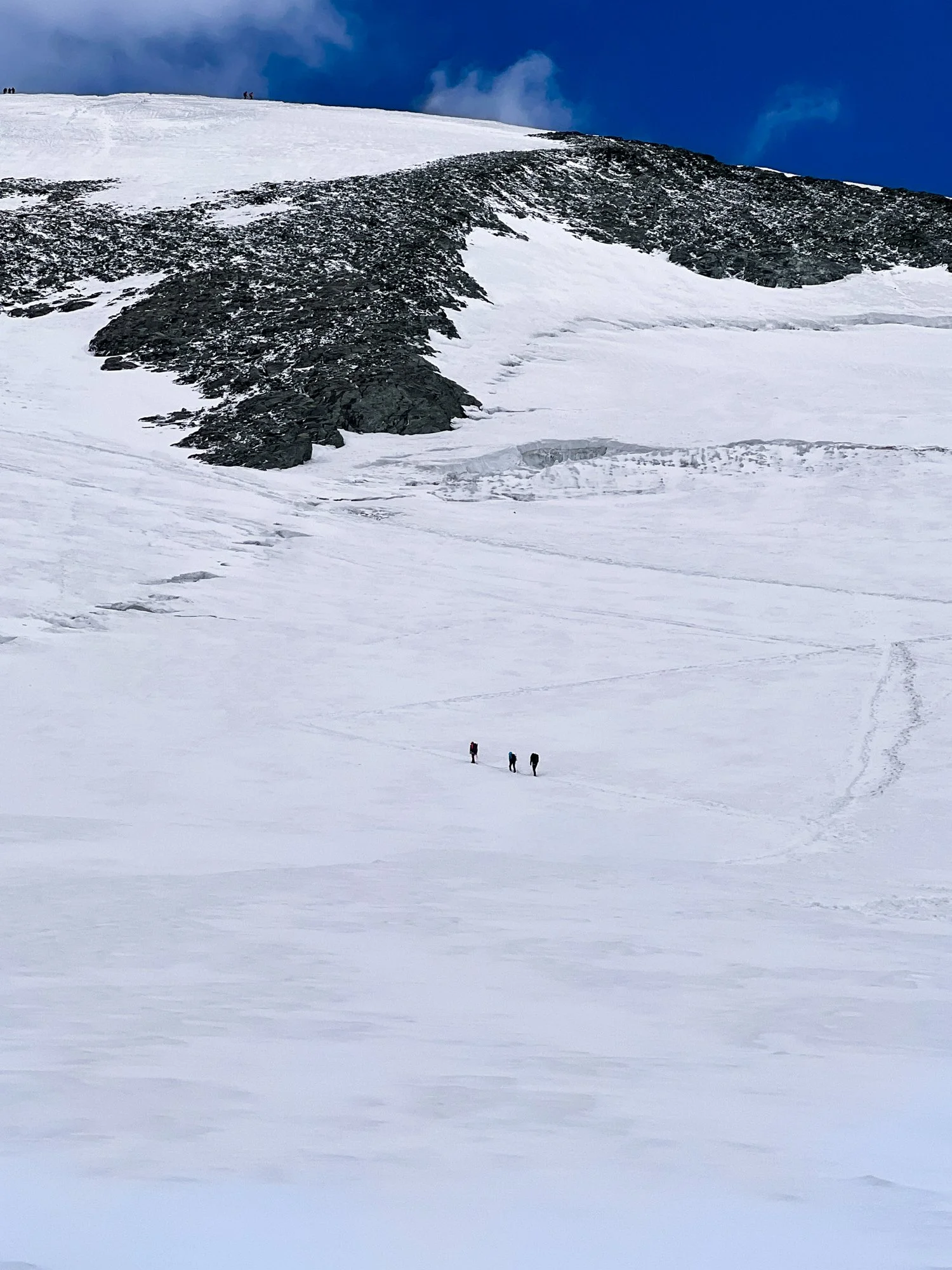
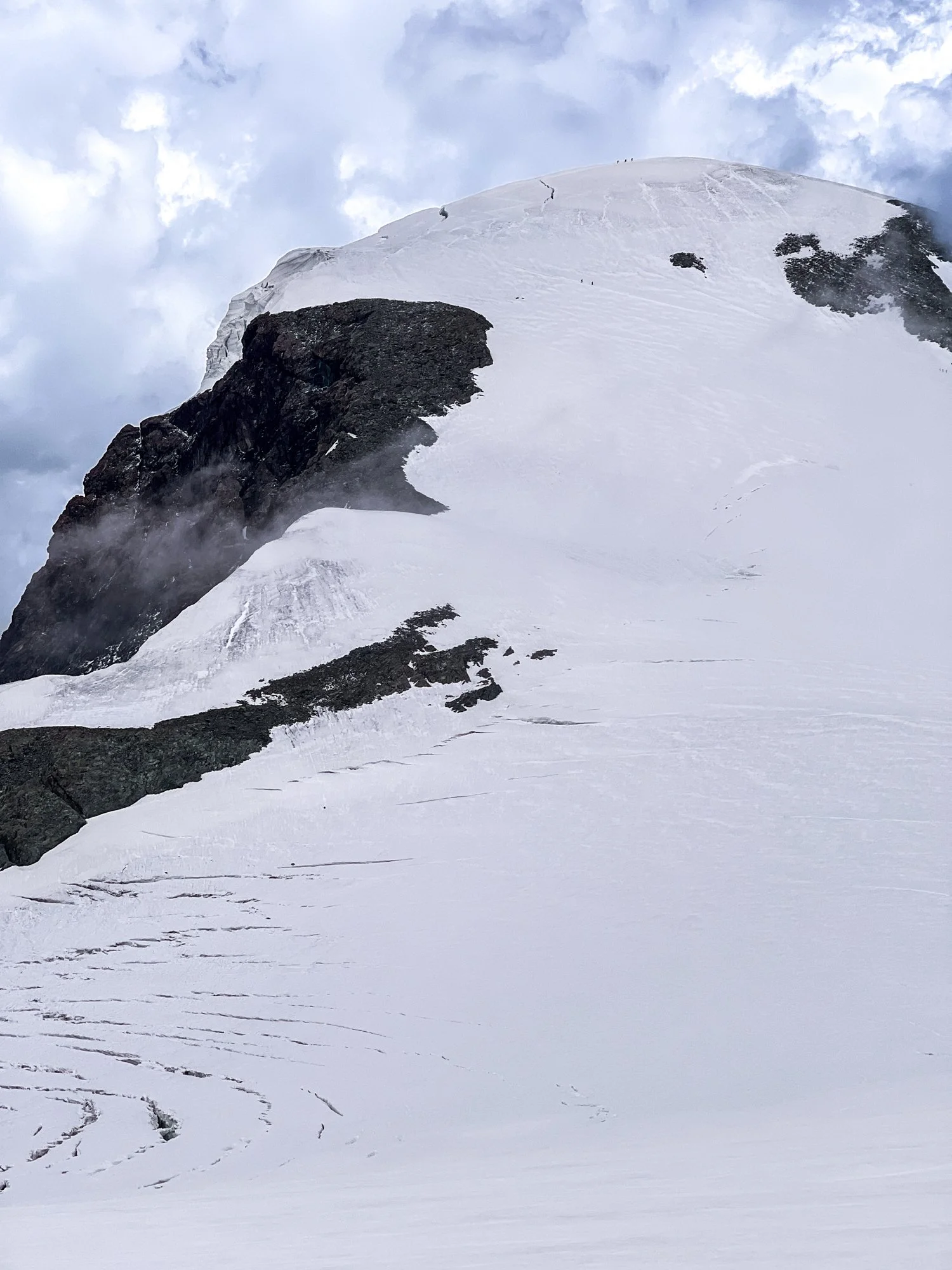
With the instructions covered, we begin the climb. The route takes us steadily up the snow-covered mountainside, following the line chosen by our guide. From a distance, the people ahead of us are little more than tiny dots on the ridge, giving us some idea of just how far we have to go.
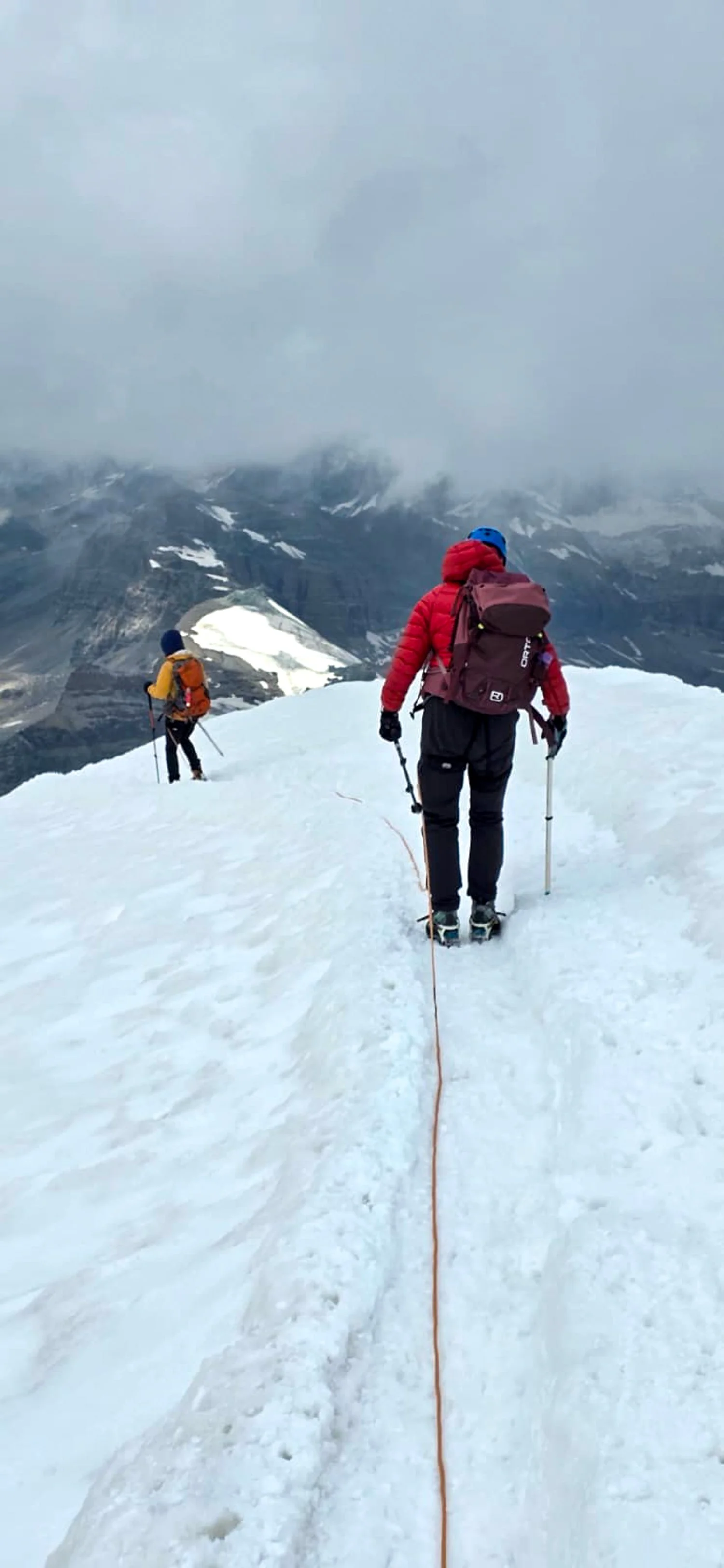
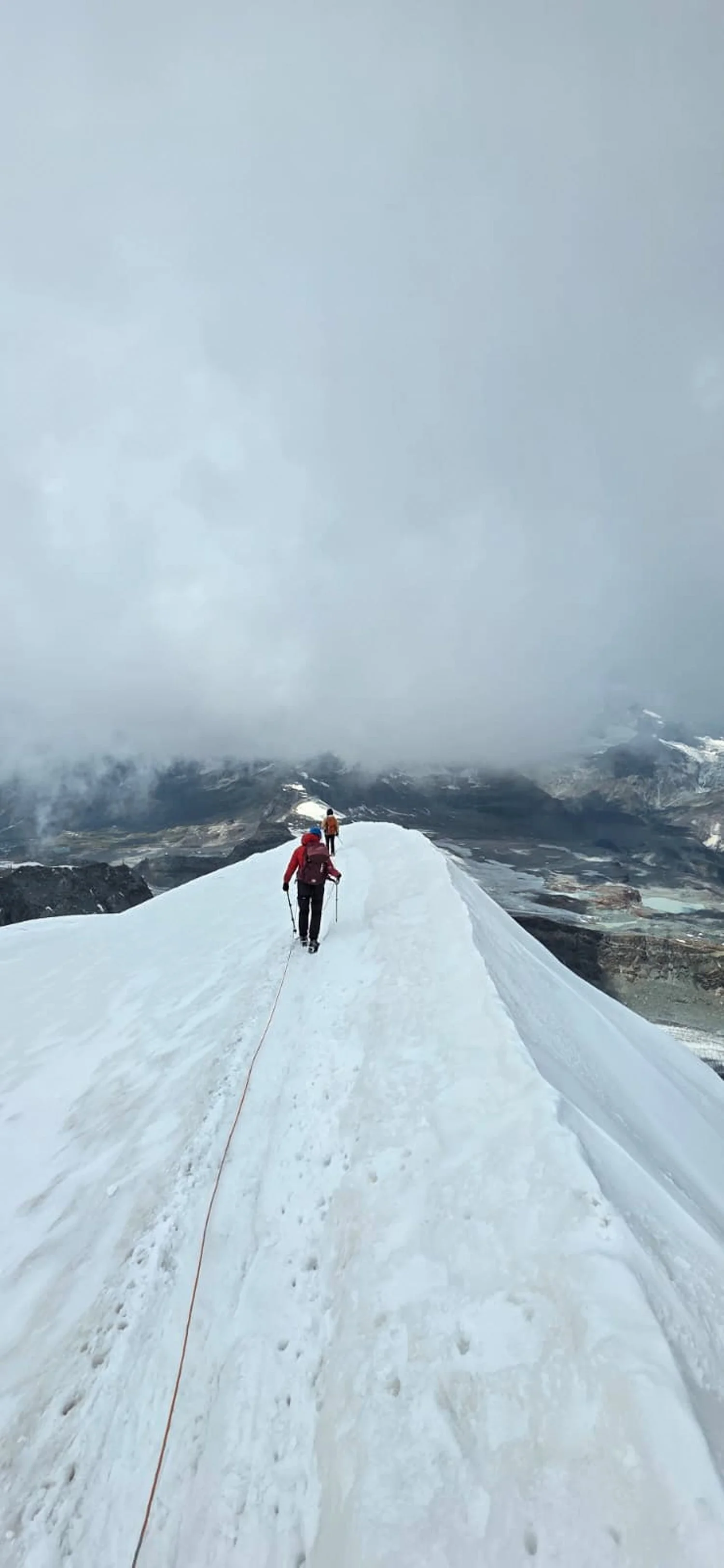
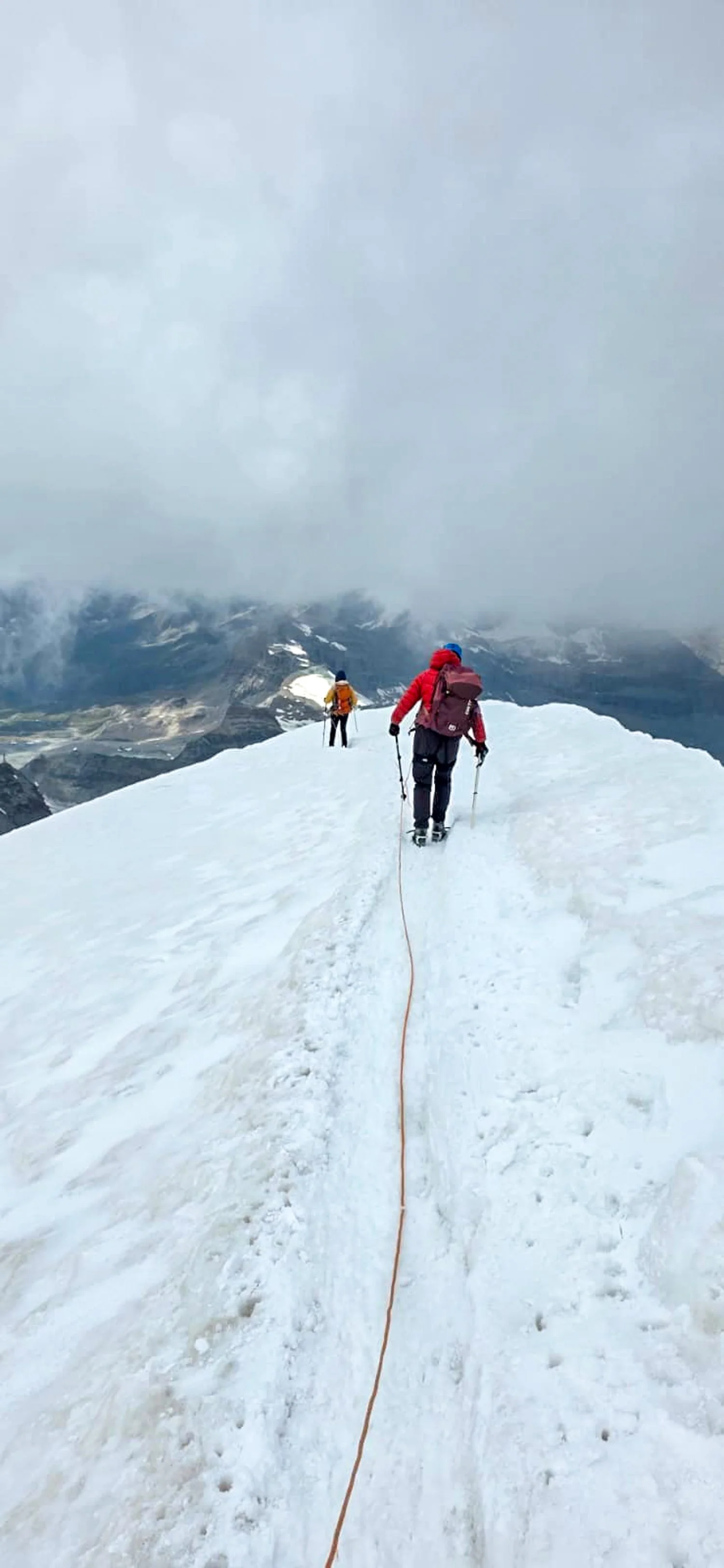
As we gain height, the snow falls away steeply on either side of the mountain, and the ridge becomes increasingly narrow. Now I understand why we're roped together. One slip could send you sliding a very long way down the mountainside, and there isn't much to stop you.
Higher still, the ridge narrows until we're effectively walking along a strip of snow barely wider than our boots, with the mountain dropping away on either side. Every step requires concentration. There's no room for wandering thoughts, taking photographs or admiring the view. At least, not while we're moving.
And then, finally, we reach the summit.
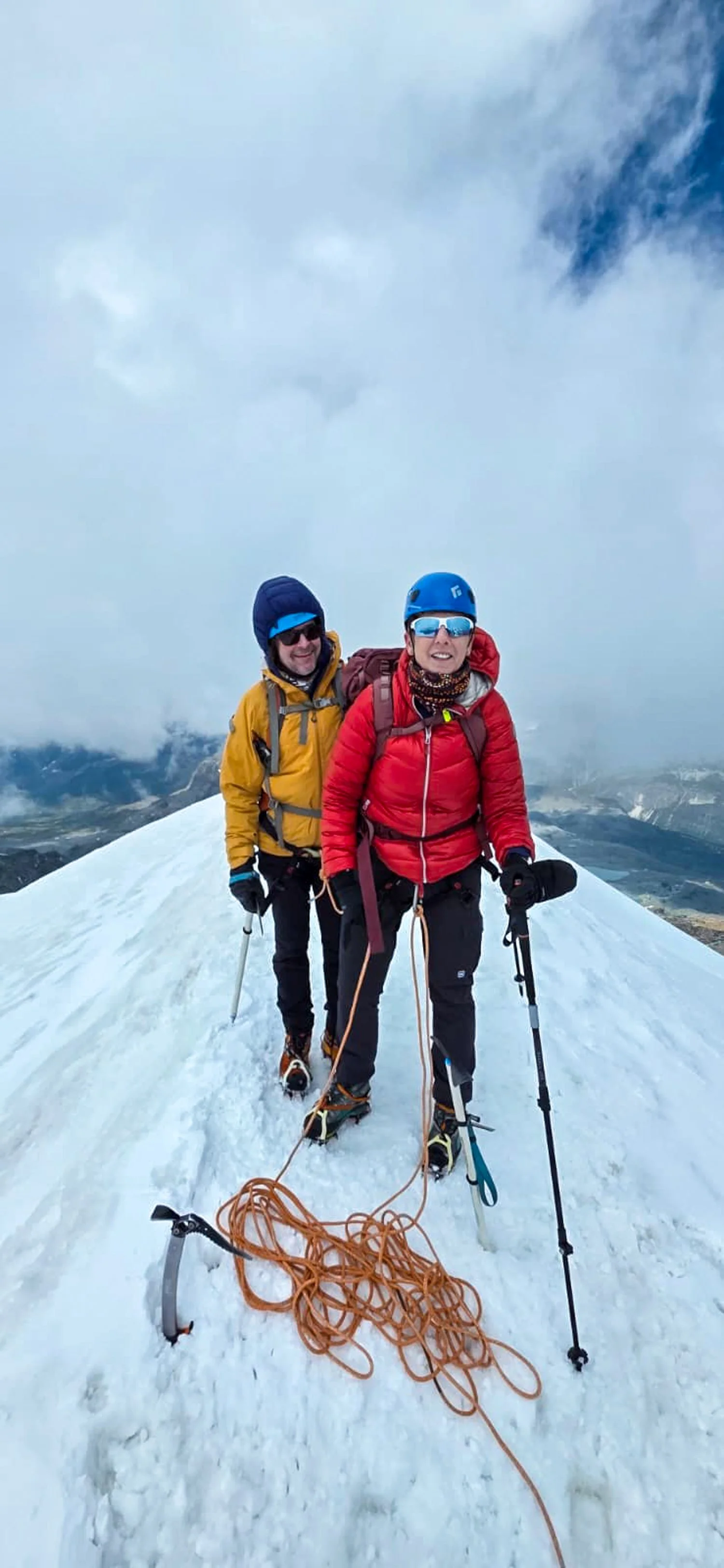
At 4,164 metres, the Breithorn is officially the highest point we've ever reached on foot. The effort, the exposure and the sheer scale of the landscape make it an incredibly rewarding experience.
The view is extraordinary. A sea of snow-covered peaks stretches in every direction, with glaciers filling the valleys far below. The air is crisp, the sky seems impossibly close, and the surrounding mountains look as though they go on forever. It's hard to take in the scale of it all. We stand there for a while, taking photographs, looking around and quietly appreciating what we've managed to achieve.
It's one of those moments when you feel very small in the landscape, but very fortunate to be there.
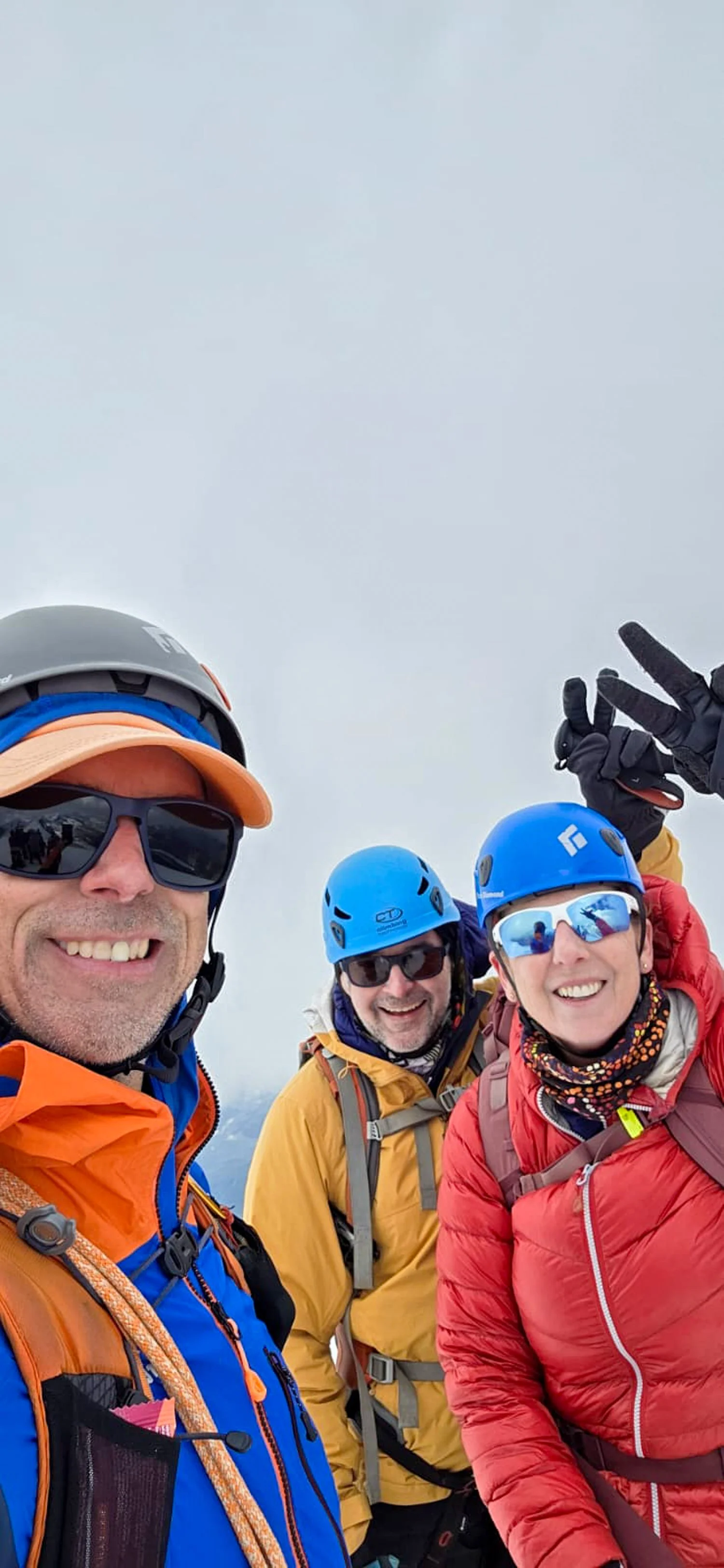
Of course, there's one small problem. What goes up must come down, and the summit is only half the journey. We retrace our steps carefully along the narrow ridge and down onto the glacier. The return journey is every bit as important as the climb, and we're relieved to reach safer, flatter ground.
Back at Glacier Paradise, we make full use of one of the things Switzerland does exceptionally well: mountain transport. The network of cable cars and chairlifts makes it possible to move between different parts of the mountains with remarkable ease. What would otherwise involve hours of walking down one valley and climbing up another becomes a series of spectacular rides.
We take the lift all the way down to Furi and continue to Zermatt, before catching another lift up the opposite side of the valley towards Blauherd. It's quite remarkable to cover so much ground, and gain so much altitude again, without having to put one foot in front of the other.
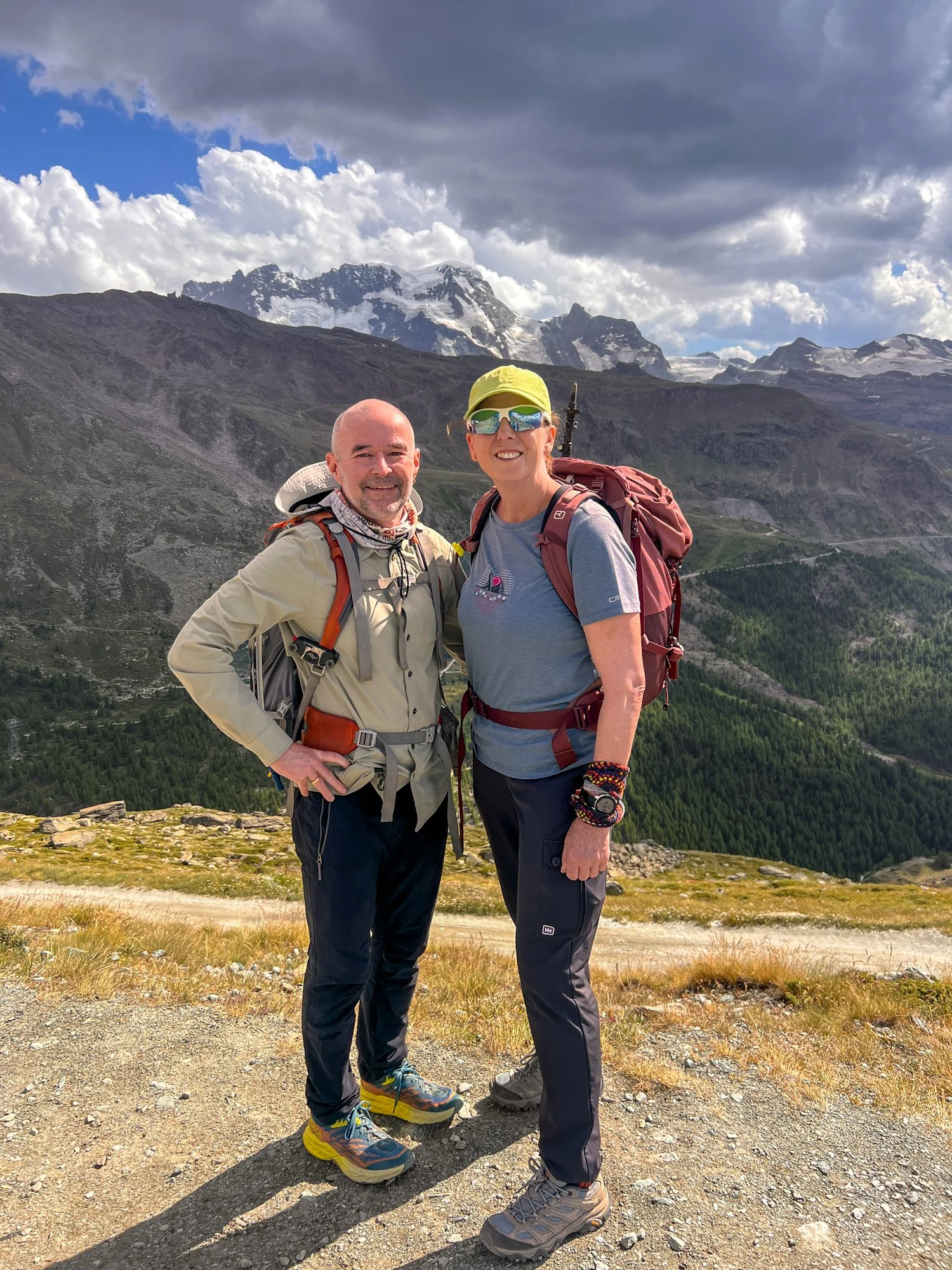
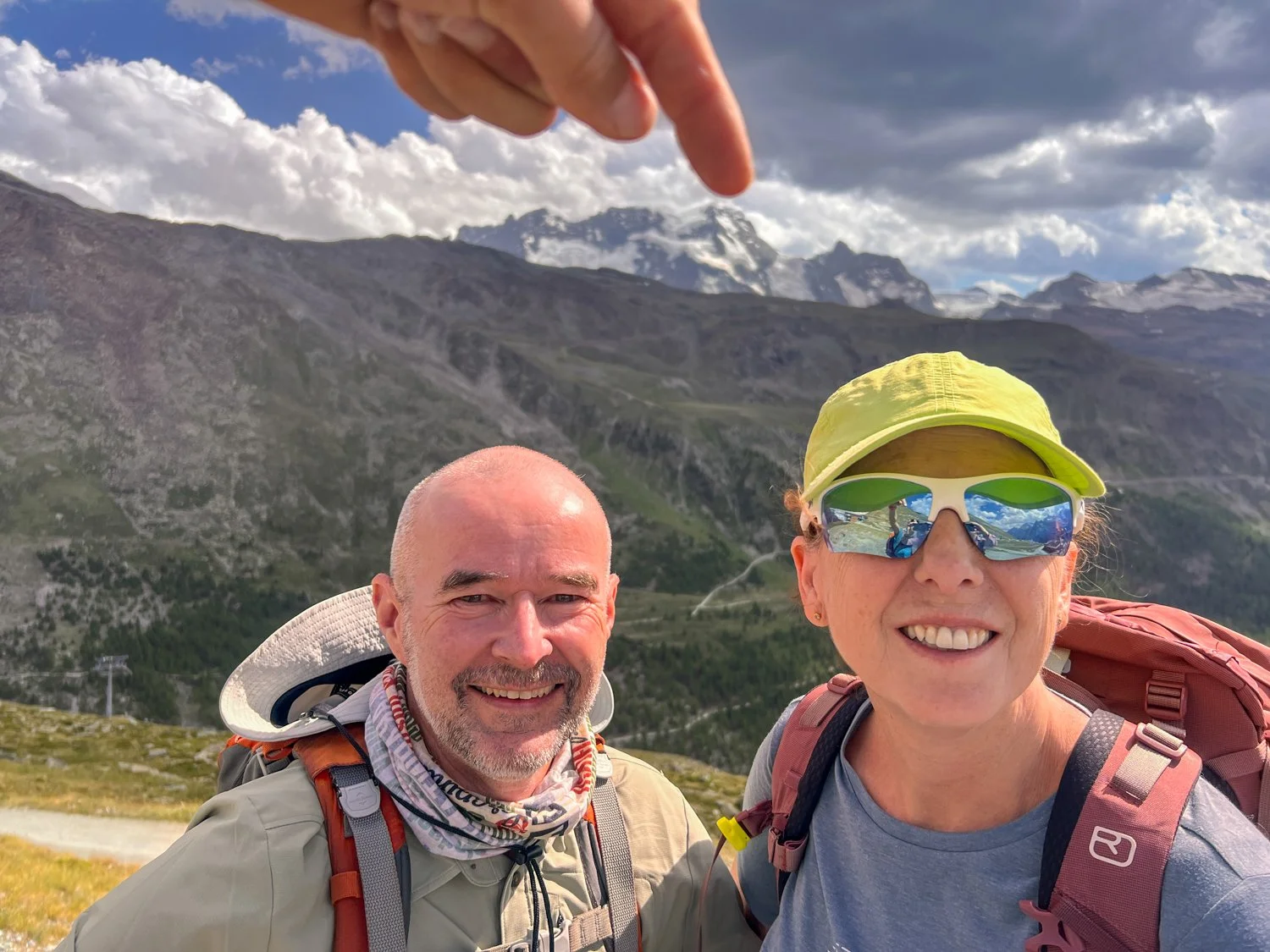
From Blauherd, we have a short hike to our final mountain accommodation, Fluhalp.
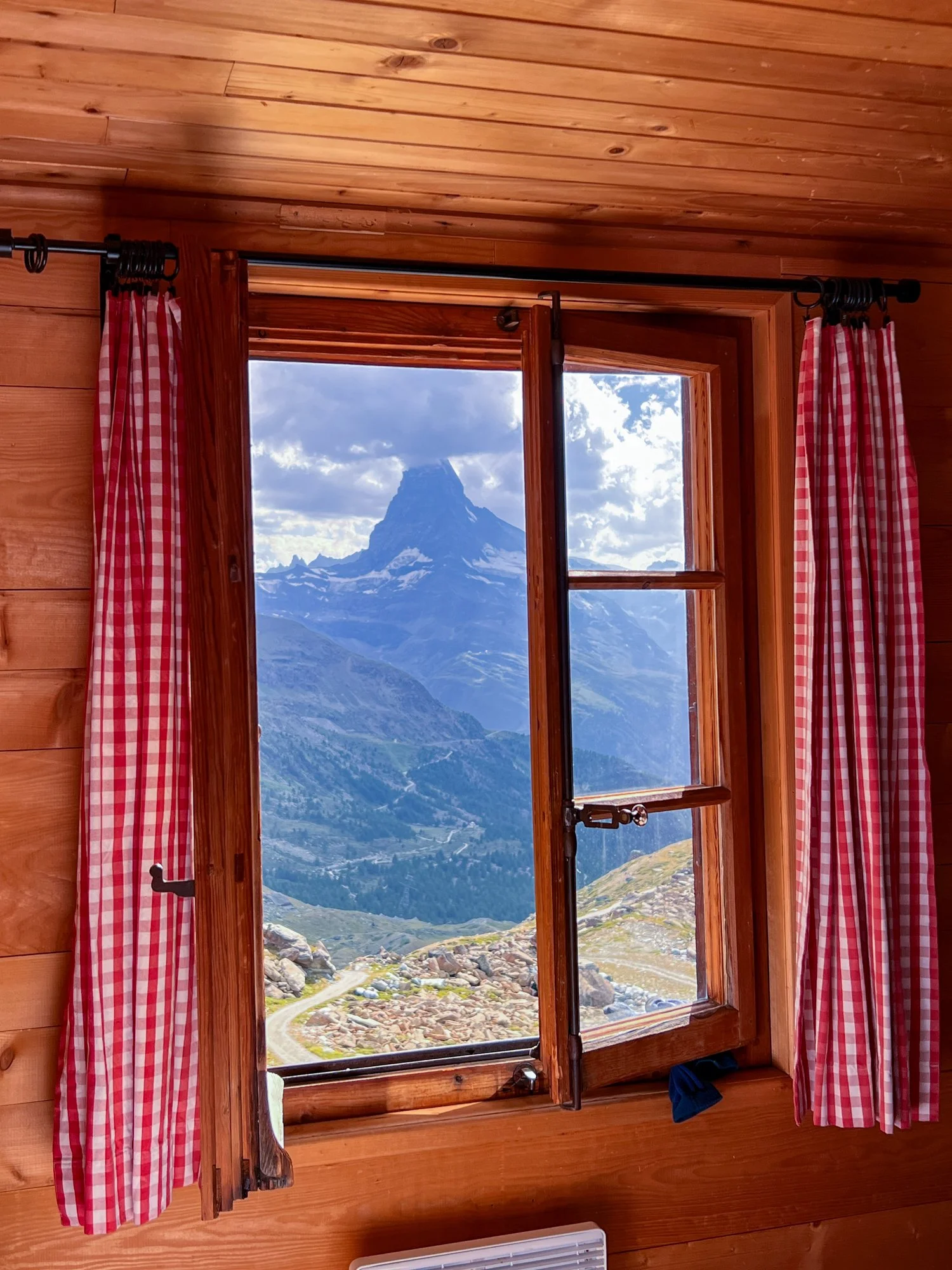
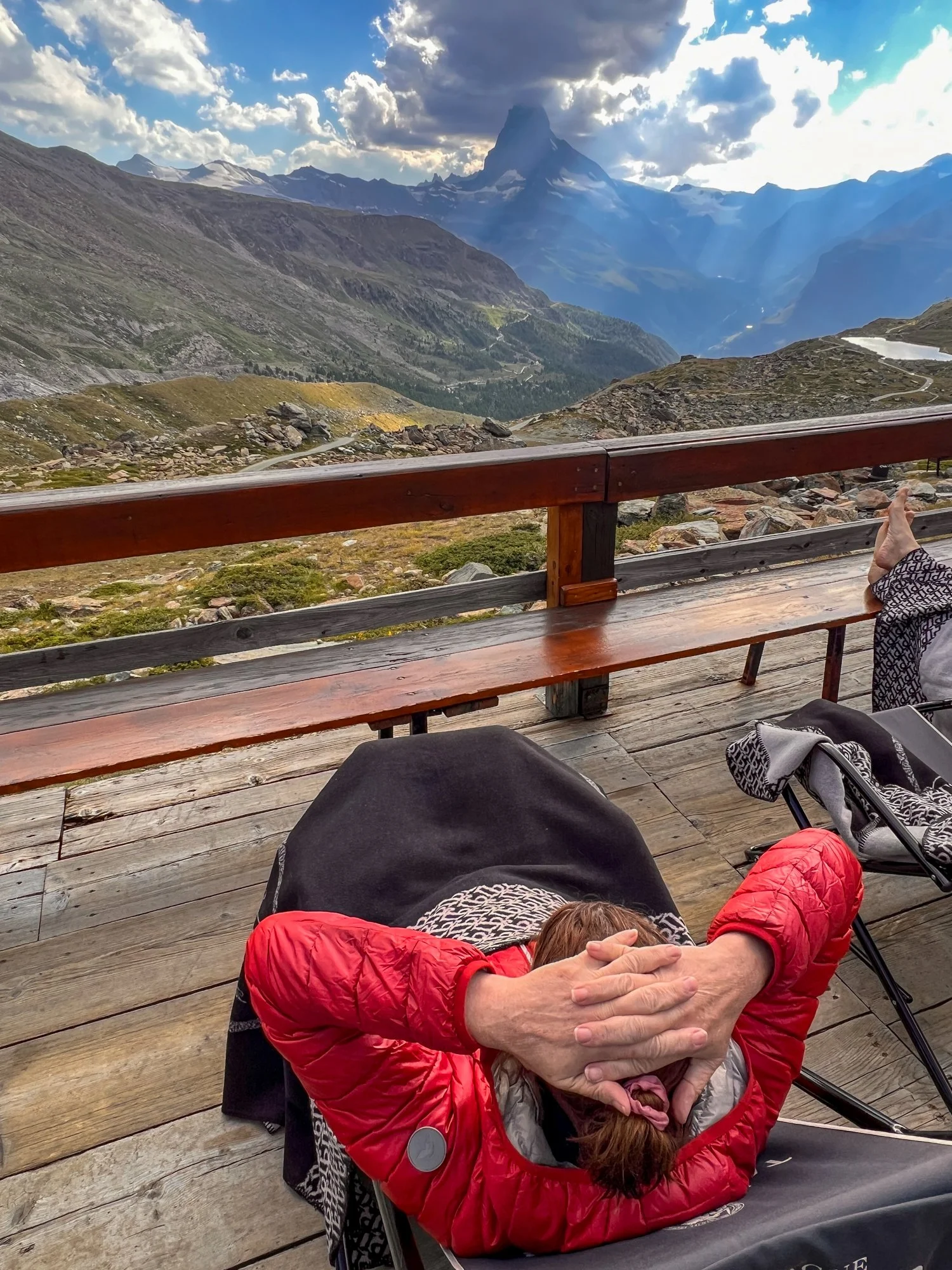
Perched high above Zermatt, Fluhalp is another classic alpine hut, but with a view that is hard to beat. The timber building, with its distinctive red shutters, looks perfectly at home against the mountain backdrop. And our room? Well, the view is to die for. Right in front of us, is the Matterhorn.
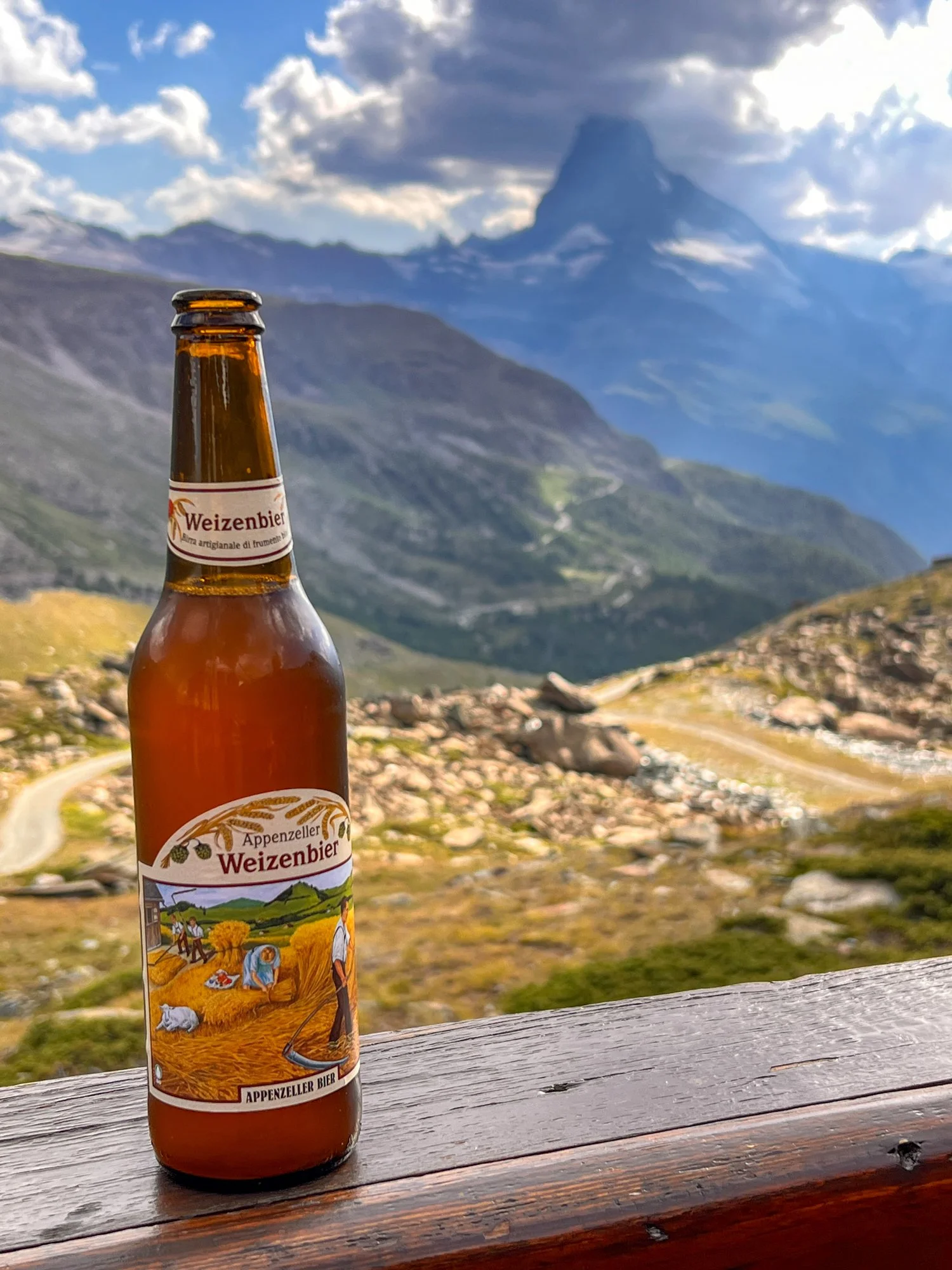
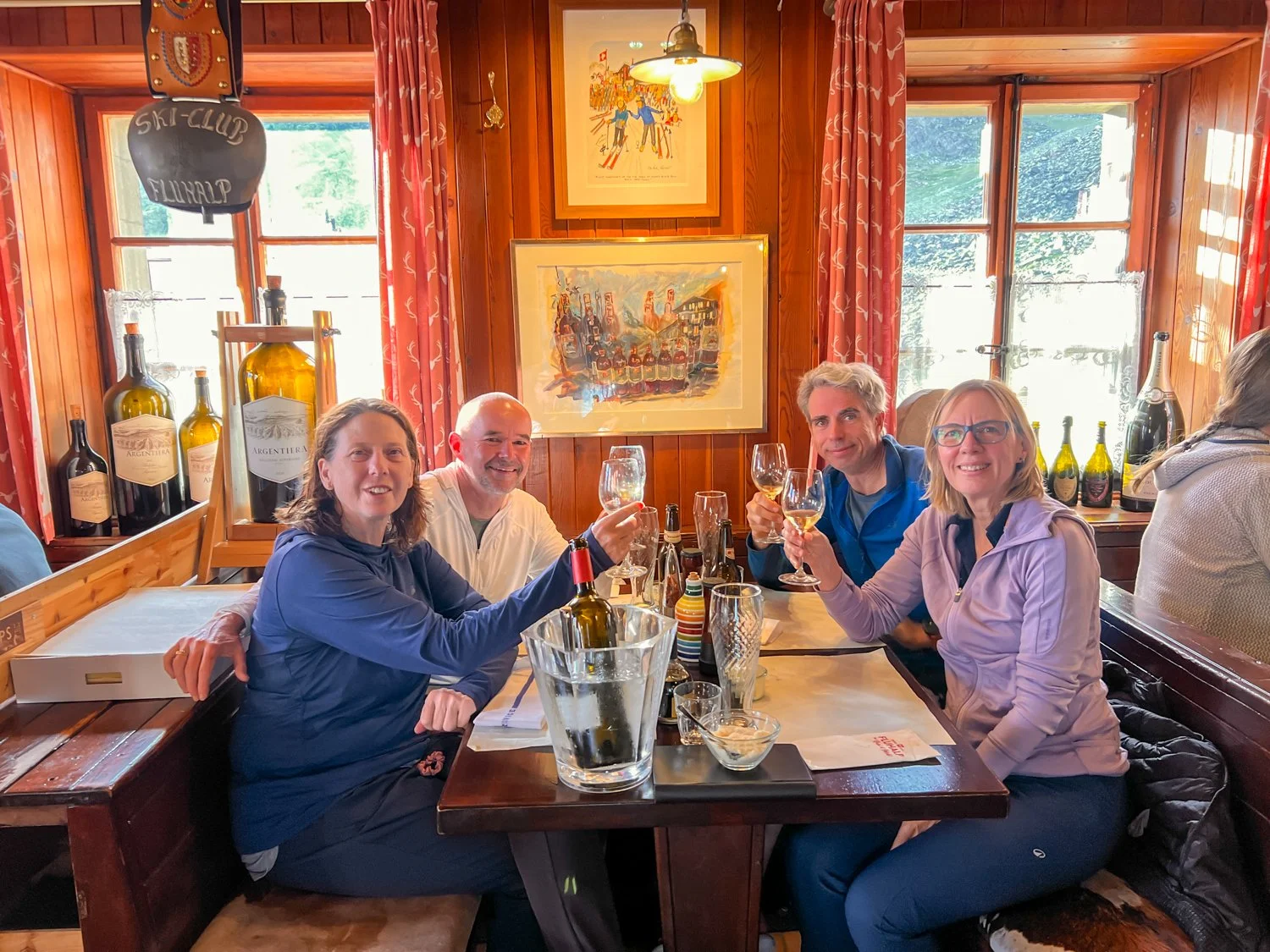
After a day that takes us above 4,000 metres, there's little need for an excuse to enjoy a good meal and a few drinks. We settle in for a well-deserved dinner, raise a glass to the day's adventure and reflect on what we've achieved.
Three days in the mountains, three very different experiences, and one more night in this extraordinary alpine world. If there's one thing we've learnt, it's that our friends have a rather ambitious idea of what constitutes a good hiking holiday.
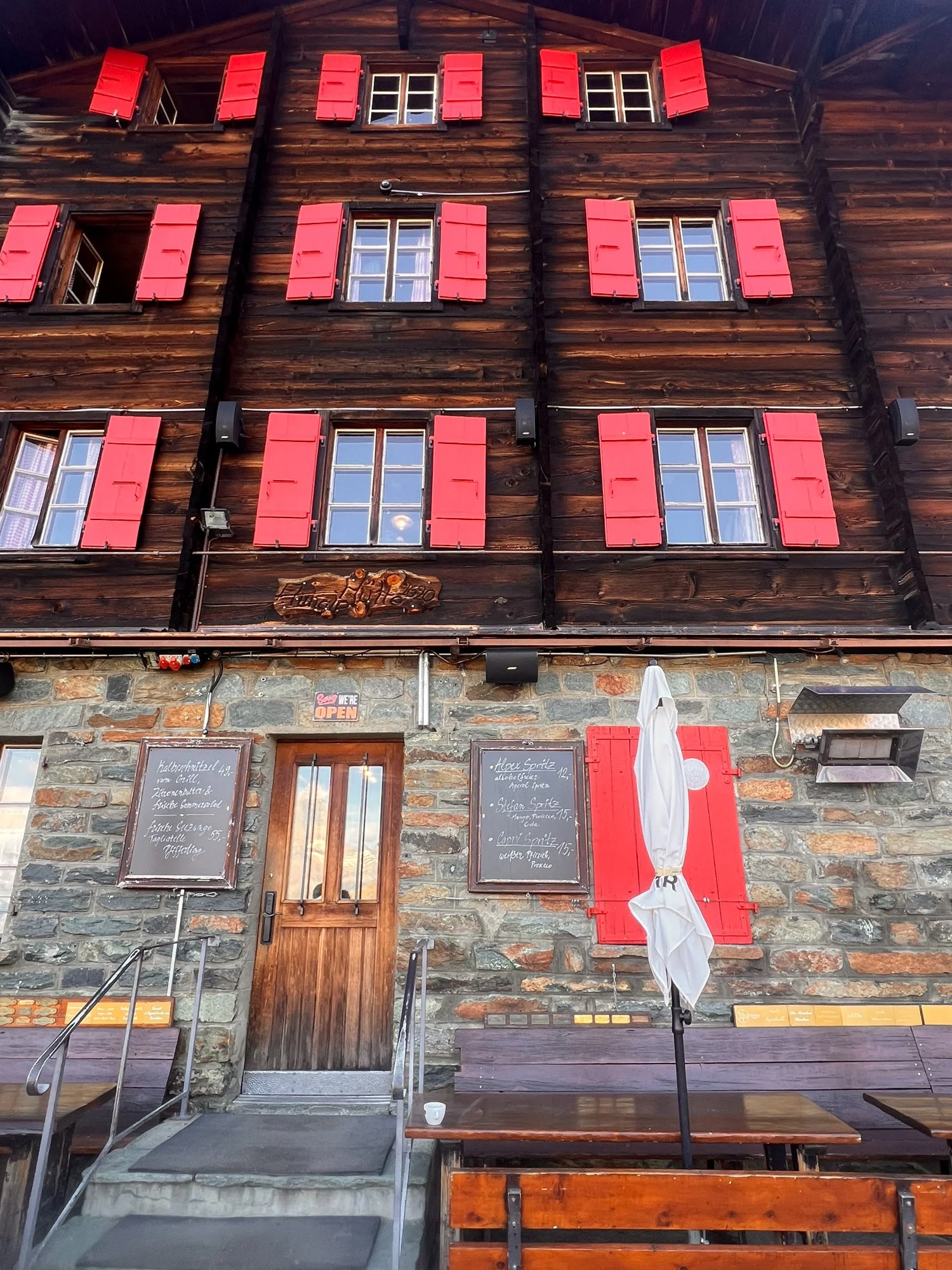
The Last Sunrise in Switzerland
Our final morning in the mountains arrives far too soon. We're up early, not because we're particularly keen to leave, but because we have a long journey ahead. We need to catch the train all the way back to Zurich in time for our flight.
Before packing up, though, there's one last bit of mountain magic to enjoy.
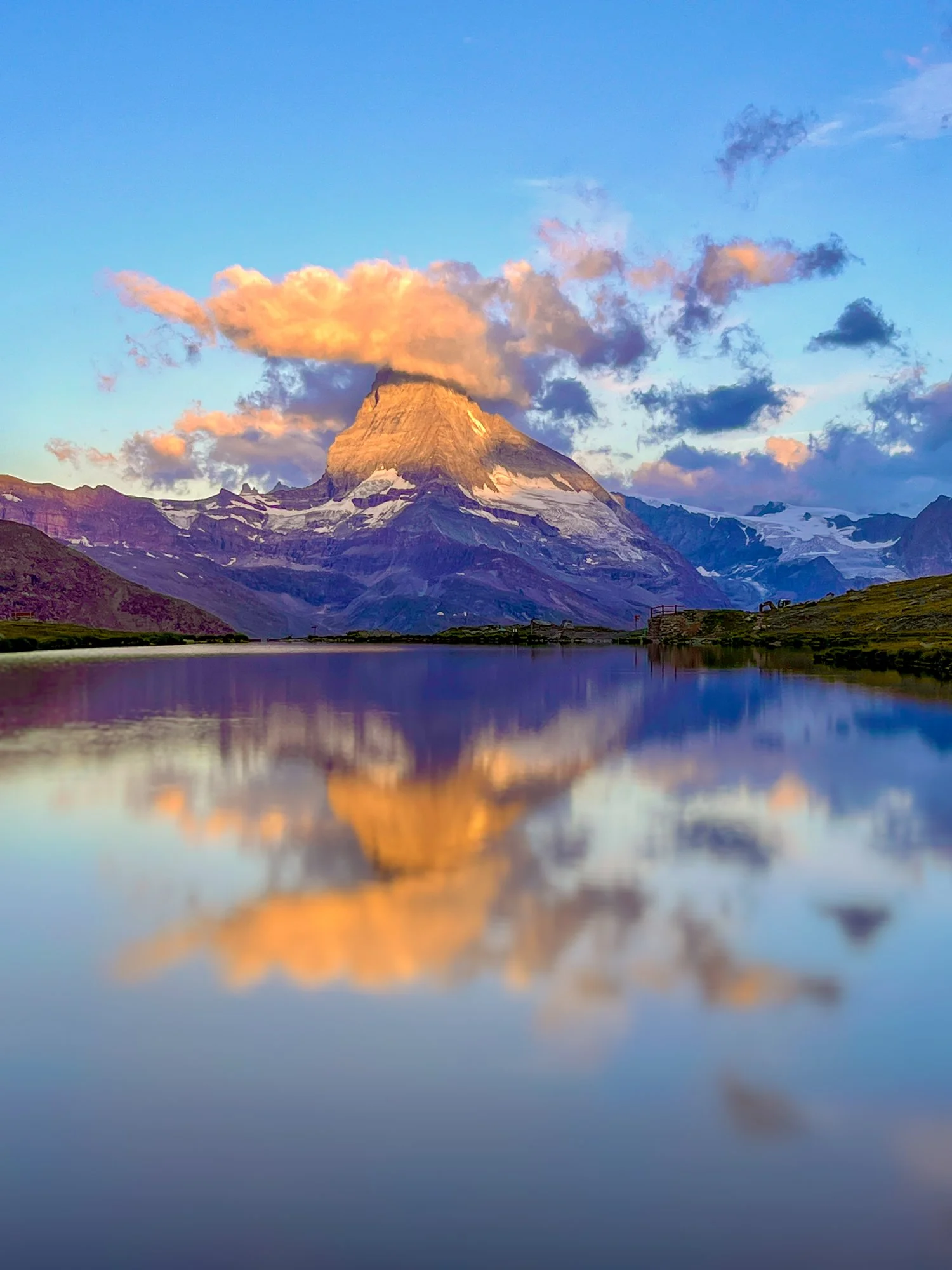
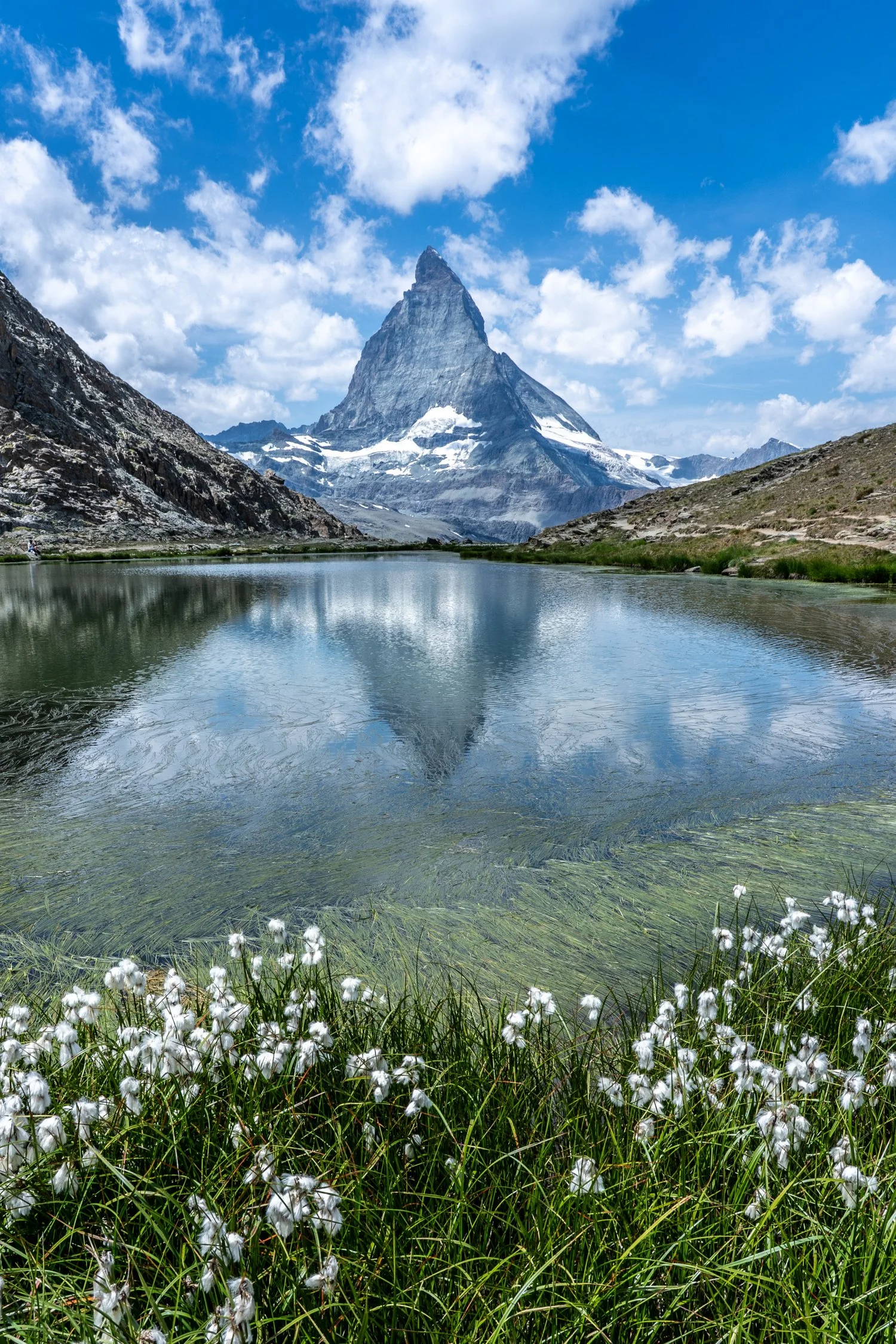
Down at the little lake below Fluhalp, the first light of day begins to creep across the mountains. The water is still and, as the sun rises, the Matterhorn appears in its reflection. For a moment, it's as though we're looking at two mountains — one reaching into the sky and the other disappearing into the water. It's a spectacular farewell to a place that has been nothing short of extraordinary.
We stand there for a while, reluctant to move. It's hard to believe that just a few days ago we were arriving in the mountains, not quite knowing what adventures lay ahead. Now, after glaciers, crampons, ice climbing, narrow ridges and a climb above 4,000 metres, we're not quite ready to say goodbye.
In fact, we really don't want to leave this mountain paradise at all.
Looking back, so much of what we've experienced would never have happened without the generosity and friendship of our wonderful hosts. They don't just show us Switzerland; they take us into their world and share a side of the country that goes well beyond the usual tourist trail.
Trying crampons for the first time, learning to ice climb, crossing glaciers, reaching the summit of a 4,000-metre mountain and spending nights in remote alpine huts - these are experiences we simply wouldn't have attempted on our own. Their knowledge, experience and confidence give us the opportunity to push beyond our comfort zones, while knowing we're in safe hands.
But perhaps even more special than the places we've seen and the things we've done is the fact that we share it all with great friends. The laughs, the occasional moments of uncertainty, the meals in mountain huts and the memories made along the way are what make this adventure so special.
Switzerland has given us some extraordinary experiences, but it's the people we share them with who make them unforgettable.
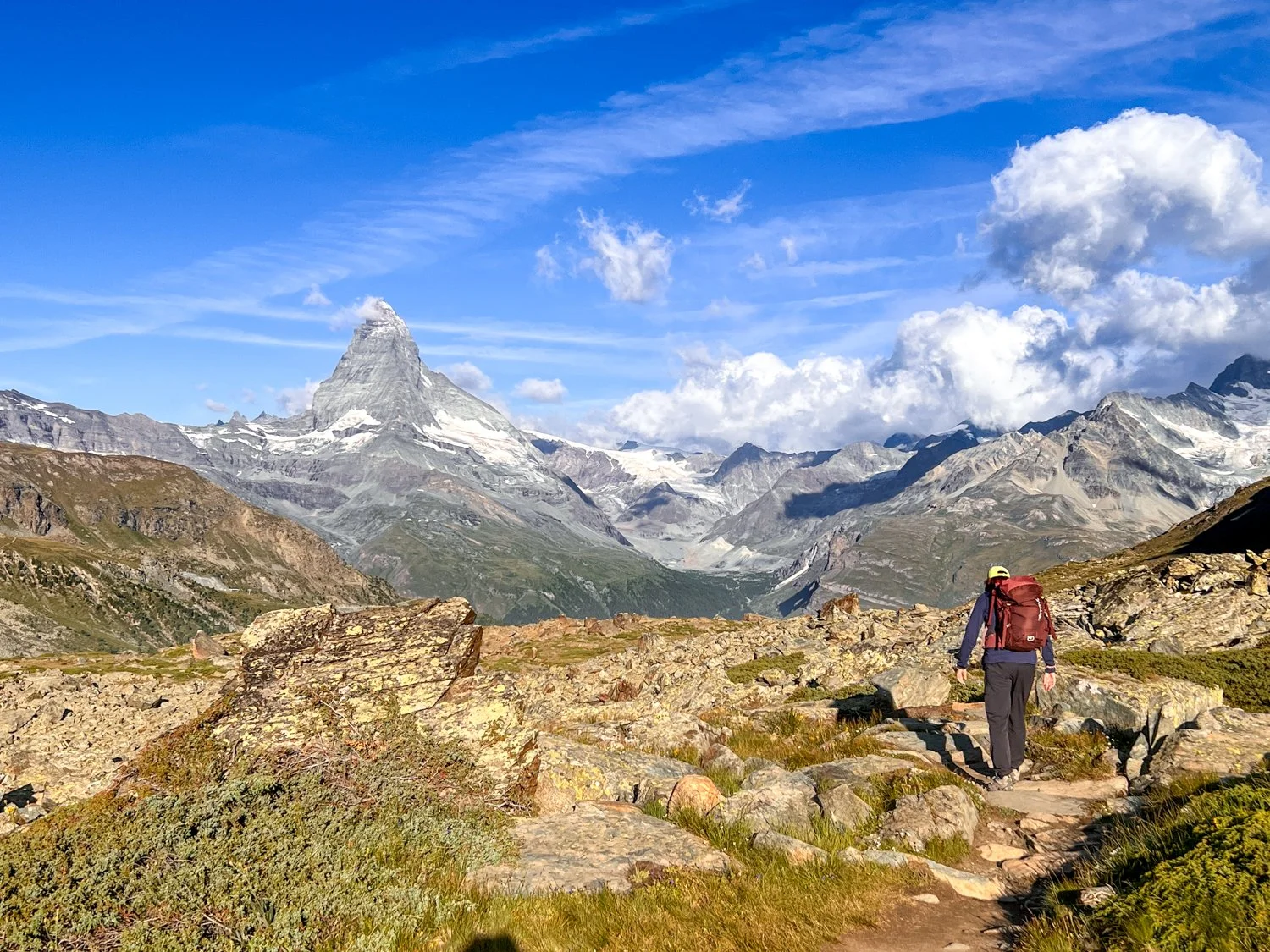
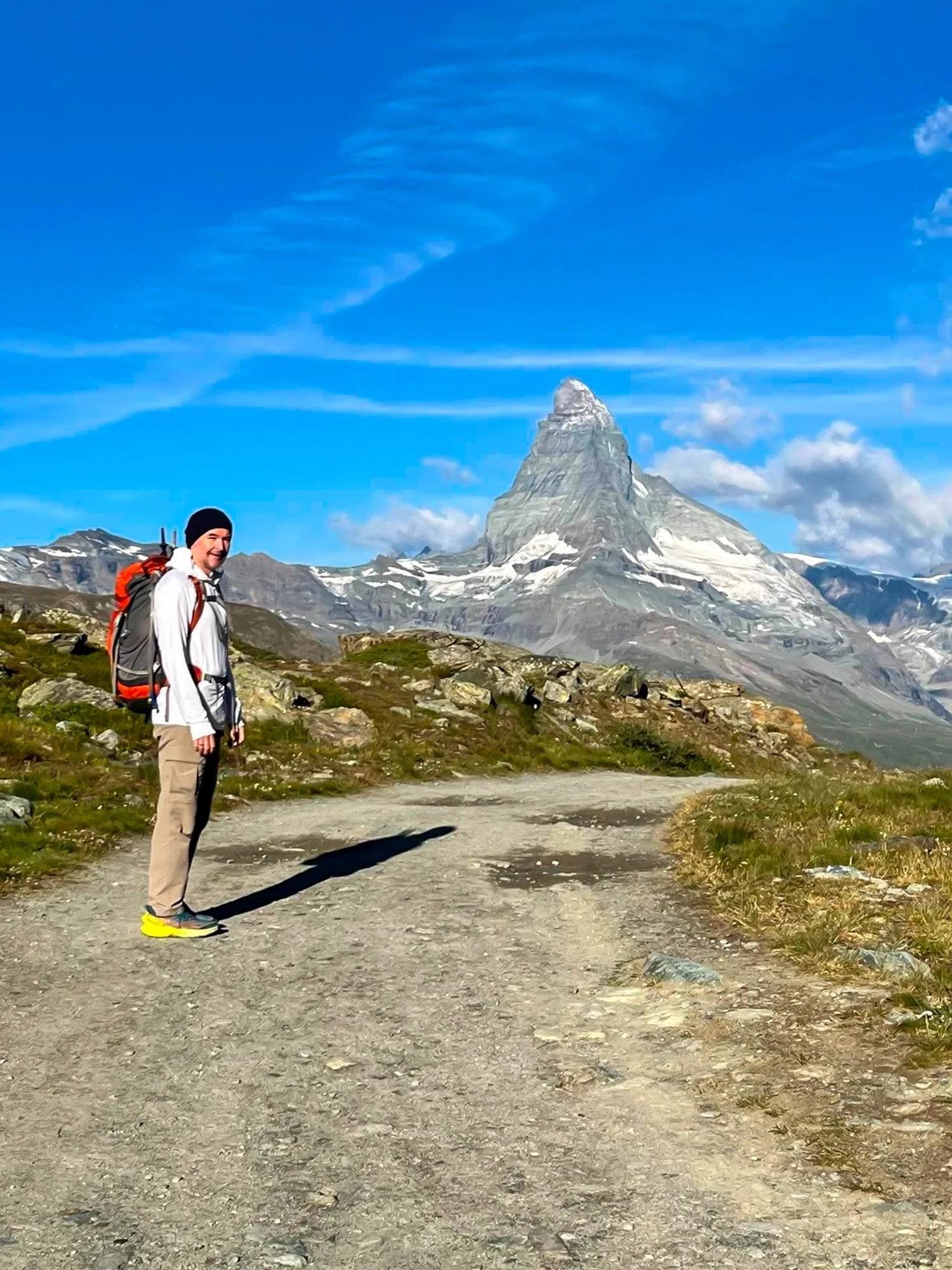
Eventually, the bags are packed, the last photographs are taken and it's time to make our way back down the mountain. We head for the trains and begin the long journey to Zurich, leaving the Matterhorn and its spectacular surroundings behind.
It's our last time in Switzerland on this trip, and there's a definite sense of sadness. But there's no time to dwell on it for too long. We still have one more adventure ahead.
After days of hiking, climbing and testing our limits in the mountains, we're heading for something a little slower and more relaxing — a cruise along the Croatian coast.
At least, that's the plan.
But as we've discovered on this trip, things don't always go according to plan. And this next adventure is no exception.