Hiking Switzerland
After exploring Switzerland's cities, villages, lakes and castles, it was time to do what we'd really come for — get out into the mountains. Switzerland seems to have perfected the idea that a hike should come with a spectacular view every few hundred metres. Our walks took us from green alpine meadows covered in wildflowers to high mountain passes surrounded by snow and ice, with lakes, valleys and jagged peaks constantly competing for attention.
Over the trip we tackled the Stoos Ridge, Mount Pilatus, the North Face Trail, Wengen to Kleine Scheidegg, and Jungfraujoch to Mönchsjochhütte. Some were long, some steep, some surprisingly challenging and others simply an excuse to escape the crowds. There was also the small matter of getting to the start of some of them — because in Switzerland, the journey to a hike can involve a funicular, cable car or train that is almost as spectacular as the walk itself.
Stoos Ridge
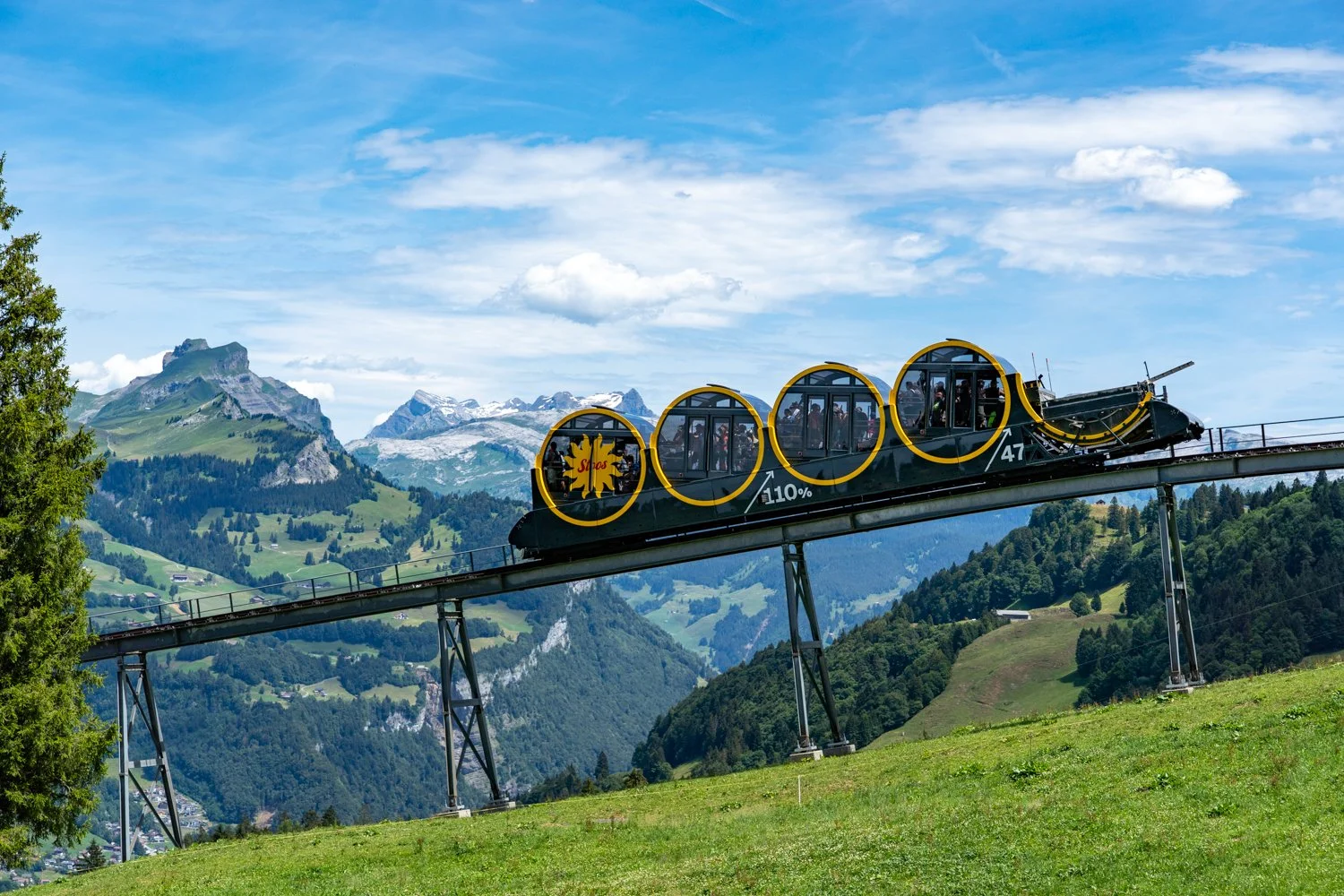
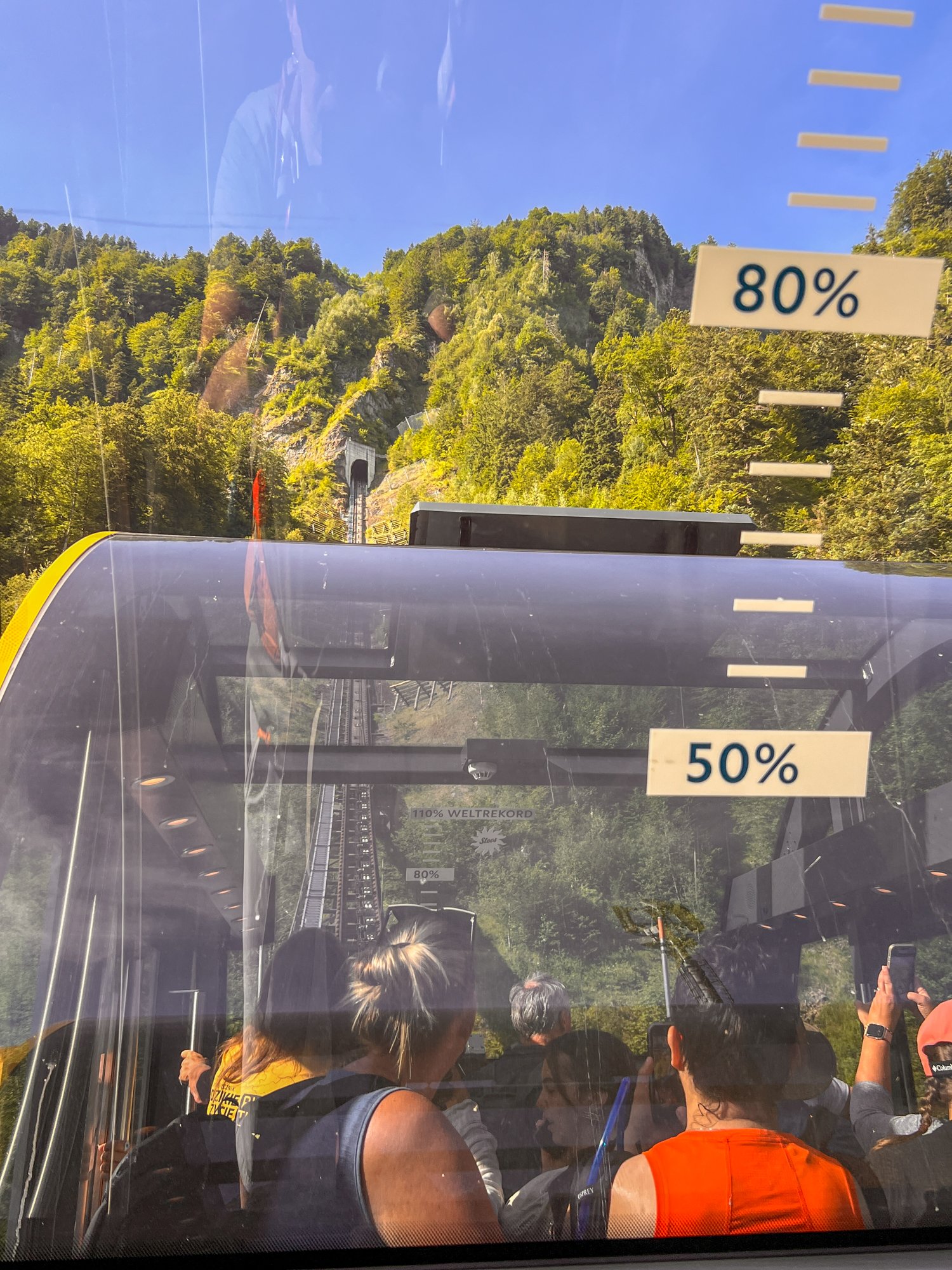
One of our first hikes was Stoos Ridge. Getting to the Stoos Ridge is half the adventure. The funicular claims to be the steepest in the world, and riding it feels a little like stepping inside a giant tumble dryer. As the mountain gets steeper, the cabins rotate so you remain upright.
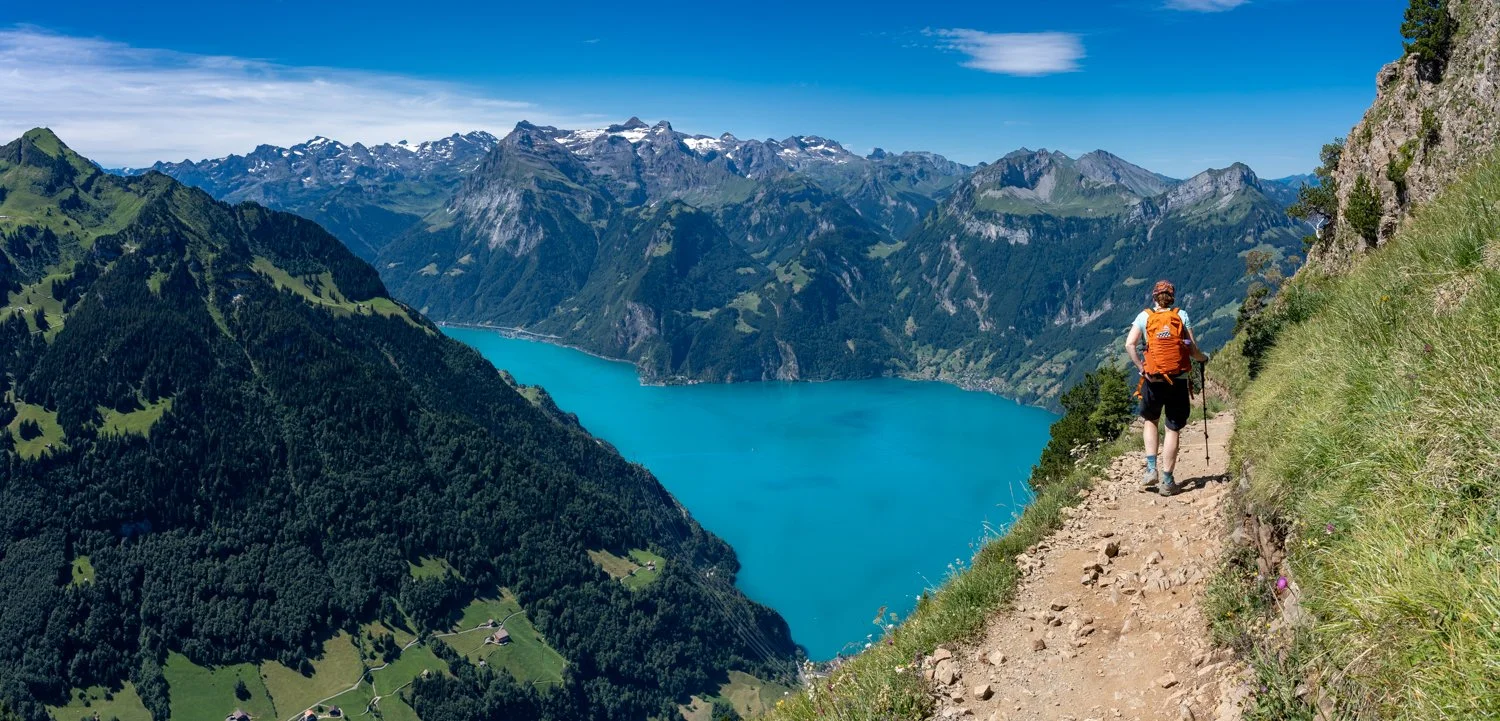
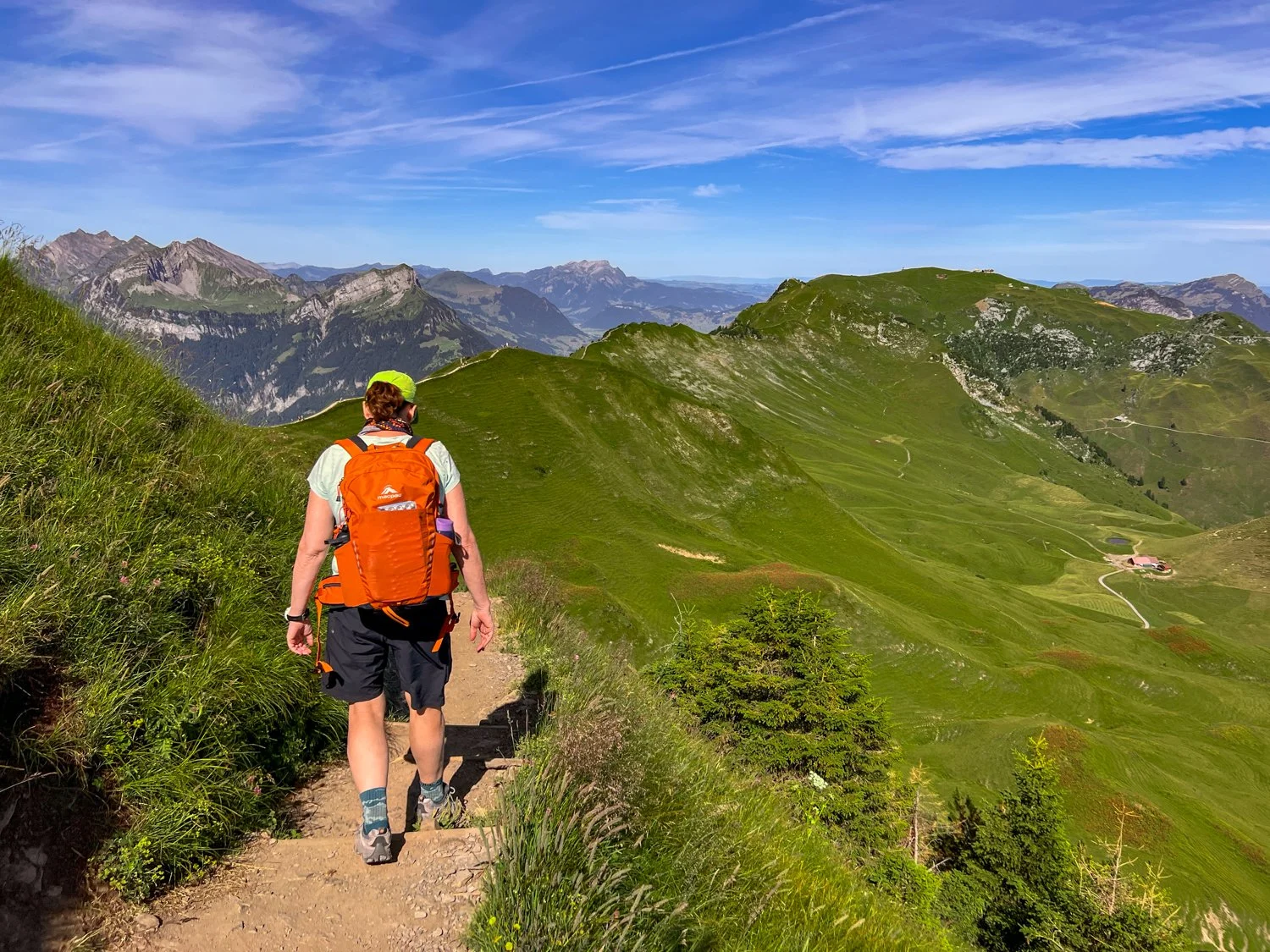
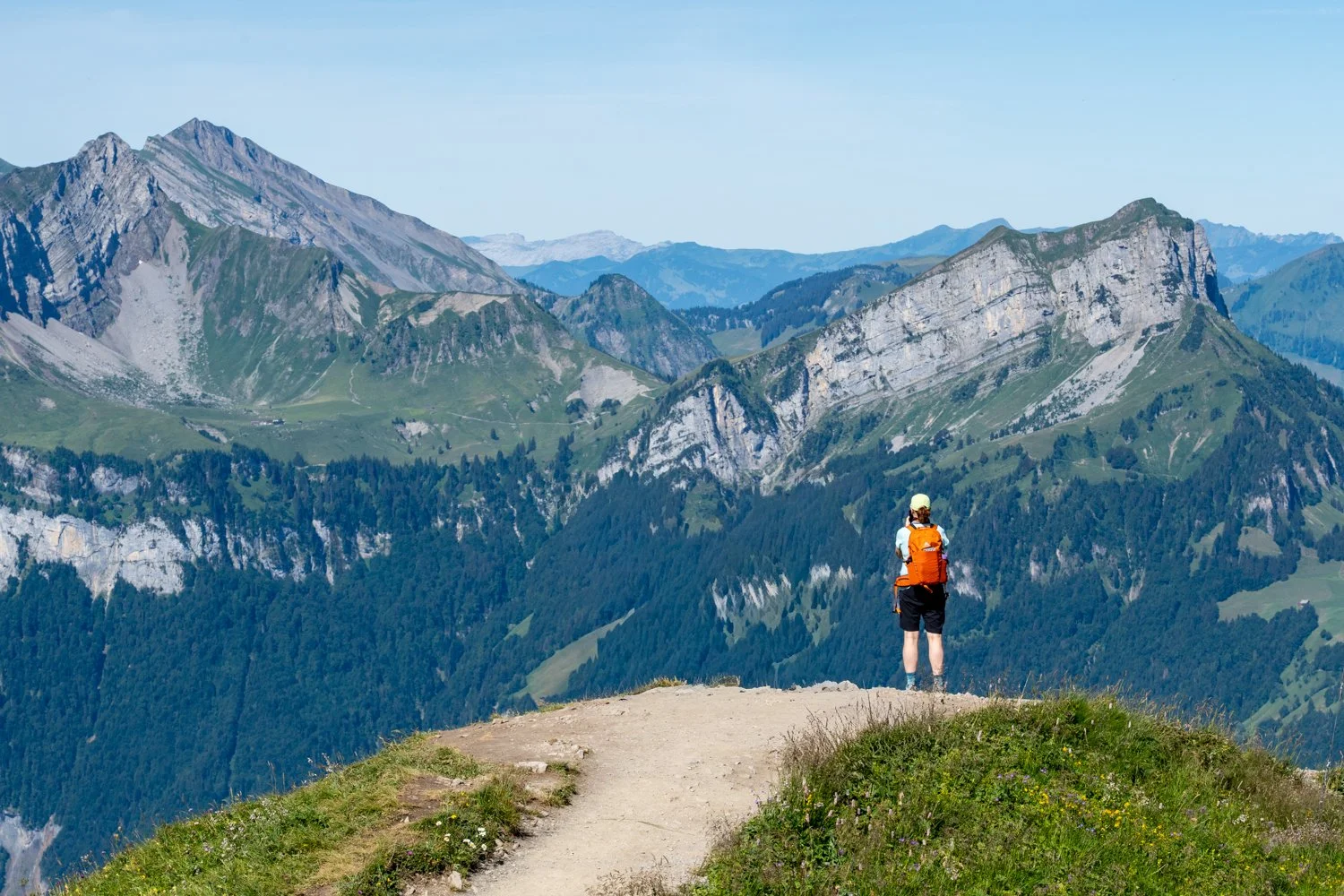
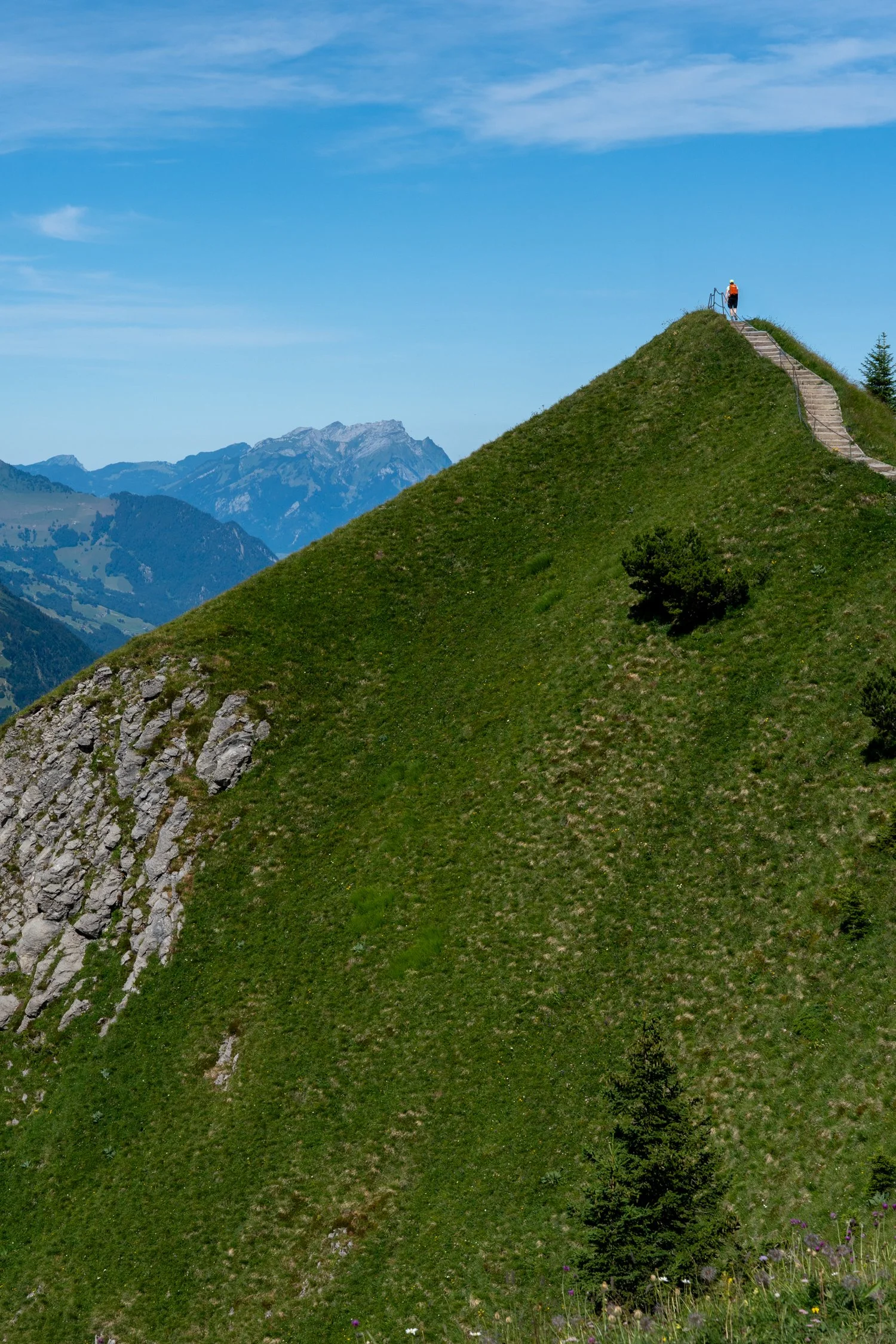
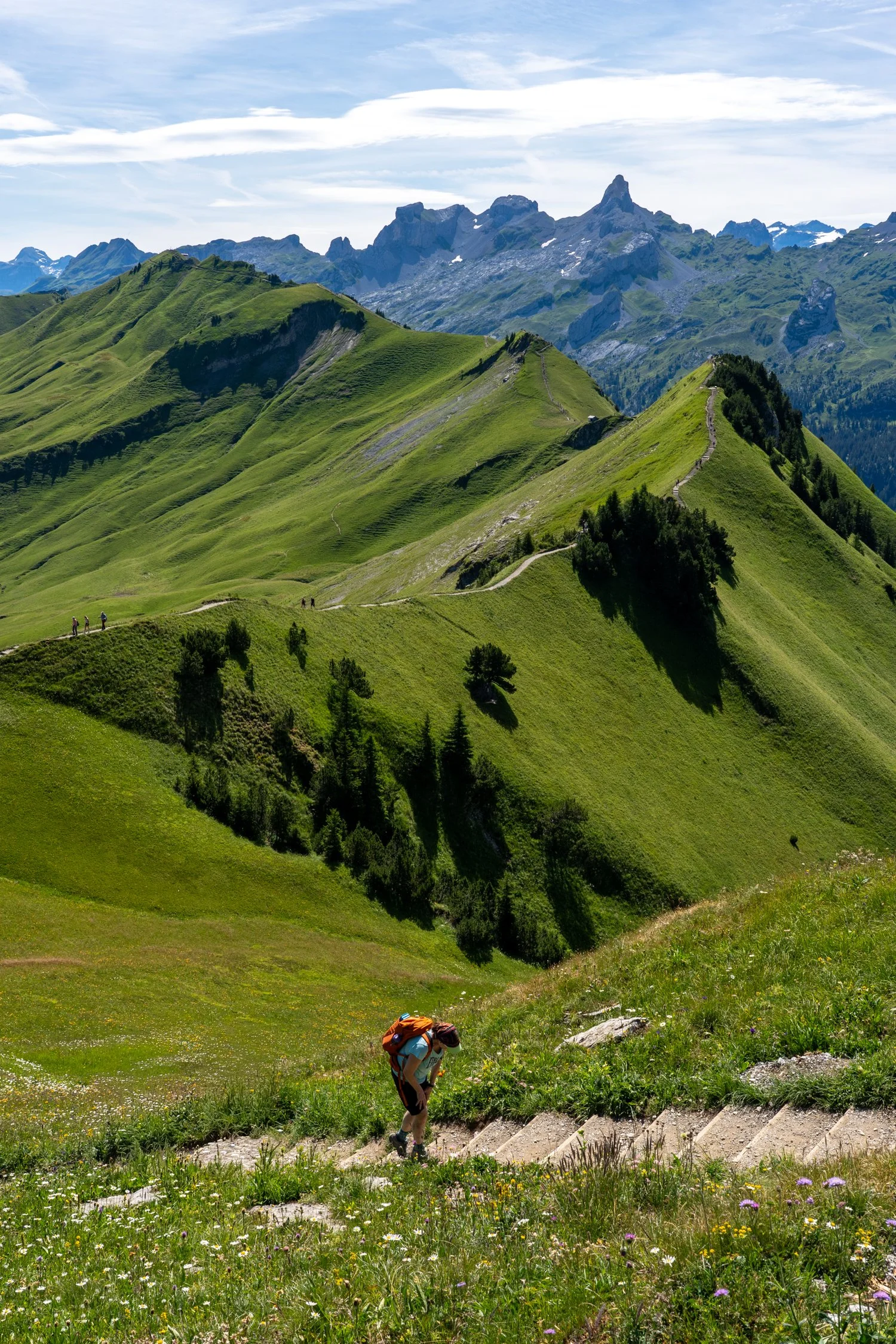
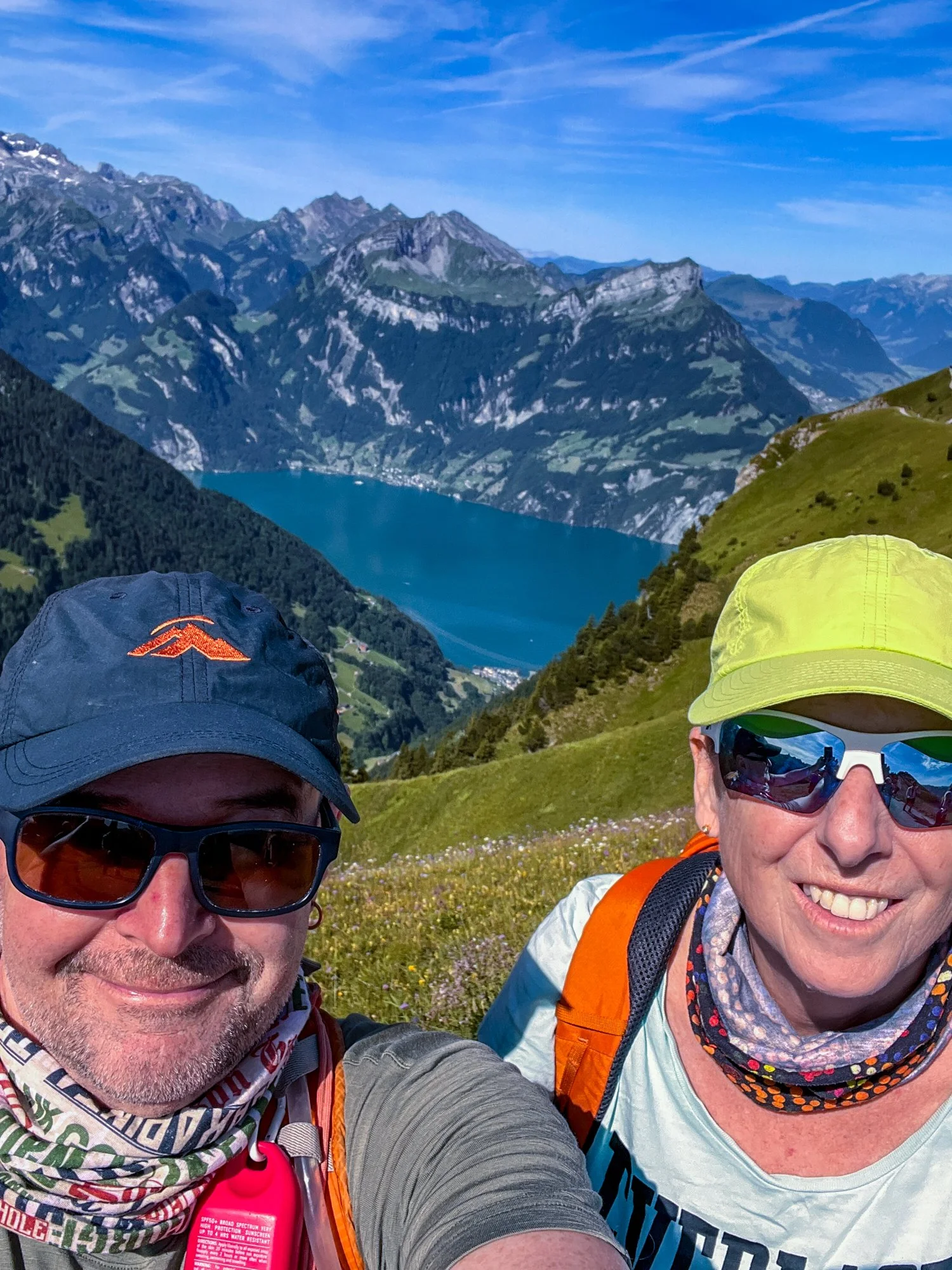
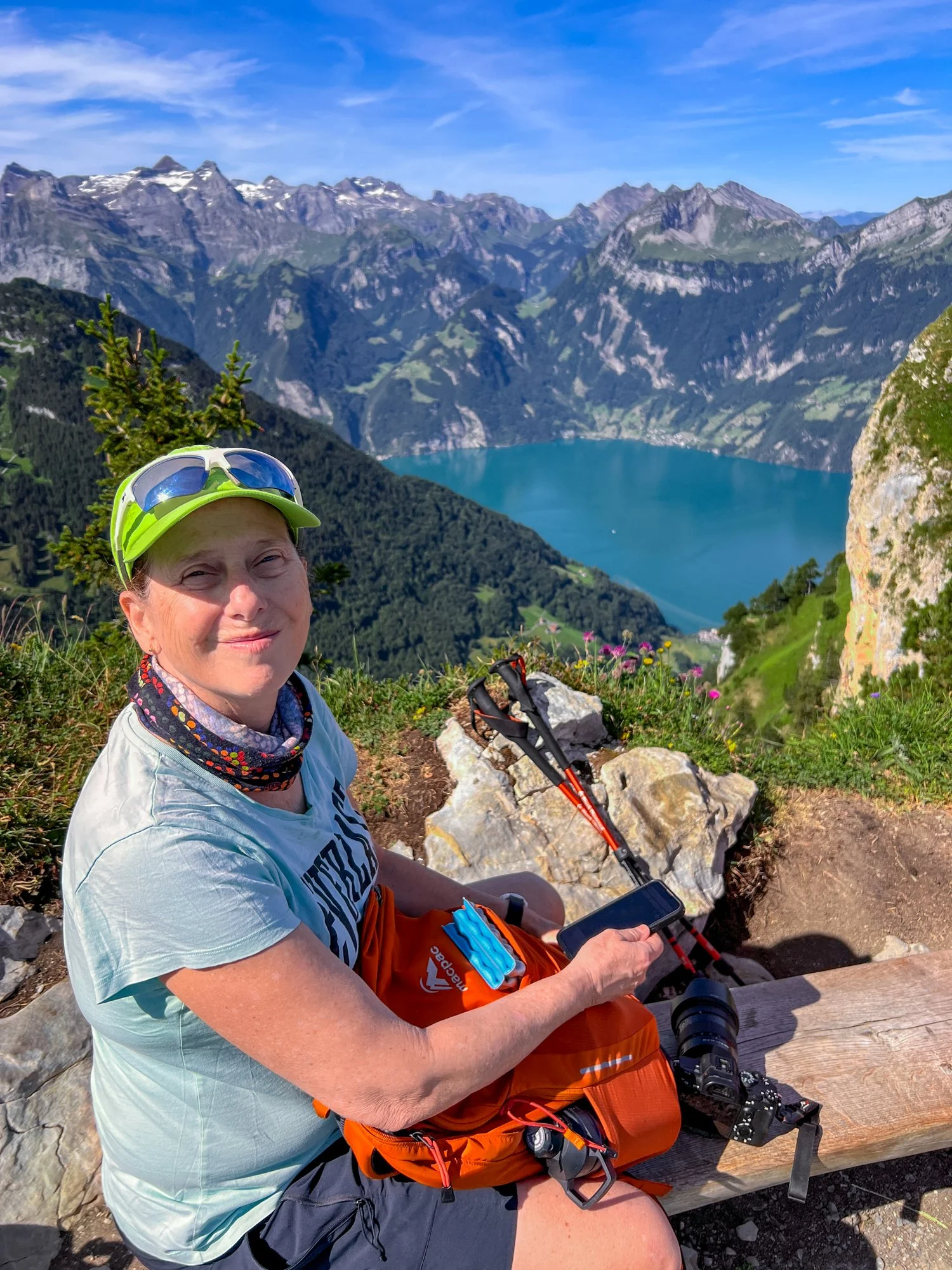
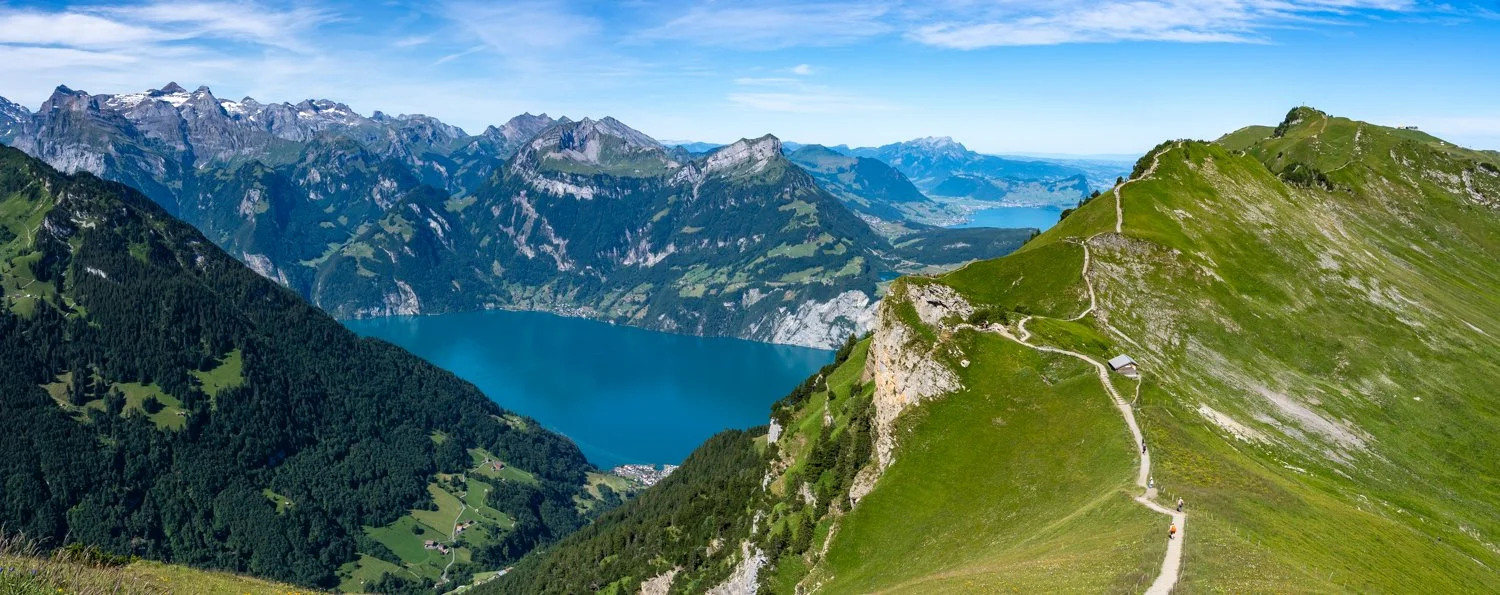
At the top, we set off along the ridge — which, thankfully, is exactly where the name comes from. The trail winds along the mountaintop with huge views dropping away on either side. Blue lakes far below, dramatic peaks in the distance and green mountainsides stretching in every direction.
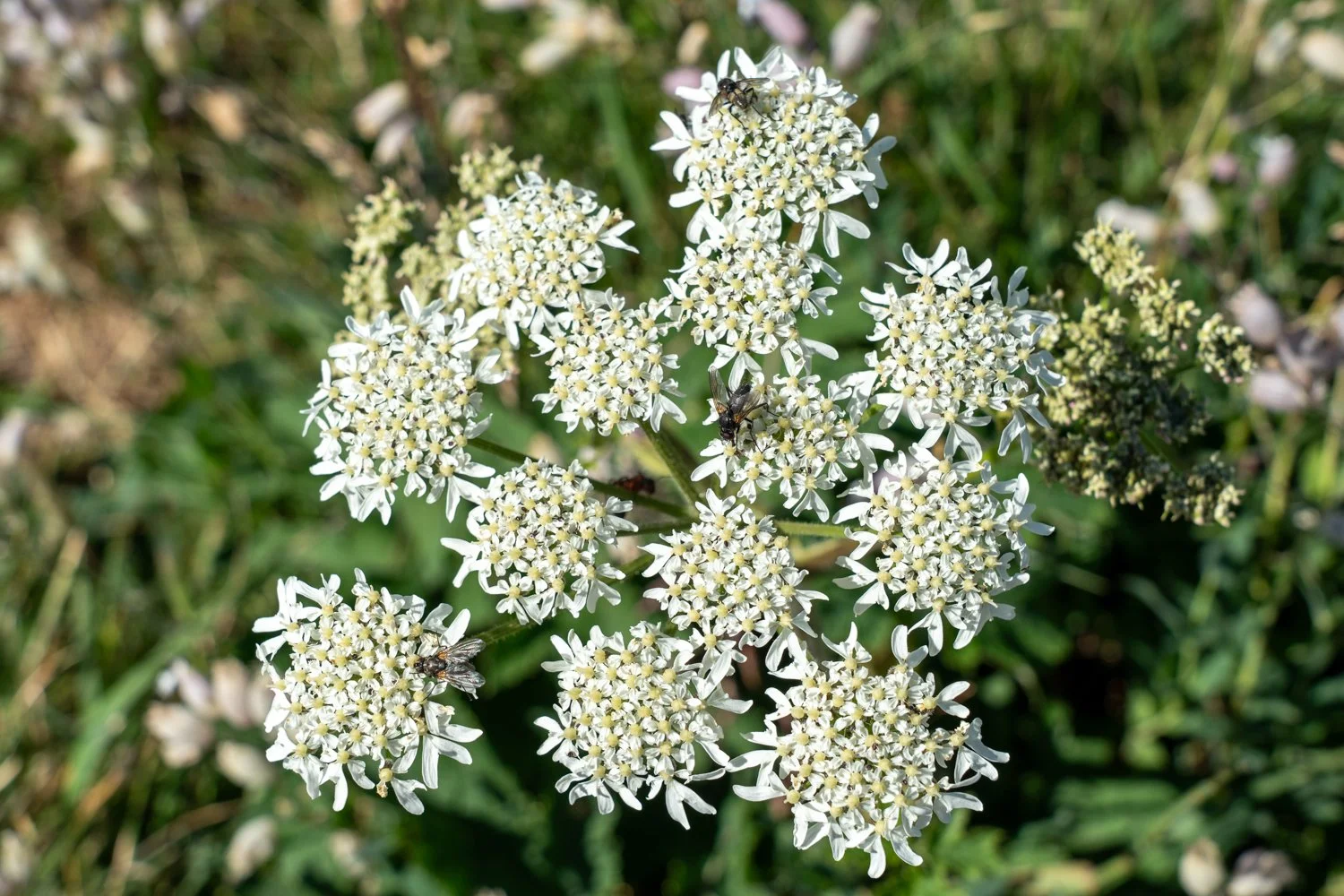
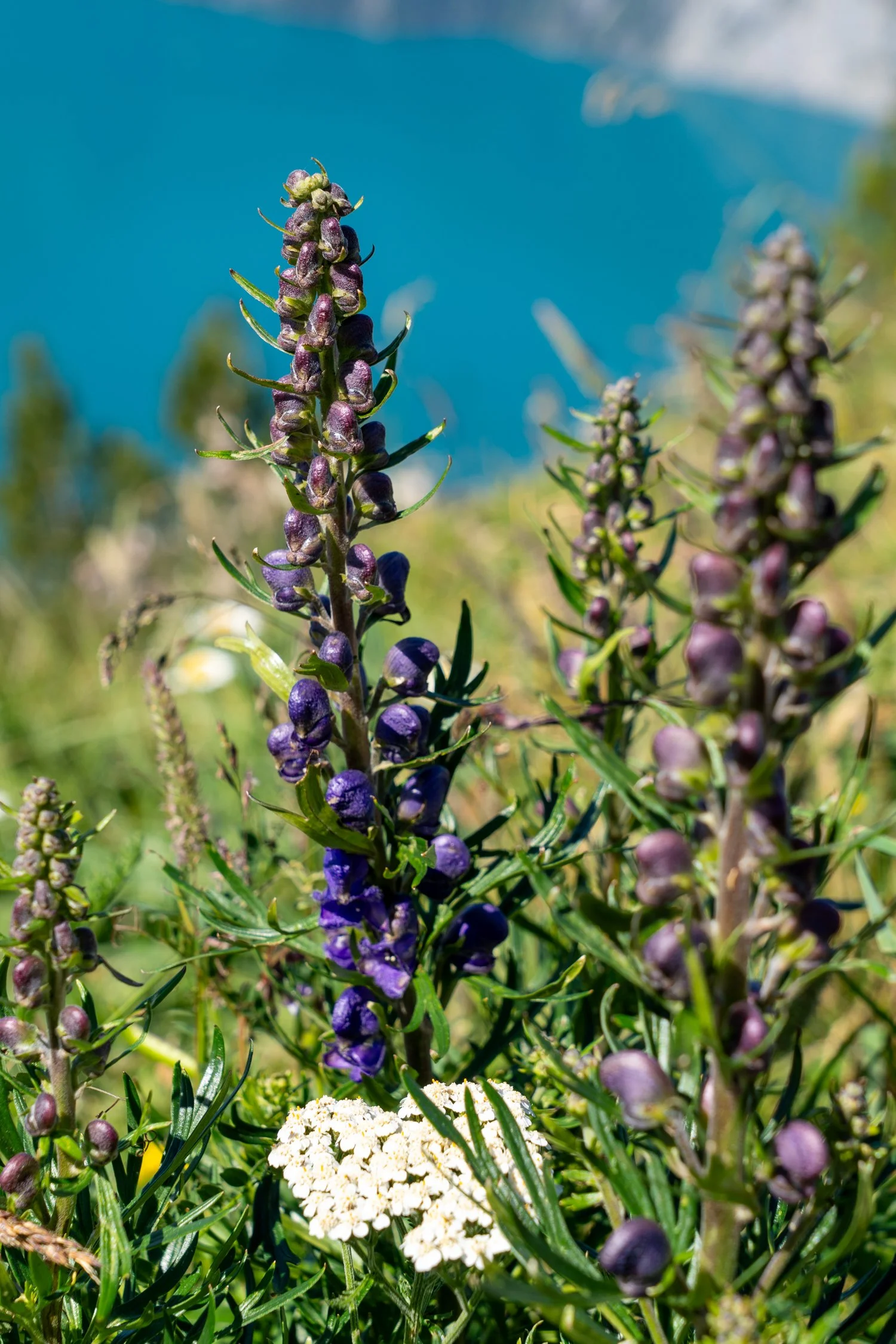
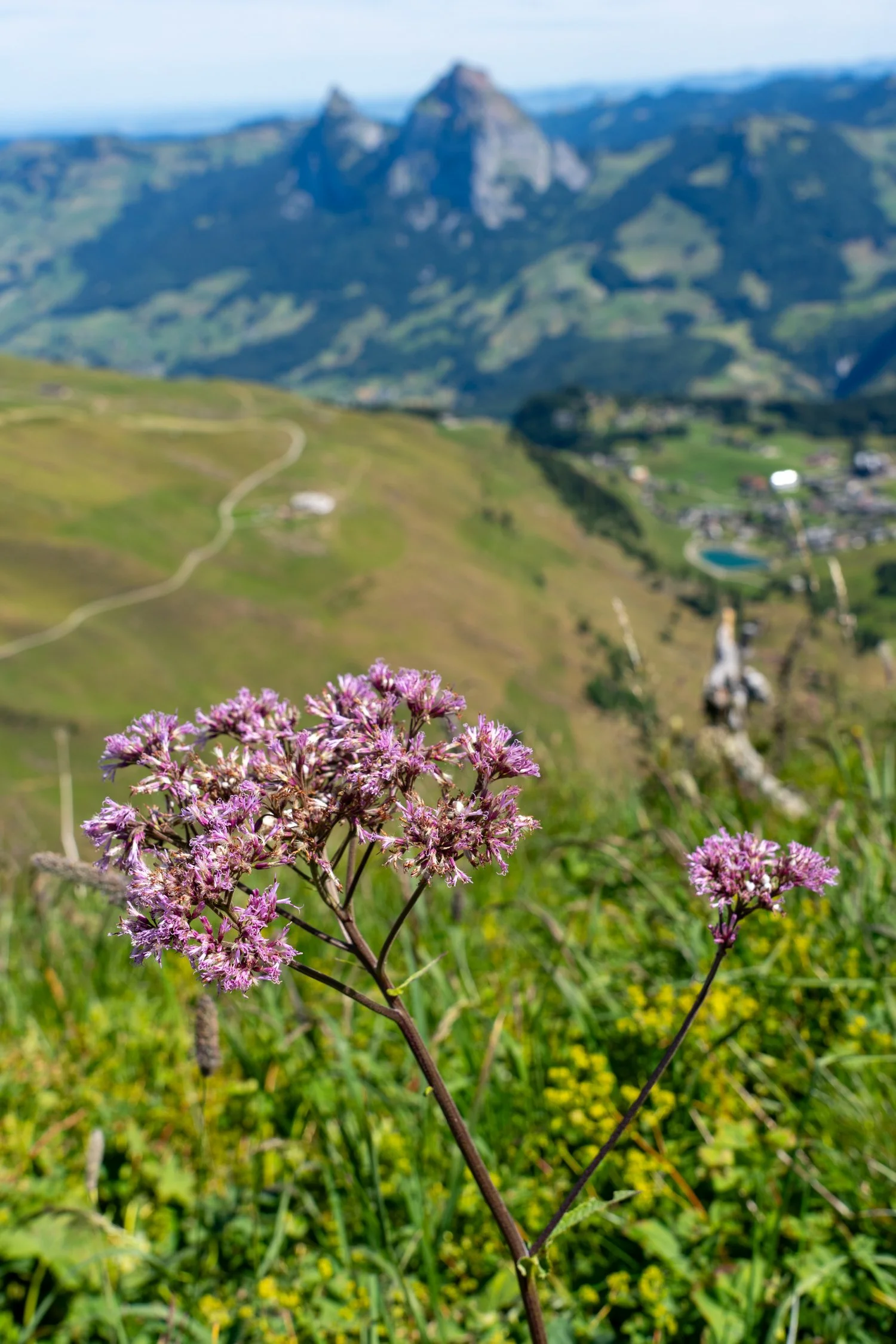
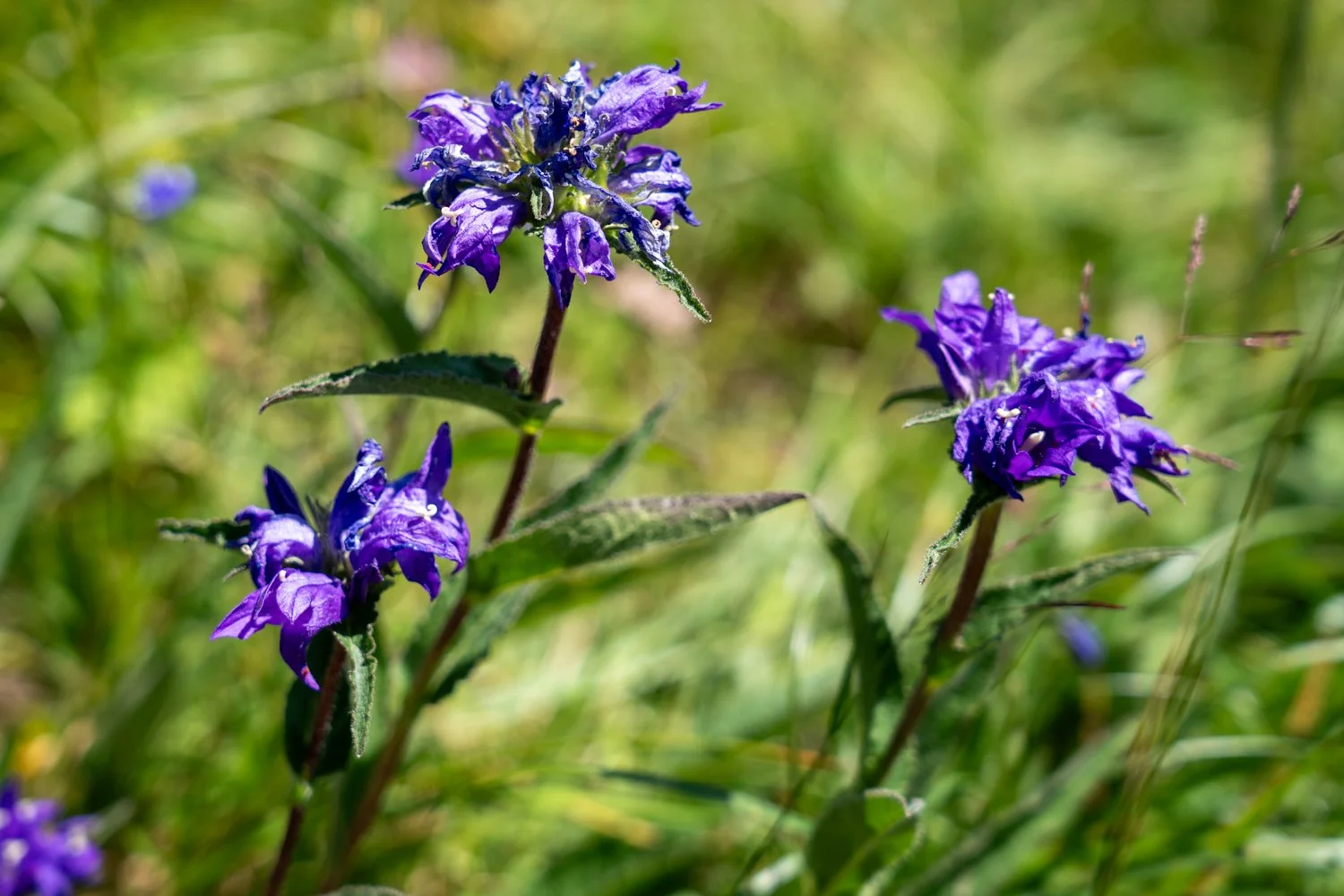
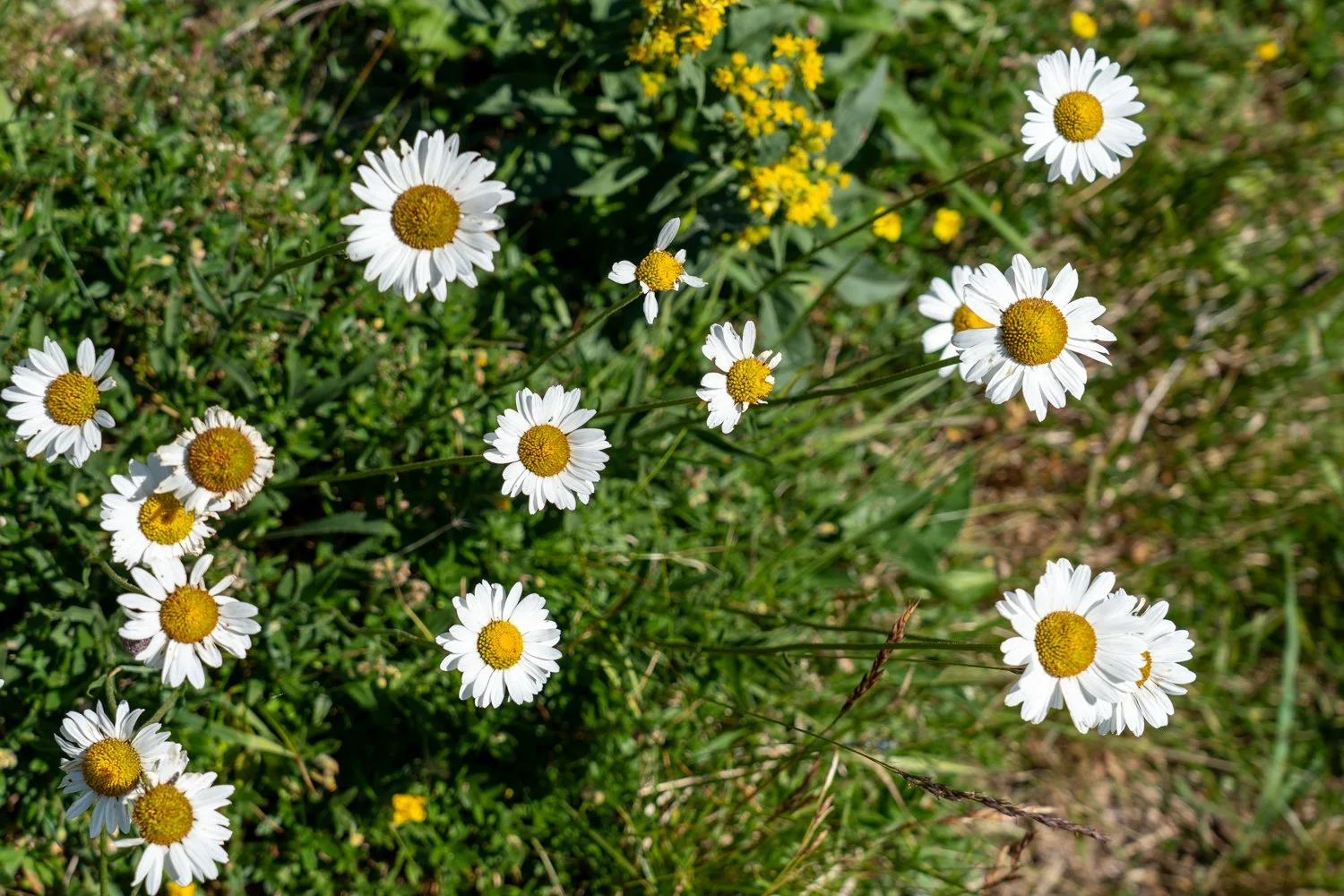
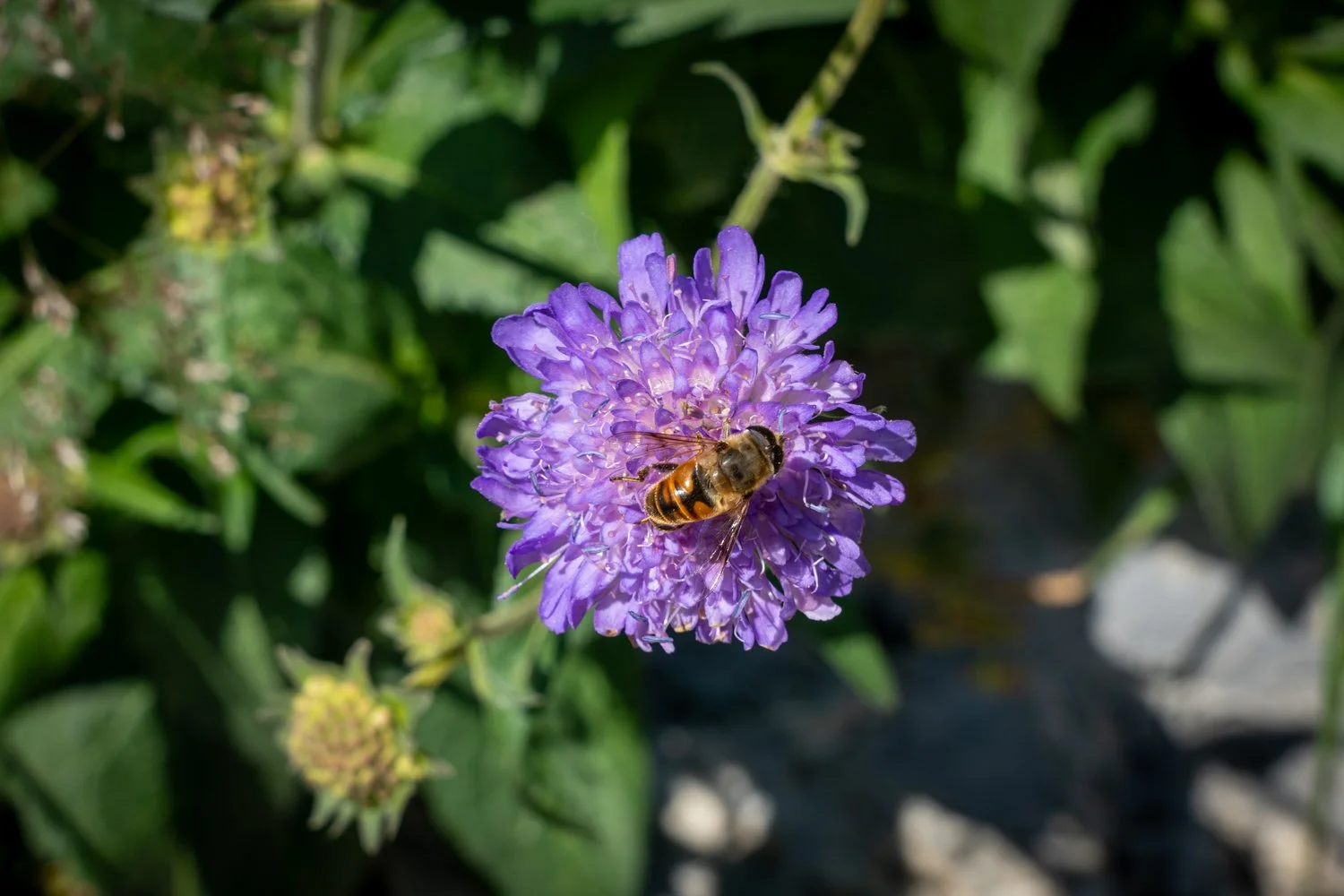
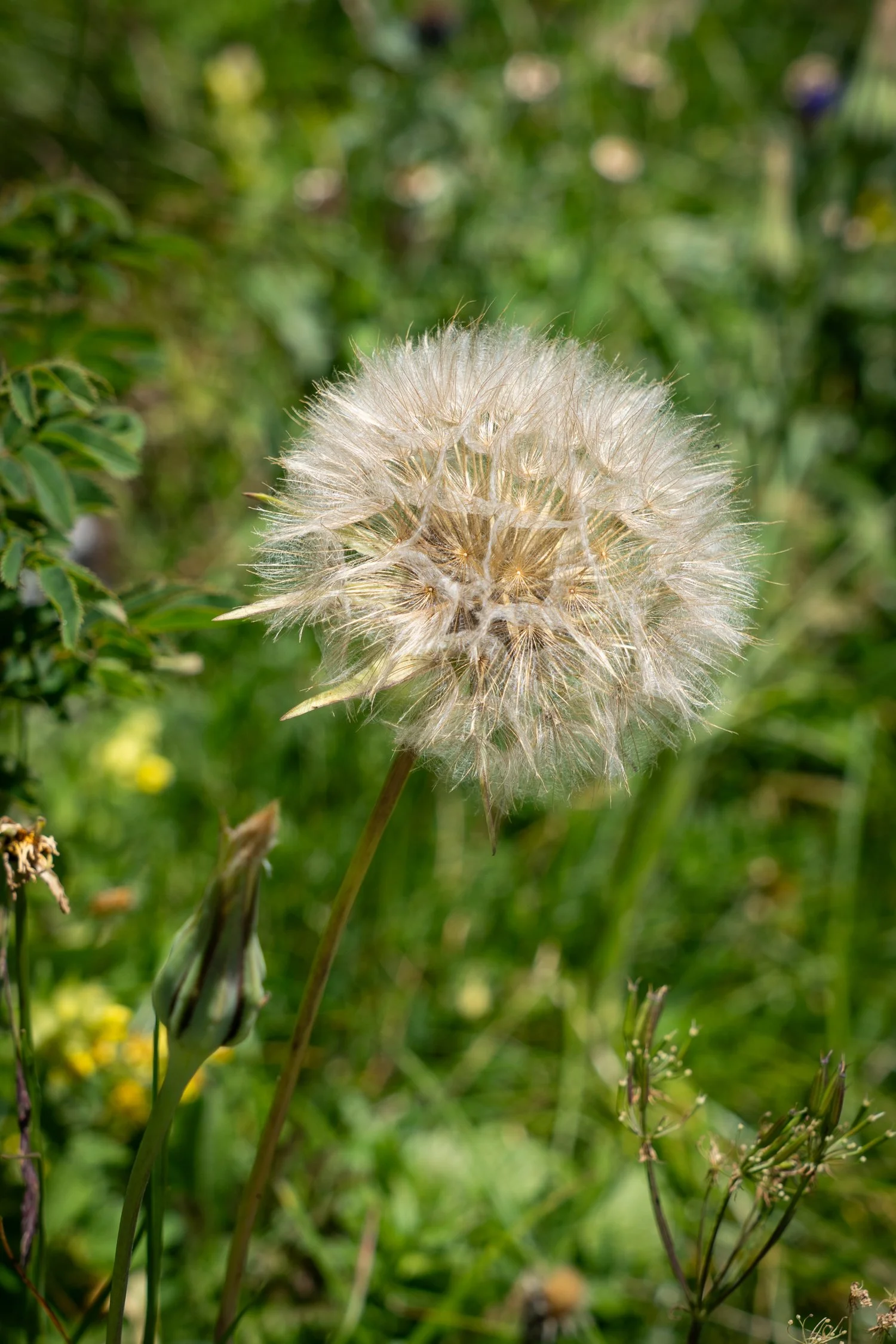
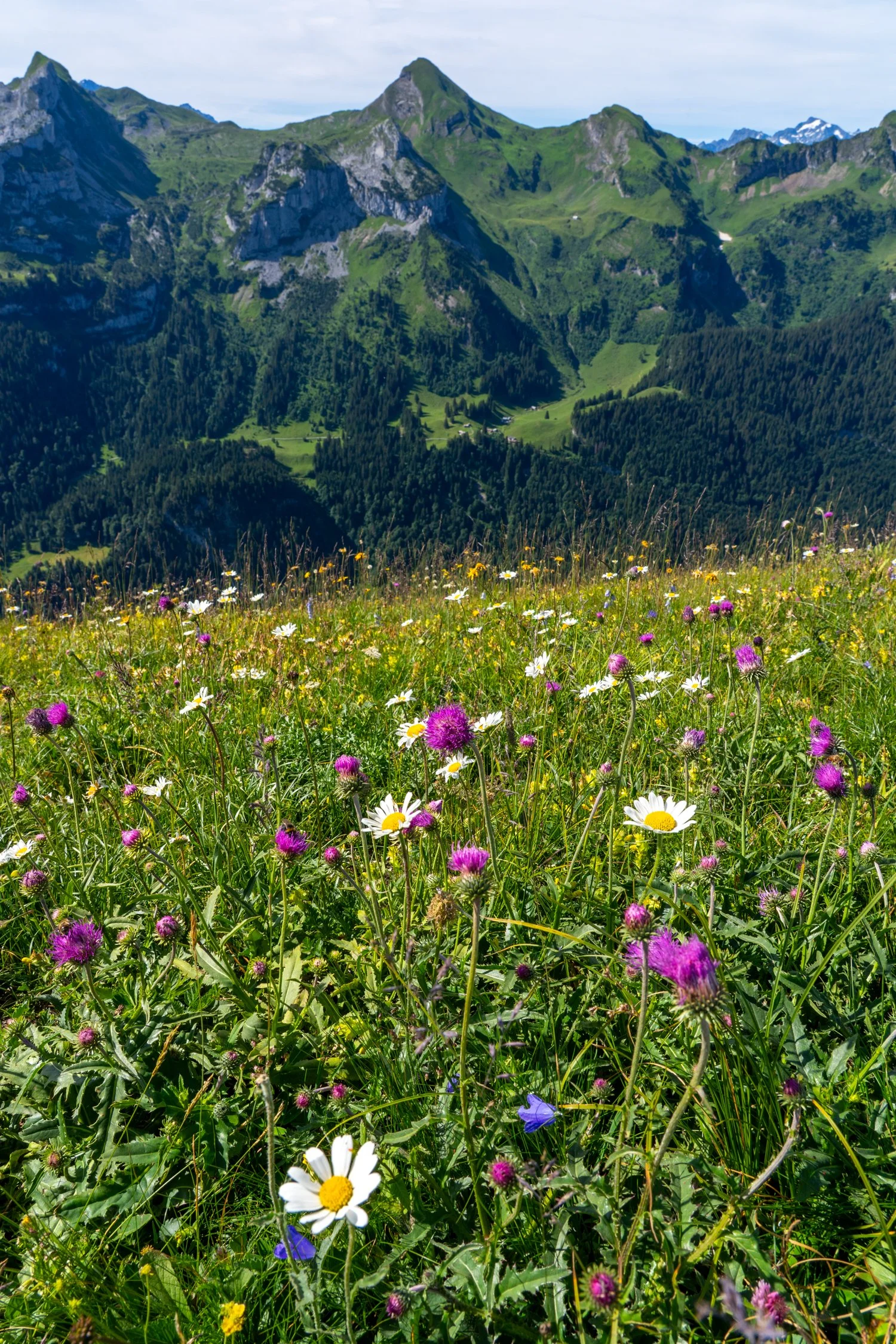
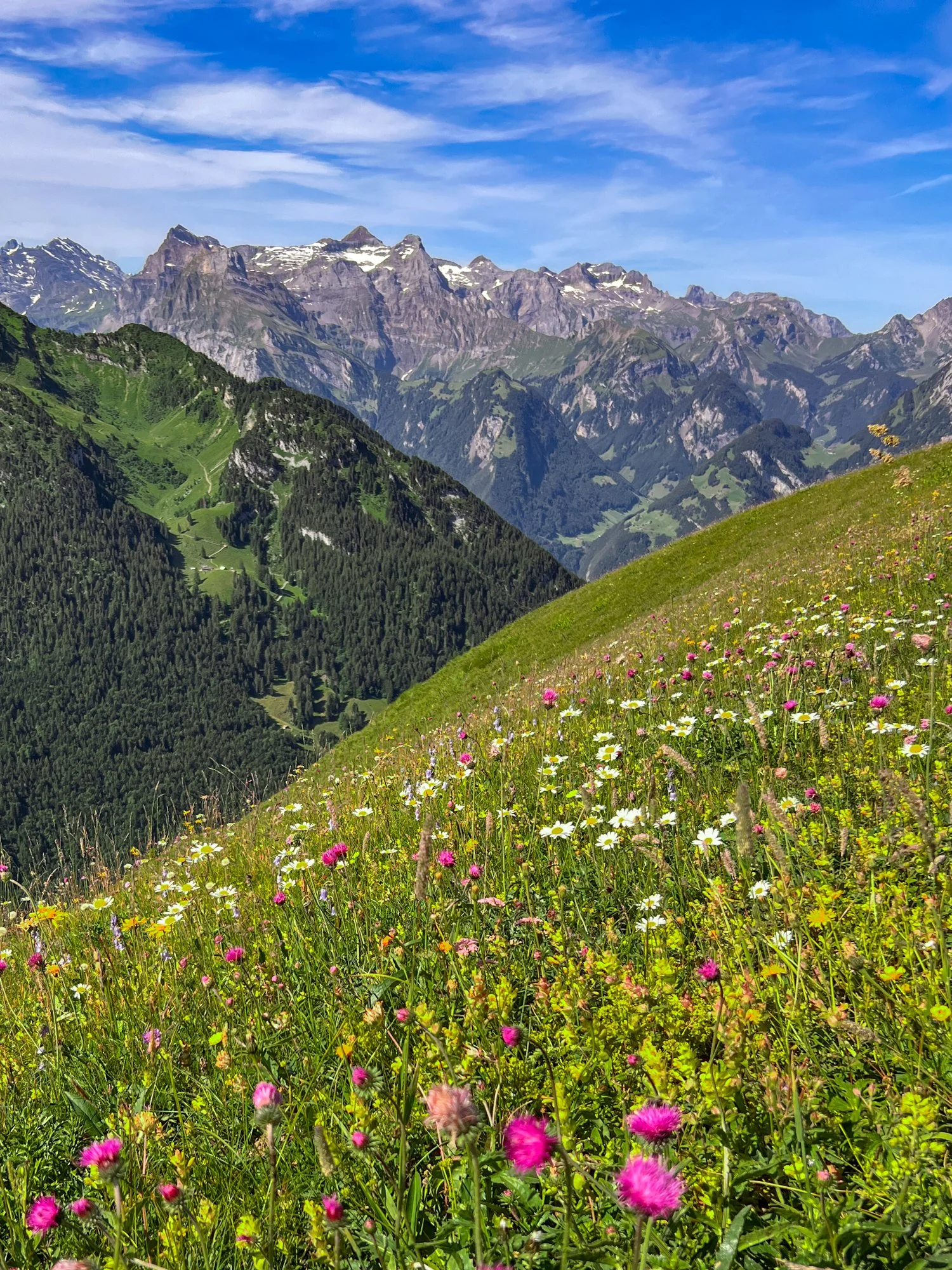
The sky was that almost ridiculous shade of blue you normally assume has been enhanced in Photoshop. The lakes below were just as blue, while the mountains were covered in brilliant green grass and a carpet of wildflowers — pinks, purples and whites scattered across the slopes.
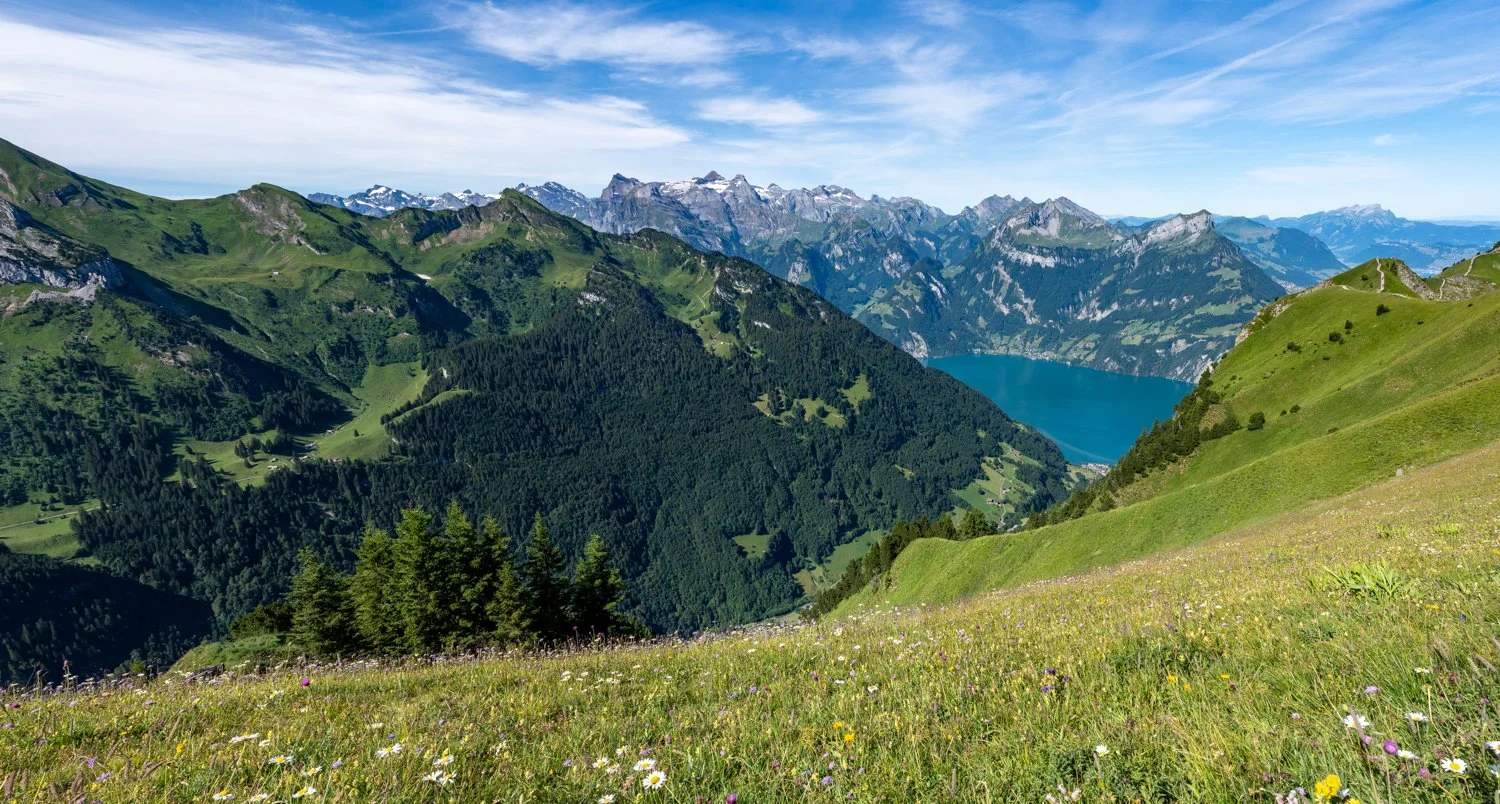
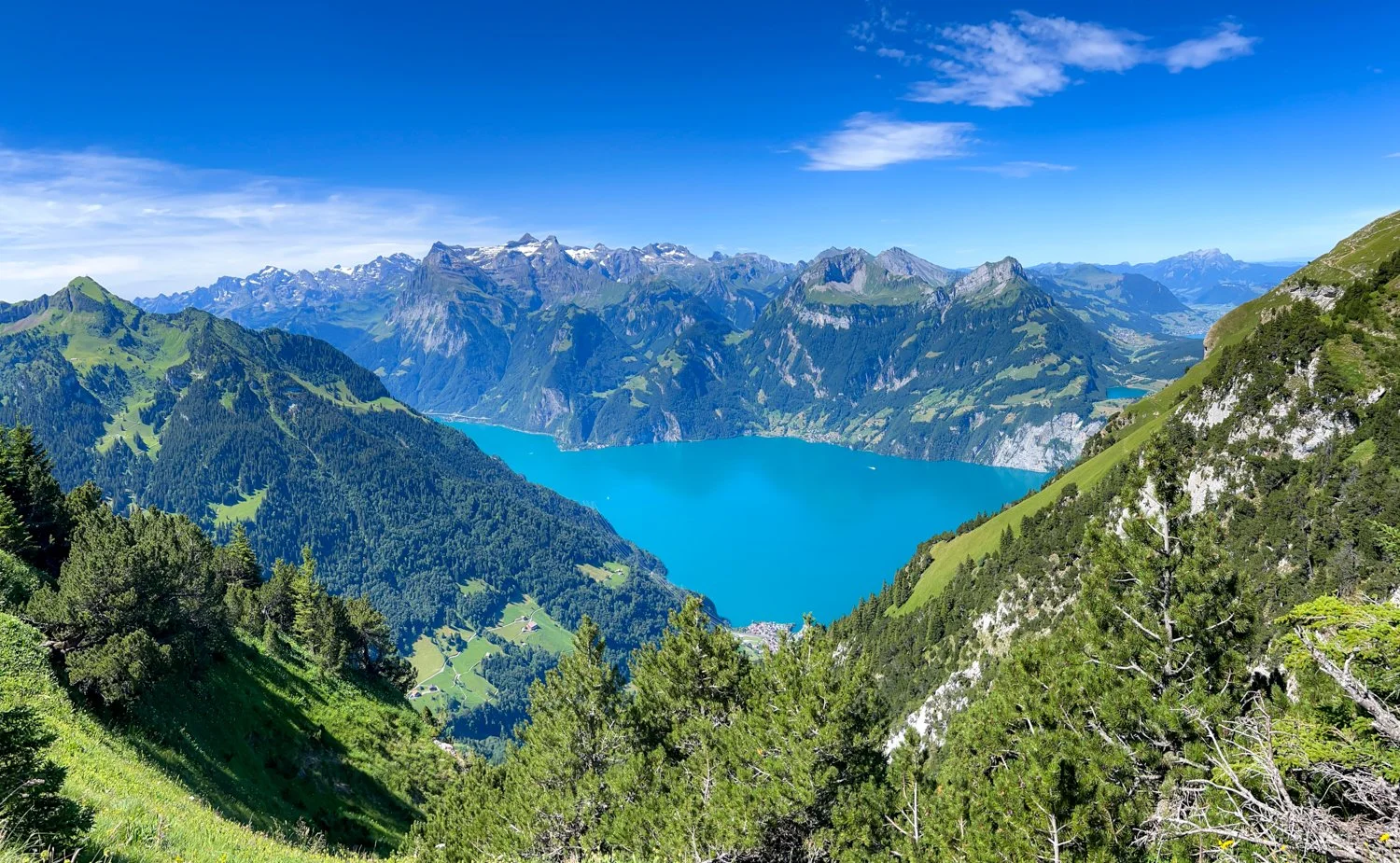
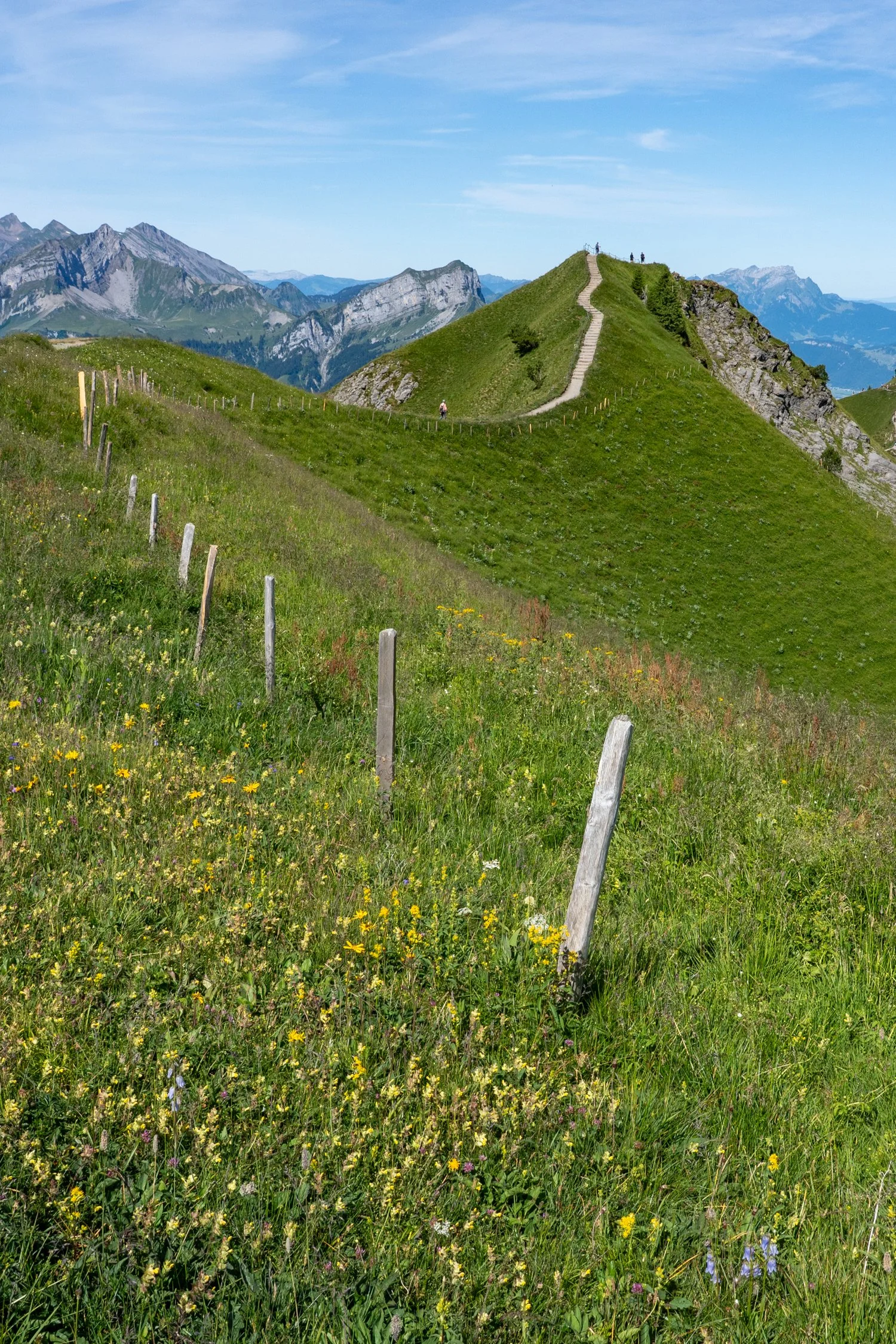
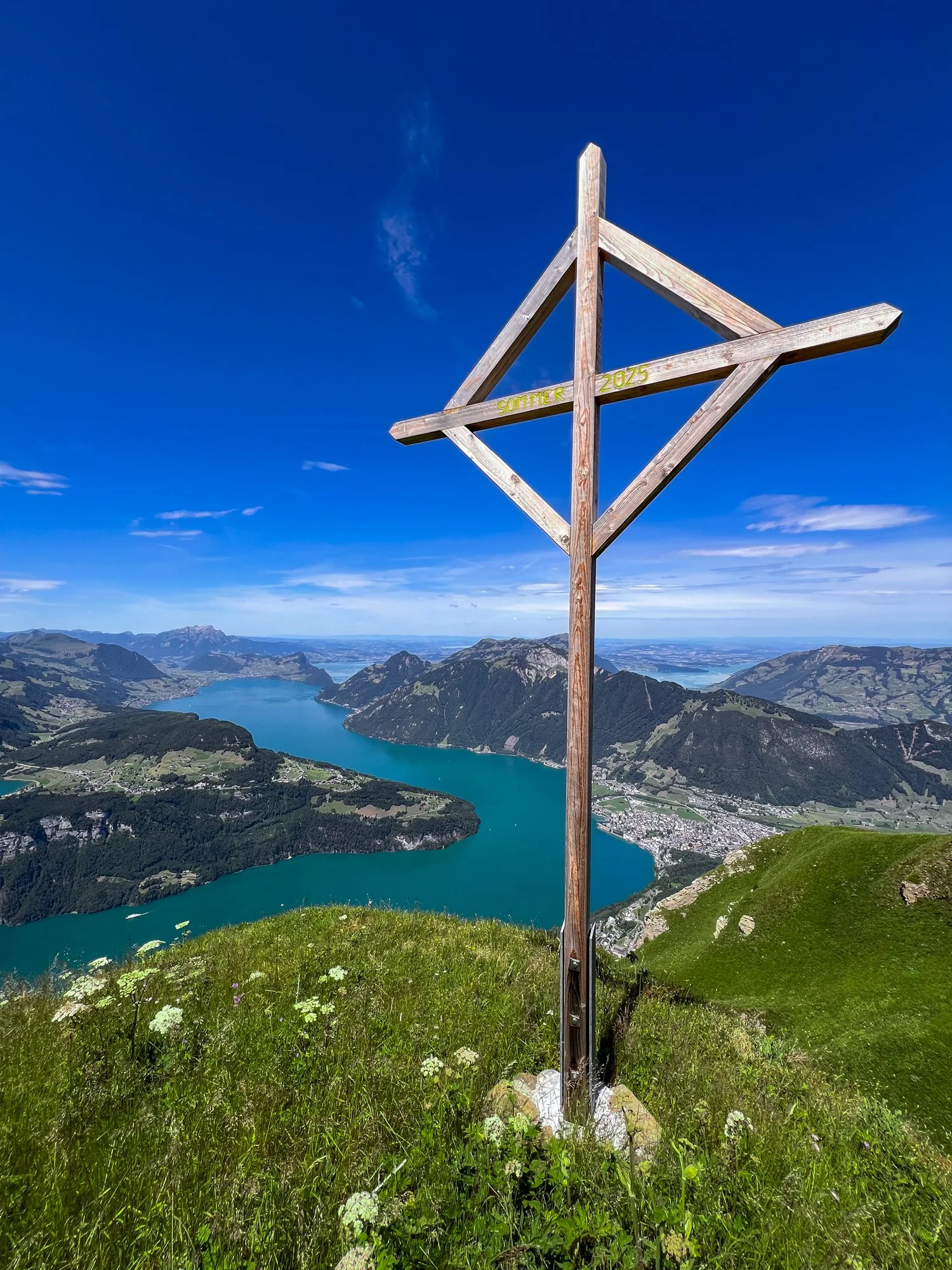
Wildflowers everywhere
Mount Pilatus – The Scenic Way
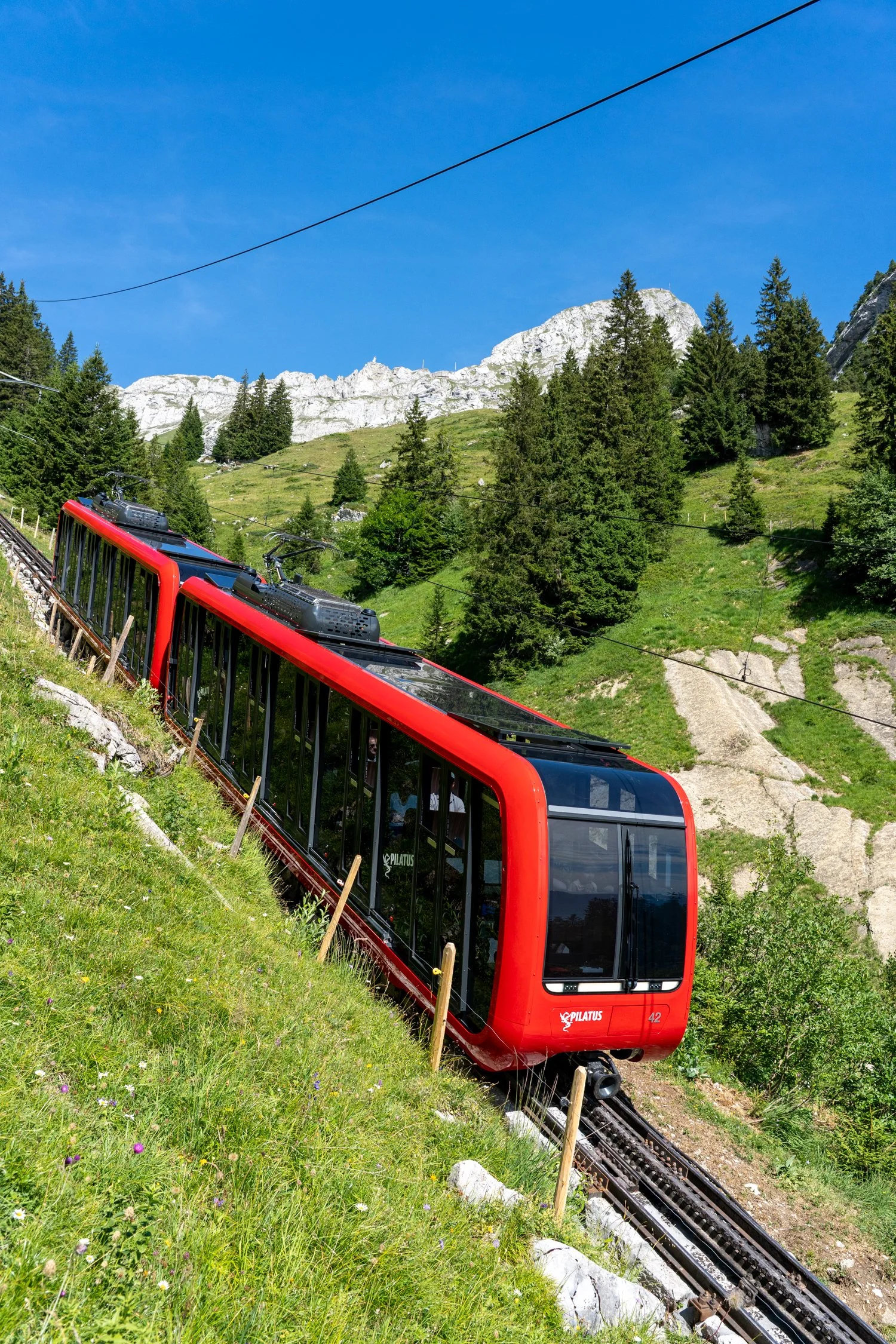
Most people heading up Mount Pilatus take the famous bright red cogwheel railway, which climbs all the way to the summit at 2,128 metres. Sensible people, really. We, however, decided that riding a train up a mountain seemed far too easy, so we got off halfway at Amsigen to walk the rest of the way. From there, it was more than 1,000 metres of elevation gain to the top. Because apparently a holiday is not complete without making your legs question your life choices.
The trail climbed relentlessly through a series of switchbacks. And then, somewhere in the middle of nowhere, we came across one of the strangest sights of the hike — a fridge. Just sitting there beside the trail. Inside? Cheese. Because apparently if you're going to leave a fridge in the middle of a mountain, Switzerland has decided that cheese is the obvious thing to put in it.
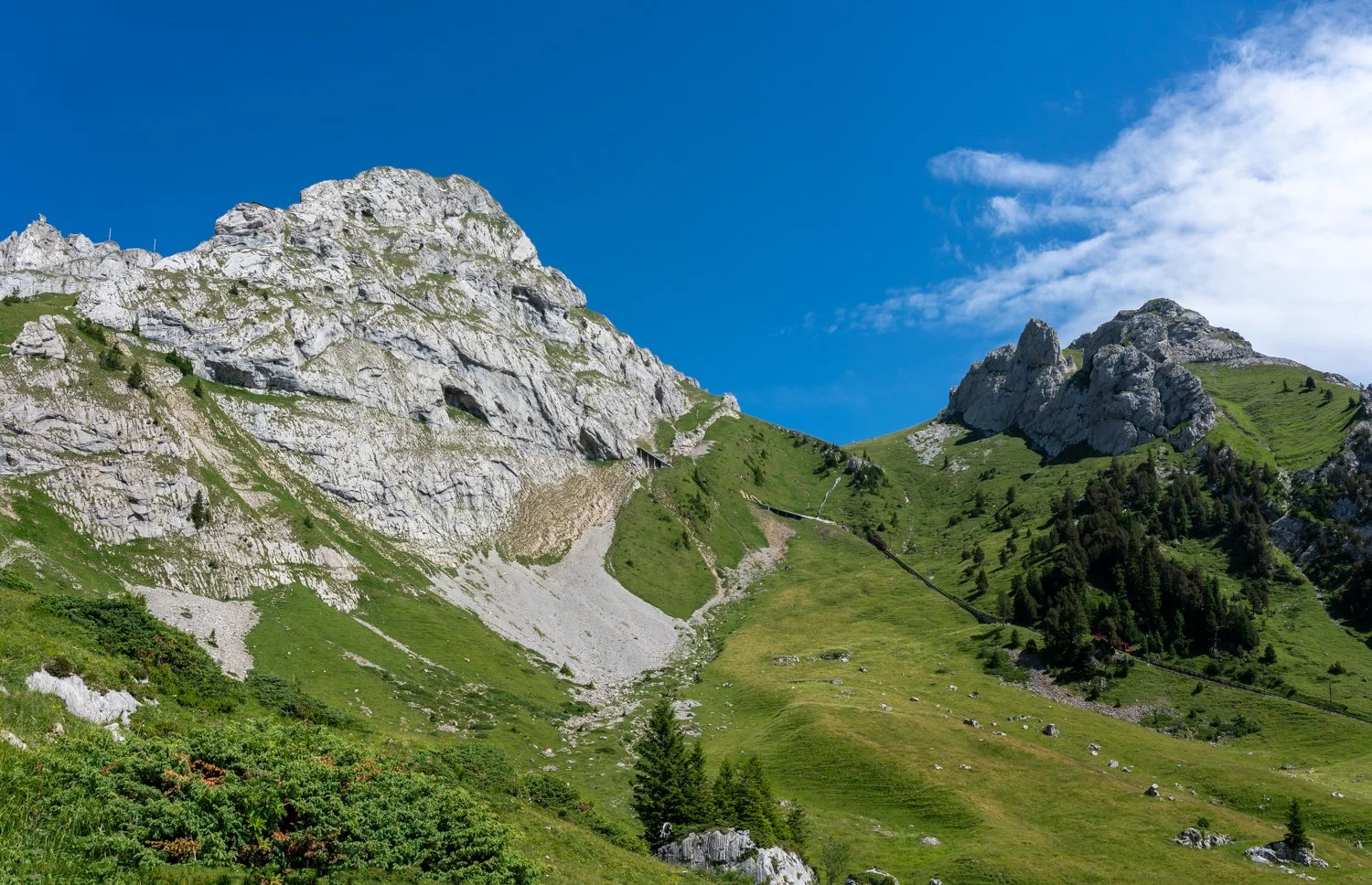
All the way up, the red cogwheel train was never far from view. It would slowly grind its way up the mountainside, hugging the cliff face, while passengers looked out at the walkers below. I can only imagine what they were thinking: "Look at those idiots. They've paid good money to get on this train and they're walking!"
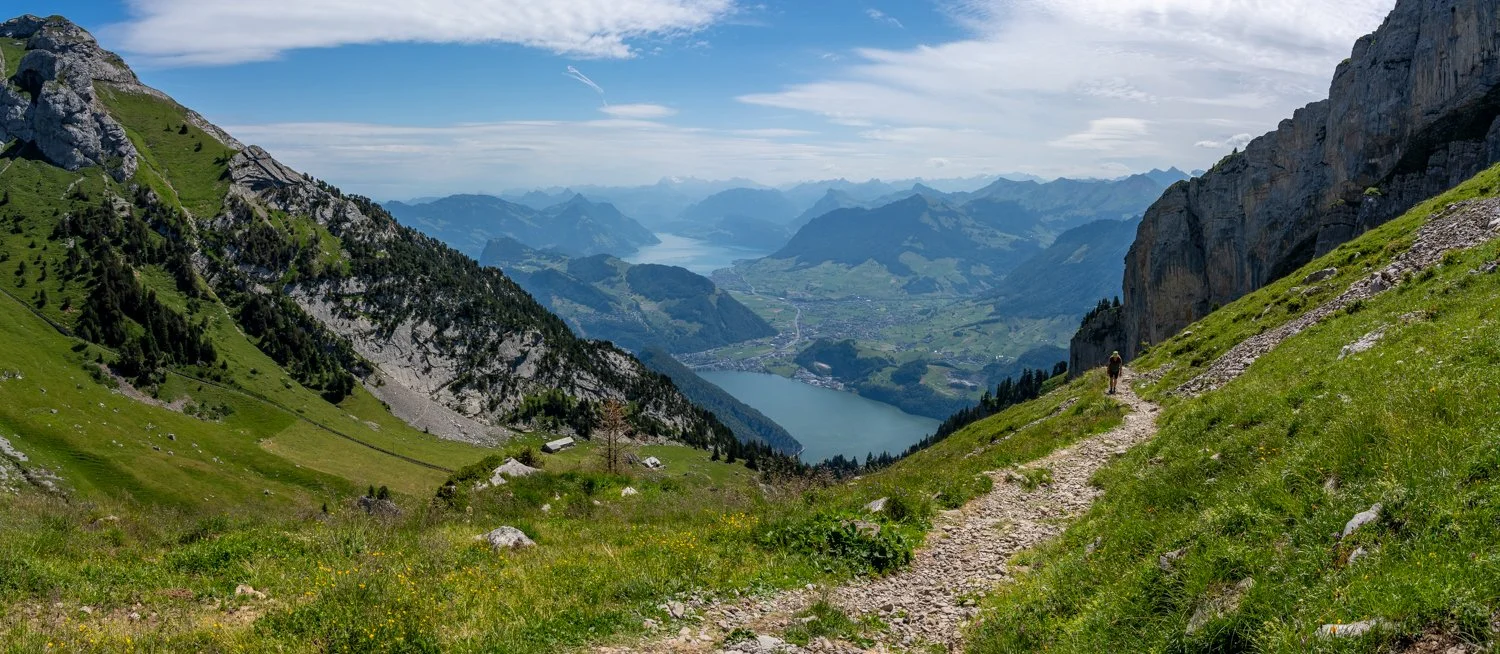
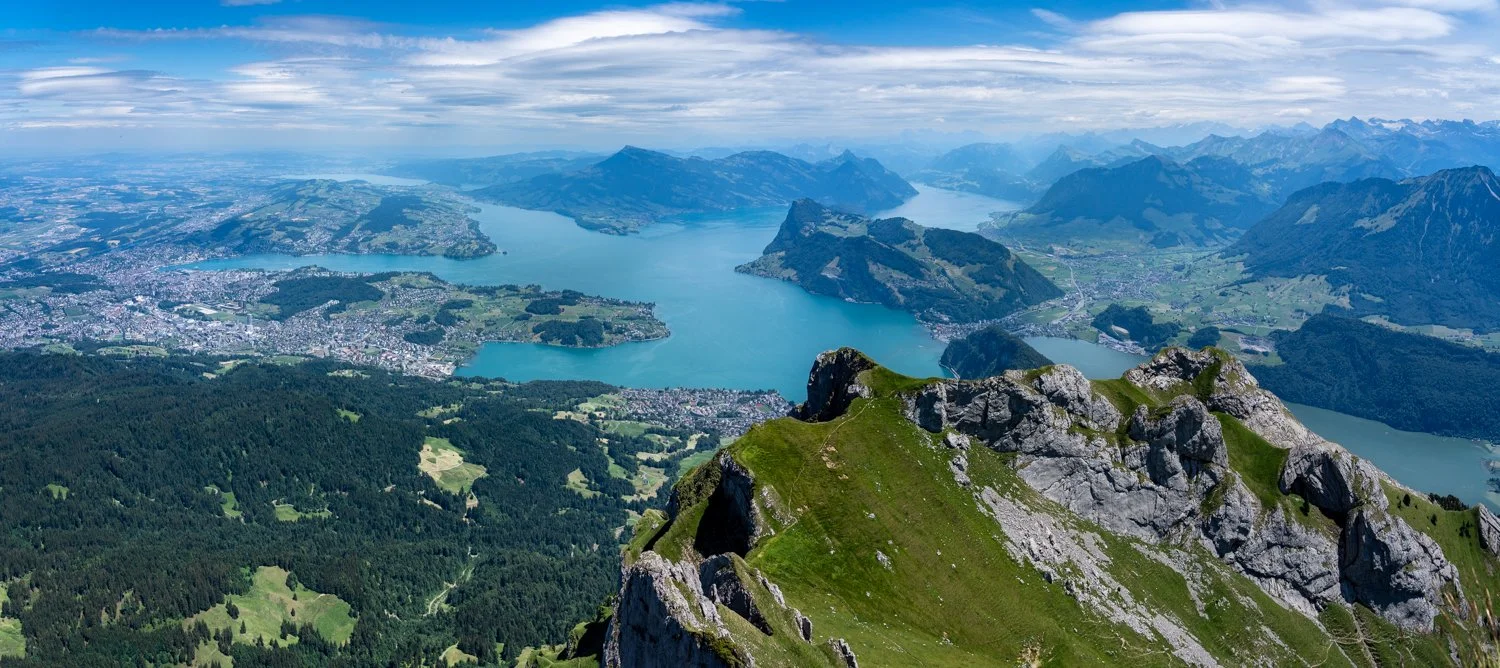
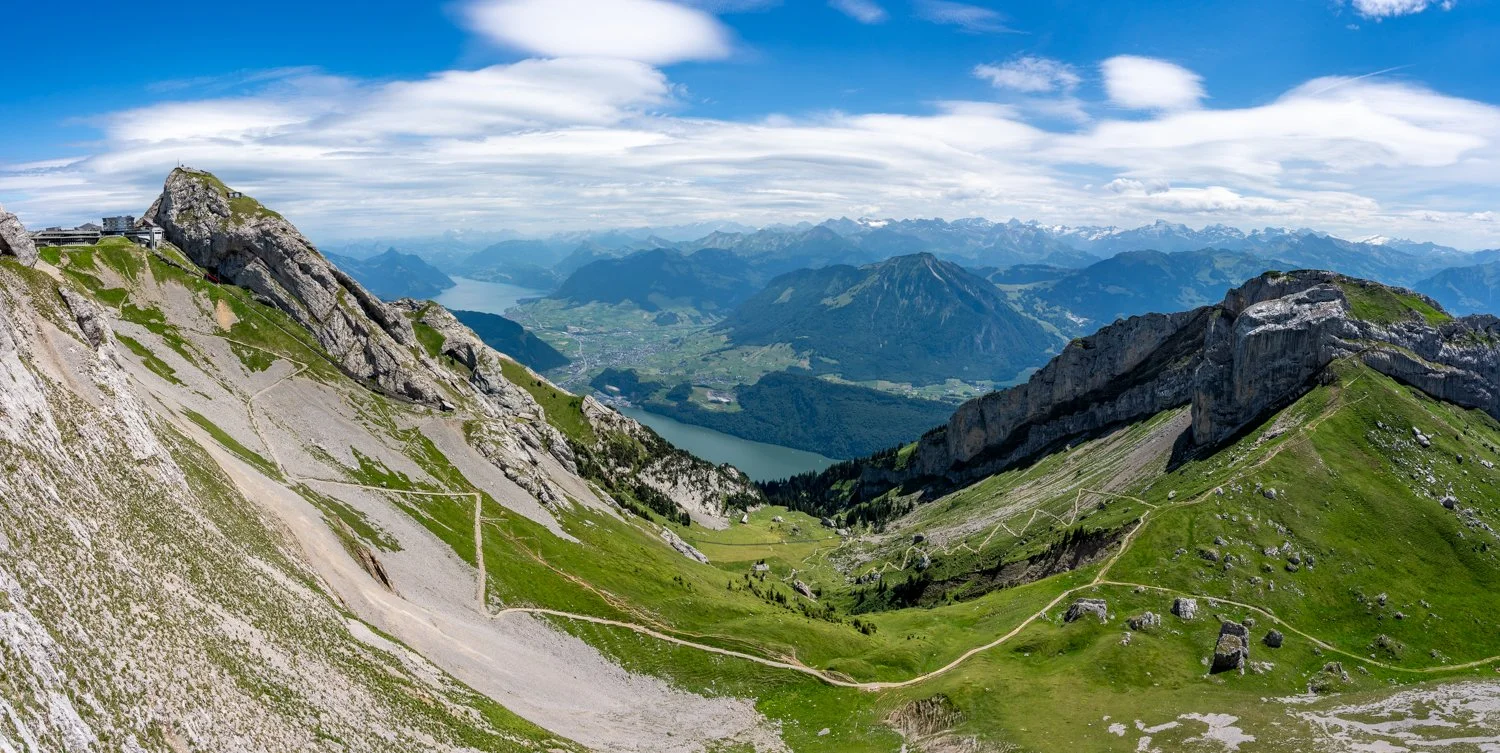
The further we climbed, the more worthwhile it became. The views opened up and the sound of the train gradually disappeared. Every switchback brought another perspective across the mountains and towards Lake Lucerne far below.
By the time we reached the top, we'd earned every metre of those 1,000-plus vertical metres.
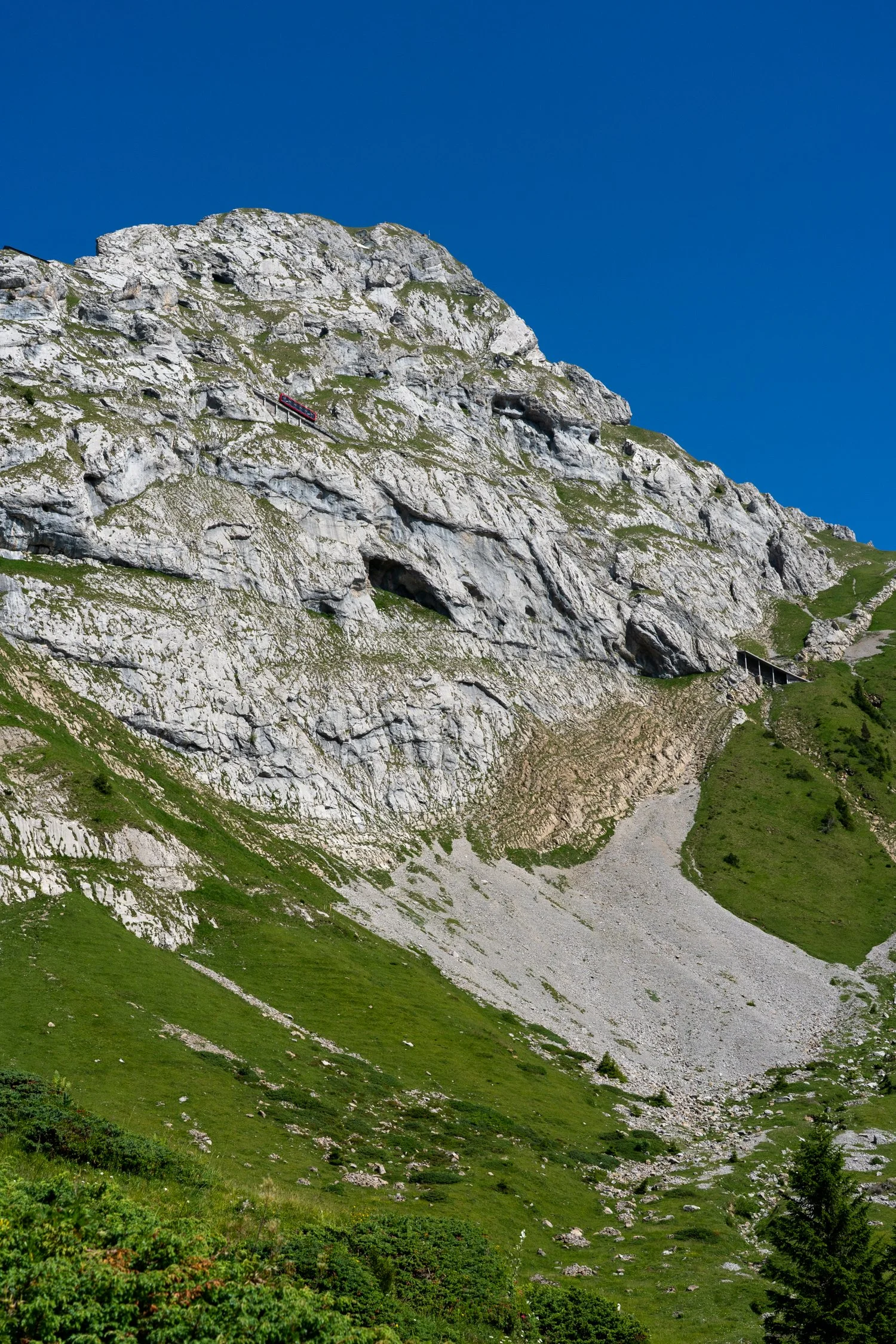
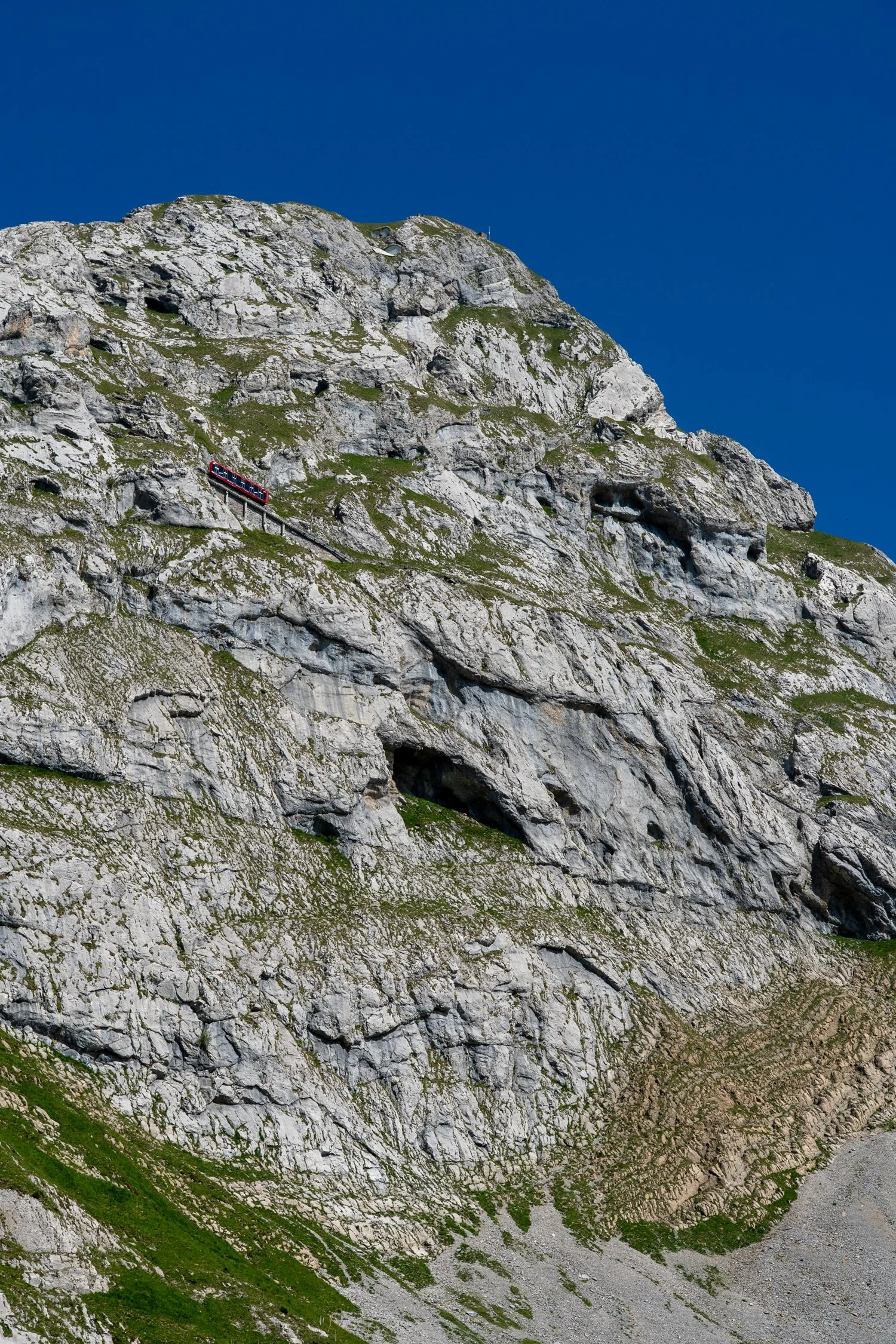
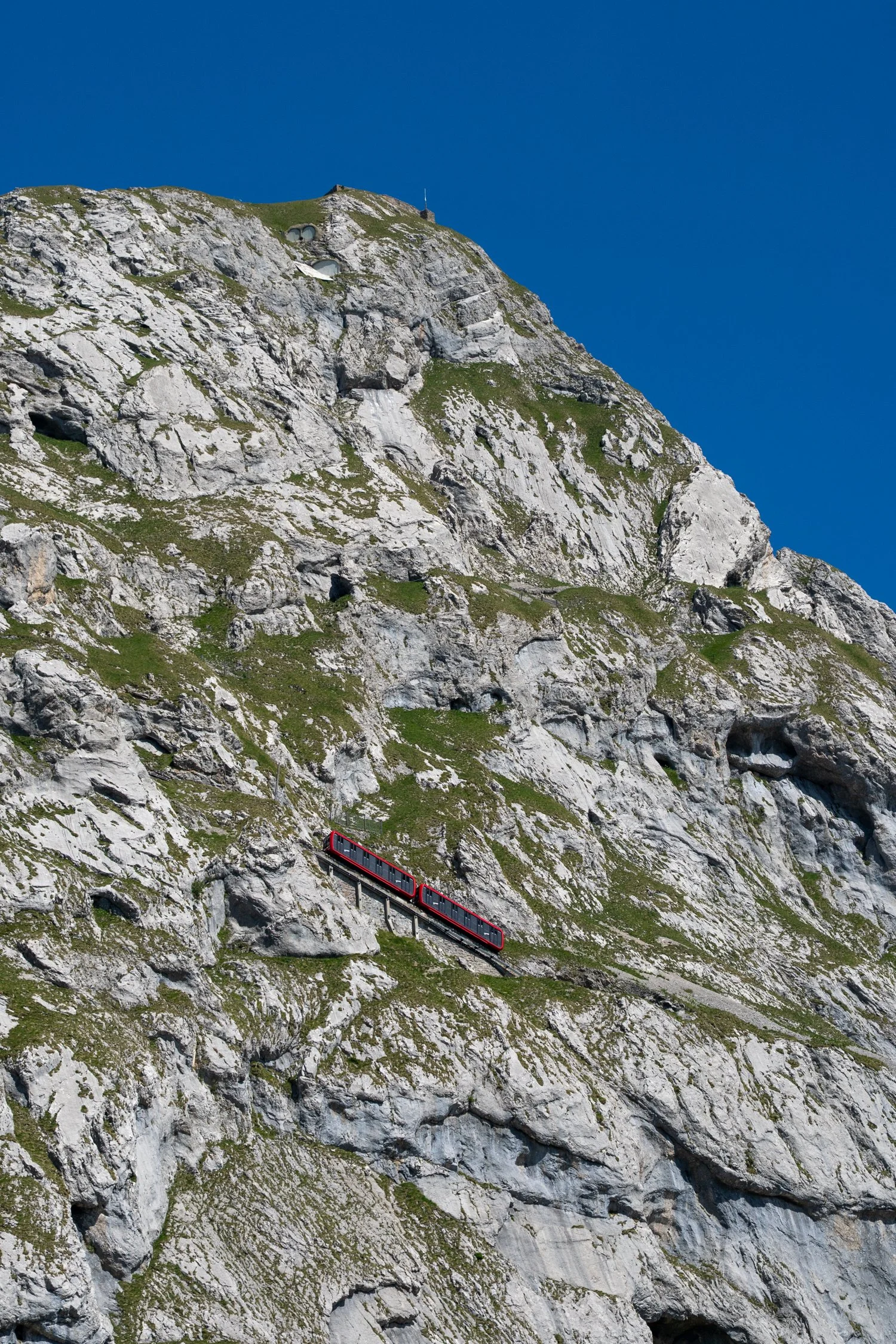
Can you see the red cogwheel on the cliff? - click for a closer look
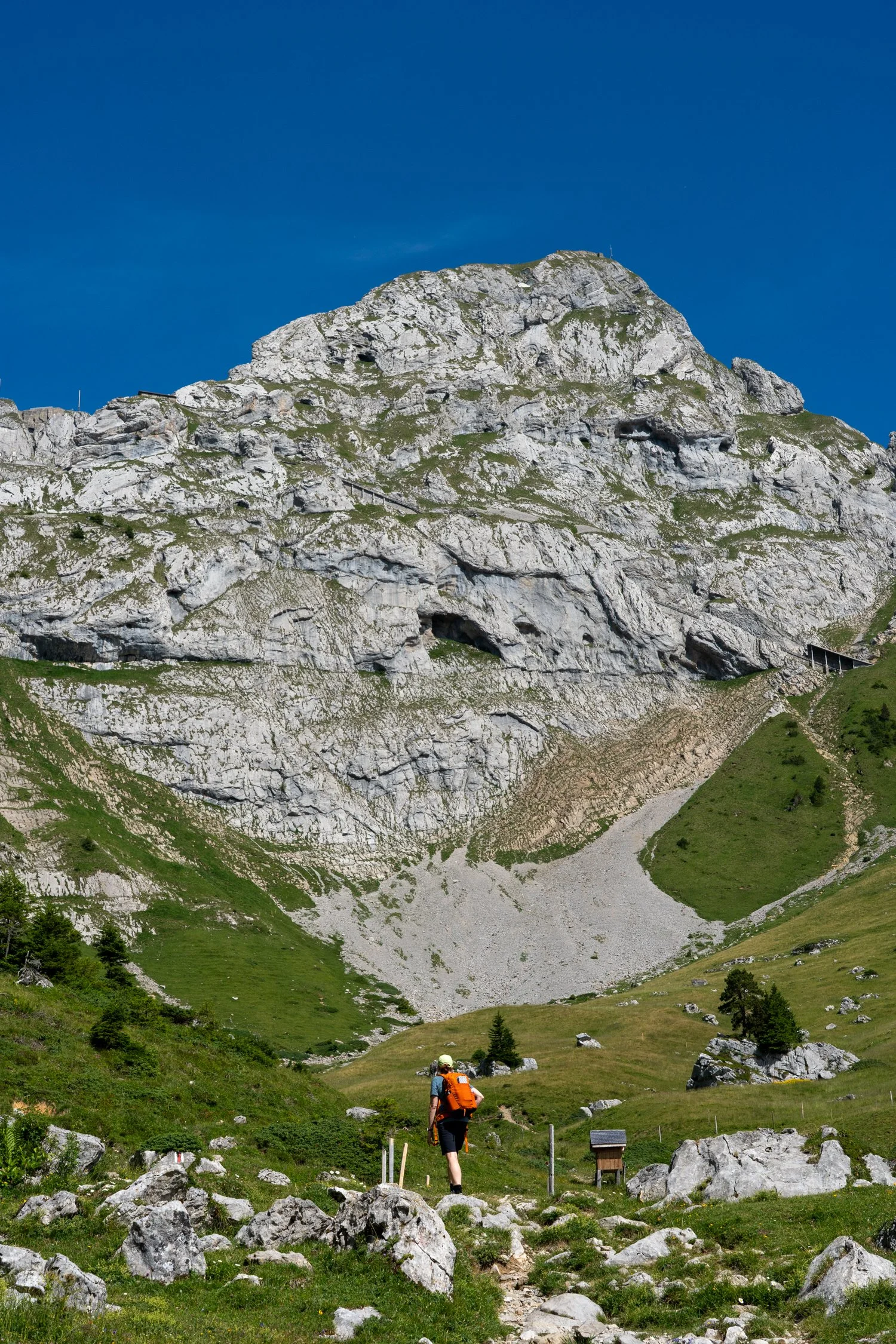
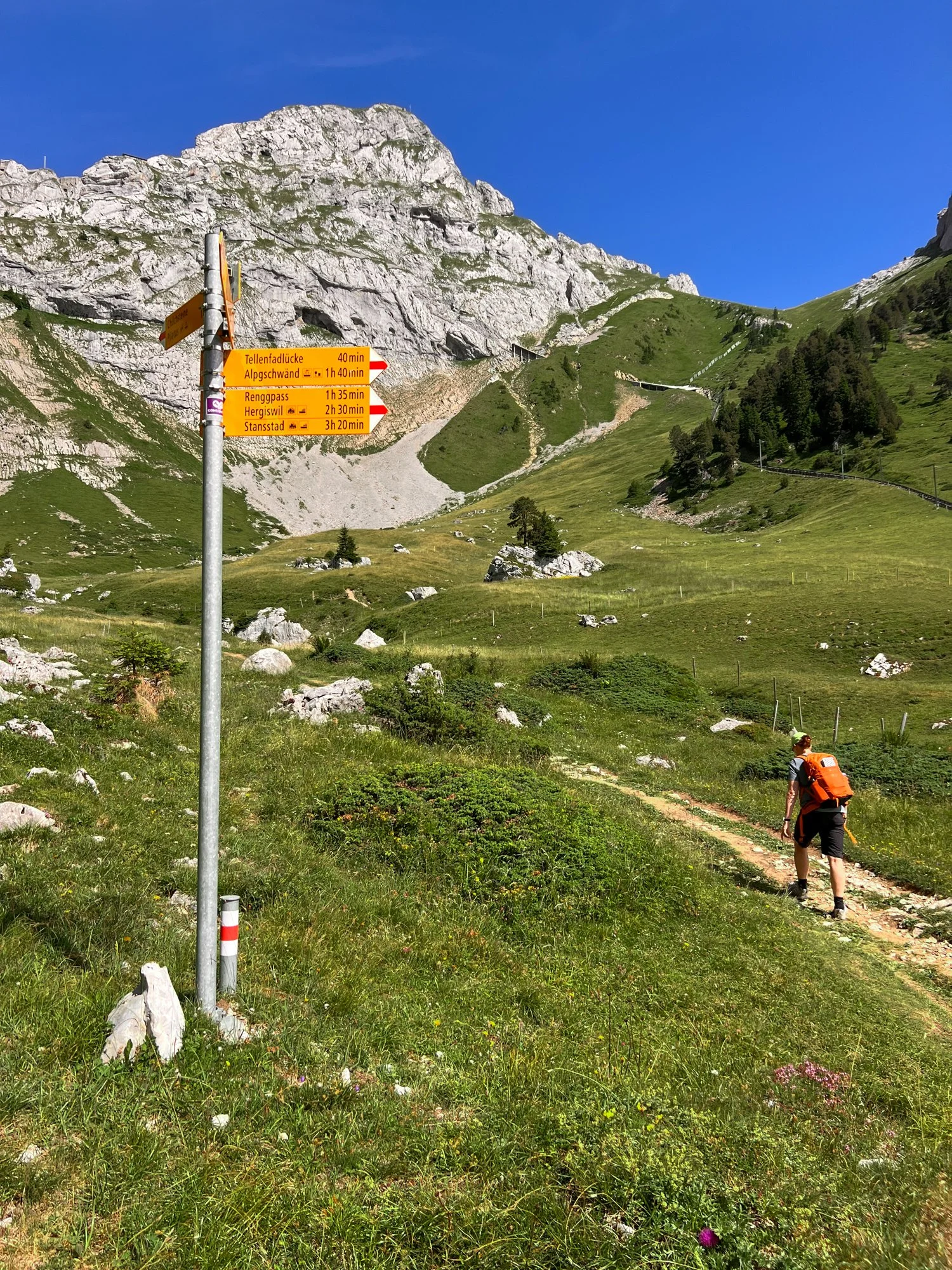
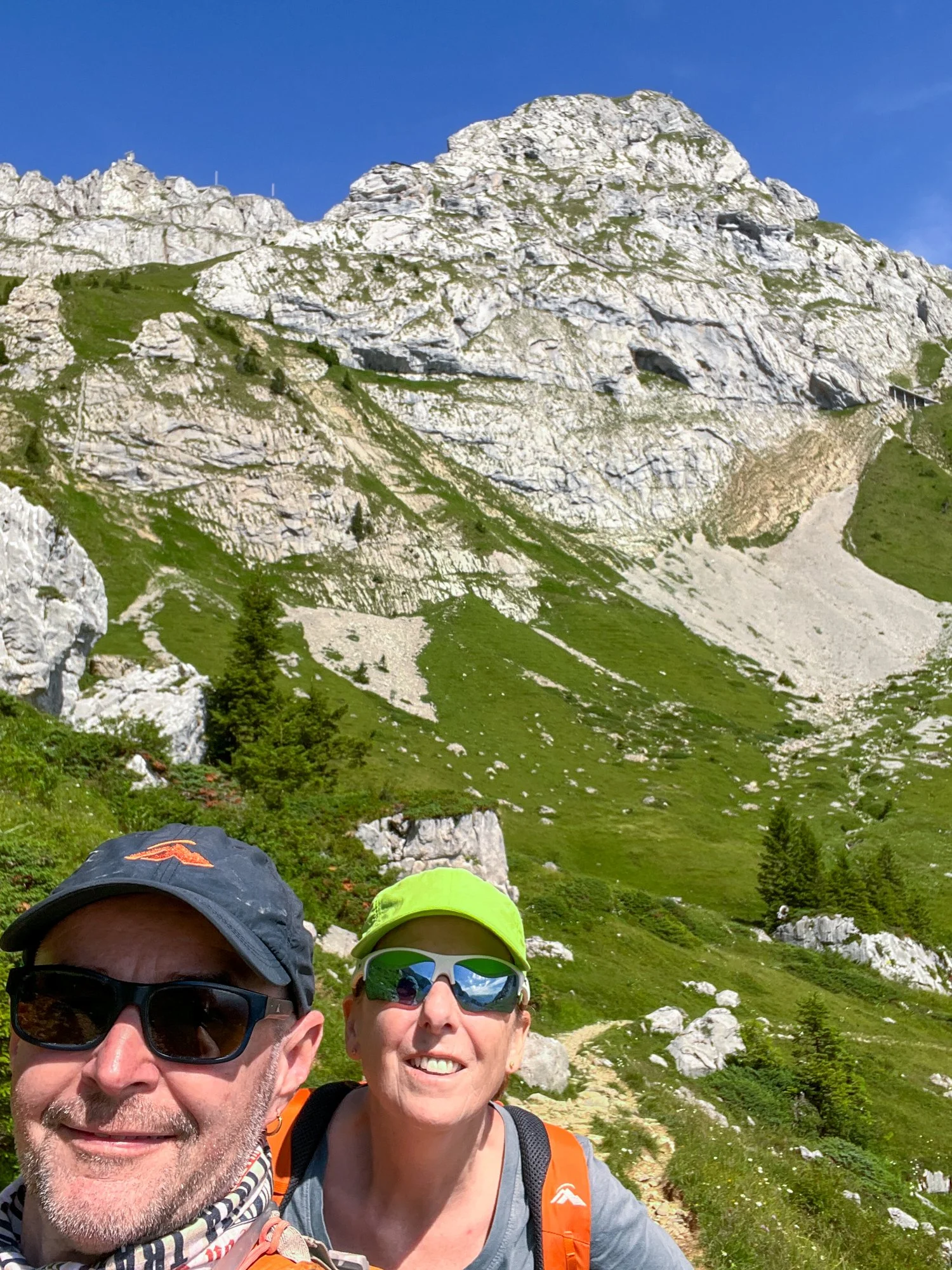
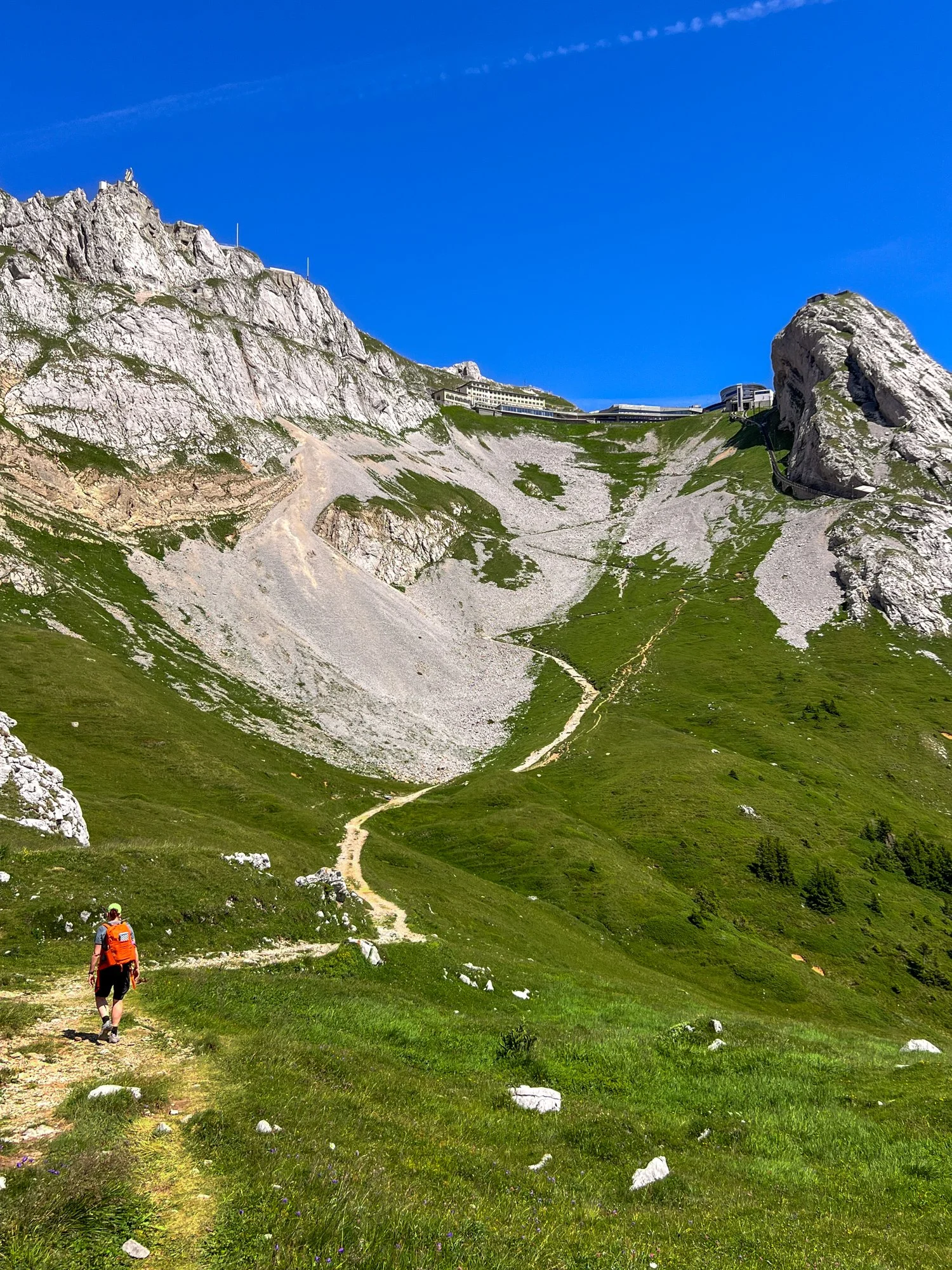
The last lot of switch backs to the top
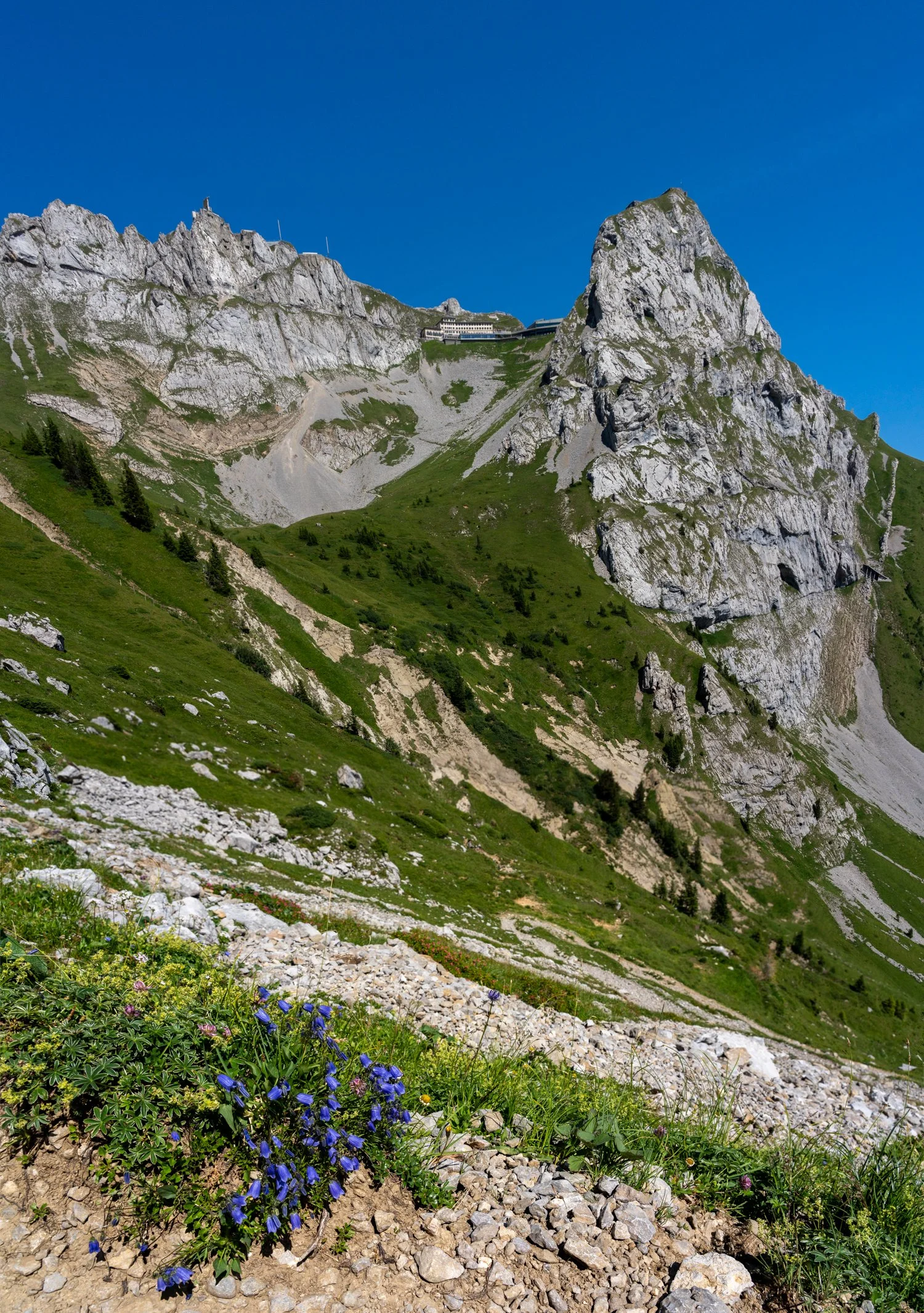
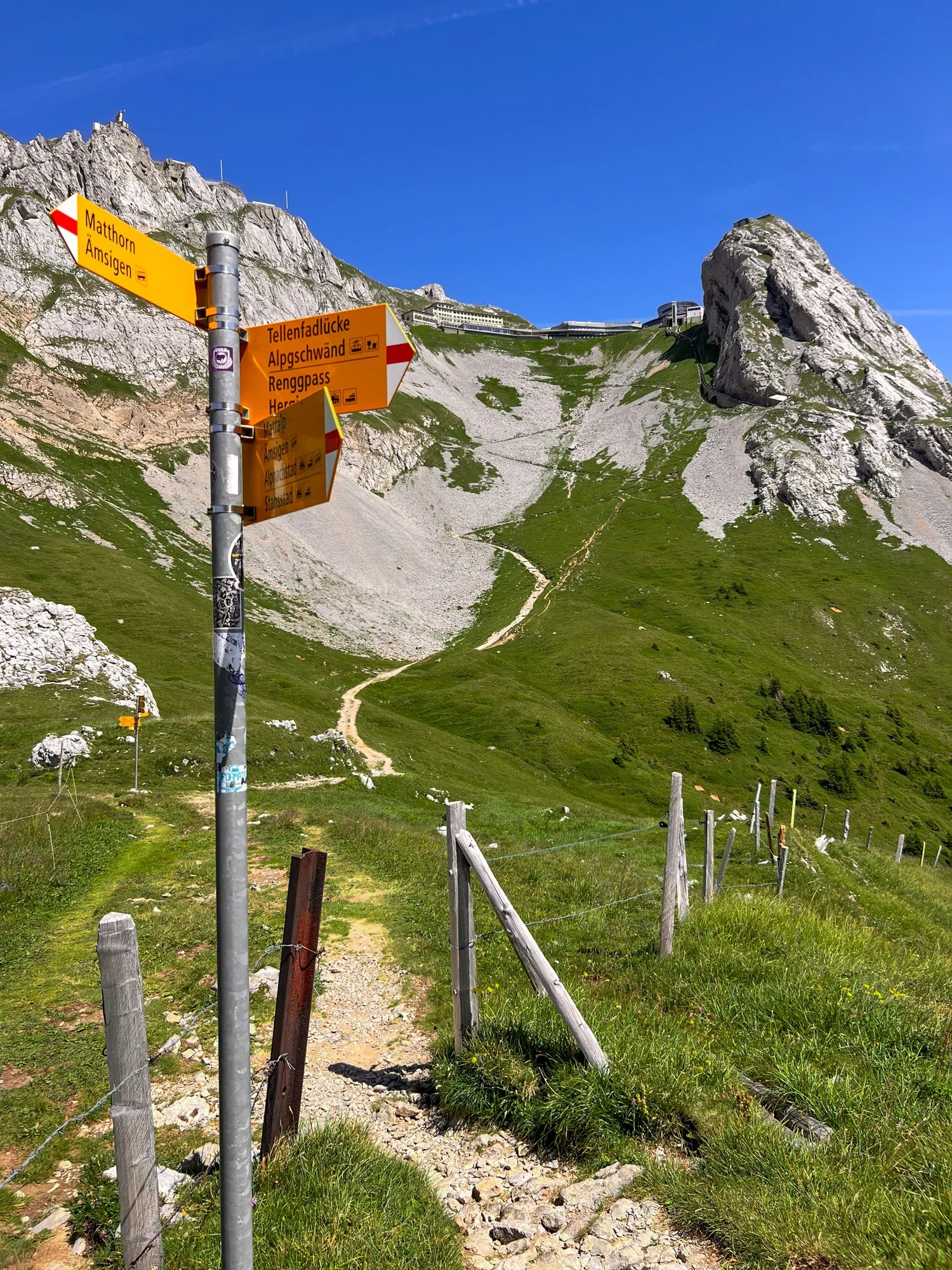
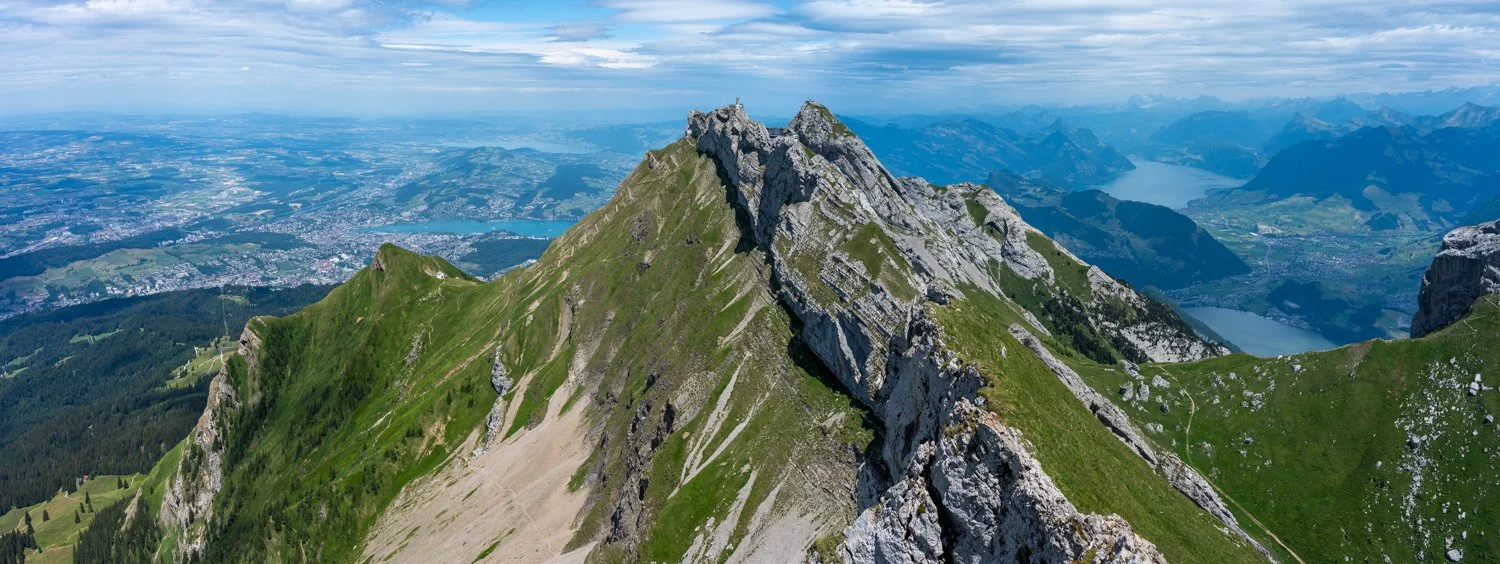
The views from the top were worth it
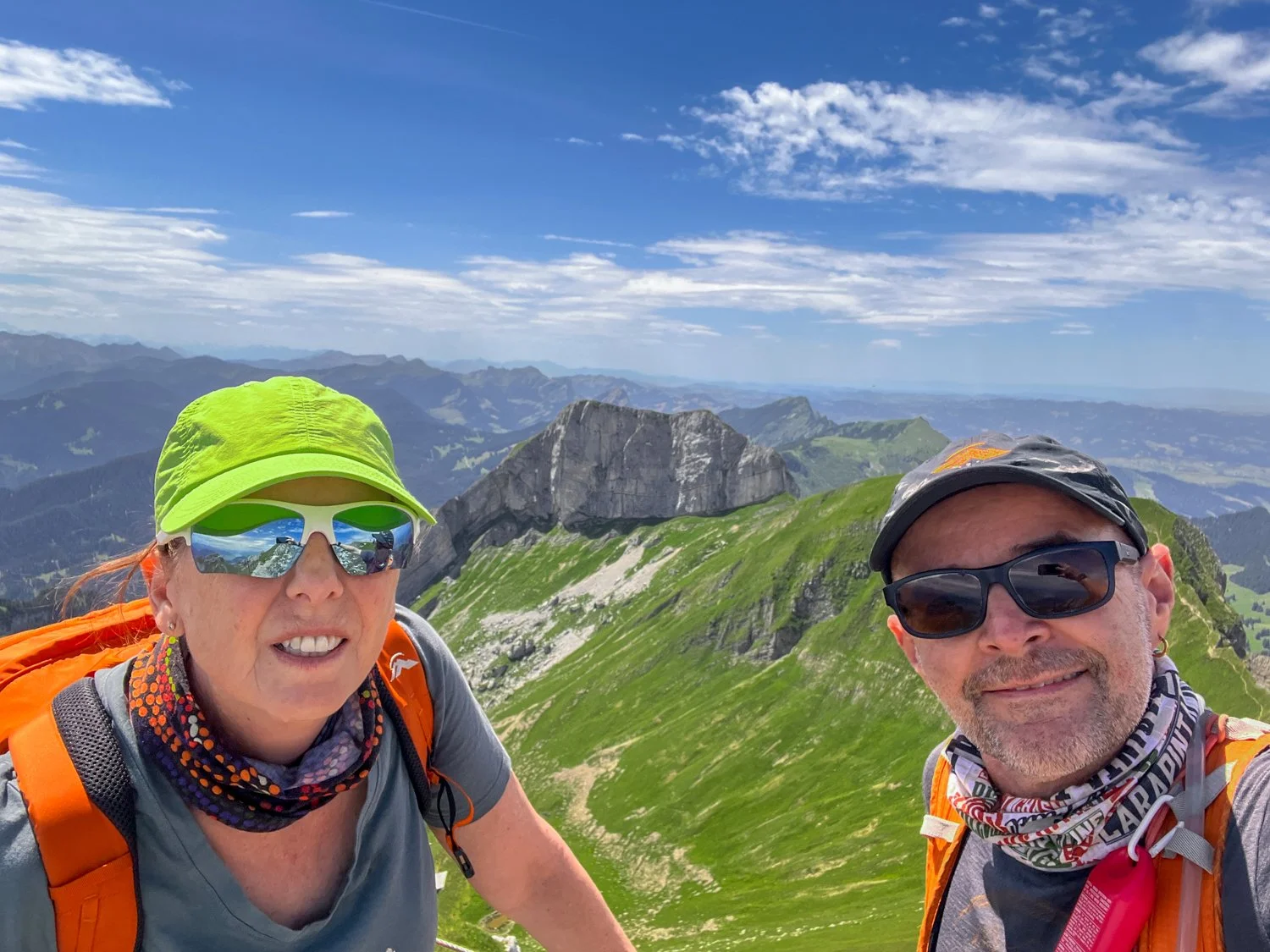
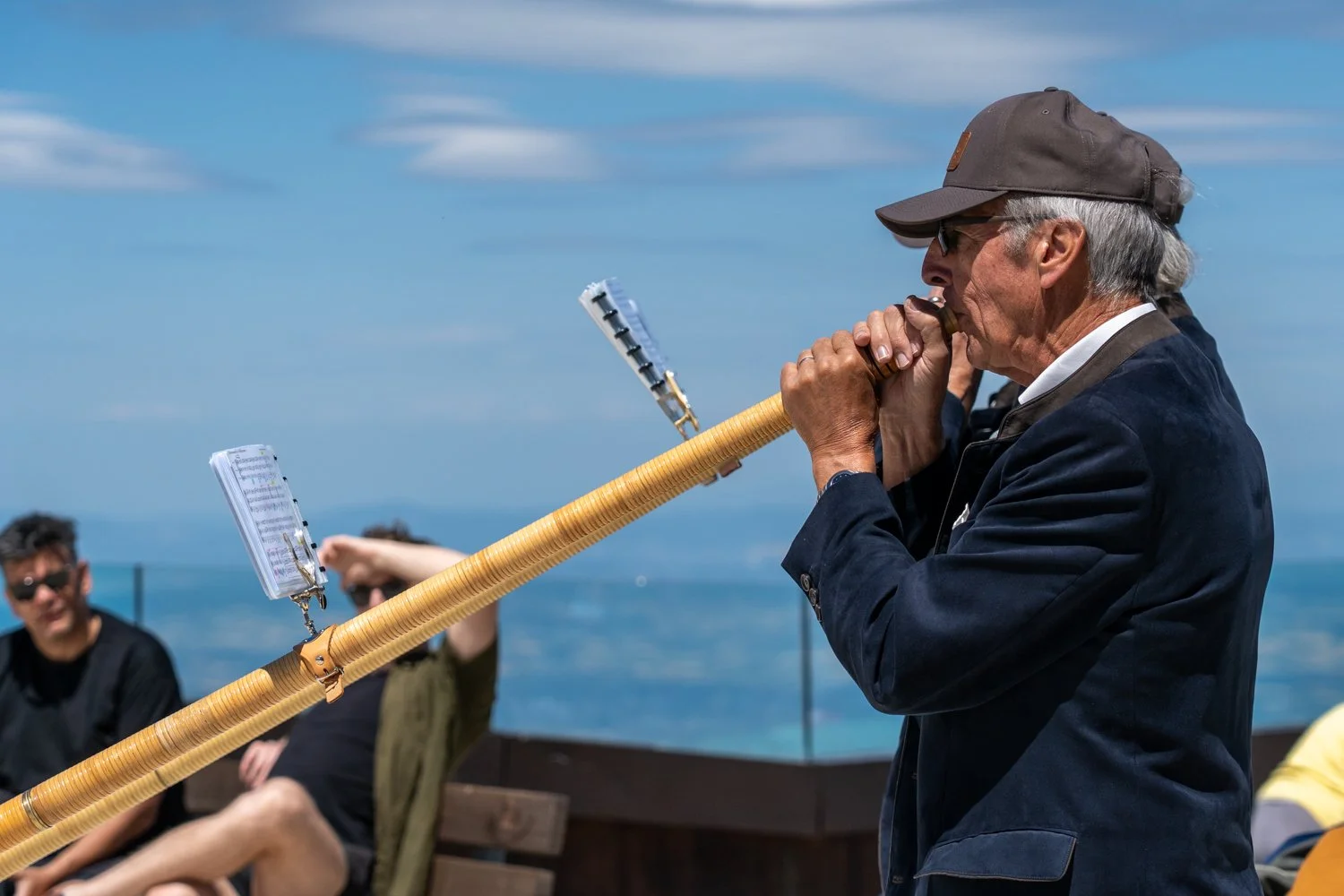
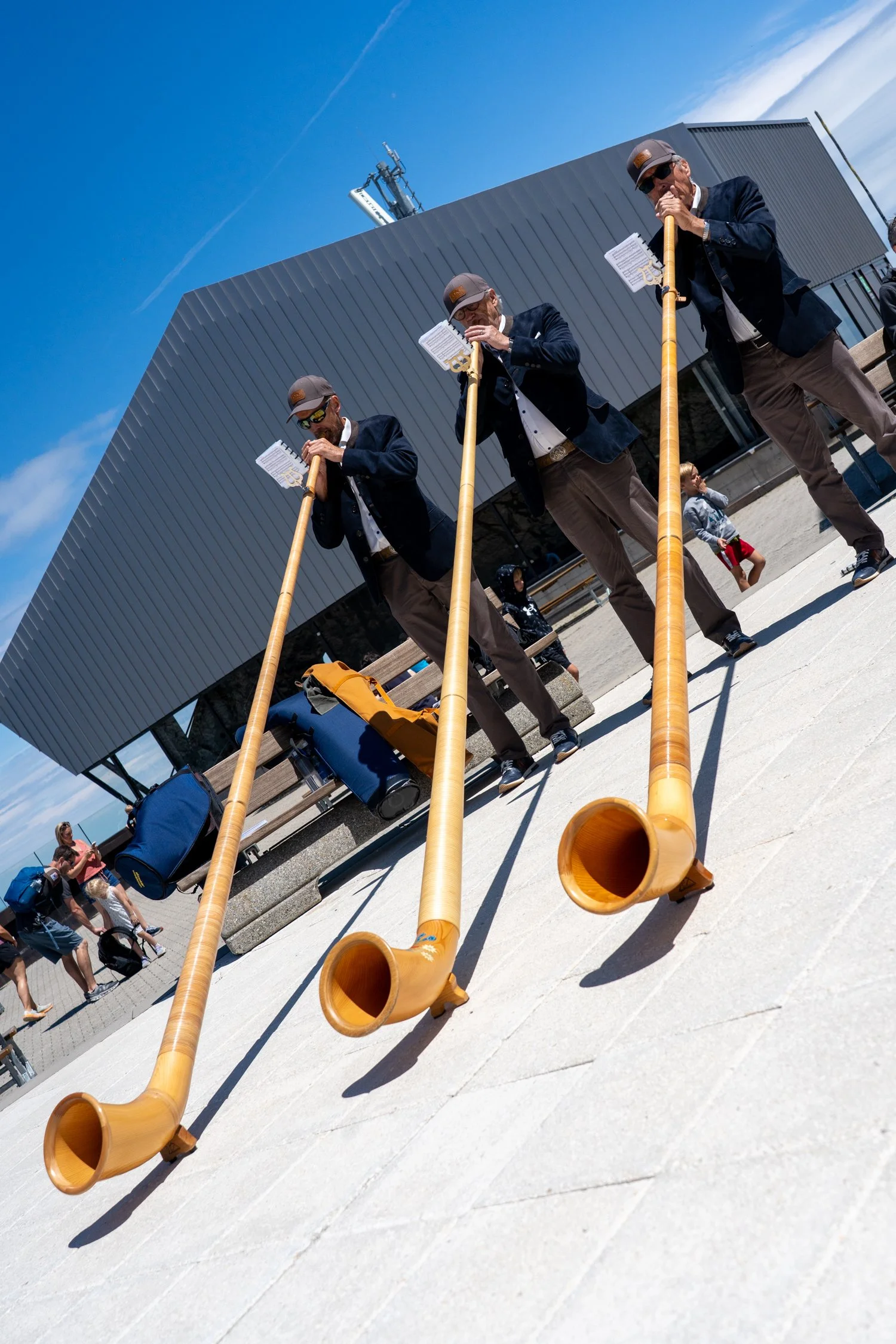
Some entertainment on the mountain top
It is amazing where you will find a church
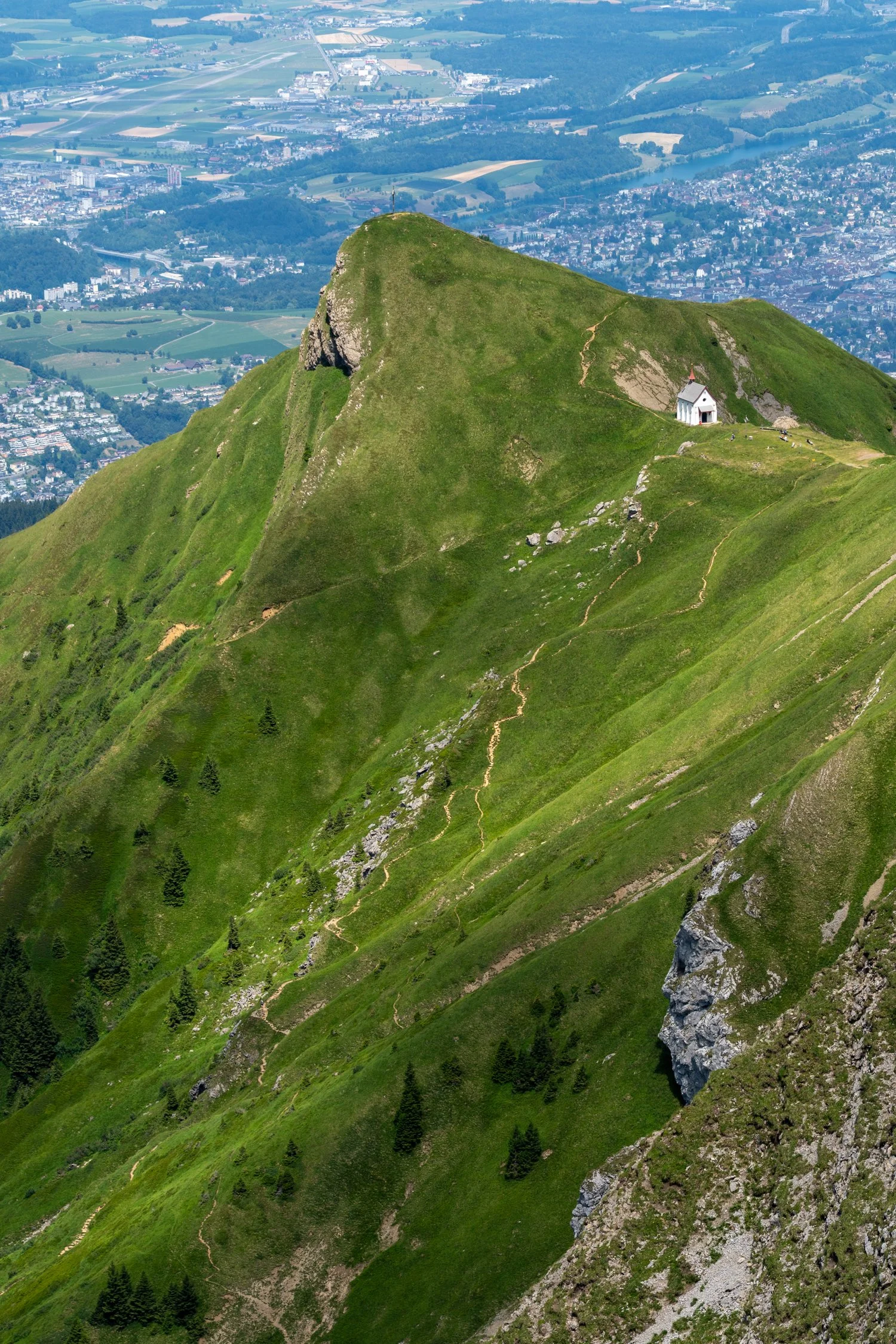
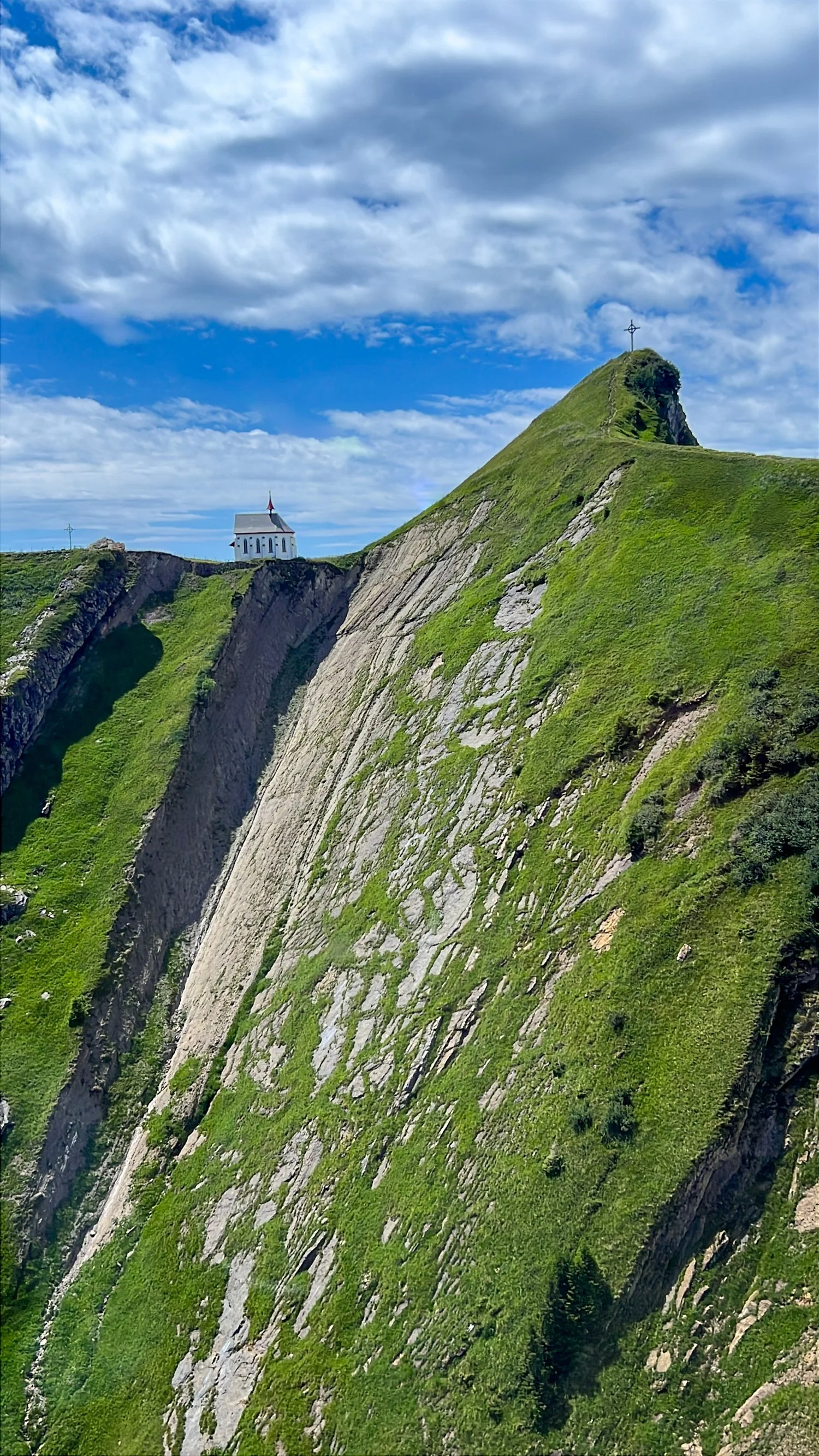
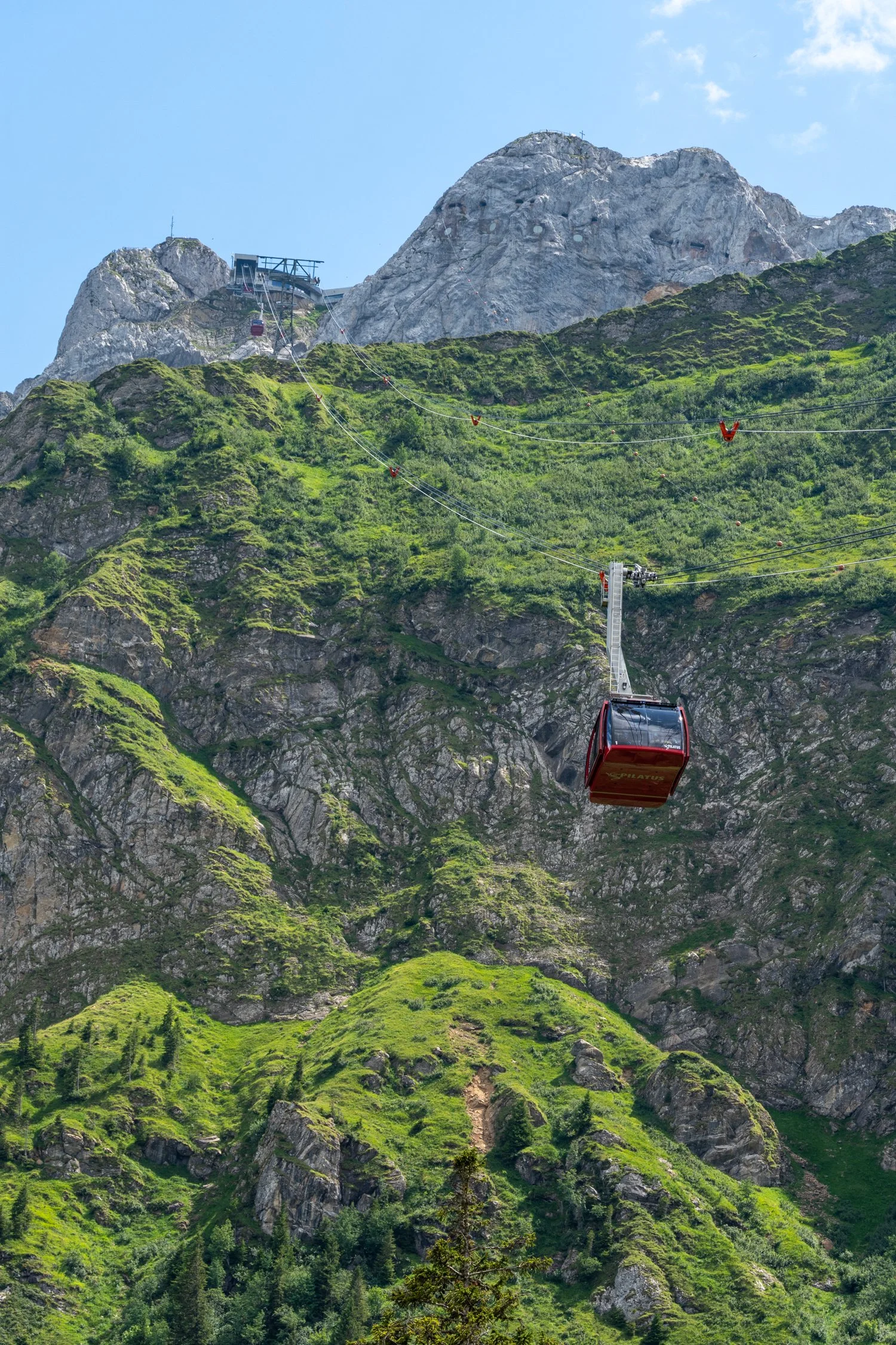
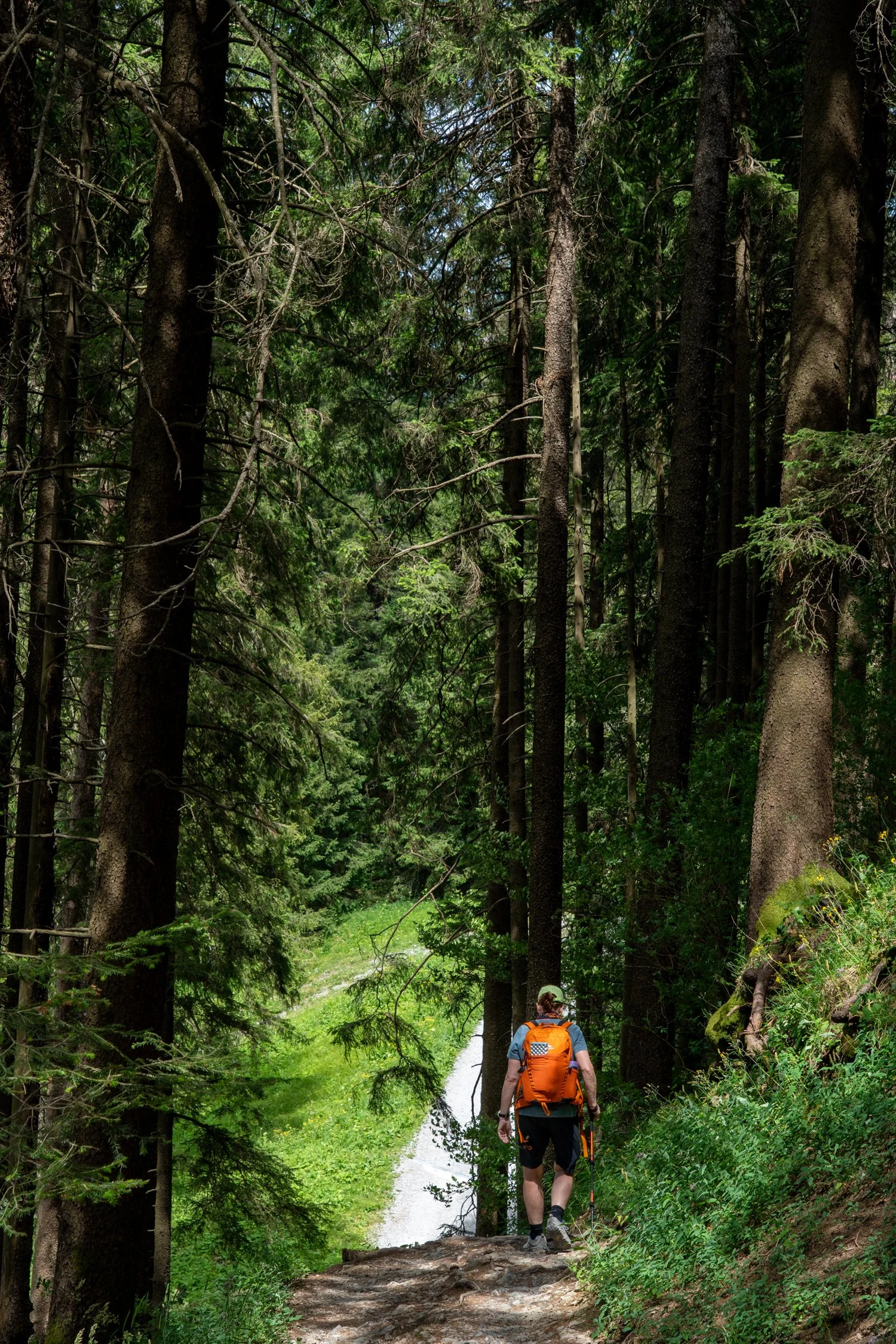
Not content with the walk up, we decided to take the cable car half way down then walk the rest of the way through the forest to the village.
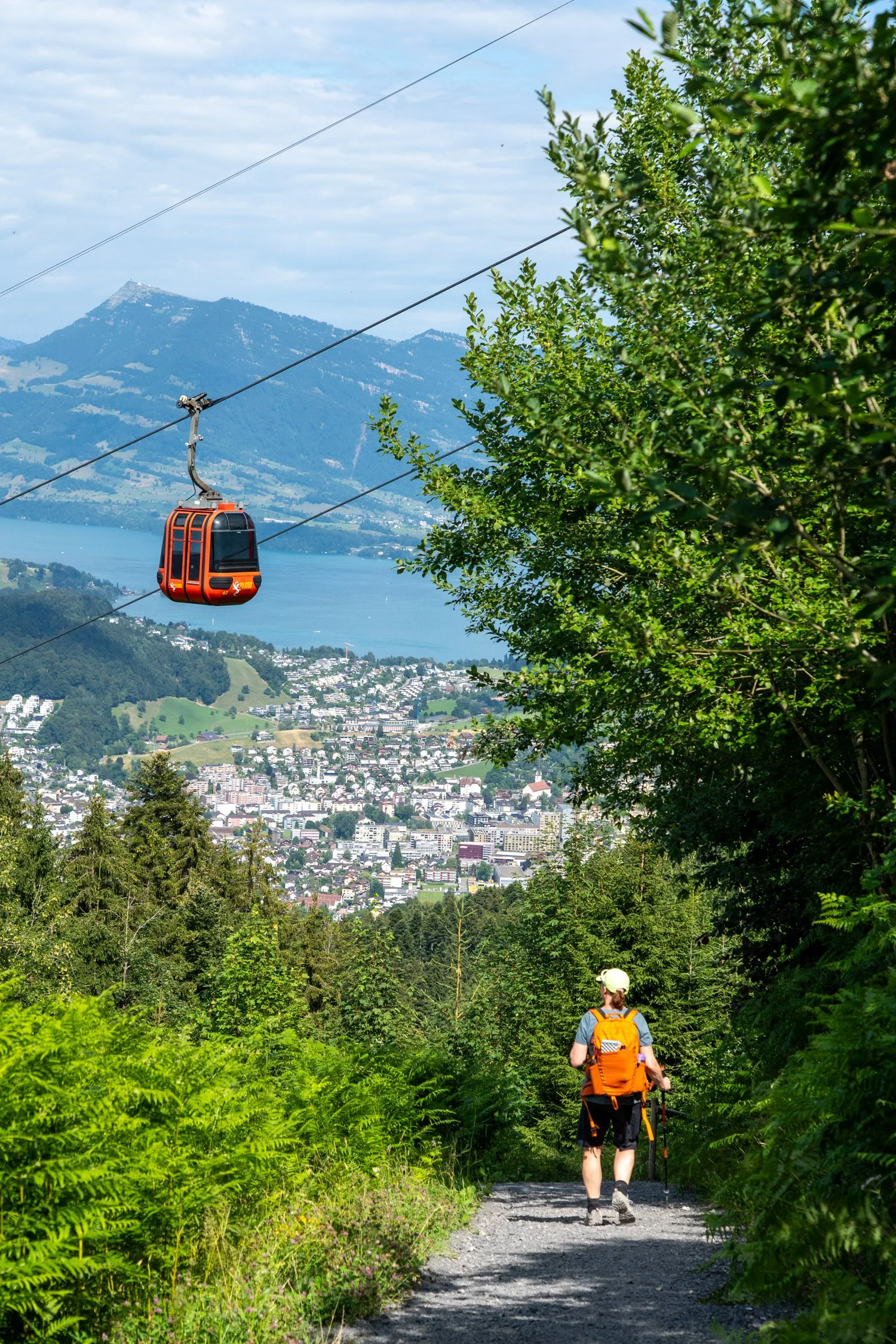
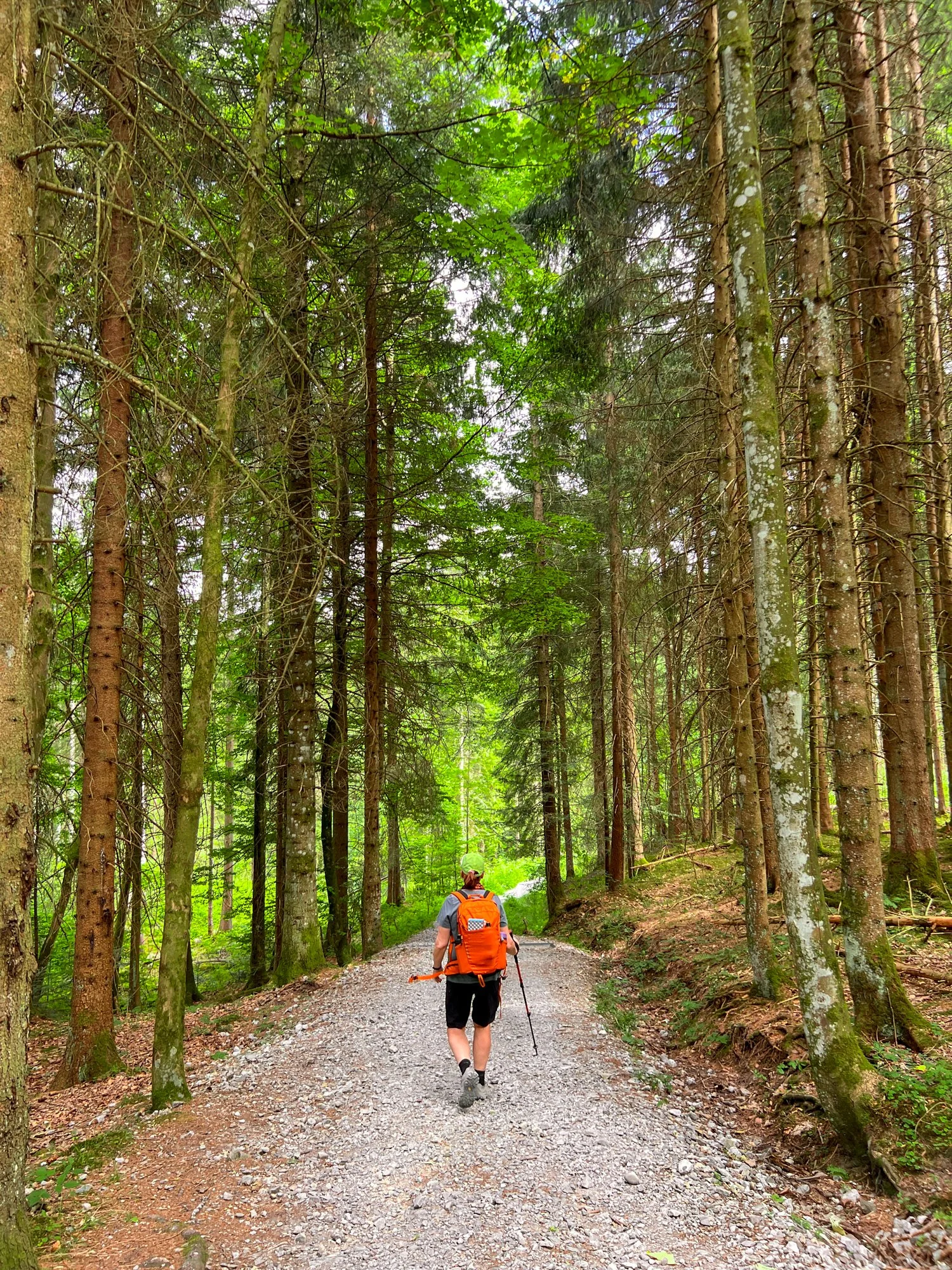
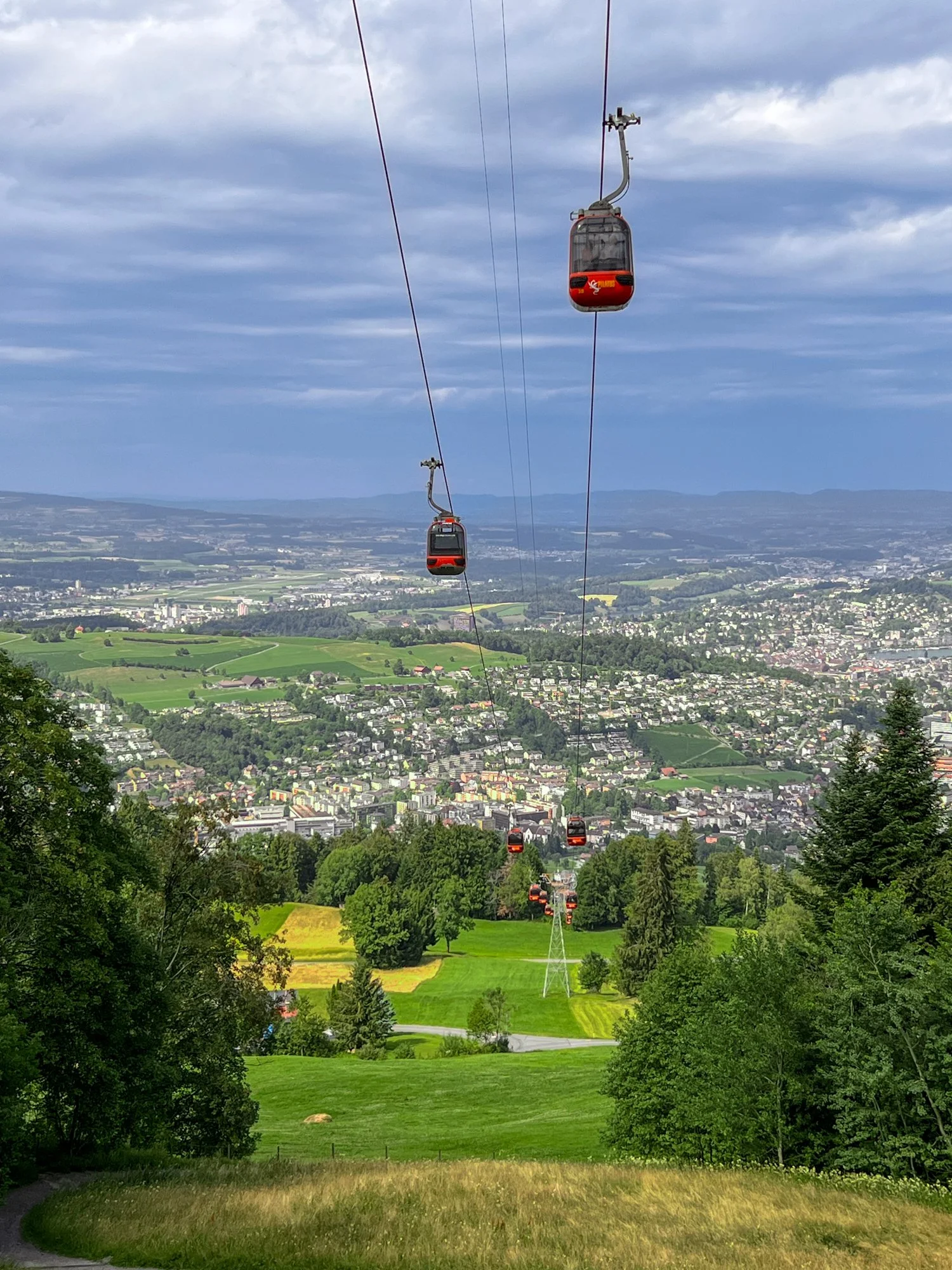
The sounds of the mountains
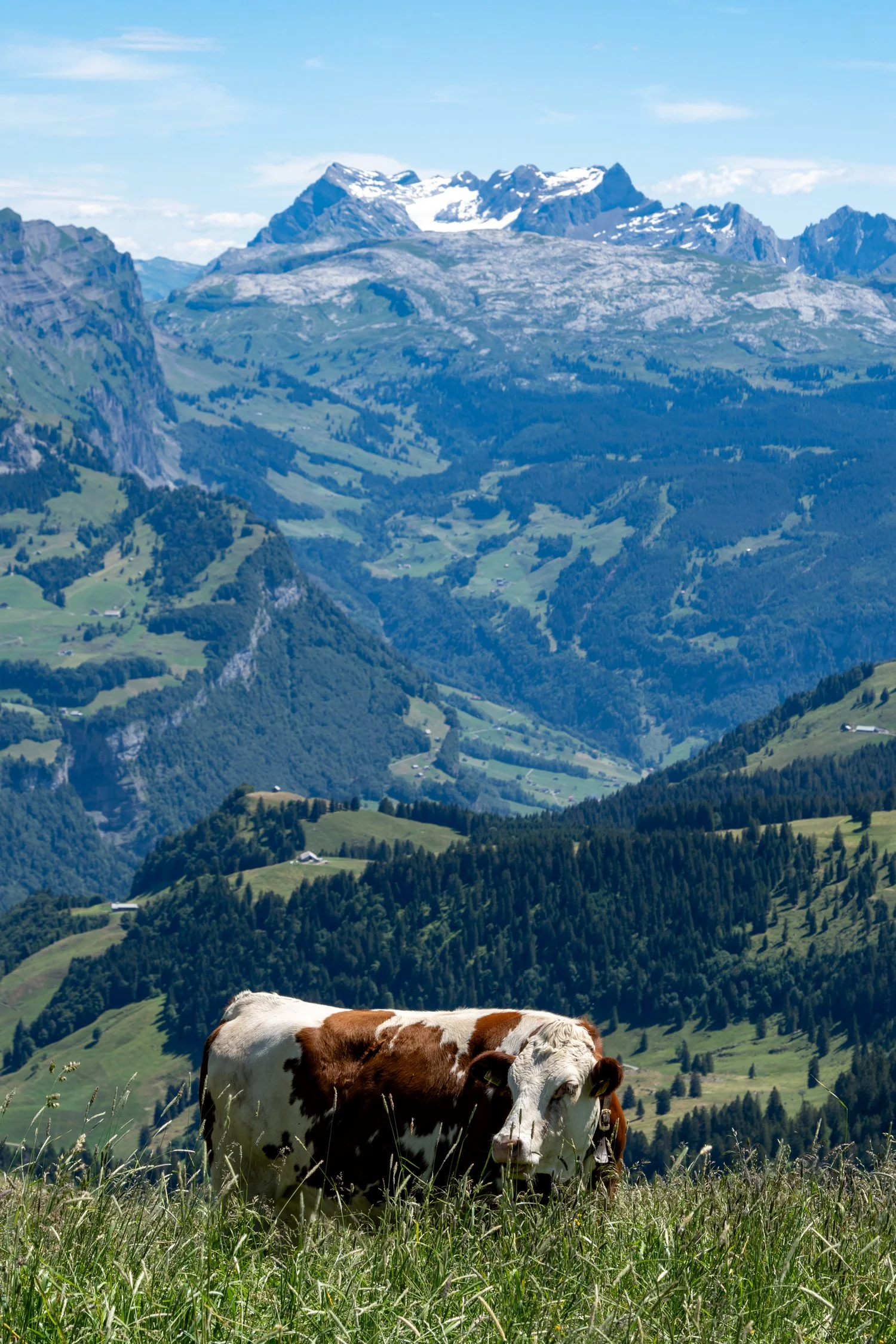
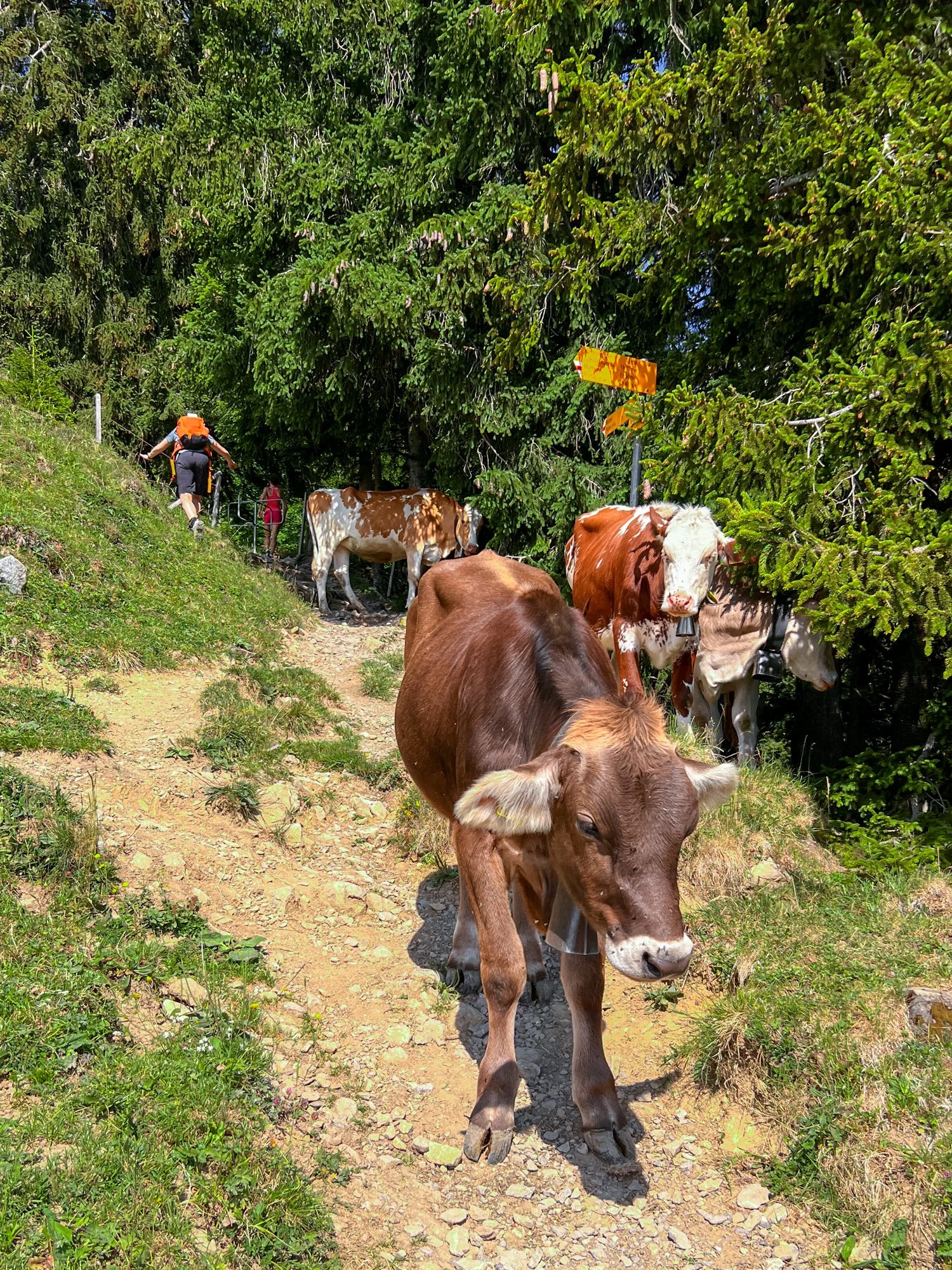
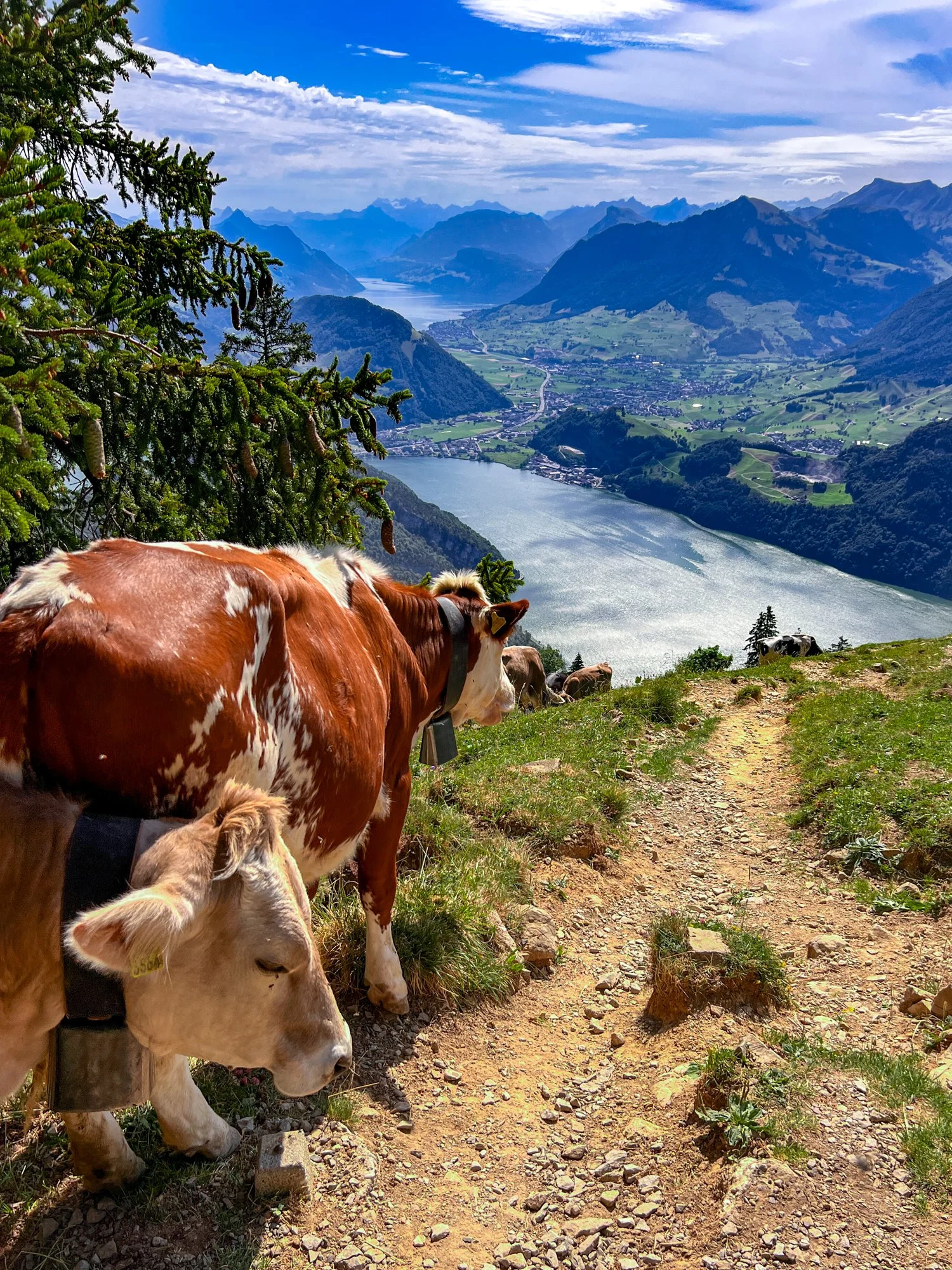
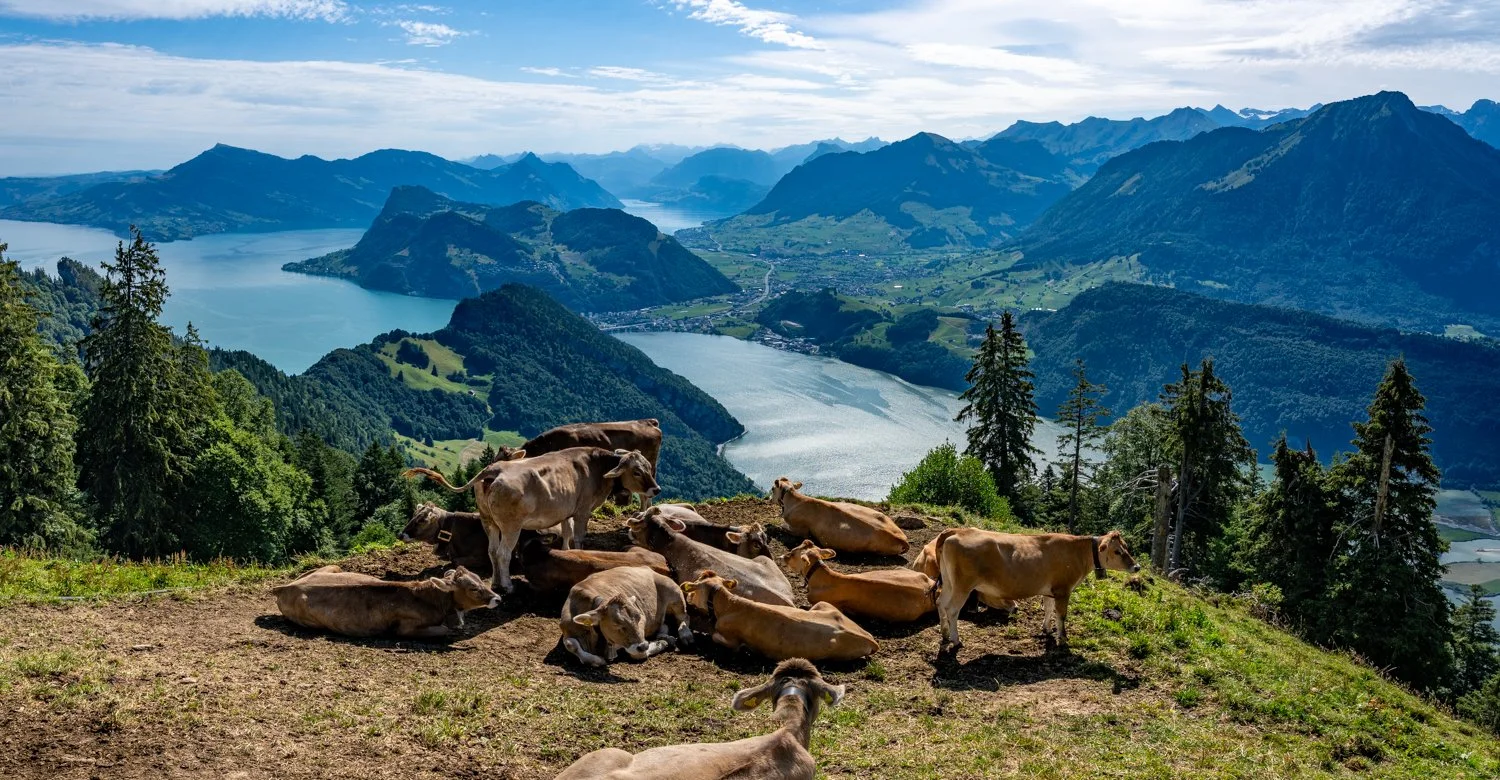
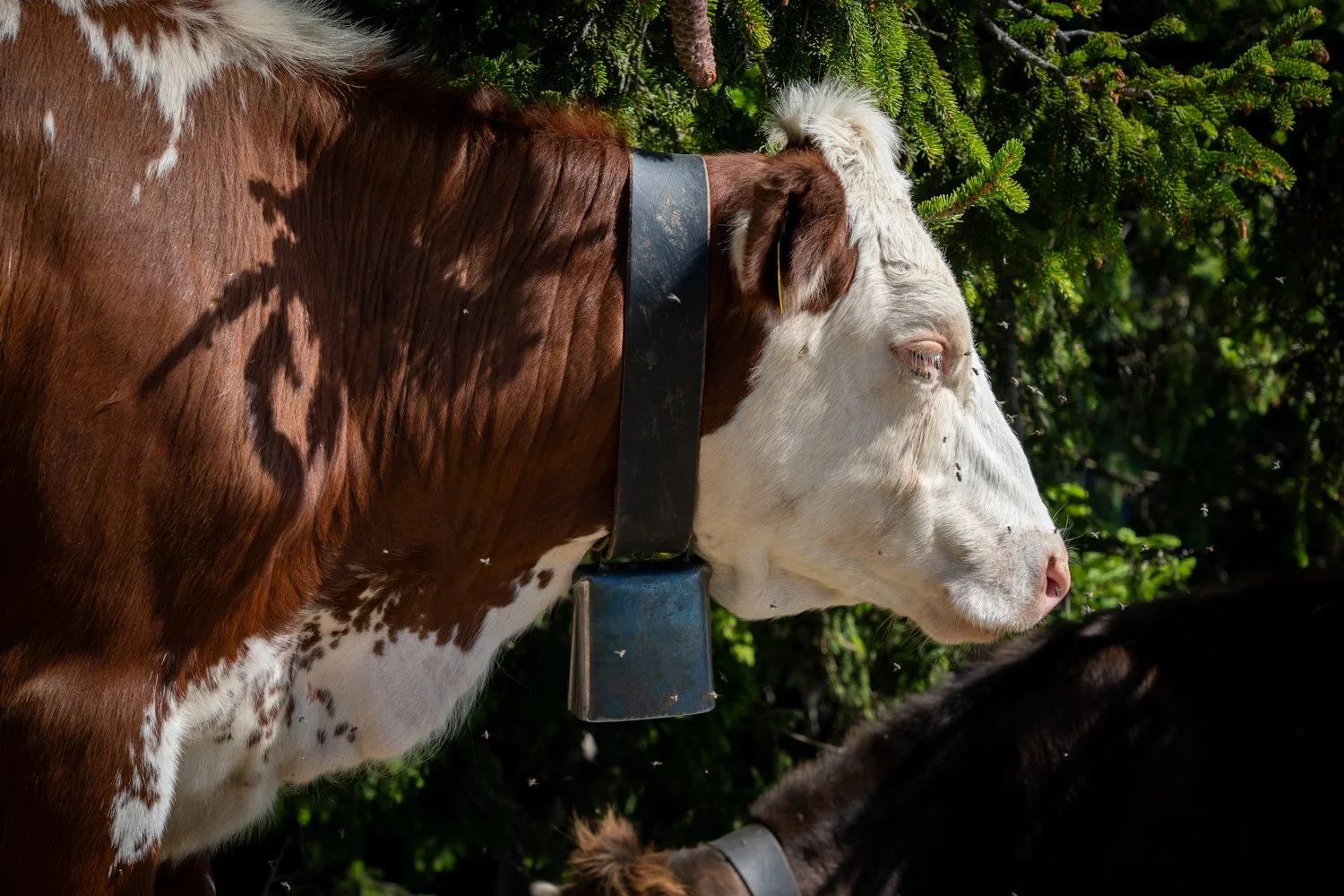
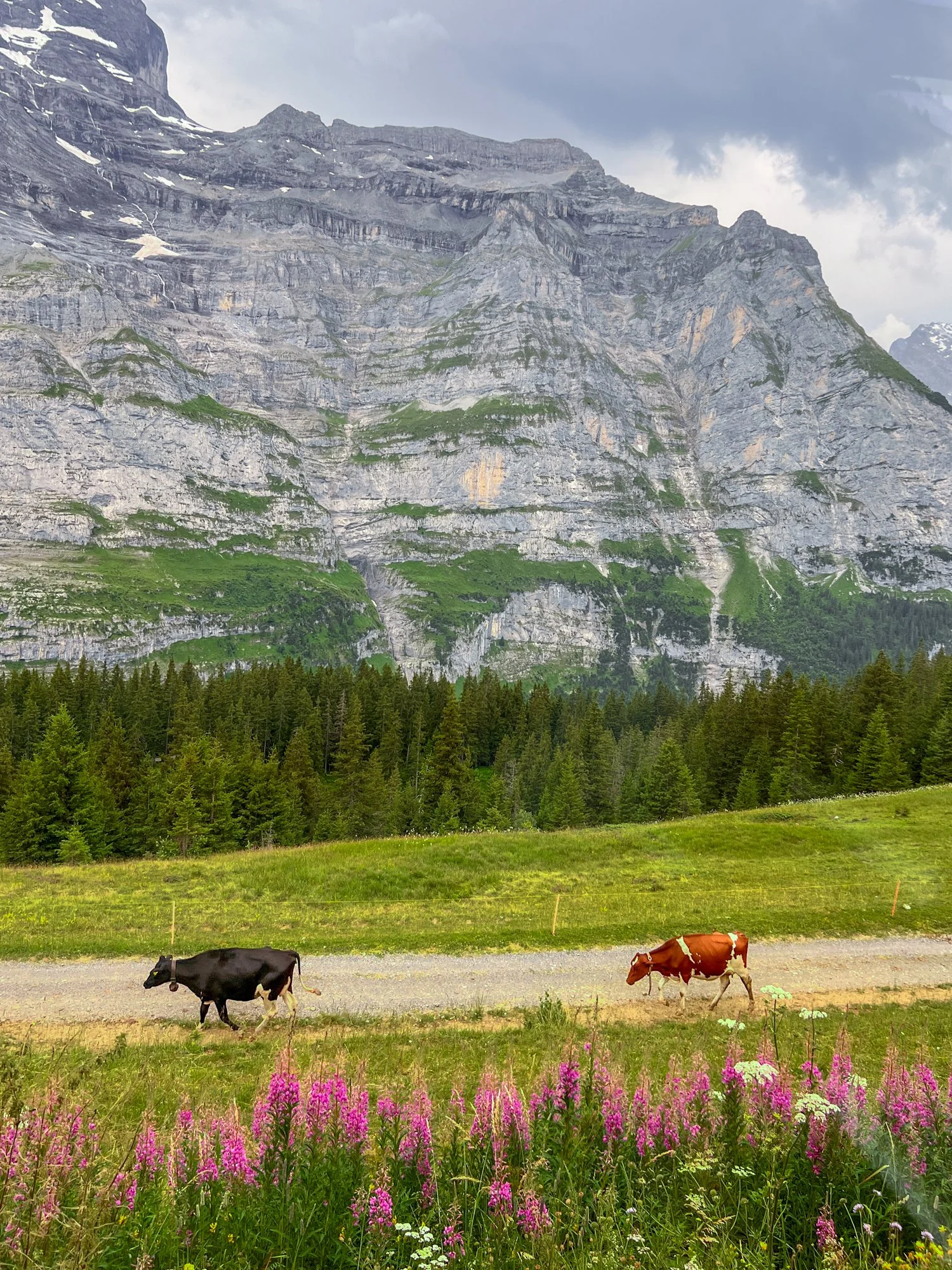
While we only saw the occasional hiker, one constant companion was the ever present cows. They seem to be everywhere in the Swiss mountains, happily grazing on impossibly green alpine slopes, seemingly oblivious to the hikers passing by. Their cowbells provide a constant soundtrack to the journey — a gentle, rhythmic clang... clang... clang drifting across the valleys.
At first you notice the bells. Then, after a while, you stop hearing individual cows and start hearing the whole mountain breathing to its own rhythm. The sound echoes across the valley, mixing with the breeze and the occasional distant train. It's strangely soothing — almost like a natural metronome for the hike.
Lauterbrunnen
Lauterbrunnen was to be our base for three days of exploring the mountains, but before heading upwards, the valley itself deserved a day of discovery.
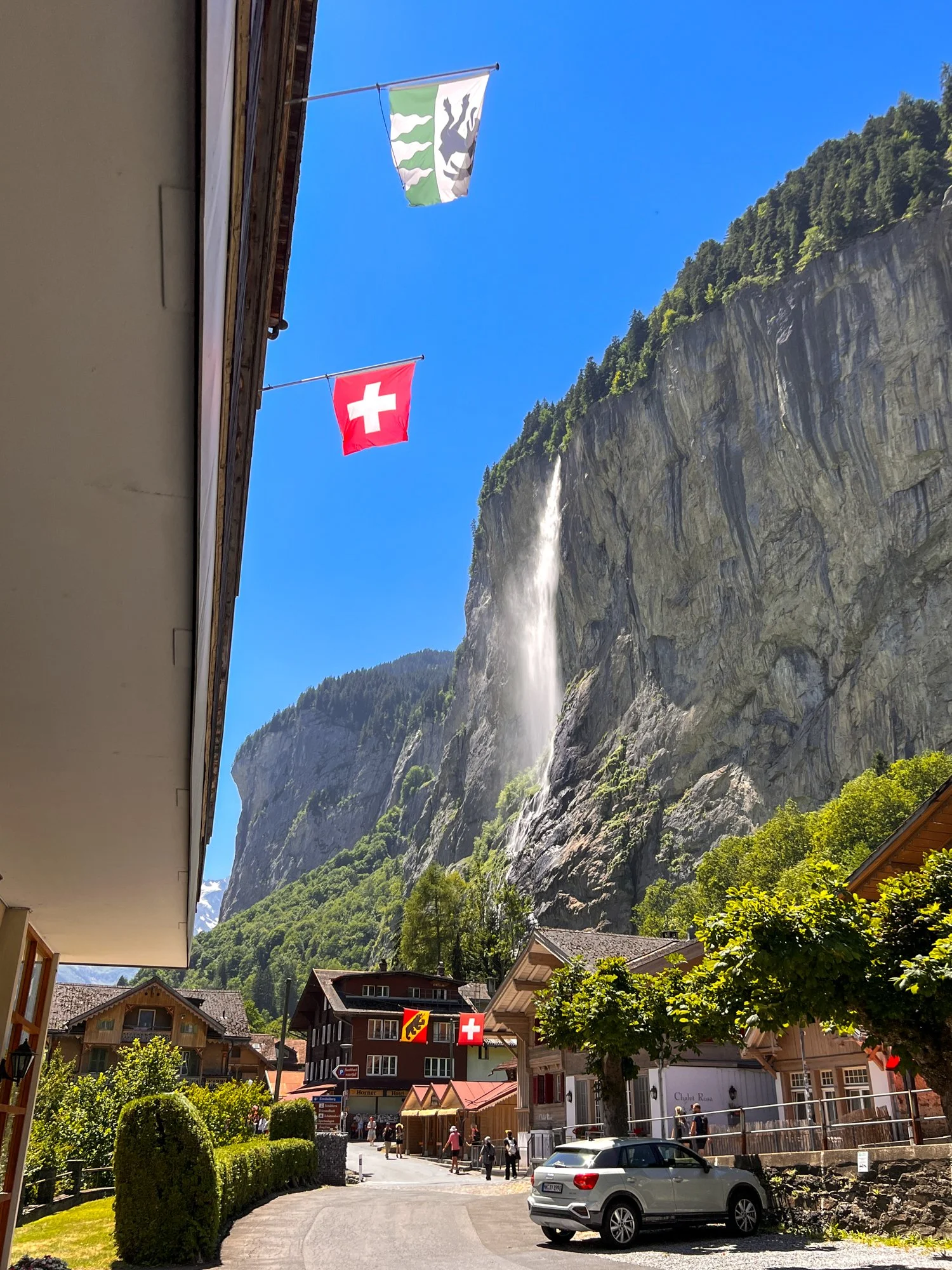
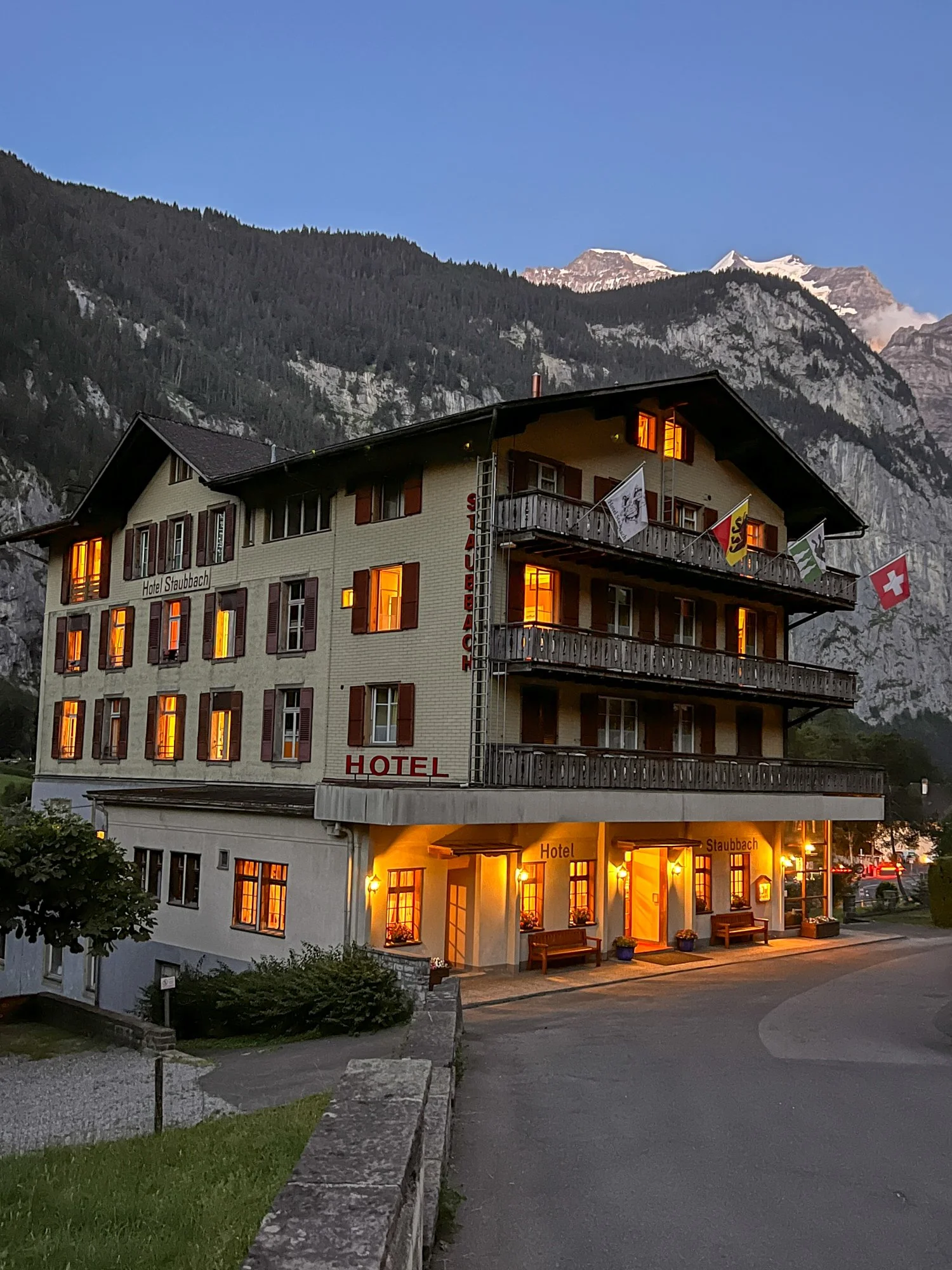
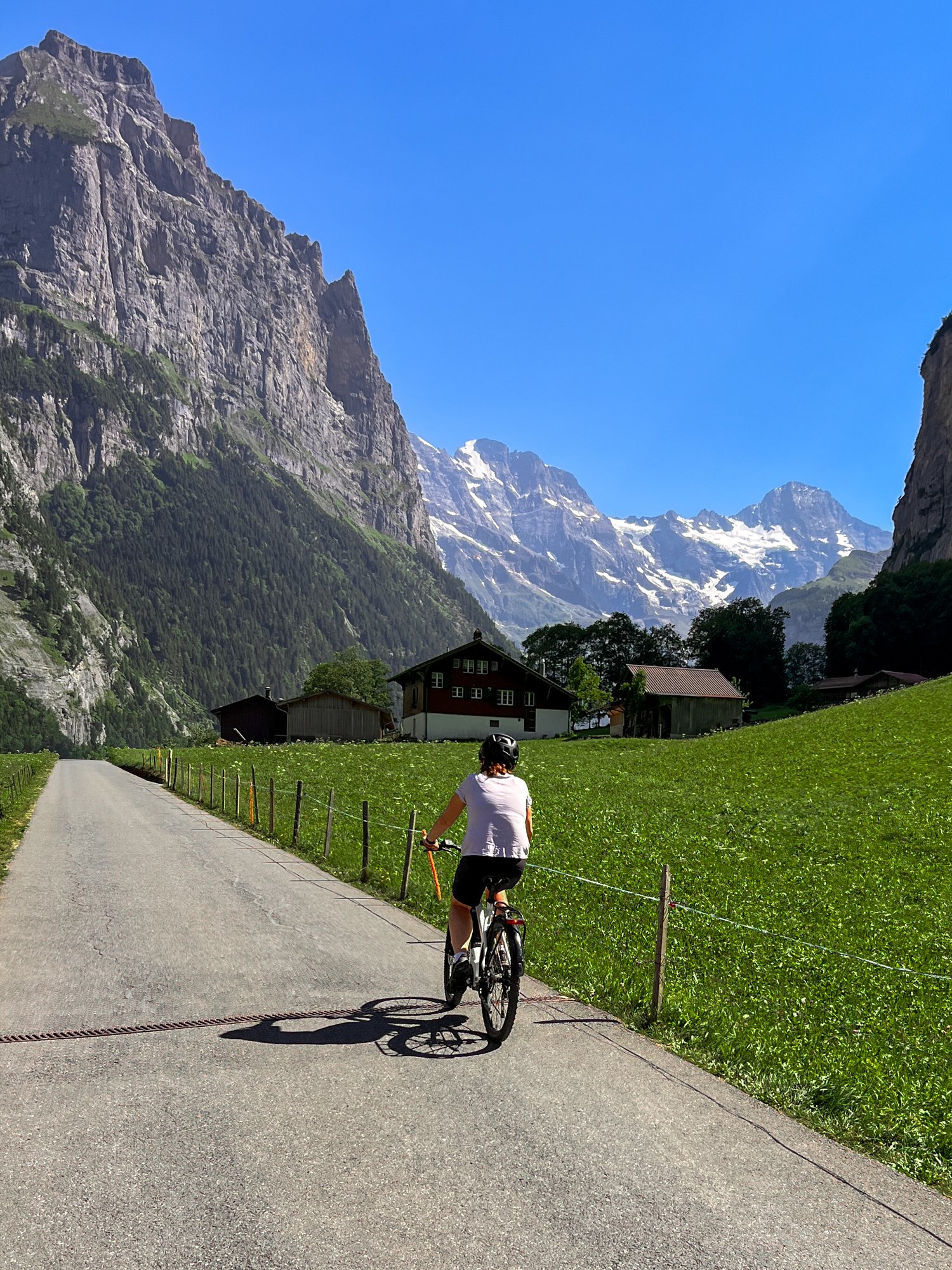
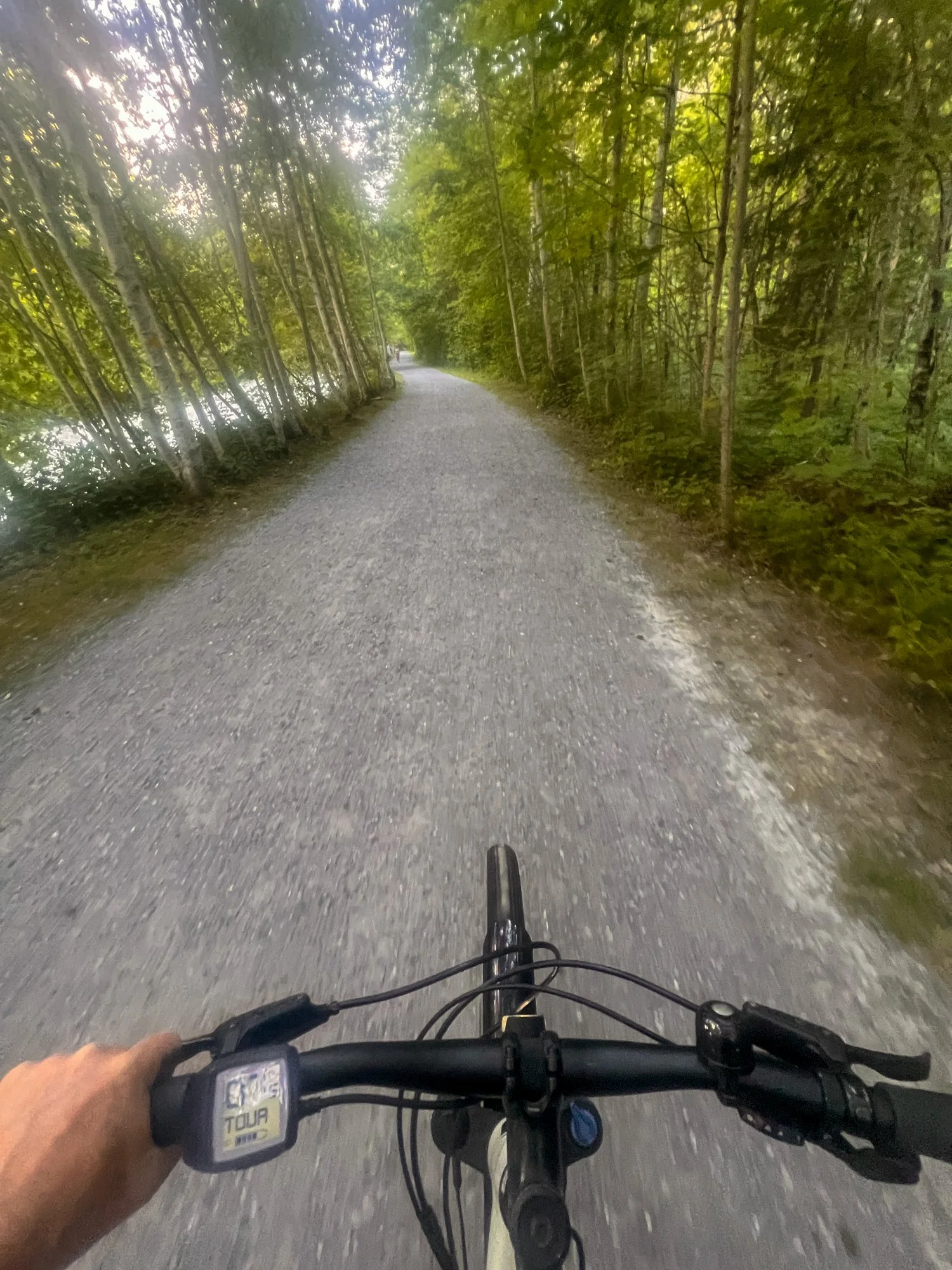
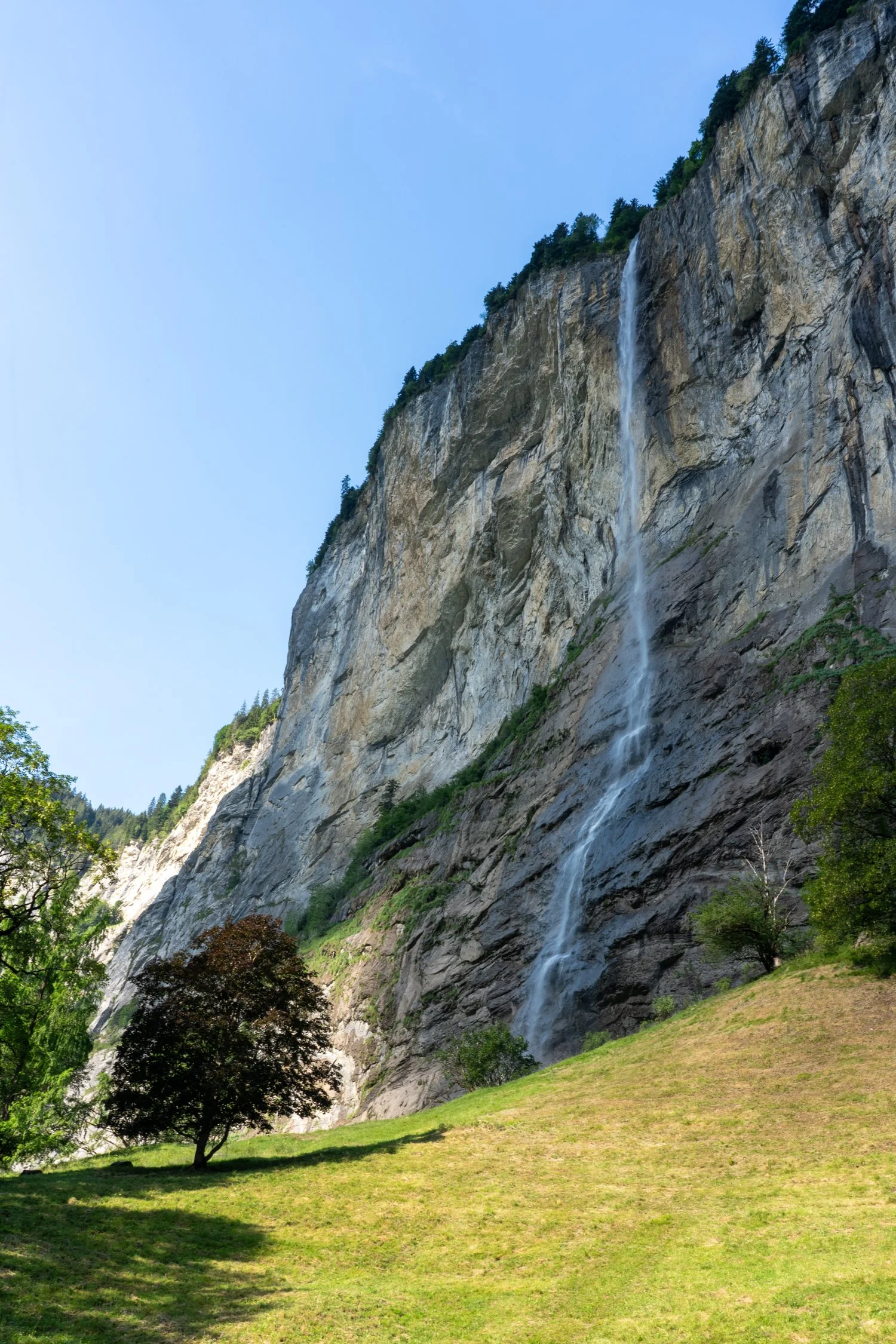
And what better way to explore it than by bike. Cycling along the valley floor was the perfect way to take in the sheer scale of the cliffs — and the waterfalls that seemed to appear around every corner. The most impressive was Staubbach Falls, which tumbles dramatically down the cliff face and, even better, had a prime position directly outside our hotel balcony. Not a bad view to wake up to.
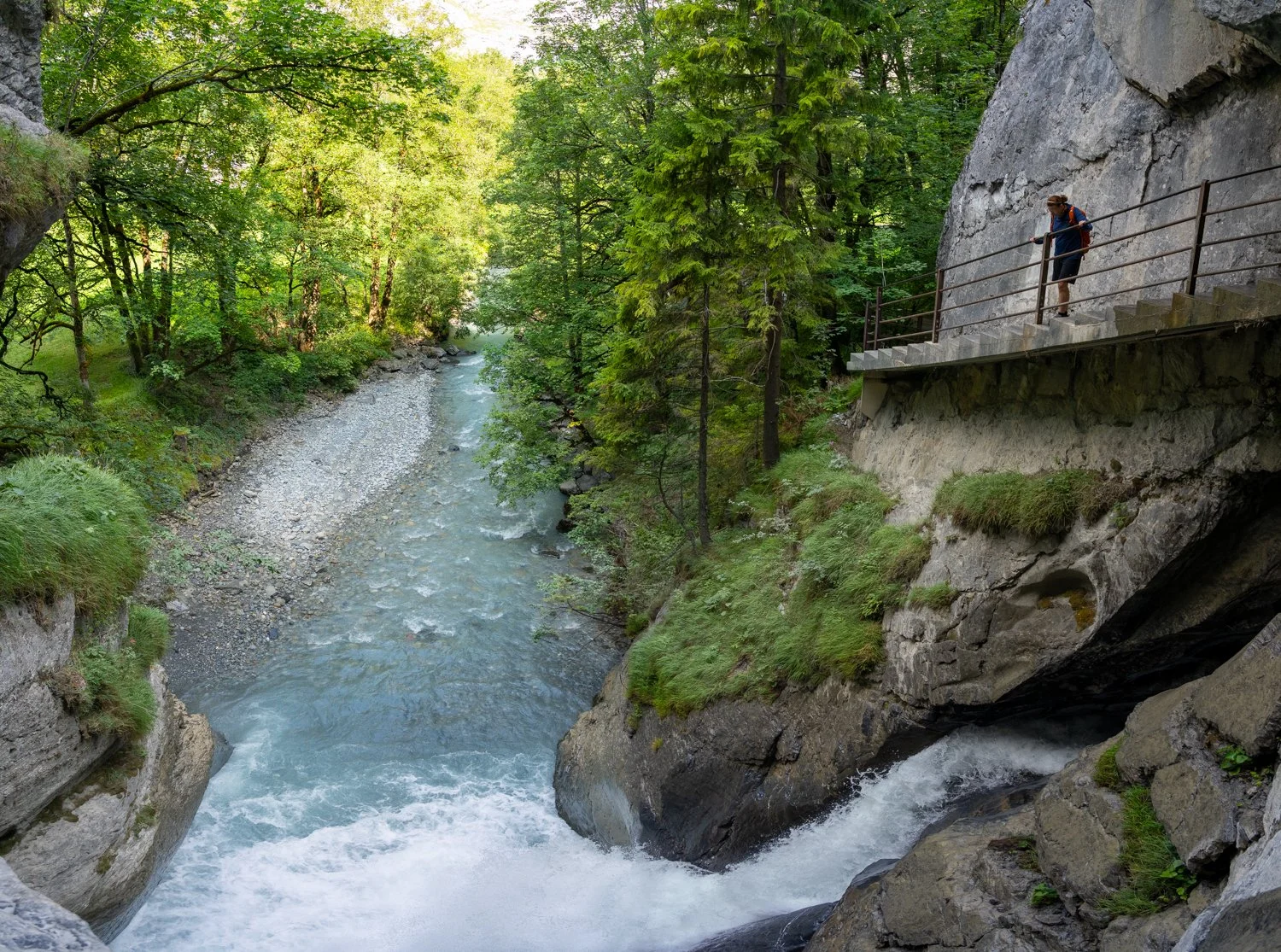
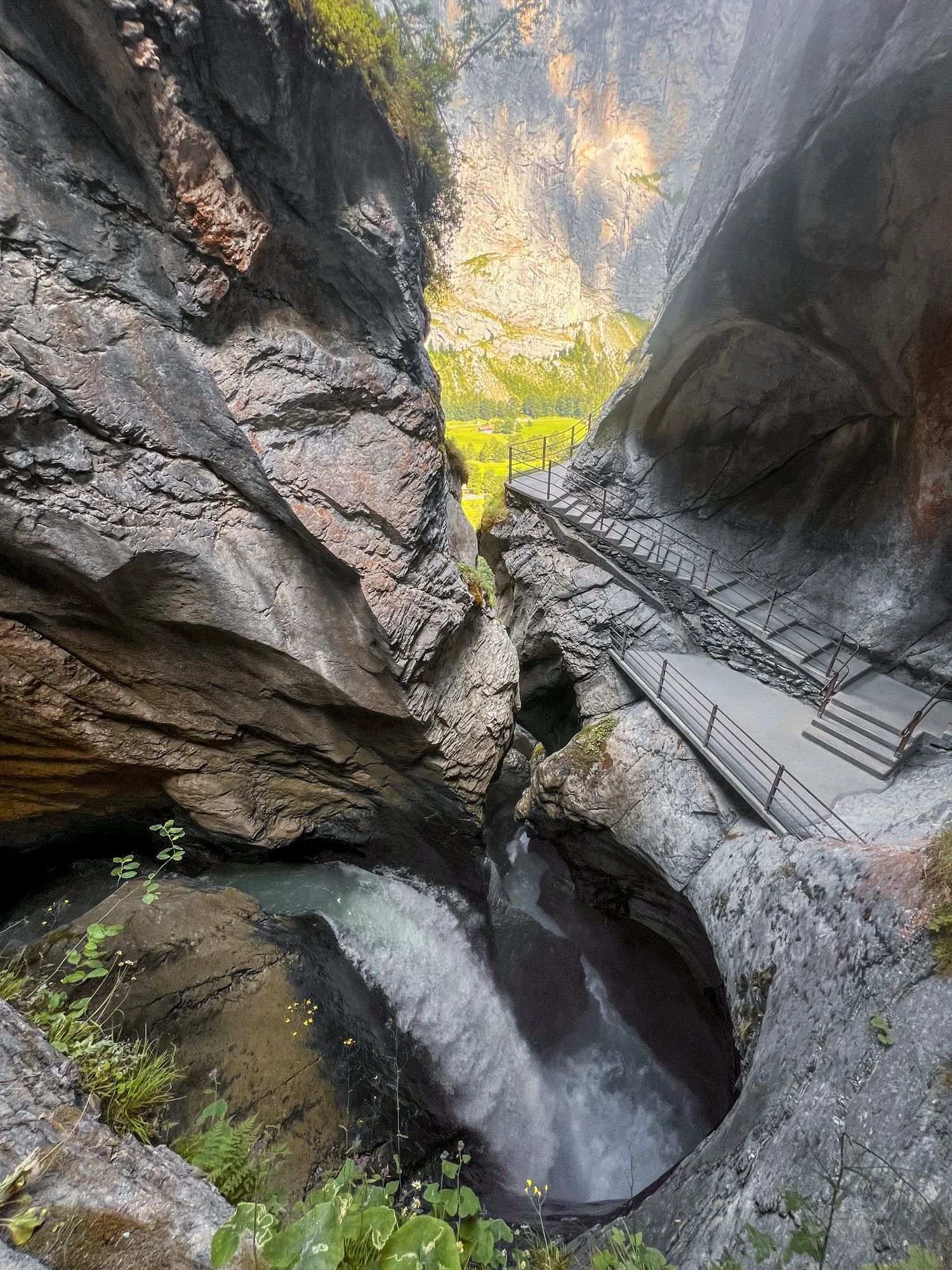
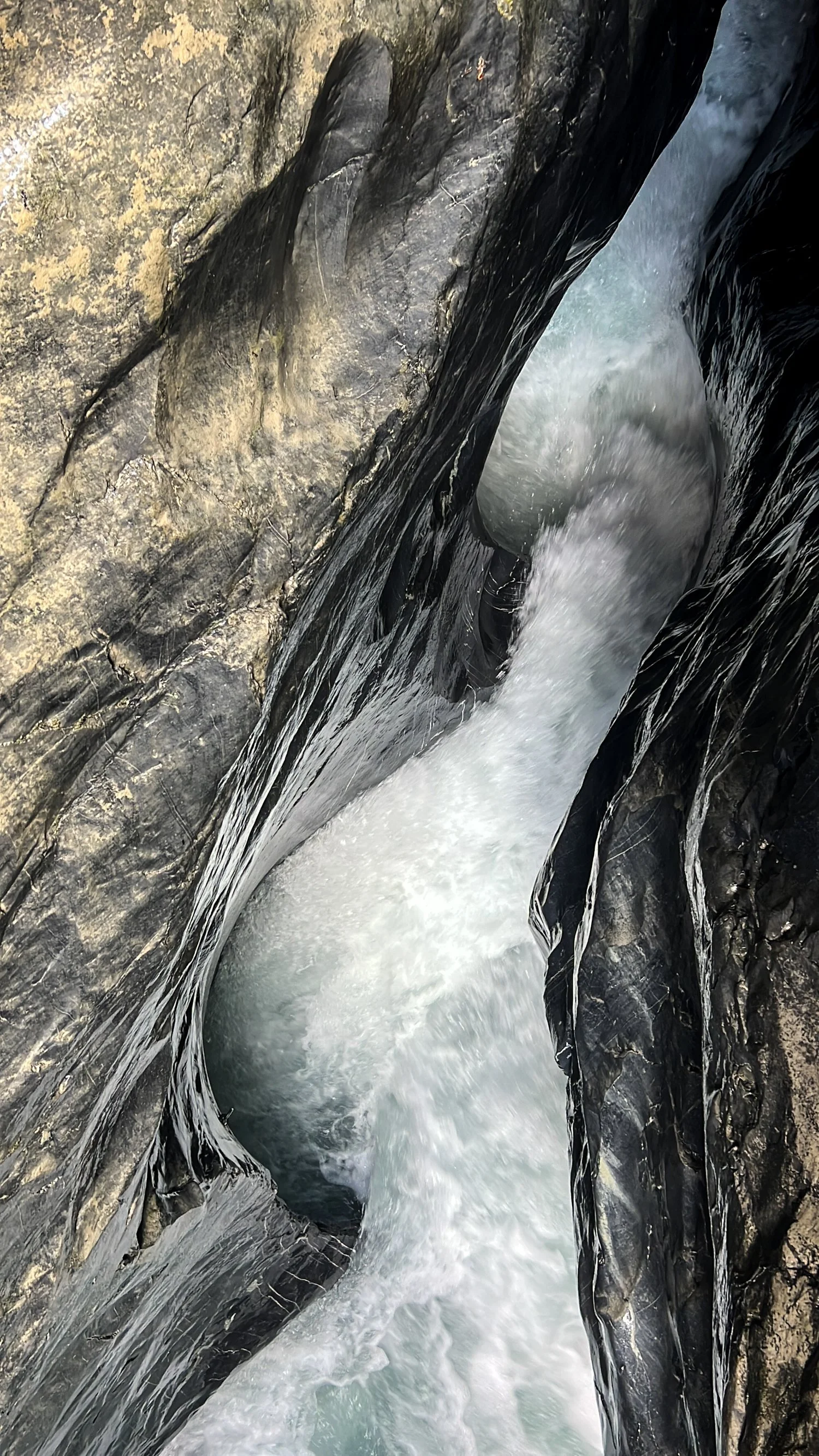
As we rode along the valley, more waterfalls came into view — Spissbach, Mürrenbach and Buchenbach — each cascading down the mountainsides from seemingly impossible heights. Then came Trümmelbach Falls, where the bikes had to stay behind. Ten cascades have carved their way through the inside of the mountain, with the rushing water echoing through the rock. It felt like nature had built its own underground rollercoaster.
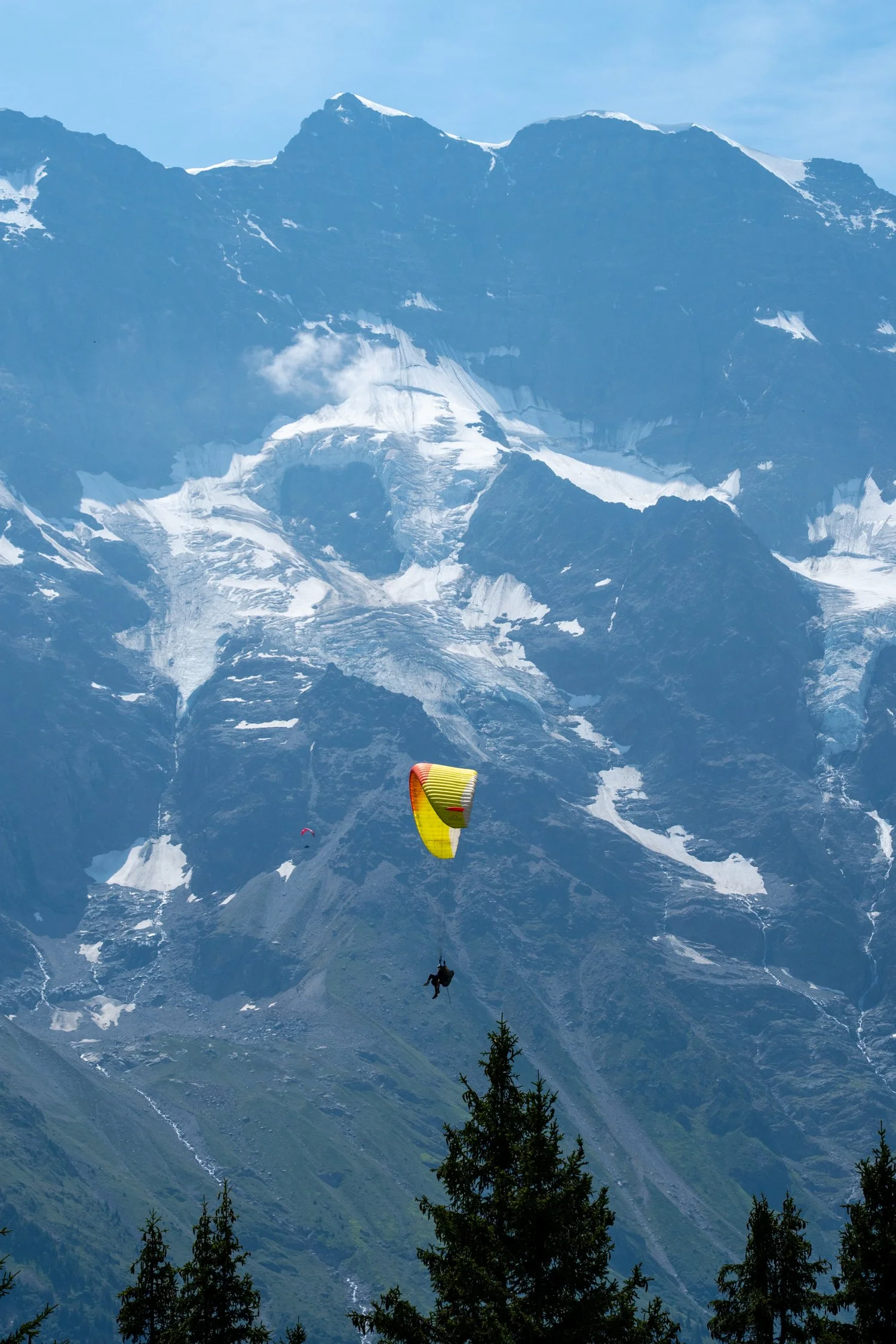
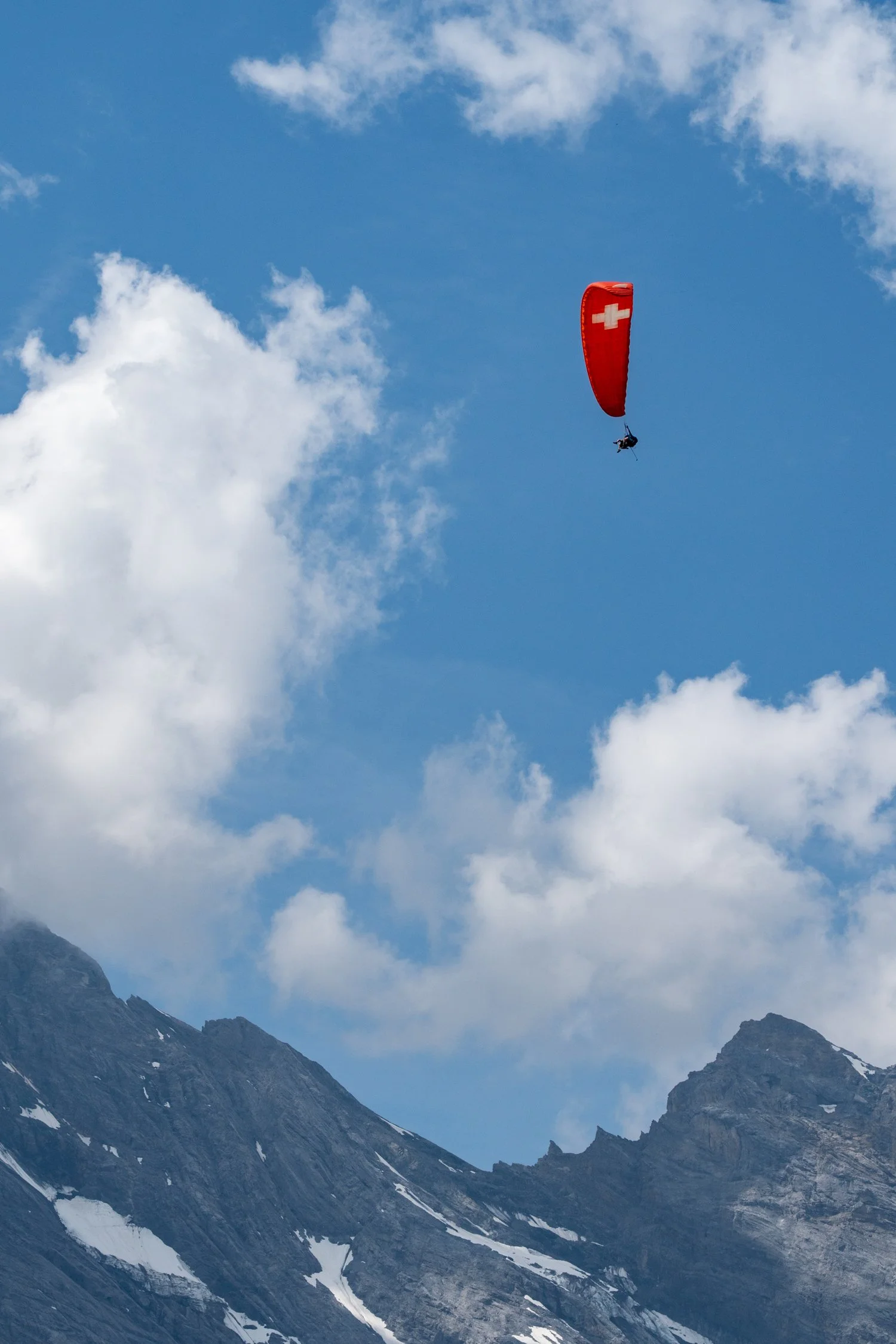
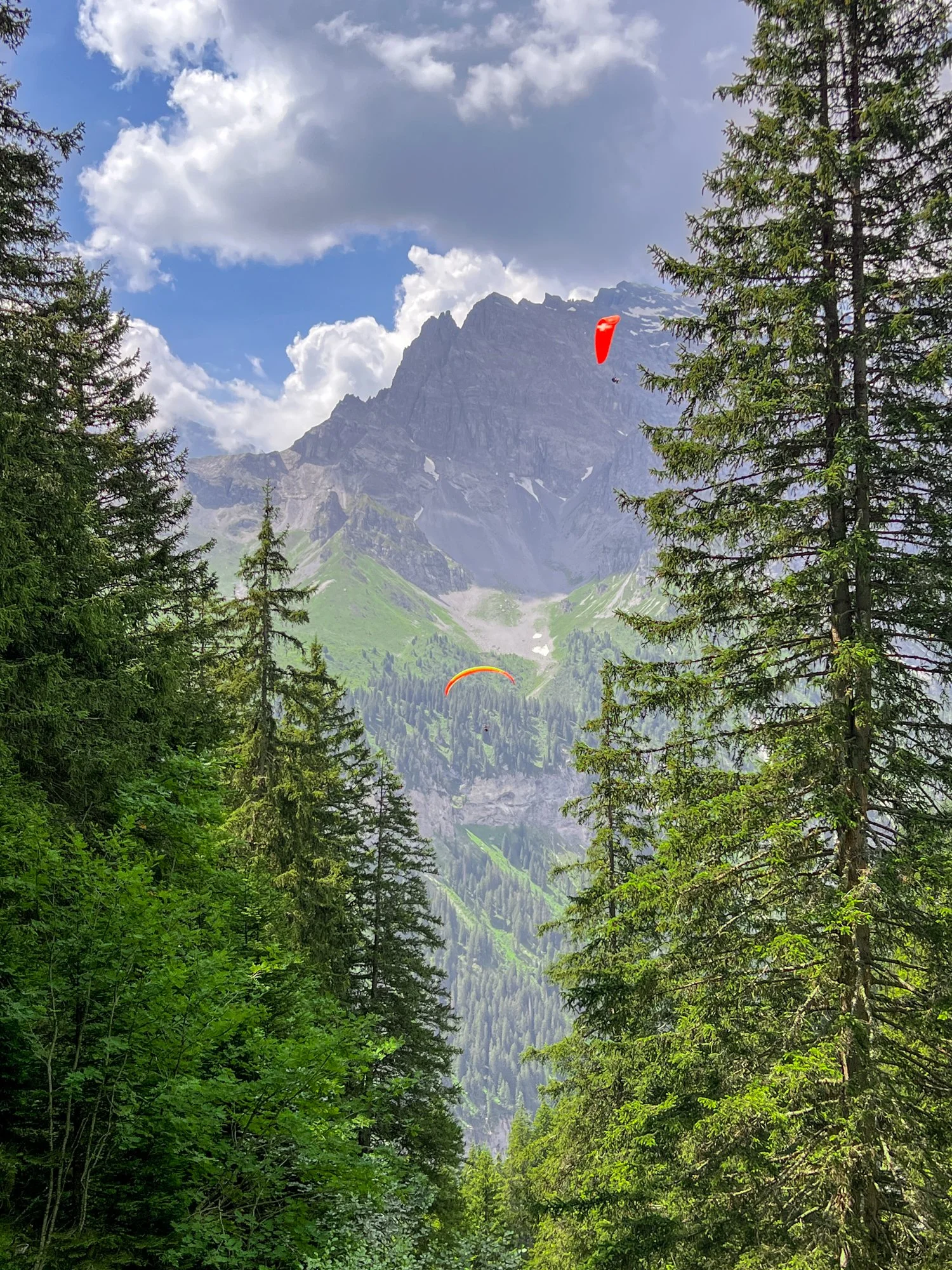
After a day of waterfalls, cycling and wandering, we finished by simply looking up at the red and white swiss flags floating in the sky. These turned out to be paragliders floating effortlessly above the valley, catching the mountain updrafts and drifting silently across the sky.
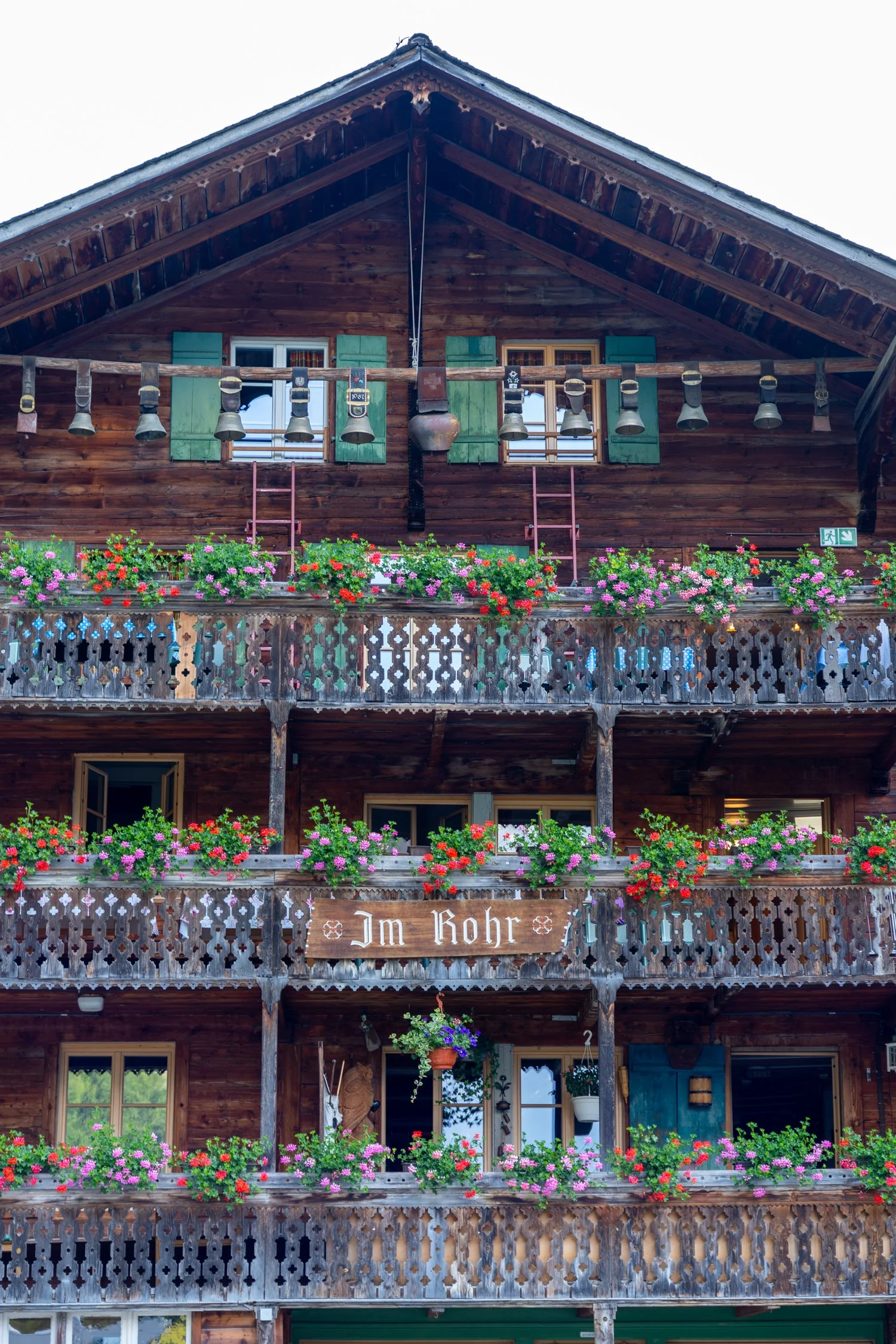
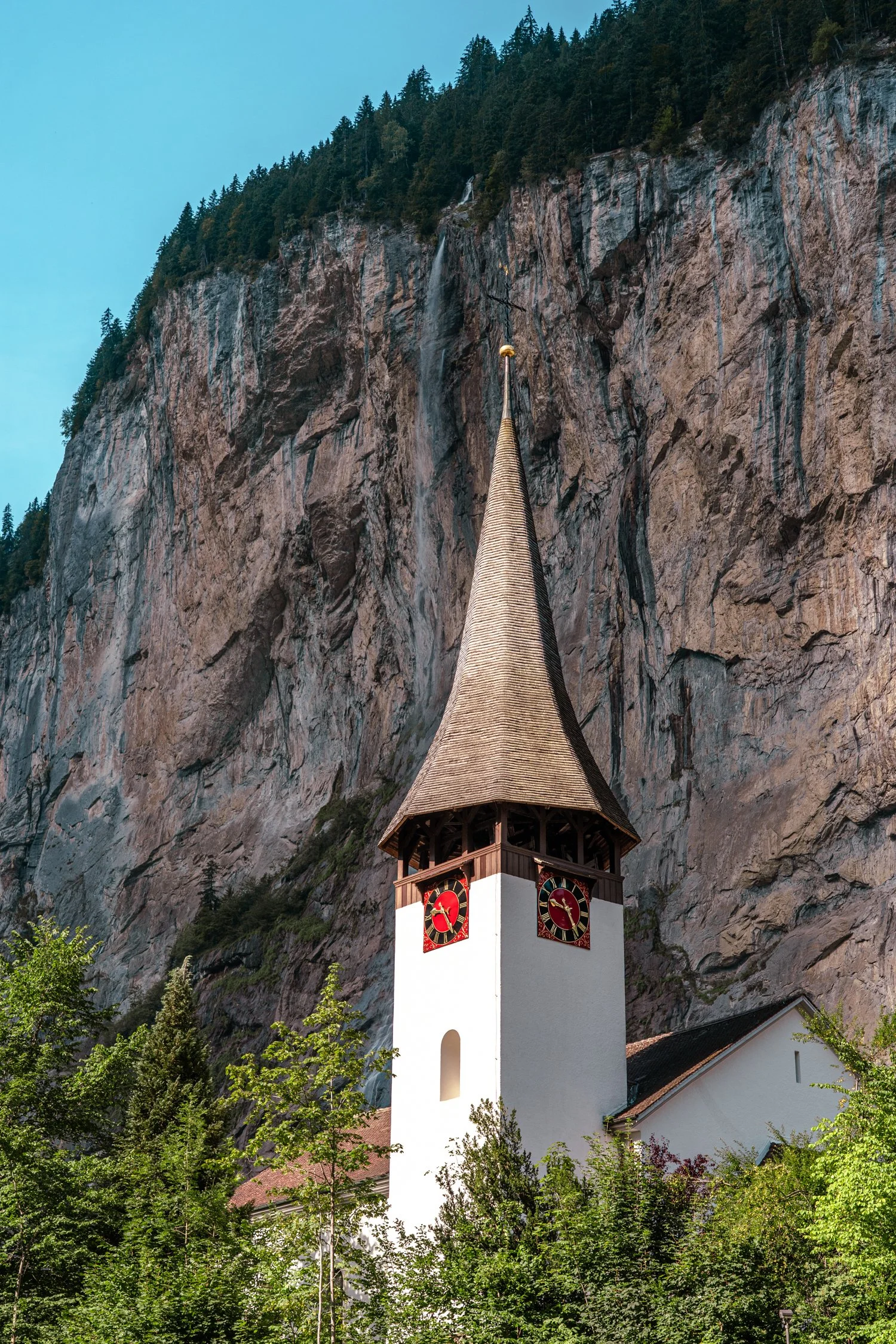
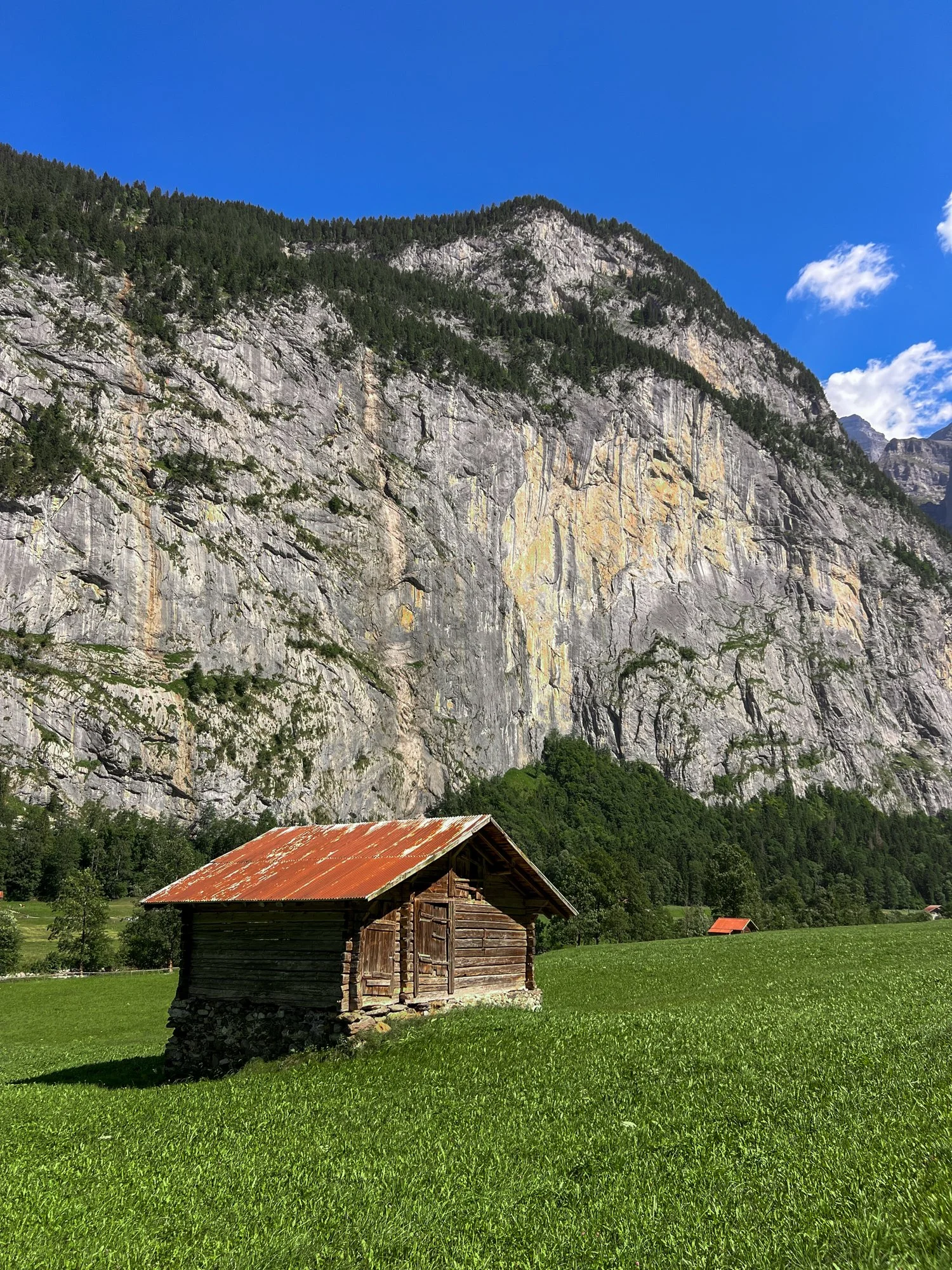
Replacing hiking boots with 2 wheels.
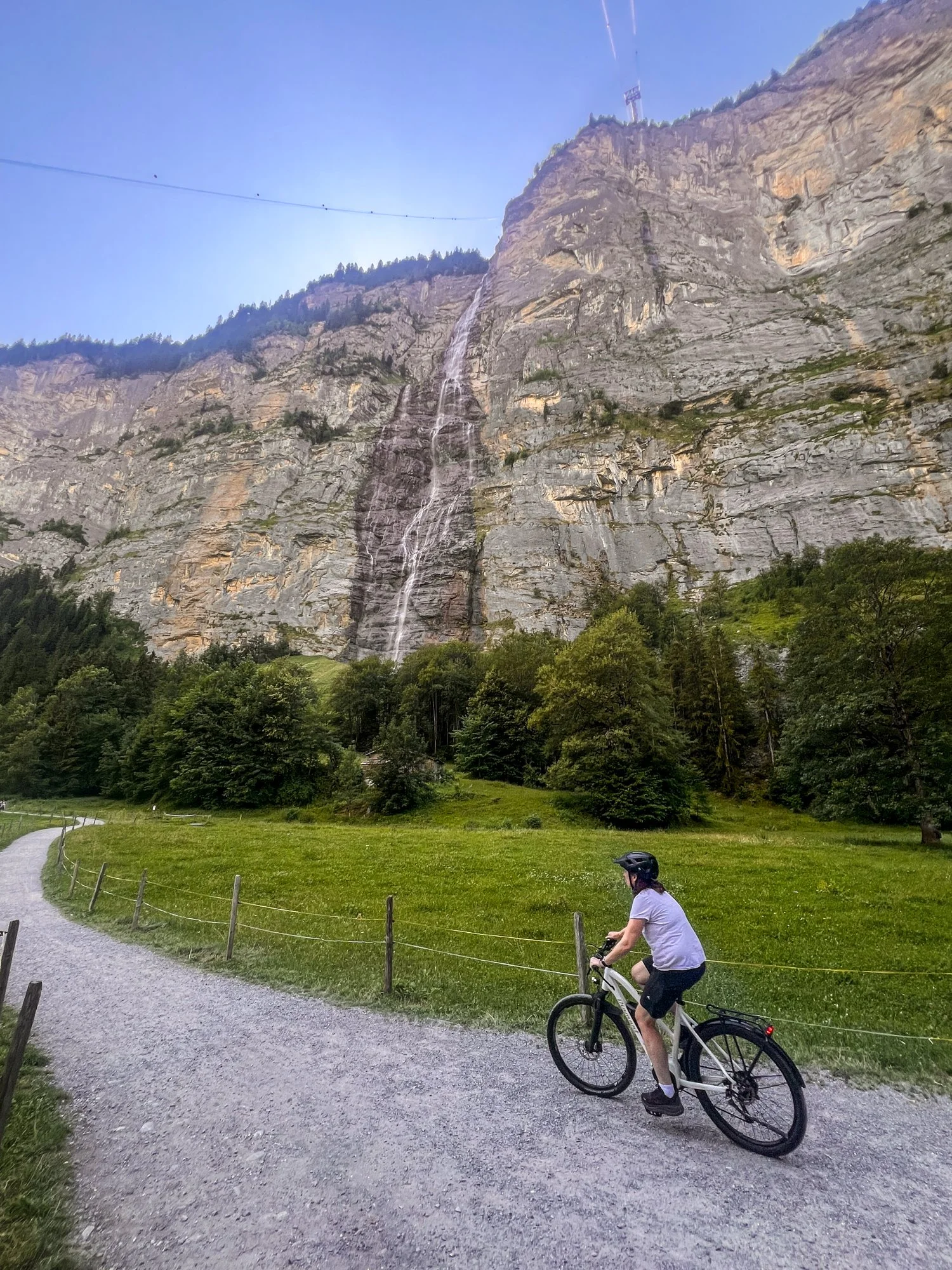
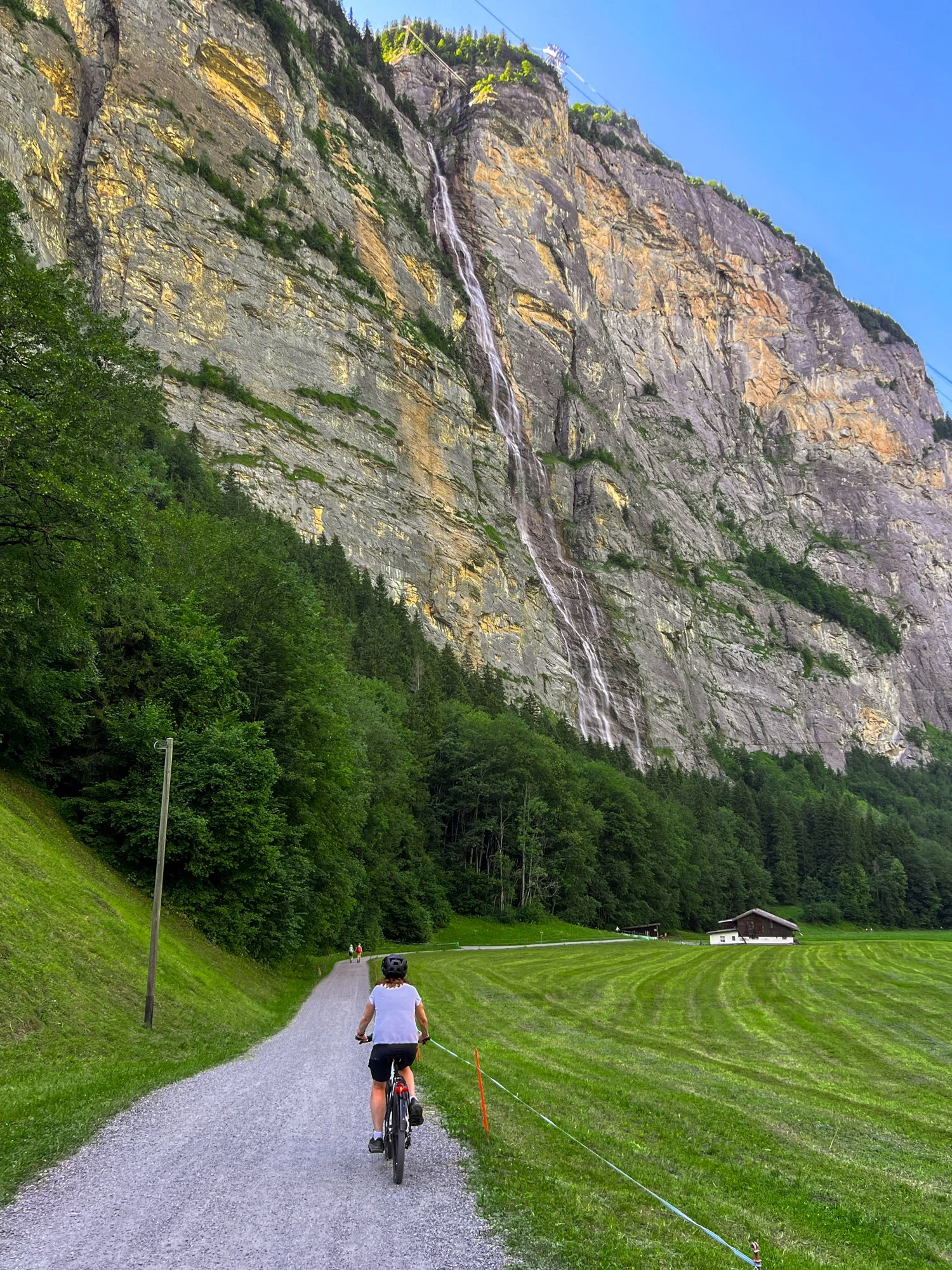
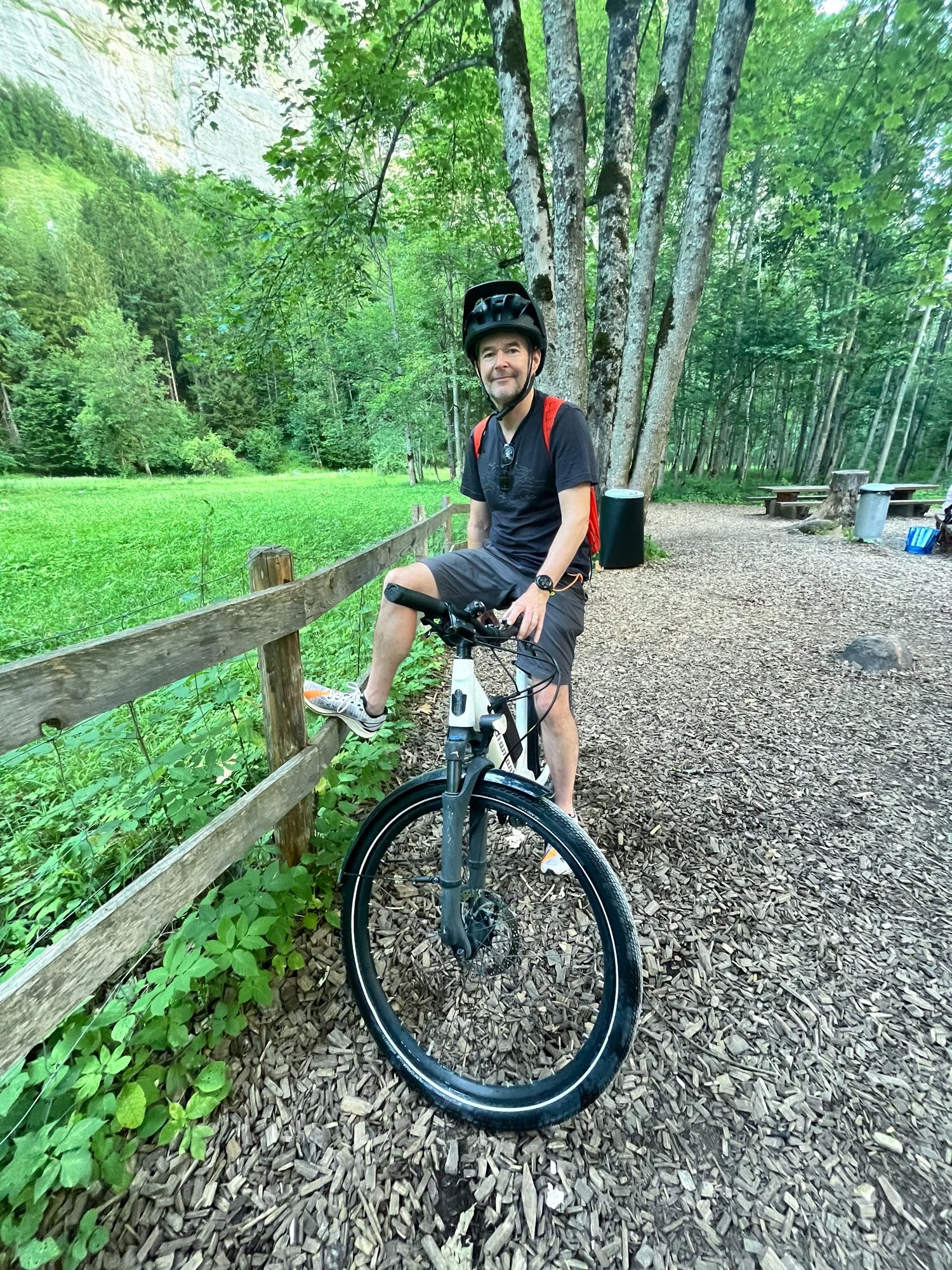
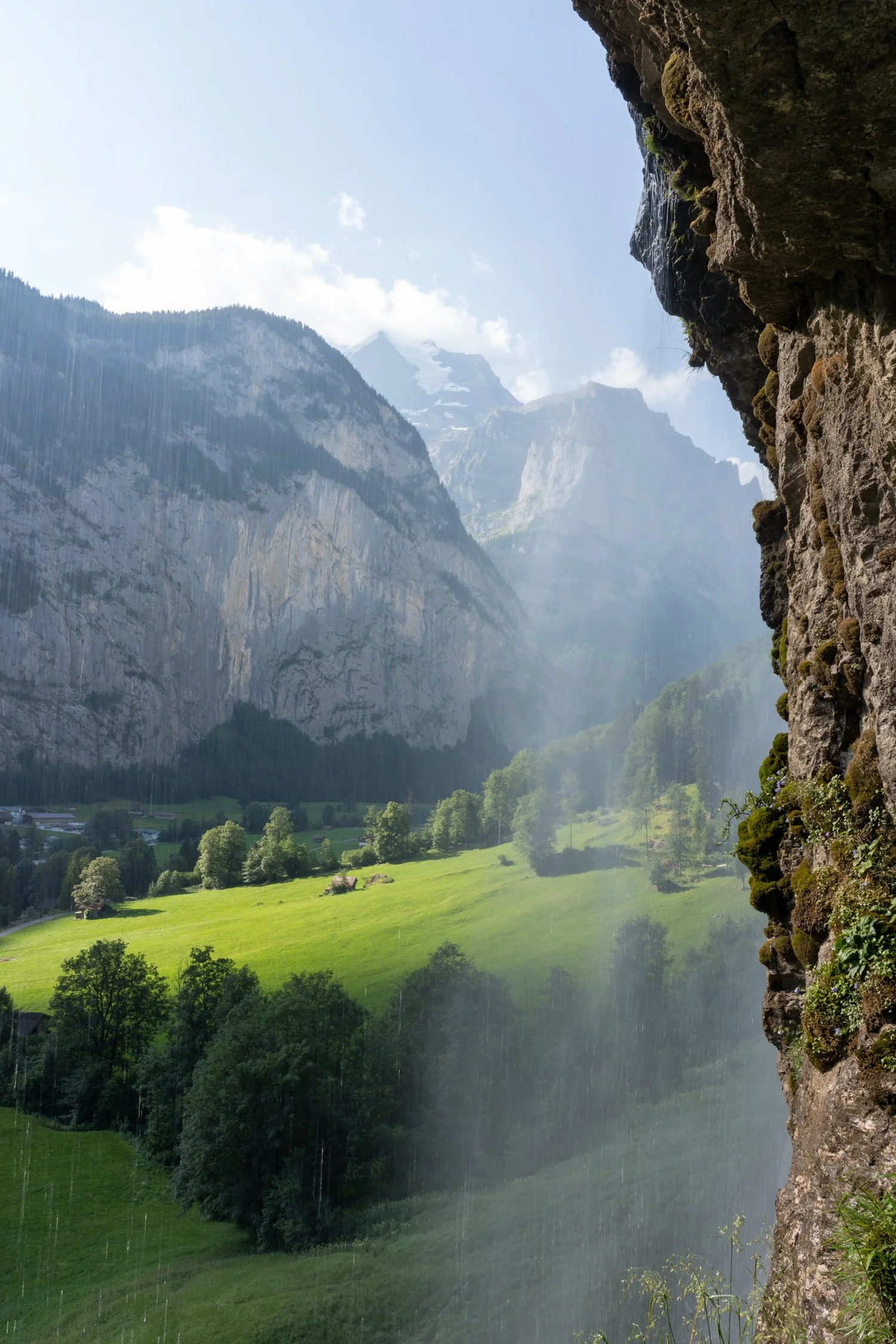
The many waterfalls in the valley.
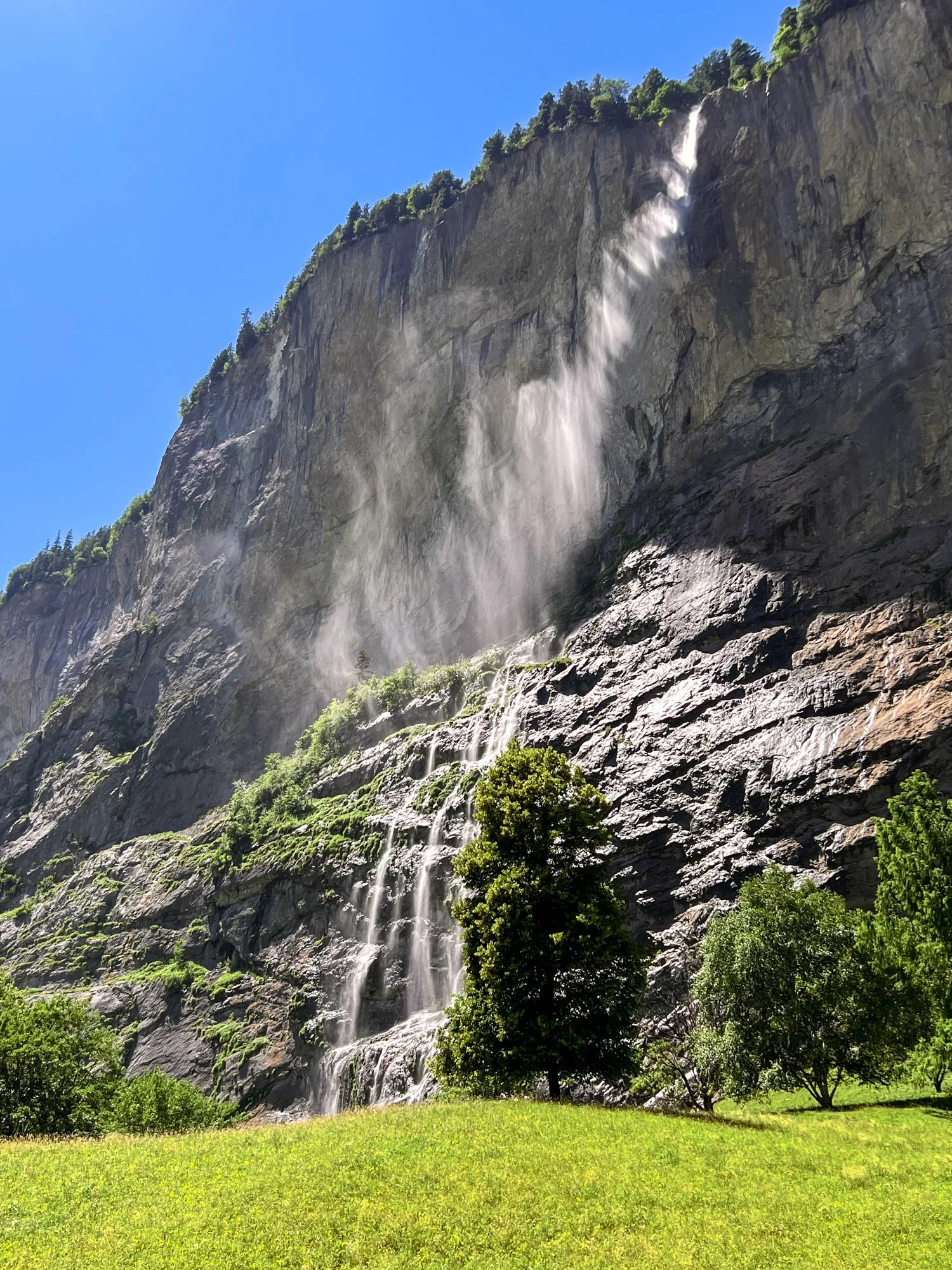
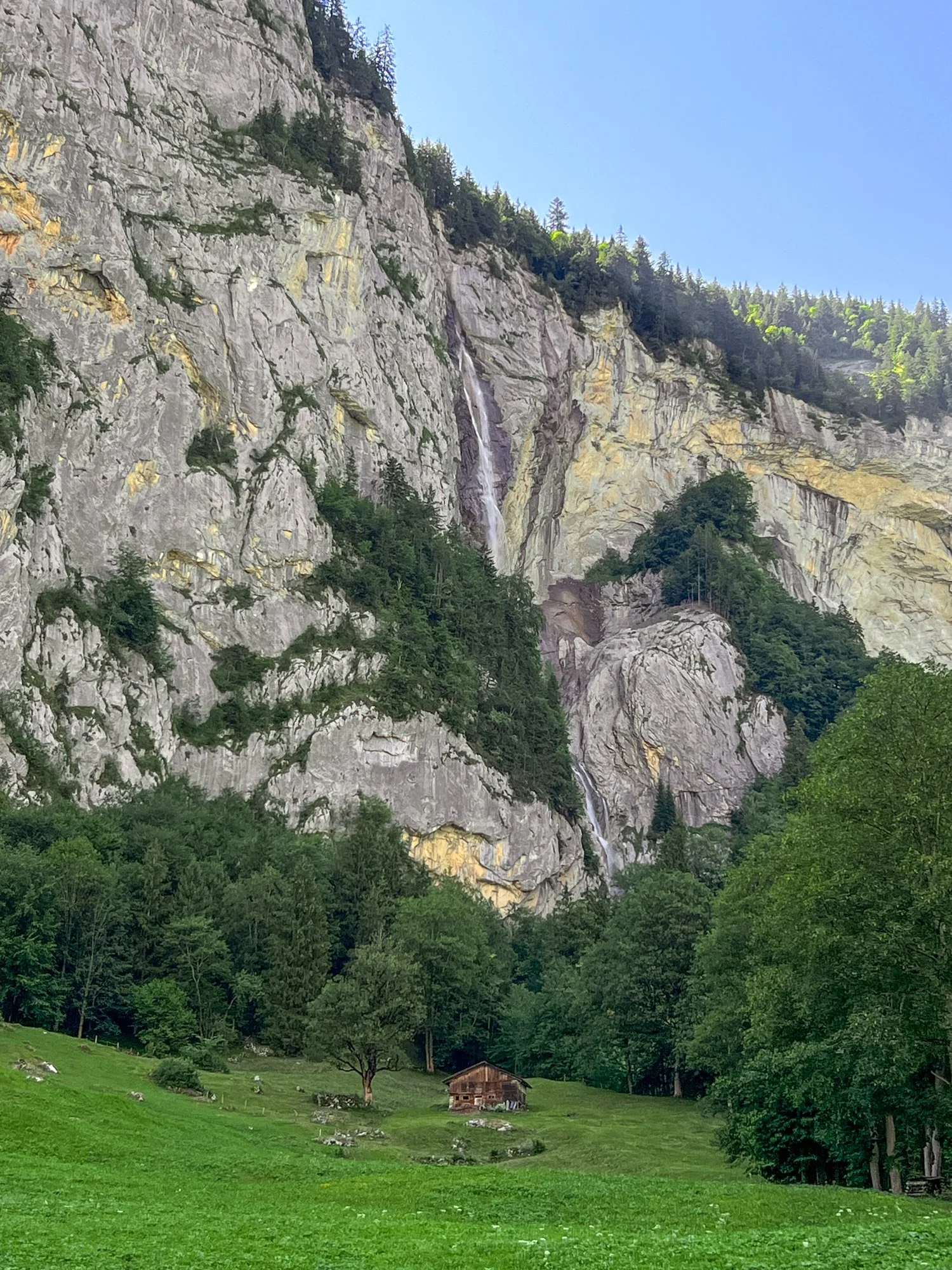
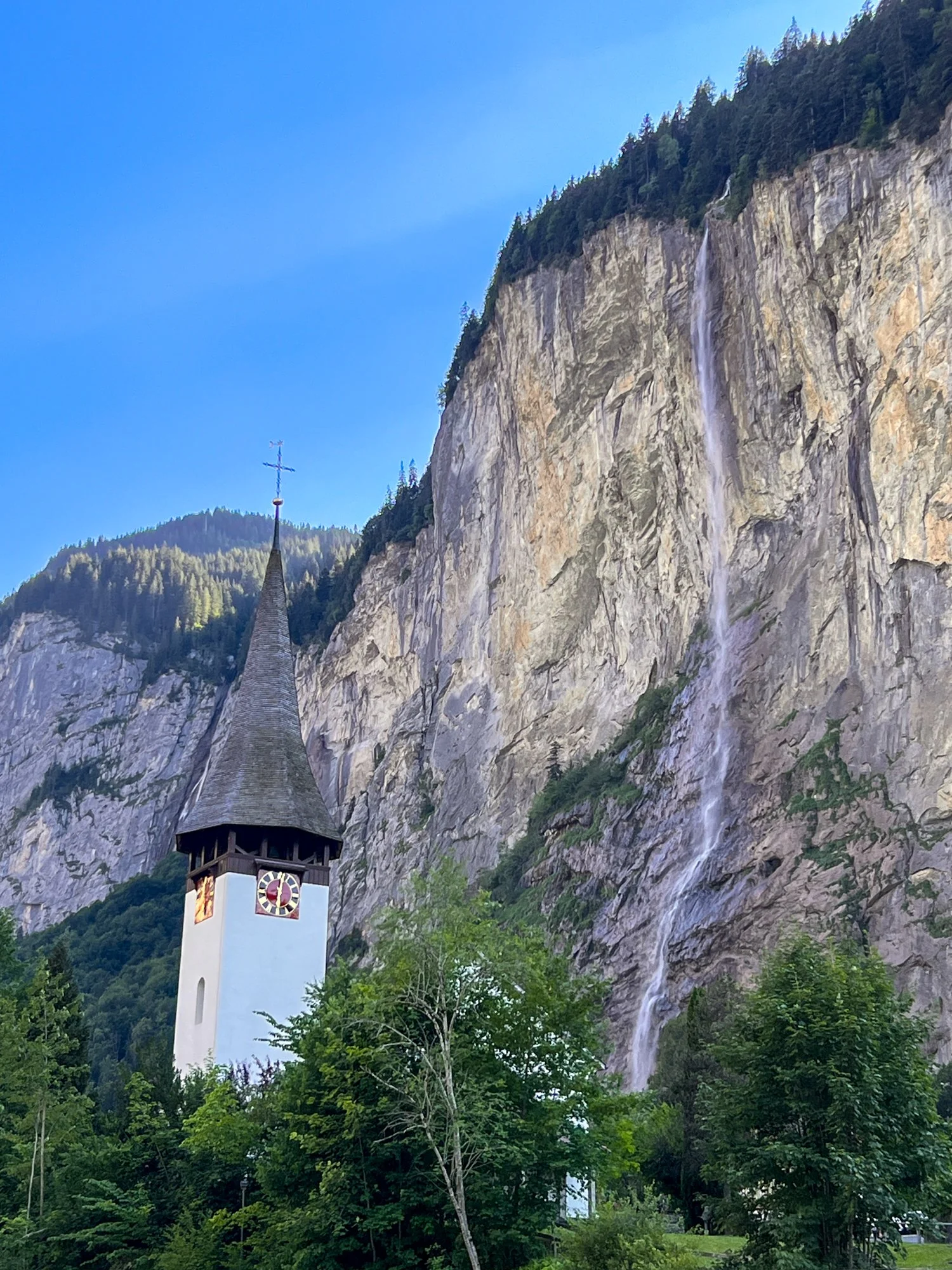
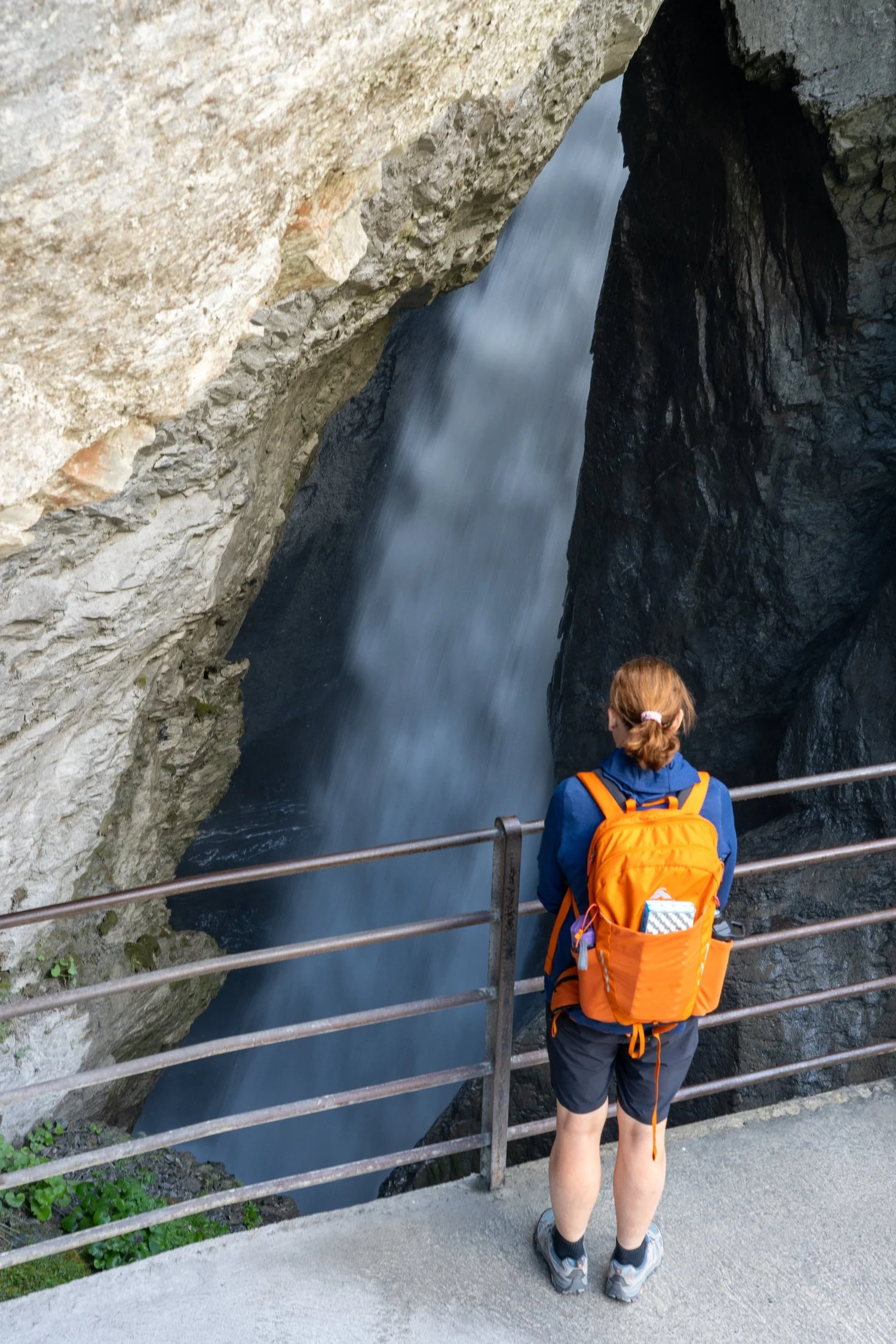
Paragliders making the most of the monutain updrafts.
The North Face Trail
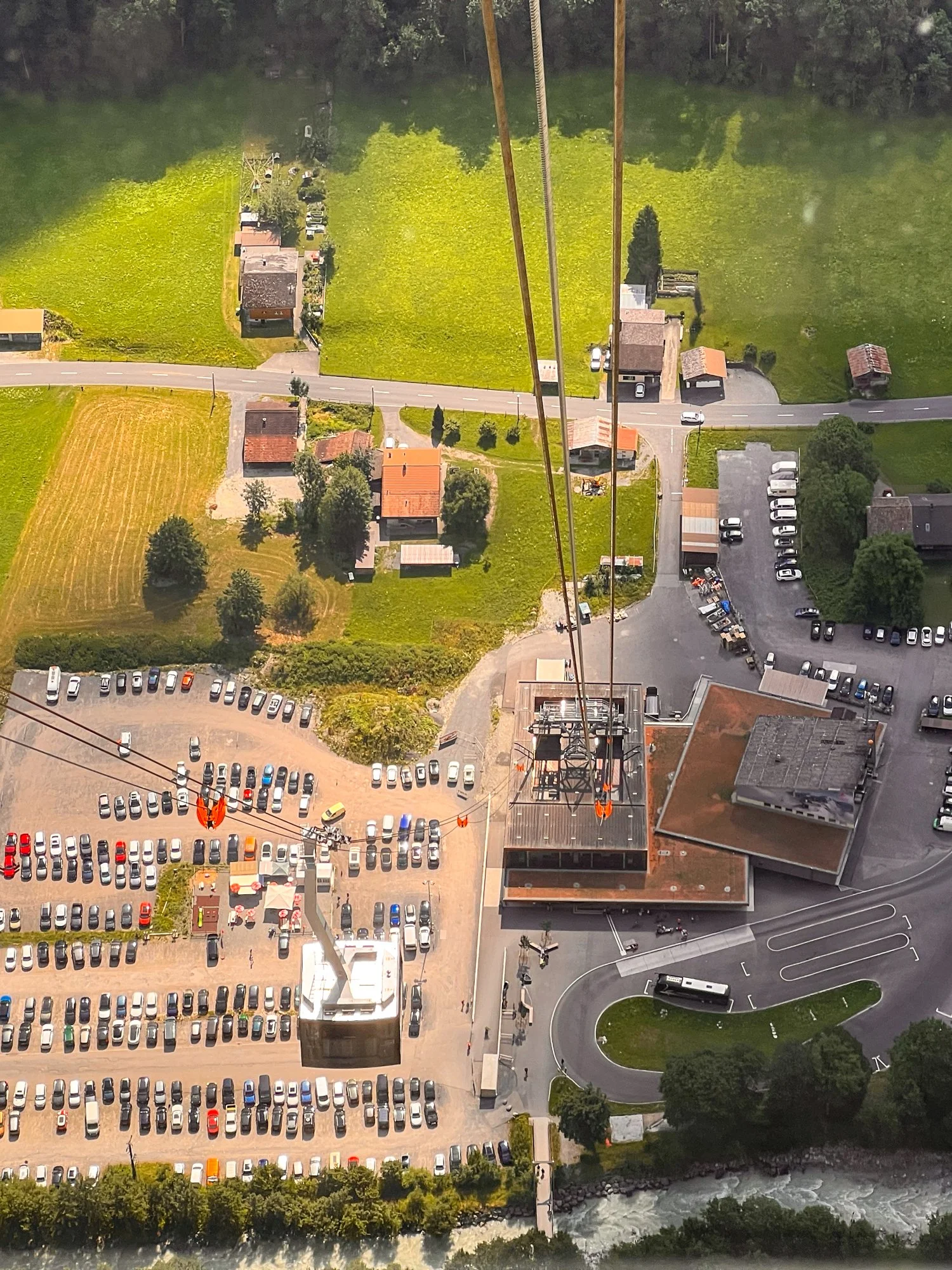
The North Face Trail started with a cable car ride so steep that it felt like we were being launched rather than transported. Up we went to Mürren, clinging to the mountainside high above the Lauterbrunnen Valley. From there, the trail loops its way through Schiltalp and Allmendhubel — two names I’m still having a hard time pronouncing, let alone remembering which one we’re supposed to be heading towards.
But once we started walking, the names became irrelevant. The scenery was simply spectacular.
Green alpine meadows rolled across the mountainside, dotted with wildflowers, wooden farm huts and the numerous cows, complete with its obligatory Swiss cowbell. Towering peaks rose around us, and every turn seemed to reveal another impossibly beautiful view.
At any moment I was expecting the Von Trapp family to come running over the hills, arms outstretched, ready to break into song. Thankfully, there was no singing from us. Hiking uphill had already taken care of the breathing requirements.
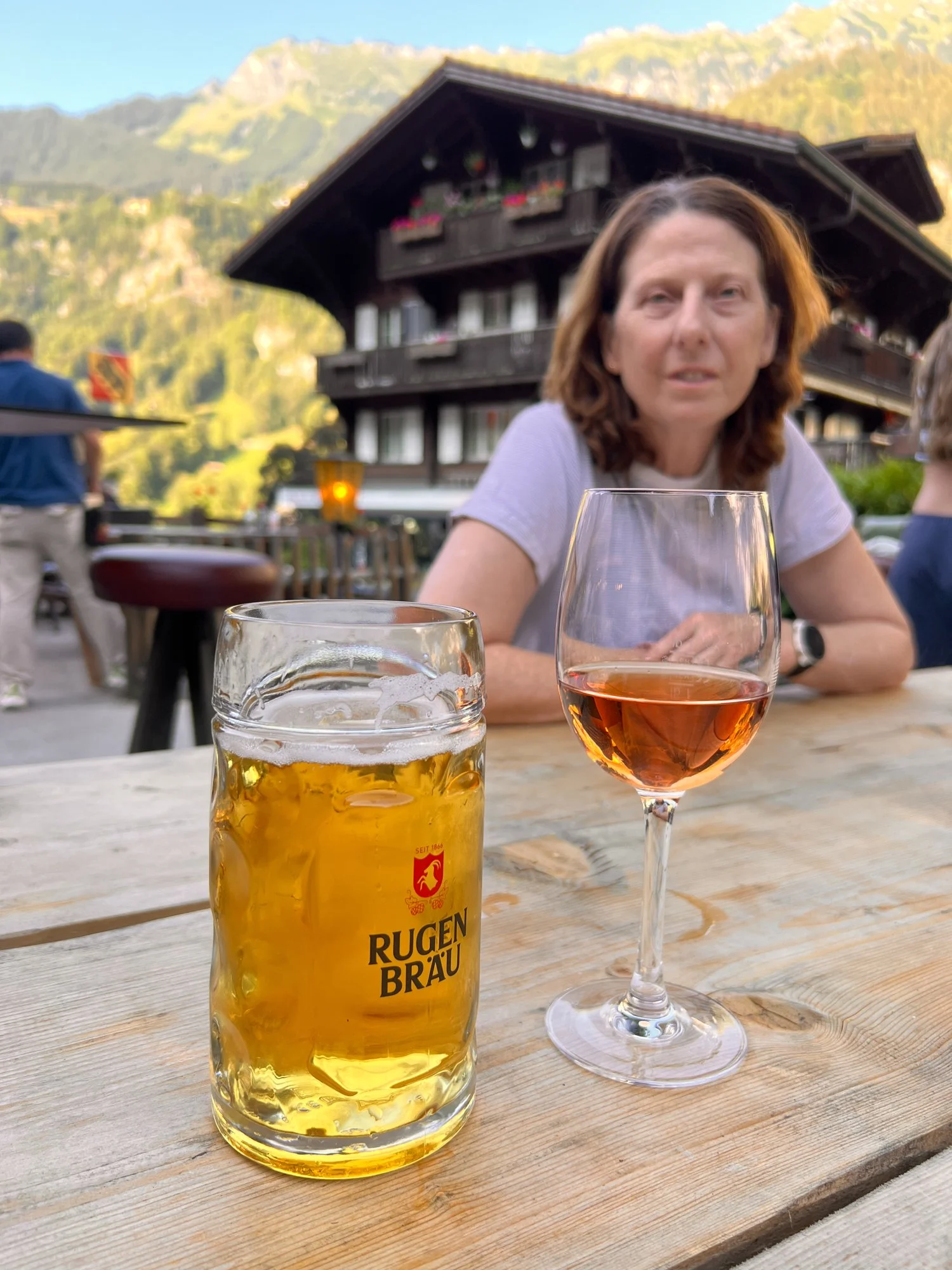
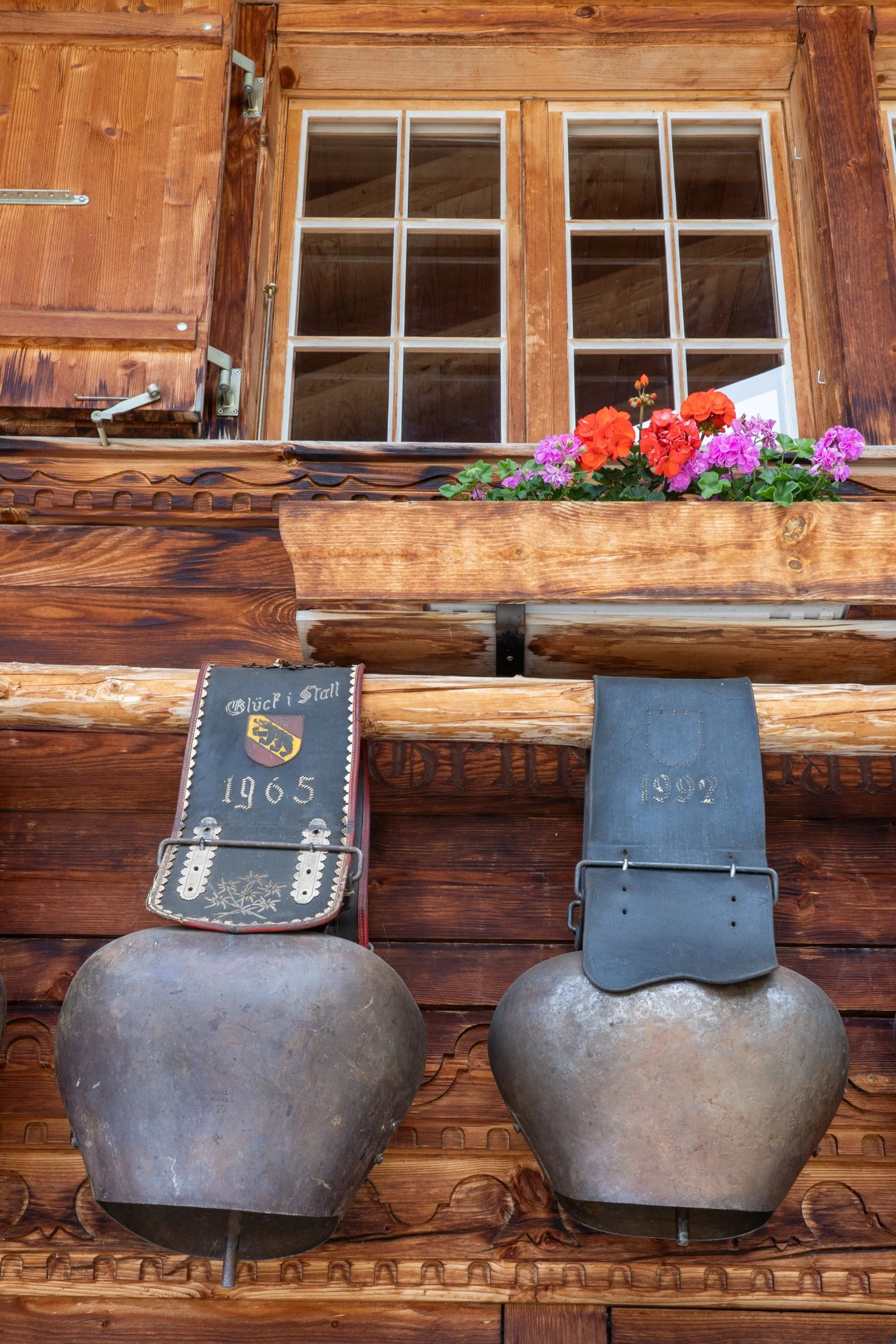
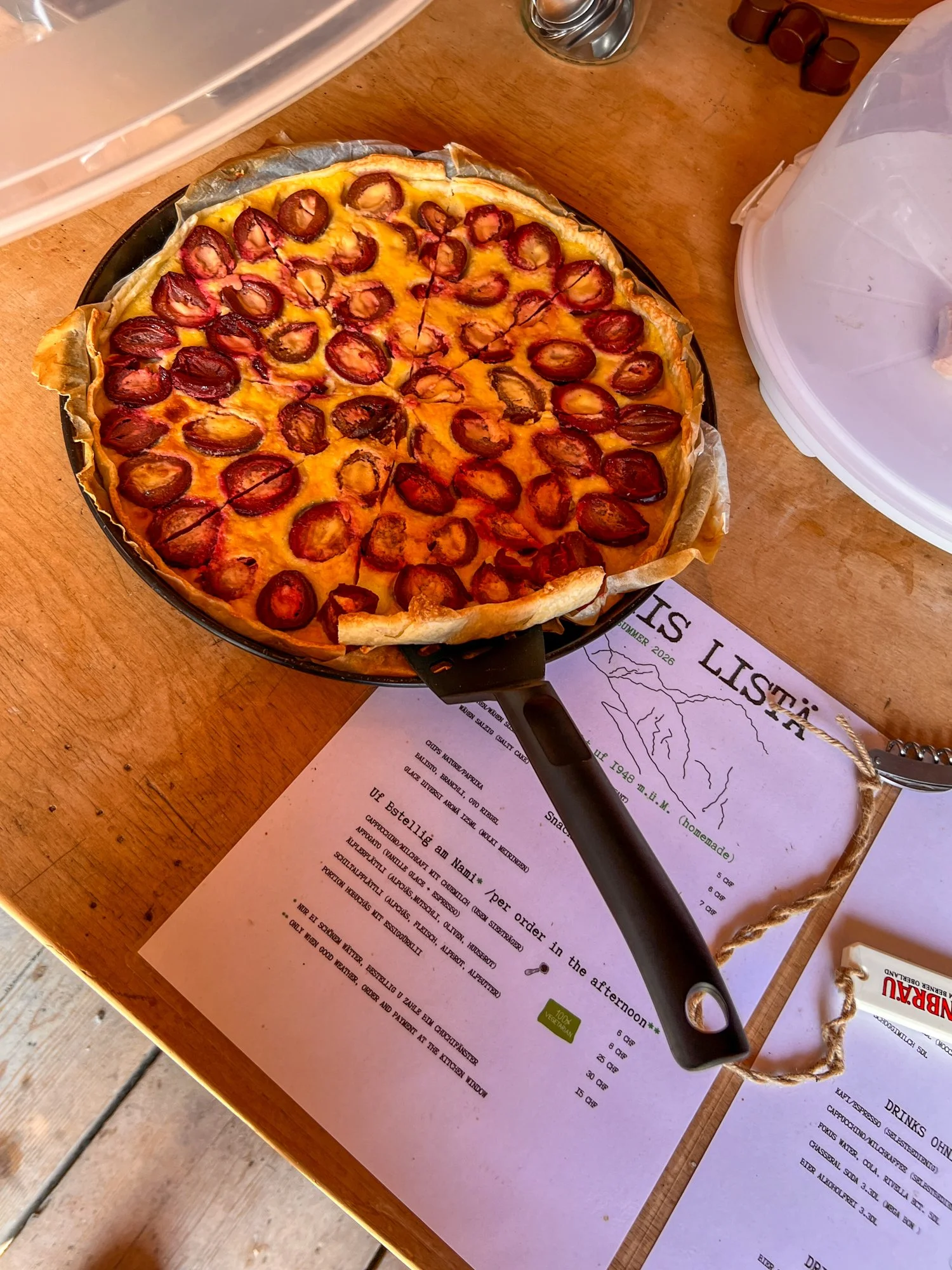
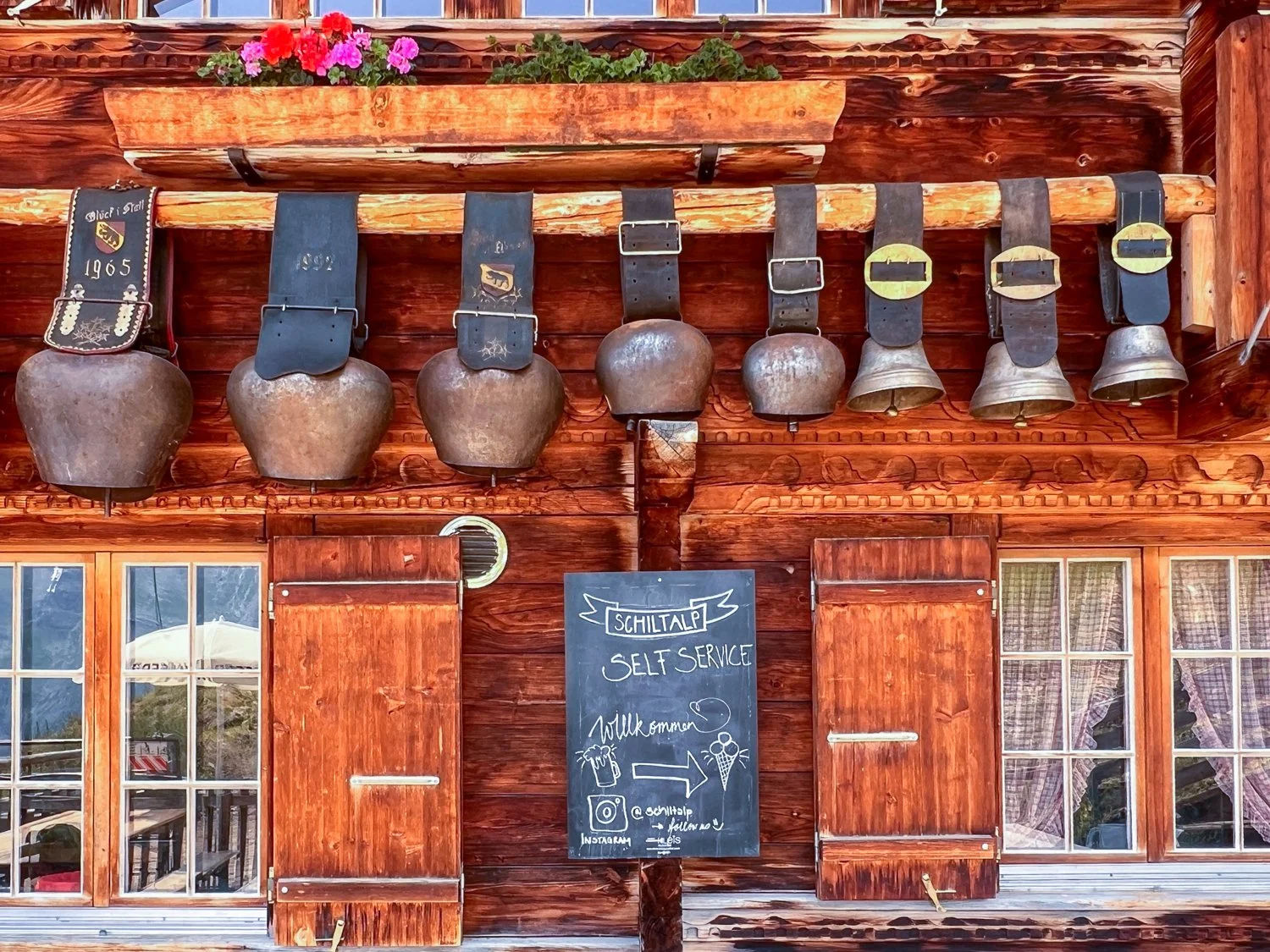
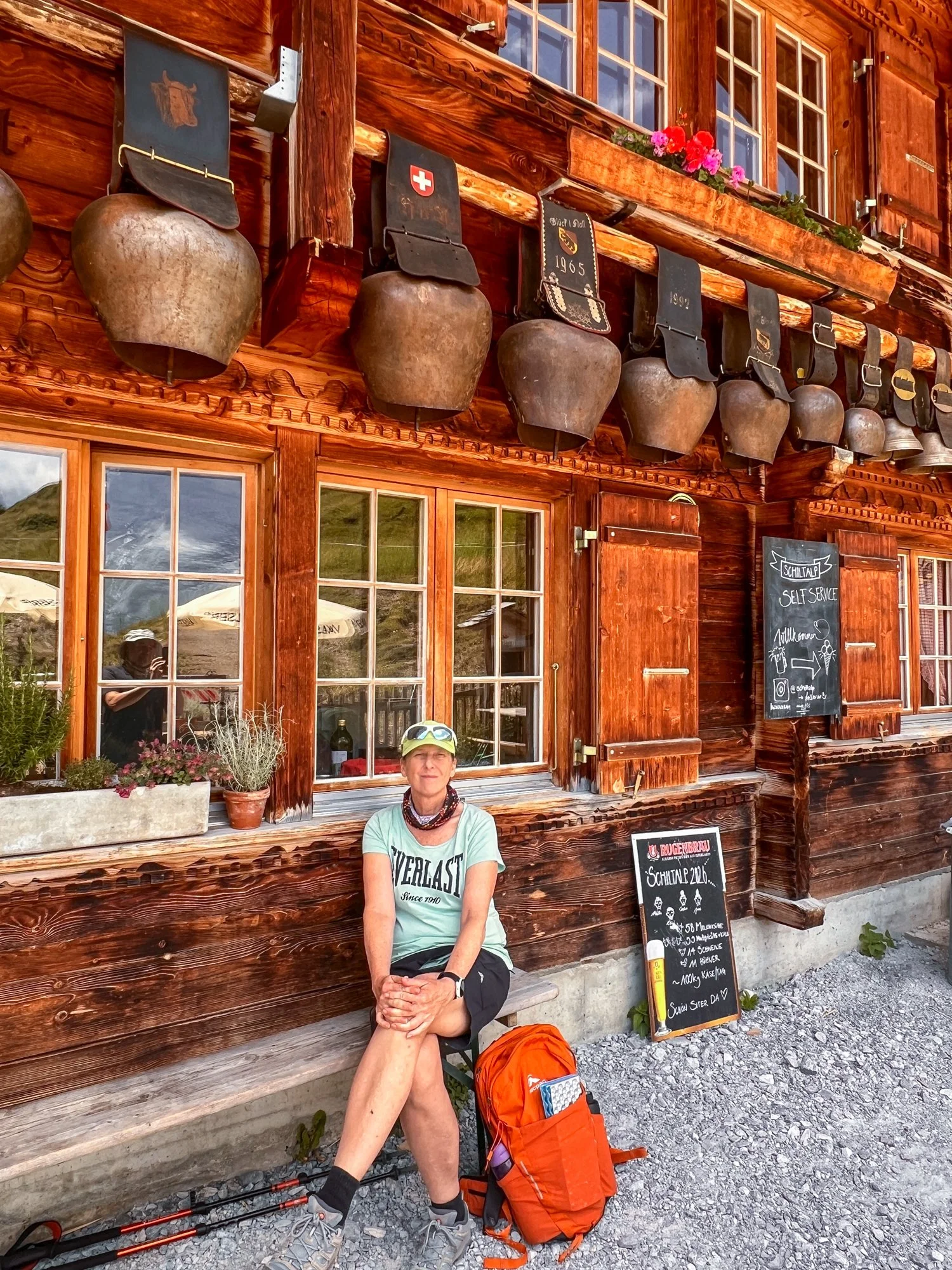
Eventually we reached the little mountain hut at Schiltalp, which provided the perfect excuse for a well-earned break. And this was no ordinary hiking refreshment stop. Homemade pie and a cold beer suddenly became essential components of mountain nutrition.
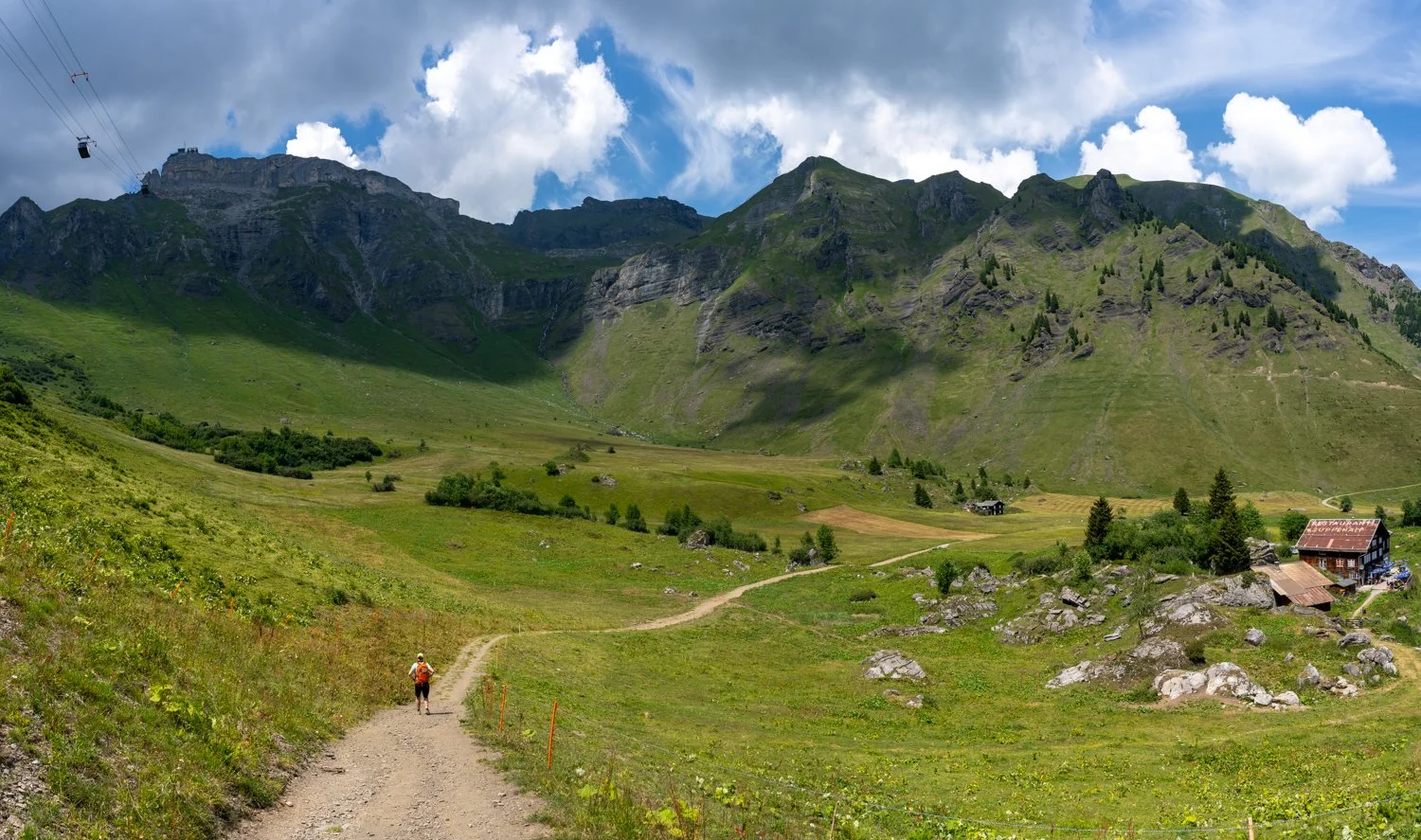
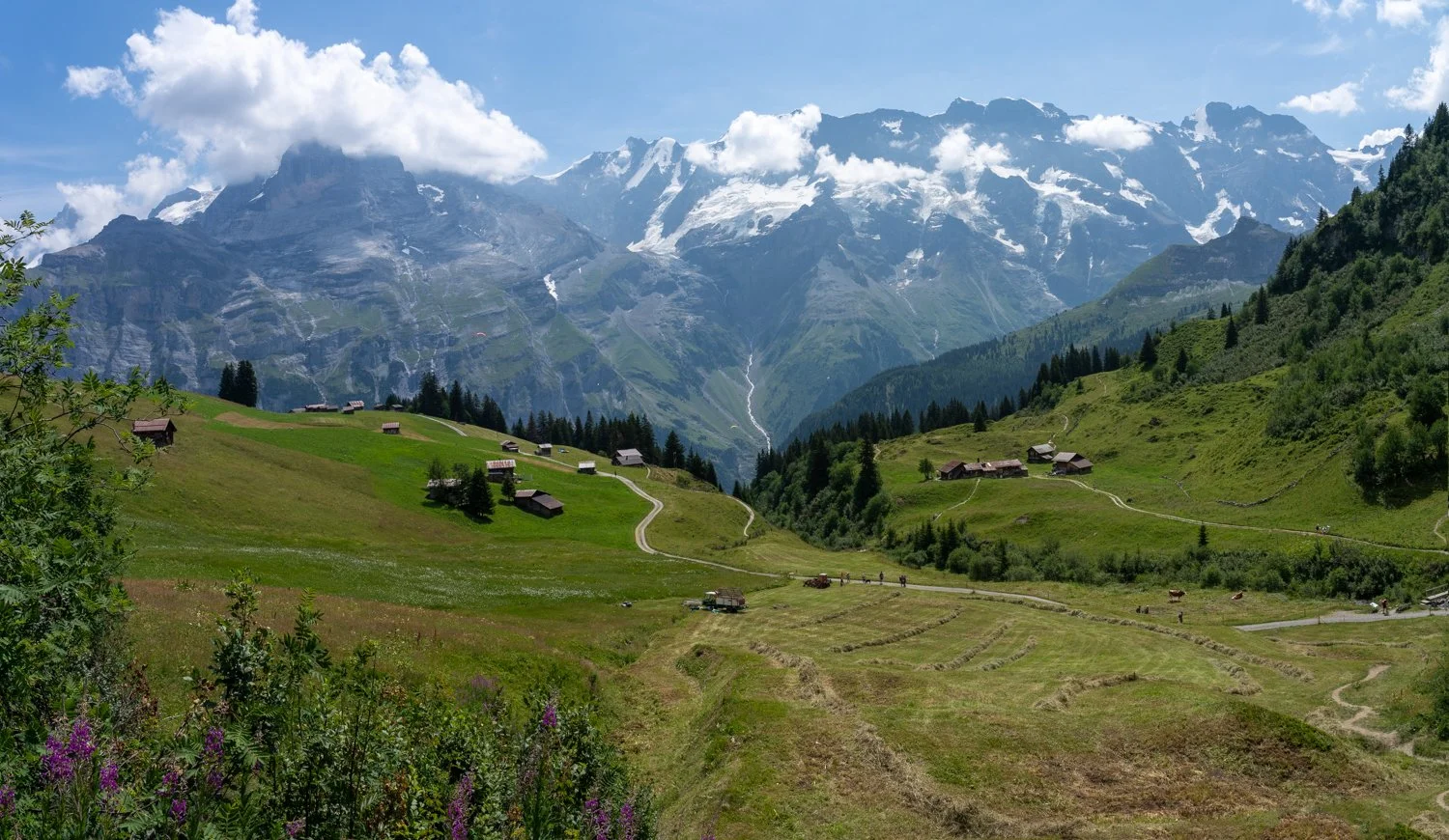
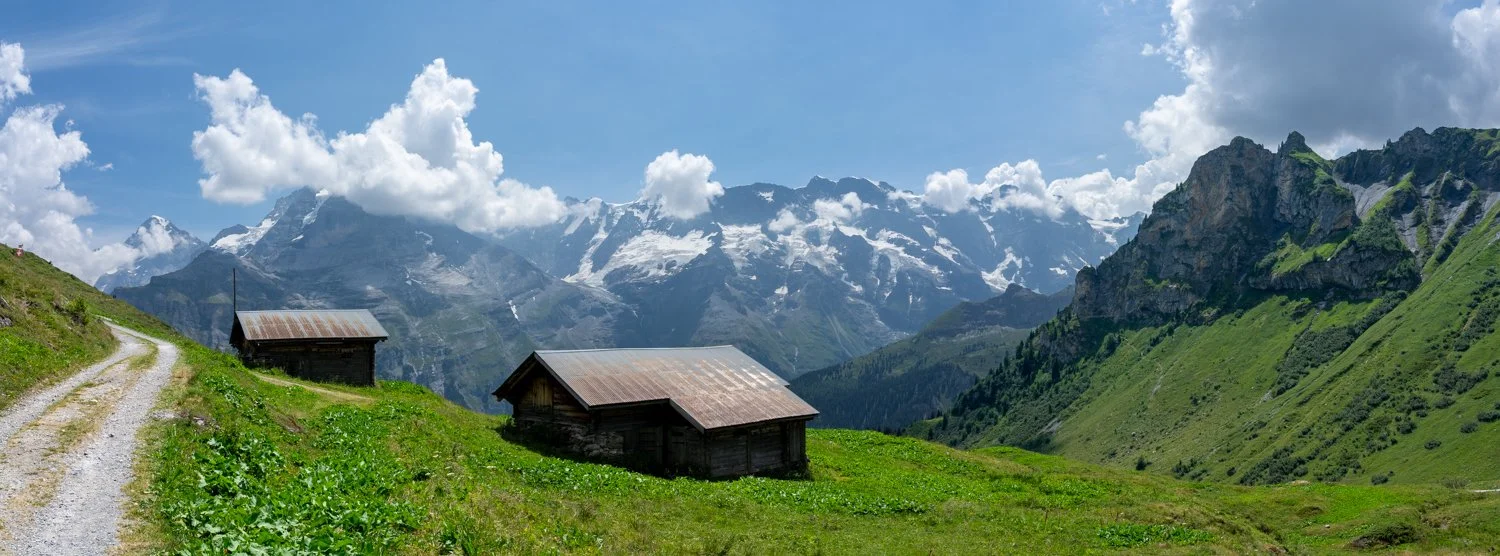
Schiltalp Hut
The Top of Europe
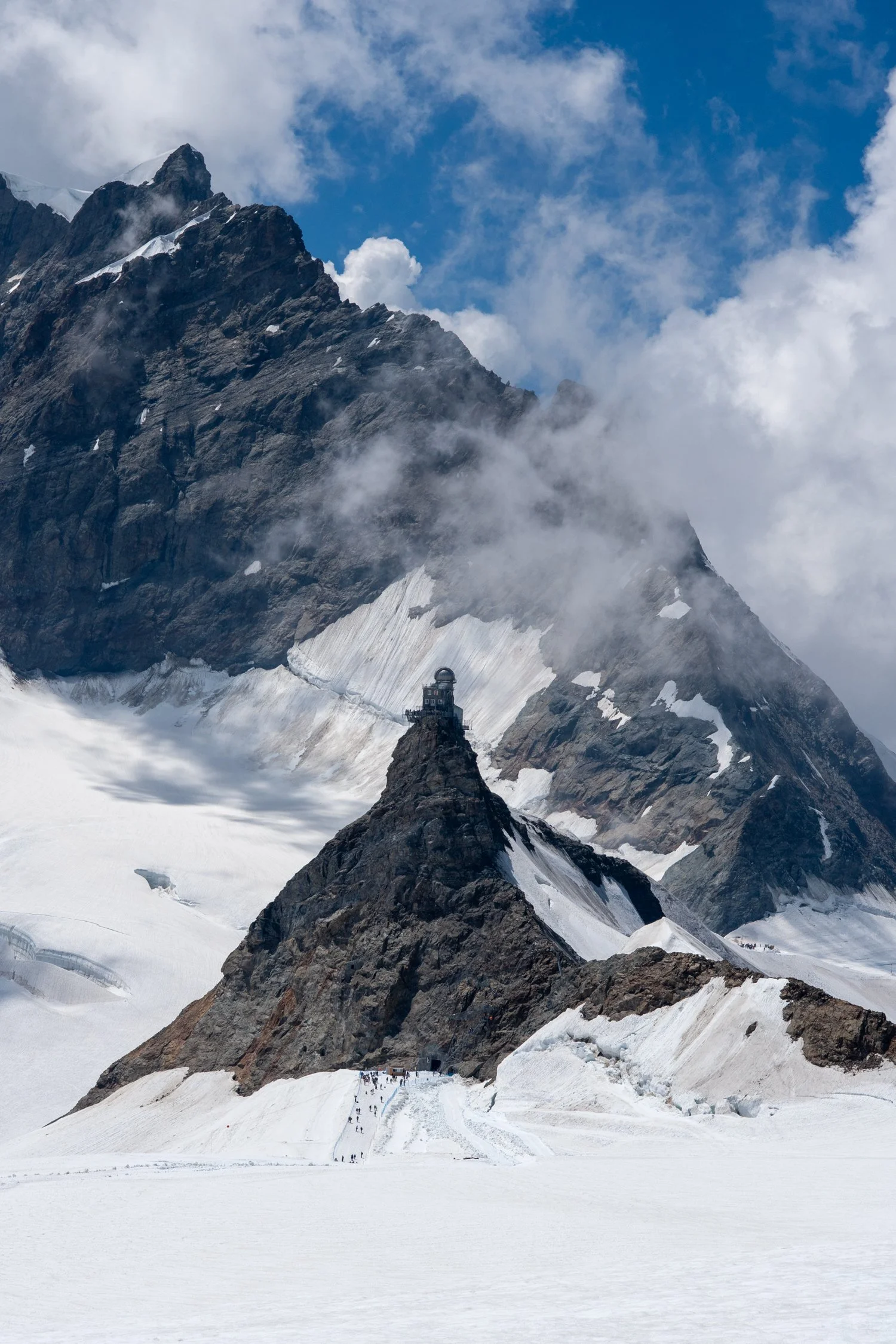
Another day another hike, this time to Jungfraujoch. Jungfraujoch is proudly marketed as the “Top of Europe”. And, much like Mount Pilatus, most people take the famous cogwheel train all the way to the top. But apparently we hadn’t learnt our lesson from Pilatus, so once again we decided that the sensible option was far too sensible and chose to walk the first section instead.
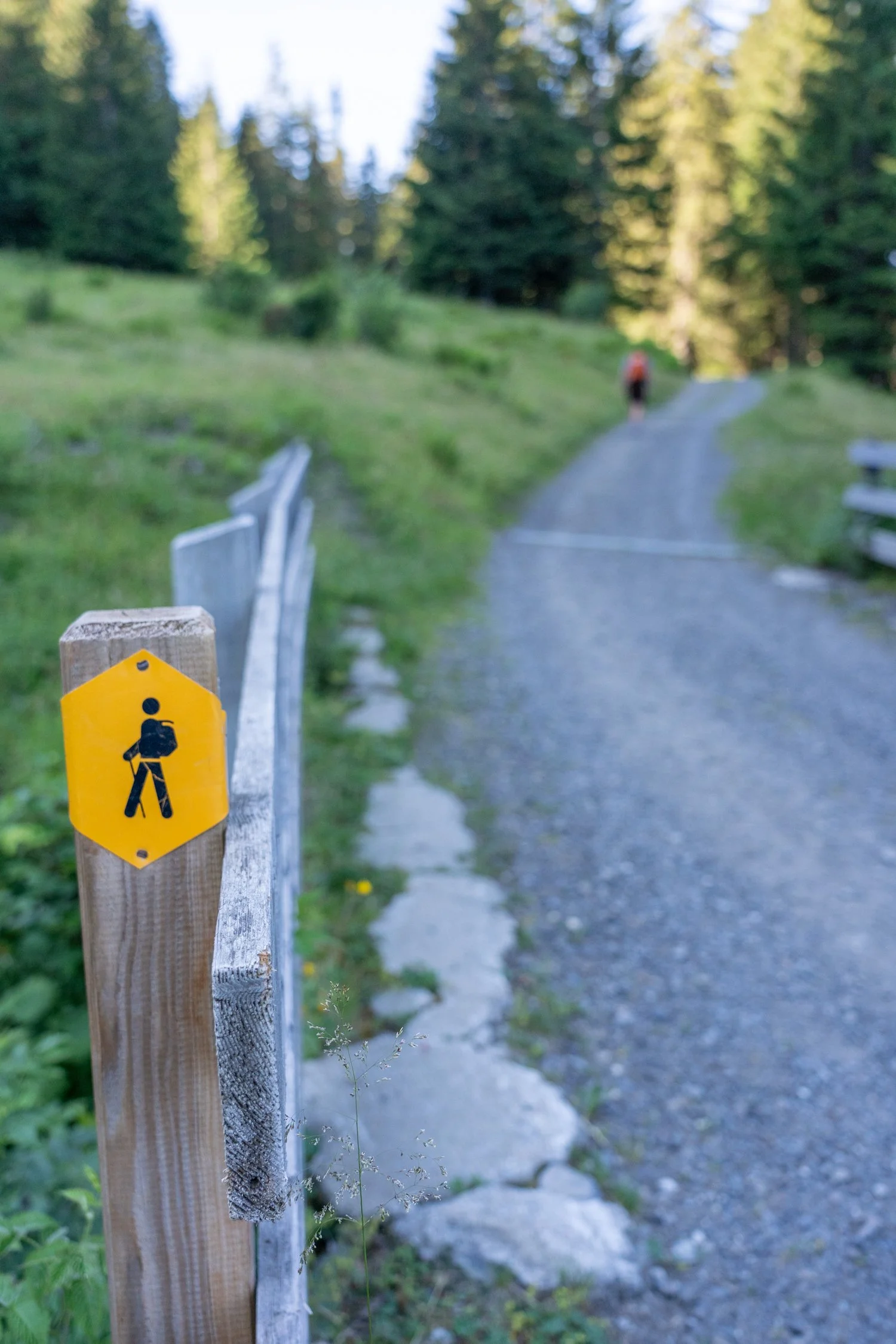
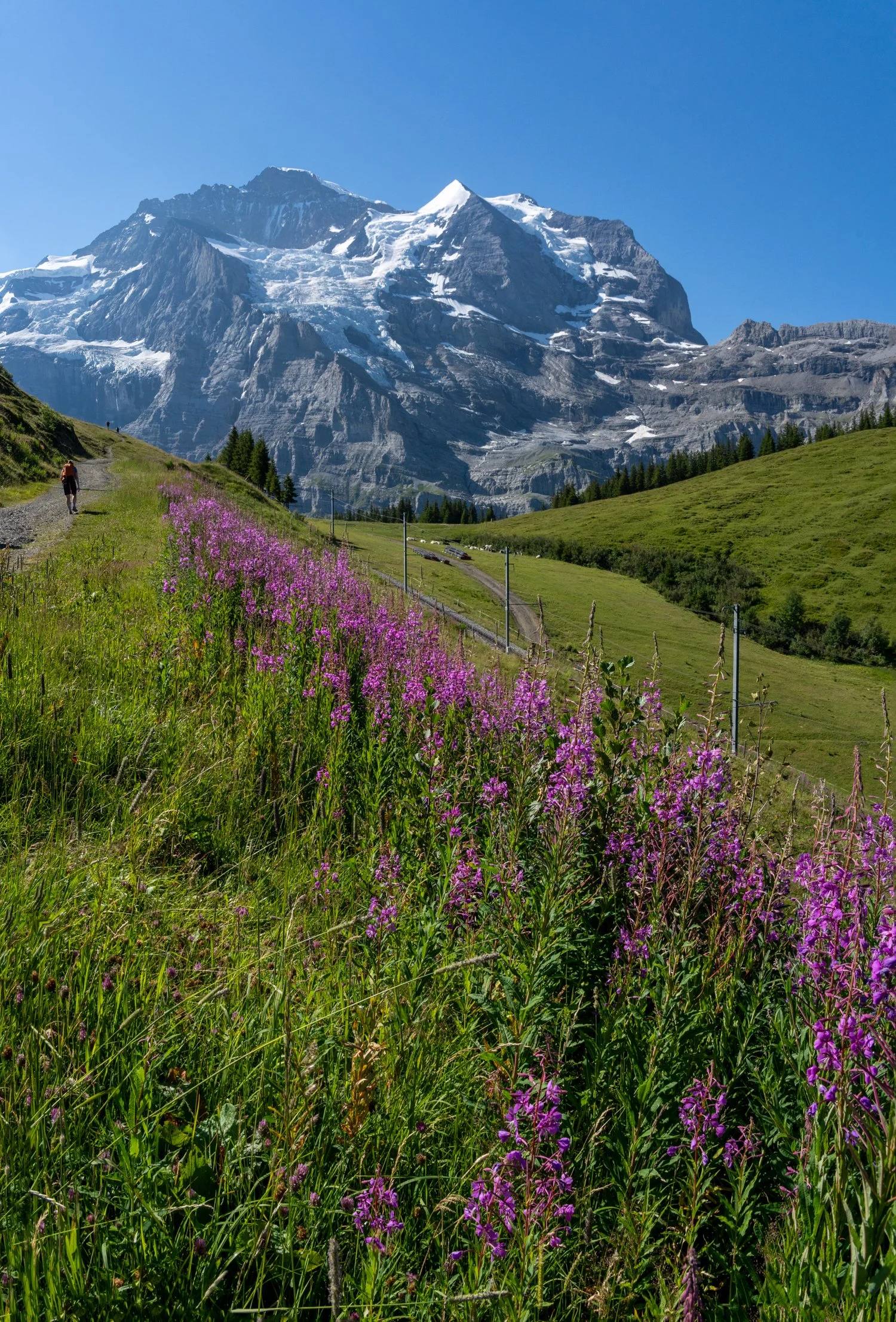
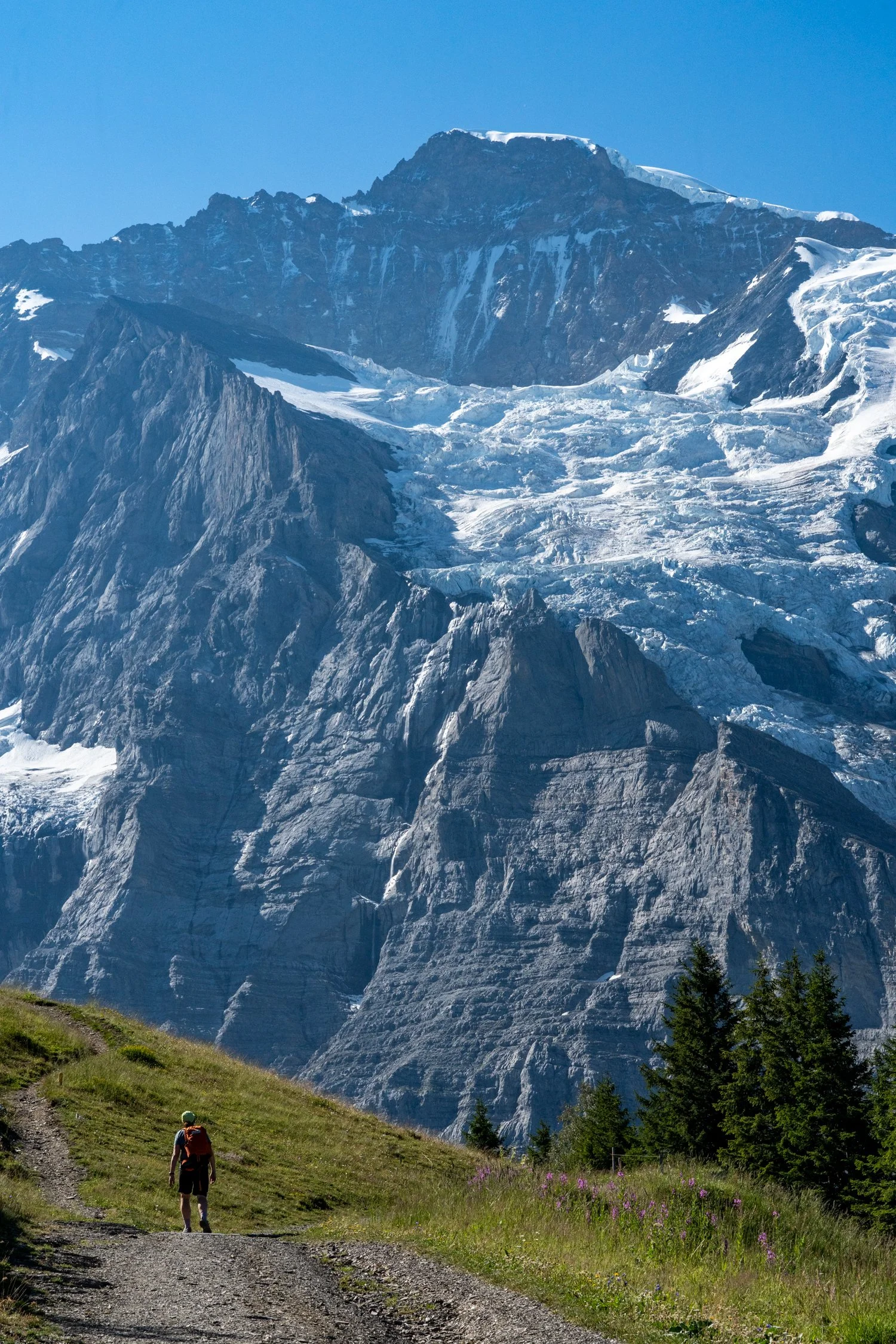
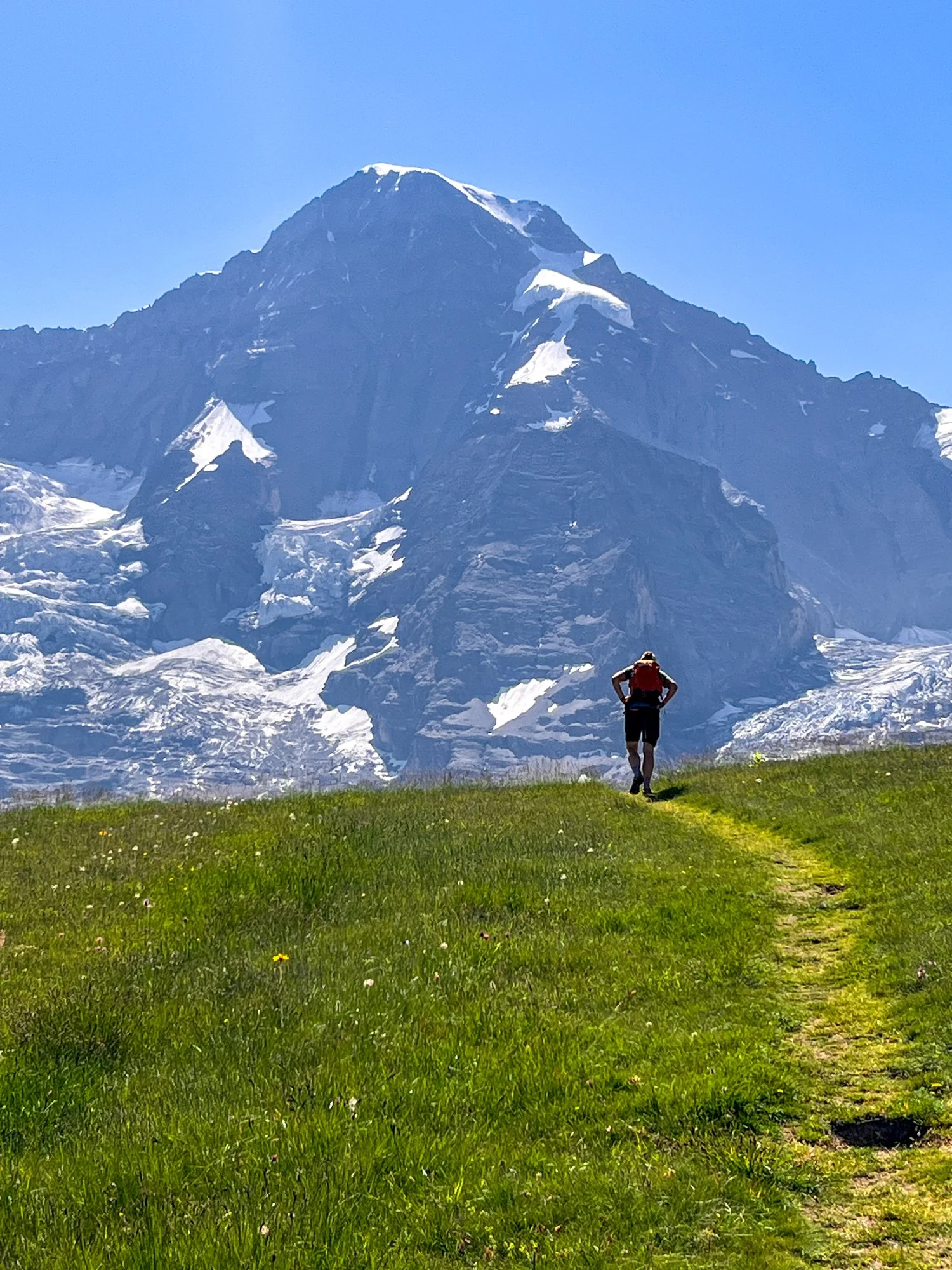
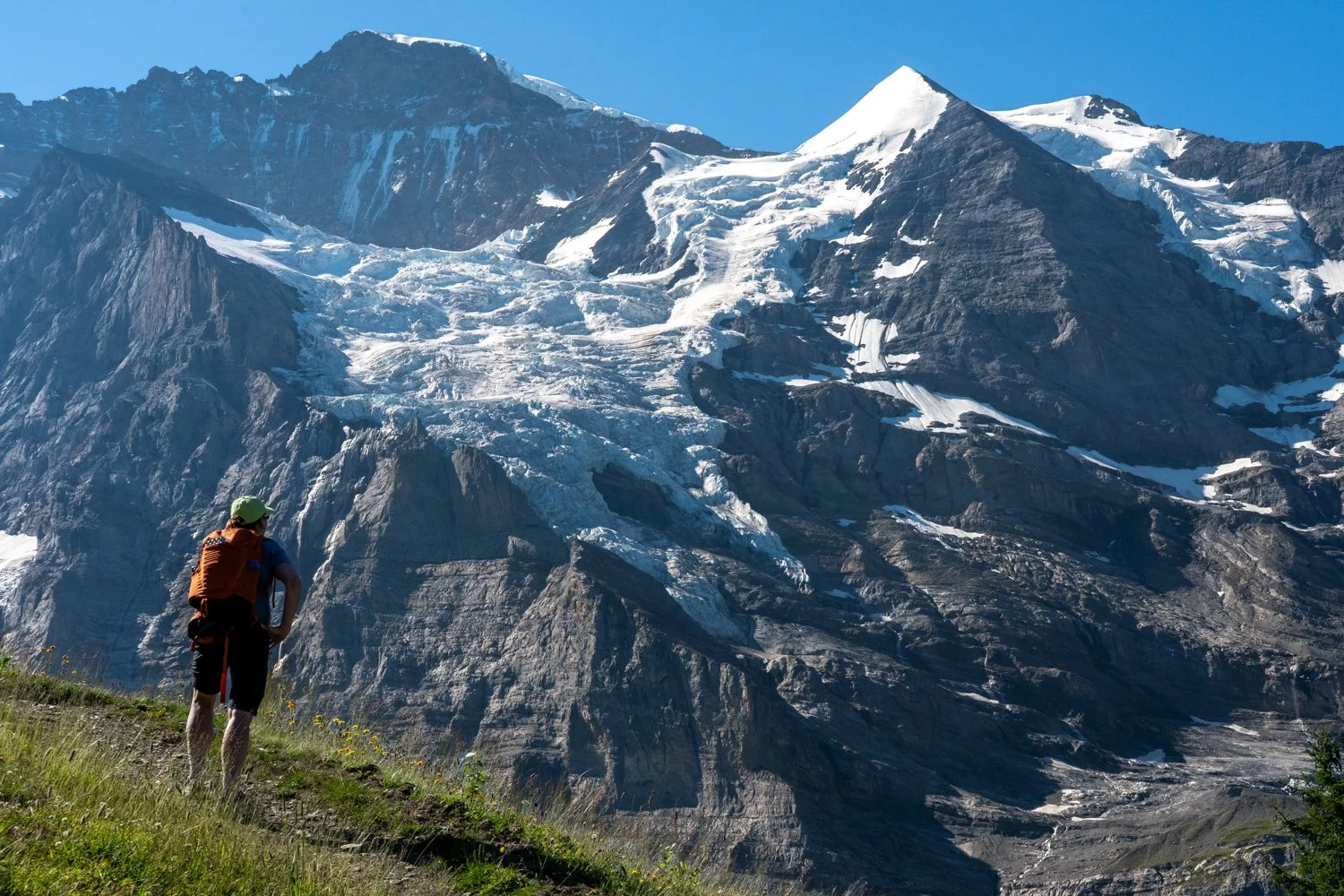
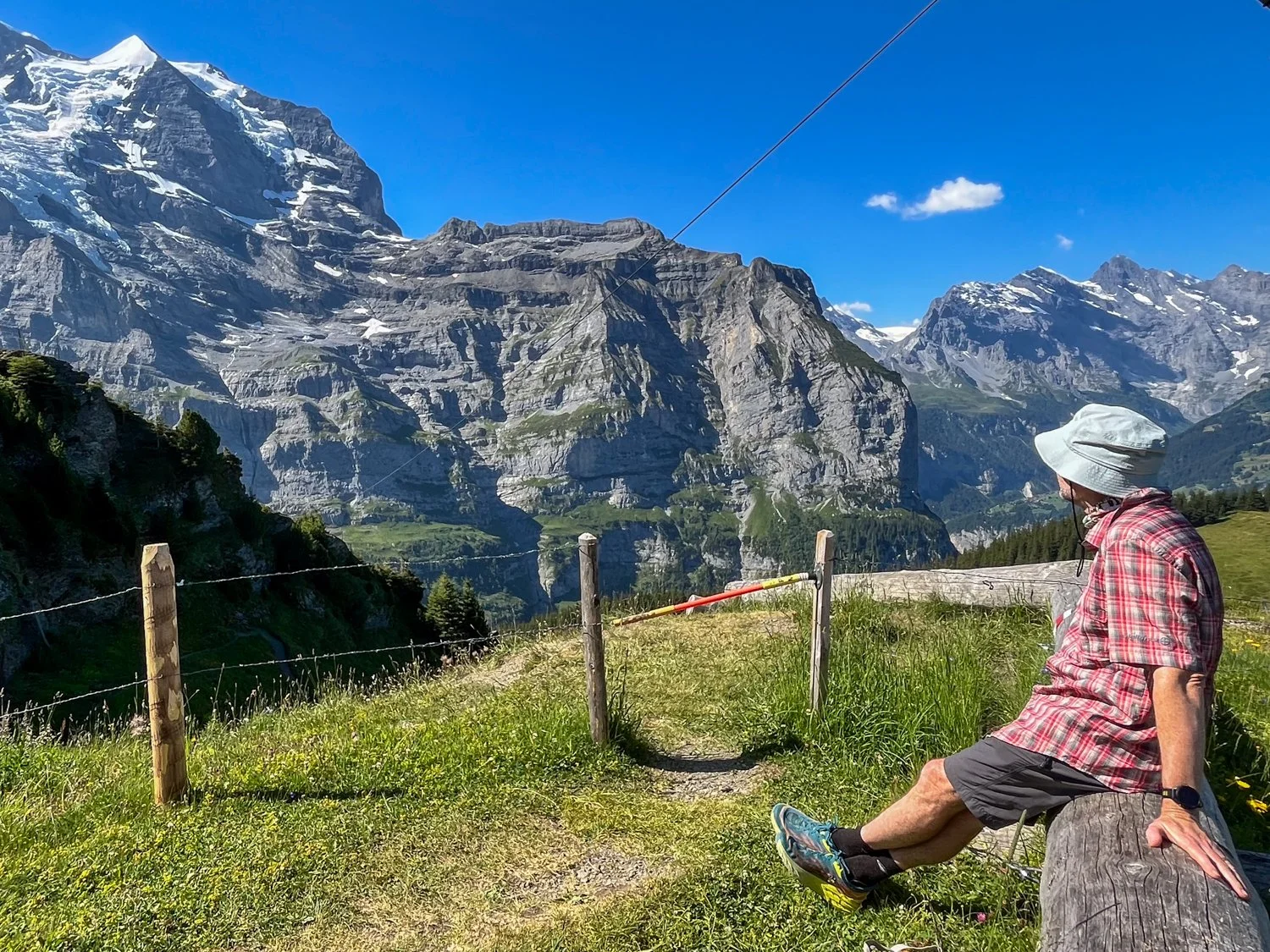
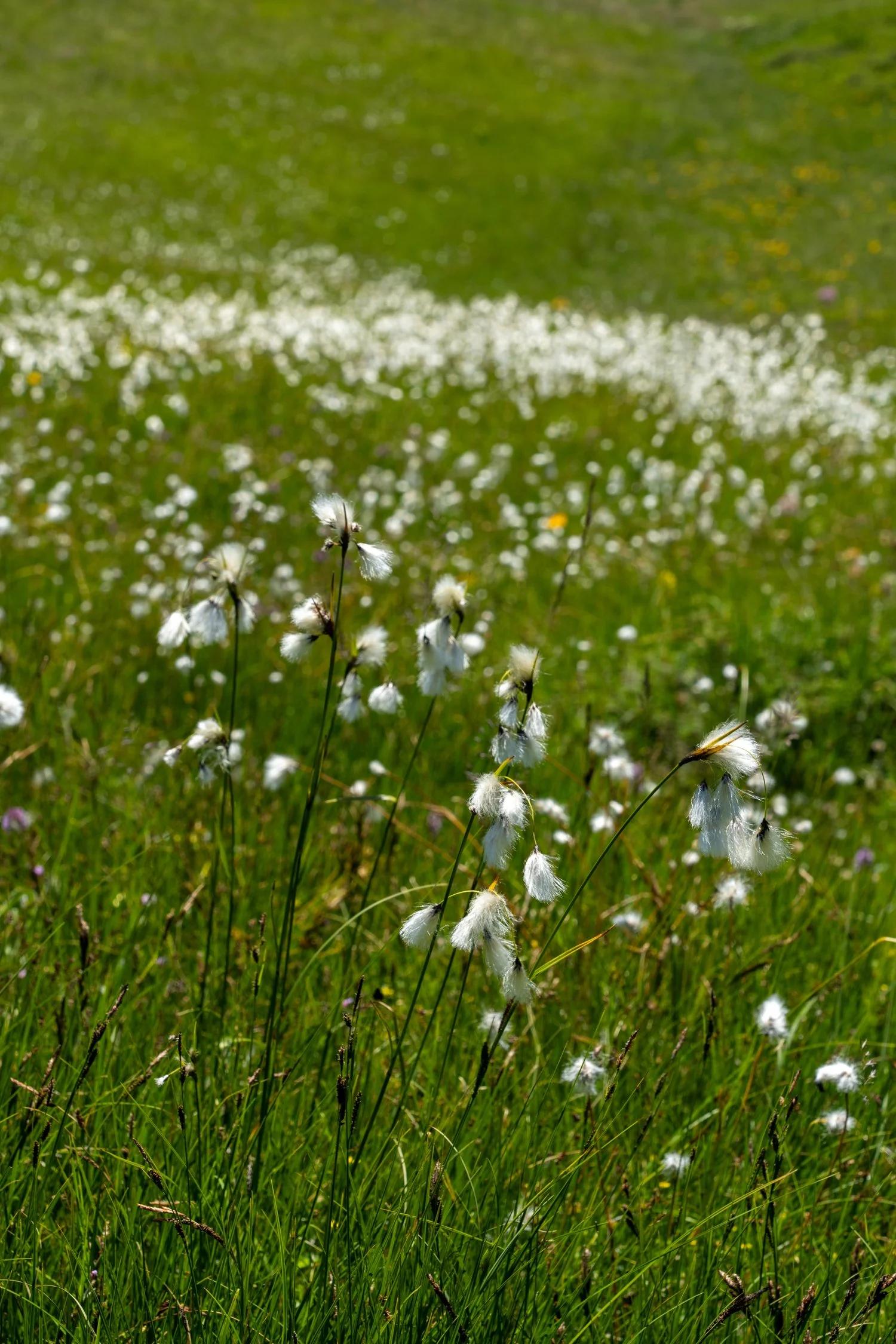
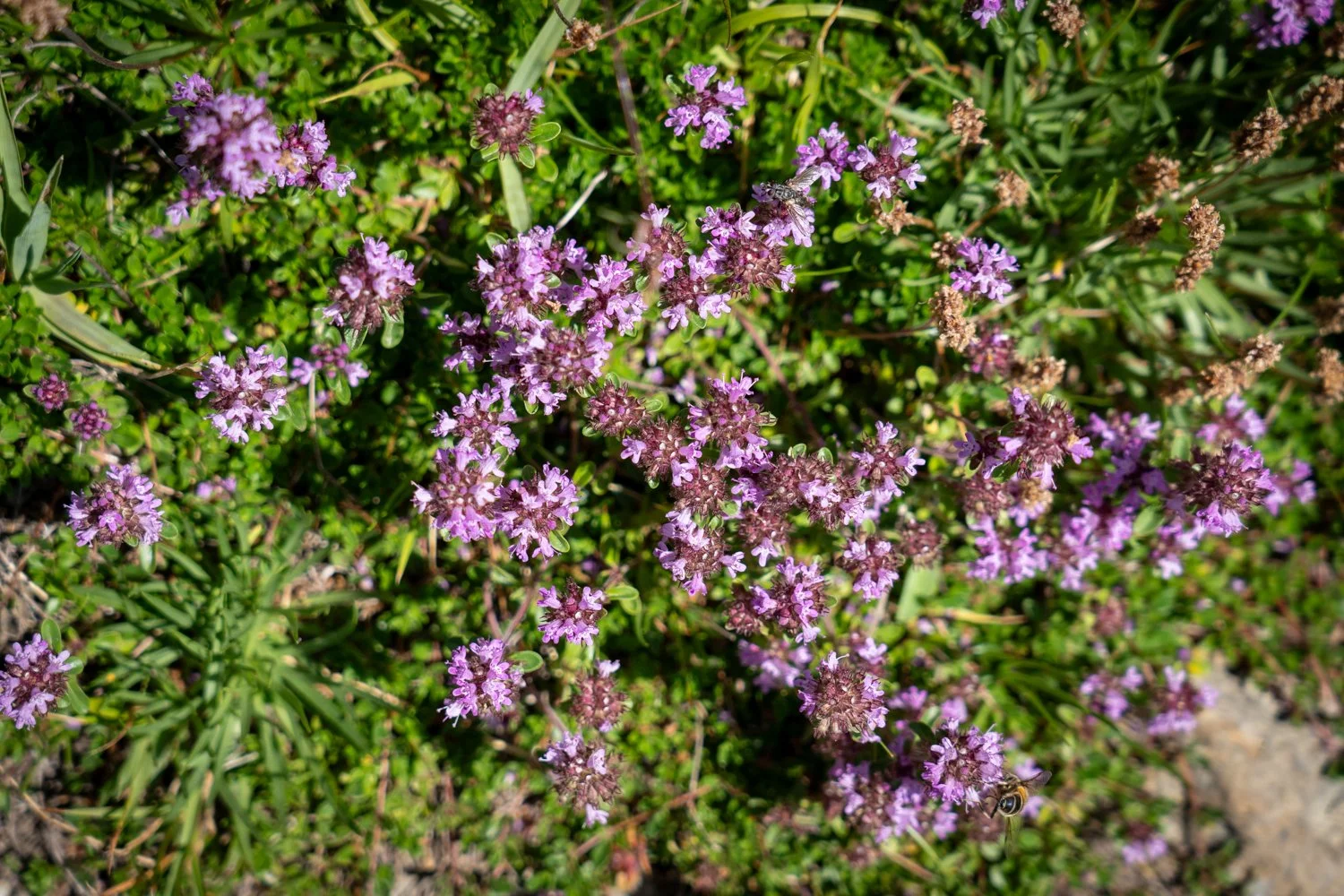
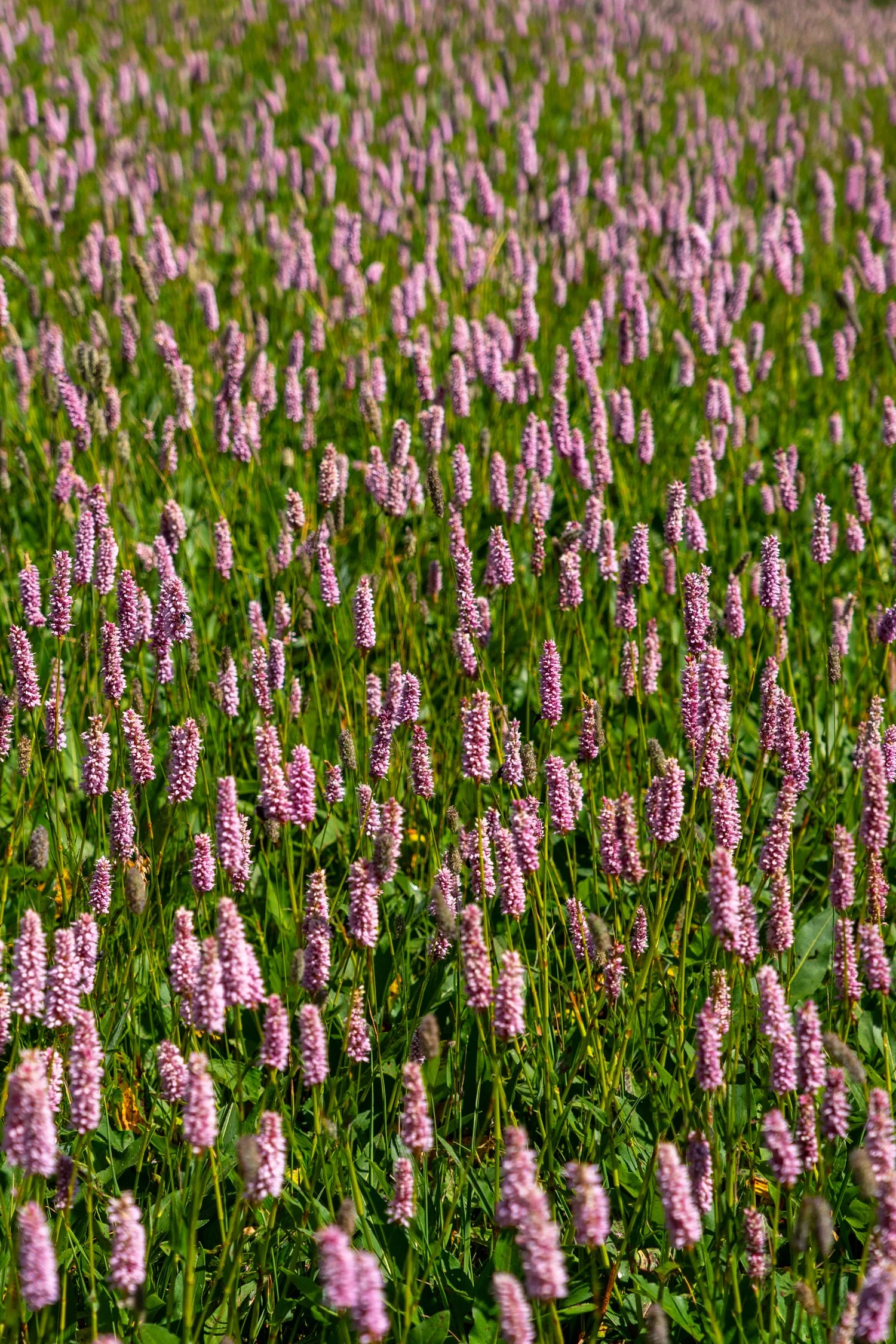
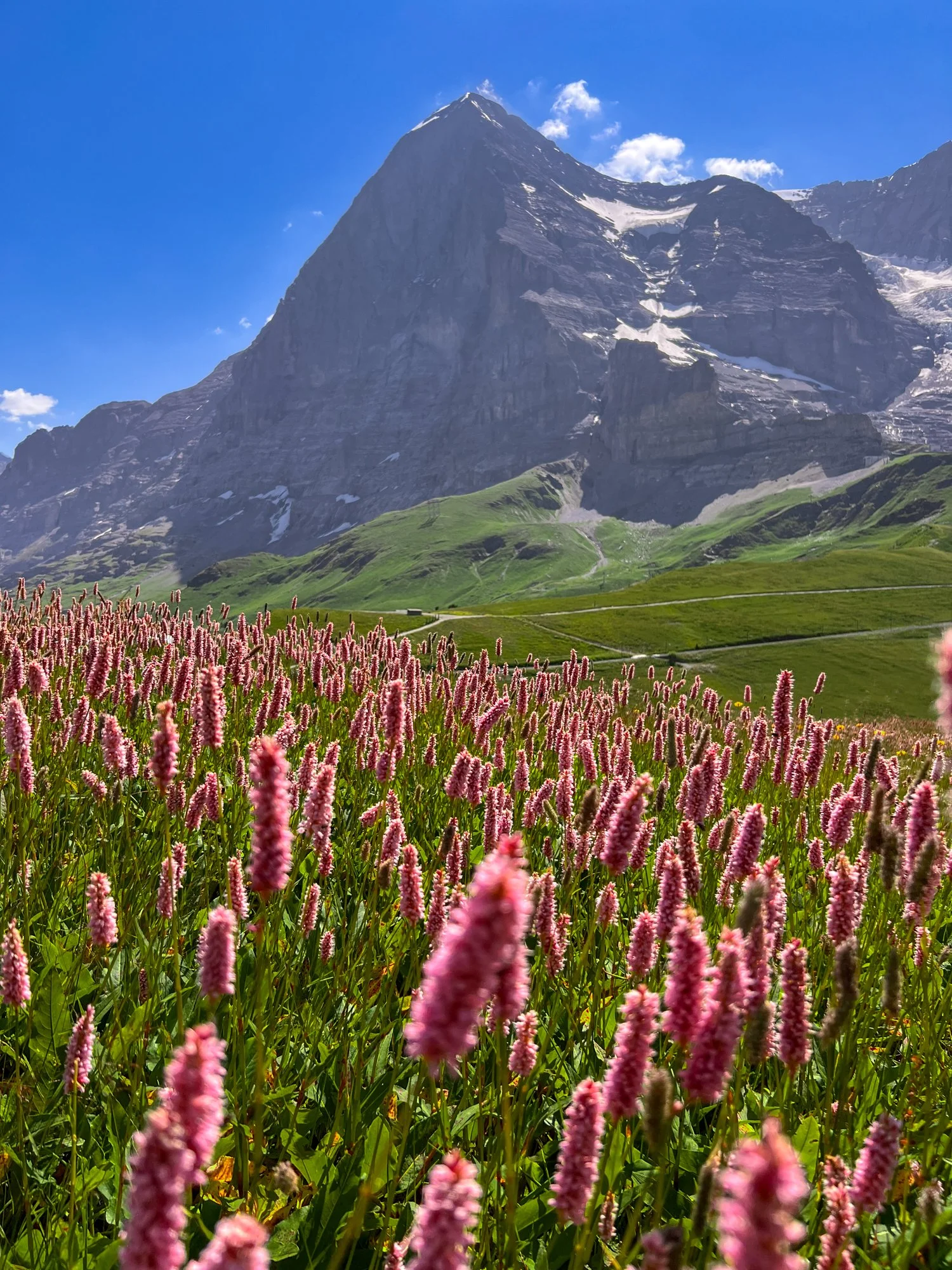
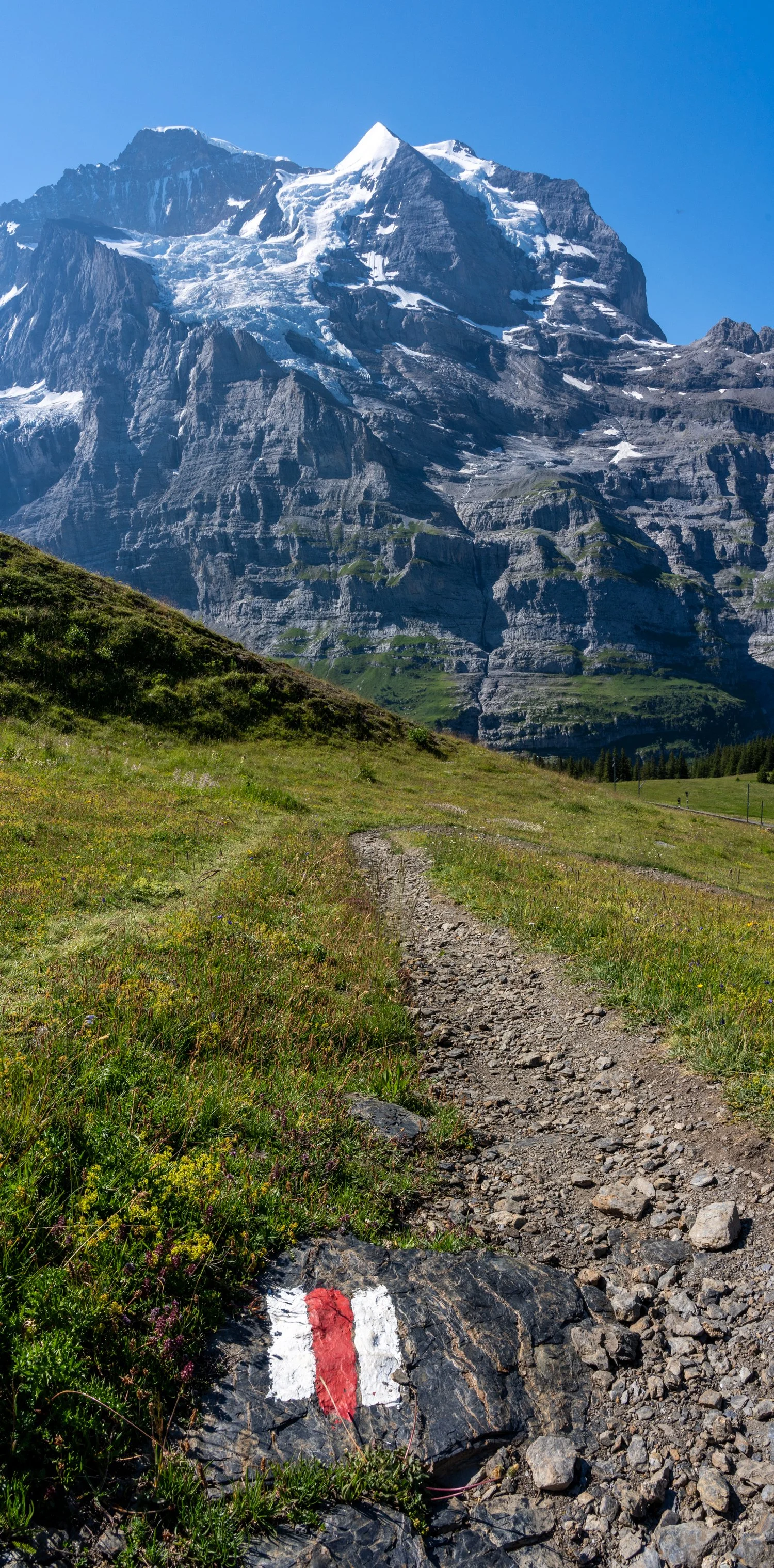
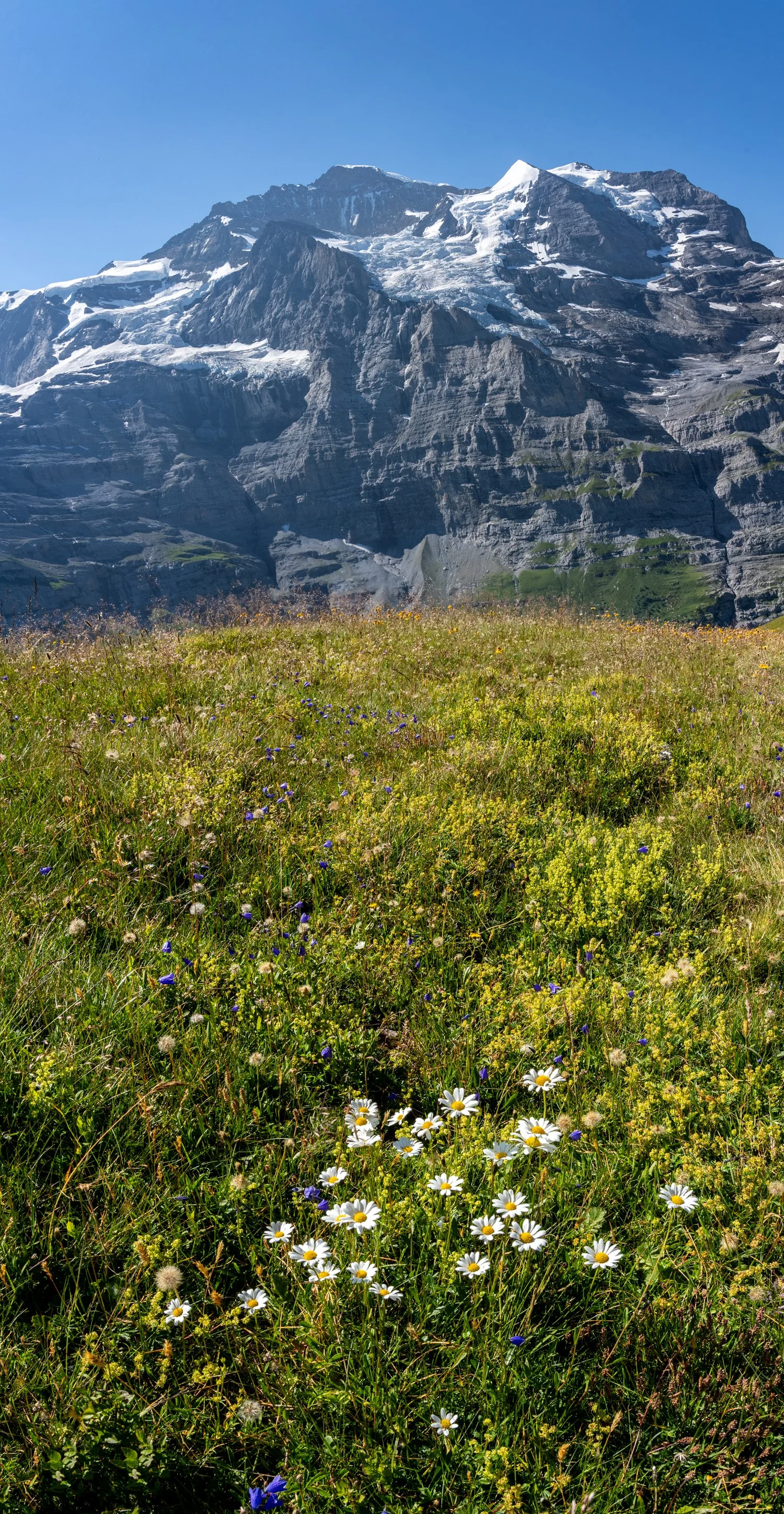
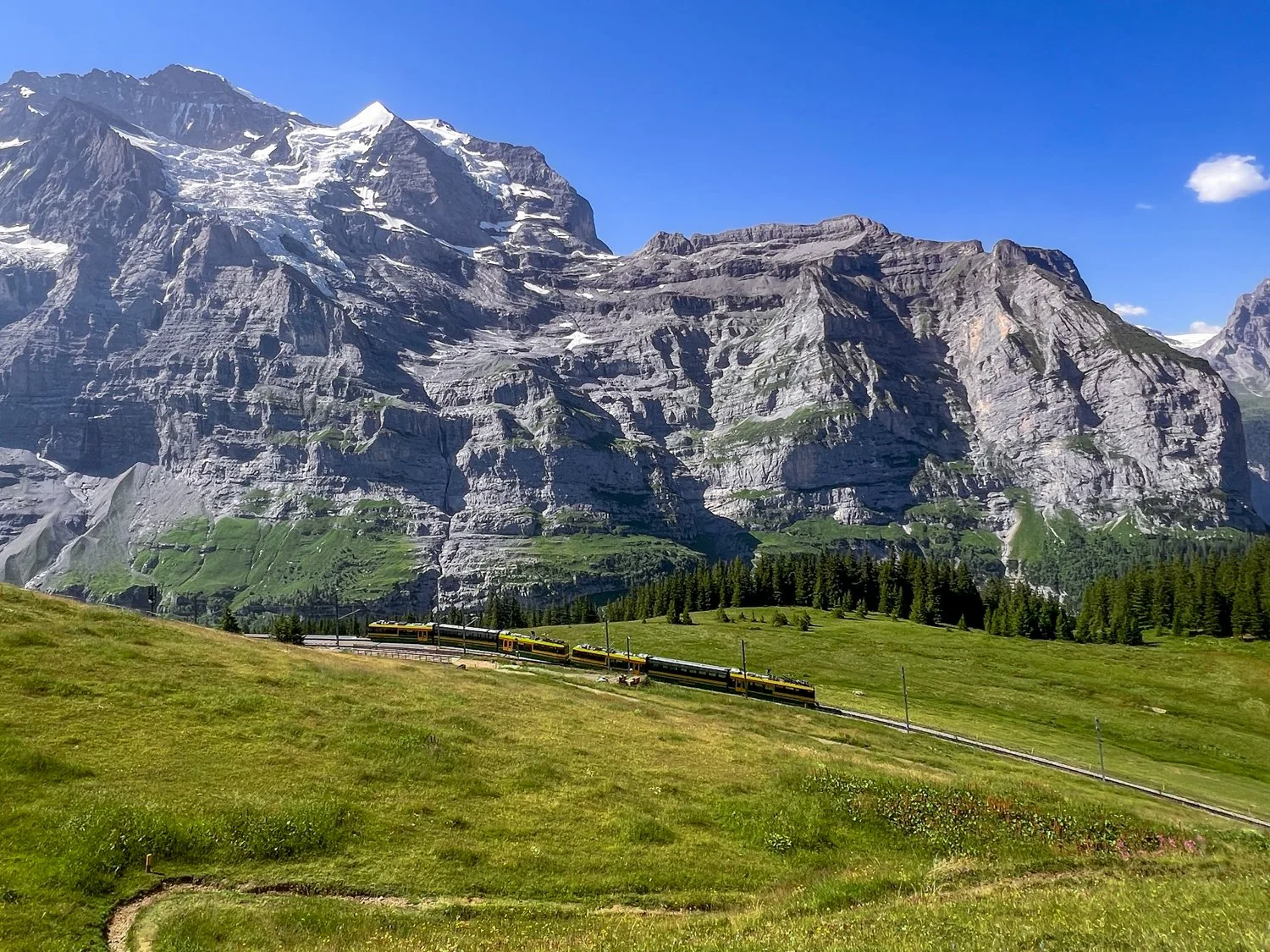
We started in Wengen and made our way towards Kleine Scheidegg, climbing more than 800 metres over around 8 kilometres. It was another perfect Swiss day — brilliant blue sky, impossibly green grass and bursts of wildflowers scattered across the hillsides. In the distance, the towering snow-covered peaks of the Eiger, Mönch and Jungfrau dominated the landscape.
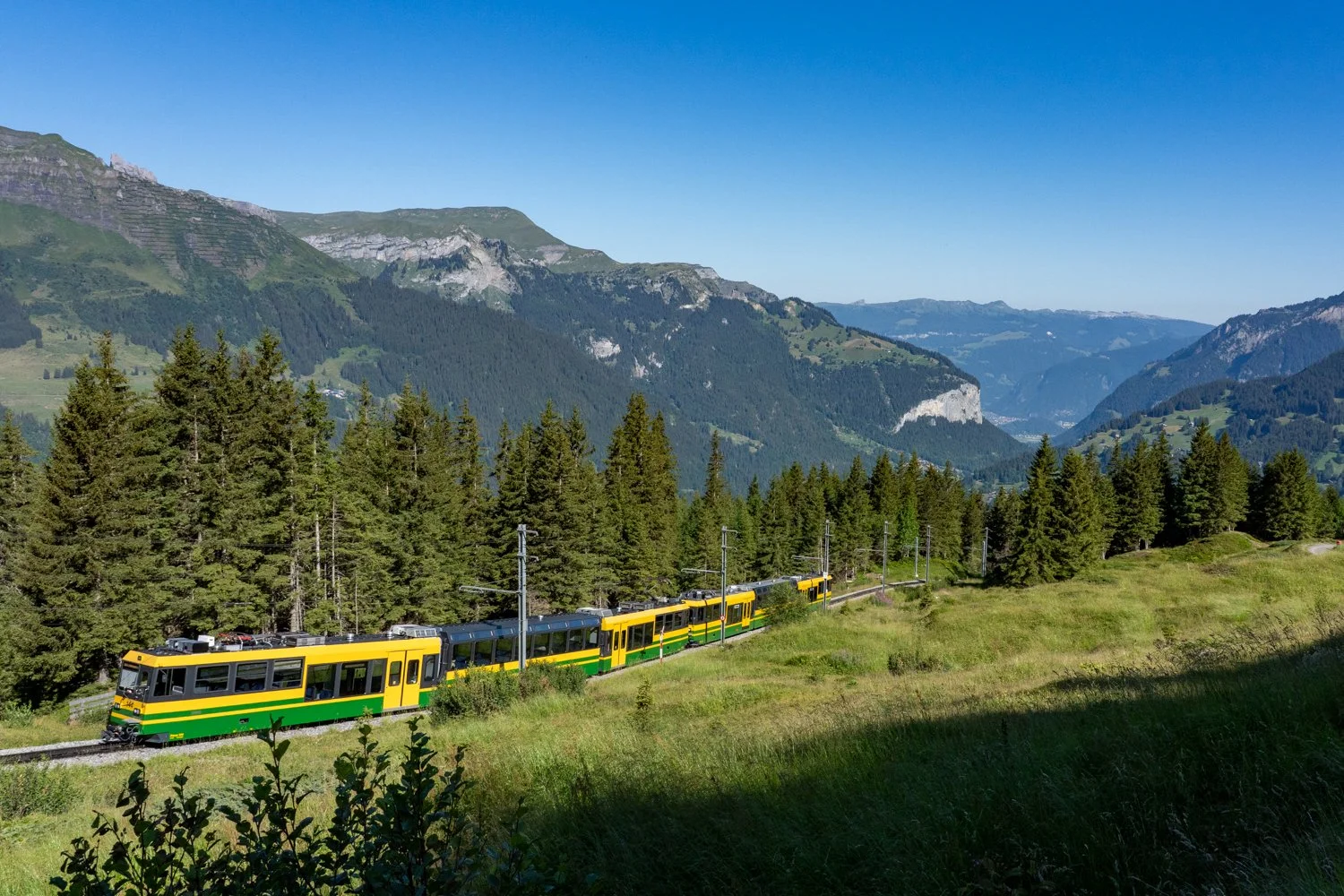
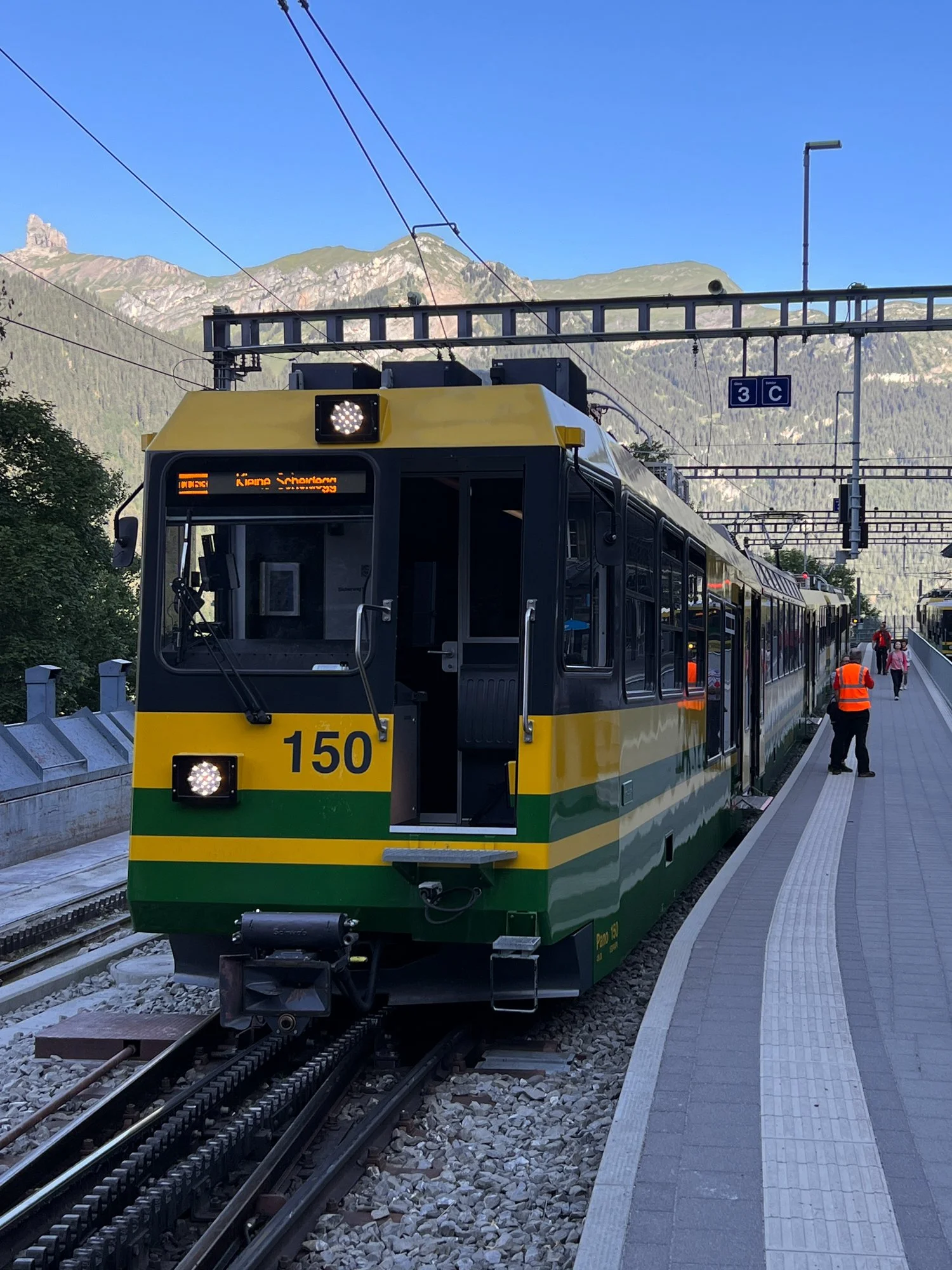
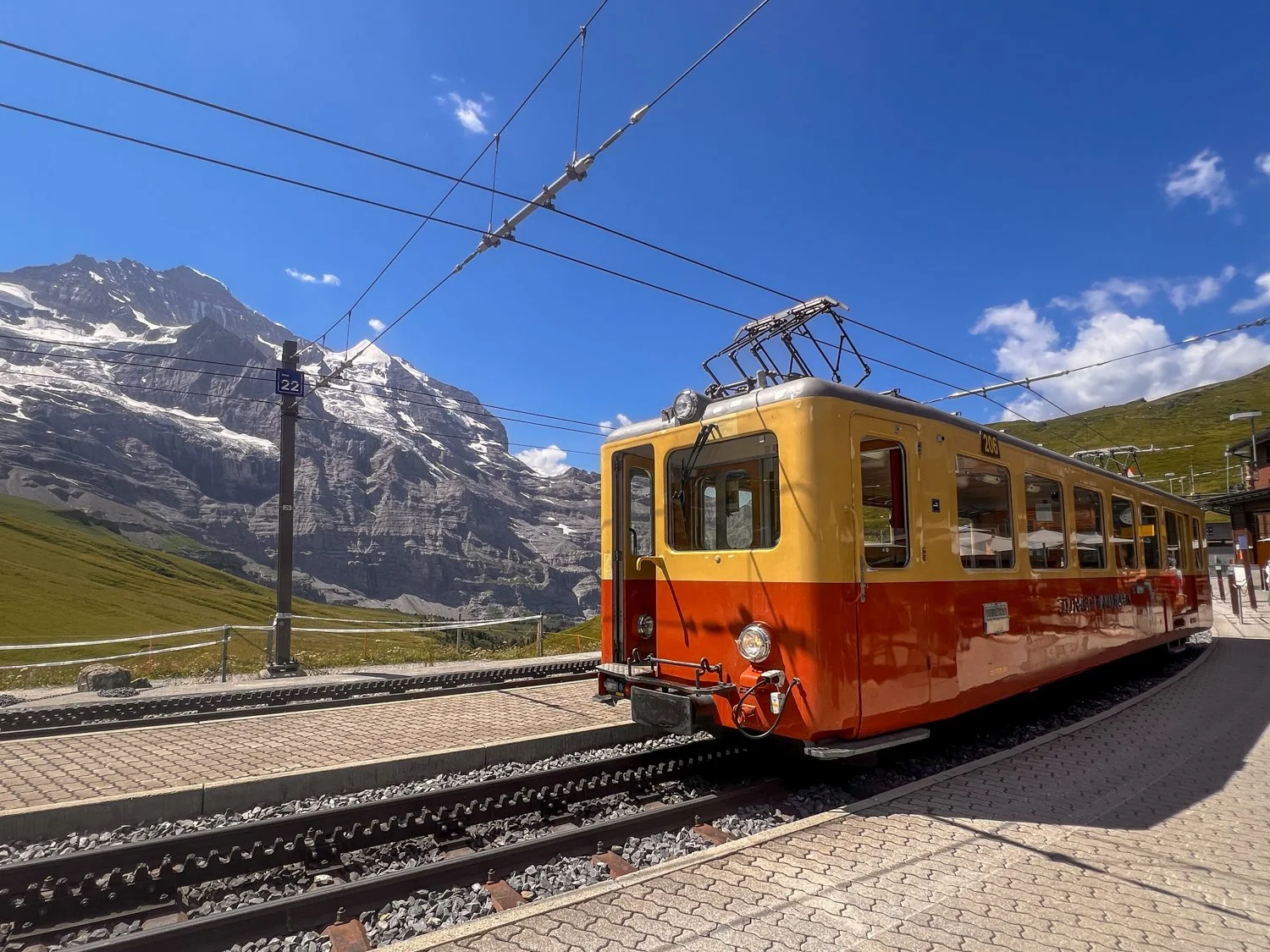
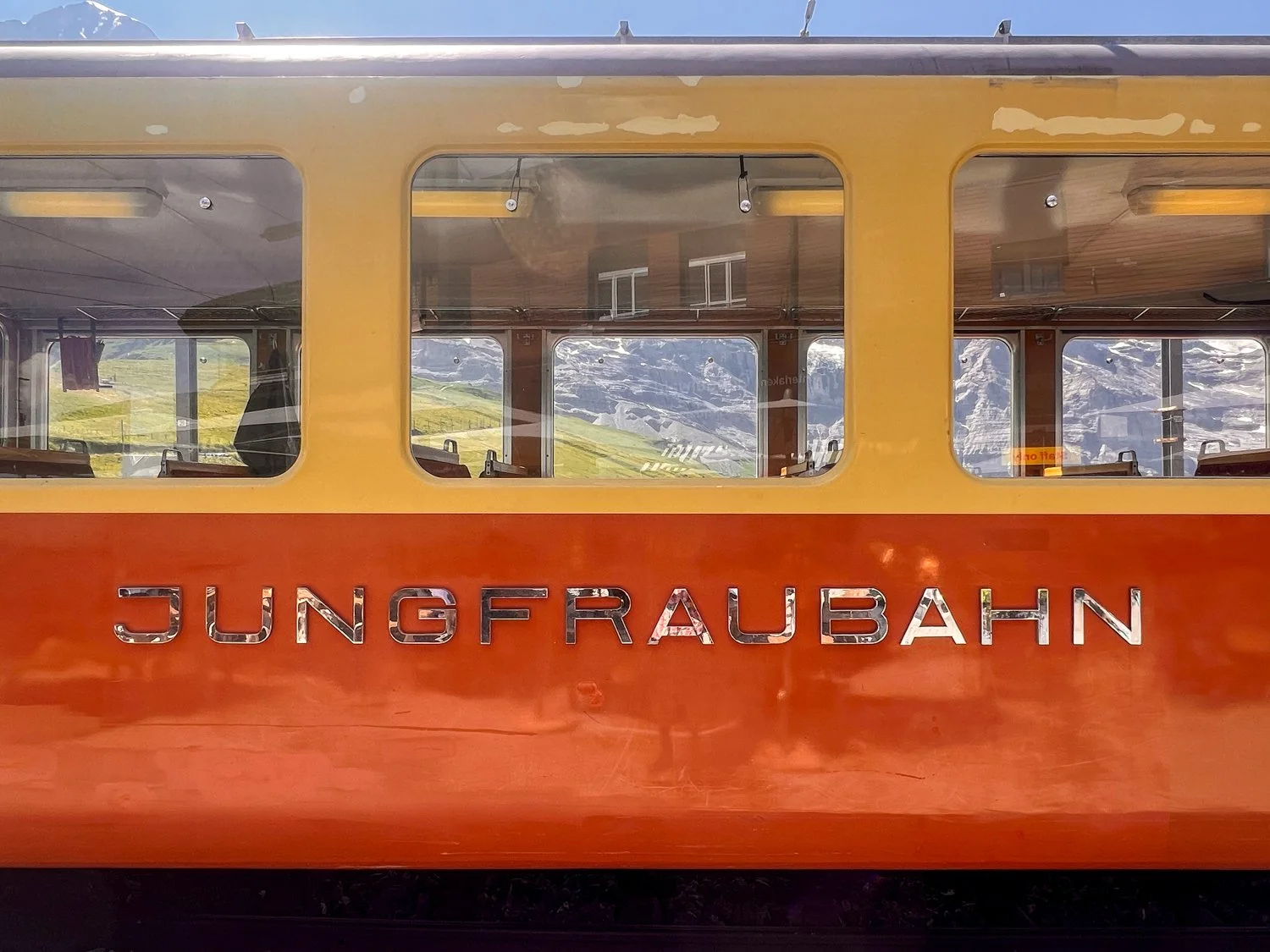
By the time we reached Kleine Scheidegg, we were quite happy to admit that we didn’t have the climbing gear — or perhaps the enthusiasm — required to walk all the way to Jungfraujoch. So, sensibly for once, we climbed aboard the cogwheel train and let the Swiss engineering do the hard work.
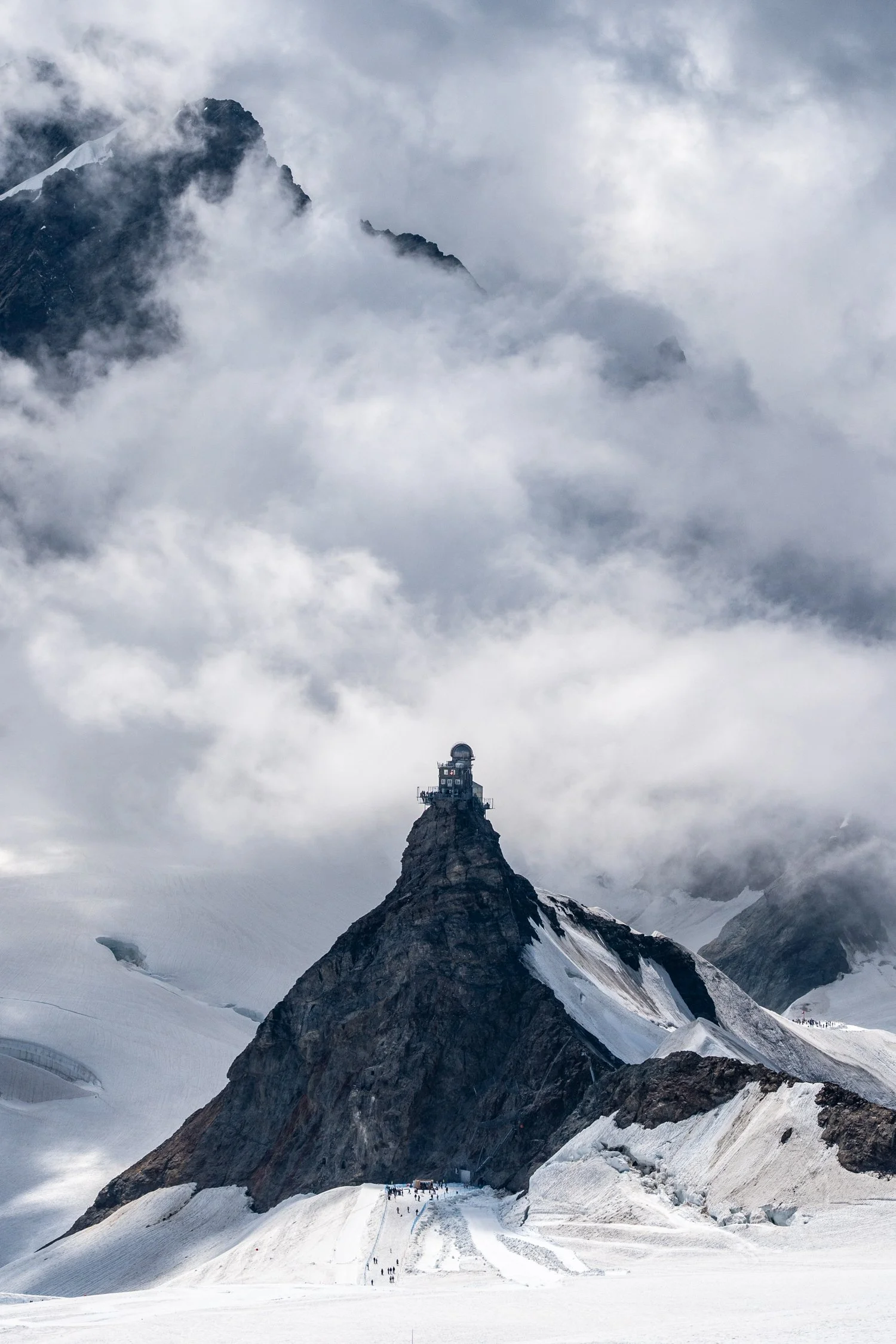
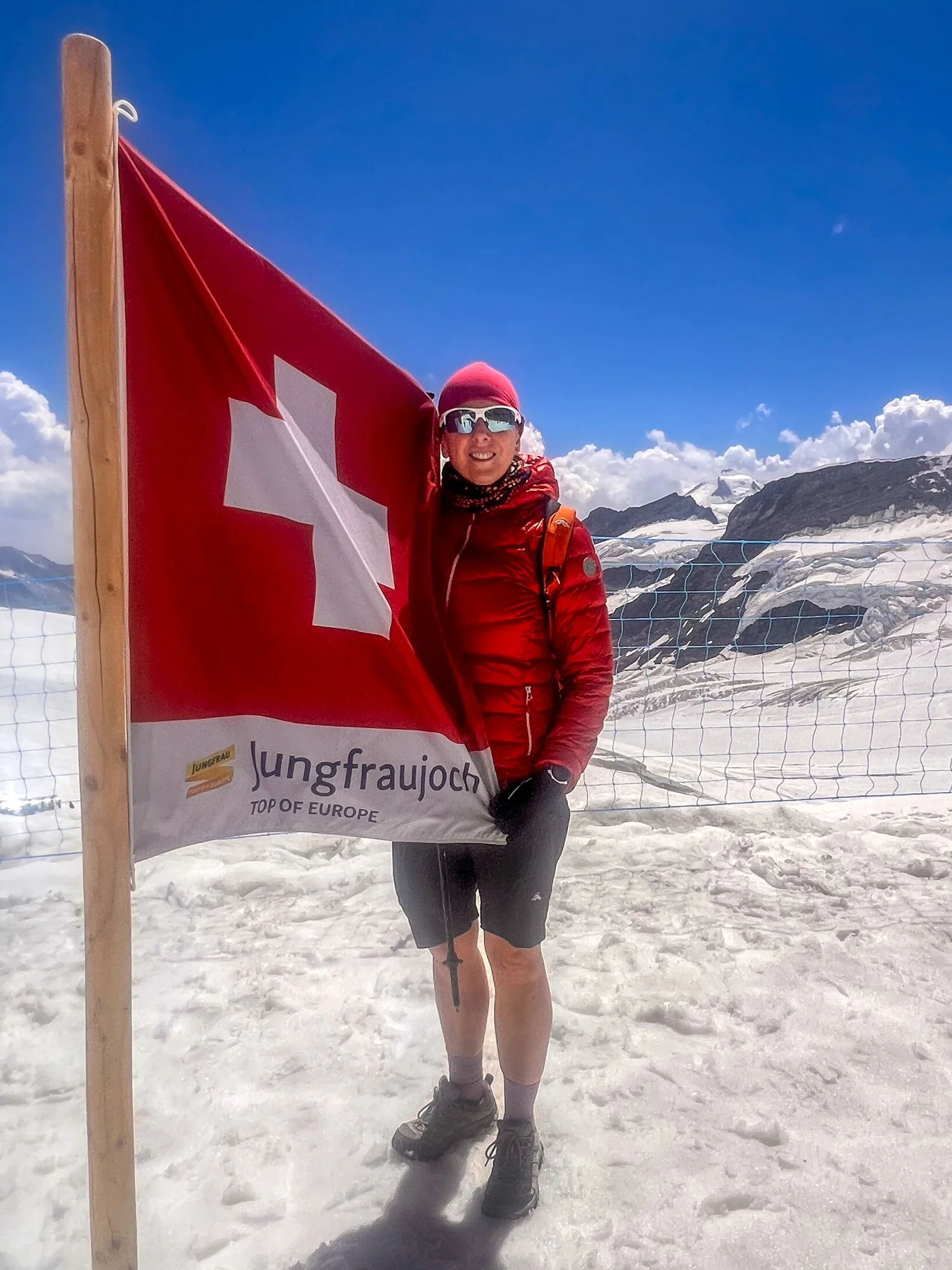
Reaching Jungfraujoch is an impressive feat of engineering, but once you arrive it feels a little like Disneyland at 3,463 metres. There are ice sculptures carved into tunnels, tourist shops selling everything from Swiss watches to souvenirs, and plenty of people taking photographs to prove they had made it to the “Top of Europe”.
Except, technically, it isn’t the top of Europe.
So naturally, rather than simply accepting the claim, we decided to leave the crowds behind and walk a little further up the mountain.
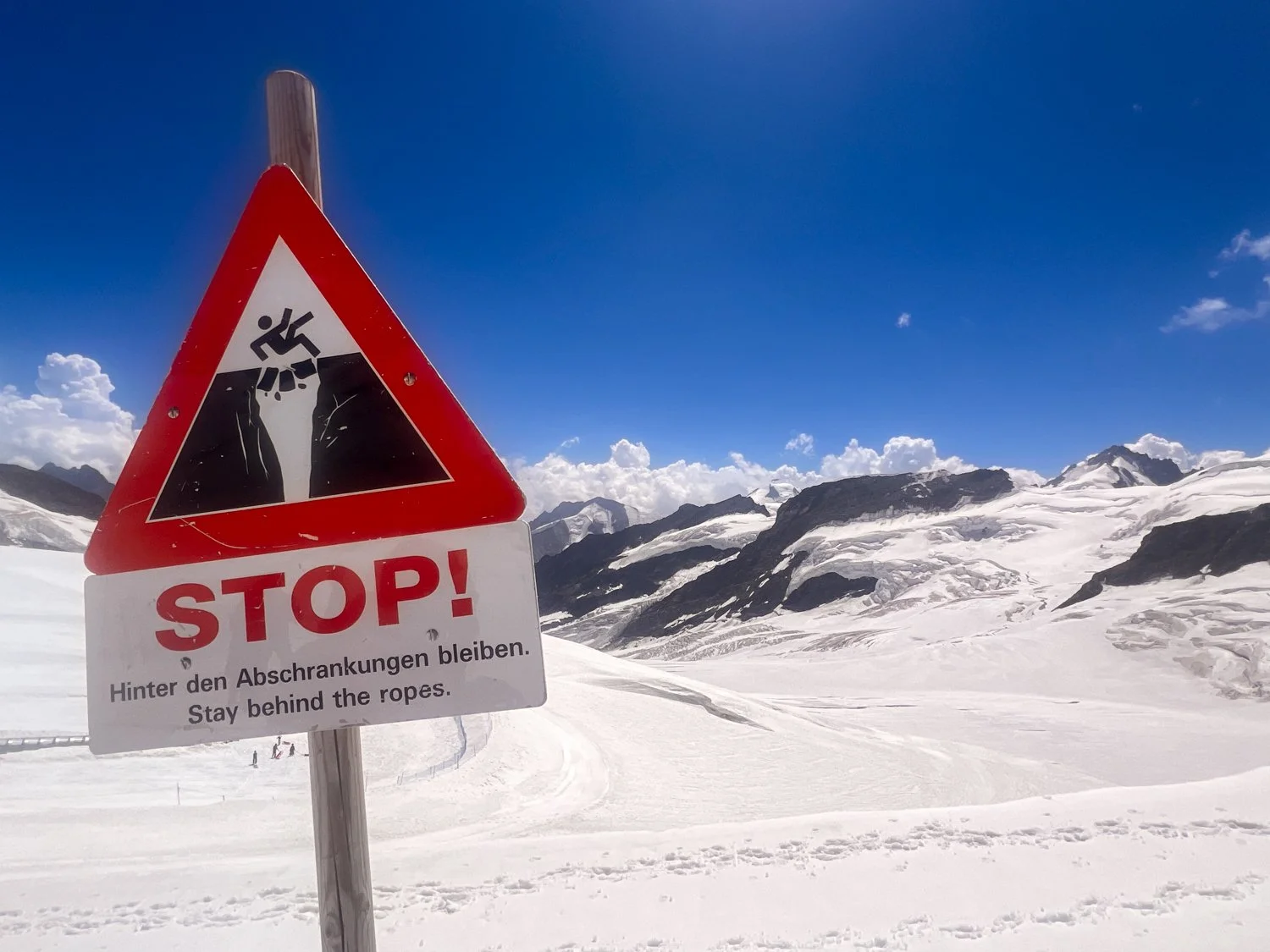
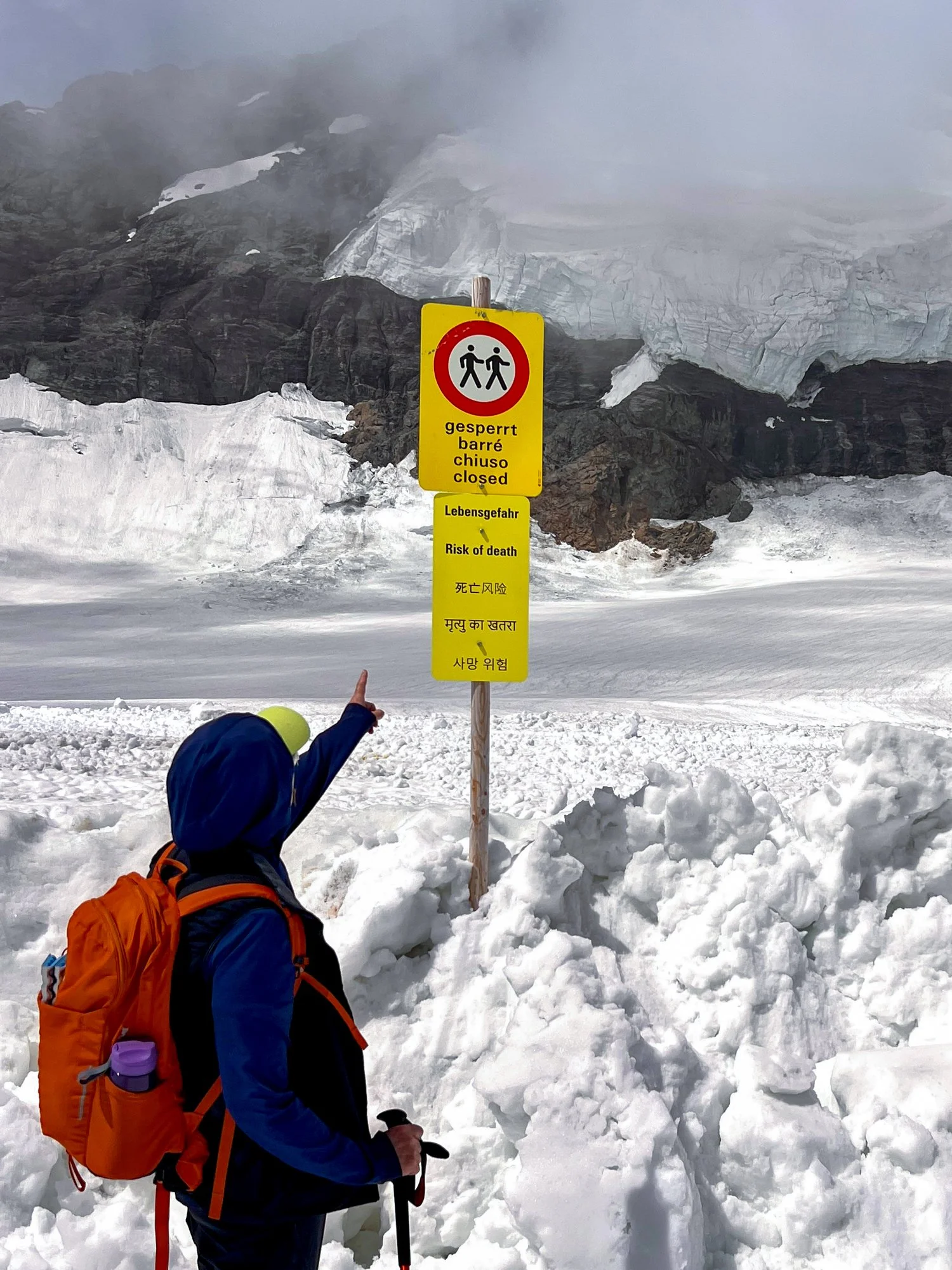
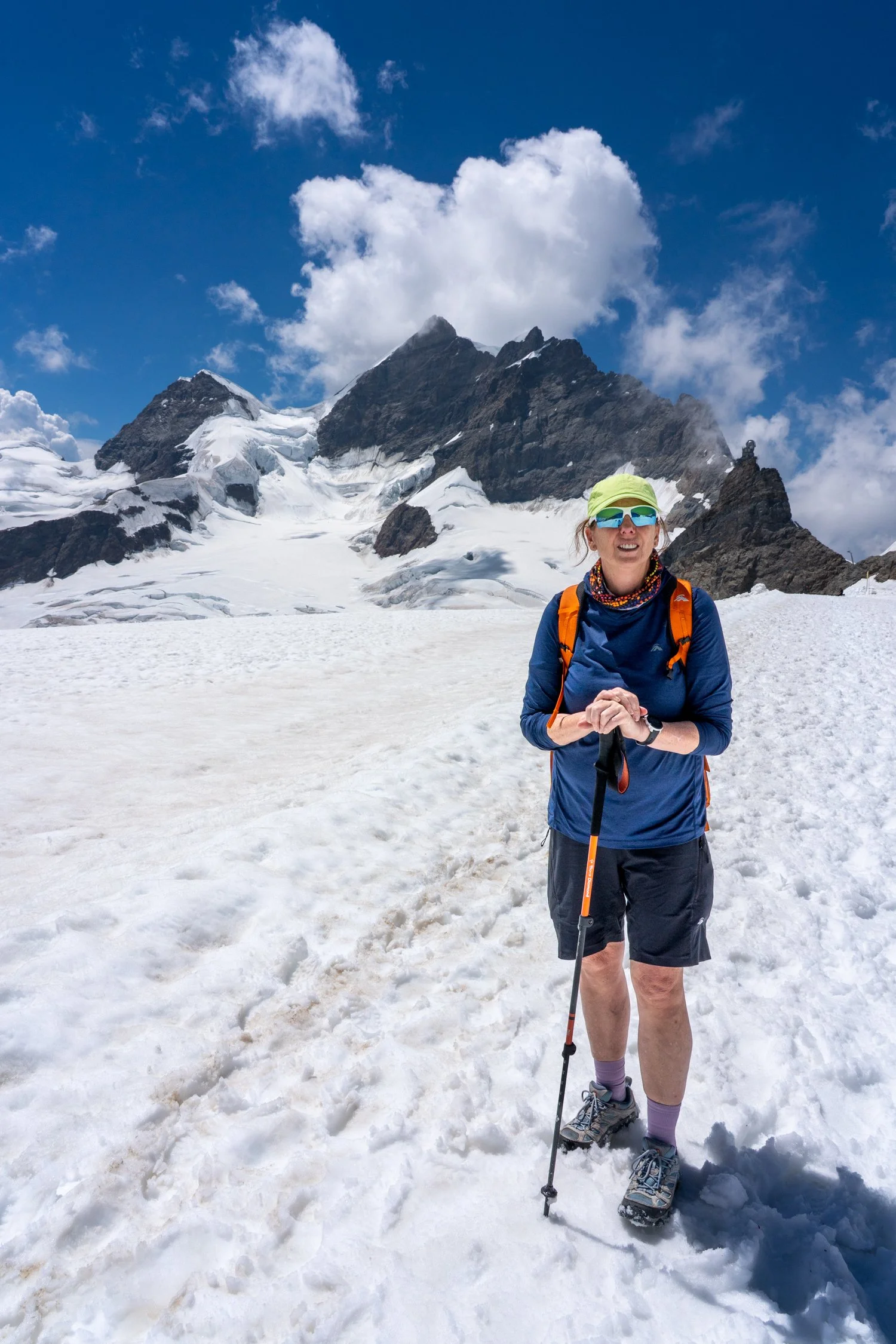
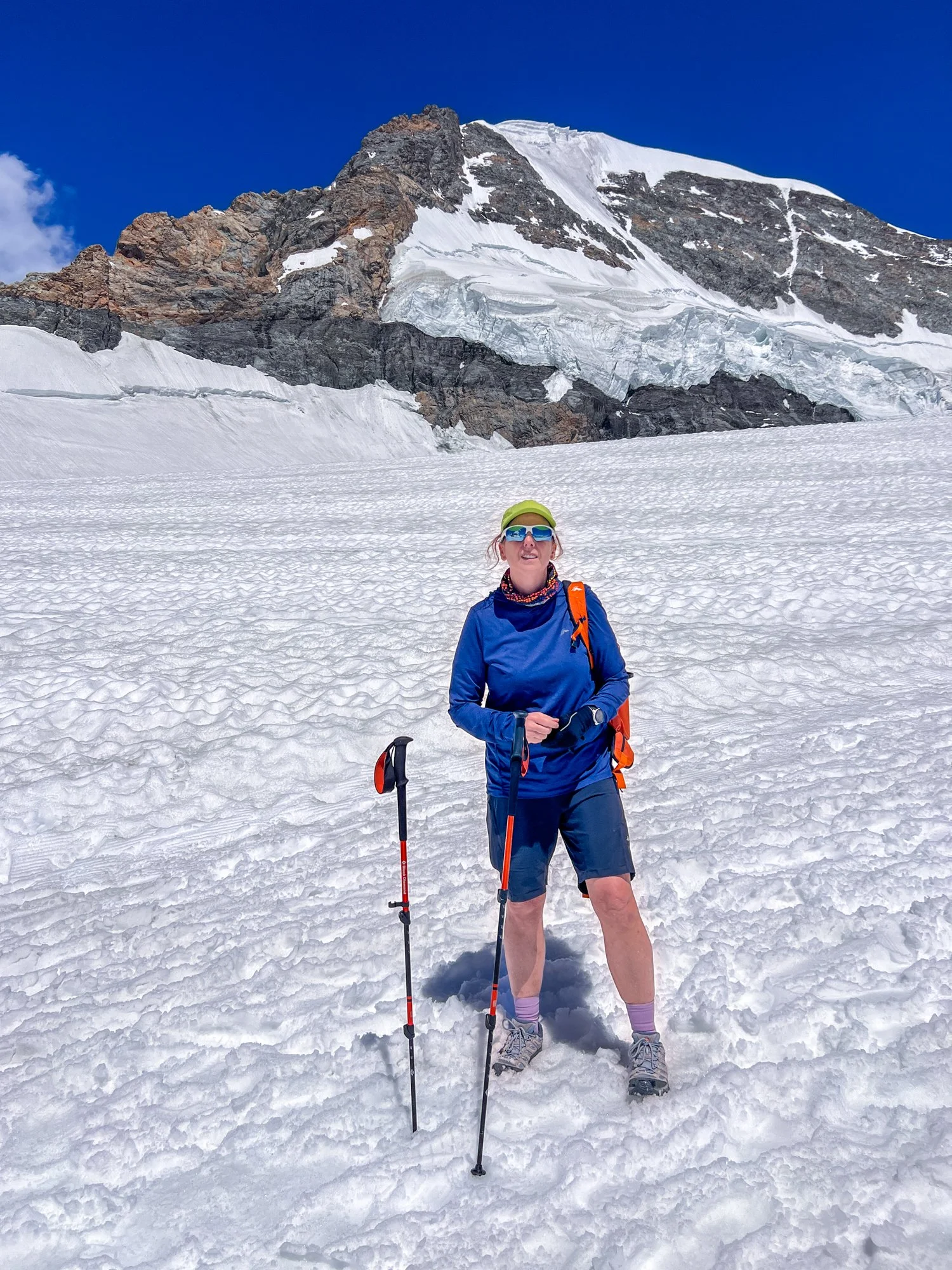
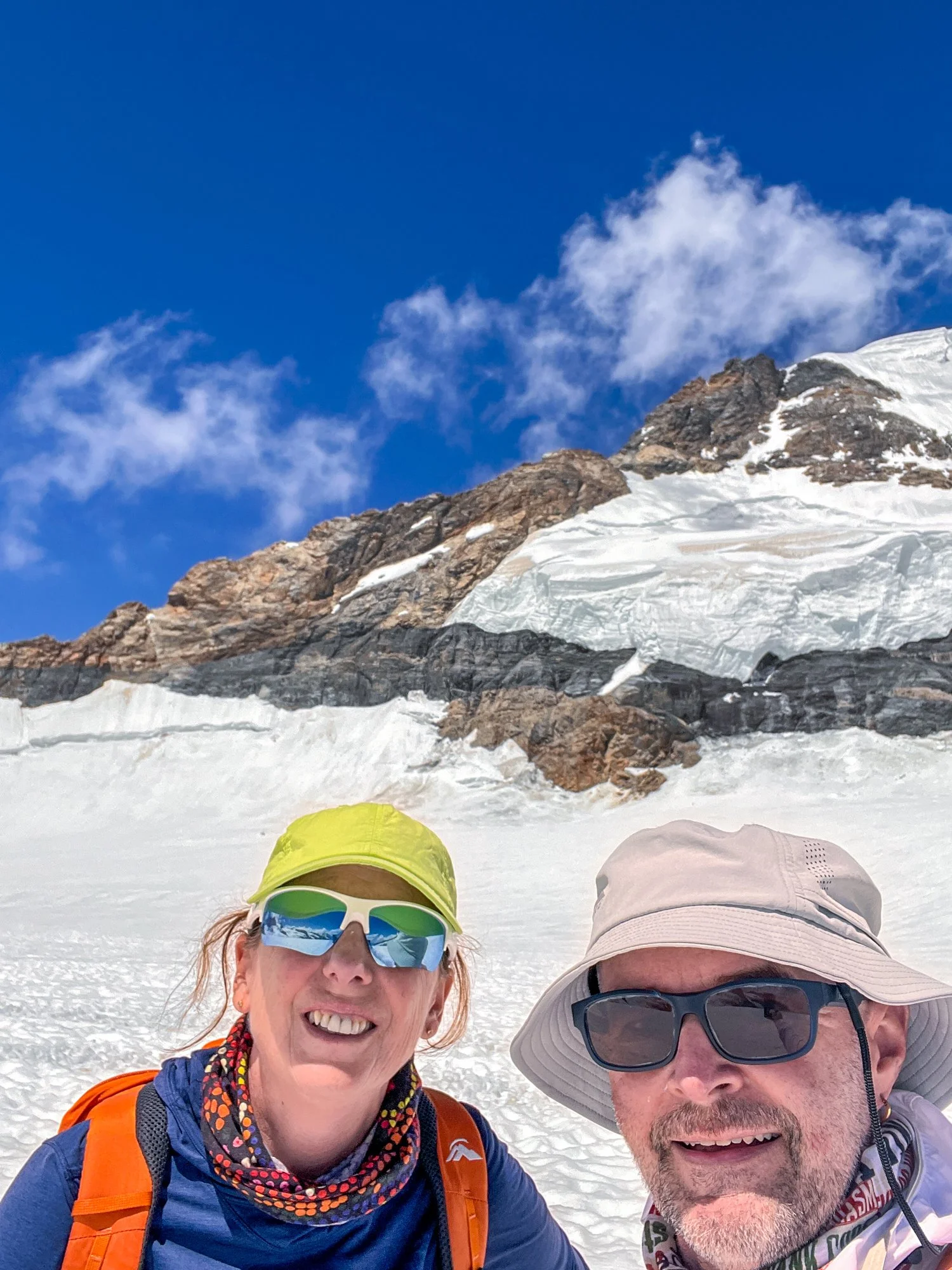
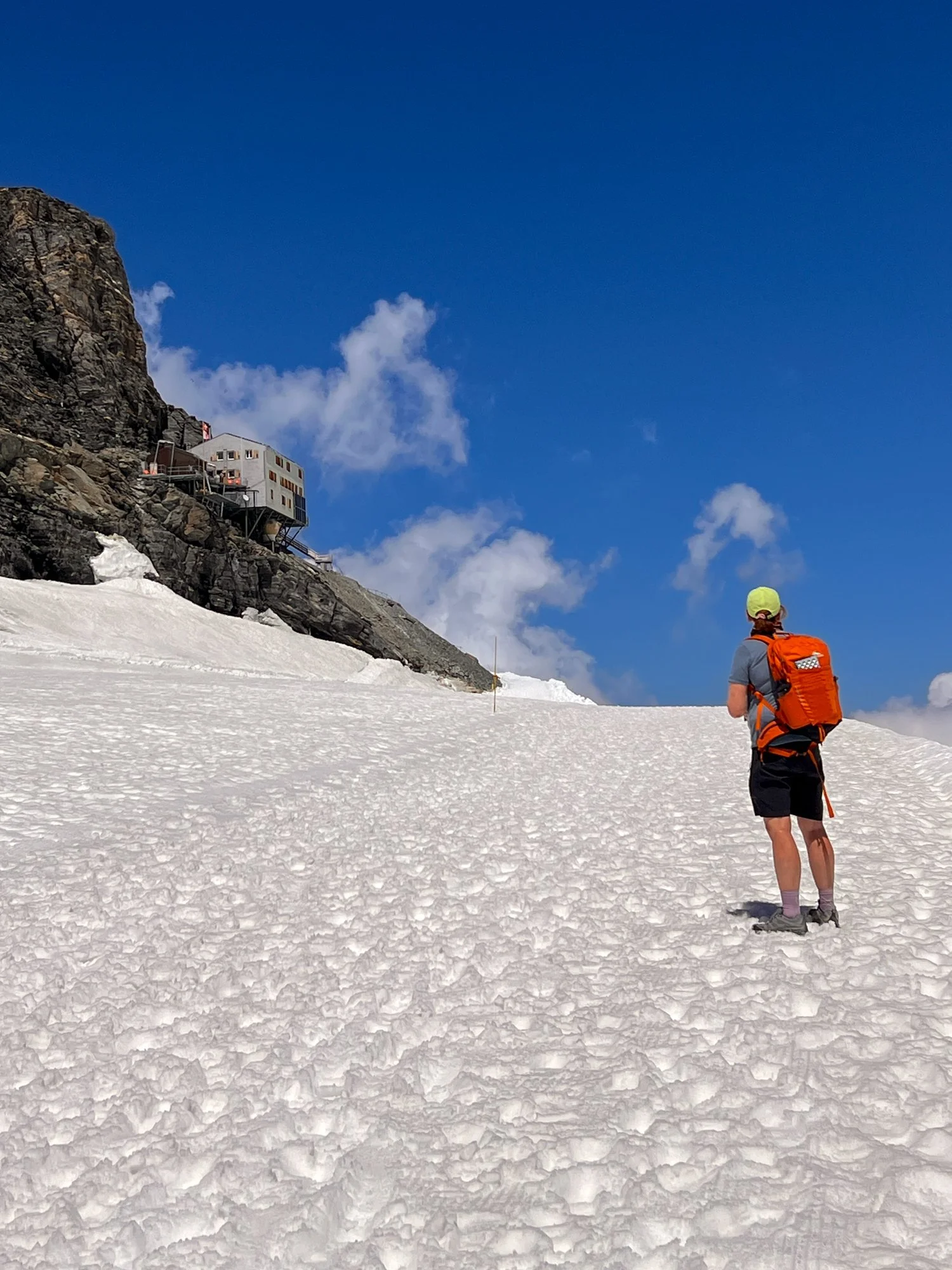
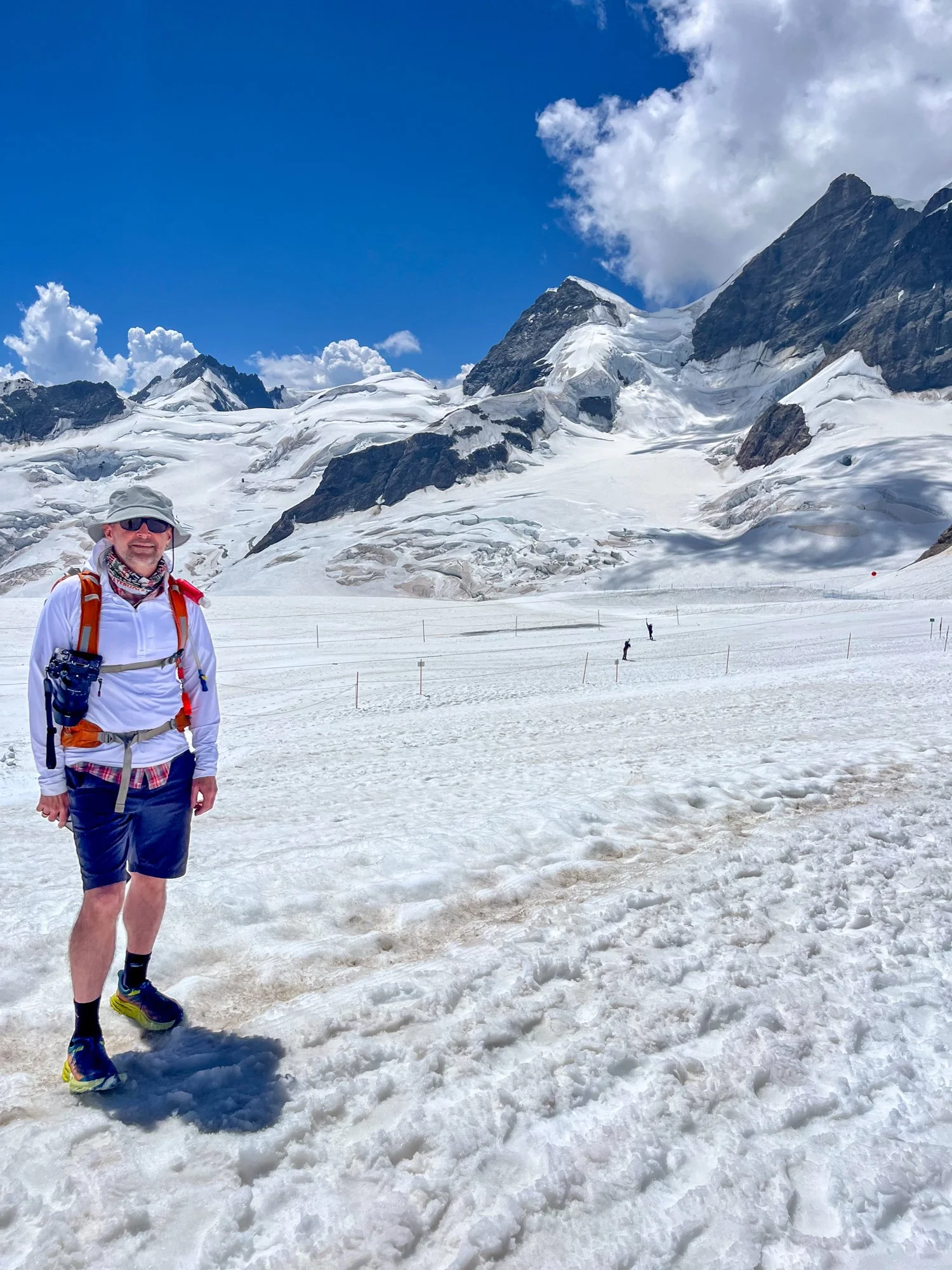
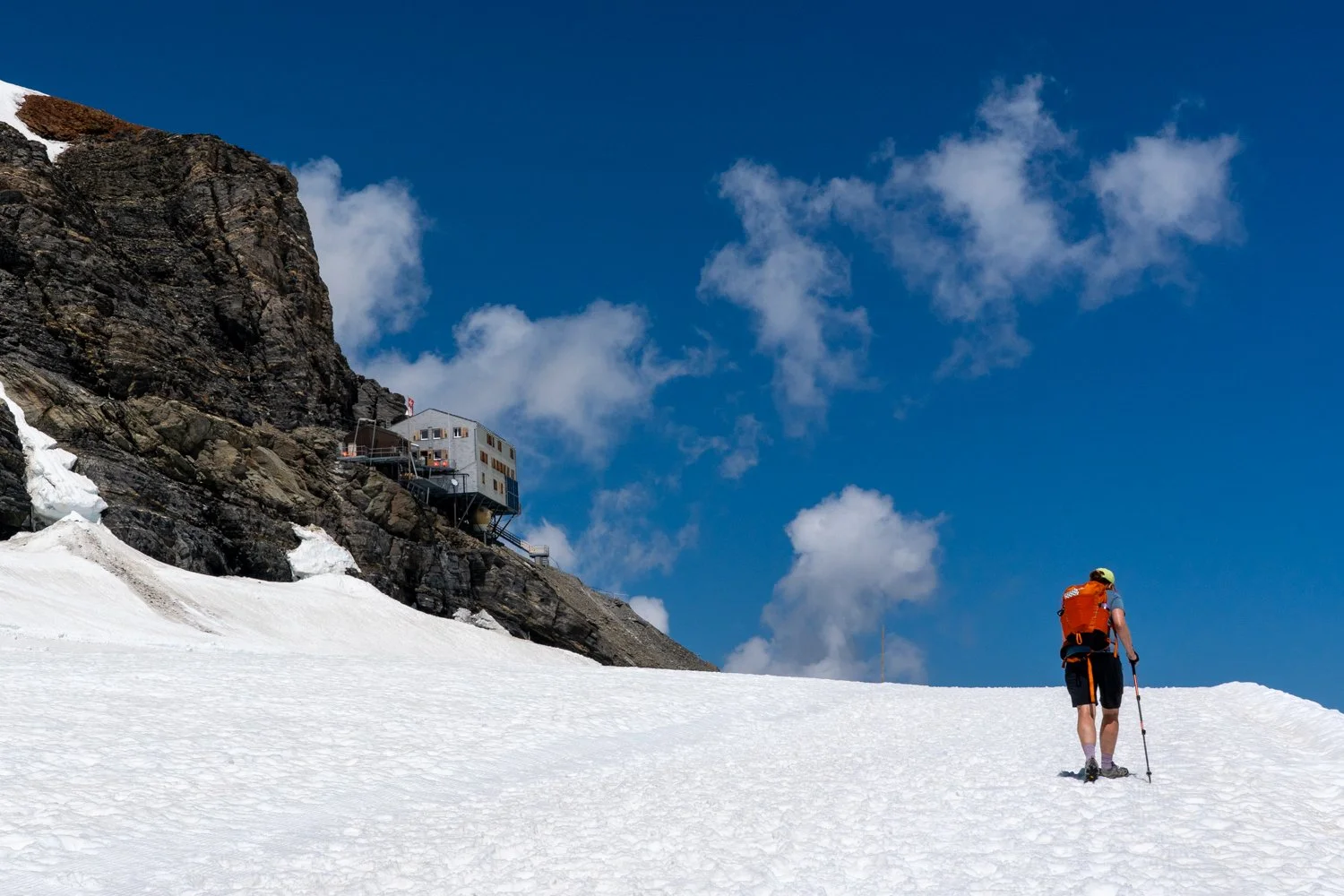
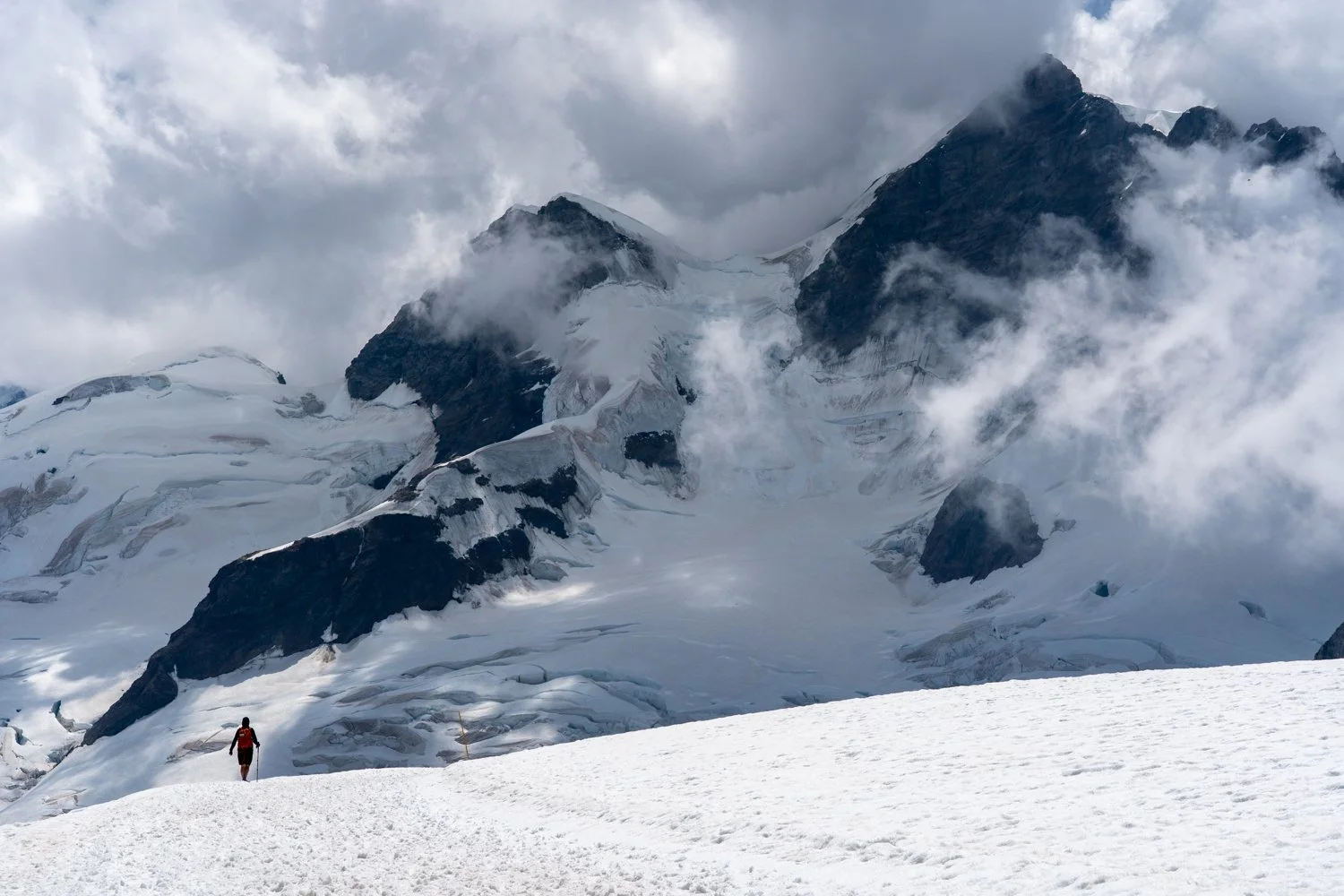
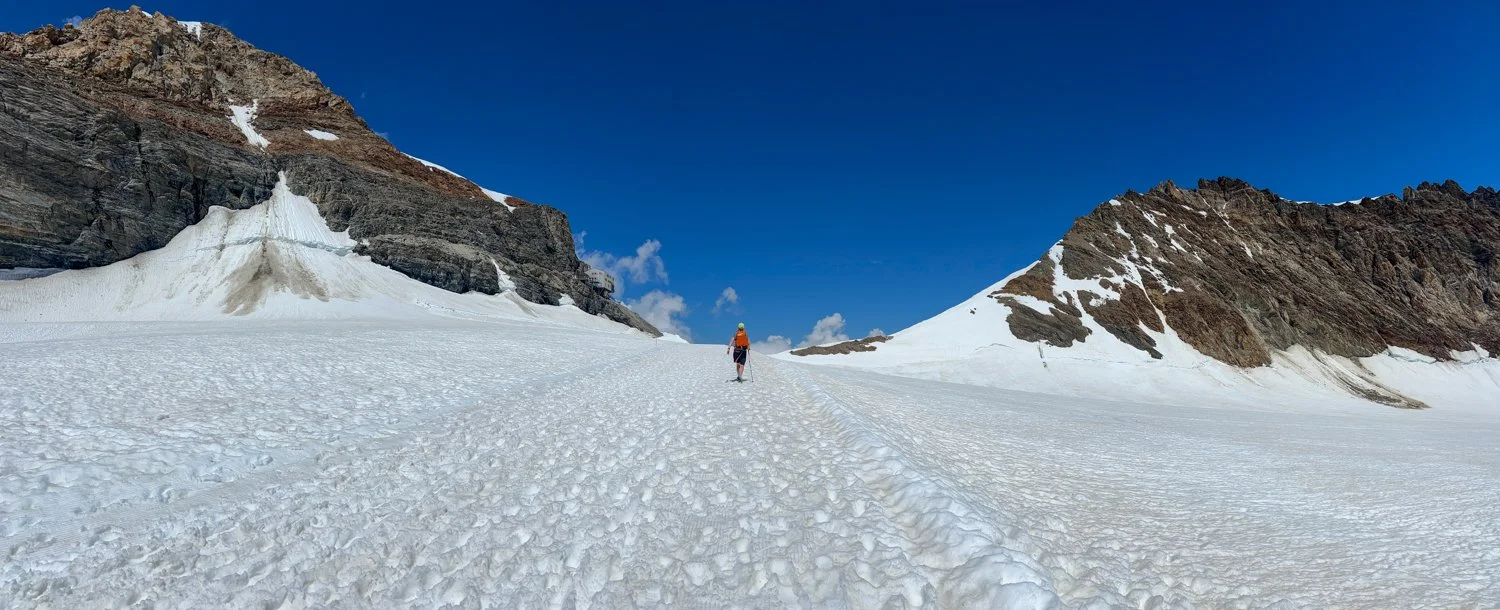
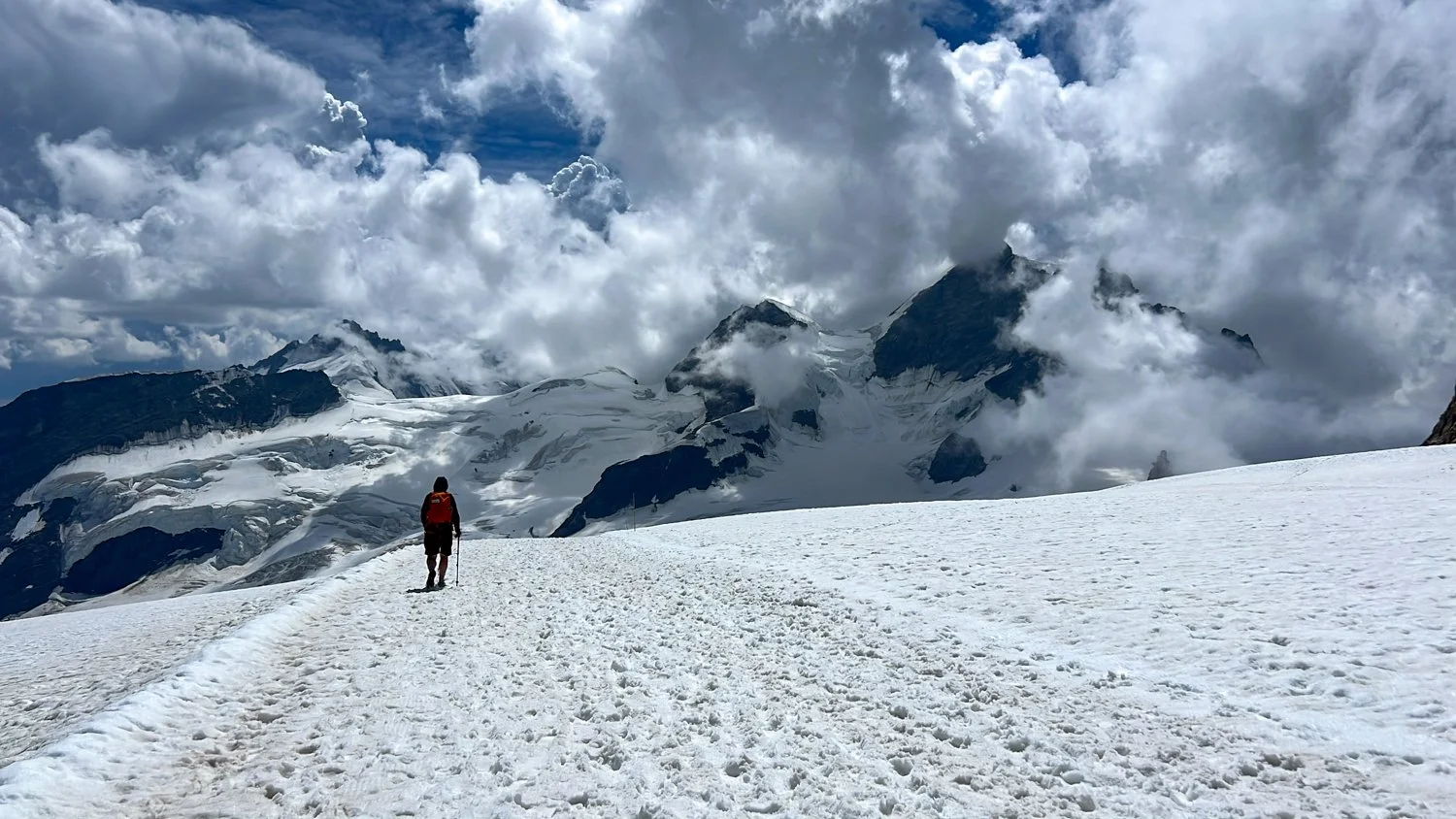
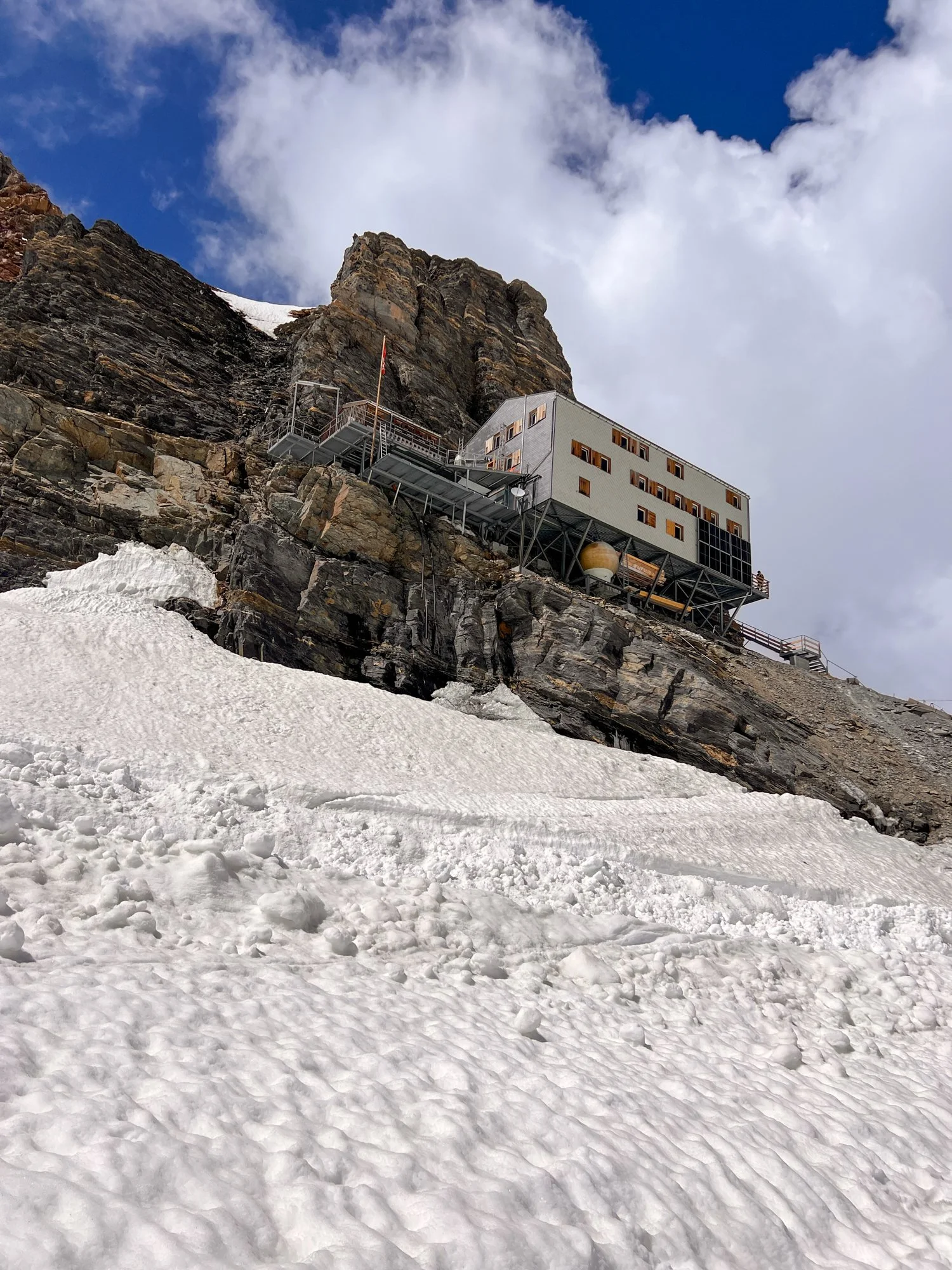
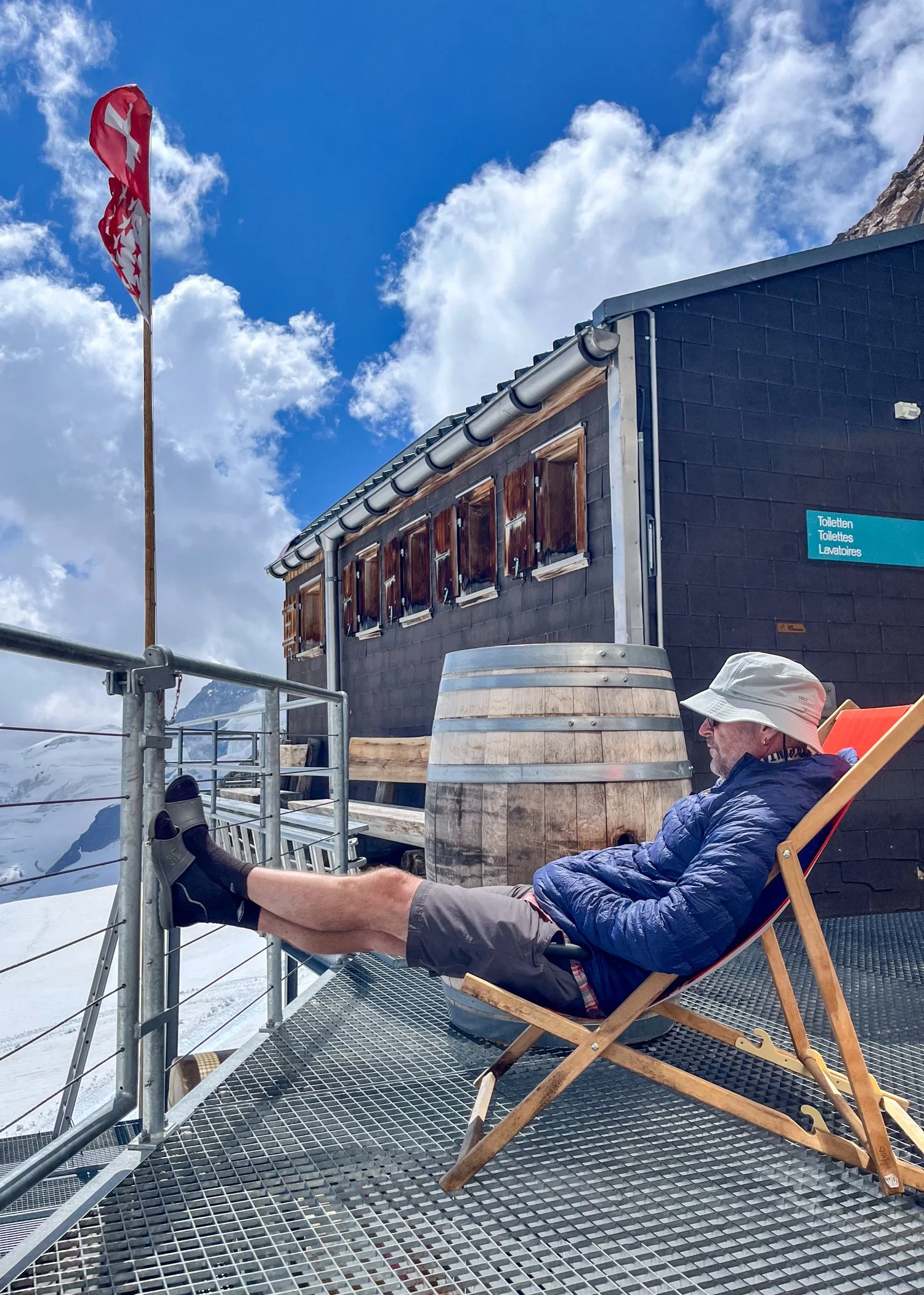
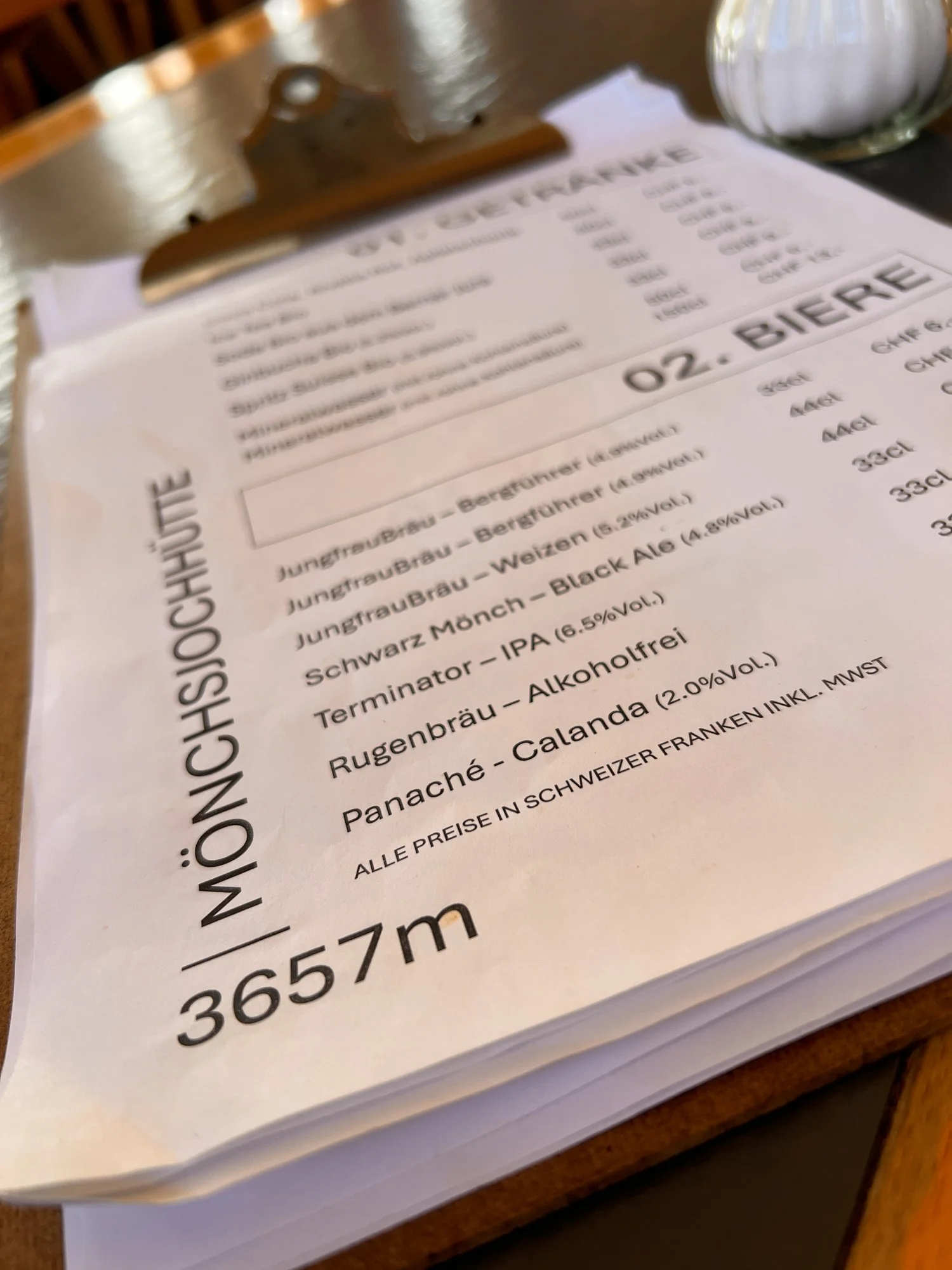
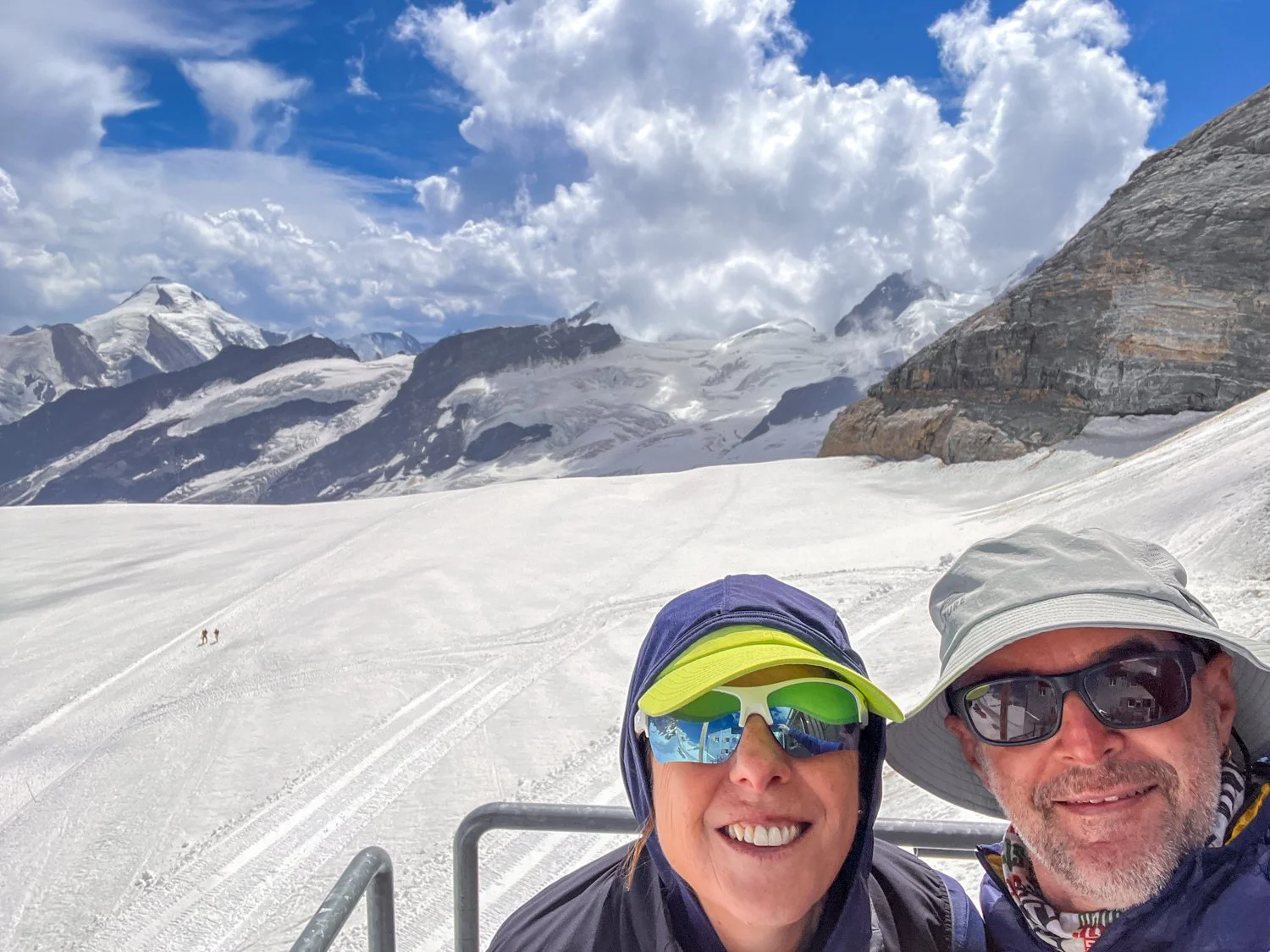
The short hike to Mönchsjoch Hut took us away from the tourist crowds and onto the snow. It was not long before we reached the hut perched dramatically on the mountainside. Clinging to the edge of the mountain, its silver box looks like something you would find on another planet. It is the highest serviced mountain hut in Switzerland so a good excuse for a hot chocolate and to find a spot in the the sun to take it all in. At 3,650 metres, with snow-covered peaks surrounding us and the mountains stretching endlessly into the distance, it was a pretty good place to stop arguing about where the “top” actually was.
The hike from Wengen to Kleine Scheidegg.
Taking the cogg train from Kleine Scheidegg to Jungfraujoch.
The Top of Europe (almost).
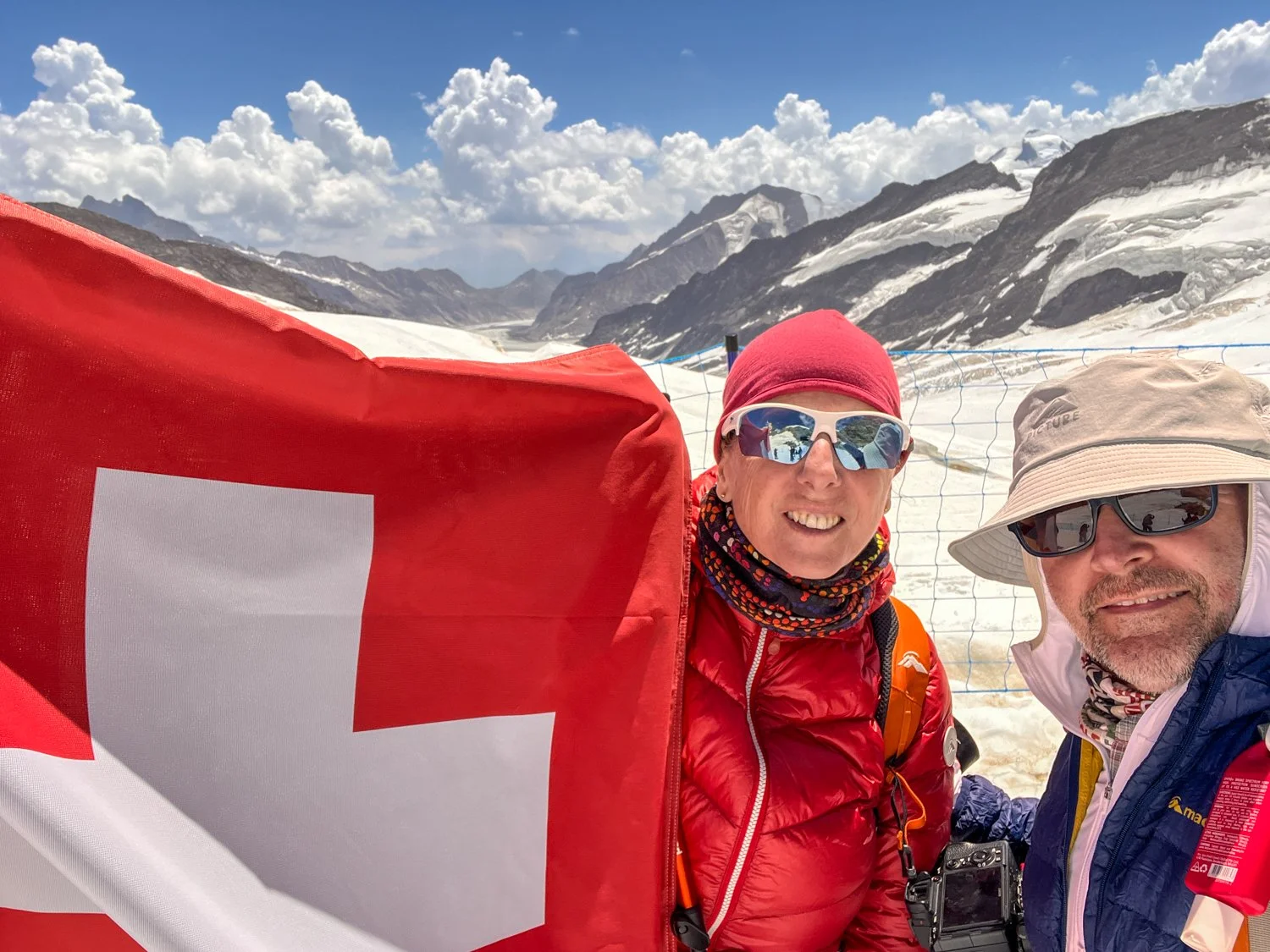
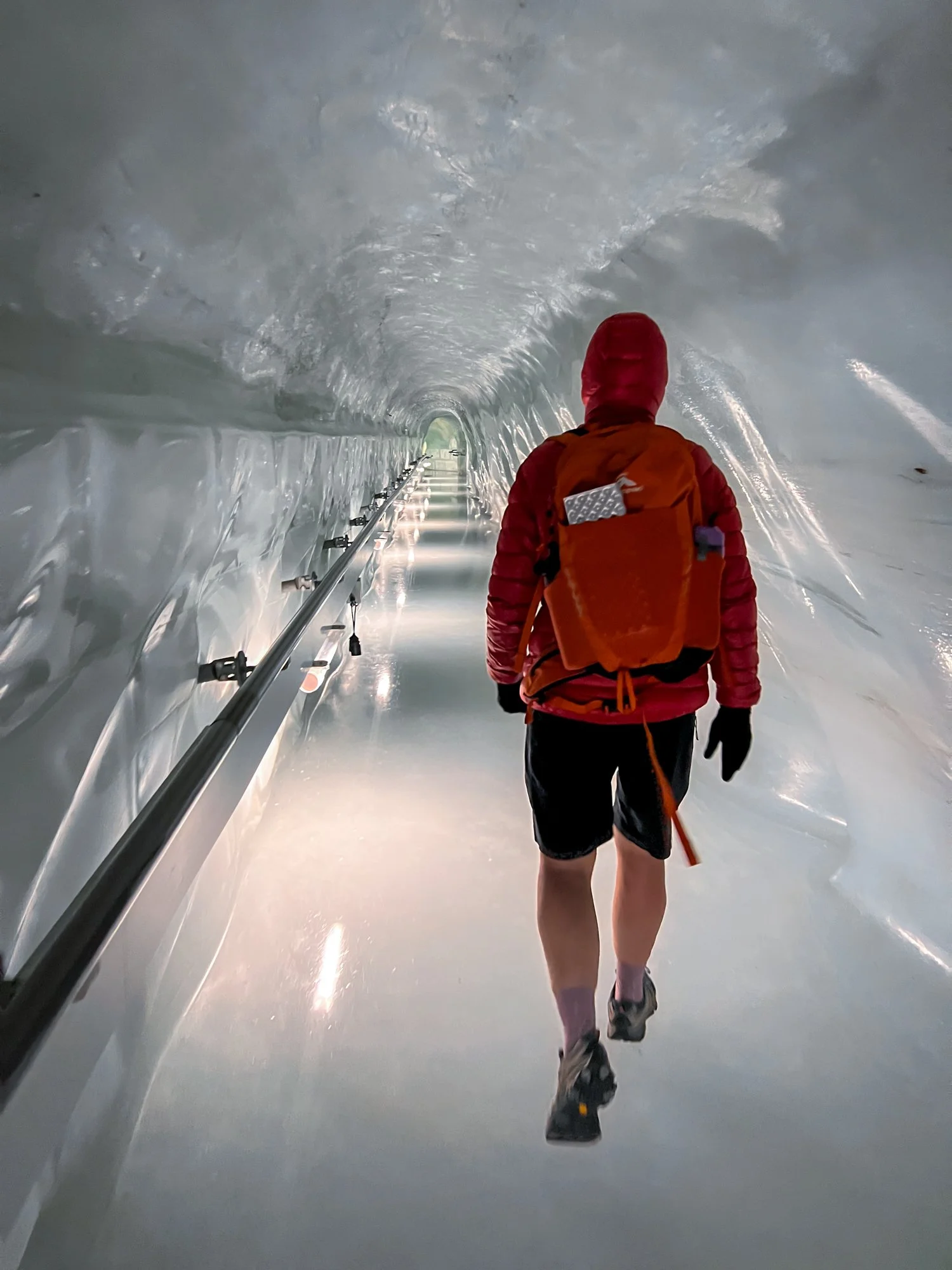
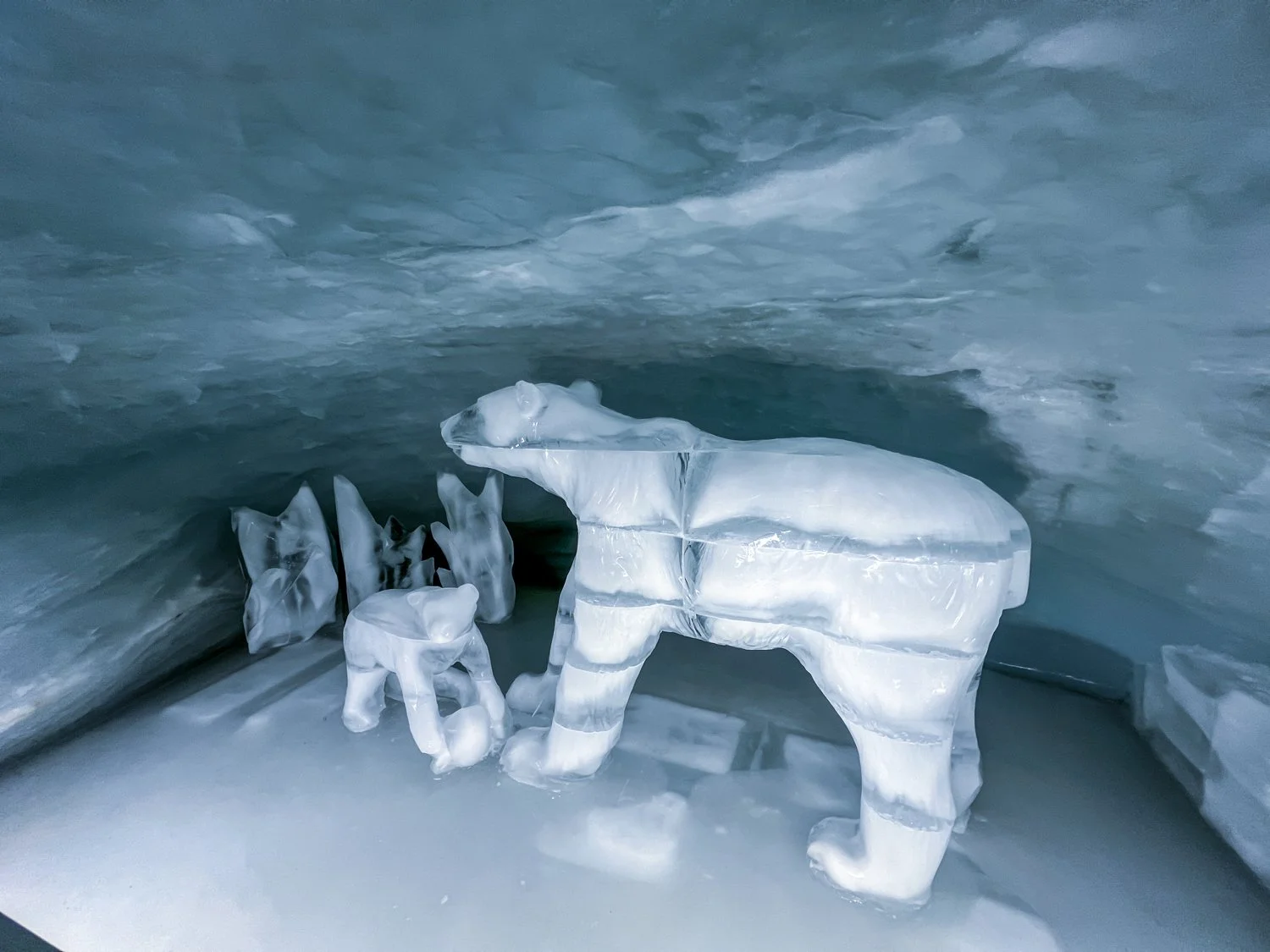
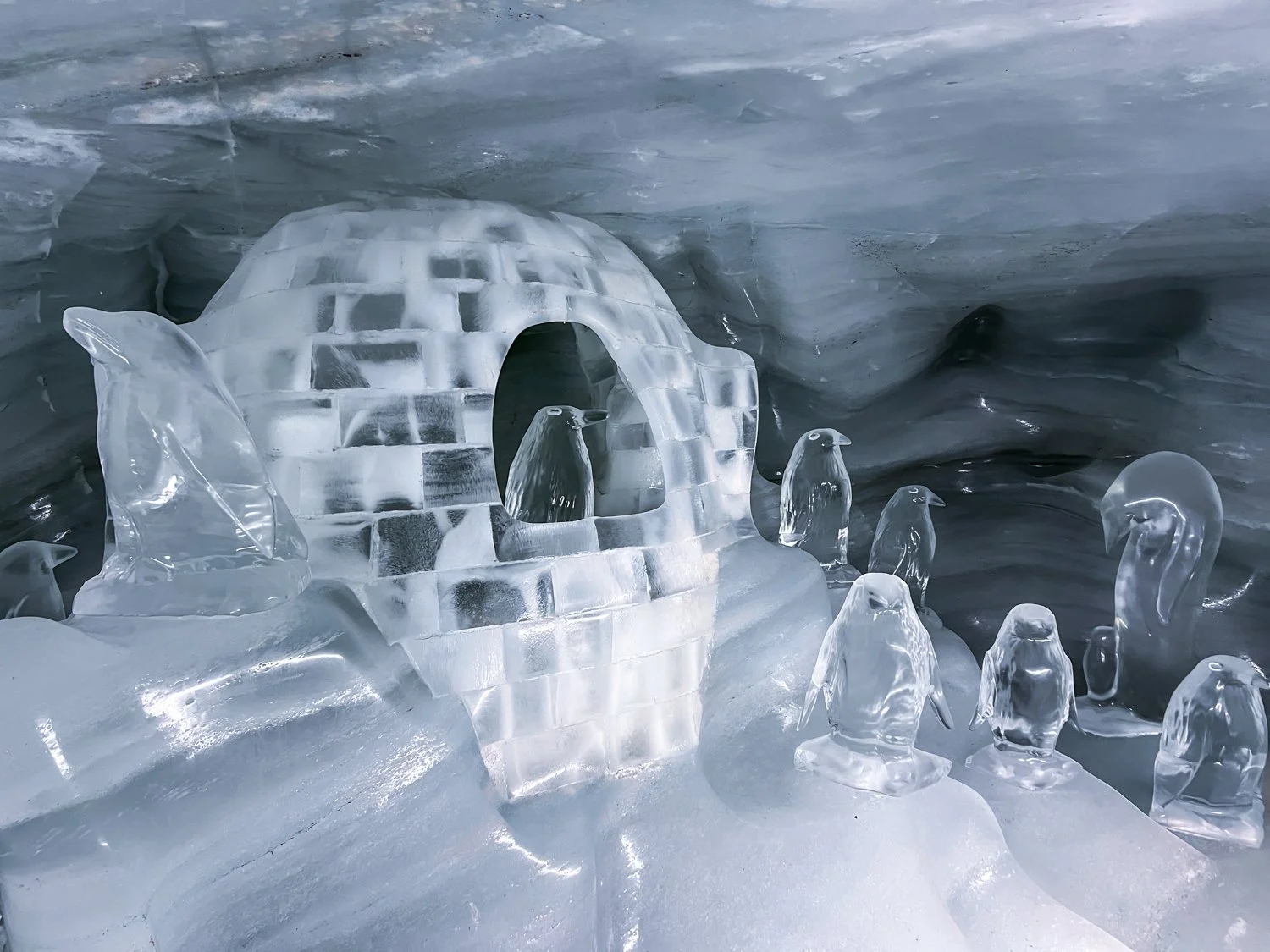
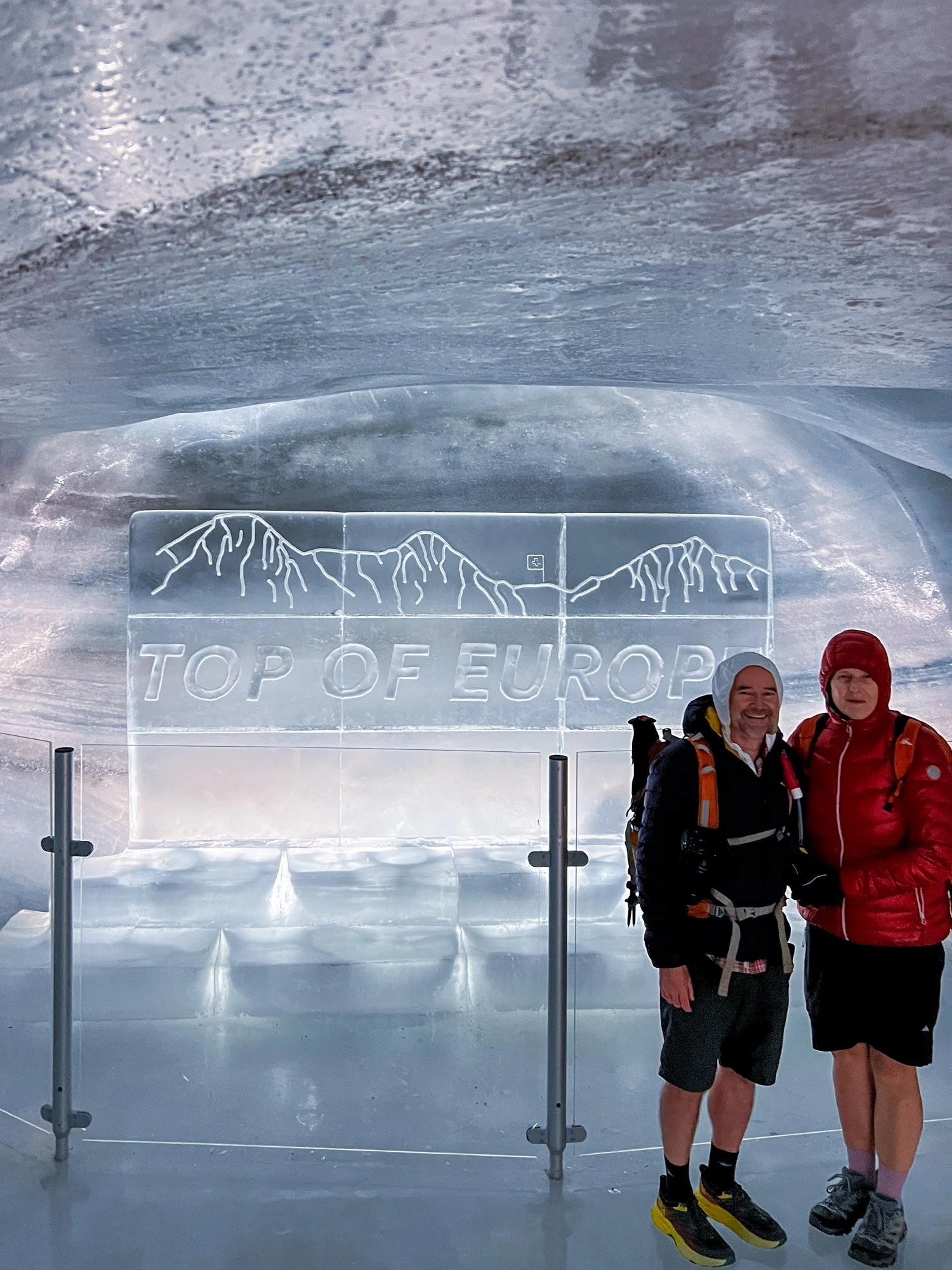
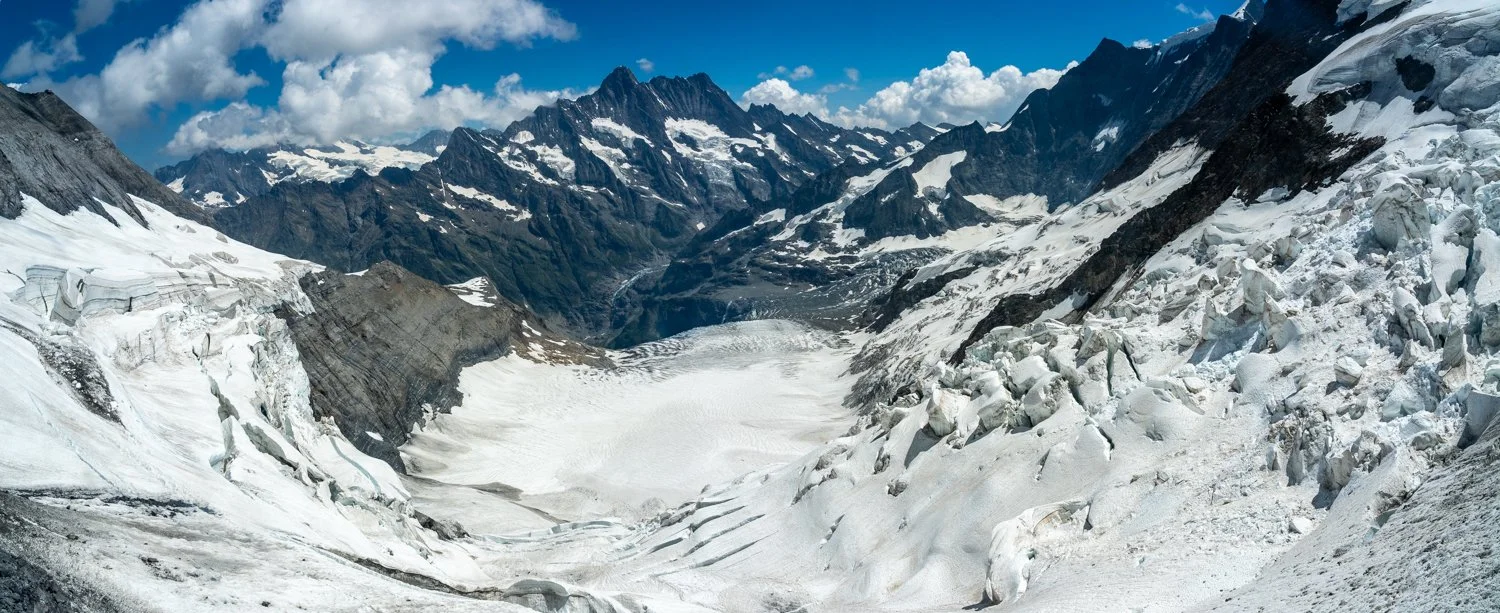
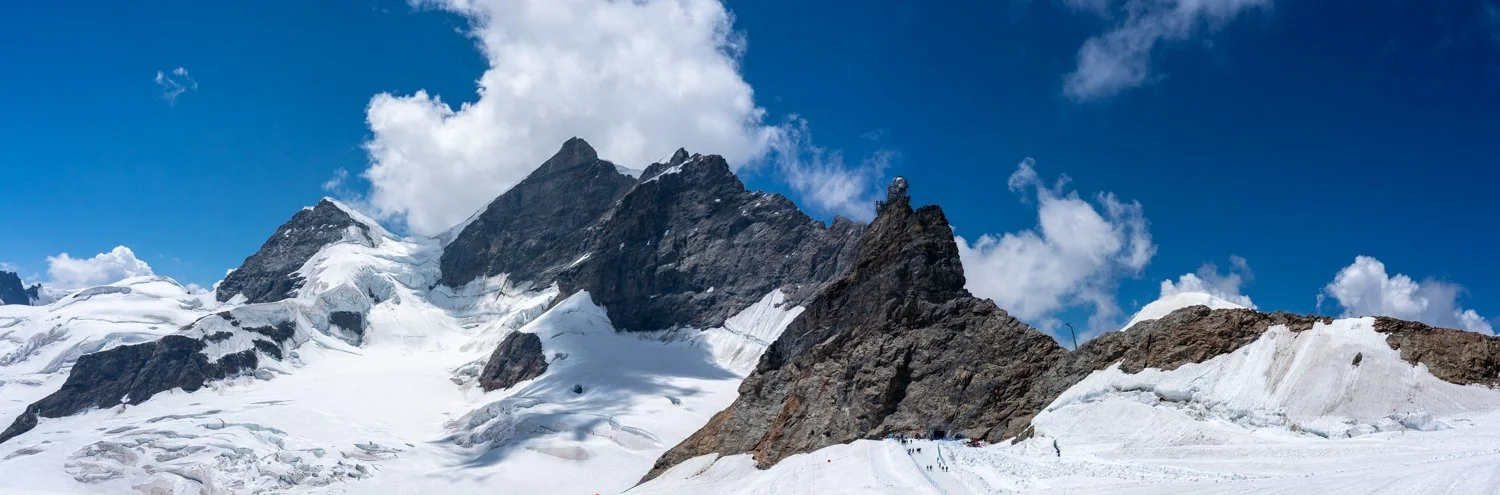
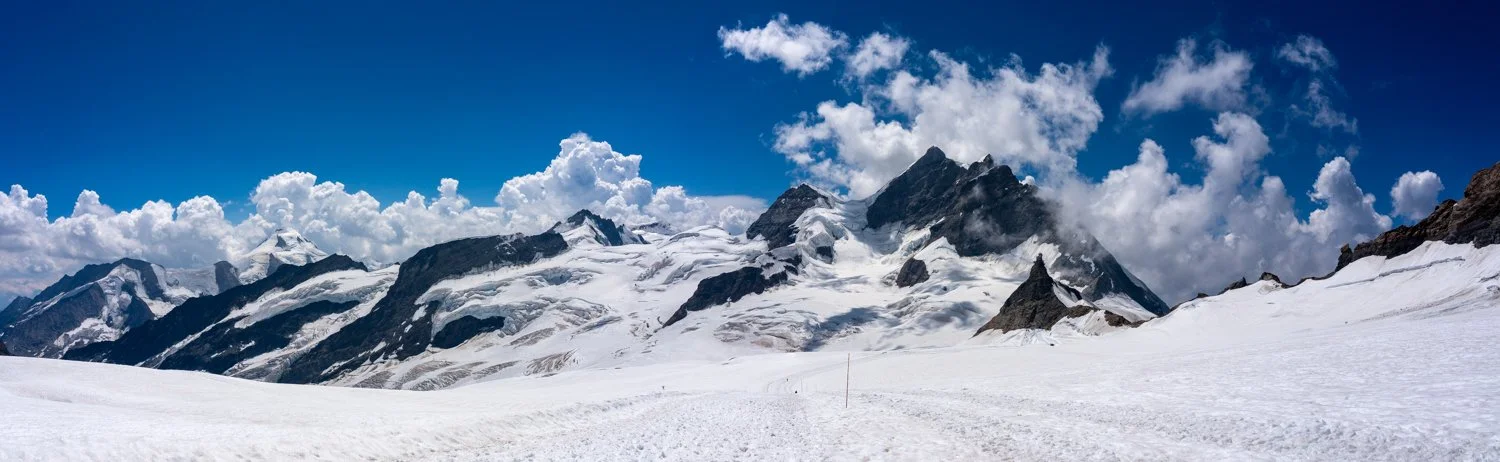
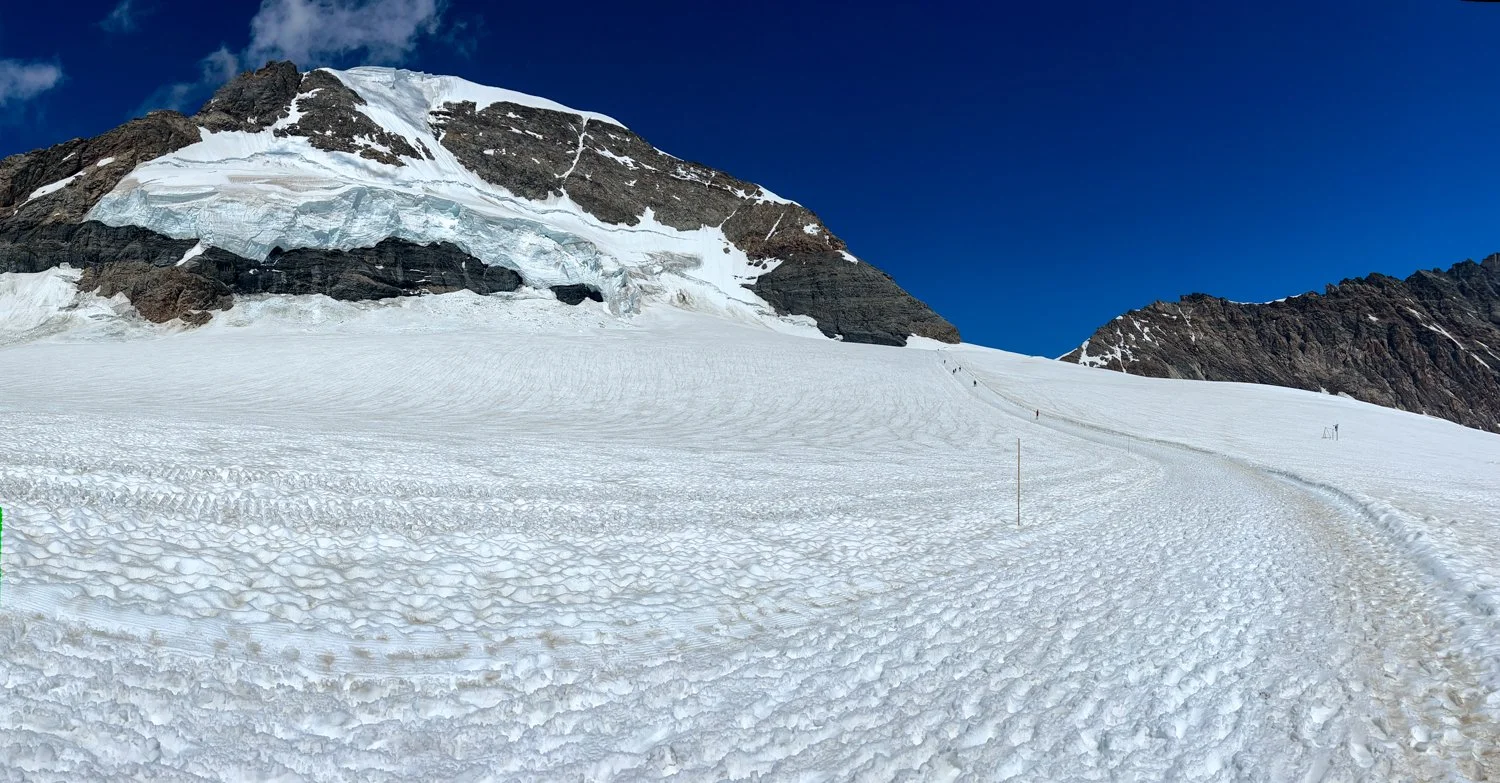
Leaving Jungfraujoch behind us, we walk up the snow to Mönchsjoch Hut.